Tumi Kon Kanoner Phul ( From whose garden could you be) by Tagore was published in the collection called Kori O Komal (Sharp and Flat) in 1886.
From whose garden could you be
And in which sky were you a star?
Where could I have seen you before
And in what dream did you last appear?
When was it that you had last sung,
And when did you last look at my eyes?
I’ve forgotten it all!
All that I can remember now
Is that you were my eyes’ star!
Hush—don’t say anything now—
Just take a look and go your way
In this moonlight just smile and melt away!
Overcome with sleep, I look at the moon
With an enraptured heart
Like your eyes, let the twin stars in the sky
Keep streaming their rays.
Renderred by well-known contemporary singer, Srikanto Acharya
Anjali Loho Mor (Take my Offerings) was written and composed by Nazrul (1899-1976)
Take my offerings melodically, musically
Like a flaming lamp, my soul flickers
Captivated by you, O lovely one;
What feeling of bliss is this, making the body sway
And dance before you melodically, musically?
In ecstasy unfolds love’s petals,
Full of beauty, fragrance and love
Looking at your face, I’d like to say to you:
“Fall down like petals of flower will do
And colour your feet’s soles, melodically, musically”
Renderred by the legendary Feroza Begum (1930-2014)
Nazrul’s Tumi Shundor Tai Cheye Thaki (Because you are so beautiful, I keep looking at you) has been translated from Bengali by Professor Fakrul Alam.
From Public Domain
BECAUSE YOU ARE SO BEAUTIFUL

Because you are so beautiful, I keep looking at you
Dearest, is that my real offence? If the chokor bird* cries
While looking at the moon, the moon doesn’t shush it.
Because I keep looking at flowers about to bloom
Do flowers ever scold me? While viewing clouds
Parched birds pine for rain, but the clouds don’t protest then.
Even when they know the sun won’t shine on them,
Silly sunflowers aren’t appeased. They are truly content
Only when looking at their God. Charmed by your beauty,
I got my sight back. Now, dearest, let my eyes have their feel!

*Partridge, a bird that is said to feed on moonbeams in mythology
Nazrul’s Shukno Patar Nupur Paye(with ankle bells of dried leaves) has been translated from Bengali by Professor Fakrul Alam
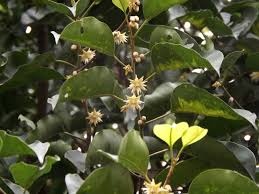
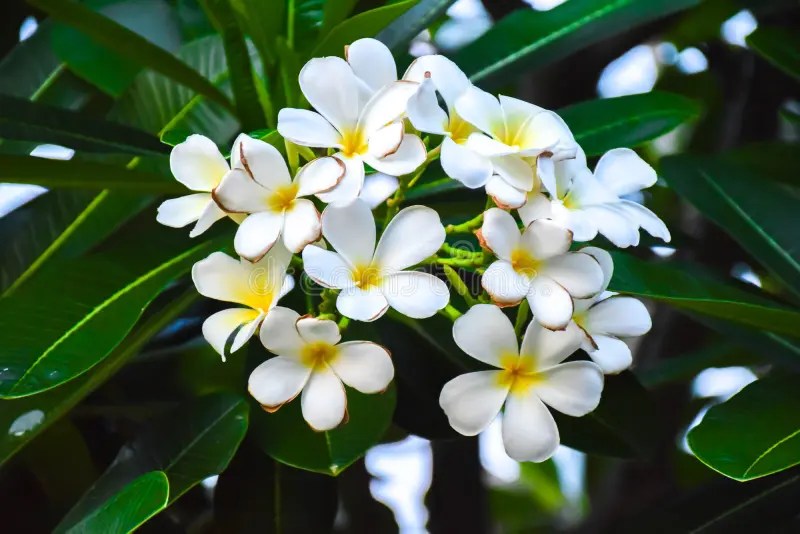
Bokul or MedlarChapa or Champaka flowersFrom Public Domain
With ankle bells of dried leaves
The wild wind dances away.
Making waves sparkle and sway,
The wild wind goes on its way.
At the pond’s heart, lotus flowers collect.
Bokul and Chapa buds lie strewn.
Restless waterfalls stream and sparkle.
As she darts across the field,
Taking off her wildflower ornaments
And unfurling her unruly hair at the sky
The crazy dust-covered woman keeps dancing.
Like an Iranian child in a frontier world
Treading desert spaces, she enthrals all
Fair-complexioned, sand-coloured ornaments
Draping her body, she comes darting!
Nazrul’s song performed in Bengali by legendary singer, Feroza Begum (1930-2014)
Nazrul’s lyrics transcreated by Professor Fakrul Alam
Roomu Jhoomu Roomu Jhoomu

Roomo Jhoomo Roomo Jhoomo—anklet bells sound.
Addicted to dancing, bangles jingle jangle to that beat.
The dresses’ borders keep swaying in the restless wind.
Who could be moving with such wantonly dancing feet?
Stranger though she is and so close to the riverbank
I think I know this dancer on the move. Her movements
Fill this heart of mine. Her swan or peacock-like steps
Cast a spell, like a mirage in a desert will. With her smile
She even enchants the forest deer. Her big eyes dance,
Making the sea waves lilt. Forests in the high hills sway,
Sway away to the beat and music of her dancing feet.
Born in united Bengal, long before the Partition, Kazi Nazrul Islam(1899-1976) was known as the Bidrohi Kobi, or “rebel poet”. Nazrul is now regarded as the national poet of Bangladesh though he continues a revered name in the Indian subcontinent. In addition to his prose and poetry, Nazrul wrote about 4000 songs.
Translations from Bengali by Professor Fakrul Alam
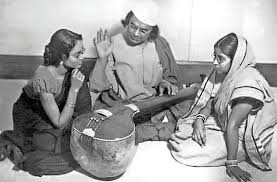
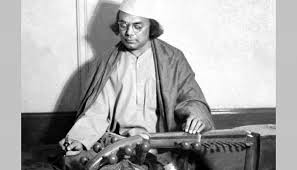
Nazrul teaching NazrulgeetiNazrulBorn in united Bengal, long before the Partition, Kazi Nazrul Islam(1899-1976) was known as the Bidrohi Kobi, or “rebel poet”. Nazrul is now regarded as the national poet of Bangladesh though he continues a revered name in the Indian subcontinent. In addition to his prose and poetry, Nazrul wrote about 4000 songs. Pictures from Public Domain
Nazrul’s Bidai Shondha Ashilo has been translated as ‘The Evening of Parting’
THE EVENING OF PARTING

The evening of parting is here; darkness encases the eyes.
Dearest, don’t let tears make my path of parting more slippery.
Like a flower would, I drifted with the tide and came here
Unintentionally. Why, dearest, did you err and pick the flower up?
Why did you put the flower in your tresses, only to fling it away,
Letting it drift once again with the tide?  Here no one understands
Each other. The one you crave only slights you; the one you desire
Won’t be your own. Here there is no real love in the heart’s depths.
How will you understand how my pain wilts the garland of union?
The song I sing takes wings and reaches the sky, craving for you.
Nazrul’s Masjideri Pashe Amai Kabar Diyo Bhai has been translated as’Bury Me’
BURY ME

Make sure to bury me next to a mosque, dear brother of mine,
So that from my grave I’ll hear the muezzin’s prayer call all the time.
As those in the congregation pass me by, I’ll hear too their holy steps
This sinner will thus be saved from the evil spirits close to the grave!
So many pious people—God’s devotees and our prophet’s disciples—
Come to this mosque and recite verses from the Holy Quran here.
Those verses uplift my soul and mind. Many dervishes and fakirs
Come to the mosque’s compound too. Till deep into the night
They recite God’s name repeatedly, though hidden from sight.
I too would like to repeat with them His Holy name, all in tears.
I too would so like to keep repeating His Holy name thus!
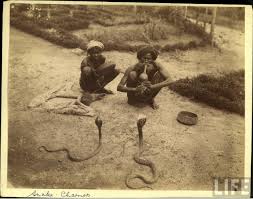
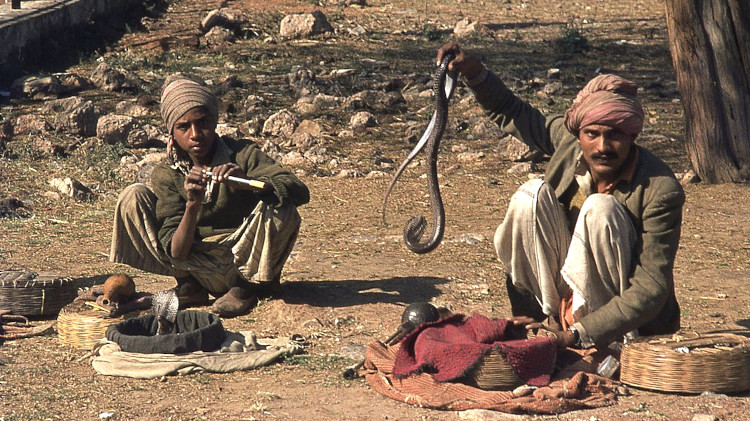
Far away from the densely populated civilised world, the nomadic tribes of snake charmers make their temporary homes sometimes right beneath the deep blue mountains, sometimes among deserted and impassable forests, and sometimes by the foamy mountain brooks or in vast stretches of barren land.
He was the headman of one such band of snake charmers. His name was Jahar. He was a god among his people. His men were terrified of him, and yet they also worshipped him. Only one man in his tribe was jealous of Jahar’s hold over his people and scorned him in secret. Yet, he did not dare to question his authority in public. This man was called Bishun. He also had a few disciples. His ardent wish was the demise of Jahar. He plotted to destroy the man and become the leader of the clan himself.
Jahar had gone to the foot of the hill to look for poisonous snakes. On his snake charmer’s flute, he played an enchanting tune that would arouse one’s entire being. The tune attracted a dangerously poisonous black cobra which came out of the woods with a swaying hood. Jahar’s eyes burned with excitement. Suddenly, he threw away his flute and placed his palms in front of the raised hood of the snake. One snap and Jahar’s body turned blue because of the venom. His clansmen were stupefied with fear and stood surrounding him. Jahar was unperturbed. He began to chant some spells in a composed manner and soon he was cured of the venom. The astounded crowd cheered their hero. Only Bishun moved away with a darkened countenance.
This is how Jahar had taken on snakebites ninety-nine times and also cured himself. Now he was preparing himself for the hundredth time. If he succeeded in taking out the venom for this last time, he would be completing a difficult penance. Being successful in serpent-cult was the ultimate aim in Jahar’s life. To complete this, he had been practicing celibacy with utmost sincerity.
While Jahar’s disciples and followers awaited the great day ardently, one night something unprecedented happened. Did he ever pause to think that anything like that could happen?
Jahar had roamed around the world like a gypsy. Distancing himself from women he came to think that women were only hindrances to attain his target. He even started to be disdainful towards women in general.
Then one day, he saw a plantain raft carrying the corpse of a beautiful girl. According to tradition, people bitten by snake were not buried, but were placed on such rafts and set afloat in rivers. Jahar could only do what he was taught to do as a snake charmer—to revive the girl.
Now he was in deep trouble. The young woman had forgotten her past because of the strong snake poison. She could recall nothing about her family or friends. She just kept on staring at him piteously. He could not just leave her behind. His once tremendous hatred turned into pity and compassion. He provided a home for her. What could one call this except irony of fate? But his long harboured disdain for women made him dress the girl as a boy. He made her drink a strong potion that would control her womanly nature.
Jahar named her Chandan (a boy’s name) and joined a different tribe of snake charmers. The old leader of the new tribe was so charmed by Jahar that before his death he named Jahar his successor. So, Jahar became the undisputed leader of the half-civilised nomadic tribe.
None of this new tribe, however, knew that Chandan was not a boy. Jhumro, a favourite disciple of Jahar, was her only good friend. Jhumro cared a lot for Chandan.
At this time, the celibate Jahar, who had passed the test of ninety-nine snakebites successfully, suddenly realised that he was in danger of falling from his highest point of honour.
That night when he was preparing to go to sleep, Chandan’s unparalleled beauty affected him like an arrow and turned him mad for a moment. It is with utmost self-control that he was able to restrain himself. He ran to the idol of the goddess Mansa and sat at her feet repenting through the night for his momentary delusion. He prayed and cried as atonement.
But the desire that was aroused, could not be extinguished so easily. Then on that very day, it was heard that the king’s men of the country had started tormenting the snake charmers because they blamed the nomadic tribe for the increasing number of abductions of children lately.
Jahar immediately gathered his band and traveled a long way and camped in a wild forest frequented by ferocious animals. They ignited fire to keep the wild beasts away and started to make merry. Jahar, Jhumro, Chandan, Bishun, Bishun’s son, Tetule, the magician with blue glasses, the fortune-teller, the old bell-keeper—all were enjoying the amusements played in the moonlight-drenched night.
A fight between Jhumro and Tetule started over a trivial matter. In the beginning, they just yelled at each other, but gradually it developed into fist-fighting. Chandan stood apart, however, at one point, unable to bear Jhumro’s predicament, she jumped between the two men. In the ensuing scuffle, she lost her breastplate, and the people suddenly realized that Chandan was a beautiful woman in disguise.
At this point, another beauty rushed into the scene. Her name was Mowtushi. She took off the scarf she was wearing and covered Chandan with it. All this while, she was secretly in love with Chandan with the abandonment of a youthful love. Realising that Chandan was a woman just like her, all her pent-up love turned into a sisterly affection. Meanwhile, Jahar appeared and dragged the embarrassed Chandan to his tent. The members of his tribe were astonished to say the least. Nobody thought in their wildest dream that an austere celibate like Jahar could keep such a disguised beauty with him.
The only person who did not seem surprised was the old bell-keeper. He was a strange man who drank heavily and told fortunes through clay marks on the ground. Yet he never revealed the complete truth. He shook his head and broke into a shrill laughter.
In the meantime, Jahar had cornered Chandan in his tent and was trying to draw her in his embrace saying, “Chandan, Chandan, you are only mine.” His self- restraint of all these years was taken over by an overwhelming desire that made him blind.
Chandan tried in vain to move away from him. Finally, she reminded him of his vow and the goal of his life—to be successful in his serpent-cult. The words hit their mark and Jahar came to his senses. What was he doing? His gaze fell upon the effigy of the goddess Mansa, and he rushed out of the tent in pain. He would have to do it that very night. He would have to take the hundredth bite from a venomous snake and complete his vow.
Finally, he found such a snake and was about to start the ritual when Bishun came with the news that Jhumro had run off with Chandan. Mowtushi had helped them in this venture.
Jahar could not complete his vow. All the preparations he had taken for so many years were absolved by this one piece of news. His rage made him mad, and he rushed off to find the guilty pair. Nobody, however, could tell him about their whereabouts; he felt his entire body was set on fire.
Returning to his tent, Jahar opened the basket of the venomous black cobra and went to the temple of Shiva. He used sacred texts as enchantment and set the snake after Jhumro.
By that time, the deliriously happy Chandan and Jhumro had journeyed out towards the unknown. They dreamt of a nest of happiness in some far-off land where they would live happily ever after.
The venomous black cobra appeared right at that moment, bit Jhumro, and disappeared. Immediately, the deadly poison caused Jhumro to fall on the ground.
Chandan stood there thunderstruck. She felt helpless and hopeless. The only way to save Jhumro was to approach Jahar. But how could she possibly do that? Blinded by tears Chandan traced back her steps to the tent she had deserted earlier.
Jahar sat like a lifeless statue. A tearful Chandan approached him and said in a trembling voice that she loved Jhumro more than her life. If Jahar could save him, she was even willing to sell her soul to him. Jahar did not utter one word, but followed Chandan in a trance till they came to Jhumro’s body that had turned blue.
Jhumro was saved. Chandan happiness knew no bound. But she did not have time. She had sold herself to Jahar to save Jhumro. She belonged to Jahar now and hence she said to Jhumro in a shaky voice, “Go away, Jhumro. Go far away. I am not yours anymore.”
How could she chase away the man she loved most? Tears fell from eyes ceaselessly, her heart hurt too.
Jahar was watching the heartbreaking scene standing not far away. He held the black cobra that had returned to retrieve poison from Jhumro’’s body. He looked at Chandan once and then again at Jhumro. He seemed immersed in deep thought.
Then he took the snakebite on his own chest willingly. Jhumro cried, “What did the Master do?” Both Jhumro and Chandan ran toward Jahar who replied angrily, “Take her away from here, Jhumro. I will consume the poison now. This is my last snake, and I must cast the spell, but it won’t work before womenfolk. Take her away from this forest, country even. Go far away to some other land.”
Chandan and Jhumro left accordingly. The master saw that his disciples were gone, but he did not chant his spell. He smiled to himself and muttered, “Those spells are not mine to utter. I will call on Shiva, Shiva, Shambhu, Shambhu…”
The poison of the black cobra was turning his body blue and the light of his eyes were dimmed. Yet, his face caught on the ray of some other world that illuminated his visage with joy. It seemed that his suffering soul had finally found peace.
He had been successful in this final battle of the serpent-cult.
From the Public Domian
[1] Naga-panchami is a day that might fall either in the Bengali month of Aashar or Shravan when serpents are worshipped.
.
Kazi Nazrul Islam(1899-1976) was born in united Bengal, long before the Partition. Known as the Bidrohi Kobi, or “rebel poet”. Nazrul is now regarded as the national poet of Bangladesh though he continues a revered name in the Indian subcontinent. In addition to his prose and poetry, Nazrul wrote about 4000 songs.
Sohana Manzoor is an Associate Professor at the Department of English and Humanities at ULAB, a short story writer, a translator, an essayist and an artist.
PLEASE NOTE: ARTICLES CAN ONLY BE REPRODUCED IN OTHER SITES WITH DUE ACKNOWLEDGEMENT TO BORDERLESS JOURNAL
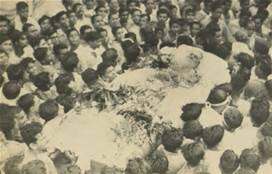
Ghumaite Dao Shranto Robi Re (Let Robi Sleep in Peace) was written by Nazrul in 1941 for Tagore, when he died. It has been translated from Bengali by Professor Fakrul Alam …
Tagore takes his leave on August 7, 1941. Photo from Public Domain
Let the spent Robi sleep on.
Please, please don’t try to wake him up.
Let not the one who spread light all his life
Be awakened; don’t disturb his sleep.
Let the one who gave light and delighted thousands,
And has now collapsed at mother earth’s bosom,
Be ritually smeared with sandal paste on his forehead;
Don’t redden his face by weeping incessantly!
Even at the risk of straining yourself, stretch out your palms
To accept the power and the strength he has given you.
The departed Sun and Supreme One will enable us to succeed
Let the poet sleep on!
The departed Sun’s glow will still light up our interiors.
So, from within yourself pay him homage every day.
Don’t make him weep by shedding continuous tears!
A recording of the first performance of Nazrul’s lyrics in Bengali
Born in united Bengal, long before the Partition, Kazi Nazrul Islam(1899-1976) was known as the Bidrohi Kobi, or “rebel poet”. Nazrul is now regarded as the national poet of Bangladesh though he continues a revered name in the Indian subcontinent. In addition to his prose and poetry, Nazrul wrote about 4000 songs.
Nur Jahan, Nur Jahan,
Floating down a river you came
To a land full of clouds
A land of gardens—Iran!
You had your plate filled
With Nargis flowers, poppies and roses
And had brought them all along.
You brought as well legends
Of Shirin and Farhad and Shiraz.
With your graceful and slim self came
Bulbuli, Dilruba and Rabab’s songs.
Your love healed even Emperor Salim’s lunacy!
You daubed sandalwood paste on yourself
And bore the stigma in front of everyone --
A stigma the moon bears in the blue sky
Smilingly. It’s what is written in lovers’ tales.
I’ll ensure that it ambles along pathways
Forever, questing for love’s pleasures,
Despite any infamy linked to the affair.
Jahangir(Prince Salim) and his beloved empress, Nur Jahan
Nazrul’s Nur Jahan sun by the legendary Feroza Begum
Born in united Bengal, long before the Partition, Kazi Nazrul Islam(1899-1976) was known as the Bidrohi Kobi, or “rebel poet”. Nazrul is now regarded as the national poet of Bangladesh though he continues a revered name in the Indian subcontinent. In addition to his prose and poetry, Nazrul wrote about 4000 songs.
Projapoti or Butterfly by Nazrul, translated by Professor Fakrul Alam
Projapoti! Projapoti!

Butterfly, dear butterfly,
From where did you get such colourful wings?
Wings flaming red and blue,
Such sparkling, wavy wings!
I see you getting drunk sipping the honey of wildflowers.
Be my friend; share some of the liquor with me.
Lend me your pollen-tinted golden-silvery wings as well.
My mind doesn’t like the idea of going to school anymore.
Butterfly, dear butterfly—please, please take me along
As your companion. You dance in the wind as you go…
This day, why not share your delight with me too?
I don’t want to wear the dress I have on anymore.
Let me wear your flaming, sparkling dress from now on!
A rendition of the song in Bengali by a legendary singer, Feroza Begum (1930-2014)
Born in united Bengal, long before the Partition, Kazi Nazrul Islam(1899-1976) was known as the Bidrohi Kobi, or “rebel poet”. Nazrul is now regarded as the national poet of Bangladesh though he continues a revered name in the Indian subcontinent. In addition to his prose and poetry, Nazrul wrote about 4000 songs.
We have not accepted your message. Forgive us, O Prophet. We have forgotten your ideals, the path you showed. Forgive us, O Prophet.
Lord, you spurned luxury and riches under your feet; You did not want us to be kings and nawabs. All the wealth and treasures of this earth Are for all to share in equal measure. You said all human beings are equal on earth. Forgive us, O Prophet.
Your religion does not reject those of other faiths; You have cared for them, sheltered them in your home. Their temples of worship You did not command to be broken, O brave one. But today we cannot tolerate those of other beliefs. Forgive us, O Prophet.
You did not want shameful wars in the name of religion; You did not put swords in our hands, but your immortal message. We have forgotten your magnanimity; We have embraced blind intolerance. That is why blessings no longer shower upon us from heaven. Forgive us, O Prophet.
These Lovely Flowers, This Luscious Fruit [Ei Shundar Phul Ei Shundar Phal]
Thank you for all these bounties, Lord, For these lovely flowers, this luscious fruit, The sweet water of this river. Thank you for all these bounties, Lord, For these fertile fields of green and grain. You have bestowed precious gems on us, Brothers, companions, sons. You give us sustenance when we are hungry Without our asking. Lord, I disobey your command every day Still you bestow air and light on this worthless being. You gave me the greatest prophet To save me on Judgment Day. That I might not forget the true path You sent the message of the Holy Quran.
To the Poets of the Future [Na-Asha-Diner Kabir Proti]
O poets of the future, may you arise Like the morning sun, Bright and red like hibiscus blossoms. In the golden dawn for which we long May you wake up like countless flocks of birds. I sing in the hope that you will come To soar in the blue sky that I create. I leave behind the memory of my greetings to you: Play on my veena the song of the new day.
Born in united Bengal, long before the Partition, Kazi Nazrul Islam(1899-1976) was known as the Bidrohi Kobi, or “rebel poet”. Nazrul is now regarded as the national poet of Bangladesh though he continues a revered name in the Indian subcontinent. In addition to his prose and poetry, Nazrul wrote about 4000 songs.
Niaz Zaman is an academic, writer and translator from Bangladesh. She has published a selection of Kazi Nazrul Islam’s work in the two-volume Kazi Nazrul Islam: Selections. In 2016, she received the Bangla Academy Award for Translation. “Forgive Us, O Prophet” and “To the Poets of the Future” were first published in Kazi Nazrul Islam: Selections 1, edited by Niaz Zaman (writers.ink, 2020).
.
PLEASE NOTE: ARTICLES CAN ONLY BE REPRODUCED IN OTHER SITES WITH DUE ACKNOWLEDGEMENT TO BORDERLESS JOURNAL



 Borderless