Depressingly, you kept disappearing by degrees. First, the emerging woman in you had to be veiled. Next, the shy charm you exuded had to be obscured. And then it seemed you decided life itself should cease! Now, more than ever, I see you smiling ever so softly Now, keenly, I think of your bright but quiet presence. Could it be that you had finally opted for absence? Did you decide to extinguish your light fully, voluntarily? Why else would you fall to a rare, autoimmune disease? Surely you had felt it was time for you to cease! All of us can only rue that so brilliant a mind had so short a lease But tired of remorseless life you had decided in the end to cease!
(Written for the condolence meeting for Iffat held at EWU on 20 July, 2013)
My memories of my Dadaji[1] are numerous — profound, etched and radiant. I lost my grandfather in March of 2023. Therefore, you will witness grief being poured in the garb of this write up. Emanating heartfelt respect and love his grandchildren preserve in their hearts, it is difficult to comprehend grief. Many being young and thriving in their adulthood, all my cousins reminisce the remains of the day he passed.
Being a married, working parent, life does not give much room to stop the grind and think. There is an unsaid, unwritten normative rush to sustain, to survive and to soar high. Nevertheless, the souls do get sun kissed, the rumbling tummies do find solace in a warm home cooked meal and the minds find sheer joy in observing the cheers and jeers of their kids. Amidst the routine hullabaloo, there are moments offering whiff of fresh air and a dash of seasonal fragrance.
March is followed by April. It’s the month of harvest, month of Baisakhi[2], reaping what was sown to make space for the new. That’s how didactic and instructional nature is in its true sense, gradually progressing at a slow and steady pace. Embracing the untimely rains and hailstorms and yet reviving to thrive in the new day. That’s how grief pertaining to the loss of a grandparent might look like. It pulls you back so that you can consciously chart your future trajectory. The force holds you back in order to pierce the sky with your flight because that force makes us move, march and advance. That’s what we learn from our grandparents. Their relentless effort, how small or minute it might be, helps us to garner the courage and thick skin we must develop to remain afloat.
My Dadaji was an old wise man, true to his words, cool headed and had no qualms about people being judgemental or nosey. Always calling a spade a spade, he would make a statement, almost as firm as a sermon, and take leave, without worrying about what turn his children’s responses.
The constant urge to jump to conclusions gives us major disappointments but my grandparents taught us how to lead a life, sans the hurry, the anxiety and the inevitable will to speed up the tasks. I recall an incident when my Dadaji accompanied me to a district level speech competition because my parents were posted in some other town for a certain period. He had never been to a school, didn’t know how to hold a pen and yet agreed to listen to my speech delivered in English in an assembly of teachers, parents and students. I secured third position in that competition but what stole the thunder was how he reviewed my performance before my parents. In his words, “Sabte badhiya boli. Baaki to ruke thi.” (She spoke flawlessly. Others fumbled many times.) The memory of such observation, coming from a man alien to the academics and yet giving feedback so constructive and encouraging, can never be erased. Such is the magic of grandparents, enchanting, uplifting and promising.
Alpana is an assistant professor in English at Pt. CLS Government College, Sec-14, Karnal, Haryana. She completed her higher education in English literature from University of Delhi. When not teaching or reading, she can be spotted collecting fallen flowers from garden with her toddler.
PLEASE NOTE: ARTICLES CAN ONLY BE REPRODUCED IN OTHER SITES WITH DUE ACKNOWLEDGEMENT TO BORDERLESS JOURNAL
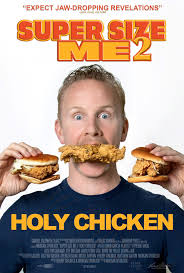
American film-maker Morgan Spurlock, best known for ‘Super Size Me’ didn’t want to be remembered as just the guy who ate burgers for a month. He had other plans, as Keith Lyons discovered…
Photo from Public Domain
It was almost 20 years ago I first met the film-maker Morgan Spurlock. As part of a global tour promoting his newly released participatory documentary Super Size Me he was in New Zealand’s capital Wellington. While he told me about how he hatched the ‘really great, bad idea’ of the movie, I too came up with the crazy plan to get him into a nearby McDonald’s for a suitable photo for the magazine I was writing for.
Morgan’s film idea came after a Thanksgiving dinner at his parent’s place. While lying on a couch having eaten his fill, he was watching TV when there was a story about two people who had sued McDonald’s, claiming that the fast-food chain had misled them about the nutritional value of its burgers, fries and sodas, causing them health problems as well as a to gain significant weight. As part of the story, a spokesman for McDonald’s came on, saying there was no link between their obesity and the food at McDonald’s which was healthy and nutritious. Morgan figured that if he ate McDonald’s every day, there shouldn’t be a problem.
For 30 days, he ate nothing but McDonald’s food and drink, trying everything on the menu at least once, and accepting any super-size portions when offered. He gained weight and got sick. At the end of the month, he appeared puffy faced. His liver function was impaired, and he was depressed. The doctors monitoring his state advised him not to continue damaging his health (later, he confided to me that it took him more than a year to get back to his original weight — with help from his girlfriend Alexandra Jamison — also known as Healthy Chef Alex).
The film about the promotion of fast foods and American eating habits went on to win the best directing prize at Sundance Film Festival and was nominated for an Oscar. It capitulated the docu-prankster into being a household name.
A few years after the movie came out, he had married Alexandra (his second of three marriages which ended in divorce), who came up with the book, The Great American Detox Diet. Morgan told me about his other projects he’d been working on. After Super Size Me, he developed an unscripted documentary-style series. His 30 Days was based on putting a person in a different environment from their upbringing, beliefs, religion or profession for a month to see how exposure to opposite worldviews altered prejudice. “Yeah, I spent 25 days in a jail in Virginia,” he once emailed me casually, when he had become the person embedded in a community very different from his own. “Just so I could experience life as an inmate.” He wanted the reality TV series to explore how people might challenge their now stereotypes, so had a devout Christian living with a Muslim family, and a homophobe staying with a homosexual.
From the Public Domain
Morgan, who had been likened to a budding Michael Moore ‘for a Jackass generation’[1], went on to direct and produce more movies, including about terrorism and the fight against it in Where in the World is Osama bin Laden (2008), What Would Jesus Buy (2007), and even One Direction: This is Us (2013), and The Simpsons 20th Anniversary Special – In 3-D! On Ice! His interests were eclectic, making a documentary about comic book convention fans as well as one on men’s grooming, and another on product placement. His long-awaited Super Size Me 2: Holy Chicken!, where he looked at how the fast food industry had changed, came out in 2019, but by then his career had waned, following an admission of sexual misconduct which included being unfaithful to every wife and girlfriend he ever had, and also a long term problem with alcohol.
I lost contact with Morgan a few years ago, but still have memories of the time we walked up the stairs into McDonald’s in central Wellington. No security guards came to stop us from taking photos. No manager yelled at us. He stood smiling with that broad goofy smile of his and his trademark handlebar moustache as I snapped away taking pictures of him with the backdrop of the McDonald’s counter and menu board. He had been worried that we wouldn’t be allowed inside McDonald’s, or to take any photos. In the US, he told me, security alerts meant he couldn’t step into any Golden Arches without being challenged.
I was saddened to hear that Morgan recently died, of complications from cancer, aged 53. Many newspapers headline the news: ‘Documentarian who ate McDonald’s for 30 days and changed fast food industry’. His brother Craig said Morgan “gave so much through his art, ideas and generosity. The world has lost a true creative and a special man”.
In the late-2000s, after the success of Super Size Me, Morgan told me of his ambitions, and reminded me that he didn’t want to be typecast for just Super Size Me. “I hope I am remembered for more than just as the guy who ate hamburgers for a month.”
Keith Lyons (keithlyons.net) is an award-winning writer and creative writing mentor originally from New Zealand who has spent a quarter of his existence living and working in Asia including southwest China, Myanmar and Bali. His Venn diagram of happiness features the aroma of freshly-roasted coffee, the negative ions of the natural world including moving water, and connecting with others in meaningful ways. A Contributing Editor on Borderless journal’s Editorial Board, his work has appeared in Borderless since its early days, and his writing featured in the anthology Monalisa No Longer Smiles.
.
PLEASE NOTE: ARTICLES CAN ONLY BE REPRODUCED IN OTHER SITES WITH DUE ACKNOWLEDGEMENT TO BORDERLESS JOURNAL.
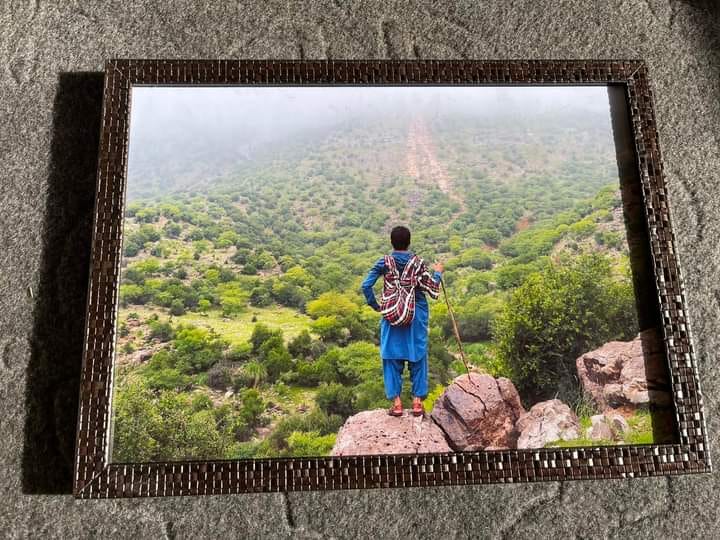
Photograph by Kamachar Baloch. Sourced by the author
All the world’s a stage,
And all the men and women merely players;
They have their exits and their entrances;
And one man in his time plays many parts...

--Shakespeare, As You Like It (1623)
In life, certain individuals excel in their roles, leaving a profound impact despite their brief presence, imprint a lasting legacy that resonates long after they depart.
Such an individual was Ghulam Sarwar Baloch, commonly known as Kamanchar Baloch, a devoted photographer who captured the beauty of Balochistan through his photographs. On April 16, 2024, he departed after battling diabetes and tuberculosis.
Baloch was born in 1998 in the home of Anwar Jeehand in the Meeran Goth of Malir, Karachi. His ancestors were from the remote town of Mand in the Kech District of Balochistan. After receiving his primary education in Mand, Kamanchar Baloch enrolled in the Department of English Literature at Benazir Bhutto Shaheed University, Lyari, Karachi in 2020. However, driven solely by his passion for capturing the beauty of Balochistan through his camera lenses, he left his studies incomplete.
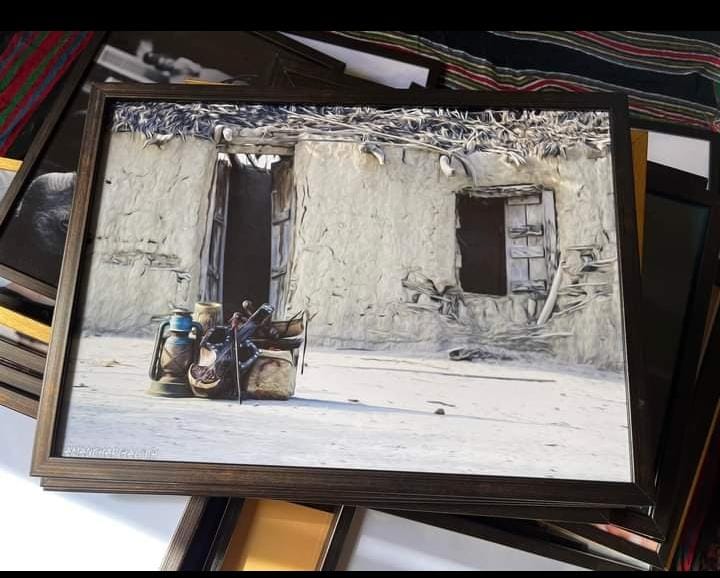
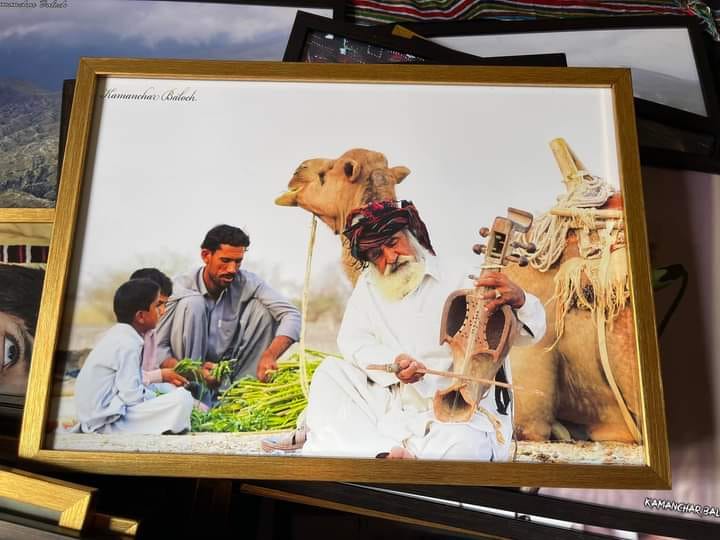
Kamanchar Baloch was a dedicated photographer. His unwavering focus was on capturing the beauty of Balochistan’s landscapes with his exquisite photography. It is often said that Kamanchar’s camera wielded a power like a gun, and as a marginalised Baloch himself, he consistently captured the struggles of the Baloch people within society.
Kamanchar’s passion for exploration led him to uncover the many facets of Balochistan: from Mand to Turbat, Turbat to Quetta, Quetta to Bolan, Bolan to Ziarat, Ziarat to Koh-E-Suleman, and beyond. Wherever his travels took him, he captured the scenery through the lens of his camera, embarking on journeys to mountains, bridges, hills, valleys, coastal shores, and encapsulating the beauty of this rugged land.
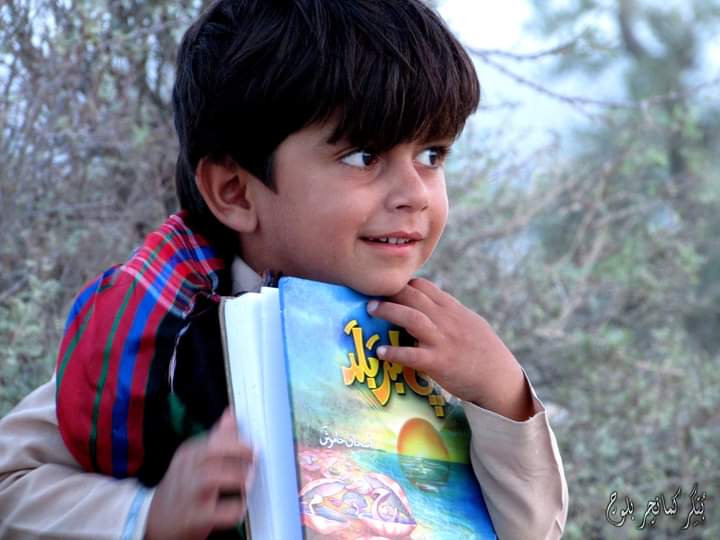
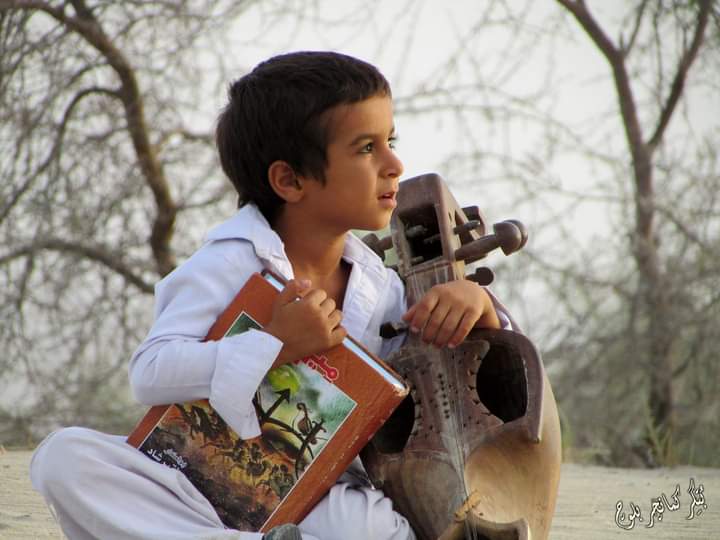
Photographs by Kamanchar Baloch. Sourced by the author
His photo exhibitions were held in various locations, including Karachi, Quetta, Gwadar, and Turbat. Kamancher not only explored every corner of Balochistan but also worked tirelessly to encourage and support young photographers and artists in appreciating the richness of Baloch heritage, land, and its beauty.
Photograph by Kamachar Baloch. Sourced by the author
Kamanchar’s legacy lives on in the images he immortalised and the voices he amplified. His departure has undoubtedly left a void in Balochistan, orphaning a community that looked to him as a beacon of hope and understanding. As the people mourns the loss of this exceptional artist, his work stands as a testament to the power of art to provoke empathy and incite change. The impact of Kamanchar Baloch’s life and artistry will continue to resonate, inspiring future generations to advocate for the marginalised.
Although Kamanchar passed away early, his legacy lives on through his photographs. He was still young and had much more to contribute to Baloch and Balochistan.
“It was Kamanchar who showed us that photographs will never come to us, but we need to look for them and chase them,” says Baloch filmmaker, Kamalan Bebagr.
May Kamanchar live in his art forever!
Photographs by Kamanchar Baloch. Sourced by the author
Munaj Gul is a lawyer based in Turbat, Balochistan. He tweets @MunajGul
PLEASE NOTE: ARTICLES CAN ONLY BE REPRODUCED IN OTHER SITES WITH DUE ACKNOWLEDGEMENT TO BORDERLESS JOURNAL
the tall walls make me uncomfortable as I’m shot from every angle it’s a kodak moment an interpersonal feel without a signed consent my privacy is strangled I’m just another man sitting guilty until proven innocent the cage is claustrophobic and my mind has no choice but to ride along shotgun he looks for smuggled tobacco to roll a cigarette and asks me “Yo, you got one?” A simple reply will do as an elongated conversation seems to always lead to confrontation between me and this man or the officer manning his station as I walk the green mile my oversized blue flaps stick to the floor, what a sorry excuse for a shoe passed down from man to man god only knows the stories that go with them, the sad stories originating from prison to prison I live in a prism, confused as I follow the lines, how did I get to this point, locked away, throw away the key to my lips, I don’t think I’ll talk today as I sit in this hole, this empty abyss the punishment given because I spoke with my fists born into the wild I once again need to fend for myself as I did as a child, I’ve walked miles but ended up at the wrong place angry men in blue feel the need to compensate for their stolen lunch money, don’t laugh, they have the upper hand you don’t even have soap for a bath, so you ask yourself am I still a man? has this west end place stolen my lunch money, I’m placed in front of a mirror, faced off with my masculinity, and fascinated with the man I’m facing I try to reach through or at least lose my mind I want to be changing places
(“Metro West” refers to the Metro West Detention Centre in Toronto)
PHYSICAL INTRUSION
my mind is stronger than your muscle you flex to make your point clear because your go system is pristine but the frontal lobe screams stop, in front of the cracked mirror where you find an empty glass, covered in residue. Things seem illusive This intrusion knows no barrier, adjacent to muscle so let’s not try to spread a subliminal message I am a hypocrite, as I know nothing else but the compelling thought of advancing my position in this broken mirror life as I see it you should expect the same from me, as I lack character but the difference is, I am equipped, with the sword in the stone because I am strong with characteristics that shine without tone what need have we to speak, when a gesture is often remanded for its curtain call, when the water’s too dark and you think until your mind sinks too deep your muscle makes you weak mine makes me acknowledge your weaknesses – words are seen by millions muscle is for minions
THE ONE WHO LEFT HIS MIND AT THE STATION
20 packs of beer, get ‘em in I’m a crook spicy cinnamon with an adrenaline strut a minion in cuffs, shackled hack, I’m corrupt back to bat with a black kinda rap, okay enough it stink like the stuff that come up from yer bowels I spit shit, drop exlax with the vowels I’m foul, I speak faeces, I need a towel and shout I rip through with weapons that repent from my mouth philosophise preaching as knees weaken weekly dream big, speak Nietzsche proposing a toast and civil war with myself ouch! the mind’s amiss on arrival, it’s ritual running circles, I’m tribal, habitual aboriginal, simple-minded, cynical freddy krueger slasher but I keep it at a minimal i‘m Trivial, i‘m jeopardy, I got questions but hold on, criminal record, oops! forgot to mention I used to kick it old school, it’s david beckham a little bit of English with a foot in yer rectum
OVERDOSE
Where are you?
Are you where I see you standing, or somewhere else?
Am I here standing next to you, or somewhere else with you?
Am I alone?
Where did you go? I don’t see you there.
Why is my prescription empty?
(The following poem was added to the poet’s obituary in order to allow him to speak “in his own words” at his funeral)
MY MIND BENDS
the license plate on the back of my head spells trouble my mind bends spells spoken to the caves abducting word skills from something the world kills I believe in my own lies, a psychopath in paralysis diseased with addiction cavities dance to the pulsing sound of a root canal
Up is nothing more than an animated feature presentation Homer as a d-day rather than a replay rarity hurricanes steep through my kettled mind I exist in a reign of horror I’ll make a place on the map just to attract the UN scissors cut through the vein of ambition thinking has lost the war bite the nail I say using my head to bang nail into coffin
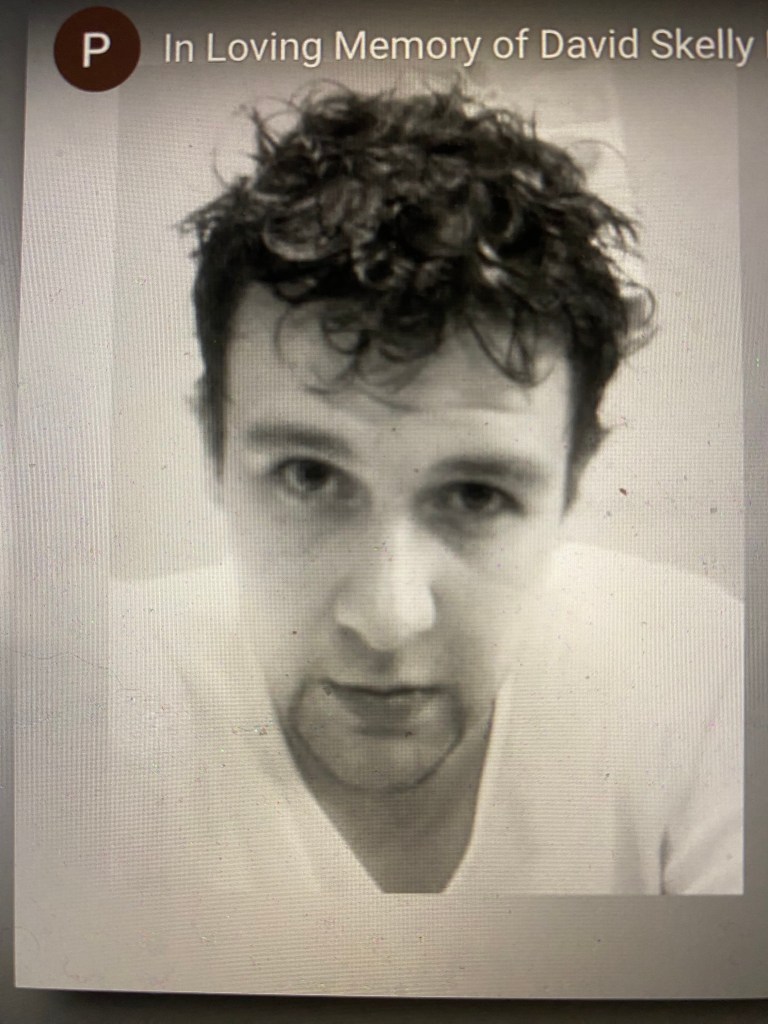
Aerial-David Skelly Langen (1986-2023) was a poet, pugilist, and ongoing survivor of street-level, drug-and-violence mayhem in Toronto, Moncton, and Liverpool, England. He described himself as an “outgoing, self-admitted work in progress.” His poetry is published in a collection of “poems of resistance” in Resistance Poetry 2 (2012) and in the family-based anthology, They Have to Take You In (2014). A posthumous debut collection from his considerable output of rap-based poetry will appear in 2025 under the title, The Red Cardinal, in honour of his crimsoned life in spirit and song. The poems shared here were first published in Resistance Poetry 2 in 2012.
.
PLEASE NOTE: ARTICLES CAN ONLY BE REPRODUCED IN OTHER SITES WITH DUE ACKNOWLEDGEMENT TO BORDERLESS JOURNAL




 Borderless