Four Seasons isn’t just a high-end hotel brand or an iconic piece of classical music that features in luxury car ads. The four seasons — spring, summer, autumn and winter — follow one another regularly over a year. But as Keith Lyons shows with his camera and narrative, this isn’t a universal rule, and the passing of each year is bringing new changes and challenges.
In the Dry Valleys of Antarctica, one of the few places which isn’t covered in ice or snow. Photo Courtesy: Keith Lyons
There are probably a few places on Earth that technically have no seasons, but even that is stretching the definition. The one I went to isn’t really a country, and when I was there, it was at the peak of summer, with days lasting almost 24 hours. On calm clear days, I could wander around in just a t-shirt and shorts. A high SPF sunscreen and Clinique’s Dramatically Different Moisturising Lotion were my constant companions on any outdoor adventures to cope with the sun’s rays and the dry air.
It was too cold and too dry for any trees or shrubs to grow, so I couldn’t get the visual clues about the seasons either.
Williams Field airfield in Antarctica with an artificial Christmas tree the only vegetation. Photo courtesy: Keith Lyons
Which place, you ask? Wherever you are, travel south. More. More still. Right to the bottom of the globe. Antarctica.
A natural ice sculpture formed by melting ice in the middle of summer at Bratina Island, Antarctica. Photo courtesy: Keith Lyons
Actually, the southernmost continent, which is pretty much ice-covered, does have two seasons: Summer and Winter. It is not in a perpetual winter year-round. Summers are short and cold, and full of sunlight, with the sun above the horizon most of the time. Around mid-summer, it never gets dark. These endless days of summer, from November to February, can play havoc with your circadian rhythms, your ‘inner clock’, interfering with regular sleep patterns, as many scientists, support staff or military personnel discover.
In summer, even rock climbing is possible in Antarctica in the Dry Valleys. Photo courtesy: Keith Lyons
For the few that ‘winter over’ on the inhospitable polar region, from March to October, have to endure long, dark nights before they experience twilights.
An equally intriguing exception to the four-seasons-in-a-year rule can be found along the Equator with some places in the tropics only having two seasons: wet and dry. Regions near the Indian Ocean experience three seasons, with a short winter, then summer, and then, the monsoon. The nation of Bangladesh goes one step further in claiming to divide these three seasons into six, with summer, monsoon, autumn, late autumn, winter and spring.
As desirable tourist destinations, once Covid-19 is contained, there are a number of places whose climate satisfies the traveller seeking blue skies, sun, and warmth, including Cape Verde in Africa, Mexico, Malta, Dubai, Thailand, the Maldives, Hawaii, Florida, Brazil and of course, India. Even countries such as Singapore and Malaysia have no distinct seasons, at least to outsiders, who just know the island for its heat and humidity and the chill of air-conditioning.
The country of my birth, New Zealand, can claim to have four seasons — four seasons in a day. Due to its remote location surrounded by the ocean and in the path of winds from the west, and a spine of mountain ranges, as well as some volcanoes, New Zealand’s temperate climate, is never too extreme, but as band Crowded House once sang, there are ‘four seasons in one day’. For example, tomorrow’s weather forecast for Christchurch is for a high temperature of 24C but dropping down to 4C with a cold southerly change with winds and rain, and possible frosts the following mornings.
In New Zealand, because the ever-changing (and at times, unpredictable) weather plays an important part in our lives, particularly agriculture and tourism, everyone watches the weather, tuning in for 6.55pm TV forecasts, or checking the MetService app with its severe weather warnings, rain radar maps, and advice. Right now, the app tells me it feels like 12C outside, two layers of clothing are recommended, and the sun which went down at 5.22pm won’t rise until 7.30am.
The weather can influence us in many ways, including our mood. One remedy for malaise is to spend more time in Nature, even if it is in a public park, garden, or in these times of Covid-19 lockdowns, hanging out with a pot plant.
Some people have a preference for a particular season. Overseas tourists often visit over Christmas-New Year and in the warmest months of summer, while others wait until the first snows have fallen in the ski fields. Spring with its daffodils blooming and newly born lambs bleating seems to be a time of promise and hope. Shoulder and off-peak season visitors, along with many retired folk, like March and April for travel, when students are back studying, and the weather can be more settled.
Many hope there will be an ‘Indian summer’. No, this isn’t a derogatory term or even a reference to the second-most populous nation. Its origin may have come from North America a couple of hundred years ago referring to a period of unseasonably warm, dry and calm weather, perhaps associated with haziness from prairie fires set by Native American Indians. The term ‘Indian summer’ may have been picked up and mistakenly associated with the Indian subcontinent during the time of the British Raj in India in the 19th century. Basically, it means a late summer. Or a pleasant early autumn.
For me, this is one of the special times of the year, as I notice the changes happening all around me. In particular, I see the leaves of trees change colour, and eventually fall to the ground. For me, even though the signs are of death and decay, there seems to be more of a link to a deeper purpose, the cycle of life, and the order of the universe, assured by the warm, orangey tones, and the golden highlights.
This time last year, at the end of March, New Zealand went into a lockdown to combat the spread of Covid-19, but while people were urged to stay at home, households were allowed to go out for exercise each day. Many residents re-discovered their neighbourhoods, venturing out to parks or walking down leafy lanes, as the late summer morphed into early autumn. Facebook posts featured landscapes, trees, leaves, and even the veins of leaves silhouetted against the sun. I recall one long walk I took, to escape doom-scrolling the bad news about Covid-19’s contagious spread. On my headphones I listened to Vivaldi’s Four Seasons, while still in my head I held the words of the accompanying sonnet for Autumn, which reminded me to pick up a bottle of Merlot for my parents:
“Celebrates the peasant, with songs and dances,
The pleasure of a bountiful harvest.
And fired up by Bacchus' liquor,
many end their revelry in sleep.
Everyone is made to forget their cares and to sing and dance
By the air which is tempered with pleasure
And the season that invites so many, many
Out of their sweetest slumber to fine enjoyment.”
In tandem with a new appreciation for life — and being alive — there was also another growing awareness of something far bigger than the pandemic sweeping around the globe. Climate change.
Whether you call it global heating, or human-induced climate breakdown, warmer, polluted air is affecting us all.
There are links between stances about climate change, and the pandemic. Covid-19 has been described as climate change in fast motion. Both have their science deniers and sceptics, who tend to be more conservative and individualist.
The words of the Greek philosopher Heraclitus have never been more relevant:
“Nothing in life is permanent, nor can it be, because the very nature of existence is change.”
The challenge for us all is to be present in the moment, acknowledging our fears and anxieties, and action the Latin phrase to ‘seize (or harvest) the day’. My friends, ‘Carpe the hell out of this Diem’.
Not all of Antarctica is covered in ice, as seen around the American McMurdo Base
A historic hut remains preserved by the dry environment
Photo Courtesy: Keith Lyons
Keith Lyons (keithlyons.net) is an award-winning writer, author and creative writing mentor, with a background in psychology and social sciences. Keith was featured as one of the top 10 travel journalists in Roy Stevenson’s ‘Rock Star Travel Writers’ (2018). He has undertaken writer residencies in Antarctica and on an isolated Australian island, and in 2020 plans to finally work out how to add posts to his site Wandering in the World (http://wanderingintheworld.com).
.
PLEASE NOTE: ARTICLES CAN ONLY BE REPRODUCED IN OTHER SITES WITH DUE ACKNOWLEDGEMENT TO BORDERLESS JOURNAL.
Prithvijeet Sinha uses Gaman (Departure), a Hindi movie around the pain of migrant workers, as a case study to highlight his contention that lyrics and songs convey much in Indian films.
As my essay dives into the realm of the personal intermingling with the universal, I have found that the quintessential point of a space, definitive of our existences and livelihood, flows seamlessly in our lives. A collective omnibus houses our private churnings, moving from one point to another as life scripts new adventures of the mind and the spirit to discover valuable assets and find that sacred space — a home to give refuge to our true and innate selfhoods. The idea of the heart as home of our fiercely personal torrents of thoughts is something I adhere to. As such, the heart is a lonely island and much as personal journals and diaries have a secretly lush inner world to communicate, the subtle and implicit art of songwriting is the external synonym and outlet that universally connects our inner world with the outside.
The functional meaning of a song is actually born out of the discerning of listeners. Khairun, the lonely young woman at the heart of the film, Gaman (1978), is one such example in a sea of millions around the world, one of countless women left to tend to the hearth while the responsibility of corralling finances snatches their men away from them prematurely. Such is the dilemma that a newly annointed marital union becomes essentially a platonic one, testing the sombre beginnings of this lifelong intertwining of two strangers. As if it’s a rite of passage for their individual selves after they have taken their vows in the public eye and been pronounced as man and wife. They burn for that warmth and familial touch of companionship with these songs sung by playback artistes (conveying from the prism of Khairun) becoming spiritual constants when the physical reality of them staying together is rendered impossible. Through her fortitude and its equal mirroring in her husband’s predicament in the city, we find the power of this union to sustain itself in two different places. Their mindscapes merge and Khairun is a conduit for this film’s portrayal of pain of separation and social anxiety. As if she has a telepathic connect with her beloved as when, through voice-overs, we find her letters informing Ghulam of her own angst and her brooding face and eyes loom over Bombay’s skyline.
It’s the language of our soul or Aatma as we call it in Indian canon. We are not alone then. There is no conflict in this union and the words, it seems, flow out of our own being. The beauty, melancholy and dignified distance invested in them bring the pining heart and the hopeful soul together in perfect tandem.
In Gaman, both protagonists live in the shadows of crumbling aristocracy, in a village in North India where the present is bleak and like a ghost informs the poor population about its impending desolation. In a post-colonial nation, the humbler occupants of this social compartment still have survival to contemplate upon and their lands and farming have given them no respite from debts. As the central characters are Khairun (the iconic actress, Smita Patil) and Ghulam Hasan (another stalwart actor, Farooq Sheikh), the film shot in the erstwhile Muslim and predominantly secular princely state of Kotwara, could be reflective of the dilapidated shells of a centuries old lineage which may have had connections in the past and seen better days. But rampant unemployment, educational lacuna and a hand-to-mouth existence contextualize a move to the big city for the man. The name Khairun itself has a certain melancholic ring to it, I think and Ghulam as his name goes becomes a slave of his fated new beginnings. Their taciturn marital bond is presented in brief moments together.
In simple but rousing poetry, the real challenge of moving ahead in the big city while leaving behind the rustic stronghold and a real home is poignantly conveyed. Identities are at stake and have to find a home, even if it is the most modest resort of reassurance. The womenfolk have no real say or stake in this scenario and Khairun’s silence is a witness to that. The song then that appears is ‘Aap ki yaad aati hai raat bhar’ (Your memories were all that remained all night long).
Composed by Jaidev, written by Makhdoom Mohiuddin and sung iconically by Chaya Ganguly, who won the prestigious National Award for playback singing, love and longing are two sides of the same coin. When I heard this song few years back, it came like a lilt from beyond, the central melody captivated me and made me croon its perfectly structured lines. There was a distinct local character to it and the realism of the situations converged with the romanticism of natural images. These images were stages in their marked separation and the passage of time was invoked. The opening lines translated are, “Your memories were all that remained all night long, moist eyes kept smiling all night long.” The stoic quality of internalization is very succinct here. “Muskurati Rahi”( a smiling wayfarer) in feminine form reflects the mindset of Khairun, the young bride and woman. There is a brevity of conveying the lull within the heart’s storm. A pensive directness addressed to oneself in isolation and to the beloved is like a pithy interior monologue; a missive to the one who yearns for an established bond.
The song is unique as it’s one of the few ones to begin with the chorus or central refrain which clearly elucidates its personal nature of pathos. The first verse continues with the imagery of the still night and dark, private chambers of the heart where longing is given rest and an assured hand. It goes like, “the flames of pain were burning/alighted all night long /melancholy’s flicker was trembling throughout.”
The fickle spirit is putting up a brave front and is vulnerable, spending its time in contemplation. From the opening plucking of strings, which I think is the instrument santoor and burgeoning flutes, the intimate incandescence of the couple is set into motion in a composition set in the pure classical mold. Khairun’s dialogue travels all the way to us. There is a shine to their passion for each other which refuses to interfere with their earnest pursuits.
The second verse is more tilted towards romanticism. Its mesmerising notes are referenced with the flute to symbolise love and its dimensions. In Indian lore, Krishna played the flute for self-definition and courtship. Here, its transcendental spell is cast on a lonely soul as attested in the lyrics, “the tuneful, charming notes of the flute/come as reminders of memories all night long.” The speaker is in third person and omnipresent thus the personal becomes the universal and the use of night imagery can make it the last moorings of an individual before sleep gets the better of her/him and every recollection is committed to memory’s animated storehouse. The invocation of the flute is a sweet token for the promise of every stable relationship. The foundation has to be lovely and full of warmth even though it is an ephemeral ideal.
The talent of the lyricist here is that these escape from falling into a basket of random cliches as its essence is in Urdu poetic tradition. Look at those plangent eyes of Khairun, deep vessels of wait and ceaseless langour, akin to an Amrita Shergill paintings.
The mystery of the night has direct approximation in the next verse, “the night moon entered depths of the heart/ its glow illuminated the night.” The moon is a personal symbol as it’s cast in the image of Ghulam for Khairun and vice versa. The unattainable height of its location is related to the profound number of miles separating husband and wife. Its dim light is the only source of illumination thus hope is enshrined in these lines for the little kernel of happiness that may bless them sooner or later. The desire for union is prevalent here. In the video of the song, notice how the lyrics pertaining to moonlight are juxtaposed with streetlights and neon lights of Bombay where Ghulam drives a taxi for a living and Khairun tends to the household lighted by a dim bulb. Light plays a crucial role in their overlapping narratives. Winter has set in the village and Bombay is the metropolis on whose streets Ghulam has to ply his cab.
Finally the gypsy heart that celebrates isolation and is detached from unnecessary expectations finds its way in the final verse, “a lover wanders around lanes/ a voice echoes all night long”
This is not the blabbering of a madman but the deep call of the soul’s recesses. Should both Khairun and Ghulam adopt detachment till they are united or celebrate their individual and in a larger sense collective isolation? Their private musings do their bidding for the heart. The head and heart dilemma is hence paramount. The lover’s wandering minstrel like ways approximate the private reserves of love and longing. Dual interplay of inner and outer personas match wits and still lucidity is sought and achieved in the quietude of this composition via slender, elegant employment of guitar, drums and flutes.
Chaya Ganguly’s voice dominates the sway of restrained pathos and hope here while Smita Patil’s eyes and Farooq Sheikh’s stoicism endure as he posts letters and Khairun holds them. ‘Seene Mein Jalan, Aankhon Mein Toofaan’ (A burn in the chest/ a storm in the breath) captures the rush and milling crowds of big cities where individuality hankers for identity while ‘Ras ke bhare tore Nain’ (your eyes are full to the brim) addresses the aesthetics of longing from the same soundtrack. The playbacks by Suresh Wadkar and Hira Devi Mishra respectively are pitch perfect. The panorama of humanism under duress finds its true form and content in the direction of Muzaffar Ali (auteur of iconic Umrao Jaan), cinematography of Nadeem Khan, lyrics by Shahryar, writer Hriday Lani and crisp editing by Jethu Mundul.
The music of Gaman won Jaidev a National Award too for best music and deservedly so. The film also won a special mention accolade.
Gaman in Urdu signifies transit, passage, migration, departure or movement but I was surprised by how according to Zen Buddhist currency in Japanese, it is an equivalent of stoic endurance and patience. These markers ultimately are a natural corollary of movement of any kind. The music of Gaman is a perfect amalgamation of the personal and universal and devolves meaning to the idea of distance. Timeless musical exemplifications like these simply don’t exist anymore. It is the soul of Khairun that ultimately guides us to that point of personal transit.
Prithvijeet Sinhahas been prolifically publishing works of various hues in journals and magazines like Cafe Dissensus, Confluence, The Medley, Borderless, Wilda Morris’ Poetry Blog, Screen Queens, Rhetorica Quarterly, Lothlorien, Chamber Magazine, Livewire among others. He believes writing to be the true music of the soul.
.
PLEASE NOTE: ARTICLES CAN ONLY BE REPRODUCED IN OTHER SITES WITH DUE ACKNOWLEDGEMENT TO BORDERLESS JOURNAL.
“Who are you?” Rarely do people vocalize this question, but you know they’re thinking it — from the very moment you meet them. To answer that question, you have to deal with another, internal one first. Who amI?
For a long time, I believed in a rigid identity, a fixed innate truth. Identity was a monolith, immutable and inherited. Down the river of years and landscapes, I have docked at numerous destinations, calling at each port with a distinct call. Heraclitus said you cannot step into the same river twice: the river moves on and so do you. If everything is in flux, how could I be, forever and everywhere I went, only one of the many things I could be?
In an interview, author Jhumpa Lahiri contended a singular, unchanging identity no longer interested her. Instead, she was seeking out different facets of her being and pushing the limits of how she defines herself. Lahiri grew up in an immigrant Indian family in the US but now lives in Rome, having learned and published in her adoptive language. She wonders if she is a Bengali, an American, an Italian, a woman, a writer, a wife or all of the above? Reading Lahiri’s words was liberating. Here was someone who had immersed herself into the Heracletian river, instead of skimming its superficial curves and bends.
I find this detachment from an unchanging, stereotypical identity appealing as I grow older. The more I turn around the sun, the more I want to shed cloaks of nationality, race, religion, sexuality and career. I want to be who I am, only I get to decide which emotional, political and social avatar I wish to place uppermost given the context. The richness of a pluralistic life means different hues take precedence depending on space and time. Back in the Renaissance period, polymaths were celebrated for being cultural chameleons and intellectual infidels. Utilitarianism has turned us into reductionists and prejudice into bigots. We want quick, short, predictable, comfortable answers to “Who are you?”. “Save the transgressive, subversive ambiguity of your Being,” they seem to say. “We need a label to comprehend your humanity. So, hurry up, what’s yours?”
Like Gandhi who wrote My Experiments with Truth, I too am Indian but unlike him, I am also the person who has lived most of his adult life away from India. I am gay, part of the identity politics of the LGBTQ+ minority and in the same breath I am also a cisgender able-bodied male with unspoken privileges. I am a scientist, but I am also a writer, poet. Sometimes I am a ‘person of colour’ and sometimes my emotional reactions against the racial battle fatigue, make me wish I could simply blend into the seawater of majority White.
Today, I have a paid job, but I am also someone who carries inside the memory of being unemployed. At times the immigrant in me surges to the forefront, on other occasions the anti-capitalist. I can be lucid and peaceful, but I know too the chasms between depression and vitality, the ones that are never fully bridged. Although this schizoid state recalls split personalities, a multi-layered identity is far from an incoherent, fragmented sense of self. All of these planes of existence make me who I am and, nevertheless, none of them are sufficient to define me. Only a paradox remains when I think of the whole of me. Identity then is an oxymoron, in evolution.
Undeniably, in a world that likes stock labels and neat boundaries it can feel chaotic to juggle different identities. Heterogeneity strikes many as a threat. Dissonance, variance, deviance constitute a trident charged against the constant, the power-wielding majority. The allure of sameness is strong in mobs, groups, entitled circles. They proclaim cohesiveness is the same as compassion. All outliers are dangerous. This primitive insularity reeks of exclusivity, of othering.
Invariability strikes those with unquestioned identities as the paragon of assimilation. But assimilation asks a great deal out of me and nothing out of you. How is that fair? Perhaps it is fair in the same way that ignorance and intolerance prosper while justice langours in the darkness. Assimilation has one objective: constancy. I’ve lived in four countries, speak five languages, straddle Science and Art. I stand at the crossroads of the developing East and developed West. I know the taste of racism deep in my skin (like spit full of hateful fear), I’ve walked down shiny corridors of privilege (Oxford, New York, Paris). I know the eyes that ask “Who are you?” and answer before I can, denying me the dignity of equality. In their gaze, my identity is a foregone, implicit bias. To them I say, constant is a dead word to me.
I live in the rough, mean, fleeting edges, the boundaries that no one sees because intersections are tough places. They are also thriving, lush, transcendent niches for the invisible and ignored. At intersections, we become so much greater than the sum total of our experiences. The goal of self-determination is not to figure out the right identity label and hold on to it dearly and protect it vehemently when attacked. Instead, fluidity serves natural order better. Amorphous like the primordial sizzling soup we come from, full of protean charm. Complex and dazzling like precious stones under a stolid terra firma. I wish to carry myself with my multitudinous, contradictory truths. If someone is not prepared to engage in meaningful exchange with my nebulous vibrant ‘otherness’, they will receive a unidimensional, disengaged version of me. Or better, none at all.
Rumi allegedly said “You are the universe in ecstatic motion.” As I write these words, I’m starting to see what he meant. My experiments with difference continue, ironically because the word identitycomes from the Latin one, idem, which means the same. How much of me is lost if the river stops flowing? Congruity always tries to boss over irregularity. In the end, the truth of one’s identity stems from uniqueness, not uniformity. Manifold and bewildering is the flow of an ecstatic river that refuses to be forded by narrow constraints imposed by mankind.
Tejas Yadav is an Indian scientist and writer. Currently, he lives in Paris. Themes of immigration, race and mental health inspire him. You can read more of his published work here:https://ytejas.medium.com/my-published-work-7cc06b99a443
.
PLEASE NOTE: ARTICLES CAN ONLY BE REPRODUCED IN OTHER SITES WITH DUE ACKNOWLEDGEMENT TO BORDERLESS JOURNAL.
Anasuya Bhar explores the various lives given to a publication through the different edited versions, translations and films, using Tagore as a case study and the work done to provide these online .
Rabindranath’s first efforts at writing poetry, what he refers to as padya or rhymes, were made when he was merely a boy of seven or eight years. This is what he has to say about his maiden experience, the magic and the awe with which it surprised him –
“I had, until then, only witnessed rhymes in printed books. Without any scratches, mistakes, nor any signs of thought even – there seemed to be no sign of any of the earthy weaknesses either. I dared not imagine that these rhymes could be produced by one’s own efforts. … But when the skilful mixing of a few words gave rise to the rhythm of the ‘payar’, the magic of making rhymes remained no longer an illusion. “(My translation from Jibansmriti ‘The Poetry Beginnings’, VB, 27)
The above excerpt from Jibansmriti is significant in many ways. The memoir was written when Rabindranath was in his fiftieth year, in 1911. A careful study reveals that there are three manuscript versions to the text of Jibansmriti and the one available on print (and published by Visva Bharati), is the third and the latest version. Jibansmriti (My Reminiscences) is a piece of Rabindranath’s own life writing, along with two other pieces in book form: Chelebela (My Boyhood Days, 1940) and Atmaparichay (The Self Revealed, 1943).
Rabindranath was a reluctant biographer of himself. Perhaps his first conscious efforts at autobiography is to be found in an essay called Atmaparichay that was first published in 1904, wherein he had consistently defended his wishes to not fuss over his life. In fact, he had wanted to keep separate his jiban and brittanto, that is the biological nitty-gritty of his life and the descriptive and analytical of his creative life. He believed that a poet’s life inheres in his poetry; that there is no need to separately concern oneself about his life details. This was re-iterated in more than one places. Nevertheless, although Rabindranath was reluctant of a conscious autobiography, he has revealed much of himself in his letters, and other non-fiction and travel essays. He was a self-conscious writer with a great emphasis put towards self-expression as well as expression of the self. To know about him one needs to scour through these writings.
My intention in this essay, however, lies not in the history of Rabindranath’s life writing. I would, instead, like to dwell on those scratchings, mistakes and etchings of the poet’s mind that made Rabindranath ponder about the final version of any of his manuscripts. He was a relentless revisionist of his own writings. My interest lies in that branch of study, quite recent in academic scholarship, which tries to examine the various changes that each text suffers before being available for the final print. The changes might take place in the manuscript or during the correction of proofs. The successive texts, the manuscripts, the proofs, and finally the printed text all seem to have their own dynamics and seem to possess an autonomy and character of their own. This seems true of all texts of all writers and those of Rabindranath are no exception. Between the ideas and their writing, between the manuscript and the print, between the printed text and its translation into other language(s), a particular text seems to have many distinct lives. Until a short time ago, these fell within the purview of textual criticism and editorial scholarship of a text. Now, they may be considered under the rubric of ‘alternative readings of a single text’. Walter Benjamin (1892 – 1940), the German Jewish philosopher, talks about the ‘afterlife’ of a text in his essay ‘The Task of the Translator’ when it is translated, that is to say, a text assumes a different and separate life, with its own dynamics and dimensions when it is translated, from the original. The lives of a text then, multiply when multiple translations take place.
If one studies the three manuscripts of Jibansmriti, one notices three separate beginnings: the first two distinctly pointing to his life proper and his unwillingness to share details of it, while the third and the printed version has a more abstract vision of a painter-like selection of memorable incidents from his life. The text as it exists in Bangla now, begins in medias res, as it were, with the recollections of his early childhood, as becomes permissibly natural for the memory of a fifty-year-old person. What is interesting are the insights that time and aesthetic distance have provided. Editorial and textual scholarship of Jibansmriti as revealed in Rabindra Rachanabali (Volume 17, Visva Bharati), ‘Grantha parichay’ (introducing the text) cites the minute changes and differences in the three versions of the text. I enclose photographs of all the three versions of the text:
The first manuscript of Jibansmriti. Source: Bichitra
The second manuscript of Jibansmriti. Source: Bichitra
The third and final manuscript of Jibansmriti. Source: Bichitra
The different variations and all the manuscripts of not only ‘Jibansmriti’, but the entire Rabindranath Thakur corpus, including his plays, fiction, non-fiction, drama and poetry in English as well as in Bangla, are now available in the Online Tagore Variorum, Bichitra, which was inaugurated by the then President of India, (Late) Shri Pranab Mukhopadhyay, as a part of the Sesquicentenary (150 years) celebrations of Rabindranath Thakur’s birth, in the year 2011. The programme of the digital archives for Rabindranath was co-ordinated by Sukanta Chaudhuri, Professor Emeritus of English, Jadavpur University, and prepared by the School of Cultural Texts and Records, Jadavpur University. The digital archives bring together all the available versions of all his works and makes provision for their collation, thus allowing the researcher or anyone interested in the world-poet to look through the vast stretch and range of his works. Hence the aptness of its name ‘Bichitra’, meaning ‘various’. It is a unique venture of literary scholarship as well as of software engineering and has been put together by young members all below the age of 35, and academic degree holders mostly from Jadavpur University. It is a rare and pioneering achievement in the field of Digital Humanities in this part of the world.
Any given text may have three or four kinds of an ‘afterlife’. They may be interpretative or of the hermeneutic kind, for instance, those spelt by Rabindranath’s manuscript versions. Another may be achieved through translation, as mentioned earlier. The next may be when a text is being performed. The performance text, the play text, or even the screen play of any text, are effectively different texts in the new scheme of textual afterlives. Each of Rabindranath’s texts then, automatically have different autonomous afterlives as practically all of them have been translated and have several versions as well. Along with these familiar afterlives, the hypertext now, also adds a yet newer dimension. The study of afterlives of a text gains in an all-new dimension when a new text is created based on an older text, by retaining its title or its literary essence. For instance, Aparna Sen’s film Ghare Baire Aaj (2019), is not only an afterlife of Rabindranath’s text of the novel Ghare Baire (The Home and the World, 1916), but also one on Satyajit Ray’s 1984 film Ghare Baire. The study of the afterlives of a text is a never ending and rich treasure trove and affords endless intellectual curiosity and study. The English Gitanjali (1912), too, is a unique example of a text with many afterlives, even after a hundred years of its literary history. I have written about its complicated trajectory, elsewhere.*
Sukanta Chaudhuri’s book The Metaphysics of Text (Cambridge University Press, 2010) provides significant and perhaps, pioneering insights on this newest aspect of textual scholarship. Among other aspects of a text, Chaudhuri dedicates one whole chapter on Rabindranath’s ‘katakuti’ (pen scratches and crossings) which invariably were shaped into diagrammatical forms, which Chaudhuri identifies by the name of ‘doodles’. The printed texts do not showcase these pictorial designs or doodles.
A description of Rabindranath’s doodles in one of his manuscripts. Source: Bichitra
The visual aspect of these manuscript pages afford yet another dimension to the working of the poet’s mind while he was working on a poem or a song. They are creative outputs of a different kind, which remain hidden from the printed version of the text, thus disallowing the reader the privilege to dwell with the thoughts of the poet, his seemly and unseemly corrections, as it were. The digital archive Bichitra make all these easily available to us. Understanding, teaching and enjoying Rabindranath’s works become a more gratuitous experience for all of us. If translation is one way of making Rabindranath easily available to most corners of the world, this is yet another move to make his works and all his manuscripts available in every home of all corners of the world. A hundred and sixty years have passed and the magic of Rabindranath or his works remain undiminished and ever contemporary.
.
*Bhar, Anasuya. ‘The Many Lives of Gitanjali’ in Evolving Horizons, Volume 5, November 2016, pp. 20-27, ISSN 2319-6521
.
Dr. Anasuya Bhar is Associate Professor of English and Dean of Postgraduate Studies, at St. Paul’s Cathedral Mission College Kolkata, India. She has many publications, both academic and creative, to her credit.
.
PLEASE NOTE: ARTICLES CAN ONLY BE REPRODUCED IN OTHER SITES WITH DUE ACKNOWLEDGEMENT TO BORDERLESS JOURNAL.
In exploring the question of Rabindranath Tagore (1861-1941) and alternative masculinities, it is important to keep in mind the multiple contexts and registers in which this question can be explored. One is obviously Tagore’s critique of and take on man-woman relationships in his books and stories throughout his life, which he had observed at close quarters in an extended/joint family context. Many of his short stories, like “The Exercise-Book”, and novels like, Chokhher Bali (A Grain of Sand), show a keen sympathy for women’s aspirations and the situation of that unaccommodated woman, the young widow. Tagore demonstrates his sympathy, even empathy, with the young widow, Binodini, while recognizing that she might pose a threat to social stability within the household of Mahendra and Asha, his girl-wife. The second register is the intertwining of creative writing and androgyny (the latter being a necessary attribute for an author, according to Virginia Woolf), and how Tagore in his capacity as a creative writer had qualities of empathy and sensitivity, which he drew upon to forge unusually close emotional bonds with women. This theme has been discussed by writers and critics under the rubric of Tagore and the feminine or Tagore and women. However, this article seeks not just to explore Tagore’s views on women but his search for a calibrated and balanced way of being in the world without falling into the binaries of imperial and colonized masculinities, and to shape the contours of a self which makes the world its home and is at home in the world.
In his novel Ghare Baire (The Home and the World), we come across a criticism of extremist politics and jingoistic nationalism. A tripartite narrative about the growing political consciousness of Bimala, her failure to understand her liberal husband, Nikhilesh, a landlord and his friend Sandip, a fiery nationalist and a turbulent petrel, who storms the bastions of their household and marriage. Sandip’s brand of militant nationalism appeals to Bimala, who had once harboured feelings of inferiority because of her birth in an ordinary family, and who feels elevated and special under Sandip’s scrutiny. Sandip singles her out for special attention and calls her the “Queen Bee’’ and his muse and inspiration leading her to ignore Nikhilesh’s more mature and balanced views. Early in the novel, Nikhilesh who often functions as a mouthpiece for Tagore’s views in the novel, says that though he loves his country/nation, he cannot place nationalism over humanity. Reflecting Tagore’s views, which espouses internationalism and humanitarianism, Nikhilesh is not understood by his politically immature wife and ignored by his self-serving and unscrupulous friend.
Central to the formation of Tagore’s political views and suspicion about nationalism was his ideological debate with his own niece, his sister, the novelist Swarnalata Debi’s daughter, Sarala Debi Chaudhurani. A keen and fiery nationalist and patriot, Sarala was deeply impressed by the physical culture of imperial masculinities. She was particularly enthused/motivated by the concept of uplifting the nation through encouraging the growth of a physical culture. A statement that resonated with her was the idea of national character and she quotes lines from the ‘Educationist’:
“Physical weakness is a crime-against yourself and those who depend on you. Weaklings are despised and a weakling nation is doomed. The decline of ancient Greece and Rome which fell rapidly from the pinnacle of supreme civilization was due to physical neglect and abuse of the inflexible laws of nature. A physically weak nation is drained out mentally, its feet are on the downward path and it will end upon the scrap-heap if it does not act before it is too late.”
She also quotes a proverb which pronounces that the“battles of England are fought and won in the fields of Eton” (Chapter 18,129). Her interest in and involvement with the politics of the freedom movement led her to initiate the celebration of Birashtami (festival of heroes to celebrate martial prowess, bravery and courage)) to mark courage and martial valour. Her belief in developing a physical culture and strengthening the national character made her revive certain traditions, re-invent rituals in order to paint a glorious version of India’s past. In doing so, she encouraged celebrations of Birashtami and invoked and revived the ‘braveheart’, Pratapditya, a landlord with questionable antecedents since he was also guilty of killing his father. In elevating such a figure to a status of a nationalist war-hero, she elicited mixed responses, particularly from her Brahmo family and her uncle, Rabindranath Tagore.
Rabindranath Tagore, among others, strongly objected to Sarala’s invocation of the figure of a parricide as a martial hero. Such a figure could act as a dangerous precedent since it would seem to encourage untrammeled and uncontrolled aggression and blur moral boundaries and ethical codes. This blunting of all moral and ethical codes and boundaries, the danger lurking in a militant and violent nationalism was, as indicated above, represented by Tagore in his novel, Ghare Baire but also in his essays on nationalism. In the novel, the conflict between a rational civic and humanitarian nationalism which eschews violence is embodied by the idealized figure of Nikhil and the primordial reactionary chauvinistic version of nationalism which endorses violence by his ‘friend’, Sandip. After casting a spell (metaphorically speaking) over the impressionable Bimala, whose affection he then misuses to drive a wedge between the couple and then to extract money from her to fund his terrorist activities.
The Scattred Leaves of my Life By Saraladebi Chaudhurani
Rabindranath’s indictment of Sandip could be viewed as his response, a sort of extended debate and dialogue with an ideological viewpoint diametrically different from his own, which was represented by his niece. The increasing rift and estrangement between the two — Rabindranath and Sarala — might explain the wistfulness and occasionally melancholic and autumnal tone of Jibaner Jharapata (The Scattered Leaves of My Life) Saraladebi’s autobiography. A proud and self-respecting person, Sarala was probably conscious of the slur or aspersion of effeminacy that the British had cast on the Bengali character. She felt the humiliation and indignity too keenly to accept such descriptions and attributions quietly.
Gandhi and the Crafting of Political Masculinity
One common threadthat runs through the work and writings both these towering personalities of Tagore and Gandhi, is a critique of existing, culturally prescribed and sanctioned models of masculinity as they prevailed in the eastern (Tagore) and western (Gandhi) extremities of India. Both these great men, as public personages, were conscious that they were thought leaders and role models and that examples set by them would be emulated.
In the case of M.K. Gandhi(1869-1948), a great national leader who was instrumental in India’s throwing off the yoke of colonialism in 1947, there is a conscious experimentation with the “truth’’, presumably of one’s inner self, to oppose certain culturally sanctioned models of masculinity. Interestingly, his great-niece, Manu Gandhi referred to the ageing Gandhi as “Gandhiji, my mother” in her diaries, which were translated into English in 2019. When we focus on his corporeal politics, we see in Gandhi’s “experiments with truth” a series of experiments to do with the body which express both a consciously crafted gender ambivalence and throws a challenge to the concept of the manly body of the colonizer. Here my point is that Gandhi was consciously deploying his self, his body identity/ies and attendant subjectivities, in order to make a political point. He used his body and body-politics to establish his difference from the colonially attributed native body and also to mark his distance from colonial models of masculinity. While in one sense, this fluid body seems almost gender ambivalent, it is also an invitation to re-imagine and revision stereotypical notions of gender which circulate in cultures.
Both of these thinkers were probably conscious of the import of the political masculinities espoused by them, particularly under the yoke of imperialism, at a specific historical conjuncture. This conjuncture is the first two decades of the twentieth century, when the models of masculinity available can be broadly conceptualized as imperial, colonial and ascetic masculinities.
The imperial masculinity model is based on the white imperial ‘master’, the civil servant, the ‘pukka saheb’, the kind extolled by Kipling and criticized by E. M.Forster. Coincidentally, this Kiplingesque masculinity, often caricatured, found its takers in people who extolled the muscular, strong masculinity of imperial cultures, like Sarala Debi, Tagore’s niece. The Forsterian view that the English public school culture shaped “well developed bodies, under-developed minds and undeveloped hearts’’ was not known to her, nor would it have found favour. This model also made its way into Indian discourses where it becomes linked with questions of national character and patriotism. In his book, The Intimate Enemy (1983) Ashis Nandy proffers the view that the Indian elite in the 19th century perceived the British as agents of progressive change and accepted the ethos of aggressive imperial masculinities.
According to historians and critics like Indira Chowdhury, Mrinalini Sinha and Chandrima Chakraborty, there was a developing discourse of de-masculinization and emasculation among the British, where they denigrated the Indian middle class and particularly the Bengali men as weak and effeminate and this also led some political leaders to move in the direction of defining and conscious crafting of alternative masculinities.
Four Chapters by Tagore
The third or ascetic model is available in Ananda Math by Bankim Chandra Chatterjee and CharAdhay ( Four Chapters, 1933), the last and thirteenth novel by Tagore along with real life characters such as Swami Vivekanand (1863-1902) and Sri Aurobindo (1872-1950), albeit delineated with some ambivalence. Chandrima Chakraborty in her book on Masculinity,Asceticism, Hinduism: Past and Present Imaginings of India (2011), highlights the “conjunctural alignment of asceticism and masculinity in Indian political history,” in order for its transformation into a strident symbol of Indian nationalism.
Interestingly, there is a further dimension and addition to this narrative. Jibaner Jharapata is not the only source of Sarala’s life story. She is described in Rajmohan Gandhi’s biography as Gandhi’s “spiritual wife”, because he felt strongly drawn to her, seeing in her a woman who possessed a unique combination of education and emotional strength. To Gandhi, she was a woman whose love for the nation was equally strong as his, although it followed and developed along different trajectories. In a peculiar role-reversal, we find Sarala Debi, who spent her formative years in Tagore family mansion at Jorashanko, inverts the models of “colonized masculinity” to promote and propagate militant nationalism. Tagore and Gandhi, whose spheres of influence she existed in, do not seem to have brought about much of a change in her. The great men eschewed and turned away from existing models of masculinity and moved towards the crafting of new masculinities, drawing on asceticism and spiritualism to do so.
References
Chakraborty, Chandrima(2011)Masculinity,Asceticism, Hinduism: Past and Present Imaginings of India. Delhi: Permanent Black
Chattopadhyay, Bankimchandra, Anandamath or The Sacred Brotherhood.Trana Julius Lipner, New DelhiOUP
Chaudhurani, Sarala Debi(2007)Jibaner Jharapata, Calcutta, Dey’s Publishing.(Bengali) All references in the text are to this edition,with translations by the author of this paper
Gandhi, Rajmohan (2006) Mohandas: A True Story of a Man, his People and an Empire. New Delhi:Penguin/Viking.
Kumar, Radha (1993) The History of Doing: An Illustrated History of Doing. New Delhi, Kali for Women
Malhotra, Meenakshi (2018) A Dark Goddess for a Fallen World: Mapping Apocalypse in Some of Bankim C.Chatterjee’s Novels in Unveiling Desire: Fallen Women in Literature,Culture and Films of the East eds Devaleena das and Colette Morrow. New Brunswick: Rutgers University Press
Ray, Sangeeta (2000) En-Gendering the Nation: Women and nation in Colonial and Postcolonial Narratives Duke UP
Dr Meenakshi Malhotra is Associate Professor in English at Hansraj College, University of Delhi and has been involved in teaching and curriculum development at several universities. She has edited two books on Women and Lifewriting, Representing theSelf and Claiming the I, in addition to numerous published articles on gender and/in literature and feminist theory.
.
PLEASE NOTE: ARTICLES CAN ONLY BE REPRODUCED IN OTHER SITES WITH DUE ACKNOWLEDGEMENT TO BORDERLESS JOURNAL
Sohana Manzoor explores the social relevance of a dance drama by Tagore, Natir puja
Quite a few of Rabindranath Tagore’s dance dramas and poems develop around the idea of Buddhist philosophy that induces people to lead a simple life, to gain an understanding of the injustice and inequality prevailing in society, and to acquire knowledge and develop a deeper insight into the universe. Such a major problem reflected in Tagore’s work is the class and caste system of the Indian society.
It would be relevant to recall that one reason that Gautama or Buddha left home is because he recognised that the traditional religions practiced during his time were unable to absolve the dissatisfaction and frustration that abound in life. The class and caste system that divided and segregated people troubled him deeply. Little wonder that all the principal religions of the world rose for emancipation of people from such bondages.
Unfortunately, the corrupt human heart does not allow such practices to go unhindered. Even though at the root of any religious faith there is a high ideal to free people from evil practices and oppression, they also are used as ideological weapons to control mankind. In every age, therefore, figures like Christ and Buddha rise to remind humanity that there is a law beyond the one practiced through selfishness and pettiness of everyday life. Hence, peace and faith are required to be restored at the price of a sacrifice that shows the significance of selfless love, the futility of social class and caste. Actually, the truth is ever present, but sometimes it just takes one act to see that there is a truth higher than all the material wealth one can ever accumulate.
Tagore explored various perspectives of Buddhism in many of his works. Malini, Chandalika and Natir Puja are three dance dramas that deal with this theme. Natir Puja (Devotion of the Court-Dancer) has at its centre the pure soul of a mere dance-girl who is jeered at as a fallen woman, and who considers herself unworthy of even attending to the words of Buddha. But her humility reflects one of the core ideals of Buddhism and she is called upon by the devout followers of Buddha to perform the rituals of a priestess before the altar of Buddha. In the process, her devotion is preferred over the offerings of the royal princesses some of whom feel insulted.
One of them, the princess Ratnavali, takes measures to punish the court-dancer by throwing a choice before her — either to dance in front of the altar as an affront to Buddha, or to face death. The dance-girl Srimati accepts the royal order of dancing before the altar, but she succeeds in revealing herself as a devout follower of Buddha and embraces death. The storyline also focuses on the nature of the faith of Buddhism through the figure of Lokeswari, the wife of the former King, Bimbisar. Lokeswari’s only son Chitro had left home to follow the path of Buddha, and his mother, who used to be a follower of Buddha, emerges as a frenzied woman. She cannot accept that her only son had left home, and her husband renounced the throne when another son Ajatsatru wanted to be the King. For the first time in her life, she questions the validity of a belief that might want human beings to renounce all their precious possessions.
Through an intricate series of events Natir Puja unfolds and delves into several significant aspects of human dilemma. First, through the figure of Srimati and Lokeswari, the nature of devotion is explored. Second, the problem of caste system is brought out through characters such as Ratnavali who cannot accept that a lower caste man or woman could be considered more pious than the royal followers in the eyes of God. Third, that the gravest sinner could seek forgiveness and repentance is always a possibility.
Natir Puja is a tale elaborated from another longer poem by Tagore titled, “Pujarini” (The Worshipper). At the centre of both tales stands Srimoti, who claims to be “Buddher dashi,” or a handmaiden of Buddha. The term “dashi” should not be considered derogatory here but one that focuses on the nature of humility in Buddhism. The meaning of “Buddha” is teacher and in the traditional Vedic ideology, a teacher claims the highest status in society. Therefore, the chance of serving the teacher is indeed a privilege. And as Srimoti says, “My days of false modesty are over. I would not sing falsely, but you did not grasp what your eyes witnessed.” She points out how the faithful see and hear with their heart. The eyes might see, but they would not always recognise what they perceive.
Lokeswari, on the other hand, reminisces how once she was an ardent follower of Buddha, but it becomes clear from her words that she had thought more of distinction than salvation. And yet, Buddha preached freedom from avidya (darkness of ignorance and limiting of consciousness). A man living the life of avidya, spends his life in a spiritual slumber. Therefore, devotion to Buddha requires spiritual awakening, which Lokeswari fails to comprehend. Her very name, Lokeswari, actually suggests her dilemma — the Queen of the World — and naturally, she could not give up the ownership of the materialistic world. In the end, however, Lokeswari realises her error of judgment, and honours Srimoti’s sacrifice. After all, Srimoti is able to show that for faith and truth one should be ready to offer the highest price, one’s own life if necessary.
As a court-dancer, Srimoti might have received a lot of attention, but her position is still that of a high-class courtesan. There are quite a few references where the royal family members make fun of her. Even the elderly Queen Lokeswari scoffs at the idea that Srimoti might turn out to be a priestess of Buddha and the princesses will be her attendants: “Disciple of this dancing girl! That’s what will happen indeed! Now it’s up to the fallen woman to arise with words of salvation.”
From the onset, the Princess Ratnavali, too, makes fun of the calm and quiet nature of Srimoti who is frequently affronted by the princesses but rarely replies. It is almost as if Ratnavali senses her superior nature and takes her to task by insulting her in whatever way possible. The situation escalates when Srimoti is honoured by the Buddhist monks. At that point, Ratnavali makes snide remarks about the Bhikkhu Upali born of a barber family, or Sunado, the son of a milkman, or Sunit, an untouchable. She forgets that Buddhism is a faith that nullifies class and caste system. Her words also reveal that human psychology is deeply steeped in pettiness, jealousy and arrogance, and it takes sufferings and remorse to do away with them.
So, we come to the last point—the theme of repentance and forgiveness. The figure of Lokeswari is an everyman or woman. She is not an evil person, but nor is she convinced by the words of the bhikkhuni who attempts to make her see that there is a difference between the value of gold and that of the light. In today’s world this is where most of us stand. The materialistic ideology has taken over the ethical and philosophical aspects of life. As a result, we keep on asking for more and there is no end to our craving. In the process of worshipping Mammon, we overlook humanity and humility. We not only forget to look at the sufferings of other, but we choose to ignore them. Lokeswari’s humanity returns to her when Srimoti prepares to dance in front of Buddha’s altar. She offers her poison so that she dies before committing a sin. And when, Srimoti unfolds through her dancing that she never meant to insult Buddha but to honour him, once again Lokeswari joins her in reciting,
Buddham saranam gacchami (I submit to the Buddha for refuge)
Dhammam saranam gacchami (I submit to the Dhamma for refuge)
Sangham saranam gacchami (I submit to the Sangha for refuge.)
Even the Princess Ratnavali, who had insulted Srimoti earlier and is responsible for bringing out the royal order, finally kneels down before the dead body of the dance-girl to pay respect. The play ends with Ratnavali chanting the words of Buddha.
Tagore’s dance drama has played out beautifully to bring out a historical aspect of the Indian culture. The story of Bimbisar and his son Ajatsatru may not have been represented the way history records it, but the tale certainly brings out the tension and the hostility that poison the world at every age. The corrupt and selfish human heart tends to assume that property and wealth hold the key to success and happiness, but ends up in welcoming segregation, arrogance and jealousy. So, should we consider love, affection and sacrifice as mere human follies, or should we abandon the idealistic notions and consider wealth and control as our ultimate gain? Perhaps, the answer lies in the wasteland of our postmodern civilization, which has already sacrificed or butchered its saviours and is still waiting to be atoned.
Sohana Manzoor is Associate Professor, Department of English & Humanities, ULAB. She is also the literary Editor of The Daily Star, Bangladesh. This essay was first published inThe Daily Star.
.
PLEASE NOTE: ARTICLES CAN ONLY BE REPRODUCED IN OTHER SITES WITH DUE ACKNOWLEDGEMENT TO BORDERLESS JOURNAL
Nishi Pulugurtha explored the campus of a famed university with her camera and added words to embellish what her camera clicked
Spring was all around, offering, as it were, some much needed solace.It is easy to miss the sights of spring in the concrete of the city – sights that bring in some colour with the trees in bloom. Yellow, red, violet and a little orange peeping here and there – one just needs to pause and seek them out. Most city folk prefer heading out of the city to catch up with the blooms of spring
I was away too, in the town of Roorkee in Uttarakhand in northern India. I needed some rest, a breather. As I walked around the IIT campus in Roorkee in the evenings, I felt the greenery colour my soul. The tall trees reached high. Their branches were bare despite the red flowers hanging onto their skeletal limbs. A few flowers had fallen below. Parrots were engaged in animated exchanges on high leafy branches of other trees. There were colourful blooms almost everywhere I looked.
The small church with its beautiful lawns stretched out an invitation to the lazy dog asleep under a tree. The waters of the canal flowed fast. The yellow flower-laden tree, the weeping bottlebrush, the jackfruit tree with younger ones stuck to the trunk and fresh green leaves all around.
St. John’s Church within the IIT Roorkee campus.
An old lady was sitting on a bench. She smiled back as I walked around, soaking in the picturesque setting that is so rare in a big city of steel and concrete. The church would open only on Sunday’s at 8.30 am when the service was on, she said in response to my question. It was all locked up as the spring sun mellowed down.
My walks took me along the canal with its two huge lions on guard, the bridges spanning the two sides and the foliage lining the canal. The yellow gulmohar tree was in full bloom — some of its branches entwined in the electric wires were reflected in the rippling water.
The Ganga Canal
The Ganga Canal was built in the nineteenth century for irrigation purposes. It seemed to flow in peace, guarded by lions. This is a setting that has been featured in many Hindi films.
Nature proliferated all over the campus.
The Livingstone Daisy
The Livingstone daisy was commonplace. The magenta petals that emanated out were painted white within.
Sweet Alyssums
Sweet alyssum tufts held together amidst the green and the other blooms. And some magenta ones not only added colour but were curled into a ball.
Daisy
This bi-coloured bloom also is a member of the daisy family. Its yellow adding brightness as I paused.
Sweet William
Tufts of the beautiful sweet William caught flies huddled together. A lone plant that stood among many others.
Livingstone Daisy
Another Livingstone daisy had some action going on – summer was still some time away.
Ziziphora
Some ziziphora were green, a few turned violet in the centre before the entire bunch matures to a shades of the amethyst. All on one plant.
Easter Lily Vine
Herald’s Trumpet or the Easter Lily Vine bent down and looked out. They seemed to offer a colour contrast to the parrots with loud their screeching calls.
Cineraria
There were cineraria blooms lining the lawns, defining with their vibrancy.
Weeping Bottle Brush
The weeping bottlebrush looked happy and bright despite the element of sadness in its name. These trees sometimes stood lone and sometimes, in the company of small shrubs and plants.
Jackfruit Tree
Small raw jackfruits hung on to the tall trees, reminding one of culinary delights that are part of summer menus.
Periwinkle
Bunches of white periwinkle, gently swayed just by the kerb, unmoved by social distancing norms.
Bougainvillea
And amid all the concrete housing, an orange bougainvillea branched out.
The Sacred Heart Church
The Sacred Heart Church was close by. Its morning bells pealed at about 5.45 am every morning. As I peeped out of a window in its direction, I could see the lighted cross in the darkness.
The charm of what I saw has now become a part of my being. The smell of the greenery pervades my senses, with nostalgia that remain — that linger on for a while as life moves on, at times bumpy, at times slow.
.
Nishi Pulugurtha’s works include a monograph Derozio, travel essays Out in the Open, edited volume of travel essays Across and Beyond, and The Real and the Unreal and Other Poems.
.
PLEASE NOTE: ARTICLES CAN ONLY BE REPRODUCED IN OTHER SITES WITH DUE ACKNOWLEDGEMENT TO BORDERLESS JOURNAL.
Over 150 Authors and Artists from five continents, wrote on mental illness. Candice Louisa Daquin, a psychotherapist and writer and editor, tells us why this is important for healing
A watercolor of King Lear and the Fool from Act III, Scene ii. Courtesy: Creative Commons
When Indie Blu(e) put feelers out about creating an anthology based on mental illness, the passionate reception galvanized our belief it was a necessary subject. However, a few expressed concerns that an anthology about mental illness, would be ‘depressing’ and they wondered ‘who would want to read about mental illness?’ It is this perspective, acting like a fog, that separates those inflicted with mental illness from those who are not.
Such responses exacerbate feelings of isolation, unworthiness, and loneliness that many with mental illness already have. Through The Looking Glass, a metaphor from Alice in Wonderland, evokes this common feeling of separation, as poetry and prose has long had a tradition of doing. For many, this lack of understanding may be the tipping point leading to a premature death. If there is one reason to embrace mental illness in an anthology of art and poetry, it is to speak for, speak with and represent those who would be otherwise denied. To continue a tradition of poets and artists elucidating on the subject of suffering mentally:
If you Google ‘what causes depression?’ among the top ten searches will be ‘free yourself of depression’ and ‘depression is a choice’. As long as we blame the sufferer, the malady will become more entrenched. Mental illness is the only malady, aside from lung cancer caused by smoking, that we actively blame the sufferer for inflicting on himself. We bandy around terms like ‘chemical imbalance’ and ‘deficit of proteins in the brain caused by trauma’ but nobody really knows what ‘causes’ depression because like most disease, depression is epigenetic, hereditary and mal-chance and so many things we do not understand.
Depression can be a learned behavior, it can be transmitted through a virus, be the result of a series of debilitating personal events, or because you have stomach problems, and the serotonin and other chemicals are not manufactured in sufficient quantity. Depression can be the result of faulty mood regulation by the brain, genetic vulnerability, dementia, old-age, youth, hormones, drugs, eating disorders and sexual abuse. Or, depression can be caused by absolutely nothing! Usually it’s more than one thing, deeply complex and difficult to replicate in a laboratory setting.
As long as we as a society utilize words like ‘snap out of it’ and ‘be strong like …’ we will entirely miss the point. Not one person living chooses to be depressed, it is not a simple matter of one chemical being too low and another too high that can be ‘fixed’ with a pill or an adjusted attitude to life. We must distinguish between sadness, melancholy, situational sorrow, grieving, bouts of misery, feeling sorry for oneself, and medically defined depression.
The latter is a mental illness, it doesn’t mean you’re delusional or mad or unreliable, in fact depression strikes all but typically the more intelligent are more prone to it. One could argue, depression is a disease of insight and awareness of our ‘unbearable lightness of being.’ For some it manifests in childhood, others not until they’re elderly. All forms of depression are legitimate, and should not be shamed, rebuked, repulsed, diminished or ignored.
Whilst there is sense in saying we should not obsess over the subject, to the exclusion of efforts to brighten one’s life, by whatever means possible, we should equally not ignore those who are desperately struggling and usually without a single person to help them.
If your neighbor had cancer, you would not shame him for his ‘weaknesses tell him he was making a ‘bad choice’ and ask him to ‘get over it’ so why should you ever think it’s acceptable to do that for depression? Just as we are re-writing language for Trans Generations to be inclusive and supportive of insight and change, we should reconsider how we talk about depression. As long as we perceive depression to be a ‘bad attitude’ or ‘personality deficit’ or believe if Oprah could ‘get over it’ so could you, we condemn those who have obviously tried hard to do just that. They might feel it is their fault if they have not ‘succeeded’.
Encouraging someone to do things that help them when they are depressed, believing for some there is an end to their depression, those are all positive actions. We should take our depressed friends out for walks, to remind them there is joy in the world even when they are not able to see it, through no fault of their own. But we should also be careful that our well-intentioned prescriptivism does not become dogmatic and suggest the individual isn’t doing all they can. If they’re not (doing all they can), it may be that’s all they can do for now. Equally if you really believe someone isn’t doing enough, you can suggest things you feel might help without seeming accusatory.
From inception, we at Indie Blu(e) sought to offer a platform for those who might otherwise find no platform. Artists have historically endured mental illness in higher numbers than average. Reasons abound but there is no final analysis, it is thought whatever spurs creativity, may equally make certain illnesses more likely, just as left-handed-people are often more creative, perhaps it is about what parts of the brain are utilized and how.
No one group of people, based on gender, ethnicity, culture, doesn’t suffer from mental illness. Varied cultures have sought to shame others.
Likewise, mental illness has long been thought to affect women more than men and is tied inexorably with ‘hysteria’ (hyster/womb, the once-thought seat of mental illness in women). However, in The Noonday Demon: An Atlas of Depression, Andrew Solomon has said: “If one discounts depression triggered by anxiety about offspring, the rate of depression for men and women appears to equalize”, especially, with women seeking mental health counseling in higher numbers because of cultural approbation toward men owning any perceived vulnerability. This is further proven by the higher rate of completed suicide and ‘accidents’ among men, pointing to a social cause rather than one gender suffering more than the other.
With the stigma of mental illness well entrenched in most societies, and not likely to be eliminated, despite best efforts, the only course of action must be in continued awareness. The more we are aware and exposed to diversity, the more accepting we ultimately become, or so sociologists tell us. If there is any truth to this idea of ‘acceptance by exposure’ then being a vehicle of awareness is how to eventually overcome prejudice and bigotry. Solomon tells us: “The insistence on normality, the belief in an inner logic in the face of unmistakable abnormality, is endemic to depression.” These kinds of ‘certitudes’ can be the triggers that push someone suffering from moderate mental illness, to a breakdown. It is the lack of support, empathy or compassion that acts as a sharp rebuke to those who need the very opposite.
For those suffering from the myriad of mental illnesses that exist; stigma and shame are daily companions. While logically we know people never ‘choose’ mental illnesses, a societal prejudice can be deeply engrained, making it a greater challenge than ever not to blame oneself. How often have we heard the sayings: “If I could beat it, then I think anyone can and they’re not trying hard enough if they still suffer,” or something to that effect? How often do pronouncements like: “They don’t seem to be able to get themselves together,” or similar, indite people who are sick, when we would rarely use those same pronouncements on those with physical ailments?
In ‘The Will To Power’, Friedrich Nietzsche tells us: “(the mentally ill) represent the same ills. Health and sickness are not essentially different, as the ancient physicians and some practitioners even today suppose. I fact, there are only differences in degree between these two kinds of existence: the exaggeration, the disproportion, the nonharmony of the normal phenomena constitute the pathological state.”
Our penchant for judging, putting ourselves above others, ridiculing and labeling, seems boundless, and causes those who are already struggling to stay afloat, further grief. Why we feel the need to do these things, is too long a consideration for this foreword, but suffice to say, the more we put others down, the better we seem to feel about ourselves, if history is anything to go by. In many ways then, prejudice against the mentally ill, is not dissimilar to racism, homophobia or sexism. It shares that delight in rebuking someone else for who they are, and a relish in implying the accuser is of superior stock. When we look at it like that, it seems quite pathetic, and obvious, but when it’s subtly employed in modes of speech, everyday considerations and overall responses, it can be insidious and incredibly damaging. This could be a reaction from people who are unable to process the condition. They attack, as a form of unconscious self-defense.
In Psychology and Freudian Theory, Paul Kline says: “When we speak of defenses, we actually mean whole ways of perceiving reality such that important attitudes, for example prejudices and sexual views, are affected.”
When I trained as a psychotherapist, I wanted to ensure children and adults who were depressed had someone to go talk to, rather than fall into despair. Sadly, I found in the profession, such a high rate of ‘burn out’ that I could understand why therapists seemed so disinterested, uninvested and fatigued. If you see 12 clients a day, each for an hour and then have to write long notes and take phone calls, you simply cannot give enough of yourself to be competent. Psychotherapists have a duty through their profession to ‘nonmaleficence (do not harm) and beneficence (promote good) but psychotherapists are only human and possess human flaws, including their own prejudices and biases. When you combine those with an unrealistic workload, you may find psychotherapy doesn’t work as well in practice as it should, which is a pity, considering how necessary it remains.
Even in countries where insurance companies do not dictate how we label people, in order to be reimbursed, there are too many sick people for too few therapists and the patients really suffer a lack of quality care. One could argue this is an improvement from the days of mass mental institutions or even, the ‘care in the community’ model, that fell flat on its face and led to mass homelessness. One could also argue, what other way realistically exists? But we seem to find the money for other things, just not mental health, so the real issue is priorities. Mental health, despite its terrible fallout, has never been a priority and it doesn’t matter how many mentally ill mass shooters there are, it never seems to significantly alter policy or be considered important enough to truly invest in. Easier to dose with pills that are supposed to be short-term and have long-term side-effects.
Instead, stereotypes abound, and few people outwardly admit to being mentally ill for fear of condemnation or it is affecting their job or right to keep their children. Draconian as that might seem, without sufficient protections in place, mentally ill people have fewer rights than anyone else. This ‘going underground’ response means those in need, are even less likely to receive it and the sheer cost means those with serious mental disorders, are often unable to earn enough to pay for treatment. Whilst this echoes modern medicine and the health industry at large, mental illness has more in common with chronic illness, the kind that are invisible, or misunderstood, like Chronic Lyme and Fibromyalgia. The same brutal disregard for the suffering of these individuals is shared by those with chronic mental illnesses, they are an inconvenience at best, in societies that prize profit above all else.
In Owning Your Own Shadow: Understanding the dark side of the psyche, Robert A. Johnson contends: “The balance of light and dark is ultimately possible – and bearable. All nature lives in polarity – light and dark, creation and destruction, up and down, male and female. It is not surprising that we find the same basic laws functioning in our psychological structure.”
When reading submissions, we realized, even among mental health professionals, there is so much disagreement, and implied judgement. When someone talks of ‘those who can fight their way out of it’ they imply, those who cannot, are weaker. I’m sure that is not what is meant but language is so crucial when considering impression. Just as with racism, how we speak, indicates our biases and level of empathy. If we want to be non-judging, we should start with reworking how we speak about mental illness and consider how many times those suffering have been humiliated and judged by our lack of care in how we refer to their problem.
This is no less true in poetry, and some of those poems not selected for the anthology, whilst good and raw, had components within them that could have been misconstrued. This means even those who suffer mental illness may inadvertently judge themselves and others, through learned behaviors and language. One of the most judging people I spoke to about this anthology was an acquaintance with Bipolar 1 disease. Ironic yes, but not entirely surprising when you consider how we often emulate what has been done to us, so if we were judged our entire lives, we do it in turn.
Others would argue, what’s the harm in holding an opinion? When dealing with vulnerable populations who are trying to be treated equally and not labeled or dismissed, we must consider the importance of how we express ourselves. Of course, we’re all entitled to hold an opinion, but hate and prejudice are different, and judging is a form of prejudice that can act like a slow cancer. We should ask ourselves instead, why we feel the need to judge others when they are not like us, rather than consider how they are like us, or what we can do to help them? Why is claiming to be stronger than someone else, such a ‘thing’ in our society? Why do we relish putting others down?
When we learn to stop doing that, we may reach Psychologist Abraham Maslow’s highest level in his Hierarchy Of Needs, that of self-actualization, where we no longer live based on basic needs (physiological, safety, self-esteem) and begin to consider what we can do for others. If we don’t wish to do this, at least we could do no harm. When considering harm, we should bear in mind, words do not seem as apparently harmful as actions, but putting someone who is already struggling down, could be the last straw. Would any of us want to push someone over the edge just because we can?
Indie Blu(e) has published anthologies in response to the #metoo movement, LGBTQ equality and other socially minded subjects and with 2021 emerging from a year of hell, we saw how those with chronic mental and physical illnesses suffered silently without recourse. The umbrella of ‘art’ is one means by which, we have as humans have always expressed ourselves best. Art has led to societal change, acceptance, tolerance, elucidation. Art can heal, art has power.
It is our hope mental illness will one day be seen for what it is, an unavoidable malady that people try their entire lives to overcome. We have seen some of the best creative expression come from those suffering from mental illness and without mentally ill people, our world would be bland indeed. Mentally ill people are not typically mass shooters; they are creative, expressive, intelligent, and incredibly strong. A collection of work celebrating the talent of those who suffer from mental illness, seemed to be a necessary way to begin to shift old prejudices and shine light through the looking glass.
Candice Louisa Daquin is a Psychotherapist, LPC/NBCC. She is a Senior Editor at Indie Blu(e) Publishing & Co-Editor of their anthology exploring madness, Through The Looking Glass.
.
PLEASE NOTE: ARTICLES CAN ONLY BE REPRODUCED IN OTHER SITES WITH DUE ACKNOWLEDGEMENT TO BORDERLESS JOURNAL
Debraj Mookerjee explores how syncretism permeates between the West and the East — how the two lores do meet
TolstoyGandhiMartin Luther King Junior
Cultural influences travel at the speed of human imagination. In the modern world it is easy to plot the journey of cultural influences across the planet, thanks to the seamlessness created by communication technologies. The Internet links us all. But we also know cultural influences travelled through the globe since the earliest migration of humans. We know the Chinese invented paper some 2,000 years ago. We know potato came to India from the new world through the Portuguese and became widely popular only around the 19th century. We know Marco Polo brought pasta from China to Italy. These are things we know. We also know because these are things. But along with things, ideas also travelled, as did poetry and song. Philosophy travelled, and ways of knowing and experiencing the world travelled. How many of us know for example that Ibn Rushid, an Andalusian of Arabic descent born in Islamic Cordoba, Spain, in 1126, translated Aristotelian philosophy into Arabic? Or the fact that these translations were further retranslated into Latin by Thomas Aquinas, a mediaeval scholar who was influenced by, though he differed strongly with, Ibn Rushid? Such is the power of ideas. Ideas are borderless. That is their power.
In the context of the so-called East–West encounter, there are so many cross-cultural influences we are unaware of. Influences that travelled to and fro between the West and the East. India seeped into the cultural experiences of either of the two worlds. History and society can be viewed in many different ways. As E. M. Forster suggests in his essay ‘Art for Art’s Sake’, politics often invents a vocabulary that insists on differences; art on the other hand weaves patterns that merge into each other, producing beautiful new forms that emerge organically.
Art and the philosophy surrounding it bring different cultures into play with each other. We will walk around some examples of such cross-fertilisation. And in the process, perhaps, expand the borders of our own minds and how we look at the world. I shall dwell on two such instances of cross-cultural influences. First, I shall look at Gandhi and the influences he shared with the West and the sharing of political ideas and philosophies they produced. I will explore the diverse trajectories his core ideas of non-violence and civil disobedience took in shaping up to what they eventually became, and even the influences they have had after him. I shall thereafter present Tagore and begin by looking at the shaping of his worldview as a thinker and as an artist, reading closely into his specific interactions with particular milieus in England. Finally, I shall look at Tagore iconic music (Rabindra Sangeet) and trace the influence Western (especially Welsh) music had on his works.
“You can love a person dear to you with a human love, but an enemy can only be loved with divine love.”
“Let us forgive each other—only then will we live in peace.”
Who would you imagine might have spoken these words?
Gandhi? Almost, but not quite. These are Tolstoy’s words. Tolstoy was a writer, a philosopher and a religious thinker. Gandhi was particularly influenced by Tolstoy’s The Kingdom of God is Within You and his essay ‘Christianity and Patriotism’. Tolstoy’s ideal of “simplicity of life and purity of purpose” had a deep and abiding impact on Gandhi’s core thinking. In ‘Christianity and Patriotism’, Tolstoy writes: “Patriotism may have been a virtue in the ancient world when it compelled men to serve the highest idea of those days—the fatherland. But how can patriotism be a virtue in these days when it requires of men an ideal exactly opposite to that of our religion and morality—an admission not of the equality and fraternity of all men but of the dominance of one country or nations over all others? But not only is this sentiment no virtue in our times, but it is indubitably a vice; for this sentiment of patriotism cannot now exist, because there is neither material nor moral foundation for its conception.”
Gandhi had carried Tolstoy in his heart for the longest time. But shortly before Tolstoy passed away in 1910, as Gandhi began the active phase of his fight for human rights for Indians in South Africa, and thereafter his struggle for India’s independence, he wrote to Tolstoy, prompted by the writer’s ‘Letter to a Hindoo’, in which he paves a path for freedom sans violence. The letter from Tolstoy was addressed to Tarak Nath Das, editor of Free Hindustan, who advocated the violent approach.
Gandhi apprised Tolstoy about the Indians’ ‘passive resistance’ against racial oppression in Transvaal. He wrote (in October, 1909) that nearly half of the total Indian population of 13,000 in Transvaal had left Transvaal rather than submit to the degrading law, and “nearly 2,500 have for conscience’s sake allowed themselves to be imprisoned, some as many as five times”. Tolstoy’s letter explained why non-violent resistance and a resolve by Indians to become free were the only solution. Gandhi sought Tolstoy’s confirmation for his letter to Das and his approval to print 20,000 copies for distribution and having it translated to Indian languages. He had “taken the liberty” to write the letter “in the interests of truth, and in order to have your advice on problems the solution of which you have made your life-work”. Gandhi quoted Tolstoy thus, as he introduced his letter, when indeed it was widely distributed: “Do not resist evil, but also do not yourselves participate in evil: in the collection of taxes, and in the violent deeds of the law courts and (what is more important) the soldiers. Then, no one in the world will enslave you.”
But there is a bigger symmetry at work here than just the transfer of wisdom from Tolstoy to Gandhi. Thiruvalluvar was a legendary Tamil poet who lived sometime between the fourth and first century BCE. His work Thirukkural is an unparalleled treatise on ethics, communicated in verse. The first translation of the Thirukkural in a European language was done in Latin by Constanzo Beschi, a Jesuit Missionary, in 1730. Beschi himself was a Tamil scholar and poet, known as Viramamunivar. Tolstoy is said to have read a German translation of the work. And his ‘Letter to a Hindoo’ was apparently inspired by what he’d read in the Tamil saint-poet’s work.
Around the time, Gandhi wrote an article, ‘Tolstoy’s Satyagraha’, showing how thousands, acting on his views “advising people not to obey the laws of the Russian Government, not to serve in the army, and so on”, were going to jail. Tolstoy’s writings, though proscribed, were being published, leading to the imprisonment of his agent. Tolstoy thought that “my views are true, and that it is my duty to propagate them”. Gandhi concluded: “True freedom is to be found—only in such a life. That is the kind of freedom we want to achieve in the Transvaal. If India were to achieve such freedom, that indeed would be swarajya.”
Gandhi had told Rev. J.J. Doke, his first biographer (1909): “It was the New Testament which really awakened me to the rightness and value of Passive Resistance. When I read in the Sermon on the Mount such passages as ‘Resist not him that is evil’, I was simply overjoyed, and found my own opinion confirmed when I least expected it. The Bhagavad Gita deepened the impression and Tolstoy’s The Kingdom of God Is Within You gave it a permanent form.”
When we imagine Gandhi, along with perhaps Asoka and the Prophet Muhammad, as among those historical figures who imagined society and politics through the prism of morality, we ought to know the influence of Tolstoy’s thoughts. Tolstoy thought of morality as a category that steps beyond politics. Gandhi could not afford that luxury. India needed freedom. So, he introduced morality into politics.
Gandhi harvested patriotism through the principles of ahimsa and satyagraha —non-violence and truth force. The latter was the goal and the former the means. In these he drew influences from ancient Indian philosophy, and from thinkers like Tolstoy and the transcendentalists of America—more on the latter in a bit. So, we find a saint-like figure, a Russian aristocrat and also among the more celebrated writers of his time, conversing across time and space with one whom Churchill infamously labelled as the ‘Naked Fakir’, but who went on to become the Father of a Nation.
Beyond the influence of Tolstoy — and we need to frame this in the context of the Cold War that was to commence soon after the assassination of Gandhi—the other major influence on Gandhi came from the United States of America. The transcendentalists were radical thinkers of the early 19th century who rejected organised traditional religious belief systems. They believed in the ‘oneself’ of the self and the universe. Ralph Waldo Emerson, thinker, poet, writer, philosopher, and the most famous of the transcendentalists, once wrote: “Within man is the soul of the whole; the wise silence; the universal beauty; to which every part and particle is equally related; the eternal ONE.”
Emerson took interest in Hindu texts thanks to his aunt Mary Moody. His idea of the over-soul, the universal oneness can be read as a derivative of the idea of Brahman —the singular force signified by the chant ‘Aum’. In this poem by Emerson entitled ‘Bhrama’, the oneness mentioned above is emphasised, as an idea subsumed in the concept of ‘Brahman’, which goes beyond this or that or even the specific injunctions of scripture:
 If the red slayer think he slays,
 Or if the slain think he is slain,
 They know not well the subtle ways
 I keep, and pass, and turn again.

 Far or forgot to me is near;
 Shadow and sunlight are the same;
 The vanished gods to me appear;
 And one to me are shame and fame.

 They reckon ill who leave me out;
 When me they fly, I am the wings;
 I am the doubter and the doubt,
 I am the hymn the Brahmin sings.

 The strong gods pine for my abode,
 And pine in vain the sacred Seven;
 But thou, meek lover of the good!
 Find me, and turn thy back on heaven.
A contemporary of Emerson and one deeply influenced by him was Henry David Thoreau, who advocated both self-reliance and civil disobedience, elaborately discussed in his book, Walden Pond, which is an account of his experiments with asceticism. His practices were motivated by his encounter with yoga. Thoreau seldom was ecstatic. And yet he wrote: “What extracts from the Vedas I have read fall on me like light of a higher and purer luminary, which describes a loftier course through a purer stratum, free from particulars, simple, universal.”
He was fond of quoting from the Bhagavad Gita, as was Gandhi. Gandhi was significantly influenced by Thoreau’s experiments and ideas. Gandhi, to correct the misperceptions (thanks to the British media) in the American mind about the Indian freedom struggle, wrote a letter (on October 3rd, 1942, while travelling to Bombay from Wardha, where the Congress had just held a session in which it had urged the British to withdraw from India in the interest of the Allied cause) that was to be sent via the India league, ‘To American Friends’. He wrote, very cleverly invoking Thoreau to buttress India’s cause (having already written separately to Roosevelt on the issue): “You have given me a teacher in Thoreau, who furnished me through his essay on the ‘Duty of Civil Disobedience’ scientific confirmation of what I was doing in South Africa”.
At the Second Round Table Conference in London in 1931, the American reporter Webb Miller, a long-time admirer of Thoreau, asked Gandhi, “Did you ever read an American named Henry D. Thoreau?” Gandhi replied: “Why, of course I read Thoreau. I read Walden first in Johannesburg in South Africa in 1906 and his ideas influenced me greatly. I adopted some of them and recommended the study of Thoreau to all my friends who were helping me in the cause of Indian independence. Why, I actually took the name of my movement from Thoreau’s essay, ‘On the Duty of Civil Disobedience,’ written about eighty years ago.”
Miller noticed that Gandhi, a ‘Hindu mystic’, adopted from Thoreau the philosophy which was to affect millions of Indians and inspire them to defy the powerful British Empire. “It would seem,” Miller concluded, “that Gandhi received back from America what was fundamentally the philosophy of India after it had been distilled and crystallised in the mind of Thoreau.”
The back and forth does not end here. We all know how Martin Luther King Jr was influenced by Gandhi. He once wrote, “While the Montgomery boycott was going on, India’s Gandhi was the guiding light of our technique of nonviolent social change.”
So ancient Indian philosophy influenced the transcendentalists. The transcendentalists influenced Gandhi. And Gandhi went on to influence Martin Luther King Jr Kipling might have written that “East is east, and the West is West. And ne’er the twain shall meet”, at the cost of sounding frivolous, perhaps he had not read Walt Whitman’s famous poem, ‘A passage to India’.
Gandhi and Tagore were in conversation in the deepest sense of the term, both captured by the tight frame of history, yet never ever contained by it. It is apposite, therefore, to try and capture within the rubric of the larger argument, the influences and intellectual trajectories of both Gandhi and Tagore. Tagore, India’s iconic poet, the first non-European to receive a Nobel Prize, who travelled to England in 1912 clutching a collection of 103 self-translated English poems, became a world phenomenon in a little more than a year. Though Tagore is revered among Bengalis and indeed all Indians as ‘Kobi guru’ (Poet Guru, as it were), his development as an artist was syncretic.
Ralph Waldo EmersonTagoreRobert Burns
As a young boy, he spent a month in Amritsar with his father and was greatly impressed by the devotional songs sung inside the Golden Temple, with his father often joining in. While a landlord in East Bengal during the 1890s he became familiar with the great baul tradition of Lalon Shah. He absorbed Western influences, especially in his poetry, but also influences as diverse as the paintings of specific communities in islands as far-flung as New Ireland in Papua New Guinea! Tagore took to painting later in age and was never quite sure of his own work, but they have a magical haunting quality that is all too difficult to pin onto a singular culture.
One of the first persons whom Tagore wanted to meet and know about in London was Stopford A Brooke[4]. Tagore, being a prominent member of the Brahmo Samaj, which was closely allied to Unitarianism, had heard so much of him, and had perceived an alignment of convictions. Sir William Rothenstein,in his account of Tagore’s days in London, says, “Stopford Brooke asked me to bring Tagore to Manchester Square; ‘but tell him’, he said, ‘that I am not a spiritual man’.”
Soon Tagore would become quite the toast of young poets, who would seek him out, Ezra Pound being prominent among them. Among others whom Tagore met were Shaw, Wells, Galsworthy, Andrew Bradley, Sturge Moore and Robert Bridges. In a 1915 letter to Robert Bridges, Tagore wrote, “I know what this war is to you… Please let Mrs. Bridges accept my heartfelt sympathy and reverence [for one] whose son is fighting for the cause of liberty in one of the greatest wars in the history of mankind.” Bridges included Tagore’s poems in his anthology The Spirit of Man in 1915. On his part, Tagore was struck by the breadth of view and the rapidity of thought that he found among his new friends. Rothenstein recounts that while addressing his English audience, Tagore said, “Those who know the English only in India, do not know Englishmen … All you people live, think and talk while a strong, critical light is constantly focussed on you. This creates a high social civilisation. We in India, on the contrary, live secluded among a crowd of relations. Things are done and said within the family circle which would not be tolerated outside; and this keeps our social standards low.”
Tagore famous novel, Ghare Baire (Home and the World, 1916; trans. 1919) presents his disquiet with insular nationalist sentiments, to the exclusion (of what he believed) larger humanist imperatives. His protagonist, Nikhil articulates liberal universal values and is willing to sacrifice his life to ensure peace in his domain (he is a landlord). His fiery friend, the nation- (as mother) worshipping ultra-nationalist radical Sandeep, stokes the violence that ultimately consumes Nikhil, but from which he himself stealthily slinks away.
Tagore absorbed more than just ideas from the West. His music, especially the scores of many of his songs, was influenced by his interactions with the West. On his 2012 visit, he’d heard the music hall songs and folk tunes that he later incorporated into his distinctive musical genre, Rabindra Sangeet. As a child, he’d heard his siblings play myriad instruments. His older brother Jyotirindranath, significantly, played the piano and violin. From him, Tagore developed an early ear for Western musical lilts. Lively English, Irish and Scottish folk tunes impressed Tagore, whose own tradition of Brahmo hymnody was subdued. Tagore confesses: “At seventeen, when I first came to Europe, I came to know it intimately, but even before that time I had heard European music in our own household. I had heard the music of Chopin and others at an early age.”
Of particular note is Robert Burns, whose poetry and music were quite widely known in metropolitan Bengal. His work was particularly popular with Bengali students in the early days of Hindu College (now Presidency University), Calcutta (Kolkata now). The Scottish missionary to India, Alexander Duff, remembers students in Henry Derozio’s (poet and assistant headmaster of Hindu College) discussion group reciting Burns’s poetry and singing his democratic anthem ‘A man’s a man for a’ that’. Two of Burns’s sons served for many years in the Company army, and one of them, James Glencairn Burns, was later appointed judge and collector of Cachar (in Assam), and became an expert in Hindi, instructing company cadets in the language on his return to England in 1839. Burns’s songs pervaded 19th century British India and were well known to many Indians: Rabindranath Tagore adapted at least three of them and set musical scores to the Bengali versions of the original melodies.
Tagore created one of his most popular songs, ‘Purano shei deener katha,’ on the model of the old Scottish folk song collected by Robert Burns: ‘Auld lang syne’ (1788). Whereas the Scottish is in dialect, its Bengali counterpart in the standard tongue. There can be no literal translation in songs transcreated, as it were in a different language, since the nature of the two languages is different. And yet, there are great similarities between the songs. The original communicates the eternal sentiment of nostalgia for old friends, memories of good times and longing to revive the same. Tagore communicates the same basic sentiment. One should remember that even though Tagore adapts the tune of the Western songs, he very often varies the tempo and the rhythm to suit his own creative needs. The mention of ‘dola’ (swing), ‘banshi’ (flute) and ‘bokuler tolay’ (beneath the bokul tree) introduces interesting indigenous cultural symbols. These words introduce the concept of the god Krishna and his worldly amour divesting them of both divine and erotic connotation. The Bengali song stands as an eternal paean to reunion of friends of all categories.
Tagore’s ‘Phule phule dhole dhole’ is a transcreation of Burns’ ‘Ye banks and braes of bonny Doon’ (1792), the tune of which is based on ‘The Caledonian Hunt’s delight’. The first four lines of Tagore’s song evoke faint sweet breezes, rippling gurgling stream, cuckoo song and an undefined longing. It is close to the mood of the ‘Ye banks and braes’, though more mystic and abstract. In Burns’ original version, the nostalgia and longing are rooted in unfulfilled love. In the Bengali translation, there is no hint of narrative though the narrative is obviated when sung in its proper context. Sung independently, it appears as a universal romantic desire for an unattainable ‘something’, intensified by the beauty of nature.
But Burns was not the only one to influence Tagore’s music. In 1885, much before his heydays, Tagore composed ‘Kotobar bhebechhilnu’, using the tune of Ben Jonson’s ‘Drink to me only with thine eyes’. The tune of the original English song is adapted to his original Bengali lyrics. Tagore’s song raises interesting cultural issues. The words are radically different, though the mood of love is dominant in both, the English song is much more sensuous, redolent of physical and Petrarchan appeal. Tagore’s Indianisation is romantic, idealistic and self-effacing, but with a witty twist in the last two lines: “Now that you yourself have come to ask me/ How can I explain how much I love you?” Another Irish folk song that inspired Tagore was ‘Go where glory waits thee’ (1807), which was anothologised by Thomas Moore (1779–1852) and based on ‘Maid of the Valley’. Tagore’s songs ‘Ohe Dayamoy’ and ‘Aha aji e basante’ are based on these two originals.
There is a general consensus that Western and Indian songs are essentially different in that in the former the rhythm may change many times within the same song, while it remains the same in most Indian songs. Tagore nevertheless finds the change of rhythms ideally suited to express different facets of feeling (see Tagore’s essay ‘Sangeet o Bhab’). One cannot be entirely sure as to the exact source of his musical preference, whether it came from Western music, or even from his ear for kirtan (popular Bengal devotional music associated with the Vaishnavite tradition). But what is certain is that his music comes from a syncretic imagination, which was able to discern beauty and form beyond the restrictions of nation and culture.
Both Gandhi and Tagore were closely allied to the cause of India’s independence from colonial rule, and they were, therefore required to shape their thoughts and philosophy to serve certain political ends. Notwithstanding this monumental obligation that history chose to rest on their ever-exploring minds, they strove for an imaginative space “Where the world has not been broken up into fragments / By narrow domestic walls.” Both were deeply devoted to the idea of the Indian nation, but not by having to pay the price of a severed humanity. Most significantly they filtered ideas from great minds from around the world, allowing themselves to be suffused by the thoughts of distant thinkers, while also imbuing those thoughts with the inflection of their own greatness. Reading Einstein’s conversations with Tagore, you realise two things. Small things can separate small minds. When it comes to truly big minds, there is little that can separate them.
Debraj Mookerjee has taught literature at the University of Delhi for close to thirty years. He claims he never gets bored. Ever. And that is his highest skill in life. No moment for him is not worth the while. He embraces life and allows life to embrace him.
.
PLEASE NOTE: ARTICLES CAN ONLY BE REPRODUCED IN OTHER SITES WITH DUE ACKNOWLEDGEMENT TO BORDERLESS JOURNAL.
I was doing an interview with a retired college professor and Bharatanatyam dancer a few weeks ago for Humans of Kerala Instagram page. The interviewee, a teacher by the name of Gayathri, learnt to dance as a child, is a single mother and teacher, and when she was about to retire, resumed dancing and has performed widely in the last four years. Her voice was filled with the affection of a teacher and humility for her achievements. Something distinct in the interview was that, she was not a product of any -isms and ideologies that define our generation today — feminism, liberalism, environmentalism, activism, atheism etc. Gayathri was different. She belonged to another era when there were no burdens of ideologies for a layperson to attain something or establish an identity. She became a professor and a dancer and accomplished everything unbound by any ideological objective. She was only bound by her passion. Doing something or defining ourselves within an ideological framework was not popular back then as it is today.
This is not to discount the values such ideologies have enriched our lives with. Feminism empowered women and men. Liberalism opened up the rights discourse. Environmentalism educated us to own up to our responsibility towards nature of which we are a part. Activism taught us that we need to be a collective and make a little noise to stir meaningful and useful changes. I, as a girl, was sent to school just like my brother without a second thought because of the years of the struggle by the women who fought for it in the past. Labour unions can challenge the exploitative and environmentally destructive changes because ideologies provided us with the sense of awareness of the power dynamics. To forget this is to undervalue the achievements of such struggles that have now given us a comfortable life. While it empowered us and made us better people in many ways, they also came with their limitations.
One must be aware of all of the above ideologies and question power in our daily life, what if in the attempt, our life becomes ideology-centric? When an environmentalist sees everything solely as an environmental issue or an activist sees everything solely as an issue or propaganda by state or corporate, one loses out on the other perspectives of seeing life and makes life a war to be fought. An old saying is worth remembering here, “If you look with yellow eye, everything will look yellow”. This can turn dangerous. Probably, this is something that the dance teacher, Gayathri, could have taught our generation — that we can do good, accomplish our passion without being ideologically assertive and let our life speak as our identity/ideology.
Perhaps, the rising interest to define our lives within dictates of any ideology has intensified with the intrusion of social media into every aspect of our lives, acquainting us with several ideas. I can vouch for it because I have done it too, and continue to do this over and over again. The way ideological battles are fought out in politics and public domain shows how listening to an opinion that is not in agreement with our ideological orientation is becoming an impossibility.
While opinions regarding public matters were left to a few earlier, it is in the hands of anyone with a phone and internet now. This has promoted inclusion of opinions, but it has also led to polarisation of identities and ideologies. Internet was supposed to uphold the spirit of democracy, but it has actually made people intolerable towards each other. There is a continuing loss of intimacy among people in the name of ideologies, easy judgement of people and the constant use of “unfollow” button that we easily press when somebody does not agree with our ideological thoughts on social media. We forget that we cannot press a “delete” button in the real world and that the world is always made of different people with different perspectives.
It took me three year-outside-academia life to begin to understand that life and its ways cannot be contained in any ideology. During my three-year stint at ATREE (Ashoka Trust for Research in Ecology and the Environment, Bangalore, India), my dear friend Kumar taught me several things on our post-lunch walks. Once our topic was feminism, its possible misinterpretations among men and women and how it might be taking the wrong track. I was immediately angry and asked him why.
He said, “These days sometimes women want to do something because men are doing it. The fact that you want to do something should drive your goals and not the question whether or not men are doing it.” He added, “Do you want to dance, sing, jump, swim, be a CEO, pilot, doctor, anything? Go do it. But do it because you want to and not because men are doing it.” It took me months to understand the gravity of what he was saying. This is not to imply that we shouldn’t ask questions regarding why men and women do different things or why we are different. Our question should be a quest to understand than to react. And our goals should emerge from our passion.
As I was sharing these thoughts with a friend, she told me that doing something for the sake of any ideology gives a “restricted contentment”. When you do something because you like it, it is a fulfilment, a larger contentment of inner peace and elation that cannot be fit into any ideology. If you don’t want to buy a pink doll because pink has largely been associated with feminine, that is a vain battle to fight. If you like a pink doll, buy it. If you want to reduce plastic use because capitalism has been environmentally drastic and overpowering, then it might not give you enough contentment. Reduce plastic use because you care immensely about nature and you want to do your part. If you decide to grow long hair because men have primarily been associated with short hair and wants to break the stereotype, that is a limiting happiness. Grow long hair if you like long hair. If a husband and wife begin to look at everything in life through rights and equality, then marital life might create tensions and frictions. One who mocks arranged marriages as traditional and one who mocks love marriage as modern both know that despite the nature of acquaintance before marriage, married life anywhere is filled with adjustments and compassion. Life is always beyond ideologies.
Once, as the man I first fell in love with and I were walking back after our class. I was walking on the pavement to his right, touching the road. He held my hand and moved me to his left side, away from the road. He wanted me to be safe and if anything happened, that I would be spared. We were just friends at that time, so I smiled inside, enjoyed how my heart had felt a free fall and walked with him. If I were to call this as an instance of benevolent patriarchy and tell him I can take care of myself, I would be being so unfair to that act of love and destroy my happiness and his.
Even if it were a power relation, can it be scraped off with a reactionary attitude like a stain on the plate? Probably we are then replacing one form of power with a politically correct, elegant looking form of power. How ironic! And this is one of limitation of any ideology. If we begin to look at every little thing through liberalism, feminism and rights discourse, then all we might see is inequality, power and our life can get burdening. If we look at it through love, respect and kindness, life can be easier to live.
How easier said than done, right! I try to let go of my personal ideological thoughts, but it is one of the most difficult things for me to do. In the few retrospective moments of thinking and writing, it is easy to appreciate that one must go beyond the ideologies to understand life. Difficult as it may be, we must still try to not let ideologies influence all our actions. Life can best be viewed in simple terms. At the end of the day, environmentalism, feminism, activism and liberalism can turn as restricting as capitalism and fascism if we don’t treat them carefully. Even the idea of freedom can be limiting and can bind us. Ideologies are as transient as anything else in this world. Yuval Noah Harari shows how the world has gone through different historical epochs such as imperialism, communism and now liberalism in 21 lessons for the 21st century.
Let’s ask questions to understand and not to react. If we approach anything with a predisposed reactionary attitude, we will merely spread our opinion on the matter before understanding it. If we do something in the name of an ideology despite wanting something else, our life wouldn’t be as fulfilling. This self-fulfilment is not be misunderstood as selfishness, but as the open-mindedness to see life beyond ideologies and live a fulfilling life.
An ideology can get twisted and turned and corrupted in no time. But staying true to your passion and dedicating your time and effort, will give a certain contentment that is unparalleled. In one of his lectures, the Indian mystic, Sadhguru, despite his biases, refers to the thought that our minds are becoming a market place, where we weigh everything. The thought struck me. If we give something and expect the exact quantity in return in friendships and romance, we might end up being disappointed and angry at everything. Moving beyond ideologies; feminist, liberal, capitalist, activist, right-wing, left-wing etc. can probably lead us to a satisfied life.
Social media is all intrusive. While it brings lost friends and families together and keeps the world functioning even as the pandemic struck, it also catalyses polarising identities and proliferation of ideologies. While we imagined our house or immediate locality to be the world before, now we imagine our self-curated social media to be the world. We follow and unfollow people to create a desirable world of similar ideologies that we can easily agree with and offer a collective critique of ideologies we disagree with. And we become intolerable of the vast differences of opinion in the real world. Paying attention to passion is probably more important and fulfilling than assembling a life out of ideology, only to be discounted by another ideology of sound arguments. Writer Howard Rheingold wrote: “Attention is a limited resource, so pay attention to where you pay attention”.
Anu Karippal is a student of Anthropology and Sociology at Graduate Institute, Geneva. She is from Kerala and she writes personal essays, movie reviews, short stories and poetry occasionally.
.
PLEASE NOTE: ARTICLES CAN ONLY BE REPRODUCED IN OTHER SITES WITH DUE ACKNOWLEDGEMENT TO BORDERLESS JOURNAL





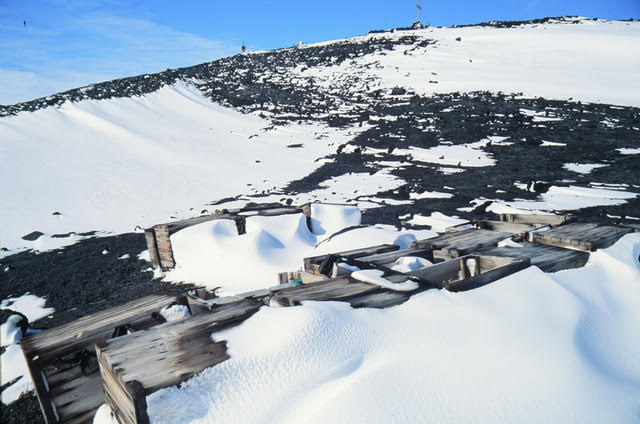


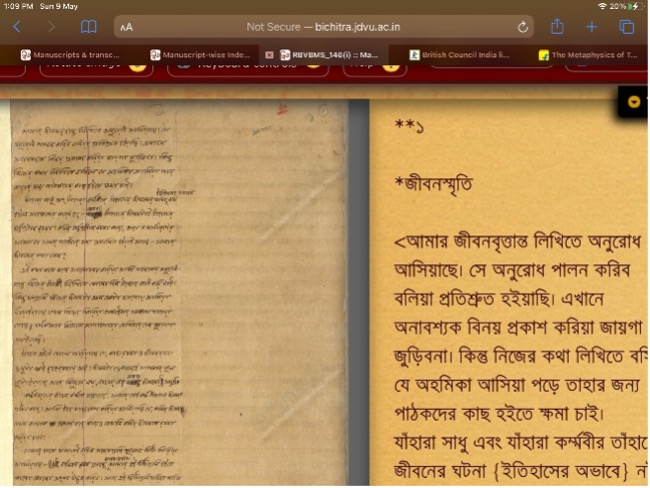
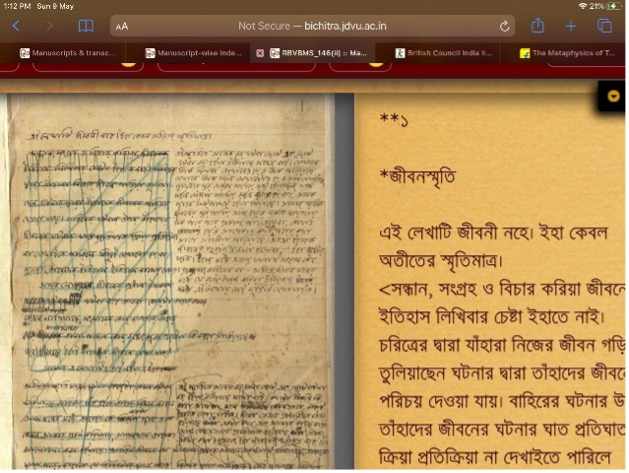
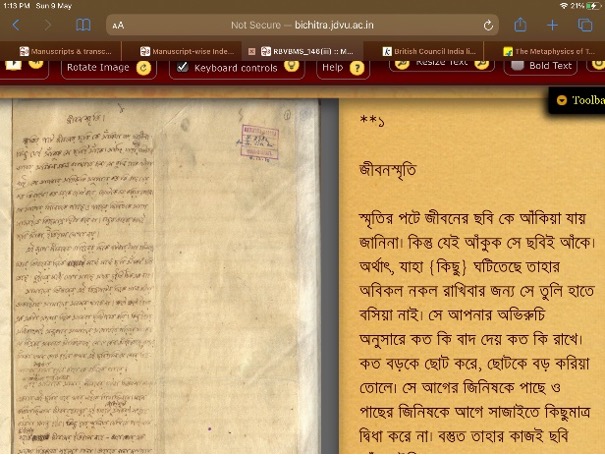
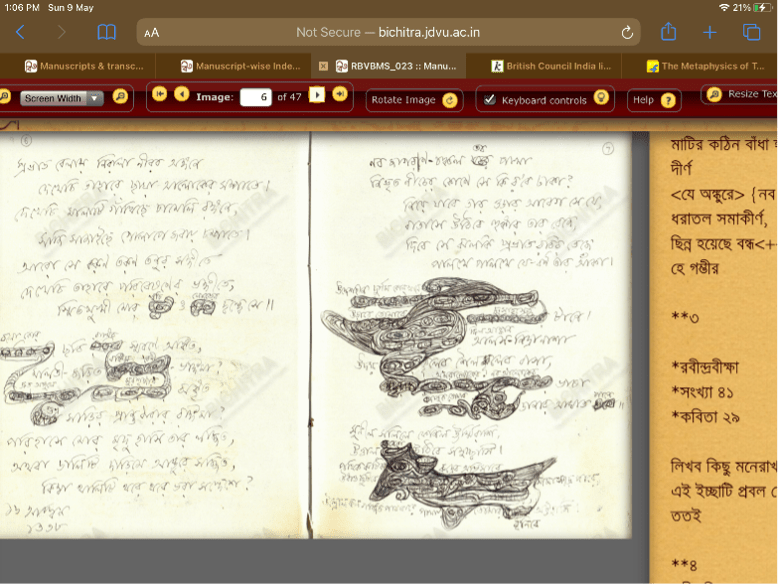

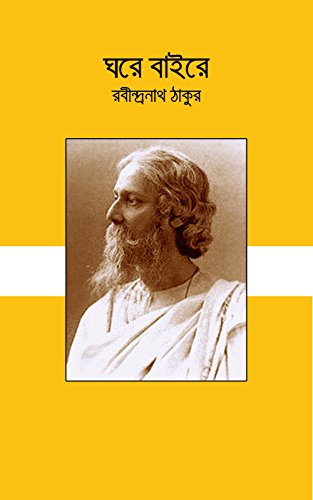
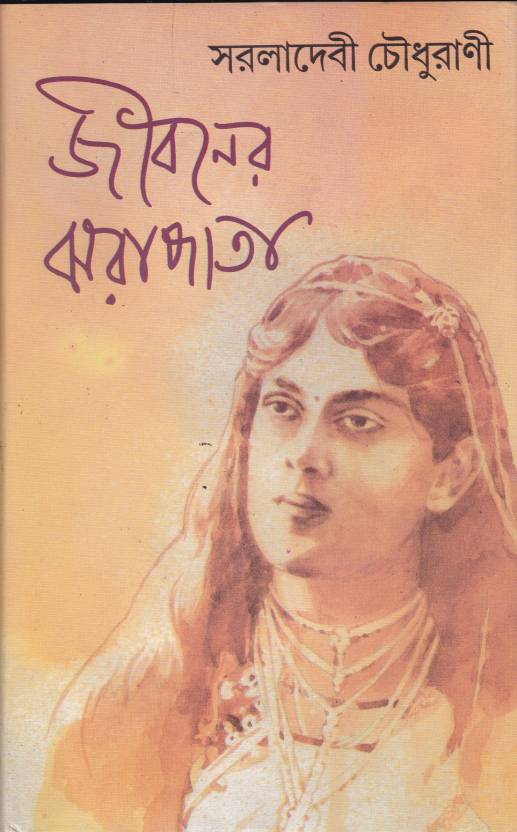
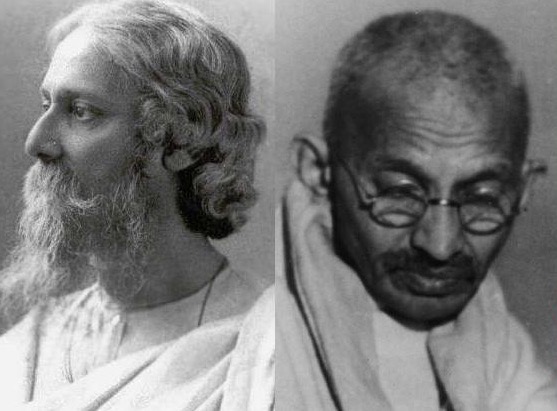
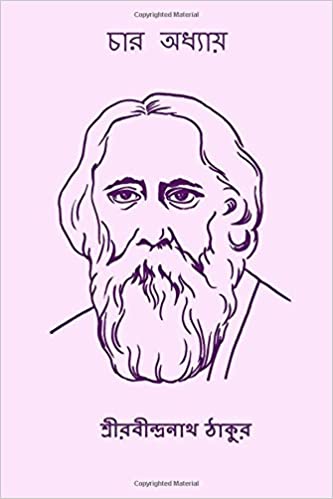
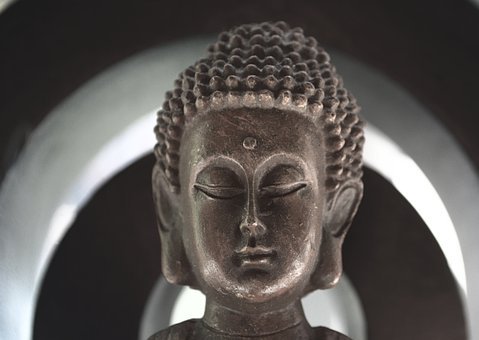

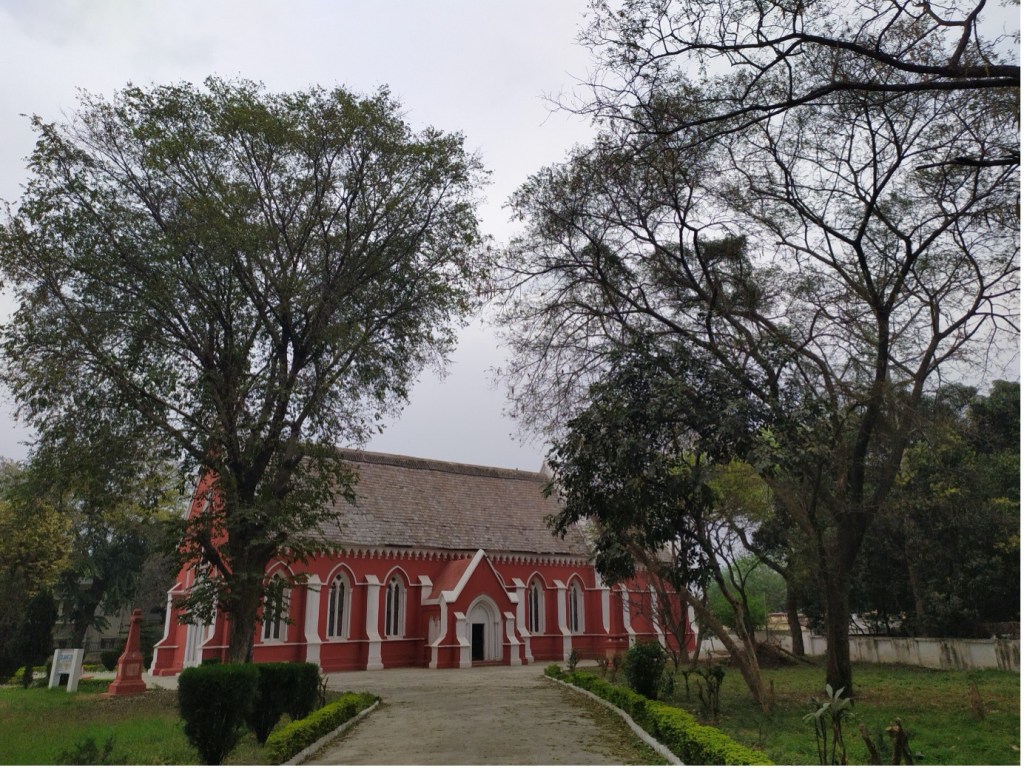
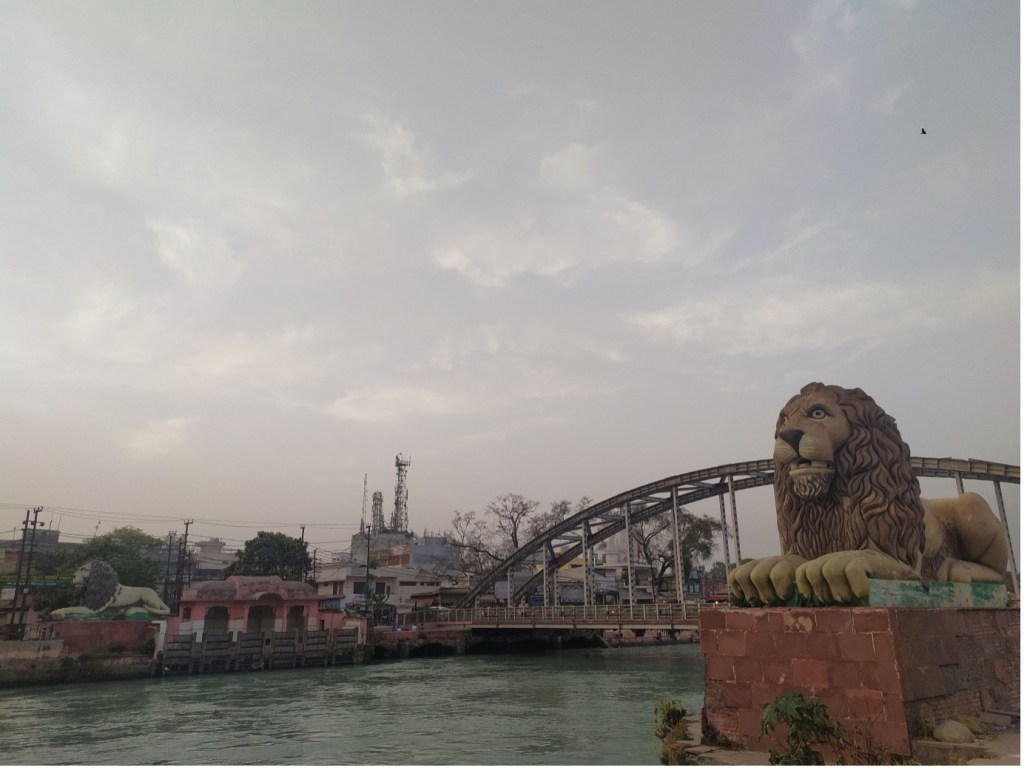

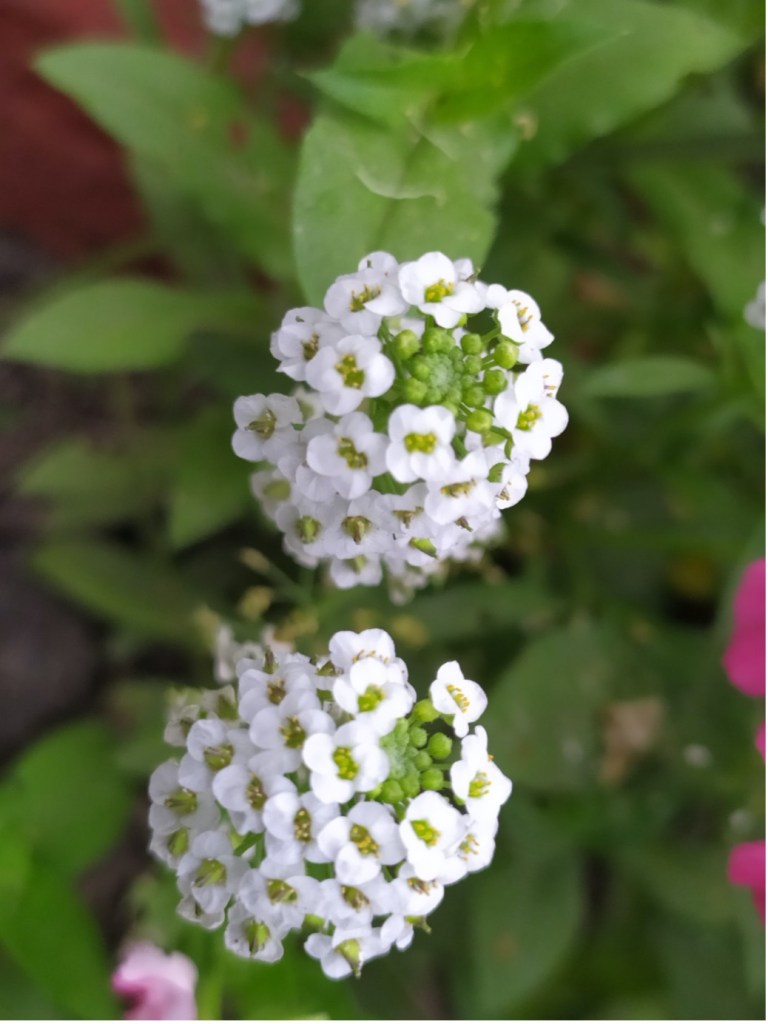







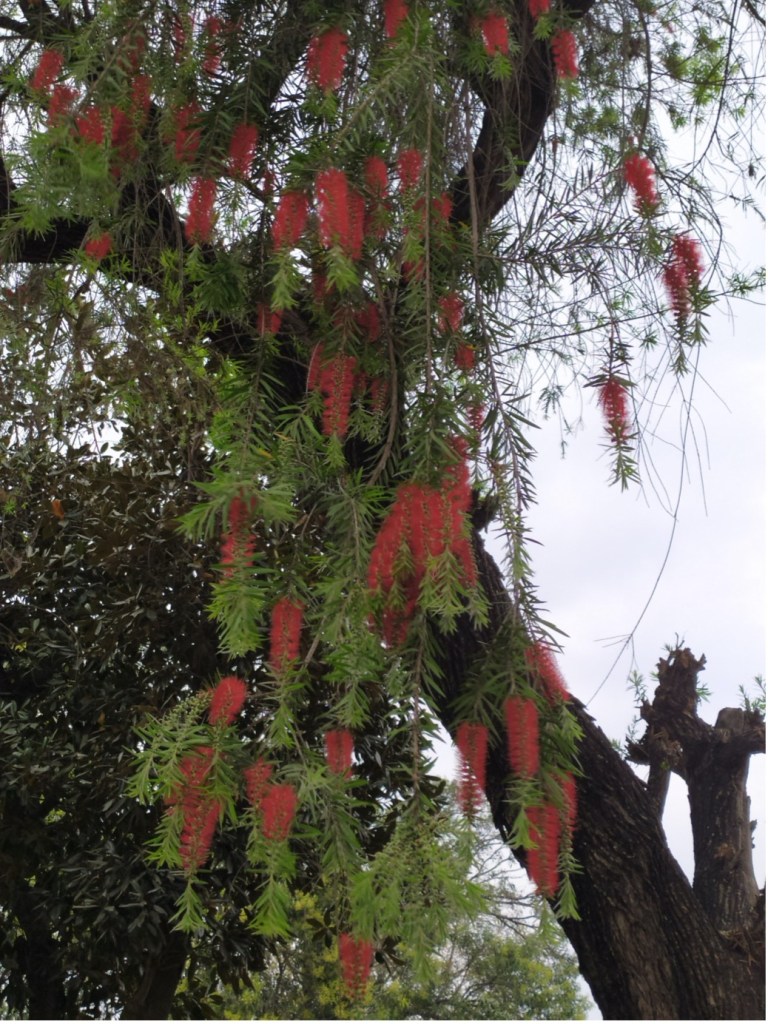
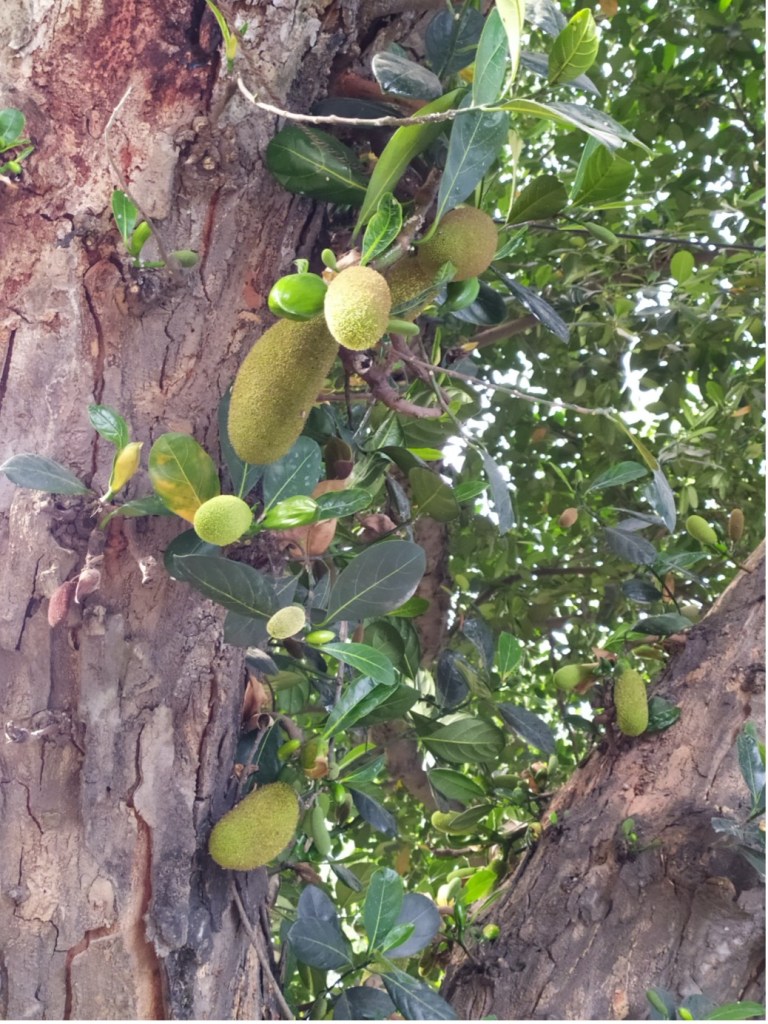

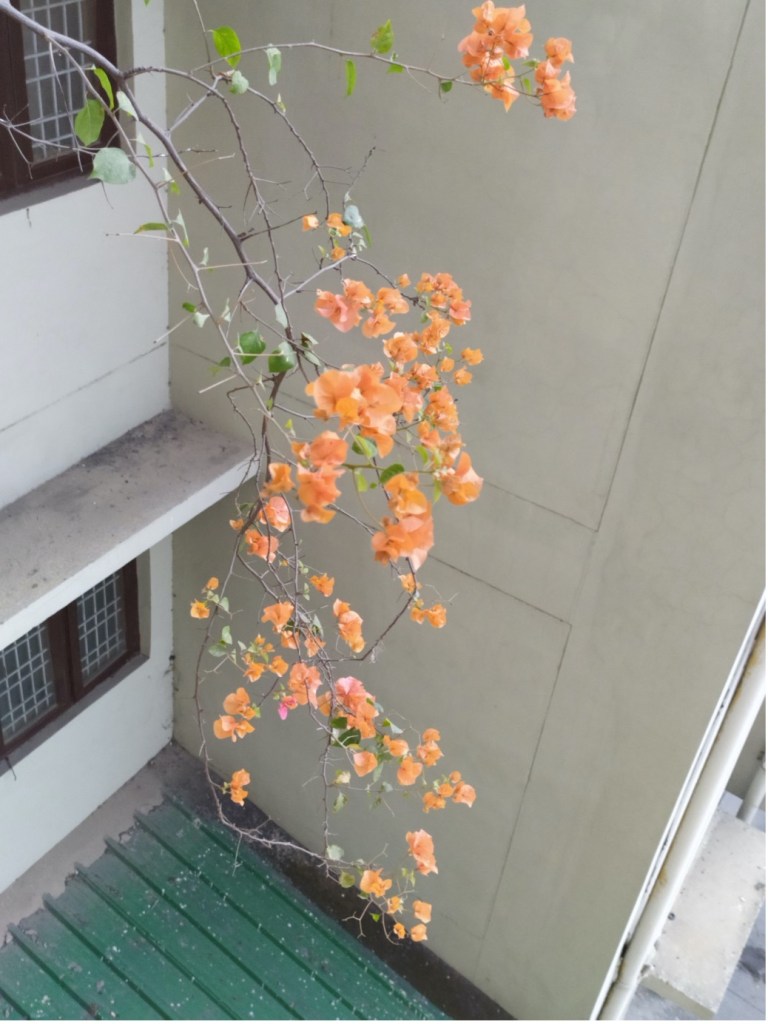
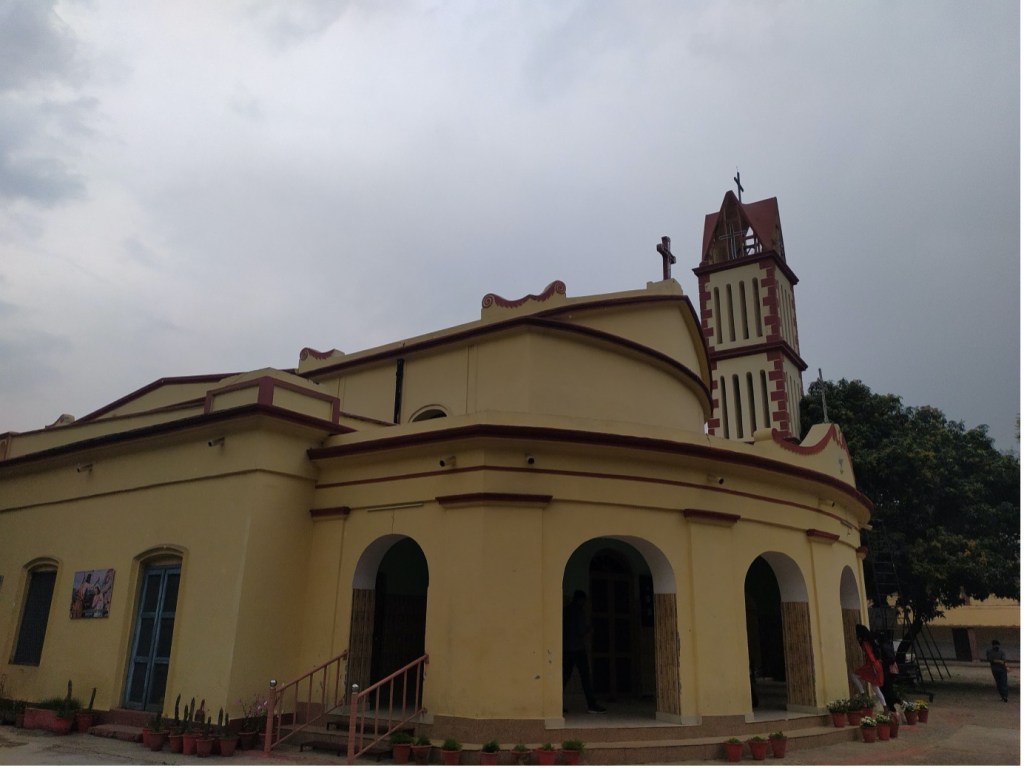


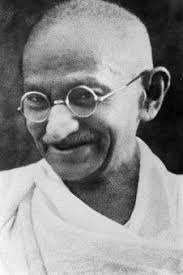



 Borderless
