Categories
Tribute

The Voice that Sings Hope through Suffering…

By Rakibul Hasan Khan

Hasan Azizul Huq. Photo Courtesy: Rakibul Hasan Khan

Hasan Azizul Huq (1939-2021), one of the leading Bangladeshi writers, passed away on 15 November 2021, leaving behind him an exceptional body of works. He was mainly a short story writer, but he also wrote three novels and many essays. His first book, Samudrer Swapna (Dream of the Ocean), Shiter Aranya (Winter Garden) a collection of short stories, was published in 1964. Each volume he published since then contributed to cementing his position as one of the most powerful writers of Bangla literature. Therefore, he is supposed to be remembered for long, at least as long as there will be those who care about the lives of the people whose stories he wrote. I wish I could say that he will be always remembered. I sincerely wish that, but the grim reality is that the number of those who care about the lives of the people whose stories he narrated is disconcertingly decreasing. Whose stories did he narrate? Simply put, he wrote the stories of suffering humanity – the oppressed, people at the margins, the outcasts, and most prominently, the victims of the Partition of India.

Huq was not a popular writer in the typical sense; rather, I would say that he was one of the most “unpopular” writers of Bangla literature. This statement may sound outrageous to those who hold him dear to their hearts for the irresistible attraction of his writings, but I consider them the most endangered species as readers, precariously hanging on the verge of extinction. My premonition is that Huq will be mostly forgotten within a not-so-long-time because there will be very few readers left worthy of his works.

On the other hand, the type of society we are heading towards will consciously and cunningly make him irrelevant, and this process has already started. Huq will soon be considered as a dangerous writer, neither because he is extremely revolutionary nor because he is uncompromisingly rebellious, but because his writings make people think, and thinking is a very dangerous activity. Thinking people are considered dangerous for social harmony and progress, and in future they will be treated as criminals. Even so, there will be some such criminals who will try to read him, but ultimately they will throw his books away with utter disgust and horror because his writings, be it a short story, a novel, or an essay, will inevitably fill their minds with profound shame and guilt for being complicit in perpetuating the suffering of those whose stories he wrote. Since hypocritical and insensitive readers will not be able to read him, gradually his works will lose readership in the days to come.

I can imagine how disbelievingly and contemptuously such a dark vision of the future will be received by Huq’s present readers, admirers, and family members. Huq himself would definitely disagree with me, for he had faith in people and their indomitable spirit as we can see it in so many of his characters, perhaps most notably in the character of the old woman in Agunpakhi (Firebird). But I am very optimistic about my pessimism, and think that such a dispassionately passionate writer like Huq will hardly find any reader in future. Some of his works, of course, will be read, especially those which have already got “classic” status in Bangla literature, but his overall readership will be miserably poor contrasting with his greatness. The smart generation of the smart age will spend their time smartly on their smartphones, smart TVs, smart cards, and all the other smart things that the world has to offer them, rather than troubling themselves with the works of a writer who is not that smart. They will hardly find any interest and time to read an “unsmart” and “unpleasant” writer like Huq.

Huq is in his distinct way a truly unpleasant writer, and he never tried to please anybody by his writing, neither readers nor the people in power. This quality makes him different from many writers. Another reason of his unpopularity is his persistence in using Partition as a recurring theme. Probably this particular feature of his works draws more attention in West Bengal than in Bangladesh, for partition is largely a subject matter of distant past for most Bangladeshis, grossly overshadowed by the more recent memories of the liberation war in 1971.

The oppressive rule of Pakistan period from 1947 to 1971 and the struggle for national liberation of the then East Pakistanis resulted in the general amnesia of Partition memories for the post-liberation generation. This is why, many of Huq’s readers, especially those who are a product of the de-historicising process that dominates our culture and curriculum, struggle to connect with his themes. The paradox that pervades the national imagination of the Bangladeshis in general is that they imagine Partition as a distant and altogether different phenomenon residing outside of their “national” issues. Against this backdrop of the general amnesia of Partition memories, Huq’s writings on the theme are like slaps of words to recuperate a recall of the bitter past. And who likes to be slapped?

Yet, there are those who know how overwhelmingly enchanting Huq’s writings are, and they can derive pleasure from the “unpleasant”. Probably here lies the hope. The future of Huq’s readership may not be so bleak after all! However, the opposite of what I feared will not happen automatically, unless some conscious effort is made by those who really care about his works. We should bear in mind that Huq is a type of writer who “educates” his readers in the process of reading him. So, if a reader can overcome the primary challenge of dealing with his unique style of writing and his “weighty” subject matters, they will eventually emerge as a competent reader to relish his works. Therefore, it is important to create an atmosphere that general readers might become more interested in reading his works.

To this end, it is immensely important to create a culture of critical engagement with the works of Huq. Academics and literary critics are the first who should come forward to invest their time on his works and communicate their readings with general readers. Along with them, translators are those magicians who can really give an appropriate afterlife to his works. To prove ourselves worthy of what he has left behind for us, we need to read him, remember him, and try as far as possible to establish an egalitarian and happy society he envisioned through his works.

(First Published in Countercurrents.org)

Rakibul Hasan Khan is a PhD candidate in the Department of English and Linguistics at the University of Otago, New Zealand. He can be reached at rakib.hasan82@gmail.com.

.

PLEASE NOTE: ARTICLES CAN ONLY BE REPRODUCED IN OTHER SITES WITH DUE ACKNOWLEDGEMENT TO BORDERLESS JOURNAL

Categories
Musings

To Infinity & Beyond!

By Candice Louisa Daquin

Inclusiveness seeks to bridge gaps between peoples and places. Too often our parochial approach in life, leaves us alienated and estranged. But speaking of aliens … in the 2000’s it seems we are at last coming to the point in time where humans will begin to, if not live off world, then visit in greater numbers. Space travel? That’s truly borderless. How exciting to imagine traveling the universe and having our eyes opened to the immense possibilities of space!

Though the elites enjoy space travel, the question remains, will the human race en mass ever truly reach the stars and expand beyond Earth? With this in mind, I posit the following questions;

Is it viable?

Back in the 1950s there was a contagious worldwide fervour to go to space, fuelled by the fantasy of sci-fi writers and films that made this achievement seem imminent. Maybe after the two world wars and the fatigue of poverty contrasted with the hopefulness of better days ahead, we were finally able to dream. In a way, space travel has always been the purview of the dreamer. The Soviets launched the world’s first satellite, Sputnik I, in October 1957. The competition and fear between America and the Soviet Union no doubt accelerated the development of space exploration during this time. Additionally, the cessation of world wars made this logistically more possible, and the knowledge gained from those wars was utilised to create space worthy ships. The race to get to space was a Cold War competition between the United States and the Soviet Union to develop their respective aerospace abilities and send satellites, space probes, and humans up into space. But the whole world was involved, with astronauts, scientists and researchers working together as much as they competed with each other.

In April 1961, Soviet cosmonaut Yuri Gagarin entered Earth’s orbit, in Vostok I, a space craft for one person, becoming the first man ‘in space’. In the 1960s, the US reached the moon (unless you believe that this was faked, in which case, film maker Stanley Kubrick made a faux film of reaching the moon, information on this can be found in the revealing documentary Room 237, by Rodney Ascher made in 2012!). If indeed the moon was reached, it seemed back then, this was just the beginning. There was a palpable obsession with the future. Technology that would get us to space gripped the United States and deeply influenced the cultural artefacts of the time. In 1955, Walt Disney paid consultants who worked on space-related projects to help him design the rocket ship rides of Disney’s Tomorrowland. Songs about space, art and fashion relating to space were all fascinations that beget the drive forward. Stanley Kubrick‘s film The Shining (1980) is supposed to have secret references to the faking of the lunar landing. Whether faked or real, the world believed humans landed on the moon and in a way that’s what counts most — perception.

Then wham! Our predictions of where we’d be by the 2000’s seemed vastly optimistic. For a plethora of reasons, not least, the sheer magnitude and cost of space travel. We were not riding on space elevators or darting around the universe by the 2000’s – so all those old shows predicting we’d be there by now, seemed to be just fantasy. Some people point to the Challenger explosion as the beginning of the end of American at least, space adventure. Cost, danger, the environment, many reasons can be ascribed but do not explain the extreme and total diminishment of interest. Once upon a time people pressed themselves to store fronts to watch old TV’s displaying live rocket takeoffs and now nobody seemed to care if America has abandoned her search for the stars. Was the interest just an epoch in time that has been replaced with other technologies and obsessions? How does this explain other countries who continue to fund and grow their space programmes? How can something as crucial as endeavouring to reach another world, be shelved in favour of the latest iPhone?

Astronauts have spoken out claiming the reason humans have only just returned to the lunar surface since 1973 (China just landed in 2020) isn’t based on science or technical challenges, but budget and political hurdles. This is easy to believe if you consider the American technology that landed them on the moon had less ‘tech’ than a modern-day scientific calculator. I remember going to Houston and seeing the original ‘space control’ and how tiny everything was and wondering how on earth they landed men on the moon and returned them safely. To advance that technology for further space exploration is both expensive, daunting and involves consistent agreement among politicians. Makes you wonder how it was ever made possible! The reason America funded the space race initially was because it was a point of pride (beating the Soviet Union) which as pathetic as that seems, seemed to gear up enough people to make it happen. Without that impetus, politics drowns the scientist and astronauts wish to advance space exploration.

The mother of invention isn’t just necessity, it’s also fantasy. Artists have long influenced inventors – think Star Trek and the low-tech ideas they had, which have been replicated more recently in flip-phones and video-chat. Sci-Fi writers and thinkers have influenced those who seek to go to space as much as anyone else. It could be argued there is no real delineation between fiction and reality in this case, owing to their mutual influence. If we could create a lunar base, scientists believe this base could evolve into a fuelling point for future further-flung missions into deep space. It could also lead to the creation of improved space telescopes and eventually enable us to live on Mars. We need to push ourselves to the next level of exploration – having relied upon ageing technologies that we have not funded sufficiently to advance. Now, billionaires like Elon Musk push for space tourism, rather than chronically underfunded agencies.

One of the biggest impediments, is how to pay and guarantee safety. NASA is under-funded and receives a tiny percentage of the overall US budget. Priorities go to the military and other immediate programs that are deemed more essential. Since this is political, it’s up to the public to generate an interest in space travel. Sadly, even when the Apollo program was at its greatest; after Aldrin and Neil Armstrong stepped onto the lunar surface, only 53% of Americans said they thought the programme was worth the cost, according to a report in the Insider.With politicians changing too frequently to see through long-term investment space projects, this stymies those who believe space exploration should be prioritised. Buzz Aldrin has been strategising to get to Mars for over 30 years, as he lamented the lack of support space exploration receives. Aldrin and other experts agreed it must involve international cooperation: “A US-led coalition would include Europe, Russia, India, Japan and China, as well as emerging space nations the United Arab Emirates, South Korea and Saudi Arabia,” Aldrin said in an article in The Gaurdian. “We can afford to go to Mars but we must have fiscal discipline. We must focus our limited resources on only those things that are really necessary to get to Mars. In my view, we are currently spending over $6bn on programs we do not need to get to Mars. We need reusability, every element of the system.”

It’s nearly 2022 and we’re still not there en mass or reaching further. We’re told it’s possible but technologically there are hurdles to overcome, not least the effect of long-term space travel on the human body, or the effects of uncontrolled radiation from the (belt) or the methods by which we fuel vessels for such long-haul trips. Space radiation is one of the greatest risks for astronauts. “Determining astronaut health consequences following radiation exposure involve very complex processes,” stated Tony Slaba, Ph.D., NASA research physicist in a government website. “It’s difficult to quantify exactly how radiation is interacting with tissues and cells – and more complicated to quantify and determine what long-term outcomes are going to be in terms of the potential diseases and biological system effects.”

And that’s without touching on putting people into statis or some kind of sleep. We have great ideas and history tells us great ideas eventually become reality, but it’s taken us longer than we anticipated back then. Technologies like magnetic and water shielding have only gone so far and need to be prioritised if we’re to live off-planet. Another real threat, alien microorganisms, prions or diseases humans have zero exposure or immunity to. If we imagine what Covid-19 has wrought, it’s easy to see why bringing ‘space-bugs’ back to earth or exposing astronauts to unknown elements, could be fatal. Finding unbreakable ways of protecting everyone will prevent the science fiction horror stories from coming true. But what’s more likely? Thinking about potential dangers being brought back to Earth, or the excitement of exploration?

What does it bring us if we achieve it?

The people who will benefit from space travel won’t be you and I. It will be the trillionaires who can fund projects and much like early explorers they will exploit natural resources and profit from them. Whether they find planets made of diamonds or copper or other expensive minerals it will be they with their reach, who like plantation and slave owners will come out on top. One can argue this is a replication of the exploitation of the Earth, and those people working for the giant industries. I would agree. Does this mean all space exploration is without value? There is always value to reaching further, but it generally comes at a cost and requires exploiting the masses by the few. Pluses could include sending people off world to ease the burden on the planet as we become overpopulated. We might be able to terra form, and create liveable planets that can sustain life, although predictions suggest this would take lifetimes. One idea has been generation ships; where ships are able to manufacture a way to self-generate power and travel for long distances and time. Those in the ship may live their entire lives onboard and it may be their children or grandchildren who reach the final destination. The idea of sacrifice always exists when considering far-flung exploration, and this was often the case when people got into little wooden boats centuries ago in quest of unknown continents.

Can we learn from the mistakes made by early explorers? Or will we repeat history because it’s our nature? If we cannot create planets that are self-sustaining then we rely upon earth to supply those planets with food and water etc. and that’s less sustainable than not going off world. Potentially if we could make this work, it would be years in the future, but might give the human race the opportunity to significantly grow due to increased resources. Without this, we are stymied by the resources of one planet, which we are using up rapidly. Whether it’s a good thing to increase the human race throughout a galaxy or universe, remains unknown. We could be viewed as cockroaches or explorers, that’s up to the interpreter and our choices should we become a race of space farers.

A 2018 Pew Research Center poll showed the tide is turning, with the majority of voters saying NASA space exploration is necessary but majority want the skies scanned for killer asteroids. Maybe the way we get to space will change, in that we have to think of modern day, pragmatic methods of funding space travel, even if its in the guise of space tourism or tagging on the back of projects to protect the planet against killer asteroids. Maybe it will take another tragedy like an asteroid hitting the Earth to advance our current knowledge, as this seems to be the only way humans operate. We are less inclined to prevent disaster as to respond to it. Sadly, if the environment continues to be eroded, we may have no choice but to seek off-world options, and we don’t want to leave that option till it is too late to act. With dramatic weather pattern changes throughout the world, it’s never been more essential to protect Earth but we’ve not doing a very good job if the oceans and air pollution are anything to go by.

What are the potential down-sides?

It isn’t possible to talk about this without considering the many side-effects of space travel. Many I’ve already touched on but it’s worth really to reconsider history which has shown the penchant of humans to dominate and disrespect other cultures. Humans often consider themselves the ultimate alpha, the top dog, but in truth they could be replaced tomorrow depending on weather and climate and natural disasters, just as the dinosaurs were. We shouldn’t let our hubris make us forget our responsibility to our planet. Some argue space travel is a waste of resources and money because it’s looking beyond us rather than at what we already have. Shouldn’t we be fixing our home-grown problems before we focus on the skies? Others say we should look at the ocean before we consider space. Home grown issues include the devastation human beings have wrought on Earth, which most of us are familiar with.

Given we are reckless with our inventions. They benefit us but not necessarily the natural world around us. Is it any wonder to guess why expanding the human race can be a matter of concern? I’m not one who believes humans are the apex and that we are entitled to be. I predict one day we’ll give up our throne. But there’s the other side of me filled with the wonder of imagining what is out there. I mean, if space is infinite, which they have agreed upon, that means it never ends, a concept few of us can even understand or relate to. Imagine? Infinity. What does that even mean? When we humans begin-middle-end and everything around us does the same. It’s the true sense of forever, something larger than we will ever be. I’m filled with a fascination for a universe that doesn’t end, how do I wrap my head around that and comprehend the myriad possibilities this entails!

What I do know is if something never ends there literally are eternal possibilities meaning every possible eventuality must occur, because of the law of replication. There are only a certain number of creations that come from a universe containing certain components and those creations if given affinity, will reproduce in varied forms, but also replicate. I think this is where the concept of parallel universes comes from. Rather than a literal slice in time dividing one notion of reality from another similar but not the same version of reality. A universe that has no end, will eventually ‘play out’ every scenario, a little like you could crack any code if you had long enough to go through the permeations – but we don’t have time, so we don’t do that. The universe, however, does have time, infinite, so all that can be created will be, and all that has been created (including us) will be created (again) in shades of similarity. This I believe is where we get the concept of a parallel universe, although that’s not quite what it is.

If we add to this the concept of space and time, how time is not a set notion but rather, a perception based on humanity, the same goes for our understanding of the material world. In other words, we’re limited by our own physical presence and lifespan in our understanding of what is beyond us. For those like Steven Hawkins or Ashwin Vasavada (Project Scientist for NASA’s Mars Rover Curiosity, in charge of a team of 500 researchers), they can see beyond what is literal and imagine like any great thinker, beyond what we know and assume, and extrapolate. This extrapolation includes quantum physics and the breaking away from normal modes of thinking to include things we’re only beginning to understand.

If time is not mutable, if concepts of reality really don’t exist as we assumed they did, then it throws everything into question. Is what we perceive as reality even remotely real? Or just a flawed, human-centric bias? And if the latter, the universe’s secrets are closed to the limitations of our minds? This is why some who have taken psychedelic drugs have said, sometimes the doorways of perception (Aldous Huxley’s The Doors of Perception, written about his experiences with mescaline in May 1953) must be opened differently. Huxley was in turn influenced by the poet William Blake who wrote: “If the doors of perception were cleansed then everything would appear to man as it is, Infinite. For man has closed himself up, till he sees all things through narrow chinks of his cavern.”

Science, logic, mathematics, will probably provide us with many answers but in order for us, as sentient but limited-sentient beings, to evolve perceptively, we may need a further key to elucidate things beyond subjective perception. Some evaluation of psychedelic drugs as facilitators of mystical insight with great potential benefits for science could be that missing link.

Having read a great deal of science fiction, I wonder if I would think like this had the ideas not been implanted by some of those great science fiction tomes and operas. I suspect we build on what we learn, so nothing is entirely original, but in building on others, we may come closer to answers than if we operated in a vacuum. This is also true with making science fiction a reality. But just as our urge is to explore, we should be mindful of past mistakes as a race (human) and not repeat the colonialist model that only caused pain. Otherwise, life could be no more than a petri dish with us experimenter or experimented upon. There is more to life than conquer or absolute knowledge. There is the humility of experience and growing from it, which is something we often diminish. Perhaps spirituality and hard science are not after all, so incompatible.

Will it actually happen?

The development of nuclear-thermic powered propulsion systems to enable long-haul space-flight is essential to reduce crews journey time and make travel to Mars and beyond realistic. Heat shields to ensure landing is safer on unknown planets, would cut down on landing fatalities. Next generation space suits that are flexible and livable would allow explorers to spend more time in their suits than the suits of old that were not invented for long term use. There would also need to be a nuclear fusion style power system that enabled those landing on planets, to tap into power whilst on planet, and not fear running out. Radio systems used currently, can take up to nine years to send transmissions from say, Mars to Earth, so the development of technology like lasers to send information and communications rapidly would be essential. Scientists like Sharmila Bhattacharya (Director of Research in the Biomodel Performance Laboratory of the Space Bio-sciences Division, NASA) are spending decades researching the effects of the human body in space to understand how to survive, even thrive in space.

I’d love to think our progeny will reach space in a way we have yet to. Why? Because there is something fantastic about imagining us getting off-world and exploring. I think human beings are innately curious but like cats, their curiosity can be destructive. I would like a more utopian future, where we learn from prior mistakes and if we do reach space, we do so ethically. I don’t know if that’s possible, but anything less will be just another belching coal mine, suffocating those who work in it and those who live around it and that is not a dream I share.

Why is going to space so bewitching when we have unexplored oceans that we’re contaminating rather than exploring (Eight million metric tons: That’s how much plastic we dump into the oceans each year. That’s about 17.6 billion pounds — or the equivalent of nearly 57,000 blue whales — every single year. By 2050, ocean plastic will outweigh all of the ocean’s fish.). Without the ocean, the planet dies Is space travel selfish when starving people here on Earth need immediate help rather than pouring money into space flights that are at this time, only for the privileged? I think we all share a bigger dream of being ‘more’ than simply Earthlings. If a God exists maybe they don’t want us to go beyond these confines, or maybe they do. If a God doesn’t exist, then it seems obvious we’d want to go as far as we could, because again, this is our nature. It’s how we do it. And if we do it because we’ve ruined this planet, that’s a pretty good determinant that we’re going to make the same mistakes in space.  

Finally, is it necessary?

This is perhaps the most important question because we do a lot of things that are not strictly speaking necessary. Ever noticed how when someone gets money, they spend a lot of it on ‘unnecessary’ things? Why don’t some of these uber-rich people put money into worthy causes with the same intensity as frivolous? Why do those with money often need more? Why is the accumulation of material gain, so addictive? All this relates to a bigger question, a moral question. What is necessary versus what is not? For a rich person they go well beyond what is necessary in an ordinary sense because their wealth gives them more opportunity. Interestingly those who win the lottery are often said to be less happy after winning than before. Perhaps money is a double-edged sword. There is something to be said for adversity and earning our own way in the world, and a realistic measure. A bit like when you spoil and ruin a child because you indulged them and they no longer have a sense of the true worth of things.

We are very entitled when we get into those vaunted positions and perhaps things we think are necessary, are not. So how do we decide? Is it right for us to be a moral judge and tell others their dreams and excesses are not allowed? Realistically we could never control excess, so it’s not an option. There will always be people who live on different levels and have excesses the ordinary person cannot imagine. Those people may use up the resources we have to share, in greater quantity, which is bad. Or they may inadvertently propel our collective aspirations further. By having some of us who are capable of making dreams come true, the rest of us are swept along by the excess and the dream. In this sense, dreams are necessary, as they give us all something to aspire to, even if we may not literally be the one possessing the outcome of the dream.

I think it is necessary to have aspiration and fanciful dreams that aren’t strictly speaking practical or entirely pragmatic. Sometimes we just want to dream bigger than we are, because we know we are all going to die eventually, and we want something astounding. For some of us this may be God, for others it may be space (or it may be both). Without this, we revert back to the star gazers of the past, who probably also hoped their progeny would reach those stars but didn’t have the means to make it come true themselves. If you have the means, maybe you should use them, just as if you have the ability to invent and conceptualise, you do so. Maybe it’s an intrinsic collective wish that we should not neglect, by being entirely sensible. Maybe we won’t save the planet by aiming for the stars, but we might find a little magic.

Candice Louisa Daquin is a Psychotherapist and Editor, having worked in Europe, Canada and the USA. Daquins own work is also published widely, she has written five books of poetry, the last published by Finishing Line Press called Pinch the Lock. Her website is www thefeatheredsleep.com

.

PLEASE NOTE: ARTICLES CAN ONLY BE REPRODUCED IN OTHER SITES WITH DUE ACKNOWLEDGEMENT TO BORDERLESS JOURNAL.

Categories
Review

A Sagacious Tale of Oppression & Turmoil

Book Review by Rakhi Dalal

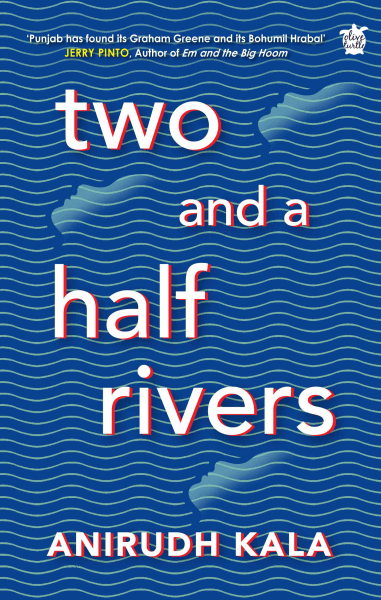
Title: Two and a Half Rivers

Author: Anirudh Kala

Publisher: Niyogi Books, 2021

How do we understand a land and its people? How do we look at its history, at a phase of turbulence which once ravaged the lives of its people? At the social structures rarely talked about? And how do we make sense of it? Can the perception be whole if only selective truths are voiced?

The Partition of India in 1947 had left Punjab with only two and a half rivers out of a total of five. From the early 1980s onwards, a state which had witnessed much violence and bloodshed at the time of Partition, began to be devastated by the spread of militancy again. This period of unrest spanning almost a decade was the time when common people, who had yet not recovered from the trauma of partition, faced the torment of not only terrorism but also counter insurgency. And though there are numerous reports on the violation of Human rights during counter insurgency in Punjab, both the Central and the State Governments have continually refuted such reports.

Two and a Half Rivers is a fictionalised account of those troubled years of Punjab through the lives of three main characters — a clinically depressed doctor, trying to take on life one day at a time, and Shamsie and Bheem, both Dalits, struggling to make their dreams a reality. Writing with keen perception, the author, Anirudh Kala, not only offers a striking account of the many ordeals that people went through that period and the solidarity which helped them keep afloat but also of the less addressed issue of oppression of lower castes and their sufferings.  

Kala is a psychiatrist by profession. His aim is to educate people about mental health and mental illness, focusing on eradicating stigma, labels, and prejudice. His debut fiction The Unsafe Asylum: Stories of Partition and Madness was published in 2018. Two and a Half Rivers published by Niyogi Books is his second work of fiction.

In this novel, he juxtaposes the situation of state with that of the mental illness of the doctor who is also the narrator. As the fog of depression descends on his mind, the state is also veiled by the layers of sorrows and anxieties from which no escape seems visible. With the increase in terrorists activities, the rivers start filling with the dead again as if to devour those who had somehow survived the Partition. An increase in extortion, abduction and killing by the terrorists leads to the nabbing of common people on doubt by police. The custody, seldom resulting in the release of those apprehended. Jails become torture centres and those captured subjects of experiments for effective torturing. The unrest that follows compels Shamsie and Bheem to shift to Bombay in search of a peaceful life only to return back few years later in the aftermath of a crackdown on Dance bars.

Following the timeline of those difficult years, the author looks at the tragic events which made the ‘Punjab problem’ worse in succeeding years. He takes into account Operation Bluestar, the assassination of the Prime Minister (who he names as Durga), the pogrom of November 1984 and counter insurgency. The novel offers a commentary upon the inept tackling of the situation by the state including ruling dispensation and police. The narrator minces no words while observing that the State and Army had conveniently forgotten that there were to be a large number of pilgrims in the Golden Temple at the time of that operation as it was the celebration of the martyrdom day of a Sikh guru or that more common people began disappearing after the police chief announced incentives and rewards to curtail terrorism.

While the narrator narrowly escapes the custodial torture after being picked for alleged connection with militants, Bheem isn’t that lucky. His identity becomes the final noose around his neck. Shamsie suffers assault too, a punishment for escaping advances of an upper caste boy in her teenage. Whilst common people die and more disappear, Punjab is steeped in sorrow of losing loved ones from which only the tears of grief bring some respite. We are told that more than eight thousand young people have not come home, and never will.

With the poignant telling of this tale, the author also prompts the reader to ask why the lives of those from lower castes are far more easily dispensable, why are they inconsequential, why this malaise is so deeply ingrained in the minds of upper caste and why is it a normal way of life. In a religion which believes “Awwal allah noor upaya qudrat keh sab banday, aik noor toh sab jag upjaiya kaun bhale ko mande” (All humanity was born from a single divine light, and everybody is born equal. All are the children of nature, and no one is good or bad), how can there really be a discrimination based upon caste?

Sensitive is one word that can be best used to describe Kala’s writing. He writes not only from a place of awareness but perhaps also pain and anguish. His description of the distressed years of Punjab carries a rare sensitivity which warrants a deeper understanding of the place as well as its people. That he chooses to tell it through the lives of two Dalit characters, also bring forward his focus on the otherwise lesser talked about issue of caste discrimination in Punjab. The narrative voice is subtle and sometimes seems distant, which works well for the reason that it gives the narrative a sagacious tenor, making it compelling and very moving.

.

Rakhi Dalal is an educator by profession. When not working, she can usually be found reading books or writing about reading them. She writes at https://rakhidalal.blogspot.com/ .

.

PLEASE NOTE: ARTICLES CAN ONLY BE REPRODUCED IN OTHER SITES WITH DUE ACKNOWLEDGEMENT TO BORDERLESS JOURNAL. 

Categories
Stories

In Search of a New Home

By Marzia Rahman

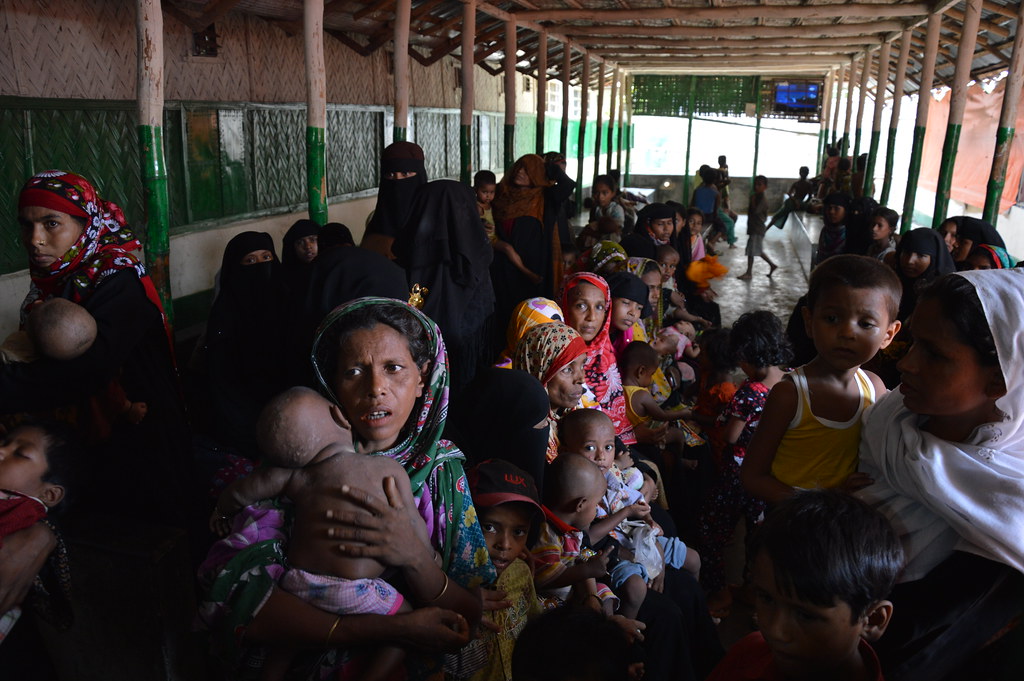
Refugees: Courtesy: Creative Commons

Migration is tough, littered with blank memories and a bleak future. It’s not something you ever hope to do.

Yet, you find yourself standing in a long queue, with a tiny bundle in hand, despairing to do or not to do? Fleeing a country that you naively thought yours. Stepping on a country that you know nothing about. That would never accept you as her own. Non-belonging is not a breezy concept, a topical topic in a critical theory. It’s an unnerving parable of human condition that no human ever yearns for.

You shudder, clasping the tiny bundle, containing your entire household, your sixteen years of life. Behind you, in a burnt house of a burnt village, your parents, your old grandmother and your two young siblings buried under the ideological beliefs of the state. Too complicated to grasp. Too easy to elude. “They don’t want you”— a clear and loud message the government sent to your people through army, arson, and atrocity.

Where is God? Your silly query swirls in the smoky air of a plundered village where dead people shrouded beneath dead humanity.

Tears fall on the tiny bundle, too small to carry so much misery. How can you leave your home where every dusty road is filled with memories, stories and songs? Where once a young man presented you a handwritten poem and a lotus flower. Where is he now? Dead or alive? Will he search for you?

The long queue gets smaller, some move forward, a few cries looking back at the village while boarding the boat.

Your turn.

They ask for money.

A gold chain, a few coins, a nose pin?

You have none.

Yet, the duo, one boatman and a middleman let you in. They have other means to usurp the debt. 

You are crammed between a family with five children, an old woman with acne and a little boy with a broken toy. There are others, men, women, children—your people—hunched and twisted in a small, shabby boat in silence.

Hours after hours, you travel in an opaque night under a livid moon. The endless sea stretches endlessly. What is the name of the sea? No one knows. Your people are poor farmers, illiterate housewives. None of you have ever read history, geography or geology. Ever stood in front of the Taj Mahal or saw any of the seven wonders. You have no idea of its existence. How would you know the glow of the sea is called sea sparkle? How would you grasp that it’s not magic but the phosphorescent waves lighting up the night?

Soon, you and your people would reach a new place. A new country with fresh troubles. Maybe, a new hell. Yet, each of you pray earnestly to reach there safely and soundly. You have no desire to be part of the global headlines. To be found lying face-down on some unknown beach. 

All you want is a new home. To build new dreams.

.


Marzia Rahman
 is a Bangladeshi writer. Her writings have appeared in several print and online journals. She is currently working on a novella. She is also a painter.
This story was first featured in the Writing Places Anthology.

.

PLEASE NOTE: ARTICLES CAN ONLY BE REPRODUCED IN OTHER SITES WITH DUE ACKNOWLEDGEMENT TO BORDERLESS JOURNAL

Categories
Poets, Poetry & Rhys Hughes

Trouser Hermits

Looking at footage of the pedestrians in a European city at the beginning of the 20th Century, it struck me, as it generally strikes most modern people, how many of the men back then wore hats as a normal part of their everyday attire. Women too, of course, but women often still wear hats. The hat hasn’t really gone away as far as the female head is concerned. But among European men, it is no longer common. While studying this footage I was told by another observer that in those days, “Men would never go out without a hat,” and everything I saw on the screen seemed to confirm this judgment.

But then it occurred to me that such an ubiquitous expectation contained seeds of doom for certain unlucky souls. A man might have possessed only one hat. It is vital that he goes out. He looks for the hat but can’t find it. Maybe it has decayed overnight into dust. Perhaps the cat ran off with it. Possibly it is simply lost without explanation in the manner of so many other domestic objects. The hat has gone. There is no spare hat and so the man is stuck indoors. Men never go out without a hat, and he has none, therefore it is impossible for him to go out.

But he must go out, it is important, maybe his daughter needs rescuing from a cad, or he has to invent the electric brougham. What are the options? Well, to improvise a hat is the obvious solution. A tea cosy makes an excellent item of headgear. I know this from experience. So do many others. I believe that it was Stewart Lee who once said something along the lines of, “Put a man in a room with nothing but a tea cosy and if within the hour he isn’t wearing it on his head, then he is the very definition of a boring person.” I concur wholeheartedly and wholeheadedly with this sentiment. The tea cosy hat is superior to a topper.

The main reason I first tried wearing one was to spoof Aleister Crowley, that half fraudulent, half brilliant, half ludicrous magus, and if those fractions don’t add up it’s entirely apt, because the parts of his life didn’t add up either. He liked to wear strange, soft, comfy looking things on his head. They weren’t really hats as such, more like an unholy conjunction of turban, cushion and mitre. Almost exactly like tea cosies in fact! I wore the tea cosy and spoofed him and it was a satisfying experience. Had I been born one hundred years earlier than I was, I could have gone out wearing it and made my way to the nearest hat shop in order to purchase a proper hat. The tea cosy might look absurd but at least it can pass as a type of hat, and that would be enough to permit me to walk the streets without censure.

Or rather, there would be censure in the form of ridicule, for a man in a tea cosy is a natural target of fun, but no censure in the form of social outrage. And the moment I reached the hat shop I would be safe, safe to buy a proper hat and emerge like a true man, a man able to hold his head up high in public, not just in order to keep the new hat balanced on top, but because I would have nothing to fear. The tea cosy could be stuffed into one of the deep pockets of my baggy trousers. No one need know it was there. No shame and no worries. I would be a man of my time again.

Trouser pockets, however, are a subject that brings me to another consideration of greater relevance to our own society. If you own a hat in the modern age and your cat runs off with it, what difficulties do you face? Very few compared with your ancestor of a century ago. But imagine you only possess one pair of trousers, and these trousers suddenly disappear overnight! Now you are in trouble irrespective of the year of your birth. Even if the trousers don’t completely disappear, even if they only tear and flap open at the crotch, the result is the same. You will be unable to visit the trouser shop for another pair of trousers. To visit that shop requires you to walk there and to walk to a shop, even a trouser shop, necessitates that you are already wearing trousers. A man without cheese might plausibly go to a cheesemonger’s but no man goes to the vendor of trousers in the nude. The scenarios belong to separate categories. A man with only one pair of trousers who loses the use of those trousers is stuck indoors for the remainder of his days. He is a prisoner.

But maybe it is kinder to refer to him as a hermit? There are no political, criminal or moral millstones around the neck of a hermit, as there are around a criminal’s neck. A hermit retires from society. We walk down the street and we see curtains twitch in the windows of the houses we pass. Shadowy faces are behind them. There are tens of thousands of trouser hermits in the cities of our civilisation, men trapped into a life of enclosure by massive trouser trauma. They could be rescued easily enough. A pair of new trousers fed through the letter flap of each unhappy abode. But we are ignorant of them and their desperate need. We pass on, oblivious, striding in our own good trousers. Also, we are wise, we are prudent, we are prepared. At home we have many trousers, we aren’t as feckless as these lost trapped souls in the rooms of those houses who are destined to dine frugally on what little food remains in their cupboards before going on to devour cobwebs and furniture.

The circle can be completed, even though it’s not really a circle but just a lump of an unspecified kind. The trouser hermit has no wife or family to come to the rescue and his work colleagues simply don’t care enough about him to seek him out. Yes, he can attempt to improvise trousers by knotting together towels and dishcloths, but he is too clumsy to do so. He cannot call for help on the telephone because the telephone was one of the first things he ate when the tinned food ran out. He is too shy to bang on the window at passers-by for help. He is the perfect anchorite, stuck to the seabed of his own reticence even though the vessel of normal life has broken free and gone sailing off without him. What can he do?

He will lurk because lurking is one of his natural skills. And at the base of some little-used wardrobe in the spare room he kept for guests who never came, he will find items of old clothing he had forgotten about. Our final view of him, in our hungry mind’s eye, shows him squatting in this gloomy space munching on hats, the hats of a former time, the hats that are no longer crucial for a fulfilled life, the hats of sundry sizes and miscellaneous materials that betrayed the scalps of our elders with historic itchings.

.

Rhys Hughes has lived in many countries. He graduated as an engineer but currently works as a tutor of mathematics. Since his first book was published in 1995 he has had fifty other books published and his work has been translated into ten languages.

.

PLEASE NOTE: ARTICLES CAN ONLY BE REPRODUCED IN OTHER SITES WITH DUE ACKNOWLEDGEMENT TO BORDERLESS JOURNAL

Categories
Slices from Life

Canada: A Live Canvas

By Sunil Sharma

Can a patch of foreign sky and Earth speak to you in the manner it earlier did to the lost tribes guided by the bright stars, suns and moons?

The way it spoke to the early Greeks or the Vedic-era folks — among other pre-industrial cultures — that created marvelous odes, arts and regions that still appeal to a new-millennial audience hooked to gadgets as their reality?

A Homer that continues to inspire!

Possible?

The trance where natural elements convey profound truths; enabling the viewer to recover a lost innocence and old mode of perception.

Could such a luminous past be re-lived?

Could it recur?

Yes.

Here is the how of this communion.

.

In Canada, escaping colours is impossible.

In Mumbai, finding colours, impossible.

The contrast shocks. Toronto is dressed up in multi-splendoured gown.

 You are participating in a romantic landscape.  

.

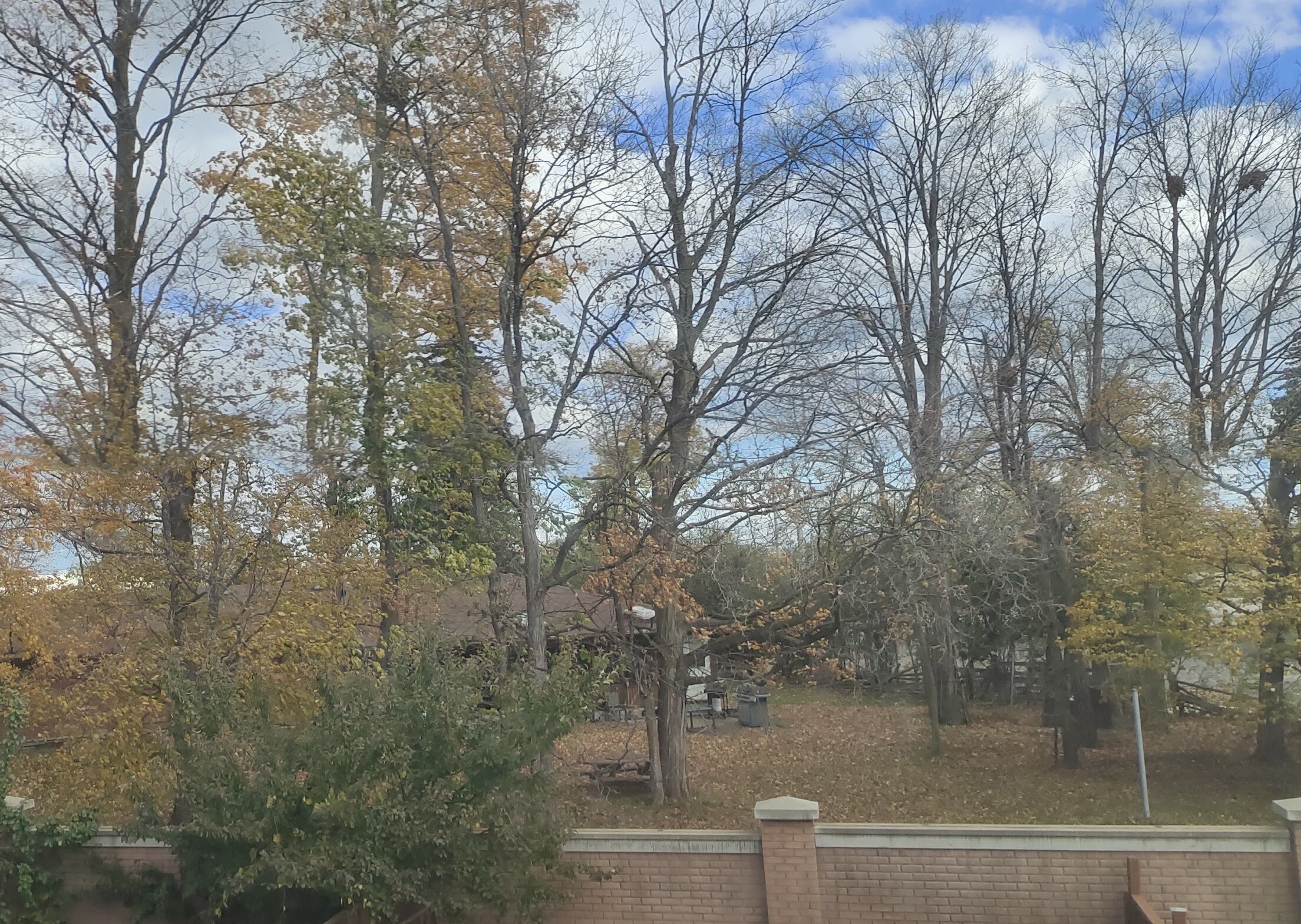
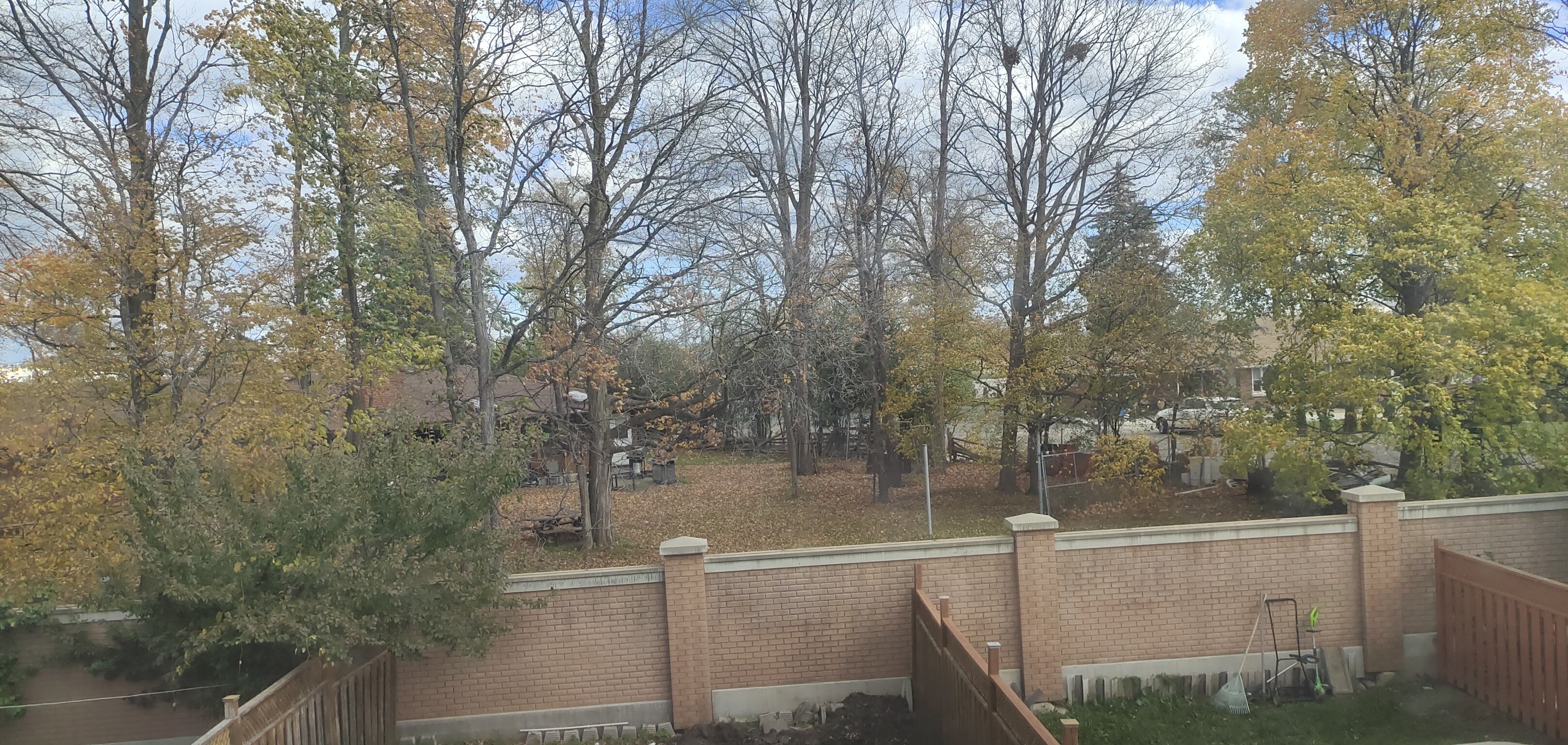
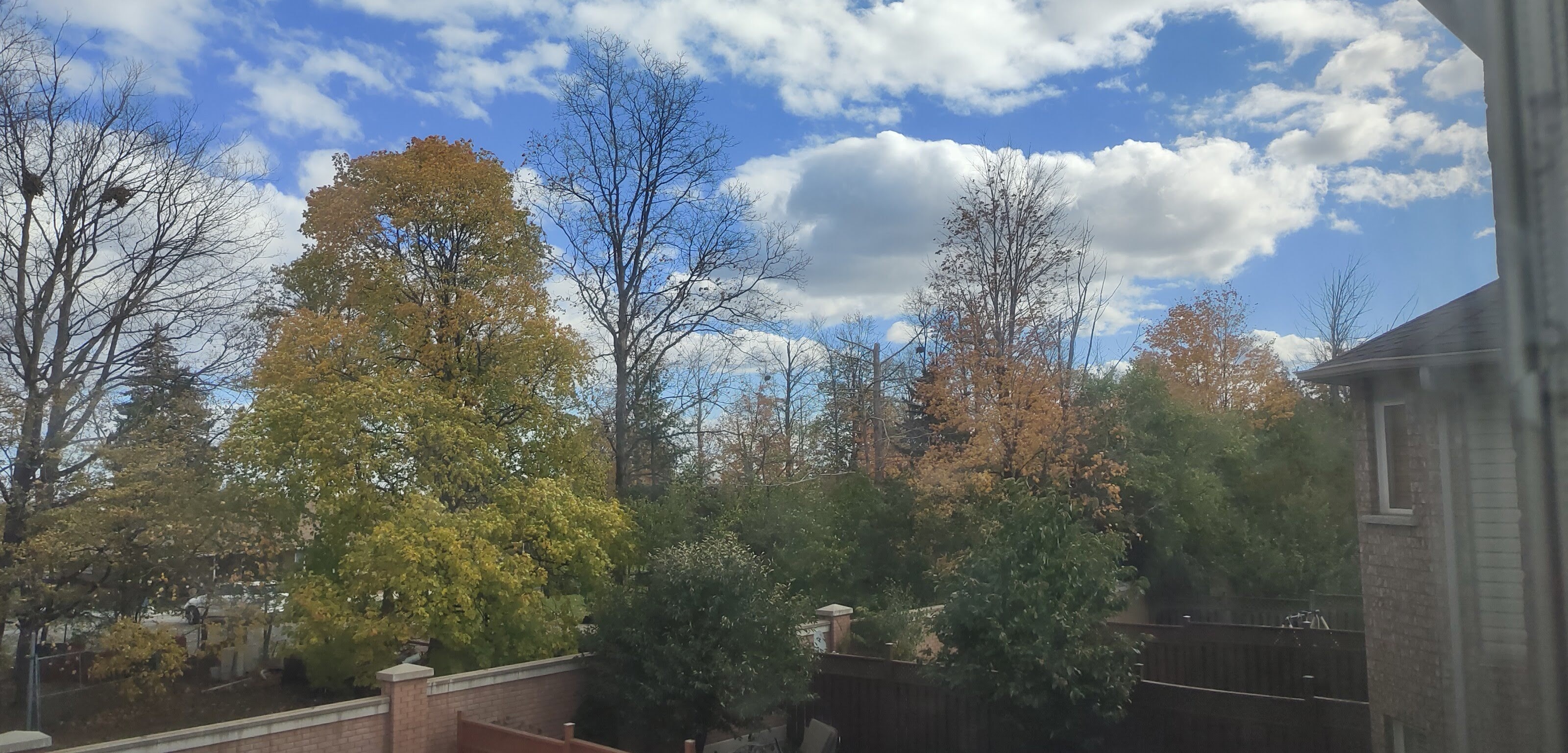
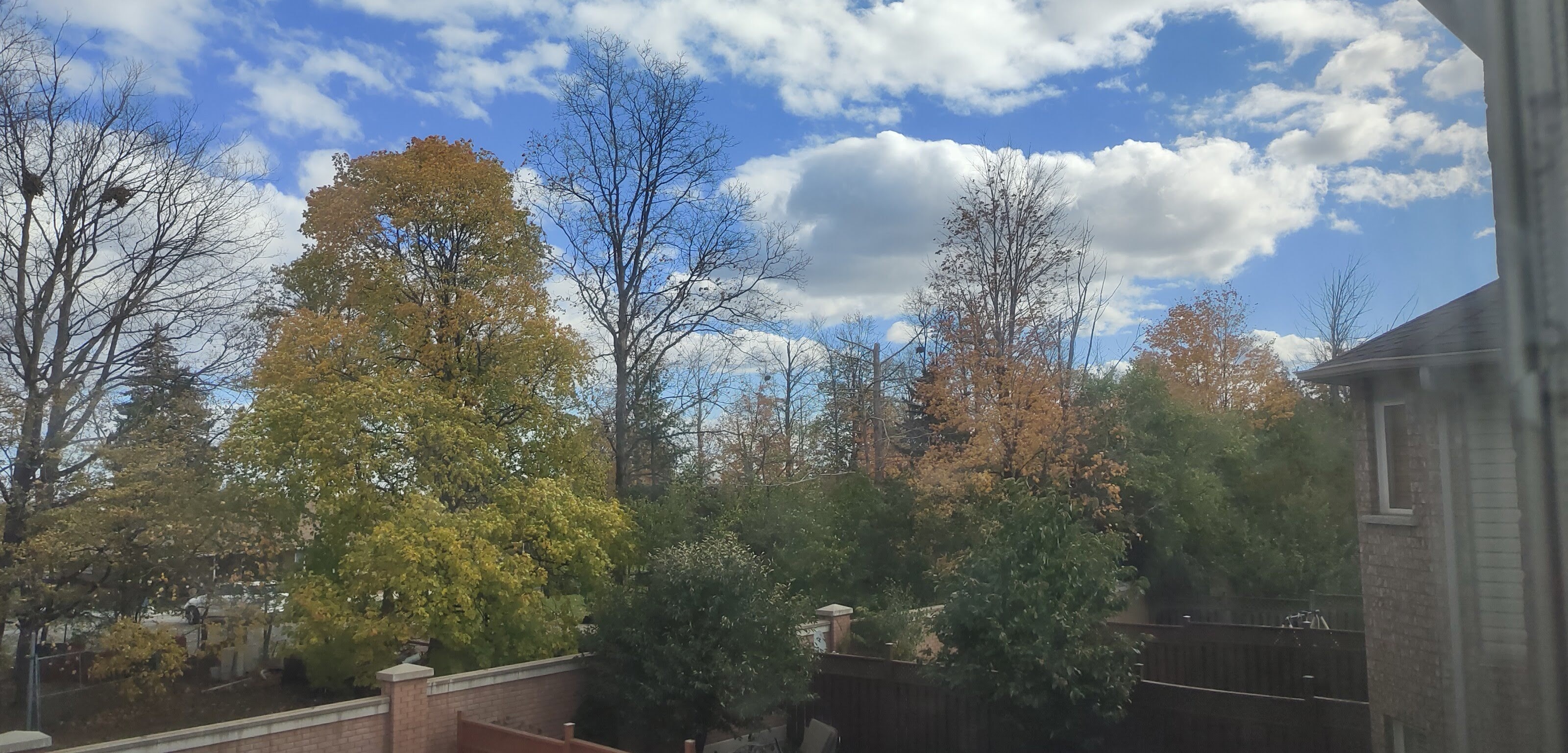
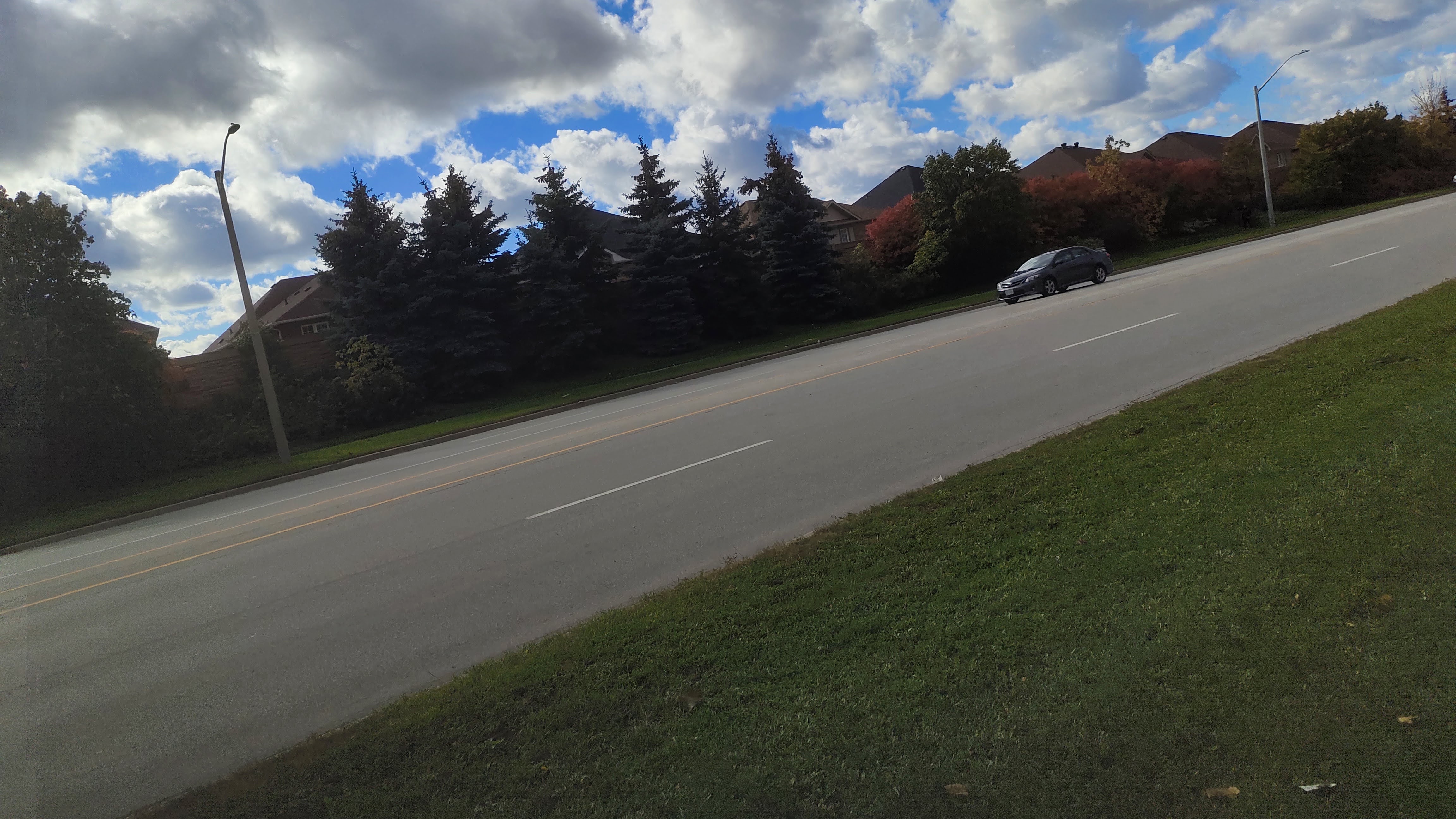
October morning. We walk down along a trail in the heart of a busy neighbourhood.

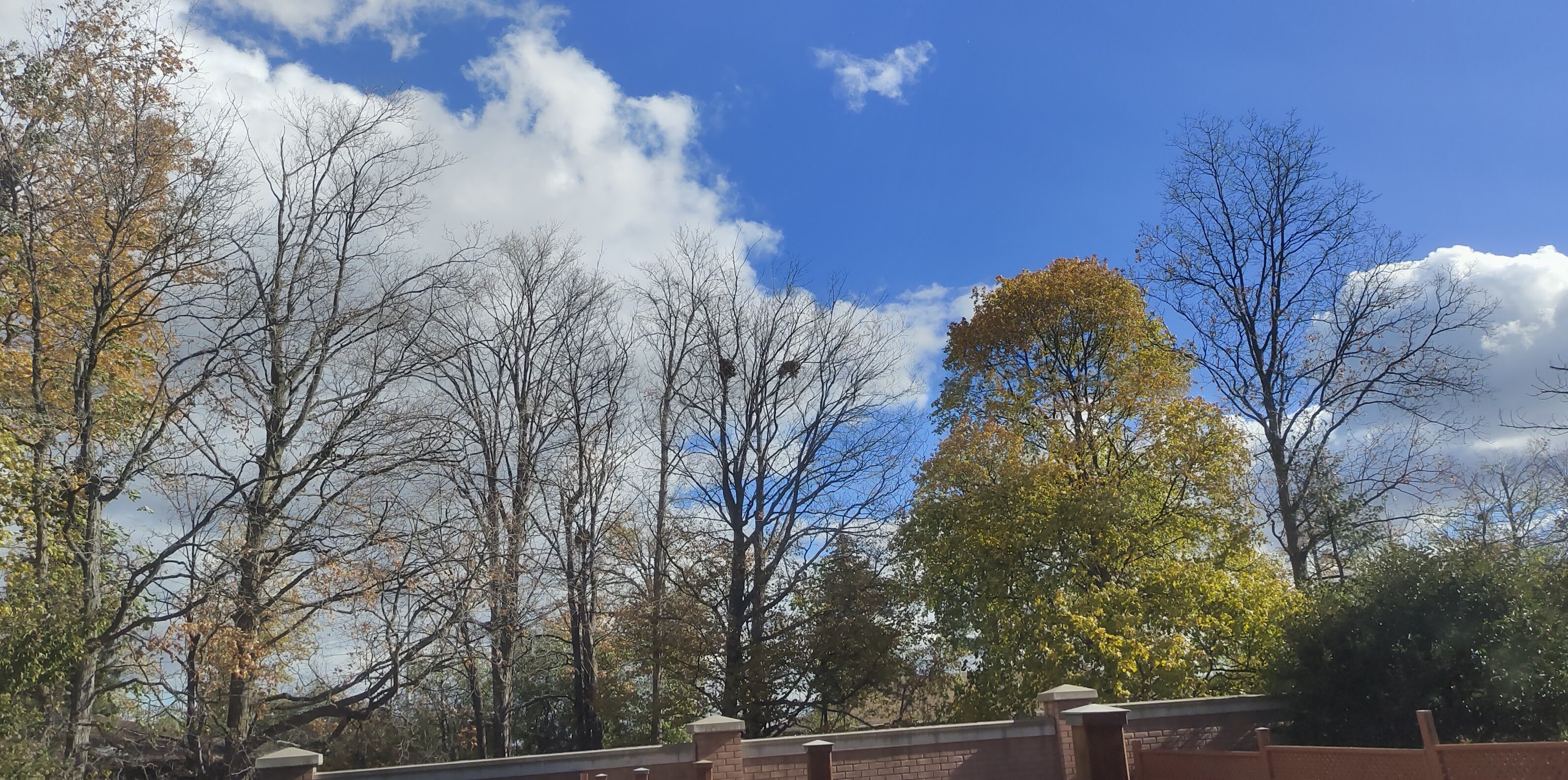
The sky is dotted with daubs of grey and white against the brilliant blue— reminiscent of a Monet.

In countries like Canada, to a large extent, you enjoy the sensory wealth and free interaction with the dales and meadows and lakes…and trails that make you discover surprises after a sudden bend, a leafless tree; ducks in a pond; the luxuriant trees and shrubs, and, a protean sky; journeys that make you negotiate  not only the turns and twists of solitary pathways, the physics of the urban planning but also, the metaphysics of space by diving into the inner self; the internal landscape, on clear, crisp mornings or even dim nights, getting luminous, transmitting silent codes to an awakened self — glued into an ancient map.

Nature is your new interlocutor, releasing routes, inner and outer, with a switch of a button.

It is Maud Lewis out there in full glory.

Nature in Canada makes a compact with the sensitive seeker; it changes the viewer into an artist, a co-creator of the aesthetics of colours, spaces and patterns!

The dialectics of nature and praxis operates — a walker stops and takes selfies against a tree in bloom or against a pond full of ducks, as mementos.

Such moments of serenity are rarely found in Mumbai or Karachi or any other stifling mass city.

Oddly I hear Wordsworth humming in a glen off the Highway 50.

It is a collage curated by an invisible force. The air is pure. The solitude borders on the spiritual.

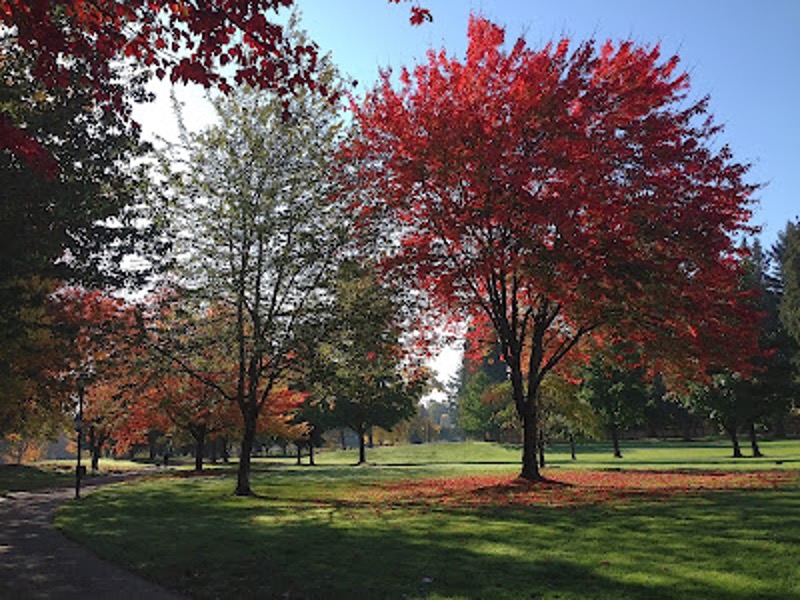
The background is fascinating: Electric scarlets. Grays. Oranges. Reds. Yellows. The trail takes you deep inside self. The internal calmness is matched by an external silence.

Uplifting!

The magnificence induces a reverie.

The elements merge seamlessly into a heightened consciousness, an extraordinarily lived experience.

A Joycean epiphany! All staged within a moment.

A hungry mind absorbs the altering spectrum. The sky transmits a message that folks like Paul Coelho decode for a mind craving for another dimension of a drab one-dimensional existence.

It is a strikingly different reality.

Nature — enabling philosophy.

You are aware of its presence.

In developing nations, it is the absence that is hardly missed. You are stuck in a development-dystopia there. In such locations, citizens have to fight against the degradation of nature through liberal media, courts and advocacy groups, on the broad themes of having the right to breath easy, clean air and inhabit liveable cities. Yet walls of indifference keep on rising and cases of mangroves being destroyed, hills plundered, trees hacked, in the name of urban development and growth, under the patronage of corrupt bureaucracy and political class, go unreported, thus leaving honest taxpayers only layers of smog, pollution and bronchial diseases that reduce productivity…and creativity. Trapped inside a dull and deadening grind of a daily routine of long commutes in overcrowded public transport and hours hunched over small screens in airless cubicles, the professionals are reduced to nothing but robots, androids, cut-off from their scorched Earth and a dark sky, self-enclosed atoms, unaware of the romance of a full moon in a wintery sky or the power of a red rising sun, giving hope to the millions of  workers…

.

Back in the trail, thoughts rush out and form into whole units of novel poetics, symbols and artistic meanings.

A kind of radicalisation has been executed by a natural scene carefully preserved by the civilly conscious fathers of a huge land worked on by immigrants and other settlers.

In the sky, I see messages and patterns that take me back to the happier times of the concord between humans and nature, now disrupted.

The colours of fall are staggering in range, impact and variety.

You have become a part of a dynamic natural landscape—and feel elevated!

And feel privileged to be a witness to the preserved bounty of Mother Nature here in Canada, much better than in India.

You breathe easy.

Oxygen hits the lungs directly — not the smog that produces cough and cold.

No noise — refreshing from the mad cacophony of the noisy overcrowded unplanned ungovernable cities of Asia.

People are distant but polite. Fellow nature enthusiasts. The pagans of the post-industrial society, trying to reclaim a bit of humanism and nature, for forging a newer human being full of empathy in a peaceful country.

“Hi!” I say to the passerby.

“Hi! How are you?” answers the tall man.

“Fine! Thanks.” I answer…and move on.

A significant human exchange unfolds, gets executed by a cultural consensus — and the colours of white and brown intermingle in that common gesture of politeness and affirmation, thus confirming the redness of bloodstream of the diverse species of a planet threatened by climate change, ethnic strife, racism and alt-right forces that immediately do the “othering” of the groups not found matching their own.

As we walk away, composed and tranquil, enjoying the cool sun and fragrance in the air, few steps away from the neat bungalows on winding streets, the epiphany strikes, like a gentle rain in the moorland:

No land is bad. Or its hard-working honest lawful people. What is bad is the corrupt and cynical ruling elite that places it above the people. If they do not pay heed, refuse to listen to the rumble on the ground, popular change will follow soon.

Headed home, I realise home is a mobile space, a social unit of a shared collective of similar aspirations and dreams. You keep on searching for an ideal place where dreams and realities coexist as realizable values and make you evolve into a dignified, creative citizen — the main goal of a full and functional democracy anywhere.

Perhaps, that is the main drive for migration, internal or external, for welcoming areas and countries, globally.

Returning, I find I am at home, in Canada, at last. A place where colours of the Earth and sky meet, fuse together to produce newer styles of wholesome aesthetics of meaningful, integrated living, in cosmopolitan setting, with shared systems of beliefs.

The colours of Canada do speak to a harmonious mind.

Canada is a live canvas for sentient beings. You are an element of a dynamic complex of co-existing patterns, producing wholesome meanings!

Thus, you become real and alive, in an animated environment, organic but not yet fully and cynically degraded, unlike in other more commercialised nations.

.

Sunil Sharma, is a Toronto-based academic, critic, literary editor and author with 23 published books. His poems were published in the prestigious UN project: Happiness: The Delight-Tree: An Anthology of Contemporary International Poetry, in the year 2015. Sunil edits the English section of the monthly bilingual journal Setu published from Pittsburgh, USA:
— https://www.setumag.com/p/setu-home.html  
 For more details, please visit the link:— http://www.drsunilsharma.blogspot.in/

.

PLEASE NOTE: ARTICLES CAN ONLY BE REPRODUCED IN OTHER SITES WITH DUE ACKNOWLEDGEMENT TO BORDERLESS JOURNAL. 

Categories
Travel

Of Palaces and Restorations

Rupali Gupta Mukherjee visits a restored palace in the heartland of Bengal

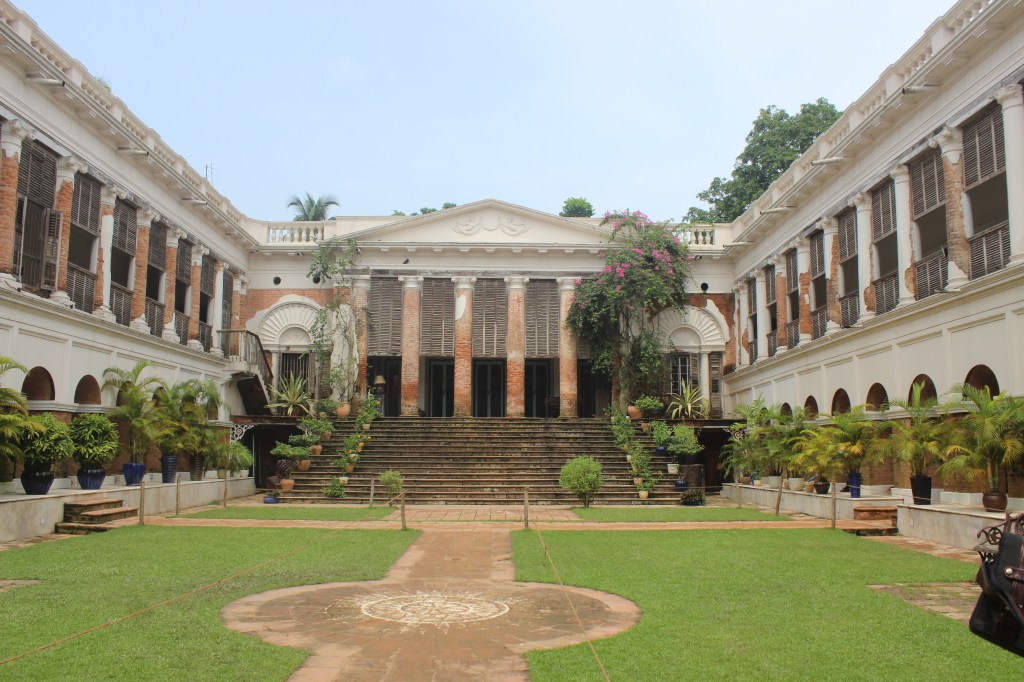
The Courtyard of Rajbari Bawali. Photo Courtesy: Rupali Gupta Mukherjee

From time immemorial, rajbaris, or the palatial homes of zamindars, have been a part of Bengal art and architecture, although many such splendid mansions have fallen into ruin owing to ownership issues or lack of conservation. Some are being converted to hotels, like the rajbari at Bawali. Located sixty kilometers from Calcutta, the palace-hotel enthralled with its restored regal rhythm, glamour and enduring legend. We were transfixed, bemused and in love with the aesthetic elegance.

“The daunting task of restoring the crumbling historic manor into a lavish hotel was a mammoth task. An exclusive 300-year-old colonial mansion transformed into a stunning luxury heritage boutique estate”, said the proud Resident Director of the property, Ms. Mrinalinee Majumdar. Once an imposing abode of the aristocratic zamindar family, The Rajbari Bawali undoubtedly, has revived an integral part of Bengal’s glorious history and culture.

Mr. Ajay Rawla discovered the 18th century palace in a state of ruins in 2006 and tried his best to reconstruct its history. Mr. Rawla, the Chairman, spent around seven years restoring the Rajbari’s past glory. The restoration work received acclaim, award of excellence by INTACH [Indian National Trust for Art and Cultural Heritage]. The restored Rajbari Bawali has also been featured by Conde Nast UK on their hot list of “Top 50 Hidden Destinations of the World’. The Duke and the Duchess of York were guests at the Rajbari during their visit to India.

Bawali Rajbari has a remarkable history, dating back to more than four hundred years, starting with the Mughal Emperor Akbar. The name “Bawali” can be traced to its first settlers, forest dwellers from the Baul. Initially, this place was known as “Bowali” but over the years this has changed to “Bawali”. This erstwhile swampland, once part of the Sundarbans, was handed over as a reward to Shoba Ram Rai, an army officer under Maharaja Man Singh of Jaipur, the commander-in-chief of the Mughal Emperor. History tells us that the Mondols of Bawali were originally Roys. Their dominance in the fringes started way back in 1710. Later, the royal family prospered under Haradhan, who enjoyed the benefaction of the East India Company.

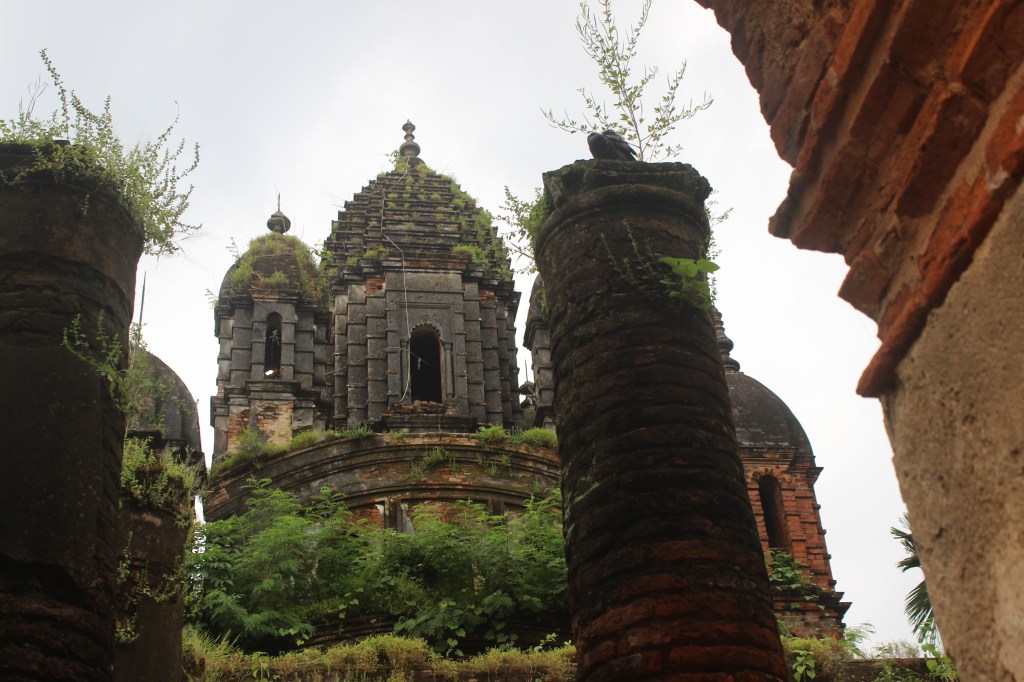
350-year-old Radha Krishna Temple built in the
traditional aat-chala style. Photo Courtesy: Rupali Gupta Mukherjee

It was autumn, just before Durga Puja, when we planned a day trip to explore the rajbari at Bawali. As we moved towards the entrance of the rajbari, more than three-centuries-old, Radha Krishna temple, opposite the palace, caught our attention. An arched alley made of red bricks and pillars with Victorian floral motifs. The temple steeple stands out from the rest of the architecture. It has delicate terracotta etching outside, with moss and plants growing in cracks. We were amazed at the rich intricate structural motifs. This is another heritage site that desperately needs restoration, we felt. The West meets the East in the lofty temples and the palace of Bowali. The European style columns that hold up the temples in the village are atypical in the rest of the state. Beautiful gardens dotted with fashionable statues of Italian marble and a sinuous water turret weaves a flowing reverie. It’s really sad that most of the structures are in ruins and on the verge of collapse.

Finally, we found ourselves in front of the main entrance leading to Rajbari Bawali. The welcome was grand with the beating of the dhaak, the traditional drums, and women in traditional attire, clad in red bordered white saris, welcoming guests with the traditional smear of tika on the forehead, flowers and sweets. We were overwhelmed by the antique fixtures, after stepping inside the courtyard which revived the bygone era of the zamindars, nawabs and their lifestyles steeped in grandeur. The welcome drink was refreshing and the entire property was a visual delight, a photographer’s paradise.

The Terrace café, with a part of the vestiges from the roof took us back to the primeval past. A striking segment of the palace merges the new with the ancient, keeping the antiquity alive. Apart from exploring the huge chattels we enjoyed the sumptuous traditional Bengali lunch. The royal lunch was served with utmost warmth and hospitality. The food was exceptionally delicious, was flawlessly soaked in conventional recipe and served in a stately style.  Burnt clay plates lined with banana leaves served lip-smacking kochur loti chingri, kassa mangsho, Bhetki Paturi. The dessert was mouthwatering and elaborate, I loved the misti doi.  The ongoing melodious live concert on the lush green lawn adjacent to the dining arena was definitely scintillating.

It was an astounding experience for us; something, undeniably beyond expectation, we started our journey with the thought of exploring a historical site but we were overwhelmed by the exclusiveness of the palatial structure, antique display, hypnotic charm of the ‘Zamindari Raj’ and the warmth of the employees. I was in a trance for weeks after visiting the elite ‘khazana’ of the colonial era and was keen to know more about its imperial past. My quest brought to light many hidden facts.

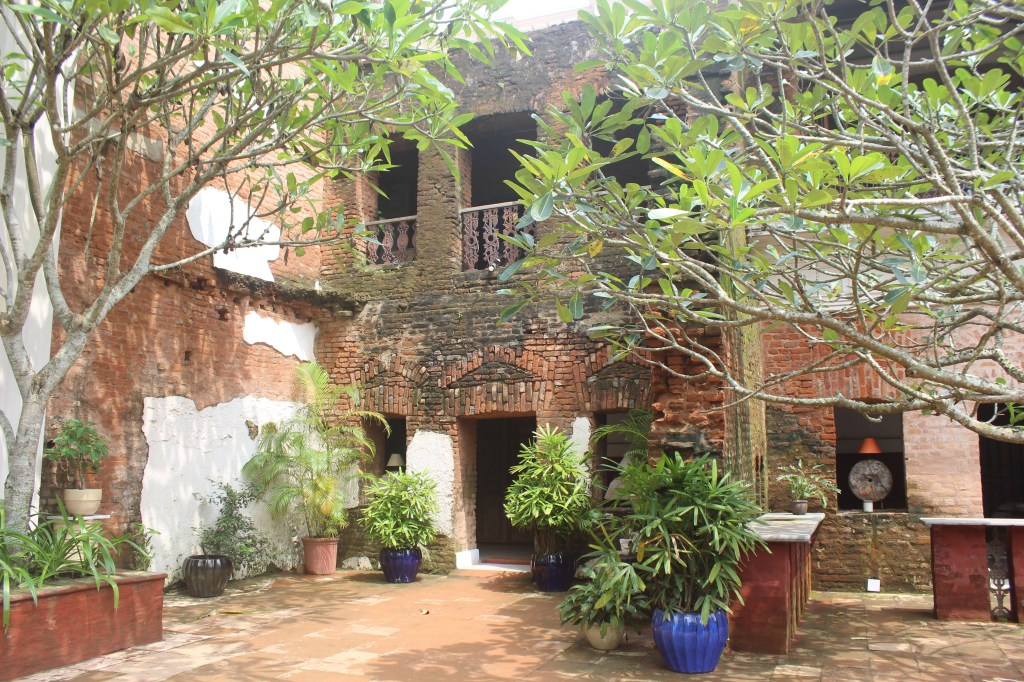
Unrestored Part of the Rajbari. Photo Courtesy: Rupali Gupta Mukherjee

The ruins of the rajbari and its surrounding relics was also the memorable shoot venue preferred by renowned film director Mrinal Sen for his Shabana Azmi, Naseeruddin starred movie Khandhar. It was screened at the 1984 Cannes Film Festival. Later after restoration of the Khandhar, in 2003 Rituparno Ghosh selected the same setting, Bawali Rajbari for his National award-winning film Chokher Bali, an adaptation from Tagore’s novel of the same name. This also bagged the Chicago International Film Festival Award [2003] The rajbari is an extraordinary architectural masterpiece about 60km away from Kolkata, steeped in convention and opulence, a heritage boutique resort

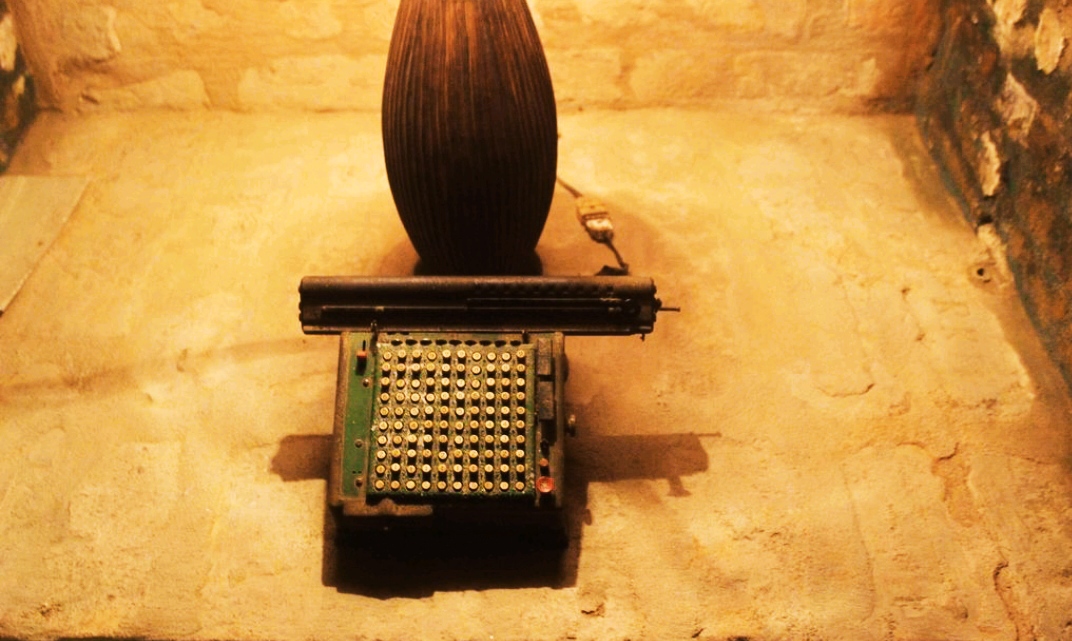
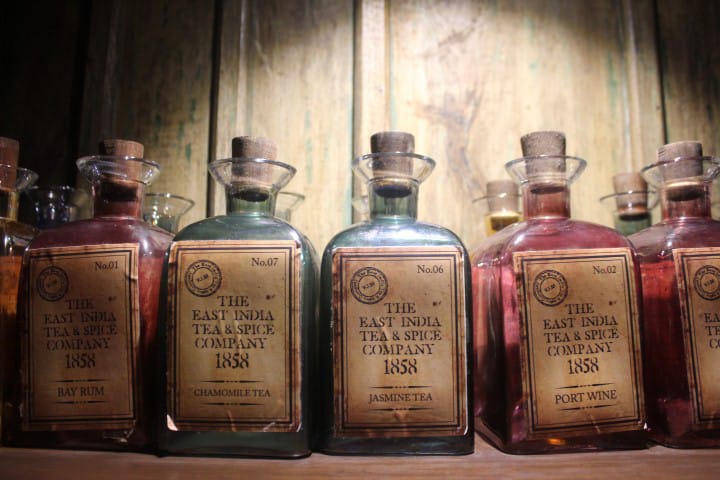
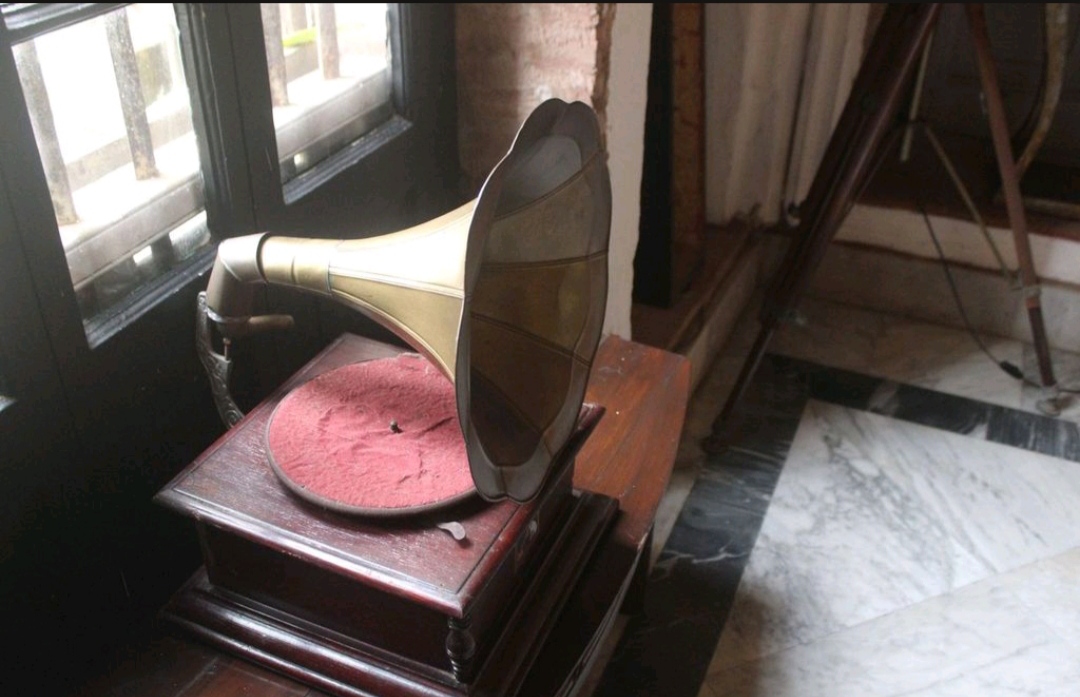
It had been more than a month now, but still the spell of the Greco-Roman style Rajbari, the dungeon, jailkhana, cellar storing liquors from 1858, antique decor portico, fax machine and gramophones of archaic fashion, well-ventilated thakurdalan, spacious grand piano room, exquisite chandeliers in the dining hall and the faintly lit vestibule will take you, beyond doubt, to a baffling pensive world of romance!

Glossary:

kochur loti chingri — Prawn

 kassa mangsho – goat meat

 bhetki paturi – fish

misti doi – sweetened yoghurt a Bengali speciality.

Rupali Gupta Mukherjee has a passion for reading, writing and reciting poetry.   She is a nature enthusiast, loves to travel and has a zeal for photography.

.

PLEASE NOTE: ARTICLES CAN ONLY BE REPRODUCED IN OTHER SITES WITH DUE ACKNOWLEDGEMENT TO BORDERLESS JOURNAL

Categories
Review

In the Service of Free India

Book Review by Bhaskar Parichha

Title: In the Service of Free India

Author: BD Pande

Publisher: Speaking Tiger Books, 2021

Memoirs of civil servants offer a ringside view of the events that shape up a country. Of late, there have been several memoirs by civil servants of India. But this one is unique.

In the Service of Free India–Memoirs of a Civil servant by BD Pande has some of the best chronicles as India was in the formative years after she got freedom. In reverence to his wishes, the memoir has been published posthumously. It is a fascinating record of Pande’s own life and that of India in the half century after Independence.

Edited by his daughter Ratna M Sudarshan, the autobiography comes more than a decade after Pande’s death in 2009 at 92. The memoirs were penned between 1986 and 1999 and the family was instructed to publish these at least five years after his death.

B.D. Pande was the first person from Kumaon and Garhwal division to pass the Indian Civil Service (ICS) examination in London in 1938. In his thirty-nine years as a civil servant, Pande held many important offices in the state and central governments. He served as finance secretary, development commissioner and food commissioner in Bihar; chairman of LIC at then Bombay; and finally cabinet secretary to the Government of India from 1972 to 1977. The first person from Uttarakhand to be appointed the governor of West Bengal and later Punjab, President K.R. Narayanan conferred on him the Padma Vibhushan for his meritorious service to the nation.

Says the blurb : “In the decades following 1947, as the tallest national leaders were building a new India, they were supported by a band of idealistic civil servants fiercely committed to the country’s Constitution and its people. Among these remarkable officers was Bhairab Dutt Pande, a young man from the Himalayan district of Kumaon, who joined the Indian Civil Service in 1939. Over almost forty years as a civil servant, and later as governor, he played an important role in the country’s administration, and interacted with leaders like Indira Gandhi (as cabinet secretary during the Emergency), Morarji Desai and Jyoti Basu.”

Writes Pande in the preface: “Ever since I retired in 1977, people have been asking me to write my memoirs, even more so after I resigned as governor of Punjab in July 1984. I have also been approached by some publishers. But I always refused on the grounds that I have no talent for writing. I was a student of science and writing was never my forte. During my service, I did not write notes exceeding a page or page-and-a-half, no matter how intricate the subject. And more importantly, I kept no notes during my service or lifetime, kept no copies of important papers, letters or memos and therefore my recollections will tend to be biased. With the passage of years, one’s memory tends to play tricks and might even get facts wrong. Furthermore, I did not possess any means of rechecking what I have written from contemporary accounts or official records. For these reasons I never took up the pen to write.” Honesty at its best!

Pande chronicles several landmark events and initiatives that he either participated in or witnessed. He helped increase food-grain allotment to the state as food commissioner of Bihar in the early 1950s and drew up a new famine code as land reforms commissioner. His work in the Community Development programme some years later still has important lessons for today’s Panchayati Raj institutions. After retirement, he was governor of West Bengal during the resurgence of Naxalism in the early 1980s, and of Punjab in 1983-84—a tragic and turbulent year in the history of the state and the nation. Pande chose to resign as governor rather than carry out unconstitutional orders.

A trumped-up narrative about Punjab’s situation was built in the months leading up to Operation Bluestar in June 1984, leading to disastrous consequences. The five chapters in this memoir on Punjab offers an absorbing narrative of the behind-the-scenes events and negotiations leading up to the Anandpur Sahib Resolution and Operation Blue Star is of great value.

Pande, who had a front-row seat of the events, lauds the Sikhs as a community and is highly critical of the central leadership, especially PM Indira Gandhi, and some “Hindu hardliners and vernacular press for contributing to the false narrative”. He also blames the tussle between President Zail Singh and former Punjab CM Darbara Singh for the unfolding of the events. It is his view that many Sikhs had been the victims of attacks by terrorists, he writes, and whenever an incident occurred, the Punjab Police Intelligence was blamed even though they had supplied advance information.

Mark these dauntless words: “I have known people who, living in Delhi, were even afraid of coming to Chandigarh. Then from Chandigarh, if one went to the real Punjab — Amritsar, Jalandhar, or Ludhiana — one would find similar normalcy. Driving through the countryside, all was peaceful, with farming going on normally. The cities were bustling with activity. Factories were working normally, even schools and colleges. Hindus and Sikhs were walking together, visiting each other’s shops, riding together. The contrast between what one anticipated and what one actually experienced was vivid… I could not help but emphasize on this otherwise peaceful atmosphere.”

On the controversial ‘White Paper’ tabled by the Centre before the Army operation, Pande says he was not even consulted. He notes that Akali leaders of the time were divided. They came to meet him separately while other political parties came to one group. He has also questioned the official figures of casualties in Operation Blue Star. “The number of casualties among the terrorists and civilians was 1,200 (and not 700). Some 200 terrorists still got away. Blue Star did not achieve the desired result.”

For everyone who wants to know the truth behind the Operation Bluestar in Punjab, this is a  de-facto account. The machinations by the central government of the time are revealing. The other chapters in this 300-paged memoir make for a fascinating read and give a privileged perspective on issues and their outcome.

Stimulating and exalting in coequal measure, this memoir, with photographs from the author’s personal album, is both a riveting record of an extraordinary life and an important and an informative document. There is also a detailed timeline to refresh one’s memory.

This book is a must-read for anyone who has been, is, or aims to be a civil servant in India and equally, for anyone who is interested in the history of the times. It is a candid memoir of past times, and the events leading up to them. The informal style of the memoir makes it effortless to read and transports the reader to that time period.

.

Bhaskar Parichha is a journalist and author of Unbiased, No Strings Attached: Writings on Odisha and Biju Patnaik – A Political Biography. He lives in Bhubaneswar and writes bilingually. Besides writing for newspapers, he also reviews books on various media platforms.

.

PLEASE NOTE: ARTICLES CAN ONLY BE REPRODUCED IN OTHER SITES WITH DUE ACKNOWLEDGEMENT TO BORDERLESS JOURNAL

Categories
Poetry

Gathering Blossoms

By Michael R Burch

Woman with Lilac by Renoir (1841-1919). Courtesy: Creative commons

She Gathered Lilacs

(for Beth)

She gathered lilacs
and arrayed them in her hair;
tonight, she taught the wind to be free.

She kept her secrets
in a silver locket;
her companions were starlight and mystery.

She danced all night
to the beat of her heart;
with her tears she imbued the sea.

She hid her despair
in a crystal jar,
and never revealed it to me.

She kept her distance
as though it were armour;
gauntlet thorns guard her heart like the rose.

Love!—awaken, awaken
to see what you’ve taken
is still less than the due my heart owes!


Goddess

(for Kevin N. Roberts)

“What will you conceive in me?”—
I asked her. But she
only smiled.

“Naked, I bore your child
when the wolf wind howled,
when the cold moon scowled . . .
naked, and gladly.”

“What will become of me?”—
I asked her, as she
absently stroked my hand.

Centuries later, I understand:
she whispered —“I Am.”

Michael R. Burch’s poems have been published by hundreds of literary journals, taught in high schools and colleges, translated into fourteen languages, incorporated into three plays and two operas, and set to music by seventeen composers.

.

PLEASE NOTE: ARTICLES CAN ONLY BE REPRODUCED IN OTHER SITES WITH DUE ACKNOWLEDGEMENT TO BORDERLESS JOURNAL


Categories
Nature's Musings

Lewie, the Leaf

Photographs and story by Penny Wilkes

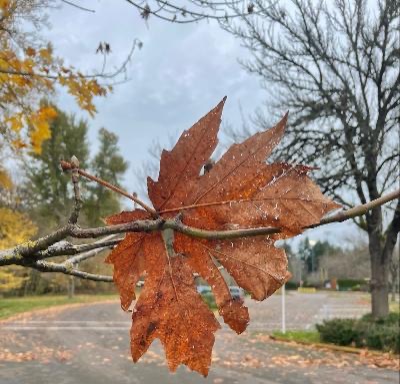
Lewie the leaf’s adventure began as a green shoot that grew from a branch. After sparking through summer, he started to feel different.  He turned crimson. Those near him bloomed from an orange to yellow.  

“What’s up?” he wondered.  Lewie noticed leaves from other trees fly into the air and twirl to the ground. They collected in gutters, lawns and on the street in piles.

Lewie didn’t want to leave his branch.  He loved the birds who sang and hopped around him.  His favorite robin would peck at insects to keep them from biting into him.

One day the robin said, “You’ll fall soon.”


“No, I like it on my branch,” replied Lewie

October eased in. With a chill in the air, wind moved other leaves to the ground. 

Lewie stuck tight.

“You know,” said the robin, “you could become evergreen and not have to fall when winter arrives.” 

Lewie looked at the shine on the pine needles and thought about it.

“I could fly you over to the park by the river. You’d become mulch. Then you’d nurture and move up into the pine needles,” the robin said.

Lewie shivered in uncertainty, “I’m not sure.”

“Come on, Lewie. See the little sapling over by the river. I’ll help robin add leaves,” said the squirrel.

Lewie was not convinced.  “How do you know this can happen?”


The robin fluffed at her feathers. “I have watched the process many times.”

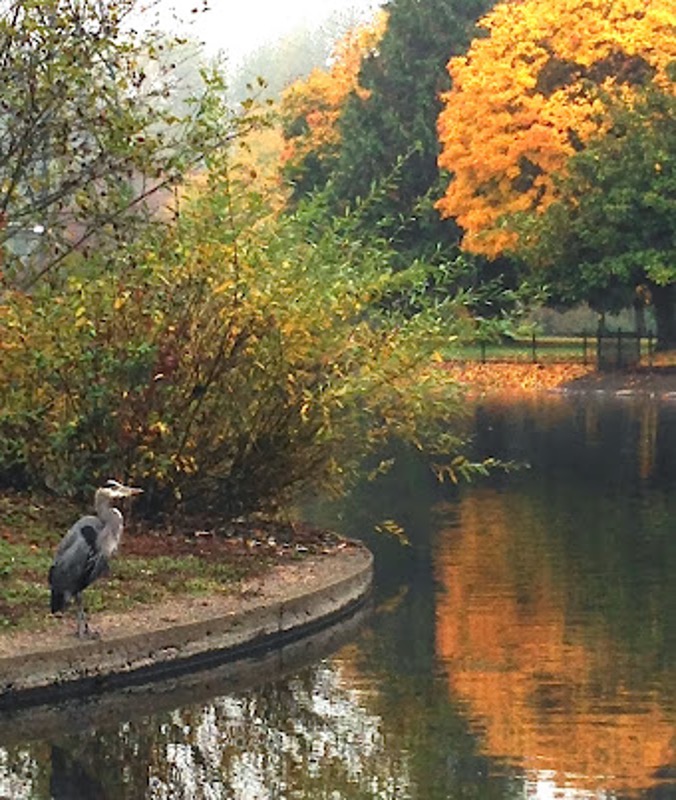
“It’s true, Lewie,” said the heron.

When December rolled around, frost startled Lewie.  He shivered and could feel an opening on his branch.  He struggled to stay attached.

“It’s about time,” the robin said. “No other leaves have stayed.  They all want to change.”

Lewie did not answer, using all his power to stay stuck on his branch.

The rains came heavy that night. Only one tendril of Lewie’s leaf stem stuck.

The robin flew by and alighted above his branch. “I’ll fly you over now.”

Lewie agreed and wriggled until he began to spiral. The breeze felt good.


“Dance, Lewie. Dance.” The robin picked him up in her beak and flew him to the sapling. 

Lewie sat close to the base and spoke to the tree. “I’m here to become a pine needle.”

When snow arrived, Lewie turned brown and slept cozy as a bear all winter.

By spring, bird song rose and the robin appeared. Lewie was nowhere in sight. Robin called and heard his voice echo from deep beneath the earth.


April arrived and he had climbed his way back up to begin shooting out green.

“You were right, robin,”  Lewie said. “I love the new me. What fun to stay green.”

Penny Wilkes,  served as a science editor, travel and nature writer and columnist. An award-winning writer and poet, she has published a collection of short stories, Seven Smooth Stones. Her published poetry collections include: Whispers from the Land, In Spite of War, and Flying Lessons. Her Blog on The Write Life features life skills, creativity, and writing:  http://penjaminswriteway.blogspot.com/ . Her photoblog is @: http://feathersandfigments.blogspot.com/

.

PLEASE NOTE: ARTICLES CAN ONLY BE REPRODUCED IN OTHER SITES WITH DUE ACKNOWLEDGEMENT TO BORDERLESS JOURNAL