By Devraj Singh Kalsi
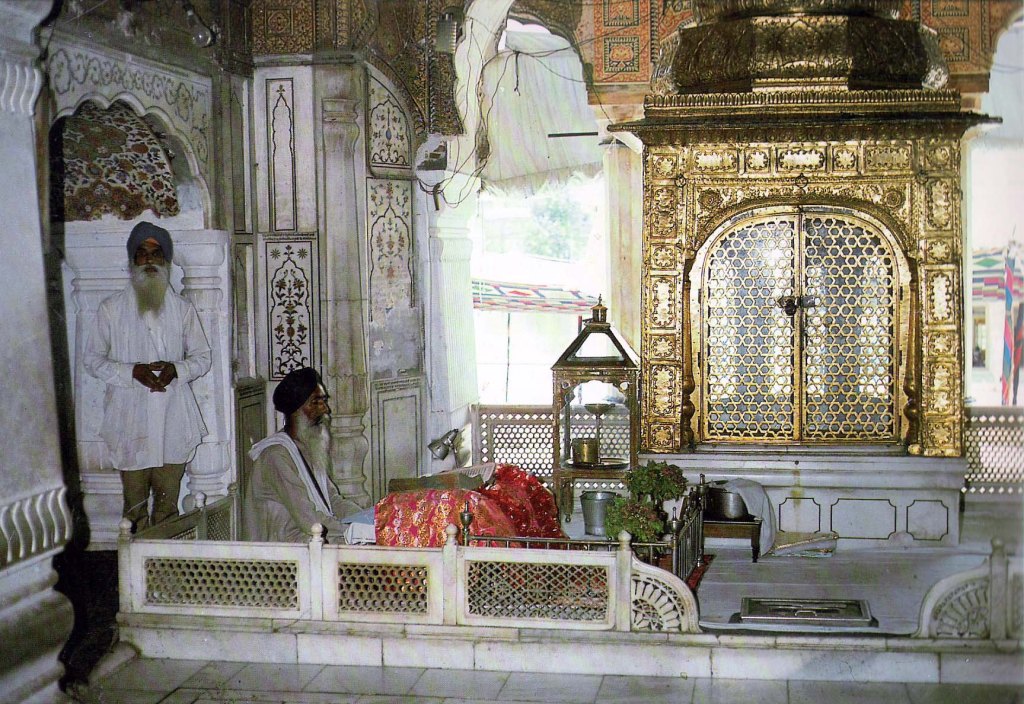
On Sangrand, Sardar Ratan Singh and his wife went to the Gurudwara with a bagful of marigold garlands in the morning. The canopy of the Lord would be bedecked with flowers of the season on the first day of the new month. The response was cold when he handed it over to the priest who walked a few steps to place it on the wooden table near the entrance door. The prolonged silence seeded doubt in Sardar Ratan Singh’s wife who asked him politely, “Any problem, Babaji?”
“The Gurudwara Committee has ordered flowers should not be brought inside the hall. But I will do the job of decorating. Put these on the railings, the front part at least, and the rest near the main door. I will manage if the Committee members object,” Babaji assured the couple who brought these garlands with much devotion.
Sardar Ratan Singh was unable to figure out how the Gurudwara Committee, headed by the elderly, could issue such a guideline. Sardarni Simran Kaur was anguished to hear these words from the priest who was supposed to be the custodian of the Rehat Maryada, the code of conduct for Sikhs.
“The guideline goes against the Sikh tradition. All Gurudwaras are decorated with flowers during Gurpurab and other festive occasions,” Sardarni Simran Kaur asserted, with hope that this comparison would suffice.
Babaji endorsed her statement before reiterating his stand: “What you are saying is correct. I have myself seen that in many Gurudwaras. But I have to obey the Committee rules. I will do it today since you were unaware of the order, but next time onwards please do not bring flowers to decorate the Guru Granth Sahib. They will hold me responsible for breaking the rules.”
Although Babaji conveyed the rules of this particular Gurudwara, it was agonising to hear the outright rejection of floral service by devotees. Not the one to be cowed down, Sardarni Simran Kaur transformed herself into a warrior-spirited lady and made herself clear: “Thanks for being kind enough to allow this today, but the Gurudwara Committee has no power to frame such laws. I am going to bring flowers and garlands again and decorate the canopy myself. I would like to see how the Committee members gang up and stop me from doing this sewa (service).”
Babaji understood that the lady was determined to proceed with her plans. He stood with folded hands, with lowered gaze, with a humble request to reconsider the decision. Sardar Ratan Singh gauged the growing discomfort in Babaji who feared losing his job if he failed to execute the orders of the Committee.
Assuring Babaji that they would not drag him into the tussle with the Committee, Sardar Ratan Singh said, offering his visiting card, “You can mention my name to the Committee and ask them to have a word with me. We are going to bring flowers next month as well. If they charge you, just dial the number on this card and connect me to the Committee.”
Babaji was relieved he had their contact number to give to the Committee in case he was charged with dereliction of duty. Somewhat enthused by their confidence, a fleeting smile appeared on his sullen face. He carried the garlands inside the hall while Sardar Ratan Singh and Sardarni Simran Kaur proceeded to bow down before the Lord and pray for strength to stand up against injustice. Babaji began to decorate the front part of the canopy and specified to the couple once again that the remaining garlands would be used to decorate the entrance door. It appeared to be a risky exercise for Babaji to cover the sanctum sanctorum with flowers as he knew the members of the Committee would corner him in the evening durbar.
That is exactly what happened that evening when Sardar Ajit Singh entered the Gurudwara. Anger was etched his face as the garlands brushed against his turban. He cast a furious glance at Babaji who sat fine-tuning his musical instrument. After genuflecting before the Lord, Sardar Ajit Singh swerved around and hurled his first question: “Who brought these flowers?”
“Sardar Ratan Singh,” Babaji replied promptly without looking at him. He muffled his simmering anger with a tight slap on the tabla.
“Did you not tell him the Gurudwara rule?”
“I told everything but he gave me the phone number, to forward to the Committee if they objected,” Babaji responded while fishing out the visiting card from his kurta pocket and flashing it before his eyes. Sardar Ajit Singh hated English and he never read anything written in the Queen’s language. Babaji further added without losing composure, “Sardar Ratan Singh’s wife said she would come again with flowers next month.”
This nugget of information weakened the resolve of Sardar Ajit Singh who had a bad record of losing arguments with women. A couple of months ago, he threatened to drive out girls who spoke English instead of Punjabi inside the Gurudwara premises. Since he did readings from the holy scriptures every day, he exercised special authority and treated the Gurudwara as his fiefdom, seeking submissiveness from people to support the rules formulated by the Committee, based on his recommendations.
Despite being well-versed with Guru Granth Sahib, septuagenarian Sardar Ajit Singh showed no signs of understanding the true meaning of Shabad, the words of God and crushing his haume or ego. Since he hailed from a money-lending family which had diversified into respectable businesses like travel and transport, he knew his brothers would support his decisions and the sangat, the fellowship, would never mess with those who wielded political clout and muscle power in society.
Showdown was unavoidable. The Committee would definitely object to what Sardar Ratan Singh was up to. Sardarni Simran Kaur expected the misgovernance phase to be over at the earliest – preferably through amicable discussions.
From reliable sources, it was gathered that Sardar Ratan Singh was relocating to Punjab. The Committee wondered whether it was better to avoid a conflict. Most of the members suggested a wait and watch policy. But the secretary and the treasurer were adamant that punitive action must be taken otherwise this would encourage others to flout the norms.
Sardar Ratan Singh noticed another shortcoming when Babaji did not offer the traditional karah parshad of flour halva after Ardaas, the Sikh prayers. When he asked for it, Babaji said with a tinge of regret, “The Committee stopped making karah parshad. Allowed only on special occasions.”
The cauldron was stirred once again as Sardarni Simran Kaur resumed the discontinued practice of preparing karah parshad in the gurudwara every day. Sardar Satwant Singh, who had become the Secretary five years ago, implemented this order and his acolytes rallied behind him in support. Being diabetic, many members of the Committee could not consume karah parshad. Babaji was asked to stop this exercise as the turnout was thin every evening. Though this excuse was not justifiable under any condition, the sangat was made the scapegoat.
It was a momentous decision in a Gurudwara but the Committee members harboured no guilt. The practice started by Guru Nanak had been discontinued by his followers here.
Sardar Ratan Singh and Sardarni Simran Kaur came with the necessary ingredients to the Gurudwara next week. Offering ghee, wheat flour, and sugar to Babaji, she said, “From now on, we would like to do karah parshad sewa every day, every month, every year.”
Babaji did not know how to react. This was the second instance in one month that made him nervous. Although devotees chose to prepare it for a day or two, this was a unique case where the couple wanted to take the full responsibility of sponsoring karah parshad for the entire year. Babaji realised this would be another provocation challenging the Gurudwara Committee. One individual was trying to revive a tradition that was suspended by the Committee. Since they were not incurring any expenses, they should have continued to stay out of it. But the pesky members would get curious to know who was behind the resumption of karah parshad.
“Babaji, use words like ‘Gurmukh parivar’(Gurmukh family) during ardaas instead of mentioning our name because it is not proper to highlight that while we perform a service for the community,” Sardar Ratan Singh requested the priest.
It was a valid ground to hide this secret. Babaji accepted the ingredients and specified the monthly quota of ingredients to be supplied henceforth. Agreeing to deliver the requirements, she said, “Since the Committee has stopped making karah parshad, we see no point in informing them about it. But we know they will interfere in this matter again. Just like flowers are thorns for them, this one is going to prick them as well. It is not our intent to antagonise them. But if they make an issue out of it, we are definitely going to oppose them again. You can convey this to the Committee head in advance.”
Babaji looked confident of handling this better. When he served karah parshad the next evening to all, he was very happy he was doing the right thing after a long time. The sangat got parshad and looked blessed. Sardar Satwant Singh took a small bit reluctantly and his wife asked, “Gurmukh parivaar who?”
Babaji pretended not to hear it but the question was repeated. Left without choice, Babaji had to disclose the name of Sardar Ratan Singh. The karah parshad was stuck in his throat now. Instead of saying anything to Babaji, Satwant Singh communicated through Vimal Rai.
Babaji got a call late at night. He felt like dropping the call because it was time to sleep as he had to wake up early for the pre-dawn prayers, the amrit vela. But he changed his mind and answered the phone call. The voice on the other side hollered right away, “If anyone wants to do karah parshad sewa, tell him the Committee should be approached first as we alone decide the quantity. Tell him to pay us the money and we will take charge of making it. It has to be done through us only. No direct sewa allowed. You should mention us instead of directly taking up such responsibility.”
Babaji got miffed this time and said, “How can I stop a devotee like that? You should call him and tell him all this. I cannot. Sat Sri Akal.”
The priest knew this behaviour would be read as gross insubordination with dire consequences. But he had restored full faith in God because he felt God had sent Sardar Ratan Singh with a definite plan. He was mentally prepared for the worst now.
When Sardarni Simran Kaur came in next week with the supplies, Babaji made brave effort to defend the Committee and test her resolve, “Avoid taking the trouble of bringing this every week and instead give the money to Committee to prepare karah parshad.”
She sensed some kind of agreement had been reached and the Committee wanted to take charge. “Is there any problem if we bring the samagri? We maintain hygiene and purchase from the best shops. Besides, I want to do this on my own, just paying money is not enough. We do not trust the Committee. Whether they would use pure ghee or not, whether they would save money and divert it. There is enough ground for mistrust an suspicion. It is quite possible they would ask you to mix Dalda (vegetable oil) with desi ghee or reduce the daily quantity after taking full money. The Committee that discontinued parshad sewa cannot be trusted with its resumption.”
Babaji heard the candid reply from the lady without saying a word. The Committee had indeed made incorrect decisions with brute majority and imposed the same upon the sangat who did not expect this would happen.
When Vimal Rai came for the evening durbar, he heard Babaji’s reply. “I told them to contact you, to give the Committee the duty of making of parshad but they refused. They said it is the duty of the Committee to make it themselves instead of seeking money from us to make it. This tradition is followed in all Gurudwaras across the country.”
Vimal Rai was upset to hear this valid point. He came with the desire of singing Shabad Gurbani but the notes of harmony were lost. He delivered a spiel as the Sangat was yet to arrive: “Why doesn’t he understand we are Committee, here to look after everything. Where was he all these years? Why does he emerge now and try to run a parallel system? You can tell him our decision is final and binding. In this Gurudwara, karah parshad will be made with our permission only. Warn him not to try our patience. We have been merciful but we cannot let this rebellion take root while we sat quiet and observe anarchy spread like wild fire.”
Harsh words flowed out instead of ambrosial nectar. The situation was spiralling out of control, reaching a flashpoint. If he conveyed his message in the same language, Sardar Ratan Singh would retaliate. When the couple came for morning prayers, Babaji conveyed bad news to them. It was the most important task he was assigned to prove his loyalty to the Committee. He tried to look the other way to make it less hurtful: “Actually, the Committee has made new rules and these do not allow me to prepare parshad unless it comes as an order from the Committee. The order came last mid-night. Please excuse me and understand I am working under the Committee. My hands are tied.”
Realising these were sacrilegious words, tears welled up in his eyes. He broke down and disclosed that he was planning to leave this place as his salary was delayed every month and he was never paid in full.
The couple had full sympathy for the priest as he was conveying the words of the Committee. “I do not understand what sadistic pleasure they get by delaying his salary and deducting money? He has a family to feed, kids to educate,” Sardarni Simran Kaur urged her husband to take note of this injustice. “Don’t you think the Committee has crossed the limits by misbehaving with the priest who serves Wahe Guru every day? Our silence would mean participation, don’t you think so?”
It was a fact that Babaji was not accorded respect. There were several such instances. They shouted at him for trivial reasons and dominated him as much as possible. The Committee had deviated from the path of righteousness. After listening to his wife, Sardar Ratan Singh assured Babaji, “Will pursue these matters but you do not think of leaving this place. Our ancestors built this Gurudwara and it is our duty to ensure injustice does not happen.”
Feeling encouraged, Babaji spilled the beans, revealing the recent case of theft. The donation box was emptied but the locks were not broken. This mischief pointed to the fact that the members of the Committee who had the keys played a role in it. Besides, there was no official complaint lodged. The large sum of money collected throughout the year just vanished. Not reporting such grave offences meant there was some kind of tacit involvement.
In the afternoon, after lunch, Sardarni Simran Kaur urged her husband to raise his voice, and he said, “Such issues will not get community support. Haven’t you seen how these members stand with folded hands in front of Sangat? Who will believe us? Babaji will be the loser as they will sack him and bring another one next month.”
Sardarni Simran Kaur highlighted these points in her group and specified salary deductions. “Why does he not speak up?” The headmistress of a primary school wanted to know.
“He is under their employment. He was promised free gas and electricity connection but he has to bear these bills every month.”
“I will discuss with my husband and let you know,” she assured Sardarni Simran Kaur.
“Just make sure Babaji is not involved otherwise he will be in trouble. My husband says men should quit and women members should form the Committee,” Sardarni Simran Kaur added, to make her feel enthusiastic about the slew of changes on the anvil.
In the meantime, Sardar Ratan Singh started gathering more facts from those who lived near the Gurudwara. The inside stories always help. He spoke with a senior lady who stayed beside the Gurudwara and she gave a true account of the events inside.
“Many things are not right here but there is nobody to object. All are businessmen and linked to each other and they do not offend the rich. That is the story. Small fish afraid of big fish,” she summed up the story without mentioning the names.
“That does not mean the Committee should have the freedom to commit wrongs and get away with it. There has to be some accountability,” Sardar Ratan Singh reasoned.
“Beta, we have lost faith and have accepted this as the reality. We go to Gurudwara, pray, and come back. No discussions. They change timings, set their own programmes as per their convenience and the sangat is never involved. There are many improprieties but it is useless to discuss these now,” she gave ample indications.
The cashier of the Gurudwara entered the premises while they were discussing. He wished her a loud Sat Sri Akal intentionally while ignoring Sardar Ratan Singh. She quickly made her move as he would report this interaction to other members of the Committee. With the glut of information indicating multiple misdoings, Sardar Ratan Singh went inside and bowed before the Lord seeking the strength to set things right. When he came home, he thought of possibilities. The easiest way was to bring in changes unilaterally – without involving the Committee.
Next day, both of them came to the Gurudwara with three large crystal chandeliers to light up the aisle, along with an electrician who cracked open the false ceiling right from the middle to access the electric points and hang them firmly. The entire operation was done within two hours. Babaji observed the smooth execution in stunned silence. When everything was over, Sardar Ratan Singh called up the Pradhan, the chief of the Committee, from Babaji’s phone and introduced himself, “Sardar Ratan Singh calling. I have installed three chandeliers in the hall without seeking your prior permission.”
The Pradhan could not utter a single word even though he was keen to teach the rebellious Sardar a good lesson in the recent past.
“Do you have any objection, Pradhan ji?” Sardar Ratan Singh asked in a stentorian voice again.
“No, no, it is guru ki sewa. Every person has the right to do it.”
“Exactly, Pradhan ji. Hope you really believe so.”
Babaji took the phone and clicked pictures of illuminated chandeliers and posted them in the group of Committee members along with the name of Sardar Ratan Singh typed in the message box. Babaji was glad to see the flood of lights inside, the dazzling shimmer inside big gurudwaras was here as well.
Thrilled, he extended a personal invite: “Performing special kirtan in the evening, please be here.”
“Ok, Babaji, we will come in the evening,” Sardar Ratan Singh promised, “and if any member of the Committee worries about the spike in electricity bill, I am ready to bear the extra charges.”
Babaji kept wondering that the Pradhan who spoke angrily had turned into a meek lamb all a sudden. God’s miracle? One thing was clear that the Committee members did not shoulder individual blame. They preferred to hide behind their collective might. Since Vimal Rai was charged directly, he chickened out despite the golden opportunity to lambast the rebellious Sardar.
The hall was packed with Committee members and their families who were looking at the dazzling lights and pondering over the inflated electricity bill. The Pradhan was informed by Babaji that Sardar Ratan Singh would pay extra for the electricity consumed by the chandeliers.
Such a lit-up Gurudwara they were seeing for the first time in the small town. The Sangat was happy to see these chandeliers inside the Lord’s abode. They were curious to know the name of the donor. Sardar Ratan Singh rolled off the priest’s tongue with pride and the Committee members looked down. By this time, Sardar Ratan Singh and his wife came in and bowed before the Lord and then proceeded to sit near the door. The Committee members sat close to the Lord.
Babaji sang two new Shabads with full energy and the Committee members looked around, asking each other in hushed tones how much these would have cost. The guessing game kept them away from God and Shabad Kirtan.
When the Durbar drew to a close, Vimal Rai and Satwant Singh smiled at Sardar Ratan Singh and exchanged pleasantries in front of the Sangat to cultivate their good image. Was it beyond their power to switch off these chandeliers forever? Should they formulate a new law to stop Sewa by individuals? Every evening they would switch on the chandeliers and get dazzled by the glare. The name of Sardar Ratan Singh would flash before them.
The reaction to assert hegemony came in fast. The Committee suspended the services of the tabla player using the excuse that the turnout was poor. When Sardar Ratan Singh noticed that the tabla player was not coming for more than a week and Babaji had to face difficulty because of the missing accompanist, he posed this question to Sardar Satwant Singh in front of a sizeable crowd, “Why did you stop the tabla player from coming in the evenings?”
He was not expecting to be charged in this manner in front of so many people. He looked at the faces of his team mates but they were not willing to rise up in his support. He delivered whatever came to his mind in his ruffled state of mind: “The sangat does not come regularly, no use wasting resources that should be put to better use.”
“The sangat is blamed for everything. You stop karah parshad, the sangat is blamed. You don’t want flowers inside. What is going on in this Gurudwara? Rules are made to break rules. From where does the Committee learn this audacity? Even if one person comes to Gurudwara he should get karah parshad, he should get to hear kirtan. With all modesty, I am ready to bear the salary of the tabla player if the Committee cannot afford. But make sure he is hired soon. And if you want to do good, hike the salary of the priest so that he can engage an expert to train his son to play the tabla with him daily.”
Vimal Rai inched closer to Satwant Singh and pulled his arm. There were women who got to know many startling facts. The Committee was exposed in front of the Sangat for the first time in years.
Vimal Rai cut in politely, “We will look into the matter and respond soon. Many charges were pressed against us, but it should not have happened. We are elderly and deserve respect from the younger generation.”
Satwant Singh and Vimal Rai went near the garage to have a brief meeting. This open mutiny meant this man had to be reined in somehow otherwise they would face further insults and all their misdoings and misuse of power would come out in the open.
Sardarni Simran Kaur tried to explain certain facts to women but the wives of the Committee members formed a separate group. The split was clear. How this face-off was going to pan out? Whether the priest would lose his job, whether the Committee would get stricter now? Speculations were rife.
The Committee decided to hold a Durbar with snacks and tea on Sunday mornings with the hope that this session would fetch big crowds. It was also an attempt to mobilise the crowds and keep up appearances. After Sukhmani Path, the prayer for peace, snacks like samosas and jalebis were served. But the turnout was not as expected. The next month, the Committee decided to hold langar every week. They hoped this would surely bring in more sangat. Even this bait was a damp squib.
Finally, the Committee started wondering why these arrangements failed to draw large crowds. Was it God’s will that the sangat would not be impressed with whatever the Committee did? Was this a retribution for their misbehaviour with Babaji in the past? The Committee ordered that more members of each family participate and that the appeal of the Committee should be honoured by the entire community. Forwarding messages was suggested as an effective way to make the sangat aware that the Committee was indeed doing a lot.
Sardar Ratan Singh continued with his makeover exercise. He donated chhatars to decorate the canopy. The gold and diamond plated pieces looked wonderful. When Sardar Ajit Singh came to pray and saw the chhatars, he was livid and charged Babaji with gross negligence, “The canopy cloth must be damaged with piercing in several places. Who will pay for its replacement?”
“Sardar Ratan Singh has said he would donate a new Chanani next month,” Babaji said coolly. He was inside the Gurudwara otherwise he would have grabbed his neck for uttering that vile name. Sardar Ajit Singh did not sit for Chaur Sewa and stomped out of the hall.
Sardar Ratan Singh and his wife continued making visible changes inside the Gurudwara and the Committee was irritated by all the new installations without their consent or permission. Sardar Ajit Singh turned competitive and donated three chairs for the elderly. Sardar Ratan Singh matched this move by placing three velvet cushions on the chairs. Babaji was given a new comfy mattress with frills on the bed cover for the wooden diwan where he sat for Kirtan every evening. Sardar Ajit Singh was miffed but he could not say anything. He kept asking himself: Why is this man after us?
In less than three months many things underwent changes and the Committee became jittery about losing control. It tried to do new things to win the trust of the sangat. But the sangat had seen this Committee for years and the sudden switch to action mode was not difficult to comprehend. It was clearly to suppress the dissident Sardar Ratan Singh, who enjoyed the support of the sangat for the makeover that made them feel good. Besides, they were happy that a single person had stood up and fought against the Committee. All the energies were invested in the task of painting Sardar Ratan Singh as a villain who did not respect the senior members of the Committee. Sardar Ratan Singh and his wife had quietly overturned their rules and set new things in place.
The pipe of the wash basin was broken. It remained like that for months but now it was replaced quickly. Satwant Singh approached every single member to seek feedback regarding the efforts to spruce up the Gurudwara premises. The cashier was engaged with the task of collecting more funds.
One evening, they planned to approach Sardar Ratan Singh for monetary assistance as he was spending a lot on the upkeep of the Gurudwara. His response took them by surprise: “I am doing sewa for the Guru and that is all. I do not intend to pay money to any Committee.” His refusal to shell out big bucks inflamed them. Sardar Ajit Singh went ballistic, “We are committee members and you do not acknowledge us. The Gurudwara is under our control.”
“Yes, the Gurudwara is under your control, but not the Lord. How can you stop us from doing sewa? What kind of devotees you are? Are you Sikhs?”
They chickened out one by one without answering him. It was clear the Committee would make it a rule that Sardar Ratan Singh would not be allowed to do sewa on his own.
Next morning, a big truck with marbles arrived, followed by sand and cement bags. A team of masons arrived within hours. The Committee was challenged to stop him when this process started. Sardar Satwant Singh and Vimal Rai were asked to be present.
“You have to answer an important call from Amritsar. Come to the Gurudwara,” Sardar Ratan Singh called up the Pradhan using Babaji’s phone.
Satwant Singh and the cashier came along with Vimal Rai to boost his morale. The cashier was asked to answer the phone but ultimately the Pradhan had to connect.
He heard a faint voice from the other side in Punjabi seeking confirmation they were Committee members. The name of Sardar Ratan Singh was mentioned and the proposal to send a representative was conveyed to the Committee head. Vimal Rai could not muster the courage to seek identification of the caller or press for the purpose behind sending a representative. But he understood he was some authority and the representative was coming here to look into the affairs.
Vimal Rai stared at Sardar Ratan Singh for going this far. He informed his friends that an authority was coming here soon. Satwant Singh and the cashier looked worried about the external interference. Sensing that difficult times were in store now, Vimal Rai sought relief on health grounds and tendered his resignation from the post of Pradhan.
Within a week, a senior person arrived and asked specific questions about the management of the Gurudwara. Babaji was asked to explain fearlessly and he disclosed how the Committee was mishandling everything. Based on the facts shared, it was clear that the Committee could not answer many questions. So, the visitors recommended dissolution of the Committee and the formation of a new one.
Many women wanted Sardar Ratan Singh to be the new Committee head, but his wife, Sardarni Simran Kaur explained, “We do not want power for ourselves. My husband hates it. But we would certainly like the Gurudwara to be managed by true devotees who pray, do the Nitnem, understand Baani, and lead honest lives.”
The task of finding such devotees was not Herculean as Babaji had already shortlisted two women who did Sewa with selflessness. They were made the joint heads of the new Committee and it was hoped the Gurudwara would not be mismanaged henceforth. Sardar Ratan Singh and his wife were now relieved of the tension.
Babaji was asked to make karah parshad every day and the diwan had to be florally decorated. A new tabla player was hired and the durbar was now teeming with devotees. Many people who had stopped coming to Gurudwara after a former priest was manhandled by a son of the Committee member were now back in full strength.
Satwant Singh, Ajit Singh, Vimal Rai, and the cashier also resumed regular visits to the Gurudwara. But they sat aloof, huddled in a corner. Stripped of power, they were now ordinary sangat who did not have the right to order other people to do sewa.
Sardar Ratan Singh and his wife would be leaving for Punjab from Bengal forever, and so they hosted a langar in memory of their parents. There was a huge crowd on the day of langar. A big change was introduced. The newly-formed Committee allowed the poor people to come in and sit beside the well-off people in true Sikh tradition. Without any discrimination of caste or status. The closed gates of Gurudwara Khalsa Diwan for the poor on langar* days were now thrown wide open.
*Langar is a communal Sikh Kitchen which feeds the poor and rich alike.
.
Devraj Singh Kalsi works as a senior copywriter in Kolkata. His short stories and essays have been published in Deccan Herald, Tehelka, Kitaab, Earthen Lamp Journal, Assam Tribune, and The Statesman. Pal Motors is his first novel.
PLEASE NOTE: ARTICLES CAN ONLY BE REPRODUCED IN OTHER SITES WITH DUE ACKNOWLEDGEMENT TO BORDERLESS JOURNAL.









 Borderless