Categories
Conversation

‘Home has been a Process of Lifelong Search’

In Conversation with Kirpal Singh

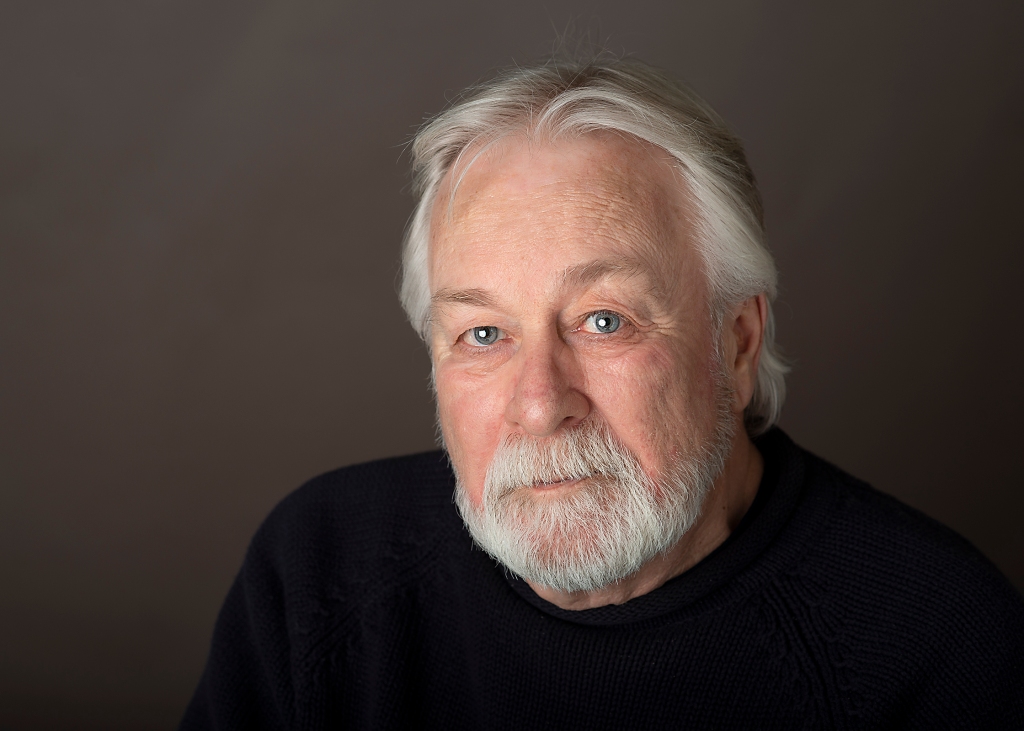
Dr Kirpal Singh

 “Singapore is intimately linked with home and, yet for me, home has always been a process of lifelong search. Partly because of the early months of my birth. The record says I was born in March 1949, but the time was not certain as I do not have a birth certificate. My father forgot to register my birth,” reminisces Dr Kirpal Singh, an internationally recognised scholar. Born in the Straits Settlement of Singapore, before the island emerged as an independent entity, he has lived through much of history. He tells a story of multi-racial, multi-cultural growth that the island afforded him.  

His father, he tells us, was “well known throughout Malaya — Jeswant Singh nicknamed as ‘Just One’ — a boxer who would knock people down with his left hook. In 1954, he left boxing when he killed someone during a match.” His mother, a Jewish Scot who he cannot recollect, he tells us, “ might have been David Marshall’s sister according to my stepsister but no one else has said that.”  Marshall[1] was the first Chief Minister of Singapore from 1955 to 1956 and then Singapore’s Ambassador to France, Portugal, Spain, and Switzerland 1978 to 1993. He is the founder of the Worker’s Party. His parents had emigrated from Baghdad to Singapore in 1908 according to current resources.

How did Singh’s parents come to be in Singapore? Were they immigrants or colonials?

He responds with what he knows: “My grandfather and grandmother came to Singapore on board a ship in 1900. They left Jullunder, Punjab, in 1899. By the time they reached Singapore, it was the end of 1900. They left to seek their fortune. They were from the farming community. My grandfather was only sixteen and my grandmother was about twelve. They were in transit in Penang for six months. They came to Singapore in 1901. Actually, it was all Malaya — Singapore was part of the Straits Settlement. They came to Singapore by train. Trains were just starting out. It was around August 1901.
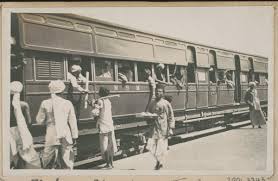
Trains in Malaya

“My uncle was conceived during this journey. They halted in Singapore for only two or three weeks. My grandfather’s cousin was in Perak[2], in Malaya. So, he wanted to be with his cousin. His cousin had cattle. Most of the Sikhs were cattle farmers. They settled in Pahang[3], an area which eventually became a nuclear dump[4] for Australia. It is closed to public now. There was a stone that proclaimed the land was a nuclear dump when I went with my son a few years ago.

“My father moved to Singapore as his prospects were better here as a boxer. This is where he met my mother. I was born here. He actually met mum because my mother’s two brothers had invited her to come from Glasgow. My mother is Scottish, from an industrial background. Her brothers came to the Far East to make money.  She finished her school leaving exams and came to visit her brothers during her vacation. She would go with her bothers to watch boxing, where she saw my father, the champ. She was only fifteen or sixteen. The next thing the brothers knew was she was pregnant with me.”

Jeswant Singh was popular with colonials. Kirpal Singh tells us: “Some Europeans saw him box and offered him a job then in the Base Ordinance Depot. This was the British Military camps in the Far East. There were three bases in Singapore: the naval base, Kranji and one in the South. He worked there for thirty years and retired after that. In 1972[5], after the final British withdrawal from Singapore, dad’s formal employment status ended. After that he just did odd jobs, ending up as a security guard, looking after the factories in Jurong, earning about two to three hundred dollars a month.”

Kirpal Singh spent his childhood with his grandmother and uncle. Before he started schooling, his father left him with his grandmother and divorced his mother in favour of a new bride. Dr Singh tells us the story of how he returned to Singapore: “I was basically in Perak with my grandmother. My uncle, who was the first Sikh to become a Christian in Southeast Asia, left home because his father gave him a beating for changing his religion. My uncle was an Anglican. His conversion saved him from the Great Depression as the clergy was very well looked after. From 1929 to 1933, the church looked after him because he was the priest in Seramban. My father was still young. My uncle was born in 1911 and my dad in 1923. My grandmother bore eighteen children. Five of the infants passed away before they were one month old. But thirteen survived. She passed away at 95… I knew when I left for my doctorate programme in Adelaide that that was the last time I would see her. I had a hunch and was crying on the plane. Six weeks later, I got a letter with the news of her death.”

He adds: “Dad was in not in a position to look after me. The responsibility fell on his brother William. His full name was William Massa Singh s/o Deva Singh. He had studied at the Ipoh Chinese school, topped the school, eventually worked as an insurance agent. He was very good in English. The principal of his school, a New Zealander, arranged for my uncle to move to Singapore. Then my father moved there too. Singapore was the metropolis even then. It was the centre of English education. Penang was the other one. In 1956, I was sent to Singapore from Perak on a train — a one-and-a-half-day journey to my uncle.”

His grandmother joined them within a few months as his uncle was, he says, “more interested in aiding Lee Kuan Yew get rid of the colonials. Lee Kuan Yew was a self-made man. He met Goh Keng Swee[6] and Rajaratnam[7] as students in England. They became buddies and wanted to move out of colonial rule and be independent.”

Then, how did a young child survive? Dr Singh tells us: “I used to earn my pocket money from age five six by watering gardens. I have had very interesting experiences. When I was in primary two, I used to give tuition to primary one students. With enough gumption, you can survive in this world.”

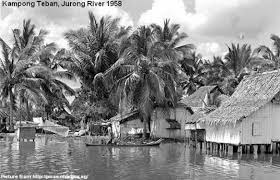
“I grew up with my uncle’s wards, who were brought home to be educated. There was even one who was a Chinese-Japanese mix. So, I grew up being familiar cross-cultural marriages and in a multicultural home. I grew up in the kampong with a Chinese boy and we became friends from the age of seven-and-a-half when we were in primary two. His name is Tan Jwee Song — I call him Jwee, ‘my good saint’.  He told me after O-levels he would support me to study further and took to teaching. At that time, you could become a teacher after completing your O level. I joined Raffles late during my time in high school because it was too expensive for me. I taught in night classes started by Lee Kuan Yew and studied. I owed Jwee $80,000 dollars and I wanted to pay his widow back — but she would not accept it. When I graduated in 1973 with an honours’ degree, I was $44 thousand in debt. Then, I was given a scholarship.”

And slowly, Kirpal Singh came to his own. When television came into being, he tells us: “I was often on TV in 1970s — days of early television — debates and interviews as a guest.” Kirpal Singh grew into an intellectual of repute as he worked and studied with the support of the many races and many people who, often like him, were migrants to Singapore.

As time moves forward, these stories — that are almost as natural as the sand, the wind and the sea — ask to be caught in words and stored for posterity, stories from life that show how narrow borders drawn by human constructs cannot come in the way of those with ‘gumption’.

(Written by Mitali Chakravarty based on a face to face conversation with Kirpal Singh. Published with permission of Kirpal Singh)

[1] https://www.roots.gov.sg/stories-landing/stories/david-marshall/story

[2] Now in Malaysia

[3] Now in Malaysia

[4] https://buletinonlines.net/v7/index.php/lynas-radioactive-waste-to-be-dumped-in-pahang-tax-free-while-australia-gets-a18-million-in-taxes-2/

[5] The British armed forces were scheduled to withdraw from Singapore by 1971. https://eresources.nlb.gov.sg/infopedia/articles/SIP_1001_2009-02-10.html#:~:text=On%2018%20July%201967%2C%20Britain,Singapore%27s%20defence%20and%20economic%20security.

[6] Deputy Prime Minister of Singapore, 1973-1980, one of the founding members of the ruling PAP (People’s Action Party) https://www.roots.gov.sg/stories-landing/stories/goh-keng-swee/story

[7] Deputy Prime Minister of Singapore from 1980 to 1985, one of the founding members of the ruling PAP https://www.roots.gov.sg/stories-landing/stories/sinnathamby-rajaratnam/story

PLEASE NOTE: ARTICLES CAN ONLY BE REPRODUCED IN OTHER SITES WITH DUE ACKNOWLEDGEMENT TO BORDERLESS JOURNAL. 

Click here to access the Borderless anthology, Monalisa No Longer Smiles

Click here to access Monalisa No Longer Smiles on Kindle Amazon Internation
 

Categories
Poetry

Are We There Yet?

By LaVern Spencer McCarthy

ARE WE THERE YET 

A migrant child who holds his mother's hand
will ask the question many times a day.
"Is this America, the Promised Land?"

An innocent, he does not understand
how long it takes a heart to find its way.
A migrant child who holds his mother's hand

may think all citadels he sees are grand,
but soon perceives that he can never stay.
Is this America, the Promised Land?

He sees a barrier where soldiers stand
with rifles drawn, encroachers kept at bay.
A migrant child who holds his mother's hand

may find that dreams will not come true, as planned.
There comes a time when we can only pray.
Is this America, the Promised Land?

Must we deny asylum, reprimand
with angry words and deeds that cause dismay,
a migrant child who holds his mother’s hand?
Is this America, the Promised Land?

LaVern Spencer McCarthy has published twelve books of short stories and poetry. She is a life member of Poetry Society of Texas and lives in Blair Oklahoma.

Categories
Notes from Japan

A Day with Dinosaurs

Photographs and Narrative by Suzanne Kamata

My day job is “associate professor,” so I sometimes attend academic conferences. When I learned of an upcoming conference on language teaching in Fukui Prefecture, which I had never been to, I was eager to sign up. Sure, I wanted to hear all the cutting-edge theories about teaching English to language learners – how to motivate my students to write haiku, how to use AI, and so on – but my primary reason was to see the dinosaur bones.

Although at one time it seems that dinosaurs pretty much roamed the whole world, fossils of dinosaur bones weren’t discovered in Japan until 1989. Those bones were found in Katsuyama City, Fukui Prefecture. Since then, even more bones have been discovered, and a museum ̶ Fukui Prefectural Dinosaur Museum ̶ opened in 2000. As part of the pre-conference activities, the host university had arranged for a trip to the museum. A free shuttle but would depart at 11:30am.

I consulted an app on my smartphone and determined that it would take me about five hours to reach Fukui Station from my home in Tokushima Prefecture on the island of Shikoku. I would have to take a bus, a train, another train, and the high-speed bullet train. After a recent trip to Tokyo, I had learned how to use an electronic transit card, which was basically an app on my phone. This app could be used to breeze through ticket gates at train stations, as well as on buses and subways.

I got up at 5:30am on the day of the museum tour. My husband dropped me off at the bus station. I got on the bus and got off in Osaka. Then I took a train to Kyoto, which was mobbed with travelers. Although I thought I could get on the next train, the so-called Thunderbird, with my app, I discovered that I needed to have a reservation. I suppose I could have made one on my smartphone while standing in line, but I was confused. I left the platform and queued up to buy a reserved ticket from the vending machine, which disrupted my tight schedule and meant I would not be able to make it to Fukui in time for the free shuttle bus.

The Thunderbird goes straight from Kyoto to Fukui with few stops in between. The scenery is mostly composed of rice fields and squat mountains. The monotonous view was calming. About an hour later, the train pulled into Tsuruga where I had to switch to the brand-new Hokuriku Shinkansen for the last seventeen minutes of my journey. In my rush to finish my business at the vending machine in Kyoto, I had inadvertently booked a seat in the most luxurious car. I was the only one there.

I texted a friend who was also attending the conference. She had already arrived. I told her that I would be late, and that I wouldn’t be able to ride the bus with her. This was Japan, where everything was always on time! However, the organisers were Americans, and they were willing to wait for me. Hooray!

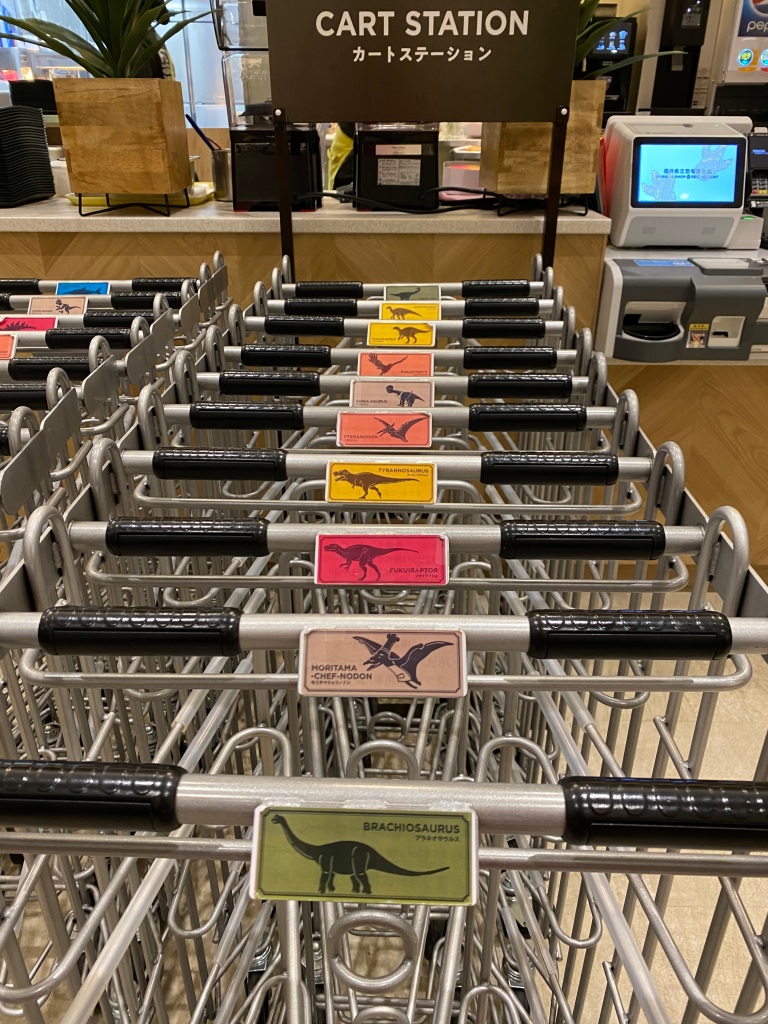
As soon as I got to Fukui Station, with its moving animatronic raptor keeping guard out front, I hopped into a taxi and finally arrived at the university, where the bus was indeed waiting. I sprinted onboard, apologised to my fellow passengers, and thanked the organiser profusely.

The museum was impressive, as advertised. Replicas of dinosaurs discovered in such far-flung locales as Morocco and Mongolia were on display. There were, of course, also exhibits of the five dinosaurs and one bird species discovered in Fukui, including the long-necked stubby-legged Fukuititan, the herbivorous Fukuisaurus, and the Fukuiraptor. Although the museum offers an excavation experience where visitors can pretend to dig and discover fossils, my friend and I just walked around looking at all of the cool rocks and bones.

Having gone through my son’s dinosaur obsession when he was young, I could remember some of the dinosaur’s names – the Ankylosaurus with its bumpy back, the Stegosaurus, and Pterodactyl. When we were ready to take a break, my friend and I made our way to the cafeteria for dino-themed snacks.

While many famous destinations in Japan are struggling with over-tourism, Fukui, while slightly off the beaten track, has a pleasantly relaxing vibe. Things may change with the new bullet train, but for now, I recommend it as a fascinating horde-free place to visit.

Suzanne Kamata was born and raised in Grand Haven, Michigan. She now lives in Japan with her husband and two children. Her short stories, essays, articles and book reviews have appeared in over 100 publications. Her work has been nominated for the Pushcart Prize five times, and received a Special Mention in 2006. She is also a two-time winner of the All Nippon Airways/Wingspan Fiction Contest, winner of the Paris Book Festival, and winner of a SCBWI Magazine Merit Award.

PLEASE NOTE: ARTICLES CAN ONLY BE REPRODUCED IN OTHER SITES WITH DUE ACKNOWLEDGEMENT TO BORDERLESS JOURNAL

Click here to access the Borderless anthology, Monalisa No Longer Smiles

Click here to access Monalisa No Longer Smiles on Amazon International

Categories
Poetry

Poetry by Shamik Banerjee

TO MR. BANERJEE (SENIOR)

Without black tea, his mornings never start.
The newspaper should be upon his bed;
Not finding it will make his eyes all red.
As if examining a piece of art,
He reads each page. Loud oohs such as 'My heart!',
'Another swindle!', or 'So many dead!',
Are heard as if the earth's weight’s on his head.
Harrumphing, he jumps to the Cultures part.
A pensioner today, back in those days,
He was a banker. Now, he saunters, plays
Carom with me, or spends the noontimes planting
Camellias —- a work he finds enchanting.
At times, he sits before some dusty files,
Puts on the glasses, thumbs through them, and smiles.

Shamik Banerjee resides in Assam with his parents. Some of his recent works will appear in York Literary Review, Willow Review, Thimble Lit and Modern Reformation — to name a few.

PLEASE NOTE: ARTICLES CAN ONLY BE REPRODUCED IN OTHER SITES WITH DUE ACKNOWLEDGEMENT TO BORDERLESS JOURNAL

Click here to access the Borderless anthology, Monalisa No Longer Smiles

Click here to access Monalisa No Longer Smiles on Kindle Amazon International

Categories
Poetry

Poems by Kumar Sawan

Kumar Sawan
ABSENCE

One fine morning,
I sit on the river bank.
I stand on the river bank.
I sit. And stand again.
But I do not open my hands,
For the fear of this wind.
I'm sorry if I fumble, I'm not used to this.
This is not a poem of joy,
Or exhilarating remembrance.
This is a poem of non-presence.
I see these lanes, monuments,
Crevices, just like my father told me.
He would tell me of
How he would come here,
Stroll with friends and weave stories.
He never left this city except when
His mother passed away in the village.
The world stays unaffected,
While everything inside you
Falls apart, ruptures
Like broken skin
Before it bleeds.
But you can’t
Bring it to your face
Or they will ask what happened,
And you won’t know
Where to start,

He said.
If I look ahead, I will see the clouds,
Watching over the river and me,
And a boatman throwing his net
In the green water.
But I don't look anywhere,
Instead, I hold my hands open,
And let the wind gust over me.
The wind disburdens me of my father's ashes,
And leaves me heavier than before.

CANVAS

offer me your blood
I will dab my fingers
and paint your dreams

on the canvas
Hungry for a piece of art
Hungry like a lonely wolf

in search of its prey.
the canvas enjoys
the foreplay

of the coloured fingers.
you are to me
what art is to a canvas.

THE MATCH

I gave you the match.
The stick. The kerosene.
And you light it.
Make it a torch. A mashaal*.
And you set fire to the bridge between us.
With each charred piece falling,
Our memories fall too.
The smoke blurs your apparition,
I’m burning too. Alive.
But you can’t see me.

*mashaal: a torch made by wrapping a piece of cloth on a wooden stick, pouring some flammable oil on it.

Kumar Sawan was born and brought up in Lucknow. He is a Ph.D. scholar in theDepartment of English and Modern European Languages, at Lucknow University. His works have been published in Rhetorica: A Literary Journal of Arts, Contemporary Literary Review India, SPL Journal, Literary Horizon, Creative Saplings, and the Teesta Review.

.

PLEASE NOTE: ARTICLES CAN ONLY BE REPRODUCED IN OTHER SITES WITH DUE ACKNOWLEDGEMENT TO BORDERLESS JOURNAL

Click here to access the Borderless anthology, Monalisa No Longer Smiles

Click here to access Monalisa No Longer Smiles on Kindle Amazon International

Categories
Review

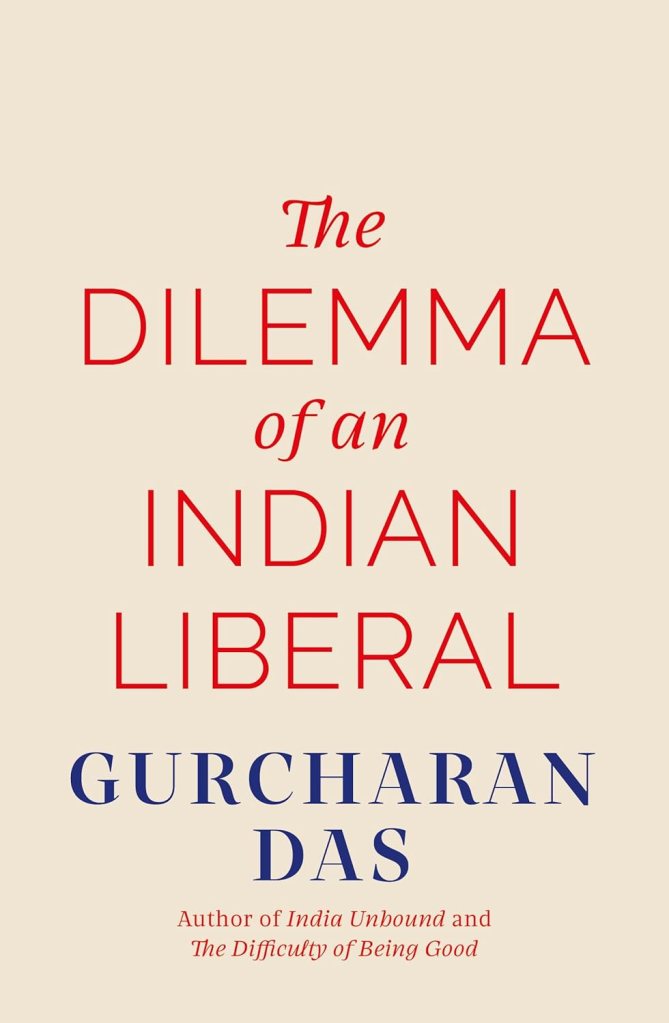
The Dilemma of an Indian Liberal

Book Review by Bhaskar Parichha

Title: The Dilemma of an Indian Liberal 

Author: Gurcharan Das 

Publisher: Speaking Tiger Books

One predicament faced by a liberal individual from India is the challenge of navigating a society deeply rooted in traditional values and conservative ideologies. India, with its diverse cultural and religious landscape, often presents a clash between progressive ideas and age-old customs.

In The Dilemma of an Indian Liberal, the author, Gurcharan Das, recounts his own professional and intellectual journey: how and why he became a liberal. While telling his story, he also narrates the story of a nation struggling—still— to become a successful liberal democracy—the late promise and its seeming betrayal, but also the possibility of course correction.

Das has dedicated his entire life to advocating for economic and political freedom. In his writings, he emphasises that liberal democracies and free markets have become the most logical and effective way to organise public life over the past two centuries. Having witnessed India’s transition from a stifling “license raj” to a liberal order in the 1990s, Das celebrated the country’s progress as market reforms and a maturing democratic process brought prosperity and dignity to millions who had been deprived of both for many years. He documented this remarkable transformation in his renowned book, India Unbound (2012) However, after three decades, it appears that the once bright light of progress is dimming.

The foremost pickle for liberals is the resistance and backlash they face while advocating for social change. Traditional norms and beliefs, deeply ingrained in Indian society, can be resistant to progressive ideas such as gender equality, LGBTQ+ rights, and freedom of expression. Liberals often battle continuously to challenge these norms and push for a more inclusive and tolerant society.

Another quandary faced by open-minded individuals in India is the threat to their personal safety and freedom of expression. Speaking out against societal injustices, criticising the government, or advocating for marginalised communities can often lead to harassment, threats, or even violence. The rise of online trolling and hate speech further exacerbates this predicament, making it difficult for liberals to express their opinions without fear of reprisal.

Furthermore, it is a challenge to find like-minded communities and support networks. In a society where conservative ideologies dominate, liberals can find themselves isolated when looking for shared values and beliefs. This lack of support can make it challenging to sustain their activism and maintain their motivation in the face of adversity.

Then there is the dilemma of balancing their personal beliefs with the need to respect and understand the cultural and religious diversity of the country. While advocating for progressive ideas, they must also navigate the delicate balance of not offending or disrespecting deeply held beliefs and traditions. This predicament requires a nuanced approach to ensure that their advocacy is effective without alienating the very communities they seek to empower.

In recent years, liberalism in India has been experiencing a decline, reflecting a broader global trend. The society has become increasingly polarised, with different factions holding divergent views on various social, economic, and political issues. This growing division has created fertile ground for the rise of populism, which has gained significant momentum in the country. One of the key debates that currently dominates the Indian discourse revolves around the perceived conflict between economic freedom and political freedom.

There are differing opinions on the matter, with some asserting that giving priority to economic freedom, such as advocating for free markets and deregulation, is crucial for a nation’s growth and success. They maintain that a thriving economy will ultimately result in political stability and individual liberties. Conversely, advocates for political freedom argue that without strong democratic institutions and safeguards, economic advancement can be superficial and unfair. They stress the significance of safeguarding civil rights, promoting social justice, and empowering marginalized groups. They firmly believe that political freedom is a fundamental requirement for a fair and inclusive society.

In the current polarised climate, the liberal perspective is often marginalised or dismissed as being indecisive or weak. Liberal individuals may find it difficult to navigate the political landscape, as they strive to uphold their principles while also engaging with the diverse viewpoints prevalent in society.

This book covers it all from resistance to personal safety concerns, finding support networks, navigating cultural sensitivities and  also navigating a complex landscape to bring about the desired transformation from within the cultural milieu. Addressing urgent needs, this enlightening narrative is written with strong conviction, deep insight, and scholarly expertise, all presented with remarkable clarity. It is a must-read for every person who is concerned about the future of democracy.

.

Bhaskar Parichha is a journalist and author of UnbiasedNo Strings Attached: Writings on Odisha and Biju Patnaik – A Political Biography. He lives in Bhubaneswar and writes bilingually. Besides writing for newspapers, he also reviews books on various media platforms.

.

PLEASE NOTE: ARTICLES CAN ONLY BE REPRODUCED IN OTHER SITES WITH DUE ACKNOWLEDGEMENT TO BORDERLESS JOURNAL

Click here to access the Borderless anthology, Monalisa No Longer Smiles

Click here to access Monalisa No Longer Smiles on Amazon Internation

Categories
Poetry

My Name is…

By Gregg Norman

MY NAME IS . . . 

Last week my name was Renfield
Familiar to a cruel Muse who
Visited according to his whim
I scurried about in service
To a master all-powerful
Desperate for redemption
For the key to sanity
The key to unlock the poem

Yesterday my name was Ahab
Searching the global seas
For the Great White Word
To start or finish a poem
I paced my pitching desk
In weather fair and foul
But did not strike the words
With my inked harpoon

Today my name is Vlad
And my rage knows no
Earthly bounds as I wait
For the red blood of life
To seep through my veins
And into my maddened brain
To create the words and lines
And the cursed verses

Tomorrow my name will be Pablo
And I will once again believe
That I can be prolific
In thought and deed
Boldly setting pen to page
With heart and soul
Interred in every word
Of a passionate poem

Gregg Norman lives in Manitoba, Canada. His work has been accepted by various international poetry publications in Canada, the USA, the UK, Australia, and Serbia.

.

PLEASE NOTE: ARTICLES CAN ONLY BE REPRODUCED IN OTHER SITES WITH DUE ACKNOWLEDGEMENT TO BORDERLESS JOURNAL

Click here to access the Borderless anthology, Monalisa No Longer Smiles

Click here to access Monalisa No Longer Smiles on Kindle Amazon International

Categories
Poetry

Poetry on Solar Eclipse & More…

By Prithvijeet Sinha

SHADOWLANDS
(Inspired by the global solar eclipse on April 8th, 2024)

Tomorrow
the shadowlands
will
have their edict
up
in the sky
with
the whole world's prior knowledge.

The Sun
and The Moon --
those two fastidious
and ever at loggerheads
to mark their showy turns --
will indulge
in their sibling rivalry
of ages.

It will be a sight.

The earth will be omnipresent,
pooling resources
for this compromise
between two
arch-rivals,
pulling
in a tie
as the final verdict.

It will all be over
before we know it.

EXPEDITION

There is a halt in
the expedition.

From not so far
away,
a decaying skeleton
shrieks,
its bones
gradually
ground to a paste.

Sordidly,
the remnants
of privation
now feebly
agitate
for all of us.

A blood-soaked spray
emerges
from a songwriter's
torso.

The day has commenced.
Rain clouds
cry
tears of blood
today.

Prithvijeet Sinha, is a resident of the cultural epicenter of Lucknow. He has published poetry, musings on the city, cinema in anthologies and journals of national and international repertoire as well as a blog. His life-force resides in writing, in the art of self-expression.

.

PLEASE NOTE: ARTICLES CAN ONLY BE REPRODUCED IN OTHER SITES WITH DUE ACKNOWLEDGEMENT TO BORDERLESS JOURNAL

Click here to access the Borderless anthology, Monalisa No Longer Smiles

Click here to access Monalisa No Longer Smiles on Kindle Amazon International

Categories
Slices from Life

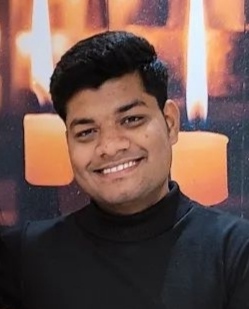
A Cover Letter

By Uday Deshwal

It’s been ten months since I quit my last job and have been attempting to gain employment. However, this isn’t my first rodeo. It has been my privilege to go on similar attempting-to-seek-what-I-really-want-to-do  sabbaticals twice before in the last decade. And each time the gradual-at-first-and-then-suddenly-debilitating desperation of needing to earn something to pay bills, cuts short the quests to seek happiness and fulfilment in work.

Whether it is fulfilled or not, whether it is life-changing or not, every quest for applying for a job comes with an unavoidable and annoying task that wears you down so much that all you are left with are bouts of self-doubt and PCLSD (post-cover letter stress disorder).

Before I go any further, I just want to say that it is not my intention to seem naive or ignorant about the hiring process, I understand and appreciate all the work that goes into it and how difficult it can be for recruiters and hiring teams. And, of course, it’s understood that some aspects of a job application are unavoidable and inevitable. But just like we all sometimes lament about other inevitable things like growing old, this is just some good old-fashioned cribbing about cover letters and CVs and such.

So, here are some of my thoughts, that I hope will resonate with others like me out there, about the mentally harrowing thing called ‘job applications’.

CV on File

“Hi, Thank you for applying to the XYZ opening at ABC. We’re grateful to have received many highly competitive applications for this role. After careful consideration, the team has decided not to advance with your candidacy at this time. Of course, we’ll keep your information on file and will reach out if there’s a new role that fits your experience.”

At this point I feel like at least 50% of the world’s data servers are filled only with people’s CVs/resumes/portfolios, given the amount of information all these employers claim to “keep on file”. However, I don’t know of one instance where anyone ever received an email in their inbox saying, “Hi, we had on your resume on file with us for 33 months, and of course you know we remembered the exact skills and experiences you had and so we immediately knew we must access the file and reach out to you with this amazing, fulfilling exact job profile you’ve been looking for. Would that be something of interest to you? If yes, then we need you to join latest by tomorrow. Do let us know. Kind regards, an unicorn of an HR/hiring team.”

If there Is A Hell, I would recommend adding writing Cover Letters as a Form Of Torture

Having to write about how you will be a good fit even as you are 99% sure that you are “not a good fit/not what we are looking for”, can really mess with your head as time passes and rejections pile up.

We all understand the hiring processes and the need for things like cover letters as a means to weed out the non-ideal candidates. But at the same time, it is also a nearly impossible task to constantly present yourself as an ideal, desirable candidate when all your mind tells you is that “you are not good enough … is this even worth it … why am I doing this”. After a few months in this loop, the idea of writing a cover letter, in order to apply for something, becomes so daunting that all you want to do is to curl up and cry. As unnecessarily dramatic it may sound, how am I supposed to write a cover letter that will make me stand out when I can’t even stand to look at myself and the failure I have seemingly become?

Constant rejections cannot possibly result in more earnest and more confident cover letters, period. And it is okay to acknowledge and accept that and stop berating ourselves at least for a day (before some expenditure sends you spiralling once again).

What those rejection emails actually feel like after the 3rd month of continuous rejections

“Hi worthless applicant, thank you for your interest in applying for this role we are going to hire for internally actually. We don’t really care about any highly competitive applications for this role. After three weeks of zero consideration, the automated email reply has decided not to advance with your candidacy at this time.

“While we are not able to give anymore ducks (*1 premium suggestion, see more in grammarly) about it at this point, we discourage you to keep an eye out for any new open roles and just forget about it. And, of course, we’ll keep your information on file and never reach out even if there’s a new role that exactly fits your experience and skills.

“We appreciate the mental breakdown you underwent to consider working with us, and wish you the best of luck as you continue your futile search.”

Don’t forget to give yourself some of those kind regards

It can be very daunting when you are stuck in a rut where you feel like nothing is going to change and you are doomed to keep struggling to even make it past the first round of the job application process. Some days will be worse than others, and you will feel no matter what you do you have no agency over your own career path and choices.

While struggling to navigate through such demoralising thoughts, it is important to keep trying to find moments where you micro-reward yourself with some hope, self-belief, and rationale. For example, even something as stupid as reasoning with your own mind about how it can’t just be you and there are many other reasons (global economic crisis, high unemployment rates, employers’ feudal mindsets, you don’t come from generational wealth, etc.) for your continued struggle to find a fulfilling job. But even a lost battle against your mind makes a little difference because you are at least contending with certain unideal realities.

On a slightly-not-as-worse day, you can use some of that as a catalyst to try and see what else you can do to make a better case for yourself (be it learning a new skill, doing an online course, reading/watching something that is inspiring, or attempting to write a piece like this and instantly regretting submitting it) for your next application. And most importantly, and for as long as possible, don’t lose hope and stay resolute towards your goals and what you want to do, because the only thing worse than rejection is regret… Actually having Rs 832.70 in your bank account in possibly worse.

Okay I must stop now because it has been two days since I last wrote a cover letter and applied for a job, and my PCLSD is kicking in.

Uday Deshwal suffers from an ‘always wanted to be a writer but was diagnosed with impostor syndrome’.

.

PLEASE NOTE: ARTICLES CAN ONLY BE REPRODUCED IN OTHER SITES WITH DUE ACKNOWLEDGEMENT TO BORDERLESS JOURNAL

Click here to access the Borderless anthology, Monalisa No Longer Smiles

Click here to access Monalisa No Longer Smiles on Kindle Amazon International

Categories
Poetry

Let it Flow…

By Anushka Chaudhary

WRITE

When the sun goes down
And the light goes out,
I can walk the lonely streets
Thinking about ways
To deal with pressure,
Waiting for the dawn to crack.
I can shout.
But, instead,
I write. I paint. I sing. I dance.
And I write. Again.
I pour my heart out
When I write.
My body screams words
And my pen screeches.
I let it go,
Let it flow.
Some things hurt only when
You hold onto them.
Death is peaceful.
It is the effort to prevent it
That hurts, isn't it?
Sometimes,
There's so much to say.
But my mouth?
It chooses to remain shut.
No why, how or what.
The pen and the paper empower me.
They are my safe haven
Amidst the battle within,
Companions through
Thick and thin.
They are the retreat for my inner recluse.
Nowhere can I find more peace.
Nowhere.

Anushka Chaudhary is an undergrad student in University of Delhi.  She is also an ardent reader, who enjoys romance and crime thrillers at her leisure. She likes to travel.

PLEASE NOTE: ARTICLES CAN ONLY BE REPRODUCED IN OTHER SITES WITH DUE ACKNOWLEDGEMENT TO BORDERLESS JOURNAL

Click here to access the Borderless anthology, Monalisa No Longer Smiles

Click here to access Monalisa No Longer Smiles on Amazon International