Categories
Slices from Life

Notes from Balochistan: Volunteers for humanity

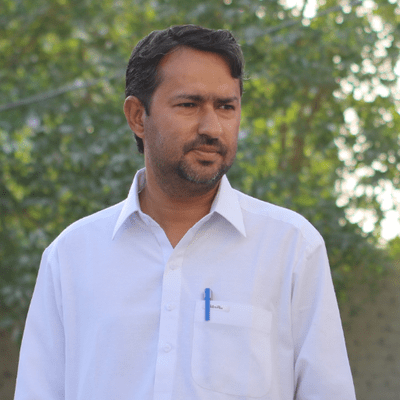
By: Ali Jan Maqsood

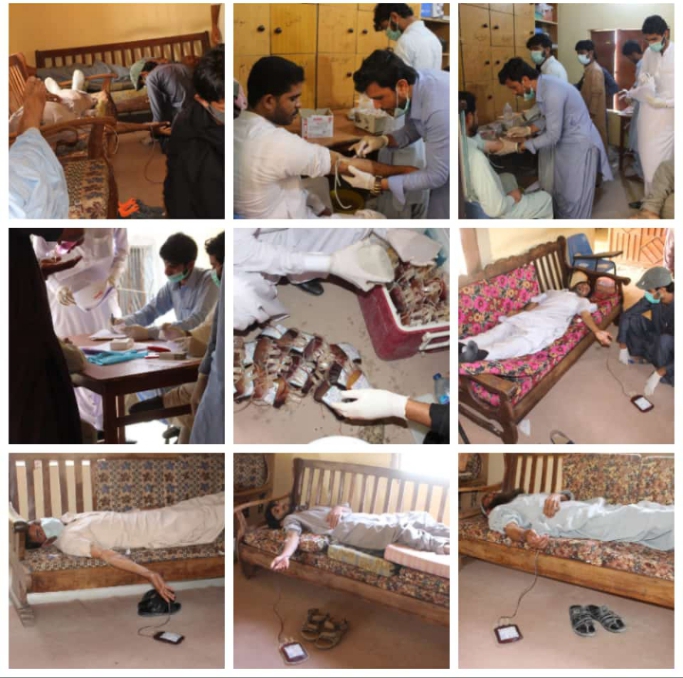
Blood Donation Camp set up by volunteers during COVID 19 restrictions

Pakistan, like many parts of the world, has announced a lockdown in most of the country. In some of the cities, however, there is a partial lockdown. The district Kech in Balochistan is partially locked down (from morning till five in the evenings with essential services still open like groceries, vegetables, banks, medical stores etc). However, all of the educational institutions will remain closed till May 31, with a warning that the date may be extended, depending on future developments.

Kech suffers from a great many medical services issues as the government gives very little attention to the affairs of the civil hospital. These have been further slowed down by the corona scare. On the other hand, Kech contains a number of — 286 — registered patients of thalassemia who need blood transfusion on a regular basis (some after every 15 to 20 days and the rest on monthly basis). The district does not own a single blood bank. Despite having three Members of Provincial Assembly (MPA) from the district with a Member of National Assembly (MNA), the need to build a blood bank in the district has not been addressed.

However, for the patients, a team of a social workers from Kech arranged a blood donation camp in the nearby tehsil of Buleda (about an hour and half of travel from Turbat) in order to collect blood for the needy thalassemia patients during the lockdown. Luckily, they got a good response from the locals of Buleda. The camp was set in Ruzhn School Mainaz Buleda under the support of Mr Zahoor Ahmed, the principal of Ruzhn school, and Mr Irshad Arif, a working faculty of Syed Hashmi High School Turbat and founder of Kech Blood Donors Team.

“A great many people supported us during the blood donation camp. I did not expect this kind of crowd since mostly people fear donating blood, but I am really amazed looking at such spirit from the people here, ” says Mr Arif in gratitude to the local people of Buleda. “I am wholeheartedly thankful to Mr Zahoor Ahmed for his kind help in our drive and all the people of Buleda for donating blood with high spirit.”

The principal of Ruzhn School Buleda was pleased looking at the youngsters doing their best to serve humanity. He said he was honoured to be part of the drive and had much hopes from the volunteers. “I was told they (Kech Blood Donors Team) were coming. I thought what would be more beautiful than to getting a chance to give your best to doing something for humanity in this very critical time,” Mr. Ahmed added

The blood camp got a huge number of donors. The team met their target only in four hours. However, many locals were rejected when they came forward to donate blood as they were considered unfit. They stood the whole time only in the hope they would be called back to give blood, added Murad Jan, a volunteer of the team.

The locals of Buleda have always helped when it came to do something for the people of the province. In such a critical time as the children affected by thalassamia are on the verge of death, they have showed their kindness by arranging the blood camps and supporting it to their best.

It is often said “Saving one human life is equal to saving the entire humanity.” The locals of Buleda proved it with their passion to help children fight death.

Despite the generosity of the residents, the government still needs to plan for a blood bank and a thalassemia centre in the district. Health is one of the basic needs that needs to be addressed. The people cast their precious votes and help politicians win elections, it is now their turn to pay back the community by providing basic facilities.

The writer is a student of Law at University Law College Quetta and a former teacher at DELTA in Turbat. He can be reached at alijanmaqsood17@gmail.com and tweets at @Alijanmaqsood12

Disclaimer: The opinions expressed are solely that of the author and not of Borderless Journal.

Categories
Musings

Life in Times of Corona

By Devraj Singh Kalsi

Her multiple complications turned worse around the time the first case came to light. During her last medical check-up, she was diagnosed with aggravated problems related to heart, liver, and gall bladder functioning. Hypertension, diabetes, arthritis, and cataract left out as routine and manageable disorders. She heard the doctor warn her of fatal consequences if angioplasty was not done immediately. She chose to bypass it with a smirk that offended the doctor and he prescribed three new tests at his specified diagnostic centre to locate more illnesses residing within her. 

Two months later, she heard the doctor had passed away. She was curious to know how his untimely end came. This is when she heard about COVID-19 for the first time. It sounded more like a prescription drug to her rather than a life-threatening infectious disease. When I simplified it with corona and explained what it was and how it was caused and transmitted, she grew interested in the pandemic, sneezed all of a sudden and asked: Can I get it? It was like —Am I eligible for it?

As the elderly folks with co-morbidity are at a higher risk, I urged her to practice social distancing. She did not get it, so I asked her to stay six feet away from people. She took this opportunity to cancel her scheduled blood pressure check-ups and blood sugar tests for a month.

She bombarded me with several questions. I searched online for the best answers to update her. From her facial expression she was not happy to learn that it came from China. Her xenophobic mind began to function. She blamed the Chinese for almost every evil in the world. She wanted to see a pangolin on my phone. After a proper look at the poor fellow looking cute and innocent, she said with regret: What else do you expect from people who eat snakes and dogs? She had no visible anger for bats or pangolins — only for the wet markets in China. 

She began to create conspiracy stories with impossible plots and angles, and this assured me that my creative streak was most certainly derived from her. She was not any different from what others were thinking except the fact that she did not know anything about bio-weapons. 

She took advantage of the fact that I was not born when China attacked India. She dramatized a few episodes. I had no option to verify. Since her emotional investment was evident from her expression, I chose not to interrupt her flow and nodded without conviction. Pakistan and China were the two countries she loved to bash indiscriminately whenever she got an opportunity or a person who harboured similar thoughts. Somehow, she had realised over the years that my intolerance for any nation had not peaked yet.   

                                                              *

Every day, from morning to night, she pops fifteen pills. But today she decided to skip pills. Just like people skip meals for dieting. I did not know how to react. Should I administer those pills with a word of caution or just let her do what she wanted to do? It appeared she was confident heart attack was unlikely to be the cause of her death. She did what she wanted to do — flirt with death.  

I told her to wear a mask for safety and she opened the window to see whether the lady in the adjacent house was wearing one. When she saw she was not wearing it at home, she refused to wear it. She kept the mask and said she would wear it when I entered her room after coming from the grocery store. To show she was taking some precaution, she agreed to keep the bottle of hand sanitizer with her.  

Although I myself was not sure about many possible ways of its spread, I added them all for extra safety. I mentioned how it behaves on various surfaces, how many days it lives, how easily it kills. This deepened her worry. She wanted to know whether her relatives were safe. She called them up to find out.

Armed with the knowledge derived from me, she began to use words like pandemic and social distancing and repeated preventive tips. She observed behavioural change in her close relatives. Those who used to express the desire to meet her were quiet now. She sought umbrage because nobody had invited her. I told her that relatives will not entertain or invite guests for one year at least. She said most of these were fake invites and so there was no harm in extending them, just to make others feel good. I explained that people were unwilling to take any kind of risk. You never know which crackpot turns up with a burning desire to meet once trains start running on the tracks.

The virus shared many attributes with God. It was also invisible just like God. She kept reading the holy texts as usual. I told her she must realise death is not caused by God’s will. Even a virus can kill people and faith cannot save people from Corona virus. This posed a big challenge to her faith. She began looking for a line of defence: Tell me, who created this virus? It is also God’s creation.

For once, she did not blame China for creating it. Before I could ask her why she felt so, she asked me to repeat the symptoms. I told her the virus can live in the human body for 21 days or more without any symptom. Now she got really worried and scared. She wore the mask and abused the virus in filthy language without showing any mercy – much of it I did not hear and what I heard I cannot put down.  

Devraj Singh Kalsi works as a senior copywriter in Kolkata. His short stories and essays have been published in Deccan Herald, Tehelka, Kitaab, Earthen Lamp Journal, Assam Tribune, and The Statesman. Pal Motors is his first novel. 

Categories
Musings

As History Unfolds

By Tehmina Khan

It started on Saturday, or perhaps even earlier on Friday, twenty-eight days ago, with tiredness and an odd tenseness in my body, which I attributed to stress. My husband returned to our home in Toronto from Pakistan on Monday afternoon and went into quarantine in our guestroom. Our COVID-19 days had begun.

By Tuesday morning, I had a sore throat, a dry cough, severe body pain, diarrhea, nausea and stomach cramps. I felt feverish though the thermometer gave a below average body temperature reading. My fever spells were followed by chills which set me shivering under a mountain of blankets. I made the terrible decision to get medical help.

I was worried because of COVID. The secretary at my doctor’s office asked me not to come in. My symptoms sounded too much like COVID and no one wanted to risk infection by seeing me.

 I called Telehealth and got bounced around until a nurse finally told me to get tested. Our closest assessment centre was North York General Hospital. This is where I gave birth to my son. This is where I had an uterine embolization and two surgeries a few years back. I associate kindness with this hospital. I am familiar with its corridors.

My husband was busy with a work-related call in the basement when I decided to walk the five kilometres to the hospital. I didn’t want to expose him or anyone else to my germs. The walk was slow and exhausting and the hospital I arrived at was not the place I was familiar with. They were construction workers erecting a pavilion of sorts outside the emergency department. The inside of the department looked like a scene from a war zone.

The doctor who finally saw me, spoke to me for a long while. He told me that while I was exhibiting all the symptoms other than fever (I had taken Tylenol before embarking on my walk), I did not meet their testing criteria. I was not over 65, immune compromised, or an essential worker. He was honest and told me that they do not have enough kits and therefore are conserving them for those most at risk. His last sentence to me before walking out was: “You are witnessing history unfold.”

I returned home and my condition continued to worsen. My husband and I swapped rooms. I was quarantined in the guestroom from my husband and two teenage kids. I was not bored. The trials my body was putting me through were relentless and left no scope for boredom. Around the two-week mark of my sickness, I had two days of feeling much better. I heaved a sigh of relief and announced my return to the land of the living.

But I was wrong, and I rapidly grew weaker. I became confused. I began spending much of my time crying from sheer weakness. As I felt my strength ebbing, I became convinced that I would not survive. At times, despite the layering of Advil and Tylenol, my pain was such that I almost wished for death.

My mental health lay in shambles. I could no longer read or write. I stared blankly at the same paragraphs trying to decipher the meanings behind the words. I felt I was a burden. I was unable to care for myself. People called to commiserate with my husband for being stuck taking care of me. I wanted to somehow magically return to my parents’ home in Karachi, Pakistan, and my mother’s care where no one would consider me a burden.

It is a strange thing to become dangerous to your own loved ones. My husband and I sleep in separate rooms. My children and husband use one bathroom, while I use the other. My family maintains physical distance from me. The last time I experienced human touch was more than three weeks ago. For the first two weeks of my husband’s return from Pakistan, our children did the groceries because both my husband and myself were under quarantine. I suffered guilt pangs knowing that we were placing our children in harm’s way in order to keep us fed.

Now, that my husband’s quarantine is over, he does the weekly grocery run. He and our kids also do all of the housework because I am unable to do more than take the few steps it takes to make it to the washroom.  People constantly call to tell me to thank God for His blessings. I wonder if they are simply trying to take advantage of my weakened state. They seem more interested in scoring brownie points with their God than in my well being because why else would you use this opportunity to intone God to a non-believer?

I eventually made a second trip to the Emergency department. It was a mistake caused by the burning in my chest. My family doctor the day before had prescribed an antibiotic and assured me that I should go to Emergency to get help if feeling worse. This time, I could barely manage the few steps into our car. I dissolved into tears at the hospital. I had trouble following the nurses’ instructions. They tested me for COVID. I was put on a drip and told that I was severely dehydrated. They did an EKG and a chest x-ray. Both were clear.

 By the time I left, it seemed that the attending doctor was just annoyed by my presence. She seemed to have decided on her own that my dehydration was caused by ongoing diarrhoea though I had informed her right in the beginning that my diarrhoea only lasted the first two days of my sickness. She lectured me on staying hydrated and sent me home where my symptoms continue till the present moment. My throat is still sore. My neck still hurts. The skin on my face and chest is red and splotchy. I still have bouts of nausea and dry heaving. My energy level is a bit better to the point where I was able to do a light housekeeping this morning, but even that bit of effort cost me, and so I am back to lying in bed. As for what is wrong with me? Who knows? But more importantly, who cares? We have all gone from being humans to just being statistics. Do you match these criteria? If not, please step aside.

This pandemic is the moment when we will reveal our humanity. Will we choose to overlook the ones who are easy to overlook? I don’t mean myself. I will be back to health soon enough.

I mean the ones who we have grown accustomed to overlooking; the people who were already struggling to exist. The ones who work multiple odd jobs and still barely manged to feed themselves. The ones who live in slums and have no access to clean water, decent food, education or health facilities. Others too, the elderly and the mentally and physically disabled who are not able to advocate for themselves. When we start to prioritize, as this pandemic will force us to do, who all will we choose to overlook?

 In our single-minded focus on COVID, we are neglecting all other illnesses and casting aside all other concerns. COVID is not the only health problem on the planet at the moment though it may be the only one on our television screens and while COVID is exacting its death tolls, shutting down the planet for a prolonged period will also exact a toll which we have not even gotten around to imagining as yet.

Tehmina Khan has her home in Toronto, where she lives with her husband, two children, and their dog, Luna. Mawenzi House published her collection of short stories, ‘Things She Could Never Have’, in the fall of 2017. She is currently working on retelling seven stories from ‘1001 Nights’. Her writing has appeared in the The Blue Minaret, ShedoestheCity, and The /temz/ Review.

Categories
Poetry

Lockdown dilemmas

By Gauri Dixit

Lockdown Dilemmas
The blades rotate at a constant speed
My eyes etch a pattern on the thick layer of dust

'The fan will not clean itself' 
The mind says
'It will too
See the tiny dust particles floating in the air?'
Says the eye

The onions have been lying in the terrace for six days now
Day one and day two were supposed to dry the wet onions
It rained on day three and four
The onions are out for drying again
And they will dry on their own
There's no pain

I go through the memories scattered around
Picking each, cleaning, dusting, compartmentalizing, organizing 
Halfway through 
I see you
Much larger than any compartment I have at my disposal
And too small to be locked

Gauri Dixit when not busy working in her office, is busy being a traveller, climbing mountains, capturing the voice of a solitary flower blossoming from a rock or the bird sitting on a hanging branch, sometimes  the setting sun or the  sea  in her camera as well as in the words she weaves. Her poems speak in a voice which is unique, cold and direct .  She  has been a Reuel Prize awardee. Her first book, ‘In My Skin, I Find Freedom’, has poems on varied subjects with a common thread of a sceptical questioning mind of a free woman.

Categories
Stories

Too Much Light, Too Much Trouble

A Balochi Short story by Ghani Parwaz

( Translated by Fazal Baloch)

The moment he stepped into the office he was astonished to see the distorted features of his colleagues. Someone’s eyes were bulging out of their sockets. Someone’s ears were stretched out. Someone’s tongue was sticking out. Someone’s lips had swollen. He stared at them with bewilderment.

Aftab, the clerk, raised his head and bulged out his eyes a bit further and said: “You are looking at us in such a way as if we are creatures from some other planets.”

Imdad, the assistant, raised his ears a little more and asked him: “Why are you looking at us with such wonder”?

Zaheer, the cashier, stuck out his tongue and remarked: “I think he is not feeling well today.”

Muzzamil, the clerk, puffed his already swollen lips and said: “We need to bring him back on the track.”

He strolled ahead, stood right in their midst and said: “But why do you all look so strange today?”

First they looked at each other and then directed their gaze at him and asked him: “What is wrong with us, by the way?”

He smiled acerbically and retorted: “Someone’s eyes are bulging out. Someone’s ears are unusually raised. Someone’s tongue is sticking out. Someone’s lips are swollen.” 

Aftab, the clerk, instantly pulled out a small mirror from his pocket and looked into it.

“You damn liar,” he mumbled.

One by one they all looked their features in the mirror.

Someone lashed out at him, “Why do you fashion such big lie?”

“Is this the way to make fun of your colleagues?” Someone else expressed his displeasure.

Muzamil was not satisfied yet. He strolled over to the bathroom and thoroughly scanned his face in front of a giant mirror.

“Lies wouldn’t last long.”

Azhar sat on his chair and looked around and said: “Truth and lies apart, but your faces do not look as usual.”

Ms. Farhat, the secretary to the Chairman, stepped in.

“What happened? Why are you looking so flummoxed?” she asked them.

“Azhar says our features look distorted.” Muzzamal said while looking at Ms. Farhat.

She looked at their faces and said: “No. Everything seems to be as usual.”

“Look at yourself, madam,” Azhar said.

“What has happened to me?” Farhat was puzzled a bit.

“Your cheeks are swollen.”

“O my God!” She covered her face with her hands and scurried to the bathroom. She returned in a moment and blasted at Azhar: “You are a duffer. You don’t even deserve the slot of a watchman.”

“He thrashed at us and even didn’t spare you.”

Someone suggested, “We must take up the matter with the boss.”

“Don’t worry. Let the boss come. I will do the rest,” Farhat assured them.

A while later the door turned open and Zahir Ali, the Chairman, stepped in. He cast a cursory look at the staff and made it to his office. Farhat followed him.

“What is the problem, today you all look anxious?” The Chairman placed his sunglasses on the table.

“Today Azhar has lost his mind,” Farhat replied.

“How?”

“He is talking nonsense.”

“Just relax yourself I will see him.”

The Chairman pressed the bell and asked the peon to call Azhar in.

“Sir! Have you called me?” Azhar looked at him anxiously.

“Yes. Why are you misbehaving with your colleagues?”

“No, Sir, I haven’t done anything wrong. I just told them whatever I saw with my eyes.”

“By the way what did you see?”

“They all have distorted faces.”

“How? Any example.”

“Bulging eyes. Elongated ears. Puffed lips. Swollen cheeks.”

The Chairman asked him, “And you are also staring at me with amazement. Do you see any change in my features?”

“Sorry Sir! I wouldn’t be that rude. After all you are my boss.”

“Go ahead and tell me if you see something unusual in me.”

“As you wish Sir — you have a protruding paunch today,” he revealed in a somewhat trembling tone.

The Chairman walked over to the bathroom. He returned in a while and blasted at Azhar: “You rascal!”

Azhar trembled with fear and pleaded: “I am sorry Sir.”

“You don’t deserve any relaxation.” He looked at him with anger and pressed the bell.

The peon rushed in: “Yes Sir!”

“Call the staff in,” he commanded.

All the staff gathered in the Chairman’s office.

“Do you see any change in your own features?” The Chairman asked them with great concern.”

“No Sir,” was their answer.

“And something unusual in mine?”

“Not at all.” They replied.

“Then why on earth, is this knucklehead insisting that we have distorted features?” He was furious.

“Sir something must be wrong with his eyes.” Muzammil pointed towards Azhar’s eyes.

“Muzzamil is right; you must have an eye problem.” The Chairman looked at Azhar.

“Yes, indeed I had an eye-problem, but I have had them treated recently.”

“The treatment has further ruined your eyes,” the Chairman looked deep into his eyes.

“Anyway, what was the problem with your eyes?”

“My eyes used to twinkle,” he replied.

“What? Do eyes ever twinkle?” The Chairman was amazed.

“Yes, they used to twinkle and I felt new and brighter eyes were growing inside my eyes.”

“What was the nature of the treatment?” The Chairman asked him.

“I had an eye surgery.”

“I feel the surgery went terribly wrong.”

“It went wrong?” Azhar was confused a bit.

“Yes, it did,” the Chairman affirmed his statement.

“But now I have a much better and brighter vision than ever, Sir. Now even I can see the invisible things.”

“What do you mean by the invisible things,” the Chairman shot back.

“I mean that I can see what the bulging eyes are looking for. I can hear what the elongated ears desire to hear. I know what the swollen lips want to say. I know what the puffed out cheeks seek. And what the protruding paunch…”

“Shut your nonsense!” The Chairman cut into the middle of his speech. “Had you not been an old employee, I would have kicked you out of the office.”

“Have mercy on me Sir,” Azhar pleaded.

“I accept your apology but only on one condition.” The Chairman dragged his chair a bit forward and pointed his index finger towards Azhar.

“I accept whatever condition you set.” Azhar bowed his head in respect.

“I will get your eyes operated again and its expense will be deducted from your salary in nominal installments,” the Chairman gave the verdict.

“What do you think now?” Muzammil quipped with a sardonic smile.

“What can I say,” Azhar replied in a state of utter helplessness.

A few days after the operation Azhar resumed his routine in the office. Now everybody looked normal to him. He didn’t notice anything unusual in their features. He was standing by the door when the Chairman burst in.

The Chairman asked him sarcastically, “How are your eyes now?”

“As usual, Sir,” Azhar replied.

“Remember, too much brightness of vision is always disastrous. It can land you in deep trouble.”

“I will never forget your advice Sir.” A meaningful smile appeared on Azhar’s lips, “because I cannot endure too much suffering.”

Ghani Parwaz is one of the most celebrated Balochi writers. He has been writing Balochi fiction for the past five decades. So far he has published seven anthologies of short stories and five novels.  Apart from fiction, he also writes poetry and literary criticism. He received several awards for his literary contributions including “the Presidential Award for the Pride of Performance”. He lives in Turbat Balochistan.

Fazal Baloch is a Balochi writer and translator. He has translated several Balochi poems and short stories into English. His translations have been featured in Pakistani Literature published by Pakistan Academy of Letters in 2017 and Silence Between the Notes — the first ever anthology of Partition Poetry published by Dhauli Books India in 2018. His upcoming works of translation include Why Does the Moon Look So Beautiful? (Selected Balochi Short Stories by Naguman) and God and the Blind Man (Selected Balochi Short Stories by Minir Ahmed Badini).

Categories
Review

Lines across the Ocean: Love and the Impossibility of Words

Book Review by Soni Wadhwa

Title: Lines Across Oceans

Authors: Nalini Priyadarshni and D. Russel Micnhimer

A few days before this Valentine’s Day, Nalini Priyadarshni urged her friends on Facebook to  “consider getting a book of love verses for your sweetheart this Valentine”. The book is Lines Across Oceans: Intercontinental Love Verses which she has co-written with the late poet D. Russel Micnhimer, also a winner of Poet Laureate award in India. To those who love poetry and those who have been in love, Priyadarshni’s mischievous call to action invoked nothing less than a gleeful sentiment of “ooooh… another one” tinged with “oh no – not again!” It is a sentiment that gushes out of a lover/beloved every time a note of pleasure comes close enough to unfold aspects of loving.

While the book was published three years ago, it was a perfect moment to discover how the two poets from different continents would reinvent ways of understanding, expressing love and talking about it. The book does two wonderful things for the readers — it begins with Rumi and then somewhere in the middle declares what lovers already know about the impossibility of syncing love with speech:  

Listen if you must

Not my words, for they may be unbefitting

Listen to my silence in pure intent

My pauses bring forth what my words couldn’t 

If you don’t get my silence, my words were a waste

Anything that can be explained away in sounds and signs

can neither be deep nor abiding 

Eternal and elemental, the absolutely best in us

expresses itself as much in black as in white fire

Love cannot be spoken about, and yet, lovers continue to speak about it. Priyadarshni and Micnhimer affirm the paradox of writing about silence in love and so one can peacefully move on to enjoying the way of words that have the audacity to express being in love:

Words born in the recesses of your heart, I treasure 

Even before they rise in your throat 

Or find release from your lips 

I know them from another place, another time 

The refrain “another place, another time” throughout the piece concedes that being in love is being resonant with the idea of love that precedes the lovers in question. Hence, Rumi. Hence, poetry. Hence, reading. Hence, writing. This idea of another time, another place constitutes the iconography of love at the hands of Priyadarshni and Micnhimer:

We pour ourselves out to make room

For the best is yet to come.

What’s love poetry without the snapshots of togetherness? Here is an instance of the mood of the Valentine from the book:

Morning Ritual of shared coffee 

with a tea person should make you wary . . . . 

Mightn’t be the coffee they are after 

but coffee flavored kisses

One wants to blush at the thought of being outdone by the beloved thus. And then one wants to know how the beloved will walk the path of passion:

Knead me as a loaf with your fingers jaan . . . .

– I am growing, expanding, soaking 

in the joy of your laughter’s leavening 

overlapping the edges of meeting hearts. 

The eroticism spread throughout the book brings one back to words as the units constituting the idea of love:

How can I make my words taste as good as ice cream on a hot day 

make them tremble in your ears as they tumble from my tongue?

Lines Across Oceans is interesting for the way it weaves the idea of being together with that of writing together. This laying bare of the cohabitation in the text makes the collection of poems apt as more than a Valentine’s Day read. Sample the lines that articulate this: 

When you write poems for me

and I string my words together 

to write about you and us

we do more than make love

to each other with our words

we bestow each other with 

a slice of eternity

The book appeals to the right spot called desire – desire, that sits perched delicately on the suture between the pleasures of writing, loving, and being loved. In the ritual of reading a collection of love poetry, desire begins to linger on all rituals of living and making sense of life. 

While general readers will be able anchor their experience of love in the light and intense moments in Lines Across Oceans, “serious” and regular readers of poetry will find interesting for its experiments at the formal level in the way it incorporates less known forms of poetry – katuata, sedoka, choka and so on. A ‘choka’, for instance, works very tightly with a form organized around the alternating lines of five and seven syllables:

Let nights and days of

Our loving playfulness, stretch

Into forever

Love is about opening one’s self and shrinking it too. Each number in the book reflects that opening and shrinking in different ways. The collection affirms that love and poetry are so alike. 

Do pick it up — even though the Valentine’s Day is gone, the Valentine is still around.

Soni Wadhwa is an academician based in Mumbai. Her work can be found on Asian Review of Books and Deccan Herald, some of which has also got republished in Scroll and South China Morning Post

Categories
Poetry

Poetry from Nepal: Eyes and tears

Poetry by Sangita Swechcha, translated by Jayant Sharma

Dr Sangita Swechcha
Over the rim of the eyes
welled weary the tears,                                        
asking the eyes—
“Should I trickle or not?”
The poor couple turn oculus in utter surprise,
respond in a staggering and gruelling shape—
“How do you yearn to roll down?”
The tears sob at the oddity of the question
and reply in a state of being offended and distressed—
“If you’re embarrassed to show up in open,
I shall glide my way inside.
If you are in solitude otherwise,
I shall spill out in a surge.”
How wise the tears are—full of empathy!
To save the eyes from being abashed
they are ready to repress their outburst.
And to loosen up the eyes
they are all set to gush out
from creeks across the cheeks.
The eyes, meanwhile, are silent;
their heart already hard as stone.
And so retort—
“I get fused easily
even after countless fragmentation
only to be never fragmented again.”
Thus is the difference—
between the eyes and the tears.
The eyes are fixed
But the tears get dismembered many times only to be shattered again.
Hence—
The tears that once dropped off inadvertently in despair
have started asking for permission nowadays
before making their way out.
And the eyes that were inept in giving consent before
have started giving permission these days.
Thus is this alchemy between the eyes and the tears—
The tears ask—
“Should I trickle or not?”
And the eyes respond—
“How do you yearn to roll down?”

Dr. Sangita Swechcha has been an ardent lover of literature from an early age. She has published a novel ‘Pakhalieko Siudo’ (Washed Vermillion) and co-authored a collection of short stories ‘Asahamati ka Pailaharu’ (Hoofmark of Discord) before the collection ‘Gulafsanga ko Prem’ (The Rose: An Unusual Love Story). Her second novel is under publication and her short story collection is being translated into English. She has many short stories and poems published in various journals and online portals including Radio Nepal, Nepal Television, Global Literature in Library Initiative (GLLI) – USA based site and Your2Read, a London based venture dedicated to short story genre.    Email: sangyshrestha@hotmail.com , Website: www.sangitaswechcha.com.


Jayant Sharma is the publisher and editor of an English literary magazine Sathi which promotes Nepali literature through English translations and the founder of translateNEPAL which is an initiative to represent Nepal to the global literary scene. As a writer and translator, Jayant also contributes to major national dailies and South-Asian journals regarding arts, literature, and culture. 

Categories
Essay

The Economy, Lemurs And Us

By Sally Dugman

The underlying human horror and destruction from the nearly worldwide COVID-19 disease is truly daunting. Not to undercut the seriousness of the devastation, but this type of happening is hardly new. For example, consider the Black Plague that wiped out half of Europe and the fact that many British people are immune to Smallpox unlike many Native Americans whose ancestors were never exposed to the disease.

All the same, there are many other horrific events afflicting people and members of other species. Indeed, we all face floods, famines, pestilence, tornadoes, hurricanes, water shortages, tsunamis  and more. It seems that these sorts of events have existed since almost times immemorial for some dire happenings.

We also have another type of trouble and it involves decimation of the natural world. There is nothing new in that pattern either except that we have ever so many more people than in earlier times trying to eek out a living by dismantling the world’s forests, meadows, waterways and so on to have self-economic advances for oneself, family members and others.

In relation, it seems to me that desire for great self-gains indirectly accounts for greedy money mongers, people with giant homes filled with belongings and ditto for their vacation homes, vacation travel and other perks associated with having wealth.

Further there exist game shows in the USA wherein people compete for money. In some shows, the money to be potentially gained is a lot and in others — a little.  And some of the people in these programs act covertly or overtly savagely to get that moola for themselves. How nasty! … Civility can be quite far from the surface in these programs, and you can see the lack through body language, eyes, tone of voice, pretense, etc. (Such behaviors can sometimes be fascinating to watch as they show some degree of depravity in my opinion.)

All considered, it is not surprising one iota when a friend sent me this analysis titled “Your brain evolved to hoard supplies and shame others for doing the same.” It demonstrates in a way the desire to get ever more for oneself.

Two excerpts:

“The media is replete with COVID-19 stories about people clearing supermarket shelves – and the backlash against them. Have people gone mad? How can one individual be overfilling his own cart, while shaming others who are doing the same?

As a behavioral neuroscientist who has studied hoarding behavior for 25 years, I can tell you that this is all normal and expected. People are acting the way evolution has wired them.

“At the same time they’re organizing their own stockpiles, people get upset about those who are taking too much. That is a legitimate concern; it’s a version of the “tragedy of the commons,” wherein a public resource might be sustainable, but people’s tendency to take a little extra for themselves degrades the resource to the point where it can no longer help anyone.

“By shaming others on social media, for instance, people exert what little influence they have to ensure cooperation with the group. As a social species, human beings thrive when they work together, and have employed shaming – even punishment – for millennia to ensure that everyone acts in the best interest of the group.”

So let’s look at lemurs in this ravenous backdrop:

I saw in an environmental documentary that there are only around 20,000 left in the world with numbers dwindling (as their land is increasingly snapped up by humans) as compared to around 7.8 billion humans with the number of the latter kind growing. And blood samples were taken from them for study and possible drugs to be developed for humans.

Why? It is because they get many of the same ailments like Parkinson’s and Alzheimer’s as people do and how could that be so?

Look at your juxtaposed thumb. It came from natural selection based on a mutation and it is from lemur ancestors. In other words, the wild lemurs are your very distant cousins.

This has long been suspected as being the case. Yet it was only recently that two, yes — two, fossil samples prove it. After all, we are the only species with the opposed thumbs, which are very useful in myriad ways. And the fossilized evidence satisfactorily proves it since they have our thumbs.

Now, it is fine enough in my opinion that some people want to literally believe that humans derived from Adam and Eve. It is fine that they believe that life originated from some being standing on a turtle shell or aliens from outer space seeding our planet with life.

All power to them if such ideas bring comfort and joy. Good for them!

Meanwhile I like looking at my thumb while marveling at its origins. That view in light of empirically derived facts suffices for me.

Sally Dugman lives in MA, USA.

This piece was first published in Countercurrents.org

Categories
Poetry

The Moment and more…

By Dustin Pickering

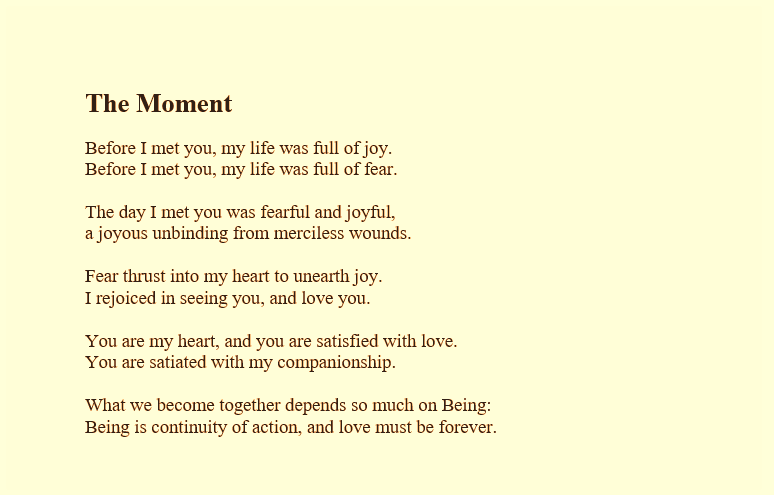
The Moment

Before I met you, my life was full of joy.
Before I met you, my life was full of fear.

The day I met you was fearful and joyful,
a joyous unbinding from merciless wounds.

Fear thrust into my heart to unearth joy.
I rejoiced in seeing you, and love you.

You are my heart, and you are satisfied with love.
You are satiated with my companionship.

What we become together depends so much on Being:
Being is continuity of action, and love must be forever.


promising darkness

words in violation
of strict premises
	glory or face
times diluted in fear

pretense tightens the mask
a failure of childhood
	buried beside insolence
your mind lays unaddressed

who opened the door to chaos
feelings flayed in the open
	dreams and reflections
against promising darkness


Empty Longing

I don't exist: that helpless look of duty 
is empty longings, friend. 

If your angel only cast one lumbering breath 
to hunt holiness, he will blind the livid temper 
to its egging impulses. 

Heed this prayer, o wicked deliverance, 
if kisses are tied to innocence.

Dustin Pickering is the founder of Transcendent Zero Press and editor-in-chief of Harbinger Asylum. He has authored several poetry collections, a short story collection, and a novella. He is a Pushcart nominee and was a finalist in Adelaide Literary Journal’s short story contest in 2018. He is a former contributor to Huffington Post. 

Categories
Musings

Rumination : Lockdown is a long flight.

By Sapna Agarwal

I haven’t travelled much recently but I remember when I was in the middle of a ‘hi-flying’ job (literally here) and had to travel internationally twice a month, the only good sleep I had was in-flight. This was unusual because most people I know cannot sleep well — especially in economy class.

The reasons I could sleep so well were many – the ordinary ones were that I was generally fatigued after my fourteen-hour job; I was not interested in the alcohol on board; I am 5ft nothing and could be comfortable in the economy class seat ( much to the envy of the Germans in Lufthansa flights ); the microwaved  food didn’t excite me so I didn’t need food breaks and hence loo breaks.

But the real reasons (and that is why I am linking it to the lockdown) was that I was mentally at peace since once on board there was nothing under my control.

I was blissfully devoid of FOMO – fear of missing out on the chance of utilising my time better. There was nothing I could do high up there – no clearing long pending tasks like visiting the bank, replacing my torn handbag,  arranging for a birthday party,  getting my car serviced — in general all the tasks that I postponed with guilt while on land. In air, I was at peace that for the next 22 hours everything could wait. Once I had mental peace, I could just roll up and go to sleep. It was magic. There were times when the air hostess ( Quantas and Thai in particular) would wake me up and insist I eat something instead of sleeping for 15 hours straight.

The other thing that made in-flight sleep so peaceful was that there was little my accident-phobic self could do to save myself in case of a disaster. I do not have the same peace of mind while travelling by taxi, bus or train. In a taxi or bus, I always keep an eye on the driver willing him to avert any head-on crash. In a train where I cannot see the driver, I am normally evaluating my chances of escape in case of a collision. But in a flight, it is binary – in the unlikely event of a crash there is nothing a hapless passenger can do. So, I could sleep in peace.

Now after many years the lockdown is giving me the same feeling — a calm, soothing feeling that there is not much I can do except wash my hands.

One — There is no urgent task I can complete because everything is closed and legitimately so.

Two — In case of a disaster, that is the deadly virus takes over the entire world, there is very little I can do.

So I’d rather say my little prayer, roll up and catch up on my sleep – peacefully.

Sapna Agarwal is a management professional and has worked in the corporate and education sectors for long years. She writes short poems and articles  mostly on current issues. She is a keen observer of human nature and how they react in good times and bad. She lives in Bangalore with her eleven-year-old daughter.