My one-tenth of a percent was lost in the infinite ocean,
yet finally swam across a sea of plasma to reach
nucleic shores, finding refuge in the improbable
gene pool of a girl so white the sun is blinded by her.
She does not understand the faint, foreign chants
that she sometimes hears in the offing.
Yet one-tenth of a microscopic percent,
real as the blood that wails for justice,
dreams of flowering hills of daffodils,
where the blood soaks silent into the waiting earth.
Melissa A. Chappell is a native of South Carolina, USA. She contentedly resides on land that has been in her family for over 130 years. She has a BA in the Theory of Music and a Master of Divinity degree. Besides writing, she plays several instruments, including the lute. Music and the land are her primary inspirations for her poetry. She has had two chapbooks published: Rivers and Relics (Desert Willow Press)
My college is closed, classes are off and examinations have been deferred. We need to go in only if and when there is a need. It is not a holiday as I keep telling all my students, it is a shutdown, done for the sake of social distancing and isolation. It is difficult convincing all about the seriousness of it all, how important it is to take precautions. There are many who dismiss it as media hype, as unnecessary, as India is safe, etc. Convincing does not seem to work, nor does rationale, some just refuse to see logic and reason. No, I am not in a state of panic, just being careful. Trying to do my bit. As I began writing this. news came in of the first case in Kolkata.
As I was reading news about COVID_19 a few days ago it seems like some dystopia, a sci-fi movie or novel, only this time it is not fiction. It is for real and the earlier we realize it and take all necessary measures the better. Life for the daily wage earner could be even more difficult. The driver who came in yesterday morning told me that since many like me who will not be needing their services for sometime, his income is going to fall sharply. What happens to people like us, he said. I did not have an answer.
The shutdown gives most of us time to slow down, to work at other things that we can. I recorded my first lecture last night, a brief one, a test one. I shared it with my fourth semester students in a group that we created, our virtual classroom for the time being. I need to make sure that they are connected to their books and studies. Some of them did watch my video and even asked pertinent questions. I am sure many more will do it too, will take it seriously. Yes, we are angry and disturbed that so many of our plans, our schedules, our trips, our holidays, our getogethers, our parties, our functions, our movie dates, our programmes, so much of our lives that we looked forward to are all cancelled. We need to make the best of a bad situation. We are all in it together and maybe that is what will help us tide over it all.
Yesterday I noticed a post by a young dentist interning right now, miles away from home, she spoke about restraint, about taking precautions, about being careful. That post gave me hope, that in spite of the many who are throwing precautions to the wind and taking things very casually, there are sane voices. I know things sound depressing, who wants to be stuck at home. Even though I have prepared a long list of things I plan to do during this shutdown, I am not sure how much I will actually get down to doing.
It is going to be difficult for the elderly and for those with other health issues and ailments. My mother is in an advanced stage of Alzheimer’s Disease and is immobile now. I have been writing about our journey with the disease for some time now so as to create an awareness, just to talk about it, to give voice to those who are no longer able to speak for themselves as the tangled nerves in their brains prevent them from doing so. I need to be extra cautious as a result. She needs constant supervision, her hands need to be washed as she very often puts her fingers into her mouth, just like a baby. The caregivers at home have been instructed to take precautions.
A group of friends came up with a brilliant idea to reach out to those who need help. The Facebook post which I then shared spoke of reaching out to parents of friends, colleagues and acquaintances living alone in Kolkata as their children are abroad or in other parts of the country and are unable to come back now. It spoke of reaching out to them, checking on them to find out if they are alright, if they need anything, of making arrangements so that they have basic supplies, medicines they need. Work on it has already begun, people on both sides have begun to reach out, help is reaching homes. A friend is worried about her father undergoing dialysis at a city hospital and the worry is absolutely justified. The most I can do is to reach out to her. A word of help, of consolation, I believe work. That friend, too, is part of this group reaching out to the elderly. There surely is much hope and compassion in times such as these. Let us look out for them, reach out, just be there.
Dr. Nishi Pulugurtha is Associate Professor in the department of English, Brahmananda Keshab Chandra College and has taught postgraduate courses at West Bengal State University, Rabindra Bharati University and the University of Calcutta. She is the Secretary of the Intercultural Poetry and Performance Library, Kolkata (IPPL). Her research areas are British Romantic literature, Postcolonial literature, Indian writing in English, literature of the diaspora, film and Shakespeare adaptation in film and has presented papers at national and international conferences in India and abroad and published in refereed international and national journals. She writes on travel, film, short stories, poetry and on Alzheimer’s Disease. Her work has been published in The Statesman, Kolkata, in Prosopisia, in the anthology Tranquil Muse and online – Kitaab, Café Dissensus, Coldnoon, Queen Mob’s Tea House, The World Literature Blog and Setu. She guest edited the June 2018 Issue of Café Dissensus on Travel. She has a monograph on Derozio (2010) and a collection of essays on travel, Out in the Open (2019). She is now working on her first volume of poems and is editing a collection of essays on travel.
( First published in Vital Possessions, Ethos Books, 2018)
( First published in Postal Code, Red Wheelbarrow Books, 2013)
Marc Nair is a poet who works at the intersection of various art forms. He is currently pursuing projects that involve photography, movement and creative non-fiction. His work revolves around the ironies and idiosyncrasies of everyday life. He has published ten collections of poetry.
Camus, as a writer, receives mixed response from the readers. It is understandable when some readers avoid reading him, because he seems a difficult writer whose works are taken to be disturbing. Some readers appreciate his writings though they do not agree with him. While for some, Camus’ ideas are irrelevant when compared with those proposed by existential philosophers. Although Camus is often categorised as an existential philosopher but he himself never approved of that. In one of his interviews he said:
“No, I am not an existentialist. Sartre and I are always surprised to see our names linked. We have even thought of publishing a short statement in which the undersigned declare that they have nothing in common with each other and refuse to be held responsible for the debts they might respectively incur. It’s a joke actually. Sartre and I published our books without exception before we had ever met. When we did get to know each other, it was to realise how much we differed. Sartre is an existentialist, and the only book of ideas that I have published, The Myth of Sisyphus, was directed against the so-called existentialist philosophers.”*
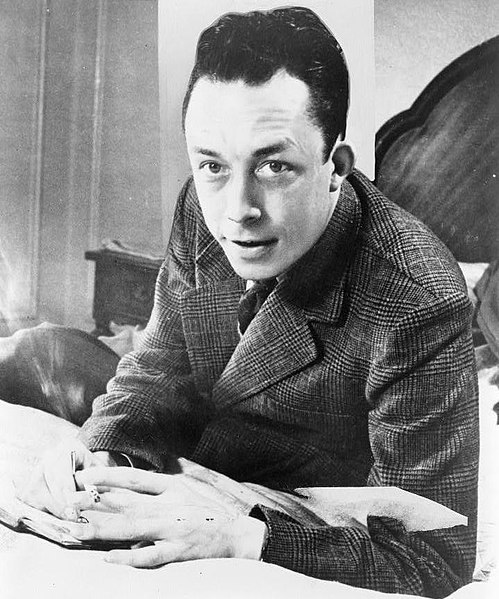
Albert Camus
When compared with different periods of his life, his writings offer an insight into the state of mind Camus was often fraught with. The penning of The Stranger and The Myth of Sisyphus, which he did almost simultaneously, came at a point when he himself faced despair about the kind of life he was living, which included his anxiety about his future as a writer and finding his place in the World. At this time he was in Algiers, his native land, far from the hubbub of Paris. His more mature works , like The Rebel and The Plague, came later on where Rebel dealt with the problem of “murder” as against the problem of “suicide” which he dealt in ‘The Myth of Sisyphus’. We can notice the change in the focus of the writer, which turned from inner to outer, from individual to social as he moved from one work to the other. As he matured as a writer, Camus himself felt annoyed at his proposed idea of absurd. He said:
“This word “Absurd” has had an unhappy history and I confess that now it rather annoys me. When I analyzed the feeling of the Absurd in The Myth of Sisyphus, I was looking for a method and not a doctrine. I was practicing methodical doubt. I was trying to make a “tabula rasa,” on the basis of which it would then be possible to construct something. If we assume that nothing has any meaning, then we must conclude that the world is absurd. But does nothing have any meaning? I have never believed we could remain at this point.”**
Now this is what keeps me in awe of the writer. He is one writer, who has never been afraid of opening his heart, his thoughts, anything which plagues his mind, before his readers, before this world. In that sense, he may be termed as a radical and approached with scepticism, but it cannot be ignored that the ideas he proposed came to influence the generation of writers engaged in the works of absurd, for example, Samuel Beckett who contributed significantly to the Theatre of Absurd.
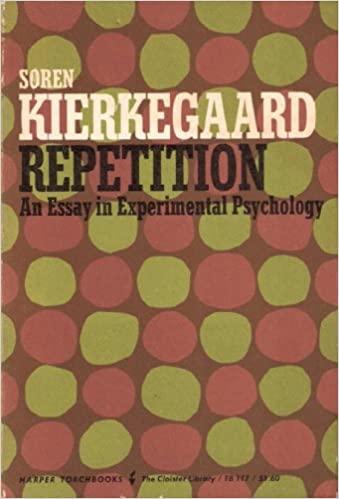
The idea of repetition which he proposed with Sisyphus, which in turn was inspired by Danish philosopher Soren Kierkegaard’s Repetition, is witnessed significantly in the works of Beckett too. What is more, his ideas also, even now influence the readers like me in whose face the “why” of existence suddenly strikes one fine day. It wouldn’t be an overstatement or some form of fervent adherence to the writer if I admit that he inspired the mind to seek more and not be satisfied till the response unites the thought and the experience.
He is not an easy writer to read, agreed, but his writings are not disturbing, specially if one gets to understand that his writing, whether The Stranger or ‘The Myth of Sisyphus’, is a declaration of writer’s notion that the life must be lived fully in awareness of the absurdity of this world.
In the ‘Myth of Sisyphus’, he terms the world as absurd because it doesn’t offer any answer to the question of existence, it being a silent spectator to the suffering of whole humanity. In a universe, divested of meaning or illusions, a man feels a stranger. Hisexile is without remedy since he is deprived of the memory of a lost home or the hope of a promised land. But does this situation dictate death? Camus ponders upon the problem of suicide and contemplates then whether suicide is the only answer to this absurd world which doesn’t answer anything. He opines:
In the face of such contradictions and obscurities must we conclude that there is no relationship between the opinion one has about life and the act one commits to leave it. Let us not exaggerate in this direction. In a man’s attachment to life there is something stronger than all the ills in the world. The body’s judgement is as good as the mind’s and the body shrinks from annihilation. We get into the habit of living before acquiring the habit of thinking. In that race which daily hastens us towards death, the body maintains its irreparable lead.
And to kill one self means to allow both life and death to have dominion over one. Hence, the absurd doesn’t dictate death but calls for the awareness and rejection of death. It calls for living it with consciousness —- with revolt, freedom and passion.
Neither religion, nor science for that matter, provides answer to a questioning mind satisfactorily. While the former tends to imbue it with an idea of eternity; an extension of life in heaven, the latter merely tries to explain it by hypothesis. But Camus cannot believe either of them.
Then turning to existential philosophers, he says that they “without exception suggest escape”.
“Through an odd reasoning, starting out from the absurd over the ruins of reason, in a closed universe limited to the human, they deify what crushes them and find reason to hope in what impoverishes them. That forced hope is religious in all of them.”
To further explain this, he presents to us the ideas proposed by different philosophers. For example he says:
Of Jasper:
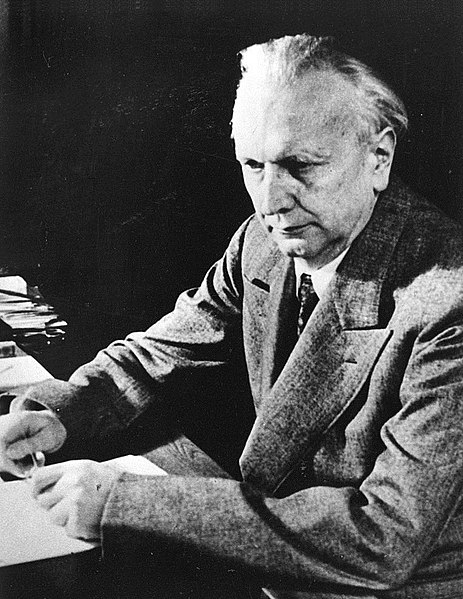
Karl Jasper
Karl Jasper, psychiatrist and philosopher, writes: “Doesnot the failure reveal, beyond any possible explanation and interpretation, not the absence but the existence of transcendence?”
So that Jasper proposes the existence which cannot be defined as “unthinkable unity of the general” and the “inability to understand” as the existence which illuminates everything.
Of Shestov:
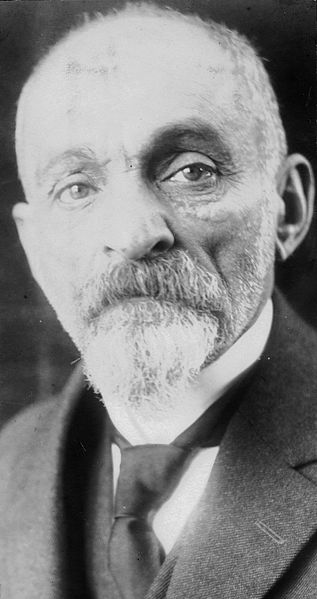
Lev Shestov
Lev Shestov, the Russian existentialist philosopher, names the fundamental absurdity by saying: “This is God: we must rely on him even if he does not correspond to any of our rational categories.”
For Shestov, reason is useless but there is something beyond reason, even if that something is indifferent to us.
Of Kierkegaard:
Soren Kierkegaard
Kierkegaard calls for the third sacrifice required by Ignatius Loyola, the one in which God most rejoices: The sacrifice of the intellect. He says, ‘In his failure, the believer finds his triumph.’
Kierkegaard substitutes his cry of revolt for frantic adherence.
Camus doesn’t agree with these philosophers, who did, all of them, tried to understand the absurd but finally gave into that which they found impossible to define. He calls their giving up as philosophical suicide. He cannot believe in Jasper’s idea of Transcendence. In response to Shestov, he says “To an absurd mind reason is useless and there is nothing beyond reason.” He chooses ‘despair’ instead of Kierkegaard’s frantic adherence. He says “Iwant everything to be explained to me or nothing.”
So now when faced with absurd and being in consciousness, how best to live the life? Camus advocates the life of a seducer (Don Juanism) actor, conqueror or creator following the three consequences of absurd i.e. revolt, passion and freedom.
By revolt, Camus means to keep the absurd alive by challenging the world anew every second.
By freedom, he means losing oneself in that bottomless certainty, feeling henceforth sufficiently removed from one’s own life to increase it and take a broad view of it.
By passion, he means being aware of one’s life, one’s revolt, one’s freedom, and to the maximum.
Though he praises the absurd man in a seducer, actor or conqueror, it was his stance on creator which I drew me towards his ideas. He says:
“Creating is living doubly. The groping, anxious quest of a Proust, his meticulous collecting of flowers, of wallpapers, and of anxieties, signifies nothing else.”
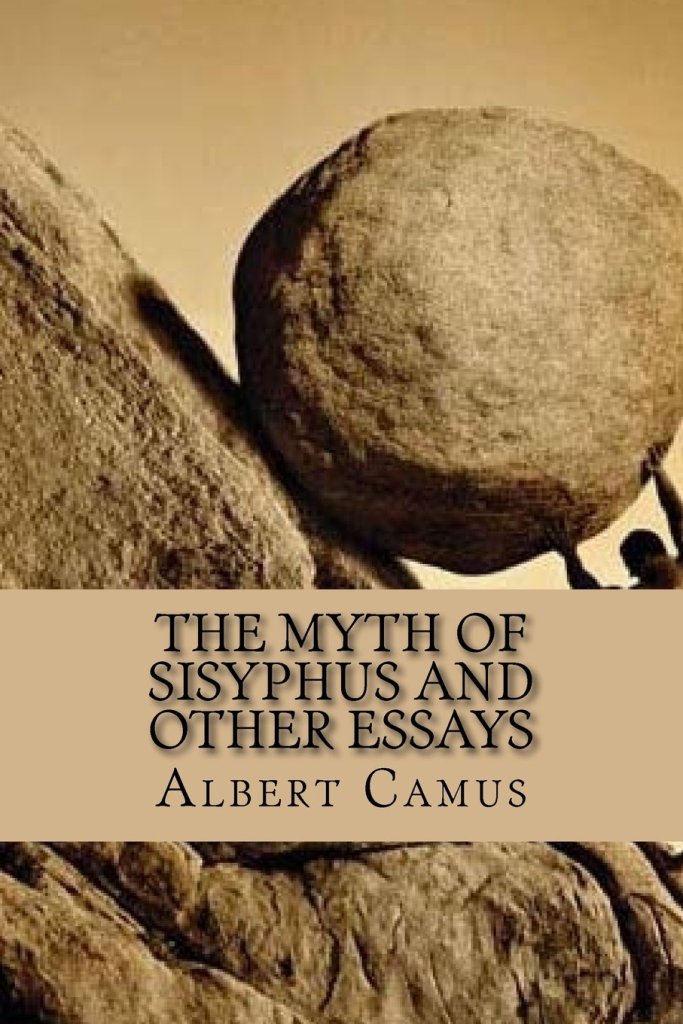
Sisyphus
Towards the end of this essay, he compares absurd with Sisyphus, who, according to the myth, was condemned to rolling a rock to the top of a mountain, only to see it rolling down back every time he reached the top. He says that though Sisyphus is well aware of his fate, of the continuous struggle he has to engage in, but he is still passionate about his life and doesn’t give up. It is during his descent, that Sisyphus’ silent joy is contained.
Likewise, the absurd man, when he contemplates his torment, silences all the idols. In the universe suddenly restored to its silence, the myriad wondering little voices of the earth rise up. Unconscious, secret calls, invitations from all the faces, they are the necessary reverse and price of victory. There is no sun without shadow, and it is essential to know the night. The absurd man says yes and his effort will henceforth be unceasing. If there is a personal fate, there is no higher destiny, or at least there is but one which he concludes is inevitable and despicable. For the rest, he knows himself to be the master of his days. At that subtle moment when man glances backward over his life, Sisyphus returning toward his rock, in that slight pivoting he contemplates that series of unrelated actions which becomes his fate, created by him, combined under his memory’s eye and soon sealed by his death. Thus, convinced of the wholly human origin of all that is human, a blind man eager to see who knows that the night has no end, he is still on the go. The rock is still rolling.
I leave Sisyphus at the foot of the mountain! One always finds one’s burden again. But Sisyphus teaches the higher fidelity that negates the gods and raises rocks. He too concludes that all is well. This universe henceforth without a master seems to him neither sterile nor futile. Each atom of that stone, each mineral flake of that night-filled mountain, in itself forms a world. Thestruggle itself toward the heights is enough to fill a man’s heart. One must imagine Sisyphus happy.
The other essays in the collection, ‘Summer in Algiers’, ‘The stop in Oran’, ‘Helen’s Exile’ and ‘Return to Tipasa’ are worth reading too. In ‘Return to Tipasa’, we observe Camus prevailed over by nostalgia for home, for his land. It is here that he says:
In the direction of the ruins, as far as the eye could see, there was nothing but pock-marked stones and wormwood, trees and perfect columns in the transparence of the crystalline air. It seemed as if the morning were stabilized, the sun stopped for an incalculable moment. In this light and this silence, years of wrath and night melted slowly away. I listened to an almost forgotten sound within myself as if my heart, long stopped, were calmly beginning to beat again. And awake now, I recognized one by one the imperceptible sounds of which the silence was made up: the figured bass of the birds, the sea’s faint, brief sighs at the foot of the rocks, the vibration of the trees, the blind singing of the columns, the rustling of the wormwood plants, the furtive lizards. I heard that; I also listened to the happy torrents rising within me. It seemed to me that I had at last come to harbor, for a moment at least, and that henceforth that moment would be endless.
What I realized reading these essays over again was that despite of being labelled as the proponent of absurd, it is actually living that he so fervently speaks about; Not just living but living passionately and fully. Living in awareness and questioning. Though he seems to be recommending a negative faith (as James Wood says in introduction) against the religious or existentialist ideologies, he nevertheless demonstrates a distinctive way to the seekers to come to terms with the existence; the way to be chosen henceforth, of course, depending upon the individual, starting every day with an ever new light.
“In the middle of winter, I at last discovered that there was in me an invincible summer.”
*From an interview with Jeanine Delpech, in Les Nouvelles Littéraires, (1945). Cited in Albert Camus: Lyrical and Critical Essays, Vintage (1970)
** From an interview with Gabriel d’Aubarède, in Les Nouvelles Littéraires, (1951). Cited in Albert Camus: Lyrical and Critical Essays, Vintage (1970)
Rakhi Dalal is an educator by profession. When not working, she can usually be found reading books or writing about reading them. She writes at https://rakhidalal.blogspot.com/ . She lives with her husband and a teenage son, who being sports lovers themselves are yet, after all these years, left surprised each time a book finds its way to their home.
A line of rocks marks a ridge overgrown with heather which leads down to a sandy bay at the headland. On an elevation, behind a patch of marram grass, a dilapidated cottage.
The walls are made from natural stone, the roof shingles are covered with moss, the frames of the small windows are jammed and swollen having been exposed over years to moisture and rain. In the nearby water bobs an open boat with fishing lines and nets.
Close to the house stands a rusty fish trap and a few lobster pots.
There are remnants of red paint on the door. Next to it leans another door, freshly painted in blue.
The shed is open and shows shelves, barrels, carpenter equipment and fishing tackle.
Across the forecourt, covered by weeds, lies a broken mast and next to it an anchor.
The fishermen have moved away from this area, left with memories of the rattling and ringing of the rigging, the whispering wind and the lashing, roaring surf, the rubbing of the oars against the rowlocks.
The sight of the lonely, ugly and abandoned neighbouring house fills him with melancholy. The absence of sounds of other people does not bother him.
There is only the clinking of the aeolian harp hanging from a sycamore tree.
He steps outside the door and smokes his pipe. A tame magpie hops beside him. She has only one wing. He found her and took her in. He is her protector.
She jumps around and uses her remaining wing as a crutch. She hopes that he will unfasten his boat and row out on the water, because this would mean fish for her meal.
But on this day, he does not row out. A storm is forecast.
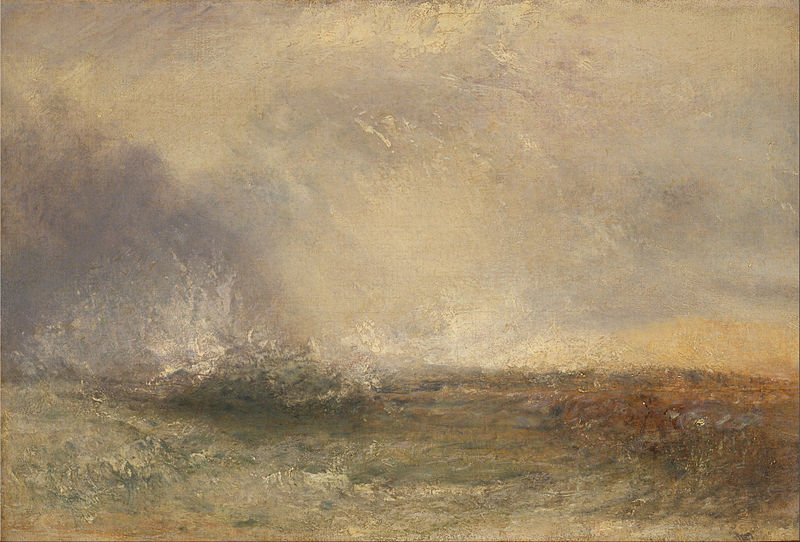
The sky shows a display of all shades of grey, from light grey, through dark grey to deepest dark grey.
Gusts blow sand and loose grass over the shore stones.
He pushes the door further open. It jams, the house has settled. He had smoothened the blue-painted door and made it fit to be installed when the paint has dried.
Inside a table, two chairs, a cupboard, an unmade bed, logs stacked up next to a round iron stove. On a side table an old-fashioned radio running on batteries, no television, in the corner a heap of books.
The old radio is only there to hear the news and weather forecast. He is not interested in talk and sermons.
In the country which he had left behind, he had hated television. He hated all those newsreaders, all those and other types of “teachers” with their eyebrows and forefingers raised, who all rebuke those who think differently, giving marks or awarding points.
The exclusion of TV was part of his fight against the system.
It becomes stormier.
A new fight is waiting for him.
He hastens to pull in the boat and turns it over so that the storm cannot catch and lift it. He carries the blue door into the house. He is particularly worried about the shed gate. It is exposed to wind and weather. A hinge is broken.
Inside the shed he pushes a heavy chopping block against one wing of the gate.
Outside the storm blows up its cheeks. A gust runs against the shed. Light falls into the shed for a moment because the gate gives way. He braces himself against it.
The magpie, he brought to safety, jumps excitedly back and forth on a shelf. In the lower shelf she has a wooden box in which she sleeps and rests.
The storm begins, it roars and rages.
He battles against the wind force, holds the gate with one hand and fetches a lumber to prop it up. He nails a batten right across the two wings to the frame on both sides thus strengthening the gate.
It works, the gate is not moving an inch.
The fight against the element, this old battle of mankind against wind and severe weather conditions is won, for the moment.
The house gives shelter, the storm’s voice is less audible. He lights the stove to make hot water for a tea, which he will thin down with some whiskey, and to boil a few mussels.
The magpie follows him into the house. He caresses her plumage. Poor little bird, he says.
He lights a candle in a lantern. The cottage is not connected to the mains, that means no bills and no visits by the meter reader, who would disturb his seclusion.
Making frugality the purpose of life.
For re-collection. Re-flection. To spell nature, to give nature its meaning back.
Eduard Schmidt-Zorner is a translator and writer of poetry, haibun, haiku and short stories.He writes in four languages: English, French, Spanish and German and holds workshops on Japanese and Chinese style poetry and prose.
Member of four writer groups in Ireland and lives in County Kerry, Ireland, for more than 25 years and is a proud Irish citizen, born in Germany.
Published in 76 anthologies, literary journals and broadsheets in USA, UK, Ireland, Japan, Sweden, Italy, Bangladesh, India, France, Mauritius and Canada.
inch by inch recovering the expanse of unexpressed
so that intimacy could be tilled into rows and rows
of languid kisses strewn with endless possibilities
perhaps then, someday we will
live our way into the passion we always sought
Bristle Stories
They arrive uninvited
like guests during summer siesta
and find strength in numbers
Stubborn as teens in combat boots
looking for trouble at street corner
my chin hair refuse to die
or remain dormant
They recoil every time I wax
Let me celebrate victory after a laser
Disappear for maybe a couple days,
but always return snapping gum vivaciously
to sun themselves unabashed
bold and burping on a cloudless terrace
On weekdays, they foil with vengeance
my all attempts at prettiness
refuse to apologise
throw tantrums, stomp and yell
spitting at the feet of men smiling at me
Feeling right at home, my bristles stretch themselves
claiming more space with each day
play cards, exchange stories and smoke cigarettes
Greedy
unapologetic
bordering on contemptuous
they reassure the woman in me
that they are paragons of
proud and vicious feminism
The woman inside me wonders
if greying calls for a truce
to make peace with my rebellious mongrels
Nalini Priyadarshni is a feminist poet, writer, translator, and educationist though not necessarily in that order who has authored Doppelganger in My House and co-authored Lines Across Oceans with late D. Russel Micnhimer. Her poetry, prose and photographs have appeared in numerous literary journals, podcasts and international anthologies including The Lie of the Land published by Sahitya Akademi, New Delhi. A nominee for the Best of The Net 2017 she lives in Punjab, India and moonlights as a linguistic consultant.
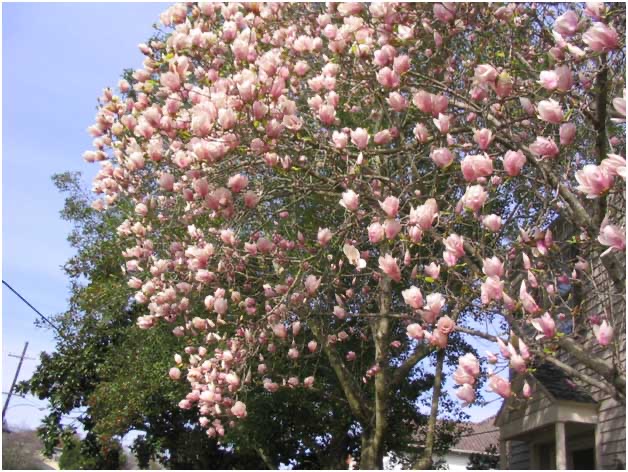
On Sunday morning, I hardly noticed that the Japanese Magnolia outside my study room window is in full bloom as it is mid-March. Every year, in late winter, some of the area trees do flower before leaves start to come. That is the first sign to remind us that spring is upon us. There is an undeniably joyous feeling to it and most of us get busy in planning flurries of activities after a long winter. But on Friday afternoon, at 3 PM President Trump declaring National Emergency had everyone put in a panic mode. He had to do it because of the growing spread of the corona virus across states as it is affecting 49 states now. After that, there was no time to enjoy or contemplate about the advancing season.In time of crisis it is hard to put feelings into words. The anxiety that is gripping the world is very challenging. To say people are feeling “scared” is an understatement to describe the kind of fear the people around the world seem to be feeling. The signs are everywhere you go in big and small way, it is written on the faces of people.
Instead of going to the nursery to choose spring flowering plants, people were frantically going to supermarkets to load up on supplies this weekend. The erratic fear is that the supply chain will be seriously disrupted in case of a serious pandemic. There will be no one to drive the interstate supply trucks if thousands of people fall sick to the virus. This year that feeling of urgency to make a to-do list has been seriously diminished by the corona virus epidemic. Now the priority for most people is to plan for the very uncertain next few months. The virus is acting as a metaphor the populist leaders such as Trump fear and detest about the outside world. It is clear that the world leaders are not working together in an effective and coordinated way to contain the spread of the virus and that is really scary. During the day, there are so many new updates on the virus and its spread that it is hard to keep track. Within 24 hours things can take a dramatic turn, as a lot can happen in that time. Trump so far has pledged 50 billion to fight this.
No matter what you do or how many precautions you take, the virus news is on your mind constantly. For the last few days, I have been feeling slightly depressed seeing many conflicting news and what it means globally as we are one big society. Last night, just before going to bed, it was disheartening to read in al.monitor.com that the spread of corona virus in Iran has shown no sign of slowing down. Iran’s foreign minister Mohammad Javad Zarif has made a public plea for sanctions to be eased and medical supplies. He also wrote a letter to the UN Secretary General sating US sanctions “obstacles to the sale of medicine, medical supplies and humanitarian goods.”
It really hit hard that from March 13; Broadways theaters in New York City have gone dark and will remain so for a month at least. Broadway is the symbol of resilience and life in New York. Last time it had closed for 48 hours after 9/11. The premise that the show must go on has been defeated as it is no match against the threat of COVID-19. When I was emailing my daughter Friday evening,I called the virus an “invisible enemy” as that is what came to mind spontaneously. I keep on sending her news updates knowing full well that she is on top of things. The mother in me feels protective of her even though she is a grown up and has been a faculty member in one of the prestigious colleges in New England for the last 2 years. In response, she sends me the forward of the email from the college President that went to all the faculty members saying when the last in person class is going to be. He reassures that his institution is still safe from the virus as no one was tested for the virus. So he presumes everyone is safe and to wait another week and be done with the classes before spring break. After that the remainder of the semester will be online. She informed me that it’s a lot of pressure there to convert everything to online learning as the graduate classes she teaches are not meant to be online. But most of the faculty members feel the college should have closed the in person classes and should have done what other institutions in that state and all the adjoining states did. They all cancelled classes and sent everyone home after one student tested positive in another college very close by. As I was writing this piece I got information from my daughter where she said, “Yes, everything has closed as of last night.”
There are so many expert opinions that people are not sure which way to go as they themselves are not sure. Some argue that society cannot be shut down completely. But that is exactly what is happening. Italy is under total lock down. Spain is following Italy in terms of isolating towns and cities to reduce the spread of the virus. Each government is doing what they see is the right thing to do to save a large numbers of people escape this dreadful virus. Last night I heard on the radio that France is closing all restaurants among other things to limit the spread of the virus.
As I am editing this article on a Sunday afternoon, I can see the park across from my dining room window. Usually, on a warm day like today, the park is filled with children playing. There has been total silence there this weekend. Only I see a person walking around the park to get his daily exercise. According to WHO reports children are not at great risk for corona virus. But the parents are not taking any chances. The stillness in the neighbourhood is very eerie. Sometimes in late summer, it feels similar, as most families are on vacation before school starts in late August. This is an extraordinary time that calls for drastic measures to be taken. All Maryland schools shut down a week ago to avoid person to person contact. Many working parents were forced to find childcare for them. All the schools had sent letters home to parents asking the students not to return to school after spring break. Meanwhile, massive cleaning operations are underway in all the schools and colleges. Maryland’s corona virus cases continue to rise and as of this writing governor Larry Hogan’s office has confirmed 31 cases including five new cases overnight. He has declared state of emergency two weeks ago to get federal aid package that will facilitate to treat the disease faster.
The biggest dilemma for most families is how much food to store anticipating the worst. There are a couple of You Tubers that I follow from time to time. One of them is a lady in London. Yesterday, she posted a video as to how she is preparing for the coming weeks and months. For a family of five, among dry and frozen foods,she had dragged a sixty-pound Basmati rice bag to her third floor flat when the elevator was not working. The dry food items consisted of every kind of lentils and other nonperishable canned food that will last for months. Another vlogger had shown her followers how she is disinfecting her apartment with homemade solutions in Toronto. She was not that lucky to load up on supplies as the supermarket shelves are getting empty very fast and the lines are very long. And yes, the toilet paper panic is going in full force there as well like in Australia and America. The internet is floating with corny Toilet Paper jokes.
In my local supermarket, the cleaning and paper towel isles were totally empty when we went last Thursday night. The store was super crowded and many families came with children. Each member grabbed a shopping cart and was piling up every imaginable kind of food as if they will be facing a famine. We might, but we just don’t know. One couple was arguing over which super-size peanut butter to get. I looked at my cart with a week’s worth of supplies failing to make a decision as to how much food can I load for two people expecting the nastiest pandemic. Later on,I get a text from my daughter urging me not to go the supermarket and instead to have it delivered. I told her I don’t know while bagging my order if anyone will sneeze on my food and whether I will accept the bags thinking it is all safe. In time of crisis we can all descend into full scale paranoia. However,I console myself that perhaps in worst case scenario, the National Guard will feed people in the community if we all run out on supplies. But nonetheless, most of Saturday we were busy buying weeks’ worth of supplies from three different stores like others.
In the midst of all the uncertainties, people are naturally panicking and acting like we are facing a war, in this instance with the ‘invisible virus.’ The news media is relentless in politicizing every issue particularly emphasizing the good prime minister of Canada vs bad president of US as the punchline after Justin’s wife Sophie Trudeau tested positive for the corona virus. Justin Trudeau is self-isolating him and working from home. Donald Trump was in close contact with some of the Brazilian delegates and one of them has confirmed that he has become infected with corona virus. Trump was standing right next to that person in his Florida Golf Club estate and there are pictures to prove it. Yet the White House at first denied the president having any contact with that person. Later Trump downplayed it saying that he is “not concerned.” No one can make sense of why he would say something like this after emphasizing the importance of social isolation and self-quarantine. Why Trump shouldn’t be concerned nor get tested boggled everyone’s mind. In this instance Trudeau looks to be the sensible person and as usual Trump is ignorant and obstinate. Later, on Friday he said would “likely” receive a coronavirus test “fairly soon” even as he minimized the prospects of having contracted the virus from a Brazilian press aide. The early reports were wrong and the Brazilian leader later announced he tested negative. But the episode “underscored the tenuous position Trump now finds himself: exposed to at least one person who has tested positive, in regular contact with others who have self-quarantined and under pressure to test himself.” After that he said on Friday afternoon that “most likely” he will get tested. Then he went ahead and had him tested on Friday night awaiting results.
It is unfathomable how Trump threw a lavish party with foreign dignitaries in these uncertain times by exposing himself to people who were later tested positive for the virus. Many of his family members were also at the party dancing away.
Amid darkness there is still hope and we need to take one day at a time and brace ourselves for a positive outcome. Until then, there is no choice but to follow the guidelines and try our best to keep us healthy. Amid the corona virus updates there are still other news stories that give me hope. Three Turkish men were sentenced last week to 125 years in prison for their part in Aylan Kurdi, 2-year-old Syrian boy’s drowning. We will never forget Aylan face down on a Turkish beach in 2015. Aylan died with his 5-year-old brother and their mother, only the father survived.When you read about the fate of Aryan’s killers, you think there is still justice in the world.
Humor is something that also keeps us from over worrying and going over the edge. Pete Buttigieg served an example as to how to keep humour alive when he was filling in for Jimmy Kimmel on Thursday night’s talk show on ABC. He was trying to make television audiences laugh who only consisted of the producers and crew members sitting at six feet apart. There are no live audiences now. As Pete finds himself unemployed after he dropped out of the presidential race, and no longer the mayor of South Bend, he went looking for a supposed job (any job) in Los Angeles. This was a prop for the show as it is often done as a segment. With his Harvard and Oxford degrees, Pete Buttigieg lands a job giving out free samples of pretzels to passersby. Wearing an apron with the store logo he stands in front of the store holding a tray. When he gave one person a second helping, the burly African American woman manager fires him on his first day. Moments like this makes you laugh really hard and for a few minutes and you forget how the nation is gripped in erratic fear.
Also, as you read the comic strip prepared by DrRavindra Khaiwal&Dr Suman Mor published in the Counter Currents, you learn how Superhero Vaayu comes to the rescue to explain to the kids in simple terms what corona virus is as they are in panic. Vaayu at the end asks the children to “follow the simple steps and break the chain of infection.” You as well think that we will beat this provided we follow all the basic hygiene and guidelines to contain the virus. Such expressions in a comic strip certainly gives you hope and you believe it with an almost childlike innocence.
I am an optimist by nature – there are solutions to each problem, even the deadly corona virus. As we go through these tough times, thinking of spring, a new start, can be immensely helpful. We cannot give into fear, doom and gloom, and we need to keep our spirits up. I hope, spring will symbolise new life and we will be absorbed in nature’s essence. In about a month, hopefully, I will be looking at the happy bluebird in my backyard, the robins and sparrows hopping and jumping in the new grass, and hear the sound of children playing outside. I believe we can defeat the “invisible enemy” and one day COVID-19 will just be a distant memory. May the force be with us.
That yellow bird with a black band around its neck
Perched itself each year
December/January
Its winter haunt, I guess
It sits for a while perched on the branch
And flies off
To land on another branch
The little leaves barely a camouflage
Solitary on its perch
Chirping for a while
To soar away
It is back soon
Almost each morning
The pleasant winter sun seems to be just right for it
It feels nice
It makes me feel nice
The colour, the motion
The flight.
That happy yellow bird
With the black band around its neck.
Dr. Nishi Pulugurtha is Associate Professor in the department of English, Brahmananda Keshab Chandra College and has taught postgraduate courses at West Bengal State University, Rabindra Bharati University and the University of Calcutta. She is the Secretary of the Intercultural Poetry and Performance Library, Kolkata (IPPL). Her research areas are British Romantic literature, Postcolonial literature, Indian writing in English, literature of the diaspora, film and Shakespeare adaptation in film and has presented papers at national and international conferences in India and abroad and published in refereed international and national journals. She writes on travel, film, short stories, poetry and on Alzheimer’s Disease. Her work has been published in The Statesman, Kolkata, in Prosopisia, in the anthology Tranquil Muse and online – Kitaab, Café Dissensus, Coldnoon, Queen Mob’s Tea House, The World Literature Blog and Setu. She guest edited the June 2018 Issue of Café Dissensus on Travel. She has a monograph on Derozio (2010) and a collection of essays on travel, Out in the Open (2019). She is now working on her first volume of poems and is editing a collection of essays on travel.
Voice darkens and submerges in the sorcery of silence
Snow trickles into the stillness
Exile
All through life
an unending journey
accompanies you
And in the absence of
a destination
much of what’s inside gets lost
And the warp and weft of being
keeps on breaking
Beyond
Stillness spreads its wings
like the desert
beneath a dawning sky
The paraplegic pyramids glitter
in a mixture of azure and gold
There is still a lot to say
beyond civilization
Viennese Coffee-houses
No sooner does dusk fall
than the city’s cafés come to life
with the tinkling clang of indifference
Gradually the crowd of solitude gathers
around the tables
Sankt Marx Friedhof*
Silence is magnificent
particularly when it connects
the monumental music of lives
that sleep peacefully
with the absolute space
Flowers and graves shoot up
rupturing earth’s breast
They exist side by side in stillness
I wonder what they think
of volatile souls that travel to the sky
with the chanting
of mysterious mantras
or of those who wait
for an undefined time to resurrect
Beyond cemetery’s wall
a swarm of sound passes through
slicing the essence of existence
in our trivial time
*Mozart was buried in St. Marx Communal Cemetery, Vienna.
(These poems are excerpted from her latest collection, Till the Next Wave Comes)
Sarita Jenamani is a poet of Indian origin based in Austria, a literary translator, anthologist, and editor of a bilingual magazine for migrant literature – Words & Worlds – a human rights activist, a feminist and general secretary of PEN International’s Austrian chapter. She has three collections of poetry. She writes in English, Odia and translates to and from German. Sarita translated Rose Ausländer, a leading Austrian poet, and an anthology of contemporary Austrian Poetry from German into Hindi and Odia. She has received many literary fellowships in Germany and in Austria including those of the prestigious organizations of ‘Heinrich Böll Foundation’ and ‘Künstlerdorf Schöppingen’. She studied Economics and Management Studies in India and Austria where she works as a marketing manager.









 Borderless