Categories
Excerpt

Satyajit Ray, Bibhuti Bhushan & Nabendu Ghosh and a Famous Triology

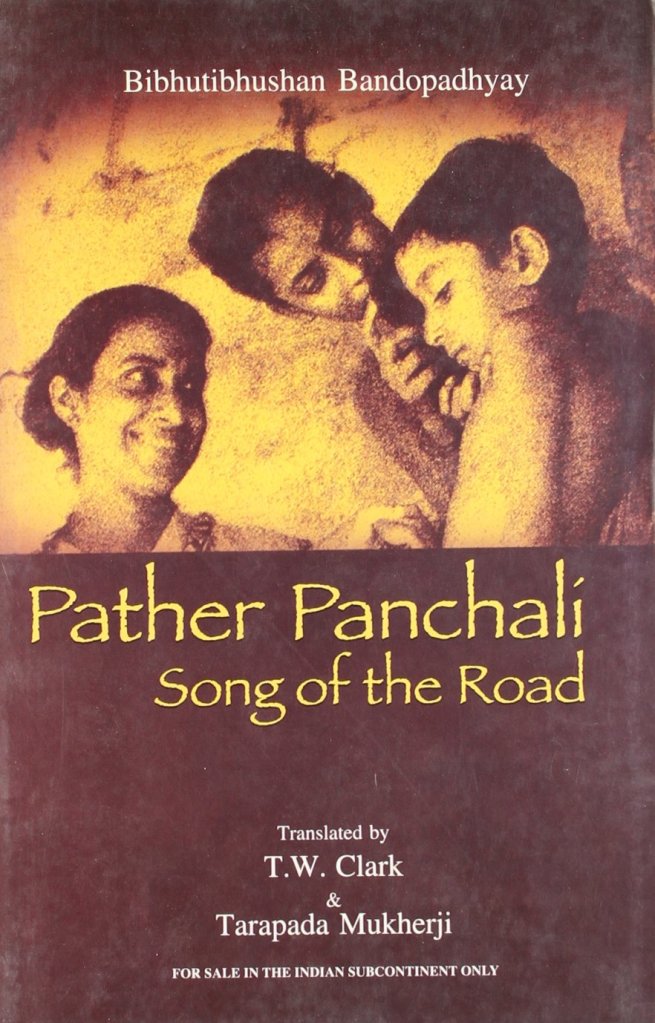
Pather Panchali (Song of the Road) by Bibhuti Bhushan Bandopadhyay was a classic immortalised further by Satyajit Ray’s films, also known know as the Apu Triology. Here is a translation from Nabendu Ghosh’s autobiography which introduces how the film came to be. This portion has been excerpted from Eka Naukar Jatri (Journey of a Lonesome Boat) and translated by Ratnottama Sengupta as a celebration of the Satyajit Ray Centenary.

Pather Panchali : Unprecedented

The year, in all probability, was 1938. (This was the year of the Prabasi Bengali Sahitya Sammelan in Guwahati. Nabendu met Bibhuti Bhushan later, probably in 1942 or 1943, when the Bengal Famine was on.) Nabendu Ghosh talks of his meeting with Bibhuti Bhushan, reading whose novel, he was transported to Nischindipur, where the narrative was set. When he met Bibhuti Bhushan, he felt he had met Apu. When he saw Song of the Road, he could only chant, ‘Apurbo!’

The Prabasi Banga Sahitya Sammelan ( Bengla festival of expatriate writers) was being held in Guwahati. Delegates from all over the country were to meet and discuss Bengali authors, novelists and poets, enjoy cultural evenings, and to tour the city in between the sessions. From Patna we – five of us – set out with printed copies of the annual number of our magazine, Prabhati. The chairman that year was Anurupa Devi (1882-1958), one of the most reputed women novelist in the British colonial era. This eminent writer was the younger sister of Surupa Devi who also wrote under the pseudonym of Indira Devi. Anurupa Devi’s Poshya Putra (Adopted Son), when staged as a play, had become a super hit. I had read two of her major novels, Mahanisha (1919) and Mantra Shakti (1915), which were made into films in 1954 with a star-studded cast. Finally I was face to face with the formidable personality. To me, to this day Anurupa Devi tops the list of women writers.

The other name that made a deep impression was Bibhuti Bhushan Bandopadhyay. Everyone was talking about his Pather Panchali – apparently it was “mesmerizing.” At the end of the session, as soon as I reached Patna, I visited the city’s biggest bookseller, Burman Company. The owner Bidyut Burman hailed from Madhya Pradesh but spoke flawless Bengali. The minute I mentioned Pather Panchali, he brought out two copies. I bought one for myself.

I finished reading it in three days. Every night I was supposed to switch off at 11 pm but, on the pretext of writing an important tutorial for my college, I stayed up all night to finish it. Three days later I shook my head and shouted at the top of my voice, “Apurbo!” (That is the name of the protagonist, and it means ‘unprecedented.’)

Maa heard me shout and came running, “What is the matter? Why did you scream?”

“For the heck of it, Maa,” I assured her, “in sheer delight.”

“Delighted? By what?” – Maa asked me.

“This book Maa,” I pointed to the copy of Pather Panchali.

“Put it on my table,” Maa said. “Let me read it.” 

Morning till evening Maa had so much work, it took her two weeks to read the book. When she finished reading she returned it to me with these words, “What a lovely reading re! Soaked in sadness, yet it enriches you from within. In fact, it loyally reflects reality – life is such! Reading this book purifies the soul.”

The way Maa put it, my admiration for the greatness of the work went up manifold. Truly, Pather Panchali is a vivid chronicle of the journey of life. Simple in its language, unadorned but poetic in its descriptions. I learnt to look at Nature anew. I got acquainted with many a tree that I had only heard about. I discovered many that I was not even aware of. The names of many creepers brought me the story of a world so far unseen. Now I was in communion with Benibabur bagan, the widespread garden that surrounded the rented house we lived in.

Bankim Chandra was my first guru in literature but honestly speaking, I could not identify with many of his characters. Sarat Chandra evoked a world much closer to the one we inhabit. I could understand the motivations of his characters who were of my age. But Pather Panchali revealed one hundred percent the inner world of my childhood. Particularly in my case. I was raised in the happy environs of our house and yet, even in my young life I had witnessed extreme unhappiness too. In every station of life innocent children with their sinless minds are drawn to happiness. The way they raid the natural world to seek out the bare minimum quota of joy from nature, what they dream of — all this is stuff this novel is made of. When I finished reading it, I felt I AM Apu — Apurbo Kishore, the protagonist of Pather Panchali: timid, faultless,  ever keen to drink of the honey of life – much like a butterfly. Apu who is not ‘smart’ or clever, Apu whose constant hunger is for flowers and fruits and dreams…

After reading Pather Panchali my attachment with Benibabur bagan grew manifold. I felt that it was the abode of Nischindipur (where the novel unfolds). In the hazy light of morning, in the stillness of sun scorched noon, in the lazy twilight of sundown and the stifled darkness when night has swallowed day, I would be transported to Nischindipur.

Many many days have passed since then. I was a youth who was knocking on the doors of manhood, thereon I have advanced towards super annuation — but that little boy Apu still resides within me. The Apu of Pather Panchali who grew up into the teenaged Aparajito, Unvanquished, and then the young man who marries and sets up Apur Sansar — Apu’s household — and travels into fatherhood, stands frozen in time there. But he sets out on a new journey into childhood through his son Kaajal. This child breathes life anew into Nischindipur.

To me, Nischindipur equates the land of No-Worry. I am reminded of W B Yates’s ‘The Lake Isle of Innisfree’ :

And I shall have some peace there, for

Peace comes dropping slow 

Dropping from the veils of the morning

To where the cricket sings…

***

Without prior notice I got an opportunity to go to Calcutta. The occasion was the wedding of my paternal aunt’s son Radha Gobinda Ghosh, who had just completed his Master in Arts studies with distinction and secured a government job.

Let me confess here that the wedding was but a pretext to go to Calcutta.  My real intention was to meet the author of Pather Panchali — Bibhuti Bhushan Bandopadhyay.

Mani Bhushan Da, the editor of our magazine, Prabhati, had provided me with his address on Mirzapur Street. He lived in Paradise Lodge, next door to the famous sweetmeat shop Putiram. It was a seven minute walk from Sagar Dutta Lane where my cousin Radha Gobinda Da lived.

The day after I reached Calcutta I told my aunt that I was going for a stroll up to College Square. “Don’t stray too far,” she cautioned me. “No, I won’t,” I assured her and set out.

I walked down Kalutola Street and across College Street, the hub of books and publishing industry in Bengal. There, on my right was Putiram, beckoning me with its array of sweets. I ignored them all and turned into the three-storeyed structure next door. The dominating signboard at the gate read ‘Paradise Lodge’.

I entered and asked for Bibhuti Bhushan Bandopadhyay. An elderly person directed me, “Climb non-stop upto the terrace and walk into the room there.”

It was like a chilekotha – a garret. It had the touch of middle class living all over it: a table with chair, a cot, the floor covered with a sheetalpati woven out of mat, an almirah full of books.

Clad in a cotton banyan a gentleman seated on the chair was reading a book. The minute I showed up at the door he looked up with a question in his eyes, “Yes?”

“I would like to meet Bibhuti Bhushan, Sir.”

“I am that very person. Where are you from?”

“Sir I am from Patna. I am carrying a letter from Manindra Chandra Samaddar of Prabhati Sangha.” I touched his feet before handing him the letter.

“May you prosper,” he blessed me with a raised palm. Then, before opening the letter he said, “Come, sit — you have come all the way from Patna!”

He smiled after reading the letter. “So you are in Mani’s team. Well well, I know Mani — a splendid person with matchless character and breathing idealism. I have gone through the last annual number of Prabhati. Very good effort. Mani mentions that you also write.”

He called out a name.

“Yes sir, here I c-o-m-e –” the name replied. He was one of the attendants at Paradise Lodge. “Get some sweets, and tea for my guest — he has come from Patna,” Bibhuti Bhushan looked at me. Then he started asking me for details about me and my writing. It was his way of getting acquainted with Nabendu.

When he paused, I ventured to speak, “I am charmed by your Pather Panchali.”

He smiled at me. “I am happy to hear that.”

Out of the blue I popped my query, “Tell me, are you Apu?”

He smiled as he nodded, ” Sure I am there in Apu. Actually every writer blends himself in with what he has seen and heard to create his characters. They see the people around them, their joys and sorrows, they laugh and cry with them, they get involved with the problems and crises in their lives and then they adapt them to their novels and stories. You are also penning stories — be a bit more aware, observe more carefully, objectively, and you will find that you are also doing the same.”

Until that moment I was not aware that such a process was at work behind what I wrote. After I heard Bibhuti Bhushan I realised the truth of his words.

The tea and sweets didn’t take too long to appear in the chilekotha room. I decided that they must be from Putiram.

As I made to take leave, he said, “Read a lot. Read the established writers. As you keep writing you will yourself realise where to start and where to stop, how much to tell and how much to leave out.”

When I left I was convinced that I was leaving Apu of Nischindipur. By this time he had become an elderly relative of mine — a well-wisher.

***

Years later. Could be 1952. 

Puffing on his Chesterfield in between the sips from his teacup, Bimalda said, “Now that Maa is complete, What next? We need new work. Bombay Talkies is in a precarious state now – in case Maa is not a hit, we will be like bad penny to them. So, before Maa is released in the theatres, we must get a new contract. And for that to happen we need a stock of stories. Hiten Chaudhuri is talking to two possible producers, two others have got in touch with me. But without a story none of these will work out.”

So we needed stories. But what kind of stories? The kind that wins over viewers when it is reflected on the silver screen in a darkened theatre. One that compels them to repeat, “And then? What now? What will happen?” But what will happen to whom? To the problems and crises in the lives of the characters. If the problems are pregnant with drama, that will blend with the skill of unfolding the narrative and keep pumping the adrenaline of the viewer and raise his blood pressure higher and higher and they will wonder, “And then? What now? What will happen?” In unison with the persona, seeking a resolution of their conflicts, they will wordlessly demand, “And then? What now? What will happen to them?” 

In our country most people gravitate to stories that revolve around the crisis called ‘love’, perhaps because desire to love is universal and to be loved is eternal. So love is a safe bet, especially in cinema. We have just completed Maa for Bombay Talkies, but that does not revolve around love between a man and a woman — it is structured around a mother’s love, for her husband and her sons. It is a family drama. We will know the power of this love only when the film releases.

So what kind of stories shall we narrate to the producers? Which stories will assure them that their investment will be secure and prompt them to say, “Yes sir! We will film this very story!” Because, no matter which story you decide on, to make it into a film means investing lakhs of lakhs — and every producer prays that he should recover his investment if not make a profit.

Over the next five-six days, we discussed and narrowed down the list to a few ideas. We listed some stories and novels from Bengali literature.  Bas – done — we were equipped for one more round of chess with success. 

The problem with cinema as a mode of livelihood lies in this: the success or failure of each film decides the film you will get to do or not do next. The director’s team is engaged to constantly come up with ideas, concepts, narration that will appeal, first, to a producer and then to a financier.

That is the first stage. And, in the final stage, the viewer will give his verdict, “Waah!” “Lovely!” Only then will the moneybags be willing to hear your next story. There is only one problem: What if the aesthetics of the moneybag is not evolved? Or, sometimes, for the sake of livelihood you bow to his ego and settle for a story idea he supplies, then all your effort might go waste like a falling kite. In short, the art form we have embraced as our mode of eking a living is a dicey form — we are constantly walking the razor’s edge.

***

Suddenly I remembered the novel that had mesmerized me. I went up to Bimalda and said, “I want to remind you of this classic novel which you must have read…”

“Which novel?” Bimalda was curious.

“It can translate into a spellbinding movie. I am talking about Bibhuti Bhushan’s Pather Panchali.”

For a few seconds Bimalda gazed fixedly at me. Then, slowly, pondering over every word he said, “Yes, it is an amazing novel. But in this Hindi film industry nobody will be able to appreciate its innate rasa. No Nabendu Babu, there will be no taker for it in this market.”

End of story. But I could not forget Pather Panchali. That very evening I met Phani Da (Majumdar) in his office and, in the course of our conversation, I mentioned it to him. I did not stop there: for almost an hour I narrated the highlights of the novel to him.

Phani Da also responded, “It will be extremely difficult to sell this in Bombay. But,” he went on, “there is no doubt that it has the possibility to become a movie of an entirely different flavour. Let’s do this: Let’s buy the rights to the story. You please write the letter.”

Write to whom? In 1950, at the age of 56, Bibhuti Bhushan had left for his heavenly abode. I did not know where his son lived. So, the next day I wrote to the publisher, the noted writer Gajendra Kumar Mitra. His company, Mitra & Ghosh had published Pather Panchali and I was lucky to claim his affection. So he would certainly guide me in the matter.

A week or so later I heard from Gajen Da. The movie rights of the novel have been purchased by the art director of the established advertising firm, D J Keemer, Mr Satyajit Ray. Initially the name was not significant to me but then, within brackets Gajen Da had written “He is the son of Sukumar Ray, the author of HaJaBaRaLa (Habber Jabber Lawand Pagla Dashu (Mad Dashu).” The name acquired a certain significance then. 

At the same time I felt a sense of loss. For three years after that the sense of loss would surface like a bubble, at unguarded moments.

One day all of a sudden I learnt that Pather Panchali will be screened for a private gathering. Along with Bimalda we made a beeline for the show. By then Bimalda had become an international celebrity thanks to Do Bigha Zamin (Two Acres of Land).

During the interval, lighting up his Chesterfield, Bimalda said, “You can do justice to a classic of Bengali literature only in Bengali. West Bengal government has sponsored the making of this film — that is a rare happening in the history of cinema worldwide. Director Satyajit Ray deserves congratulations.”

***

Indeed everything about Pather Panchali was unprecedented. The casting of characters, the creation of environment, the re-creation of Nischindipur where the actions unfold, the cinematography, and — finally — the background score: I repeat, every single aspect of the film was unprecedented. Apurbo!

Since that evening the sense of loss has never surfaced to torment me. After watching the film I was convinced that the Good Lord had created Bibhuti Bhushan Bandopadhyay to write Pather Panchali, and that very Lord had created Satyajit Ray to transcreate the novel on screen.

Nabendu Ghosh and his daughter, Ratnottama Sengupta

Nabendu Ghosh (1917-2007) was a dancer, novelist, short-story writer, film director, actor and screenwriter. His oeuvre of work includes thirty novels and fifteen collections of short stories. As part of a team of iconic film directors and actors, he was instrumental in shaping an entire age of Indian cinema. He was the recipient of numerous literary and film awards, including the Bankim Puraskar, the Bibhuti Bhushan Sahitya Arghya, the Filmfare Best Screenplay Award and the National Film Award for Best First Film of a Director.

.

Ratnottama Sengupta, formerly Arts Editor of The Times of India, teaches mass communication and film appreciation, curates film festivals and art exhibitions, and translates and write books. She has been a member of CBFC, served on the National Film Awards jury and has herself won a National Award. 

.

PLEASE NOTE: ARTICLES CAN ONLY BE REPRODUCED IN OTHER SITES WITH DUE ACKNOWLEDGEMENT TO BORDERLESS JOURNAL
Categories
Review

Fragments of Happiness

Book Review by Rakhi Dalal

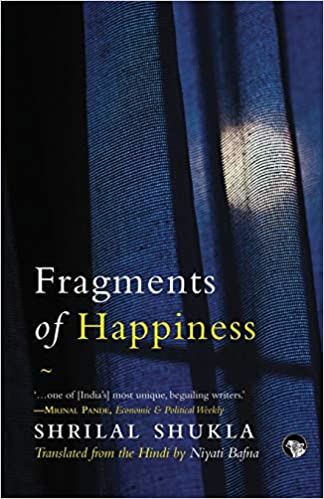
Title: Fragments of Happiness

Author: Shrilal Shukla, translated from Hindi by Niyati Bafna

Publisher: Speaking Tiger Books, 2021

Fragments of Happiness is a translation of Shrilal Shukla’s novel, Seemayein Tootati Hain, originally published in 1973. Shrilal Shukla (1925 –2011) was a Hindi writer, notable for his satire. He has written more than 25 books and received the Jnanpith Award, the highest national recognition for writers (2011), the Padma Bhushan (2008) and the Sahitya Akademi (1969). Seemayein Tootati Hain has been translated to English by Niyati Bafna, who has studied translation under Arunava Sinha and is currently a student of Computational Linguistics pursuing an MSc in Prague as an Erasmus Mundus scholar.

In this novel, Shukla, widely known for his satire, weaves the story of a family struggling to come to terms with its reality in the aftermath of an unfortunate incident. Durgadas, a businessman based in Delhi, is convicted for a murder and is sentenced to life imprisonment. He has two sons and a daughter. His children believe in their father’s innocence. Over time, the brothers become convinced that the murderer is Vimal, their father’s partner and a long-time friend. The story is centred on the idea of their father’s innocence and the subsequent efforts of the brothers to find the real criminal. However, the book is not a murder mystery. It does not offer a solution to the impasse that the brothers Taranath and Rajnath seem to find themselves in. And it certainly is not a story which offers closure. Rather it is an exploration of the beliefs, opinions, and nature of its characters as well as of the dynamics of relationships shared by them. The author takes on a well-to-do family in early 1970s Delhi to track the trajectory of each character as they tackle the situation.

Taranath runs a college. Rajnath takes care of his father’s business. Their younger sister Chaand is a 23-year-old researcher in the field of Chemistry.  Rajnath’s thoughts and actions are dictated by his desire to restore the reputation of his family whereas those of Taranath to see his father happy. Chaand is more of a realist, who accepts the situation and is more focused upon her career and her personal life. Vimal, on the other hand, stands by the family through the trial of Durgadas and believes him to be innocent too. However, the zenith of the plot revolves around the relationship between Chaand and Vimal.

Mrinal Pande, an eminent author and journalist, dubs Shrilal Shukla as one of India’s most unique and beguiling writers. This is evident as the author treads ahead with the narrative that is crisp and advances effortlessly to portray remarkably the interplay between societal influences and individual opinions and behaviour. Speckled with spiritual and philosophical musings and satire, the narrative skilfully captures the subconscious of its characters. The characters are life-like, with their fears and insecurities governing their responses and actions. One of the most unpredictable characters is that of Julie, Vimal’s confidante and once a sex worker. She is taken aback when she comes to know of Vimal’s deliberate silence about his presence at the scene of murder in which Durgadas was convicted and adds she wouldn’t have done so in his place, that she would have spoken the truth. Vimal’s character remains beguiling till the very end, and it may unsettle some readers.

Also, quite notable in the novel is the depiction of early 70s Delhi. Connaught Place, its cafes, espressos, cinema, localities –flavours and sounds of old Delhi, reminiscent of a distinctive era that may tickle the senses of a reader. In carving the character of Chaand, the author portrays an independent woman who has the courage to make her life choices, is determined and not affected by the expectations of her family or friends. Her individuality parallels the rising class consciousness among women in early 70s which recognised the inequalities within power structures of family, tribe and region as well. With Taranath’s character, he addresses the question of religion and with that of Rajnath and his wife Neela, the restrictions imposed within the familial structures. We know next to nothing of the character of Durgadas, around whose conviction and sentence, the story is constructed. By making this choice, the author has consciously aimed to focus on recounting the ways in which different characters try to cope with adverse circumstances in their lives.

To translate such a distinctive novel by an acclaimed author from Hindi to English, while capturing the nuances of the language, is not an easy task. Bafna has done a commendable job. Although, those who have read the novel in Hindi may wonder at some points about the choices made by the translator, the overall experience is closer to reading the original work and is, definitely, a step forward in making the work reach diverse readers.

.

Rakhi Dalal is an educator by profession. When not working, she can usually be found reading books or writing about reading them. She writes at https://rakhidalal.blogspot.com/ .

.

PLEASE NOTE: ARTICLES CAN ONLY BE REPRODUCED IN OTHER SITES WITH DUE ACKNOWLEDGEMENT TO BORDERLESS JOURNAL. 

Categories
Poetry

Khajuraho

By Ihlwha Choi

When I travelled to Khajuraho,
I met a child of seven years or so.
He drew our attention to a bad shop.
He told us 'There is a bad shop over there.'
'Let's go to the shop, let's go fast' in Korean.
Some traveller might have taught him these Korean words,
Only for putting the bad shop through trouble.
We went to the other shops avoiding that one,
He kept asking us to go to the bad shop.
But no one followed him to
The bad shop of Khajuraho,
Trying to overcharge only to have bitter experiences.
Though I felt sorry for him,
I did not teach him  the correct words.
That hurt me --
Not teaching him 'the good shop' in Korean.

Ihlwha Choi is a South Korean poet. He has published multiple poetry collections, such as Until the Time When Our Love will Flourish, The Color of Time, His Song and The Last Rehearsal.

.

PLEASE NOTE: ARTICLES CAN ONLY BE REPRODUCED IN OTHER SITES WITH DUE ACKNOWLEDGEMENT TO BORDERLESS JOURNAL. 

Categories
Adventures of a Backpacking Granny

Frenetic Philippines

Narrative & Photographs by Sybil Pretious

“The beauty of the world is the diversity of its peoples.”

During the Chinese New Year holiday in 2010 (I turned 68 that year), I resolved to visit the Philippines. It was a last-minute thought, so preparations were minimal. Barry, in Australia, like me, made an instant decision and would land in Manila the day after I did, both of us just toting our backpacks as luggage.

The Philippines is made up of 7,640 islands and is situated in South-East Asia. The local language is Tagalog. Its position in the Pacific ‘Ring of Fire’ makes it susceptible to earthquakes and typhoons and volcanic activity. I was interested in visiting the Taal Volcano which erupted in January 2020 and had had some of the country’s deadliest eruptions. Mount Pinatubo which last erupted in 1991 (the biggest eruption of the century).  The islands are known for their stunning beaches and azure waters, but I was focused on the mountains.

Nine days was hardly time to take in this astounding country, so we limited our wanderings to Luzon. Even that was ridiculous, and it was one of the lessons I learnt on that trip – less travel and more getting to know local people should be my mantra.

There was another fascinating fact – the presence of the fire mummies,  2000-year-old bodies preserved in pinewood coffins, in the Kabayan area. This proved to be an inward as well as an outward journey of significance in my life.

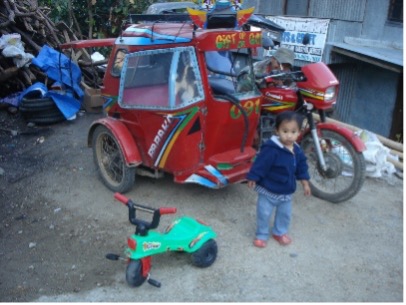
Travelling in the Philippines offers a colourful variety of vehicles and we had great fun contorting ourselves into side cars, covered motorcycles, three wheeled vehicles, buses and the very distinctive Jeepney.

I arrived the day before Barry, so I travelled into Manila to see the old Spanish walled city — The Intramuros. I caught a ‘tricycle’ which is a motorbike with covered sidecar. It was rather hair-raising, squealing round corners and going over bumps. Chatting to the driver when we stopped, I discovered that he had had to work for many years to obtain enough money for a license, but he was very proud of his vehicle. Subsequently friends of mine had sponsored one of these drivers which I thought was a wonderful thing to do. I then caught a vehicle that I have never seen in any other country – a colourful jeepney. A big jeep-like engine in front and then the covered back has seats on either side and held about 20 people. This is the main form of transport and there are regular ‘jeepney jams’.

 We took normal buses to get to Capas and Pinatubo Spa Town and up to the Volcano next day. At the Spa town I couldn’t resist a volcanic mud bath hoping that it might help my awful itchy skin. It wasn’t quite what I expected – I had to change into baggy shorts and top provided and then two young girls slimed the mud over me till I looked like someone from the coon carnival. I then sat around uncomfortably, in full view of everyone, till it dried and then showered it off. My skin was still awful but luckily my face was a whole lot better. Maybe I needed a few more treatments.

 A rather an extreme way to treat itchy skin

The trip in a jeep through rivers, volcanic ash, sand, mud took us to the Pinatabo volcano.  The eerie, moonlike mud scenery showed devastated river courses and vegetation. A ferried boat trip across the turquoise blue lake to the volcanic island with some small ‘craters’ still bubbling beside the lake. It felt unreal, not of this world.

Our guest house was a double story wooden structure that felt unstable, but the people were charming. Off again in the morning on a bus driven by a manic driver through a very scary mountain ‘highway’ veering dangerously close to the crumbling edges on a single lane with very sparse passing places where we had to back up for other vehicles.


We stopped for food and a toilet break. I approached the toilet building and looked inside. It was enough to make me gag. There was a long ditch down the middle of the room. Somehow you got your feet on either side and did what you had to do. Not only that but it was used by men and women at the same time! No time for niceties on this journey.

Always along the way were smiling children happy in their circumstances. I was thinking the many privileged children I had taught, who hardly ever seemed happy with what they had. They would benefit from living in areas like these just for a few months.

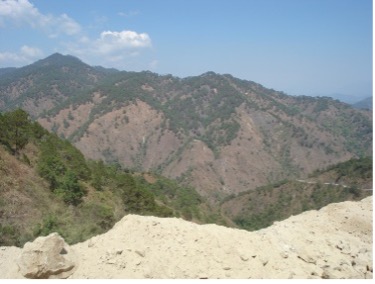
Kabayan was the one place I really wanted to be during this adventure. The Timbac caves hold the ‘fire mummies’. We set out with three French people, to climb up to the caves, a climb we were told would take four hours. It took me six hours. At the start Barry and I did not have much water and asked the guide if we could get some. He indicated a village on the way, but there was no bottled water, only cold drinks, which we discovered were not hydrating.

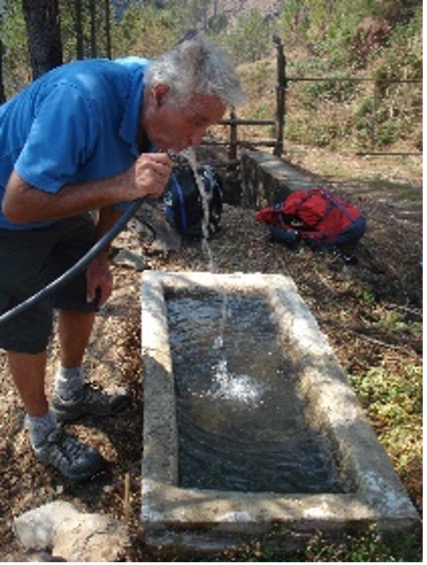
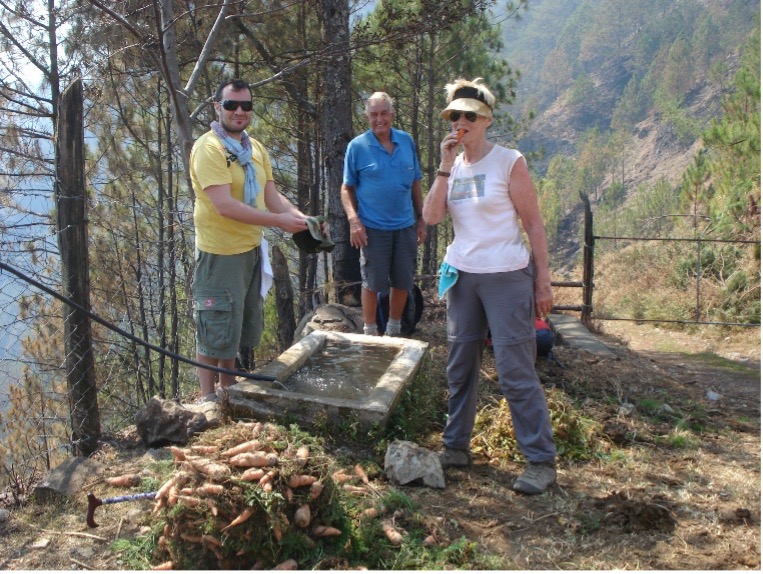
I climbed wearily up grassy hills, pulling on my trusty stick, feeling that this was the last thing I wanted to do. I just unable summon any energy. We arrived at a ‘farmhouse’ where there was an open tank and running water from a spring and also a pile of carrots.

I tipped my head back and drank and drank, then filled my bottles and ate a couple of carrots. I can’t describe what that water did but it was as though every cell in my body had woken up after a long painful sleep. I was anew woman and resumed the walk. Barry said he would see us on the way down — I thought he was joking.

I set off, energy high and kept a steady pace enjoying the scenery as I got higher. I was walking on my own because the French couple had gone on ahead and the other one had cramp and was trailing behind. Eventually the guide caught up to me and said that he had been all the way back for Barry, who said again that he was not coming and then the guide went on ahead to check the French couple were on the right track before returning to me. He had done a lot of extra mileage for his clients. Another lesson in service from these lovely people.

I caught up with the others before making the final steep climb to the caves. I was so glad that I had made it.

The guide took me on my own to the caves.

There, in small rocky caves, scattered around, some agape, some closed were the tiniest coffins. Surely these were for children? But no they were adults who had been placed in that sitting position. I had read about this mummification process which is no longer used in the Philippines.

Wikipedia has it that the unique mummification process was said to actually begin before death, with an individual participating in the initial steps. As death approached, the individual would drink a beverage with a very high concentration of salt. Drinking saltwater is known to dehydrate the body, so this initial step was used to start the drying process prior to death. After the individual passed away, the rest of the mummification process would take place. It is estimated that this process took anywhere from several weeks, to several months to complete.

The body was thoroughly washed, and then placed above a heat source in a seated position.  The body was not exposed to actual fire or flames but remained suspended above the smouldering kindling. Rather than burning the body, the heat and smoke would slowly and completely dehydrate the entire body. The internal drying process was ritually furthered along by blowing tobacco smoke into the deceased’s mouth. This was thought to help remove the fluids from internal organs.

Many of the caves had been looted but the one I visited had a rusty iron grid in front of the opening with an ancient padlock attached. The guide produced a key and opened the gate for me.

I sat down to look inside.  A feeling of sadness pervaded my senses. I went in to take a closer look and to say a prayer of thanksgiving for allowing me this privilege.  When I came out, I turned and kneeling with hands together I said, “I’m so sorry. Forgive me.”

The guide simply said, “Thank you. You understand. Not many people do.”

 The Visitors’ Book

We made our way back to the Guide’s Hut to wait for the Jeepney that was to collect us. I wrote in the visitors’ book while I waited:

“A wonderful, tiring walk with amazing scenery, friendly people and a very energetic, caring guide. Maybe tell the climbers to take more water. AND THEN The Mummies – what a privilege to see them. Please guard them with more security.”

The jeepney never came and as the light was fading my guide said we should make our way down. He knew a shorter way.

The road and path were not easy because of loose stones and I fell twice slightly pulling a muscle on my left side and knocking my head and bum. Good thing both are soft. We took three hours going down and the last hour was particularly difficult because it was dark and we had to use a torch. I stumbled several times wanting to give up and just sit on the road till morning. My guide steadied me and encouraged me.

Finally, back at the lodgings, I stumbled in ready to collapse onto my top bunk. Barry, looking fresh as a daisy made some stupid remark about my appearance that had the others laughing at me. I said nothing and went to our room but wondered why I had this effect on men when I had achieved something that they hadn’t.

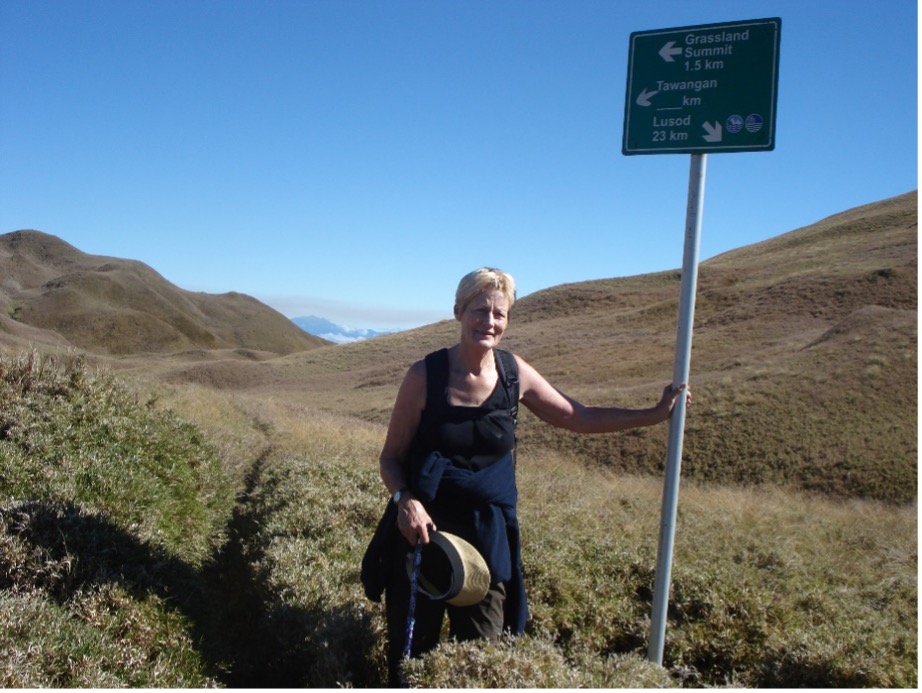
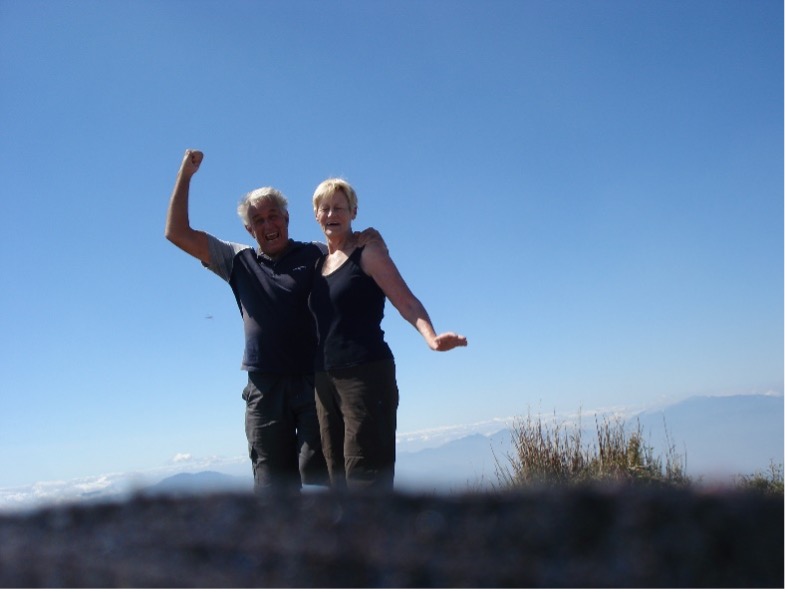
The following day we left on another tortuous mountain road journey to Abangeg to climb Mt Pulag. We met up with six young Belgian doctors who were doing their internship in a hospital in Banguio. They walked right from the base of the mountain whereas us oldies took a jeepney to the Rangers Station and stayed the night there before attempting the summit climb of three hours. I did not find it easy — too much climbing in too short a time. We had to leave our guide half-way because she had tummy trouble. Barry seemed confident that he knew the way. The top of the mountain is not marked but we presumed we had made it as there were no higher peaks around. It was just covered in plain old grass!

We were lucky to get a lift back with the doctors in a 4×4 driven by Father Eugene who had been in the Philippines for 42 yrs. Lucky did I say? He drove like a Formula 1 driver over precarious mountain roads and sometimes I just closed my eyes and prayed — seemed appropriate seeing he was a priest!

 After a very long day traveling in many vehicles, we got back to our hostel, The Green Mango Inn, and on the following day took a trip to Taal Volcanic Lake and the smallest active volcano in the world. Yes, no rest days in between! We travelled from the town by tricycle. A boat that looked like a gondola with bamboo stays on either side took us across the water to travel to the Taal Volcanic Lake.

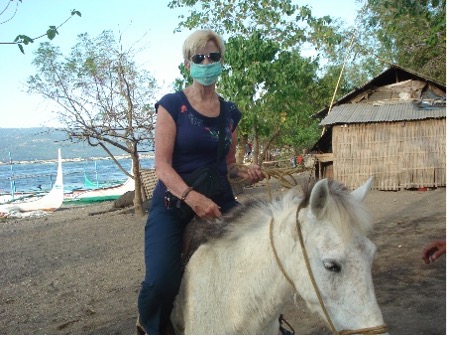
We were to ride on mules for the final part of the journey. I am not a rider having come off rather badly a couple of times but their minder assured us they were docile. Looking like bandits we had to wear masks because the fine black volcanic dust was not good to breathe in.

To my shame I never thought about the mules right then. They did not have masks on and would have been breathing in that fine dust every time they valiantly took tourists to see the lake.  Another lesson in being less self-centered.

The lake was calm, but I was not calm.  There seemed to be a ‘presence’ and I was not comfortable especially as there was still the ride back on the poor mules. Maybe I was just over-tired. I slept fitfully that night and went over all that I had experienced while in the Philippines. It was a jumble of thoughts and I realized for the first time during my backpacking adventures, I had done too much sightseeing and found out too little about the important parts of travel — the people and their lives.

I arrived back in Suzhou feeling very tired and older than my years but perhaps a little wiser about what travel should really be about.

“More is less.”

.

Sybil Pretious writes mainly memoir pieces reflecting her varied life in many countries. Lessons in life are woven into her writing encouraging risk-taking and an appreciation of different cultures.

.

PLEASE NOTE: ARTICLES CAN ONLY BE REPRODUCED IN OTHER SITES WITH DUE ACKNOWLEDGEMENT TO BORDERLESS JOURNAL

Categories
Poetry

Broadcasting

By Jim Bellamy


            BROADCASTING

            Giant whispering and coughing machines,
            But the Quietus shaped by thieves
            Broadcasts from a churchyard sleeved
            With coats that serve as muscle:
            The wavebands glowing overpower
            The rabid storms of chording where
            Your child hands clap against the air.

            Beautifully devout before a spent
            Cascade of money pours from out
            A vast resettling of drums. Thence
            Begins the mental struggles of arcane
            Girls, who may not dance upon a floor
            Nor faces inside faces prick music.

            Vast Sundays and organ-frowned spaces
            Leave dark emptied trees behind
            Seas, where sotto voce tames the race
            Of gaoled men; and the sureness of
            Faith will dive into the bays and quays
            Which seem too straight or still-born.

            The light of rock attunes to sound
            But this noise contests the altar-lit
            Grounds of life’s lurch, groomed with
            Minds which govern sadness from ground
            Teas, but still the coffees of the earth
            Grind to dust the magmas of bent birth.


Jim Bellamy was born in a storm in 1972. He studied at Oxford University. He has written thousands of poems and won three awards for his poetry. He tends to write in a bit of a fine frenzy. He adores prosody.

Categories
The Literary Fictionist

Truth Cannot Die

By Sunil Sharma

The Doctor was livid with rage, “You, self-styled lieutenant of this damned outlawed liberation organization, you rascal, you cannot hold me here in this stinking hell of a hole any longer. Who do you think you are? Greater than the President of the United States?”

The object of his venom, a very tall and muscular man with a flowing beard and deep-set dark eyes, came over to the old doctor’s bed and standing over the lean and short doctor, spoke in a gentle voice, “Calm down, doc, please, Remember you are a heart patient and our chief guest in this jungle. You are most precious to our organization.”

The old doctor stared hard at the set of the dark penetrating eyes of his captor that were cold and blood-shot as usual and said in a low but determined tone, “You would pay this with your blood, man. You have kidnapped an internationally – known American nuclear scientist and not some bloody stinking oriental of your own lazy, corrupt government. My government won’t spare any effort in getting me released.”

“Tut, Tut,” the captor answered coolly, “Dr Sutherland, you should not sound racist, should you? You are our guest. We have extended all the facilities to you. Come on, doctor, don’t act like a boy and be your age. Thank your God that my boys in this room do not understand English. Otherwise this bunch of trigger-happy recruits would be very glad to bump off an eccentric old man.”

The ‘eccentric old man’ glared at him with open hostility but opted to remain quite. The towering lieutenant, in dark Pathani- kurta and pyjama suit, with elaborate red head-gear, sat down on a mat. Resting his AK-56 rifle against his left thigh, he looked back at his gaunt hostage and smiled serenely at the angry figure. Two strapping young men along with their guns were lurking in the afternoon shadows of the thick jungle outside, while three were keeping vigil outside the entrance of the one-roomed thatched cottage in a clearing deep in the jungle. There were three more such cottages equally spaced in the clearing that accommodated roughly one hundred guerillas. It was steaming hot.

“I am afraid, doc, I have some bad news for you,” said the guerilla in a cool and gentle voice. The doctor straightened up against his will, eager for more details. He was stripped up to his waist, sweating and cursing these ‘freedom fighters’ for an obscure cause the legitimacy of which was totally lost to any sympathetic soul. The guerilla remained quiet while the doctor continued to look expectantly at him.

At last the doctor said in a whining tone, “What bad news, lieutenant? Please don’t play this game of cat and mouse with me again. Why do you mentally torture me?”

“Well”, spoke the guerilla, “I am sorry to say that there are only twenty four hours left for your administration to meet our ultimatum.”

“So?”

“Well, you know that….”

“Know what? Come on, be straight.”

“Truth may be frightening.”

“No truth in the world can put fear in a 63- year-old man, no, nothing!!”

“Well, if you insist, I will come out with the truth.”

“You are going to be executed tomorrow. The headquarters have given this command”

“Still there are twenty four hours left.”

“I am sorry but I am a bit pessimistic.”

“Why?”

“The negotiations have almost collapsed. The General of our great Republic says he won’t release our comrades under Yankee pressure. He is adamant and the public seems to be with him on this issue.”

“Then?”

“Only a chance miracle can deliver you and as a scientific man, you know, miracles have ceased to happen of late.”

The old doctor suddenly bent down and cupped his face. He looked very old and pathetic.

They remained motionless for an eternity. The windowless, low-ceilinged, mud-walled cottage in the middle of a steaming jungle was a far cry from the advanced technology of the West. The entire life flashed before the old man’s eyes. A glittering life of a successful scientist. Sitting in the semi-dark interior with a low-watt naked bulb and an ancient table fan and an improvised bed, the doctor was suddenly overwhelmed with ennui. Thanks to that crazy, power-drunk General with his harem of women and dreaded secret police, here he was holed up in the middle of nowhere, surrounded by these morons – the sons of the starving peasants and workers, mouthing fiery revolutionary clichés in a parrot-like manner. He had lost count of the days of his captivity. Already he was feeling like a semi-savage. He felt crushed, defeated and humiliated.

“Doc?”

“What the hell is it now?”

“I am genuinely sorry for you…”

“Cut that goddamned crap, you swine.

“Do not act smart with me. O.K.?”

“I say I am genuinely sorry. I mean it.”

The temperamental doctor stood up in a sudden rage and advanced towards the reclining figure, foaming at the mouth and shrieking hysterically, “You bastard, you son of a bitch, I will kill you with my bare hands. You a fanatic rascal, a mass murderer trying to act with me like a liberal civilized gentleman with refined language and manners. See his hypocrisy: The man who will shoot me tomorrow talking of sympathy. You disgust me: You are simply a butcher with no heart and no conscience.”

The babbling doctor was oblivious of the drawn guns of the anxious guards. Their leader motioned them to keep quite. As the doctor charged towards him, the tall guerilla expertly rolled over to one side and the old man crashed headlong onto the mat. They roared with laughter. Their leader was a usual cool. Finally, the old man composed himself. The guerilla gently lifted him to his bed and placed him on it.

The doctor was too humiliated to resist. The guerilla resumed his seat and took up a book. After a long and heavy silence the old scientist stood up from his narrow bed and began pacing the mud floor like some agitated chained animal.

“Hi, Lieutenant ?”

“Yes Dr. Sutherland.”

“Why do you not tell me about yourself? Name, family other details?”

“It does not matter at all. I am simply a soldier in the cause of Revolution. My identity is my ideology.”

Dr. Sutherland stopped suddenly and facing the leader, said in much horror, “Ideology! My God! I believe all ideologies have already been exhausted. Betrayed by a corrupt, self-serving leadership. You are simply fooling with your youth.”

“No, I am not. I am fighting a war.”

The doctor was quiet in sheer exasperation.

“Well, young comrade, you believe in God?”

“No.”

“I see.”

After a pause, the doctor asked the leader, “Any other agency?”

“No.”

“Not even humanity?”

“Oh, that I do, of course, I do”

“Does that imply that you believe in liberal humanistic values?”

“Yes, I do.”

“Okay. Then why do you kill innocent, helpless, poor people ? Why?”

The guerilla did not answer.

“Do you hate me? An old, neutral guy, on a visit to your country, on the invitation of one of the ministers who is an old friend! I demand an answer.”

The guerilla answered slowly, “No, we do not hate you, dear Dr. Sutherland. On the other hand, we respect you as a brilliant international scientist.”

The old scientist spoke vehemently, “Then why do you want to kill an old harmless man? What have I done to deserve this fate? I do not want to die.”

“I can understand, Doc, but orders are to be carried out by me.”

“You seem to me an intelligent, young man. Tell me what purpose my killing would serve?”

“It is all a part of military strategy prepared by the top brass.”

“I see! The top brass! That bunch of mass murderers; the merchants of death and destruction; killing, raping and plundering thugs…”

“Dr. Sutherland, I advise you to be careful with your assessment of our leadership.”

“Let an old, helpless condemned man speak.”

“Okay. Go on.”

“When would you execute me?”

“Tentatively speaking, tomorrow afternoon.”

“Who would have this honour?”

“Unfortunately, I am going to have that honour.’

“Would my murder hang upon your conscience? Would it affect your soul?”

“I am afraid we don’t have any conscience.”

“I see…let me tell you one more truth, my young comrade.”

“Please proceed.”

The old Scientist paused for a few second, heaved a long sigh and then said, “If this mask of civilization is ripped apart, what do you have here? A bunch of exhausted comrades or revolutionaries or freedom-fighters. The people suffering from exhaustion both physical and moral. I am afraid the ‘war’ waged by already exhausted, blood-thirsty animals leads to a no-win situation. Well, goodbye, young man. You will gain nothing, mind it, nothing, you or your bosses or the international powers behind you. It will provide sickness of mind and soul…and…”

“And…?”

“And,” the doctor said, “It will eat away all your vital statistics, your body, ideology, everything, in due course of time. Nothing will ever come out of this spiral of violence — nothing ever did so far. You will be defeated by your own wars of hatred and bigotry, all waged in the name of some cause! You can never kill a nation or an entire community, you fool! Bombs or bullets—never work. Love does! Insanity self-destructs! Mind it, this is a sober scientist speaking to the lieutenant of a programmed army of mercenaries, the merchants of death and mayhem, the so-called terrorists!”

The lieutenant smiled. Said nothing. He liked the bravery of the prisoner who was no longer afraid.

His moment of truth!

Truths can be relative, thought the young freedom fighter, wearing fatigues and a cap and smoking a cigar, while his juniors patrolled the area outside, guns ready.

“I am not babbling!” the doctor pronounced. “Hatred eats its own offspring — like the hungry cats eating their cubs. You will all die, disillusioned.”

Then, the doctor abruptly turned, climbed his narrow bed and lay down with his back turned towards his captor, as the fading light left a gloomy spot on the mud floor of the hut in that jungle.

First time, his captor was surprised by the sudden composure of the haughty scientist who appeared dignified and calm in the face of death – like some resolute Samurai facing the dagger that will enable hara-kiri — and the response of a condemned man, gaining tranquility and rare insight, kind of revelation!

The captor shrugged shoulders and continued to stare at the frail figure stretched out on the narrow bed lying silent…and then, at the bleak sky outside, trying to locate his favourite constellation out there—the Orion.

.

Sunil Sharma is an Indian academic and writer with 22 books published—some solo and joint. Edits the online monthly journal Setu. Currently based in MMR (Mumbai Metropolitan Region).

.

PLEASE NOTE: ARTICLES CAN ONLY BE REPRODUCED IN OTHER SITES WITH DUE ACKNOWLEDGEMENT TO BORDERLESS JOURNAL. 

Categories
Poetry

The Law of Nature by Akbar Barakzai

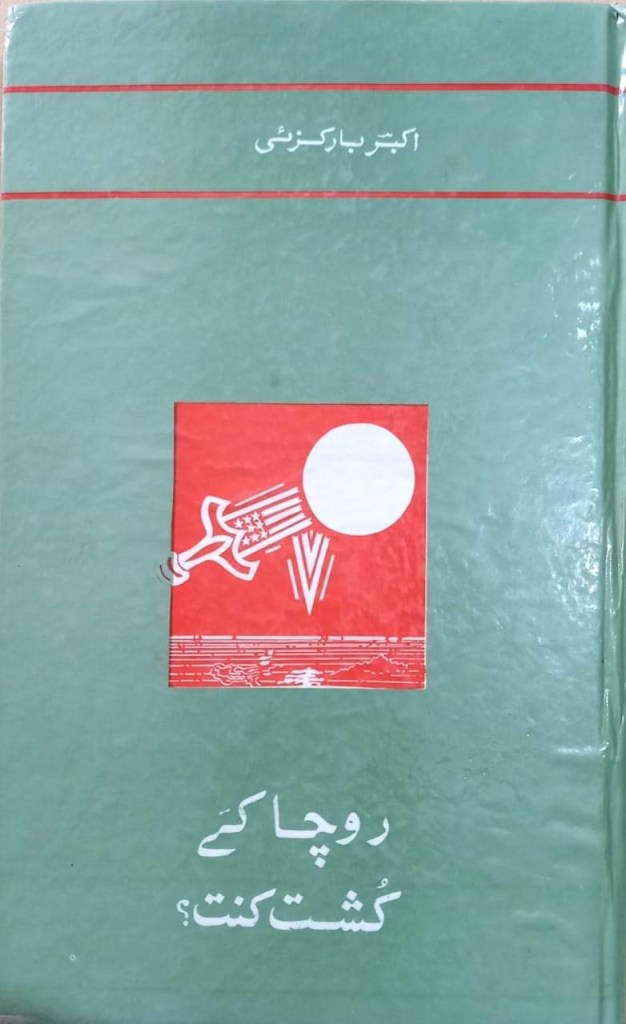
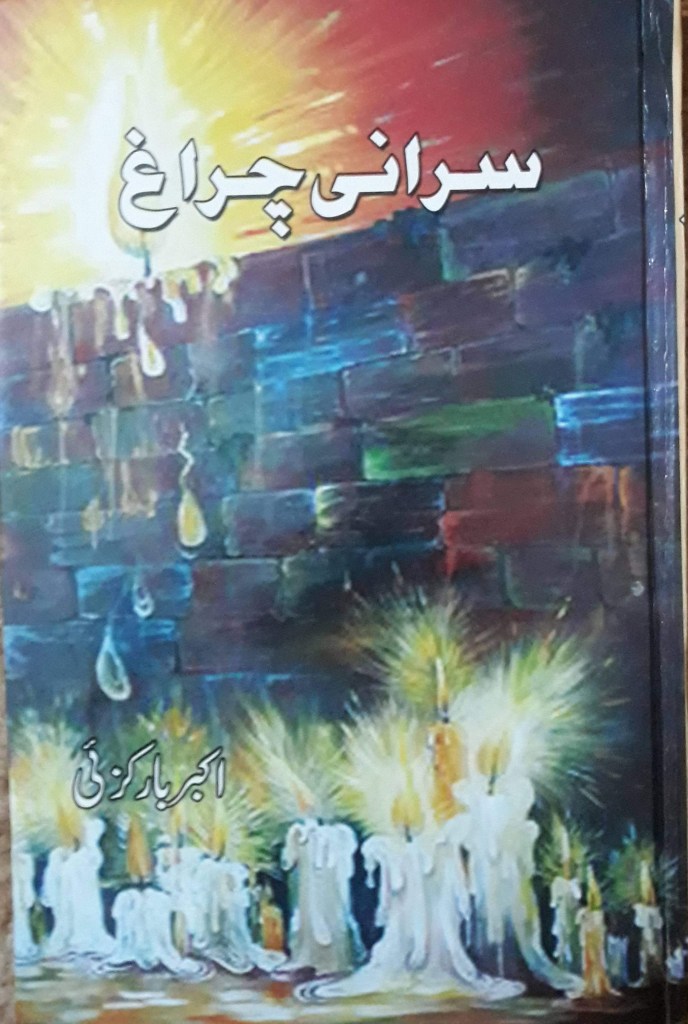
Akbar Barakzai was born in Shikarpur, Sindh in 1938. He is ranked amongst the proponents of modern Balochi literature. His poetry reflects the objective realities of life. Love for motherland, peace and prosperity and dignity of a man are the recurrent themes of his poetry. His love for human dignity transcends all geographical and cultural frontiers. Barakzai is not a prolific poet. In a literary career which spans over half a century, Barakzai has brought out just two anthologies of poetry, Who can Kill the Sun and The Lamps of Heads, but his poetry has depth and reaches out to human hearts with its profundity. Last year, Barakzai rejected the Pakistan Academy of Letters (PAL) award, quoting  the oppressive policies meted out to his region by the government as the reason.

The Law of Nature

(First Voice)

Come, you the riff-raff evildoer!
Hearken to what I utter

You are my slave 
I am your Master
You are homeless
At my feet are forts and palaces
You are homeless 
I’m the lord of power and puissance 
You are destitute and famished
I am rich and affluent

I am wise and prudent, you are brainless
I am the man of might, you are weak and frail
I'm the owner of large estates and orchards
Irksome is your existence in this world
I’m the master
You are my subject

Of faith and the divine book
Guidance I always seek
You are a wayward heretic
I am pure, you are filth
I am strong, you are meek

Have you ever pondered?
On the law of nature
Always subdued in the world
Are the weak and vulnerable 
A shark preys on little herrings
The lion hunts the ibex
Birds and locusts are the falcon’s prey

History bears witness
Always favours the fittest
Throne and crown,
Glory and pride. Discern! 
In rebellion
You’ll gather only humiliation
I am powerful, you are powerless
I am the master, you are the subject

(Second Voice)

Granted, you are the master
Proud, rich and affluent
I am miserable and poor, 
Pious jurists and clerics
Your companions and cohorts
I am but a sinner and transgressor

True you are the mighty overlord
I'm just a wretched slave
But listen you to me --
I’m also a man, a descendant of Adam
No matter how much you oppress me
I wouldn't accept your law of nature
A pretext of my subjugation
No matter how mighty you are
No matter how weak and frail I am.

Fazal Baloch is a Balochi writer and translator. He has translated many Balochi poems and short stories into English. His translations have been featured in Pakistani Literature published by Pakistan Academy of Letters and in the form of books and anthologies. Fazal Baloch has the translation rights to Barakzai’s works and is in the process of bringing them out as a book.

.

PLEASE NOTE: ARTICLES CAN ONLY BE REPRODUCED IN OTHER SITES WITH DUE ACKNOWLEDGEMENT TO BORDERLESS JOURNAL

Categories
Excerpt

Feisal Alkazi’s Enter Stage Right

Title: Enter Stage Right: The Alkazi Padamsee Family Memoir

Author: Feisal Alkazi

Publisher: Speaking Tiger Books, 2021

The tremendous vitality and ferment in the Western music scene was very much a part of our growing up. From the Beatles to the Rolling Stones, from Janis Joplin to Joan Baez, from The Who to Santana, lyrics of protest set to unforgettable melodies and dense instrumental tracks were to be heard, absorbed and danced to.

And did we dance! Every Saturday night a bunch of my friends and I could be found ‘grooving’ for at least four hours at the newly opened The Cellar in CP (as Connaught Place was known) or Wheels at the Ambassador Hotel. The Cellar was the beginning of the discotheque culture in Delhi, and we were among its first patrons, adorning the ceiling with our names etched in smoke! Foreign hippies in their lungis and tee-shirts, high on ganja or whatever else, brought an edge of curious excitement to our Saturday nights. After all, we were the Dum maro dum generation! The Cellar was situated in the basement of Regal building and the excitement and apprehension of being in Connaught Place at night lent its own thrill to every visit.

 Wheels near Khan Market drew a different, older, more sedate crowd, the yuppie professionals of south Delhi, whom we could elbow off the floor with our vigorous dance moves. In a Gadda da Vida and Hotel California were our favourite dance tracks. We did this from the ages of seventeen to twenty-three. Seven years on the dance floor every Saturday night! Talk of Saturday Night Fever? The phrase could have been coined for us.

All four of us were children of practicing artists and performers. Books lined the walls in all our homes, divans were draped with handloom bedspreads and the walls covered with contemporary art, arresting photographs, classical sculpture or an occasional African mask. Food was often a Burmese dish of noodles and soup called Mahmi, or a detectable Bohri mince pie or best of all, hot chicken patties from Wengers.

Our parents were friends, part of a large and growing circle of artists, who had chosen to gravitate to Delhi and to live in or around Nizamuddin. Gaitonde, Ram Kumar, M.F. Husain among others were part of this charmed circle.

 The ‘younger’ lot of artists, somewhere in age between our parents and us, were Eruch Hakim and Nasreen Mohamedi. We would occasionally drop in at their barsati-cum-studio apartments, to watch them create their black-and-white drawings. Nasreen introduced us to green tea, Eruch was always ready to roll a joint.

There was an amazing camaraderie and willingness to help one another within the artist community. They were beyond friends, they were family. When the Mehtas relocated from London to Delhi, they stayed with us for the initial month. When Pablo’s parents travelled to the US for a year, as Richard won the prestigious Rockefeller scholarship, Pablo stayed with us. Going out of your way to help a friend in a very tangible way was an integral part of my mother’s personality.

Husain was already an icon in Indian art, an artist who stood apart with his characteristic white beard, long paintbrush and bare feet. Tyeb was more quiet, the ‘intellectual’ of the group who had recently returned from several years spent in London, Krishen had only just given up his regular job in a bank to become a ‘full-time’ artist.

Husain enjoyed gathering many of these families together, bundling us into his Fiat with his iconic horse painted on it, and dragging us off to see Helen dancing in Inteqam at Golcha Cinema in Old Delhi, followed by a meal at Flora in Jama Masjid. He knew exactly what time Helen’s dance sequence was, so a large group of us would walk into the hall minutes before the dance, and exit immediately after it was over. A compliant management and Husain, the charming smooth-talker, made such a privilege possible.

It was my first encounter with Old Delhi at night with its crowded lanes, women in burqas, the smell of frying kababs, the flavours of dum pukht biryani and the call of the azaan. I wondered if this was similar to Mohammed Ali Road in Bombay where my father grew up. It was an alien, exotic world aeons away from my Westernized, though bohemian, childhood in south Bombay. Little did I know at the time that I would soon spend ten years working in Old Delhi!

About the Book:

Bombay, 1943. The young Parsi actress who was playing Salome in the newly founded Theatre Group’s production of Oscar Wilde’s eponymously titled play drew the line at performing the Dance of the Seven Veils, a sort of ‘Biblical striptease’. So director Sultan Padamsee’s 19-year-old sister Roshen stepped in. And met the handsome, intense Arab who played the male lead-Ebrahim Alkazi. In 1946, they were married. Thus was forged one of the greatest alliances in the world of theatre and art in post-Independence India.

Ebrahim Alkazi took English theatre from its early beginnings in Bombay to national and even international acclaim as he directed and acted in more than a hundred plays, ranging from Oedipus Rex, Murder in the Cathedral and Macbeth in the 1950s, to Ashadh Ka Ek Din, Andha Yug and Tughlaq in the ’60s and ’70s. As director of the fabled National School of Drama from 1962 to 1977, he launched some of the finest actors of our times, including Om Shivpuri, Om Puri, Naseeruddin Shah, Rohini Hattangadi, Manohar Singh and Uttara Baokar. The chief costume designer and seamstress for all his productions was Roshen Alkazi. In 1977, when Ebrahim and Roshen decided to open Art Heritage in Delhi, it gave a new dimension to the world of art, as the leading artists of the day, including M.F. Husain, Krishen Khanna, F.N. Souza, Tyeb Mehta, K.G. Subramanyam and Laxma Goud, flocked to this space that was not just a ‘commercial’ gallery, but a foundation for documenting and preserving the arts. With more than 50 rare photographs, Enter Stage Right is the story of theatre in India as it has never been told before…to be treasured by theatre buffs, and savoured by anyone who loves a good story.

Author Bio:

Educationist, theatre director and activist, Feisal Alkazi has carved out his own niche with his group, Ruchika. He has directed over 200 plays with adults in Hindi, English and Urdu. He has also directed over 100 productions for schools all over India, and in the field of disability, he has directed 30 documentary films and produced several plays.


Photo credits: Ram Rahman:15-Feisal Alkazi and friends in The Cellar, a discotheque in Delhi 1975

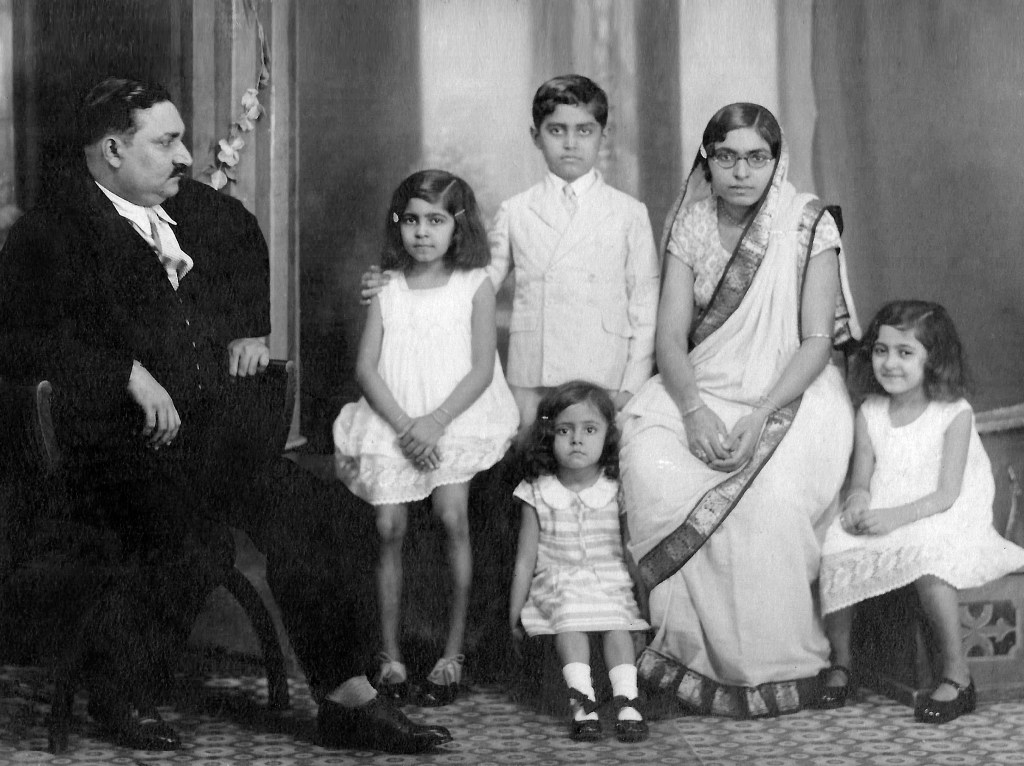
Alkazi Theatre Archives: Jaffer Padamsee and Kulsum with Sultan_Bobby (standing right), Roshen (standing left), Bapsi (seated centre), Zarine (seated right)

Excerpted from Enter Stage Right: The Alkazi/Padamsee Family Memoir by Feisal Alkazi. Speaking Tiger Books, 2021.

Click here to read the book review.

.

PLEASE NOTE: ARTICLES CAN ONLY BE REPRODUCED IN OTHER SITES WITH DUE ACKNOWLEDGEMENT TO BORDERLESS JOURNAL

Categories
Essay

The Day Michael Jackson Died

A tribute  by Julian Matthews

The day Michael Jackson died on June 25, 2009, I received a SMS from my eldest brother. He rarely messaged me, but since I was the only journalist in the family, I was the go-to person when any major news broke. “Is it true?” he asked.

I was away in Gua Musang, Kelantan, attending a funeral of a relative on my wife’s maternal side.

We had ferried my aging in-laws there from Ipoh. We checked in at a tiny hotel that didn’t have a lift and had to walk up three flights of stairs. My 90-year-old father-in-law was a little hard of hearing and had poor eyesight. So, when we placed him in a room several doors away from us, I showed him where ours was — he could knock if he needed anything.

The hotel didn’t have internet access, and I was unable to confirm the news with my brother.

My wife and I chatted about “MJ”, how we went to his concert in Singapore in 1993 and how we were blown away by his singing, dancing and the special effects at that memorable show.

Michael had taken ill after the first show, and we were informed of a postponement on the second show only after we had all gathered inside the Kallang Stadium. We chose to stay, extended our leave and burnt our return train tickets. We definitely were not going to miss this once-in-a-lifetime event. Expectations were raised by the delay but Michael did not disappoint.

I refer to Michael in the first person because I grew up watching him, as part of the brotherly quintet, The Jackson 5. Their afros rocked and they were a lot hipper and cooler group than the strait-laced, clean-cut Osmonds.

The Jackson 5 appeared on popular musical shows of the time: The Andy Williams Show, The Flip Wilson show, The Sonny and Cher Comedy Hour, and eventually had their own self-titled variety show. Even on the black and white screen TV, you could tell their outfits were colourful and funky with floral motif tops and wide bell-bottom pants.

Michael, as the lead singer with his fancy footwork, always took centre stage, never missing a beat in coordinated choreography with his brothers or sliding smoothly out to do his solo turns.

His stage presence was magnetic; he was the consummate performer, an entertainer extraordinaire, the star of every show. As kids, we often tried to mimic his trademark move — multiple 360° spins — and flopped miserably in front of the TV in fits of laughter.

Fast forward to my mid-20s, I remember after late-night partying, I often crashed at a buddy’s house in Bangsar. He would always blast Michael’s solo album Off The Wall on his stereo system with its meter-high speakers and we would lie in bed, happy and high, mouthing the lyrics to Don’t Stop ‘Til You Get Enough, Rock With You, Workin’ Day and Night,  and end with the lovelorn pathos of She’s Out of My Life, until we drifted off to sleep.

Then came the follow-up album, Thriller and we were sucked in by the mesmerising MTV music videos from the album — Beat It, Billie Jean and Thriller, the last with its iconic zombie-dance and Vincent Price’s ghoulish monologue and trailing creepy laugh.

In 1983, at Motown’s 25th anniversary concert, Michael unveiled the moonwalk, a gliding stride so smooth that it almost seemed he was floating backwards on stage. It was epic and became his new signature move, just when breakdancing was taking the world by storm.

Each subsequent album — Bad, Dangerous and HIStory — added to Michael’s popularity and allure, whether the songs leaned towards harder, edgier rock numbers, Bad, Dirty Diana, Smooth Criminal; or message-laden anthems in Black or White, Heal the World, Earth Song; or softer tunes reflecting his vulnerability in Liberian Girl, You Are Not Alone and the confessional Man In The Mirror. Only Michael could pull them all off.

Michael had transitioned from the precocious child star to adult superstar. And we were fans for life.

But by the mid-90s, along with fame came infamy.

Michael was nicknamed Wacko Jacko, the subject of tabloid fodder with some bizarre stories about his exotic pets, his penchant to sleep in a hyperbaric oxygen chamber (note: later denied), his multiple plastic surgeries, his failed and supposedly “sexless” marriage to Elvis’ daughter (note: Lisa Marie Presley was quoted as saying the couple’s sex life was “very hot”), his extravagant shopping sprees and endless scrutiny on his changing skin tone (note: he had vitiligo).

Michael was quoted as aspiring to be Peter Pan, the boy who never grows old. He even named his palatial home Neverland, built his own private amusement park and movie theatre there and lived with a chimpanzee named Bubbles and llamas named Louie and Lola.

Along with the rumours, came more credible pieces on an abusive father, being robbed of his childhood, and a desperate need to connect with children by inviting them over to Neverland for park rides, to play arcade games, watch movies over popcorn, or just climb trees. And, unfortunately, for sleepovers.

In October, 1996, Michael was scheduled to have his first-ever concert in Malaysia. My wife and I were expecting our first child and we were deep in the throes of preparing, with gynae visits, birthing classes and acquiring baby things — the crib, baby bottles, diapers, baby car seat.

By then, we were over our concert-going, partying phase and were looking forward — albeit with nervous, fevered anticipation — to welcome our new-born.

The news headlines suggested Michael was also expecting his first child with an Australian nurse and the gossip mill was churning out exposés on the surrogacy.

A previous accusation on child molestation had also re-surfaced.

The week that Michael was in Kuala Lumpur, we heard of a few sightings of him about town. We were rushing to a family gathering one day and stopped by at Toys ‘R’ Us to get a last-minute gift. Something was obviously amiss at the mall when we reached there. There were children dressed in costumes aligning the escalators and as soon as we entered the store, we heard screaming outside. Suddenly, a group of men in suits, surrounding a slender shadow, entered the shop and the staff pulled the shutters down. We were trapped inside, along with 20 or so other shoppers.

It was Michael Jackson and his entourage. We were distracted, but only momentarily, as we knew we were late for our event and eager to just shop and leave.

Then Michael appeared in the very aisle we were browsing in. No bodyguards, no minders, just him alone. He was in understated black and had dark glasses and a black mask on.

He pointed at my wife’s pronounced bump, gesturing in a semi-circle and mumbled. I remember acknowledging she was pregnant and introducing us. I proffered a hand and he shook it gently but firmly with a pale, un-gloved one. His dusky, bright eyes peered over his glasses and it appeared he wanted to lower the mask and say something.

It was a surreal moment.

Perhaps, he was trying to convey our commonality, the three of us as expectant parents – a language we could share, just a normal chat with normal humans on upcoming baby matters. But somehow, he sensed we were not up to that conversation. How could we be? Something had changed. Here before us was not the superstar we knew but just another man in disguise, who maybe, just maybe, had a predilection for young boys.

We just wanted to get our gift and go. He moved on — and so had we.

*

The years rolled by and after awhile, I tired of repeating the story of the encounter and seldom spoke of it.

Back at the wake in Gua Musang in 2009, a light, dreary rain came down and we huddled under the makeshift tent which stretched across the narrow road in the village. Amid the chanting, tiny bells rang with regularity, and the air was infused with the smell of joss-sticks and burning charcoal from a nearby kitchen. It was a Taoist ceremony, the family was of Hakka descent and all the close family members in the funeral procession wore white.

My father-in-law was seated in his usual long-sleeved light blue shirt, pressed brown pants, shiny black shoes and although it was already night, still had his dark glasses on. He had undergone eye-surgery again recently to rescue his vision after an earlier operation was botched. The dark glasses were for protection from the glare of the lights. This small-framed, Ceylonese man stood out in a sea of white.

As relative after relative came by to convey condolences to the family, there were whispers, a murmuring in Hakka among the older aunties and uncles, then raised voices recognising his presence.

Back in the day, my father-in-law, as a young medical officer, was a hospital assistant based at the General Hospital in Kota Baru in Kelantan. He must have treated many of those present at the funeral. They came up to him, acknowledged him, shook his hand and bowed low, almost in reverence. There was no language barrier in their paying homage to a 90-year-old man, who they obviously respected. With his dark glasses, under the glow of lights, he was a star in his own right.

Sometime in the middle of the night, after we returned to the hotel to sleep, I was awakened by someone knocking in the distance. I knew it wasn’t our door. The knocking grew louder and more persistent. I tried to get back to sleep, then realized, it might be my father-in-law!

I bounced out of bed, opened the door and sure enough, it was him.

He was knocking furiously on some stranger’s door, two rooms down the hotel corridor.

“Papa! Papa! Here!”

I alerted the wife and we sorted him out, got him a glass of water, and returned him to his room.

The next morning, on the return journey, the radio stations were playing many of Michael Jackson’s hits: Ben, Bad, Billie Jean, Beat It, Black or White, Man in the Mirror.

The one that finally got to me, though, ferrying my in-laws home, was Gone Too Soon:

Like a comet, blazing ‘cross the evening sky…Gone too soon.”

We grew up with Michael. We watched him evolve from the lovable child prodigy fronting his brothers on our black and white TVs, twirling and spinning for us, to churning hit after hit as a solo artist. He was a brilliant, talented musician who gave us his all in exhilarating music videos and energetic performances in live concerts, as he ascended into superstar status.

For Michael, at age 50, the boy who never wanted to grow old, death came a-knocking too early. And indeed, like a comet, blazing across the evening sky, he was gone too soon.

.

Julian Matthews is a former journalist and trainer currently expressing himself in poetry, short fiction and essays. He is based in Malaysia

.

PLEASE NOTE: ARTICLES CAN ONLY BE REPRODUCED IN OTHER SITES WITH DUE ACKNOWLEDGEMENT TO BORDERLESS JOURNAL

Categories
Poetry

Three Ways to Say You Love Them

By Sutputra Radheye

First,
be honest even if even
they hate what’s coming
out of your mouth.
It will only do them good.

Second,
give them the space 
to fail and to try 
And to repeat the process.
No one ever climbed
without falling.

Third,
after a long fight
sit down, next to each other
silently. They will know
you will not leave.

One complimentary advice
the poet knows nothing
about love. You know
better.


Sutputra Radheye is a young poet from India. He has published two poetry collections — Worshipping Bodies (Notion Press) and Inqalaab on the Walls (Delhi Poetry Slam). His works are reflective of the society he lives in and tries to capture the marginalized side of the story.

.

PLEASE NOTE: ARTICLES CAN ONLY BE REPRODUCED IN OTHER SITES WITH DUE ACKNOWLEDGEMENT TO BORDERLESS JOURNAL.