A Grand Bouquet

Years have rained from the sky
Like flower petals falling leisurely
On the face of a life in a trance.

Each year one flower more
I have added to my bouquet,
Kept in a fancy glass vase
On the altar of my mystic past.

The bouquet has a sacred look
With sleek flowers of all sizes,
Of myriad colours and hues.

I look back at the titanic altar
And perceive a feeling of joy
And nostalgia for the years
That I collected these flowers.

Alas, this imposing bouquet
And the aroma it imparts
Are my only pieces of fortune.

The years have faded away
And so have many flowers.
Only a few robust ones are left
That perfume my heart.

The years will all melt away
And the vase will soon be full.
On display will be vivid colours
And a delicate fragrance to recap
The undying spirit of my life.

A candle will then be lit
In grief and in tribute
To the grandiose bouquet
That had adorned this vase.
Pramod Rastogi is an Emeritus Professor at the Swiss Federal Institute of Technology (EPFL) in Lausanne, Switzerland. He is a Member of the Swiss Academy of Engineering Sciences. He is the 2014 recipient of the SPIE Dennis Gabor Award. He is currently a guest Professor at the IIT Gandhinagar, India.
.
PLEASE NOTE: ARTICLES CAN ONLY BE REPRODUCED IN OTHER SITES WITH DUE ACKNOWLEDGEMENT TO BORDERLESS JOURNAL
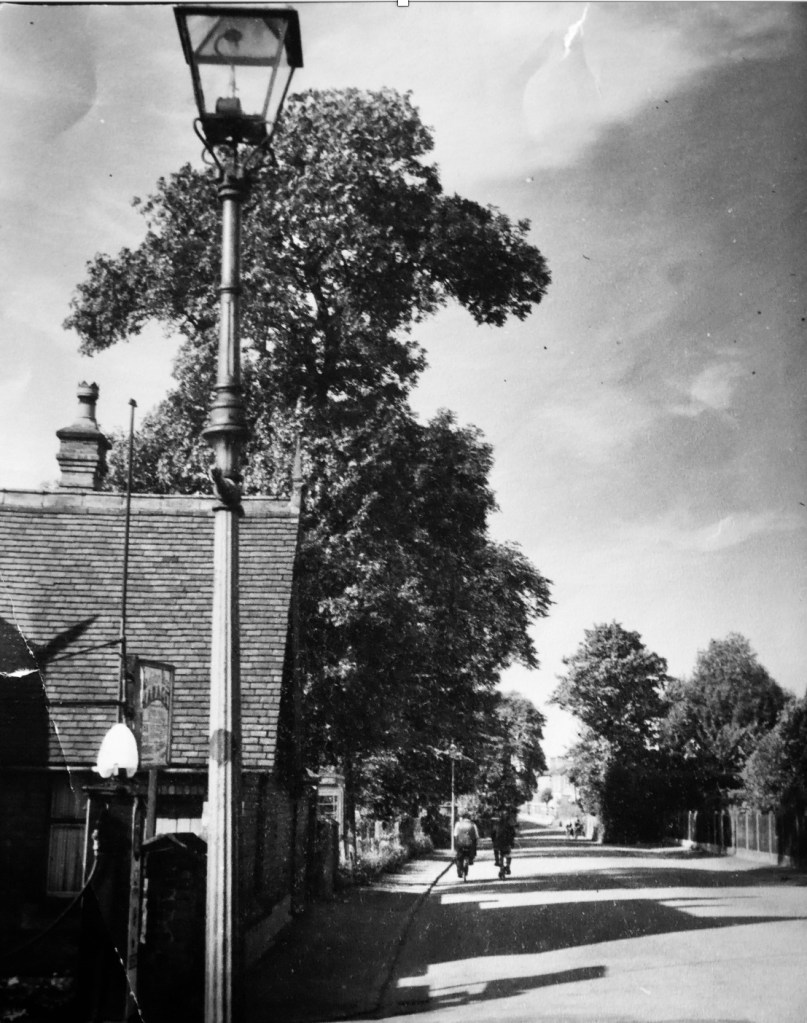
This is a photograph from my childhood. It is of a roadside cottage and a fine, unidentified tree, on what was the edge of a Midland town, as they both were over sixty years ago. I’d guess it was taken in the mid or late nineteen fifties. It shows the front wall of the cottage I grew up in, and the road outside. It was a road that, when the photograph was taken, led out into the Staffordshire countryside. You might have called it a road to nowhere.
In the foreground on the left, if you ignore the old gaslight, is an upright object with a white top. You might recognise it as a petrol pump, probably a ‘Shell’ one.
The cottage had been the gate-lodge to a substantial house belonging to a successful Burton-upon-Trent brewer. That was demolished sometime between the two World Wars. A short flight of stone steps, overgrown, and the rumour of a lost cellar, both at the far end of our plot, were all that was left of what must have been the house and its ornamental gardens.
A pale blue gate, permanently open during my childhood save once when I recall cattle being driven along the road, stands out of sight closer to the camera than the lens captures. It bore the name of ‘The Lodge’ if memory isn’t playing me false. A short drive led down past the bay window of the cottage – an oval rose garden edged with stone alongside – to old stables, coach houses and outbuildings. All had the same steep, slated roofs, blue weatherboards pierced with fleur-de-lis designs in which swallows nested, and tall, pointed wooden finials. You can just make one out on the visible gable of the cottage, not quite merged in the foliage of the tree behind. There’s the shadow of another on the roof, presumably above that bay window. These were the buildings that I described in my only published novella, A Penny Spitfire, and the greenhouse that features in my daughter’s animation Giant’s Puddings leaned against one of them.
The photograph shows more, and pricks memory beyond what it shows. I can just remember that gas lamp being lit at dusk by a man who, Wee Willie Winkie-like, ‘ran through the town’, carrying his long pole, hurrying to light the lamps before true darkness fell, or at least, I think I can. I found a coal miner lying beneath it once, or the lamp that replaced it, and thought him dead, rather than dead drunk, and wrote a poem about it fifty and more years later.
The tree is in full leaf, beneath a Simpson’s sky, which would have had no meaning when the photograph was taken. And the shadows are long and to the east of north if my internal compass points true. This makes it a summer evening, I guess, or maybe late afternoon. Those cyclists, small as they are, seem unhurried. I imagine them enjoying the warmth, chatting, side by side as they ride.
Above the stub wall, beyond the petrol pump, you can see the top of what used to be the front door. Unseen to the right of it, but the shadow gives the clue, steps led up to road level and an opening with, back then, a gate.
Further along the road, even at this angle, you can make out a window and beyond that another door. This didn’t open into the house but was a yard gate through which you stepped down to outhouses, though I never saw it used: a washhouse with a boiler in the corner, a room with running water from a tap – dad fixed it up as a darkroom for photography. He was a hobby photographer all his life and taught me to develop and print in black and white. This photograph, of which I have several prints must be one of his. There was an outside toilet too, in that yard, lit by starlight and protected from frost by a paraffin heater, with a store shed alongside, both backing onto the road. The shed was eventually hollowed out, its roof left intact and propped up at the corner, and a fuel tank for central heating was installed in the space beneath.
The cottage was tiny. The room with the bay window had an open fire, and opened onto a short corridor, to the left of which was a scullery kitchen with a gas water heater by the sink. The bath was underneath the kitchen table, which was fixed to the wall and hinged up, secured to a hook. And yes, I was told, it did once fall down on me in the bath. The room with the window onto the road was a bedroom. The room with the window showing to the left of the petrol pump must have been some sort of reception room. I can remember it with a desk, being used as an office and shop-front, but not for long.
Because dad was an inveterate builder, and demolisher. That single pump turned into two, and perhaps three. Their swing arms carried pipes across the pavement to serve the cars. At the back he extended the kitchen, and added a bathroom and indoor toilet, nibbling away at other outbuildings to make space. He added a bedroom. Some called them the golden fifties, though I remember them as grey, and the sixties they called the silver sixties, because things got better.
Reminiscing about my mother recently, I realised what a catalogue of disaster blighted the first forty years of her life, and dad’s. Born before the First World War, mum, the youngest child, was sent to queue for food at the shops – there was no rationing (until 1917?) in that war, and when it was gone it was gone. Then there was the Homes Fit for Heroes that didn’t materialise, the inflation caused by the war, the crippling debt it imposed, the General Strike, the Wall Street Crash, and the next war after that. No wonder mum was content and counted herself lucky all the years of my life. She knew her place, and knew it was better than she’d had before, and bore it without aspiration, with the stoicism of some unspoken disappointment. She might have truly asked though, who could want for more?
The cyclists – there are two more in the distance – emphasise the emptiness of the road. I can just recall it like that, though I wouldn’t have noticed at the time. Dad spoke of that petrol pump as being modern. Earlier ones were hand operated, and before that petrol was sold in two-gallon cans. But the times were changing. They started to build what was said would be the biggest coal fired power station in Western Europe a few miles up the road. Conveys of vehicles passed by in both directions day after day for years and several times a day, calling in for fuel. The private car was on the rise. By the time I left school they were predicting 20 million of them. Dad knocked down the extended cottage, put the pumps a little more than a car’s width back from the pavement, and a new building a tad more than a car’s width back from that.
There was a showroom, a shop, office and stores on the ground floor, a staircase bolted on at the back – overlooked in the original thumbnail sketch – and a four-bedroom flat with enormous rooms built on above. For a time, my old new bedroom had a steel girder down through the ceiling, a tarpaulin on the roof. I played on the scaffolding after school.
And not just our place: the road changed too. Just beyond the last tree on the right-hand side, a hillside we’d sledged down to the hedge was opened up. A road network spread over the ridge that we’d called the Cow Pastures. I learned to drive on it. Before that we had slid on metal trays down clay ski-runs where they later bumped out the hillside for houses. I went to school in a brand-new building on land I’d seen bulldozed flat, frogs, newts, plants, and water spilling from the ponds as they trashed them. The houses were slow to arrive, one by one over years, like reluctant weeds along the crest and on the reverse slope. After working hours, after school, we roamed the building sites.
Below them at the slope’s foot, opposite to us, an Aunt and Uncle, dad’s sister with her second husband, lived in a bungalow stuffed with dark furniture and suppressed resentment. He was a tee-totaller with a fine palate and tasted the beer for one of the breweries. It might have been Bass. A taciturn man, he told me once, that if I practised long and hard enough with a tennis ball in my pocket, I could crush it flat with one hand. And he demonstrated.
Dad fell out with her, over a petrol mower he decided to sell when the last piece of our grass was concreted over for the business. I’ve no money, my uncle had said, surprised to be asked. She crossed the road, threw banknotes on to the kitchen table and didn’t speak to him again for years.
Next door to them, another bungalow, more modern and with a tennis court – both plots had been the grounds of the house you can catch a glimpse of at the photo’s far right edge – and a retired policeman lived there. He always wore a fag, unlit, dangling from his lips. Offer him a light, dad said. I’ll get one later, he’d reply. When they were too worn, I suppose, to dry out and re-use, he’d buy another pack. Twenty Players.
There’s an old red phone box in the shot. We used it, until we got our own. What we see arrive seems always new. What is there already seems just furniture however recently it arrived. I recall our, first fridge, first image on a TV screen, even our first phone perhaps.
Go back there today and you’ll find the road, I suspect, much as it was, save for the cottage and perhaps the tree. It’s full fifteen years, as I write since I visited the spot. The pumps had gone. The showroom had substituted furniture for cars. The old red phone box might be a garden ornament by now. Cyclists will move a little faster, pumping Lycra, no doubt.
The power station’s come and gone, been swept away, its working life complete. Built, used, demolished, all in the blink of a life’s eye.
Fleur-de-lis
Mike Smith lives on the edge of England where he writes occasional plays, poetry, and essays, usually on the short story form in which he writes as Brindley Hallam Dennis. His writing has been published and performed. He blogs at www.Bhdandme.wordpress.com
.
PLEASE NOTE: ARTICLES CAN ONLY BE REPRODUCED IN OTHER SITES WITH DUE ACKNOWLEDGEMENT TO BORDERLESS JOURNAL
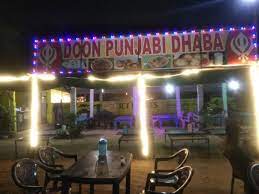
A Dhaba or roadside eatery. Courtesy: Creative commons
“Ghosts are required for the post-industrial society!”
“Why?”
“Like the spectres of art, philosophy and heritage. Great artists continue to survive mortality. In ideas. Via ideas. Clothed in them.”
“Hmm!”
“Skeptical.”
“I am a born skeptical.”
“Well, in that case, I can tell you about the return of a ghost.”
“Return of a ghost! That must be the province of Hollywood!”
“No, not at all!”
“Then?”
“It happened in India. In my own town.”
“Hmm!”
They were sitting in a corner of a popular dhaba called New Delhi Café, off the national highway NH 24. The golden fields of ripe wheat lay stretched before them on this lazy afternoon, other side of the road.
A thin boy served them thick-milk tea in kulhads, along with fried pakodas.
“When will the van arrive?” the female asked.
“In an hour,” the male said.
“What should I do here?”
“Enjoy the scenery,” the male said. “The ambience. Feel of the country.”
“Hmm. OK. Tell me the tale.”
“Which one?”
“Of the return of the ghost…”
“Well, I will tell you about the spectre of Surendra.”
“Who was he?” she asked, watching the heavy traffic.
“I will give you the back story first. Here it goes like this. Surendra was a man who had come to claim in the evening of his life that he represented democracy, nation and the republic.”
“What?!”
“Yes. You heard right.”
“How is it possible, yaar! Preposterous!” she exclaimed, while munching the pakodas.
The male smiled. Sipping the tea, he replied, “Indeed! The people were shocked initially. The cops came and took him away, the well-read man from his village to some place, considering the old man as a threat…”
“Oh! So common!”
“Yes.”
“What happened then?”
“He was not to be seen afterwards. His family vanished from their ancestral home.”
“Sad! Is it not?”
“Yes, it is. Entire family suddenly uprooted. Honest lives disrupted.”
“Go on.”
“Well. After a few months, Surendra’s ghost was seen…”
“Is it?”
“Yes. Seen by some. The ghost quoted Gogol!”
“Gogol!”
“Yes, Gogol.”
“Must be a learned man.”
“He was a good reader and aware of his rights. He wanted to make fellow villagers aware that they, too, were like him – representatives of a democracy and the republic but the majority scorned this idea, while others supported the prophet of a dumb age!”
“Correct!”
“After few sightings, the cops said these were rumours.”
“They might be right.”
“No. They were not.”
“How?”
“Because I met the ghost of Surendra.”
“What?!” Her kulhad slipped down her dainty hand, eyes wide in shock.
He smiled. Lit up his cigar. Drew in the smoke, rolled it in his mouth and then expelled the rich smoke.
The duo, sitting on the cots, watched the highway. Overloaded trucks were moving in a slow line. There was chill in the breeze.
After a long silence, the male resumed, “Here, it goes…the encounter with the spirit on that memorable early evening, few miles down this highway, near the river; an unusual event in a liminal space, experienced by few mortals…”
The man had materialised suddenly and stood beside the man with the camera taking pictures of the quiet countryside, and a shrunken river meandering down, as a thin strip of dull silver, towards the railway bridge in the distance. He stood near the photographer and watched the sun set from the motor bridge, like an old companion. The photographer paid no attention to the stranger who looked a bit pale and odd in appearance. A dog barked somewhere in a field nearby, as the vehicles passed over the long bridge. But the latter was used to such silent visitors—country folks being outgoing and friendly, even chatty. He took shots of a passing train; the rising fires from the crude camp of nomads, near the right bank.
It was a bleak scene.
But sun sets and rivers fascinated him. He often got down from his bike for taking pictures. Preserving some Instagram moments!
“Sometimes even to live is an act of courage.” The stranger said, talking in general.
“That is Seneca!” the photographer exclaimed, now looking closely at this rustic man of indeterminate age and hollow voice.
“Yes, Seneca.”
“How do you know the Stoic?” the photographer asked. “Seneca in this rural area?”
The stranger coughed. A muffled voice came out, “Not every villager is illiterate. You will find fools in educated cities.”
His voice came as hollow, something metallic that echoed on the stale air.
“I did not mean to offend you, sir. Just curious.”
The stranger nodded. “Sharing thoughts with a man who carries his Seneca in the backpack. I, too, loved On the Shortness of Life.”
The photographer was floored. “Great! Nice meeting you, Mr…?”
“Surendra Kumar.” “Hi! I am Daniel.” He offered his hand but Surendra did a Namaste.
They stood there watching the sun plunge down into the waters of a choked river. A song wafted forth from the camp of the gypsies—a rich male voice lamenting the passing of youth and a love unrequited. The dholak, bansuri and dhak could be clearly heard in the open-air mehfil there–fascinating concert! The riverside. Gathering dusk. Cool breeze of early November. Pungent smells of food being cooked on earthen stoves there and a tribe of nomads, taunting the civilization and its materialistic possessions, by its unsettled ways of living on the outskirts of cities for centuries.
“Simple folks, often demonized by the urban imagination.” Surendra remarked in a raspy voice.
Daniel nodded. “You are right! We try to demonize everyone that does not fit into our limited and relative ways of looking at the wider things.”
“Woes of civilization!” Surendra said. “A faulty civilization that outlaws those who are defaulters. The ones that prefer to be non-compliant with its codes.”
Daniel was surprised. “Amazing! Where do you live? Nearby?”
Surendra smiled. The yellow face cracked a bit. “In a village, some fifty miles away from this place.”
“Here, visiting?”
The frail figure croaked, “Often I haunt the highway.” “Oh! Poetic!” Daniel remarked. “How do you travel from your village?”
“Astral paths are many and open for spirits!”
Daniel laughed. “You write poetry?”
“No but I know the provinces travelled by the poetic minds, my friend.”
“Impressed! I am impressed.” Daniel replied.
“Come, let us sit on the bank for some time.” Surendra spoke in his hollow voice.
Must be a terrible smoker, thought Daniel. They went down the bridge and sat on the bench, few feet away from the river. The promenade was deserted at this hour.
Across the turgid waters, a pyre crackled ferociously. Few mourners there, some leaving slowly the burning ghat.
“Death! What a grim reality!” Daniel exclaimed. “Total cessation. Nothing left. Except some bones and dust!”
Surendra seemed not to agree, “There are realms beyond the reach of the yellow fingers of death, my friend!”
“Now you sound a true philosopher, sir! I am enjoying.”
Surendra was silent. Then: “Death is not final destination! Ask Orpheus. Or Lazarus!”
“Then what happens? Where do we go from here?”
“Well…there are spaces where this and that world meet to cohabit.” “Is it so?”
“Yes.” “How do you know for sure?” “Because, my friend, I am a denizen of such realms.”
“Is it? Daniel laughed. “Funny man!” “I speak the truth. There are few takers for truth these days!” “Right. Absolutely right. Nice talking to somebody bright, after such a long time!”
“Certain encounters are destined.” “Oh! Yeah. Absolutely.” “Like Hamlet the King meeting Hamlet, the Prince.” “Oh, my God! You are full of cultural references and profundity.”
Surendra replied, “Friends are chosen by fate. You are one of the chosen.” “How?” “To listen to the message from the other side of reality…”
“And what is that message?” Daniel played along. “All ears!”
“Certain dimensions lie beyond the physical. Once shed the mortal coil, the other dimensions come into the play…” “What are these dimensions?” “When you are dead, yet alive.”
“No. Not possible!”
“Mere transformation of energy. From one form to another. You continue to live beyond the daily prison of your body…” “How can it be?”
“It is like ideas. Ideas continue to operate beyond their originators. Seneca dies yet lives!” “A paradox!” “Yes. The paradox of a civilisation obsessed with the real, the tangible, the objective,” continued Surendra. “As said by the Bard: ‘There are more things in heaven and earth, Horatio/Than are dreamt of in your philosophy.’ Remember the famous lines?”
“Sure! Your high-school Shakespeare! Well, I will say, it is getting curiouser and curiouser!”
“There are things that an eye cannot see. Transcendental things. Truths that reside in the non-physical states. Only artists, mystics and philosophers can comprehend.”
“It is heavy-duty stuff for me.” Daniel chuckled.
“Not at all, Daniel,” the man observed, while strays barked a mile down the embankment, as the shadows thickened. The gypsy singer broke into another throaty song, the snatches heard over the wind:
The hungry skies have
Devoured the full moon.
Go back to the camp early!
The dark harbours dangers
On the way, maiden fair
and the
Dead may visit tonight!
“We tend to live on forever in our words and legacies, dear Daniel. When I hear a Ghalib being recited with a full heart, on a full moon night, in a corner room, the poet comes alive for me. Yes, get resurrected in a shadowy form. Real presence evoked through words or visuals or film! That is the power of the cultural things to summon the dead and make them re-born, for few minutes, for you!”
Daniel nodded, distracted by the song:
Beware, innocent girl!
The ghosts are around
The night is dark.
Do not trust the shadows,
O, pure one!
The dead want to talk to a fair maiden
And steal her gypsy heart!
The music increased in tempo and other singers joined, a few males danced, while some women clapped and also sang—a happy group. Daniel smiled…
“What happened afterwards?” asked the female. They were travelling in the van. The highway was crawling with cars headed towards Delhi. Soft music played on in the interiors smelling of new holster and tobacco. The young driver was humming along.
“The end was equally fascinating!” the male said.
“Tell me…a long journey ahead!” insisted the female.
“The gypsies!”
“Yes. The gypsies there…”
“They are the Original People.”
“What is that?” asked Daniel. “Come, let us see their dance.”
Surendra walked along lightly. “These are the wanderers who could see the other worlds.” “Like?”
“The ghosts, the gods, the realms intangible discussed in arts but now lost.”
“Absolutely!” “These tribes straddle an innocent age and the post-industrial age as a bridge.” “Excellent!” Daniel remarked.
“As certain peoples can still see the elves, these diminishing tribes can see the fairies and spirits–the other universe.”
“Right. I agree.”
As the duo approached the camp on a rising ground, off the dirt road, facing the river, their dogs barked furiously and then became quiet. The dancers kept on dancing before the rude bonfires.
“Daniel, remember, certain ghosts are necessary. The unredeemed souls, ideas. They continue to guide the present. If exorcised and finally forgotten by collective amnesia, then that civilization is doomed to die soon…”
As Daniel entered the outer ring of the camp, an elder beckoned him inside the circle. The gypsies welcomed him as one of their home. He sat down on the cot and watched them sing and dance.
Then he remembered his companion. “Where is my friend?”
The elder said, “There was nobody with you, Babu!”
Daniel just stared around.
No trace of Surendra. A mild mist swirling around…
“So how did you know that he was Surendra?” the female asked.
“Because, next day I came across a news item on an online site about Surendra and his haunting in that area. It was titled: The Ghost of a Democrat Citizen!”
“Ha, ha-ha!” the female laughed. “You must be fictionalising again Daniel.”
“No, darling! I am not a writer.”
“That is precisely the point. A writer can be dismissed for using fiction. However — not those who do not write but produce fantastic tales!”
Daniel smiled but did not reply…
.
Sunil Sharma is an Indian academic and writer with 22 books published—some solo and joint. Edits the online monthly journal Setu. Currently based in MMR (Mumbai Metropolitan Region).
.
PLEASE NOTE: ARTICLES CAN ONLY BE REPRODUCED IN OTHER SITES WITH DUE ACKNOWLEDGEMENT TO BORDERLESS JOURNAL.
PIRATE BLACKTARN FINDS TREASURE ISLAND


Pirate Blacktarn was searching for treasure,
The thought of gold filled him with pleasure.
An old grey pirate had given him a map
Of a route to follow without a mishap,
To a secret island with a secret cove
Where buried deep was a huge treasure trove.

After a long, long sail, land came into view.
“That’s it! Treasure Island! Come on you crew,”
Blacktarn called in excitement as they rowed ashore,
Right, let’s get digging and soon we won’t be poor.”

The crew began to dig and dig and dig
Till the hole they made was very, very big.
They dug all day in the fierce hot sun,
“Phew,” grumbled Mick, “this is no fun.”

Blacktarn watched from the shade of a tree.
“Think of all those riches, all that gold for me.”
The crew were exhausted and wanted a rest.
“A rest,” cried Blacktarn, “Good heavens, you jest!
“You keep digging, there’s something I’ve seen.
Look over there, something shiny and green.”
It’s emeralds I know and maybe rubies too.
Quick, dig faster, hurry up you crew.”

But they only found a bottle of old, green glass.
“Huh,” said the crew, “this is just a farce.”
 “Well keep on digging, this treasure’s buried deep,”
Blacktarn said sternly. “You haven’t time to sleep.”

Then Fay saw a glint, just a hint of gold.
“This is it,” cried Blacktarn, “here’s wealth untold.”
But when they dug deeper, all that they found
Was a bright brass button but nothing else around.

Blacktarn stamped and stomped with rage,
“Dig deeper still, treasure’s the next stage.”
They dug and dug till they were aching and tired
And even the tips of their noses perspired.

“Keep thinking of treasure,” said Blacktarn happily.
“Are you sure it exists?” asked Bosun Mick snappily.

Still they dug and they saw something white
So they dug even deeper and had a big fright.
There lay a skull, sunk in the sand
And lying close by, a skeletal hand.

“That’s it,” said the crew, “we’re not digging any more,
The treasure map’s no good, that’s for sure.”
“Nonsense,” said Blacktarn, “it’s from a very nice chap.
“Exactly a year ago, he gave me this map.”

“Wait a minute.” said Mick, “What’s the date today?”
“It’s April the first,” said Stowaway Fay.
The crew all groaned, then started to laugh,
“April Fool, Captain, you’re a dunce and a half.
There never was any treasure at all.”
But poor, sad Blacktarn started to bawl.

“Never mind Captain, it’s no use crying,
Let’s have a feast, with some fish we’ve caught for frying,”
Said Bosun Mick and Rakesh the Mate.
“Then we’ll start dancing, so make sure you’re not late.”
So deep into the night they danced under the moon
And ate and drank and sang, till the following noon.

“I’ve never really cared much about treasure,”
Said Blacktarn merrily, lazing at leisure.
“Tomorrow we’ll leave, for we’ve the Lemon Seas to travel
And lots of strange adventures still to unravel.”
Note: The ‘Pirate Blacktarn’ poems were written in the early 1990s but were never submitted anywhere or shown to anyone. By lucky chance they were recently rescued from a floppy disc that had lain in the bottom of a box for almost thirty years. There are twelve poems in the series but no indication as to what order they were written in and the author no longer remembers. However, they seem to work well when read in any order. They all feature the same cast of characters, the eponymous pirate and his crew, including a stowaway and an intelligent parrot. The stories told by the poems are set on a fictional body of water named the Lemon Sea. (Dug up by Rhys Hughes from the bottom of an abandoned treasure chest).
Jay Nicholls was born in England and graduated with a degree in English Literature. She has worked in academia for many years in various student support roles, including counselling and careers. She has written poetry most of her life but has rarely submitted it for publication.
.
PLEASE NOTE: ARTICLES CAN ONLY BE REPRODUCED IN OTHER SITES WITH DUE ACKNOWLEDGEMENT TO BORDERLESS JOURNAL
Roy paced up and down on the balcony of his house looking out onto South Mumbai’s leafy, tree-lined Laburnum Road. There were only a few of the iconic yellow flower-bearing trees left that had once flourished on either side of the road and lent their name to this peaceful and picturesque locality. Other trees had outgrown and replaced the laburnums, but together they still provided the street with its shady overhanging canopy; although with the construction of newer and taller buildings, the area had lost some of its quiet charm.
Roy was getting increasingly restless. Normally one could set one’s watch by the punctuality of the postman as he turned the corner into Roy’s street on his mid morning delivery rounds. For some reason, he was unusually late this morning and this added to Roy’s nervous anticipation. It was the day that the results of his final exams were meant to arrive by post. The results would get delivered to his house in the normal course anyway, but it was somehow more exciting to track the postman on his rounds, meet him at the gate and get his report card from the postman’s hands directly, avoiding delays of any sort. Besides it was vacation time and Roy was at home all day.
At last he spotted the postman as he entered the lane opposite his house. He followed his every move from his vantage point on his balcony as the postman entered each house, delivered the mail and exited again before going up to the next house. Roy waited impatiently for the postman to finish his circuit of homes in the lane opposite, before he made his way to his house. But to his utter disappointment, the postman skipped Roy’s house and continued on his way to the next street.
A thousand doubts plagued Roy’s mind. How come his report had not arrived? Had he fared badly in his exams? Had there been a delay in despatching the reports at his school and would the results arrive the following day? A deflated Roy abandoned his post at the balcony.
But the following day he was at his balcony vigil again at the appointed hour. This time, however, he was not disappointed. With mounting excitement he rushed down and met the postman at the gate. The postman knew from experience what Roy’s agitation was all about and he decided to play along with him. Holding the much anticipated envelope aloft he teased,“Not so fast young man! Before I hand you this envelope you must first tell me what you are going to give me if you get good results.”
Roy could barely control his impatience and blurted out, “Whatever you want, sir. What about a box of sweetmeats?”
“I was only joking, son,” the postman replied handing Roy the report card. “But do tell your mother to save some sweets for me at Diwali or Christmas.”
Roy ran up the steps two at a time, and getting into his flat, let out a whoop of joy as he tore open the envelope and scanned his report card. He had stood first in class and bettered his rank by two places from the last exam. He could hardly wait to share the good news with his mother but he would have to wait until the evening before she returned home from work.
At twelve, Roy was a sensitive, well-mannered and studious young boy who excelled at his studies. Tall and lanky, he was not much into sports and outdoor games but had a fascination for books and spent almost all his spare time reading. At a young age he had devoured almost all the classics and was extremely well read. Thoughtful and considerate, he had a protective attitude towards his mother who had been widowed at a young age and left with bringing up a small child entirely on her own. She was devoted to Roy and the two had developed a strong bond built on mutual understanding and caring.
Still bubbling with the excitement of the morning’s news, Roy placed his report card on the dining room table and went into the kitchen to warm up the food his mother had prepared and left for him before leaving for work. After lunching, Roy went up to his room and picked up the unfinished book he had been reading that morning. So absorbed was he in the world of Dickens and the “Tale of Two Cities” that he had lost track of time. With a start he put down his book as he remembered that it was already six in the evening, and he had to go pick up the loaf of bread and sachet of milk that he bought each evening and delivered to Miss Rita.
Miss Rita was an elderly lady who lived by herself in the next door flat to Roy and his mother. She had contracted polio as a child but despite her handicap (she could only move about supported with leg braces and crutches), she had shown great courage and determination in getting herself a Master’s Degree and a teacher’s qualification. She had been a highly successful and popular senior school teacher of English and History over a career spanning thirty years. Nearing retirement, she had been struck by the post-polio syndrome, a condition that affects about 30% of polio survivors years after recovery from an initial attack of the poliomyelitis virus. For Miss Rita, it had meant renewed and progressive muscle weakness and fatigue, making even movement around the house limited and extremely painful.
Life had forcibly slowed down for her and she now spent all her time indoors. But she was not one to wallow in self pity. Being a deeply devout woman and also an extremely practical one, she found strength in prayer but also in fruitful activity. She was good at knitting and crochet and made little baby items that she donated to the Church mission near her house to be sold for local charities. She was also fond of baking and turned out delicious cakes and biscuits which she made and supplied on order to the households in the neighbourhood. Her Christmas hampers too were well known with their assortment of home-made goodies – Christmas cake, chocolate fudge, marshmallows and marzipan.
Roy and his mother had been very supportive. Roy’s mother would often send up food items, especially on weekends when she had the possibility of spending more time in the kitchen. Roy often ran errands for Miss Rita and got her a loaf of bread and a sachet of milk every evening when he had finished with his homework. Often he would stay back and spend some time with Miss Rita telling her about his day at school and discussing with her the latest book that he had read. She in turn would run a critical eye over his work assignments, suggest books for him to read and having discovered that he had shown a curiosity about Shakespeare, would sometimes read to him extracts from some of the more famous plays. Over time, a close rapport had been developed between the two. Roy found in Miss Rita a valuable mentor and guide, and he provided her with the much needed comfort and solace in her lonely old age. Being kind and respectful to elders came naturally to him, and Roy probably did not realise how much his daily evening visits meant to Miss Rita.
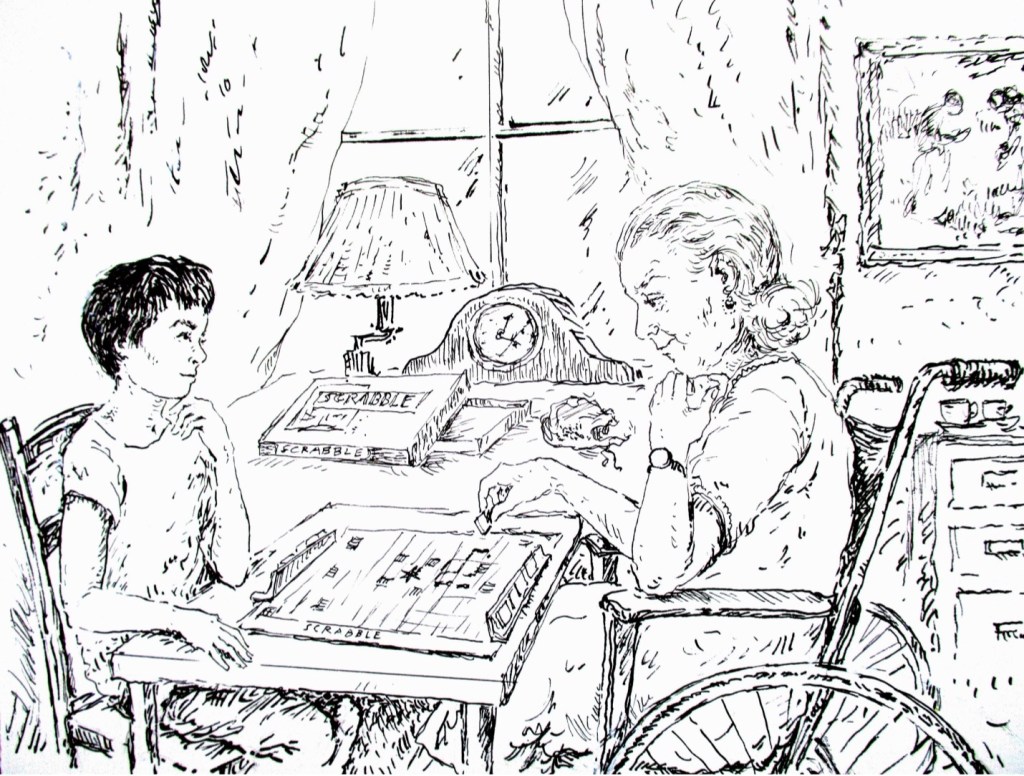
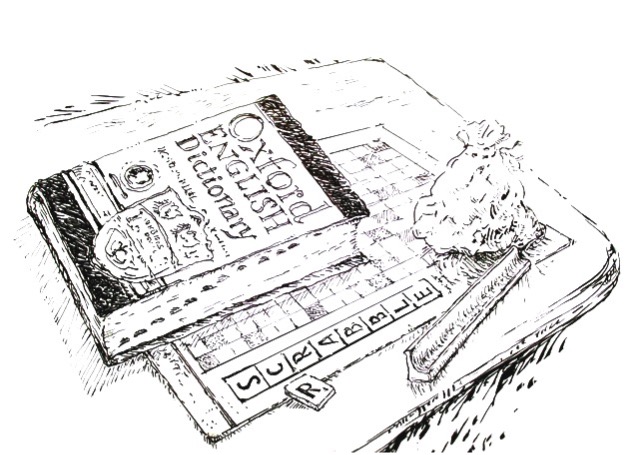
The activity that brought the most pleasure to them both was a game of Scrabble. Miss Rita made it a point to never “let” Roy win, and she was elated when on occasion Roy, unaided and entirely on his own, achieved a higher score and won the game. There were two ground rules that Miss Rita insisted on. She always encouraged Roy to make use of a dictionary to look up the meaning of a new word. (It was largely due to her that Roy had, for his age, developed a vast and varied vocabulary.) And each time before winding up the game Miss Rita would remind Roy, “Don’t forget to count the tiles and make sure they are a 100 before you put them back in the bag. It’s so easy to lose even one tile and spoil your game.”
Illustration by Danesh Bharucha
The Scrabble games became almost a routine for both Roy and Miss Rita and the evening sessions sometimes extended to weekend afternoons as well.
Fresh from the excitement of his excellent exam results, along with the bread and milk that evening, Roy now carried his report card to show Miss Rita.
“Congratulations Roy. You have done so well in all your subjects and topped your class. I am so proud of you. It’s time we had a little celebration,” Miss Rita beamed as she manoeuvered her wheelchair to a nearby sideboard and reached for a bar of chocolate.
“Thank you Miss Rita,” replied Roy blushing. “Could we please have a game of Scrabble today?”
“Of course, Roy. Go fetch the board and the bag of tiles.”
Roy eagerly set up the board and the game got underway. In the last round Miss Rita was leading with thirty points and it was now Roy’s turn with the last seven letters on the rack staring him in the face. With the utmost concentration Roy arranged and re-arranged the letters trying to get a word that made sense. After several attempts he arrived at the word “RAIMENT” which looked strangely familiar but he wasn’t too sure. He went up to the bookshelf and brought down the familiar “Oxford English Dictionary.” He let out a cry of triumph as he read out aloud: “Noun, old use: Clothing, Garments.” He had scored a BINGO.
He had just finished adding up the scores when he heard a light tap at the front door. “That must be Mummy.”
Engrossed in their game, they had both not realised that it was 8.30 pm. Roy’s mother had returned from work and was now reminding Roy that it was time for dinner. Roy hurriedly put the Scrabble tiles back in the bag and stored away the board and the dictionary in their usual place. He excused himself, said goodbye to Ms. Rita and left to join his mother at dinner.
The next time they played a game of Scrabble, as Roy was re-checking the tiles he found that there were only 99 tiles. One tile was missing. He looked all around – on the table on which the board had been placed, on the two chairs that they both occupied whilst playing and all over the
floor of Miss Rita’s sitting room. The tile was nowhere to be found. There was nothing to be done. They just resigned themselves to having lost the tile and continued playing their Scrabble games with one missing tile.
And so the weeks passed into months and the months to years. Having entered the senior classes the pressure of school work meant that the Scrabble games became less frequent until in his last year of school, having to prepare for his college entrance exams, the Scrabble games were dropped altogether. Although Roy continued to visit Miss Rita regularly as before with his daily bread and milk delivery, the time spent together became perforce much shorter. At times it was for Roy a quick dash in and dash out of Miss Rita’s flat.
Roy secured top scores in his college entrance exams and won a scholarship for an undergraduate programme at a foreign university. He bid farewell to his tearful mother and called on Miss Rita to say goodbye. Although she was going to miss him, she was overjoyed at the tremendous opportunity for higher studies abroad that had come his way and she bid him goodbye with many blessings and good wishes for his success. Roy promised to keep in touch and to write her letters whilst he was away.
Undergraduate life, however, kept him busy and he was unable to keep to his promise. After the initial letter or two the correspondence to Miss Rita stopped completely. She was disappointed but she never complained and kept herself abreast of Roy’s welfare by checking regularly with Roy’s mother, her next door neighbour. She was happy that at least he had kept up a more or less regular correspondence with his mother.
Roy did well at college and the wider exposure increased his self confidence and opened up for him a whole new avenue of friendships and experiences. After a gap of three years he was preparing for his first trip back home. He knew exactly what to buy for his mother as she had sent him a list almost six months earlier. He was still wondering what gift he could get Miss Rita when he received a letter from his mother giving him the sad news of Miss Rita’s passing away the previous month. She had had a fall and broken her hip. With his mother’s help she had been moved to a hospital and the doctors had decided to perform a hip surgery as soon as she was a bit stronger. But she had not recovered from the shock of the fall. Her health had steadily deteriorated and barely two days after being admitted to the hospital, she had passed away peacefully in her sleep.
Roy was deeply shocked and devastated by the sad news as he packed his bags for his trip back home. He arrived home with a heavy heart and felt little joy at his homecoming. A week after his arrival his mother took him aside and gave him a box which she said Miss Rita had left with her asking her to give it to Roy whenever he came back home. It was almost as if she had had a premonition that she herself would not be there to give it to him personally. With tears in his eyes Roy opened the box and a flood of memories engulfed him. Inside the box was a card of beautiful handmade paper with the following words penned in flawless verse written in Miss Rita’s flowing hand:
“My dear Roy,
I’ve tried to find the right phrase
To mirror my mind for you
Without distortion. It’s difficult.
There’s depth and sincerity to reckon with,
And the habit of elected silence
About things that tug at heartstrings.

I won’t wish you success because
It will be yours, your due and best dessert
For talents you are blest with
And have learnt how to employ.
Prosperity should not elude you --
Your industry points that way.
Through childhood’s span of years
You’ve gained in friends and their affection.
You are loyal yourself,
And you must make your friendships last,
Giving as much happiness as,
And more than you receive.

There is nothing I could do to add to
The lustre of your intellect
Or the graces of your character.
But I would like to ask that
You walk always the way
That follows the righteous path.

Affectionately, Rita”
Along with the card was the Scrabble board and cloth bag containing the Scrabble tiles. By the side was the well-worn “Oxford English Dictionary.” A small bump appeared between its pages, like a bookmark inserted to earmark a page. With trembling fingers Roy opened the dictionary. There, sitting face up was the missing Scrabble tile — the letter “R” in bold black lettering on a smooth ivory background.
Illutration by Danesh Bharucha
.
Saeed Ibrahim is the author of “Twin Tales from Kutcch,” a family saga set in Colonial India. Saeed was educated at St. Mary’s High School and St. Xavier’s College in Mumbai, and later, at the University of the Sorbonne in Paris. His short stories and book reviews have earlier been published in the Bengaluru Review.
.
PLEASE NOTE: ARTICLES CAN ONLY BE REPRODUCED IN OTHER SITES WITH DUE ACKNOWLEDGEMENT TO BORDERLESS JOURNAL
RIMSKY’S THE LIMIT

Rimsky was a business cat
but he had no suit
and had no hat. Nonetheless
he knew what he was about
when he told his bold
colleagues how to act
without fear in the
big wide commercial sphere.

They ran a factory
those industrial felines
and dominance was their motivation.
No other kitties throughout the nation
were quite as ruthless
or half as lethal
despite their purrs
as Rimsky’s gang of profiteers.

Hostile takeovers and mergers
increased their assets yearly
and Rimsky grew less surly
and licked his fangs in sheer delight
as every deal he struck went right
for his furry people
all of whom were other cats
who loved to win.

By charging less than his rivals
he undercut them drastically
and forced them into bankruptcy
until his firm was the only one
among the few left in credit.
“Rimsky is a bandit. To rack and ruin
he has driven us!” they all said it
and it was perfectly true.

Dog biscuits was the product
that Rimsky’s empire was based on
and when he had a monopoly
he changed the ingredients
to summarise his power.
A few drops of poison in the flour
and the greatest dream
of every feline was realised.

The dogs they died one by one
across the land. Such fun for Rimsky
and his friends, that merry band,
to witness the harrowing ends
of mongrels and pedigrees alike.
A joyous and uplifting sight
to crown their delight as they
walked around the dogless towns.

Dog and bird who hear these words
take care to guard your skin.
Beware of fat sinful cats
devoted to the profit margin!
The Cat that Got the Cream
Tufty was the cat
that got the cream but he went
very far to get it.
Out the door and down the street
on his little furry feet
following the North Star
in a sort of waking dream.
.
Who had sent this gentle puss
on such an arduous errand?
Naught other than
his own desire to see the world
before he expired
compelled him through the night.
For sure he must get
the cream before it curdled.
.
He made no fuss
but simply leapt every hurdle
on his lonesome path.
Over walls and hedges he did go
until he reached his
destination, which was the local
train station, and there
he waited for the milk train
to arrive at long last.
.
Shaken and churned
by the motion of the locomotive
the milk should be
the finest cream he might hope to see
or sniff and taste
in summer, winter or any season.
This at least was Tufty’s
reasoning… He wasn’t wrong.
BIAS TO KITTENS

I wear a poem as a hat
one of yours in fact.
I stole it from a chest of drawers
while you were distracted
by the claws on the shadow of
the paws of a cat.

That cat was me and still
I am but now I have a
sonnet with a brim. It was
written with a quill and homemade
ink. You are an old fashioned
damsel, I think.

If you were a kitten and fast asleep
upon my lap, I doubt I
would mind your blatant theft
of all my hats and maps.

Even the plundering of my
bulging purse would be
forgiven, let alone the snatching
of such a minor verse.
But you are not.

My, it is hot under this hat!
Rhys Hughes has lived in many countries. He graduated as an engineer but currently works as a tutor of mathematics. Since his first book was published in 1995 he has had fifty other books published and his work has been translated into ten languages.
.
PLEASE NOTE: ARTICLES CAN ONLY BE REPRODUCED IN OTHER SITES WITH DUE ACKNOWLEDGEMENT TO BORDERLESS JOURNAL
“fragile”

sunflower meadow
with a face like death,
sing me a song that
takes me away,
carry me to a place of
unbroken mirrors and
dancing moonbeams
and simple life.
there are enough
snakes masquerading
in daylight to snuff out
the sparrows we’ve become.
Tohm Bakelas is a social worker in a psychiatric hospital. He was born in New Jersey and resides there. His poems have appeared in numerous journals, zines, and online publications. He has published 12 chapbooks. He runs Between Shadows Press.
.
PLEASE NOTE: ARTICLES CAN ONLY BE REPRODUCED IN OTHER SITES WITH DUE ACKNOWLEDGEMENT TO BORDERLESS JOURNAL
A new book launched this month enables unimpeded international travel with open borders. Readers can easily fly to destinations around the globe, as Keith Lyons finds out.
There are no pre-screening forms to fill out, no health tests required, and no quarantines to endure. You don’t even need to mask up. That’s right, you could instantly be transported to another world, another country, another place. That’s the unexpected bonus for borderless readers in the The Whole Wide World (Sweetycat Press), a unique crime fiction anthology co-authored by different 80 writers, with each chapter set in a new location.
Locations include Chennai, New Delhi, Bangalore, Kochin, and Kolkata, as well as the Maldives, Thailand, Sri Lanka and Japan. Through the wonderful medium of the printed word, access to exotic places can only happen virtually — through the imagination — rather than in real life.
The newly released detective book was written and produced during a time when most of the world’s 7.9 billion population have been under Covid-19 pandemic lockdowns, stay-at-home orders or cross-border travel restrictions. However, armchair travelers and avid sleuths can follow the twists and turns of a transnational manhunt crisscrossing the globe.
The plot centres around efforts to solve one of the greatest heists ever pulled off, with Detective Curly Knucklewad and his assistant Wanda Wowzer pursuing leads and clues in search of the thief who stole a secret recipe.
Authors selected for the anthology include award-winning detective writers, lawyers, TV news correspondents, and college English professors. There is even a Vietnam War Top Secret counter-insurgency writer and press agency photographer.
Sweetycat Press publisher and editor Steve Carr wanted the experimental project to highlight not just the 80 authors selected for inclusion in the book, but also diverse settings throughout the planet, ranging from Kolkata’s Chinatown to ‘Indian Switzerland’, Ooty. “The book is really a global initiative, with contributing authors from 18 countries around the world, including the United States, Australia, India, and Canada, as well as the Maldives, Nigeria, Israel, and Mexico. As a result, The Whole Wide World takes readers on a journey to nearly two dozen nations, as well as under-water, back to the 1970s, and to the final frontier: outer space.”
Mr Carr says although contributors were given a short brief with just two main characters and the master plot, and the book was compiled in the order the submissions were received, suspense is maintained throughout the novel. “Each chapter has a unique location, with every author bringing their own fresh perspective, voice and tone to the manhunt. The parts range from comic to chilling. Even though the locations jump around from one episode to the next, incredibly each instalment builds anticipation and follows on from the previous part, with the storyline remaining consistent.”
For some contributors, such as Myanmar’s San Lin Tun, English is not their first language: “With around two billion people speaking or reading English, I am pleased to have my work and my location represented in this global project. Many of the original Sherlock Holmes stories were adapted and translated into the Burmese language in the 1930s, so in placing my episode of the crime caper in Myanmar, I am following in the footsteps of that tradition. I have always wanted to write Yangon Noir, and this anthology gives me a chance to showcase it.”
The short action-packed episodes of ‘The Whole Wide World’ will have broad appeal, says Thailand-based travel writer Christopher Winnan, author of Around the World in Eighty Documentaries.”This new book about an international manhunt is a great idea, and in this post-pandemic world, it shows the value of co-operation and collaboration beyond borders, as well as the value of armchair travel in exploring the world in a more sustainable, zero-carbon way. The Whole Wide World joins the list of ‘must-reads’ for 2021 for any stay-at-home sleuth-hound, amateur private investigator or wannabe gumshoe. Ultimately The Whole Wide World is about re-discovering the joy of international travel and place, something almost all of us are missing right now.”
The Whole Wide World publisher Virginia-based Sweetycat Press (www.Sweetycatpress.com) was founded in 2020 to support and encourage new writers, and each year produces a Who’s Who of Emerging Writers.
With some of the biggest names in crime fiction failing to make the cut and new debut authors among those shortlisted for the Scottish McIlvanny Prize this week, Mr Carr believes readers might discover some exciting new talent in the pages of The Whole Wide World, even if they don’t solve the case with Detective Curly Knucklewad. “Readers are fascinated by the characters, the tension of their relationships, and the unresolved mystery, as well as the broader themes of intellectual property theft, the quest for answers, and ultimately, human nature.”
.
Keith Lyons (keithlyons.net) is an award-winning writer, author and creative writing mentor, who gave up learning to play bagpipes in a Scottish pipe band to focus on after-dark tabs of dark chocolate, early morning slow-lane swimming, and the perfect cup of masala chai tea. Find him@KeithLyonsNZor blogging at Wandering in the World (http://wanderingintheworld.com).
.
PLEASE NOTE: ARTICLES CAN ONLY BE REPRODUCED IN OTHER SITES WITH DUE ACKNOWLEDGEMENT TO BORDERLESS JOURNAL
Human cage

Wall, fence, border, checkpoint
Shuts us all up
In a human cage
Of sorrow
And rage

One by one, old and juvenile
Men and women herded together in a file
Getting nearer to the end of the line
He looks around; his stiff back resigns

—Pass, next, but you stay.
—Where are you going, you don’t say
Wrong move, wrong tone arouses suspicion
Restrained in wire cages, sneered at with revulsion

Pacing to and fro
Pacing to and fro
Identity checks; finally passed through
Across the border, he bought
mince meat, milk and sourdough

It was dusk when he got back
Same border, same soldier eyed him; he eyed him back
—Open your bags, officer barked
He pounded his fists, boiling to fight back

Five machine guns cocked in succession
Nervous soldiers ready to shoot with military precision
He pled, —I just want to go home, please
My family waits on the other side of the fence

Walls, fences, borders, checkpoints
Shut us all up
In a human cage
Of sorrow
And rage
Gigi Baldovino Gosnell has degrees in Psychology and Education. She lectures in Psychology, worked in various NGOs, and the public service in the fields of women empowerment, land reform, social development and local government.
PLEASE NOTE: ARTICLES CAN ONLY BE REPRODUCED IN OTHER SITES WITH DUE ACKNOWLEDGEMENT TO BORDERLESS JOURNAL
When J.T. Morgan stood on the deck surrounding the circular turret room on top of the Jekyll club hotel to smoke a cigar as the sun rose, he didn’t notice the shrimp boat passing through the East River into Jekyll Sound before it worked the Atlantic coastline, and he didn’t see young Elliot Gould leaving the family cottage to pick Cherokee roses for his grandmother. What Morgan did see in his mind’s eye over and over was his daughter Julia on the ground below, blood flowing from her mouth onto the grass and her white summer dress stained.
Whether she jumped because of her father’s refusal to allow her to marry Elliot or whether she slipped on the iron railing was never known, but for Morgan and other parents they’d known who lost a child, it’s a blow like none other, and after construction of his own cottage was completed, he never stayed in the turret again. He’d told his wife Ann he awoke from a dream where he’d seen Julia looking down, tracing the shell wallpaper in the turret with her pointer finger, circling the turret, and disappearing through the door. Then, he’d seen her circling the Jekyll Club grounds and then out toward the dirt road that circled the island, repetitive circular movements like the design of a conch shell and the universe.
Morgan’s overwhelming pain led him to befriend the teen Elliot and even offer him a position in the banking industry, even though he knew the senior Gould wanted him to stick with the railroad industry. Morgan knew that industry would fade over time, that the Wrights were onto something with their attempted flights, and Morgan had opted to invest in technology rather than the railroad. Elliot politely declined but invited Morgan to accompany him on an island hunting trip the next morning where they’d check Elliot’s racoon traps near Driftwood Beach.
As they stepped around the palmetto and sago palms and fanned the Spanish moss draping oaks from their faces, Elliot spotted his trap highlighted by the morning light. “Look,” he whispered to Morgan. “I’ve got one.”
“Excellent, chap.”
“Stay back. I don’t want to ruin his pelt with a shot.”
Elliot crept forward, took the butt of his rifle and raised it high, and swiftly brought it down onto the head, killing the racoon instantly, but when he propped the butt of the gun on his boot to pull the dead racoon from the trap, the gun discharged right into his abdomen, and the young Elliot simply said, “Oh, no.”
Morgan left the gun and racoon and scooped Elliot and moved through the island brush as quickly as he could. He scraped his face, he sweated profusely, and his heart pounded and throbbed in his throat. He reached the Gould cottage and repeatedly kicked the door with his boot.
“Dear God,” Mrs. Gould shrieked from behind her servant when he opened the door. She called to her other servant, “Help me.” They placed young Elliot on the daybed in the drawing room, tried to stop the gushing blood, and tried to get a call out on the new phone line, but it didn’t work as well as it had when Bell had made the first transatlantic call from Jekyll. They sent for the mainland doctor. The servant stood by the grandfather clock’s pendulum in the foyer, ready to stop it the moment Elliot passed, but Elliot’s youth and stamina won. Morgan told the servant, “Get away from that clock. He’s not going anywhere.”
“At least he’s still with us,” he whispered to himself on the way back to tell his wife about the events. Ann stood on the balcony of the turret wringing her hands after one of the Jekyll Club’s employees shared there had been a hunting accident. She couldn’t lose him, too, but she had no need for fear. She was reassured when Morgan was back, and they later heard the doctor had removed the bullet, sewed Elliot’s wound, and gave him medicine to help heal. That night, Morgan dreamed of Julia circling the turret, the club grounds, and the island until she circled up into the night sky toward a distant star.
Niles Reddick is the author of a novel, two collections, and a novella. His work has been featured in nineteen anthologies, across twenty-one countries, and in over four hundred publications including The Saturday Evening Post, PIF, BlazeVox, New Reader Magazine, Citron Review, and The Boston Literary Magazine. Website: http://nilesreddick.com/
.
PLEASE NOTE: ARTICLES CAN ONLY BE REPRODUCED IN OTHER SITES WITH DUE ACKNOWLEDGEMENT TO BORDERLESS JOURNAL









 Borderless