Categories
Essay

A Place to Remember

By Randriamamonjisoa Sylvie Valencia

Odaiba Beach. From Public Domain

It all began in the cold, uncertain days of early January 2025. I was in Tokyo, at Odaiba Beach with one of my closest friends, the icy water soaking our feet. It was bitterly cold, the wind merciless, but our love for the ocean pulled us in. We agreed to dip our feet into the sea, just for a few fleeting seconds. The water stung like needles, yet nothing stopped us from laughing, from enjoying the moment, from playing in the waves like children.

New Year had passed only a few days earlier. We were exhausted from celebrations, worn down by sleepless nights, just as we had been throughout last December. Still, that day felt different. It was the first time my best friend and I had reunited together in the Land of the Rising Sun. Back in Madagascar ten years earlier, we used to dream endlessly about Japan, whispering plans and wishes into the air as if they might someday carry us across the sea. And now here we were together in the country we once imagined only from afar.

I call her ‘Tsu Nami’, not her real name but the one she chose for herself. Her true name means waves in English, yet everyone calls her by her alias. We had known each other for years, but I never asked why she chose that name. Sometimes she said it held both serenity and ruin, as if calm and chaos lived inside her simultaneously. I never truly understood it then.

We spoke for hours that day, about life in Japan, the challenges, the bright moments, the ups and downs of living far from home. We were alike in many ways: two souls far from family and homeland yet living in a country we dearly loved. Life alone in a foreign place is thrilling, but also painfully heavy. She confessed the struggles that had pulled her toward depression, and I encouraged her as much as I could, reminding her of her strength, telling her that not everything deserved her energy.

We filmed silly videos, screamed with laughter, and let the waves numb our feet. Deep in the heart of winter, frozen to the bone, she suddenly asked if I knew how to swim. I said maybe, maybe yes, maybe no. I used to swim as a child, but I no longer knew if I still could. I told her I dreamed of surfing someday. She smiled and said it would be incredible if we could surf together in summer. We come from a warm island paradise where surfing is possible, yet neither of us had ever tried it.

Time slipped through my fingers like sand, and I only realised when spring whispered its gentle arrival. Somewhere along the way, I crossed paths with someone extraordinary, a girl from India, whom I will call A. We would see each other occasionally around the campus, studying in the same university, though in different fields. We first met in the early autumn, when the air was neither hot nor cold during a cultural exchange event.

A. seemed cold and distant; when I politely asked for her SNS contact, she answered in a sharp tone. By nature, I am sociable yet quietly reserved, someone who loves meeting new people and treasures cultural exchange, but my introverted side pulls me back, holding me at a distance like an invisible thread. However, A. is the opposite of me. She is entirely extroverted. And yet, something about her fascinated me, an aura of maturity, strength, reliability. Slowly our conversations grew, and the more time I spent with her, the more I cherished her presence. I never would have imagined she would become one of my dearest friends.

A. was warm, kind, and endlessly sociable, the type of person who knows almost everyone in the neighborhood. She understood my introversion, but she never stopped inviting me into her world. She took me along to events, introduced me to people, pushed me gently outside my comfort zone. She wanted me to live, not merely breathe.

Soon winter was coming to an end, and our friends organised a farewell party for A, who had completed her studies and was returning to India. The atmosphere was warm and lively, with music, laughter, and bittersweet goodbyes. It was there that I met J, a friendly and curious soul from Sri Lanka. He became the first person who ever asked so many thoughtful questions about my country, so many that sometimes I did not know how to answer. As we talked, I learned he loved water sports, especially surfing. And when he whispered the word surf, something inside me ignited. I felt the warmth of summer already, I imagined myself riding waves for the first time.

That day, I told Tsu Nami to visit me during summer break, that I had found someone who could teach us how to surf. She was thrilled. Together, we counted the days impatiently. And then July arrived, our university classes ended, and at last we were free. We went to the beach with J.

J. had lived in Japan for years and knew every hidden corner of our prefecture from quiet paths to secret places untouched by crowds. We asked him where the most beautiful beach was. He laughed and said there was not a perfect one here, not the kind you see in postcards, but there were places where the waves were strong and alive, perfect for learning to surf. So, we followed him, nervous and excited, ready to feel the ocean breathe through us.

It was our first surfing lesson, both for me and for Tsu Nami. The evening sun melted the sky into gold, the air warm but soft. Because of a physical issue, I could not surf that day, so Tsu Nami began first. She could not even swim, yet she stepped forward with fearless determination. J. taught her patiently, movement by movement. And in a surprisingly short time, she stood on the board, shaky, unsteady, but still, standing. Minutes later, she balanced perfectly, rising like a wave itself. I recorded it all, my heart glowing with pride. Even though I could not surf that day, I found joy at the shoreline, soaking my feet, screaming with laughter, recording moments I wanted to keep forever.

A few weeks later, I returned with J, but this time without Tsu Nami. She had returned to Madagascar, and her absence echoed through the sound of the waves. I missed her deeply. Yet something inside me trembled with excitement, my turn had finally come.

J. guided me gently, step by step. After a few minutes, I managed to stand on the board, unstable, but still balancing. I fell countless times, swallowed by the waves, but each fall made me rise stronger. The ocean roared like encouragement, whispering: ‘Again. Don’t stop’. I felt alive, truly alive.

A few days later, we went back to the beach again. The sky stretched above us, and the sea sparkled under the sun. Sometimes the waves were too calm to surf, so we simply floated on our boards, talking and laughing.

J. reminded me of a kind uncle, joyful, supportive, and gentle. He told stories about his country that made me laugh until my stomach hurt. J even told me, laughing, that some Japanese people go surfing eveninwinter, when the water is freezing and the wind feels like knives. I stared at him in disbelief, wondering how anyone could survive that kind of cold. He just smiled and said, ‘That’s the real surfing spirit!’ I could not help but burst into laughter, imagining myself turning into an ice statue somewhere in the middle of the ocean.

The ocean has long felt like the place where I truly belong. Every vacation in my homeland, I choose destinations where the beach is close enough to hear the waves. The sea clears my head, softens the storms inside me, and gently repairs the pieces of my heart. Standing at the shoreline, I can breathe again. It is more than just water and waves; it is where I find restoration.

Whenever I walk along the coast or step onto a surfboard, something inside me wakes up, the weight in my chest lifts, and my thoughts begin to move freely. Ideas return, like the tide rolling in, and I remember why I want to write, create, and keep moving forward. There were days when depression felt like weather that would never clear, but the sea gave me solace. It held me together when I thought I was coming apart. Its steady murmur softened the noise in my head, and each wave seemed to lift a little of the heaviness I could not carry by myself.

I cherished every moment of that summer, every surfing lesson, every fall, every laugh. That summer became another precious memory in the Land of the Rising Sun. The beach gave me peace, and a place where my soul felt at home. Now December is here, winter tightens its grip, and the warmth of that summer feels like a distant echo. But the ocean remains, waiting. The beach will always be a place to remember.

.

Randriamamonjisoa Sylvie Valencia is from Madagascar and is currently studying in Japan as a trainee student. She enjoys reading, writing, listening to music, and traveling to explore new cultures.

.

PLEASE NOTE: ARTICLES CAN ONLY BE REPRODUCED IN OTHER SITES WITH DUE ACKNOWLEDGEMENT TO BORDERLESS JOURNAL

Click here to access the Borderless anthology, Monalisa No Longer Smiles

Click here to access Monalisa No Longer Smiles on Kindle Amazon International
Categories
Poetry

Poetry by Ryan Quinn Flanagan

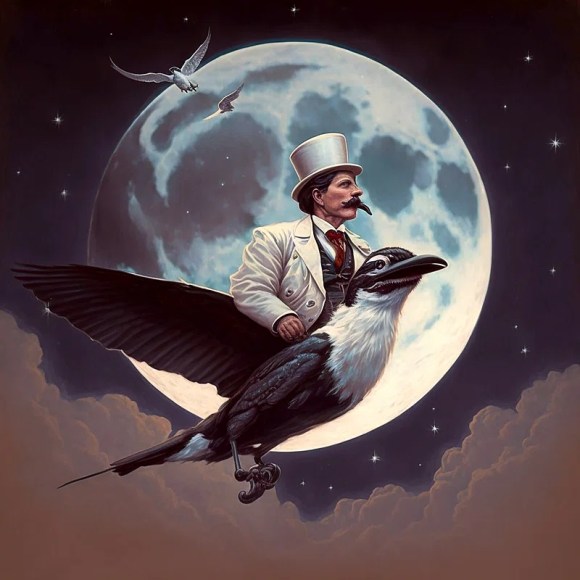
Nikolai Tesla (1856-1943), also referred to as ‘Lightning Boy’, discovered the Tesla coil. From Public Domain
December 12th, 2025 (Poem Written at the Quattro Hotel)

Tesla was right. We are receivers of external stimuli. The internal as well,
but Our Boy Lightning was much more deliberate about the external.
As though he were always searching for something. That’s what
some pop psychologist would say. You know the ones:
red marker for brains, getting to nirvana on a bus pass.
Those people you would rather not run into waiting for an elevator.
It is in the silences that we find ourselves, I truly believe that.
Like a child of exquisite reflections. Our time away is a necessary distance.
The well-whispered peace of burrowing things, I know this well.
It is hard to write about kisses.
You feel them long before the words ever arrive.
And the conundrum crowds are back before too long. In truth, they never leave.
And the yellow wet floor pylon is out again, making friends.
Squeaky housekeeping carts loaded down with an army of disinfectants.
Conference rooms in use like a meeting of the mindless…
Those colours of twin Oscar fish in the tank by the pool.
I have always had the eye of a painter.
Happiness is watching light dance off the water forever.

Ryan Quinn Flanagan is a Canadian-born author residing in Elliot Lake, Ontario, Canada with his wife and many bears that rifle through his garbage.  His work can be found both in print and online in such places as: Evergreen Review, The New York Quarterly, Borderless Journal, GloMag, Red Fez, and Lothlorien Poetry Journal

PLEASE NOTE: ARTICLES CAN ONLY BE REPRODUCED IN OTHER SITES WITH DUE ACKNOWLEDGEMENT TO BORDERLESS JOURNAL

Click here to access the Borderless anthology, Monalisa No Longer Smiles

Click here to access Monalisa No Longer Smiles on Kindle Amazon International

Categories
Opinion

All So Messi!

By Farouk Gulsara

Lionel Messi in Kolkata. From Public Domain

With the amount of information I am bombarded with daily, I often wonder, as one usually does, how all these changes will change society. Are we all going to be empowered, aware, and demanding what is due to us? Will our minds be so open that we can accept that there is more than one way to skin a cat? On the contrary, will we become more aware of the many ways we can be taken for a ride, and so paranoid that we cannot even breathe a breath of fresh air? What if it is contaminated with toxic effluents?

Three recent video clips steered my mind towards this end.

In the first instance, a group of spectators in a stadium in Kolkata went amok. They were seen tearing fences and wrecking stadium chairs and equipment. They had come to see their favourite world-famous footballer, Lionel Messi, interact with fans. Perhaps the organisers had noble intentions that by having these types of exhibitions, more youngsters in India would take up the sport. 

Unfortunately, the events of that day were quite different. It became a façade, with Messi surrounded by multiple VIPs and their entourages, all eager to take selfies from every angle. 

The crowd was furious that the star was interacting only with VIPs, their children, politicians, and their kin. Messi was seen being passed around like a soccer ball to capture that perfect picture that would one day adorn their study. The ordinary spectators were left drooling, unable to get close enough to see Messi’s scoring actions. Messi was then seen joking around with the exclusive group of kids, kicking a few balls before departing. 

The spectators paid good money not to see their hero paraded as a selfie model. They came expecting some action. A show promised to last two hours, but it ended after just half-an-hour when politicians and officials hijacked the event. One trigger, and chaos erupted.

What happened? Were the people in the stadium offended because they felt duped after paying a lot of money to catch glimpses of the hero posing with others and their children, not with them? They believed his appearance was too brief to matter. They thought the wealthy had used the ticket sales for their own pleasures. 

Has Messi’s overexposure in the media led ordinary people to claim ownership of Messi? They believe they have a legitimate right to him. Watching others possess their hero while he is kept outside was too much for them to bear. Meanwhile, they overlook that their own football hero, Sunil Chhetri, reportedly the world’s third-highest goal scorer after Ronaldo and Messi, is ignored. Some Indians do not even know who Chhetri is.

Another reel that reached me showed stranded Indigo passengers having a field day berating the frontliners verbally as thousands of flights were cancelled because the airline could not comply with the new aviation regulations. The reel commentator scolded the passengers for their unruly behaviour. People of a certain stature, well-travelled and well-informed, should not be behaving as they did—loud, abusive, threatening, and insulting the ground staff. The recipients were merely lowly-paid messengers who had no control over operations, yet they bore the brunt of every customer’s insult.

The message further criticises the stranded passengers for losing their composure. They should have behaved with more dignity. In their view, flying is a privilege enjoyed by the educated; hence the need to act ‘cultured’ rather than resort to theatrics. The demonstration exemplified the deep-rooted middle-class mentality that seemed to prevail amongst the nouveau riche.

It is too simplistic to assume this. The rot runs deeper. On one hand, there is a feeling that passengers are being taken for fools. Airlines have recently been cutting corners due to the sharp increase in air travel. With so many new destinations, more flights, and affordability, the airline industry has never been more profitable. Making hay while the sun shines is the airlines’ motto. By squeezing pilots, crew members, and ground staff, the owners have had a field day. Recognising this, those in power tightened regulations to ensure air safety. Sufficient time was given to industry players to make amends. Indigo, holding the lion’s share of India’s air travel market, believed it was above the law. They procrastinated defiantly. That, in short, led to this fiasco.

So, were the passengers justified in their behaviour? Some were attending job interviews, some were about to get married, while others were taking part in equally important, life-changing events. All of it was for nothing because profiteers turned into vultures. There must surely be some etiquette in the business. They should have a minimum level of responsibility to follow the law and ensure safety. Instead, they failed. They killed the golden goose. 

The failure of public relations to provide practical solutions, leaving customers in limbo about how events would unfold, is a recipe for disaster. And it happened.

In Malaysia, nearly every time after a fatal motor vehicle accident, the public is informed that the driver involved in causing death was driving without a valid driving licence, road tax, or had 30 or 40 unpaid summonses. Each time a suspect sustains fatal wounds during car chases, interrogations, or while in custody, the Malaysian public raises concerns. In defence, the police often mention possession of machetes and criminal records related to the deceased, as if their demise is justified and question why the public should mourn a hardened criminal. 

This time, it was different. Police allegedly engaged in a highway car chase and shot three suspects. They soon announced their list of criminal records and provided a summary of the weapons found and the sequence of events. What the police did not know was that the spouse of one of the deceased had recorded her conversation with her partner, and the phone recording continued until after the trigger was pulled. 

A day after the incident, the recording surfaced. The gunshot did not resemble a typical shootout but rather an execution. The postmortem report complicated matters further. The bullet entered the nose and pierced the heart, execution style. 

For so long, the Malaysian public had been told to believe the various narratives about these kinds of deaths. For the first time, telecommunications tools may reveal what actually happens during police chases in the dead of night. Amnesty International has been warning us that our police custodial death rates are alarmingly high. The police have been dragging their feet on the public appeal to set up an Independent Police Complaints and Misconduct Commission and to equip their officers with body cameras. 

Is the damning evidence produced by modern devices a turning point in how policing is done in Malaysia? 

Modern life has changed many of our priorities. If, a century ago, the average man was content with decent square meals, enough garments to keep himself and cover the essentials, had a roof over his head and was able to provide for his family, the modern man needs more than that. The world’s modern economy, on the one hand, makes him quite aware of his surroundings. He is cognisant of different ways in which others live their life. On the downside, he has become a little self-centred and hedonistic. Travel to a foreign land has become an essential pastime. His obsession with famous media icons makes him mindlessly parrot his hero. He dresses like them, mimics their mannerisms and worships the Earth they stand on. Not all this work is for the betterment of society.

The fence that separates the elite and the plebeians is crumbling. Certain privileged information was kept from the general public, deemed necessary to ensure peace. Disinformation and uncertainty worked very well to maintain law and order. As information became more widely accessible, we found it helpful to curb abuses of the system. That, however, did not assure peace of mind. As in all things in life, there are two sides to the coin. Even though they may present opposing views, they are actually part of the same coin. The analogy is the same. Humans must learn to accept that everything is a work in progress. Not a single item that Man created has stood the test of time; it has needed constant twirling and re-modelling.

.

Farouk Gulsara is a daytime healer and a writer by night. After developing his left side of his brain almost half his lifetime, this johnny-come-lately decided to stimulate the non-dominant part of his remaining half. An author of two non-fiction books, Inside the twisted mind of Rifle Range Boy and Real Lessons from Reel Life, he writes regularly in his blog, Rifle Range Boy.

PLEASE NOTE: ARTICLES CAN ONLY BE REPRODUCED IN OTHER SITES WITH DUE ACKNOWLEDGEMENT TO BORDERLESS JOURNAL

Click here to access the Borderless anthology, Monalisa No Longer Smiles

Click here to access Monalisa No Longer Smiles on Kindle Amazon International
Categories
Poetry

Two Poems by Phil Wood

From Public Domain
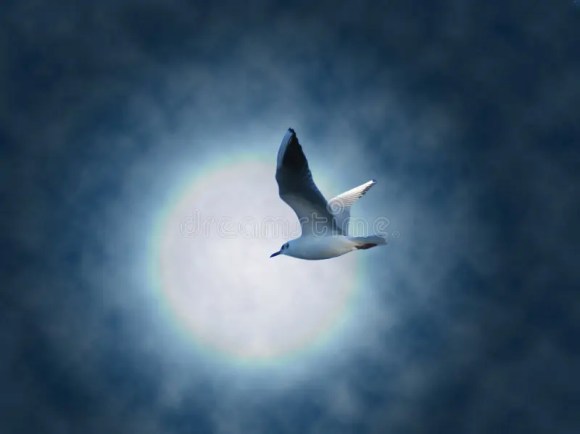
A GULL IN THE MOONLIGHT 

I have longed to leave and be not afraid
Take these wings beyond the listless land
Let the sea erase that bight of sand

I have come to soar and sightless to fear
Let me hush the clinging shores of here
Take these wings and crave this night

I have longed to be lost and be not afraid
I have come so far and to be so near
These wings will brave the flight of light


THROUGH THE KITCHEN WINDOW

The damp and slump of weathered branches
made light with a sudden breeze, and leaves
no longer sullen, uplifted to scatter...
time to believe in matters of chance?

The souls of spices arise from the pan,
my wooden spoon a turmeric moon,
and our pandemonium of kids and you
chasing leaves. I can see them.

Phil Wood was born in Wales. He enjoys painting and learning German. His writing can be found in:  The Fig Tree Coal Mining Anthology, The Shot Glass Journal, London Grip.

PLEASE NOTE: ARTICLES CAN ONLY BE REPRODUCED IN OTHER SITES WITH DUE ACKNOWLEDGEMENT TO BORDERLESS JOURNAL

Click here to access the Borderless anthology, Monalisa No Longer Smiles

Click here to access Monalisa No Longer Smiles on Kindle Amazon International
Categories
Review

Colonisation in the Global Frame

Book Review by Bhaskar Parichha

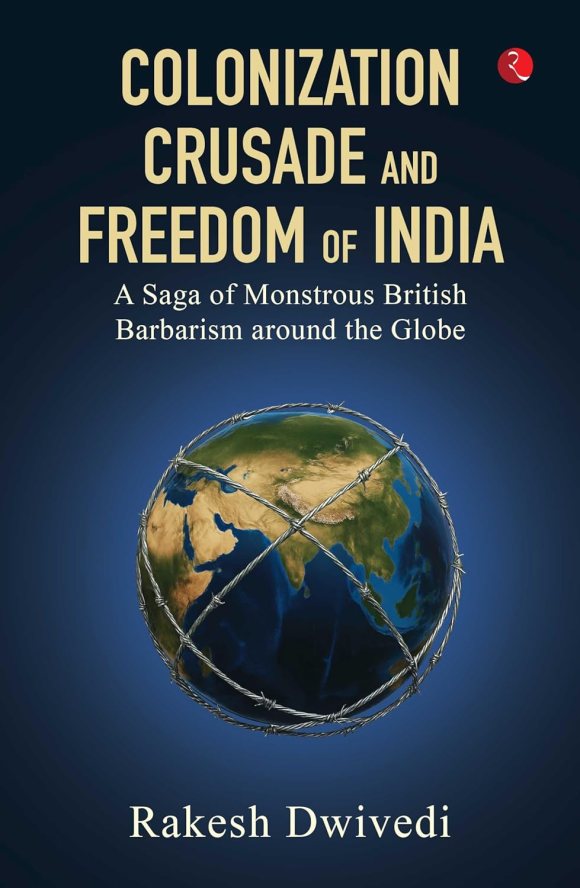
Title: Colonization Crusade and Freedom of India: A Saga of Monstrous British Barbarianism around the Globe

Author: Rakesh Dwivedi

Publisher: Rupa Publications

Rakesh Dwivedi’s Colonization Crusade and Freedom of India is an unflinching indictment of British imperialism and a forceful challenge to the long-standing narrative of colonialism as a “civilizing mission”. Written with the precision of a seasoned constitutional lawyer and the moral urgency of a historian disturbed by selective memory, the book seeks to dismantle the myths surrounding the British Empire while situating India’s freedom struggle within a wider global context of colonial violence.

At its core, the book argues that British rule in India was not an aberration of excesses but a carefully structured system of exploitation sustained by economic plunder, engineered famines, racial hierarchies, and institutionalised violence. Dwivedi rejects euphemisms such as “benevolent administration” or “rule of law,” insisting instead on naming colonialism for what it was: a barbaric enterprise masked by moral rhetoric. In doing so, he aligns himself with a growing body of postcolonial scholarship that seeks to recover suppressed histories of suffering and resistance.

One of the book’s notable strengths is its global frame. Dwivedi does not treat India in isolation but links the subcontinent’s experience to British imperial conduct in America, Africa, the Middle East, and Asia. By drawing parallels between policies of extraction, demographic manipulation, and divide-and-rule strategies across continents, he underscores the systemic nature of empire. This comparative approach lends weight to his claim that colonial brutality was not incidental but intrinsic to imperial governance.

The chapters dealing with famines, wartime exploitation, and economic drain are particularly compelling. Using archival material, parliamentary debates, and secret British records, Dwivedi exposes how starvation and deprivation were often outcomes of deliberate policy choices rather than natural calamities. His discussion of India’s role during the World Wars—both as a resource base and as expendable manpower—adds a crucial geopolitical dimension to the freedom struggle, reminding readers that independence was shaped as much by global power shifts as by internal resistance.

Dwivedi’s legal background is evident in his methodical narrative. He builds his case like a prosecution brief—marshalling evidence, anticipating counter-arguments, and dismantling colonial apologetics with forensic rigor. This gives the book a distinctive voice, though at times the prosecutorial tone may feel relentless. Readers looking for narrative subtlety or emotional restraint may find the language uncompromising, even polemical. Yet this stylistic choice appears deliberate: the book is less concerned with balance than with moral clarity.

The treatment of Partition is another significant aspect. Dwivedi views it not merely as a tragic inevitability but as a consequence of imperial betrayal and strategic manipulation. His critique of British exit policies challenges sanitized accounts of decolonisation and raises uncomfortable questions about responsibility, culpability, and historical accountability.

That said, the book’s sweeping scope occasionally works against it. The ambition to cover centuries of imperial history across multiple regions can lead to dense passages that demand close attention. Some readers may also wish for greater engagement with alternative historiographical perspectives. However, these limitations do not diminish the book’s central achievement: forcing a re-examination of colonial history stripped of nostalgia and imperial self-congratulation.

Colonization Crusade and Freedom of India is not a neutral history—it is a corrective one. It speaks directly to contemporary debates about historical memory, reparations, and the politics of remembrance. In an age when empire is often romanticised in popular culture and public discourse, Dwivedi’s work serves as a necessary provocation.

This book will resonate most with readers interested in colonial studies, Indian history, geopolitics, and the ethics of empire. Whether one agrees with all of Dwivedi’s conclusions or not, his argument compels engagement. It stands as a powerful reminder that freedom was not gifted to India—it was wrested from an empire whose legacy must be confronted, not softened.

.

Bhaskar Parichha is a journalist and author of Cyclones in Odisha: Landfall, Wreckage and ResilienceUnbiasedNo Strings Attached: Writings on Odisha and Biju Patnaik – A Political Biography. He lives in Bhubaneswar and writes bilingually. Besides writing for newspapers, he also reviews books on various media platforms.

PLEASE NOTE: ARTICLES CAN ONLY BE REPRODUCED IN OTHER SITES WITH DUE ACKNOWLEDGEMENT TO BORDERLESS JOURNAL

Click here to access the Borderless anthology, Monalisa No Longer Smiles

Click here to access Monalisa No Longer Smiles on Amazon International

Categories
Poetry

Poems by Michael Lauchlan

Michael Lauchlan
CLOUDBURST 

I want to be a small god, even
a dusty household deity puffing
fiery magic into rooms where sharp

clothes and people inside them
chortle and think they think

and then decide our fate. I’ve
no gift for moving the movers

and only rank as a person
on good days. I shadow the shadows
of plovers as they skitter over mud,

and watch a bored malamute
nose a shrub and find a tick.

We’re rivulets coursing puddle
to pool, bearing last fall’s leaves
and the day’s whirling seeds

toward obscure ends. At our best,
we shine in runoff, joining what

turns in rivers that mean the world
to their gleaming trout. Power
gathers in ashen clouds.

WHAT YOU KNOW

You know the smell of grass.
Sky hunger. The way it feels
being airborne. The shape

of thrush flight, one tree
to the next, a curving path
restarted halfway. That
having just enough isn’t.

Smell of your lover’s sweat.
You don’t know you know this
anymore, but you do.

How we come from parents,
teachers, from one bold friend--
and belong to children
who’ll know us as stories told
for the cadence of the telling.

And you know the metallic sound
of a huckster’s voice.

We speak more slowly now,
assembling thoughts. Once,
in the Dark Sky Park west
of Mackinaw, we spent dusk
watching for hawks,

then trained binoculars on the ecliptic,
finding Jupiter and its four
visible moons, almost

as though we didn’t know.
We knew. Just to see.

Michael Lauchlan has contributed to many publications, including New England Review, Virginia Quarterly Review, The North American Review, Louisville Review, Poet Lore, and Lake Effect. His most recent collection is Trumbull Ave., from WSU Press. Running Lights is forthcoming in 2026 from Cornerstone Press.

.

PLEASE NOTE: ARTICLES CAN ONLY BE REPRODUCED IN OTHER SITES WITH DUE ACKNOWLEDGEMENT TO BORDERLESS JOURNAL. 

Click here to access the Borderless anthology, Monalisa No Longer Smiles

Click here to access Monalisa No Longer Smiles on Kindle Amazon International

Categories
Stories

Old Harry’s Game

By Ross Salvage

It’s twelve o’clock on one of those autumnal spring days. The clouds hang expectantly, waiting to pour their copious contents on unsuspecting recipients; gone are the mare’s tails of the morning’s optimistic outlook. Unaware of the drama above, small children are playing in the enclosed space marked for the younger generations and their mums, one moment laughing, the next moment mopping skinned knees and bumped heads where the children’s end of the world cries are calmed not by nuclear disarmament but a well-placed wet wipe.

It’s twelve o’clock and Harry turns up for work. His metal grey dank and weary coat covers a series of layers of varying shades of dirty brown garments, thankfully mostly hidden from view. His wild and far-flung white hair frames a moth-eaten face, pockmarked and gnarled like tree bark. The hair at the crown of his head has long gone and is replaced by a scarred and spotted pate which it seems has witnessed much violence.

It’s a seasonal thing for me and Harry. Spring rekindles the relationship we’ve never had. I’ve noticed over the past three years that he is fading. The walk has become a shuffle, and every movement is considered carefully.

A few passers-by acknowledge his existence, but most avoid his gaze and he mindlessly watches them hurry past. A busy, well-turned-out lady stops and gives Harry a sandwich. He acknowledges the gift and pushes the contents of the cardboard container into his mouth in one go. The lady’s face is hidden from view, but I imagine there is a look of scorn aimed Harry’s way.

Cheek’s bulging, Harry moves between bins. Not much there yet, he’ll wait until the hour’s up and people with eyes bigger than their bellies will be ditching excess produce. He comes my way and slowly stops in front of me. I take out the extra tuna sandwiches I bought and offer them in his direction. He takes them and nods. He repeats the process of putting a whole sandwich into his mouth at once. The other he pockets for now.

“Any change?” He splutters as pieces of half chewed bread sprinkle the floor.

“No Harry, I don’t do money, you know that.”

He’ll get tired soon and rest. He won’t have any trouble getting a seat. If the benches are full, he merely stops in front of one and stares intently at an individual. This is Old Harry’s Game. It’s not long before they remove themselves. Then within a minute, he will have the bench to himself. If this fails, he just conspicuously starts scratching his crotch. Sure enough, in a wink of an eye Harry is laid out flat on the bench and the former occupants scattered around the park. However, today, he lands on my bench, with a thump.

“You can scratch your balls all you like Harry, I’m not moving.”

Harry reaches down and lifts his left trouser leg to reveal a large patch of red and yellow skin. He looks up at me and his face breaks from the usual inscrutable pose to one of pain and panic.

“I think it’s infected.” And just like that, Harry is no longer the surly tramp that inhabits my lunch spot, but someone in need.

“Do you want my help?” Harry nods.

Fifty minutes later myself and Harry are ensconced in the back of an ambulance. The ambulanceman asked Harry a few questions and I find out more in thirty seconds than I have in the last three years about Harry the tramp. He’s Harry Denton and he’s been on the street for ten years. He’s sixty-two, has one son somewhere, but he hadn’t seen him for a long time.

Thankfully St Andrew’s hospital was quiet for a change on that Tuesday morning. Doctor Sukhra got Harry to lie down. She was diminutive and ordered, and Harry didn’t argue. She seemed immune to the smell that emanated from her patient and I’m guessing he wasn’t an isolated case of ‘Homeless man turns up at Accident and Emergency’.

“Are you a relation?”

“I’m Gareth, A friend…sort of.”

“Now Mr Denton tell me all about this wound.”

It turns out he’d had it for weeks, cut it getting through some wire fencing. She attempted to cut the trousers, but Harry wouldn’t have it, so he rolled the leg up.

“Well, that’s one of the best examples of advanced gangrenous infection I’ve seen. I’m going to call Mr Archer down to look at it. He may be able to save that leg by treating the infection with antibiotics. You’ve left things late sir.”

The next few days I visited Harry. We didn’t talk really, there was no bonding as such, and I mostly ended up playing on my phone. Eventually, Mr Archer came around and broke the news that I’m pretty sure Harry didn’t want to hear.

“Right, Mr Denton. Unfortunately treating that leg hasn’t worked and if you don’t want to die from that infection, we are going to have to amputate that leg just below the knee. You’re damned lucky the infection hasn’t spread further.”

I think my lasting memory from that moment was Harry’s silence. There was a sigh and the shake of a head, but otherwise nothing. The operation would take place on Tuesday, at one o’clock.

“I’ll be back on Tuesday evening,” I assured Harry. It seemed not to register, and I left the hospital once again not sure if I had visited anybody. It was a fraught couple of days, and I was annoyed that my neat and tidy life had been taken over by a tramp.

Monday finally crawled into Tuesday, and at five o’clock I left my desk and headed to St Andrew’s. I picked up some Lucozade from the hospital shop, which somehow seemed little compensation to someone who had just had his leg cut off. I stood outside the ward for a bit, taking longer than usual to apply the hand gel and eventually with a conscious deep breath I went in. I got to Harry’s bed and stood there quizzically. There was a stranger lying in it. I checked I’d come to the right cubicle as they pretty much all look the same, and sure enough this was the correct one. I turned to the nursing station. Perhaps they had moved Harry to another ward following the operation. I was then escorted to an empty private room. The nurse closed the door behind us.

“You’re Harry Denton’s friend, aren’t you?”

“Yes,” I clutched my Lucozade bottle a little tighter.

“I’m afraid Mr Denton didn’t make it. He suffered a heart attack whilst in surgery and never regained consciousness. I’m sorry. We have his belonging here, which aren’t many. We incinerated the clothes he came in.”

I was presented with a small parcel. Enclosed were a few coins, a small knife, tin opener and two sealed envelopes. I looked at the nurse.

 “Do you know any of his relatives?” I shook my head.

“I’m sorry he didn’t pull through. Would you mind leaving your details at the desk, as you’re the only contact we have for him.” I did so, and left the hospital stunned.  At home, I examined the two unopened envelopes. One addressed to me, the other to his son. What struck me was the quality of the handwriting. Neat, cursive and rather elegant. I opened my envelope.

Dear Gareth,

       Thank you for taking the time to look after me. I lost my wife several years ago, and myself and my son became estranged. We didn’t get on without her. Could you send the other envelope to him? It’s the last address I had. The money is for my funeral. Keep any that is left over. Thank you for the sandwiches.

         Harry

Also in the envelope was a cheque for four thousand pounds. So, I made the arrangements. God knows where he got the money from. I sent notification of the time and date of the funeral to Harry’s son, but no acknowledgement came back.

So, on a cold, wet April day, the vicar and I stood over Harry’s grave. The rain drove under my umbrella and my only black suit began to get damp at the knees. The Reverend Allison read the ‘Lord’s my Shepherd’, and we both cast some dirt onto the coffin. The vicar’s umbrella holder signalled to the grave diggers and Harry left the world, buried by an old stone wall in St Michael’s churchyard overlooked by a yew tree. A good spot I thought. Stephen Denton unfortunately didn’t appear, so it was just left to the three of us to say goodbye.

I don’t know if there is a heaven, but if there is I hope it has benches just like the ones in the park, where my tramp friend can play Old Harry’s game to his heart’s content and outrage old ladies on a regular basis. I think it made him happy.

Ross Salvage is a retired teacher who came late to writing. He has written comedy sketches for two review shows (Newsrevue-London and The Treason Show-Brighton). Three monologues can be found on YouTube (Spaghetti Bolognese for One/ Being Greta Thunberg/ Keeping Mum) and he has had two plays performed at the Dolman Theatre, Newport UK. The last one (Drawing the Line) was a winner in their one act play competition. Tea at Five, his first play, has been performed on stage and radio. Ross is currently seeking publication of his children’s novel, Octavius Blood and the Blood Oath.

.

PLEASE NOTE: ARTICLES CAN ONLY BE REPRODUCED IN OTHER SITES WITH DUE ACKNOWLEDGEMENT TO BORDERLESS JOURNAL

Click here to access the Borderless anthology, Monalisa No Longer Smiles

Click here to access Monalisa No Longer Smiles on Kindle Amazon International

Categories
Poetry

Fragments by Sayad Hashumi

Selected and translated from Balochi by Fazal Baloch

From Public Domain
THE ECLIPSE

The naïve claim, the moon lay veiled in shade.
But ask of me, for I beheld that night
My beloved stand, her flowing hair arrayed,
Each stroke of her comb eclipsing silver light.

THE HEALING CARESS

With the very hands that rend my wounds,
She tends and heals them ever so gently.
My heart’s blood she cradles within her palms,
And eases two burdens at once from me.

EMANCIPATION

And grief ground me to kohl beneath its weight,
Till a fleeting glance from deer-eyed beauty came.
Were it not her partridge-walk, her measured gait,
Moonlit nights would rain on me fire and flame.

DREAM-ILLUSION

In the first watch of night, she’d grace my abode
Sayad, so in a dream spoke Hanul, the beloved dear,
Whom do you still wait for so long?
The night has yielded; the day is already here.

SCARLET REMEMBRANCE


I know not by whose grace I yet draw breath.
Twice has my cup almost brimmed over, I recall.
Can memory ever betray you? From my blood-red tears,
Once you dyed your bridal shawl.

CURLS OF ILLUSION

I’m beguiled—they are curls of smoke
Rising from my sighs to the air,
Each time my beloved dear
Runs the golden comb through her hair.

Sayad Zahoor Shah Hashumi (1926-78) is known as the pioneer of modern Balochi literature. He was simultaneously a poet, fiction writer, critic, linguist and a lexicographer par excellence. Though he left undeniable marks on various genres of Balochi literature, poetry remained his mainstay. With his enormous imagination and profound insight he laid the foundation of a new school of Balochi poetry especially Balochi ghazal which mainly emphasises on the purity of language and simplicity of poetic thoughts. This school of poetry subsequently attracted a wide range of poets to its fold. He also authored the first ever Balochi novel ‘Nazuk’ and compiled the first comprehensive Balochi-to-Balochi dictionary containing over twenty thousand words and hundreds of pictorial illustrations.

Fazal Baloch is a Balochi writer and translator. He has translated many Balochi poems and short stories into English. His translations have been featured in Pakistani Literature published by Pakistan Academy of Letters and in the form of books and anthologies. 

.

PLEASE NOTE: ARTICLES CAN ONLY BE REPRODUCED IN OTHER SITES WITH DUE ACKNOWLEDGEMENT TO BORDERLESS JOURNAL

Click here to access the Borderless anthology, Monalisa No Longer Smiles

Click here to access Monalisa No Longer Smiles on Kindle Amazon International
Categories
Essay

The Last of the Barbers: How the Saloon Became the Salon (and Where the Gossip Went)

By Charudutta Panigrahi

If language were a haircut, “saloon” got a buzz cut and a blow-dry and came out as “salon.” That change in spelling is the visible tip of a larger style transformation: one rough, male-only ritual space has been trimmed, straightened, scented and repackaged into a gleaming, multi-service, mostly woman-centred retail experience. Along the way, the loud, fragrant, argument-heavy mini-parliaments of small-town India — the saloons — have been politely ushered into warranties, playlists and polite small talk.

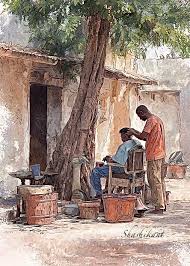
Barbers in India are almost as old as conversation itself. The profession of the barber — the nai or hajam — is embedded in pre-colonial life: scalp massage (champi), shaves, tonsure at rites of passage, and quick fixes between chores. These services were usually delivered in open-fronted shops or under trees, with tools that were portable and livelihoods that were local.

The “saloon” as a distinctive, Western-flavoured, male gathering place began to consolidate during the 19th and early 20th centuries. Port cities and colonial cantonments — Bombay (Mumbai), Calcutta (Kolkata), Madras (Chennai) — saw the rise of dedicated shops selling not only shaves and haircuts but also imported tonics, straight razors and a distinctly public atmosphere shaped by newspaper reading, debate and gossip. Over time, that form blended with older local practices and spread inland. By the mid-20th century, the saloon — a recognisable, chair-lined, mirror-fronted social stage — existed in towns from Kashmir to Kanyakumari and from Gujarat’s chawls to Assam’s market roads.

So ancient barbering traditions fed into a colonial-era intensification of the barbershop as public forum; by the 1950s–70s, the saloon as we remember it was firmly a part of India’s social furniture. The precise start date is a quilt of custom and commerce rather than a single founding ceremony — and that is part of the saloon’s charm.

Walk into a saloon in Nagpur, Nellore, Shillong or Surat and you’ll notice an uncanny resemblance. The reasons are simple and human:

  • Low price point: Saloons survive on quick volumes and walk-ins. That encourages many chairs, fast turnover, and layouts that invite waiting men to talk rather than sit quietly.
  • Ritual services: Shave, cut, champi. These are short encounters that thread customers through the same communal space repeatedly — ideal for gossip to collect and ferment.
  • Social role: The barber doubles as ear, counsellor, news-disseminator and crossword referee. That role is culturally consistent across regions: a saloon’s psychic geography is the same whether the tea is masala or lemon.

The result is that a saloon in Kutch and a saloon in Kerala will differ in language, politics and local jokes — but both will produce that same satisfying racket of opinion, repartee and advice. They are India’s unofficial, peripatetic fora for public life.

Enter the salon: padded seats, curated playlists, appointment-booking and a menu so long it reads like a restaurant wine list (colour, rebonding, keratin, facials, pedicures, threading, and sometimes a minor festival of LED lights). A couple of business realities did most of the heavy lifting:

  • Women’s services earn more and recur more often. Regular facials, hair treatments and beauty routines translate into steadier, higher bills. The money follows the customer, and the space follows the money.
  • Franchising and professional training created standardized staff who follow brand scripts — which tighten conversation and reduce the barber-confessor vibe.
  • Unisex salons consolidated footfall, but that consolidation shrank male-only territory. Men who once had a semi-public living room now sit in chic, quieter spaces that discourage loud, extended debate.

The practical upshot: the saloon’s boisterous mini-parliaments were replaced by stylists with laminated menus, muted background music and an etiquette that favours privacy over political salvoes.

What we miss (and what we gained)

We miss the moralisers, the wisecracks, the boisterous consultancy of unpaid experts who knew which councillor was friendly with which shopkeeper and which wedding was scandalous; the loud education in rhetoric and local affairs; the bench-seat apprenticeship in how to perform masculinity in public.

We gain in expanded choices for women, more professional hygiene and techniques, new livelihoods for trained stylists (especially women), and spaces where people can pursue personalised care without the social cost that used to attend public rituals.

It’s not a zero-sum game — but it does reorder who feels proprietorial about public grooming spaces. The new economics say: she who pays more — and pays more often — gets the say.

Not all saloons are extinct. In smaller towns they still hum. In cities, they’ve evolved into hybrid forms:

  • Old-school saloons persist where price sensitivity and cultural habit remain strong: walk-ins, communal benches, loud conversation and a barber who’ll recommend both a haircut and the correct candidate for local office.
  • Nostalgic barbershops in urban pockets lean into the past with “vintage” decor, whiskey-bar vibes and sports on TV — except now they charge a premium and call the barber a “grooming specialist.”
  • Some entrepreneurs stage “men’s nights” or open-mic gossip hours in neighbourhood shops, trying to recapture the civic pulse while keeping the modern business model.

If you want the old saloon spark, look for places without appointment apps, with too many phones in sight but none in use, and with a tea flask on the counter.

What’s lost isn’t only a loud, male-only gossip pit; it’s a training ground for public argument and a place where local memory was kept live and messy. The saloon taught people how to spar without a referee; the salon teaches how to look good while being politely neutral. If you mourn for the saloon’s barbed banter, you can grieve — but also take action: host a “Salon for Men” in your local café, revive a community noticeboard at the barber, or convince your neighbourhood salon to schedule a weekly “open-chair” hour for community talk (and maybe offer tea).

And until then, if you miss the salty, pungent chorus of small-town democracy, go to any saloon that still has a kettle on the stove and a barber who knows the mayor’s schedule by heart. Sit down, get a shave, and watch a mini-parliament assemble around you. You’ll leave clean-faced, better informed, and maybe a little animated — exactly how democracy used to feel.

From Public Domain

.

Charudutta Panigrahi is a writer. He can be contacted at Charudutta403@gmail.com.

.

PLEASE NOTE: ARTICLES CAN ONLY BE REPRODUCED IN OTHER SITES WITH DUE ACKNOWLEDGEMENT TO BORDERLESS JOURNAL

Click here to access the Borderless anthology, Monalisa No Longer Smiles

Click here to access Monalisa No Longer Smiles on Kindle Amazon International
Categories
Poetry

A Prose Poem by Andrew Leggett

Andrew Leggett
ANGELTURTLE COAXES THE SOUL   

Come now, little frightened one. That twinge is all you’ll feel as death tears you from the desiccated husk that lingers in your carapace. Then it’s done and all is light. You are floating now above your shell. You seem surprised I hover, spreading protection of bright wings as you stare down at your remnant. There is nothing you should fear as I reach to catch you, shielding you from Valkyries and other predatory fowl circling in hope that you will stray into the bardo space where you become their choice reptilian feast of sorrow. Come closer now and let me wrap my webbed, clawed feet around you as I bear you up to where you swim, with myriad freshwater turtle souls, in the river of light. Some you may recognise: your mother, who passed over soon after she laid your clutch. Several of her hatchlings swim in this bright stream in which the golden minnows jump: Leonardo, Donatello, Michelangelo. Here it’s always summertime. You will remember me as Raphael, the Terrapin of Seraphim. You may hear Ella Fitzturtle ‘rise up singing’ to Gershwin’s melody ‘as I spread my wings and take to the sky.’

Andrew Leggett is an Australian author of fiction, poetry, interdisciplinary academic papers, reviews and songs. His latest collection of poetry Losing Touch was published by Ginninderra Press in 2022. His fiction collection In Dreams and Other Stories will be published by Ginninderra Press in 2026.

.

PLEASE NOTE: ARTICLES CAN ONLY BE REPRODUCED IN OTHER SITES WITH DUE ACKNOWLEDGEMENT TO BORDERLESS JOURNAL. 

Click here to access the Borderless anthology, Monalisa No Longer Smiles

Click here to access Monalisa No Longer Smiles on Kindle Amazon International