Categories
Excerpt

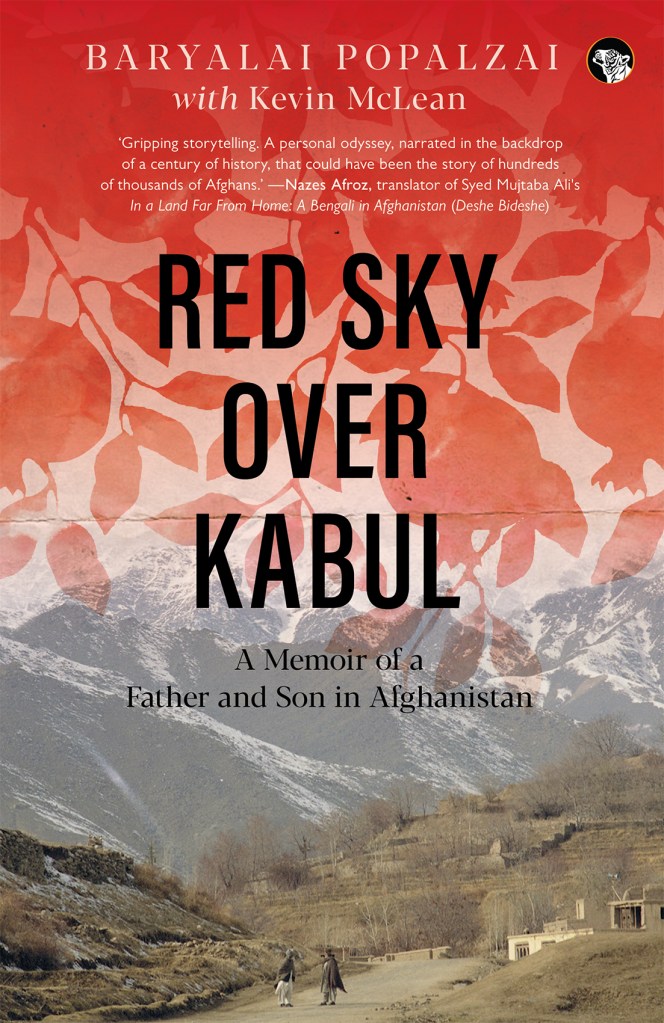
Red Sky Over Kabul

Title: Red Sky Over Kabul: A Memoir of a Father and Son in Afghanistan

Authors: Baryalai Popalzai and Kevin McLean

Publisher: Speaking Tiger Books

One
Kabul, Afghanistan, 4 October 1980

On a breezy October day, a kite-flying day, my cousin Kader surprised me with a visit. He looked much older than I remembered, his hair thinner, his once smooth face now lined with worry. He was a well-known political writer who had worked for the Ministry of Education before the Spring Revolution. He was also known for his short stories.

For generations, his family had been one of the most important families in Kabul. Kader looked at me with his deep-set black eyes and spoke in a frantic voice, ‘Bar, you must leave immediately. The National Security and Russian soldiers are now searching house to house. They’ve already searched half of your neighbourhood and they won’t stop. You must come to my house immediately. It’s the only place that will be safe for you now.’

I did not know what to think. Things were so bad now, I wondered if I could trust my own cousin. He could have given in to the Communists; or he could be telling me this because they were holding someone in his family hostage.

I hated the Russians for making me doubt him, and I hated myself for doubting him.

Tashakor (Thank you). I’ll be okay,’ I assured him. ‘I have a hiding place that the National Security will never find.’

But he was adamant. ‘You must come to my house. It’s the only place that will be safe for you now.’

‘I need time to think,’ I said, deflecting his request.

‘There’s no time!’ he said.

I told him, ‘I have to think of my wife and children, my father and mother. I’m the only one who can take care of them.’

‘You won’t be much use to them dead,’ he said.

‘That is true, Kader. But before I leave my family and go to your house, I must speak with my father.’

Kader just sighed. ‘God be with you.’

That night I lay on the floor, unable to sleep. I could hear the National Security guards in the street outside my house shouting at people, ‘What is the password for tonight?’ If there was no response, there would be the sound of gunfire and I would flinch as if the bullet had ripped through me.

As soon as the sun appeared, I went up to my father’s bedroom where he spent most of his time since losing his leg years before. I told him about Kader’s visit. ‘Things have changed,’ I said. ‘Every house is being searched now. They will even search the general’s house. I can no longer hide from these crazy people.’

‘So, you think you should go stay with Kader?’ Baba asked.

‘We don’t know who’s honest anymore,’ I replied. Then the words I had dreaded saying for so long escaped my lips.

‘The time has come for me to leave.’

Baba didn’t say anything at first. This unsettled me because my father was never at a loss for words. When he finally did speak, his voice was weak. ‘I was afraid it might come to this,’ he said. ‘I’ve spoken with Abbas. He agreed that when the time comes, he would go with you. I will get word to him. You can leave tomorrow at first light.’

When I told my mother, who I called Babu, her body shuddered, but her lips were silent. My mother had a habit of never sitting still when she was nervous. First, she paced back and forth in the room. Then she walked from one room to the other. Then from one house in our compound to another.

She returned to our living room and continued pacing back and forth until I could take it no longer.

‘Sit!’ I told her. But she never sat. My wife Afsana was asleep in another room with our two children. I couldn’t find the tongue to tell her. But I knew I must.

‘Afsana?’ I called, waking her.

Baleh? (Yes?)’

‘It’s not safe for me here anymore…I must leave tomorrow.’

‘What do you mean?’ she asked, panic rising in her voice.

‘Kader came to see me. Things have become too dangerous now. Abbas is coming for me in the morning. He’ll make sure I get out safely. I’ll send for you and the children as soon as I can.’

A painful silence followed. Afsana started to speak, but stopped. She knew there was nothing she could say or do now. We both lay awake all night.

As dawn approached, I went to say goodbye to my father.

He was sitting up in bed staring at nothing, his books and newspaper lying next to him, unread.

‘Ah, the time has come,’ he said. He seemed to be searching for something else to say; some last words of wisdom, some final advice from father to son. When he finally spoke, he spoke slowly, the words sticking in his throat, ‘Take care of yourself.’

I could not do this. ‘I won’t leave without taking you and Babu. I can’t leave without Afsana and the children,’ I said.

‘We’ll all go together!’

He was silent for a moment, his eyes never leaving my face. ‘Nay, you know that’s not possible,’ he said.

‘I can get friends to help us. They can take all your things. We’ll go to Jalalabad. Everything will be all right.’

‘Nay, Bar. It is not practical. I’m too old and weak to be moved. The Russians won’t bother Babu, or Afsana, or the children. We’ll be safe here. If we try to leave, none of us will survive. Things are very bad, but I still have my house and my writings. But it is true, you are no longer safe here, so you must leave to save yourself. Let’s pray that in a few months, things will change.’

‘If that is your wish,’ I gave in.

‘Say goodbye to me now,’ Baba said. ‘I’m afraid you won’t see me again.’

‘How can you say that?’ I protested, feeling the pain of those words as though he were already dead.

Extracted from Red Sky Over Kabul: A Memoir of a Father and Son in Afghanistan by Baryalai Popalzai and Kevin McLean. Published by Speaking Tiger Books, 2023.

ABOUT THE BOOK

 Red Sky Over Kabul is the deeply personal, moving and dramatic story of a royal Pashtun family—the Popalzais—intimately connected with Afghanistan’s history from the 1800s. After the Soviet invasion in 1980, the narrator, Baryalai—Bar—is forced to leave his beloved country as National Security guards carry out a house-to-house search for young men who refuse to fight for the Russians against their fellow Afghans. He flees to Pakistan, where he is imprisoned as a spy, eventually making his way to the US, to make a new life for himself. He returns twenty years later, to reclaim his family homes in Kabul and Jalalabad, only to find them occupied by drug dealers and warlords.

This memoir is as much a story of Bar as it is a story of Afghanistan: Bar’s father, Rahman, was tutor to Zahir Shah, who would become the last king of the country after the assassination of his father in 1933; Rahman Popalzai continued to serve Zahir as his advisor and confidant for 40 years. At the heart of this book is the relationship between a father and son—Rahman and Bar— who share a fierce love for their homeland, but whose paths diverge.

Red Sky Over Kabul is also a vivid portrait of a vanished Afghanistan—a world of kite flying, duck hunting and sitar lessons; a world lost to unending, horrific violence. But even in loss and tragedy, the human spirit finds hope and resilience—which is Afghanistan’s triumph, as it is Bar’s.

ABOUT THE AUTHORS

 Baryalai Popalzai was born in Kabul, Afghanistan in 1952. After the Russian invasion in 1980, he fled the country and eventually settled in San Diego. When the Taliban were ousted in 2002, Bar returned to Kabul for the first time in twenty years and has been returning a few times every year since then.

Kevin McLean received his JD from Boston University School of Law and practised law for many years in Boston and San Diego. He is the author of Crossing the River Kabul (2017).

PLEASE NOTE: ARTICLES CAN ONLY BE REPRODUCED IN OTHER SITES WITH DUE ACKNOWLEDGEMENT TO BORDERLESS JOURNAL

Categories
Poetry

Four Stanzas from Her Dream

By Afsar Mohammad

Art by Lakshmi

1

Out of her dream,

she walks gently

into this place giving it a name,

and framing its waters, dust,

spaces, hills and wild forests

 either in a square or a circle- she seizes a droplet of

every bit of nature into her womb to it

a belly, hands, eyes, ears and feet.

.

 Sooner or later, they deny her from head to toe —

2

One of these later days she looks in the mirror

and stares deep into her eyes to learn that nothing is similar

— everything differs so much from everything.

Out of her reality,

 she walks into this space giving it

a name and framing its skies, stars, black holes, moons

and several suns either flat or in a triangle.

                 — she jumps into an emptiness

 endless blankness and its dark, tiny holes —

3

Sooner or later, they all reject her every layer —

Out of her dream,

she sneaks out like a hole beautifully carved to fit several bodies

 and mould their hands, feet, eyes, ears and tired privacies.

4

She never stops dreaming,

as she is made simply

                                     to dream.

As such

                       she never

                                 sleeps either.

*

Poem 2:

The Making

broken pillars speak out

as winds gush through their flattened arms

a thought hanging down from nowhere

.

now my time to stretch the arms

to reach up,

as the ruins keep tumbling

.

never seen this home

in its entirety;

for me, it’s an empty village

deserted a while ago;

a swarm of words limp around me

.

now it’s my time to straighten

the body

to sew it nerve to nerve.

*

Poem 3:

into her arms

1

Sun-drenched layers play

with each other as waters ripple and fly within their little skies

this afternoon

I see you with a keen eye

as you surprise me.

.

gleaming and spreading onto the edges of the bluish horizon, you stretch your wet feet towards me and pushing me into you

–you hurl me back into several ages

2

we play at our convenient ages, and with our comfy tenderness, and toggle between childhood and adulthood, pulling hard to settle somewhere in-between

a game that never ends, but just begins again every time under the same burning sun, floating boats, flowing bodies, women turning white to brownish

3

and then

little Christs yearn to walk on water.

*

Click here to access Afsar Mohammad’s interview

Afsar Mohammad teaches at the University of Pennsylvania, and he has published five volumes of poetry in Telugu. His English poetry collection is forthcoming. He has also published a monograph with the Oxford University Press titled, The Festival of Pirs: Popular Islam and Shared Devotion in South India. His current work, Remaking History: 1948 Police Action and the Muslims of Hyderabad, has been published from Cambridge University Press.  His poetry collection, Evening with a Sufi, was published by Red River.

PLEASE NOTE: ARTICLES CAN ONLY BE REPRODUCED IN OTHER SITES WITH DUE ACKNOWLEDGEMENT TO BORDERLESS JOURNAL

Click here to access the Borderless anthology, Monalisa No Longer Smiles

Click here to access Monalisa No Longer Smiles on Kindle Amazon International

Categories
Musings of a Copywriter

The Lost Garden 

By Devraj Singh Kalsi

A balcony teeming with plants showcases the best efforts put in by flat owners to keep alive their connection with nature. Unlike those living in sprawling houses with plenty of open space to make a garden, flat residents have to live with a space crunch that makes them think of buying space-saving furniture all the time. It does not really matter whether the densely potted varieties in the balcony supply oxygen for an hour or not. The plants merely convey that the inmates carry a genuine love for nature, but the constraints of space in the cities prevent them from creating a full-fledged garden.

The other vital truth is that the miniature garden helps them assuage the guilt of causing environmental damage before the World Environment Day posters deliver ‘Save the Planet’ message every year. The air conditioner jutting out of the window next to the balcony garden proves they are equally culpable for impacting the planet’s health. But every inch of the balcony dotted with plants is the best frame that provides the opportunity to post candid pictures on social media and gather hundreds of likes for having green fingers despite the CFC generated by most air conditioners.  

In my ancestral home, I used to observe my father turn the soil every morning. As he worked with his garden tools, I took an interest in his hobby, thinking I would inherit his passion for the same. He created small beds, raised mounds of soil around tender plants to offer better support and strength, and watered them with a sprinkler with patience, making sure they were not too wet.

With the onset of winter, the saplings would be ready to deliver iridescent blooms and surprise us with their vibrant beauty. Pansies, dahlias, zinnias, carnations, roses, and petunias were some of the awesome floral feasts that occupied much of our garden beds though there were many others that were less popular and with scientific names that have elude my meory. As the first buds appeared, my parents would admire the lush garden and ask me to sit in front of those budding flowers with well-combed hair to strike a pose while my father clicked a series of random photographs.  

While I never found ample time to take up gardening, I made it a habit to water the plants in the evenings on alternate days after my tutorials. Slaking the thirst of others – whether humans, animals, birds or plants, gives the same kind of satisfaction. I was careful not to keep them thirsty for long and maintained a strict timeline for that – otherwise I would feel guilty and sleepless at night. If I would be absent for a few days, I would assign the duty to some other person. Along with plants, I was learning to be sensitive to others needs.

The blooming flowers generated the desire to possess beauty. I was told I should not pluck them but learn to admire them. It was another key lesson – to indulge in the appreciation of beauty instead of being ruthless about possessing the beautiful. Any piece of beauty, in any form, gets the same treatment. Admire instead of turning desperate to possess it or call it your own. Such treasure-worthy lessons last a lifetime. It is true nature teaches a lot many things to lead a good life. A garden full of colours of all varieties looked rich and tempting. My mother never plucked any of the flowers, never put them in a vase in the living room to make a statement. Such restraint amazed me. 

I was encouraged to plant some on my own – before the advent of the floral season. My initial reluctance petered out when I read many celebrities were pursuing it. The ones I planted were lucky if they survived. I felt sad and low when they did not survive. But when some of them bloomed well, negativity perished.

The first bloom made me glad and confident, encouraging me to look forward to planting more varieties the next year. The ones that perished were soon forgotten and my focus shifted to the survivors, wondering whether they found it easy to grow in their beds or if there was something I could have done better to ease their growth in the lush garden. 

My parents gave a nod of approval and okayed my efforts. It was deemed a good exercise to raise a garden, add manure or spray something and water them all.

After my father’s death, my mother brought saplings from the nearby nursery, expecting me to do what my father did. She would sit near the verandah and oversee the entire process. Her supervision continued and she derived satisfaction that she had managed to raise a child who was growing close to nature with each passing year. She was always the first person to spot the buds and had the habit of predicting the colours of the flowers before they bloomed. She conducted a tour of the garden every morning and would foretell which one would turn out to be yellow, red, or white. Most of the time, her guesses were right. It appeared I was under an expert. When the flowers bloomed, she would say such impeccable beauty is for the soul, as it makes you happy deep within.  

Blooming is so relevant a need for every creative person: to bloom with ideas that are fresh, appealing to the senses and fragrant. Tucking a flower in the vase in front of the writing desk is a serious effort to bring in visual freshness, and to feel positive. With creepers growing around, you feel the spread of ideas surround you, trying to reach higher and higher just like you keep trying to elevate your thoughts and consciousness. Even if the apartment does not offer a grand view of thirty feet-high Ashoka trees lined up outside my window, the mind’s eye still retains and cherishes its beauty while trying to find inspiration from the balcony garden, a poor substitute for the grandeur of the landed garden.

While living in an apartment does not offer a natural view, the truth is I am still writing and have yet to break up with nature. Whether memory continues to feed the imagination or the fear of writing without nature’s support leads to a premature loss of an intimate connection with nature will pan out in the coming years. Sometimes the loss agonises so much that one feels like writing tragedies especially if it is the death of loved ones. It remains to be seen what the permanent loss of a vast garden from my life brings forth. 

.

Devraj Singh Kalsi works as a senior copywriter in Kolkata. His short stories and essays have been published in Deccan Herald, Tehelka, Kitaab, Earthen Lamp Journal, Assam Tribune, and The Statesman. Pal Motors is his first novel.  


PLEASE NOTE: ARTICLES CAN ONLY BE REPRODUCED IN OTHER SITES WITH DUE ACKNOWLEDGEMENT TO BORDERLESS JOURNAL
Click here to access the Borderless anthology, Monalisa No Longer Smiles

Click here to access Monalisa No Longer Smiles on Kindle Amazon International

Categories
Poetry

Sleepless Thoughts

By Arya K S

My mind embroiders shapeless thoughts 
upon the fabric of my being, 
as my body crawls beneath 
the darkness of a velvet blanket.
Night dipped in a pale silvery moonlight,
I knew it was an eclipse 
where the moon reached for the earth,
where they became shadows of each other.
But the episodes of thoughts 
that flashed through my head,
refused to align with the matinee 
of the harsh, real world.
I yearned to doze off, 
to slip peacefully into a pool of serene sleep, 
to taste the nothingness of life.
The air infused with the scents of subtle lavender flames,
winked through the eyes 
of golden fairy light bulbs.
My eyes twinkled brighter!
A zillion poems have found their roots here, 
upon the barren soils of my empty,
at times tangled, heart.
A restless soul seeking refuge 
in the atoms of those weary limbs,
a coiled mind that yearned to unfurl its tales 
onto a blank white sheet.
Beads of sweat channelling maps, from the nape of my neck
to the deepest pores of sleeplessness. 
I listen to my whimpering heart, fluttering its wings
as if ensnared in a net of  ‘what ifs’. 
Motionless, I hold fast to a squishy pillow
and the cosy blanket that never offers any comfort.
Searching for a hand in vain, 
to pacify a delirious heart,
slowly...
at some odd hour in the vacuum of the night,
I fall asleep --
devoid of dreams, poems and memories --
With thoughts that beat louder than my heart!

Arya K S is a passionate writer from Kerala. Currently, she is pursuing her PG Diploma in English Teaching at EFL University, Hyderabad. Poetry is a cool breeze to her musing soul. You can find her on Instagram @letter_shore. Email: aryaksgem@gmail.com

PLEASE NOTE: ARTICLES CAN ONLY BE REPRODUCED IN OTHER SITES WITH DUE ACKNOWLEDGEMENT TO BORDERLESS JOURNAL

Click here to access the Borderless anthology, Monalisa No Longer Smiles

Click here to access Monalisa No Longer Smiles on Kindle Amazon International

Categories
Excerpt

The Blue Dragonfly

Title: The Blue Dragonfly – healing through poetry

Author: Veronica Eley

Publisher: Hidden Brook Press, Ontario

grey blanket					[from Prelude]

earliest memory
driving along
a country road
in the back seat
wrapped
in a grey blanket
in the dark

separation
the side bars
on the hospital bed
two years old
pneumonia

fifteen-year-old girl
raped
police declare
emotionally disturbed
wrapped
in a grey blanket
taken home

disturbed
turbulent
the waters
the waves, the waves
are big, mommy
the cold, grey ocean
is deep
I lean against the railing
of the White Star Cunard liner
seven years old

railings
grey blanket
grey, grey 


secret monsters				[from Presentation]

when I am dog tired
deep down below
an ambiguous voice
declares itself

blasphemous language
often, with a highly sexual content
pokes out its unseemly head
to scream and thrash about

language from a deep abyss
dirty tributaries
foul-mouthed monsters
who live in my
subterranean landscapes

loud mouthed
the desire to smash and hurt
to feed the monster within
to let out a little vengeful steam
is the only way to calm the beast

in some ways
I live a life of pretence
hidden
shameful
feeding the snake within
with disgusting morsels

 
the bodhisattva				[from Altered States]

she wanders through the streets
a heart as big
as the whole outdoors
warding off criticisms
from voices long
ago dead

how do you
lose
rolling the dice of
compassion?
the fashion in the 90s
: to give
politically/correctly

the knife of deconstruction
blasts
beliefs, values, ideals
the high-rise
terminology
-laden
hierarchical
transcendent, dualistic
world
crumbles (post
-modernized)
leaving us with
No Thing, powering our appetites
to violent
pornographies

karma
equals Choice
equals Action
equals Identity

where does this yearning
come from? the bodhisattva’s loving
compassion, undifferentiated
interconnective, doing
and undoing

do we have any
other choice?
in our best dress
our Sunday best
our best frame of mind
-- compassionate be

I exist between myself
and you


mother						[from Home]

eternal mother
conniving tributary peace strategies
love and replenishment
look to the sun
the bare branches
outlining our destinies

reaching to the heavens
rooted in fertile ground
our arms reach upward
bare, rough and brown
the colour of the earth

take care, dear mother
look to the sunset
the glorious colours
I will be thinking of you

About the Book

The Blue Dragonfly: healing through poetry is a verse narrative of trauma and recovery, 120 poems organized into three acts: Secret Monsters, The Bodhisattva, and Mother. Distinguished by an intense affectivity of language, its poetry of metaphor, repetition, and internal rhyme, “rotating / like a wind chime / inside my body,” communicates a trance-like account of trauma, therapy, and personal growth. Resistance to Western rationality – camouflaging crimes of incest and rape – is a major theme. The poet’s encounter with an Indian psychiatrist heralds the discovery of “a comrade spirit / a healer” from another continent. In time, the poet becomes the bodhisattva herself, a compassionate witness to her own and the bravely lived stories of others, a “red trauma reverberating around the world.” Trauma theory links such suffering to creative language, re-invoking Aristotle’s conception of metaphor as uniquely bound to tragedy (to make the unspeakable speak). Is poetry and its poem then merely a “work of art”? Or is it a linguistic “magical toolkit,” with purpose to build a common, practical humanity free from pain?

About the Author

Born 1950, Manchester UK, Veronica Eley is an Adult literacy instructor, Toronto, 1994-2011, Master of Education, OISE-UT, Toronto, 2002. She retired inDartmouth, Nova Scotia, 2016. Her first book of poetry was published in 2021. – Poetry came to the author late in life through journaling and therapy (1998-2016), when she learned to “stream the inner spirit, the unconscious,” in a “fluid connection between my soul, brain, pen and paper.” Poems would give structure and pace to her feelings, sparking her “creative remembering” and recovery from trauma. Ideas of synchronicity and flow, an attunement to nature, and the stories of her immigrant and refugee students provided a rich support for telling her own story. The author’s family had migrated to Nova Scotia in 1952. Dislocation shock, charismatic Catholicism, and the metempsychotic memory of the cotton mills would repose themselves in the youngest child. A “trinity of traumas” personal to her would follow. Now the small-press publication of her book, aided by her acutely poetic camera, accumulates readers. The author declines interviews, as “the poems speak for themselves.”

PLEASE NOTE: ARTICLES CAN ONLY BE REPRODUCED IN OTHER SITES WITH DUE ACKNOWLEDGEMENT TO BORDERLESS JOURNAL

Click here to access the Borderless anthology, Monalisa No Longer Smiles

Click here to access Monalisa No Longer Smiles on Kindle Amazon International

Categories
Poetry

Poetry by Kirpal Singh

THESE DAYS

see me here and there—
many say I do nothing:
well they may be right.

what I do is hear and absorb —
both the natural fresh air 
and the odour of foul chatter.
 
my people— sadly— live unaware 
my presence taken for granted,
and my preemptions denied.


MEETING WITH A STRANGER 

For some odd reason
I was halted in my tracts—
This strange man with nothing on
Wanted to know why I was dressed.

What could I say to him?
I smiled hoping he’d be satisfied.
But he persisted— “Why are you dressed?”

I smiled again and sheepishly said—
“Because being naked is a luxury, 
One, I can’t afford, really.”

He smiled again, this time ruefully,
And said very confidently—
“Understand, good Sir, understand 
The real meaning of the Fall.”

The Bard by Benjamin West (1738-1820)

Kirpal Singh is a poet and a literary critic from Singapore. An internationally recognised scholar,  Singh has won research awards and grants from local and foreign universities. He was one of the founding members of the Centre for Research in New Literatures, Flinders University, Australia in 1977; the first Asian director for the Commonwealth Writers’ Prize in 1993 and 1994, and chairman of the Singapore Writers’ Festival in the 1990s. He retired the Director of the Wee Kim Wee Centre.

PLEASE NOTE: ARTICLES CAN ONLY BE REPRODUCED IN OTHER SITES WITH DUE ACKNOWLEDGEMENT TO BORDERLESS JOURNAL

Click here to access the Borderless anthology, Monalisa No Longer Smiles

Click here to access Monalisa No Longer Smiles on Kindle Amazon International

Categories
Essay

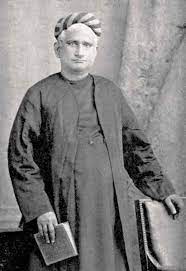
Bankim Chandra Chattopadhyay’s Words for Would-be Writers

Bankim Chandra Chattopadhyay

Bankim Chandra Chattopadhyay’s Bangalar Nobbyo Lekhokdiger Proti Nibedon (a request to new writers of Bengali), translated and introduced by Abdullah-Al-Musayeb.

The essay was originally written by Bankim Chandra Chattopadhyay (1838-1894), the celebrated Bengali novelist, poet, and essayist. It was first published in Prachar[1] in 1885 and later included in his book Bibidho Probondho[2]. Although this essay is written in Sadhu Bhasa[3], it has an all-time universal appeal due to its significance and originality of thought. In this essay, Bankim offers some advice for the aspiring writers, which are as follows:

1. Do not write solely to achieve fame, as it may hinder your growth as a writer and prevent your writing from achieving the success you desire. If your writing is good, success and fame will come automatically.

2. It is advised to avoid writing only for monetary gain. Though in Europe many writers successfully earn money through their craft and produce quality work, we have yet to reach that stage. When you write for profit, there is a tendency to prioritise entertainment over substance. Writing may lose its relevance and fail to meet its objectives when it considers the reading preferences and tastes of the average reader.

3. Writing with the intention to benefit society and humanity or to create art is commendable. However, those who write solely for personal gain or malicious intent may be regarded as no better than petty merchants like hawkers.

4. Articles that are false, sacrilegious, slanderous or written for private interest should be avoided as they are not beneficial to the society. Using the pen for purposes other than promoting truth and upholding dharma[4] is a sin; therefore, literature should focus on these objectives.

5. Do not publish what you write immediately. Leave it for some time, revise it, and you will surely find many mistakes in the article. Poetry, drama, and novels achieve special excellence if they are kept unpublished for a few years and revised afterward. But this rule does not apply to those engaged in the work of literary periodicals. Hence, periodicals can be degrading for the writer.

6. Intervening in matters beyond one’s purview is universally frowned upon, yet it remains a common transgression in periodicals that defy this norm. 

7. Do not attempt to flaunt your knowledge, for actual knowledge reveals itself naturally and does not require overt demonstration. Endeavouring to display intellect can prove irksome to readers and undermine the work’s credibility. Although articles today often feature quotations in various languages like English, Sanskrit, French, and German, it is essential to refrain from quoting from languages you do not know properly or relying solely on the assistance from books.

8. Do not succumb to the allure of rhetoric and humour. Rhetoric or satire is sometimes required; if an author possesses these skills, they will arise spontaneously — if not, attempting to force them will prove unproductive. Nothing is as unappealing as an ill-timed or insincere use of rhetoric or a forced attempt at humour. 

9. A conventional rule in aesthetics is that rhetoric or satire considered pleasing should be avoided. While I do not endorse this rule, I recommend determining the value of such passages by reading them aloud to friends repeatedly. If the work fails to draw the audience, the author may hesitate to share it again and ultimately choose to delete it from the final product.

10. Simplicity and lucidity are the best ornaments of language. An ideal writer is one who possesses the ability to effortlessly convey ideas to their readers through the use of concise and lucid language. This is because the primary objective of writing is to clarify concepts for the target readership.

11. Do not imitate others. For in imitation, flaws are picked up instead of strengths. Don’t even entertain the thought that I’ll write in a particular style just because other English, Sanskrit, or Bengali writers have done so.

12. Do not write what you cannot prove. Evidence may not always be required but having it on hand is usually a good idea.

13. Bangla literature is considered to be the lifeline of Bengal. So, the development of Bangla literature will be expedited if Bengali authors adhere to these guidelines.

[1] Announcement

[2] Variety of Essays, published volume 1 in 1876 and volume 2 in 1892.

[3] Formal Bengali used mainly for writing.

[4] Values

Bankim Chandra Chattopadhyay (1838 –1894) was a lawyer, novelist, poet, essayist and journalist. He authored Anandamath (1882), one of the earliest landmark novels of modern Bengali literature. He wrote and composed the highly popular Vande Mataram (I Praise you Motherland), a song used to inspire activists during the Independence Movement. Chattopadhayay wrote fourteen novels and many serious, serio-comic, satirical, scientific and critical treatises in Bengali. He has also written a novel in English called Rajmohan’s Wife(1864).  He is referred to as the Sahitya Samrat (Literary Emperor) of Bengal

Abdullah-Al-Musayeb is an academic, researcher and translator. He can be reached at musayeb41@gmail.com

PLEASE NOTE: ARTICLES CAN ONLY BE REPRODUCED IN OTHER SITES WITH DUE ACKNOWLEDGEMENT TO BORDERLESS JOURNAL. 

Click here to access the Borderless anthology, Monalisa No Longer Smiles

Click here to access Monalisa No Longer Smiles on Kindle Amazon International

Categories
Poetry

An Alphabetical Adventure

By Rhys Hughes

I have long been interested in unusual rhyme schemes, especially if they have a pleasing mathematical pattern. Deciding to attempt an ambitious rhyme scheme unlike any other, I produced the following poem. Regarded as a whole, the poem relies on chain rhymes, with a linking rhyme carrying over from one stanza into the next one. Thus, the rhyme scheme is AABAA, BBCBB, CCDCC, DDEDD, EEFEE and so on until ZZAZZ, which completes the loop. This means that for every word at the end of every line there are four other words at the ends of other lines that rhyme with it. I was careful to ensure that no types of rhyme were duplicated, so the progression from A to Z is authentic. After the poem was finished, I discovered to my surprise that my rhyme scheme was quite similar to one that  already had a name, the ‘virelai ancien’, and a respected history.

AABAA
It happened on a rainy day
when I was strolling through the grey
curling mists that hid each tree
I soon enough lost my way
and what remains for me to say?

BBCBB
Not a lot, you will agree,
and as a practical insight this is key
therefore I kept wandering on
deeper into the illusory sea
of thickening fog that shrouded me.

CCDCC
I stretched my neck out like a swan
and crooned an old wayfarer’s song
and snapping a branch from a trunk
I beat my stomach like a gong
and not once thought it very wrong.

DDEDD
You might suspect that I was drunk
but I was as sober as a monk
and yet the boom of my belly flaps
summoned strangers as they shrunk
like dinner guests who are in a funk.

EEFEE
And why in funk were those chaps?
They were ghosts swathed in wraps,
forest phantoms who died long ago
caught in the jaws of various traps
who expired after the first collapse.

FFGFF
They lined up before me in a row
opening their mouths very slow
expecting food that they could chew
thanks to each beating note so low
that called them with an urgent blow.

GGHGG
The fault was mine, yes that’s true
and now I was jostled by this crew
of ghouls and spectres immaterial,
my unmoving limbs stuck with glue
as if fear’s an adhesive turgid brew.

HHIHH
I broke the spell with a great yell
and turned to escape from this hell
but one of the ghosts held me back
and advised me all my fears to quell
or else I might make myself unwell.

IIJII
And now all my limbs did go slack
while my nerves began to crack
for I trusted not that phantom brute,
no more than I might trust a quack
dressed not as a doctor but in a sack.

JJKJJ
“Sir, your terror appears to be acute
but please relax for it’s more astute,”
the phantom said with a twisted grin.
He meant no harm although destitute
of bones and flesh worn like a suit.

KKLKK
“What do you want?” I implored him
and in response he lifted up a limb
and made a gesture most mysterious
as if touching an invisible hat’s brim,
a mark of respect to a man named Tim.

LLMLL
For yes, that is my name, I am serious,
on no account have I become delirious
and I continue to insist ‘Tim’ is alright
as a cognomen neither very imperious
nor in any manner judged deleterious.

MMNMM
“Our rotten bodies were our birthright
but now forever more lost to our sight,
lonely we are in this transparent form,
very melancholy in our present plight,”
replied the ghost who might be a sprite.

NNONN
“How can I help you to feel less forlorn
or at least assist your sadness to warm
and thaw itself until into liquid it melts,
into teardrops as pungent as chloroform
that evaporates and is gone by dawn?”

OOPOO
That was the question that ancient Celts
might have asked when tightening belts
in preparation for the Roman invasion,
but I vocalised it now at the ghostly pelts
that scarred my sanity like whiplash welts.

PPQPP
“Amuse us with a dance on this occasion,”
they answered rapidly without evasion,
and I suppose they expected me to decline,
but as it happens I need little persuasion
to begin dancing, although I am Caucasian.

QQRQQ
Having taken lessons, my dancing is fine,
also in good time my steps usually align,
and so I waltzed with an imaginary friend
and the ghosts were no longer saturnine
in demeanour as they followed in a line.

RRSRR
Both straight ahead and around the bend,
I propelled myself fast, you may depend,
hoping to shake off my spectral entourage
for the rest of the journey I wished to spend
reassuringly alone until I reached the end.

SSTSS
But if I couldn’t outpace them, camouflage
was my other option: in the mists a mirage
my outline would be, indistinct, just a blur,
and I might get away in the foggy montage
like a carrot that hides in vegetable potage.

TTUTT
So now I abandoned the pose of danseur
and from my imaginary partner I did incur
non-existent chidings and a vocal uprising
that I chose to ignore like I do a longueur
in a play in the theatre acted by a poseur.

UUVUU
I took to my heels and puffed, exercising
my legs and my heart, while galvanising
my soul with thoughts of ghosts behind,
and thus, by rushing, it is not surprising
I fell and indulged in a spot of capsizing.

VVWVV
My pursuers caught up and I was resigned
to being surrounded by apparitions unkind,
but in actual fact they were concerned,
expressing sympathy in voices combined,
meaning they had been unfairly maligned.

WWXWW
We touch a hot topic and end up burned:
the subject of ghosts is one I have learned
to regard with caution if lectured by men,
for the grim spirits we may have spurned
perhaps by death into sweet beings turned.

XXYXX
I struggled to my feet and stood again,
bowed politely every now and then
as they gently touched me on my arm,
I laughed as if tickled by a quill pen
until I stopped, but I don’t know when.

YYZYY
Softly they spoke, not wishing to alarm
an injured stranger who must stay calm,
and I listened with not a little surprise
to amazing words delivered with charm
by ghastly brothers who meant no harm.

ZZAZZ
My fall killed me, I was in a new guise,
a ghost like them, for all that lives dies,
despite the fact it sounds like a cliché,
my flesh I cast off like a cheap disguise
and now with spooks I will harmonise.
Courtesy: Creative Commons

Rhys Hughes has lived in many countries. He graduated as an engineer but currently works as a tutor of mathematics. Since his first book was published in 1995 he has had fifty other books published and his work has been translated into ten languages.

.

PLEASE NOTE: ARTICLES CAN ONLY BE REPRODUCED IN OTHER SITES WITH DUE ACKNOWLEDGEMENT TO BORDERLESS JOURNAL
.

Click here to access the Borderless anthology, Monalisa No Longer Smiles

Click here to access Monalisa No Longer Smiles on Kindle Amazon International

Categories
Review

The Demise of a Matrilineal Society

Book Review by Rakhi Dalal

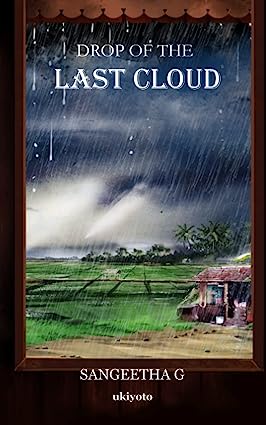
Title: Drop of the Last Cloud

Author: Sangeetha G

Publisher: Ukiyoto Publishing

Sangeetha G’s debut novel, Drop of the Last Cloud, portrays through the life of its protagonist, the decline of matrilineal system and its influence on the prominent Nair community in Travancore from the period 1920s onwards. This system started collapsing with the arrival of colonial morality and was later abolished to make way for the patriarchal system.

The description of this transition is compelling at the hands of its author who has been a senior business journalist and part of the mainstream media in India for more than 20 years. She has worked with various visual media, news agencies and newspapers. Her flash fiction and short stories have been published by various magazines and journals and her work ‘Burning flesh’ won the first prize in Himalayan Writing Retreat flash fiction contest 2022.

The story examines complexities arising in the turbulent period of the said transition which traumatises and affects behavioural changes in a girl at the cusp of adulthood. It lays bare the generational attributes, seeping down and permanently altering the character of the woman the young girl grows into. At the centre however, it is the story of unrequited love which haunts the mind of its protagonist, Gomathy, influencing her life and her relationship with her own children.

Gomathy, born to one of the three sisters of a feudal Nair family, is labelled unlucky at birth by the family astrologer and is sent to her father’s house for her upbringing. Bereft of mother’s affection and brought up by an imposing paternal grandmother, the child Gomathy is set on a course diverse from her siblings and cousins. As she grows into a beautiful and demure young woman, her life is dictated by the choices she makes in order to please her elders and to prove herself morally dignified in the society which has begun to be influenced by the ideas of patriarchy. It is Gomathy’s irresoluteness which makes her accept Govindan as her husband, despite her awareness of his deception and of his manipulative ways which he used to persuade her grandmother to let him marry her. Her decision to not marry Madhavan, the person she loves, and his subsequent death becomes a nightmare from which she never recovers.

The conscious and subconscious self of Gomathy is laid bare through her everyday life with her family, including her children whom she despises, as well as through her dreams of the man she loved but did not marry. Dissimilar in demeanour to the women of her family in her initial growing years, Gomathy as she ages, becomes like her paternal grandmother – daunting and inadequate to love those closer to her.

Through the description of the lifestyles of two households at Kakasherry and Madathil, the author presents a commentary on the societal ways prevailing in the era. In the three sisters of Kakasherry Nair household — Narayani (Gomathy’s mother), Karthiyayani and Parvathy — we find independent women making their own decisions on one hand, while on the other hand we also have the same household absorbed in practicing deep-seated ideas of caste superiority and untouchability. The men, trying to find a strong foothold in changing times, are either manipulative, like Govindan, or vulnerable, like Madhavan. It also hints at the ritual of polyandry as an accepted norm in the matriarchal society.

The book is a critique on the collapse of matrilineal system in Kerala, on the ramifications of succeeding partitions in affluent Nair families, on the hardships of running nuclear families and on the adopting of patriarchal systems. However, intertwined within the narrative are also the themes of blatant caste discrimination, curbing of women’s rights, freedom and the hollowness of wars that not only deaden human sensitivity and empathy but essentially devalue human life and humanity.

Sangeetha’s laidback writing style achieves what the novel misses out in narration. It evolves into a moving account of a woman’s trials and tribulations resulting from her inescapable circumstances, of her helplessness and disquiet which not only turns her into her worst self but also makes her unperceptive of love and compassion. This is an account, whose closure manages to provoke thoughts on the worthlessness of deliberately wasting away a precious life.

Rakhi Dalal is an educator by profession. When not working, she can usually be found reading books or writing about reading them. She writes at https://rakhidalal.blogspot.com/ .

.

PLEASE NOTE: ARTICLES CAN ONLY BE REPRODUCED IN OTHER SITES WITH DUE ACKNOWLEDGEMENT TO BORDERLESS JOURNAL

Click here to access the Borderless anthology, Monalisa No Longer Smiles

Click here to access Monalisa No Longer Smiles on Kindle Amazon International

Categories
Poetry

Sunset by the Blue River

Poetry by George Freek

Courtesy: Creative Commons
SUNSET BY THE BLUE RIVER


The arching branches shelter
the roses from a gusting wind.
Their perfume draws angry bees
and makes them mellow.
As I wander through my garden,
it’s fragrant and colourful.
I’m momentarily sentimental.
Then night falls like a curtain
at the end of a play.
The moon becomes an unresolved mystery
and looks very cold,
and as I drink a cup of tea,
this new spring 
has suddenly become irretrievably old.

George Freek’s poetry has recently appeared in The Ottawa Arts Review, Acumen, The Lake, The Whimsical Poet, Triggerfish and Torrid Literature.

PLEASE NOTE: ARTICLES CAN ONLY BE REPRODUCED IN OTHER SITES WITH DUE ACKNOWLEDGEMENT TO BORDERLESS JOURNAL
Click here to access the Borderless anthology, Monalisa No Longer Smiles

Click here to access Monalisa No Longer Smiles on Kindle Amazon International