Categories
Contents

Borderless, August 2020

Click on the names to read the articles

Special on Hiroshima Nuclear Blast’s 75 th Anniversary

Interview

With nuclear war survivor’s daughter, author Kathleen Burkinshaw

Book Review

Kathleen Burkinshaw’s The Last Cherry Blossom by Archana Mohan

Independence Day Specials 

Story

Tan Kaiyi  

Musings

Aysha Baqir

Nishi Pulugurtha

Poetry

Paresh Tiwari, Dr Lakshmisree Banerjee, Mossarap Khan, Ahmad Rayees, Gopal Lahiri

Humour

Limmericks

Click here to read

Poetry

Vatsala Radhakeesoon, Santosh Bakaya, Palak Tyagi, Rhys Hughes, Aditya Shankar, Sudeshna Mukherjee, Sunil Sharma, Dustin Pickering, Dr Piku Chowdhury, Dr Sutanuka Ghosh Roy, Saranyan BV

Stories

Gita Viswanath

Sudeshna Mukherjee

Sohana Manzoor

Slice of Life/ Musings

Devraj Singh Kalsi

Santosh Bakaya

Sohana Manzoor

More…

Poetry

Navneet K Mann, Gracy Samjetsabam, Dr Ajanta Paul, Goto Emmanuel, Prithvijeet Sinha, Shyamsree Maji, Pervin Saket, Andrée Roby, Anuradha Prasad, Kavita Ezekeil Mendonca, Melissa Chappell

Translation

Three poems translated by RaSh

Excerpt

John Beacham’s poems from his book, On the Pandemic, To the Rising.

Stories

KN Ganguli

Sunil Sharma

Vipin Nair

Jessie Michael

Supriya Rakesh

Book reviews 

Avik Chanda’s Dara Shukoh: The Man who would be King reviewed by Dr Meenakshi Malhotra

Dom Moraes’ Never At Home reviewed by Rakhi Dalal

Resonance: English Poetry from Odisha reviewed by Gopal Lahiri

Essays 

Avik Chanda 

Dustin Pickering

Bhaskar Parichha

Sara’s Selections

August 2020 — Click here to read

Editorial

Changes & Laughter by Mitali Chakravarty

Categories
Interview

How the Impact of the Hiroshima Blast Lingers

An exclusive interview with Kathleen Burkinshaw, author and the daughter of a survivor of the first nuclear blast that bloodied the history of mankind three quarters of a century ago

Kathleen Burkinshaw

The best introduction to Kathleen Burkinshaw is that she a humanitarian. She wrote a novel that has been taken up by the United Nations as a part of its peacekeeping effort. She has been actively participating in efforts to ban nuclear weapons, including presenting with Nobel Laureates. Kathleen Burkinshaw, the author of The Last Cherry Blossom, a book that is in the process of gathering further accolades, is a peace activist who talks of the effects of the nuclear war. She is the daughter of a hibakusha, a survivor of the Hiroshima blast that took place seventy-five years ago. Burkinshaw still suffers the impact of her mother’s exposure to the Hiroshima blast, where the protagonist of The Last Cherry Blossom, based on her own mother, sees her father die of the exposure and loses her best friend in the middle of a conversation. In this exclusive, Burkinshaw talks of the book, why and how it came about and the impact the bomb continues to have in our lives.  

Why did you write your book? Tell us your story. 

When my daughter was in the seventh grade, she came home from school terribly upset. They were wrapping up World War II in their history class, and she had overheard some students talking about the ‘cool’ mushroom cloud picture. She asked me if I could visit her class and talk about the people impacted by being under those famous mushroom clouds, people like her grandma.

I had never discussed my mother’s life in Hiroshima during World War II. My mother was a very private person and she also didn’t want attention drawn to herself.  But after my daughter’s request, she gave me her consent. She bravely shared more memories of the most horrific day of her life. Memories that she had locked away in her heart because they had been too painful to discuss. 

The main reason, my mother agreed (aside from the fact her granddaughter asked her), was that she knew students in the seventh grade would be around the same age she was when the bomb dropped. She was twelve years old. She hoped that students could relate to her story and by sharing her experience, these future voters would realise that the use of nuclear weapons against any country or people, for any reason, should never be repeated.

I received requests to visit other schools the following year. I began to write about my mom after teachers requested a book to complement their curriculum. I told my mom about this request. 

Later that week, she sent me a copy of her most treasured photo from her childhood. It is the one of her and her papa (which is in the back of the book). When I looked at the photo which I remembered from my childhood because it always had a place of honour in our home, I realised there was more to her life than just war and death, she had loving memories as well.

That’s when I knew I needed to start the book months before the bomb was dropped. I wanted to show the culture, the mindset and the daily life in Japan during the war. I intended to give the reader the view of the last year of WWII and the atomic bombing through the eyes of a twelve-year-old Japanese girl—something that has not been done before.

That’s when I knew I needed to start the book months before the bomb. I wanted to show the culture, the mindset, and the daily life in Japan during the war. I intended to give the reader the view of the last year of WWII and the atomic bombing through the eyes of a 12-year-old Japanese girl-something that has not been done before.

Your book explores colours of Japan. How different is it from US?

The Last Cherry Blossom (TLCB) discusses life in Japan during WWII. I wanted to show how the Japanese citizens viewed their political leaders — very different from the US. I also wanted to show that Japan had been at war for 14 years (they invaded Manchuria in 1931) by the time of the atomic bombing — they were out of so many natural resources, as well as the young soldiers. The majority of the Japanese soldiers were fighting out in the Pacific. So even though Hiroshima was once a strong military port, in 1945 it was mostly elderly, women, and children. In addition to that, the firebombs dropped on Tokyo decimated that city and other areas in Japan had endured Allied bombing. The US did have the horrific Japanese attack of Pearl Harbor, bringing the US into the war — but no other US cities with citizens endured bombing after that.   However, what I really wanted to emphasise was the similarity between the two countries.  The children in Japan like my mom, loved their families, worried might happen to them and wished for peace. Exactly the same as the children in the US.

When and why did your mother move to US? Did your mother find it difficult to adjust?

My mother met my dad (a white American serving in the Air Force at a base close to Tokyo) in Tokyo. They married at the US Embassy in Tokyo in 1959. His time serving ended shortly thereafter and they moved to the United States.

Yes, my mother found it difficult to adjust. My mother didn’t expect the prejudice and racial slurs against her. She figured it was 14 years after the end of the war and she was on the losing side. She didn’t tell them about the atomic bombing-she wanted to have the least amount of attention. She told everyone she was from Tokyo. I didn’t even know she was from Hiroshima until I was 11.

She wasn’t a shy person. She was intelligent and determined. She learned English and became a citizen within 5 years of arriving in the US. She had a job at an electronics company and made circuit boards that were on Apollo 11. Unfortunately, the town we lived in had very few Asian people and none of them were Japanese. When I was born, she “Americanised” (her word) our home. She wanted people to know that I was an American so I would not experience racist actions. However, being one of the few Asians in elementary school, I experienced quite a bit of prejudice and racial slurs, anyway.

My mother was the bravest person I will ever know. She lost so much on August 6th, 1945. Yet, she never lost her ability to love.  

The UN has taken up your book as part of its peace process. Tell us a bit about that.

In December of 2018, John Ennis, the Chief of Information and Outreach at the United Nations Office of Disarmament Affairs (UNODA) contacted me after reading The Last Cherry Blossom. He felt very strongly that the book should be used in classrooms to future voters. Nothing like it has been written before from this point of view of a 12-year-old girl. He told me that it would be designated a UNODA Education Resource for Students and Teachers. I was beyond happy that a book honoring my mom and what she experienced would be on that list. Later in 2019 UNODA invited me to the United Nations in NYC to discuss my book at the UN Bookshop as well as to participate in a workshop for NYC teachers on how to add nuclear disarmament to their curriculum. It was a surreal honour to be a presenter with Noble Peace Prize winners Dr. Kathleen Sullivan and other members under the International Coalition Against Nuclear Weapons (ICAN) for the Treaty to Ban Nuclear Weapons!

What exactly do you do to create an awareness about the nuclear issue?

In addition to interviews like yours I have spoken at teacher conferences, school librarian conferences throughout the United States. In addition to that TLCB has been on many school lists so I have had opportunity to speak with students, future voters all over the world! For example, I have had the joy to speak with students in Hiroshima who have chosen TLCB to be their 6th grade read for 4 years in a row. The students also made my first book trailer. The latest group of students I had the joy to speak with were in India! 

I feel that the more I can discuss my mother’s experience so that students can relate and connect to the devastation, horror, and loss my mother and her family endured — they leave that classroom as future voters knowing that nuclear weapons should never be used again.

Do you think after the holocaust another nuclear war is likely? How do you see the role of your book propounding peace?

People have asked me 75 years later — why should these stories still be told? Well time passes, and technology changes but the need for human connection through emotions is timeless. So, I feel that while statistics and treaties are very important — if we can’t get people to understand/relate to the humanity under those now famous mushroom clouds, then none of the numbers or science is going to matter. And if it doesn’t matter because there is no connection, then yes, we are at risk of repeating the same deadly mistakes again.

I hope that TLCB relays the message and an emotional impact that two paragraphs in a textbook could never do. I want readers to understand that NO family should ever have to endure the hellish, horrific deadly destruction that MY family has.

I lived with the scars of the atomic bombing during my childhood watching/reacting to the post-traumatic stress disorder (PTSD) effects on my Mom and  I still live with it each day with Reflex Sympathetic Dystrophy (chronic, progressive neuro pain disease that affects the sympathetic nervous system). Doctors have said that the damage to my immune system from the radiation my mom was exposed to from the atomic bomb, attributed to this.

.

This was an online interview conducted by Mitali Chakravarty

.

PLEASE NOTE: ARTICLES CAN ONLY BE REPRODUCED IN OTHER SITES WITH DUE ACKNOWLEDGEMENT TO BORDERLESS JOURNAL. 

Click here to read the review of The Last Cherry Blossom.

Categories
Review

Revisiting Hiroshima: The Last Cherry Blossom

On August 6, 1945, at 8.15 am, an atom bomb was dropped at Hiroshima to end World War II. Archana Mohan takes us on a journey through a novel which gives the story of before and after the bombing & currently lauded and promoted by the United Nations for peacekeeping.

Title: The Last Cherry Blossom

Author: Kathleen Burkinshaw

When a book opens with American B-29s flying overhead and school children cowering under desks hoping they are alive to see what grade they got on  their school report, it is a wake-up call.

War has no business threatening children in their safe temples of learning.  

But what is war really? It is when we forget that the enemy is a human being too with lives just like ours. That, is the crux of The Last Cherry Blossom, a sparkling debut novel filled with hope and resilience by Kathleen Burkinshaw.

The story, set in Japan, in the 1940s, centers around a pleasant 12-year- old named Yuriko.

Yuriko is an average middle grader. She struggles in government mandated bamboo spear classes and can’t sew to save her life. At home, her aunt isn’t cordial to her and her five year old cousin just keeps pressing her buttons but she is a happy trooper thanks to the two people who love her and understand her like no other — her Papa, a well respected newspaper editor, and her best friend, Machiko.

Soon, there are big changes in Yuriko’s life – a new addition to the family and a stunning secret but all of those pale in comparison to a chilling realization – even though the authorities claim otherwise, Japan is losing the war against the allies.

Amidst the colourful ‘kimonos’, the tea ceremonies, dips in koi ponds, the delicious Toshikoshi Soba and the beloved Sakura Hanami (the cherry blossom viewing), the smell of the inevitable lingers on.

In a poignant moment, Yuriko’s best friend Machiko, who has been drafted to work in an airplane factory says that she doesn’t even bother moving to an air raid shelter because she is too exhausted to care. Still, they carry on, like teenagers do, with their banned American Jazz records, crushes and heart to heart talks.

Until one day, the nightmare turns true.

An ear shattering popping noise.

An intense burst of white light.

And just like that, the lives of Yuriko and everyone around her are never the same again.

In an earlier insight into her mind, Yuriko confesses that she loves mathematics because everything is black and white. But when you lose everything you love, for no fault of your own, does anything make sense anymore?

The cherry blossoms are the glue holding this story together. It is at the cherry blossom festival that the family is together for one last time, hence the title but the significance of these beautiful flowers go deeper than that.

They represent life itself — so beautiful, yet so fragile that they bloom for only a short time. The characters who lived a privileged life before, come to a realisation that not everything can be foreseen, not everything can be planned but life is about living it to the best potential.

This is not a fictional story.  The author’s mother herself is a ‘hibakusha’ or a survivor and this is her true story.

No one knows the devastating  effects of  warfare more than the author.  Effects of the radiation from atomic bombs impact generations and Burkinshaw unfortunately suffers from a chronic neurological disorder because of that.

This is a deeply moving and personal story, laying bare the far reaching effects of war and that is why the book is now a United Nations Office for Disarmament Affairs Resource for teachers and students.

Perhaps, the greatest quality of the book is the hope it weaves into the narrative despite the desolation and fear that paints the landscape after the blast.

A point it makes with the versatile cherry blossoms again.

Scientists said nothing would grow again in the Hiroshima soil for many years after the atomic bomb was dropped. Yet, the cherry blossoms defiantly bloomed the following spring.

“The cherry blossoms endured much like the spirit of the people—like my mother—who were affected by the bombing of Hiroshima,” writes the author.

Seventy five years ago, on August 6, 1945 at 8.15 am, the atom bomb or ‘pika don’ killed 80,000 people and the toll rose to more than 1,40,000 within the next five years.

As Yuriko grapples with difficult decisions in the aftermath, through her eyes, something becomes clear as day. We must never find ourselves in a position where the colour of the sky is no longer unrecognizable.

Never must we forget what happened in Hiroshima that day. Never again must we take peace for granted.

.

Archana Mohan is  the co-founder of Bookosmia (smell of books) a children’s content company that delivers brilliant content to the world through Sara — India’s first female sports loving character. Her book Yaksha, India’s first children’s book on the dying folk art form of Yakshagana received wide acclaim. She has worked as  a  journalist, corporate blogger and editor working with names like Business Standard, Woman’s Era, Deccan Herald, Chicken Soup for the Soul and Luxury Escapes Magazine.  She won the Commonwealth Short Story contest’s ‘Highly Commended Story’ award in 2009. She loves interacting with budding writers and has conducted journalism workshops in colleges.Do check out Bookosmia’s website https://bookosmia.com/about-us/ for more information.

.

PLEASE NOTE: ARTICLES CAN ONLY BE REPRODUCED IN OTHER SITES WITH DUE ACKNOWLEDGEMENT TO BORDERLESS JOURNAL.
Categories
Stories

When Two or Three are Gathered

By Tan Kaiyi

“Are you sure it’s safe for us to be this close?” Anushka asked.

“I don’t know. They said it’s not over,” Rizwan said.

“Who says it’s not over?”

“It’s all over the radio,” Cheng said.

“All over?” Rachel asked.

“It was on every channel I was scanning this morning.”

“You can’t believe everything you hear.”

“It’s from the Ministers. The 6Gs.”

“We don’t even know who they are. All we hear about them is from the radio,” Anushka said.

“But everything they said had turned out to be true.”

“We aren’t sure of that. All we hear is the numbers of people who disappeared from some voice who claims to have the mandate to govern,” Rachel said.

“The voice had been right about the virus,” Rizwan said.

“If it’s a virus.”

“I don’t know what else to call it. It makes logical sense that the government would have a continuity plan, some kind of team after things fall apart.”

If the government was smarter, it wouldn’t have needed a continuity plan, Cheng thought. But then again, no one has seen anything like this. Who would be smart enough to know that people would start turning when two or three were gathered. Physical contact seems to be the main trigger, but reports had come in of people mutating even when they were near each other.

“Hey, watch the distance!” Anushka yelled.

“Sorry, let me move a bit,” Cheng said.

“I don’t want to become one of them, not at a time like this. Sorry, I don’t mean you have it.”

“I know, I know, I’m sorry.”

“It’s okay. Are you sure this is going to work though?”

“I don’t know,” Cheng said.

“We have to hold hands. I don’t think it’s a good idea,” Rizwan said.

He looked at the symbols they have set up for the ritual. Five stars and a moon drawn in blood and white chalk on the ground. The four of them had seen it in their dreams, a city of glistening mirror colossi, glistening with the reflected sun under clean blue skies. It was so vivid that they could smell the aroma of the air and the soothing embrace of the heat. And the people! None of these horrid mutations that flailed and shrieked about. What they would have given to just walk down the street without the risk of getting mauled by their twisted limbs or infected by their touch! If they did the ritual right, that’s where they would be — or at least that’s what they thought.

“We don’t even know if it’s going to work,” Anushka said

“You’ve seen it. You’ve seen it in the dreams,” Rachel said.

“It could be that. Just dreams. Nothing more.”

“We’ve come this far, we’ve got to give it a shot.”

Rachel looked at her friend from secondary school. She wanted to tell her that it was alright, that once it was done, she was sure that the ritual would open up a better world for them. But she wasn’t sure. The legend had been circulating after the mutations spread throughout the world. The sickness was biological, but it was something more. There was talk that it could bend reality, which explained how the virus warped human physiology. When this idea spread through the airwaves, it led to several theories about a hidden gateway to a parallel world — similar to theirs but with a brighter fate.

“Lots of people have died to come to this place. We got lucky, we’re here now,” he said, remembering the many moments in their journey when they narrowly escaped death. Mid-way, Cheng had caught a bad case of fever and breathlessness, and he felt that his body was turning inside out. It was the most fearful experience he had in his entire life. Just put a bullet in my head, he told Anushka. He heard her refusals through her soft sobs, but he didn’t want to end his life as some kind of inflamed monstrosity. No one dared to go near him, and that sense of isolation fuelled his anguish. He didn’t know how they got through it but the fever faded after a week. It delayed the entire journey, and depleted their rations ahead of time.

Johnson, one of their original companions, died of hunger a few days after that. Since then, Cheng hadn’t been able to sleep well. Even if they succeeded in getting out of this place, he knew his feeling of partial responsibility over Johnson’s death would continue to demonise him for the rest of his life. The four of them readied the items. The candles were set around the six symbols painted.

“It looks a bit like our flag, isn’t it?” Rizwan asked.

“A little,” Cheng said.

“What do you think we saw?”

“I don’t know. But it sure looks better than here,” when those worlds rolled out of Cheng’s tongue, he realised how absurd it sounded. It didn’t bode well for hope. He was beginning to think that this was all a mistake. He tried to comfort himself by thinking that that the distance between them and freedom was that one metre which prevented transmission, but his heart began to tremble and he prayed that his fear wasn’t showing.

“That’s it. All we need to do is to hold hands and close our eyes,” Cheng said.

“How long?” Anushka asked.

“I don’t know. What did the stories say?” Cheng asked.

“They say you will hear crackling in the air and the stench of death will be gone,” Rizwan said. He was haunted by hesitations, but they had come this far. If ahead lay death, it was nothing better than what they were leaving behind.

“Are we ready?” Cheng asked.

“I don’t know,” Rachel answered.

“Let’s start with the first step.”

The first step could be the deadliest. They stared at each other for what seemed like lifetimes, before they slowly reached out with their hands. When their fingers touched, an icy sensation crept up their arms and spine. Cheng cursed. The foul words released the tension from his shoulders and throat like a magical incantation.

“We’re still normal,” Cheng said.

“That’s a good start,” Anushka said.

“Okay, then we just keep repeating the chant?” Rachel asked.

“Yes,” Rizwan said.

And they begin to sing. The words and melody filled their minds and the room. The lyrics and music were familiar, they sang it every morning before school started — though the tune of this version was slightly distorted.

Eyes closed, it was hard to tell how much time had passed.

They were lost in the words. As they became more absorbed into the verses, they felt themselves dissolve. But without opening their eyes, they couldn’t know what was going on. A thought came up in Rizwan’s mind. He felt removed from the entire process — like a disembodied eye that watched over them. They were still in the room, he felt.

 There was nothing left to do but to carry on. And so they continued — drowning in the sea of words and time, waiting and waiting, only coming up to grasp the scent of fresh air.

.

Tan Kaiyi is on a literary odyssey to unearth the wonders and weirdness within the mundane. His poems have appeared in the Quarterly Literary Review Singapore (QLRS). His play, On Love, was selected for performance at Short & Sweet Festival Singapore. He has also been published in Best Asian Speculative Fiction (2018), an anthology of science fiction, fantasy and horror stories from the region.

.

PLEASE NOTE: ARTICLES CAN ONLY BE REPRODUCED IN OTHER SITES WITH DUE ACKNOWLEDGEMENT TO BORDERLESS JOURNAL. 

Categories
Poetry

Three Poems

By Paresh Tiwari

The Salt of Things 

You come back an ocean. Vast. Unpredictable. Blue. Four boats unmoored on your chest. You come back holding silence in your ears, the way sky holds grey. A primordial roar cradled within the conch shell.

Your feet now end in beaches. White. Boundless. Meeting the horizon of your stoic journey. Each finger is now a coral. Growing an inch every decade. 

In those in-between years, I spoke about you as if you were still here. Like I still need to worry about the cut of bread in your lunch box. Now that you are back, I seek the cleft of your chin. Bleached for eons under the unrelenting sun. Your skin is salt and wetness and sand. Crab holes breathing constellations. Your hair is shoal colonised by angelfish. They dart out when the moon is half. When the night has only just begun.

This moon was once an accomplice. The easy melody of a lullaby. 

You come back and your eyes are islands. Floating over the sweep of clear blue. Untouched. Wild. Distant. And I wonder which boat will ferry me back to your shores.

dragonflies —
the way we skitter
around topics

ellipses . . .
measuring the stillness
of every pause


Translating Rain

the window is a wound pried open. 
and when the rain comes down,
it’s a traveller of new roads.
the rain song hovers over the neon
neckline of Bombay. hangs from leaves 
and streetlamps. unsure. lost. orphaned 
in this city of vertical cardiograms. 

sitting across each another. there are no words to place on our tongues. to say that we can only make love in approximations. in the irrationality of never quite there. you reach out and take my hand. guiding it along, one breadcrumb at a time. to your breasts. rising and falling.

rain remembers falling. 
warbling in the throat of a chaatak. 
sloshing under the feet of a young girl.
rain remembers the time it wasn’t
when the womb of its cloud was empty.
and when the rain comes down, 
it’s a tapestry of mist and desire.

your name is half-moon on my lips. whispered in nastaʿlīq. the arch of your back, the gentle curve of a Ming bowl. blue. bluer still the softness of your moan stretching over seven syllables. each with a life of its own. sometimes the distance between two breaths could be a way to measure eternity. 

rain knows eternity.
it’s a child leaping over culverts
a deluge of laughter and 
wings and a rallying cry of dissent.
and when the rain comes down, 
it soaks into the lime-washed walls 
now a map of smudged borders.
 
The Anatomy of Violence

I unlatch the door and step inside to the heavy wag of a black tail. I stroke the now rough hair of the old dog, take an ear in my hand, fold it over, and run my fingers across his muzzle. He closes his eyes and leans into my hand. I can feel the weight of his head as I hold it up so I can blow over his damp nose. All part of the dance we taught each other long ago. 

There’s a pistol in the pocket of my coat. I pull it out and raise it to the dog’s long brow now peppered with the grey of time and place it between his sad eyes. The dog is impervious to the terror of cold steel. 

He continues to wag the tail. Thump. Thump. Thump.

protests
the taste of blood
in my mouth

.

Paresh Tiwari is a poet, artist and editor. He has been widely published, especially in the sub-genre of Japanese poetry. A Pushcart Prize nominee, his work has appeared in several publications, including the anthology by Sahitya Akademi, ‘Modern English Poetry by Younger Indians’ released to celebrate 200 years of Indian English Poetry. ‘Raindrops chasing Raindrops’, his second haibun collection was awarded the Touchstone Distinguished Books Award in the year 2017. Paresh has co-edited the landmark International Haibun Anthology, Red River Book of Haibun, Vol 1 which was published by Red River Publications in 2019. He is also the serving haibun editor of the online literary magazine Narrow Road.

.

PLEASE NOTE: ARTICLES CAN ONLY BE REPRODUCED IN OTHER SITES WITH DUE ACKNOWLEDGEMENT TO BORDERLESS JOURNAL. 
Categories
Slices from Life

Singapore’s Secret Recipe

By Aysha Baqir

It was an early Saturday morning when I dropped my eleven-year old for a race in northeast Singapore. My son was excited to find his friend and I was anxious to find a coffee shop and nose-dive into the novel I had started last night. The race, I had been told, would last for over an hour. As we waited on the sidewalk for the light to change, I cheered up sighting a small mall on the left. Suddenly, the clouds cover shifted to reveal a clear blue sky. In the horizon, misty clouds shimmered and spun gold.

We entered the lush grounds and my sneakers made a squelching sound. I grimaced. It must have rained last night. How were they going to run?

“Mama,” My son tugged my hand to let me know he’d spotted his friend.  And in the next instant, with a quick “Bye, will call you when it’s over,” he darted towards the long cue in front of the uniform booth. For a few moments, I stood there. My eyes followed him until he joined his friends, and I forced myself not to walk after him to demand a goodbye hug. Catching the second, “you can go away now” look from him I turned around and trudged back.

I crossed the road and headed straight for the mall already anticipating the strong aroma and the smooth taste of a cappuccino, and then stopped, stumped. The glass doors were shut. I stared through the glass doors trying to get the attention of the cleaners who mopped and vacuumed. No luck. I stepped back and caught the sign for opening and closing hours. The mall would open at 9 AM. Impossible. This was supposed to be the “me” time. I peered again into the glass doors but when it was clear I would get no attention, I turned around and debated my options. I could head back to the park and wait it out, or explore the area. Pushing away the thoughts of the page-turner in my tote, I opted for the latter. In a few minutes I had crossed a few blocks and found myself in a quaint neighbourhood.  I walked along a narrow road with colourful buildings on either side. Red and gold decorations adorned many doors. Some grocery and home supplies shops were already open.

I continued to walk further, and hearing chatter, turned a corner, stopped, and stared.  It was a small hawker centre with a row of stalls and a few dozen tables. All the tables were full. Grandparents, parents, and children gathered for the morning meal. Glasses and plates clinked and clanked.

Young and old and ate together. In one corner, a mother helped her son with his homework. In another corner a man helped to feed his aged mother. Some families exited, and more entered. They knew each other and stopped to talk and share news. Two young children played a game in a corner.

I moved forward drawn by the whiff of strong black sweet coffee mixed with the aroma of fried roti paratas, and creamy coconut laksa. My eyes lingered over mounds of white rice on fresh green pandan leaves, crisp leafy vegetable heaped on steamed noodles, stacks of butter toasts, bowls of soothing ayam sotto, and moist carrot cakes.

Spicy. Savory. Salty. Sweet. Flavors and colors blended and melted together. They ate different food, but they ate together.

Food brings people together.

Had I read it somewhere or heard it from someone? I didn’t remember. But in that moment, something shifted. The easy banter, the jokes, and laughs made me pause. I saw an old Chinese man offer a bowl of noodles to his friend. I saw an Indian dad urge his daughter to finish her vegetables. I saw a little Malay boy perform magic tricks to make his grandmother smile. Frowns faded. Faces beamed. From the ease with which they interacted, I sensed they knew each other and lived close by. Had they grown up together, shared life events, and supported each other through difficult and challenging times? Their differences ceased to matter when they ate together and shared food. In that one moment in a small hawker centre, I saw Singapore, a nation of approximately 5.7 million people and diverse ethnic groups become one. Warmth and love wove around them like fairy dust.

The Uncle at the coffee stand beckoned, and I ordered a black coffee. A distant memory tugged. I had seen this in my home country once upon a time, when neighbors knew each other and looked out for each other and when they ate together. Men, women, children, all together. No more. I remembered years back when my cousin had wandered outside our gate and walked to the nearby market and the fruit vendor had brought him back. The time was gone. But it existed here in this instant, where the individuals fused into families, merged into a vibrant community, and cemented into one strong nation. When people ate together, meal after meal, day after day, year after year, they became one, one nation.

I smiled at the Uncle as he handed me my coffee and decided that my son and I would have breakfast together before we headed home. I turned knowing I walked away something special, glanced back one last time and blew a prayer. Peace. Protection. Prosperity.  

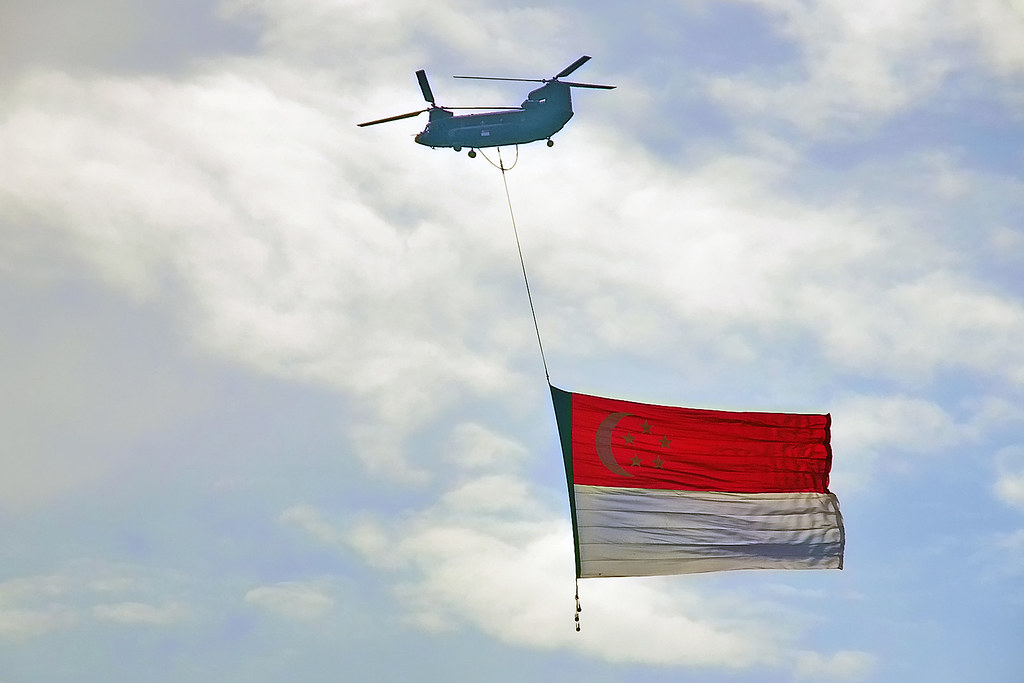
Happy National Day, Singapore.

Aysha Baqir grew up in Pakistan. Her time in college sparked a passion for economic development. In 1998 she founded a pioneering not for profit economic development organization, Kaarvan Crafts Foundation, with a mission to alleviate poverty by providing business and marketing training to girls and women in low-income communities. Her novel Beyond the Fields was published in January 2019 and she was invited to launch her book at the Lahore and Karachi Literary Festivals and was featured in the Singapore Writers Festival and Money FM Career 360 in Singapore. Her interviews have appeared in Ex-pat Living, Mount Holyoke Alumnae Quarterly, Kitaab, and The Tempest.  She is an Ashoka Fellow. www.ayshabaqir.com

PLEASE NOTE: ARTICLES CAN ONLY BE REPRODUCED IN OTHER SITES WITH DUE ACKNOWLEDGEMENT TO BORDERLESS JOURNAL. 
Categories
Poetry

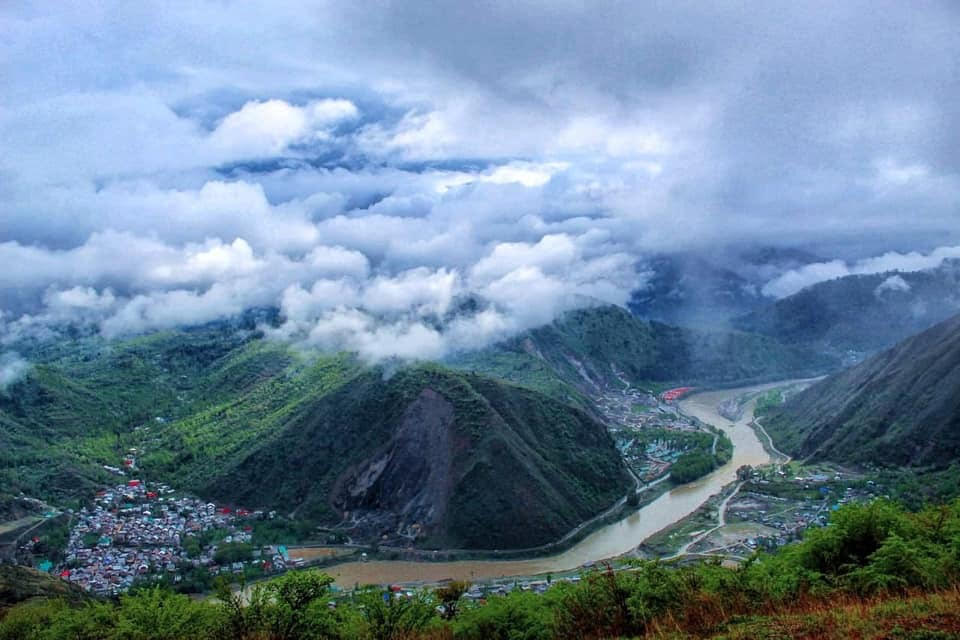
Poems from Kashmir

By Ahmad Rayees

Unsettled Agonies

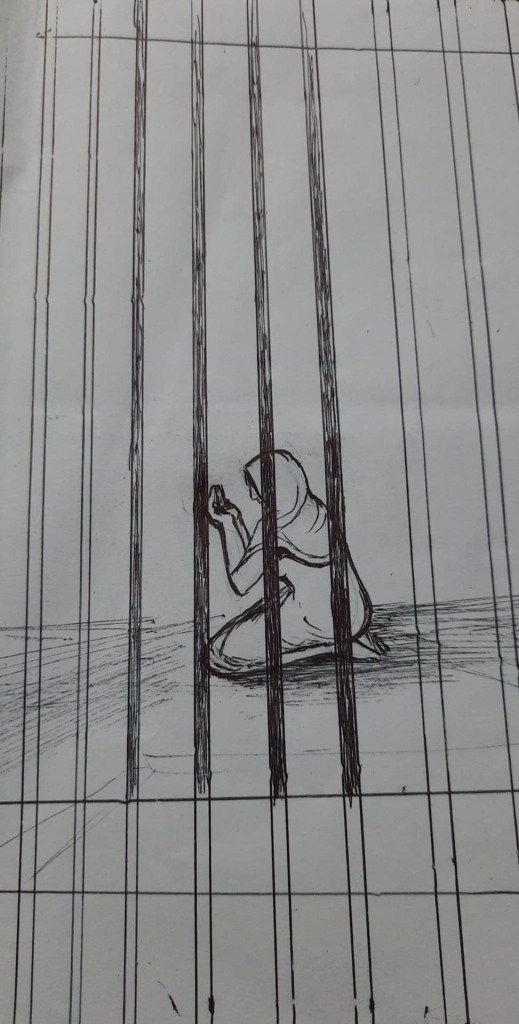
We lived — yes we lived in confinement

We lived in solitary confinement…

We were living in it yesterday and today.

We may be living in it tomorrow also.

.

I looked at the darkness that slowly grew around me

.

Spring suffocated in the gardens.

Flowers died on branches on their own

As the unborn died in the womb of a dead mother.

Faraway a little bird fluttered in pain and agony…

.

I sadly captured the hues of autumn…

.

The wild wind blew away a heap of dried leaves

And dust swept away dreams of daffodils,

Withering the petals to be embraced by winter.

Naked branches helplessly stretched out their longings towards the sky

.

I sat alone looking at the turbulent future in time

.

The river saturated into white snowy silence…

And the lonely boat half drowns into that cold aloofness.

Like the half- widows — half-dead, and half-alive

Suspended in life with a trickle of hope and deathly grief

.

I sat down on the horizon and looked at the sky.

.

It seems the Earth was angry with the sky

Just as the moon was angry with the sun and the stars.

Maybe Nature itself is slowly coming to a halt   

Oh God,  are you also in pain and despair?

.

The countries busily build walls of hatred and tyranny

While little Alan slept endlessly on the shores of the great sea

The angels are whimpering and awakening their dead ones

Remember that no amount of candies can wash away their pain

.

I’m still walking through the rubble of the city of hatred —

.

Here every soul is thirsty and everybody is hurt in the mayhem.

Here everyone seems to be oppressed  and enslaved.

Here everyone seems to be lonely, the rich and the poor.

Here everyone seems to be strangely normal and silently crying…

.

I searched like a wailing morning breeze of the mountains.

.

Today I know the pitcher of love is broken and dried

Today I am standing here and waiting for you my Prophet!

Bring us the magical verses that will melt our stoned heart.

Sing for us the song of sparrows, the songs of love and peace.

.

Sing for us the song of life, song of your eternal gardens……

.

Warrior Of Light: A Tribute To My Mother

 Mother, Oh mother, you are my  guardian angel, epitome of love.

All mothers are precious to their children, she’s the goddess of life

And my mother is my everything , she’s is the light of my eyes

Without her I will not exist, without her I will not sustain

My mother is the most courageous woman of our valley

She’s is the most ferocious , most beautiful angel of this paradise

Like the torrential waters of Jhelum, she went beyond the mountains and valley for truth

She’s is not afraid of anything or anyone when it comes to protect her children

Come soon mother the home is desolated in your absence

Reminiscence of your caring persona , your touch , your smell ,

Again and again resonating the sense of loss and sense of vacuum

Now we are the orphaned lambs of the meadows lost without our shepherd

When will you be back mom , Eid is here Muharram is gone

Years are passing in gloom without you in our life

Our screams are suppressed our pain is been ignored and forgotten

Our prayers, our shrines are vandalised by pellets and bullets

But your voice echoed in us , your shadow loomed around us

Your infinite love and compassion for humanity is our strength mother

You keep the promises of tomorrow , fighting injustice alone in the dark cell

Your persistence your determination is the vast silent Himalayas

Tall as the heavenly seraph slayer of evil, hold us in your encompassing wings

Mother you are my rock, you are my sword and shield

Mother come for once, make me sleep inside your warm “Phiren”

Make me sleep next to your heart, the pot of red embers.

.

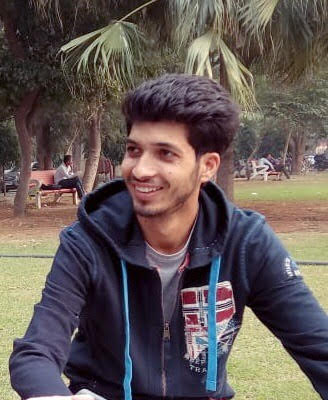
Rayees Ahmad is a budding writer and poet from Kashmir. He has bachelor’s in mass communication and masters in Peace and Conflict Studies. He hopes to add a new colour to Kashmir and the conflict it faces through his poetry. He has written many poems and articles on the Kashmiri diaspora. 

PLEASE NOTE: ARTICLES CAN ONLY BE REPRODUCED IN OTHER SITES WITH DUE ACKNOWLEDGEMENT TO BORDERLESS JOURNAL.

Categories
Musings

Playtime

By Nishi Pulugurtha

I see more of the sky these days. A beautiful blue sky, some clouds here and there. I try to figure the shapes in my head, something that I did as a child. I see the light from the rather dimmed sun endowing the clouds with some colour, at times bright, at others, dull and dim. There seems to be some play at work, the sun, the sky and the clouds. I used to walk in the gated compound that houses my apartment only to be largely disturbed by mosquitoes and other insects. As these creepy crawlies cause an allergic reaction on my skin, I decided that I had to find some other place to walk. A climb up some stairs to the terrace and the discovery of a small, restricted place to walk and an open, sprawling space around me (beyond the walls) and above me — this is where I walk most evenings now.

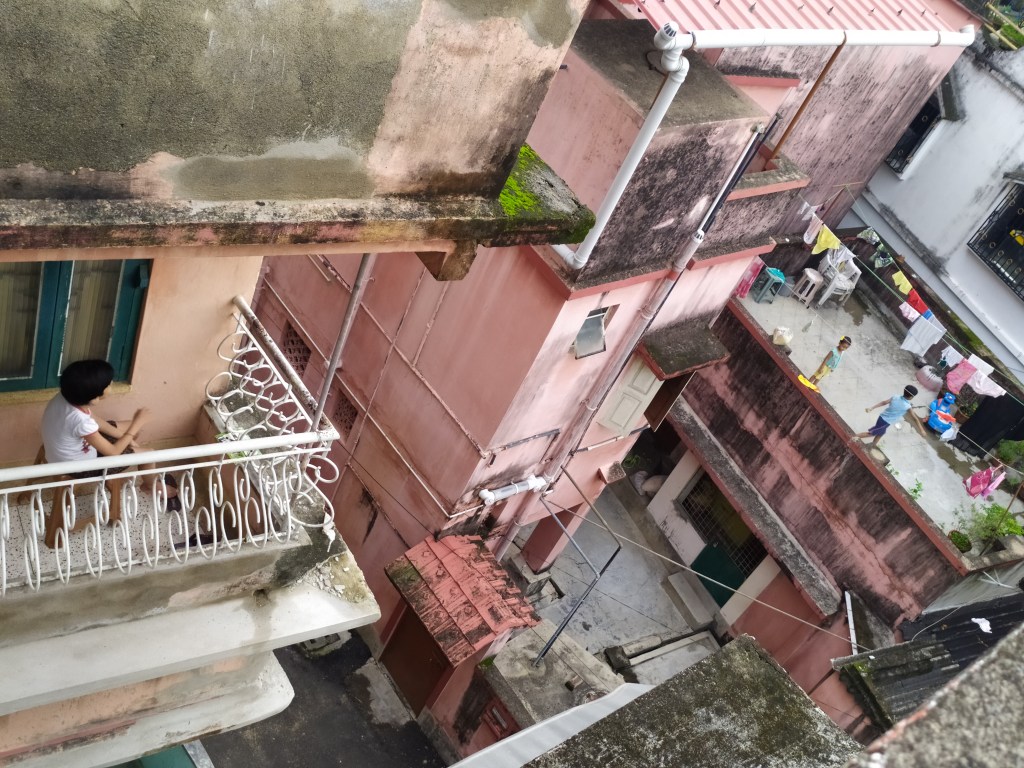
The other terraces around me also seem to have some activity. Just beyond the compound wall are two buildings, yellow and green. I see people there — an old gentleman leisurely walking alone. After some time, a lady joins in on a brisker walk. The old gentleman moves to one side and looks at children playing on the opposite terrace. He has a toy in his hand which he throws. It is caught by the little girl who is out at play. She runs, hops, jumps, and plays. At times she has company, another small one. But mostly, she is there with her father. I see her learning to ride a bicycle. He is there holding on, trying to teach her, reaching out to lend a hand if he thinks she needs help. I am sure she will learn it soon.

The red house next door is usually quiet. As I was looking around, I heard someone calling out my name. I turned to see a young girl of about eight. There was another little one behind here, about two years old. And then I saw their mother and we start catching up. She decided to visit her mother and that is the reason why the quiet house has so much activity now. Moreover, she said that kids were getting restless. She had come for a week, she said. A small break for the kids. Well, not much of a break for the older one, though – online classes were still on. The kids moved on to play. They were not playing among themselves.

Right opposite the red house was another pink one with a terrace adjacent to rooms on the first floor. Two small boys played there each evening – riding a small car, playing with plastic cricket bats, running about and the like. Their mother is a nurse and has long hectic hours. I hear their voices every day, they wave to me when I look out too. I noticed a new game these days with the kids talking across buildings, not just talking but playing as well – the girls in the verandah of the red building and the boys just opposite. I hear their voices, I notice their games too. It is mostly a kind of a dumb charade – the eight year girl mostly deciding on the nature of the game. She is the oldest of the lot.  The girl in the red house enacts a scene and the boys have to guess what it is all about and vice versa. As I look at them at their ‘game’ I find it sad, I smile too. They have managed to find a way to ‘play’. Sad, because their ‘play’ reveals the situation we are in at the present times, stuck in our respective homes, trying to deal with the present scenario.

I am reminded of our games and play too. As kids we played on the road in front of our homes. We ran about, played ‘hide and side’, hiding in lanes, behind houses – we had a particular demarcated zone of play. We had our fights, our quarrels too. Those were days when there were not too many cars on the streets and hence it was safe playing on the street.

We had spectators then too. There would be Pishima* sitting on her tall stool upstairs, her afternoon nap done, with a cup of tea and a biscuit in hand. There would be Bubun’s mother who took an active interest in all what we did, at times even interfering in our play — Bubun was one of our playmates. There would be the Dida* in the opposite house, alone in that big house, looking out and delighting in our play. We played every day, after we got back from school, after our homework was done. As we went on to middle school, we played only on Wednesdays and Thursdays (school was off on Thursdays) and on the weekends.

There would be some weekends when there was no company to play outside, my playmates were off to their grandparents’ place. However, my sister and I played at home, in our long verandah. We managed to keep ourselves busy. Yes, we did complain that all our playmates were away. It was not possible for us to travel to Ammamma’s place on weekends, she was in Kakinada and later moved to Hyderabad. We had to wait for our vacations to visit her – and we longed for that, looked forward to it with so much excitement and anticipation. That excitement of going to Hyderabad still persists in both of us even today.

As I climb the stairs this evening and come into the open, there I see a long cloud, fluffy, a bit dark just behind that skyscraper, almost as if holding it up, supporting it. It remained like that for quite some time. A languid, beautiful scene that filled my senses for quite some time, filling me with a Wordsworthian sense of delight in the simple things of nature. I rest for a while after my walk is done, mostly to take a few photographs of what the city offers me. Tall buildings in the distance, familiar buildings I am able to identify, houses, water tanks, pipes and crows on them, many buildings I am unable to identify. I try to locate the directions as I look around.

The birds seem to be pausing for a while, catching up with their conversations, before heading home, the day done. I notice a few pigeons on a maze of pipes, perched away from each other, almost as if in keeping with the times. The play of the little children continues. I can hear their laughter and talk as I move indoors. As we approach another 15th August, another Independence Day, I just hope that we are able to create a place where these young ones are able to think freely, to give voice to their thoughts freely, to live the way they want to, in a place where “their head is held high”. 

*Pishima – Aunt

*Dida – Grandmother

Dr. Nishi Pulugurtha is Associate Professor in the department of English, Brahmananda Keshab Chandra College and has taught postgraduate courses at West Bengal State University, Rabindra Bharati University and the University of Calcutta. She is the Secretary of the Intercultural Poetry and Performance Library, Kolkata (IPPL). She writes on travel, film, short stories, poetry and on Alzheimer’s Disease. Her work has been published in The Statesman, Kolkata, in Prosopisia, in the anthology Tranquil Muse and online – Kitaab, Café Dissensus, Coldnoon, Queen Mob’s Tea House, The World Literature Blog and Setu. She guest edited the June 2018 Issue of Café Dissensus on Travel. She has a monograph on Derozio (2010) and a collection of essays on travel, Out in the Open (2019). She is now working on her first volume of poems and is editing a collection of essays on travel.

.

PLEASE NOTE: ARTICLES CAN ONLY BE REPRODUCED IN OTHER SITES WITH DUE ACKNOWLEDGEMENT TO BORDERLESS JOURNAL. 

Categories
Poetry

Kolkata Poems

By Gopal Lahiri

Kolkata Scene-1

The mansions reach out to the sky-

in their shadows leaning are mud walls,

.

Darting spots of light, dust is in cryptic shade

love and death stay together,

.

Cricket on the narrow alleys, pan-shops prompt scores,

selling among other things, the bidis,

.

Evening glows here like an earthen lamp

the dry leaves gather on the tram lines,

.

Smoke rises above the bus shelter

road side stalls display Kalighat Pat paintings

hooded faces of slums breath through

the holes of the worn blankets.

.

The temple is filled with blowing of conches

the clamour of visitors,

.

The evening ushers in mystery and suspense

strings of jasmine welcome you to the earthly paradise.

Kolkata- Scene 2

The rosy daydreams can choose for themselves

how much they want to float away in the blue.

.

Missing smile, miss the hugged hello of my city

miss the traffic at rush hour, the mass of people.

.

Seasons will not be one of smoke and dust in lockdown,

sparrows and pigeons start revising the city-profile.

.

The red-brick building, anarchic roadways write sitcom.

silence is the new normal here, so is the boredom.

.

The sound and aroma-spice and sweet are absent. a diary

deletes the bells of rickshaws, horns of old buses.

.

Café wall will no longer store the hush and whisper,

those high notes of peppy music, unedited voices.

.

Each is a dash of colour, a healer, a layer of varnish,

chaos is a privilege now, noise is prized.

.

Gopal Lahiri is a Kolkata- based bilingual poet, critic, editor, writer and translator with 21 books published 13 in English and 8 in Bengali, including three joint books. His poetry is also published in various anthologies and in eminent journals of India and abroad. His poems have been published in 12 countries and translated in 10 languages. He has been invited to several poetry festivals across India.

.

PLEASE NOTE: ARTICLES CAN ONLY BE REPRODUCED IN OTHER SITES WITH DUE ACKNOWLEDGEMENT TO BORDERLESS JOURNAL. 

Categories
Poetry

The Girl on the Rooftop

By Mosarrap Hossain Khan

In this colony of refugees, history is lived
in the unpaved streets lined with open sewers,
in the molten iron of the factory spitting out
shiny Ambassadors and Contessas, in the stories
of old women with sandalwood paste on their
forehead, in the muddy cataract-filled eyes
of old men dozing off in the winter sun.

.

My small grilled window frames a patch
of sky and the sloping asbestos roof of the
un-plastered house. The girl in a white sari,
her eyes luminous with the blue of the sky
of her village, searches for home
amid shabby concrete rubbles
of this colony. She crossed a border too
like those who came before her.

.

My eyes seek out her loneliness. A Muslim man
reminds her of home. In this colony of
refugees, history is relived in longing for the
wrong man.

.


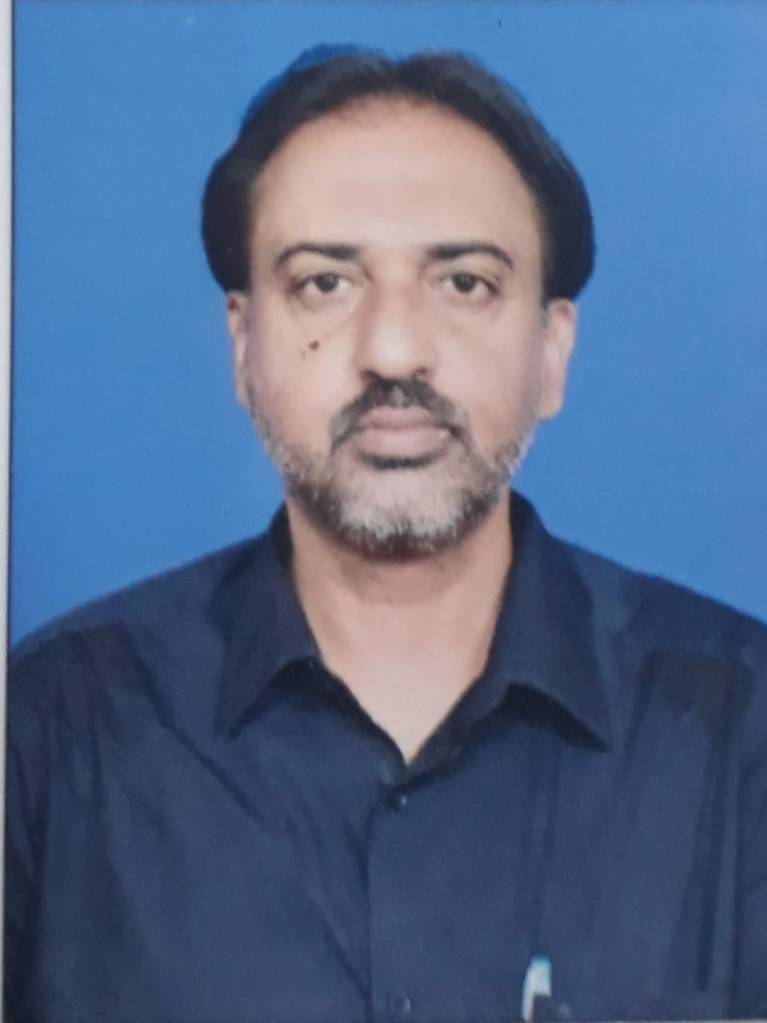
Mosarrap Hossain Khan teaches at O.P. Jindal Global University, Sonipat, Haryana, India. He is a founding-editor at Café Dissensus magazine.

.

.

PLEASE NOTE: ARTICLES CAN ONLY BE REPRODUCED IN OTHER SITES WITH DUE ACKNOWLEDGEMENT TO BORDERLESS JOURNAL.