Categories
Stories

Just Another Day

 By Neeman Sobhan

These days, it seems to sixty-year-old Husna that the past is clearer than the blur of her mirror…

The black Morris had come to a halt near the major crossing on Top-Khana road. In the back seat, feeling as plump as the upholstery, Husna was sweating and dabbing her pretty twenty-year-old face and neck with the anchal end of her cotton Jamdani sari.

Pregnancy had made it hard for her to fit into the long tunics and gathered pants of her hitherto comfortable shalwar-kameez outfits. Beside her lay the folded newspaper that Baba, her father Dr. Rahman, had left behind that morning, when he got dropped at the Dacca Medical College. She picked it up to fan herself. It was the Bengali language daily, Azad[1], dated February 20, 1952. The headlines wafted back and forth, screaming in print the news of the continuing agitations around Dacca, East Pakistan, on the language issue.

Without needing to look at the paper, she knew about the meeting that day of the Language Action Committee from her youngest brother Shonju, the student activist. She knew that they were meeting to discuss a nationwide hartal[2] scheduled for tomorrow, a general strike against the government’s repressive policies and disregard for the legitimate demand of the people that their mother language be given its rightful place as one of the two state languages of the country.

Since January, when she had returned home from West Pakistan for her confinement, all the discussion around the family dinner table involved the Prime Minister Khwaja Nazimuddin’s reiteration of Governor-General of Pakistan, Jinnah’s enraging declaration of two years ago that “Urdu, and only Urdu shall be the state language of Pakistan.” 

She glanced at driver Rashid Miya. The middle-aged man seemed unaffected by the heat, unlike Husna. She was due for delivery in a “matter of days”, as Daktar Chacha[3], her father’s MD friend, had promised during the last check-up, patting her head as if she were still the teen-aged, newly married bride, who had left for West Pakistan a year ago with her banker husband, Jamil.

In a way she was glad that Jamil and she had left their familiar world of Dacca immediately after their arranged marriage, helping two newlywed strangers to bond over the shared adventure of starting life as Bengalis new to the quasi-foreign, Urdu-speaking territory of Karachi in West Pakistan.

Not that Urdu was unfamiliar to Husna. Despite problems with gender in the language, she could manage basic social conversation (though, it annoyed her that she never found any Urdu speaking Pakistani who could utter even a word of Bengali, or tried to). But she was proud that just by listening to the radio she had learnt to sing the popular film ghazals of her favourite Indian playback singer Talat Mahmood, or Noor Jahan, now a Pakistani singer, who migrated to Lahore recently, after the Partition of India five years ago.

It was a bit disappointing that Jamil preferred her to sing the Tagore and Nazrul songs her music teacher had taught her since childhood, when all along her heart hummed with film songs. Songs from Bengali and Hindi films that her strict mother had seldom allowed her to see, unless escorted to the cinema halls by friends and relatives, and on special occasions, like Eid.

She had hoped to right this wrong immediately upon getting married. After all, Ma always said, “Do whatever you wish….after you’re married.” And Jamil did take her to the cinema, though, mostly to see English films. Matinees or late shows at the Rex or Ritz, or an early show at the Odeon followed by dinner in a hotel like Beach Luxury. Once she had seen a belly dancer from Beirut or Cairo perform there and had felt embarrassed yet fascinated by the lissom female body, the unfettered, uninhibited moves. She had felt a dizzy sense of freedom just watching the dancer.

She sighed, running her hand over the watermelon that was her belly! Today she didn’t feel like that bright eyed young girl in Karachi anymore. Nor even a mother-to-be. She just felt like a bloated animal, she sulked looking out of the car window. They were at a standstill for what seemed like an hour. Minutes crawled like the runnels of sweat under Husna’s new high-necked blouse, inspired by the popular Indian Bengali actress Suchitra Sen. She dabbed the constant beading of her nose and upper lip that Jamil always said he found endearing.

She started a mental reply to his last letter. “Dearest one. . . ” She began, then floundered. This would be her third letter to him since she arrived in Dacca, but she was still not convinced about how to address him in writing. Some of her Urdu-speaking female acquaintances in Karachi called their husbands by name, though often using the polite pronoun “aap[4].” Ma always called Baba “Ogo[5]” or “Shuncho?” as in “Are you listening?” That was funny because even if Baba were not listening, Ma would chatter on.

She felt awkward and insincere mimicking the spontaneous affection in Jamil’s letters, calling her “Beloved” and his “Myna bird” and so many other endearments, while she was unable to address him in a way that felt comfortable and not a lie. As usual, she settled for no salutations but an outright “Kemon acho?”

How’re you? I’m as well as can be expected. It’s only February and already Dhaka is uncomfortably warm. How is Karachi? Here, it’s not just the weather that’s heating up, but the political environment as well. The ‘bhasha andolon’, which the English newspapers refer to as ‘the Language Movement’ is going on full force. Baba and Ma are always worrying about Shonju, who is out on the streets every day and in student meetings at all hours. He creeps home late and stores all his protest posters and fliers under my bed and fills me in on what’s going on. I often have to cover for him to the family….”

She pulled forward the end of her sari and tried to cover her belly and wipe her glistening face. Oh! Pregnancy was so boring; and this heat was claustrophobic. If only she could be like Shonju, free to just come and go, walk the streets or ride the cycle or take a rickshaw.

Ki holo, Rashid Bhai? What’s up?” she asked, as she wound the window all the way down.

Apa[6], I think there’s a procession approaching. I feel we should take a side street. This road is blocked.” Rashid was already turning the steering wheel.

“Oh! Then, no New Market today? I wanted to collect my harmonium that I left for tuning.” Husna’s voice was lost in a volley of shouts that came from somewhere ahead. Meanwhile, a rickshaw edged close to the car, and two boys, possibly students, with cloth bags hanging from their shoulders, started throwing pamphlets through the windows of a few buses and into other rickshaws that were milling around.

One pamphlet landed on Husna’s lap like the silly, anonymous love-note she had once received while being driven to college, just two years ago. She smiled. She had often wished the author had been her elder brother’s friend and her girlhood crush, Farid. But he was hardly the type to write something romantic to her. Certainly not “Beloved one” or “My Myna bird.” No, it was hard to imagine that serious, brooding, good-looking face bent over anything but medical books. 

Rashid stopped to make way for a group of demonstrators, banners folded under their arms. Some raised a slogan and the rest joined in. “Manbo na! Manbo na! Never will we accept!”  Husna’s heart pumped. Ah! Unlike her, these boys dared to proclaim that they rejected whatever was being imposed on them. Was this possible? She wished she could get out of the car and walk with the boys, raise her voice in slogans. Unthinkable and unladylike, of course; plus, she was a waddling, pregnant beast.

Rashid Miya swung the car around and they entered a narrow street that led out to a wider road. He braked to give way to a truck that sped past, full of khaki-uniformed police, their rifles flashing in the sun. “Too many demonstrations today near the university, Apa. I hope tomorrow, your father will not go to Medical College. And our Shonju Bhaiyya should be careful. He and his friends were getting on a rickshaw at the gate this morning, when I was wiping the car, and they were talking about processions tomorrow. I kept hearing the date. 21st…Ekushey February. God only knows what will happen!”

“We better go home, Rashid Bhai. Shall we pick up Baba?”

“No, it’s only past 5. I’ll come for him later. Let me drop you first.”

Suddenly, preceded by the rumble of microphone, a van came into view. As it crawled past, it left the sputtering debris of words in crackling Bengali. She could decipher only: Section 144 imposed in the city… for 30 days…a ban on gatherings of more than 4 people in public places…processions or demonstrations to be severely punished…

Husna grew restless for Shonju. She prayed he would come home safely and not get embroiled in something foolhardy. He usually confided in her. At least, he used to till Husna got married. They were the closest among their many siblings. Even on the eve of her wedding, it was he and not one of her sisters who had insisted that if she had any doubts about this arranged marriage, it was not too late to speak up.

But she had never mustered enough courage. Or conviction. After all, Farid had not really confessed his feelings for her, and, from what she discovered about Jamil, he was a perfectly decent human being. In fact, she had no complaints about her husband, except that he was not the one her heart had chosen. If only she had met him on her own, and he had not been imposed on her, as if by state decree: “Jamil, and only Jamil shall be your husband!” And… if only elusive Farid had been clear about his feelings. Even if it were non-reciprocal, she would have felt free. Her heart would not now feel so mute.

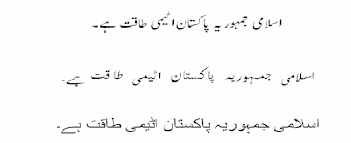
Why was the language of the heart so complicated, so hard to decipher? It was as if its familiar truths, which could be accessed non-verbally, instinctively, were now locked in a foreign alphabet that she had to relearn in order to decode their meanings. Almost like that ridiculous proposal in the Legislative Assembly two years ago that Shonju had laughed with her about, regarding the use of Arabic script to write Bengali!

“Just imagine, Bubu, the word ‘mother’ would still be pronounced ‘Ma’ but not written ‘moye-akar’ but ‘meem-alef’! Our Brahmi script curling and prancing forward gracefully from left to right would be attacked from right to left by the slanting arrows of the Nastaliq squiggles, and then both colliding explosively in the middle!”

Oh! Shonju was so dramatic! A laugh escaped Husna, then she fell silent.

They were driving past the Ramna Racecourse. Her baby shifted in her womb. Later. . . many years later, she would think that her son Azeem knew that they were passing what in two decades would be a historical spot: the pulse point of an unprecedented political gathering on a March morning in 1971. On the seventh day of that month, a voice would rise like a colossal bird filling the Dhaka sky with its fateful, uncompromising call, announcing that the time had come “for the ultimate struggle, the struggle for freedom”: Ebarer shongram, shadhinotar shongram!  

Had she been clairvoyant, known that the heady creature would swoop down and snatch her son and hurl them all into the whirlpool of destiny, perhaps she would have told Rashid Miya to change route, take another road. But would that have changed the course of history, erased the scribbling of fate?

For the moment, the Black Morris like a rigid pen on paper drives inexorably forward, and the future is drowned out by the sporadic shouts in the distance of “Rashtro bhasha Bangla chai! We demand Bangla for national language!”

The baby came early. In fact, the very evening after she returned from her outing, the pains started. There was no time to shift her to the maternity ward of the private clinic of Daktar Chacha, so he sent a nurse over to help deliver her baby at home. Early in the morning of February 21, her baby son arrived.

A trunk call was made to Karachi to give Jamil the good news. Then there was much rejoicing in the house with relatives dropping in to see the baby. By late afternoon, however, the atmosphere in the house became subdued as disturbing news from the streets filtered through.        

The police had opened fire on protesting students. There were hushed discussions so she would not hear. But she overheard the day nurse telling the night nurse before she left that injured students had been taken to the Medical College. The very next day, Husna’s elder brother, the final year medical student, Monju Bhaijan, had come to the breakfast table shouting in rage that a student had succumbed to his wounds, and the body of another had been found on the floor behind the Anatomy room. Baba confirmed it with sadness.

Even Jamil’s letter to her after the joy of the news of Azeem’s birth contained a postscript: “Stay safe. These are volatile times. Worried about Shonju. The Dawn newspaper here carried an editorial saying that the people of West Pakistan have no objection to Bangla getting a status equal to Urdu. Why is there always such a divide between the wielders of political power and the populace?”

A few days later, Husna wasn’t sure if it was the 25th or 26th, Ma and the nurse had just taken away the baby when Shonju arrived. He was carrying a box of sweets. “Moron Chand and Sons” it said on the box. Inside were her favourite sweets: the soft, creamy white, renin-based balls of rose-scented pranhara-shondesh.

Ma must have bought the sweets and forced him to come visit his newborn nephew. Husna breathed a sigh of relief, seeing her brother, who paced restlessly, refusing to sit.

“I saw the baby in Ma’s room on my way in. Looks like Dulabhai.”

“Really? I think he has our family nose.”

“Poor kid! Hope not.” Shonju finally grinned, but his mind was elsewhere. He was wearing a black badge of mourning on his white kurta sleeve.

Husna stretched her arm and took his hand: “My heart aches for those who died, Shonju. But I’m so grateful you are okay.”

He didn’t let go of her hand but turned his angry face away.

“We students are still in battle mode. It will continue, the andolon, the protests, the confrontation. The Shaheed Minar memorial we constructed outside Medical College was destroyed, but we will rebuild it.”

Shabdhan[7], Shonju!” Husna cautioned.

He pulled his hand away, clicking his tongue: “Oh! Don’t worry. Nothing will happen to me. When you fight for a cause you feel superhuman, invincible. The collective spirit strengthens us, makes us feel immortal. We are more than an individual life. What will our enemies do? Kill or wound one person, right? But the cause… they can’t defeat that. We are the multitudes… ”

Uff!  Stop this speechifying!” Husna rolled her eyes. “Mothers don’t want multitudes. They just want their sons. Sisters want their brothers. Yes, even though you’re a moron, I’d rather have you than a street full of heroes.”

Shonju laughed. “In that case, Bubu, you better start speaking only in Urdu. Sell your mother tongue to these politicians.”

After Shonju left, the nurse brought the baby to be fed. Husna touched baby Azeem’s toes, his petal-like fingers. Once, she had laughed at her elder sister for her incessant baby talk when her son was born. Now it spilled out of her, and she felt no embarrassment. Soft, mashed up balls of Bengali words lisped with maternal love, sweeter, and more tender than the pranhara in the box.

Was that how all mother tongues started? With silly, besotted mothers cooing to the babies in their language? She realised that if she had to make up baby talk in another language, she probably couldn’t do it. There was something about expressing oneself in one’s own tongue, heard from infancy. It was the home that one carried within, because the earliest memories of the mother’s voice absorbed from the womb animated it. It was a birth right that no one could be permitted to take away or undermine.

But was it worth dying for? Worth being martyred like the student the police had shot on Thursday, the twenty-first?

A week later, after lunch, the house suddenly filled with voices. Shonju entered, followed by Monju Bhaijan, and Farid. Husna looked at him surreptitiously. His face was impassive and he gave her a distracted nod. What else could he do, or say, Husna could understand. After all, there she was, much married and a mother, to boot.

Loudly ordering tea to be served, sounding like a housewife, she left the room, disappointed in herself that despite her show of poise and indifference, her heart still ached in a dim way.

She asked herself, if, in the past, she and Farid had been granted the opportunity and the courage to express to each other what she was certain was a mutual attraction, would her life be different? Would the knowledge that her feelings were requited, or not, have made a difference to her sense of self?

When Jamil’s proposal of marriage came to her parents, and they had accepted on her behalf. It was too late. Farid was not around, having gone to visit his parents in Barishal, so nothing had been acknowledged. There had been no beginning, and subsequently, no closure. 

During her impending wedding she had to make sure her feelings did not go into a Bhasha Andolon of sorts within her, agitating and demanding the right of her heart’s true language to be respected. Instead, she had gagged her heart, imposed on herself another language: a formal, emotionally correct, and socially acceptable language. The vocabulary of wedded propriety appropriate to an obedient daughter and daughter-in-law. An official language, foreign to her, like Urdu.

She sighed. Language supposedly empowered humans and differentiated them from animals. But if, despite the ability to verbalise, people could not make their wishes known or heard, were they not equal to dumb beasts? What use was the mother tongue when ones’ own mother had not understood her daughter’s unspoken wish just because she could not speak out: “I don’t want to marry, yet. I want to wait! Manbo na! Manbo na!” And what use was language when Farid too, had failed to use his tongue, express himself at the right time, ask her clearly to wait and not accede to the arranged marriage.

*

No, it was better that the Bengalis had spoken out. It was better that they had taken to the streets. This andolon would lead them to express their rights and desires, claim what was true. Of course, it would take four more years for Bengali to be constitutionally recognised as a state language of Pakistan, along with Urdu. But time was a tiny link in the cosmic chain of historical and personal events. Obviously, this last was not something thought up by Husna at the time, but by the Husna of today, watching her past self.

Today, she observed herself through the telescope of time, on the first day the young mother Husna nursed her baby son. Surely, she was unaware at that moment that everything was connected: her breast milk and baby talk in Bangla nourished not just her child, Azeem, but through him later, Shonju’s “multitudes” of a future generation, as a whole nation journeyed from Ekushey or twenty-first, to Ekattor or seventy-one: from the upheaval for language of February 21, 1952 to claiming a home for it in the war of independence of 1971. All were linked, even if separated by time and generation. In the end, everything existed in a grand NOW, where past and present simmered together.

Needless to say, all this was what she would think many years later, as an older sixty-year-old woman, looking back on her life as she wrote her journal, sitting in her room in her daughter’s suburban home in Maryland, in the US.

She dusted the photo frames on the painted bureau. Her doting late husband Jamil, and her gentle yet impassioned elder son Azeem looked at her from the distance of lost eras. One was gone in 1966 in a helicopter crash. The other in 1971, as a freedom fighter.

Farid, unframed, was a forbidden, almost forgotten memory. Lost like an unspoken language. Lost, because she had never fought for him.

She has a fanciful wish: in some after life she would like to ask those who had agitated and fought for a cause, and even laid down their life for it: in the end, was the sacrifice worth it?

“Today is February 21, 2002. Commemorated as Omor Ekushey in Bangladesh. But just another day here…” She wrote in her diary in Bangla, a language that her grandchildren could not speak.

She pulled out from under her bed the harmonium her daughter had recently bought for her from an Indian family that was moving back to India. She sat down on the rug, stroking the black and white keys with one hand and pumping lightly on the bellows at the back of the instrument.

On top of her harmonium lay open her old songbook, marked and written on by the music teacher of her childhood. She was a trained singer, and in 1950, she with a group from her school had performed some mass anthems and marching songs on what was then Radio Pakistan Dacca. There, they had met a musician named Abdul Latif, who would later put to melody a poem written by a journalist named Abdul Gaffar Choudhury for the student who had died on February 21. Later, the song would be recomposed by a noted composer named Altaf Mahmud and emerge as an anthem for what became Mother Language Day.

For her, of course, the day had a different and personal significance. It was the sacred anniversary of her motherhood that she had entered so reluctantly. On this day, every year, she sang to the son who had taught her the ultimate lesson of love and sacrifice and of never forgetting.

She started to hum the familiar refrain as she tried out a few chords.

Her granddaughter Zainab peeked through the door.

“What’re you singing, Nani[8]?” She said in her American accent.

“It’s a song about love, sweetie. About loving one’s language.”

“Which language, Nani?”

“Any language that you love, sweetheart. For me it’s Bangla, which you hear me speak with your mom.”

She sang the first lines. Zainab sat down beside Husna, gazing at her moving fingers.

“Cool! It’s like a portable piano! Can I learn to play it?”

“Well, only if you also learn to sing this song with me.”

“Deal!”

In bed that night, Husna wrote in her journal: “Today is February 21. International Mother Language Day. Today Zainab learnt to sing the Ekushey song, especially the refrain ‘Ami ki bhulite pari?’ And when I tested her on what it meant, she got it right as she ran away giggling and yelling: ‘Can I ever forget it?’

So, today turned out to be. . . not just another day, after all.”

Husna closed her eyes with a smile on her face. Just before she fell asleep, she felt as if she understood the world not with the uttered meanings of any language, but like an unborn baby breathing in the womb its mother’s voice, dreaming his or her first spoken word.

Dreaming in whatever language would become their home, their motherland.

.

[1] Literal translation of Azad is free

[2] Strike, translated from Bangla

[3] Doctor uncle, translated from Bangla

[4] Formal way of addressing in Urdu or Hindi — You

[5] Informal way of addressing a husband in Bangla as taking a husband’s name was seen as disrespectful and harmful

[6] Elder sister

[7] Careful, translation from Bangla

[8] Maternal grandmother, translation from Bangla

Neeman Sobhan is an Italy based Bangladeshi writer, poet, columnist and translator. Till recently, she taught Bengali and English at the University of Rome. She has an anthology of columns, An Abiding City: Ruminations from Rome; fiction collection: Piazza Bangladesh; Poetry: Calligraphy of Wet Leaves. Armando Curcio Editore is publishing her stories in Italian. This short story was first published in Ekhushey Anthology 1952-2022, edited by Niaz Zaman, writers.ink in 2022.

.

PLEASE NOTE: ARTICLES CAN ONLY BE REPRODUCED IN OTHER SITES WITH DUE ACKNOWLEDGEMENT TO BORDERLESS JOURNAL

Click here to access the Borderless anthology, Monalisa No Longer Smiles

Click here to access Monalisa No Longer Smiles on Amazon International
Categories
Excerpt

Tales of a Curious Land

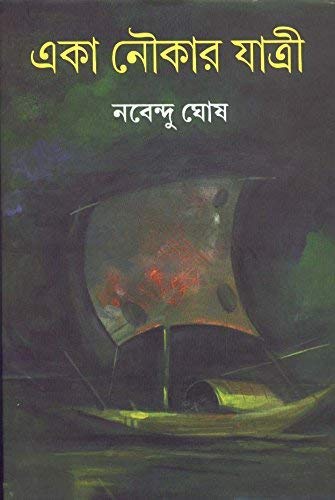
Journey of a Lonesome Boat by Nabendu Ghosh

Title: Eka Naukar Jatri/ Journey of a Lonesome Boat

Author: Nabendu Ghosh, translated by Ratnottama Sengupta

Publisher: Dey’s Publishing

Nabendu Ghosh writes of the time when two directors had wanted to film his novel – but why it was not made… 

Putul Nacher Itikatha[1] did not prove to be a hit but those with any understanding of screenplay all said, “Nabendu Ghosh did a great job.” 

I got the proof of this soon enough. One morning, around 11, Jahar Roy showed up on the first floor of my rented flat on Mahanirban Road.

“Nabenduda, Udayer Pathe[2]beckons.” 

Who?” 

Jahar sang out, “Bimal Roy, the Director of Udayer Pathey! He was all praises for one of your writings. So I offered to escort you — and introduce you if he so wished. He said, ‘He is a creative talent, I’d surely likely to meet him.’  Forthwith I set out on this venture.”

I was stunned. Overwhelmed. My experience of the craze in Rajsahi – when the police had to lathi charge on the crowds that thronged the theatre where Udayer Pathey had released — flashed through my mind. I recalled my deep seated desire to work with him. 

At this point Kanaklata stepped into the room. Jahar sprung forward and despite her vehement protest he bowed to the ground and touched her feet. “Boudi,” he spoke to her, “renowned director Bimal Roy has expressed his wish to meet Nabenduda. I’m here to escort him.”

“Sure, after you’ve tasted some sweetmeat and had a drink of water. The fish curry rice can wait for you to come back for lunch.”

“Thy wished is my command Boudi!” Jahar bowed again. 

*

Bimal Roy lived on Sardar Shankar Road in South Calcutta. Tall, fair complexioned, attractive looking with a commanding presence, Bimal Roy was a heavy smoker.  

After a while of polite conversation he said, “I’ve read your Daak Diye Jaai [3]and Phears Lane. As an admirer of your writing I can say that it has all the essentials of a screenplay.”

This observation brought me alive to a latent aspect of my writing. I kind of rediscovered myself. Gratefully I thanked him. 

“Why don’t you narrate a story that can be made into a film?” he said. “Something new, different, and arresting,” he added.

So I narrated the storyline of my new novel, Ajab Nagarer Kahini (Tales of a Curious Land). It was an allegorical story about contemporary civilisation, about the state, and about love too. His face lit up as he listened to the story. He sat still for a couple of minutes. When I stopped, I waited eagerly for his response. Tense. 

“I liked the story very much,” Bimal Roy pronounced. “It’s a peerless but relatable and captivating emblematic story. But there’s a slight problem. Mr B N Sircar, the proprietor of New Theatres must hear the story. I firmly believe he will also like it. But right now he is not in Calcutta. Just a few days ago he left for Europe. He will be back after two months. So you will have to wait this while.”

“I will wait,” I replied, earnestly.

*

Two months went by. 

One day Mrinal Sen came over. 

“Welcome Mrinal Babu, do come in.” Soon as he sat down Mrinal excitedly said, “I’ve got a producer. I’ll direct a film – so I need a good story.” 

I narrated two stories, of which Mrinal liked one. Then, after some random conversation I spilled out that “Bimal Roy of Udayer Pathe fame has selected a story of mine.” Mrinal was naturally curious and I had to narrate the storyline to him as well. 

The minute I stopped the narration Mrinal clasped my hand, “Give this story to me.”

“But Bimal Roy…” I started out but before I could finish the sentence Mrinal said,“Ritwik [Ghatak] and Hrishikesh [Mukherjee] will both be working with me.”

“Who’s Hrishikesh?” 

“He is a well-known assistant in the Editing department of New Theatres. Very intelligent.” 

“I cannot give you the story without having a word with Bimal Roy,” I told Mrinal. Mr Sircar will be back in a matter of days.”

Mrinal left for the day.

*

I met Bimal Roy the very next day. He informed me that Mr Sircar’s return had been delayed, it will be some more weeks before he returns.

But more than a fortnight went by and I did not hear from Bimal Roy. Besides, I was facing financial hardship. I needed money to keep the kitchen fire going.

Suddenly Mrinal showed up again. “I must have that story Nabendu Babu,” he said and shoved 500/- rupees in my hand. 

I ended up saying ‘Yes’ to Mrinal Sen. 

Two days later we signed an agreement.

On the third day a postcard landed in my flat. Bimal Roy was writing to say that, “Mr Sircar is back from Europe. He has also liked the story idea of Ajab Nagarer Kahini. Come over right away, we must meet Mr Sircar to sign the contract with him.”

The next morning I went to his house and told Bimal Roy about Mrinal Sen. The solemn gentleman turned grave.

I sat still with bowed head. 

The Shubh Mahurat, two months later spelt the ‘auspicious commencement’ of the film. The lead character of Arindam was to be played by Sambhu Mitra, the famous theatre personality who is still revered as an actor, director, playwright, and reciter. In Technicians Studio, the clapstick was sounded on a shot of him by the eminent actor of Bengali theatre and screen ‘Maharshi’, whose name was Monoranjan Bhattacharya. But why was he called ‘Maharshi’? Because the very first role he essayed was of Maharshi Balmiki in Sita produced and acted by Sisir Kumar Bhaduri[4]. His Ramchandra was an amazing portrayal of Lord Rama. So long back he had portrayed the author of Ramayan, yet that remained his calling card in popular imagination, for decades. Why? Because he was a stalwart as far as his wisdom and character was concerned too.

Mahurat, yes, but that initial instalment of Rs 501 was not followed up by another. So what if an agreement was drawn up and signed!

“Oh sir!” I complained to Mrinal Sen, “I need…”

“Yes, he will give,” Mrinal assured me, “in a few days you will get the second instalment. I have spoken with him.”

Six months later Mrinal himself told me, “This producer does not have any fund. You better send him a notice.” 

So I sent him a notice – to the effect that unless you clear all my dues within 15 days, then the agreement will stand cancelled. Null and void. The producer did not bother to grace me with a reply. So legally the rights to the story was now mine again.

Forthwith I visited Bimal Roy again.

“Come, come Nabendu Babu…”

His gracious welcome was encouraging. I said, “It’s been a while since I was here. So, what’s keeping you busy?”

Bimal Roy smiled, “Your story was not available, so I am currently shooting a film about Netaji’s INA.”

“Who is the author?”

” Nazir Hussain, a gentleman who was formerly with INA.”

“Excellent,” I said. Then I murmured in a low voice, “Necessity obfuscates clarity of thought. That’s what happened with me Mr Roy. But my story is back with me now. Those who had acquired the right did not have the wherewithal to film it.”

“Let me complete this film,” Bimal Roy said, “I will speak with Mr Sircar after that. I’ll be happy if we can film your story.”

I drank up the tea, greeted him with folded hands and came away.

*

Then I went through a difficult phase. To put it bluntly, I was in dire need of money. Here’s why.

Literature was my main occupation. However, writing the scripts for Putul Nacher Itikatha and Swarna Sita[5]had spelt a certain prosperity and made life easier. But both literature and cinema was dealt a blow by the political development of 1947.

I think of the Partition as a national curse. I still think so. The direct impact of that was I was alienated from my birthplace, Dhaka, which had become East Pakistan. I still had a link – Bengali Literature and Bengali Cinema. But Pakistan was Pakistan, be it East or West. So the Pak mind thinks differently – rather, quite the opposite. Iconic dramatist Dwijendralal Roy’s classic play Shahjahan had a scene revolving around Danishmand, a celebrated figure from Persia who came to India and was the court jester during Aurangzeb’s rule. Then, he went by the name of Dildar. In the aforementioned scene he discussed the Hindus and Muslims and commented that “These two communities will remain opposites. One prays facing East, the other faces West; one writes from left to right, the other from right to left. One wears a pleated dhoti, the other wears the unpleated lungi. One has a pig tail at the back of his head; the other nurses nur, a tuft of hair on his chin.”

I recalled the scene in the fading days of 1948 when the government of East Pakistan dealt a blow to Bengali language and films by declaring Urdu as the national language of Pakistan at the cost of Bengali, the language of the people’s heart.

In fact, those deciding the fate of the people from distant Islamabad mandated that Bengali too should be written in the Arabic script. What is more, to destroy every emotive link between Bengalis on either side of the divide, Bengali books and Bengali movies were banned in East Pakistan. As a result, once again the middle class and upper class Hindus started deserting their home and hearth and crossing the borders even to live as refugees in West Bengal. 

This dealt a massive blow to the commerce of publishing and cinema.

I had just completed a short novel; I started doing the rounds of publishers to try my luck with it. My household was crying out for money to keep the kitchen fire alive.

I went over to Bengal Publishers. Manoj Da said, “I will definitely publish this Nabendu but after two-three months. The market is stymied right now.”

Sachin Babu of Baak Sahitya also said the same thing in polite words.

I walked over to Cornwallis Street and into the office of D M Library. Gopal Das Majumdar warmly welcomed me and treated me to tea and sandesh[6]. Then he said, “You leave the manuscript with me. I will most certainly publish it but not right away. The market is reeling under this attack by Pakistan. Just wait for a couple of months. Meanwhile here’s an advance for you.”

That’s what I did eventually. That novel was titled Nahe Phoolhaar[7]

Meanwhile, since Gana Natya Sangha, the radical theatre group or People’s Theatre Association that attempted to bring social and political theatre to rural villages in the 1930s and 1940s, was banned by the West Bengal government. Bijon Bhattacharya, the famed dramatist of the classic Nabanna (1944), and other major members founded another organisation named Natyachakra. On its very first night of performance Neel Darpan[8]written by Dinabandhu Mitra in 1858-1859 and pivotal to the Indigo Revolt of 1859, raised a storm amongst the theatre lovers. We the members of Natyachakra were inspired by that.

*

Almost a year had passed by. One day I was visiting my friend Santosh Kumar Ghosh in Bhowanipore. One of the majors in the editorial department of the newspaper, Ananda Bazar Patrika, who was acclaimed as the author of Kinu Gowalar Gali, this friend of mine lived on the first floor of a house opposite Bijoli Cinema. On this visit I noticed that Bijoli was showing Pahela Aadmi[9]

I glanced at my wrist watch — 5.30 pm. “I feel like watching a movie,” I told Santosh Babu. “Care to join me?” 

“Which film?”  

“That one playing in Bijoli – Bimal Roy’s latest creation. The evening show starts at 6 pm.” 

“I’m game for it,” Santosh Kumar said in English. “Let’s go.”

Right away the two of us friends made our way to the balcony of Bijoli Cinema. 

Some of the scenes of Azad Hind Fauj [10] excited us and made us feel proud. The structuring of the story and direction made me salute Bimal Roy once more.  “Jai Hind[11],” I said to myself in his honour. Santosh Ghosh also highly praised the film. ‘’This gentleman Bimal Roy is a rare talent – and this film once again proves that. Well done.” 

As soon as I reached home I told Kanaklata about Pahela Aadmi. She was happy and unhappy, “Such a nice film but I didn’t get to see it.”

“I will take you to watch the film – it is worth a second viewing.”

Next morning at 9 am, I told Kanaklata, “I need to buy some writing paper, I’ll just be back from the market.” But I did not go to the market. I headed straight for Sardar Sankar Road, to Bimal Roy’s residence.

“Come Nabendu Babu, step inside.” Bimal Roy was, as before, holding a cigarette between his fore fingers. 

“I watched Pahela Admi yesterday,” I started the conversation. 

“In which theatre?” he asked, smiling. “Bijoli. And with me was Santosh Kumar Ghosh of Ananda Bazaar Patrika.” 

Kinu Gowalar Gali[12]?”

“Yes Sir. Both of us liked the film very much. It’s very courageous. To make a film concerning INA[13] calls for a lot of courage. We congratulate both New Theatres and you Sir.”

“Thank you,” he replied with a smile. Then he called out, directing his voice inward, “Two cups of tea here, please.”

“Yes, I will send…” a lady’s voice replied. Then he puffed his cigarette in silence. After a few seconds I mumbled what I had actually come for, “Now that Pahela Aadmi has released, will you consider my story?”

“No,” Bimal Roy looked straight at me and shook his head. “And I am sorry to say this. Because I am leaving New Theatres to go to Bombay. There, no one will value your story the way Bengali cinema would. Besides, I am going to Bombay to make a Hindi film for Bombay Talkies.”

He fell silent. And I felt darkness descend around me.

Bimal Roy had not finished. He took a puff off his cigarette and then spoke again, “Himangshu Rai’s wife Devika Rani has sold all the rights over Bombay Talkies and left.  At present thespian Ashok Kumar is the owner of the Bombay Talkies. He has invited me to make a film.” 

Waah!” I was overwhelmed on hearing the name, Ashok Kumar.

Bimal Roy went on speaking, “Bombay is at the other end of India. The demands of the Hindi film world are quite different, so there is a risk involved in this. Besides, the financial condition of Bombay Talkies is not robust at the moment. If I cannot make a film that is both good and successful, then…” his voice trailed off. 

Silently I started pondering over what options I had before me. 

A maid brought tea and biscuits for us. “Have the tea,” Bimal Roy’s voice cut into my thoughts. I kept thinking even as I downed the tea, “What now? Pakistan has as good as killed the markets for both, books and films. Everything was uncertain at the moment. I had no option but to send off Kanaklata and our four year old son to live with her parents in Malda.”

“Nabendu Babu,” Bimal Roy’s voice floated into my ears. I looked at him. He smiled a bit as he said, “My chief assistant Asit Sen is going with me and so is Hrishikesh Mukherjee as the editor in my team. Can you join us as our screenplay writer?”

‘Ayn!’ Surprised, I looked at him with renewed attention. “Are you asking me to go to Bombay with you?” I sought to clarify my own thoughts perhaps. “Yes. Screenplay writing is a very serious part of filmmaking. Not everybody can become a screenplay writer. Along with the ability to wield the pen the person must also possess a sound sense of drama. You have that.”

Am I dreaming! Was I dreaming?! After watching Udayer Pathe in Rajsahi I had secretly desired to work with that film’s director. God seemed to have heard me then and was all set to fulfil that desire.

“I will be happy to do so, Mr Roy,” I replied, gratitude overflowing in my voice. 

“Our future is uncertain, let me caution you Nabendu Babu. You will have to treat it as an adventure. And, another thing: Asit, Hrishi, all these guys will go alone for now, leaving their families here.”

“So will I Mr Roy,” I stressed. “I will go with you to Bombay — ”

[1] Bengali movie, translation: The Puppet’s Tale

[3] The Clarion Call

[2] 1944 Bengali movie, translation: Towards the Light

[4] Pioneer of Bengali theatre, 1889-1959

[5] Golden Sita

[6] Sweet

[7] Not a Garland of Flowers

[8] Indigo Mirror

[9] Bollywood movie, The First Man

[10] Netaji Subhash Chandra Bose’s army, Indian National Army

[11] Hail India

[12] A novel by Santosh Ghosh published in 1950, Translation: Kinu Milkman’s Lane

[13] Indian National Army

About the Book: Published in 2008, this is the autobiography of the legendary screenplay writer and Bengali litterateur, Nabendu Ghosh. Spanning through Pre-Partition India to the modern times, it is both a political and an artistic commentary of his times.

About the author: Nabendu Ghosh was born 27 March 1917 in Dhaka (now in Bangladesh). At the age of 12 he became a popular actor on stage. As an acclaimed dancer in Uday Shankar style, he won several medals between 1939 and 1945. Ghosh lost a government job in 1944 for writing Dak Diye Jaai, set against the Quit India Movement launched by Indian National Congress. The novel catapulted him to fame and he moved to Calcutta in 1945. He soon ranked among the most progressive young writers in Bengali literature.

Nabendu Ghosh has written on all historical upheavals of 1940s – famine, riots, partition – as well as love. His oeuvre bears the distinct stamp of his outlook towards life. His literary efforts are ‘pointing fingers.’ There is a multi-coloured variety, a deep empathy for human emotions, mysterious layers of meaning, subtle symbolism, description of unbearable life. Love for humanity is also reflected in his writings. He has to his credit 26 novels and 14 collections of short story. He directed the film Trishagni (1988), based on Saradindu Bandopadhyay‘s historical short story Maru O Sangha.

He died on 15 December 2007. 

About the Translator: Ratnottama Sengupta, formerly Arts Editor of The Times of India, teaches mass communication and film appreciation, curates film festivals and art exhibitions, and translates and write books. She has been a member of CBFC, served on the National Film Awards jury and has herself won a National Award. 

.

PLEASE NOTE: ARTICLES CAN ONLY BE REPRODUCED IN OTHER SITES WITH DUE ACKNOWLEDGEMENT TO BORDERLESS JOURNAL

Click here to access the Borderless anthology, Monalisa No Longer Smiles

Click here to access Monalisa No Longer Smiles on Amazon International

Categories
Stories

The Untold Story

By Neeman Sobhan

She is wondering how to enter the story, if she were to write it. The story she has been circumambulating in the last few days, ever since the encounter at the Bar in her piazza.

Was it possible to enter any story directly, as if through a front door? It occurs to Naureen that there might be as many doors and windows to a tale, as there actually were in any house. Her own, for example, here in a suburb of Rome, as also in all those houses she had inhabited in her childhood and growing years, all over undivided Pakistan before 1971.

In West Pakistan, there was the red brick colonial house in Multan of the late fifties, the modern bungalow in Nazimabad colony in Karachi of the early sixties, or in East Pakistan, the pink and grey two-storey house next to a boys’ school in Dhaka Cantonment, when the city was still written as Dacca, and the school was owned by the powerful Adamjees of West Pakistan and not a college yet, and the momentous seventies had not started. East Pakistan was not Bangladesh yet, and still yoked to its bullying Western half.

Naureen brushes off her thoughts about the past and returns to the story nagging her, which was not about houses. But wasn’t every story like a house? The house of an amnesiac who enters it as if it were an unfamiliar space, till certain things made him realise that this might be a place he knew well: a piece of furniture, a smell, a view, adding up to a sensation of déjà vu.

Or it could be an oddly familiar face. Or a voice, husky and wounded, whispering, even laughing, hiding its unspeakable pain.

*

A week ago, Naureen adjusted her mask and entered the Bar in the piazza near her house.

Un caffè Americano, a tavolo.” She ordered her coffee at the counter and went outside to sit under the striped awning. The August heat, like clockwork, had turned after the middle of the month and it was cool in the shade. She opened her laptop but her eyes scanned the streets of her neighbourhood. Things were almost normal now, more people were out and about, wearing masks. Since the lockdown in Rome in March, her university had shut physically, but till June, Naureen had taught on-line her classes of English and Bengali to her Italian students. Now, finally, she was free.

A writer friend in Dhaka, editing an anthology dedicated to the fiftieth anniversary of Bangladesh’s independence had requested her to translate into English a Bengali story submission, and Naureen had been happy to return to the world of fiction.

The story, based on facts, the editor friend mentioned in his email, concerned the experience during the war of liberation in 1971 of a teenage girl abducted from a high school in a district town by collaborators and brought to a military camp. A rape camp. A harrowing, yet ultimately redeeming story. How could such a cruel fate end in redemption? Naureen started to read.

She had barely finished reading the first page of the story when she heard a voice across the street from the Bar.

Apu[1]!” Naureen turned around. On the pavement, under the Nespole fruit tree stood Sadia with a pram. She looked plump since the birth of her baby. The last time she had seen her young compatriot was the year before, when Sadia had regretfully announced that due to her pregnancy, she could not continue the lessons of Italian and English that she loved taking with Naureen. Those two hours once a week were something even Nareen had enjoyed. Then came Covid. So, they had not seen each other for a long time, even though they lived in the same zone, different neighbourhoods.

Standing beside Sadia was another Bengali woman, in shalwar-kameez. Despite the mask, and her head loosely covered in a scarf, Naureen could see she was an older person, Naureen’s age, or a bit more. Possibly in her late sixties. Sadia waved with genuine delight at Naureen and whispered to her companion, who took off her mask and nodded in Naureen’s direction.

The woman looked strangely familiar. Where had she seen her? Naureen knit her brows, before she produced a polite smile. Meanwhile, Sadia left the pram with the other lady and crossed over. She walked up to Naureen’s table and beamed.

Apu, how have you been? You never came to see my baby.”

“I know, Sadia. But with this Corona virus situation…” Naureen rose saying, “But let me see the baby now.”

“Oh! Stay where you are, Apu. Let them walk over. I’ll introduce you to my mother.” She signalled and the mother ambled over pushing the pram. Naureen cooed appropriately and forced a fifty euro note into Sadia’s reluctant hands.

“It’s for the baby,” Naureen said.

“Your blessings would have been enough, Apu,” Sadia protested.

The lady kept a smiling but dignified distance. They exchanged formalities, and the mother said: “My daughter has mentioned you often. How special you are, your home…”

Naureen kept looking at her, not listening to her words but absorbing that husky, bruised voice. “When did you come from Dhaka? Didn’t you have problems with the visa, and with quarantine?” Naureen asked.

“Oh! I don’t live in Bangladesh. I live in London. I have a small tailoring shop there in a Bengali neighbourhood. Brick Lane. I came to Rome early this year, before the corona problem started. I am now stuck here. But happily, of course, with the baby….”

Naureen was only half listening.

Somewhere, through a cloudy window she peeked into another era. Dacca, 1972, the year after Bangladesh’s tumultuous birth. Naureen and her young aunt Fahmida, a doctor and social activist, had gone to the Dhanmandi Rehabilitation Centre to interview some of the rescued rape victims….

The baby was getting cranky. Sadia was saying “Apu, you have to come over to my flat and have tea with us one day.”

“I will,” Naureen said, then turned slowly to the mother. “Is your name by any chance, Shopna?”

Sadia laughed, “No, her name is Shamima Akhtar Begum, Shumi.”

The lady turned placid eyes to Naureen, a glint of recognition surfacing. They locked eyes for a second. She said, “Sadia, you can’t just ask your teacher to drop by. Invite her for a meal.”

Sadia joined her effusively. Naureen said, “You should bring your mother to my place, too. But I will come over for tea very soon.”

After they left, Naureen sat over her coffee, her laptop, and the world of stories waiting to be uncovered. She was thinking, after fifty years, everything becomes fiction: our past, our lives, our dreams, our struggles and pains, our joys and triumphs. It all transforms into story.

Story. History. His-story. Her-story. Everyone’s story. All we could do was to preserve it by narrating and transmitting it to each other.

*

Why the hell was she talking so much? The bitch. Spawn of bloody Hindus, or sister of some ‘Mukti’ for sure. Traitors! Bastards all

“Shut the hell up!” He didn’t want to hear her voice, especially her pleading, broken Urdu. Nor look at those limpid, fraught eyes. Already it was diluting his rage, his fire.

No. He had been told while being posted to Jessore, these Bengalis needed to be a taught a lesson. . .  His slap knocked her down, her head hitting the floor.

“Oof! Allah!” She cried out, and instead of terror she looked up at him with wild, angry eyes, as if she would jump up to his throat, kick and slap him back. Just the way his younger sister, Laali, would as a kid. Lalarukh, far away in Quetta.

Instinctively, he was on his knee. “Oh! God, I’m sorry.”

In a flash the expression in the girl’s eyes changed from anger back to fear. Her cracked lips trembled and so did her hand as it lifted to wipe a trickle of blood from her forehead.

But before he could pull her up, they froze on the floor listening to heavy footsteps coming up the corridor outside. The boots stopped at the door next to their room. The door handle rattled as voices jeered.

‘Oye yaar! Let us in. Why is the door locked?”

“How many do you have there? Come on, give us a share.” There were thuds, sounds of laughter interjected with the sharp notes of women’s screams and wails.

He pulled her up. She was shaking and clung to him. He held her for an instant then moved her away and said, “Listen, see that door at the back. It leads out. Just go.”

She looked at him blankly.

He repeated, “Go!”

“Go where?”

He shrugged, “Kaheen bhi. . . wherever. Just leave. Now.”

She turned her face away. “Yes, and have a whole battalion of grizzly animals descend on me. I’d rather be protected by someone decent like you.”

“I can’t protect you and I am not decent. In war, we are all barbarians.” He sat down on a chair, face in hand. She stood before him her shoulders sagging, her dupatta pooled at her feet. 

*

“And then? What happened?” Seventeen-year-old Naureen asked.

Shopna gazed unseeing outside the windows of the Dhanmondi Rehab Centre and let out a shuddering sigh.

Fahmida said. “It’s okay. Shopna, you don’t have to tell us more, if you don’t want to.”

“It’s not that.” The dark eyes were strained but tearless. Her voice was low and scratchy. “It’s just that this is not a ‘story’ but things that actually happened to me, so in my mind it’s all jumbled up. Some parts are erased, others sharp as a knife. What we saw and endured…no language has words to describe these. . .”  

Shopna started to sway from side to side. “We were a dozen women, all herded like cattle in that room…. One woman was fortunate and died after being assaulted repeatedly. Her body was hauled away like a sack of rice . . .” Her voice was thin and low as a keening.

Fahmida stroked Shopna’s head. “It’s okay, dear. We don’t want you to dig into anything you don’t want to. Unless it helps you.”

Naureen wiped her eyes and whispered to her aunt, “Khala, I just can’t process what she went through! Imagine, her husband brought her, a newlywed bride, to be safe with her parents in Dacca and went to join the guerrillas, and a neighbour betrayed her!”

Shopna raised stony eyes to them and muttered, “Yes. I will never forget that morning. It started as any morning. How was I to know what destiny had in store for me by day’s end?”

*

Yet the girl knew how lucky she was not to have been herded into the other crowded rooms where they took the rest of the girls brought in military trucks. She was deemed more educated and pretty, so reserved for officers. Thus, she was in a separate room. 

And she survived to narrate her story.

Early the next morning, it was still dark when the officer opened the back door and smuggled her out to the compound outside. She hid behind a drum while he went and got a jeep. He backed to where she was. She scrambled in and lay low at the back. There was only one sentry at the check post at that hour, who saluted and then they were out.

She stayed hidden till he stopped the jeep. It was near a road edged with paddy fields. This was the road going out of the cantonment. He asked her to sit up. She peeked out and saw in the distance two figures: old men, farmers, watching them from the field. Nearer to them, across the road and beside a ditch stood a little boy.

O Ma! Military!” She heard him say as he ran into the grove of thatched houses. She hid her face in her hands. He observed her reaction and understood. It would not be safe for either of them. He drove further off to a more isolated spot, took his jeep down the earth track and stopped under a tree. He let her out. She barely had time to utter her gratitude before he turned the jeep sharply around, said, “‘Forgive me.” and drove off.

*

Teenaged Naureen let out her breath. She felt she had aged since she entered the Rehab Centre that morning.

Fahmida whispered, “I wonder what happened to him.”

Shopna was far away, silent. And within the silence, each moved further into the untold story.

*

A month later the girl was in her uncle’s village home. It was a safe zone, far away from Jessore, near a Mukti Bahini training camp. Some freedom fighters including her brother and cousins had come to stash arms. She was in the kitchen boiling rice and dal for a quick khichuri for the men when she heard shouts. Then grunts, groans and sounds of jostling and kicking came from the courtyard. Her brother and his group of freedom fighters had captured a Pakistani soldier.

They dragged him to the inner courtyard and were beating him with the butt of a rifle. One of the men held up his head by his forelock. She glimpsed his terrorized, bewildered eyes in his bloodied face. In an instant, she ran outside leaving the pot simmering on the fire.

“Stop. Oh! Please stop.” She screamed and dashed between the attackers and the prone body. “Let him go.” She shouted, beating at the others.

“What?” Her brother motioned the others to stop.

“Don’t touch him. Please! He… saved my life. A month ago, in Jessore. . . before I came here.” She sank to her knees and started to weep. The soldier’s left eye was puffed, a side of his face bloated and bruised. He looked at her blankly.

The beating had stopped. “What the hell do you mean?” her brother shouted.

The girl wiped her tears and said, “Bhaiyya[2]. You have not been in touch with our mother, and when I came here, I only told you that I was with my friend Mubina at her aunt’s house outside Jessore and had come here directly to be safe. That’s true, and I told Uncle to tell Amma that also. But there was one day and night, earlier in Jessore town, when Amma was desperately searching for me since I did not return from school.” Her lips trembled. “Bhaiyya! I was abducted and taken to a military camp by someone. . .”

Her brother yelled, “Which haramjada bastard did this…? I’ll rip out his. . .”

“Bhaiyya! Listen. Nothing happened to me. It was the new chowkidar of the school. He said that Amma was seriously ill and had asked me to come home quickly. He whisked me away in a three-wheeler. With his beard and prayer cap, I trusted him Bhaiyya!” Instead of tears, her eyes are aflame with loathing.

She continued steadily, “Luckily, I was spared, because this soldier saved my honour. He helped me escape. I recognised him.” The brother, still breathing heavily kept his rifle pointed at the soldier but told the others they needed to discuss. The others turned away, all shouting and gesticulating, and motioned the brother to follow. “Lies!” One of them spat on the soldier’s boots before he left. They stood not too far away, keeping an eye on the soldier. When they came back, they told the girl that they had decided to tie his hands and feet, blindfold him and set him adrift on a boat.

“He will die,” she cried.

“Oh! Don’t you worry. Every village, every riverbank is crawling with collaborators. Some bloody razakar[3] will find him and help him get back to his camp. It’s only important that we obliterate our tracks.”               

While the freedom fighters discussed the proceedings among themselves, the Pakistani soldier turned to whisper to the girl in Urdu. ‘I don’t know why you saved my life. I can never repay you for your humanity.”

She put a warning finger to her lips and muttered. “This is what I owe someone.”

He looked at her baffled. “You said I saved your life. I don’t understand. But God bless you, my sister.”

The men came back with a bundle of rope and a thin, chequered gamchha[4]. Before they dragged him away, he turned to the girl and said, “Khuda hafez[5].”

“You too. God be with you. . . and with him,” she whispered.

*

Naureen opened the windows of her study room wide to get some air to dispel the August heat and sat down at her desk computer to look at her translation so far. The rawness, the immediacy in the Bengali narrative was not coming through in English. It was sounding trite. The fault was hers. She could not improve it, because another story was fidgeting within her. She wished she could write that: Shopna’s untold story that Naureen could not even begin to imagine.

Still, she was wondering how she could enter that tale, if she were to write the story. Not through doors or windows, but possibly by burrowing through like animals, tunnelling underground, and re-imagining the trench of captivity. The grave-like penumbra, the women not knowing if it was night or day, summer or winter. A dozen half-naked ravaged females with unseeing eyes lying like corpses, wishing they were properly dead and buried, and not awaiting the shame of light, of discovery, the world outside.

Naureen got up. She needed to talk to Sadia’s mother. Not to Shamima Akhter Begum, Shumi, but to Shopna.

*       

Naureen calls Sadia for directions. Her flat is near the Viale dei Caduti per la Resistenza — “The Street of Those Who Fell during the Resistance.” — the Italian struggle against the enemies during the Second World War. Naureen finds these long street names both musical and moving. How painful must have been the path of those who fell during any struggle, whether men or women. But in Italy, the “Fallen” had been elevated and preserved in public memory, and they had shady avenues dedicated to them, lined with pine trees and flowering oleander bushes.

In 1971, the struggle for freedom was fought not just by men; countless women had made sacrifices. Remembering and honouring them was of fundamental importance. Naureen feels excited that today, this peaceful street named for the spirit of resistance was leading her to Shopna. For her Italian students of Bengali, she could translate that name as “she who dreams.” But how would she tell the story of dreams mutating into nightmares?

*

Sadia’s flat is on the third floor of a well-maintained, middle-class apartment block between a supermercato[6] and a shady children’s park. 

Naureen is welcomed by Sadia and ushered directly into the main bedroom.

Apu, the room at the front, we have rented to two Bengali bachelors who work in a restaurant nearby. We hardly see them.”

The bedroom Naureen enters is well lit and airy. Next to the neatly made-up bed is a two-seater sofa facing a TV on a laminated bureau. Once Naureen is settled on the sofa, Sadia goes to the kitchen to make tea. Naureen watches Sadia’s mother put the baby in her cot in another room.

“I keep the baby in my room,” she says coming back to sit on the bed.

Without preliminaries, Naureen says, “So, Shopna, tell me your story since we last met.”

Shopna’s head is uncovered today. She takes time to knot her loose hair into a bun. There are some grey strands. “Sister, I am no longer the person you met with your aunt that day in Dhaka, fifty years ago. That Shopna died in 1971 and was reborn since then. A cruel rebirth. Still, here I am, sitting before you, smiling.” She looks out at the view of the distant hills.

Sadia returns with a mug of milky tea. It’s sweet. Naureen only drinks black sugarless tea. But she sips it to not make a fuss.

“Have you taken your mother to the hills?”

“What’s there to see, Apu?”

“You have never been there?”

“Well, my husband is so busy all week working at the petrol station that on Sundays our only outing is to go shopping.” Sadia laughs.

“Those hills that you see in the horizon, that’s where the Pope’s summer palace is. You know, the Pope? The Vatican? Anyway, in summer he lives there, overlooking a volcanic lake . . .”

Sadia is listening gravely, trying to absorb all the information.

Naureen rushes on. “Anyway, it’s a scenic place. Go there sometime.” Naureen ends, feeling slightly foolish.

Sadia says eagerly, “Apu, please write down the name of the place. I will ask my husband to take us next week. I always learn so much from you.”

Shopna smiles. “Actually, even in London, I hardly go anywhere. Once a nephew took me on the bus and showed me the Queen’s palace. Otherwise, I only know Wembley and my area.”

They are quiet for a while. Sadia goes to check on her baby, saying, “Apu, it’s her feeding time. I hope you don’t mind. It takes a while. You two chat.”

After Sadia leaves, Shopna says, “Sadia’s father, my present husband, was a widower when I met him. He married me after my first husband abandoned me. Another day, I will tell you about my life. I had thought, the ordeal I went through with the army animals during 1971 was hell. But another fiery dozakh[7]awaited me when my husband came to see me at the Rehabilitation Centre. He and his family could not accept me. To be fair, they tried at first, but could not when they found out I was pregnant. I, too, wanted to die, but failed. I recovered from the abortion. And the day after your aunt and you came to the Rehabilitation Centre, I joined a sewing course and decided to live in a women’s hostel. I started to work as a seamstress. One day, I met Sadia’s father. He had a small business in London…”

Shopna pauses and looks towards the open window. “Some might consider Sadia’s father to be an ugly man. But I only saw a beautiful heart. He came like a fereshta, an angel who took me away. I was granted a new life.”

Naureen follows Shopna’s gaze, directed, she realizes now, not at the lofty faraway hills. Shopna, a smile like a tremor on her lips, is looking nearby, at a shard of sunlight on the open windowpanes, one of them reflecting a tiny balcony with baby clothes drying on a stand.

*

That long ago February winter morning in Dacca was not as chilly as Shopna’s eyes were, as she recounted her ordeal, in bits and pieces. The room at the back of the Dhanmandi Rehabilitation Centre was quiet at this time.

Fahmida put her hand on Shopna’s head and said, “You must allow the tears to come.”

Shopna let out a hysterical laugh. “I watched my parents being shot dead in front of me, my mother’s blood and father’s brain splattered on the verandah by the military. I was dragged away to the hellhole of the army camp. For months we women underwent torture. All my tears dried up. Forever. Even on the day we heard ‘Joy Bangla’ shouted all around us and we were released and rescued by some Bengali brothers and kind Indian officers who wrapped us in blankets, I had no tears of joy. And the day my husband sent me the message to not return home, I had no tears of sorrow.”

Suddenly Shopna burst into tears. Wild tears. She howled in fury. Her eyes were molten lava: “If only one day I could find that razakar, the neighbour who betrayed my family, led the military to our house as the family of freedom fighters, thrust me into hell fire…. and if I could avenge myself, that day I would find peace.”

“Do you know his name, where he lives?”

Shopna sighed. “Yes. But he’s not there. He escaped.”

Naureen blinked back tears and let out her breath.

Fahmida said, “I wonder what happened to him…and to other devils like him….”

Shopna was silent. And each of them burrowed into the silence of untold, unspeakable stories.

[1] Elder sister

[2] Brother

[3] Vernacular, mercenary soldiers

[4] A lightweight cotton towel

[5] Vernacular, goodbye. Persian word for ‘May God be your Guardian’

[6] Supermarket, Italian

[7] Hell

Neeman Sobhan, Italy based Bangladeshi writer, poet, columnist and translator. Till recently she taught Bengali and English at the University of Rome Publications: an anthology of columns, An Abiding City: Ruminations from Rome; fiction collection: Piazza Bangladesh; Poetry: Calligraphy of Wet Leaves. Armando Curcio Editore is publishing her stories in Italian. This short story was first published in When the Mango Tree Blossomed, edited by Niaz Zaman, for the 50th anniversary of Bangladesh.

.

PLEASE NOTE: ARTICLES CAN ONLY BE REPRODUCED IN OTHER SITES WITH DUE ACKNOWLEDGEMENT TO BORDERLESS JOURNAL

Click here to access the Borderless anthology, Monalisa No Longer Smiles

Click here to access Monalisa No Longer Smiles on Kindle Amazon International

Categories
Tribute

Celebrating Freedom

Painting by Sohana Manzoor

The right to exist with freedom to choose is threatened when dictatorial regimes try to erase a culture or linguistic group as we can see in the current conflict that rages between Russia and Ukraine. In 1971, Bangladesh came into existence over a similar issue. The colonials had divided the Indian subcontinent on the basis of religion — not culture. Before this division, Bengal was a whole. In 1905, Tagore had marched against the British directive to divide Bengal and Lord Curzon, the Viceroy of India. In 1911, Bengal was reunited to be slashed again in 1947 and made a part of Pakistan with Urdu as its national language. Bangladesh fought a war to find the right to exist as an entity outside of Pakistan — adopting their favoured language Bangla. Throwing off the yoke of Urdu, Bangladesh came to its own. On 16th December, the battle against cultural hegemony was won with warplanes drawing to a halt.

Celebrating freedom from oppression, we have an article by Fakrul Alam giving the historical background of the struggle. A musing from across the border about the 1971 refugee exodus into India has been written by Ratnottama Sengupta. Asad Latif muses on the need to identify with a culture. We have translations of poetry by Nazrul to add a dash of seasoning.

Poetry

Translations of Nazrul Islam, the rebel poet of Bangladesh… Click here to read.

Prose

The Birth of Bangladesh & the University of Dhaka: Professor Fakrul Alam takes us through the Partitions of Bengal which ultimately led to the creation of Bangladesh, with focus on the role of Dhaka University. Click here to read.

Joy Bangla: Memories of 1971: Ratnottama Sengupta recaptures a time when as a teenager she witnessed a war that was fought to retain a culture. Click here to read.

Epaar Bangla, Opaar Bangla:  Bengals of the Mind: Asad Latif explores the need of a person to exist as belonging to a particular cultural group, in this case Bengal. Click here to read.