Categories
Poetry

Let it Flow…

By Anushka Chaudhary

WRITE

When the sun goes down
And the light goes out,
I can walk the lonely streets
Thinking about ways
To deal with pressure,
Waiting for the dawn to crack.
I can shout.
But, instead,
I write. I paint. I sing. I dance.
And I write. Again.
I pour my heart out
When I write.
My body screams words
And my pen screeches.
I let it go,
Let it flow.
Some things hurt only when
You hold onto them.
Death is peaceful.
It is the effort to prevent it
That hurts, isn't it?
Sometimes,
There's so much to say.
But my mouth?
It chooses to remain shut.
No why, how or what.
The pen and the paper empower me.
They are my safe haven
Amidst the battle within,
Companions through
Thick and thin.
They are the retreat for my inner recluse.
Nowhere can I find more peace.
Nowhere.

Anushka Chaudhary is an undergrad student in University of Delhi.  She is also an ardent reader, who enjoys romance and crime thrillers at her leisure. She likes to travel.

PLEASE NOTE: ARTICLES CAN ONLY BE REPRODUCED IN OTHER SITES WITH DUE ACKNOWLEDGEMENT TO BORDERLESS JOURNAL

Click here to access the Borderless anthology, Monalisa No Longer Smiles

Click here to access Monalisa No Longer Smiles on Amazon International
Categories
Review

Thus Flow the Verses…

Book Review by Malashri Lal

Title: Nadistuti: Poems

Author: Lakshmi Kannan

Publisher: Author Press

The title plunges us into the sacrality of resonant words, the Nadistuti sukta being a hymn in the Rigveda in praise of rivers. Poet, novelist and translator Lakshmi-Kaaveri equates the flow of the waters with ‘the flow of poetry’, the quiet mingling of streams of remembrance and phrases that shape into lines of verse. Her book is dedicated to Jayanta Mahapatra ‘who lives on’ and an exordium titled ‘Naman’ offers gentle tribute to H.K. Kaul, who was among the founders of the Poetry Society of India and passed away during the recent pandemic. Nadistuti is a brilliant and thought-provoking collection of poems that charts the timeless continuums while being aware of the fragility of human existence.

The book begins with a prayer to the River Narmada (meaning ‘the giver of pleasure’), which divides the north from the south of India. Yet the rippling waters have no boundary—a philosophical observation that I find marks much of this remarkable volume. Remembering Ganga, Yamuna, Godavari, Saraswati, Narmada, Sindhu, Kaaveri, devotees recite the shloka[1] at their morning bath seeking the blessings of the rivers. Though such rituals are mostly forgotten in modern times, the climate crisis should remind us of the consequences of such amnesia. The invisible Saraswati is possibly a metaphor for such “forgetting” simply because of her partial invisibility. Lakshmi Kannan’s vibrant lines recall the disappearance of the river as also of Saraswati’s appearance in another form as a revered Goddess invoked by “students, writers, musicians, dancers, painters”. From the Nadistuti I learned the word— ‘potomologist’—the study of rivers, but the book is far greater than an academic enquiry—it’s a recognition of the civilisational bloodline that is linked to the ancient rivers which  were the earliest cradles of humankind.

Some extraordinary and innovative aspects Lakshmi’s book deserve special mention. First, the remarkable prose- poem called ‘Ponni Looks Back’ which stretches the boundaries of imagination in a charming manner.   Ponni is the name of the river Kaaveri in classical Tamil Literature.  It flows through Tamil Nadu and Karnataka and is always perceived as a woman. Lakshmi tracks Ponni’s autobiography as though writing a Bildungsroman, the education and growing up of an innocent girl and her experiences along the way. Therefore, Ponni is born as a small unobtrusive stream on the Mysore-Coorg border. Then she becomes prominent and significant, and a vital witness to history—the Hoysala kingdom, the classical arts of Belur, Halibid, Somnathpur, then carrying on further to wrap around the islands of Srirangapatnam and Srirangam and so on. I enjoyed the autobiographical voice of Ponni reveling in her centuries of testimony to all the changes she has observed and imbibed—till we come to the new politics that is destroying rivers and society today. Ponni says, “One day I heard different voices floating over my waters…they sit around tables, shout at each other and refer to me dryly as the Kaaveri dispute, wrenching my waters apart”. Like yet another goddess, Sita, she chooses to end her journey. Ponni merges with her mother, the Bay of Bengal —her love and amity having completed what tasks she could undertake towards humanitarian goals. The world of manmade disasters is a chapter River Kaaveri would rather not participate in.

My question here is: “Do poetry and politics merge?…  Can poets continue to be as Shelley called them ‘the unacknowledged legislators of the world’?”  This brings me to another significant aspect of Nadistuti: Lakshmi’s brand of subtle feminism. Predictably, I am drawn to the poems that argue against son-preference, challenge gender stereotypes, and poke gentle barbs at unenlightened men.

Second, I cite a longish poem called “Snake Woman” from the section titled Chamundi, because it combines rituals, dream imagery, gender prejudice and the paradox of son preference. The ritual is called Nagapuja and has strict rules of abstinence from certain foods like snake gourd, and it entails hours of prayer—the chant being:

Please grant me a male child
Oh, King of Cobras
I will name him Nagaraja
In your honour.

Something strange started happening that the pregnant woman could never dare reveal to the world. She dreamt every night of a female baby cobra wearing jhumkies (long earrings) and a jeweled girdle and sporting a red dot on her forehead. Well, the baby born was female—and the happy mother, though a little fearful, called her Nagalakshmi. The mother-in-law showed acute displeasure: “She can have any name.  Who cares!”

Another pregnancy, again the rituals of Nagapuja—more stringent than before. No dreams this time. And an eagerly welcomed boy-child is born, enthusiastically named Nagaraja. And guess what? As he grows up, he ‘hissed at is mother’, ‘bared his fangs at his father’ and ‘spewed venom on his sister’.  These are poet Lakshmi Kannan’s vivid vocabulary for the revered son! And the snake woman sister, what happened to her? She sloughed off her skin seasonally, grew strong, capable and emerged as a “lustrous one”.

I selected this poem for more than just Lakshmi’s clever reversal of gender prejudice. Snakes have a central place in the folktales and folklore of India. The word used, “theriomorphic”,  denotes  situations, where animals and human beings interchange  bodies and identities. Snakes are not evil—they are often the progenitors of good deeds and the shapeshifting happens for many commendable reasons.  The figuration of the snake as exclusively evil does not derive from Indian mythology. Lakshmi’s poem, this one and several others, tread this beautiful territory of humans and non-humans sharing a common abode, the Earth, and there is an implied lament that we have ignored this vital connectivity.  

And finally, I am delving into the emotive, personal poems that end the collection. Called  ‘Fireside’, it invites   memories of WB Yeats’ classic lines:

When you are old and grey and full of sleep,
And nodding by the fire, take down this book…

Lakshmi addresses many members of her family; they are named, thanked and remembered for their acts of love and compassion. Because Lakshmi believes in history and continuities, as we have seen in ‘Ponni Looks Back’, and the Nagalakshmi reference, these too are poems about lineage, heritage, respect and love—the attributes that make life worthwhile. Lakshmi’s mother (addressed in the poems as Amma) was Sharada Devi, an acclaimed painter in Mysore and Bangalore whom the daughter remembers with her easel-mounted canvas gently acquiring colours, the landscapes emerging from the contours of her imagination. Today, Lakshmi Kannan, the poet of Nadistuti, looks at a blank sheet of paper and compares that to her Amma’s canvas—the words will surely incarnate. Another poem has a redolent title ‘In Search of Father’s Gardens’, upturning African American writer Alice Walker’s book In Search Of Our Mothers’ Gardens, but for me it’s a tale reminiscent of Lakshmi’s early novel Going Home that I had reviewed decades ago. It was a book about ancestral homes and families breaking up. In the reconfigurations over time, Nadistuti’s final section presents poems to members of Lakshmi’s immediate family, named, but not too personalised, making this an exemplary template for those who hesitate to present the private in public poetry.  With beauty, grace, gratitude, humour, irony—each person emerges as a tributary in the flow of the poet and writer we know and love as Lakshmi- Kaaveri. The last poem ‘If You Want to Visit’ is deeply poignant.  It’s not a farewell poem—instead it’s an invitation to an eternal companionship:

Come
Visit me now
I’ll not have a word of complaint
I’ll gather all of these and leave with you.

Here is the confluence of all that Nadistuti says: the day’s prayer in the morning, the Ponni River encapsulating history, the rituals that pass through many generations, and the legacy of a poet’s words embedded in the annals of time. An exquisite and meaningful collection of poems, Lakshmi has introduced concepts of poetic writing that are evocative of the ancient Rigveda and equally provide the guiding lamps for modern choices.

[1] Holy chants

Malashri Lal, Former Professor in the English Department, University of Delhi, has published   twenty one  books of which Mandalas of Time: Poems, and Treasures of Lakshmi: The Goddess Who Gives   are the most recent. Lal has received several research and writing fellowships.  She is currently Convener, English Advisory Board of the Sahitya Akademi.

.

PLEASE NOTE: ARTICLES CAN ONLY BE REPRODUCED IN OTHER SITES WITH DUE ACKNOWLEDGEMENT TO BORDERLESS JOURNAL

Click here to access the Borderless anthology, Monalisa No Longer Smiles

Click here to access Monalisa No Longer Smiles on Amazon International
Categories
Poetry

‘We bleed for life’

By Anjali Chauhan

BLEEDING

Something has been broken
Some other has been torn
I feel a rush in my veins
There are drops of sweat over my forehead
My eyes are drowsy
Body feels weak
My legs are trembling
I’m bleeding

The blood’s flowing
Between my thighs
I don’t know from where I’ve got cut
But I know
This blood, my blood
Is not the product of wars
Of violence and hatred
It signifies life
Of theirs and mine

I bleed, and they don’t
But they talk of equality
And get silent on differences
Of uniqueness of the women and queer-kind
Some of us bleed every month
Others are made to bleed because they love all colours
Rests of us are mothers
They give birth to babies in a pool of blood

But at the sight of it
They turn faces, they curse us
Are they scared of our blood?
Or are they blind?

And then comes that blood
Which is celebrated worldwide
The blood of outcastes, enemies, powerless
And those who don’t fit in the binaries
The blood with which borders are drawn
The blood for which forests are burnt
And wars are fought and lost countries are bombed
Management of this blood becomes the State affair
Like development
And amid all this
We bleed for life

Anjali Chauhan is a feminist researcher, journalist, and writer based in India. She is currently pursuing a doctoral degree in Political Science at the University of Delhi and working with BehanBox, a feminist media website, as a consultant. 

PLEASE NOTE: ARTICLES CAN ONLY BE REPRODUCED IN OTHER SITES WITH DUE ACKNOWLEDGEMENT TO BORDERLESS JOURNAL

Click here to access the Borderless anthology, Monalisa No Longer Smiles

Click here to access Monalisa No Longer Smiles on Kindle Amazon International

Categories
Review

Mahasweta Devi: Writer, Activist, Visionary

Book Review by Meenakshi Malhotra

Title: Mahasweta Devi: Writer, Activist, Visionary

Editor: Radha Chakravarty

Publisher: Routledge

Mahashweta Devi (1916-2016) was a renowned and much awarded writer-activist-translator who was reputed for her close observation and documentation of tribal life and its marginalisation and willed forgetting by dominant power systems. Among the many awards received by her were the Padma Vibhushan, the Ramon Magsaysay, the Jnanpith and the Sahitya Akademi Award. The stated aim of the present volume — in keeping with the overall objectives of the Writer in Context Series — is to present a more rounded, multidimensional image of Mahasweta Devi. This has been admirably accomplished by Prof Radha Chakravarty who is an eminent translator and academic herself.

In the ‘Introduction’, she unpacks the partial truths that underlie the stereotypical image of Mahasweta Devi as an activist. Highlighting the fact that Mahashweta’s representations of different forms of mar­ginality bring together “the aesthetic and the political in ways that demand a more nuanced reading”, she reinforces the need to read Devi’s oeuvre as literature, and not only as “forms of social documentation or ‘wit­nessing’”. She interrogates the stereotype of the activist-writer and opens up the possibility of re-reading Mahasweta Devi’s life and work in “newer, more unsettling ways”. Further, Chakravarty highlights how her (Devi’s) creative writings in particular emerge as “ambivalent texts, simultane­ously imbued with radical potential and a continued reliance on traditional forms of signification”.

Mahasweta Devi’s writings often demonstrate a tenuous divide between fiction and non-fiction. As a matter of fact, she emphasises on “the historical basis for her creative writings”, which is evident in many of her novels like Mother of 1084 (Hazaar Churashir Maa, 1974), and stories like ‘Draupadi’ and many others, which are based on the Naxalite movement.  Simultaneously however, her literary works display a measure of social realism which, Chakravarty contends, is “offset by a visionary quality that enables the imagining of transformative possibilities.” The contents of this volume testify to the varied, diverse and  sometimes “contradictory dimensions of her multifaceted genius”.

The book under consideration aims to set the record straight for readers outside Bengal whose views are based on the “tiny fraction of her Mahashweta Devi’s work available in English translation”. She was an extraordinarily prolific and versatile writer who wrote in multiple genres, including fiction, biography, drama, children’s literature, memoirs, travel writing, and literary criticism. She also occasionally translated her own work into English.

Chakravarty’s introduction and compilations in this volume foregrounds the aspect  of Mahashweta’s political activism and how her writing itself  becomes a form of resistance. Her early  induction into Marxism was also partially attributable to her family background. Her family included Ritwik Ghatak (her father’s brother was a famed film maker) on her father’s side and on her mother’s, Sankha Choudhuri and Sachin Choudhuri, one a well-known sculptor and the other, the founder/editor of India’s foremost social science journal, Economic and Political Weekly, respectively.

Her early contact with Tagore and education at Santiniketan sensitised her to values of “inclusiveness, self-reliance, freedom of thought and expression, social responsibility, and environmental issues”. There, she also imbibed some of the spirit of the freedom struggle. Through her marriage to Bijon Bhattacharya, she grew familiar with IPTA[1] and the left ideologies. Later, she was associated with different radical movements in Bengal, Manipur, Jharkhand, Bihar, and Rajasthan, which find expression in many of her writings (Mother of 1084, ‘Draupadi’).

Her political commitment to these movements is evident in her use of language.  Local vocabularies become central to the style and subject of Mahasweta’s writings. She wrote in 1983: “Since I remain immersed in indigenous myths, oral legends, local beliefs and religious convictions, I find purely indigenous words very potent and expressive.”

She  was critical of writers in the Bangla literary establishment whose experiments with modernist aesthetics led to disengagement with the socio-political context. All the same, her writings evince special “linguistic, textual, and aesthetic strategies that can be compared to the prac­tices of other writers who were experimenting with new approaches”, using non-linear time. Oral traditions fascinated her and she worked closely with Prof G.N.Devy in her later years, to campaign for the recognition of tribal languages.

She also  translated and edited volumes on Indian folklore. In her own writings, she includes elements from the oral traditions, as in the snatches of local lore in Jhansir Rani (The Queen of Jhansi) or the lines from an untranslated Santhal song in ‘Draupadi’. As Chakravarty points out, “Heteroglossia, the use of language as an indicator of social hierarchies in multivocal, polyphonic texts, functions as a potent literary feature in her writings.” Alongside, many of her texts incorporate multilingual elements, as if to indicate the heterogeneities in South Asian societies and cultures.

The book is an comprehensive introduction to and reappraisal of Mahasweta Devi’s life and work. It is imaginatively conceptualised and organised into different sections, each highlighting diverse aspects of her work and the criticism thereon. Section 1 of the book called ‘Spectrum: The Writer’s Oeuvre’, offers the reader in English an overview of the full range of her oeuvre through brief samples of her literary writings across diverse genres to highlight her versatility. These include Jhansir Rani (1956), a fiction­alised biography of Rani Lakshmibai, Queen of Jhansi, which amalgamates historical sources, folklore, and creative characterisation, to show up the contradictions in different ver­sions of the Rani’s life and Hajar Churashir Ma (The Mother of 1084), her powerful novel about the political awakening of a mother after her son is killed by the police during the Naxalite movement of the 1970s, altered the trajectory of the Bengali novel. The extract from the final pages captures, in a style resembling stream-of-consciousness, the dramatic political power struggles in the outer world and the inner drama of the mother’s psyche.

The short story ‘Giribala’ narrates the plight of a girl married off at 14 to a man who sells their own daughters into the flesh trade to pay for the construction of his dream house. The play Bayen uses modern experimental techniques to present the story of a woman from the caste of Doms (cre­mation attendants), who becomes the victim of collective superstition and scapegoating and yet, in a final act of heroic self-sacrifice, saves the very community that has ostracised her. In a complete change of tone and style,’Nyadosh the Incredible Cow’, a delightful piece of writing for children, offers a witty anecdotal account of the devastating exploits of a cow in the author’s home. The extract from Tarasankar Bandyopadhyay, Mahasweta Devi’s English monograph on the iconic Bengali writer, reveals her incisive­ness as a literary historian and critic and also provides a window to her own literary values.

As Chakravarty clarifies, given the vast body of critical readings on Mahasweta’s writings, a comprehensive compilation is beyond the scope of this book. Instead, the selected essays in Section 2 (‘Kaleidoscope: Critical Reception’) offer the reader (in translation) a sense of the paradigm shifts that mark Devi’s critical recep­tion in Bengal, the rest of India, and in the international domain. Ten­sions, debates, and contradictions are highlighted, and overview of her critical reception over four decades –1957 to 1997 in Bengal is discussed by Arup Kumar Das. An essay by Dipendu Chakrabarti analyses the debates and contro­versies around her work. Dilip K. Basu’s account of Hajar Churashir Ma views itas a pathbreaking text that transformed the course of the Bengali novel in the 1970s.

The essays in English by other Indian critics include Sujit Mukherjee’s classic piece on Mahasweta and Spivak, Jaidev’s account of national alle­gory in Douloti, Arunabh Konwar’s comparative analysis of the creative use of fictionalised biography by Mahasweta and Indira Goswami, Shreya Chakravorty’s study of the politics of translation in the work of Spivak and Samik Bandyopadhyay, Anjum Katyal’s account of Mahasweta as a drama­tist, and Benil Biswas’ reading of the transmutations of Mahasweta’s texts via stage and screen adaptations.

International contributions include an important new essay on Pterodactyl by Gayatri Chakravorty Spivak, who interprets the rhetorical pointers in the text to speak of it as an activist mediation for the reader to learn about earn­ing the right to intervene. Shreerekha Subramanian’s essay offers a compara­tive study of the discourse on motherhood in novels by three women writers across different languages, locations, and literary traditions: Mahasweta Devi, Toni Morrison, and Amrita Pritam.

Section 3 (‘Ablaze With Rage: The Writer as Activist’) includes some of Mahasweta’s activist writings, such as ‘Tribal Language and Literature: The Need for Recognition’, a passionate demand for the inclusion of tribal languages in official discourse; ‘Palamau is a Mirror of India’, where she critiques what she perceives the failures of the state to address the plight of the oppressed people in post-Independence India; and ‘Eucalyptus: Why?’, a scathing critique of the nexus between local powers and global market forces that have led to the replacement of natural forests in Bengal with eucalyptus plantations that have destroyed the local ecology that sustained human and animal life there. Alongside, in ‘The Adivasi Mahasweta’, Ganesh N. Devy reminiscences about his first encounter with Mahasweta Devi and their subsequent collaborations in activist campaigns and projects. ‘Haunted Landscapes: Mahasweta Devi and the Anthropocene’, by Mary Louisa Cappelli, connects Mahasweta’s activist writings and fiction on the subject of the Anthropocene to indicate the need to take a composite view of her writing and activism as twin manifestations of the same vision.

Section 4, ‘Personal Glimpses: A Life in Words’, includes extracts from Mahasweta’s memoir Our Santiniketan (2022), along with interviews (with Naveen Kishore and Radha Chakravarty) and reminiscences by her family members (Nabarun Bhattacharya, Soma Mukhopadhyay, Sari Lahiri, Ina Puri), friends (writers ‘Anand’ and Anita Agnihotri), and associates (Ranjit Kumar Das ‘Lodha’, Dakxin Bajrange), which highlight different facets of Mahasweta’s life and personality, bringing to life the woman behind the public image.

The book offers a comprehensive overview of Mahashweta Devi’s writing and will be of immense use to students, researchers and to general readers. As Chakravarty reiterates , “New trends in Mahasweta studies continue to evolve, including emphasis on her environmental concerns, ethics, planetarity and the Anthropocene, intersectionality, the use of incommensurate realities and registers of writ­ing, comparative readings, and an emerging focus on her life”.

This is an ambitious attempt to give us an idea of the immense range of her work. While a full biog­raphy and a full bibliography of Mahasweta’s oeuvre is yet to be published, (encompassing the entire corpus of her work, including letters and other unpublished material) this volume is a vital step in that direction. In her excellent Introduction, Chakravarty charts the long-term impact of Devi’s work which continues to resonate in contemporary forms of activism and theatre. Through the actions of the many groups of people she inspired – the women of Manipur whose public protest imitated her fiction, to the per­formances of the Budhan theatre, and the rise to fame of the Dalit Bengali writer, Manoranjan Byapari— “Mahasweta’s impact and influence can be felt in many ways. She survives through the people she struggled to support all her life,”

It is an ironical reflection on our times that a prolific and much awarded Indian writer-perhaps deserving of the Nobel prize, should be excised from the university syllabus of a central university. This move has, perhaps paradoxically, elicited even more interest in Mahasweta Devi’s work and has also consolidated her reputation as a mascot, a symbol of resistance to state violence. A timely intervention, this volume proves yet again that a great writer, in responding to local , regional, environmental ethical concerns sensitively,  transcends his/her immediate context to acquire global and universal significance.    

[1] Indian People’s Theatre Association founded in 1943

.

Dr Meenakshi Malhotra is Associate Professor of English Literature at Hansraj College, University of Delhi, and has been involved in teaching and curriculum development in several universities. She has edited books on Women and Lifewriting, Representing the Self and Claiming the I, in addition  to numerous published articles on gender, literature and feminist theory.   Recently, she co-edited The Gendered Body: Negotiation, Resistance, Struggle.

.

PLEASE NOTE: ARTICLES CAN ONLY BE REPRODUCED IN OTHER SITES WITH DUE ACKNOWLEDGEMENT TO BORDERLESS JOURNAL

Click here to access the Borderless anthology, Monalisa No Longer Smiles

Click here to access Monalisa No Longer Smiles on Amazon International

Categories
Excerpt

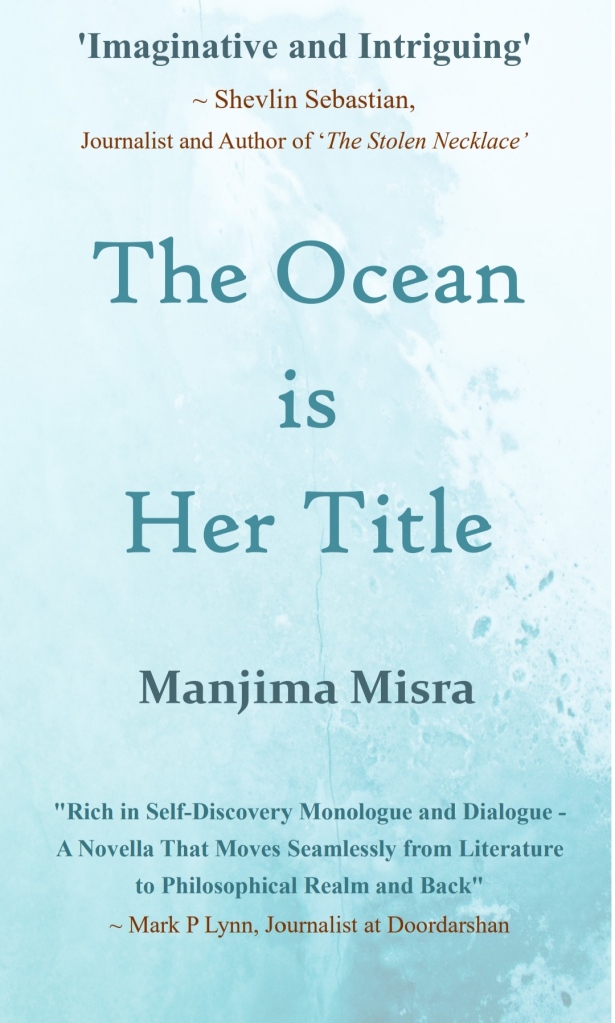
The Ocean is Her Title

Book Title: The Ocean is Her Title

Author: Manjima Misra

Publisher: Book Street Publications

The world ball dance was held on 25th December. It was the last time that Jay and Poulomi had agreed to meet each other with the tag of being lovers. The ballroom was majestic with a long winding staircase – the magnificent staircase was adorned with Christmas Mistletoe plants. Jay could not help but stare at Poulomi in her maroon ballroom dress and with her maroon lipstick making her lips seem more protruded than ever.

The song ‘Maroon’ by Taylor Swift was playing in the background.

The ballroom ceiling was full of sparkling chandeliers which glimmered with golden light. The golden rays of the daytime sunshine lit up the ballroom with a soft glow, as they passed through the crystal clear huge glass windows. Each of the windows had maroon curtains which were shifted to the side to let the daylight in.

As the day approached late evening, the curtains were closed and the ballroom still had the soft golden glow – this time it was because of candlelight lamps.

In this glorious ballroom, Agatha was playing the instrumental version of the song ‘Maroon’ on piano with the grandeur of royalty, for the piano was gifted by the Princess of England, Agatha could not feel more proud of her musical skills.

For a while, Agatha kept looking at Poulomi and Jay now and then. Poulomi’s maroon dress had golden belt and golden buttons, and Poulomi was wearing a necklace studded with golden star shaped diamond-like stones. She was carrying a golden purse with her and as she walked down the staircase, she seemed like the very Queen of England.

In the middle of the dance with Jay, Poulomi excused herself and went to Agatha. She exchanged a few words with Agatha and when she returned to the dance floor, Jay was nowhere to be found. Jay had disappeared.

Agatha came running and said, “Poulomi, you must confront Jay. This act of disappearance is no way justified”.

“Agatha, is Jay a real person? Or is he a hallucination of mine?” asked Poulomi, being well aware of her own mental health condition. And Poulomi ran towards the veranda and gazed at the maroon night sky glittering with silver stars.

Agatha followed her and said, “Well, at least, the sky and the stars are for real.”

About the Book:

The novella, titled The Ocean is Her Title, is an exploration of a fractured existence of the central character Poulomi “struggling through a welter of feelings, incapacities, and anxieties to shore up her beleaguered existential coherence”. In the words of Mark P Lynn, noted journalist at Doordarshan, “the novella is rich in self discovery monologue and dialogue and moves from literature to the philosophical realm and back. The internal monologue takes the form of a conversation with real characters who are fictionalized from the author’s love for Harry Potter, Taylor Swift, Wonder Woman, and the heartfelt support structure provided by a father who tends to a child with bipolar disorder.” In the words of renowned journalist and author Jitendra Dixit, “The Ocean Is Her Title, the readers are invited to embark on an emotionally charged novella that weaves together the dreams and struggles of a young Delhi girl, Poulomi, whose life takes an unexpected turn when she is abducted and transported to a place she could never have imagined – the Ocean Hospital. This novella, authored by Manjima Misra, is a poignant exploration of identity, resilience, and the complexities of modern womanhood.”

About the Author:

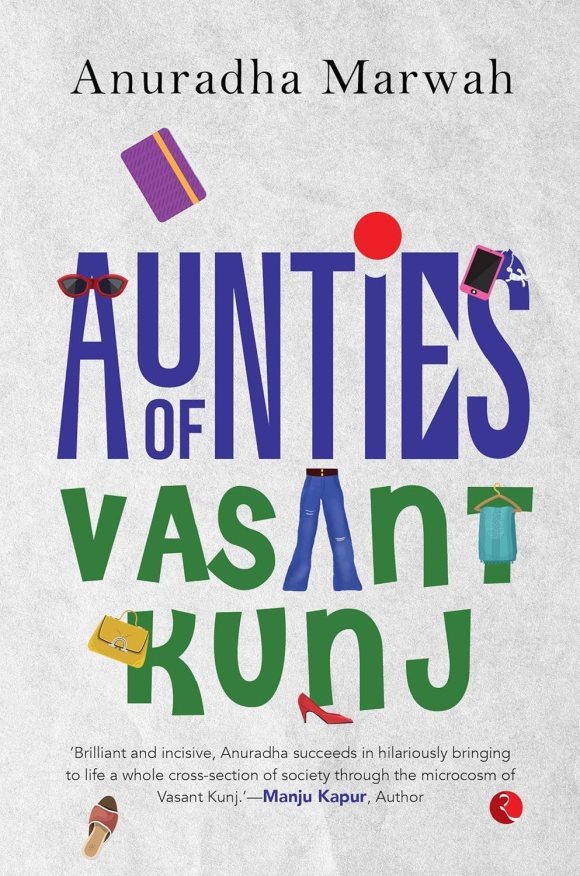
Manjima Misra is a writer based in Delhi. She has written three published books previously which are titled Indian Feminine Fury, Unapologetically Mad, and The Ocean is Her Title. Her opinion articles have been published in The Indian Express, The Quint, Outlook India, Deccan Herald, Newslaundry, and Firstpost. She has previously worked as a writer with the Education Desk at The Indian Express and as an educator with Teach For India.

 She has a Master’s degree in English literature from the University of Delhi and a Postgraduate Certificate in Teaching English to Speakers of Other Languages (TESOL) from the University of St Andrews, Scotland.

PLEASE NOTE: ARTICLES CAN ONLY BE REPRODUCED IN OTHER SITES WITH DUE ACKNOWLEDGEMENT TO BORDERLESS JOURNAL

Click here to access the Borderless anthology, Monalisa No Longer Smiles

Click here to access Monalisa No Longer Smiles on Amazon International

Categories
Poetry

Fragrance

By Priyanka Panwar

The stillness of love
No language
No haste
A calm touches the air;
your heart sits in one place
after having slogged for years.
The aroma of chai 
and the sound of rain drops
‘tis the only truth out there.

Love 
that blooms
in the wildest weather
and touches the ground
on a soft, winter morning;
shedding and giving. 

Ready for the morning prayers;
Living in the fragrance that is left behind.


Priyanka Panwar teaches English at University of Delhi. When she isn’t reading or teaching, she likes to travel and observe. A movie buff and a voracious reader; on most days she dreams of coffee and mountains.

PLEASE NOTE: ARTICLES CAN ONLY BE REPRODUCED IN OTHER SITES WITH DUE ACKNOWLEDGEMENT TO BORDERLESS JOURNAL. 

Click here to access the Borderless anthology, Monalisa No Longer Smiles

Categories
Stories

Rains

By Garima Mishra

These weren’t the first rains. When did it rain first on Earth? The simple lines that the black-eyed girl could speak to herself was “it drizzles in August and rains in September”. It was less intricate to hide that big mole on her left arm, bulging out and eyeing the clouds, just like the notorious seven-year-old herself, prodding Mumma’s palms, for the ‘last’ mud roll!

She knew that mud roll wasn’t the last one. Childlike pleasures were more pleasurable when forbidden. And she knew that wasn’t a mole but a birthmark. Her parents never taught her how to make boats, how to jump on a puddle and splash mud water on the handsome red sports car. The sports car owner complained but he saved his paan (betel leaf) spitting stories inside the car itself. Years after the same car would be emitting flashes and sparks in a car repairing stores.

She visited the car repair store while it was raining heavily outside. The poorly shackled asbestos had non-stop tip-tip drips of rain water. Her nicely blow-dried hair had rolled into a big round bun, with humid drops of sweat all around her face. As she waited, she remembered …girls are meant to mend into difficulties — reiterated by the puckered smiles of her granny.

True, she thought for a while. The repair store had flashes erupting when a man with blue uniform welded a jagged piece of metal. For a while, she stepped on a dirty plastic cover, with rain water out of fear. The lightning streaked into the shop perhaps. Suddenly the sky turned violet and thunder swept through the black clouds. She saw a few girls, with knotted frocks and skirts, playing in a rainwater puddle. Running boats, moulding the clay, patting a frog.

“My parents never taught me what are rains…” she spoke to herself with audacity. All they taught was how to search for candles for that ‘Great Indian power cut’ or wear rain coats when your bus stop is still far away. What do parents teach children, to be a child lock in this big world?

Those two hours inside the store was a medley of sweat, flashes and the never-ending rain. The girls had watches with them, they looked at it and walked straight like a flock of birds assembled in an ant’s kingdom. Their line was like the one in her school assembly. They walked off and were suddenly lost to view.

She took out her scooter keys, as if she was heading out for a mission. She got some hair clips on the way. She found a big hostel, gated in front of a boarding school. She had run away as one escapes from an exploding crater of a volcano. She ran away from boarding school this way, ten years before.

She wove stories of her Granny’s ageing.

She had known by instinct when it rained. Rains were a product of water cycles; a learning from environmental science textbooks but she never knew that rains were deeply nuanced.

She touched her birthmark, now doubly bold in her diary and blogs as moles were also a product of staying at home and gazing at rains as if it were an intruder.

The next time it rained, she went out, wearing a pink kurta. The one she purchased during the Diwali Mela, a big maroon bindi from her mother’s dressing table and piece of paper from her sister’s classwork copy. She made boats, but ran inside when it started dashing on the green creepers. Her boat was floating.

Garima Mishra is a student pursuing her bachelors in microbial sciences in University of Delhi. She writes in English and Odia.

.

PLEASE NOTE: ARTICLES CAN ONLY BE REPRODUCED IN OTHER SITES WITH DUE ACKNOWLEDGEMENT TO BORDERLESS JOURNAL