Poetry by popular poet Avaya Shrestha, translated from Nepali by Haris C Adhikari
Avaya Shrestha
Doubt the beautiful Collages rendered by These various images of clouds, Doubt the beauty Of the existence of various Floating colours on beautiful lakes And of the snow— like patches of clouds— That has come to your hands. . Doubt the sensational News in newspapers and TV, The flowery, immaculate poems of poets, The mind-blowing thoughts of intelligentsia, And the Prime Minister’s speech In the name of all the citizens.
Doubt Even the stories told In sweet language By your respected teacher, Doubt The history written By great historians And the all-accepted values In the world. . Doubt Yudhisthira’s loyalty To truth, which is like snow Melting; and doubt Arjuna’s bravery, which is like the sky Untouched; doubt Devavrata’s BhishmaPratigyaa*, Duryodhana’s meanness And the magical stories of the Vedas and the Puranas. . Socrates, Marx and Gandhi Darwin, Freud and Einstein Are only your co-travellers; The Holy Bible, the Ramayana And the Mahabharata The Dhammopadesh, the Tripitak And the Quran Are not the ultimate truth; Neither Brahma is real Nor false is the world; doubt Vishnu, Maheshwor, Shree Ram, Christ, Kabir, Mohammed, And even the Buddha Who himself speaks of doubts. . No one is outside The circle of doubts In this yard-like Collective world— Doubt ! Even this poem of mine That creates The god of doubts … . Unstoppable, I do doubt my own conscience The way the soil does Give a test every time To the seeds sown in its womb.
*Bhishma Pratigya : A terrible oath taken by Devavrata (who later came to be known as Bhishma), one of the most important figures in the Mahabharata (Note:In this poem the persona doubts both the eulogized characters like Yudhisthira and Arjuna, who have been depicted as completely flawless and godlike, and the hatred-inspiring character like Duryodhana, who has been depicted only as a figure full of foolishness and demonlike character in the epic).
Avaya Shrestha (b. 1972) is a powerful poet, well known for his subversive, rebellious, anti-conformist and thought-provoking poetry. He hails from Bhaktapur district. He is also known as a short story writer and columnist. He holds a bachelor’s degree in sociology and political science from Tribhuwan Univesity. Shrestha has three books to his credit: Phul Binako Sakha and Kayakalpa (both anthologies of poetry) and Tesro Kinara (an anthology of short stores). He has received several recognitions and awards including Garima Best Prose Award (2012) , Best Creation Award in Prahari Bimonthly (2008), Nepal Academy Short (Best) Story Award (2004) and Dristi Weekly Columnist Honour (2008). He has worked as reporter and feature editor for different national dailies of Nepal. His columns Satyakura is popular among Nepali readers.
Haris C. Adhikari, a widely published poet and translator from Nepal, and an MPhil scholar in English language, teaches at Kathmandu University. He has three books poetry and literary translation to his credit. Adhikari’s creative and scholarly works have appeared in numerous national and international journals. Until 2017, he edited Misty Mountain Review, an online journal of short poetry. Currently, he co-edits Polysemy, a journal of interdisciplinary scholarship, published out of DoMIC, Kathmandu University. He can be reached at haris.adhikari@ku.edu.np
.
PLEASE NOTE: ARTICLES CAN ONLY BE REPRODUCED IN OTHER SITES WITH DUE ACKNOWLEDGEMENT TO BORDERLESS JOURNAL
A poignant story bySaratchandra Chattopadhyay translated by Sahitya Akademi winner, Aruna Chakravarti
Sarat Chandra Chatterjee (1876-1938)
Only seven days of fever and Thakurdas Mukhopadhyay’s wife passed away….
Old Mukhopadhyay moshai*, grown extremely wealthy from a flourishing business in rice and paddy, had four sons and three daughters — all with children of their own. Sons-in-law, grandchildren, neighbours and servants filled the rooms in a measure that befitted not a house of death but of jubilation. Men, women and children from the entire village crowded at the gates in the hope of catching a glimpse of the splendid funeral procession which would accompany the dead woman to her final resting place. Her weeping daughters lined her parting with sindoor and covered her feet with alta*. Her daughters-in-law dressed her in a resplendent new sari and adorned her brow with sandal paste. Then, wiping the last traces of dust from her feet with their sari ends, touched them reverently to their foreheads. Flowers, garlands and basil leaves, clouds of fragrant incense smoke and the resounding clamour and bustle turned the day of mourning into a joyous replica of the one, fifty years ago, when the mistress of the great house had first set out on her ceremonial journey to her husband’s home.
Bidding a last farewell to his companion of nearly a lifetime old Mukhopadhyay moshai dashed away the tears from his eyes with a surreptitious hand and assuming a serene expression tried to comfort the weeping women.
And now the magnificient cortege started on its way to deafening cries of Bolo Hari Hari Bol*! As soon as it left the gates the assembled crowd of villagers scrambled after it. Only one woman hung back. She had stood apart from the rest all this while and now she followed fearfully keeping a discreet distance from the others. This pale shadowy creature was Kangali’s mother.
She had been on her way to the weekly haat* with a few aubergines she had picked from the bushes outside her hut when the marvellous spectacle caught her eyes, leaving her spellbound. She forgot the aubergines bundled in a corner of her sari. Forgotten, too, were her hopes of selling them and coming home with a few coins. Brushing away the tears from her streaming eyes she followed the crowd to the cremation ghat that stood on a bank of the Garud river. Standing on a mound, a little way off, she looked on with eager eyes at the huge wooden logs, stacks of sandal wood, ghee, honey, camphor and incense that lay beside the bier. She dared not go any closer. She was an untouchable, a Duley by caste, and even her shadow was shunned by the others.
She looked on stoically as the preliminary rituals were being performed but when the body was lowered on the wide platform, she could hold herself in no longer. A sob tore through her throat. A wild desire rose in her. She wanted to rush towards the alta covered feet and touch them to her head. Curbing the impulse with difficulty she gazed at the scene unfolding before her eyes. How beautiful it was! The high-born lady in her priceless sari, her parting thick with sindoor and her fair feet smothered in alta. Her eldest son took up the bunch of flaming jute stalks, purified by the chants of the priests, and touched them to his mother’s lips to the tumultuous cries of Bolo Hari Hari Bol rising from hundreds of throats. Kangali’s mother was so moved that tears poured down her cheeks. “Ma*!” she called out to the dead woman, hands folded in reverence, “What great good fortune is yours! You are on your journey to Heaven leaving behind a grieving husband, sons and daughters, grandchildren, kinsmen, dependents and servants. You are a queen and I a lowly creature not fit to touch your feet. Still, waft a blessing towards me before you go. Grace me with the boon that I too, like you, may receive my last fire from Kangali’s hands.” Fire from a son’s hand! Her limbs trembled with ecstasy at the thought. Ah! the beauty of it. The glory of it! Her breast heaved with powerful feelings.
Standing on the mound Kangali’s mother strained her eyes on the newly lit pyre from which a column of smoke rose spiralling towards the sky. It stung her eyes rendering her vision blurred and hazy; playing tricks with it. She saw a tiny chariot, she could swear to it, at the tip of the bluish grey swirl just where it met the sky. Exotic images were etched in gold on the sides. The crest was entwined with flowering vines. There was someone sitting within. She could not see her face bur recognized her easily from the wide parting filled with sindoor; the feet covered with alta. She gazed at the woman in awe and adoration.
“Ma!” She felt a tug at her sari. A boy of about fourteen stood by her side looking at her with bewildered eyes. “Why are you standing here? When will you do the cooking?”
“I will, in a while, son. Look!” She pointed to the sky. “Can you see the chariot? Our chaste and holy mistress, our Bamun Ma*, is sitting in it. It is taking her to Heaven.”
“What chariot? Where?” Kangali’s eyes turned to the pointing finger. “That’s smoke,” he said dismissively. “Smoke from the pyre. You’ve gone crazy Ma.” Then, pouting like a child, he muttered, “It’s hours past noon. Don’t you know I am hungry?” Seeing his mother’s eyes fill up with tears, he added, “Why do you weep because the Brahmin lady is dead? What is it to you?”
Now Kangali’s mother came to her senses. She realised how foolish it was to stand for hours in the cremation ground shedding tears over someone else’s death when her own son went hungry. Besides, a mother’s tears brought bad luck to her children. Wiping her cheeks with a furtive hand she tried to smile, “Why should I weep son? My eyes are watering from the smoke and…”
“Watering from the smoke indeed! You were crying.”
The mother fell silent. Taking Kangali’s hand she climbed down the bank and took a few dips in the river. Making her son do the same she returned home with him. A small sigh escaped her. She would have liked to watch the beautiful ceremony to the end. But fate had ordained otherwise.
Parents are often injudicious in their choice of names for their children. The Creator smiles at their foolishness and dismisses it with the contempt it deserves. But sometimes He is angered and decides to teach the inane mortal a lesson. Then the name so carelessly given turns into a symbol of the innocent child’s fate. From birth to death she hears her name ringing in her ears; jeering, mocking, reminding her of what she can expect.
Kangali’s mother was a young woman. She hadn’t lived long in the world. But she had spent her years, few as they were, tottering under the weight of her name and its implications. Her mother had died in giving her birth. Her father, enraged at the bereavement of which she was the cause, had named her Abhagi — the ill-fated one. Hers had been a childhood with no mother and a father who spent all his time fishing in the river and hobnobbing with his friends with never a thought for the little girl left at home. Yet the tiny creature had not only survived she had grown to womanhood and, in course of time, given birth to Kangali. The man who had married her went by the name of Rasik Bagh. But Bagh, the tiger, had another tigress and one fine day he picked up his things and moved to the village in which she lived, leaving Abhagi alone with her infant son.
That son was now in his fifteenth year. He had just started learning to weave bamboo slips into mats and baskets. Abhagi yearned for the day when he would be earning enough to support them both. “Just another year or so,” she told herself frequently her heart lifting at the thought, “and my troubles will be over…”
.
Kangali ate his meal and went to the pond to wash his hands and rinse his mouth. Returning, he was surprised to see his mother putting away the leftovers in an earthen bowl.
“Why Ma!” he cried out, “Aren’t you going to eat?”
“The day is almost done,” Abhagi muttered, “I’m not hungry anymore.”
“Hunh!” Kangali snorted in disbelief, “Not hungry anymore! You haven’t kept anything for yourself. That’s the truth. Isn’t it?”
It was a trick Abhagi often played when there wasn’t enough food for them both. Kangali knew it. He insisted on examining the rice pot and found there was enough left for one person. And now, convinced that she really wasn’t hungry, he smiled contentedly and came and sat in her lap. It was an odd thing for a boy of fifteen to do but Kangali had been sickly for a large part of his infancy and boyhood and Abhagi had kept him physically close. Unable to romp and frolic with other boys he derived all his pleasure from his mother’s stories and the little games she played with him. Now, twining his arms around Abhagi’s neck and touching her cheek to his he got a shock. “Why Ma!” he exclaimed. “You’re burning with fever!” Then, with a tinge of anger in his voice, he added, “Why did you have to stand in the sun all those hours? And bathe in the river on top of it? What’s there to see in a burning corpse?”
“Chhi Baba*!” Abhagi scolded gently putting her hand on his lips. “You shouldn’t use those words. They are sinful. It was not a burning corpse. It was our chaste and pure mistress, our revered Bamun Ma, going to heaven in a golden chariot.”
“What nonsense Ma! As if people go to heaven in golden chariots!”
“I saw it with my own eyes Kangali. She was sitting in the chariot. Her feet were crimson with alta. Everyone saw it.”
“Everyone saw it?”
“Everyone.”
Kangali leaned against his mother’s breast, lost in thought. He believed his mother. He had been reared from infancy to have implicit faith in her. If she said she had seen this extraordinary spectacle and that others had seen it too, who was he to doubt her? “Then,” he said thoughtfully, “you will go to Heaven too. I heard Bindi’s aunt saying to Rakhal’s mother only the other day, ‘There’s not another woman in our Duley clan as chaste and pure as Kangali’s mother.’”
Abhagi was silent.
“When Baba* left you,” the boy continued slowly, hesitantly, “so many men tried towoo you to marry them. ‘No,’ you said, ‘Why should I take another husband? I have my Kangali. He’ll grow up and take care of me.’” Then, his eyes filling up with tears, he added, “What would have become of me, Ma, if you went away with another man? I would have starved to death.”
Abhagi put her arms around her son and pressed him to her bosom. “Ma go*!” she murmured thinking of those terrible days when the elders of the village were advising her, ceaselessly, to take another husband. But it wasn’t only advice that had been showered on her. She had been pressurized in so many different ways! She had been coaxed and cajoled, warned and threatened. Her ears had been filled with forebodings of her bleak future; of Kangali dying of starvation. But she hadn’t been intimidated. She had clung to her resolve. Kangali saw the tears streaming down his mother’s cheeks and felt his own eyes burn.
“Do you want to lie down Ma? Shall I make up the bed?” he asked gently. Abhagi made no reply. Kangali rolled out the mat and spread a kantha* over it. Plucking a pillow from the machan*, he smoothed it carefully and laid it down. The, taking his mother by the hand, he made her lie down.
“You needn’t go back to work today,” Abhagi said to her son. “Stay with me.”
The idea of skipping work and staying at home appealed to Kangali. But there was a hint of caution in his voice as he said, “They won’t give me the two paisa for today if I…”
“Never mind.” Abhagi smiled. “Come and lie down beside me. I’ll tell you a story.”
Kangali needed no further invitation. Dropping down on the bed he curled his body against his mother’s. “Tell the story of the rajputra and the kotalputra*. And the flying horse,” he said resting his cheek against hers.
Abhagi began her tale of the prince and the policeman’s son and their adventures with the winged horse. It was an old fairytale, heard over and over again, in her childhood. But after a few minutes the two protagonists vanished from her story. As did the horse. She started weaving a web of fantasy that was entirely her own; something she hadn’t heard from anyone at any time in her life. The higher her fever rose, the faster the hot blood pounded in her veins, the more impassioned the telling became and the more intricate her magic web of words. She spun tale after tale, without rest or respite, each more wonderful than the last. Kangali trembled with excitement and goose bumps broke out all over his slight frame. He pushed closer to his mother’s breast and twined his arms around her neck.
And now the sun started dipping in the west. The falling shadows fell faster and pervaded the earth. Dusk crept into Abhagi’s hut. But she did not rise to light the lamp or carry out the last duties of the day. Mother and son lay locked in an embrace, her voice crooning in his ears; sending shivers of thrill down his spine. It was the same story with variations, repeated over and over again. The story of the Brahmin lady’s death. Of the magnificent procession that had accompanied her to her last resting place. Of the chariot in which she had sat on her way to Heaven…her feet crimson with alta. Of her weeping husband bidding her farewell after touching the dust of his feet to her brow. The fervent cries of Bolo Hari Hari Bol as her sons lifted the bier on their manly shoulders. And then…then…the final triumph! Receiving her last fire from the hand of her eldest son…
“That fire was no ordinary fire, son.” Abhagi explained, her breath coming hotter and faster. “It was Hari Himself! And the smoke rising up to the sky was not smoke. It was the chariot of heaven. Kangalicharan! Baba amaar*!” She cried out in an excess of emotion.
“Why Ma?”
“If you light my pyre with your own hands, I’ll go to Heaven too like Bamun Ma.”
Her words made Kangali uncomfortable. “Jah*!” he said, “You shouldn’t say such things.” But, Abhagi went on as though she hadn’t heard him. “No one will look down upon me then. No one will shun me for my low birth. Oof!” Her face was flushed with excitement and her fevered breath came in gasps. “Fire from my son’s hand! Ah the glory of it! The chariot will have to come down for me. No one can stop it…for all that I am a poor untouchable…”
“Don’t talk like that Ma,” Kangali put his hand on her mouth. “It frightens me.”
“And Kangali,” Abhagi pushed it gently away and continued on her own train of thought. “Get hold of your father when my time comes and bring him here. Tell him he must give me the dust of his feet before I go. And…and my parting must be filled with sindoor and my feet lined with alta. But…but who will do all that for me? You will, won’t you Kangali? You are my son and my daughter. You are all I have.” Bursting into tears she kissed his cheek and laid her wet fevered face against his hair.
And now the drama of Abhagi’s life was nearing curtain call. Only the final scene was left. There hadn’t been much to the play. Her thirty years on the earth hadn’t been remarkable in any way. And neither was her end.
Kaviraj Moshai, the only ayurvedic practitioner in these parts, lived in another village. Kangali ran all the way, fell at his feet and begged him to come and see his mother. Met with a stony silence he went back home, pawned the bell metal pitcher out of which they drank water and paid him his fee of one rupee. Still the great man did not deign to come. He handed Kangali a few pellets of medicine instead.
Instructing him to grind them in a physician’s pestle and mortar, mix the powder with ginger extract, honey and the juice of basil leaves, he told him to feed the potion to his mother in small doses.
Abhagi was amazed at what her son had done. “Why did you pawn the pitcher without asking me Baba?” she rebuked him gently. Then, taking the pellets from his hand she touched them to her forehead and threw them into the kitchen fire. “If I’m fated to live I’ll do so anyway,” she said, “Has anyone in our Bagdi Duley community ever taken a physician’s medicine?”
Two or three days passed. Abhagi’s neighbours heard of her illness and came to see her. They left without any offers of help. But each one knew of a remedy guaranteed to cure the ailing woman. “Water in which a deer’s horn has been soaked just can’t fail,” one of them told Kangali. Another proposed burning cowrie shells and mixing the ash with honey. But the shells could not be ordinary ones. They had to be knuckled cowries. The mixture, fed to the patient, would bring instant relief.
Poor Kangali ran helter skelter in search of these articles till Abhagi caught him by the hand and forced him to stop. “If what the physician gave me was of no use, how can deer’s horn and cowrie shells cure me? Give over running here and there and come and sit by me.”
“But you didn’t take the pellets Kaviraj Moshai gave!” Kangali’s face crumpled like that of a child. “You threw them in the fire. How can you get well if you refuse everything?”
“I’ll get well. Don’t worry. Now wipe your eyes and listen to me. Put the pot on the hearth and boil some rice. Then sit by me and eat it. That will give me more comfort than any remedy in the world.”
Kangali rubbed his eyes with the edge of his dhuti and rose to obey his mother. For the first time in his life he was cooking his own meal. But he could do nothing right. His fire wouldn’t burn properly, his rice boiled down to a mush because he didn’t know how to drain the starch and he spilt half of it when trying to transfer it to his kanshi. Abhagi watched him with an ache in her heart. Once she even tried to rise from her bed, but her head swam and fell back on the pillow.
After the boy had gulped down some of the rice he had cooked, she called him to her side and tried to teach him how it had to be done. But her voice choked in her throat and she couldn’t speak.
Next morning Ishwar, the village barber, came to check Abhagi’s pulse. He was good at this and the villagers sent for him whenever anyone was seriously ill. Taking Abhagi’s limp wrist between his fingers he frowned in thought. Then, sighing and shaking his head, he left the house. Abhagi understood what that meant. But the knowledge brought no fear. When everyone had gone, she whispered in Kangali’s ear, “Go to him now and bring him here. Tell him…”
“Who Ma?”
“Your… you know who. He…who has moved to the other village.”
“Baba?”
Abhagi was silent. Kangali gazed on her face for a few moments and asked sadly, “Why would he come here Ma?”
“Tell him…tell him… that all I want is the dust of his feet. Nothing else.”
Kangali rose to go. Abhagi clutched his hand and said, “Weep and plead a little, son. Tell him Ma is going…” Then, pausing for a few moments, she added, “And on your way back, stop at the barber’s house and ask his wife for a little alta. She is a kind woman and loves me. She will give it to you.”
Abhagi was only partially conscious when Rasik Bagh arrived the next morning. The shadow of death lay dark on her face. Her eyes seemed to have seen whatever there was to see in this world and was opening out to another… a strange, uncharted, faraway world. Kangali wiped his cheeks and cleared his throat. “Wake up Ma,” he shook her gently by the arm, “Baba is here. You wanted the dust of his feet…”
Perhaps the mother heard. Perhaps she didn’t. But the intense desire, hidden deep within her soul, shook her out of her somnolence. The dying woman moved her feeble arm to the edge of the bed and opened her palm. Rasik gazed at her with bewildered eyes. He hadn’t, in his wildest imaginings, thought that the dust of his feet had any value; that anyone could desire it above all else in the world. He stood immobile with shock till Bindi’s aunt, who stood by his side, prompted gently. “Come Baba. Give the poor girl a little dust from your feet.”
Rasik moved forward. His head teemed with thoughts and his chest felt tight with guilt. He had taken this woman as his wedded wife but had given her nothing. Not love, not protection, nor any means of sustenance. He had deprived her of everything that was her due without a thought. Yet she, even on her death bed, wanted nothing from him but the dust of his feet. Rasik Duley burst into tears.
“Such chastity and steadfastness are not to be seen even among Brahmin and Kayastha women,” Rakhal’s mother exclaimed. “Why she had to be born amongst us is beyond me! But a task lies before you Baba,” she turned her eyes on Rasik, “You must arrange a cremation for her. Fire from Kangali’s hand! She has yearned for it throughout her illness. It’s almost as if death is nothing to her if only…”
The Creator who had chalked out the destiny of Abhagi, the ill-fated one, may or may not have heard the words. But they pierced young Kangali’s heart with the sharpness of an arrow.
The day passed and part of the night. Who knows if the chariot of heaven comes down to claim the souls of untouchables! Perhaps they are expected to hobble to their destinations, footsore and weary, in the darkness of night. Whatever be the truth, Abhagi did not wait for the dawn. She left the world before the sky had paled.
There was a wood apple tree growing outside Abhagi’s hut. Borrowing an axe from one of the neighbours, Rasik Duley proceeded to cut some branches from it. But before he could strike a single blow the zamindar’s guard came rushing to the scene. Landing a thundering slap on Rasik’s cheek he yanked the axe from his hand. “Saala!” he shouted, “How dare you touch this tree? Is it your father’s property?” Rasik rubbed his cheek ruefully without saying a word. But Kangali could not keep silent. “My mother planted this tree with her own hands darwanji*,” he protested, “why do you hit Baba?” Mouthing a string of abuses the zamindar’s retainer advanced aggressively. He raised a hand to strike Kangali but dropped it. He had remembered just in time that the boy’s mother had died, and he had, in all probability, touched the corpse.
His curses and threats had, in the meantime, brought some of the neighbours running to the scene. All of them admitted that it was wrong of Rasik to have cut the tree without taking the zamindar’s permission. But they entreated darwanji to use his kind offices and obtain the consent. It had been the dead woman’s earnest desire, they told him, that her body be cremated. She had expressed this wish, over and over again, to everyone who had visited her during her illness. But all these pleas fell on deaf ears. “Don’t try these tricks with me,” the Bihari stalwart waved them away like flies. “I know what I must do.”
The zamindar was not a local man and did not live in the village. But he kept a cutcherry here from which the business of the estate was conducted, and justice dispensed to the tenants. But being an absentee landlord, all magisterial power and responsibility had been vested in the person of the steward Adhar Rai. Now, while the neighbours were still begging and pleading with the durwan Kangali ran, not stopping for breath, all the way to the cutcherry. He had heard that the lesser minions of the estate were corrupt and expected bribes for everything they did. But if the story of this gross injustice reached the zamindar’s ears redress would surely follow. Thus he reasoned. But alas! Young and inexperienced Kangali hadn’t a clue to the true nature of the Bengali zamindar and his appointed officials. Trembling with grief and anxiety the newly bereaved, motherless boy dashed up the steps and stood before the lord and master of the cutcherry.
Adhar Rai had just concluded his morning prayers and eaten a light breakfast in preparation for the day. Coming out on the veranda he was shocked and angered to see the apparition before him. “Ke re?” he thundered, “Who are you?”
“I’m Kangali. Durwanji has beaten my father.”
“Rightly served. He must have defaulted on the rent.”
“No, Babu moshai*. My mother died last night, and my father was cutting the tree in front of our house when…” Unable to go on Kangali burst into tears. At this Adhar Rai lost his temper. “What are you doing here if your mother’s dead?” he snapped. “Get off those steps and stand in the yard.” Inwardly he shivered with alarm. The boy must have touched the corpse before coming to the cutcherry. Who knew if he had touched anything here? “Ore!” he called out to a servant. “Bring a pot of cowdung water and sprinkle it on the steps and veranda. The whole place is polluted.” Then, turning to Kangali, he asked. “What caste are you?”
Thoroughly frightened by now Kangali ran down the steps and answered meekly, “We are Duley Babu moshai.”
“A Duley’s corpse.” Adhar Rai muttered thoughtfully. “Where’s the need for wood then?”
“My mother wanted a cremation. ‘You must light my pyre with your own hands,’ she said to me over and over again. All the neighbours know. Why don’t you ask them Babu moshai? Everyone heard her…”
“If you want to cremate your mother you must leave five rupees in the cutcherry. That’s the price of the tree. Can you do it?”
Kangali knew he couldn’t. He had pawned the last vessel in the house, the brass kanshi from which he ate his rice, for one rupee to buy his mourning scarf. He shook his head. “No,” he said softly. Adhar Rai bared his teeth in a grimace. “Then go bury the corpse on the bank of the river as befits your caste. How dare your father raise an axe to the zamindar’s tree? Is it his father’s property? Good for nothing wretch! Rogue! Scoundrel!”
“But the tree grows in our yard Babu moshai. My mother planted it with her own hands.”
“Hunh! Planted it with her own hands… Pandey!” Adhar Rai called out to the guard. “Take the boy by the scruff of his neck and throw him out of the cutcherry.”
Pandey, in the manner of all faithful retainers, acted even before the words had left his master’s lips. Giving the boy a hard shove, he threw him to the ground mouthing a stream of curses for good measure. Kangali stood up, shook the dust from his dhuti and walked slowly away. His eyes were blank. What had he done to deserve such treatment? He hadn’t a clue.
Adhar Rai saw the expression on the boy’s face but it didn’t make a dent in his conscience. He was made of sterner stuff. Dusting his hands as at a job well done, he called out to the clerk. “Paresh! Find out if the father has defaulted on the rent. If so, go to his house and confiscate his household goods. Brass vessels, fishing nets…whatever you find. The bastard might try to escape.”
There were just two days left for the sraddha*. Old Mukhopadhyay moshai was busy supervising the arrangements. His wife’s last rites were to be conducted with all the pomp and fanfare owing to her as a rich man’s wife and the mother of many sons. There was a lot of work to be done.
“Thakur moshai*!” Kangali came and stood before him. “My mother’s dead.”
“Who are you?” The old man’s brow furrowed, “What do you want?”
“I’m Kangali. My mother asked me to cremate her.”
“Then go ahead and do it.”
Kangali stood silent not knowing what to say. The story of his treatment at the cutcherry had made the rounds, in the meantime, and many of the villagers were aware of it. “I think he wants a tree,” one of the men standing by ventured to explain, following it up with details of the boy’s encounter with Adhar Rai.
“What audacity!” Mukhopadhyay moshai cried out in shock, “Wants a tree indeed! That too at a time when I need all the wood I can find for my own event! Just two days are left for the sradhha. I’m neck deep in my own troubles and the brat sails in demanding a tree. Jah! Jah! You’ll get nothing here. Try your luck elsewhere.” The old man walked away with a furious clacking of wooden clogs.
Bhattacharya moshai, the family priest, was sitting a little distance away making lists of the articles he would need for the last rites. Looking up at the boy he said, “Cremation has not been prescribed for members of your caste. All you need to do is set alight a twist of dry grass, touch the flame to the mouth of the corpse then bury it on a bank of the river.”
In the middle of this scene Mukhopadhyay moshai’s eldest son walked in. He had been allotted several tasks by his father and he was rushing about seeing to them. He heard the priest’s ruling and observed caustically, “Do you see Bhattacharya moshai? How low born buggers want to ape the upper castes these days? Such are the times we live in.” He hastened out of the room without waiting for an answer.
Kangali stood silent for a while. The last two and a half hours had turned him from an eager, trusting child to an adult. A wise, wary, discerning adult. Head bowed, he walked away, came home and sat by his dead mother.
Now the men and women of the community took over. A pit was dug on the left bank of the Garud river and Abhagi’s body lowered into it. Rakhal’s mother took a knot of burning straw and put it in Kangali’s hand. Then, taking it in hers, she guided the flame towards the mouth of the corpse. That done the straw was thrown away and earth piled on her till every trace of Abhagi was obliterated.
The men sweated and toiled shoveling earth into his mother’s grave but Kangali had no eyes for them. He stood at a little distance his gaze fixed on the thrown away knot of straw. The flame had died down, but a tiny wisp of smoke still rose from it. Up and up it went… a faint thin wisp of bluish smoke. Kangali stared at it with eyes of stone.
*moshai — an honourific title
*Sindoor…alta — sindoor is a red powder used in the parting by a married woman . Alta is a dye used to colour the feet red
*Bolo Hari hari bol — a chant taken up by funerals asking people to take Krishna’s name. Literally, chant Krishna… Krishna chant
*Ma — mother
*Haat — market
*ghat — riverside
*Bamun Ma — Brahmin mother
*Chhi Baba — Shame son (baba is used for father and sometimes used for son as a term of endearment as here)
*Ma go — an expletive expressive of emotional agitation.
*kantha — rug made of old rags
*machan — a shelf
*rajputra…kotalputra — prince…the policeman’s son
*Baba amar — son of mine
*Jah — expletive than means don’t or no
*dhuti or dhoti — a cloth worn as a garment instead of a trouser.
*Kanshi — a brass plate
*Baba — father
*Saala — swine
*durawanji — a respectful way of addressing a durwan, security guard
*Babu moshai — sir
*Sraddha — last rites
*Thakur moshai — Lordship
Sarat Chandra Chattopadhyayor Sarat Chandra Chatterjee (15 September 1876 – 16 January 1938), was a Bengali novelist and short story writer of the early 20th century. Most of his works deal with the contemporary social practices that prevailed in Bengal. He often addressed social ills with his writing and in that sense was a reformer in his heart.
Aruna Chakravarti (India) has been the principal of a prestigious women’s college of Delhi University for ten years. She is also a well-known academic, creative writer and translator with fourteen published books on record. Her novels, The Inheritors,Jorasanko, Daughters of Jorasanko, have sold widely and received rave reviews. Suralakshmi Villa is her fifteenth book. She has also received awards such as the Vaitalik Award, Sahitya Akademi Award and Sarat Puraskar for her translations.
.
PLEASE NOTE: ARTICLES CAN ONLY BE REPRODUCED IN OTHER SITES WITH DUE ACKNOWLEDGEMENT TO BORDERLESS JOURNAL.
ABalochi story by Munir Ahmed Badini translated by Fazal Baloch
Munir Ahmed Badani
A fortnight after my elder brother’s death, heavy rain deluged our town. For two consecutive days, violent winds blew across the town and the sky remained engulfed in dark clouds. It was so dark that days appeared like nights. Clouds hung so low that it appeared rain would burst forth at any minute. But it did not for two days.
Our house was in mourning. During the day my mother along with the womenfolk of the neighborhood, wailed and mourned the death of her beloved son, and at night she offered prayer for his departed soul. When we went to bed, she would stay for a while at our beds and intonate some sacred lines and blow her breath one by one upon us. Before retiring to her bed, she would walk over to have an eye on the Holy Quran again. But she could not get to sleep out of grief and constantly recalled her son who at a young age had fallen seriously ill and eventually would breath his last while in pain. I noticed that during his illness my mother showed a great amount of courage but as soon as he breathed his last, she almost collapsed. She wept incessantly.
I was quite young then, and often stayed awake late at night. I couldn’t fathom my mother’s grief which I wished to share. I hoped his memory would stay forever with us. At the same time, I solaced myself that one day life would return to its normal rhythm and happiness would make it back to our house. It seemed a far cry though.
I was quite hopeful that the heavy rain would wash off our grief and sorrows. My father too was shaken by the grief but unlike my mother, he held back his tears. Indeed, the death of my brother hit our house like an earthquake and rendered everything meaningless for us.
At night, towns-elders came to see my father. They chattered and puffed at the hookah*. I noticed my father’s absentmindedness. I knew he was shaken by the grief. I heard anguished groans coming from his room in the late hours of the night. I couldn’t sleep properly. I desperately wished for something miraculous to turn our sorrows into happiness.
At times some unusual events dragged us back to life again. For example, at times our goatherd failed to return late in the evening. We anxiously waited for him to show up. And then my mother would dispatch our servant to trace him outside. My father himself went out to enquire of neighbors as well. Seeing him taking an interest in something after my brother’s death made me very happy. I assumed that he was finally managing to get over the grief of having lost a son.
Thus, after the heavy rain, I was hopeful that this torrent would wash off everything even our grief and sorrows.
Initially the clouds remained suspended in the sky for two days. First it drizzled lightly but soon the rain gained momentum and relentlessly poured down for seven days and nights at a stretch. Water flooded the land.
My father along with other farmers went to the fields to protect the crops and yield from the flood while my mother held the Holy Quran in her hands and sought God’s mercy. I was happy to see that she too had finally succeeded to get over the shock. I thought life was finally back to its routine. At the same time, I feared that this heavy rain would lead to unimaginable losses. But, as of then, I was not able to forget my brother. Despite this heavy rain and flood, his memory continued to haunt me.
Last time when it rained, he was with us, reduced to a skeleton though. Yet we hoped that he would recuperate sooner or later. We never thought he would leave us forever.
But nobody can avert life’s course. The worst had happened. My brother was dead. Now all I wanted to see was for life to return to its routine path. I pinned all hope on the rain and it partially helped us to divert our attention. His memory was making lesser inroads to our minds.
It was night and my father had not returned from the fields. My mother asked the helper to go after him. Carrying a lamp in hand, he went towards the fields. I sneaked out stealthily and followed him. I remember the sky was covered with dark clouds and it was still raining intermittently. We had left our homes behind and were on the way to our fields. By the graveyard, I noticed the servant stopped and talked to someone. It was my father. I heard his words clearly:
“No matter if the flood sweeps away my fields and crops, but all I want is to save the graveyard from the flood”.
I was shocked.
From that day I was convinced that there was nothing that could wipe my brother’s grief off our hearts.
*Hookah — an oriental pipe that passes the smoke through an attached container of water before it is inhaled.
.
Munir Ahmed Badini is known as the most prolific fiction writer ever appeared on the horizon of Balochi literature. So far he has authored over a hundred Balochi novels and three anthologies of short stories. Recently he was awarded the Kamal-e-Fun Award by the Pakistan Academy of Letters. It is the highest award for the recognition of lifetime achievements in the field of literature.
Fazal Baloch is a Balochi writer and translator. He has translated several Balochi poems and short stories into English. His translations have been featured in Pakistani Literature published by Pakistan Academy of Letters in 2017 and Silence Between the Notes — the first ever anthology of Partition Poetry published by Dhauli Books India in 2018. His upcoming works of translation include Why Does the Moon Look So Beautiful? (Selected Balochi Short Stories by Naguman) and God and the Blind Man (Selected Balochi Short Stories by Minir Ahmed Badini).
.
PLEASE NOTE: ARTICLES CAN ONLY BE REPRODUCED IN OTHER SITES WITH DUE ACKNOWLEDGEMENT TO BORDERLESS JOURNAL.
Short story by actress film-maker Aparajita Ghosh translated from Bengali by Ratnottama Sengupta
Aparajita Ghosh
Happy birthday to you! Happy birthday to you. Happy birthday dear Rishi…
Today Rishi turned five. The slicing of the cake is celebrating that. This is to be followed by dinner. Pulao*, mutton curry and sweets. The four-five guests present all know each other. They are people who frequent this household. Snigdha kaki*, Pranab kaka*, and the young man Friday of this building.
“Ananya, here’s your share of the cake, ” Bharati mashima* stretched her hand to offer it to me. How adorable she looks, this young lady of 70 summers! Red bordered white sari, a large bindi on her forehead, that endearing smile playing on her lips. I took the cake from her and glanced at Rishi’s photograph. A chubby little boy, a headful of raven hair, happiness in his smile and sharpness in his eyes. He is in Hyderabad. In all likelihood, he is cutting a fancy cake in a bustling party. Probably he is not even aware that he has a Grandmother and a Grandfather.
Holding on to the cake, I walked across the room to sit next to meshomoshai*. Long flowing snow white beard. A curious lack of guile marks the face of this 84-year-old man. “Do you know dear,” he was telling me, “Bharati has called so many times, to simply hear the kid’s voice. No one answered the phone. Not once…”
That no one will pick up the phone is clear to everyone by now — save mashima and meshomoshai. After Kinkar da*‘s death, the day Kanchana left with Rishi, she had expressly said that no one should attempt to contact her in any way. She wanted to retain no link with this household in any manner whatsoever.
Kinkar da was only forty then. It was the midnight of a sweltering July day. The call from the Police Station had come to our house. Later we got to know that ours was the last dialled number in Kinkar da‘s phone. Around 10 pm he had called to tell Maa that he had picked up a quality Hilsa, so we should lunch together the next day. Kinkar da‘s car was spotted on EM Bypass, crumpled like a tin toy car. Even before he could be taken to a hospital he had…
The post mortem report held the excess of alcohol in his blood to be the cause of death. Kanchana held Mashima and Meshomoshai responsible for his death. “They not only put up with his bohemian ways, they even boasted about it.” And that was partly if not wholly the truth. They never objected to anything their son did. On the contrary, they took pride in their son.
But, then, there was sufficient ground for that. Kinkar da was a renowned linguist. He was good at painting. His byline was a regular feature of many newspapers. Almost every week he was giving a talk on diverse platforms. All in all he was nothing short of a celebrity. In actuality he was a down to earth person. He would always dress in khadi kurta* and lose pajama. And always, he sported thick framed glasses.
Kinkar da often took me out in his car. We would chat endlessly over puchkas*. Yes, he was senior to me by many years but he was more like a friend. He was my Confession Box. I looked up to him like my own elder brother, my dada. Even now I remember him on Raakhi* and Bhai Phonta*.
“What’s the matter Anu? Why are you sitting still with the cake in your hand? You’re all right?” I was startled by Snigdha kaki‘s voice. “N-no no, I am fine,” I hastily replied. “Here, I’m having…” I was born in this very Suman Apartment, so all the elders in this building complex have a sense of belonging about me. And I love that. But this day is so very different that I am unable to enjoy anything. Haltingly I headed for the bedroom. A baba suit was resting on the bed — along with it, a Teddy bear and a pink coloured envelope. Rishi’s birthday gifts.
Just like the four previous years, this year too these will be sent. I will myself courier them, and they will come back to me. Unlike the first time, that year it had been returned to the sender — mashima. Consequently, for three days and three nights, she did not utter a single word. Only, from time to time, she sat staring fixedly at Rishi’s photograph. The next time onward, I have been putting my flat number in the sender’s column. Like the last three years in all likelihood this year, too, the gifts will lie hidden in my almirah.
I took out the letter from the envelope. mashima‘s handwriting.
Dear Dadubhai*,
Today you turn five. You must have grown in these years and learnt to speak full sentences. I hope you are learning Bengali too, dear child? Do master the language — your Grandpa has tons of books, you will read them all — some day. I have baked a cake for you today and cooked mutton-pulao for everyone. Don’t you be sad — when you come down here I will cook them again for you. We will also go out to visit all the attractions of this city. You have barely seen Kolkata. You just grow up fast and come visit us…
Much love and blessings to you shona*.
Lovingly – yours Thammi*
Just think! After all this I must lick the mutton pulao off my fingers. This day is to me no less than a punishment. So many times I have thought of going away somewhere to avoid the celebration. I don’t, only because of these two oldies. Take a look — they have put up balloons everywhere and done alpana* on the floor at the entrance. Poor Rishi! He will never even hear about this.
I did call Kanchana once. I had suggested that she come on a visit with Rishi. She had cut me short with her terse retort: “I will not let the dark shadows of that house spoil my child’s life. Spare me this request Ananya. If you do, I will be forced to sever all connections with you too.” I’m not sure what connection I have with Rishi and Kanchana. Still, I must admit, she does take my calls. But that is about all.
“Ananya, don’t forget to courier the gifts tomorrow. ” I had not realised that mashima was standing by my side. I nodded in assent. “I had saved Rs 500 in my piggy bank, you know!” mashima continued to speak, “That’s why I could buy the Teddy. And don’t you like the dress? dadubhai is v-e-r-y fond of red!”
“How do you know that? You have not set your eyes on him since he crawled.” But the moment I had spoken, I bit my tongue in remorse. What’s this? What have I done! But mashima was offering an explanation: “Kinkar was very fond of red. Don’t you remember how many of his kurtas were in red? Rishi also…” the words trailed off as her voice choked with emotion.
I held her in a tight hug. I couldn’t control myself either — I let my tears flow freely down my cheeks.
It was well past midnight when I returned to my flat, after lending a hand in serving dinner and cleaning up afterwards. My parents are away at Santiniketan. So I permit myself this bit of ‘late night’ outing. Besides, I was having a tough time going off to sleep. Kinkar da, Kanchana, Rishi, mashima, meshomoshai — they kept crowding before my eyes…
Trinnng! Tring tring… T-r-i-n-ggg…. The constant ring of the calling bell woke me up. Is it for real or am I still dreaming in sleep? No, the bell is still ringing — and someone is also banging on the door. Must be Kamla. How many times I have told her not to wake me up early on Sundays? What is the tearing rush about? “Kamla come back later,” I was on the verge of telling the person on the other side of the door. I stopped mid-sentence as it wasn’t Kamla at the door, it was the young caretaker. Fear was writ over the face that was glistening with sweat. Before I could speak he said, “Didi* please come up to the terrace right now!”
Before he had finished an unknown fear compelled me to race up the stairs. As I reached the landing I saw the two oldies, flopped on the terrace, crying away ceaselessly. I went across and sat down next to mashima. “See?” mashima turned towards me, “See how happy Rishi is?”
I could not make head or tail of what mashima was saying. I have yet to courier the gifts. So, did Kanchana make that elusive call?? mashima’s pallu* was all over the floor. Her hair was dishevelled. I can’t remember ever seeing meshomoshai so worked up over anything, not even on the day Kinkar da passed away! With her left hand mashima held me in a tight grip — and with her right hand she was caressing the red Rangan that stood in a pot at one end of the terrace. “See how it is bursting with flowers! This plant has never blossomed before, and today?!”
Three years ago, when this Rangan was planted, mashima had christened it ‘Rishi’. That sapling was smiling at the world today, with flowers on every leaf. Is it actually Rishi saying, “I am doing fine Thammi and Dadu. You too stay well!”
*Pulao — Indian fried rice
*Kaki — paternal aunt
*Kaku — paternal uncle
*Mashima — maternal aunt
*Meshomoshai — maternal uncle
*Da/dada — elder brother
*Khadi Kurta — a long Indian shirt made of homespun popularised by Gandhi
*Puchkas — savoury snack
*Rakhi — Indian festival to jubilate brother-sister ties
*Bhai Phonta — Indian festival to jubilate brother-sister ties
*Dadubhai/Dadu — grandfather
*Shona — darling (Gold)
*Thammi — grandmother
*Alpana — designs made on the floor with ground paste of uncooked rice, traditional folk art
*Didi — elder sister
*Pallu — loose end of the sari that drapes over the shoulder
*Rangan — ixora
Published originally in Bengali in December 2017 issue of Batayan, a Magazine of West Bengal Motion Picture Artists’ Forum.
Aparajita Ghosh, an actor and television anchor has done her Master’s in Mass Comm. She writes stories, has written plays including #Life, which was staged at multiple venues in Kolkata. She has directed Dance of Joy, a documentary on Rabindra Nritya, screened in Dhaka and Singapore, besides India, and the feature film Mystic Memoirs, screened in Kolkata International Film Festival 2019. Dance of Joy been to 7 international festivals and won 2 awards. Mystic Memoir as of now has been selected for 5 International festivals and won one award.
Ratnottama Sengupta turned director with And They Made Classics, on the unique bonding between screenwriter Nabendu Ghosh and director Bimal Roy. A very senior journalist, she has been writing for newspapers and journals, participating in discussions on the electronic media; teaching mass communication students, writing books on cinema and art, programming film festivals and curating art exhibitions. She has written on Hindi films for the Encyclopaedia Britannica; been a member of CBFC, served on the National Film Awards jury and has herself won a National Award. The former Arts Editor of The Times of India is also a member of the NFDC’s script committee. Author of Krishna’s Cosmos and several other volumes, she has recently edited That Bird Called Happiness (2018/ Speaking Tiger), Me And I (2017/ Hachette India), Kadam Kadam (2016/ Bhashalipi), Chuninda Kahaniyaan: Nabendu Ghosh (2009/ Roshnai Prakashan).
.
PLEASE NOTE: ARTICLES CAN ONLY BE REPRODUCED IN OTHER SITES WITH DUE ACKNOWLEDGEMENT TO BORDERLESS JOURNAL.
Poems by Sanket Mhatre translated by Rochelle Potkar
Sanket Mhatre
Sanket Mhatre is a well-known bilingual poet writing in English & Marathi. He has curated Crossover Poems – a multilingual poetry recitation sessions that unifies poets from different languages on a single platform. Apart from this, Sanket Mhatre has been invited to read at Kala Ghoda Arts Festival, Poets Translating Poets, Goa Arts & Literature Festival, Jaipur Literature Festival, Vagdevi Litfest and Akhil Bharatiya Marathi Sahitya Sammelan. Besides curation & recitation, Sanket Mhatre has also created Kavita Café – a Youtube Channel that combines cinematic vision with visual poetry.
Rochelle Potkar is an alumna of Iowa’s International Writing Program (2015) and a Charles Wallace Writer’s fellow, University of Stirling (2017). She is the author of Four Degrees of Separation and Paper Asylum – that was shortlisted for the Rabindranath Tagore Literary Prize 2020. Her poem ‘To Daraza’ won the 2018 Norton Girault Literary Prize UK, and ‘The girl from Lal Bazaar’ was shortlisted at the Gregory O’ Donoghue International Poetry Prize, 2018. Her unpublished poetry book The Inglorious Coins of the Counting House was longlisted at the Beverly Prize Poetry Book Award, 2019, UK.
.
PLEASE NOTE: ARTICLES CAN ONLY BE REPRODUCED IN OTHER SITES WITH DUE ACKNOWLEDGEMENT TO BORDERLESS JOURNAL.
By Bina Theeng Tamang andtranslated by Hem Bishwakarma
Bina Theeng Tamang
My Father
Ere yesterday,
I could not see my father
He turned up—
While I had been to collect the sun
.
For the second chance,
He turned up at daytime, yesterday
Oh! I’m sorry, I could not see him
For I went out
To seek a morsel of food
.
Perhaps,
He will turn up this evening
Yet, I am walking out to reap the time
I know, I would not see him yet again
.
My father had to take me
To a hospital
Lifting a spiky sun on his head
Along the bank of the Rapti River
.
I am here —
Showcased as a city-marionette
Grasped by a lollypop so tight
.
He used to look into the sky
With a deep sigh!
I used to look at the city
.
He used to ask briskly
Groping money —
Earned selling the Kulfi
“Which did you like, dear?”
.
He used to laugh
With the face shattered by helplessness;
And the chest stroked by fate
Then he would say,
“You are my heart
How would I live heartbroken?”
.
After four to five years of his avowal
He let his heart
To a strange person
.
He is unwell nowadays
However,
He comes to see a piece of his heart
.
How would he know?
For seeking a mouthful bread
Sometimes for collecting the sun
And frequently to reap the time
The Heart rushes ever
In the marathon of life
.
We may not see each other
In the next visit, too!
.
Bina Theeng Tamang is a writer from Kathmandu. She is an author of two books, Chhuki, a story collection and Rato Ghar, a poem collection. She is an awardee of different Nepali awards.
Hem Bishwakarma is a writer and translator from Nepal. He has poetry and short stories translations, and poems in Nepali and English published to his credit. He mostly works on Nepali-English translations.
.
PLEASE NOTE: ARTICLES CAN ONLY BE REPRODUCED IN OTHER SITES WITH DUE ACKNOWLEDGEMENT TO BORDERLESS JOURNAL.
George Steiner says, ‘Every language is a world. Without translation, we would inhabit parishes bordering on silence’. In her fascinating book titled One Dozen Stories, Naina Dey captures the shades and tones of Bengali short stories written by well-known storytellers into the folds of English language and gives it her own distinctive stamp. One can not only see Bengal in her words, but also can smell it, feel its very texture.
Sanjukta Dasgupta, the eminent writer and academician, has rightly said, in her Foreword, “The translator of the twelve short stories in this collection has exhibited both sense and sensibility in her selection of the short stories originally written in by some of the best storytellers of Bengali fiction. Naina Dey’s training as a literary critic and translator become obvious as the authors, whose short stories that have been selected for translation cover a wide trajectory.”
Short stories, can also be a welcome diversion from the barrage of images we’re often submitted to in long narratives. The writers feel sometimes it’s worth showing less and hiding more and that is the essence of the short story. Through the power of observation, Naina Dey takes hold of the essence of the stories “each equally griping in intensity” and gives it to the reader with a power that is, paradoxically both strange and familiar. She portrays the influence of images and their seductiveness and their complexities as depicted in the original with expressionist clarity and feelings.
One Dozen Stories includes translation of selected stories by Rabindranath Tagore, Bibhutibhusan Bandyopadhyay, Ashapurna Devi, Narendranath Mitra, Suchitra Bhattacharya, Nabakumar Basu, Anita Agnihotri and Esha Dey.
The twelve stories offer astounding depictions of desire, dream, love, belief and the power of the natural world and the translator tracks the inner monologue of an impoverished world with skill and purpose. There is no dream fog about these stories. There is no slapdash, no satire, no postmodern signs and flashes either.
Naina Dey has mentioned in her ‘Introduction’, “Edgar Allan Poe, considered the father of the short story and its first critical theorist had defined what he called the prose tale as a narrative which can be read at one sitting from half an hour to two hours, and is limited to ‘a certain unique or single effect’ to which every detail is subordinate.”
The stories in this collection are appealing in their richness and variety, in the sharpness of their perceptions and the clarity of even their complicated psychological unpicking and above all in their stylistic forms.
Tagore is a master storyteller and his stories are associated with events of our life that touched. Dey has selected two poignant and powerful short stories of Tagore. In ‘Shesh Puroshkar’ (The Last Reward), Tagore excavates the flaws and examines the truth to heal wounds and reward thereafter. The settings feel fresh because the author refuses to draw on worn-out descripted tropes with a thing of shreds and patches.
‘Streer Patra’ (The Wife’s Letter) is a landmark short story in Bengali literature.In the life of poor Bindu, Tagore has infused portrait of several generations of tortured and exploited women in Bengal. The deprivation and the denial are all encompassing. The protagonist, Mrinal, unearths the suppression that women undergo and renounces the injustice meted out to the young girl Bindu. Mrinal leaves her house, as a mark of protest at the atrocities against the women and becomes a free woman at the end.
“You had cloaked me in the darkness of your customs. Bindu had come for an instant and caught sight of me through the hole in that veil. With her own death, she had ripped at the end my veil from top to bottom. Today I emerged and saw that there was hardly any place where I could keep my pride. Those eyes that had beheld and loved my neglected beauty, now look at me from the entire sky. Mejobou is dead now.’”(Steer Patra)
For readers looking for a more interesting story with twist at the end, ‘Chor’ (Thief) written by Narendranath Mitra, an accomplished short-story writer, shows the relationship between two enigmatic characters who embark on unusual life path; the husband, a kleptomaniac, compels his innocent wife to steal. The story shows pleasure cannot sustain either itself or any meaning.
“Today Renu was truly her husband’s worthy consort. This was what Amulya had been wishing for all these days. Today was his day to rejoice. But Amulya was frozen stiff in his wife’s tender embrace. It was as if every beauty, every charm had disappeared from this earth. And those familiar arms which encircled his neck were not the bangle-laden slender arms of a beautiful young woman- they had become loathsome, defiled.”(Chor)
Bibhutibhusan Bandyopadhyay’s ‘Puimacha’ (The Spinach Vine) is a captivating investigation of the life. The author depicts human fallibility and the tragic ending with the untimely death of Khenti, the eldest daughter of Sahayhari. Families dissolve through vagrant desire and inner disconnection. Relations between mother and son becomes insensitive and fail to cohere at times.
The depiction of a family’s routines, rituals, and idiosyncrasies in the midst of rule is reflected in Ashapurna Devi’s deft and gripping story ‘Chinnamasta’(The Severed Head). The power of apprehension and its scaring presence is a theme of the story. The broken down, disheartened, surging negative energies emanating from the Hindu widows, echo through the story.
“In the women’s circle, the newly widowed wife’s fare held the same interest as the manners of a newly-wed bride… Frequently therefore, one found Kanaklata, the eldest of the Lahiri wives, Monty’s mother, appearing at opportune moments at Jayabati’s house.” (Chinnamasta)
Nabakumar Basu’s ‘Faydaa‘ (Gain) grapples with harsh effect of generation gap where everyone is under suspicion and the artificiality of the modern life especially while staying abroad. Lives are shaped by ordinary neglect: of spouses, of children and of selves.
Esha Dey’s three stories ‘Anya JagatAnya Nari’ (Another World, Another Woman), ‘Lapis Lazuli’ and ‘Satilakhi‘(A Devoted Wife) centre on the beliefs and variances in life laced with humour and warmth. Her stories are delicate, unfixed and evanescent. These qualities render it an exclusive place among the narratives and reflect on a way to attain a life without boundaries.
Suchitra Bhattacharya’s two stories are all about the power of life sketches, their lightness and complexities as well. In ‘Atmaja’(The Son), the mother and son relationship being at once compulsive and embryonic, and the mental and physical disentanglement is suggested in unsettling details. It is poignant and the ending is tragic. ‘Ashabarna‘ (Discrimination) portrays the hollowness of the middle-class life with dark undertones of class difference.
In ‘Ranabhoomi’ (Battlefield), Anita Agnihotri conjures a natural chemistry from the start with the historical context of the battle of Plassey and the emblematic mango tree and keeps the dramatic tension till the end. The writer is especially good at capturing its longings while the historical, the political, and the personal overlap within society are clearly evident in the story.
“No one remembers, no one remembers anything. Place, history, time…they themselves get entangled in the web of antiquity and remain silent covered with dust.
Abraham will remember. His mother’s anger, his sister’s ill-humour, his wife’s tears and keep them hidden in his breast like the mango tree struck by the cannon-ball!’(Ranabhoomi).“
Translation from one language to other always poses a challenge to convey the nuggets of nuances of the original language. The key to the translation is the choice of words and the need of transporting the soul of the culture into another language. Dey finds her vein of expression by attending to the miniscule details and offers new areas that goes beyond the prevailing.
One Dozen Stories is striking, impressive and of significance even now. The readers will feel the desolation and misery and the sweat and tears that run through the stories. The cover page is impressive. This immensely readable book offers us the chance to escape into a world that is worth a revisit.
.
Gopal Lahiriis a Kolkata- based bilingual poet, critic, editor, writer and translator with 21 books published mostly (13) in English and a few (8) in Bengali, including three joint books. His poetry is also published across various anthologies as well as in eminent journals of India and abroad. He has been invited in various poetry festivals including World Congress of Poets recently held in India. He is published in 12 countries and his poems are translated in 10 languages.
.
PLEASE NOTE: ARTICLES CAN ONLY BE REPRODUCED IN OTHER SITES WITH DUE ACKNOWLEDGEMENT TO BORDERLESS JOURNAL.
Chandra Gurung’s poetry translated by Mahesh Paudyal
My Father’s Face
Two eyes glitter like the sun and the moon
In that face
A kite of self-confidence keeps flying
Beautiful orchids and rhododendrons bloom
Combating the storms of calamities
.
On that face
A sun rises every morning to carry the burden of a new day
And returns, at the end of the day
Hiding every line of sorrows
Carrying little parcels of joy
Making the house and the patio bright
.
On that face
Narrow are the eyes that read the world
Pug is the nose that looms with raised self-respect
Wrinkled are the cheeks where joys and sorrows glide
Chapped are the lips, where smiles stage a march-past
And the entire Mongol identity has been smouldered by heat.
.
But I am delightful
Happy beyond telling
When everyone says:
“You look exactly like your father.”
.
Trust
Since you are back
Take those roses on the table
And kindly adorn them in the hearts.
Let the fragrance of love waft from it.
.
Bring out on the veranda
A pair of chairs;
Let’s spend some intimate moments.
Also place a bottle of wine, and two glasses
On the table;
We shall spend
Some moments of life, talking.
.
Look!
My weary rags
My books, pen and paper abandoned like an orphan
The stubs of cigarette littered like unclaimed corpses
And the scratched mirror—
All await for a single touch
From you.
.
This dark evening
You showed up at my doorstep all alone.
At this moment
Every nook of my heart
Is filled with love, ripple by ripple.
.
Leave it!
Let that window remain open at least
It reflects my heartfelt belief
That you would certainly turn up.
.
Desert: A Life of Mirage
There is not a single bright line of smile
On the broad canvas of the face
No butterfly of joy flutters on the cheeks
Desolate is this desert
Like a garden where all beauty has wilted.
.
There are dry tufts, devoid of life, everywhere
Dry hands of wind come to caress youth
The eyes accumulate dead excitement
And looms a mound of desolation
.
The youthful sun comes to face, eye-to-eye, all day long
The wind teases again and again
The desert longs to allure a traveler with its youth
Dreams of enchanting someone with its gestures
The desert is like a bride’s dream
Living in anticipation of a loving embrace.
.
Its breasts are decked by green date palms
A youthful cactus is tucked on its ears
And the desert stands in a long caravan of desires
Like a life of mirage
.
All is well
Everything is fine.
Just now,
My children in immaculate uniform
Have been taken to school
By a house-boy their age
.
My parents are happy in an old-age home
I am off from the pack of my siblings
My better half spends time watching TV serials
My home has hosted peace pervasively
From this, we can perceive that
All is well.
.
Since a prayer room in the home accommodates
A bunch of deities
It has been long that praying has been a rare tale
Doesn’t it mean
Everything is fine?
.
Nothing ever tortures my heart
I don’t meddle in others’ affairs
And keep myself away from such trifling hassles
And thus, do not bother myself in vain
It’s true:
Everything is fine.
.
I keep my own ways
Act amiably with all
And keep myself away from problems
For this reason
Everything is fine.
.
I carefully maintain my looks
Dress up myself decently
And follow healthy dietary habits
In fact,
Is everything really fine?
.
All these poems are excerpted from Chandra Gurung’s upcoming book, My Father’s Face, with the author’s permission
.
Chandra Gurung is a Bahrain based Nepali poet. He has an anthology of poetry to his credit. That was published in 2007. The second anthology of his translated poems titled My Father’s Face will be published from Rubric Publishing, New Delhi. He has passion for translation as well. He has translated Hindi, English and Arabic poets into Nepali. He has also has translated some of the Nepali poets into Hindi. His works (poems and articles) have found space in many online and print magazines including More of my beautiful Bahrain, Snow Jewel, Collection of Poetry and Prose complied by Robin Barratt (UK), Warscapes.com and many leading Dailies in Nepal.
.
Mahesh Paudyal is a Nepalese writer, translator critic and Assistant Professor of English at Tribhuvan University. His works basically foreground local epistemic traditions and Eastern mythological richness. He has published novels, stories, poems, plays and songs both for adults and children and has extensively written critical works. His major translations include Sheikh Mujiboor Rahman’s Unfinished Memoirs and Prison Notes into Nepali, Silver Cascades, a collection of Nepali short stories and Dancing Soul of Mount Everest, representative modern Nepali poems. He is the Executive Editor of Roopantaran, a translation-based journal of Nepal Academy.
.
PLEASE NOTE: ARTICLES CAN ONLY BE REPRODUCED IN OTHER SITES WITH DUE ACKNOWLEDGEMENT TO BORDERLESS JOURNAL.
By Sayad Zahoor Shah Hashumi translated by Fazal Baloch
This is a chapter from Nazuk, the first novel written in Balochi language. It was first published in 1976 and has been translated into Urdu and Persian. It depicts everyday life and experiences of the people living around the coastal area of Makkuran especially Gwadar and its surroundings.
.
.
The old man fell ill and stayed in bed for around eight days. He recuperated later, but remained quite frail and weak for a few more days. Nazuk looked after him like her father. Whenever she did him a favour, she would recall her father. But she was surprised to notice that sometimes the old man would slide into deep thoughts, and tears stream down from his eyes.
When he finally regained his strength, he expressed his desire to leave for his home but Nazuk did not let him go. She said: “Look uncle! I am a woman and alone with my two children. I don’t have anybody to chat with to while away the night. Ever since you have arrived, I feel like my father has returned. I would rather be glad to see you here. We would live like father and daughter and share our grief and sorrows with each other. From today onward you are my father and I am your daughter”.
The old man’s eyes welled up. He held and kissed Nazuk’s hand and broke out crying madly. Nazuk was astonished. After having consoled and comforted him she said: “Father! I am going to ask you something but don’t mince your words.”
“Come on my daughter. If I wouldn’t tell you the truth, then who would you think I am going to?”
“It’s alright. Whenever I speak to you, all of a sudden, your eyes well up. Why?”
“Yes my daughter. It is a long tale. I had a daughter whose name too was Nazuk. But she was pitilessly forced to die.”
“How did it happen?”
“Ah! I don’t know how to begin the story, daughter. Whenever, I look at you, I recall my poor daughter and can’t hold back my tears. I had never been as poor as I am now. Once I owned three boats. One I rowed myself and for the remaining two I hired two sailors. I was in fine fettle then. One night I was asleep when the anguished cries of a woman joggled me awake. It was coming from my neighbor’s house. I knew her husband had gone to fishing at sea. I jumped over the wall and found someone trying to make advances at her. It was dark and I couldn’t see his face clearly.
“I grabbed him from his waist and lifted him up and slammed him on the ground. He held his breath right there and I assumed he was dead but a moment later he beguiled me and sprinted out of the door. Some receding footfalls followed him. I knew he was not alone. I lit the lamp. The woman’s shirt was in tatters. I asked her about the man but she feigned ignorance. She also pleaded with me not to mention this incident to her husband otherwise he would divorce her. I assumed she knew the man but was afraid to disclose his identity. Till this day I haven’t shared her story with anybody.
“Six month later, one night, one of my sailors woke me up. He told me that he had docked my boat somewhere on the shore but it had disappeared. We went there and exhaustively searched for it but all our efforts ended up in smoke. Someone had stolen it. Six month later, they repeated the cycle and stole my second boat. Each time I went to village’s elder, Shugrullah. He was at a loss himself that nothing had been stolen from anybody but only me. His son Gazabek, who was sitting there, said: “You might have wronged someone and now they are paying you back.”
“I didn’t say a word. Nor I was offended by his remarks. But I lamented that I had been robbed of my two boats without any reason.
“A few months later Shugrullah’s brother invited all the sailors at the launching ceremony of his boat. One by one all the fishermen, were turning up at the seashore. Shugrullah’s son was lashing everybody with a whip to move quickly. He walked over to me and without any warning whipped me. And I without any delay lifted him up in the air and hurled him on the ground. For a moment he held his breath right there on the ground and a while later he sprinted off. I assumed he was the very man who had broken into our neighbor’s house on that distant night. When I grabbed him I felt the same plump body in my arms. His follow through further convinced me that he was the very man who had stolen my boats. Though I never accused him in public, between the lines I tried to throw hunches at Shugrullah. But as poor’s truth is always taken as a lie, everybody castigated me instead. Thus I kept quiet. It was followed by another tragedy. May God let nobody witnesses such doom. I wonder if you know, Gazabek enticed my young and innocent daughter Nazuk.”
“Father! Should I ask you something?” “Yes daughter.” “Well, what is your relationship with Zaruk?” “Zaruk? Her aunt was my wife. But why are you asking this question?” “It means your daughter Nazuk was Zaruk’s cousin who died at childbirth. It all happened because of Gazabek.”
“Yes, my daughter,” the old man broke into tears.
“Now I know it is the tragedy with your daughter that often makes you cry. From today onward I am your Nazuk, your daughter and you are in place of my father. No doubt God is great. Gazabek and his family will have to pay for the wrongs they have done to you.”
For a whole year the old man stayed with Nazuk. She looked after him like her late daughter. When the old man fell ill, he would anxiously grumble, “O God how long will it take your millstones to grind? The revenge you extract after I am dead will not bring me any relief.”
As luck would have it, the next day news spread that last night a thief broke into Gazabek’s house and cleverly left without leaving any trace behind. Next night everybody was on the alert yet he hoodwinked them and broke in again. When the old man received the news, he desperately called out Nazuk.
“Nazuk! Come on Nazal! Come on my mother!”
Nazuk hurried towards the old man and asked him anxiously: “Yes Abba I am here. Tell me what’s the matter?”
“Nazuk my daughter! I wouldn’t lament at all if God takes my life at any moment now.”
“What are you talking of? What happened?” “Hey! Don’t you know what happened?” “No. Tell me what is the matter ?” “Daughter! Gazabek’s family has been dishonoured. A woman in his house is having a secret affair with a man.”
“That’s not fair father. The man who forced himself must have been only a thief.” “No my mother! He was not a thief but a shrewd man and Gazabek was well aware of everything but lacked the courage to reveal anything. Indeed your millstones grind late but they grind fine. Thank you, O Holy Lord!”
A few days later the old man was summoned by God’s glory.
.
PLEASE NOTE: ARTICLES CAN ONLY BE REPRODUCED IN OTHER SITES WITH DUE ACKNOWLEDGEMENT TO BORDERLESS JOURNAL.IT CANNOT BE REPRODUCED IN FULL ON FACEBOOK OR ANY OTHER SOCIAL MEDIA — PLEASE DO USE THE ONLINE LINK ON SOCIAL MEDIA.
.
Sayad Zahoor Shah Hashumi (1926-78) is known as the pioneer of modern Balochi literature. He was simultaneously a poet, fiction writer, critic, linguist and a lexicographer par excellence. Though he left undeniable marks on various genres of Balochi literature, poetry remained his mainstay. With his enormous imagination and profound insight he laid the foundation of a new school of Balochi poetry especially Balochi ghazal which mainly emphasises on the purity of language and simplicity of poetic thoughts. This school of poetry subsequently attracted a wide range of poets to its fold. He also authored the first ever Balochi novel ‘Nazuk’ and compiled the first comprehensive Balochi-to-Balochi dictionary containing over twenty thousand words and hundreds of pictorial illustrations.
Fazal Baloch is a Balochi writer and translator. He has translated several Balochi poems and short stories into English. His translations have been featured in Pakistani Literature published by Pakistan Academy of Letters in 2017 and Silence Between the Notes — the first ever anthology of Partition Poetry published by Dhauli Books India in 2018. His upcoming works of translation include Why Does the Moon Look So Beautiful? (Selected Balochi Short Stories by Naguman) and God and the Blind Man (Selected Balochi Short Stories by Minir Ahmed Badini).
Surabhilata was beside herself with joy as she strode up the stairs of her elder daughter Anuradha’s residence on Park Street. Anuradha’s husband Soumendra was an eminent lawyer, good looking and well-respected. He lived in his ancestral house striking a happy balance with his parents. Anuradha cared for her in-laws, looks after their needs, and had taught her own children to love and respect their Dadu and Thamma.
Surabhilata entered the house to find a stellar congregation in the drawing room. Her younger daughter Bishakha was there with her just-returned-from-US husband Dibyendu. Surabhilata’s husband’s nephew, Aloke, is the bosom friend of Dibyendu – not so surprising that he had joined them with his chubby and cheerful wife Radhika, who happens to be the daughter of Surabhilata’s younger sister. What fun!
“You here all by yourself?!” Anu and Bishakha chimed in unison the moment their mother stepped in. “Didn’t bring Baba along?” Her sons-in-law were well aware that Surabhilata had a keen sense of self-respect and dignity. They cut in, “And why not? It’s so good that she’s come over today – when we are all here together!”
Bishakha and Radhika have both been raised by Surabhi like siblings. The two of them came over and sat down flanking her on either side. Short and plump Surabhi was used to covering most of her sojourns on foot. That day, as usual, she had alighted at the corner of Park Street and walked down this distance. But, that day, she was perspiring.
“Why didn’t you call up once?” the daughters complained. “We would have picked you up. So much trouble! Aren’t your son and daughter-in-law at home? Why didn’t they drop you?”
Surabhi replied that she did not inform Anup that she was going to visit her daughter. “And why fetter my freedom of movement!”
Surabhilata’s husband Shantimoy Sen was a highly placed Government Servant who was soon to retire from his job. Anuradha had been married for almost 15 years. Bishakha for about five years. Their only son Anup, second of the siblings, had been married for less than two years. Both Surabhi and Shantimoy adored on the daughter-in-law. The reason? Both her daughters were extremely good looking – they had taken after their father. Anup was a copy of his mother – perhaps that was why they had a tough time getting a pretty, educated, stunning- bride for him despite his academic qualifications and a well-paid job.
Surabhi and Shantimoy were on the verge of depression. Almost by a divine intervention a proposal came out of somewhere – and she was a dream come true. There was no question of dilly-dallying any more. Another six months and the younger son-in-law Dibyendu would have come back from the States but no, they did not wait for even that. In the midst of summer, they ceremonised Anup’s wedding with great fanfare. And the Trinity of father, mother and son seemed to find salvation in the newly wed Bride. Pray why not? Chandana was not only fair complexioned, she had light eyes that seemed to smile at you all the while. The slim and sunny girl won over everyone soon as she arrived. She was Shantimoy’s ‘Mamoni’ and for Surabhi she was ‘Gopal’.
“Whoever’s heard of addressing the daughter-in-law as Gopal? It’s a term of endearment for grandchildren,” said her sister Madhabilata to Surabhi. “Don’t go over the top even in showering affection,” she cautioned. “Excess of anything is bad even for the health of a relationship.”
Bishakha and Anuradha could not agree more. Both of them are married to only sons but their mothers-in-law still ruled over both their households, their wish continued to be the command for the sisters. “All the rules are only for us!” they whispered to each other. “How we feared Maa! Now, the bride has changed Maa’s personality…”
“What to do!” Surabhi would smile. “The minute I set my eyes on her, I noticed the mischievous smile in her eyes – and was reminded of the baby Krishna. That’s why I address her as ‘Gopal’. But dears, she takes no offence on that count. She is also a convent-educated, modern girl. With her parents she has travelled through America, not once — but twice. If she has no problem with my calling her Gopal, why are you so bothered? She is so happy if you visit us and the children are so full of Mami, Aunty!”
In fact, Surabhi’s house was always filled with visitors, relatives and friends of every age and gender. Surabhi was soon to retire from her job, and so was increasingly busy with Women’s Welfare and Literary Circle. Every now and then she was occupied with penning her thoughts – if not a speech. Shantimoy was not too pleased with these ‘Social Welfare’ activities at the cost of familial welfare. “But what to do?” Surabhi had an infallible logic: “My children are all grown up, well raised and doing well on their own. I have fulfilled all my responsibilities. I don’t take any money from you nor do I waste money on any luxury. So why should anyone grudge my spending time in these activities?”
The sons-in-law fully supported her endeavours. Her daughters were also in her favour: “We have earned our various degrees but writing still doesn’t come easy to us. To top it, Bengali seems to be a particularly tough language to express ourselves in. So, if Maa is good in this, why object? Chandana is so keen about cooking, she’ll be able to handle the kitchen…”
Surabhi wasn’t exactly prepared for what this entailed. Chandana was keen to experiment in the kitchen but it all had to be organised by Surabhi, personally. “This is missing”, “how can it taste authentic without that” — each ‘lacking’ prompted Shantimoy to rush to the market. Every evening Anup and Chandana went out. “This is the age to enjoy, let them do so…” Surabhi and Shantimoy were in agreement on this. Dinner? Surely Surabhi could take care of that; she was not going out, was she?
But when Surabhi had to attend a Sahitya Chakra or some other literary meet? Or, perhaps a Ladies’ Circle gathering? Most of these were scheduled in evenings after the office hours and finished late. So invariably Surabhi would be back only at 10 pm, to find Anup-Chandana were yet to return. Or if they had, she was too tired to step into the kitchen. So Shantimoy has set the table for four and waited with a long face. On some days a kith or kin would drop in. If she asked her ‘Gopal’ to serve tea or sherbet, she would not pull a face as much as Shantimoy or Anup would. Surabhi would recite the lines from Tagore to herself: “The courtiers complain a hundred times more than the king himself…”
Chandana’s mother happened to be a very prim and proper lady. Ever so often she came to visit her daughter – accompanied by her Americanised nephew, Ratul. He had gone to the United States on some deputation or the other but the four months he spent there were enough to turn him into a Mr Know-It-All! Anything that does or can happen within the Americas – he knew all about it. Surabhi had yet to fathom how he managed to mutate himself in mere four months and replace every custom and behaviour learnt over 28 years with new ways, new likings, new lifestyle.
Still, Surabhi was pleased when they visit because her ‘Gopal’ was delighted, even if Anup was visibly discomfited. Just a day before Chandana’s mom and Ratul had terminated their week-long stay and gone back to Ghaziabad. Surabhi was too preoccupied with her chores to call up or chat with her daughters. She had overheard some whispering about going to some destination of her choice in order to celebrate her impending 60th birthday. Dilapidated remains and undated temples had always been of much interest to Surabhi. Panchalingeshwar in Balasore district of Orissa had a forceful rivulet running down a mountain slope. Under the waterfall in the midst of verdant green, you could reach out to touch the five Shiv Lingas that were supposed to be the icons of sage Parasuram in the distant past! Ever since she heard this, Surabhi has been lamenting that there had been no occasion for her to visit the site. And so Soumendra and Dibyendu had been planning to give their mother-in-law a surprise Birthday present — a trip to Panchalingeshwar. To plan that in secret, the fivesome had gathered that day. Surabhi’s sudden appearance led them to change the topic of discussion within the flutter of an eyelid.
Radha smiled as she enquired of Surabhi, “What have we learnt anew about the US of A, Mamoni?”
“Yesterday at the dining table Ratul spoke at length about Mother’s Day Celebration in America. Gopal let out, ‘What a coincidence? The 12th of May happens to be Mamoni’s birthday! So we will celebrate Mother’s Day on a grand scale. Don’t entertain any other programme that day Mamoni – I’ll be really upset if you do!’”
This was what had brought Surabhi rushing to Anuradha’s house. She would be the protagonist of that day’s celebration.
“It will be a day of all play. No work,” her Gopal had declared.
Bishakha raised her arched brows on hearing this. “What are you saying Maa? A full day’s holiday? Your Gopal has not, out of sheer love for you, requested you to prepare a signature dish for her? I hope it won’t transpire that you refuse to join us on a special outing that day and ‘Mr America’ Ratul ensures that you get left out of Chandana’s ‘Mother’s Day’ do!”
Surabhi could not take kindly to Bishakha’s snide remarks.
“Why are you so full of negativity?” she asked. “Only last night Chandana’s mother and Ratul returned to Ghaziabad. Is it likely that they will come back in five days flat?”
“What did your son say on hearing his wife’s plan?” Anuradha asked Surabhi.
She replied, “Gopal is quite naughty – she did not elaborate exactly what she plans to do, or where… ‘All in good time’- she kept repeating with a Monalisa smile. ‘Wait till 12 noon of 12th May – you’ll know it all.’ None of you ever celebrated a Mother’s Day – are you jealous because Gopal is planning one?”
“Why would we Moni? We’re happy so long as you are happy. Whether your Gopal has planned it or us is immaterial.”
“You know what,” Surabhi now shared what had been on her mind. “I am myself keen to see how Gopal celebrates the day centred round me. She has never had to take full responsibility of anything. She spoke with such enthusiasm in front of her mother and brother! How would she have felt if I had not accepted her proposal? So great was her excitement that Ratul burst out, ‘Oh Chandana, you are such a spoonfed silly babe! The Mother’s Day is for your mother.’ Gopal was furious, ‘So what?’ she’d asked.”
May 11 arrived. In the evening, on their way to Panchalingeshwar, Soumendra and company stopped at her house with a sari, a gold-covered nowa, the auspicious bangle for married women, and two kilos worth of Manohara Sweets. They pressed on the calling bell and got no response. They peeped in to see no lights were on, either on the ground floor or the one above; only a single lamp in the courtyard was keeping the darkness at bay. All of a sudden an unknown fear gripped Anuradha and Bishakha – they tugged at the iron grill and shrieked, “Maa! Maa!!”
Surabhi’s voice brought them back to normalcy. She rushed out of the kitchen trying to hold up her pallu with pea-paste smeared hands and stopped short on seeing them. “What’s the matter?” they called out in unison.
“No one at home? Where’s Raghua? Hasn’t Baba come home from office? Where’s Anup- Chandana? What are you doing in this darkness?”
Surabhi smiled to cover her embarrassment. “Won’t you come in? Or do you want to finish your interrogation at the gate? Raghua has been in bed with high temperature for the last three days. So I have sent him off with his brother to see the doctor. Gopal has gone out with your Baba to streamline her top secret arrangements for tomorrow. Anup had to leave for Pune this morning to attend an important conference. That is why you see no one at home. This past hour I have spent in grinding peas to make kachori – that’s why I could not switch on the lights. See how you’ve worked yourself up for no reason!”
“But why bother to make kachoris when Raghua is indisposed?” the daughters demanded of Surabhi. “What could I do?” she lowered her voice to explain. “Gopal was so keen, she said, ‘Mamoni your kachoris are to die for! Why not prepare about 100 kachoris and 50 banana-flower chops? Incomparable! Everything else I’ll manage!’ I couldn’t refuse her, you know! Everything’s ready, first thing tomorrow morning I’ll fry the chops and kachoris and store them away in a hot case. Dum Aloo is already done – why don’t you kids try some?”
Bishakha, being the youngest, still spoke to her mom. “Listen to me, I say; there’s still time for you to pack and come with us. This Panchalingeshwar trip was planned because you are so keen about the destination – and you want to spend your birthday in the kitchen frying kachori and Mochar chop! Make sure that you are not left at home while the others make a feast of these!”
“Don’t you dare to think evil,” Surabhi scolded her daughter. “Go on and enjoy yourselves without a single care. When you’re back I will tell you how I enjoyed Mother’s Day!”
They waited for another 15 minutes, but since Shantimoy and Chandana were not back, they set out just the way they had come, creating hullabaloo. Surabhi put the latch on the door and paused. She felt that she had unwillingly created a grudge in her daughters and sons-in-laws.
“What!” Shantimoy burst out when he heard about the Panchalingeswar trip. “You let go of such a golden opportunity?! hope you don’t have to regret this decision…”
But he just wouldn’t divulge what has been planned for the next day. He simply said, “I am honour bound not to utter a word about it. Have patience: it bears you the sweetest of fruits.”
On 12th of May Surabhi was up really early.
She had a bath, finished her prayers and entered the kitchen. She fried the kachoris and chops, and packed them neatly. The dum aloo and chutney had been already put away the previous night. Now she placed the box of sweets next to them.
Chanadana came down the stairs neatly dressed and holding a bouquet of flowers in her hand. She touched Surabhi’s feet, gave her the bouquet and said, “Mamoni I haven’t brought any sari or jewellery for you because I wish to give you what you will truly enjoy. Please don the sari that Didi has got you and be ready by about 1 pm. Baba will come directly from his office. I am going in your son’s car – someone will pick you up sharp at 1. I’m taking the food with me – they’ll all lick their fingers to the bones! I’m feeling awful that I could not help you one bit – I had to run around so much to arrange everything on a grand scale! You will see for yourself when you get there Mamoni.”
Chandana spoke at one go, picked up the car keys and left. Just as Chandana started the car the phone rang. Shantimoy called out – “Your phone, ducky!”
Surabhi noticed that Chandana stood at one corner of Shantimoy’s room and spoke into the phone, intermittently pausing to listen. Almost five minutes later she put down the phone and drove off. From the kitchen itself Surabhi could sense that something had gone awry with Chandana’s plans for the day…
“Who was that on the line?” she called out to Shantimoy. “What were they talking about?”
“No idea.”
While leaving for his office Shantimoy told Surabhi, “It’s a red-letter day for you! Wish you the best of luck and many, many happy returns of the day. See you in the evening.”
“Where are we to meet?”
Shantimoy put a finger on his lips as he replied with a sly smile, “Top secret!”
In a flash Surabhi could almost see Shantimoy of forty two years ago – when they had just got married. She shut the main door and sat down on the cane chair in the veranda. She could see the years in her mind’s eye… So true! She would complete six decades! It seemed just the other day when she left her degree course incomplete to step into this household as a bride. Time, the Ultimate Helmsman, had rowed her life upstream, through every conflict and inclement tide…
Presiding on a pile of unleashed memories Surabhi had perhaps released herself into the past. She was forced to return into Time Present by her parakeet parroting, “Oma, where’s my food?”
Chandana, in her hurry, had probably left her pup locked in her room – that too was barking its head off. Surabhi was back on her feet with soaked gram for the parakeet. Soon as she let out the pup it started jumping around her feet, indulging in his favourite game of tugging at the end of her sari. She fed him with biscuits and milk, then entered her room to dress up for the day.
A glance at the watch startled her. It was 12 noon already! The car would be here at 1 pm to pick her up. Her heart was aflutter with anticipation and the uncertainty of it all. Still, she got dressed as fast as she could. At the stroke of 1 she locked all the rooms and came down to the ground floor hall with her vanity bag. Waiting for the car to arrive she took a deep breath. Waiting is one act that doesn’t let you rest in peace. Time does not wait for anyone, the watch tells us. Surabhi could not focus on anything and started worrying. Where was she supposed to go? Chandana had not told her anything, nor had Shantimoy. The surge of excitement she had been riding on these past few days was losing its sheen. A sense of disappointment was raising its head. To quieten it, she started leafing through 100 Images of Maa Sarada. Every time she read this spiritual biography she felt at peace with herself and the rest of the world…
Surabhi did not realise at which point she had fallen asleep. The relentless ring of the telephone woke her up. She sat up with a start, fearing the worst.
“Where were you all this while?” Shantimoy at the other end sounded extremely worried. “Listen, an unexpected situation has developed – and it’s rather disgraceful. Knowing that you would love to watch the solo ballet of Mamata Shankar, Chandana had booked four front row seats days in advance. I entered the hall at the start of the show and found Chandana’s mother and Ratul in the seats meant for you and Anup. They arrived in the afternoon, and that is why the car could not go to pick you up. I have no interest in watching this show but Chandana is feeling miserable. Tell me, what should I do? We are the elders – we must excuse them even their lapses, right?”
Surabhi wasn’t prepared for this. She could only think of a line from Mother Sarada’s biography: “If you desire peace in life, don’t find faults with others. Instead, look for the faults within you…”
Calmly she spoke to Shantimoy, “No, why will you come away without watching the ballet? But listen, you have the front door keys, please don’t wake me up as you come in.”
No matter how much she tried, Surabhi could not look for the faults within herself. The rush of ceaseless tears just would not let her do so. Her Gopal had already got an inkling of this on that sudden phone call, so why did she keep up the pretence? Was it because she is only her mother-by-marriage?
Sandhya Sinha resumed studies 17 years after marriage, completed her Masters in English, embarked on a teaching career and retired as a senior English teacher from the women’s college, Nari Shiksha Niketan.Many of her articles were published in the magazine of the Bangiya Sahitya Samaj in Lucknow, of which Sucheta Kripalani was a founder member. At the age of 75, she embarked on a career of authorship, having successfully played the roles of a mother, a social worker, mentor, community leader, spiritual aspirant. Through these years, in her free hours she would put her thoughts, ideas, convictions and experiences into short stories and essays. Now she turned her spare time habit into a full-time vocation of love and remembrance which she would gift to her children and grandchildren.
Ratnottama Sengupta turned director with And They Made Classics, on the unique bonding between screen writer Nabendu Ghosh and director Bimal Roy. A very senior journalist, she has been writing for newspapers and journals, participating in discussions on the electronic media; teaching mass communication students, writing books on cinema and art, programming film festivals and curating art exhibitions. She has written on Hindi films for the Encyclopaedia Britannica; been a member of CBFC, served on the National Film Awards jury and has herself won a National Award. The former Arts Editor of The Times of India is also a member of the NFDC’s script committee. Author of Krishna’s Cosmos and several other volumes, she has recently edited That Bird Called Happiness (2018/ Speaking Tiger), Me And I (2017/ Hachette India), Kadam Kadam (2016/ Bhashalipi), Chuninda Kahaniyaan: Nabendu Ghosh (2009/ Roshnai Prakashan).
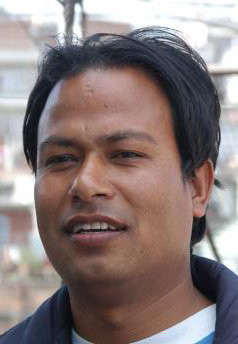
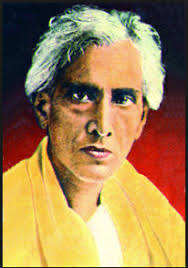
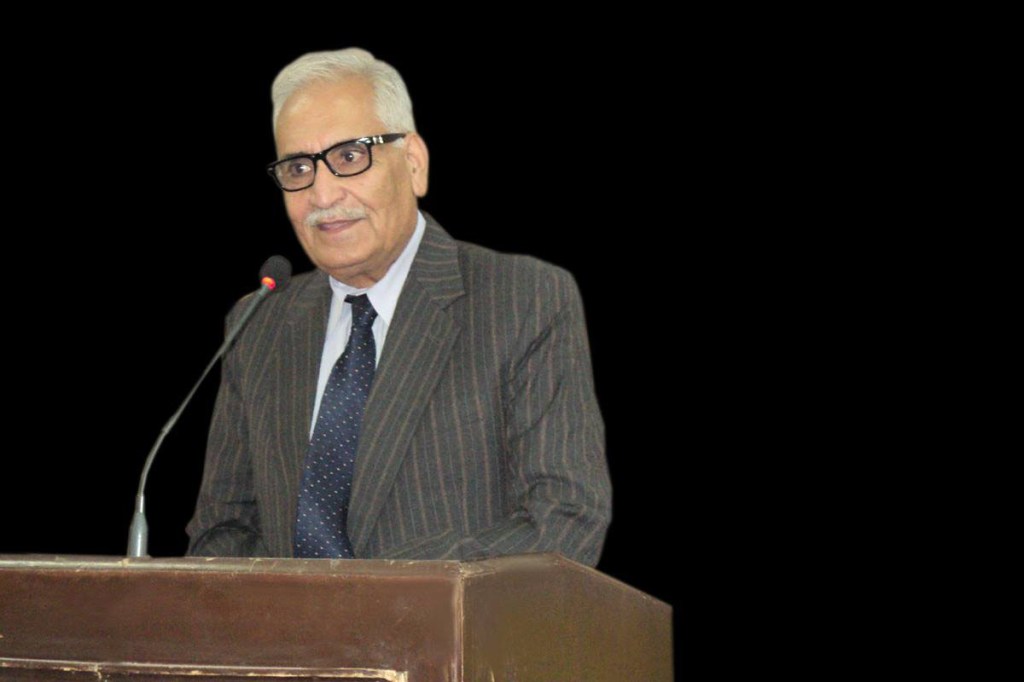




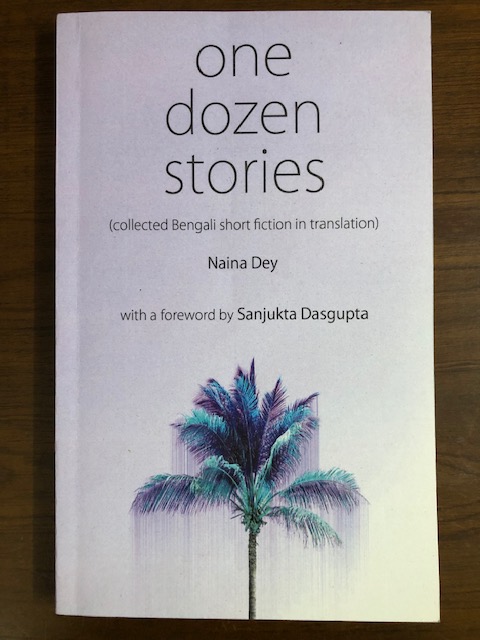



 Borderless