Categories
Notes from Japan

One Thousand Year Story in the Middle of Shikoku

Photographs and Narrative by Suzanne Kamata

I’d wanted to go on the Shikoku Mannaka Sennen Monogatari (One Thousand Year Story in the Middle of Shikoku) train trip ever since I saw it advertised on a poster in the window of Tokushima Station. When I investigated, however, I discovered one couldn’t begin the journey in Tokushima, where I live. Although it starts (or ends, depending on which way you’re coming from; it’s a one-way trip) deep in the mountains of Tokushima, I would have to change trains a few times before boarding the special sightseeing train. It would take hours to get there. A better way would be to board in Tadotsu, which is in the neighboring prefecture Kagawa. I could drive there in a little over an hour, take the fancy train to Oboke, and return by express train.

I decided to take a ride on the spur of the moment. The train was pretty much booked for the rest of the season, at least on the days when I didn’t have other plans, like my job. I did find one last seat on a train in mid-November. It might have been more fun to go with someone else, but I didn’t have time to coordinate with friends. I immediately booked the seat, reserving my lunch as well.

The morning of my train trip was chilly, but sunny. I donned a thin tunic and a long cardigan, wondering if it would be cold in the mountains. Maybe I should bring my down jacket? I rolled up a windbreaker and stuffed it into my backpack. I entered my destination – Tadotsu Station – into my phone’s navigation app, selected a podcast for the drive, and set off.

Tadotsu turned out to be a sleepy little town, which makes sense. These are the kinds of places that need something special to attract visitors and their money. If the whole purpose of these sightseeing trains is to rejuvenate dying towns, then Tadotsu seemed like a good choice. I could see that some construction was in progress, perhaps to accommodate the hordes of new visitors brought by the train. Porta potties temporarily served as bathrooms.
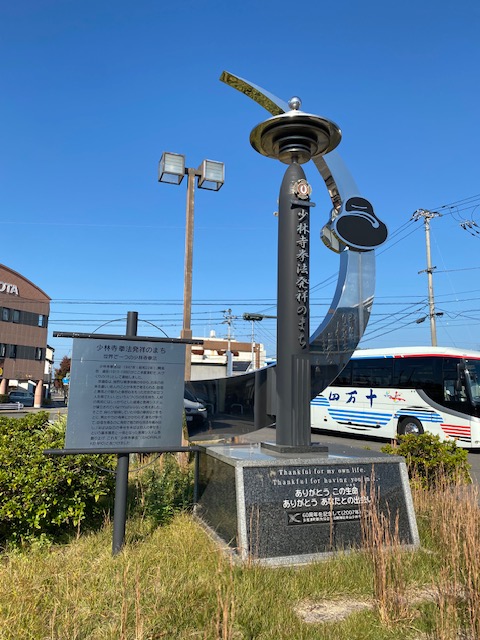
In front of the station, an intriguing sculpture attracted my attention. To me, it looked like a tall armless man wearing a hat, backed by a sickle. There was an emblem like a coat of arms where the neck of the man would be. At the base of the sculpture was a plaque with the words: “Thankful for my own life. Thankful for having you in it.”

Later, I discovered that it was meant to commemorate Doshin So, nee Michiomi Nakano, a former military intelligence agent who spent many years in China. After returning to Japan, he was stationed in Tadotsu, where he established a cram school to teach Buddhist philosophy and martial arts.

In 1947, he founded Shorinji Kenpo, a Japanese martial art with a holistic system. The training methods are divided into self-defense training, mental training, and health training. According to his philosophy, spirit and body are as one, and they must be trained together as such. His teachings emanated from this small town of about 20,000 people to the rest of the world. The emblem, as it turned out, was the symbol for Shorinji Kenpo.

I took a photo of the monument and proceeded to the train platform, where I was met with heavy equipment surrounded by a chain link fence. A sign apologised for this inconvenience, and explained that construction was underway to make the station barrier-free.

I was twenty minutes early, but my fellow passengers – Japanese, as far as I could tell – were already milling about, taking selfies and photos of each other in advance of their train trip. The group was mostly female, middle-aged, and older. Many people were wearing masks.

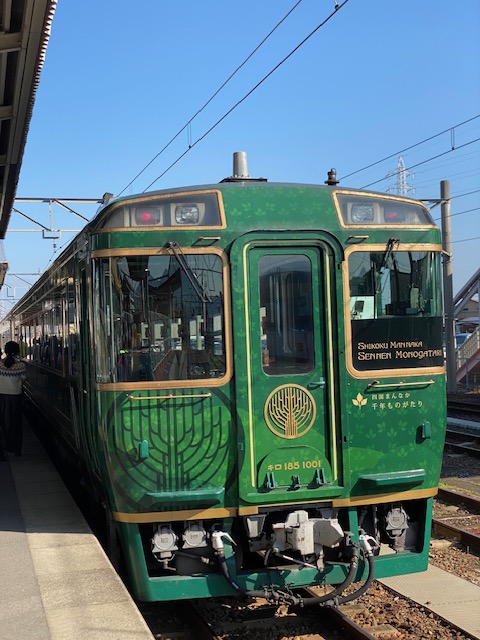
A cinematic melody heralded the approach of the train, accompanied by another rush for selfies and photos. The three cars, all different colors, were named after spring, summer, and fall. What happened to winter? A small doormat with the train’s motif, which resembled a stylized tree, was positioned on the platform at the entrance to the train. I boarded the green “spring” car, Haru Akari, and found my seat, a fuzzy green upholstered chair at a table against the wall, facing the window. The two seats next to me were unoccupied.

Most people wore casual clothes. I rarely saw folks from Tokushima get dressed up, unless it was for a wedding, say, or a graduation ceremony. One woman at the four-top on the other side of me was striking in a sumptuous Chinese-style jacket and gold barrettes. I wondered for a moment if she might be some kind of celebrity. I tried not to stare.

I examined the orange cloth placemat, again with the tree motif. Already my mouth was watering. Disposable chopsticks and a wet napkin were aligned at the bottom, while a spoon rested on a rectangle of granite. Paper napkins, toothpicks, and creamers were tucked into a small basket made of vines. Brochures detailing the train’s route, souvenirs for purchase, and additional menu items were laid out.

You could use your phone to scan a QR code and order keychains, sweet potato cakes, or a yusan-bako, a traditional lunch box which originated in Tokushima. This one was made of Japanese cypress adorned with Kagawa lacquerware. It had three drawers for various delicacies, which fit into a box with a handle, perfect for toting to a picnic in a meadow somewhere. You could also buy a CD with the train’s theme song.

I had already ordered my lunch, but I glanced at the menu anyway. Fish cutlets, another specialty of Tokushima were available, along with bamboo shoots, and ice cream made with sake lees. The sweet potato crumble, with a dollop of whipped cream, was also tempting, but I summoned my willpower.

One of the uniformed attendants pointed out the wooden box under my car for storing my backpack and purse. I got those items out of the way. She also handed me a coupon for soup and water to be redeemed at our first stop. And then finally, the train began to move. A whistle blew. Japan Railway employees and others lined up with flags and round paper fans and began waving at us. We all waved back.

After that enthusiastic send-off, the train began to trundle along the tracks, picking up speed as we zipped past backyards of houses, apartment buildings with laundry hanging on balconies, convenience stores, crows alighting on power lines, an empty playground. We passed rice paddies, some surrounding family gravestones; a construction site with bright blue, green, and yellow earth moving machines.

As we neared Kotohira Station, our first stop, a young woman chirped that Kotohira’s brass band had been declared second best in the country. She reminded us to redeem our coupons in the welcome center. After the train had stopped, I followed everyone into a small room adjacent to the station where we lined up at a counter. I handed over my little piece of paper and received a bottle of water and a small China cup of kabocha 1potage. I perched on the padded bench to drink it, while gazing around at the proud display of photos of the award-winning high school band. A white-gloved attendant came around with a tray to collect my empty cup, and I got back on the train.

A young Chinese family – a couple and their plump baby – were now occupying the seats beside me. The train moved on. The view outside my window was now more expansive – terraced fields, occasional houses with tiled roofs and walled gardens, tufts of pampas grass, a patch of pink and magenta cosmos.

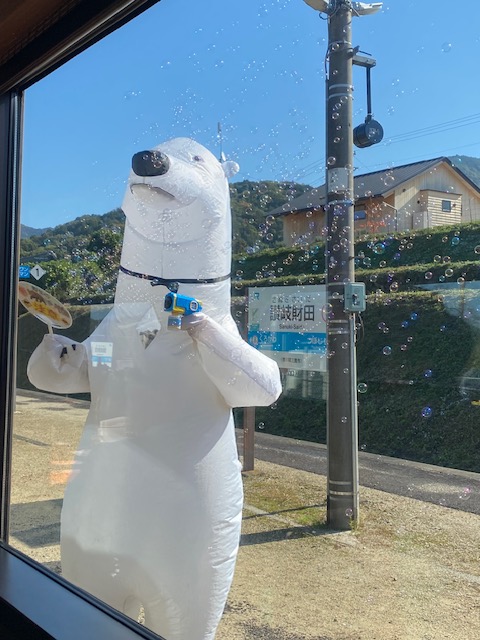
The voice announced that we were nearing Sanuki Saida Station, which boasts a 700-year-old tabunoki tree, said to be a “power spot.” Apparently if you stand under the tree, you can absorb some of its spirit and energy. The tree has also been designated a Kagawa Prefectural Protected Tree. The train came to a stop again, but this time we didn’t get off. Instead, we all whipped out our smartphones to take photos of the person dressed in a polar bear costume shooting soap bubbles from a bubble gun. The baby was delighted.

Once we were again underway, the attendant distributed large square bento boxes with gold-rimmed lids. I opened mine to find an array of chilled meat dishes – the first course. I unsheathed my disposable chopsticks and broke them apart. “Itadakimasu!2

Out the window, farmland had given way to gnarly brush. `Although the foliage wasn’t quite at its peak, swatches of scarlet and gold popped against the greenery. I wondered about the wildlife in the mountains. I knew that there were monkeys, boars, and deer. The latter two appeared on menus deep in the interior of Shikoku. You could get a burger made with game meat, or “peony hot pot,” in which thin slices of pink boar meat curled up like flower petals after being cooked in miso broth.

Next to me, the young parents passed their good-natured baby back and forth. When I caught his eye, I smiled at him, and he showed his dimples, smiling back. I remembered how, when I had first come to Japan, whenever I had tried to engage with a stranger’s baby on the train, the baby’s face had crumpled up in terror. Apparently, big-nosed foreigners were scary even for infants. At least back then. It was nice to be able to engage with a small child without causing tears.

We made a brief stop at Tsubojiri Station, a small, unmanned station accessible only by switchback, surrounded by trees. “You can get off the train and smoke,” the voice announced. We all scampered off the train, but I didn’t see anyone light up a cigarette. Instead, passengers posed in front of the station’s sign and the weathered wooden building.

Back on the train, the next course was served – buttered rice and pork, arranged on a gold-rimmed China plate. The narration continued. “Please look to the right. You will be able to see Mount Hashikura. You can take a ropeway to Hashikura Temple, which was established by the famous Buddhist monk Kukai, also known as Kobo Daishi.”

Kobo Daishi is known as the father of Shikoku’s 88-Temple Pilgrimage. Hashikura Temple is not one of the 88, but is considered to be an associated temple. According to the Tourism Shikoku website, the name “Hashikuraji” contains the character for “hashi,” or chopsticks, “an everyday unifying ubiquitous tool of daily life for all Japanese. In 828 [CE], Konpira Daigongen revealed himself to the priest Kukai and promised to save all who use chopsticks, a pledge of salvation for all.”

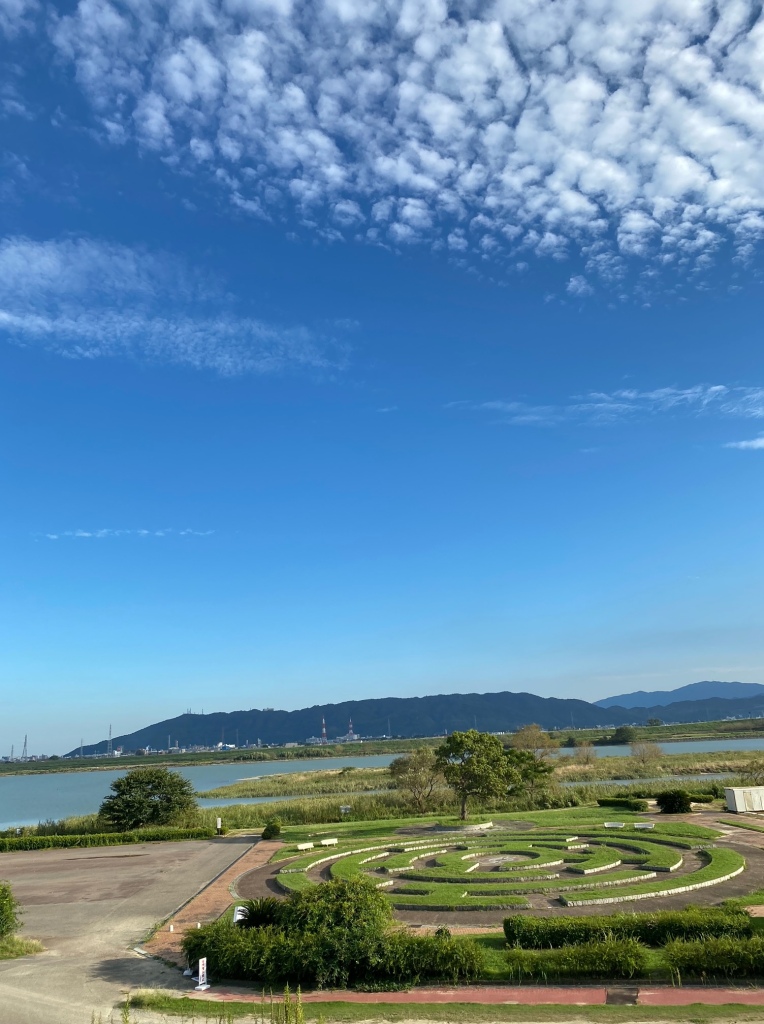
According to an announcement, we would soon have a good view of the Yoshino River, the majestic “wild” river which runs west to east across Shikoku. Its rushing waters carved out the Oboke Gorge over millennia. This river flows 121 miles, past Tokushima City, and the house where I live, and into the Kii Channel. At one time, it flooded repeatedly. The “Tora-no-Mizu” (“Tiger’s Water”) flood of 1886 (Year of the Tiger), one of the worst floods in Japanese history, led to the deaths of an estimated 30,000 people. Now, however, strong levees keep the waters in check, though heavy rains can still shut down the roads nearest the river. These days, the Yoshino River is more known as a place where visitors can enjoy various forms of recreation including swimming, fishing, and white-water rafting.
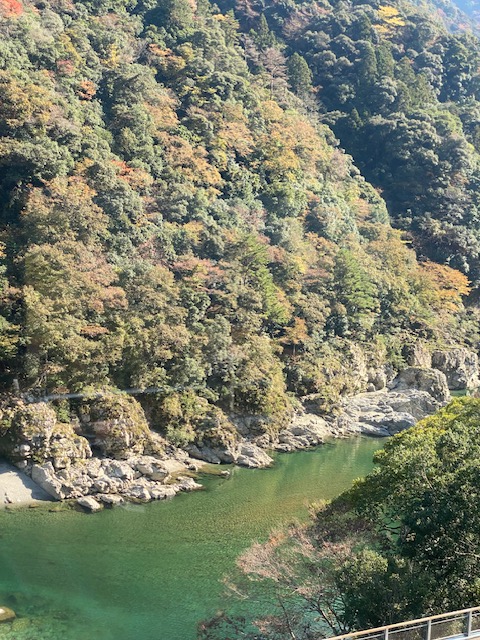
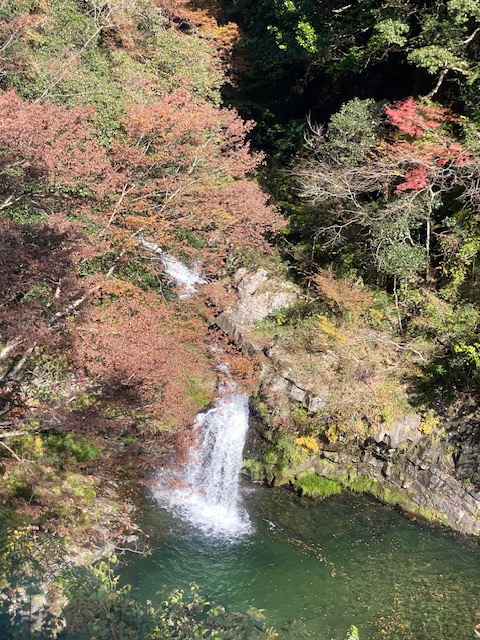
As I gazed out at the glassy emerald waters, which reflected the rocky banks, the voice announced that we were approaching Awa-Ikeda. High school baseball, I thought. Sure enough, the voice told us that we would soon have a view of baseball players practicing at Ikeda High School’s diamond, and that they had once won the National High School Baseball Tournament at Koshien.

The train chugged on. We passed another station, Awa Kawaguchi, where another person in a polar bear suit filled the air with soap bubbles. A sign on the platform declared that this was a town where tanuki (an indigenous animal that is often called raccoon-dog, and is a notorious trickster in Japanese folklore) and people live together.
After traversing another tunnel, coffee was served with a petite madeleine. Outside the window, I could see the water rushing through the gorge, frothing over rocks. We were almost at the end of our thousand-year journey. It had lasted a little over two hours.

The train pulled into Oboke Station, in the town of Miyoshi, and we got off. We were greeted by a man wearing a woven peaked hat and happi coat, banging on a drum affixed with characters from the animated series Anpanman. Although my fellow travelers had been mostly Japanese, quite a few European and American tourists were milling around the station, perhaps waiting for transportation.

At the time I first visited, over thirty years ago, I recall no restaurants or hotels, but now there was a large roadside station with souvenir shops, food vendors, and a Yokai House. There was even yokai3-themed food. Some traditional houses have been refurbished as high-end inns.

I took a short walk around the area and then attempted to buy a return ticket on an express train. Although the station was now geared for tourists with English signage and souvenir shops, it was still old-fashioned in many ways. I realised it wasn’t equipped to deal with phone apps or credit cards. I hadn’t brought a lot of cash, but I had just enough to buy a ticket back to my starting point.

  1. A variety of winter squash ↩︎
  2. I humbly receive (feel grateful for the food) ↩︎
  3. A spirit having supernatural powers ↩︎

Suzanne Kamata was born and raised in Grand Haven, Michigan. She now lives in Japan with her husband and two children. Her short stories, essays, articles and book reviews have appeared in over 100 publications. Her work has been nominated for the Pushcart Prize five times, and received a Special Mention in 2006. She is also a two-time winner of the All Nippon Airways/Wingspan Fiction Contest, winner of the Paris Book Festival, and winner of a SCBWI Magazine Merit Award.

PLEASE NOTE: ARTICLES CAN ONLY BE REPRODUCED IN OTHER SITES WITH DUE ACKNOWLEDGEMENT TO BORDERLESS JOURNAL

Click here to access the Borderless anthology, Monalisa No Longer Smiles

Click here to access Monalisa No Longer Smiles on Amazon International
Categories
Slices from Life

Honeymoon Homecoming

By Meredith Stephens

“Please show me your international driver’s licence.”

“Certainly!”

Alex produced the licence.

“This is out of date! I’m sorry but we can’t hand over the car.”

“No! It’s current! It’s valid for five years.”

We scrutinized the licence. The start date was prominently displayed, but not the expiration date. As we squinted to decipher the fine print on page three, we discovered that it had expired three years ago. Alex had thought it would be valid for five years, but it was only valid for one. We attributed it to his light-heartedly referred to “OCD Deficit Disorder”. And that is how a one-week road trip suddenly became a public transport and taxi trip.

This was my first visit back to Japan after having left at the beginning of the pandemic. Alex and I had been deliberating where to spend our honeymoon, and we agreed that the island of Shikoku in western Japan where I had spent over twenty years would be our first choice.

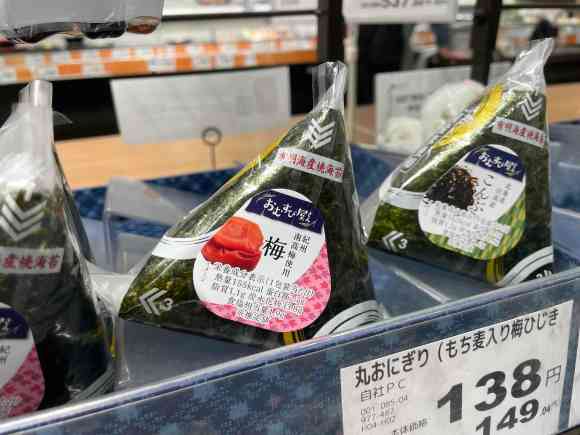
Onigiri. Photo courtesy:
Mariko Hisamatsu

There were so many things to look forward to. The first thing I did, before even leaving Kansai Airport, was rush into the convenience store and buy an onigiri flavoured with an umeboshi pickled plum. An onigiri is a triangle of rice, with a choice of flavours in the centre such as fish, seaweed, or the aforementioned umeboshi. It is wrapped in a crisp sheet of seaweed. Before eating it you gently pull away a thin layer of wrapping which protects the outer seaweed from absorbing the moisture of the rice. As you bite into it you can enjoy the three distinct textures and flavours – the piquant centre, the contrasting bland rice, and the crisp outer layer of seaweed. Next, I purchased a mugwort daifuku. This is a Japanese sweet, consisting of a layer of pounded mugwort-flavoured rice around a centre of sweet azuki bean paste. All of this was washed down with a bottle of green tea.

From the above account, it might sound like I was returning to Japan to indulge in simple culinary delights from a convenience store, and maybe this is a possibility I am unwilling to admit to myself. Of course, the main purpose was to reconnect with old friends, the second to reconnect with old pleasures, such as the aforementioned onigiri and daifuku, and the third, to stay in a traditional Japanese house.

After having been refused permission to drive our hire car, we headed back towards the terminal and searched for the railway station. We caught trains out to the UNESCO heritage listed site of Koyasan to enjoy the autumn leaves, and then seven trains and two buses later, to Wakayama station. Finally, we caught a taxi to our accommodation, which turned out to be a house that was over two hundred years ago, dating from the end of the Edo Period.

The door slid open to reveal an earthen floor. We walked down the hall to the kitchen, left our shoes in the sunken area, and donned the provided slippers. The kitchen opened onto two traditional tatami rooms, with fusuma sliding cupboards, and latticed paper shoji screens leading onto the garden. Beyond the shoji was a narrow hall known as an engawa, with a small wooden table and chair where you could enjoy sipping a drink while looking out over the garden. This was the kind of room I had been longing for during my five years away from Japan.

But we hadn’t had dinner yet and I was longing to ride to a local supermarket to purchase a ready meal.

‘“Do you have any bicycles?” I asked the host.

“Certainly. We have mountain bikes too!”

“You don’t want to go cycling in the dark?” queried Alex. “Not after a long-distance flight, seven trains, two buses, and a taxi ride? Surely not!”

I insisted, and Alex gave up persuading me otherwise. Rather than a mountain bike I chose the mamachari, a vintage bike replete with a shopping basket attached to the front handlebars.

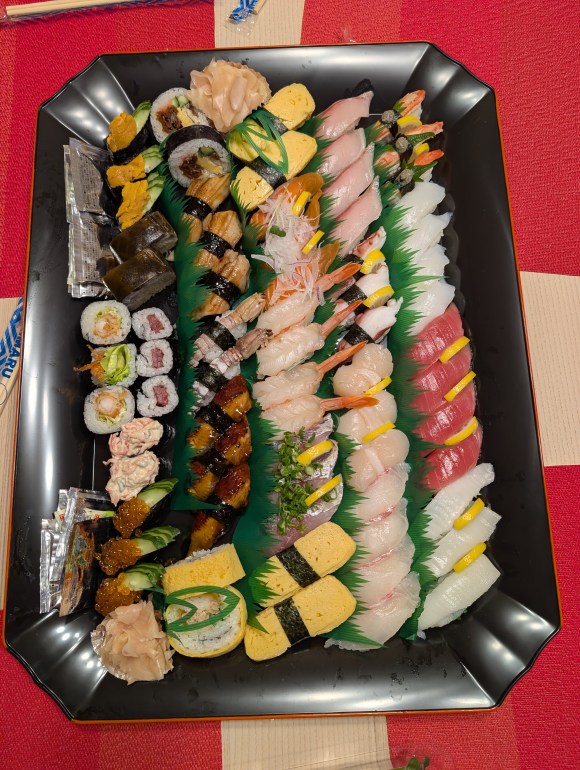
We cycled to the supermarket, as I had done almost daily during my twenty years of living in Shikoku. There we bought sushi and sashimi ready meals, and cycled home, scanning to avoid roadside ditches with sheer drops and no guard rails. Once safely home, we indulged in the much longed for sushi and sashimi, enjoyed the traditional deep Japanese bath, spread out the futons on the tatami, and luxuriated in a deep sleep.

The next morning, we woke to a gentle light streaming through the latticed paper shoji screens. We cycled to Wakayama castle, Alex on the mountain bike and me on the mamachari. We strolled around the traditional garden before entering the castle and then completed it with a visit to the adjacent tearoom, where we enjoyed green tea and a sweet bean paste confectionery.

The following day, we bid farewell to our Edo Period home, and our kind host drove us to the ferry terminal. As soon as I saw the sign in Japanese for Tokushima, I could feel the colour rising to my cheeks. This had been my home in Japan for fifteen of my twenty years in Shikoku, until the day I departed for a routine visit to Australia, just before the international borders were closed due to COVID. Little did I know that the pandemic would prevent me from returning to Japan. I boarded the ferry as I had so many other times after returning from various work trips, but this time I was visiting on my honeymoon. The two-hour crossing readied me for the arrival in my old stomping ground and was heralded by the sentimental music played to signal a homecoming. Alex and I exited the ferry to be met by my old friend and writing mentor, Suzanne. Overcome with emotion, I covered my face with my hands to spare her the sight of my crumpled features and then gave her a hug. Then I went back to covering my swollen eyes and gave her another hug.

Platter of Sushi at Sally’s home. Photo courtesy: Alan Noble

Suzanne drove us to the home of the son of another old friend, Sally, who had kindly offered us a couple of nights’ accommodation. That evening a subset of old friends dropped in to see us and eat sushi. I braced myself for the entry of each friend into the house, trying to compose my features, after an unanticipated five-year interval. My eyes, however, betrayed me. I caught the expressions of those who returned by gaze, and they could sense my relief and excitement of meeting them again. Over five years people’s appearances were a little different. Those who had long hair now wore it shorter. Those with shorter hair had grown it. Those who were curvaceous were now svelte, and those who were svelte were now curvaceous. A child had now become a lanky teenager. I’m sure I must have looked different to them too. What had not changed was people’s smiles, conversation and sense of humour. People who I would normally see a few times over a month were now all present in the same room in the space of a few hours.

A few days later, we took the bus across Shikoku to Matsuyama, where another happy reunion took place of eight friends from six different countries. I was freshly aware of the joys of the expat life, where you can make friends from a greater range of countries, and a greater range of ages, than you would at home.

Ranma Carvings in a traditional room. Photo Courtesy: Alan Noble

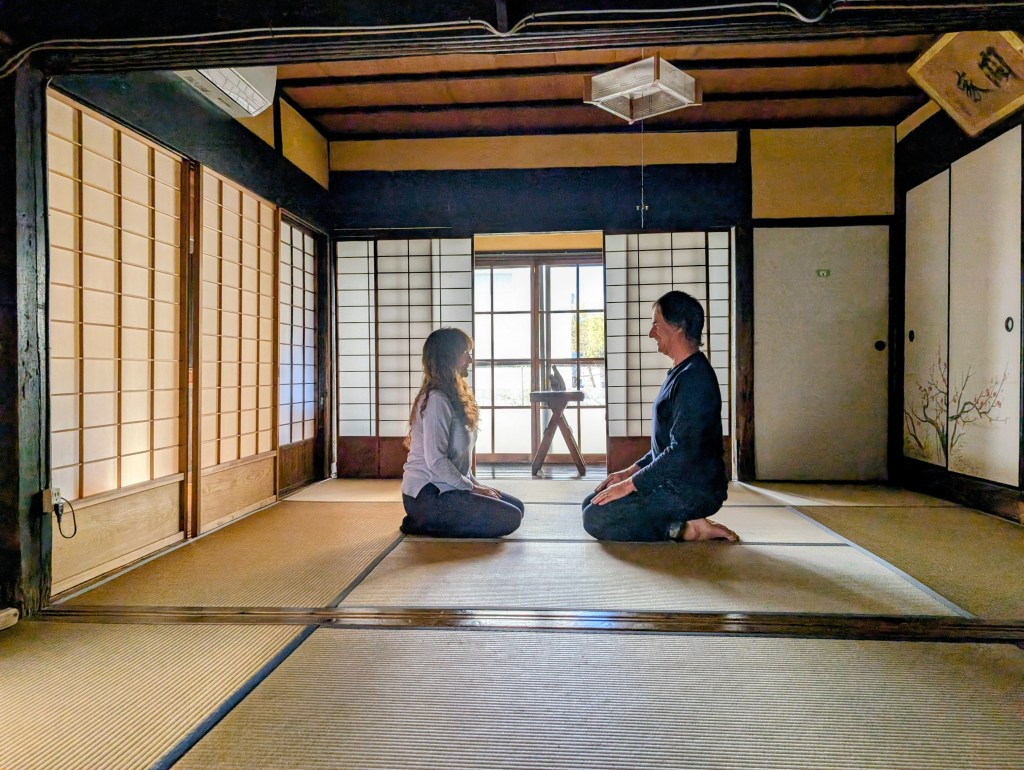
I had been craving another stay in a traditional house, and we savoured a room with ranma carvings suspended from the ceiling, letting in light and air flow from the adjacent room. We sat at the kotatsu low heated table on the tatami, and slept on futon, in a room featuring shoji paper screens facing outside and fusuma cupboards where futons were stored. Features which had once seemed so ordinary were now infused with nostalgia.

Family obligations called us back to Australia after only one week of our Japanese honeymoon. A taxi was followed by a bus which took us on the long trek back across Shikoku, driving through impossibly long tunnels, crossing elegant bridges, with views of the sea and mountains. Once we crossed the final bridge onto the largest main island of Honshu, the landscape was transformed into high rise apartments, and dense traffic. We alighted from the bus at Kobe’s Sannomiya Station.

There we asked directions to the airport limousine bus and made a final purchase of onigiri. My favourite umeboshi pickled plum one was not on sale, so I had to make do with a tuna mayonnaise one and a pickled seaweed one. We ran to the bus stop, purchased tickets, and skipped into the bus holding our luggage. There was no time to store the luggage in the hold. Once the bus pulled into the traffic, we knew we could relax after our long and complicated journey. I gently pulled away the wrapping separating the layers of the tuna mayonnaise onigiri and savoured the contrasting flavours and textures. Our fleeting trip to Japan was punctuated by savouring onigiri on both arrival and departure. We bade farewell to this land of delectable tastes, exquisite arts, historic houses, hair-raising bicycle rides, and precious friends.

.

Meredith Stephens is an applied linguist from South Australia. Her recent work has appeared in Syncopation Literary Journal, Continue the Voice, Micking Owl Roost blog, The Font – A Literary Journal for Language Teachers, and Mind, Brain & Education Think Tank. In 2024, her story Safari was chosen as the Editor’s Choice for the June edition of All Your Stories.

PLEASE NOTE: ARTICLES CAN ONLY BE REPRODUCED IN OTHER SITES WITH DUE ACKNOWLEDGEMENT TO BORDERLESS JOURNAL

Click here to access the Borderless anthology, Monalisa No Longer Smiles

Click here to access Monalisa No Longer Smiles on Amazon International

Categories
Musings

The Word I Could Never Say

By Odbayar Dorj

There is a word I’ve never been able to say. Just three letters in Mongolian—“ААВ” (father)—but for me, it’s the most difficult word of all. I’ve never called anyone by that name.

Duut in Mongolia. From Public Domain

I remember second grade in Duut Soum, one of the most remote and elevated villages in Mongolia. It was a small, close-knit place where everyone knew each other. My classmates and I had grown up together—from kindergarten to school, playing outside in the same familiar streets. Because there weren’t many children, each grade had only one class. Ours was one of the largest.

One day, our teacher assigned us to write a composition titled “My Father”. It was a simple assignment for most, but for someone who had never known a father, I didn’t know where to begin. For the first time, I asked my mother for help. I remember her thinking of her own father—my grandfather—and guiding me gently: “Write that when he comes home, it feels like a mountain’s shelter fills the house.”

I wrote exactly what she said and turned in my paper.

Later, our teacher read aloud one of the essays she liked best. To my surprise, she read mine. I was so embarrassed, I wanted to disappear from my seat. I still wonder why she chose it — maybe because it touched her, or maybe because it came from a child imagining what she had never experienced. When she finished, some boys asked, “How can she write about a father if she doesn’t have one?” Their words cut deeply. I didn’t cry, but I wanted to.

From that moment on, every assignment about “father” became something I dreaded. It felt unfair that schools continued to assign such topics, as if everyone had the same kind of family. In a world where many grow up without a father or mother, why do we continue to teach in ways that exclude them?

Despite it all, I’m endlessly grateful to my mother. She raised me without letting me lack for anything. Because I never had a father to begin with, I didn’t know what I was missing—until much later.

In 2022, I came to Japan as a student. It became one of the most beautiful periods of my life. I met many wonderful people, and one of them was Toshio-san.

As summer approached, I was researching places to travel. When I showed Toshio-san my list, he pointed to one place, Shimanto River. “That’s near my home,” he said. “I can help you get there.”

We arranged to meet at the library the following week. Punctual as always, he was waiting at the entrance. We planned to go on August 22, and he suggested we stay two nights instead of one. I agreed. He called a friend to find accommodations and promised to take me to the Pacific Ocean.

Later, he returned from a trip with brochures and snacks for me, but due to rising COVID cases, he suggested we postpone. “But I promise, I’ll take you,” he said. I would have understood if it didn’t happen, but just before classes resumed, he contacted me again. He opened his calendar and asked about October 29–30. I had no plans, so I said yes.

Before leaving, he added, “Oh, one more thing. Do you know Yuto Ishihara? He’ll join us.” I did. Toshio-san thought I might feel uncomfortable traveling alone, so he arranged a friend for me.

I counted the days until October 29.

When the day came, he called at 5:55 a.m., right on time. We picked up Yuto and headed toward Kochi. It was a warm, golden day. Our first stop was Umi no Eki in Toyocho, famous for fresh raw fish. Unfortunately, I dislike raw fish—and raw eggs too, which was part of the breakfast set. When I asked if it was boiled, Toshio-san laughed and explained that Japanese people enjoy mixing raw eggs with rice and soy sauce.

Still, I ate the miso soup and rice and watched the surfers nearby.

“Kochi is known for its waves,” he said, smiling.

We visited a cave near Muroto, one of Tokushima’s 88 pilgrimage sites, and passed through orange fields. “Do you like oranges?” he asked.

“Yes, I love them!”

He immediately called a friend to find the best ones and bought me two bags. I shared a few, then ate the rest happily. Watching me, he said, “What else do you like? I’ll get it for you!” He was sincerely happy to make me happy.

That’s when a thought crossed my mind: What would it have been like to have a father?

I had never asked myself that before. But seeing someone care so sincerely, someone wanting to make me smile, I couldn’t help but wonder: If I had a father, would he have been like Toshio-san?

We visited the famous Hirome Market in Kochi for lunch. I told him I liked karaage (fried chicken), and he got me several types to try. Later, we drove to Tosashimizu. On the way, he talked on the phone—I guessed it had something to do with fish.

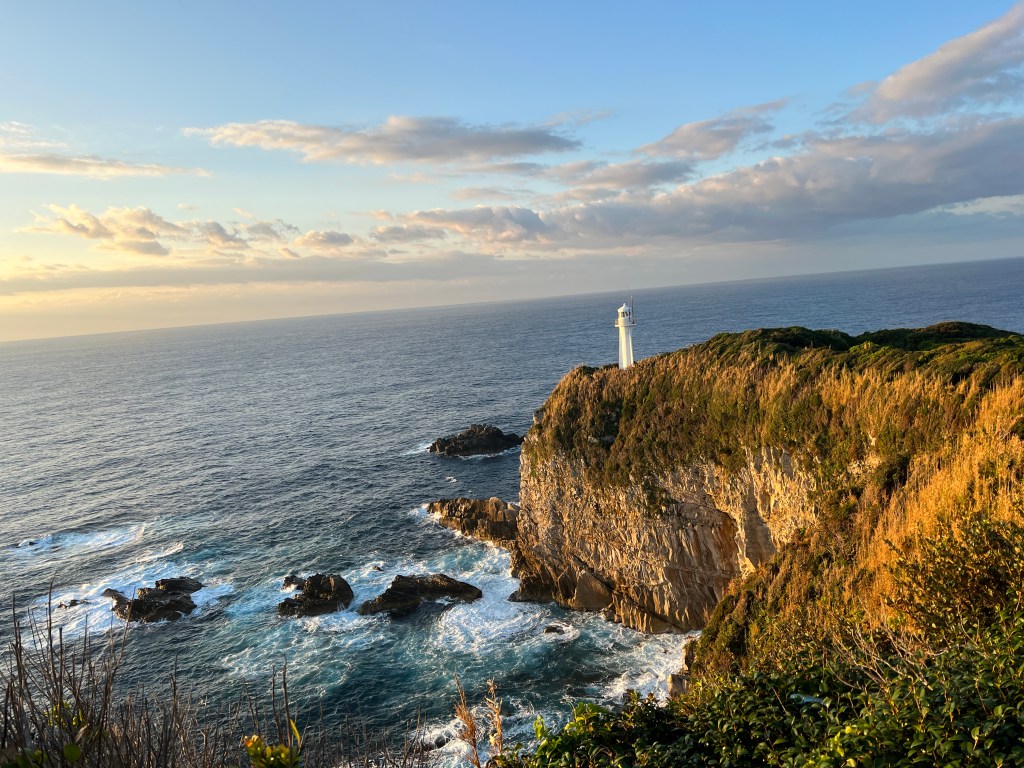
By the time we arrived, the sun was setting. We went to Tosashimizu Geopark to see the sunset. Though we were late, the orange glow lingered, and the lighthouse in the distance glowed beautifully.

That night, we visited an elderly woman, nearly 100 years old, who gifted me handmade crafts and an eco-bag. Then we went to a guesthouse run by another friend. Dinner was elaborate, and though they had prepared sashimi, Toshio-san had informed them in advance that I didn’t eat raw fish. They made grilled chicken just for me.

It was then that I realized: that phone call earlier had been for me.

Another guest joined us—a friend of Toshio-san’s who showed me his collection of sea shells and marine fossils, each labeled and categorized. He even gifted me one as a keepsake.

At that moment, I remembered a Mongolian proverb:

“When your father is alive, meet people. When your horse is healthy, travel far.”

I had never been introduced to so many people before. This was what that proverb meant.

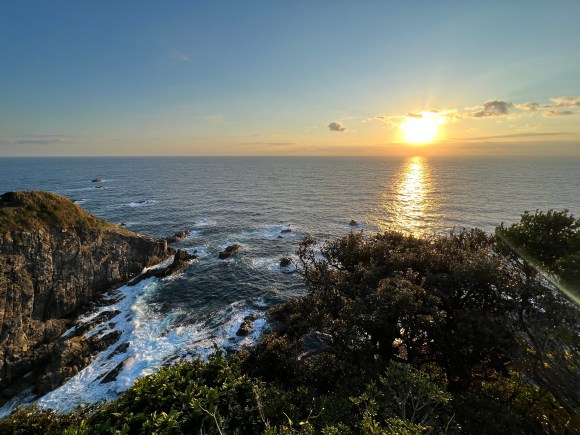
The next morning, we woke early to watch the sunrise. Words can’t describe its beauty—the waves crashing, the golden light spreading over the ocean and cliffs, the lighthouse standing tall.

We visited Kawashijima Island, where the sea was so clear we could see fish without any equipment. Later, we had lunch at another friend’s restaurant—a tiny, spotless place where I had the best omurice I’ve ever tasted. While waiting, another friend of his joined us—a lively woman who had worked in elementary school and was now a river master.

Although it was only a two-day trip, I met so many new people and visited countless beautiful places. It became one of the most precious memories of my life—when I truly felt how beautiful this world is, and how many kind-hearted people there are in it. In those moments, I found myself thinking, If I had a father, maybe he would have taken me on a trip like this, introducing me to his friends, just like this.

And in those moments, it felt like the wound I’d carried deep in my heart for 26 years had finally started to heal.
The thought: What if I had a father?

Just be kind. Your kindness may fill someone’s emptiness. It may even heal a wound they’ve been silently carrying for years. Maybe, at that time, Toshio-san didn’t even realize how much of that space he had filled in me. But I truly wanted to say the word I could never say for so many years—father—to him.

Even though we were born in different countries, speak different languages, and live in different cultures, I found the father I had long searched for—in Japan. I haven’t seen Toshio-san since, but if I’m ever asked about my father, I will tell this story again and again.

Because sometimes, it doesn’t take blood to become family.

Sometimes, a kind voice, a shared meal, or a smile from the heart is enough to fill what we thought would always be missing. In a quiet corner of Japan, through simple acts of kindness, I found a sense of belonging—and perhaps, the most unexpected gift of all: a father’s love.

Sunrise in Cape Ashizuri, Tosashimizu, Kochi, Japan. Photo Courtesy: Odbayar Dorj

.

Odbayar Dorj is an international student from Mongolia currently studying in Japan. Her writing reflects on cultural identity, personal memory, and the power of connection across borders and generations.

.

PLEASE NOTE: ARTICLES CAN ONLY BE REPRODUCED IN OTHER SITES WITH DUE ACKNOWLEDGEMENT TO BORDERLESS JOURNAL

Click here to access the Borderless anthology, Monalisa No Longer Smiles

Click here to access Monalisa No Longer Smiles on Amazon International
Categories
Notes from Japan

A Day with Dinosaurs

Photographs and Narrative by Suzanne Kamata

My day job is “associate professor,” so I sometimes attend academic conferences. When I learned of an upcoming conference on language teaching in Fukui Prefecture, which I had never been to, I was eager to sign up. Sure, I wanted to hear all the cutting-edge theories about teaching English to language learners – how to motivate my students to write haiku, how to use AI, and so on – but my primary reason was to see the dinosaur bones.

Although at one time it seems that dinosaurs pretty much roamed the whole world, fossils of dinosaur bones weren’t discovered in Japan until 1989. Those bones were found in Katsuyama City, Fukui Prefecture. Since then, even more bones have been discovered, and a museum ̶ Fukui Prefectural Dinosaur Museum ̶ opened in 2000. As part of the pre-conference activities, the host university had arranged for a trip to the museum. A free shuttle but would depart at 11:30am.

I consulted an app on my smartphone and determined that it would take me about five hours to reach Fukui Station from my home in Tokushima Prefecture on the island of Shikoku. I would have to take a bus, a train, another train, and the high-speed bullet train. After a recent trip to Tokyo, I had learned how to use an electronic transit card, which was basically an app on my phone. This app could be used to breeze through ticket gates at train stations, as well as on buses and subways.

I got up at 5:30am on the day of the museum tour. My husband dropped me off at the bus station. I got on the bus and got off in Osaka. Then I took a train to Kyoto, which was mobbed with travelers. Although I thought I could get on the next train, the so-called Thunderbird, with my app, I discovered that I needed to have a reservation. I suppose I could have made one on my smartphone while standing in line, but I was confused. I left the platform and queued up to buy a reserved ticket from the vending machine, which disrupted my tight schedule and meant I would not be able to make it to Fukui in time for the free shuttle bus.

The Thunderbird goes straight from Kyoto to Fukui with few stops in between. The scenery is mostly composed of rice fields and squat mountains. The monotonous view was calming. About an hour later, the train pulled into Tsuruga where I had to switch to the brand-new Hokuriku Shinkansen for the last seventeen minutes of my journey. In my rush to finish my business at the vending machine in Kyoto, I had inadvertently booked a seat in the most luxurious car. I was the only one there.

I texted a friend who was also attending the conference. She had already arrived. I told her that I would be late, and that I wouldn’t be able to ride the bus with her. This was Japan, where everything was always on time! However, the organisers were Americans, and they were willing to wait for me. Hooray!

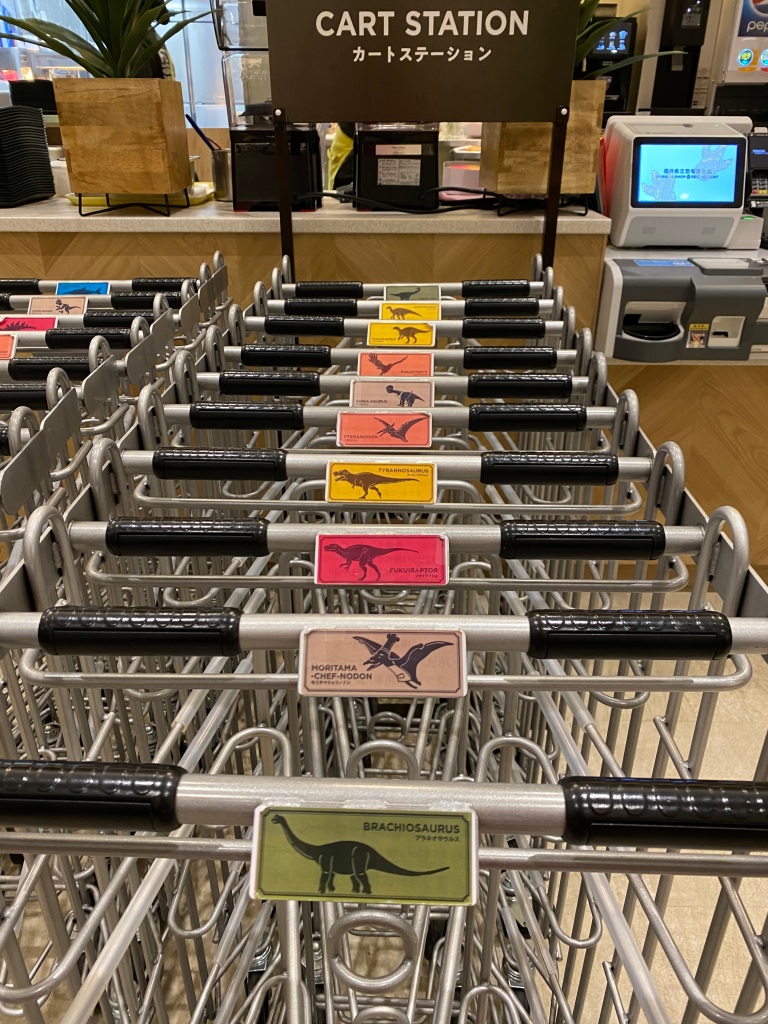
As soon as I got to Fukui Station, with its moving animatronic raptor keeping guard out front, I hopped into a taxi and finally arrived at the university, where the bus was indeed waiting. I sprinted onboard, apologised to my fellow passengers, and thanked the organiser profusely.

The museum was impressive, as advertised. Replicas of dinosaurs discovered in such far-flung locales as Morocco and Mongolia were on display. There were, of course, also exhibits of the five dinosaurs and one bird species discovered in Fukui, including the long-necked stubby-legged Fukuititan, the herbivorous Fukuisaurus, and the Fukuiraptor. Although the museum offers an excavation experience where visitors can pretend to dig and discover fossils, my friend and I just walked around looking at all of the cool rocks and bones.

Having gone through my son’s dinosaur obsession when he was young, I could remember some of the dinosaur’s names – the Ankylosaurus with its bumpy back, the Stegosaurus, and Pterodactyl. When we were ready to take a break, my friend and I made our way to the cafeteria for dino-themed snacks.

While many famous destinations in Japan are struggling with over-tourism, Fukui, while slightly off the beaten track, has a pleasantly relaxing vibe. Things may change with the new bullet train, but for now, I recommend it as a fascinating horde-free place to visit.

Suzanne Kamata was born and raised in Grand Haven, Michigan. She now lives in Japan with her husband and two children. Her short stories, essays, articles and book reviews have appeared in over 100 publications. Her work has been nominated for the Pushcart Prize five times, and received a Special Mention in 2006. She is also a two-time winner of the All Nippon Airways/Wingspan Fiction Contest, winner of the Paris Book Festival, and winner of a SCBWI Magazine Merit Award.

PLEASE NOTE: ARTICLES CAN ONLY BE REPRODUCED IN OTHER SITES WITH DUE ACKNOWLEDGEMENT TO BORDERLESS JOURNAL

Click here to access the Borderless anthology, Monalisa No Longer Smiles

Click here to access Monalisa No Longer Smiles on Amazon International
Categories
Notes from Japan

A Golden Memory of Green Day in Japan

By Suzanne Kamata

At the end of April and the beginning of May, several Japanese holidays fall close together. This special time of year is called Golden Week. Often, a few work/school days fall between the holidays, however many people take advantage of the break and travel. I have a hard time remembering which days are which holidays, however I do remember that one of them is Midori-no-hi, or Green Day (which falls on the Showa Emperor’s birthday, May 4).

Not long after I graduated from college, I came to Japan to work as an assistant English teacher. I was assigned to a high school in Naruto, a city in Shikoku, southeast of Osaka, noted for its tasty seaweed and huge, natural whirlpools.

The principal of the high school was very friendly and often invited me to drink tea and chat with him, so I was none too surprised when he called me to his office one April afternoon. This, however, wouldn’t turn out to be a typical encounter.

The principal began to tell me about the annual Midori-no-hi (Green Day) ceremony. Each year, it’s held in a different prefecture, and that year it was Tokushima’s turn. The Emperor and Empress are always in attendance. Only a select group of people would be invited to attend the proceedings, the principal told me, and I had been chosen to participate.

How could I refuse? I imagined meeting the Emperor and Empress and telling them about my hometown in America. Maybe we’d sip green tea together from the locally-crafted pottery cups.

A full rehearsal was scheduled a couple of weeks in advance of the actual event. I boarded a bus at 5 a.m. along with a group of high school band members who would be performing during the ceremony.

As we approached the park settled in the mountains of Tokushima, I noticed that the formerly rough road had been paved. The roadside was lined with marigolds which had been freshly planted in anticipation of the imperial couple’s visit.

At the park, we all practiced our separate parts. Mine would be quite simple. Two other young women — a Brazilian of Japanese descent and an Australian who’d just arrived in the country — and I would be escorted to a spot in front of the Emperor and Empress. We would then bow, accept a sapling from the governor, and plant it in the ground with the help of boy scouts.

As the Emperor would be there and the entire ceremony would be broadcast on national television, everything had to be perfect. We practiced bowing many times with our backs straight and our hands primly layered.

Finally, Midori-no-hi arrived. The day was cloudy and occasional rain drops spotted my silk dress. Everyone hoped that the weather would not ruin the proceedings.

Marching bands, an orchestra, and a choir made up of students from various local high schools and colleges filled the morning with music. Instead of the sun, we had the bright brass of trombones, trumpets and cymbals.

Modern dancers in green leotards enacted the growth of trees. Later, expatriate children from Canada, France, Peru and other countries announced “I love green” in their native languages. This was followed by the release of hundreds of red, blue and yellow balloons into the grey sky. A hillside of aging local dignitaries were on hand to view the pageantry.

About mid-way through the ceremony, the Emperor and Empress arrived. They followed the red carpet laid out to the specially-constructed wooden dais, the Empress a few steps behind her husband as protocol demanded, to “Pomp and Circumstance”. The rustle of Japanese flags waved enthusiastically in the air threatened to drown out the orchestra.

After many solemn addresses and much bowing, the Emperor and Empress stepped down to “plant” trees. His Highness pushed some dirt around the base of a cedar sapling with a wooden hoe. His pink-suited consort did the same while balancing on high heels. The placement of the trees was only for show. Later, everything would be transplanted to a more suitable location.

At last, it was my turn. The other young women and I were led to the grass stage to the accompaniment of a harpist. I accepted my tree and buried its roots in the ground. The tree was a sudachi, which bears small green citrus fruit and is the official tree of Tokushima Prefecture.

The music and majesty of the occasion made me feel like I was doing something important on Earth. I was adding to the verdure of the world, enabling Nature. I felt a sense of awe.

When all of us were finished planting, we bowed in unison to the Emperor and Empress, then filed off the field. Afterwards, there was a mass-gardening session as all of the attendants on the hillside began planting prepared saplings.

I didn’t get to meet the royal couple after all. Although they passed by within a few meters of where I was standing, there were no handshakes, no pleasantries, not even any eye contact.

What I did get was a big bag of souvenirs — a cap, a small wooden folding chair, commemorative stamps, a flag, sudachi juice, and a book of photos so that I could always remember that misty day, that baby tree.

Suzanne Kamata was born and raised in Grand Haven, Michigan. She now lives in Japan with her husband and two children. Her short stories, essays, articles and book reviews have appeared in over 100 publications. Her work has been nominated for the Pushcart Prize five times, and received a Special Mention in 2006. She is also a two-time winner of the All Nippon Airways/Wingspan Fiction Contest, winner of the Paris Book Festival, and winner of a SCBWI Magazine Merit Award.

PLEASE NOTE: ARTICLES CAN ONLY BE REPRODUCED IN OTHER SITES WITH DUE ACKNOWLEDGEMENT TO BORDERLESS JOURNAL

Click here to access the Borderless anthology, Monalisa No Longer Smiles

Click here to access Monalisa No Longer Smiles on Amazon International

Categories
Notes from Japan

Address Unknown

By Suzanne Kamata

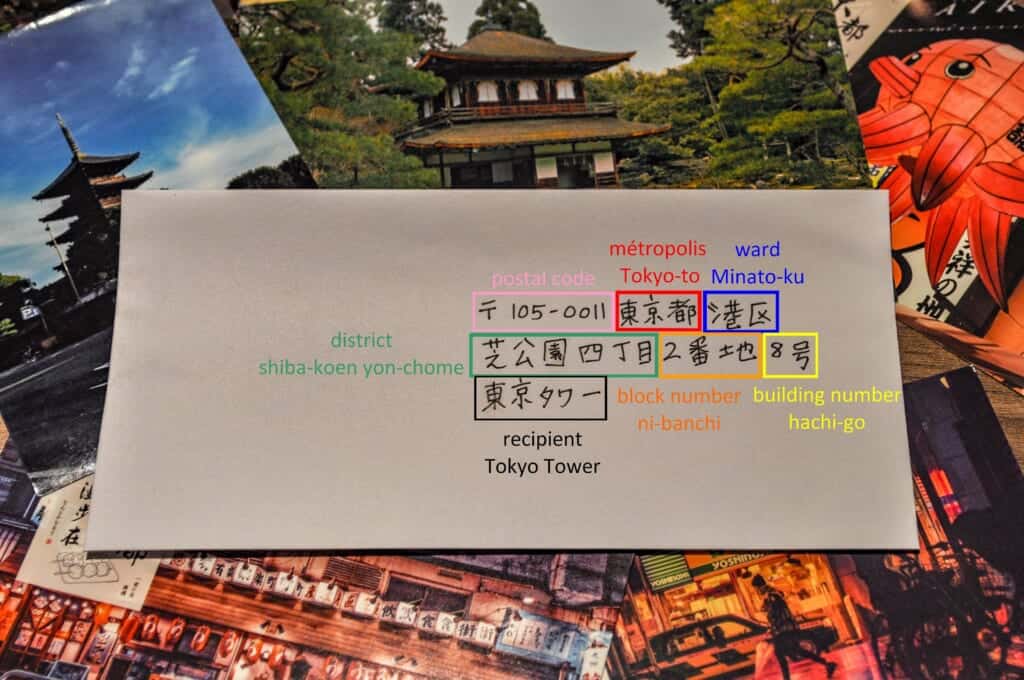
I can still remember the address of my childhood home – the house number on North Shore Road in Spring Lake, Michigan, and the five digit zip code. Short, but sweet. Here in Japan, where I’ve lived for the past twenty three years, I’ve had four different addresses, each seemingly longer than the last. I can hardly remember how to write the location of my current domicile, let alone the complicated addresses of apartments past.

Given the chance to win a bag of rice or a free trip at my local supermarket lottery, I would rather pass than take up a pen. My hand starts to cramp as soon as I see a form to fill out. At the bank, in a doctor’s office, or when having to write in the corner of an envelope, I tend to recoil. It takes such a long time to jot down my address.

Written in the Japanese style, which dates back to the Meiji Period, my address starts out with the name of the prefecture, in this case, Tokushima, followed by the county name, the name of my town, the district, and eventually narrows down to a house number. The house numbers, however, are not in sequential order, but from oldest to newest. Our street, like most in Japan, doesn’t have a name. 

Postal workers seem to be the only ones to whom addresses here have any meaning, and, to their credit, they generally get mail to the right place. When I first came to this country, however, I hardly ever got letters from my friends and relatives in America. My grandma, one of my most reliable correspondents, refused to write to me unless I sent her address labels. My address was simply too long for her to write. An editor once informed me that I had the most complicated address she’d ever seen in her life.

Cab drivers, on the other hand, can never find my house. I usually advise guests coming by taxi to get dropped off at the neighbourhood grocery store, and I go to meet them on foot. Not even satellites seem to be much help. Although most every year we are required to draw a detailed map from our children’s schools to our house to enable teachers to find us for the annual home visit, one teacher tried to find his way using his car navigation system. I watched for his car from the window as rain poured down outside. Finally, the phone rang. He was lost. He was near a shrine, he said. Could I come and get him? I dashed out with my umbrella and found him a few streets away.

For convenience, I had name cards printed up a few years ago. Now, when someone asks for my address, I simply hand over a card or, more often than not, my email address. It’s easy to remember and I can write it in six seconds.

.

Suzanne Kamata was born and raised in Grand Haven, Michigan. She now lives in Japan with her husband and two children. Her short stories, essays, articles and book reviews have appeared in over 100 publications. Her work has been nominated for the Pushcart Prize five times, and received a Special Mention in 2006. She is also a two-time winner of the All Nippon Airways/Wingspan Fiction Contest, winner of the Paris Book Festival, and winner of a SCBWI Magazine Merit Award.

PLEASE NOTE: ARTICLES CAN ONLY BE REPRODUCED IN OTHER SITES WITH DUE ACKNOWLEDGEMENT TO BORDERLESS JOURNAL

Click here to access the Borderless anthology, Monalisa No Longer Smiles

Click here to access Monalisa No Longer Smiles on Kindle Amazon International

Categories
Notes from Japan

Baseball and Robots

By Suzanne Kamata

When I first came to Japan from America to teach English on the Japan Exchange and Teaching (JET) Program, I had no idea how popular baseball was in this country. I quickly found out, however. I was assigned to a high school in Tokushima, on the island of Shikoku to be an assistant English teacher. It was summer, and I was immediately informed that the school’s baseball team had won the regional baseball tournament. They had gone on to the National High School Baseball Summer Tournament at Koshien stadium near Osaka.

This event is on par with the Super Bowl in the United States. The games are televised, and the entire country is riveted for the duration of the tournament. Many star players go on to play professional baseball in Japan, and later maybe even in the Major League in America. Ichiro Suzuki, Yu Darvish, and Shohei Otani are just a few players who first claimed the spotlight at Koshien.

Once classes started in September, I discovered that the baseball players were immediately recognisable by their shaved heads. I often saw them practicing on the baseball diamond very early in the morning, sometimes dragging tires yoked to their shoulders as they ran. I noticed that they were respected by the teachers. Even if they fell asleep in class, the teachers didn’t try to wake them up. When they were awake, the baseball players were very polite. They had been trained to greet their elders in a loud voice, and to bow and doff their caps.

Another thing that I quickly found out was that in Japan, baseball season is basically year-round, at least up through high school. Japanese students can choose only one sport. While in the United States, coaches often cut weaker players from their teams, in Japan anyone who wants to join a team is welcome. The team becomes a community for players of different abilities. The bonds that Japanese kids form with their teammates tend to be very strong, since they spend so much time together.

My second year in Japan, I met the man who became my husband. He was a teacher, and a baseball coach. Through him, I became even more aware of what a big deal baseball was in Japan. I also acquired a lot of insider information. I started to write a novel about an American woman married to a Japanese high school baseball coach, which I called The Baseball Widow. I asked my husband many questions while I was writing the book.

We later had twins – a daughter, who is disabled, and a son, who began to play baseball in elementary school. He devoted himself to the sport throughout high school, sometimes waking up at five o’clock in the morning on weekends for out-of-town games. He never once complained. At one point, he asked me to write a baseball story. I did. I wrote the text for a children’s picture book, Playing for Papa, which was published in Spain and is now sadly out of print. I also wrote a middle grade novel, Pop Flies, Robo-pets and Other Disasters, featuring a boy in junior high school. I read the entire novel to my son, and made some changes following his advice.

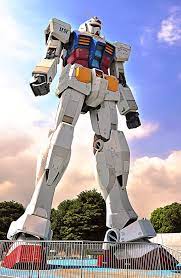
Gundam. Courtesy: Creative Commons

In addition to baseball, Japan is famous for its robots. Gundam is a well-known robot character, who first appeared in Japanese anime in 1979. Although many science fiction stories feature robots, they are increasingly becoming a part of daily life in Japan. This is partly because Japan’s population is decreasing. There are fewer and fewer young people to do necessary work, so machines are called upon to take up the slack.

Recently, the Japanese have developed robots which can help elderly people and others in many different ways. For example, there are robots which can help farmers pick fruit, as well as humanoid robots that can chat with people and ward off loneliness. Robot pets, like Paro (which became Mon-chan in The Baseball Widow), are also used to keep elderly people and children in hospitals company. There are special cafes staffed entirely by robots, including at least one at which the robots are controlled by people with disabilities. A nearby art museum has a robot guide which takes visitors on tours of exhibits. Robots in Japan have performed weddings and funerals. During the COVID-19 epidemic, one small university even used robots as avatars in a graduation ceremony.

I am fascinated by robots. They are not always what people expect. Sometimes they are soft and fuzzy. As soon as I learned of the robo-seal, I wanted to put it into a story. However, I sometimes feel uneasy about the replacement of humans by robots. Fortunately, at the moment, family bonds remain strong in Japan, with multiple generations living together and helping each other. Like the family in my book, we were three generations, living in the same house. We don’t have a robo-seal yet, but we do have a robotic vacuum cleaner.

.

Suzanne Kamata was born and raised in Grand Haven, Michigan. She now lives in Japan with her husband and two children. Her short stories, essays, articles and book reviews have appeared in over 100 publications. Her work has been nominated for the Pushcart Prize five times, and received a Special Mention in 2006. She is also a two-time winner of the All Nippon Airways/Wingspan Fiction Contest, winner of the Paris Book Festival, and winner of a SCBWI Magazine Merit Award.

PLEASE NOTE: ARTICLES CAN ONLY BE REPRODUCED IN OTHER SITES WITH DUE ACKNOWLEDGEMENT TO BORDERLESS JOURNAL

Click here to access the Borderless anthology, Monalisa No Longer Smiles

Click here to access Monalisa No Longer Smiles on Kindle Amazon International

Categories
Notes from Japan

A Ramble on Bizan

By Suzanne Kamata

        “The mountain in Awa rises in the sky like a nicely curved eyebrow
            Seeing it above the horizon, a boat is heading toward it
                     Where will it stay tonight?”
                  -from the Manyoshu, 8th century

In his 1919 essay, “Impressions of a Walk,” the Portuguese expatriate Wenceslau de Moraes [1]wrote of hiking up Bizan during koharu, “the small spring” – “a delightful and rapid transition from the suffocating heat of summer to the cool breeze of the winter.” After sailing around the world, Moraes settled in Tokushima for the last sixteen years of his life. He purportedly hiked up Bizan, the prefecture’s most emblematic mountain, every day.

I have lived in Tokushima Prefecture for over twenty years now, but it’s been a while since I’ve been on the mountain. A recent popular movie, “Bizan,” was filmed on its slopes as well as at the hospital where my children were born, and the university where I teach part time. Some of my students appear as extras in the festival dance scene toward the end. It is this movie that has spurred my own outing.

My excursion to the top of Bizan begins on a day between seasons as well.  A week or so ago, I was scraping ice from my windshield.  Now I am getting ready to set out without a jacket under a clear blue sky.  My plan is to drop my daughter off at school, and then walk to the ropeway station at the base of the mountain.  Caught up in the usual frenzy of morning preparations, I cannot seem to locate my backpack.   I stuff a field guide, my notebook, a photocopy of Moraes’ essay from his book Oyone and Koharu: Essays of a Portuguese Recluse in Japan, a novel, and sunglasses into a cavernous Louis Vuitton handbag my mother-in-law had given me as a gift. Then I load my daughter and her stuff into my car, and off we go.

Bizan, or “Eyebrow Mountain,” is visible from almost any point in Tokushima City. I see it every morning, off to the right, as I drive along the Yoshino River. It’s there, glimpsed through tall buildings, as I wait at a traffic light in the city. And it looms at the end of the main road stretching in front of the train station. Jackucho Setouchi, a Buddhist nun, and the most famous and prolific Tokushima-born writer, concurred in her book of autobiographical fiction Places, writing, “If I was playing by myself on the Nakazu wharf, or in the open field where once a year a circus came and set up tents, I could turn around and there was Mt. Bizan. I would look up to it in mild wonder.”

As mountains go, it’s not all that spectacular. Moraes referred to it as a hill. It is actually part of the Shikoku Mountain Range that stretches into southern Tokushima and is separated from the Sanuki Mountain Range by a river valley. There are taller peaks in the prefecture – Tsurugi-san, at 1955 meters, is the highest, but Bizan (294 meters), with its gentle slopes and more or less flat top, is perhaps the most distinctive. And the mountain is rich in culture and history.

After I drop my daughter off, I walk through Tokushima Park, then through a flurry of cars, blinking neon, and traffic signals chirping for the blind. I pass the shopping arcade, the headquarters of the religious cult Kofuku no Kagaku, and the red gates of a Shinto shrine to arrive at the Awa Odori Kaikan, which houses the ropeway station. From the base, the mountain appears easily surmountable – less than an hour to the top. But I’m not in the best of shape, and I have this heavy handbag, so I decide to take the gondola as planned.

The ride lasts about fifteen minutes. Up at the top there is a profusion of vending machines and small buildings – a café, a cell-phone transmission tower, and a white pagoda in the Burmese style. I recognise the pagoda from a scene from the movie. There is also a small museum devoted to Wenceslau de Moraes, perhaps Tokushima’s most famous expatriate. I make this my first stop.

Hiraoka-san, a small, genial grey-haired man in a jean jacket, gives me the grand tour in English.  The exhibit includes some of the many books written by Moraes – both the original Portuguese versions and Japanese translations – as well as photos, his writing desk, smoking implements and bowler hat.

On the wall there are scenes from the puppet play based on the life of Moraes. The script was written by Setouchi[2]. Under glass, I see a pamphlet from a Japanese movie inspired by the bushy-bearded European sailor.

Hiraoka-san shows me the letters of appointment Moraes received from three Japanese Emperors – those of the Meiji, Taisho and Showa eras – for the position of Portuguese consul in Kobe. Moraes met with Emperor Meiji three times. There is also a model of the ship Moraes sailed on which Hiraoka-san says, “is like the one in Pirates of the Caribbean with Johnny Depp.”

Moraes first came to Japan as a member of the Portuguese navy. He’d been to other places – Mozambique, where, according to his translator Kazuo Okamoto, he’d fallen “violently and foolishly in love” with Arrussi, a woman referred to as “Miss Africa”; and Macao, where he’d bought and married Atchan, the mixed race daughter of an English father and a Chinese mother, with whom he’d had two sons and then deserted– before he took on the position of Portuguese consul in Kobe in 1899. Moraes married 25-year-old Oyone, in 1900, when he was 45 years old. She died at the age of 38, and her ashes were entombed at Chonji Temple in Tokushima, where Moraes took up residence in 1913. He visited her tomb daily, but her relatives denied his request to have his own ashes buried with hers. He later lived with Oyone’s cousin, Koharu, who became his common law wife. She, too, died young.

Moraes lived in a house at the base of Bizan, where he enjoyed gardening and, presumably, writing. He published two collections of essays about Tokushima in his native language – Oyone and Koharu and Bon Odori in Tokushima: Essays of a Portuguese Hermit in Japan.  With his long white beard and kimono dyed with the locally grown indigo, he must have caused quite a stir among the locals. His first impression of Tokushima was “that along the way to the modest domicile which had been destined for me was a dominating and agreeable impression of – green. Green plunging into my aesthetic eyes! Green that rushed into my nose. Green, nothing more – an impression so strong, so all-inclusive that I could scarcely pay attention to the details of the scene spread in front of me.”

And yet he did manage to write in great detail and with much feeling of everything he observed around him. From the mountain, he saw “the houses thickly clustered together – small houses, and of wood of course — extend over a vast plain of silt on the complex waterways of the river Yoshino, from the coast to the foot of the hill ranges which bound it: a population of nearly seventy thousand, including four or five Europeans of whom I am one, but this, of course, is not mentioned in the books.”

From the top of Bizan, one can still see an expanse of greenery, the harbour adrift with boats, and ships in the Kii Channel. On a clear day, Awaji Island is visible. Down below, while wooden houses remain, white concrete apartments, schools, and office buildings tend to dominate. Shikoku is still the smallest and least populated of Japan’s four main islands, but Tokushima Prefecture now has a population of approximately 810,000, of about 6,000 whom are foreigners.

I am one of them, a woman from the United States. Like Moraes, I seek to convey the atmosphere and culture of Tokushima to the people of my native country, most of whom have never heard of this place, through my writing. Like Moraes, I have settled here with a spouse.  But of course, I am not nearly so conspicuous as he was. In twenty-first century Tokushima, my blond hair blends with the dyed hair of the youth of the city. And I’m not a hermit, not hiding from the world.

Thinking to fortify myself before heading off on one of the designated walking trails, I duck into the Bizan café just outside the gondola station.  I stand before a vending machine offering tickets for the usual fare – curry rice, pilaf and udon – but a woman bustles out from a back room and makes an “X” with her fingers.  The shop isn’t open for business yet.

I meander down to a weathered wooden bench shaded by walnut and bayberry trees.  Off in the distance, I can hear a train rumbling over the tracks; closer by, birds twitter and chirp and the brush rustles with life. I’m told that there are rabbits and monkeys on this mountain, as well as a fair share of stray cats and dogs. Here and there, signs warn of mamushi, a reddish brown snake with leopard spots whose bite can be fatal. In the early 1900s, residents sought to ward off the snakes with exorcisms written on paper. Moraes himself wrote, “My humble house is completely defended with these pieces of paper.”

I wander until I come across a white gazebo, complete with weathervane. According to a plaque, this structure was a gift from Saginaw, Tokushima’s sister city. It reminds me of a bandstand in Michigan where I grew up, of sitting on a blanket with my grandparents in summer, listening to a small orchestra. In a few months, it will offer a retreat from the blazing sun. Now, I stand under its roof and gaze out at the ribbon of river. Straight ahead, on the opposite bank, I can see the school where my son is learning to write Chinese characters.

I walk a bit more, past the statue of Moraes and his dog, past the rhododendron bushes with their first intimations of spring, a hint of red, and down the hill to – what’s this, an apartment building? No, it’s a government-sponsored hotel – the Bizan Kanpo. My daughter’s kindergarten once had a sleepover at this place.  I remember now that we walked up this hill for a night-time festival. The parents and teachers supervised while the children played ring toss games by lantern light. In the morning we performed “radio exercises” in the park.

Now I see a few people picnicking on benches, and I’m sorry that I didn’t bring my own lunch.  I’m famished by this time, so I make my way back to the café, which is now open. I order a bowl of noodles and settle at a table covered with tie-dyed indigo cloth. There are only a couple of other customers – a pilgrim dressed all in white, his peaked straw hat resting on the counter as he takes a break between temples – and a man who works on the mountain. As I eat, I look out upon Shiroyama, a hill hunched at the center of the city, the site of the ancient shogun’s castle, and the town hall where the record of my marriage is stored.

Although I purchased a round-trip ticket on the ropeway, I decide to hike down.  How hard could it be? I find the shortest route on the map, one that I think will take me to my starting point, but almost immediately I wonder at the wisdom of this decision. All morning I have been tramping up and down concrete steps and sidewalks, but this is an actual hiking trail.  The steep, narrow path is strewn with dry leaves, which may be slippery. I don’t have a walking stick, and instead of a backpack, I’ve got this handbag hooked over my arm. There is also the question of snakes.

Nevertheless, I begin to pick my way down the incline, imagining Moraes nearly a century ago in these same woods in his kimono. I grab onto tree trunks and seek purchase on protruding roots and rocks. My thighs burn with the effort.

The forest is so dense that I can’t see the city beyond. No one is on the trail behind or ahead of me. No one knows where I am. It’s an odd feeling, here in this densely populated country where I am so seldom truly alone. All I can hear is the wind in the trees, and what I take to be birds rustling the leaves as they forage for food.

Although I’m tempted to pull out my field guide and try to identify some flora or fauna – were those grey-tailed birds that just flew past starlings or brown-eared bulbuls? – there are no stumps for sitting, no spots for rifling through my bag.  I keep going until I spot a paved road through the trees. The trail seems to suddenly drop off to this road.

It’s a couple of meters to the ground below. I start looking for a sturdy branch that I might be able to use to vault myself down, and then I see a businessman strolling up the road. Maybe he’s out for his daily constitutional. Crouched here on the side of the mountain with my Louis Vuitton bag, I suddenly feel ridiculous. I hold myself very still and hope that he doesn’t notice me. When he’s out of sight, I manage to scoot down without scraping myself on the rocks.

Through the trees I can now see some familiar landmarks, and I know that no matter where I end up, I’ll be able to find my way back. And then I come to a set of stone stairs, and I remember climbing these very steps fifteen or sixteen or maybe seventeen years ago to drink with friends beneath the cherry blossoms.

I see that paper lanterns printed with “Asahi Beer” have already been strung across the path in anticipation of this year’s flower viewing. Soon, it will be time for the azalea festival in the Sako neighbourhood where my husband grew up.

Almost a hundred years ago, Moraes was enraptured by the pink and purple blossoms.  In May of 1915 he wrote, “How beautiful the mountains are! The azaleas, above all, are most delicious, and the charm of this rosy colour, the profusion of blooms, transforms the entire mountain into a garden. I contemplate the spectacle, resting on an old piece of tumulus stone; the mountain where I am is a cemetery, as is almost every slope of this land. And in sight of the graves I want to shout, ‘Get up, you who are sleeping, come and enjoy with me the rapture of these flowers! You cannot be dead when all of nature is awaking!”

I think of these words when I see the jizo along the path. These are stone statues tied with red bibs, which represent the spirits of dead infants, especially aborted or stillborn babies.  Brooms made from twigs have been left beside the shrines for caretaking. Moraes, who lost both his first Japanese wife, and his second common-law wife, Koharu, was often preoccupied with death. Though he wrote of the burgeoning nature on Bizan, he also wrote of the jizo, funeral processions, the tending of the butsudan, posthumous names, and the crematorium on the mountain.

At last, I come out in front of the red-gated shrine next to the gondola station. I pass the stone shishi – guardian lion-dogs – and a statue of a figure performing radio exercises, and then I’m on flat ground.

After I pick up my daughter from school, I drive along the Yoshino River and look to the left, to Bizan. I can pick out the hotel and the cell phone transmission tower, and the slope where I’d made my way down.  This mountain has been here for centuries —   it is the burial site of feudal lords, an inspiration to poets and novelists, a home to small animals, and a film location. 

In a hundred years it will still be there.  I wonder what other expatriates and Japanese will write about Eyebrow Mountain a century from now. Who will Bizan next inspire?

The grave of Wenceslau de Moraes. Courtesy: Creative Commons

[1] Portuguese writer (1854-1929)

[2] Jackucho Setuchi, Japanese nun and writer (1922-2021)

Suzanne Kamata was born and raised in Grand Haven, Michigan. She now lives in Japan with her husband and two children. Her short stories, essays, articles and book reviews have appeared in over 100 publications. Her work has been nominated for the Pushcart Prize five times, and received a Special Mention in 2006. She is also a two-time winner of the All Nippon Airways/Wingspan Fiction Contest, winner of the Paris Book Festival, and winner of a SCBWI Magazine Merit Award.

PLEASE NOTE: ARTICLES CAN ONLY BE REPRODUCED IN OTHER SITES WITH DUE ACKNOWLEDGEMENT TO BORDERLESS JOURNAL

Categories
Notes from Japan

Marathon Blues

By Suzanne Kamata

Tokushima. Courtesy: Creative Commons

“Do you want to run the Tokushima Marathon with me?” my husband asked for the third year in a row.

The first time, three years before, I’d given him a flat-out refusal. The previous year, I’d promised to register, but then my brother had died suddenly, and I’d had to fly from our home on the island of Shikoku in Japan back to the United States for the funeral. My husband had run the race for the third time on his own. This year, though, I didn’t have an excuse. “Maybe,” I said.

To be honest, running a marathon has never been one of my life goals. Nor am I interested in bungee jumping, getting a tattoo, climbing Mt. Everest, or anything else that would cause pain or discomfort. I power walk four or five kilometers per day for my health, and I did run on my high school’s cross-country team, but I am not really into long-distance running any more. My New Year’s resolutions tend to be more aligned with pleasure: Try new wines. Read more poetry.

My husband, however, couldn’t understand why I wouldn’t want to run a marathon. He told me how satisfied I would feel afterwards. And we’d get swag – a T-shirt, a medal, a certificate worth framing. Maybe he also thought it was a fun activity that we could do together. He is a high school physical education teacher. He would think that.

The Tokushima Marathon course goes along the embankment of the Yoshino River right past our house. We live at the twelve-kilometer mark. In previous years, I’d used a tracking app to determine when he was about to run by. My daughter and I had then gone up the hill in time to cheer him on. Once, he’d shoved a jacket that he no longer needed into my hands as he’d dashed past us.

“What size T-shirt do you wear?” my husband asked.

I told him. I knew that he was registering me for the marathon, even though I had said, “maybe,” not “yes.” But perhaps I could just walk and run the first twelve kilometers, and then jog down the hill to our house. I could run that little bit as a tribute to my brother who had aspired to run a marathon himself. More than once, on my visits to see him, I’d found myself waiting at the finish line of some fun run or other. He had been such a devoted runner that he had been buried with his running shoes.

I started training. My husband usually didn’t put in any effort until a month in advance, and yet he still managed to complete the whole race. But I needed more time. I walked and ran and walked and ran instead of my usual regime. I did this at night after work. Then it started to get really cold, and my self-imposed training program started to fall apart.

Enter the new coronavirus. In January, we heard news of a deadly virus in Wuhan, and then a cruise ship full of afflicted passengers in Yokohama. Even though we were far away in Shikoku, by February local events were being cancelled. There would be no graduation ceremony at the university where I taught, no farewell party for professors who were leaving to teach elsewhere. Public schools began spring vacation a month early. I wondered if the Tokushima Marathon, which was scheduled for March, would be cancelled as well. I must confess that I secretly hoped it would be because I hadn’t kept up with my training and I didn’t want to disappoint my husband.

Of course, it was cancelled, like the 2020 Tokyo Summer Olympics and the national high school baseball tournament at Koshien Stadium and everything else. We were informed that there would be no refund of our registration fees, but we would get swag. I looked forward to receiving my Tokushima Marathon T-shirt, which I would wear ironically. I waited and waited for the package to arrive.

Finally, two bulky envelopes were delivered. Around this time, my husband and I were stuck together in the house with nothing to do. We’d already gotten rid of all of the stuff that didn’t spark joy. Our clothes were rolled neatly in our drawers. We were driving each other crazy. We opened the envelopes to find the finisher medals – ha! ha! – and no T-shirts, but an indigo-dyed handkerchief each.

“Let’s make these into masks,” my husband said.

At first, I protested. They were such nice handkerchiefs! But I already had a few indigo-dyed handkerchiefs which I never used, but which nevertheless sparked joy. If we cut them up and made them into handkerchiefs, at least they would serve a purpose.

My husband dragged our dining room table in front of the wide-screen TV in the living room. He found a mask-making tutorial on YouTube. He cut up the pieces, and I sewed them together. They turned out well! We wore them every day until the elastic started to lose its spring, and health experts declared that wearing paper masks was actually better than handmade cloth ones. And the medals? Well, maybe we will someday figure out something to do with those.

Masks stitched by Suzanne. Photo Courtesy: Suzanne Kamata

Suzanne Kamata was born and raised in Grand Haven, Michigan. She now lives in Japan with her husband and two children. Her short stories, essays, articles and book reviews have appeared in over 100 publications. Her work has been nominated for the Pushcart Prize five times, and received a Special Mention in 2006. She is also a two-time winner of the All Nippon Airways/Wingspan Fiction Contest, winner of the Paris Book Festival, and winner of a SCBWI Magazine Merit Award.

PLEASE NOTE: ARTICLES CAN ONLY BE REPRODUCED IN OTHER SITES WITH DUE ACKNOWLEDGEMENT TO BORDERLESS JOURNAL

Categories
Notes from Japan

Bridging Cultures Through Music

Suzanne Kamata brings to us people, experiences and cultures from Japan

Masaki Nakagawa. Photo provided by Suzanne Kamata

For Kobe native and YouTube sensation, Masaki Nakagawa, a university trip to Latvia turned out to be a life-changing experience.

Nakagawa was a student of international culture in the Integrated Arts and Sciences Department at Tokushima University. By his own admission, he wasn’t a great student – his TOEIC (Test of English for International Communication) score was around 200 – but he had an avid interest in other cultures. He first studied abroad in Korea, where he improved his English language skills, and later, in 2014, went with a Tokushima University professor to Riga for a summer seminar. He felt an immediate connection with the small, European country.

“I felt like this is the country I will live in in my future,” he says via webcam. From the very beginning, he loved the people, the language, the atmosphere, the many historical buildings, the food, and the drinks.

“Someone told me that maybe I was Latvian in a past life,” he jokes.

Although the university did not have an official exchange program with any Latvian university at that time, he decided that he would go there for foreign study. During his seven months abroad as a student at the University of Latvia, he discovered that while most Latvians knew quite a bit about Japan, few Japanese people had any idea about them. He made it his goal to create more links between the two countries. Kobe is already the sister city of Riga, but he created a project to promote a sister city relationship between Tokushima and Jelgava, which is ongoing.

From a young age, Nakagawa has also been a musician. His mother was a piano teacher, so naturally he began playing the piano at the age of three. However, when he was fourteen-years-old, he bought his first guitar. “I still have it,” he says. “It is my important thing.” In high school, he played guitar and sang vocals in a band.

During his visit to Latvia, he discovered the importance of music in that country. “Latvia is a musical country,” he says. “They love dancing with music, eating with nice music. The Latvian language is quite beautiful, and Latvian songs are very, very beautiful.” He also found that singing in Latvian was an effective way to study.

After graduating from university, he got a job at Mercedes, where he continues to work as a store manager, however his passion for Latvia remained. He decided to combine his loves for Latvia and music. “As a musician, I can connect countries,” he says.

In 2017, he learned “Mana dziesma” (“My song”), which was originally performed by Brainstorm, one Latvia’s most famous bands, and made a recording of himself singing it while playing the guitar. Then, he uploaded it to YouTube. The video received an astonishing 150,000 views. Nakagawa realized that he was onto something, and he continued to record and upload videos.

In some videos, he sings in Latvian against a Japanese background, such as along a river in Kyoto. In others, he sings in a combination of Latvian and Japanese in a Latvian setting. Recently, he has begun to add Japanese subtitles. While he continues to record Latvian favorites, he has also written and recorded original songs in both languages.

His popularity has continued to grow, leading to interviews in magazines, on the radio, and on Latvian television. By his estimate, he has appeared on television in that country “twenty or thirty times.”

When asked if he is perhaps the most famous Japanese person in Latvia, he laughs. “Maybe.”

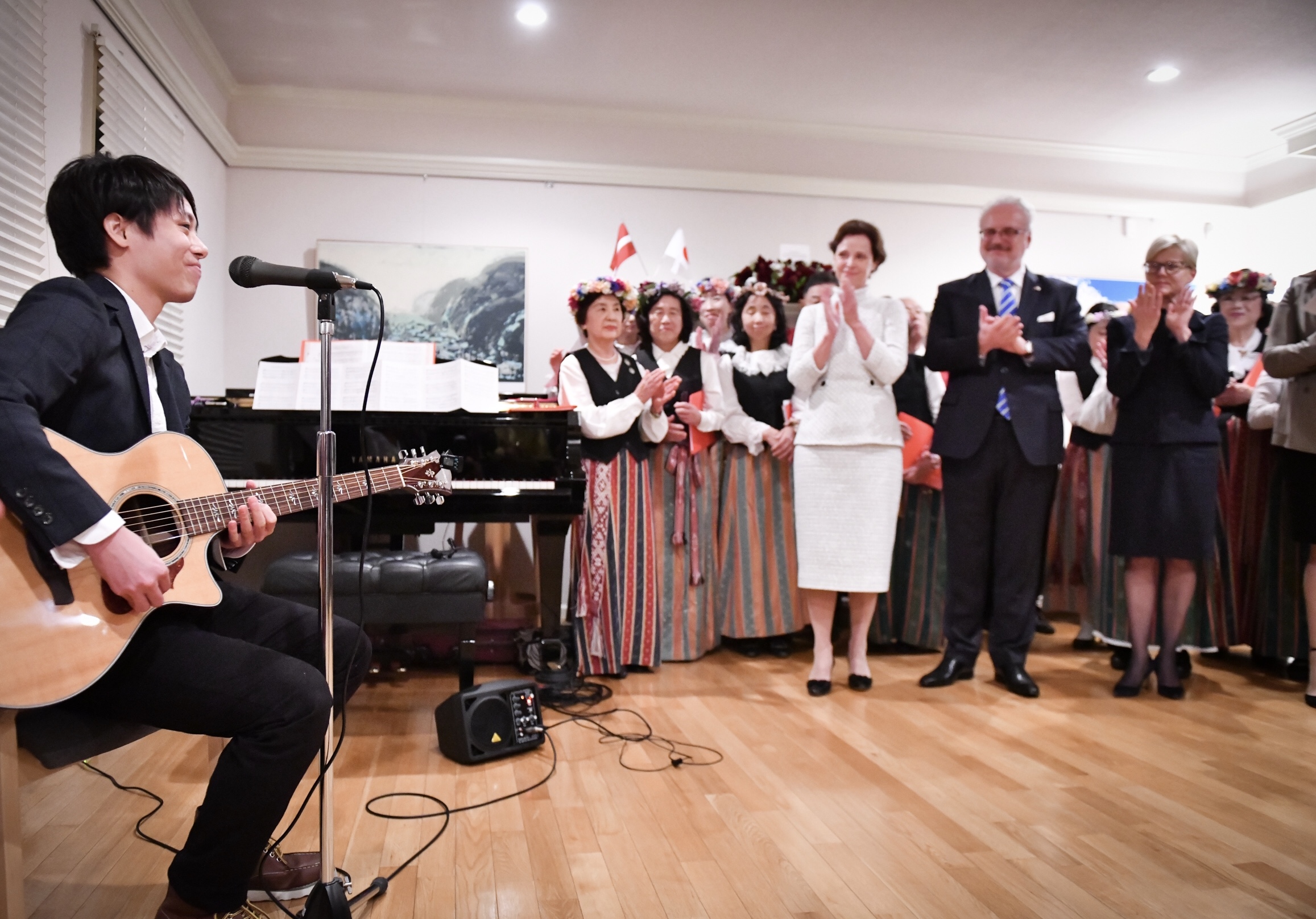
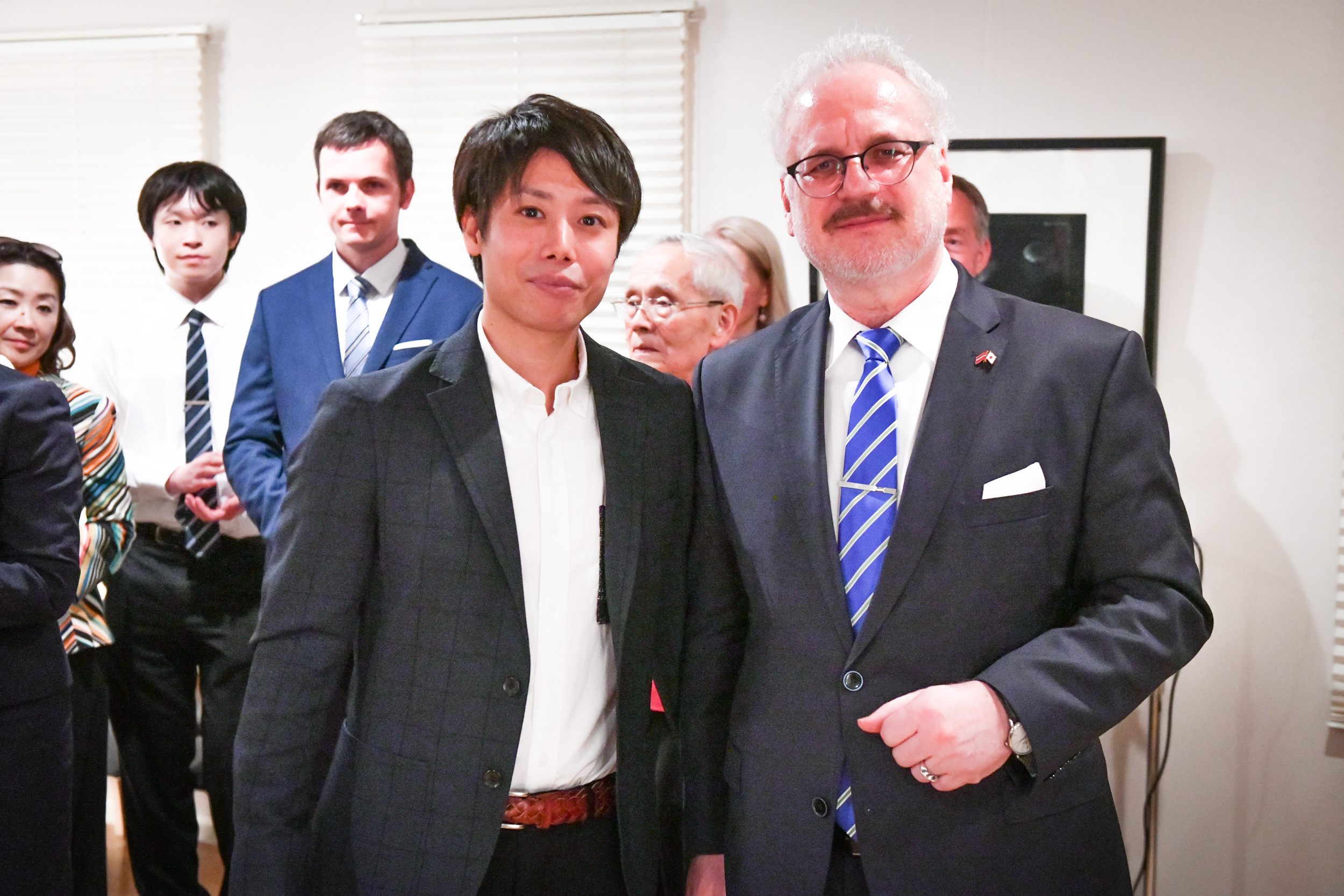
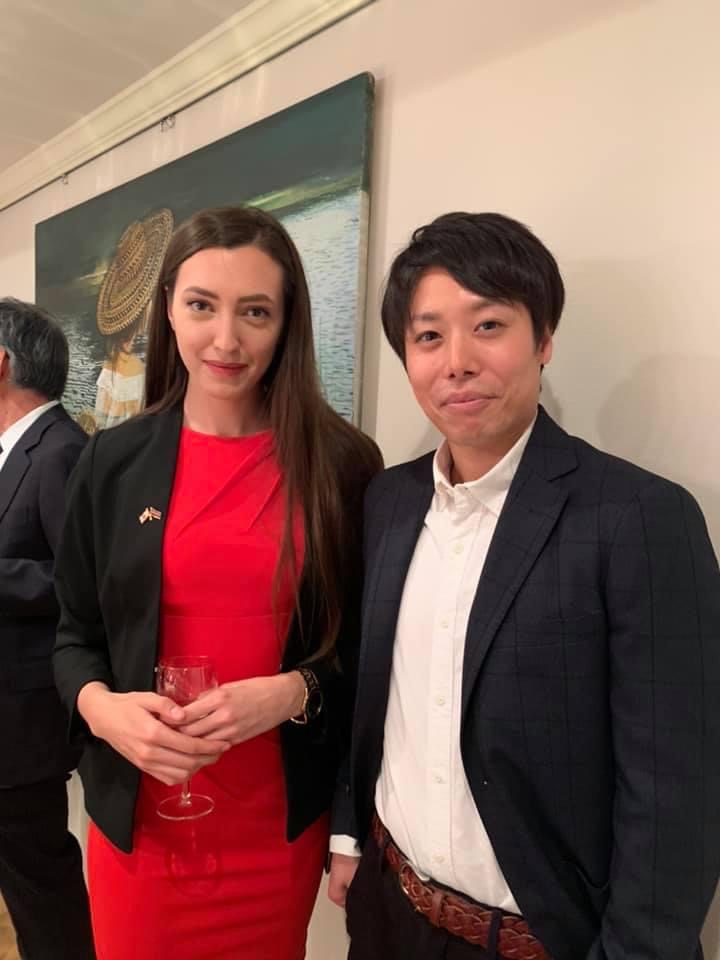
When the president of Latvia visited Japan for the coronation of the new emperor, Nakagawa was invited to perform at a closed reception at the Latvian Embassy in Tokyo. He had a chance to talk to the president and the first lady, who, as it turned out, was a big fan.

His most recent TV appearance, via Zoom, marked the occasion of his one millionth view on YouTube, the 100th year of Latvian-Japanese friendship, and of his latest single, “Es Lepojos Ar Tevi,” recorded with German musician Joran Steinhauer, another lover of Latvia. A few years ago, the two friends collaborated on a YouTube series called “Masaki Learns Latvian” in which Steinhauer taught Nakagawa two or three phrases per episode. “Es lepojos ar tevi”, which means “I’m proud of you,” is the first phrase that Nakagawa learned. This song in Latvian, uniquely created by two foreigners, premiered on the TV show “900 Seconds” in April of this year.

Nakagawa has been branching out a bit in his musical career, writing songs for aspiring idol groups in Japan, and singing on Japanese anime soundtracks. His vocals can be heard in the theme song for the anime “Dark Hero Yoshitsune” which will be released nationwide in Japan in fall 2021. Fans can follow his activities via Instagram at https://www.instagram.com/masaki.lv/.

He maintains, however, that developing relations between Latvia and Japan is his main priority. “As a musician, I really would love for people to know about Latvian culture.”


Nakagawa with his girlfriend Arta Voicehovska, who works as Coordinator for International Relations Latvia-Japan at Higashikawa Town Hall in Hokkaido
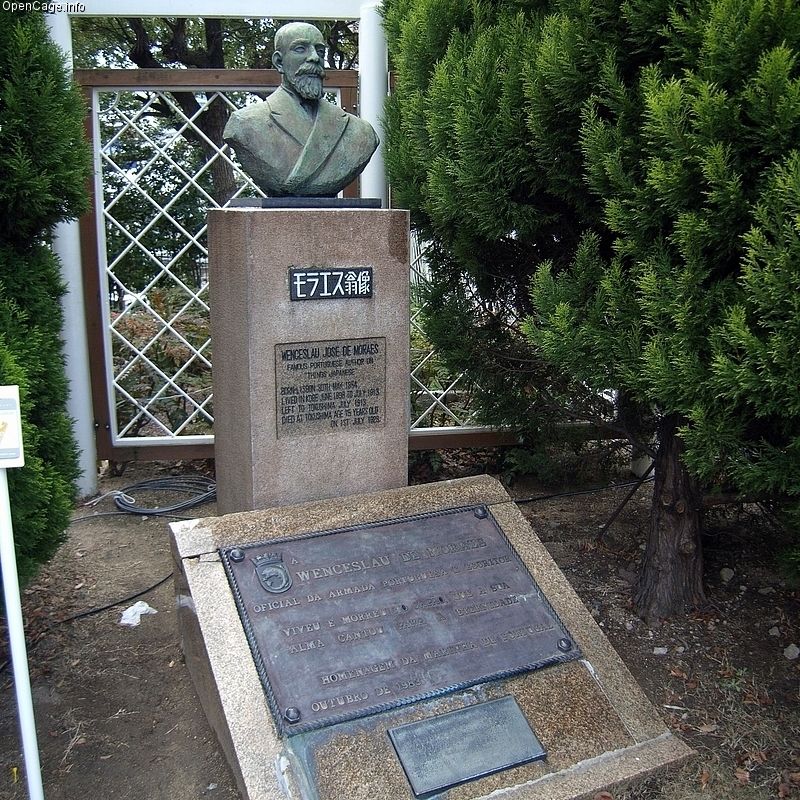
Suzanne Kamata was born and raised in Grand Haven, Michigan. She now lives in Japan with her husband and two children. Her short stories, essays, articles and book reviews have appeared in over 100 publications. Her work has been nominated for the Pushcart Prize five times, and received a Special Mention in 2006. She is also a two-time winner of the All Nippon Airways/Wingspan Fiction Contest, winner of the Paris Book Festival, and winner of a SCBWI Magazine Merit Award.

.

PLEASE NOTE: ARTICLES CAN ONLY BE REPRODUCED IN OTHER SITES WITH DUE ACKNOWLEDGEMENT TO BORDERLESS JOURNAL