Eshechhe Sarat ( Autumn) by Rabindranath Tagore was published in 1937. The poem flows to describe the season of Sarat, or the early part of autumn, when Bengalis celebrated their major festival, Durga Puja
Autumn in Bengal by Sohana Manzoor
AUTUMN

A cool breeze awakens
Autumn anew.
At dawn, the grass rim
Is lined with dew.

The amloki groves shiver.
Their hearts pound like drums,
As they know the time to shed
Leaves has clearly come.

The shiuli branches are laden with buds.
The togor blossoms hold sway.
The bees visit sprays of the
Malatilata twice a day.

As the rains have ended,
The clouds roam the skies free.
They drift with the breeze,
At leisure and full of glee.

The ponds ripple with water.
Their banks bloom with flowers.
The young rice plants fill the fields
The wind swings the paddy bowers.

Wherever I look, a golden light
Suffuses a vision of holidays,
The festive sun rises in the woods
Of puja* blossoms drenched in gold rays.


------------------------------------------
Amloki is Indian gooseberry
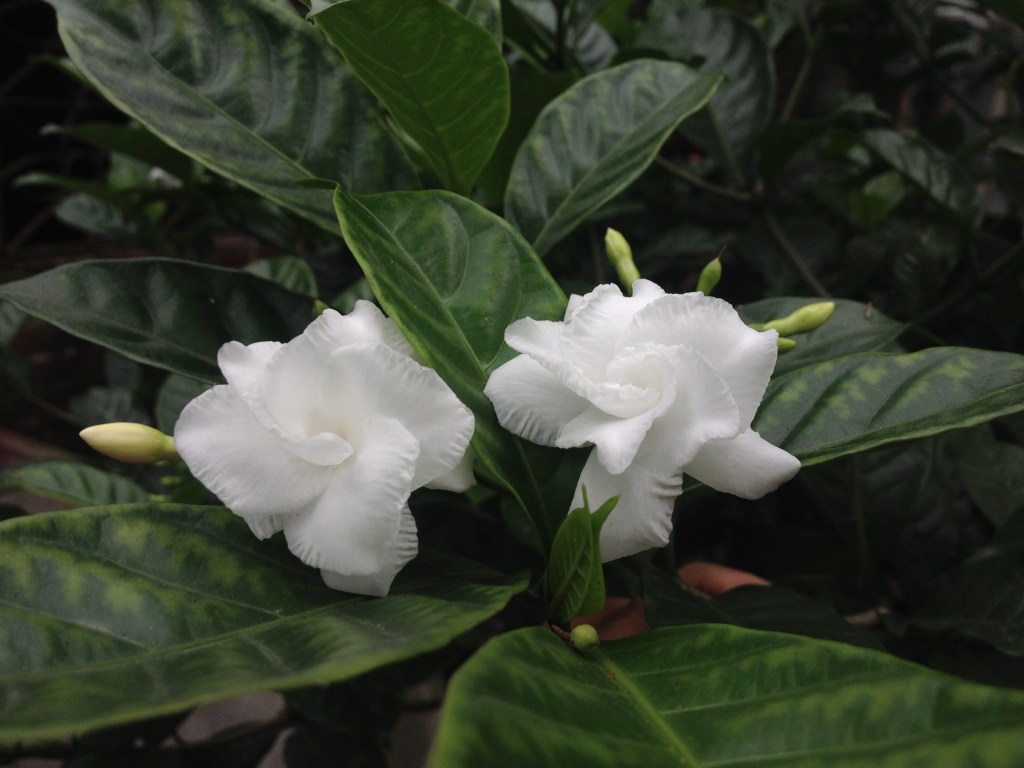
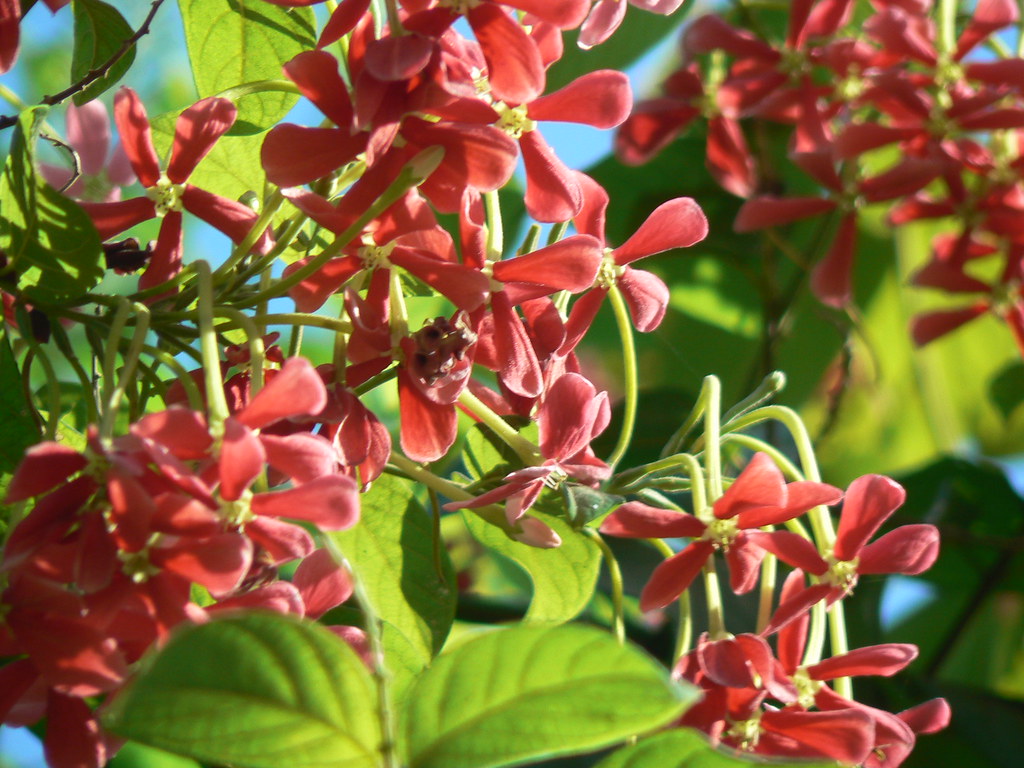
Togor (genera: milkwood), shiuli (jasmine)and Malatilata (Rangoon creeper) are flowers that bloom around autumn
*Durga Puja
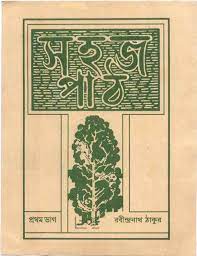
This poem was a part of Sahaj Path, a set of books created by Tagore to teach the Bengali language. The four books that constitute the set were illustrated by the famed artist Nandalal Bose (1882-1966), who was also a major part of Santiniketan.
Sahaj Path, Tagore’s Bengali primer, of which this poem was a part. Courtesy: Creative Commons
(This poem has been translated by Mitali Chakravarty with editorial backing from Anasuya Bhar and Sohana Manzoor)
.
PLEASE NOTE: ARTICLES CAN ONLY BE REPRODUCED IN OTHER SITES WITH DUE ACKNOWLEDGEMENT TO BORDERLESS JOURNAL
These are songs of Tagore centred around autumn, a season that is split into two parts in Bengal. Early autumn is called Sarat and late autumn Hemonto. The first two songs are descriptive of Sarat and the last one of Hemonto.
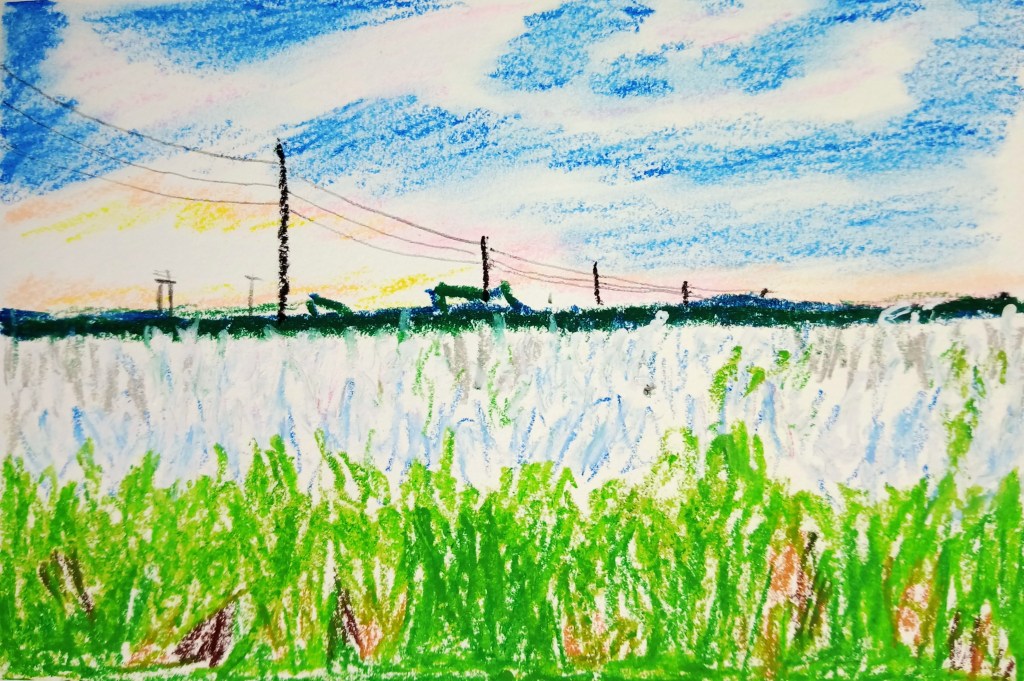
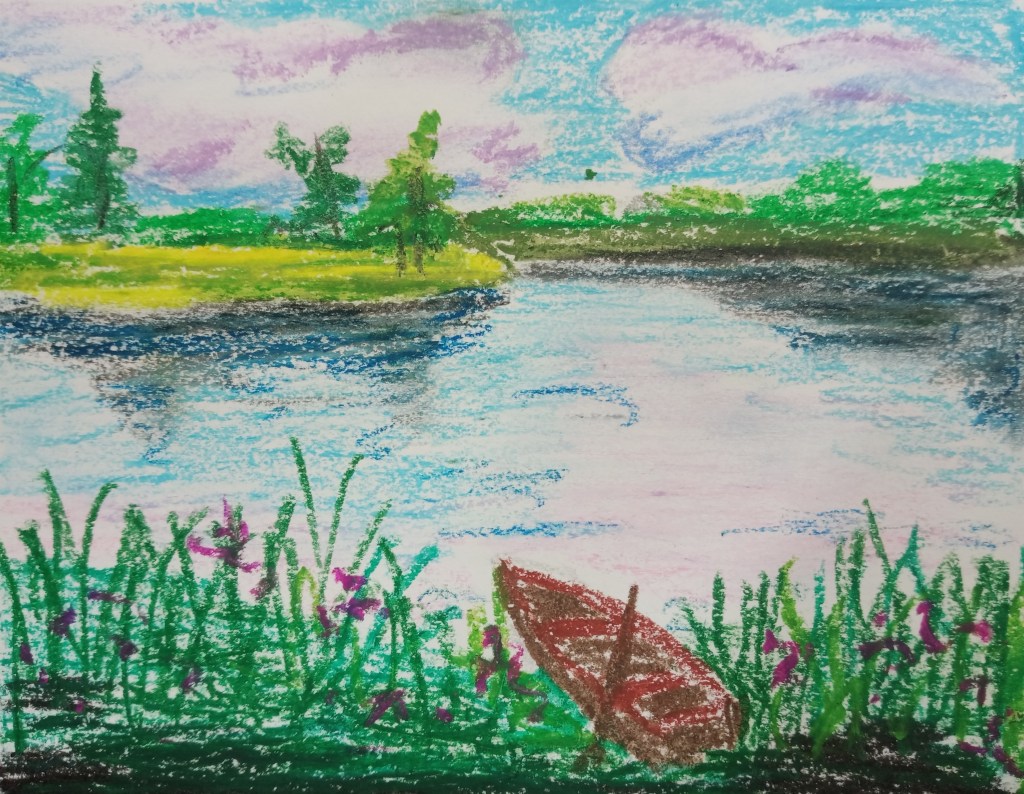
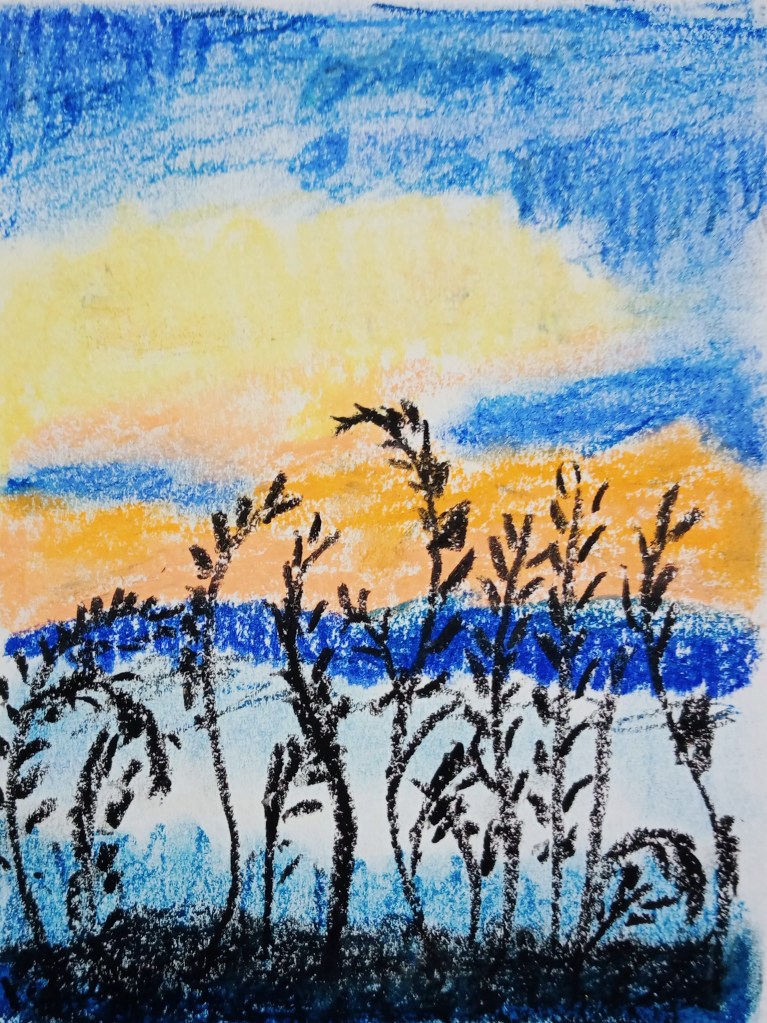
Autumn: Art by Sohana Manzoor
SAY WHAT YOU WILL (Tomra Ja Bolo tai bolo, written in 1921)

Say what you all will, I don’t mind
My time flies, and hours pass, aimlessly
The wild wind stirs me to a song
And spreads its tune across this deep-blue sky.
That song has stuck in my mind.
What nectar do I seek in the humming of bees?
Whose sky-pervading gaze seeks me out
And settles on my sight thus this day?
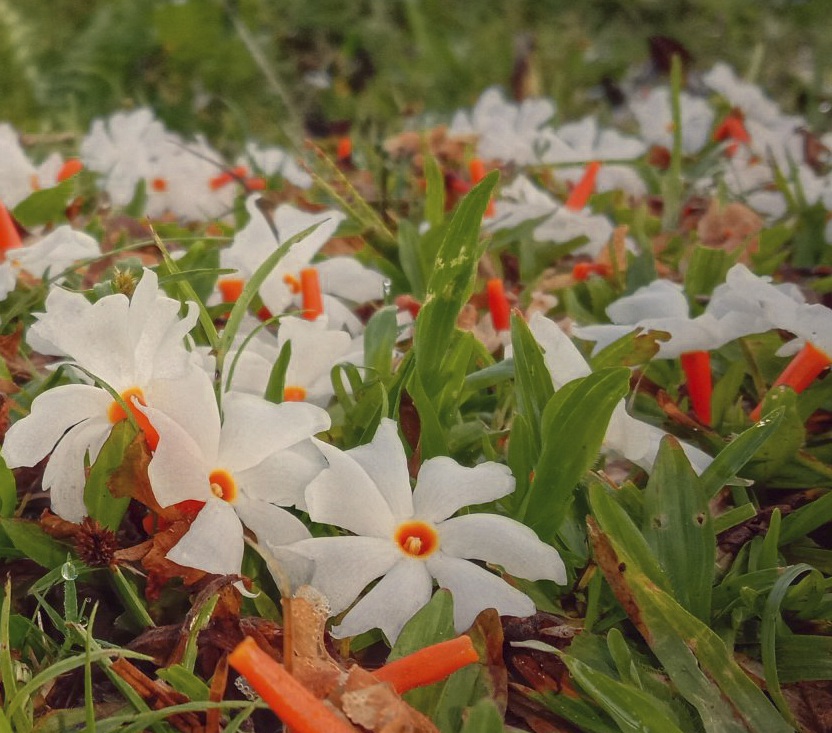
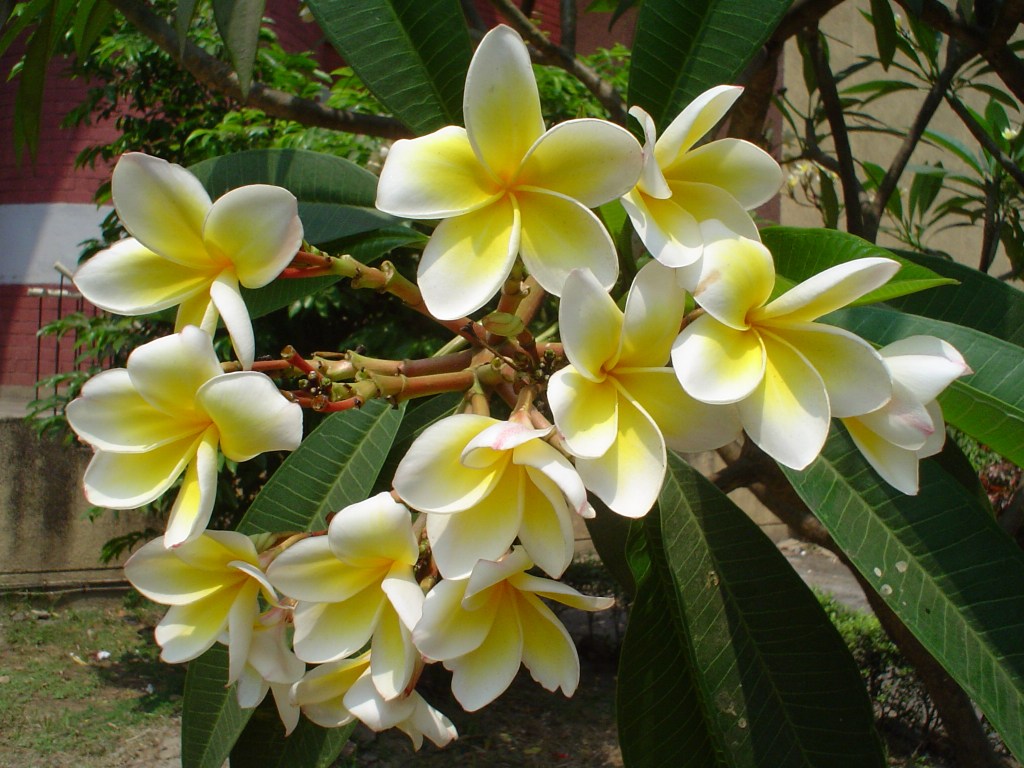
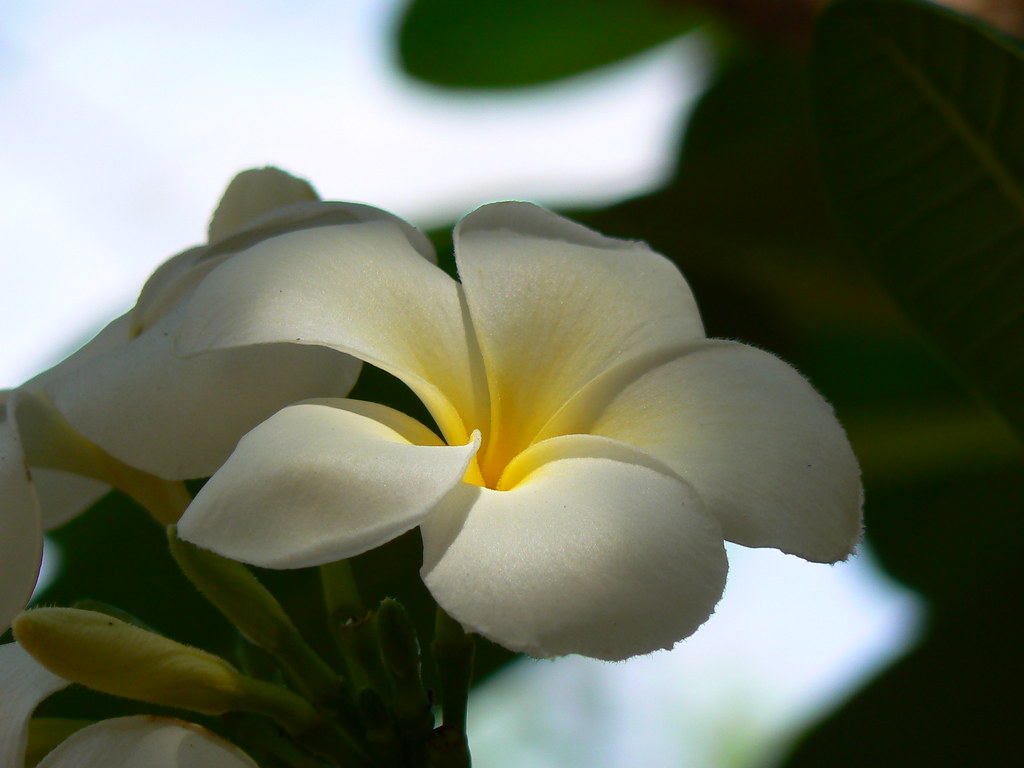
Shiuli flower that bloom in autumns in Bengal. Courtesy: Creative Commons
THE HEART WAS AWAKE (Hridoye Chheele Jege, written in 1921)

You were wide awake in my heart
But I see you in autumnal clouds this day!
How was it you stole so quietly away at dawn,
Letting only your dress’s borders caress the dew?
            What song is it that I should sing?
            I simply can’t find words for it now!
They lie scattered with shiuli flowers under forest canopies
They’ve flown away with the gusting winds in sudden showers.
                        ***
Shiuli-Jasmine
AUTUMNAL NIGHTS (Himer Raate, 1927)

On such cool autumnal nights
Hemonto hides heaven’s lamps with its cloak.
To every house it gives this call,
“Light festive lamps, make bright the night,
Shine your own lights, illuminate the world.”
Gardens are flowerless now; cuckoos sing no more;
Kash reed flowers keep falling by riverbanks,
But let go of darkness, despair and misery; light festive lamps--
Shine your own lights and proclaim the triumph of light
The gods look on — sons and daughters of earth, arise,
Illuminating the night,
Darkness may descend and day end but light festive lamps,
Shine your own light and triumph over this dark night
                         ***
Hemonto-Late autumn
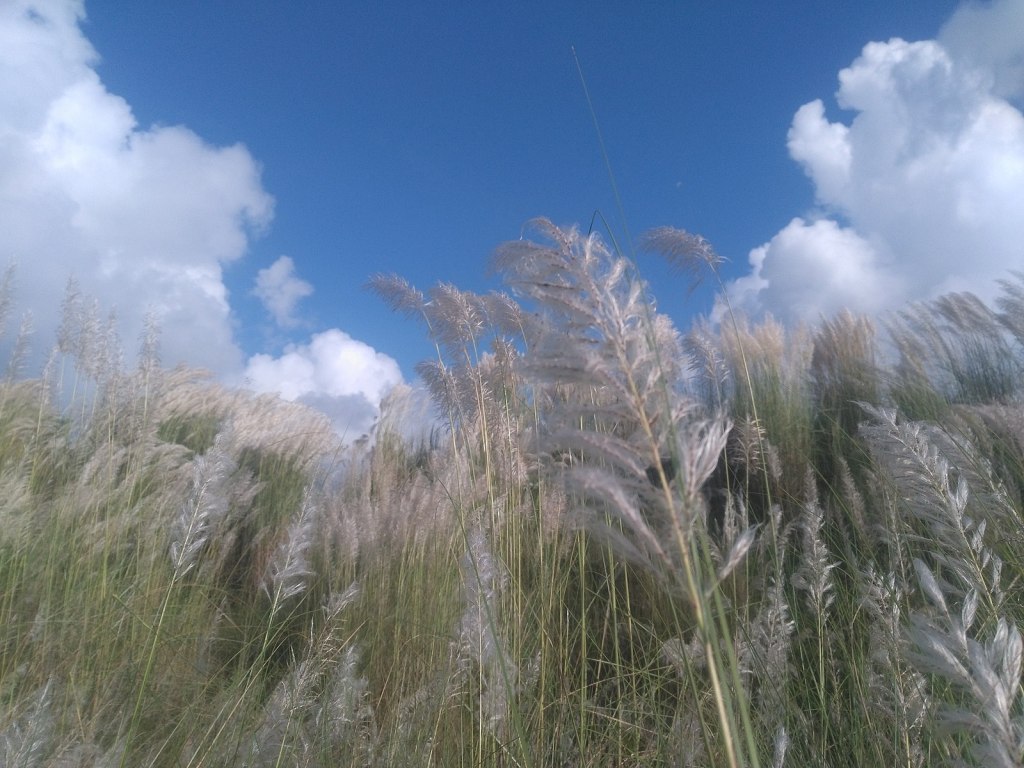
Kash-Long grass
Below is a Youtube upload of Autumnal night or Himer Raate sung by the legendary singer Debabrata Biswas (1911-1980)
Haradhan: God! Today I’ve really been heckled in trying to steal duck’s eggs from the English doctor’s stable. I thought I’ll die in the way he chased me. Scared, I tried to escape and fell inside a ditch. My leg is fractured but I’m not sad about it. I’m satisfied in being able to run away alive. The doctor kills all his patients as soon as he gets the opportunity; he wants to finish me off though I don’t have an ailment. From now on, I will not steal duck’s eggs everyday. I will steal the duck once and for all and it will lay eggs in our house.
From inside: Haru!
Haradhan: (fearfully) Oh, father has come. If he finds me limping in one foot, he will beat me so much that the other one will also become lame.
Enter Father.
Haradhan: (advancing) Yes, father.
Father: Why are you limping?
Haradhan scratches his head.
Father: (annoyingly) How did you break your leg?
Haradhan: I didn’t break it deliberately.
Father: I know that. But tell me how you broke it.
Haradhan: I don’t know, father.
Father: You don’t know how you broke your leg? Will the oilman Gobra from the other locality know?
Haradhan: I did not realise when it got broken.
Father: Is it so? If I break your head with this stick, will you know then?
Haradhan: (quickly shielding his head with his hand) No, father. I broke the leg in trying to save this head.
Father: I’ve understood. Like the other day, did you go to the English doctor’s house to steal duck’s eggs and they have broken your leg?
Haradhan: (rubbing his eyes) Yes, father. I am not to be blamed. I did not break my own leg, they broke it.
Father: Shameless boy! Will you never be conscious?
Haradhan: What is consciousness, father?
Father: You want to know what consciousness is? (Hits him on the back) This is called consciousness.
Haradhan: I get that every day.
Father: I can see that you will die in jail.
Haradhan: No, father. If I get consciousness everyday, then I will die at home.
Father: Oh, I cannot cope with you.
Haradhan: (looking at the basket) Father, for whom have you brought that palm fruit? Can I eat it?
Father: (whacking his back) Here, have it.
Haradhan: (rubbing his back) I did not like it.
From inside: Haru!
Haradhan: Yes, mother?
Mother (from inside): I’ve made palm fruit fries for you. Come and have it.
[Haradhan goes out limping]
Scene Two
Haradhan is about to steal the duck in the doctor’s stable.
Father: (from afar) Haru!
Haradhan: Oh my god! Father is coming. What should I do?
Haradhan has a long bag dangling from his neck to his stomach. He puts the duck quickly insidethe bag.
Father: Haru! (silence) Hara! (silence) Hero!
Haradhan: Yes, sir.
Father: Why has your tummy swollen up like that?
Haradhan: After eating the palm fruit fries yesterday, father.
Father: Why is there a quacking sound?
Haradhan: The intestines inside are making that noise.
Father: Well, let me feel it with my hand.
Haradhan: (quickly) No, no. Don’t touch it. It’s too painful.
Quacking sound heard from the tummy again.
Father: (to himself) I’ve understood everything. I’ll have to teach this naughty boy a lesson. (To Haru) Your ailment is not very simple. Come son, let me take you to the hospital.
Haradhan: No, father. This happens sometimes but gets cured on its own.
Quack, quack, quack.
Father: What happened? This is gradually increasing. Come, no more waiting.
Drags him and goes out.
Scene Three
Haradhan, Father and Mother.
Mother: (crying) What has happened to my poor boy?
Father: Listen, don’t create so much trouble. He will be cured once he’s taken to the hospital.
Mother: Am I creating too much trouble or is your son’s stomach creating too much trouble? (scared) He’s quacking like a duck. My dear Haru, I’ll never give you duck’s eggs to eat – there’s a duck quacking in your tummy. What will happen?
Haradhan: (quickly) No, mother. It’s not a duck but the palm fruit fries. Who told you it was a duck? It can’t ever be a duck. OK, let’s have a bet whether it is the palm fruit fries or not.
Mother: Do palm fruit fries call in that manner?
Haradhan: Mother, please keep quiet. My stomach is calling even more because you are creating such a commotion.
Father: I have some work in the Bose household. I’ll take Haru to the hospital after that.
Quack, quack, quack.
Mother: Oh my god, this is gradually increasing. Oh Mukherjee Babu!
Enter Mr.Mukherjee.
Mukherjee: What’s the matter?
Mother: My poor son’s pain is increasing gradually. Please take him quickly to – what you call it – your hospital.
Mukherjee: I’ve been saying that right from the beginning. Haru’s father has been delaying the whole thing. (To Haru) Come, get up. Let’s go.
Haradhan: No, grandpa. I won’t go to the hospital. Nothing has happened to me.
Mukherjee: What do you mean nothing has happened? The whole locality is upset by the call of your tummy. It seems that the three elements – rheumatism, cough and bile – have all combined together to create a war in your stomach.
[Takes him out by force.]
Scene Four
In the hospital. The English doctor and Haradhan.
Doctor: What has happened to your stomach?
Haradhan: Nothing, Sahib. You forgive me this time sahib, nothing has happened to me.
Doctor: If nothing has happened, then what is this?
Pokes his tummy and the quacking sound doubles.
(laughing) I have completely understood your ailment.
Haradhan: I am touching your body and promising you sahib. I do not have any ailment. I’ll never do such a thing again.
Doctor: You have a serious ailment.
Haradhan: Don’t I know my ailment? You know?
Quack, quack.
(He beats the bag with anger). Oh god! This quacking never stops.
Doctor: (brandishing a huge knife) You have a stealing ailment and it will not be cured without this knife.
He tries to cut open his stomach.
Haradhan:(cries and takes out the duck) Sahib, here’s your duck. My stomach could not tolerate your duck in any way. The eggs were better instead.
The doctor beats Haradhan.
Sahib, there is no need for it. My ailment is completely cured.
[1] Translated from “Rog-er Chikitsya” (Jaisthya 1292 B.S.) by Somdatta Mandal
Somdatta Mandalis a former Professor of English and ex-Chairperson, Department of English, Visva-Bharati, Santiniketan, India. A recipient of several prestigious fellowships like the Fulbright Research and Teaching Fellowships, British Council Charles Wallace Trust Fellowship, Rockefeller Residency at Bellagio, Italy, Salzburg Seminar and Shastri Indo-Canadian Faculty Enrichment Fellowship, she has been published widely both nationally and internationally. She has also an award from Sahitya Akademi for the All India Indian Literature Golden Jubilee (1957-2007) Literary Translation Competition in the Fiction category for translating short stories series ‘Lalu’ by Sarat Chandra Chattopadhyaya.
.
PLEASE NOTE: ARTICLES CAN ONLY BE REPRODUCED IN OTHER SITES WITH DUE ACKNOWLEDGEMENT TO BORDERLESS JOURNAL
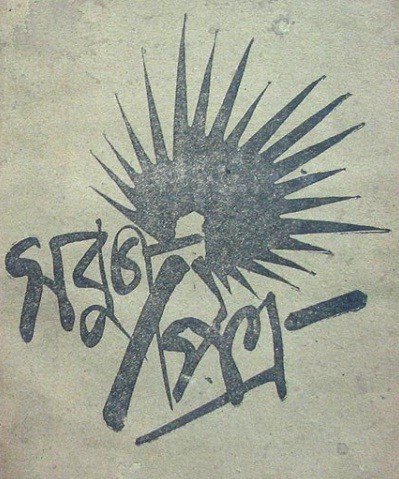
First published in 1915 in Sabuj Patra, ‘Hobe Joye (Victory will be ours)’, has been translated as ‘Song of Hope’
Sabuj Patra was a magazine in which Tagore published often. This is the logo designed by the eminent artist Nandalal Bose who was a close associate of Tagore. The lettering in Bengali gives the name of the journal, which translated means, Green Leaves.
SONG OF HOPE

Victory will be ours, victory will be ours, victory will be ours,
O valiant, O fearless!
Life will conquer — eternal life, the song of joy will triumph.
Love will win over anger. The enlightened will prevail.
This dusk too shall pass, shall fritter away.
O valiant, O fearless!
Awake, open your eyes, may your weariness fade away.
Let the light of hope illuminate a fresh dawn.
The song in the original Bengali had been rendered by the legendary Pankaj Mullick(1905-1978), who was impacted by Tagore and even gave the music for Diner Sheshe, Ghumer Deshe (translated as ‘The Last Boat’).
This has been translated by Mitali Chakravarty with editorial backing from Sohana Manzoor and Anasuya Bhar.
.
PLEASE NOTE: ARTICLES CAN ONLY BE REPRODUCED IN OTHER SITES WITH DUE ACKNOWLEDGEMENT TO BORDERLESS JOURNAL
Tagore’s Nobobarsha (or ‘New Showers’) celebrates the onset of rains. The poem was written in 1900 and brought out that year itself as part of Kshanika (Momentary). It can also be found in Sanchayita (An Anthology of Selected Works), his poetry collection brought out by Visva Bharati, in 1931.
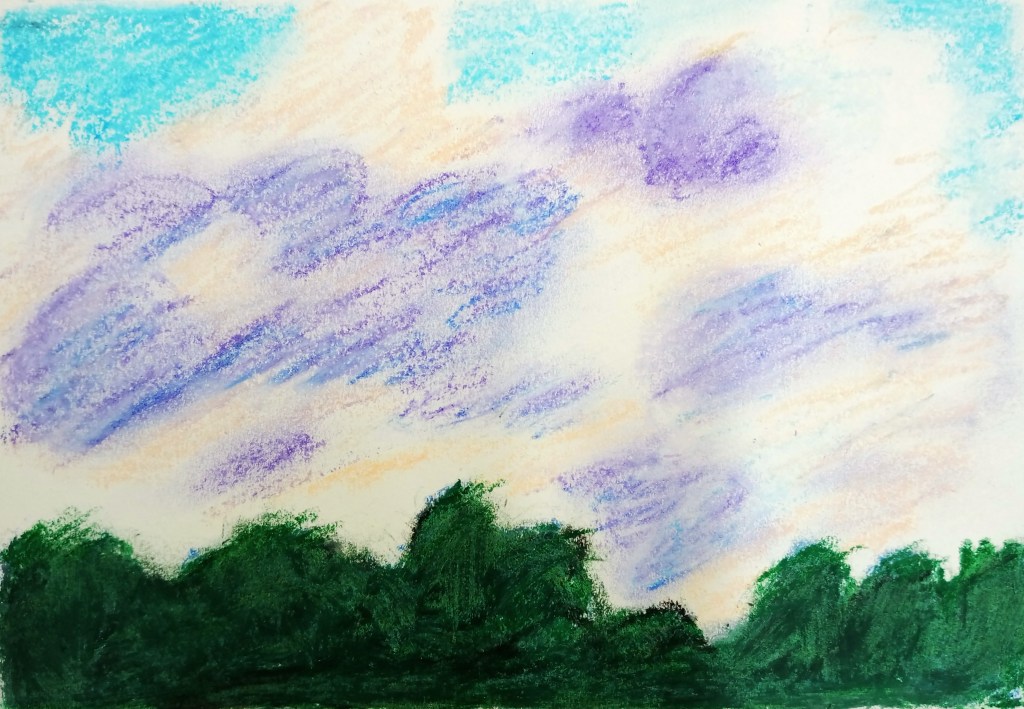
Clouds . Art by Sohana Manzoor
New Rains

My heart dances today — dances like a peacock.
Like the shimmer of its plumes,
My heart glistens with rapturous colours.
When I see the sky, my longing loses itself in euphoria.
My heart dances today — dances like a peacock.

The clouds rumble, rumble high up in the heavens.
The rain rushes in.
The new stalks of rice quiver.
Doves shiver silently in their nests, frogs croak in flooded fields,
The clouds rumble, rumble in the heavens.

I see the clouds’ tear-filled eyes lined, lined with blue kohl.
Ecstasy innervates
The grass and deep shady woods.
The floral bowers bloom with a new zest.
I see the clouds’ tear-filled eyes are lined with blue kohl.

Oh, who has untied her hair in gay abandon, in abandon on the palace's roof?
Who has covered her bosom
In blue, who has come
Back to play with slivers of lightning?
Oh, who has untied her hair in abandon on the palace's roof?

Oh, by the riverbank lined with grass, who sits in dark raiment dripping purity?
The young malati flowers wonder distractedly
As they gaze at the distant skies, where
Does the vessel float as it leaves the ghats?
Oh, by the riverbank lined with grass, who sits in dark raiment?

Oh, who swings today on the lonely swaying bakul branch, swings and sways?
The bakul flutters and falls.
An aanchal* soars to the the sky with yearning,
A lock of hair flies to cover the eyes, the karabi flower drops.
Oh, who swings today on the lonely swaying bakul branch?

In this chaos, who has moored his boat, his new boat by the riverside?
Clumps of cotton-like moss
Fill the watery banks.
The clouds sing soulful songs with tear-filled eyes.
In this chaos, who has moored his new boat by the riverside?

My heart dances today —
Dances like a peacock.
A heavy downpour falls on the new leaves,
The garden quivers with the chirrup of crickets.
The river has crossed the bank and approaches the village.
My heart dances today — dances like a peacock.

*Loose end of a Saree

(This poem has been translated by Mitali Chakravarty)
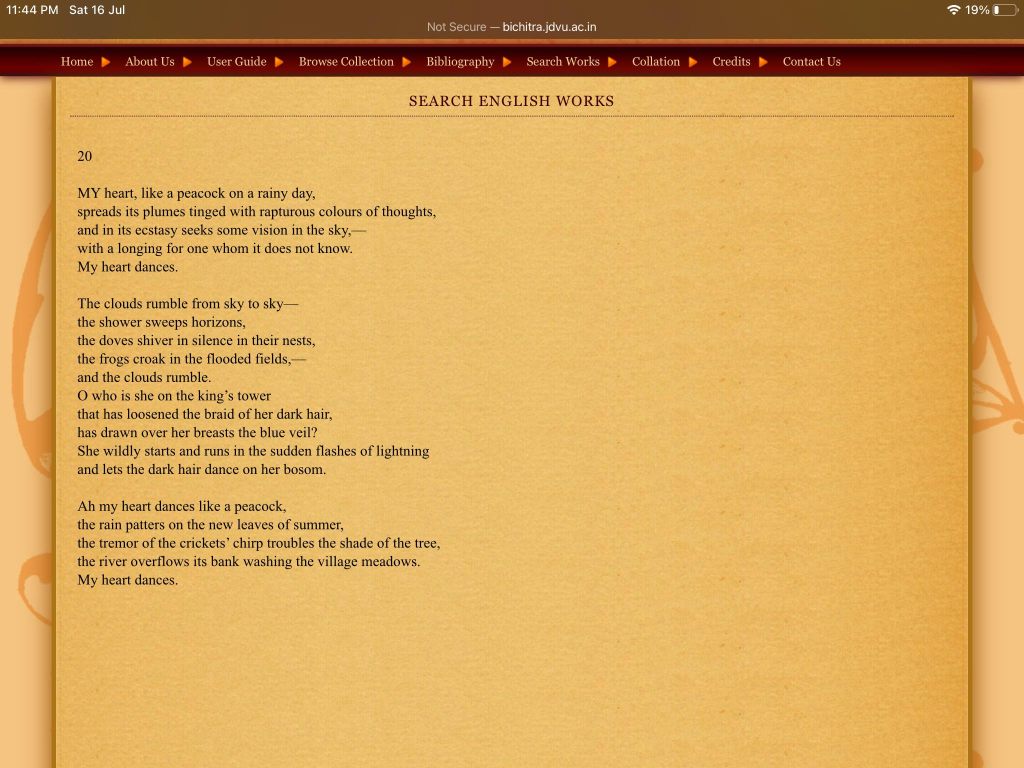
There is also an English translation [1]of the poem by Tagore. The translation is shorter and of twenty lines only as opposed to the 41 lines of the full-length poem. The poet’s translation is a part of Tagore’s Poems edited by Krishna Kripalani, Amiya Chakravarty, Nirmalchandra Chattopadhyay and Pulinbehari Sen ( Calcutta: Visva Bharati, 1942).
Screenshot of Tagore’s own translation from Bichitra Varorium by Anasuya Bhar
The poet’s own translation is sung in the original language it was written in, Bengali. Here we present the song sung by a reputed singer, Srikanto Acharya.
Thanks to Bichitra Varorium, to Anasuya Bhar for her research and editorial advise, Sohana Manzoor for her art and editorial comments. Tagore’s short translation has also been used as a resource for improving the translation of the full-length poem. The translation is by Mitali Chakravarty.
Tagore’s Mono Mor Megher Shongi translated as ‘My Friends, the Clouds’ was first published in the spring of 1939 and is now a part of Gitabitan. It has been translated by Professor Fakrul Alam for us.
Megher Songi or Cloud Companions, Art by Sohana Manzoor
MY FRIENDS, THE CLOUDS

My mind keeps company with clouds
And soars with them in all directions.
To the pitter patter pitter patter of sravan showers,
My mind swerves towards infinite space.
Flying on the wings of swans and cranes,
In startling, dazzling flashes
Accompanied by ringing, clanging sounds of fiery delight,
In murmurings, rumblings and then incessant downpours,
Clouds usher in cataclysmic sounds and sights.
The wind blows from the eastern sea
Making the river water sparkle, surge and ripple.
My mind flows forward overwhelmed with joy,
Past palm trees, groves and forests,
All astir, keyed up, excited!
Here we have the song presented in Bengali by a legendary singer, Hemanta Mukherjee (1920-1989)
Taal Gaach or The Palmyra Tree was published as part of Shishu Bholanath (Child Bholanath) brought out in 1922. The poem has an inbuilt cadence and rhythm that flows like the sway of palmyra (commonly referred to as taal ) leaves in the breeze.
Taal Gaach, painting by Sohana Manzoor
THE PALMYRA TREE

The palmyra towers over all trees
Standing on one foot, it peeps
Into the sky.
It yearns to fly,
Piercing through dark clouds nigh
But where will it find wings?
That is why, it thinks —
Leaves circling its crown
Are wings to float around.
To soar unhindered, free,
Leaving its home, it flees.
The whole day, the foliage rustles,
Murmurs, susurrates and bustles.
The tree imagines its flight,
Drifting past stars in the sky,
Towards a destination up high.
Then the breeze stalls.
The swish of leaves halts.
When it regards the loam
As its mother, its hearth.
It loves again its home,
The nook on Earth.
(This poem has been translated for Borderless Journal by Mitali Chakravarty with editorial comments from Sohana Manzoor and Anasuya Bhar.)
.
PLEASE NOTE: ARTICLES CAN ONLY BE REPRODUCED IN OTHER SITES WITH DUE ACKNOWLEDGEMENT TO BORDERLESS JOURNAL
First published in Shishu (Children) in 1909, Lucko Churi (Hide and Seek) is also a part of Tagore’s collection called Sanchayita. It captures the endearing, playful relationship between a mother and her son as well as the innocence of the child.
          HIDE AND SEEK
In a playful mood, if I were to
      Bloom as a champa flower on a tree,
At dawn, O mother, I would frolic
       Amidst the branches of young leaves.
I would win in this game of hide-and-seek.
         Would you have recognised me?
You would call out, “Khoka, where are you? “
       I would only laugh silently.

When you do your household chores
         I would watch from high above.
After a bath, with your wet hair spread on your shoulder,
          When you would walk under the tree
To go to the prayer room
         While inhaling the perfume of the blooms —
You would wonder how
          Your Khoka’s scent mingles with the breeze!

In the afternoon, after everyone has lunched
            When you relax with a Mahabharat,
The shade of the tree by the windowsill
            Would fall on your back and lap.
My tiny shadow would sway
           On the words of your book.
But you would not know the shadow
      Of your darling wafts before your eyes.

In the evening, after lighting a lamp,
       When you go to the cowshed,
I would finish my game
       And drop down from the tree.
Again, I would be your Khoka.
        I would say,”Tell me a story.”
And you would ask,”Naughty! Where were you?”
      I would reply, “I will not tell you my secret.”
A humorous skit[1] by Rabindranath Tagore, translated by Somdatta Mandal
Hasyakoutuk(1914) or Humour by Tagore, the collection in which this skit was published.
Scene One
The lawyer Dukori Dutta is sitting on a chair.Kangalicharan enters nervously, ledgers in hand.
Dukori: What do you want?
Kangali: Sir, you are a well-wisher of the nation –
Dukori: Everyone knows that. But what do you actually want?
Kangali: You have devoted your life for the welfare of the ordinary man –
Dukori: And I do so while I am carrying on my legal business but what is your point?
Kangali: Sir, actually I don’t have much to say.
Dukori: Then why don’t you finish soon.
Kangali: Think for a while and you’ll have to admit “ganat paratrang nahi”, that is to say, nothing is better than music —
Dukori: Look here, man. Before I admit anything, I need to know the meaning of what you just said. Say it in Bangla.
Kangali: Sir, I don’t know the exact Bangla meaning. But the main idea is that one loves to listen to songs a lot.
Dukori: Everyone doesn’t like them.
Kangali: Anyone who doesn’t like songs must be —
Dukori: Lawyer Dukori Dutta.
Kangali: Sir, don’t say such things.
Dukori: Then should I lie?
Kangali: The sage Bharata is the first Aryan to have…
Dukori: If you have any lawsuits to file against the Sage Bharata then tell me. Otherwise stop giving a speech on him.
Kangali: I had a lot of things to say.
Dukori: But I don’t have the time to listen to a lot of things.
Kangali: Then let me state the case in brief. In this city we’ve established a society called “Gannonati Bidhyaini” – The Society for the Betterment of Music. Sir, we want you —
Dukori: To deliver a lecture?
Kangali: No, Sir.
Dukori: To be the chairman?
Kangali: No, Sir.
Dukori: Then tell me what it is that I have to do. Let me tell you before hand, singing songs and listening to songs – I have done neither previously and will not do either of these things in future.
Kangali: Sir, you won’t have to do either. (Advancing a receipt book) Just some donation–
Dukori: (Startled, gets up) Donation! Good grief! You aren’t an easy man to please. When you came in you appeared to be a good-natured man and came in with an embarrassed face – I thought then that you were in legal trouble. Take your donation booklet immediately or I will file a police case against you for trespassing.
Kangali: Wanted a donation but got a beating! (To himself). But I I’ll teach you a lesson.
Scene Two
Dukori Babu with newspapers in his hand.
Dukori: This is great fun. Someone called Kangali Charan has informed all English and Bengali newspapers that I have donated five thousand rupees to their “Gannonati Bidhayini Society”. What donation, the only thing I didn’t do is throw him out by the collar. In the meantime, I’ve gained a reputation that will be very good for my business. They will also benefit from this. People will think that since they have got five thousand rupees as donation, it will turn out to be a huge meeting. No doubt they will get greater donations from elsewhere. Nevertheless, fortune will surely favour me.
The clerk enters.
Clerk: Sir, have you donated five thousand rupees to “Gannonati Sabha?”
Dukori: (scratching his head and smiling) Well, it is just a story some one has made up. Why do you listen to it? Who told you that I have donated? Suppose I did, so what? Why make a fuss about it?
Clerk: Oh, what humility! Paying five thousand rupees in cash and then trying to conceal the deed is no feat for an ordinary man.
Enter servant.
Servant: Plenty of people have assembled downstairs.
Dukori: (To self) See! In one day, my income has increased. (Gladly) Bring them upstairs one by one – and bring paan leaves and betel nut as well as some tobacco.
The first supplicant enters.
Dukori: (Shifting a seat) Come – be seated. Sir, have some tobacco. Who is there? Hey—could we have some paan.
First Supplicant:(to himself) Really, what an amiable person! If he doesn’t fulfil one’s desires desires, who will?
Dukori: And what could have brought you here?
First Supplicant: Your generosity is famous all over the country.
Dukori: Why listen to such gossip?
First Supplicant: What humility! I had heard about you earlier, but today the difference between sight and sound has been eliminated.
Dukori: (To self) I hope he will come to the point now. Plenty of men are waiting downstairs. (Openly) So, what do you need?
First Supplicant: For the development of the nation, from the heart —
Dukori: Yes, it is good of you to mention the heart.
First Supplicant: That’s right. Great honourable persons like you are India’s —
Dukori: I am agreeing to all that you are saying so why don’t you concede this part to me? And so —
First Supplicant: It’s the habit of people who are full of humility that when it comes to their own virtues –
Dukori: Spare me sir. Come to the point!
First Supplicant: You know, the fact is that day by day our country is regressing —
Dukori: That is because people don’t know how to say things concisely.
First Supplicant: Our once rich and glorious motherland is now mired in poverty.
Dukori: (Like a long-suffering person, covering his head with his hand) Go on.
First Supplicant: Day by day sinking in the well of poverty –
Dukori: (In a pleading tone) Sir, what is the point?
First Supplicant: Then let me tell you the real thing –
Dukori: (Enthusiastically) That’s better.
First Supplicant: The English have been looting us.
Dukori: This is something worth pursuing. Collect proof and I will appeal to the magistrate’s court.
First Supplicant: The magistrates too are sharing the spoils.
Dukori: Then I will lodge an appeal in the court of the District Judge.
First Supplicant: The District Judge is a dacoit.
Dukori: (Surprised) I can’t figure you out.
First Supplicant: Let me tell you, all the money from the country is being sent abroad.
Dukori: That is terrible!
First Supplicant: So, a meeting –
Dukori:(Alarmed) A meeting?
First Supplicant:Yes, see this is the booklet.
Dukori: (Wide-eyed) Booklet?
First Supplicant: Some donation would be –
Dukori: (Jumping up from the bench) Donation! Get out — out — out!
Quickly the table is turned, ink spilled, the first supplicant tries to exit hurriedly, falls down, gets up, chaos ensues.
The Second Supplicant enters.
Dukori: What do you want?
Second Supplicant: Your country-wide munificence —
Dukori: I’ve gone through it all once before. Tell me if you have anything new to say.
Second Supplicant: Your patriotism –
Dukori: Good lord! He seems to be saying exactly the same things!
Second Supplicant: Your virtuous acts for the motherland –
Dukori: This is too much! Come straight to the point!
Second Supplicant: A meeting.
Dukori: What? Another meeting?
Second Supplicant: Here, see this booklet.
Dukori: Booklet? What booklet?
Second Supplicant: To collect donations.
Dukori: Donations! (Pulls his hand) Get up, get out, out – if you love your life —
The man leaves without saying anything else
Enter third supplicant.
Dukori: Look, here. Appeals to my patriotism, generosity, politeness – all these have been exhausted. Try something else.
Third Supplicant: Your openness, philanthropy, and liberal views –
Dukori: That’s somewhat better. At least he’s saying something new. But sir, leave all those things and start our discourse.
Third Supplicant: We have a library –
Dukori: Library? Not a society?
Third Supplicant: No sir, no society.
Dukori: Oh! I’m relieved. Library! Excellent. Go on.
Third Supplicant: Here, see the prospectus.
Dukori: Sure this isn’t a subscription booklet?
Third Supplicant: No sir, not at all. Merely printed leaflets.
Dukori: Oh! What next?
Third Supplicant: Some donation.
Dukori: (Jumping up) Donation! Who’s there? There’s a dacoit in my house today. Policeman! Policeman!
The third supplicant escapes as fast he can. Enter Harashankar Babu.
Dukori: Come in, come in, Harashankar. I remember our college days. But we haven’t met since then. You don’t know how happy I am feeling after seeing you.
Harashankar: I too have a lot of pleasant and unpleasant things to share with you. But I will do those things later. First let us finish a piece of business.
Dukori: (Excited) I haven’t heard anyone talk to me about business for a while now, brother. Tell me, tell me so that I can fill my ears with business talk. (Harashankar takes out a booklet from under his shawl). Oh, what is that? I see a booklet coming out!
Harashankar: The boys in my locality have decided to hold a meeting –
Dukori: (Startled) Meeting?
Harashankar: Yes, sort of. So, for some donation –
Dukori: Donation! See I have loved you for a long time now but if you utter that word in my presence, we will become enemies for ever.
Harashankar: Is that so! You can donate five thousand rupees to some “Gannonnati Sabha” of Khargachia but cannot sign a cheque of five rupees at the request of your friend? One must be a heartless person to step in here to seek your company!
Exits with great speed. A man enters, notebook in hand.
Dukori: Notebook? Bringing a notebook to me yet again? Get lost, will you?
The Man: (Scared) I’ve come from Nandalal Babu —
Dukori: I don’t care for Nandalal or anyone else. Leave immediately.
The Man: Sir, what about giving some money—
Dukori: I won’t pay you any money. Get lost.
The man runs away
Clerk: Sir, what have you done? He was trying to return the money Nandalal Babu owed you. We need to get the money back today. We can’t do without it.
Dukori: Good grief! Go and call him back.
The clerk goes out and comes back a little later
Clerk: He’s gone. I couldn’t find him anywhere.
Dukori: This is a problem indeed.
A man enters with a mandolin in hand.
Dukori: What do you want?
The man: We need connoisseurs of music like you. What haven’t you done for the advancement of music! I will sing a song for you.
He starts playing his mandolin immediately and sings a song set to the tune of Raga Iman Kalyan.
Glory be to Dukori Dutta
In the world his munificence saw…etc etc.
Dukori: What nonsense! Stop, stop.
Enter a second man with a mandolin in hand.
Second man: Sir, what does he know of music? Listen to my song:
Dukori Dutta you’re a blessed man
Whoever knows your greatness can…
First man: Glory – g—l—o—r—y
Second man: D—u—u—u—u—kori—i—i
First man: Duk—o—o—o—
Dukori:(With fingers in his ears) Oh my god! I can’t take it anymore!
A man enters, tabla in hand.
Player: Sir, a song without a musical accompaniment? How can that be?
He begins playing. A second player enters.
2nd player: What does he know of accompaniment? He cannot even hold the tabla correctly.
1st singer: Stop.
2nd singer: Why don’t you stop!
1st singer: What do you know about singing?
2nd singer: What do you know?
The two start arguing about the scales and rhythm of music. Then they fight with their mandolins.
The two players start bandying the beats used in tablas such as “dhekete didhey ghene gedhe ghene.” The contest climaxes with a tabla fight.
Enter a group of singers and some more men with donation booklets in hand.
1st person: Sir, song –
2nd person: Sir, donation –
3rd person: Sir, meeting –
4th person: Your benevolence –
5th person: A khayal in Raga Iman Kalyan –
6th person: For the welfare of the country –
7th person: A tappa song by Sari Miyan—
8th person: Shut up, shut up!
9th person: Please stop, brother. Let me finish my words.
Everyone starts pulling Dukori’s shawl and shouts of “Sir, listen to me, Sir, listen to my words” can be heard etc.
Dukori: (ina voice admitting defeat) I am going to my uncle’s place. I will stay there for a while. Don’t give my address to anybody.
Exit.
The brawl between the singers and the musicians continues in the house for the whole day. In the evening the clerk tries to stop the quarrel, gets injured, and collapses.
[1] [Translated by Somdatta Mandal from “Kshatir Birambana” B.S. Magh 1292].
Somdatta Mandalis a former Professor of English and ex-Chairperson, Department of English, Visva-Bharati, Santiniketan, India. A recipient of several prestigious fellowships like the Fulbright Research and Teaching Fellowships, British Council Charles Wallace Trust Fellowship, Rockefeller Residency at Bellagio, Italy, Salzburg Seminar and Shastri Indo-Canadian Faculty Enrichment Fellowship, she has been published widely both nationally and internationally. She has also an award from Sahitya Akademi for the All India Indian Literature Golden Jubilee (1957-2007) Literary Translation Competition in the Fiction category for translating short stories series ‘Lalu’ by Sarat Chandra Chattopadhyaya.
.
PLEASE NOTE: ARTICLES CAN ONLY BE REPRODUCED IN OTHER SITES WITH DUE ACKNOWLEDGEMENT TO BORDERLESS JOURNAL
Rabindranath’sOikotan (Harmonising) was first published in 1941. It has been translated by Professor Fakrul Alam specially to commemorate Tagore’s Birth Anniversary.
HARMONISING

How little I know of this immense world,
Of its countless countries, cities, capitals,
And the never-ending deeds of its peoples
As well as its rivers, hills, deserts and seas
And innumerable animals and strange trees—
So many things fated to be forever unknown
Such a vast assemblage
And yet my mind has to be content with only a corner!
Frustrated, I read as many books and travel tales as I can
With boundless enthusiasm.
I pick up too vividly written accounts I come across
With never-diminishing eagerness,
Satiating my knowledge deficit
With treasures I’ll gather by scavenging for them!

I am the world’s poet. Whatever of its sounds I hear
I try to reverberate in my flute later
But though this may be my intent
Many of earth’s notes still elude me
For despite my efforts, gaps remain!
I intuit earth’s amazing harmonies
Through leaps of my imagination
On many an occasion intense silence fills my soul
Notes sounding across remote snowy mountains
And the azure stillness of the sky too
Invite me to commune with them again and again!
The unknown star at the apex of the south pole
Reigning illustriously	through long nights
Illuminates my sleepless eyes on midnights.
Distant waterfalls cascading down
With immense force, flooding everything in sight,
Transmit their harmonies to the innermost me.
I connect intuitively as well with poets everywhere
Contributing to nature’s harmonies
All keep me company and give me immense delight
I receive offerings of lyric notes from the muse of songs
As well as intimations of the music of the spheres.

The outside world can’t fathom fully
The most inaccessible of being residing in us
For He is in our innermost part
And only when one enters it
One gets to know the Being who is truly Him
But I can’t find the door with which to enter there
Since I’ve erected fences in pathways everywhere!
Farmer who keep tilling the soil
Weavers threading yarn and fishermen casting nets—
Varied professions having far-reaching impact
On them all depend whole families and lifestyles.
But the honour due to them is confined
To people of the top tiers of the society I live in
We can only peep at them from narrow openings!
At times I’d take paths fronting their neighbourhoods
But never ever was resolute enough to enter inside!
If one can’t connect one’s life with another’s though
The songs one composes can become cumbersome
And so, I concede to charges levelled against me
And admit my own songs’ limitations.
I know my verses may have traversed varied paths
But they haven’t reached everywhere!
The one who can share a peasant’s life
And whose words and deeds are kins
Is the one who is truly close to the soil
And I’m all ears to listen to that kind of poet.
I may not have created a feast of literary delights
Yet, what I couldn’t attain I keep questing for
Let what I discover ring true
And let me not mislead others’ eyes with fakery
It’s not right to earn fame without paying its true price
It isn’t right at all to indulge in any kind of foppery!

Come poet, retrieve as many as you can
Of those voiceless ones whose minds are unheard
And relieve those nurturing deep hurt inside
In this land lacking spirit
Bereft of songs being sung on any side,
A land which has become an arid desert
For want of joy and the strain created by neglect
Fill with the essence of everything beautiful
And untie the spirit residing in one’s innermost being
 In literary festivals and musical concerts organised,
Let those playing the one-stringed ektara be duly feted.
And the muted ones who can’t express either joy or sorrow
And those whose heads are bowed and voices silent
While facing the world—
Oh gifted one,
Let me hear them all—near or far
Let them partake of your fame
As for me—
Again and again, I’ll pay homage to you



 Borderless