Categories
Interview Review

Unveiling Afghanistan: In Conversation with Nazes Afroz

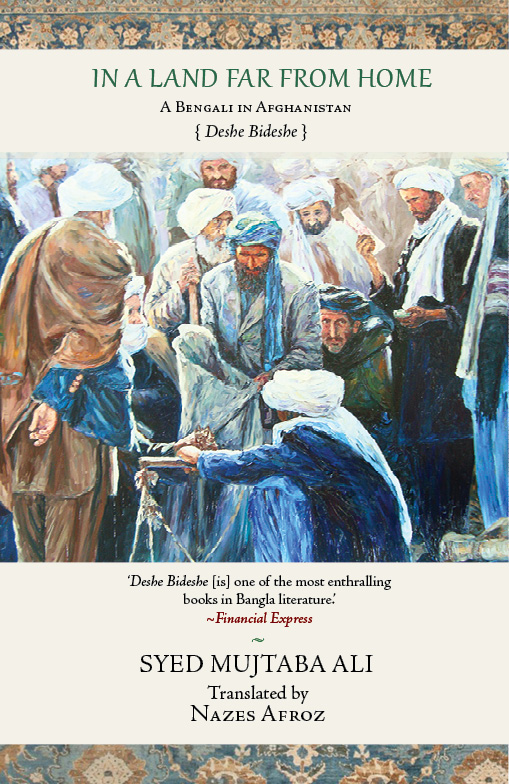
 Cry, My Beloved Country (1948) reflected the plight of Africans and the deep divides that created schisms between different groups in South Africa. The book won the author, Alan Paton, a Nobel prize. Another remarkable book that was published in the same year was a non-fiction written by a student of Tagore called Syed Mujtaba Ali. Mujtaba Ali wrote Deshe Bideshe in Bengali. This has been translated in recent times by the former BBC editor, Nazes Afroz, as In a Land Far from Home: A Bengali in Afghanistan. It is an outstanding memoir that demystifies and explains what led to the issues that are being faced by a country repeatedly jostled by varied regimes, a country that seems to be so steeped in problems that worrying about the pandemic remains a far cry for the common inhabitants.
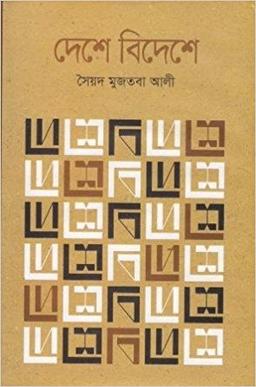
For many decades this book had been feted by only a small group of readers, though the book is no lesser than Paton’s in crying out against injustices, terrors of violence and starvation, because it was written in Bengali. It was so witty and flavourful that people were afraid to translate it for the fear of losing the nuances of the original. As Afroz tells us in this interview, he had similar reservations. A book written by a scholar, it peppers history and political issues with lucidity and humour, making it an enjoyable experience for the lay reader. The author has a way of turning the mundane or intellectual into an amusing anecdote. During a conversation at an embassy party, the author through the voice of a fellow professor, makes a hilarious observation – but also, one that does convey much about Afghanistan despite its attempts at liberalisation.

Madame Vorvechievichi argued, ‘But there are mullahs in this country.’

“Dost Muhammad said reassuringly, ‘No need to worry, Madame. I know these mullahs very well. Their knowledge of religion is very little and I can teach you all of it in three days. However, a woman can’t be a mullah.’

Madame Vorvechievichi said angrily, ‘Why not?’

“With a deep sigh Dost Muhammad said, ‘Because she can’t grow a beard.’”

The book is speckled with multiple such instances. Along with these witticisms, the pathos of the country, the plight of the people is well captured by poignant observations:

“The real history of the country was buried beneath the soil, much like the way that Indian history was hidden in its Puranas, Mahabharata-Ramayana. Afghanistan is a poor country; Afghans do not have the time or the resources for archaeological excavations to write their own history.”

The writer, Syed Mujtaba Ali (1904-1974) a polyglot, scholar, traveller and humanitarian did just that – he recorded the history of the time he spent in Afghanistan, a time when a swift takeover from the liberal king Amanullah (1892-1960) was staged by Bacha-ye-Saqao (1891-1929) during the Afghan Civil War (1928-29).  Does this sound familiar, reminding one of the recent August 2021 takeover by Taliban?

A Humboldt scholar, Mujtaba Ali was conversant in fourteen languages, lived in five countries, including Afghanistan, where he had gone to teach. That his erudition never interfered but enhanced without marring the simplicity of rendition is what makes the book an attractive read for all lay persons. His astute observations are laced with wit and realism. The residue of the book lingers as the vibrant narrative flows — vicariously bringing to life, with humour and empathy, a culture that is distinct and yet warm in its uniqueness. His style is reflective of an in depth understanding of the situation and a sense of empathy for the common people with who he interacted daily – like his man Friday and the colleagues he mentions. For the author, everyone, from an uneducated villager to the crown prince (who invited him to play tennis), seemed to grow effortlessly into a rounded persona of a friend. All these have been transmitted by Afroz in the translation too. Translating two cultures across borders in a language that does not have all the words to capture the intimate nuances is not an easy feat, but it has fruited into an unusual and captivating read.
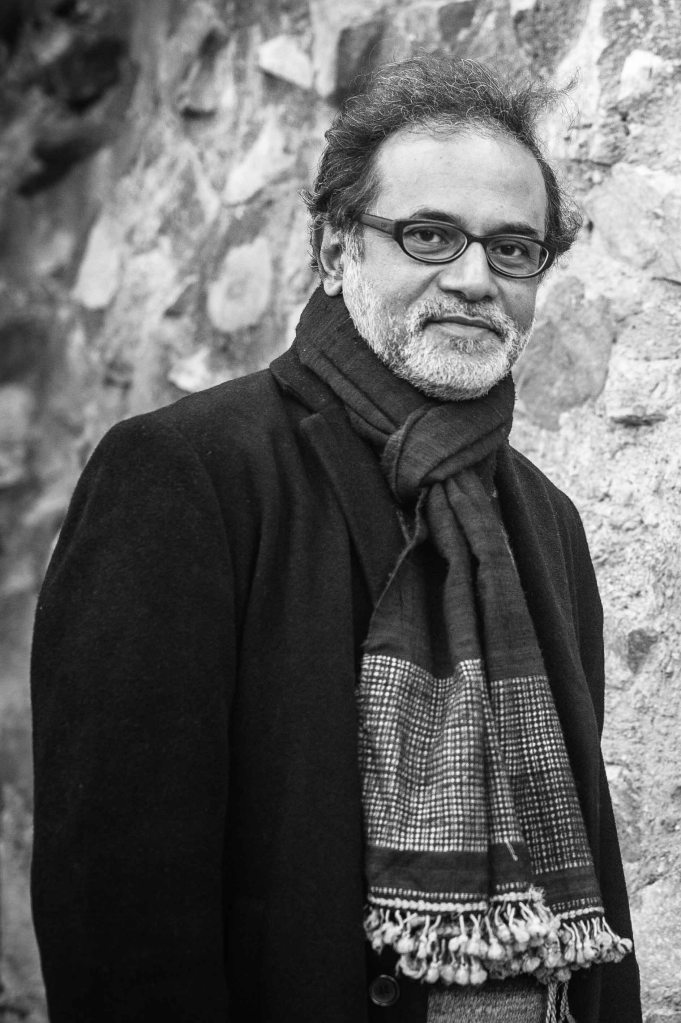
Nazes Afroz

Afroz’s maiden venture at translation was shortlisted for the Raymond Crossword Book Award. Afroz himself has spent a long stretch of time in Afghanistan. He joined the BBC in London in 1998. He was a senior editor in charge of South and Central Asia for a number of years. He has visited Afghanistan, Central Asia and West Asia regularly for over a decade. In 2013, he moved back to India. A passionate photographer, he writes in English and Bengali for various newspapers and magazines. In recent articles, he has been voicing his own concerns about developments in Afghanistan. In this interview, he reflects on what led him to translate the book, the situation as it was then and as it is now.  He dwells not only on the historic civil war as captured in the book but also on current day politics and the Taliban takeover.

You are a journalist. What got you interested in translating a Bengali classic from the last century?

I became a journalist five years after I read Deshe Bideshe. I was still a teenager when I picked up the book from a library rack. Reading Mujtaba Ali at that age had a profound impact on me. The erudition, the smooth sailing between multitude of cultures and languages, the gripping storytelling in his writing mesmerised me. I had never read anything like that in Bangla. Every Bengali reader of Syed Mujtaba Ali had felt the same way as I did. As a child I had the uncontrollable urge for travels and seeing the world. In Mujtaba Ali I found a role model. Deshe Bideshe stayed with me since then. It was one book that I would read two to three times a year from my teenage. So, by the time I decided to translate Deshe Bideshe more than thirty years after I first laid my hands on the book, I had read it for more than a hundred times! I knew its each page, I knew its each story and Afghanistan had seeped inside me permanently as I could relate to all the characters of the book.

While working for the BBC World Service in London, I had the opportunity to go to Afghanistan in 2002 soon after the Taliban were dislodged from power in a short war towards the end of 2001. I visited the country a number of the times in the following few years. As I travelled more, I befriended my BBC colleagues there and met other journalists and people on various walks of life. Some of them became good friends as well. I used to refer to events from the times of King Amanullah while discussing Afghanistan. They were surprised to hear all the details that I mentioned from a time that they said, ‘Even we don’t know!’ So, I mentioned how a Bengali scholar came from Kolkata to Kabul in 1927 and taught here, was a participant of the modernisation project of Amanullah by teaching English and French, played tennis with the crown prince Inyatullah (1888-1946) became an eyewitness of the rebellion against the king, got caught in the anarchy in the winters of 1928-29, and nearly perished starving before managing to go back to India. Hearing my story, they asked if there was any English translation of the book as they were keen to read. I told them that there was none as it was untranslatable!

As years went by and more and more of my Afghan friends got to know about Deshe Bideshe, they demanded that I did the translation. But I had my doubts. Would I be able to capture Mujtaba Ali’s unique language? Would I be able to transpose his wicked sense of humour? Would I be able to convey his erudition?

Eventually in 2011, I had already made up my mind to quit the BBC and move back to India. At that point my day-to-day workload in the BBC was significantly reduced. As I had ample time in hand, I thought I would attempt the translation. At that point I didn’t think of any publication; I wanted to do it just for fun and for my Afghan and non-Afghan friends who knew about the book and were keen to read it. I thought I would give them a taste of Mujtaba Ali’s writing by doing a few chapters. So, I did the first few chapters and shared them with a few friends. After reading those chapters they wanted to read more. I felt encouraged and I carried on with the translation for the following few months. Eventually the whole book was complete in about a year. After completing the translation, I let it sit for a few months before picking it up again and reread it as new text without looking at the original text. That exercise went on several times over the following one year till the final manuscript shaped up.

How many countries have you worked from? You were also in Afghanistan for several years I believe. Can you share your experiences?

My work has taken me to a dozen country or so. But as an intrepid traveller, I have visited more than 40 countries so far across four continents. Apart from my regular visits to Afghanistan, I spent months at a stretch on several occasions. Working in Afghanistan was certainly a unique experience. It wasn’t a country where one could travel and roam around freely. There were always the security alerts. One needed to negotiate security barriers everywhere. The accommodations – hotels, guesthouses were guarded by armed men. In the early years – in 2002 to 2004, there weren’t so much security in the hotels or guesthouses we stayed in. But that started to change from 2010 onwards as the Taliban had at that time started to regroup, and they made their presence felt in the country and in Kabul. Even at that time, cities like Mazar-e-Sharif and Herat were considered lot safer than Kabul. With increased and unpredictable attacks by the Taliban, the country became more and more edgy.

What was it about the book that drew you to it?

As I mentioned earlier, the uniqueness of Mujtaba Ali was that his erudition wasn’t frightening. He penned Deshe Bideshe almost twenty years after he left Kabul. By then, he had completed his PhD in comparative religion from Germany as a Humboldt scholar, did his post-doctoral research from al-Azhar university in Cairo, learned more than a dozen languages, and travelled extensively in Europe. So, even though his narrative of Afghanistan was drawn from what he had witnessed in his mid-twenties while teaching there, when he decided to write the book, he had acquired profound knowledge in philosophy, literature, culture and history of the world in many languages. The multilingual and multicultural references with an oblique yet gripping story-telling style infused with a wicked sense of humour that came in his writing, had been drawing ardent followers, including me, since 1948 when Deshe Bideshe was first published.

The book highlighted a growing divide between the minority with liberal education and the majority without education. Is that true still? Would you call the book relevant to the present-day crisis?

Yes, that divide between the educated and the not educated that Mujtaba Ali elicited in Deshe Bideshe is still there. But the gap has certainly reduced. The years between 1929 to 1978 had been relatively stable and peaceful in Afghanistan. Modern education had spread but without giving a jolt to the conservative society and keeping the clergy more or less content. In Kabul and other major cities, girls and women were getting more and more education; they were also seen in public life more. Following the coup through which the communists – the People’s Democratic Party of Afghanistan or PDPA came to power in 1978, there was a big push for universal education. This created a much bigger educated class. Women were the biggest beneficiary of that time in terms of acquiring knowledge and finding jobs. Women were joining the police and military as well. Following the capitulation of the PDPA government in 1992, the modern education system collapsed during the Mujahideen civil war years until 1996 and then after the takeover of virtually the whole of the country by the Taliban.
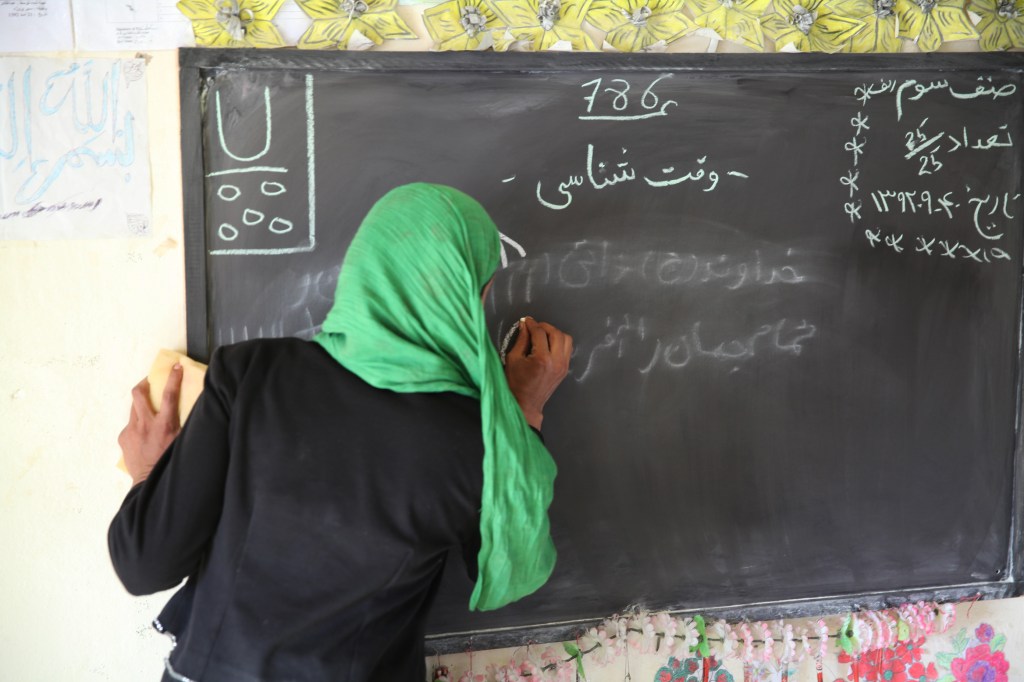
A large number of Afghans – almost a quarter of the population became refugees in neighbouring countries or elsewhere. When the American led international forces ousted the Taliban from power in 2001 following the 9/11 attacks in the USA, the population got a fresh chance to get education. Schools opened again. Both girls and boys went back to school. Internationally there were many programmes to give scholarships to Afghan women and men who were seeking higher education. As a country with a very young population (the average age of Afghanis is 18), a large number of students joined the public and private universities. So, tens of thousands of young women and men are now educated holding masters or even PhD degrees in the country. But the rural areas lagged behind. So, the gap is more of the city and rural areas.

Do you find similarities between the Afghanistan of then and of now?

The way the Afghan society works, based on its ethnic and tribal identities as witnessed by Mujtaba Ali, still exist. The stranglehold that the clergy had on the uneducated mass about a century ago has possibly changed; it’s been replaced with more political interpretation of their religion. The ethnic divisions have sharpened for multitude reasons – primarily due to the outside interference and the way ethnic groups have been used in the larger geo-political game of the world powers.

One of the issues that tussles through the book is that people were basically poor and lacked education. Syed Mustaba Ali spoke of the vicious cycles of poverty, how much has it changed from what he wrote and what you experienced? Please elaborate.

Mujtaba Ali talked about how poverty contributed to the cycle of unrest in Afghan history. Yes, that poverty still exists but with that, a toxic potion of religio-politics has been added to the cauldron. The conflict of the past four decades is more due to the global religio-political dynamics rather that its own poverty.

Did/ do you find parallels in the political situation where Amanullah and his brother escaped from the invading hardliner, Bacha-ye-Saqao? Would you see Bacha as a precursor of Taliban?

The only parallel that one can draw between 1929 when Amanullah and his brother Inayetullah fled and now in 2021 is that the suddenness of the events. Amanullah’s fall happened in months and Bacha took over Kabul in matter of days – almost the same way the Taliban took control of the country.

I don’t think Bacha-ye-Saqao or Habibullah Kalakani as he called himself, was a precursor of the Taliban. Bacha was more of an opportunist; he grabbed the opportunity that came his way. But the Taliban are more of an organised religio-political force what was the product of the geo-politics of the last decade of the Cold War. So, they two are not comparable.

Did the American or Russian intrusions into Afghanistan serve any purpose? Did they actually help the Afghans?

The short answer is no. Both the superpowers came to achieve their own strategic and foreign policy objectives. The Soviets came to expand their sphere of influence beyond their borders in Central Asia. In the process they were badly bruised and had to retreat. The Americans came to get hold of Osama-bin-Laden and dismantle the al-Qaeda infrastructure. It was never about helping a nation that had been devastated by decades of conflict in which they had no role. They just became pawns in the greater game of geopolitics.

By the descriptions in the book, Afghans seem to be fairly open as humans and yet, they have a distinct identity borne of their culture, their ethos — very different from any other. Was that undermined in any way by the attempts at modernisation?

Like many other rural, traditional and old societies, Afghans are hospitable and warm people. They are bound and governed by their age-old custom and codes of conduct.

Even when they are outside of their own land – in the West too, they extend their hospitality to strangers the same way they would in their own country and their behaviour would not differ much. It is not the question, if modernisation has or will undermine their tradition. They have had encounters with modernisation – the way modernisation is understood from the Western prism. Did that change the people who had experienced that modernisation in the time of Amanullah? Mujtaba Ali saw that the ‘so called’ modern people did not lose their Afghan-ness. The same can be said now. As a people they have largely remained unchanged despite connecting with the outside world like never before.

In the book, the international community was practically chased off Afghanistan. As the US troops left, one felt the same way. Do you feel intervention from the international community is necessary in Afghanistan? Why?

The backdrops of 1929 and the present are not identical. In 1929, the rebellion was against the king who had lost the support of the clergy. The king did not come to power with foreign intervention. So, the international community was not chased out in 1929. The Europeans left because of the chaos and the violence. The rebels didn’t fight with the foreigners. Yes, there was an armed opposition to the presence of the USA since the war in 2001, but that opposition wasn’t big enough to send the USA packing.

The USA left because they had achieved their goals in Afghanistan, and it was becoming hugely expensive for them to stay on. Many are also drawing parallels of the US’s departure from Afghanistan with their hasty retreat from Vietnam in 1975. But they were again not identical. In Vietnam, the USA visibly lost the war. But in Afghanistan they did not lose. They could have stayed on if they wanted but it made no sense to them to spend tens of billions of dollars each year. Hence, they left. They had been talking about withdrawing from Afghanistan since 2012, a year after they killed Osama bin Laden in Pakistan.

The intervention that the Afghans had been experiencing since 1979 – first by the Soviets, then Pakistan and finally the US led Western nations, devastated the country and the ordinary Afghans had been paying for it with all they had. No external intervention is beneficial for any country. It’s not desirable to have; certainly not the way the global powers had been intervening for the past 40 odd years in various corners of the world. But the question is, if unspeakable atrocities are committed on certain sections of a country or society, what does the international community do? Should the international community intervene? The world powers have unfortunately always used these as pretexts to intervene to further and achieve their own objectives not only in Afghanistan but in other countries too.

In the book, only foreigners with work seemed to be in Afghanistan. Is/ Was it possible for tourists to visit Afghanistan, even before the Taliban took over?

In the last twenty years, Afghanistan had been unstable. Violent incidents kept happening. So, it was not advisable for tourist to go there. But the country always issued tourist visa for short visits! For a few years, Japanese tourist used to come to visit the ancient Buddhist sites like Bamiyan. That too waned due to the escalating conflict.

Thank you for this wonderful interview and also for the flawless translation of a classic memoir.

Click here to read a book excerpt from In a Land Far from Home: A Bengali in Afghanistan.

(This is an online interview/review by Mitali Chakravarty.)

PLEASE NOTE: ARTICLES CAN ONLY BE REPRODUCED IN OTHER SITES WITH DUE ACKNOWLEDGEMENT TO BORDERLESS JOURNAL

Categories
Excerpt

In a Land Far From Home: A Bengali in Afghanistan

Title: In a Land Far From Home: A Bengali in Afghanistan

Author: Syed Mujtaba Ali

Translator: Nazes Afroz

Publisher: Speaking Tiger Books

Over the noise, you could hear the shout that ‘Bacha-e- Saqao is coming, Bacha-e-Saqao has arrived.’ Then we heard the bang of a rifle and the crowd lost all sense of reason. Throwing aside everything they were carrying, people started running for their lives, some landed in the roadside ditch, some slipped time and again while trying to run over the ice on the Kabul river. The blind beggar who used to sit by the road, stood up trying to find his way with his hands in the air.

I somehow managed to leave the road, crossed the ditch and stood on the front porch of a shop. I decided that I would rather die from the bullet on which my name was written rather than be trampled by mad horses or in the stampede of the crowd.

Within a minute another man appeared and stood next to me. An Italian colonello or colonel, aged about sixty, with a long corrugated beard.

He was the first person whom I could ask something cogently. I said to him, ‘I heard that the bandit leader Bacha-e-Saqao was coming to fight for Amanullah. But what is really happening?’

The colonello said, ‘Seems like wrong news. He’s coming to take over the city.’

If that was the case, then why were Amanullah’s soldiers not going to the north of the city to fight him? How did Bacha-e-Saqao arrive in Kabul so suddenly? How many men did he have? Were they carrying only rifles or did they have cannons? The colonello could not answer these questions; he only kept saying, ‘What an odd experience!’

I said, ‘I can understand why the ordinary Kabulis are afraid, but why have the foreigners joined them? Where are they going?’

The colonello replied, ‘To their own embassies or legations—for shelter.’

The sound of rifle shots was drawing closer. By then the crowd was moving in waves rather than in a stream. In between two such waves I told the colonello, ‘Let’s go home.’ He said he would not leave without seeing the last act. Military whim—there was no point in arguing.

Abdur Rahman was waiting for me at the door. His worries disappeared at the sight of me. As soon as I entered the house, he closed the door and started to fortify it with heavy rocks. Intelligent man. He had made all the arrangements for fortification when I was out. I asked, ‘Where is Benoit?’ Abdur Rahman informed me that Benoit had left for the French Legation in a tonga carrying only one suitcase.

By that time the sound of the gunfire had been overpowered by the heavy sound of machine guns. Abdur Rahman brought tea. Listening to the sounds carefully, he said, ‘The king’s soldiers have now attacked. From where would Bacha have gotten hold of machine guns?’

I asked him, ‘The king’s soldiers are facing Bacha this late? How could he reach Kabul so easily?’

Abdur Rahman said, ‘I asked many people while waiting for you at the door, but nobody could say anything clearly. It seems he has arrived without any resistance. He comes from the north of the country; my place is also in the north—Panjshir. I would have got some news of troop mobilisation in that region from my fellow Panjshiris in the bazaar, but there was none. The king’s troops have gone to the east under the command of Ali Ahmad Khan to fight the Shinwaris.’

The exchange of fire continued. Abdur Rahman served me dinner early that evening and then he sat down to tend to the fire in the fireplace. From our chat I could make out that he was worried about my well-being in case Bacha won, which would be followed by anarchy and looting. But clearly he was highly excited and curious—much like a small child when the circus came to town.

But who was this Bacha-e-Saqao? I did not have to ask Abdur Rahman, he told me many stories about him of his own accord. I realised that Abdur Rahman had many qualities—a jeweller of snow, a doctor of frostbite, chef-decuisine—but he certainly was no Boswell. You could have constructed an image of a Robin Hood from what he said about Bacha, but much of it was certainly a figment of imagination and myth.

After filtering through all the stories carefully, I had a glimpse of the life of Bacha; he was the leader of a gang of about three hundred bandits; lived in Kohistan, north of Kabul; he looted the rich and distributed a portion of his booty to the poor. When Amanullah was away in Europe, he became so powerful that he started to collect tax from the traders of Kohistan. After coming back, Amanullah proclaimed a price on his head, ‘Five hundred rupees reward on the head of bandit Bacha-e-Saqao.’ Bacha removed all the posters and put up his own proclamation, ‘One thousand rupees reward on the head of Kafir Amanullah.’

Abdur Rahman asked me, ‘But Sahib, help me solve a riddle. The colonel’s son asked me, if I cut off Bacha’s head and my brother cuts off Amanullah’s, then how much money would we make together? I said, one and a half thousand. He nearly rolled on the floor with laughter; he said, “You won’t get a penny.” Please Sahib, explain why wouldn’t we get any money?’

I consoled him, ‘Because neither of them will be alive to give you the rewards. But you can tell the colonel’s son that the throne of Afghanistan will then be bestowed upon your family.’

I had also heard that only a few days earlier Bacha suddenly turned up in front of some high-ranking officials and swore his allegiance to the king in the fights against the Shinwaris by touching the Koran. By doing so he managed to get hold of about a hundred rifles and then disappeared.

Did he turn those rifles against Amanullah?

About the Book

An intrepid traveller and a true cosmopolitan, the legendary Bengali writer Syed Mujtaba Ali from Sylhet (in erstwhile East Bengal, now Bangladesh) spent a year and a half teaching in Kabul from 1927 to 1929. Drawing on this experience, he later wrote Deshe Bideshe which was published in 1948. Ali’s young mind was curious to explore the Afghan society of the time and, with his impressive language skills, he had access to a cross-section of Kabul’s population, whose ideas and experiences he chronicles with a keen eye and a wicked sense of humour. His account provides a fascinating first-hand insight into events at a critical point in Afghanistan’s history, when the reformist King Amanullah tried to steer his country towards modernity by encouraging education for girls and giving them the choice of removing the burqa. Branded a ‘kafir’, Amanullah was overthrown by the bandit leader Bacha-e-Saqao. Deshe Bideshe is the only published eyewitness account of that tumultuous period by a non-Afghan, brought to life by the contact that Ali enjoyed with a colourful cast of characters at all levels of society—from the garrulous Pathan Dost Muhammed and the gentle Russian giant Bolshov, to his servant, Abdur Rahman and his partner in tennis, the Crown Prince Enayatullah.

About the Author

Born in 1904, Syed Mujtaba Ali was a prominent literary figure in Bengali literature. A polyglot, a scholar of Islamic studies and a traveller, Mujtaba Ali taught in Baroda and at Visva-Bharati University in Shantiniketan. Deshe Bideshe was his first published book (1948). By the time he died in 1974, he had more than two dozen books—fiction and non-fiction—to his credit.

About the Translator

A journalist for over three decades, Nazes Afroz has worked in both print and broadcasting in Kolkata and in London. He joined the BBC in London in 1998 and spent close to fifteen years with the organisation. As a senior editor in the BBC, Nazes was in charge of South and Central Asia for a number of years. He has visited Afghanistan, Central Asia and West Asia regularly for over a decade. A passionate photographer and a compulsive traveller, Nazes quit his job in the BBC and moved back to India in 2013 where he is based in Delhi. Currently he writes in English and Bengali for various newspapers and magazines and is working on a few photography projects.

(Excerpted from In a Land Far From Home: A Bengali in Afghanistan by Syed Mujtaba Ali, translated by Nazes Afroz. Published by Speaking Tiger Books)

Click here to read the review / interview with the translator

.

PLEASE NOTE: ARTICLES CAN ONLY BE REPRODUCED IN OTHER SITES WITH DUE ACKNOWLEDGEMENT TO BORDERLESS JOURNAL
Categories
Review

A Taste of Time

Book Review by Bhaskar Parichha

 Title: A Taste of Time: A Food History of Calcutta
Author: Mohona Kanjilal
Publisher: Speaking Tiger, 2021

To say that this is a rattling book on the food culture of Kolkata will be an understatement. Indeed, there couldn’t have been a better book than this on the food history of the City of Joy. In the thriving universe of Indian food books, this clearly stands out.

A Taste of Time–A Food History of Calcutta by Mohona Kanjilal goes the whole hog in digging out the culinary history of Kolkata with every minute detail. The book is massive and gorgeous.

An alumnus of Loreto College, Kanjilal spent most of her childhood in Bengaluru. From a freelance journalist to a full-time writer, newspapers have been her invariable guidance. She dabbles in short stories, too.

Says the blurb: “Calcutta, once the nucleus of the Raj, was at the heart of a thriving economy and unparalleled administration. Over the centuries, this teeming, cosmopolitan metropolis has become home to people from various communities who have lent its food and culture their distinctive tastes and culinary rituals. The heady romance of palates and flavours in the ‘Royal Capital’ has fostered diversity in food and culture all the while adhering to the city’s Bengali roots.”

Divided into four sections and about a dozen chapters, Kanjilal brings to the platter a full account of the food culture of Kolkata and it, surely, is an intellectual nourishment.

The book is a perceptive journey through the ever-changing landscape of Calcutta’s food and cultural environment, from its decades-old cutlet, jhal muri,and puchka stalls to its iconic continental restaurants like Firpo’s and Flurys. Whether it is the oldest tea shop, Favourite Cabin, set up in 1924, to the 21st-century fine-dining restaurant “threesixtythree”, Mohona dexterously captures the stories behind the city’s adorable culture of ‘bikel chaar-ter cha’ (tea at 4 p.m.).

What makes the volume fascinating is her authentic research. From Calcutta’s renowned bakeries like Nahoum’s to the invention of rasgullas and samosas (or shingara), Kanjilal does a 360-degree exploration. Diving into Calcutta’s blazing history, she shows how the food habits of early European settlers, Jewish, Armenian, Chinese, Parsi and other communities, and the city’s next-door neighbours like Odisha, have made the culinary fabric of Calcutta immensely flush and stratified.

Food, Kanjilal says, “has always been an integral part of the lifestyle of the residents of Calcutta… whether it is… the phuchka wallah… the jhal muri wallah, selling the spicy puffed rice preparation… or the ghugni wallah, serving… the semi-dry and spicy preparation of whole yellow peas…”

In close to 500 pages, she weaves scholarly accounts of historians and food writers with the everyday fables one hears from a famous paanwallah or an old-timer of a club. In the introductory part; she deals with the founding of Calcutta — from the Mughal empire to the coming of the British and latter part of the twentieth century when Calcutta became a bursting metropolis.

Writes Kanjilal: “As the capital of British India (1858-1911), Calcutta became a culinary melting pot of Armenians and Parsis from Iran, Jews from Syria and Baghdad, the Chinese fleeing their revolution, and local migrants such as Gujaratis, Punjabis, Marwaris, Sindhis, Oriyas, Biharis and South Indians. Her book explores this culinary evolution across a variety of cuisines and time periods. She structures the book according to when these migrants figured into the city’s consciousness. It is divided into four sections, with each section taking up the culinary influence of a particular set of migrants and the dishes they influenced in a Bengali household’s repertoire.

“The British were responsible for introducing certain food habits that have, over the years, become pillars of Calcutta’s culinary culture. One of their major contributions was the introduction of beverages to the Bengali table. Tea, coffee and fresh fruit juices are a fixed part of the average Bengali’s breakfast spread today because of the British influence. This nation strongly influenced the foods Bengalis ate for breakfast as well, introducing typical preparations of egg, sausage, bacon and bread to the local palate. Chops and cutlets, which are today as essential to a Bengali as rice and fish curry, also owe their popularity to the role played by the British in Bengali culinary history. Today, kiosks in every nook and corner of the city make and sell these fried foods, usually as accompaniments to what many perceive as a quintessentially British meal: afternoon tea. Finally, egg-based puddings, now a fixture on Calcutta’s dessert menus, were introduced to the city by the British.”

Her investigation is truly fascinating. From the British influence to the Portuguese influence; from the Anglo-Indian to the Armenian; from the Jews to the Nawabi influence; from Chinese to Parsi cuisine, she digs out hundreds of recipes. Then, there is a whole chapter on Bengali cuisine itself. She also deals with Pan-Indian cuisine and the influence of nearby Darjeeling district.

If one ever wants to read a book about Calcutta that takes to the vignettes and the history surrounding the favourite dishes and eateries, this is the book. If you want to hear stories about which famous personality (e.g. Subhas Chandra Bose) ate what and where, and if you want to repeat those experiences for yourself, then this is the suitable guide.

This delicious and all-embracing history of food in Calcutta, peppered with mouth-watering nuggets, recipes and incendiary accounts is a boon for the bon vivant.

Glossary:

* Puchka, jhaal muri and ghughni are savoury snacks.

Paanwallah is the seller of paan or betel leaf.

Bhaskar Parichha is a journalist and author of No Strings Attached: Writings on Odisha and Biju Patnaik – A Political Biography. He lives in Bhubaneswar and writes bilingually. Besides writing for newspapers, he also reviews books on various media platforms.

.

PLEASE NOTE: ARTICLES CAN ONLY BE REPRODUCED IN OTHER SITES WITH DUE ACKNOWLEDGEMENT TO BORDERLESS JOURNAL
Categories
Author Page

Arundhathi Subramaniam

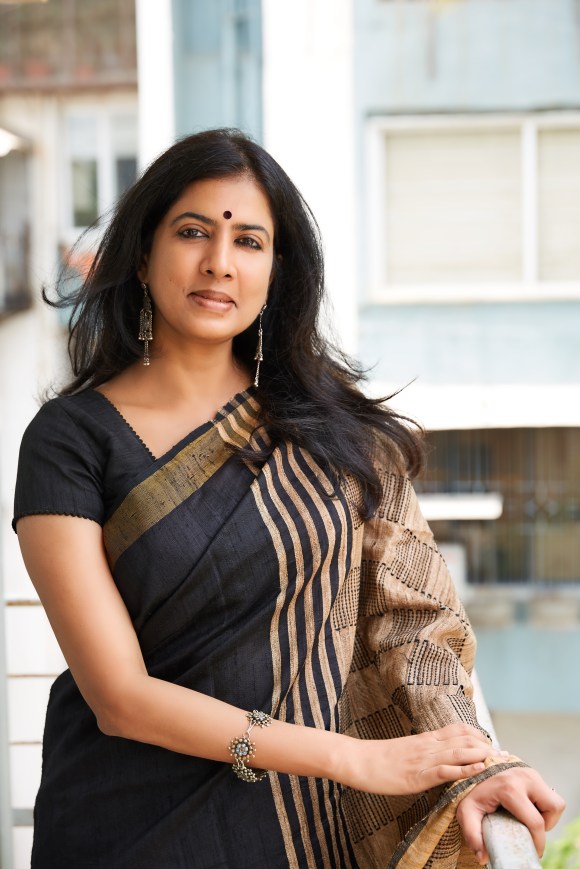
Arundhathi Subramaniam is a poet who has recently won the Sahitya Akademi Award, 2020, for her book When God is A traveller (2014). She has authored a number of books and won multiple awards and fellowships. She has been part of numerous anthologies and journals.

Interview

In Conversation with Arundhathi Subramaniam: An online interview with the 2020 Sahitya Akademi winner, Arundhathi Subramaniam. Click here to read.

Poetry

Catabolic Woman by Arundhathi Subramaniam. Click here to read.

More Poems by Arundhathi Subramian houses three poems. Click here to read. The following poems from her collection can be found here.

  • When God is a Traveller
  • Eight Poems for Shankuntala
  • The Fine Art of Ageing

Book Review

A review by Bhaskar Parichha of Arundhathi Subramaniam’s Women Who Wear Only Themselves, published by Speaking Tiger Books. Click here to read.

Book Excerpt

Arundhathi Subramaniam’s Women Who Wear Only Themselves. Click here to read.

Categories
Review

Winged Stallions and Wicked Mares

Book Review by Bhaskar Parichha

Title: Winged Stallions and Wicked Mares; Horses in Indian Myth and History

Author: Wendy Doniger

Publisher: Speaking Tiger Books, 2021

Horses have a captivating and curious existence in India. Stallions have been graciously carved into the Indian landscape in a variety of ways. To view the subcontinent’s past through the prism of the horse is to be swept back in its power and propriety. Horses have a galactic connection to Indian history, mythology, art, literature, folklore and also popular belief.

The political symbolism of the horse, its vital function in social life, religion, sport and war, its role in shaping economies and forging crucial human bonds is too obvious to point out.

Emergence of local breeds such as the Kathiawari and the Marwari, the Zanskari and the Manipuri is an interesting tale of gallantry. In India’s modern history, there were fabulous horsewomen too, Chand Bibi, Maratha princesses and women polo players among them. Horses have an intimate connection to grooms, blacksmiths, breeders, traders and bandits.

Rana Pratap’s legendary Chetak, Ranjit Singh’s much-contested Laili, Pabuji’s cherished black mare and those horses captured in paintings and equestrian portraits are riveting. This glorious age of the horse met its painful decline with the onset of colonial rule and automation.

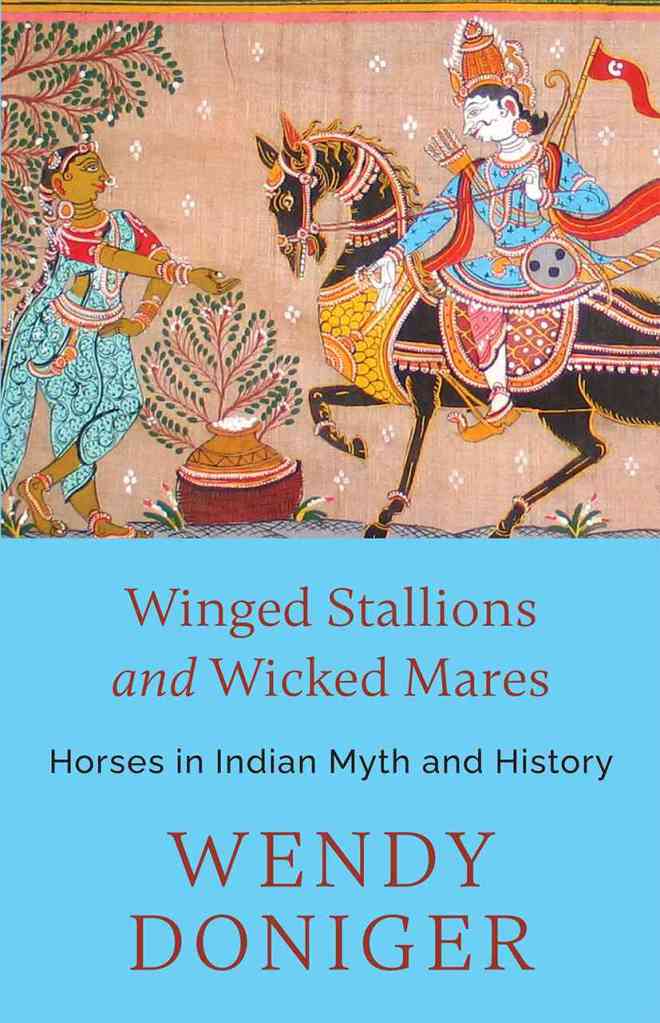
Winged Stallions and Wicked Mares; Horses in Indian Myth and History by Wendy Doniger is an engrossing book not only for the subject but also the research. In this inspiring and scholarly book, Doniger — who has been called the greatest living mythologist — examines the horse’s significance throughout Indian history, from the arrival of the Indo-Europeans, followed by the Greeks, the Turks and Mongols (who imported Arabian horses) and the British (who imported Thoroughbreds and Walers). 

Along the way, she delves deep into the rituals of horse sacrifice in the Vedic age. She rummages through the stories of warring horses and snakes in the Mahabharata. She digs into   tensions between Hindu stallion and Arab mare traditions; imposing European standards on Indian breeds; the reasons many Indian men ride mares to weddings; the motivations for murdering Dalits who ride horses; and the enduring myth of foreign horses who emerge from the ocean to fertilise native mares.

Doniger combines erudition with storytelling and gives the reader a persuasive account on the horse in Indian culture just as she does it in her other books on Indian mythology. 

Quoting from the book: “The horse is not indigenous to India, except in a few small pockets. Even after it was brought to the subcontinent sometime between 2000 BCE and 1500 BCE by the Indo-Europeans. It played almost no part in the lives of ordinary Indian villagers, being too expensive for all but the most privileged people to own. In India’s folklore, epics and popular culture horse stories abound and there are some brilliant images of the animal.”

Doniger’s ride through four millennia of Indian legend and folklore is full of sacrificial horses, horse-headed gods, transformations and couplings. Like Doniger’s other works on Indian mythology and history, this book  is astonishingly accomplished with the threads of mythical narratives woven into a meaningful depiction of the Indian imagination.

Author of classic works like The Hindus: An Alternative History and Hindu Myths, Wendy Doniger has two doctorates, in Sanskrit and Indian studies, from the universities of Harvard and Oxford. She has taught at the School of Oriental and African Studies, University of London and the University of California, Berkeley, and is currently the Mircea Eliade Distinguished Service Professor of the History of Religions at the University of Chicago. Her other books include Siva: The Erotic Ascetic; Dreams, Illusion and Other Realities; The Mare’s Trap: Nature and Culture in the Kamasutra.  

The Vedic ritual of the sacrifice of a stallion is balanced by the myth of a goddess who takes the form of a mare named Saranyu (Fleet). Doniger retells the story thus:

“The blacksmith of the gods gave his daughter, Saranyu, in marriage to the Sun, and she gave birth to twins, Yama and Yami. Then the gods concealed the immortal woman from mortals; they put in her place a female of-the-same-kind (Savarna) and gave that look-alike to the Sun. Saranyu took the form of a mare; the Sun took the form of a stallion, followed her, and coupled with her. From that were born the twin equine gods called the Ashvins. She abandoned them, too.”

Doniger takes us on the trail of the horse into and within India. What follows is a surprising and exhilarating journey, covering caravan-trade routes originating in Central Asia and Tibet, sea routes from the Middle East, and the dominions of different sultans and Mughal emperors, the south Indian kingdoms as well as the Rajput horse-warrior states. 

Doniger professes her earliest exposure to India and the horses was in 1963 when she was twenty-two years old. Her meeting with Penelope Betjeman — daughter of Field Marshal Sir Philip Walhouse Chetwode who was the head commander of the British forces in India from 1928 to 1935 — gave her an introduction to these creatures. Doniger has dedicated the book to Penelope who died accidentally in 1986 in the Kulu Hills.

Winged Stallions and Wicked Mares has about a dozen chapters — most of which have a throwback to the Vedic and Puranic times. It is only in the last two chapters where she writes the horse saga of modern India. With a slew of illustrations and profound research, the book makes for a gripping read. 

.

Bhaskar Parichha is a journalist and author of No Strings Attached: Writings on Odisha and Biju Patnaik – A Political Biography. He lives in Bhubaneswar and writes bilingually. Besides writing for newspapers, he also reviews books on various media platforms.

.

PLEASE NOTE: ARTICLES CAN ONLY BE REPRODUCED IN OTHER SITES WITH DUE ACKNOWLEDGEMENT TO BORDERLESS JOURNAL

Categories
Review

Women Who Wear Only Themselves by Arundhathi Subramaniam

Book Review by Bhaskar Parichha   

 Title: Women Who Wear Only Themselves

Author: Arundhathi Subramaniam

Publisher: Speaking Tiger Books, 2021
                                                                              

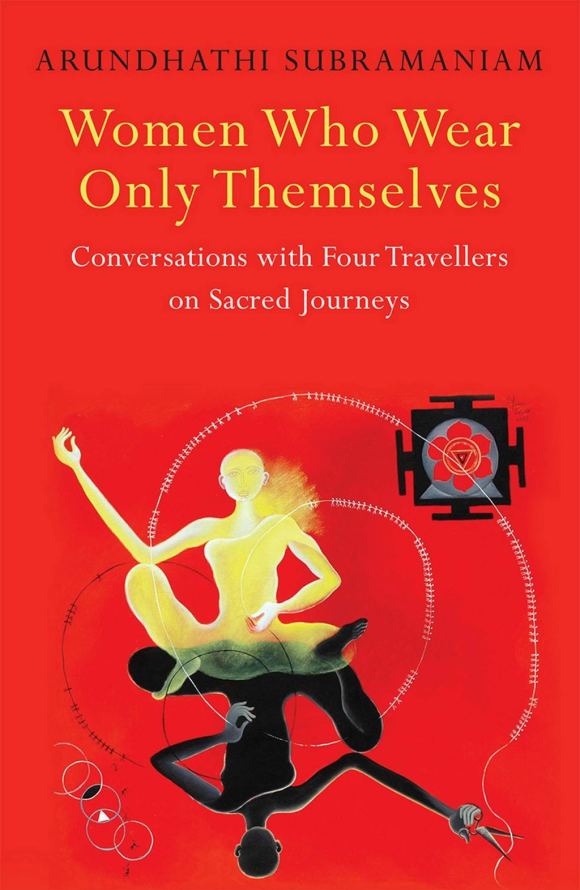
This is an unusual book–unusual because of the theme, approach and style. And when it comes from a skilled author, it ought to be still more engrossing. A tiny book of about two hundred pages but not so diminutive in its journey to profile four women — who are known little outside their small world of followers and who matter in the arena of spirituality. It is a melodious presentation.

Women Who Wear Only Themselves–Conversations with Four Travelers on Sacred Journeys’ by Arundhathi Subramaniam is prophetic, in-depth and counter-revolutionary.

Author of a dozen books of poetry and prose, Arundhathi is an award-winning author. Her most recent book is Love Without a Story. The Other books include an anthology of bhakti poetry, Eating God, and a book of essays, Pilgrim’s India. The Book of Buddha and the bestselling biography of a modern-day mystic, Sadguru: More Than a Life are also the talked about ones. Arundhati is widely known as a poetry editor, curator and critic. Her book, When God Is a Traveller, won the Sahitya Akademi Award 2020 besides being shortlisted for various other prizes.

Arundhathi’s book provides glimpses of four spiritual practitioners – Sri Annapurani Amma, Balarishi Vishwashirasini, Lata Mani, and Maa Karpoori — who unlike the chatty sadhus prominent on the social media, practice in isolation. Arundhati talks at length to these women of substance and in doing so, she gives some promise for the jaded souls. Besides, she looks for a gender-balancing act and tries to widen the circle of women spiritual leaders.

In a world where women have been seen traditionally as someone’s wife, mother, daughter, or sister, why would a woman choose to follow a spiritual path? Perhaps because, deep inside every woman has a longing to be someone in her own self, confident and in control.

In the last two thousand years, women have not fully used their spiritual power. Instead, aspects of the feminine have taken mainly symbolic forms from the Virgin Mary to the vestal virgins, from Earth Goddesses to the Shakti Devis. Women have been put on pedestals and worshiped on account of their purity or femininity; but have been excluded from religious activities and barred from entering places of worship.

In the present book, she talked to Annapurani Amma who left the safety of home and family to follow the summons of a long-dead saint (she lives naked but delivers prophecies.) Balarishi Vishwashirasini who was predicting futures ultimately transformed into a guru. Now in her thirties, she is a gifted teacher of nada yoga. Lata Mani, a respected academician in the US, was plunged into the path of tantra after a major accident left her with a brain injury. The fourth woman is Maa Karpoori, who had a rollercoaster ride that catapulted her from marriage to monkhood.

Writes Arundhathi in the Preface: “The primary motivation behind this book is simple. Thirst. Hopefully, a shared one. As a seeker, I have spent years thirsting for conversations. With spiritual teachers, with fellow travellers committed to the life of the spirit. I cannot complain. My life has been rich in conversations.

“I have had conversations with seekers of various persuasions. I have spent long hours listening to the yogi and mystic who later became my guru. I have eavesdropped on countless conversations with mystics in books — Shirdi Sai Baba, J. Krishnamurti, Ramana Maharishi, Nisargadatta Maharaj, Osho. I’ve even imagined the lapping waters of the Hooghly quieting to listen to the extraordinary exchanges between Ramakrishna Paramahamsa and his disciples. But another kind of thirst remained.”

So, what made her plan this book? “There was no crusading zeal that motivated this book. There was no schematic design. No spirit of advocacy. But there was a longing to listen to the voices of lesser-known women—women who choose to live in relative seclusion and shadow, and yet burn brightly. Women whom I met, accidentally, in the course of my own journey, and who generously allowed me a glimpse of their light. Something shifted within me after each of these chance encounters. I did not leave any of them unmoved.”

Arundhati doesn’t skip history: “The Indian spiritual landscape is not devoid of its women. We are routinely reminded of an illustrious litany: Maitreyi, Gargi, Andal, Karaikal Ammaiyar, Akka Mahadevi, Janabai, Muktabai, Bahinabai, Lal Ded, Rupa Bhavani, Gangasati, Meerabai. The list is long and varied. There are well-known figures in more recent times too, from the 20th-century mystics, Anandamayi Ma and The Mother of Pondicherry, to contemporary guru, Mata Amritanandamayi. Remarkable women. Beacons for many even today.”

 Says Arundhathi admittedly: “These women made no effort to impress. They were gracious enough to share their life journeys, without trying to flaunt their attainments, win recruits, or garner publicity. I am a seasoned listener, and instantly alert to subtle attempts to broker deals. There were no bargains being hatched here. I write about these conversations primarily because they were so remarkably free of agenda.

“My initial encounters with the women in this book were unplanned. I happened to have spent large swathes of time in southern India in the past decade, and so, not surprisingly, that is where these meetings happened. They are not meant to represent the religious plurality of the Indian subcontinent, although I do believe that they reveal the still-vanquished hospitality of vision that characterizes its spiritual ethos.”

While she is on the subject, her incredulity and concerns goes farther than the original remit: “The terror of uncertainty is more blazingly evident in our world than it ever has been. To carve a path between the certitudes of a frozen faith and the dogmas of arid materialism can be challenging. I marvelled at how these women held their own in a world so conceptually fragmented. A world that divides the material and the spiritual into such impermeable categories. How did these women tune into their own inner guidance? How did they come to terms with that simple but oddly elusive truth: that we are both flesh and spirit? That we do not have to masquerade as simply one or the other?”

Elevated or chastised, exonerated or condemned, the perturbation unworldly women in India face is that they have never been treated as equal to men as spiritual leaders. This lack of equality finds its roots not only in sociological and cultural systems, but more particularly at the levels of consciousness upon which spirituality and attitudes are finally based.

Interspersed with her own poems to uphold the content, the four conversations in the book are as fascinating as pathbreaking. Appropriate for an awakened reading!

.

Bhaskar Parichha is a journalist and author of No Strings Attached: Writings on Odisha and Biju Patnaik – A Political Biography. He lives in Bhubaneswar and writes bilingually. Besides writing for newspapers, he also reviews books on various media platforms.

.

Click here to read Arundhathi Subramaniam’s interview and poetry.

PLEASE NOTE: ARTICLES CAN ONLY BE REPRODUCED IN OTHER SITES WITH DUE ACKNOWLEDGEMENT TO BORDERLESS JOURNAL

Categories
Review

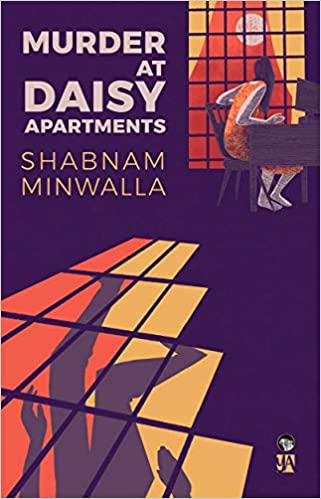
Murder at Daisy Apartments

Book Review by Gracy Samjetsabam

Title: Murder in Daisy Apartments

Author: Shabnam Minwalla

Publisher: Speaking Tiger, 2021

Murder in Daisy Apartments (2021) by Shabnam Minwalla is a young adult murder mystery story set in Colaba, Mumbai, India during the COVID-19 lockdown days.

Shabnam Minwalla has worked as a journalist with the Times of India. Her debut novel, The Six Spellmakers of Dorabji Street (2012) won the Rivokids Parents’ and Kids’ Choice Awards. She writes children’s fiction now. She has written a number of children’s story books including the Nimmi series, and a forward to an edition of Little Women brought out by Speaking Tiger Books.

Murder in Daisy Apartments starts on the forty-third day of the lockdown when 78-years-old Mr. Sevnani a resident of Lily Apartments, who had a bad heart, and an even worse temper was mysteriously hospitalized. The emergency that led him to be rushed to the hospital did not come as a surprise to the residents. Sevnani’s case was one in which a swarm of men wearing masks and sinister blue safety suits took him away in an ambulance.

But it happened again. On the forty-fourth day, a BMC (Brihanmumbai Municipal Corporation) van drove to the housing complex to pick up a dead body. People grew apprehensive. The shock deepened as residents came to know that Raghunath, a long-time resident of these apartments had been evicted by Baman Marker, the Chairperson of the Daisy and Lily Apartments as he had tested corona positive, and the complex had been declared a containment zone. During such severe lockdowns, movements were restricted.

On the forty-sixth day, Mr. Marker was found poisoned in his apartment. Since he was murdered during the pandemic lockdown, the killing could have only been masterminded by a resident of the complex. Nandini Venkat, a 15-year-old murder mysteries enthusiast, who calls herself and her twin brother as “standard issue South Bombay brats” is glued to the details of this “OMG (o my God) moments” in the history of Daisy and Lily Apartments. She joins the dots to detect and solve Marker’s murder mystery. Honing her investigative skills, with keen observation of people and the chronology of events, Nandini turns into a detective on the fiftieth day of the lockdown. Her sunny, social and festival loving brother, Ved, and her best friend, Shanaya, join her to find out more about this mysterious death.

Who could have murdered Baman Marker? Was it the Kurians, the Carvalhos, the Khambatas, the Habibullahs, the Lambas, the Burmans, the Kapadias, Lina Almeida, Maria, Alfonso, Mr. Shetty or Chemmen Saab? Who was the mysterious man that Mrs. Kurain saw early in the morning of the fateful day? Whose were those “black legs” that Nandini spotted climbing up and down the stairs on the night of the murder? More questions assail Nandini and the air gets thicker with thrill, nervousness and excitement all at the same time. Ved sings in a low voice:

"Beware, beware, he’s out and about, 
So be careful ’bout the rumours you monger, the panic you spread. 
The Big Bum’s at the door, revenge cooking in his head."

Ved and Shanaya make the best investigating team with Nandini. Nandini’s “LIST OF SUSPECTS—Means, Motive and Rating” tactfully streamlines the possibilities of finding the murderer. The strong suspects in the list includes Mr. Carvalho, Daniel’s father and a physics teacher who took crazily expensive tuitions and has a shady history; Amrita Aunty, Shanaya’s mother, who had had major disagreements with Marker; old and mean retired principal Lina Almeida, the granny gruesome who makes fabulous immunity boosting juices and detox smoothies; Marker’s chartered accountant Ranjit Burman with whom he had a nasty fight some months back; the secretly courageous Rashida Habibullah; and, the aged and immobile Mr. Alimchandani, who had long-buried secrets.

Amidst the fearful environment of death and pandemic in the Daisy and Lily Apartments, Minwalla beautifully brings out the characters of the young investigators and the residents with many details. The role of internet and social media during the pandemic and in the present day is infused in the narrative. For instance, she has highlighted the unavoidable participation in the Apartment’s WhatsApp groups of adults, where daily updates that thrive with rumours or gossips and the Daisy-Lily kids’ group for the children who discuss school, crushes, movies, people and latest information. Nandini and Shanaya discuss TikTok and Instagram followers, zombie teenagers addicted to social media, FOMO, Zoom call with school friends, Netflix and WiFi connections. Nandini on the verge of solving the mystery says, “My mind will be thinking about nachos or the red boots on sale in H&M, while my fingers pick up my phone, click, swipe, click.”

Minwalla also uses subtle humor to make the story a delightful read. This is evident in the children calling Mr. Sevnani “the Abominable Snowman”, or in imagining Baman Marker, the shrewish Chairperson of Daisy and Lily Apartments as “an arch criminal—a sort of Macavity the Cat” or “SoBo version of Kaa the python” and more. Minwalla’s use of phrases like ‘Work from Home’, disowning someone, sealed apartment, social distancing, stay safe, compulsory registry of visitors, tested corona positive, online meetings, and mental deterioration, instantly connects us and sheds light on the shift in the usage of language for depicting the pandemic. Nostalgia, empathy, magic and mystery mingle as one reads with a sense of enjoyment, revelling in the suspense-filled clandestine moves taking the mystery forward.

Murder in Daisy Apartments is entertaining and organically Indian. It gives a flavour of Mumbaikars to those willing to step into a local residential complex and mingle with the residents.

.

Gracy Samjetsabam teaches English Literature and Communication Skills at Manipal Institute of Technology, MAHE, Manipal. She is also a freelance writer and copy editor. Her interest is in Indian English Writings, Comparative Literature, Gender Studies, Culture Studies, and World Literature. 

.

PLEASE NOTE: ARTICLES CAN ONLY BE REPRODUCED IN OTHER SITES WITH DUE ACKNOWLEDGEMENT TO BORDERLESS JOURNAL

Categories
Review

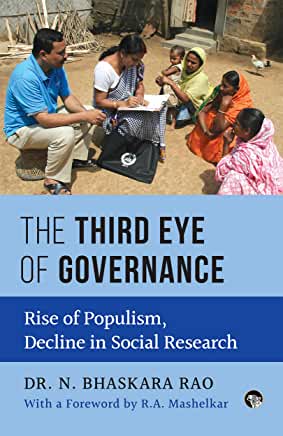
The Third Eye of Governance

Book review by Bhaskar Parichha

Title: The Third Eye of Governance

Author: Dr N Bhaskara Rao

Publisher: Speaking Tiger Books, 2021

Populism may be   a decent expression for politicians; but social science researches would give a damn to the way government policies are planned shorn of any rationality and wisdom. Research is key to whatever social development one talks about because that gives an edge to the expected change. This book takes forward precisely the idea of good research and the downsides of not having an investigation into the way governments’ function.

The Third Eye of Governance–Rise of Populism, Decline in Social Research by Dr N Bhaskara Rao is an eye-opening book because it is written by a pioneer of social research in India. Being  Founder Chairman of the Centre for Media Studies (CMS) and of Marketing and Development Research Associates (MDRA), Rao  built up the equally prestigious Operations Research Group (ORG) as its CEO.A member of the National Population Policy Committee and one who reorganized the media units of the Information and Broadcasting ministry, Rao has authored a couple of other books : Social Impact of Mass Media, A Handbook of Poll Surveys in Media , Sustainable Good Governance, Development and Democracy, Citizen Activism in India and The TRP Trick: How Television in India Was Hijacked. 

A first-of-its-kind history and analysis of social research in India from Independence to the present, this book discusses India’s most important research projects, and the policies based on them. That includes the family planning programme, the five-year plans and the decennial census which has been put on hold because of the pandemic. 

According to Dr Rao, there has been a steady decline in social research with the rise of populism in Indian politics, and there is an utter disregard for transparency and accountability. The volume shows how data, statistics, analysis and research have become politically sensitive and belligerent. Rao argues that if the current refrains about development and progress are backed by applied social research, India can reach new heights in democracy, development, and governance.

Forthright to the core, Rao says with political parties dominating policies, there has been a greater emphasis on winning elections. And this trepidation has to become the priority for research. He contends that research is a distinctive form of enquiry — and that is why he calls it ‘third eye of governance’. The book is a valuable investigation of public policy successes and failures of governments led by different PMS, from Nehru and Indira Gandhi to Manmohan Singh and Narendra Modi. 

Writes Rao: “Populism is an outlook of leaders, and a methodology and strategy of those in power to control, command, and exert their authority. What we are witnessing today is an altogether new populism where ideology has little importance. The new instruments of communication and network have changed the course so much that populism is being made to appear or sound synonymous to democracy and development, when in fact it can turn out be a countervailing phenomenon.

“What is being regarded as a boom may turn out to be a bubble. This depends on the leaders’ grip or control over the instruments of administrative authority or political power. In populism, the difference between ends and means becomes blurred.”

Terming the new wave of populism sweeping across the nation ‘rhetoric-centered’, he argues: “It purports people as masses but is led by a few who are masters of rhetoric. Here, institutions matter less, as do future implications and research and feedback. Populism depends on revisiting the past rather than focusing on the future beyond three-five years. Polarizing people through destabilization is part of the strategy. Perpetuating hate, anger, and resentment form the core of populism and help sustain the phenomena. Double-talk also comes handy in this process.”

Academically comprehensive, the book cites the example of how the ‘melting pot’ idea of American society in the mid-20th century was studied closely by sociologists and contributed to the assimilation process that changed the course of American social progress by changing the mindset. In India, however, Rao says, despite Nehru embarking on the idea of assimilation, people continue more divided, and development has not reached a large number. Part of the reason, according to him, is the lack of critical research and independent appraisal of policies and plans.

While acknowledging the potential of the development themes echoed by Prime Minister Modi, Rao points out the glaring gaps between the stated intention and actual practice. The ideas have to be backed by “high-quality independent and unbiased research”. Slogans and themes such as ‘Sabka Saath, Sabka Vikas (united, we progress)’ deserve to be followed up far more seriously, consistently, and critically.

The government’s recent campaigns such as Swachh Bharat (clean India) or Smart Cities has brought about a new research. He calls it “Endorsement research” or supportive research. Whether research is independent is no longer the preferred criteria. Even the credibility of independent institutions, which have been the primary sources for the country’s statistics, have come under questioning. There has been more reliance on audit-based method than evaluative research in recent years, according to the book.

Divided into ten chapters and running through a little more than 300 pages, the book unequivocally tells how credible public institutions of the country are being reduced to the level of drum beaters. “Covid numbers being doled out by state after state reminds the extent political leaders stoop to suit their immediate advantages. As if we are reviving a regime of numbers.”

The book further says, citizen activism, debates, deliberations, and checks and balances are no longer virtues, and may even be snubbed. Populism does not care so much for self-correctives or plurality. He goes to the extent of saying populism needs an imaginary or a virtual villain or an enemy to prompt realignments. It submits a polarization that thrives in terms of ‘We of now’ and ‘They of the past’.

Dr Rao delves into the history, successes, and failures of research since Independence. He seeks to “regroup social sciences towards a trajectory of good governance, development and democracy, so that social research can lead towards a citizen-centric, society-sensitive future than one focused on just the market and consumer”.

With a foreword by Dr RA Mashlekar, former Director General Council of Scientific and Industrial Research (CSIR), the book is in-depth, fetching and has a broad sweep. It looks at the outlines of public and social research in India through a critical lens. An indispensable read.

.

Bhaskar Parichha is a journalist and author of No Strings Attached: Writings on Odisha and Biju Patnaik – A Political Biography. He lives in Bhubaneswar and writes bilingually. Besides writing for newspapers, he also reviews books on various media platforms.

.

PLEASE NOTE: ARTICLES CAN ONLY BE REPRODUCED IN OTHER SITES WITH DUE ACKNOWLEDGEMENT TO BORDERLESS JOURNAL
Categories
Review

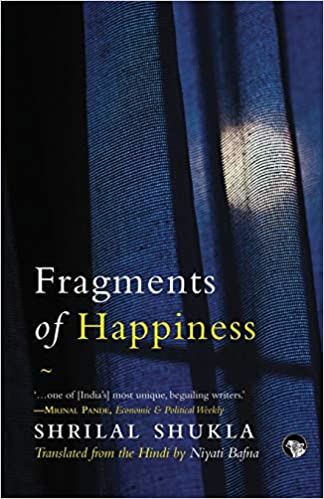
Fragments of Happiness

Book Review by Rakhi Dalal

Title: Fragments of Happiness

Author: Shrilal Shukla, translated from Hindi by Niyati Bafna

Publisher: Speaking Tiger Books, 2021

Fragments of Happiness is a translation of Shrilal Shukla’s novel, Seemayein Tootati Hain, originally published in 1973. Shrilal Shukla (1925 –2011) was a Hindi writer, notable for his satire. He has written more than 25 books and received the Jnanpith Award, the highest national recognition for writers (2011), the Padma Bhushan (2008) and the Sahitya Akademi (1969). Seemayein Tootati Hain has been translated to English by Niyati Bafna, who has studied translation under Arunava Sinha and is currently a student of Computational Linguistics pursuing an MSc in Prague as an Erasmus Mundus scholar.

In this novel, Shukla, widely known for his satire, weaves the story of a family struggling to come to terms with its reality in the aftermath of an unfortunate incident. Durgadas, a businessman based in Delhi, is convicted for a murder and is sentenced to life imprisonment. He has two sons and a daughter. His children believe in their father’s innocence. Over time, the brothers become convinced that the murderer is Vimal, their father’s partner and a long-time friend. The story is centred on the idea of their father’s innocence and the subsequent efforts of the brothers to find the real criminal. However, the book is not a murder mystery. It does not offer a solution to the impasse that the brothers Taranath and Rajnath seem to find themselves in. And it certainly is not a story which offers closure. Rather it is an exploration of the beliefs, opinions, and nature of its characters as well as of the dynamics of relationships shared by them. The author takes on a well-to-do family in early 1970s Delhi to track the trajectory of each character as they tackle the situation.

Taranath runs a college. Rajnath takes care of his father’s business. Their younger sister Chaand is a 23-year-old researcher in the field of Chemistry.  Rajnath’s thoughts and actions are dictated by his desire to restore the reputation of his family whereas those of Taranath to see his father happy. Chaand is more of a realist, who accepts the situation and is more focused upon her career and her personal life. Vimal, on the other hand, stands by the family through the trial of Durgadas and believes him to be innocent too. However, the zenith of the plot revolves around the relationship between Chaand and Vimal.

Mrinal Pande, an eminent author and journalist, dubs Shrilal Shukla as one of India’s most unique and beguiling writers. This is evident as the author treads ahead with the narrative that is crisp and advances effortlessly to portray remarkably the interplay between societal influences and individual opinions and behaviour. Speckled with spiritual and philosophical musings and satire, the narrative skilfully captures the subconscious of its characters. The characters are life-like, with their fears and insecurities governing their responses and actions. One of the most unpredictable characters is that of Julie, Vimal’s confidante and once a sex worker. She is taken aback when she comes to know of Vimal’s deliberate silence about his presence at the scene of murder in which Durgadas was convicted and adds she wouldn’t have done so in his place, that she would have spoken the truth. Vimal’s character remains beguiling till the very end, and it may unsettle some readers.

Also, quite notable in the novel is the depiction of early 70s Delhi. Connaught Place, its cafes, espressos, cinema, localities –flavours and sounds of old Delhi, reminiscent of a distinctive era that may tickle the senses of a reader. In carving the character of Chaand, the author portrays an independent woman who has the courage to make her life choices, is determined and not affected by the expectations of her family or friends. Her individuality parallels the rising class consciousness among women in early 70s which recognised the inequalities within power structures of family, tribe and region as well. With Taranath’s character, he addresses the question of religion and with that of Rajnath and his wife Neela, the restrictions imposed within the familial structures. We know next to nothing of the character of Durgadas, around whose conviction and sentence, the story is constructed. By making this choice, the author has consciously aimed to focus on recounting the ways in which different characters try to cope with adverse circumstances in their lives.

To translate such a distinctive novel by an acclaimed author from Hindi to English, while capturing the nuances of the language, is not an easy task. Bafna has done a commendable job. Although, those who have read the novel in Hindi may wonder at some points about the choices made by the translator, the overall experience is closer to reading the original work and is, definitely, a step forward in making the work reach diverse readers.

.

Rakhi Dalal is an educator by profession. When not working, she can usually be found reading books or writing about reading them. She writes at https://rakhidalal.blogspot.com/ .

.

PLEASE NOTE: ARTICLES CAN ONLY BE REPRODUCED IN OTHER SITES WITH DUE ACKNOWLEDGEMENT TO BORDERLESS JOURNAL. 

Categories
Excerpt

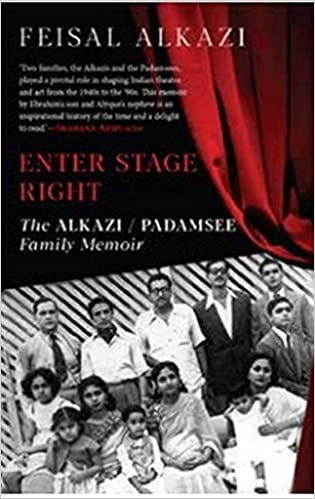
Feisal Alkazi’s Enter Stage Right

Title: Enter Stage Right: The Alkazi Padamsee Family Memoir

Author: Feisal Alkazi

Publisher: Speaking Tiger Books, 2021

The tremendous vitality and ferment in the Western music scene was very much a part of our growing up. From the Beatles to the Rolling Stones, from Janis Joplin to Joan Baez, from The Who to Santana, lyrics of protest set to unforgettable melodies and dense instrumental tracks were to be heard, absorbed and danced to.

And did we dance! Every Saturday night a bunch of my friends and I could be found ‘grooving’ for at least four hours at the newly opened The Cellar in CP (as Connaught Place was known) or Wheels at the Ambassador Hotel. The Cellar was the beginning of the discotheque culture in Delhi, and we were among its first patrons, adorning the ceiling with our names etched in smoke! Foreign hippies in their lungis and tee-shirts, high on ganja or whatever else, brought an edge of curious excitement to our Saturday nights. After all, we were the Dum maro dum generation! The Cellar was situated in the basement of Regal building and the excitement and apprehension of being in Connaught Place at night lent its own thrill to every visit.

 Wheels near Khan Market drew a different, older, more sedate crowd, the yuppie professionals of south Delhi, whom we could elbow off the floor with our vigorous dance moves. In a Gadda da Vida and Hotel California were our favourite dance tracks. We did this from the ages of seventeen to twenty-three. Seven years on the dance floor every Saturday night! Talk of Saturday Night Fever? The phrase could have been coined for us.

All four of us were children of practicing artists and performers. Books lined the walls in all our homes, divans were draped with handloom bedspreads and the walls covered with contemporary art, arresting photographs, classical sculpture or an occasional African mask. Food was often a Burmese dish of noodles and soup called Mahmi, or a detectable Bohri mince pie or best of all, hot chicken patties from Wengers.

Our parents were friends, part of a large and growing circle of artists, who had chosen to gravitate to Delhi and to live in or around Nizamuddin. Gaitonde, Ram Kumar, M.F. Husain among others were part of this charmed circle.

 The ‘younger’ lot of artists, somewhere in age between our parents and us, were Eruch Hakim and Nasreen Mohamedi. We would occasionally drop in at their barsati-cum-studio apartments, to watch them create their black-and-white drawings. Nasreen introduced us to green tea, Eruch was always ready to roll a joint.

There was an amazing camaraderie and willingness to help one another within the artist community. They were beyond friends, they were family. When the Mehtas relocated from London to Delhi, they stayed with us for the initial month. When Pablo’s parents travelled to the US for a year, as Richard won the prestigious Rockefeller scholarship, Pablo stayed with us. Going out of your way to help a friend in a very tangible way was an integral part of my mother’s personality.

Husain was already an icon in Indian art, an artist who stood apart with his characteristic white beard, long paintbrush and bare feet. Tyeb was more quiet, the ‘intellectual’ of the group who had recently returned from several years spent in London, Krishen had only just given up his regular job in a bank to become a ‘full-time’ artist.

Husain enjoyed gathering many of these families together, bundling us into his Fiat with his iconic horse painted on it, and dragging us off to see Helen dancing in Inteqam at Golcha Cinema in Old Delhi, followed by a meal at Flora in Jama Masjid. He knew exactly what time Helen’s dance sequence was, so a large group of us would walk into the hall minutes before the dance, and exit immediately after it was over. A compliant management and Husain, the charming smooth-talker, made such a privilege possible.

It was my first encounter with Old Delhi at night with its crowded lanes, women in burqas, the smell of frying kababs, the flavours of dum pukht biryani and the call of the azaan. I wondered if this was similar to Mohammed Ali Road in Bombay where my father grew up. It was an alien, exotic world aeons away from my Westernized, though bohemian, childhood in south Bombay. Little did I know at the time that I would soon spend ten years working in Old Delhi!

About the Book:

Bombay, 1943. The young Parsi actress who was playing Salome in the newly founded Theatre Group’s production of Oscar Wilde’s eponymously titled play drew the line at performing the Dance of the Seven Veils, a sort of ‘Biblical striptease’. So director Sultan Padamsee’s 19-year-old sister Roshen stepped in. And met the handsome, intense Arab who played the male lead-Ebrahim Alkazi. In 1946, they were married. Thus was forged one of the greatest alliances in the world of theatre and art in post-Independence India.

Ebrahim Alkazi took English theatre from its early beginnings in Bombay to national and even international acclaim as he directed and acted in more than a hundred plays, ranging from Oedipus Rex, Murder in the Cathedral and Macbeth in the 1950s, to Ashadh Ka Ek Din, Andha Yug and Tughlaq in the ’60s and ’70s. As director of the fabled National School of Drama from 1962 to 1977, he launched some of the finest actors of our times, including Om Shivpuri, Om Puri, Naseeruddin Shah, Rohini Hattangadi, Manohar Singh and Uttara Baokar. The chief costume designer and seamstress for all his productions was Roshen Alkazi. In 1977, when Ebrahim and Roshen decided to open Art Heritage in Delhi, it gave a new dimension to the world of art, as the leading artists of the day, including M.F. Husain, Krishen Khanna, F.N. Souza, Tyeb Mehta, K.G. Subramanyam and Laxma Goud, flocked to this space that was not just a ‘commercial’ gallery, but a foundation for documenting and preserving the arts. With more than 50 rare photographs, Enter Stage Right is the story of theatre in India as it has never been told before…to be treasured by theatre buffs, and savoured by anyone who loves a good story.

Author Bio:

Educationist, theatre director and activist, Feisal Alkazi has carved out his own niche with his group, Ruchika. He has directed over 200 plays with adults in Hindi, English and Urdu. He has also directed over 100 productions for schools all over India, and in the field of disability, he has directed 30 documentary films and produced several plays.


Photo credits: Ram Rahman:15-Feisal Alkazi and friends in The Cellar, a discotheque in Delhi 1975

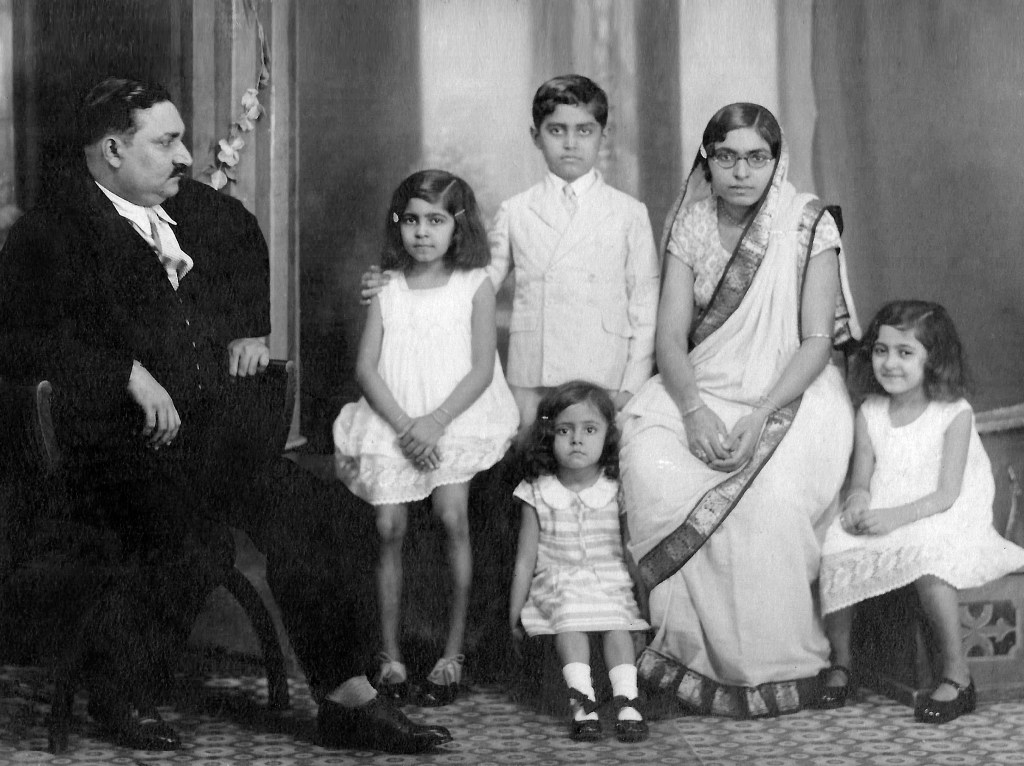
Alkazi Theatre Archives: Jaffer Padamsee and Kulsum with Sultan_Bobby (standing right), Roshen (standing left), Bapsi (seated centre), Zarine (seated right)

Excerpted from Enter Stage Right: The Alkazi/Padamsee Family Memoir by Feisal Alkazi. Speaking Tiger Books, 2021.

Click here to read the book review.

.

PLEASE NOTE: ARTICLES CAN ONLY BE REPRODUCED IN OTHER SITES WITH DUE ACKNOWLEDGEMENT TO BORDERLESS JOURNAL