Categories
Review

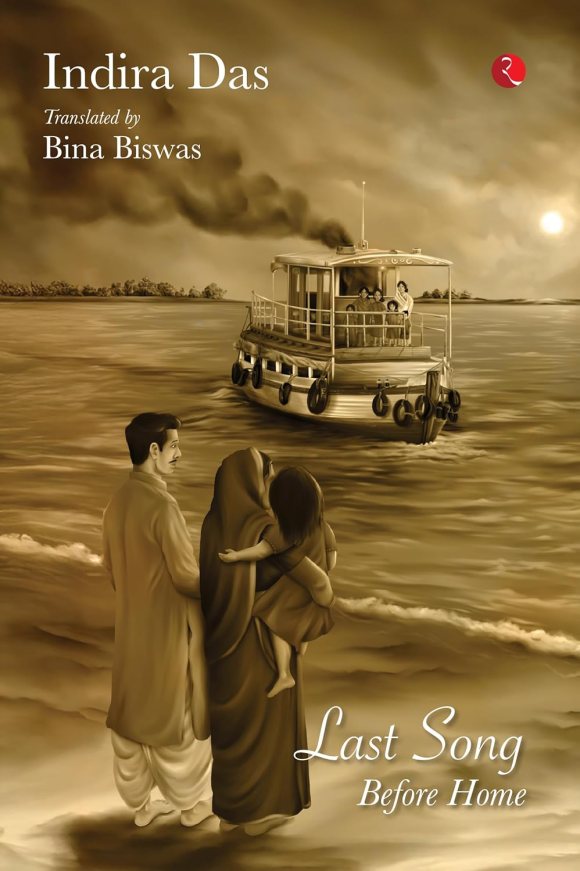
Last Song Before Home

Book Review by Bhaskar Parichha
Title: Last Song before Home

Author: Indira Das

Translator: Bina Biswas

Publisher: Rupa Publications

Last Song Before Home, the English translation of Indira Das’s Bengali memoir Shuru Theke Phera – Mayer Smritikatha[1], emerges as a luminous elegy to the fragility of memory and familial bonds. Translated by Bina Biswas, the book chronicles the author’s mother, Gayatri Das, navigating vascular dementia post-stroke. Through an epistolary structure of imagined letters, Das captures the slow erosion of self, where recollections surface like half-remembered melodies amid Bengal’s partitioned landscapes. The thematic depth and stylistic finesse position it as a vital contribution to South Asian memoir literature.

Central themes orbit memory as both lifeline and tormentor. Dementia strips Gayatri of chronology, yet fragments—rain-soaked courtyards, Partition’s unspoken wounds—resurface as anchors of identity. Das reframes loss as resistance, transforming maternal decline into a testament to resilience. Sisterhood underscores this; bonds with siblings weave a tapestry of shared silences, countering isolation’s void.

Partition looms subtly, not as a historical spectacle but an intimate scar—displaced homes echo in Gayatri’s fading queries: “Where is home?” This mirrors postcolonial Bengal’s flux, where personal trauma intersects collective upheaval. Dignity persists through ritual: songs hummed off-key, hands folding faded saris. Das elevates the mundane, critiquing modernity’s erasure of oral legacies. Resilience triumphs, not via triumph, but quiet defiance—memory’s “last song” before oblivion. The memoir critiques gendered aging in India, where women’s stories dissolve unspoken, urging reclamation.

A practicing gynaecologist, Das’s prose, via Biswas’s fluid translation, mimics dementia’s rhythm: elliptical sentences drift, loop, and fracture like synapses firing erratically. “The courtyard bloomed once, or was it twice? Rain came, carrying voices from across the river.” This stream-of-consciousness narrative eschews linear plot for associative flow, evoking Woolfian interiority fused with Bengali lyricism—sensory motifs—jasmine perfume, monsoon mud—ground abstraction, rendering emotion tactile.

In the translator’s note, Biswas, who is a poet and academician, says: “This book is not simply a narrative-it is a mosaic of survival, and the search for belonging. As John Berger once wrote, ‘Never again will a single story be told as though it is the only one.’ The protagonist’s journey is part of a greater collective-a shared history of migration, exile, and emotional displacement. Her voice rises in a chorus of the grieving, each thread woven with shared loss and a fierce resolve to cling to identity.

“She is a figure many will recognize: a woman who, though exiled by circumstance, carries the remnants of home in every gesture and memory. Her story becomes a vessel for inherited struggle, for resilience passed from one generation to the next. As Milan Kundera so memorably stated, ‘The struggle of man against power is the struggle of memory against forgetting.’”

Epistolary form innovates: letters to an absent self-blur authorial voice, fostering intimacy without sentimentality. Repetition (“Remember? No, forget.”) mirrors cognitive loops, building hypnotic cadence. Das avoids melodrama; understatement amplifies pathos— a single, misplaced utensil evokes existential ache. Cultural bilingualism enriches: Bengali idioms, untranslated, preserve authenticity, challenging monolingual readers. Pacing accelerates in crescendo passages, where songs bridge eras, culminating in cathartic release.

Last Song Before Home transcends memoir, becoming a philosophical meditation on impermanence. Its strengths—haunting style, layered themes—outweigh minor translation hiccups, like occasional stiffness. Essential for readers of Partition literature or aging narratives, it earns four stars for profound humanity. Das not only mourns but hymns endurance, leaving echoes that linger.

[1] Translates to: Returning from the Beginning: Memories of Mother

.

Bhaskar Parichha is a journalist and author of Cyclones in Odisha: Landfall, Wreckage and ResilienceUnbiasedNo Strings Attached: Writings on Odisha and Biju Patnaik – A Political Biography. He lives in Bhubaneswar and writes bilingually. Besides writing for newspapers, he also reviews books on various media platforms.

PLEASE NOTE: ARTICLES CAN ONLY BE REPRODUCED IN OTHER SITES WITH DUE ACKNOWLEDGEMENT TO BORDERLESS JOURNAL

Click here to access the Borderless anthology, Monalisa No Longer Smiles

Click here to access Monalisa No Longer Smiles on Amazon International
Categories
Review

‘A Story of Moral Contradictions and Human Cost’

Book Review by Bhaskar Parichha

Title: India in the Second World War: An Emotional History

Author: Diya Gupta

Publisher: Rupa Publications

When we think of the Second World War, the images that most often come to mind are those of Europe’s ruin — the Blitz in London, the camps in Poland, the victory parades in Paris. India, though one of the largest contributors of men and material to the Allied cause, usually slips to the margins of that global story.

Diya Gupta’s India in the Second World War: An Emotional History sets out to correct that imbalance — and does so not by recounting battles or strategies, but by uncovering the feelings, memories, and private sufferings that shaped India’s wartime experience.

In this groundbreaking work, Gupta turns away from generals and governments to listen instead to soldiers, families, poets, and activists. Through letters, diaries, photographs, memoirs, and literary texts in both English and Bengali, she reconstructs the emotional life of a country caught in the contradictions of fighting for freedom while serving an empire. Her book is as much about the inner weather of a people at war as it is about history itself.

The story begins with the strange binary of India’s position in the 1940s. The British declared India a participant in the war without consulting its leaders. While nationalist politics in the country were reaching their boiling point, over two million Indian men were dispatched to fight on foreign fronts — from North Africa to Burma — under the Union Jack. They fought for a cause that was not their own, for a government that denied them liberty.

Gupta’s focus on emotion allows her to expose this moral paradox with nuance. The letters of sepoys from the Middle East reveal homesickness, confusion, and occasional pride; families back home are haunted by anxiety, caught between imperial propaganda and the whisper of rebellion. The result is a portrait of divided loyalties — of men and women who inhabited both the empire’s war and the nationalist struggle at once.

But it was the Bengal Famine of 1943 that made the war’s cost most brutally visible. Triggered by colonial economic mismanagement and wartime policies, it claimed nearly three million lives. Gupta’s chapter, ‘Every Day I Witness Nightmares’, captures this catastrophe through eyewitness accounts and literature that tried to make sense of it. Hunger, she suggests, became not only a physical condition but an emotional state — an emblem of the moral starvation of empire.

In poems and essays by writers such as Sukanta Bhattacharya and Mulk Raj Anand, the famine appears as a mirror held up to civilisation’s collapse. Tagore’s haunting late work, ‘Crisis in Civilisation’, forms a central thread in Gupta’s narrative — the poet’s disillusionment with humanity, his grief at the world’s descent into barbarism, and his call for renewal through compassion.

One of Gupta’s greatest achievements lies in her ability to braid together the intimate and the historical. The war years, she shows, were also years of reflection and redefinition. In the chapter named ‘The Thing That Was Lost’, she explores how the idea of “home” was transformed by displacement — whether through the departure of men to distant fronts or through the forced migrations caused by famine and air raids. Home, once a site of safety, became a space of longing and loss.

Another chapter, ‘Close to Me as My Very Own Brother”, turns the spotlight on male friendships in Indian war writing. Here, Gupta uncovers the tenderness that often underpinned comradeship — relationships that blurred the lines between duty and affection, and that offered emotional sustenance amid violence and uncertainty. In these pages, she challenges the stereotypes of stoic masculinity, showing that vulnerability and empathy were also part of the soldier’s story.

While the battlefield has long been the focus of war history, Gupta gives equal weight to those who remained behind. The women who waited, worked, and wrote — often in silence — emerge as witnesses in their own right.

Activists such as Tara Ali Baig, nurses and doctors on the Burma front, and countless unnamed mothers and wives populate the emotional landscape she paints. Through their letters and memoirs, we see how war invaded domestic spaces, transforming everyday life into a theatre of endurance.

Gupta writes of “anguished hearts” not as metaphor but as historical evidence. The fear of air raids, the sight of hungry children, the absence of loved ones — these, too, were the realities of India’s war. By restoring emotion to the historical record, she argues that feelings are not soft data but vital clues to understanding how societies survive crisis.

What makes the book so compelling is its insistence on looking at the global war from the Indian perspective. For Britain, the war was a fight for democracy and civilisation; for India, it was also a confrontation with the hypocrisy of those ideals. As Gupta notes, the same empire that called for liberty in Europe jailed Gandhi and suppressed the Quit India movement at home.

Seen from Calcutta rather than London, the war ceases to be a heroic narrative of Allied victory and becomes instead a story of moral contradictions and human cost. Gupta’s intervention is both historiographical and ethical: she reminds us that global history must include the emotions of those who bore its burdens without sharing in its glory.

A historian with literary sensibility, Gupta writes with precision, empathy, and grace. Her prose balances academic rigour with narrative warmth, allowing the reader to move effortlessly between archival fragments and the larger questions they evoke. Each chapter unfolds like a story, yet the cumulative effect is that of a symphony — voices rising and blending, carrying echoes of pain, pride, and endurance.

Gupta’s work has been widely celebrated for its originality and emotional depth. Shortlisted for the 2024 Gladstone Book Prize, it has drawn praise from scholars and critics alike for its fresh approach to war history. What distinguishes her study is not only its range of sources but its refusal to treat emotion as peripheral. For Gupta, feelings are the connective tissue of history — the invisible threads binding individuals to events, memory to nationhood.

The book is  more than the  war. It is about the human capacity to feel in times of fracture — to love, mourn, and imagine even amid devastation. It shows that the emotional life of a people can illuminate their political choices, their artistic expressions, and their vision of freedom.

By reassembling scattered memories and forgotten emotions, Diya Gupta offers a new way of reading both India and the world in the 1940s. Her India is not a passive colony swept along by imperial tides, but a living, feeling community navigating grief and hope in equal measure. The war, as she reminds us, did not just redraw maps; it reshaped minds and hearts.

In giving voice to those who seldom found one in history books — the sepoy writing from the desert, the poet confronting famine, the mother waiting for news — Gupta transforms statistics into stories, and stories into testimony. Her book stands as a reminder that history is not only written in treaties or timelines but in tears, silences, and the fragile language of feeling.

It ensures that those emotional histories, too long buried under the dust of archives, are heard again — quietly, insistently, and with the full weight of their truth.

.

Bhaskar Parichha is a journalist and author of Cyclones in Odisha: Landfall, Wreckage and ResilienceUnbiasedNo Strings Attached: Writings on Odisha and Biju Patnaik – A Political Biography. He lives in Bhubaneswar and writes bilingually. Besides writing for newspapers, he also reviews books on various media platforms.

PLEASE NOTE: ARTICLES CAN ONLY BE REPRODUCED IN OTHER SITES WITH DUE ACKNOWLEDGEMENT TO BORDERLESS JOURNAL

Click here to access the Borderless anthology, Monalisa No Longer Smiles

Click here to access Monalisa No Longer Smiles on Amazon International
Categories
Review

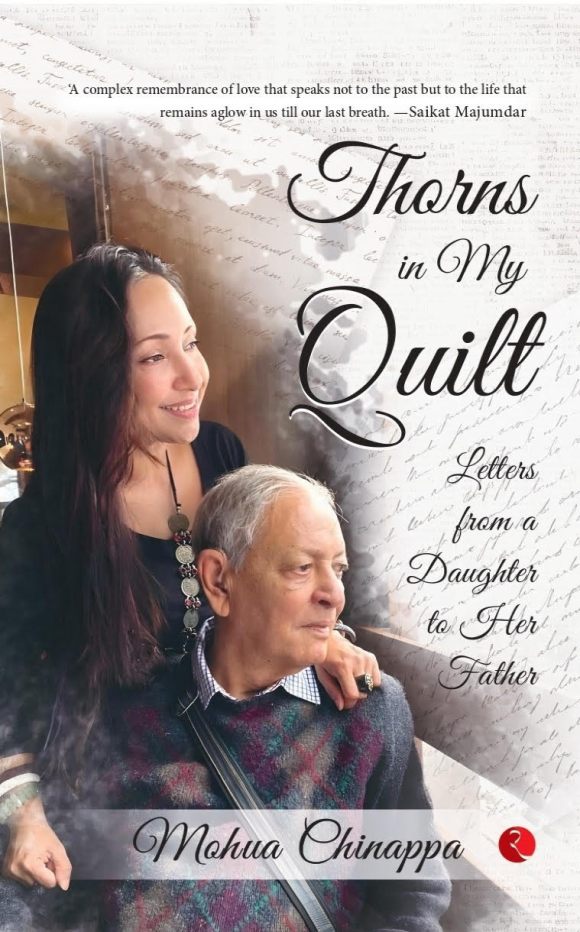
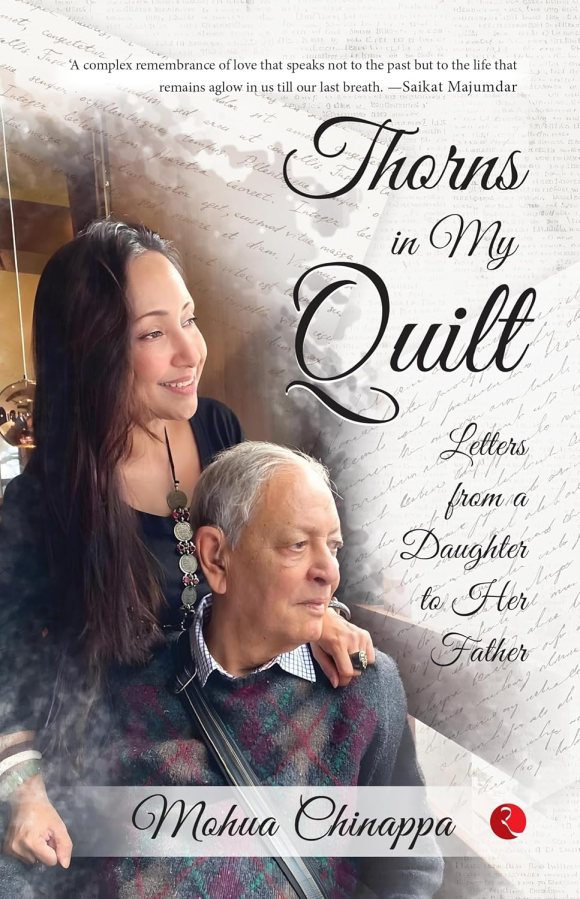
Thorns in My Quilt

Book Review by Rakhi Dalal

Title: Thorns in My Quilt: Letters from a Daughter to her Father

Author: Mohua Chinappa

Publisher: Rupa Publications

Mohua Chinappa’s Thorns in My Quilt: Letters from a Daughter to Her Father is a quiet and visceral exploration of memory, grief, and the often-fraught space between love and silence. Drafted in the form of a collection of letters to her late father, the book is less about resolution than about reckoning – more an attempt to articulate what remained unsaid while he was alive. Chinappa, through this profoundly personal lens, not only offers a portrait of a relationship but also a reflection on absence, yearning, and the emotional inheritance that we all carry forward sometimes.

Mohua Chinappa is an author, a columnist, a renowned podcaster in India, a TEDx speaker, a former journalist and a corporate communications specialist. Her other initiative—NARI: The Homemakers Community—provides a platform for homemakers to voice their everyday challenges.

The letters in this book, seamlessly weave together fragments of childhood and adulthood, moving fluidly between time and place. One moment, Manu the daughter, beckons the warmth of her early years in Shillong — vanilla flavoured butter cookies and the hush of rain-soaked afternoons, then the shelter of a harsingar[1] tree in their government house in Delhi, while in the next, she confronts the frailty of her marriage, the weight of her Baba’s illness, or the sting of words that sometimes remained unsaid. The form of writing echoes the workings of memory. Not linear, but recursive, continually turning back to moments that remain unresolved. Each letter seems like an appliqué sewn into the fabric of remembrance, creating a quilt with seams held together by both tenderness and pain.

At the centre of the book is the paradoxical figure of her Baba, portrayed with candour as a man who is loving yet aloof, erudite yet impractical and admired yet sometimes resented. Manu longs for his approval but also grapples with the ways his criticism and aloofness diminishes her. The letters vacillate from affection to accusation and from gratitude to grievance. In the acceptance of these contradictions, there seems a resistance to recall the memory of a father in an idealised tone. Instead, Chinappa manages to present a figure whose complexity remains inseparable from her own. The portrait revealed, thus, appears all the more moving.

The narrative also reverberates with a strong theme of displacement. The family’s history of migration, the shifts between Shillong, Delhi, and Bengaluru, create a sense of being both rooted and uprooted at once. Places do not act merely as backdrops but are living repositories of memory, holding within them the sweetness of belonging and the ache of estrangement. This sense of dislocation extends inward in the narrative. Chinappa captures not only her alienation from her father but also the broader struggle of carving an identity in a world shaped by expectation and silence.

The language of the narrative is lucid, and doesn’t tip into ornamentation. Everyday details—trees, rain, food, household objects—become charged with metaphorical weight, carrying emotional resonance far beyond their surface. The letters are suffused with sensory detail, grounding the reader in the textures of lived experience while also opening space for reflection. The writing exercises restraint. Even at its most poignant, it doesn’t spill into melodrama.

The emotional honesty of the book is equally striking. Manu does not shy away from confessing anger or disappointment; nor does she smooth over her father’s failings in the name of filial devotion. She admits to her vulnerabilities—the yearning for acceptance, the bitterness of abandonment, the pain of reinvention when life’s foundations collapse. These allow the readers to relate with the story. Though the particulars may differ, but the longing for parental approval, the hurt of unspoken words, and the struggle to reconcile love with resentment are universal.

However, some constraints in the narrative cannot be overlooked. The epistolary form, while effective in evoking intimacy, also narrows the perspective. Baba appears only through Manu’s voice, his presence mediated entirely by her memories and emotions. At some places, the narrative shifts abruptly, from addressing second person (father) to third which makes the reading a bit disconcerting. At times, the absence of other perspectives leaves the figure of father more shadow than substance, defined by what he was to her rather than who he was in himself. The letters also occasionally return to the same emotional terrain, circling around familiar grievances and sorrows. While this mirrors the looping nature of grief, the repetition creates a sense of exhaustion.

These reservations, however, do not diminish the book’s overall appeal. Its power lies not in neatness but in its willingness to dwell in ambiguity. It does not offer easy closure, nor does it attempt to tidy grief into a narrative of redemption. Instead, it embraces complexity, acknowledging that love is rarely unblemished, that absence can wound as much as presence, and that the act of writing itself can become a form of survival.

Thorns in My Quilt resonates because it is both deeply particular and quietly universal. While grounded in Chinappa’s personal history, it speaks to the wider human experience of fractured relationships, cultural displacement, and the longing to be heard. In cataloguing both the thorns and the blossoms of her bond with her Baba, Chinappa creates a testament that is as much about resilience as it is about grief.

[1] harsingar: Night Jasmine

Rakhi Dalal is an educator by profession. When not working, she can usually be found reading books or writing about reading them. She writes at https://rakhidalal.blogspot.com/ .

.

PLEASE NOTE: ARTICLES CAN ONLY BE REPRODUCED IN OTHER SITES WITH DUE ACKNOWLEDGEMENT TO BORDERLESS JOURNAL

Click here to access the Borderless anthology, Monalisa No Longer Smiles

Click here to access Monalisa No Longer Smiles on Kindle Amazon International

Categories
Poetry

Found in Translation: Ashwini Mishra’s poems

Five poems by Ashwini Mishra have been translated from Odia by Snehaprava Das

Ashwini Mishra
RIDING THE EARTH: THE LAST DAY

Farewell!
A final goodbye!
The prologue to an epic of an endless rest
Has to be something
Extra special.

Gathering up all the strength
Of his senses
He strove to know the people
Around him.
He spoke fondly to them
‘Let you all be there in my heart
Forever,
May my world keep shimmering
With the glow of this endearing bond.’
He rode each passing day
That galloped on --
Like a well-fed, robust horse,
He rode on,
His feet securely stuck in the stirrups
His hands gripping the rein hard.
In an instant he could
Gallop around the earth
Cradling time under his arm.
The river, the ponds
And the rainclouds brought water
For his parched throat,

Towards the end of the journey
He called one by one his folks
Whom he held dear to his heart.
Some of them sounded assuring,
Some promised to come.
A few fulfilled their promises too
And came --
Still, there was a disturbing emptiness
Somewhere within.

Where has disappeared
The knot of love that had held
So strong in the days of past?
It was as though that knot
Had loosened and shredded.
Worn out like a weary page
In the mindscape,
Like someone that had once
Played a major role,
And had moved away from the centerstage,
To stand by the stage-wings
Distanced and dispassionate!

SWORD


I had never wanted
To wield a sword, a dagger or a goad.
I had always wanted to tuck plumes
into the hair,
To draw a lotus on the palm,
To play the notes of spring breeze
For the ears of the
Blazing summer noon.
I had wanted to be a dreamer,
To let my eyes close
At the touch of the delicate petals
Of exotic blooms!
But you did not let that happen.
My loved ones,
My folk I held close to my heart,
Fell at the merciless blows
Of harsh and hostile words
Your canons shot.
Your anger, your cruelty,
Weighed heavy on me
And a thunderstorm brew inside me.
Unnoticed by others.
In the end,
My compelled hands
Reached out to the scabbard
Lying abandoned under
The smuts of time
To draw the sword out.

THE CLAY LAMP

A clay lamp can always guess
How long the ghee and
The wick in it will last.
It is a living thing
How brief might its lifespan be.
It can, like all living beings,
Battle the wind and the darkness
In its struggle to survive
In an unenclosed space
That is vulnerable to
The assault of hooves of animals
Or the misty spray of the dew.
It knows that
The moment the curtain rises,
Revealing the stage
All set for the entry of light,
The first act of the play will end
And Its role will be over
Even before the makeup is
Rubbed off the face or the artificial tint
On the hair fades.
The hand that had lit it
May turn impassive, too!

A woman, her heart and hands
Focused on the act,
Keeps lighting up the clay lamps,
Not knowing for sure
How long their light would last
Or when the flames would die.
The idol of the goddess
That glittered in the light of
The lamps she lights
Never steps down to help her
When the flames char her body.
There is not a soul in sight
When her flame dies,
Except a few burnt insects.

GAZA
You neither have a chest
Nor arms now
To embrace those who once saw
You as their own
Like you did before.
The natives and the foreigners,
Who trod your soil,
Now take a turn either to your left
Or to your right and move on.
No longer the chirrups of birds
Come sprinkling down
Either from your sky, or your trees.
There are vultures everywhere
Scavenging on the tender human flesh
Getting fat and heavy.
The sun, the moon and the stars
In your sky are
Blown away into thousand pieces now.
You may dig up some of them
Graved under your ground.
The Death in your sea breeze
And in your explosive garb
Haunts living humans
To turn them to corpses.
Like a farmland ladened with crops,
Skeletons are heaped in your streets.
Houses and buildings where life dwelt
Are mounds of shattered concrete.
Wreckage of kitchenware,
And of home appliances
Lie on the desolate roads
In pathetic scatters.
A book satchel slings from the
Severed hand of a dead child.
The thirst for war is not quelled yet,
New strategies are deliberated upon
To pursue newer missions of death.
New weapons must be hoarded
In the arsenal
To launch an attack on the netherworld
After this world is razed to ruins.

WHIP

The whip that once basked proud in
The love of the kings and the feudal lords
And danced in elation on
The defenseless back of the oppressed,
Now lies worn and weary
In a niche in the royal palace or
Behind the glass doors in the shelf
Of a museum,
Coated in dust and dirt.
The obsequious tanners,
Who were far below the
Aristocracy,
Polished this tool of tyranny
Bright with oil,
And it jumped crazy
On their haggard backs,
Drawing crooked lines
Of livid blue and red.

How wide is the chasm between
Sage Dadhichi who gave his bones
For forging a thunderbolt
To kill demon Brutrasura*,
And the stingray that gave its tail to
Shape a whip
That performs its brutal dance
On the back of innocent humans?
Even today,
The barges of history and legends
Voyage across the pages
Of text books taught in the classroom,
Their sails fluttering
On their proud masts.

*Brutrasura was killed by Indra with a weapon made with Sage Dadhichi’s bones as per mythology.

Aswini Kumar Mishra has 13 poetry collections to his credit. He has been translated widely into English, Hindi, Bengali, Tamil and other Indian languages. He has authored a fiction in English, Feet in the Valley (Rupa Publications, 2016),  His poems and essays have appeared in several literary journals including Indian Literature, Kavya Bharati, Wasafiri, M.P.T, The Little Magazine, Samakaleen, Konark, Rock Pebbles and Vahi etc. A recipient of several awards, he currently lives in Bhubaneswar and can be reached at cell phone +919438615742, +918456953936. His email id is:  mishra.aswini53@gmail.com

Dr.Snehaprava Das, is a noted writer and a translator from Bhubaneswar, Odisha. She has five books of poems, three of stories and thirteen collections of translated texts (from Odia to English), to her credit. 

PLEASE NOTE: ARTICLES CAN ONLY BE REPRODUCED IN OTHER SITES WITH DUE ACKNOWLEDGEMENT TO BORDERLESS JOURNAL

Click here to access the Borderless anthology, Monalisa No Longer Smiles

Click here to access Monalisa No Longer Smiles on Kindle Amazon International

Categories
Review

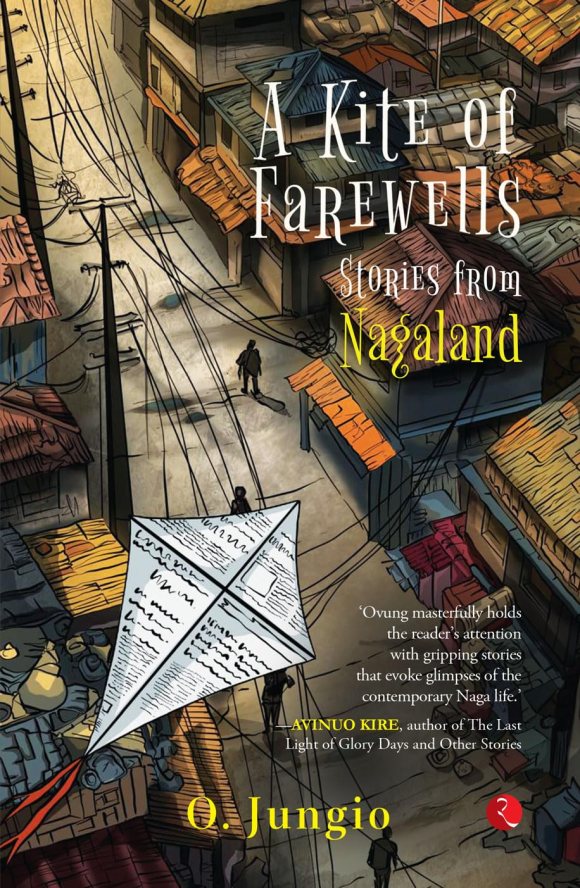
The Kite of Farewells

Book Review by Madhuri Kankipati

Title: The Kite of Farewells: Stories from Nagaland

Author: O’Jungio

Publisher: Rupa Publications

O. Jungio’s The Kite of Farewells: Stories from Nagaland is a collection of short stories of longing and grief set in contemporary Nagaland. The author is a tribal studies scholar, and cultural historian whose research and essays focus on oral traditions, folklore, and socio-cultural changes among Naga communities. In the book’s preface, he writes, “The objects—mute spectators to human sorrow—become the vessels of collective grief, the repositories of the most intimate of the farewells”. And every story in this collection does explore of longings of different kinds followed by farewells.

The first story, ‘Fire’, begins with a man driving in a downpour. He forgot to carry the food packed by his Ayo’s(mother’s). Like many others she believes hotels are “vectors for every ungodly disease in the world masquerading as something palatable.” What follows is at night he ends up in a strange village for food and shelter; where it seems like the lines between the living and the dead are blurred. The narrator chances upon a man who serves him raw food. He notes, “perhaps by way of some idiosyncratic tradition, this village served raw food on this particular day of the great harvest” and starts a fire to cook himself only to be spooked out by the man. Despite his longing for food, he has to make an escape. 

In ‘The Encyclopaedia of a Salesman’, a young man selling encyclopaedias meets a retired government official. Initially, the narrator is cautious about why a man so steeped in command would be interested in something as democratic as encyclopedias. He reflects: “With a career of bossing around subordinates, were more inclined to be loud in their admission of suspicion and disinterest in things that challenged and subverted their sphere of command. What annoyed such men more was the vague possibility that for once in their life they would be hoodwinked by a lesser man like me. It would amount to an abominable upset of social order.” This single observation is enough to collapse multiple distances of age, profession, class. The salesman’s mind, seasoned by years of observation, becomes its own encyclopedia. Just when the disparity gets real, Jungio reminds us of a harder truth: that conversations end.

Jungio tries play on the longing for nostalgic memories in ‘Scoreboard’, highlighting an exchange about keeping a manual scoreboard for FIFA world cup 2017; the son arguing “you can get match summaries and stats from google” for the father to brush it off with “it has been a tradition for me”. The whole act of hanging a whiteboard with teams playing and the predictions along with their scores stands out as a cherished activity for the season. When tragedy strikes, that brief exchange transitions itself into a way of longing, in the practices we all hold on to after the passing of loved ones.

It is not just about the personal objects of longing, but also the social objects, or feeling like a forgotten object that has stood still in time. In the story ‘Showroom’, we meet a middle-aged man, who has always “shopped cheap and done so unapologetically,” visits a new mall in town after much contemplation, only to find himself embarrassed when he misunderstands the mall purchase policy. The story is tinged with humour.

In ‘Sacred Crow’ the concept of ‘Echu Li’ is introduced to the reader and the protagonist at the same time as “a world not different from ours. It is a transient stop for the dead before they move on to the Great Home, where they all would become noble spirits, formless like the wind” — which presents itself as an acceptance of loss. The protagonist awaits the black crow, building curiosity only to close on a note that better fits the tales passed around orally in rural Nagaland.

The final story, ‘The Newspaper Kite’, features four rowdy boys who “create” trouble for their neighbours with their games, their little understanding of familial financial struggles and a bond they both form with a man in his sixties. They lovingly call ‘Amotsu’ when he kindly returns them their newspaper kite in a new frame the boys “dropped” in his garden. The boys find joy in a paper boat because “Lofty ideas are, to an extent, a luxury when the means to materialise it are limited or absent. When you are poor, you train your mind to dream on a budget, and some days, you surprise yourself by getting so much out of so little.” When the boys find about the sudden demise of the Amotsu, they remember his words, “There is always a next day,” with the awareness that the coming days would be without Amotsu. It is in the memory of “that thread trick Amotsu used to do” while flying kites, the boys stay connected to the person who left this world.

O. Jungio does a balancing act between inherited lore and the present. He subtly hints at that it is the lore that differs from landscape but not the emotions or beliefs. Regardless of the objects that offer solace, people connect with the commonality of emotions.

.

Madhuri Kankipati is a reader, writer, and translator with too many hobbies and refuses to pick just one. She was raised to follow instructions, but the real world doesn’t work that way, she just stares at her problems. You can find her on instagram @withlovemadhuu

PLEASE NOTE: ARTICLES CAN ONLY BE REPRODUCED IN OTHER SITES WITH DUE ACKNOWLEDGEMENT TO BORDERLESS JOURNAL

Click here to access the Borderless anthology, Monalisa No Longer Smiles

Click here to access Monalisa No Longer Smiles on Amazon International

Categories
Excerpt

Letters from a Daughter to Her Father

Title: Thorns in My Quilt: Letters from a Daughter to Her Father

Author: Mohua Chinappa

Publisher: Rupa Publications India

LOSS

4 August 2022

Living Room, Bengaluru

Dear Baba, Today is your shraddho, the puja for your departed soul. Referring to you as a soul seems so distant. Calling you anything but ‘Baba’ seems like two strangers speaking to one another. The purohit is here to do the rituals. The atmosphere is sedate. The room is lit and the flowers in the vases are in full bloom. I am glad we have cousins in the city; otherwise, it would be very lonely for Ma and me. We know very few people who would make the effort to attend a staid function like a shraddho. How does one end a tie so deep with a mere ritual? One can’t. It does feel surreal to watch your photograph with a jasmine garland around the lifeless frame. The sandalwood phonta or tika on your forehead makes you look different. The living room has been cleared. The large antique box has been covered with a white cloth, and your photograph is placed on it in such a way that you are facing the direction that will lead you to the other world. The shraddho among Bengali Hindus is a ceremony that is performed to ensure a passage for the recently deceased to the other world. The rite is both social and religious and is meant to be conducted by the son. But you have no male heir. So I defy tradition and lead the puja.  I follow the rites dutifully and chant the mantras, which don’t mean much to me. You are gone. There is no mantra that can soothe my heart. On the floor is a bed, laid out with a pillow and an umbrella for your onward journey to God-knows-where. I follow the purohit. Neel joins me in the ceremony. I feel so anchored, having him next to me. What a loving child he is. He makes life so much simpler for me. After the puja, we put out a plate of your favourite food so that a crow can come and eat it. Leaving the food in the corner of a lane seems ridiculous, but I have decided not to question any of the rituals, for I don’t want Ma to feel that I didn’t do my best. I leave the plate on the ground. There are bottles strewn around, and the ground is not very clean. I don’t turn back for another look. Your photo has now been removed and stands on my marble corner table. I put out the burning incense sticks and remove the flower garlands. It is still sinking in that I won’t be able to hear your voice ever again, calling out to me, asking me for something or the other. As we sit down to eat, Neel reminds me how you discussed Left politics and he argued with you on capitalism, just to rile you up in jest. You had such a wonderful bond with my child. I smile as I hear Neel mimic you and your quintessential Bengali ways of reacting to situations. Those debates between you both. I loved the way you both called each other Dadu. Baba would say, ‘Dadu, you must read about the world and its magnificent history. The great idea of how civilizations emerged, and how revolutions took place in protest against tyranny and oppression. As you read, you will learn that the world is a beautiful study of humanity and historical events.’ And Neel would say, ‘Na, Dadu, I will only read books that emphasize the profit and loss of capitalist businesses. Whoever cares about art and philosophy?’ Neel knew how you would go red in the face. And you would say, ‘No businessman ever built a nation; it is the thinkers and the dreamers who created a world of equal opportunities.’ This camaraderie you both shared remains the most beautifully preserved and poignantly pure memory of you with your grandson. I remember those days when you constantly waited to hear from Neel, and how the Sundays were marked aside to have your long-awaited conversations with him. You truly were a wonderful grandfather to my son. I feel empty as the furniture in the living room is rearranged to how it was before. Like nothing has happened, and no one is now gone forever. It looks as if you will come back in a minute, ask for a cup of tea and brood with your arms crossed over your chest. I think just being there to watch me do everyday things made you feel calmer. I don’t know. But I hope someday, I will understand the silence between us. Comfortable spells of silence, and some very terrifying ones. Like your death.

Love

Manu

*

5 August 2022

Bengaluru

Dear Baba, The vermilion has been removed now. The parting is stark white the hair oiled tied into a braid of acceptance. The grey mixed with the leftover black strands falling carelessly on her shoulder. I had seen her one lonely noon take a pair of scissors cut off her locks Like Samson and Delilah. She was at war A war with her own existence Her identity has been shaken Her oar is cracking open along with her broken sail. She sets to the seas but the land is far away on the horizon shining like the crystals found on a crown lost in a war lying forlorn for the head of the right king but now Samson is dead the Philistines have left too the palace has been torn down but parts are intact. Her locks sheared from guilt for being alive. Will she find her shore with her broken boat and tattered sail hoping the seas take her in or the fire of her breath is gutted before it becomes wild like a forest fire burning the little birds coloured kites stuck between branches and her capsizing boat too lost in the new world!

Love,

Manu

About the book:

Thorns in My Quilt: Letters from a Daughter to Her Father is a series of letters written by a daughter to her father after he passed away. Unspoken thoughts, unshared memories and unsaid words combine in this searing and poignant account of a relationship filled with joy, but with equal moments of sorrow.

Mohua Chinappa (Manu) loved her Baba, who was as kind as he was cruel, as well-read as he was unworldly, as loved as he was unloved. His dearest Manu recollects her childhood in Shillong, infused with the aroma of vanilla essence that went into the butter cookies he baked. She reminisces about her father holding her little hand while helping her through the undulating, rain-drenched roads. Mohua returns to Delhi, where she spent a part of her growing-up years, and revels in the memory of a government house with a harsingar tree. She writes to him about her broken marriage, recalls how her parents left her side, and how she reinvented herself. The letters are often selfish yet strangely cathartic.

Her father’s kidney failure prompted a daughter to confront the demons within—the loss, the doubts, the emptiness, the guilt of saying things, and the angst of not saying things.

About the author:

Mohua Chinappa is an author, a columnist, a renowned podcaster in India, a TEDx speaker, a former journalist and a corporate communications specialist.

The Mohua Show, a podcast she started in 2020, has close to 2 million downloads. She contributes regularly to various national dailies and magazines, including The Telegraph, Deccan Herald and Outlook. She is regularly invited as a speaker on TEDx and Josh Talks.

Mohua’s other initiative—NARI: The Homemakers Community—provides a platform for homemakers to voice their everyday challenges.

Her book—Nautanki Saala and Other Stories—was awarded the PVLF Best Debut Non-Fiction (in English) Award 2023. She also has two poetry collections to her credit—If Only It Were Spring Every day and Dragonflies of My Dreams.

PLEASE NOTE: ARTICLES CAN ONLY BE REPRODUCED IN OTHER SITES WITH DUE ACKNOWLEDGEMENT TO BORDERLESS JOURNAL

Categories
Review

Proclamation for the Future

Book Review by Bhaskar Parichha

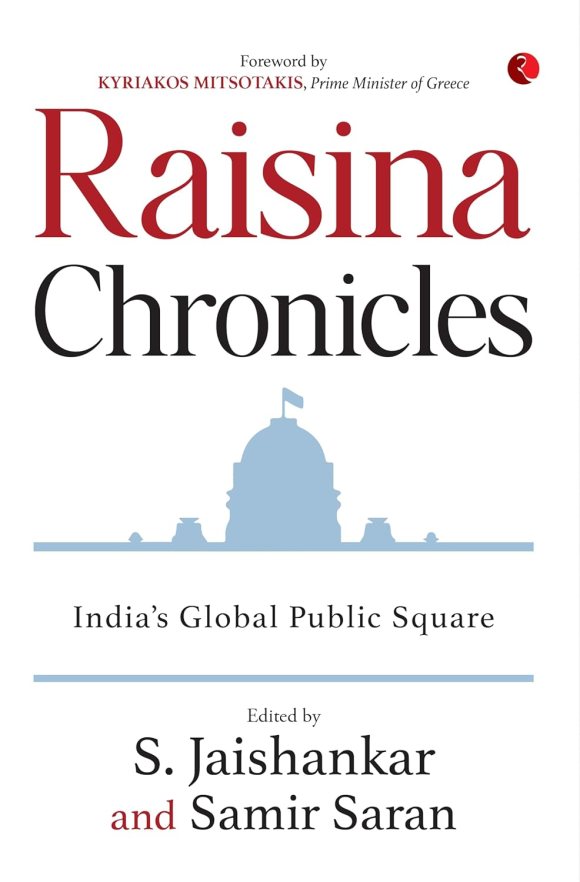
Title: Raisina Chronicles: India’s Global Public Square 

Author: S. Jaishankar & Samir Saran

Publisher: Rupa Publications

Raisina Chronicles: India’s Global Public Square by  S. Jaishankar and Samir Saran commemorates a decade of the Raisina Dialogue, India’s flagship geopolitical and geo-economics conference. The book reflects on the journey of the Raisina Dialogue and its impact on global discourse. It brings together contributions from leaders, thinkers, and diplomats, scholars, and policymakers worldwide, offering insights into addressing global challenges through collaboration and dialogue.

S. Jaishankar has been India’s External Affairs Minister since May 2019 and represents Gujarat in the Rajya Sabha. He was the Foreign Secretary from 2015 to 2018 and has held ambassadorial roles in the U.S., China, and the Czech Republic, as well as High Commissioner to Singapore. He authored notable books like The India Way: Strategies for an Uncertain World and Why Bharat Matters. Samir Saran is the President of the Observer Research Foundation (ORF), a leading Indian policy think tank. He has enhanced ORF’s influence in the U.S. and the Middle East and provides strategic guidance at the board level. Saran curates the Raisina Dialogue, co-chairs the World Economic Forum’s Global Future Council on Geopolitics, and serves on the Board of Governors of The East West Centre in the US. He has written five books, edited key monographs and journals, and contributed to numerous academic papers and essays, appearing in both Indian and international media.

The book brings together voices from across the world—of leaders and thinkers reflecting on the Raisina Dialogue’s impact on how we may navigate global challenges and create solutions that work. Putting India at the forefront of leading the change, the effect of these Dialogues is felt across policies and projections.

The editors emphasise that diversity, dissent, discord, and divergence of opinion make for the necessary ingredients for a sustainable future, shaped and owned by all. Ten years since its inception, the Raisina Dialogue has become the paramount platform for bringing together cultures, peoples and opinions. It is now India’s flagship geopolitical and geo-economics conference and has truly become a global public square—located in New Delhi, incubated by the world.

It emphasises the importance of diversity in thought, approaches, beliefs, and politics. It highlights how pluralism and heterogeneity contribute to resilience and societal evolution. Raisina Dialogue serves as a platform for inclusive participation, welcoming voices from underrepresented geographies and institutions.

While it showcases India’s emergence as a global leader in addressing development challenges and fostering international cooperation, it reflects the philosophy of Vasudhaiva Kutumbakam (the world is one family) and its efforts to harmonise local solutions with global needs.

Through initiatives like the G20 Presidency, India has shared transformative models such as digital public infrastructure (e.g., India Stack), offering templates for financial inclusion and tech-enabled development globally.

Alongside the carefully organised discussions, Raisina Chronicles examines the evolution of the Dialogue and presents its audience with a comprehensive volume that offers deep insights and an unwavering optimism for achieving shared solutions to worldwide issues.

As the globe approaches significant structural and historical transformations, the core aspiration of this work is to ensure that the voices of the populace are prioritised in global politics and policymaking, echoing through influential circles and reaching the broader community. For leaders to effect change, it is essential for society to unite and take a decisive step forward in the right direction.

Raisina Dialogue is also portrayed as a crucial venue for bridging divides in a fractured world. It fosters open discussions among diverse stakeholders—diplomats, scholars, business leaders, civil society members—to discover shared futures and solutions. The book underscores the importance of dialogue over polemics and inclusivity over exclusivity in shaping global policies.

Contributions from high profile global leaders such as Kyriakos Mitsotakis (Prime Minister of Greece), Mette Frederiksen (Prime Minister of Denmark), Penny Wong (Australian Foreign Minister) and others enrich the book with perspectives on international cooperation, climate goals, defence partnerships, and multilateralism.

The book serves as both a retrospective of the Raisina Dialogue’s achievements over ten years and a forward-looking guide for navigating global challenges. It positions India at the heart of global conversations, highlighting its role in fostering equitable dialogue and creating solutions that resonate across borders.

This volume is not just a collection of essays but also an intellectual testament to the transformative power of dialogue in shaping a sustainable future for humanity.

Bhaskar Parichha is a journalist and author of Cyclones in Odisha: Landfall, Wreckage and ResilienceUnbiasedNo Strings Attached: Writings on Odisha and Biju Patnaik – A Political Biography. He lives in Bhubaneswar and writes bilingually. Besides writing for newspapers, he also reviews books on various media platforms.

.

PLEASE NOTE: ARTICLES CAN ONLY BE REPRODUCED IN OTHER SITES WITH DUE ACKNOWLEDGEMENT TO BORDERLESS JOURNAL

Click here to access the Borderless anthology, Monalisa No Longer Smiles

Click here to access Monalisa No Longer Smiles on Amazon International
Categories
Excerpt

Bandits and a Cursed River in Chambal Valley

Title: Did I Really Do All This: Memoirs of a Gentleman Cop Who Dared to be Different

Author: Vijay Raman

Publisher: Rupa Publications

Bandits and a Cursed River

When I began my career in the dacoit-infested region of the Chambal Valley in Madhya Pradesh (MP), I faced different kinds of issues.

I was first posted in Dabra where there are dacoits. In such places certain people come to you offering information that will be useful to us. These are our mukhbir, informers. Some come for the pittance of money that is sanctioned to us as anti-dacoity funds for meeting emergency expenses. But most come with an ulterior motive: they want a kill. ‘We will give you information that you need and will find very hard to get without me. But you have to kill the man,’ they would say.

As ASP Dabra I had 10 police stations under me. One was at Pandokhar, a village between Jhansi and Gwalior, on the (Uttar Pradesh) UP–MP border. A very pleasant-looking chap from there would come to me, always smiling, always making conversation, inquiring about my health, telling me whatever was happening in the village. When I asked for information, he would say, ‘Saheb, sab theek hai, it’s all good, Saheb!’

I would ask if there was any news of the dacoits, and he’d say ‘No Saheb, there is no movement.’

One day he said, ‘Aaj shaam ko jayenge Saheb. We’ll go this evening.’

It was December 1978. I distinctly remember the day: India was playing Pakistan in the Asian Games hockey finals in Bangkok.

One of the problems in that area, particularly for a young newcomer, is this: Whom do you trust? Is the informer trustworthy? Is the subordinate you share the information with trustworthy? I realized that ultimately it had to be your call, based on some homework, your own observations, and your intuition.

One dictum I always followed was to stick to the informer’s plan as much as possible. Anything else would make him suspicious. So I asked him what we should do. He said that this was Devi Singh’s gang, of seven or eight people. They were going from MP to UP to conduct a burglary since it was a full moon night. They would go on bicycles—yes, the dacoits those days went around on bicycles!—and he would be with them. When we arrived at the ambush area, he would ring his bicycle bell and that would be the signal for us to spring into action. All we had to do was surround them, fire two shots into the air, and they would be ours: an easily doable plan which otherwise might be most difficult to execute!

Bidding a mildly regretful goodbye to the hockey commentary on the radio I got into my vehicle and left for Pandokhar, about 60 km from Dabra. I shared my information with the sub-inspectors and inspector in the police station there. Soon the word spread, and from their reaction I could see that this was a very dangerous gang of dacoits. There was consensus that these fellows deserved the ultimate punishment.

We walked to the location, a distance of about 10 km, and took our positions before dark. There was no way I would find out the results of the hockey match there! Sure enough, a group of cyclists arrived. Someone rang a bell. That was our signal, and we surrounded them. And that’s when some of the constables recognized him. ‘Arre! Yeh toh Devi Singh hai! And there’s a big price on his head!’

Dying Declaration

Now the drama begins for a young police officer fresh out of the academy that trains to say no third degree, no this, no that. And with just one year of service, I was still carrying the commitment to uphold the law, protect human rights, behave as the Constitution expects me to. But was it possible when facing a rebellious group of subordinates who want a kill? Before my eyes, some of them were getting ready for violence. When some senior constables and sub-inspectors pacified them they protested, ‘Why should we let them go? They are crooks, they deserve to be killed.’ We tried to convince them that we must arrest them, take them back to the police station, and let the matter be resolved in a courtroom. But that would never work, they argued, because they would bribe the authorities and get away. So they must be killed now!

After a lot of persuasion they relented. They requisitioned a bullock cart from the village, put me in it, tied the hands of the dacoits together, and tied the rope to the bullock cart so that they could not escape. And all along the way they expressed their rage by thrashing Devi Singh, a bald-headed fellow, on the head with his own chappals!

*

My mind was in turmoil. Was I doing the right thing? And why was there so much anger against him from the lower constabulary? I was on the verge of being manhandled by my constables for my stand. Luckily there were sub-inspectors who could restrain them. Was this the sense of discipline we had in the police?

Back in the police station, I phoned my senior officer, a very fine Superintendent of Police (SP) from whom I learnt many practical aspects of policing. It was nearly midnight, so I started by excusing myself for calling at that hour, but I was speaking from Pandokhar and had just returned from an encounter. He must have wondered whether this kid from the south even knew the meaning of ‘encounter’. He disconnected with instructions to see him in the morning.

I had done exactly what my informer had asked me to do—and I had arrested seven members of a gang. We had fired only two rounds of ammunition.

We sent out the required messages to all the police stations in the district, informing them that Devi Singh was in our custody, giving information about the location, number of people arrested, and other details of the encounter. And we were astonished at the large number of requests from all around asking for them to be handed over for trial.

*

The next morning I reported to my headquarters in Gwalior, met my SP, and discussed with him my thoughts and feelings about the encounter. When I told him that we must control the level of indiscipline we have in the force, the seasoned officer counselled me, ‘These are things we have to take in our stride. In the course of time you will also learn how to go about it!’

I was feeling quite pleased with myself for the excellent work done but my SP was more than a little amused. ‘Raman, you fired only two rounds! How can you have an encounter with a dacoit when the police fire only two rounds? I’m sure even the dacoits would have fired more than that. You were just very lucky that you did not get massacred. Firing two rounds is not an encounter Raman! Go and take his dying declaration, and let’s close this matter.’

I was familiar with the belief that a person on the verge of death will not lie. Therefore greater credibility is given to such a statement. Little did I know that soon this episode would come back to haunt me.

The Price of Being Idealistic

Every day we would receive the daily situation report (DSR). It mandates that events such as blind murder, unidentified dead bodies, and other serious offences must be supervised by either the SP or the ASP.

One day I received a report of the discovery of an unidentified dead body. Somehow the name of the place, which fell under the police station of Pandokhar, rang a bell, and I found myself rushing towards it with a growing sense of dread. It was about 100 km from Gwalior and by the time I got there the body, though badly mauled and with limbs dismembered, had been identified. Beside it sat a woman clutching two children tightly to herself and wailing loudly.

It was a terrible feeling to know that this was my fault. I was responsible for the death of this informer. I was the person responsible for all those who were killed by Devi Singh after his release, until he was terminated by my junior, SP Asha Gopal. It always remained on my conscience that my actions, though purely to uphold human rights and protect human life, had led to so much violence and misery.

These thoughts often disturb sensitive police officers, making them face a dilemma that nobody else can help them solve. For myself, I had resolved that following the law was not just my duty but also my dharma, righteousness. However, even in my life there would occur situations when, in the heat of the moment, it might become necessary to take decisions not in keeping with strictly legal procedures. But this would NEVER be for personal gain, and only, ONLY for the greater good.

*

People of my generation who grew up in India would have read about the dacoits and what they did. Some might have a sense of the terrain in which the Chambal dacoits lived. But today’s youngsters, especially those unfamiliar with the place and time, would not understand what it was like, or the obstacles and dangers that were involved, in policing back then.

Chambal is a large area with a peculiar topography of dunes and ravines not seen anywhere else in India. These were formed by the force of water cutting through the land. For an outsider, the area was difficult to navigate. There are settlements and villages even in the midst of the ravines, and it was impossible to know whether they were already there when the ravine formed or whether the ravine grew around them. To get from one place to another was extremely difficult for anyone unfamiliar with the area. You could get hopelessly lost, as in a maze. However, once you began to understand the geometrical pattern of the ravines, it became easier to know where to enter. Over time, the surroundings became familiar.

Other than the terrain, the people of this region were also unique. Their culture developed almost in isolation, and while they had a lot in common with people of the neighbouring areas, some of their attributes were distinctive.

They had a strong sense of justice. One that was different from what we were used to. When I studied Law, what fascinated me was understanding the causes that had given rise to a law. One of the sources of a law is the customs of the people. When a custom is predominant, the wisdom of the legislature will formulate the custom into a law that can be implemented. And some of the customs in this region are what have shaped the indigenous laws here.

Thus, people here were deeply conscious of caste; not just in terms of untouchability but also as a pecking order. While Brahmins were at the top, there were various subgroups—Sharmas and Mishras, among others—and these had their own hierarchy. This applied to how they spoke and were spoken to, or where they stood or sat in a public gathering. Indeed every social interaction was strictly dictated by caste, marriage being the most carefully monitored.

Lower castes were also kept firmly in their place. Any breach of these age-old rules was taken extremely seriously and was bound to have consequences, sometimes fatal. If a person felt aggrieved or insulted, they would hit back. But there were exceptions and unexpected alliances emerged. Notorious dacoit Maan Singh, a legend in his lifetime with a temple to his name, was from a higher caste but his gang had many dacoits from lower castes.

Secondly, women were held in the highest esteem and no misbehaviour against a woman was condoned. It may seem strange to hear that a region famous for its law-breaking dacoits could have been so particular about the safety of and respect for women, but it was so. The women were, of course, expected to behave with all propriety in order to deserve this veneration.

Next, the people in this region were very, very possessive about their land. This may well be true of everybody everywhere. But the intensity of this feeling, and the response to any infringement in this, was extreme. Any transgression would immediately be punished, and not with a simple imprisonment, because this was not a minor offence but a serious one that deserved death. And it was the same when the modesty of a woman was outraged.

Linked to all this was the prestige derived from the ownership of a licensed weapon. Whether a 12-bore gun or a weapon of any calibre, displaying it was as much a source of prestige as a row of ribbons and medals might have been to someone from the forces, or a car brand for a city dweller of today.

With this uncompromising, cast-iron value system, life was sometimes quite difficult. Let me tell you about a case that took place during my time in that area. One evening, two brothers returned home after working all day in their fields. They sat in front of their home, smoking hookahs, relaxing, waiting to be served dinner.

One brother said, ‘I’ve been wondering whether I should also buy an animal, maybe a cow or a buffalo.’

‘Oh really?’ the other replied. “And where do you plan to tie it?’

‘Right here,’ said the first brother.

‘Really?’ the second responded. ‘But this is my land! You can’t tie your cow here!’

The first brother jumped up and walked indignantly into the house. He brought out a short wooden post and a hammer, with which he hammered the post into the ground. This was the kind of post used to wind rope around and tie cattle to. With this, the first brother had established his right to tie his cow right there.

Furious, the second brother too jumped up and strode into the house. He went in, brought out his weapon, and simply shot his brother down. Such was the value of land.

In short, legality and morality have their own geographical boundaries!

*

Another incident took place some years later. By then I had some credibility with the local people.

A Dalit boy from Umri village got married. The marriage party had gone to the bride’s village and, after the wedding rituals, were bringing her home in a procession with musicians playing and people dancing. On the way they passed some Thakur homes. Some young men who sat smoking on the veranda watched with contempt and passed snide remarks. As the boy ceremoniously walked with his new bride into the house, a lewd comment was heard by all: ‘These chamars sure know how to pick their beauties!’

Loud, mocking guffaws rang out.

I should mention here that the use of the caste name ‘chamar’, with the intent to insult or humiliate is an offence today, punishable under the provisions of the Scheduled Castes and Scheduled Tribes (Prevention of Atrocities) Act, 1989.

The ceremony of welcoming the bride into her new home continued with all its formality. But as soon as it was over, the groom picked up his gun, loaded it, and walked to the house where the spoilt Thakur brats still sat smoking. Taking aim, he shot and killed the boy who had made the mocking remark. In cold blood, in broad daylight. And in doing this, he was simply following the law dictated by the customs followed in this place.

For us it was a different situation altogether. The Thakurs were up in arms, the Dalit boy was absconding, and the entire chamar community had lined up, ready for a bloodbath. We had to prevent it! I spent a very tense 34 days searching for the boy in the maze-like ravines and meeting the leaders of both the communities to placate them. I was unable to sleep, constantly alert, constantly watching for any sudden movement on either side. Ultimately the boy surrendered and was sentenced.

This was the consequence of a ‘simple’ insulting comment. There is an entire framework that prescribes what the punishment should be, and in a case like this, it is different from our existing laws. Who can we blame? The people with a tradition of a certain law, or the police and the judiciary, with their own fixed sense of justice and punishment?

*

People ascribe the nature of the people and their customs to the water of the Chambal River. And having lived there I can speak for the water. It was so pure and wholesome that food got digested easily. The pulses and grains grown in the region were of the best quality. The soil was very productive, and I believe the per-acre yield was comparable to Punjab. This milieu formed the background of our police system.

Now, don’t forget that our police system was also manned mostly by people of the same area, with the same mentality and the same sense of revenge. It was a caste-based way of life. Such incidents were absolutely ‘normal’. Yet, as I soon found out, there was a great respect for authority. I was a South Indian officer without much knowledge of the place, hardly even able to speak their language. There was a lot of curiosity on both sides, but there was also respect.

Revenge on the Dead

A month or two later we received information about an encounter by a local DSP, about 30 km away from Bhind, on the bank of Sindh River. Seven dacoits were killed; no names were given; it was not one of the regular gangs.

I went to the site. As the SP, whenever I travelled I had a driver, a gunman, and sometimes also my PA. In case I remembered, or noticed, something my PA would record it. We arrived at the spot. The police were standing there. There were dead bodies on the ground. We stood a little away from them, discussing how it had happened, who did what, and had the dacoits been recognized.

Suddenly there was a burst of fire from an automatic weapon. All of us took position in a reflex action arising from our training. We looked up, to see someone standing with his rifle over the dead body of one of the dacoits. He had emptied all the bullets in his gun into the corpse!

The DSP and inspector chorused, ‘Sir! He is your gunman.’

I realized that this was my replacement gunman; my regular gunman was on leave.

Now this was my responsibility to go and disarm him!

I walked up to him. He was standing there, stunned at what he had done. As I came closer, he dropped his weapon and fell at my feet, sobbing. Lifting him up I asked, ‘What happened? Why did you do that?’

‘Sir, it is this fellow…’ he said, and a frenzy of abusive words started pouring out of him. Words that my men would never ordinarily use in front of me. ‘This is the guy who raped my sister!’

The point is, even after the man was dead, the atrocity he committed was not forgotten. Revenge must be taken, even on a dead body.

(Sourced and edited by Ratnottama Sengupta with permission from the family of the late author.)

 About the Book

When he heard Mr Patel say, ‘These medals are to be earned, not to be purchased,’ Vijay was secretly filled with the determination to earn his own medal.

In the course of time, Vijay Raman not only earned the President’s Police Medal for Gallantry, but also went on to create history in each of his postings all over India. 

He was a simple and straightforward cop, one who was extraordinarily courageous. His untimely demise in 2023 was preceded by many near-death situations—described in this book—which he was miraculously lucky to survive. 

This is a real-life hero’s first-hand account of Paan Singh Tomar and his dacoit gang being decimated in a 14-hour dusk-to-dawn encounter; the surrenders of Daku Malkan Singh and Phoolan Devi; leading from the front and putting an end to the notorious terrorist Ghazi Baba; investigating the infamous Vyapam scam; dealing with the horror of the gas tragedy in Bhopal; guarding the life of four Indian prime ministers as one of the handpicked officers of the Special Protection Group; and beating the Guinness World Record for circumnavigating the globe. 

The chronicles of Vijay Raman form a book of adventure, of remarkable events—giving readers precious insights into the making of a legend. As he reviewed the book’s final chapters, he asked his wife Veena incredulously, ‘Did I Really Do All This?’

About the Author

Vijay Raman, an IPS1 officer of the Madhya Pradesh cadre, was a legendary figure in Indian policing, celebrated for spearheading the elimination of dacoit Paan Singh Tomar and his gang in Chambal, and later leading the operations that liquidated the dreaded terrorist Ghazi Baba.

Growing up in Kerala and later a gold medallist in law at M.S. University Vadodara, his career achievements were spread across India. He also broke the Guinness World Record for circumnavigating the globe! 

Vijay Raman’s bravery, intellect and striving for adventure were always secondary to his integrity; he was committed to upholding the law in even the most complex situations. He passed away in 2023.

Click here to read more about the book and the writer.

  1. Indian Police Service ↩︎

.

PLEASE NOTE: ARTICLES CAN ONLY BE REPRODUCED IN OTHER SITES WITH DUE ACKNOWLEDGEMENT TO BORDERLESS JOURNAL

Click here to access the Borderless anthology, Monalisa No Longer Smiles

Click here to access Monalisa No Longer Smiles on Kindle Amazon International

Categories
Conversation

An Officer and a Gentleman: Vijay Raman in Focus

Ratnottama Sengupta, introduces the late Vijay Raman and converses with Veena Raman, the widow of this IPS[1] officer, about his book, Did I Really Do All This: Memoirs of a Gentleman Cop Who Dared to be Different. The memoir was recently launched by Sengupta and brought out posthumously by Rupa Publications.

Vijay Raman’s success as a police officer was not merely a personal triumph. The career of this IPS officer traced the changes in the history of India’s security measures. India’s police organisation in 1947 — the Intelligence Bureau, Assam Rifles and CRPF[2]  — were legacies from the British Raj. The 1962 Indo-China War led to the creation of the ITBP[3]; the 1965 war with Pakistan formed the BSF[4]. Investments in the Public Sector Undertakings led to the establishment of CISF[5]. Indira Gandhi’s assassination in 1985 led to crafting of SPG[6]. The sabotaged crash of Air India’s Kanishka[7] and the Operation Blue Star prompted the formation of NSG[8], and the 2008 terror attack on Mumbai was followed by NIA[9]. Vijay Raman’s life was intertwined with these organisations. He was also responsible for bringing in a number of terrorists and dacoits, including the notorious women dacoit, Phoolan Devi[10] (1963-2001)…He died last year.

In this conversation, Veena Raman[11] reflects on his life and his memoir, Did I Really Do All This: Memoirs of a Gentleman Cop Who Dared to be Different.

Veena this book is a tribute to a police officer who brought honour to his uniform. Having met Vijay Raman I know how wonderful a person he was – deeply loved by not only his family and friends but also many VIPs he interacted with in his professional life. Is this your way of mourning his sudden demise?

When Vijay passed away we — my son Vikram, daughter-in-law Divya, grandson Shaurya and I — were devastated. The cruel illness was swift and relentless: within months he grew weaker before our eyes, and before we were ready to accept the loss. We had no choice but to face it. While we tried to console each other Vikram said, “Mamma we should be grateful that we had him for all these years. After all, Papa was that proverbial cat with nine lives!”

Really?

Absolutely. And why nine? I can give you 19 instances in our years together when his life was in danger and he miraculously escaped. 

I am all ears Veena!

At the very outset, in November 1978, when Vijay was in his first posting as assistant superintendent of police (ASP) in Dabra, Madhya Pradesh, a country-made bomb was flung at his jeep by agitating students in Gwalior. It fell and exploded nearby. Fortunately, no one was harmed.

In 1981, based as he was in the Chambal, notorious for dacoits who stalked the nooks and crannies of the ravines, my illustrious husband had already faced dacoit encounters. The most dramatic of these took place in October, when he led the team that wiped out Paan Singh Tomar who, with his gang, had terrorised the region for years. As he describes in the book, bullets had rained on the encounter team from all sides, caught in the crossfire between the dacoits and the police.

The Pan Singh Tomar gang after a dusk to dawn encounter submits to the police: Photo provided by Veena Raman

He was superintendent of police (SP), Special Branch in Bhopal when the world’s worst industrial disaster took place. On the night of 3 December 1984, more than 40 tons of methyl isocyanate (MIC) gas leaked from the Union Carbide pesticide plant. At exactly that time Vijay was driving to the railway station. “Why inconvenience the driver to stay up late when I want to receive my parents myself?” he had argued. 

Within minutes the gas had created havoc. He was shocked to see hundreds killed and untold hundreds maimed. Somehow he and his parents, so close to the scene of destruction, were spared.

In 1998, as inspector-general of police (IGP) Security, Jammu and Kashmir, while Vijay was in Srinagar, a bomb blast took place on the route during the hour he routinely travelled to office. He was saved that day because his driver had taken an alternative route!

In 2000, as IG-Border Security Force (BSF), Jammu, Vijay was responsible for erecting a much-needed part of the fence between Pakistan and India under highly adverse conditions. Enemy bullets rained down from across the border throughout the operation. That forced him to take some daring and potentially controversial decisions. How very relieved and thankful we were when he came home safe!

Vijay was appointed IG, BSF, Kashmir, in 2003 with the secret mandate to get Ghazi Baba, the mastermind of the 2001 attack on the Indian Parliament. Along with an informer, he had gone on an undercover exploration of the site where the encounter eventually took place. Most unexpectedly the informer pointed out the man himself! Vijay instinctively tried to open the car door and rush out to apprehend the terrorist. The informer roughly pulled him back and screamed to the driver to step on the accelerator and escape immediately. Later the informer explained that Ghazi Baba never left his lair unless he was strapped with explosives, and an attack would have spelled explosions that would have been the end of everyone in the vicinity. 

Did he ever face a situation that he regretted? 

One of the most dangerous situations Vijay ever faced in his risk-fraught career was as Special Director General (DG), Anti-Naxal Operations of the Central Reserve Police Force (CRPF). In April of 2010, many of his men were massacred in Dantewada by Naxalites. The loss weighed so heavily on him that his health declined: he neglected his meals and even forgot to take his medicines. He had moved from the headquarters in Chhattisgarh to Kolkata; Vikram and I were in Delhi. We understood the intensity of what he was going through only later, when he suffered a stroke.

Did your angst-ridden years end with his retirement?

Not really. For, four years after he retired, in 2015, Vijay was handpicked to be a member of a special investigation team (SIT) to investigate the Vyapam (Vyavasayik Pariksha Mandal[12]) examination scam. This was a challenging assignment because the entrance examination admission and recruitment had been going on since the 1990s and had come to light only in 2013.

Did he do anything that was not challenging? What got him a place in the Guinness Book of World Records?

Vijay came close to death even in the personal adventure he undertook with a friend. Together they circumnavigated the globe in an Indian-made car in the last 39 days of 1992. Don’t forget, that was an era when Indian manufacturing was just coming of age. Though this tremendous feat earned him a place in the Guinness Book of World Records, he was exposed to danger of a different kind. For 39 days, they drove at very high speeds, in different countries, different terrains, and different political climates. Let alone sleep on a bed, many a night they could not even catch 40 winks. And still they had only one accident! Yes, it left him badly injured, but he found the strength to complete the challenge and beat the record.

Doesn’t every policeman court danger — even death — in the course of duty? What made him stand apart from other men with stripes?

True, every policeman faces bullets in the course of duty. And Vijay, throughout his career, was inviting them, to see what they could do to him. His faith in the divine, in his own destiny, made him fearless. How very fortunate we were that, time and again, they were deflected.

Another thing that made him stand out was his sheer artlessness. In a field of work steeped in the dregs of humanity, he stood unwavering by the principles of human rights and democracy. Again, fortunately, he came out unscathed, retaining faith in humanity all through life.

This dream run surely merited documenting. And Vijay had a flair for writing. So why did he not pick up the pen until the last hours of his life?

It was indeed a dream run. And that was precisely why I urged Vijay for years to write a book. Yes, many people have achievements, but his narrative was different. Winning without challenges is victory, but winning after overcoming challenges is history! 

I remember that, when you visited us in Pune in 2019, you had said that the range and scope of what he had done, deserved to be recorded. I myself maintained that the consistently straightforward way in which he had done it, had to be recorded for posterity. But whenever this was suggested Vijay would say, “Who would be interested in such a book!” 

None of us agreed with him. We read books by many other police officers which made it clear that Vijay’s experiences were unique. While the others excelled in certain areas of policing, Vijay’s was a whole range of spectacular achievement! 

He may be the only police officer in the country who has dealt with all the aspects of policing — and been successful at each. He was at the forefront of dealing with the changing nature of crime in the country and also at the epicentre of varied policing challenges. 

Doesn’t he write about how his actions led to change in tackling crime and criminals?

Yes, his successes invariably led to major changes in the law-n-order situation in the region. In Bhind, removing the Paan Singh[13] gang led to the surrender of a large number of dacoits who previously considered themselves invincible. This list includes the most notorious Malkan Singh[14] and the celebrated Phoolan Devi. 

Surprise visitor Dacoit Malkhan Singh (right) with Vijay Raman Photo provided by Veena Raman

Similarly, when Vijay initiated the Indo-Pak border fencing, it was a major deterrent because most of the infiltration was from Jammu and there was a marked decline once the fence came up. Ghazi Baba too was seen as invincible, so the encounter destroyed a formidable opponent and also sent a clear message to enemies across the border.

Vijay’s success was not merely personal triumph. His career as an IPS officer traces the changes in the history of India’s security measures, right?

Indeed, his life and career were intertwined with an entire spectrum of events that enhanced the security of Indians. But let me point out that his daily life also contained an extraordinary range of experiences. He grew up in a village in Kerala, and later lived in villages among the most primitive of peoples in other Indian states. But he also lived in the cities, a privileged urban Indian. He had travelled in bullock carts on rutted roads and often walked 30 km in the course of an ordinary day through ravines. And he had also jetted across the world with the prime ministers he protected. 

Vijay exemplified the essential truth of India being one, from Kashmir to Kerala!

Without a spec of doubt Vijay was that quintessential Indian who was intimately connected in different ways to the length and breadth of India. He grew up in Kerala, the deepest south, and spent some of the most significant years of his career in Jammu and Kashmir, the farthest north. His higher education took place in Gujarat; when he retired, we came to live in Pune.

The western part of India was his beloved home as an impressionable youngster, and then again in his final years. There were formative experiences in the east when, as a probationer in the Police Academy, he was taken to explore and understand India’s verdant Northeast. And he was in Calcutta for induction training at the ordnance factory, and later during his stint as Special Director General, Anti-Naxal Operations of the CRPF.

With these influences of north, south, east and west, it was only fitting that Vijay should be allotted the Madhya Pradesh cadre, at the very heart of India.

And he met his darling wife – then a hockey champion – in Nagpur! How did you meet? And how did you sustain your enchantment when the miles kept you in different corners of the land?

Vijay was an excellent writer. Of late I’ve been reading his letters to me over the years, from before we were married as well as during the tenures of separation induced by our work and careers. I can only marvel at his intellectual ability. Even at a very young age, he articulated his thoughts and feelings beautifully, and the letters reflect his tendency to introspect often, and be constantly self-critical. 

I see a proud wife sitting before me.

I have always been extremely proud to be the wife of such an exceptional human being. But Vijay disliked being praised. At the peak of achievement, when his heroic deeds were earning him medals and he was surrounded by people singing his praises to the sky, when he was achieving success after success, he tried to ignore it all. Specifically he would tell me, “Please Veena, you don’t praise me. It’s all right that so many people are praising me. But if you start doing it, it’ll go to my head.” 

Stupidly, I took him at his word. Of course, I boasted to others that the outstanding police officer was also the best husband, and the best father, ever. Even in the 1970s, when so few women had careers, he supported my ambitions. He knew he was marrying a woman who had her own dreams, who wanted to see the world. And yes, he knew that I had not learnt to cook! 

I admired many other things about him. His commitment to perfection no matter how inconsequential the task. His commitment to service, to justice, to humanity. His love for reading. His wry sense of humour. His care for his parents and members of both our families. The deep respect he drew from whosoever knew him well — his family, his colleagues, his subordinates, his superiors, and even many criminals he came in contact with in the course of his duties. 

But because he stopped me from praising him, I could never convey to him in words how much I admired him. It was only when he grew weaker that we worked fast and furious to get down on paper all that he was telling us. And as we approached the final pages of this book he said to me, with some surprise and wonder, “Veena, did I really do all this?”

So this book is Vijay’s story in his words. When he became too weak to speak, and when we lost him, my memories continued to pour in and I took the liberty to fill a few gaps. 

May his legacy live on!

Vijay Raman at work with a kidnap victim. Photo provided by Veena Raman
The A B C of Vijay Raman

Adventure: Awarded citation in Guinness Book of World Records and Limca Book of Records for his around the world tour in an Indian Contessa car in 39 days 7 hrs 55 minutes
Brains: Gold Medals in Law
Courage: Presidents Police Medal for Gallantry

Experience: Over 34 years of rich experience in General Administration, Policing, handled PM Security, CM Security, anti-dacoity operation in Chambal, anti- terrorist operations in Jammu & Kashmir , anti-Naxalite operation, Investigated Vyapam Scam.

Awards
• Presidents Police Medal for Gallantry.
• Presidents Police Medal for Distinguished Service
• Presidents Police Medal for Meritorious Service.
• Gold medals in Law

Click here to read an excerpt from I Really Do All This: Memoirs of a Gentleman Cop Who Dared to be Different

[1] Indian Police Service

[2] Central Reserve Police Force

[3] Indo Tibetan Border Police

[4] Border Security Force

[5] Central Industrial Security Force

[6] Special Protection Group

[7] 1985 crash of AI 182 to London

[8] National Security Guards

[9] National Investigation Agency

[10] Phoolan Devi (1963-2001) was married at the age of eleven and sexually assaulted before she became a dacoit. She was jailed for eleven years and then joined politics till she was assassinated.

[11] Veena Raman retired as General Manager Marketing, Madhya Pradesh Tourism, after serving for 29 years. After retirement, she joined two NGO organisations, University Women’s Association Pune and Pune Women’s Council working towards empowerment of women. She was part of the national hockey team of India in 1975.

[12] Madhya Pradesh Professional Examination Board

[13] Paan Singh Tomar (1932-1981) was an Indian athlete and soldier who became a dacoit due to family feud.

[14] Malkan Singh (born 1943) is a former dacoit who has turned to politics

.

Ratnottama Sengupta, formerly Arts Editor of  The Times of India, teaches mass communication and film appreciation, curates film festivals and art exhibitions, and translates and write books. She has been a member of CBFC, served on the National Film Awards jury and has herself won a National Award. 

.

PLEASE NOTE: ARTICLES CAN ONLY BE REPRODUCED IN OTHER SITES WITH DUE ACKNOWLEDGEMENT TO BORDERLESS JOURNAL

Click here to access the Borderless anthology, Monalisa No Longer Smiles

Click here to access Monalisa No Longer Smiles on Amazon International
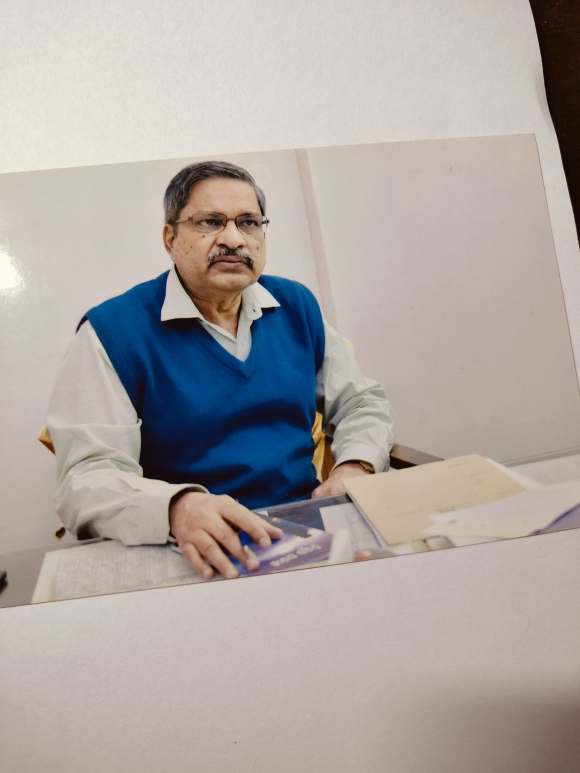
Categories
Excerpt

Aunties of Vasant Kunj

Title: Aunties of Vasant Kunj

Author: Anuradha Marwah

Publisher: Rupa Publications, India

Shailaja woke up reluctantly with the phone alarm at six in the morning and switched on the pump. The first day of the odd semester! She hadn’t got much sleep, but she was still looking forward to meeting the students. She had worked quite hard in the vacation: reading Gone with the Wind, word by word, and photocopying and collating secondary material. Preparing for the new course on popular fiction had given her an insight into romance; teaching it would be therapeutic, she told herself firmly.

The morning passed too quickly with the ever-voluble Rajni ki Ma[1]. She laid out Shailaja’s green chiffon sari on the bed. A gift from Ranjan in a previous life! Or had it been just last year?

‘Didi, wear this today,’ she commanded.

‘I have to go to college. This sari is thin and transparent. It is for the evening.’

Rajni ki Ma started off another tirade about single women dressing like widows and driving away men from their doorsteps.

‘One should not fight all the time. It can’t be his fault totally. Can one clap with one hand? After all, he came and gave the car, didn’t he? Who gives away something so expensive! You could have talked to him, offered him something to eat. There was enough food and I could have made more. As it is, you people eat so little…’ She went on. Shailaja thought she had a point but she still hung the sari back in the wardrobe and took out a yellow salwar and a grey kurta instead.

Rajni ki Ma made a face. ‘Uh, not even matching. Other madams have everything matching, even sandals. Buy some new clothes, no!’

Shailaja emerged from her new home. She felt young—about five years old. The poha[2] Rajni ki Ma had prepared for her—the Maharashtrian way, with peanuts, curry leaves and a dash of sugar—had been piquant with green chilies. She really enjoyed breakfast in spite of the heartache. Her class began at ten-thirty. It was a good forty-minute drive from Vasant Kunj to college. Shailaja shot out of the parking; it was ten already.

But then she had to brake rather precipitately. A huge water tanker was squatting right outside the parking in the middle of the narrow road to the colony gate. What was she to do? As usual, there were cars parked on both sides of the lane all the way till the gate. The parking areas inside the colony were woefully inadequate to contain the Indian automobile revolution that had resulted in two-three cars per flat. With the tanker standing where it was, it was a complete roadblock. In fact, the sides of the tanker were brushing the parked cars on both sides. Shailaja honked. A woman resplendent in a parrot-green dressing gown appeared from the thicket at the side of the road. ‘Two minutes, Madam,’ she said.

Shailaja noted that the huge pipe that emerged from the underbelly of the tanker and vanished into the hedgerow was vibrating. It was dispensing water into one of the monstrous black storage water tanks behind the hedgerow. The tanker was, no doubt, from the state water department and had been sent to pacify the irate residents. Water was supplied for only half an hour that morning.

Another woman in a frilly pink nightgown arrived on the scene and said to parrot-green, ‘I called the tanker. How is it that you are taking water before me?’

It was Mrs Gandhi underneath the pink frills. But she did not even look at Shailaja. She was busy holding her own with parrot-green.

‘If you keep sitting inside having tea, the whole world is not going to wait for you,’ parrot-green attacked.

‘I had called the tanker,’ repeated Mrs Gandhi.

‘So what, I had called him yesterday and the day before, and you took water before me both days.’

Shailaja stuck her head out of the window. ‘Nilima-ji, it’s me.’

‘There is not a drop in my home, and Mr Gandhi has to leave for work,’ she said turning to Shailaja at last.

Mr Gandhi? Husband… Wow! ‘So do I, Nilima-ji. I have work too. My class begins in twenty minutes,’ said Shailaja poking her head out further. ‘Please move the tanker and let me pass.’

Both the women looked askance. ‘Not a drop of water,’ repeated parrot-green.

‘This is emergency, Shailaja. One day the children can wait for five minutes,’ said the betraying Mrs Gandhi.

‘You know I teach in a college. And can’t the water wait five minutes?’  Shailaja persisted.

‘No, it can’t. Why should we ask the tanker to move? He got here first,’ replied parrot-green querulously.

‘I will lose my job,’ Shailaja pleaded.

‘Teachers in Delhi University are always late,’ said the treacherous Mrs Gandhi as her partner-in-crime nodded her agreement. ‘Nobody ever loses job. You only said!’

‘That’s not true. Like in every other job, there are some who are conscientious and others who aren’t,’ replied Shailaja, cursing herself for bitching about her colleagues to all and sundry.

‘It is a good job for women,’ conceded parrot-green. ‘You’re a woman. You must understand the kind of problems one can have without water,’ she continued in a sisterly way.

‘I’m not telling you to not take water; I’m only requesting you to let me pass. Where is the driver?’ said Shailaja, feeling a little desperate now.

‘How do I know? He must be around,’ replied parrot-green.

‘Don’t get so impatient, Shailaja. Try and see it from Mrs Malhotra’s point of view,’ said Mrs Gandhi brokering Buddhist peace. She had been nattering about her ‘new way of worship’ all through summer.

By then, there were three cars honking behind Shailaja. Somebody yelled, ‘Which so and so is blocking the road today?’

Mrs Gandhi and parrot-green looked at each other and, in unspoken agreement, disappeared behind the hedgerow like exotic birds startled by rude tourists in a bird sanctuary.

‘Nilima-ji, I will get very late,’ whined Shailaja but she was talking to thin air.

A man strode out of the car, ‘Inconveniencing everybody!’ he hollered. ‘Blocking traffic at ten in the morning! Driver!’ he called.

Nothing happened.

‘Whose tanker is this?’ The man demanded.

‘There were a couple of ladies here a minute ago,’ said Shailaja, trying to help.

The man gave her a scornful look. ‘Mrs Gandhi!’ he growled. ‘She seems to have a swimming pool in her flat. Water came for an hour in the morning; still this truck from Jal Board has to be called!’

‘I think the water came for just half an hour this side. There was also this other woman, Mrs Malhotra… In fact, she was taking water,’ the ever fair and loyal Shailaja tried to explain.

The man paid no attention to her. He walked to the tanker and turned off the water supply; the fat tube stopped vibrating. Shailaja wondered about him, obviously a man of consequence. His tummy protruded so confidently, like that of her college principal. A thin boy emerged from the thicket. He looked about fifteen.

‘Move the tanker, you…. Next time I’ll get you arrested,’ the man commanded.

The boy jumped into the driver’s seat and the tanker began to roll back.

Law of inertia: roadblocks in Vasant Kunj don’t move without the use of rude force.

I should have got out of the home earlier, rued Shailaja. She would be very late.

Law of inertia: Rajni ki Ma won’t stop unless there is an equal force against her.

She was trapped between the home and the world, powerless, helpless! Panic had her stomach in knots, the road seemed to rise to block her way, the trees on either side gesticulated menacingly. The big tanker was challenging her to pass from the narrow alley that it had created by rolling back just a couple of feet. The car behind her was honking. She breathed deeply, released the clutch and wove her way around the monster. The car nipping at her heels seemed to snort derisively at her lack of expertise.

She had learnt driving just a couple of years ago; Ranjan’s driver had taught her. They had bought a second-hand car for her commute to college. She hadn’t used her skill much because the driver was usually free to drop her to college in Ranjan’s brand new sedan. But at least she could drive and had a car, Shailaja told herself, in an unconscious echo of Mrs Gandhi’s Buddhism.

[1] Rajni’s mother

[2] A dish with flattened rice

[3] biscuit

About the Book

Three women try Buddhist chanting, activism, and fermented drinks of various kinds to make sense of their fast-changing worlds.

Shailaja, abandoned but lovelorn, wistfully teaching romance in a Delhi University college; Mrs Gandhi, plump and garrulous, dedicated to providing endless cups of tea and plates of biskut[3] to all and sundry; and firebrand Dini, ensconced in her idyllic female world, simply cannot see eye to eye. 

But suddenly, their lives take unexpected turns. A lecherous boss, a cheating husband and a completely unsuitable but irresistible lover make them seek out each other. Will Vasant Kunj, with its tight shared spaces, encroached pathways and perennial water and electricity crises provide intersections for unlikely friendships? Or will they continue to collide at Aunty Point, where they’ve all been cast ashore? 

Written mainly in the form of witty dialogue, the novel is like a play about warring world views. The three women act out Buddhism, feminist activism, and love and longing but in doing so they improvise their acts and their roles merge into a shared femaleness. Indian society is sometimes described in terms of conflict between the pre-modern and the post-modern. In this novel such confusion is located within individuals and the conflict is always psychosocial. So while it details the bizarre dailiness of middle class Vasant Kunj — the illegal water pumps and power breakdowns — the novel also touches lightly on universal dilemmas about identity and conflicting social roles that women face all over the world. It is an accessibly written book intended to make the reader chuckle and think.

About the Author

Anuradha Marwah is the author of four novels The Higher Education of Geetika Mehendiratta, Idol Love, Dirty Picture, and Aunties of Vasant Kunj and five plays. She has co-authored the textbooks for Creative Writing prescribed by Delhi University for undergraduate students and by the NCERT for class nine.  She is recipient of the Charles Wallace Writer’s Residency (2001) to three universities in the UK and Fulbright-Nehru Academic and Professional Excellence (FNAPE) fellowship to the University of Minnesota-Twin Cities (2017). She is Professor of English at Zakir Husain Delhi College, Delhi University and lives in Vasant Kunj with her partner.

.

PLEASE NOTE: ARTICLES CAN ONLY BE REPRODUCED IN OTHER SITES WITH DUE ACKNOWLEDGEMENT TO BORDERLESS JOURNAL

Click here to access the Borderless anthology, Monalisa No Longer Smiles

Click here to access Monalisa No Longer Smiles on Kindle Amazon International