I cringe every time I hear this line, during those countless times during my calls, placed amidst the robotic, psychosis-inducing loop of hold music. Funny, this ‘muzak’[1] was meant to create calmness.
“All our agents are extremely busy right now; you’ll be attended to shortly. Your call is important to us.” The robotic voice would go, trying to sound like how a hangman would place a hood over your head before pulling the lever.
“You are the number 999,999,999th customer in line!”
This is nothing new. Even when an alien concept called customer service was introduced in the old days, people had to wait in line to have their issues resolved. At least, the saving grace at the end of this endless queue was a human voice, not a chatbot. Now, after a zillion years of human experience in crisis management, the problem of waiting persists, and we still have to wait in line, twiddling our fingers.
Now that all transactions and dealings are conducted electronically, I wonder why the queue on the telephone line is never-ending. Is there a rush for something that I am unaware of? Are the customers so unimportant or irritating that the company believes it does not need to invest in more agents to handle the increasing demand? Whether it is a Monday or any other day of the week, you can tune in and listen to an hour or so of so-called soothing music, or until your patience runs out.
When you finally reach the end of the line and think it is all over, it is not. Here, you will be presented with a menu so extensive that you will be spoiled for choice. Press 1 for English, press 2 for …, press 1 for savings, press # to return to the main menu, yada yada. The fat lady never sings.
Along the way, you will be forewarned, “anything you say can be used against you in the court of law!”, but not in the exact words.
“Your call is important to us. It will be recorded and be used for training purposes!” Yeah, right.
For all you know, nobody is there at the other end. The single casual employee employed to man the line may be on sick leave with a sore throat or something. The customer line is just to hold a caring image. If a problem cannot be resolved online, how can it be sorted over the phone? The clients have to present themselves in person at the office anyway. Just give the callers some chill music and let them be zombified by the hold music. At a time when AI (artificial intelligence) is taking over mundane tasks, it is not cost-effective to hire dedicated staff for them. This is what the big companies seemingly offering call-in customer service seem to think.
They may have made a devilish deal with the telco companies. We hold the line while the telcos go laughing all the way to the bank on our account. That is why there are frequent dropped calls. It is not due to poor cellular network coverage or a system glitch. It is intentional.
Not to forget the flurry of self-aggrandising advertisements that get inserted while clients wait in anticipation or are doing their down-to-earth activities like cutting vegetables or watering the garden with the phone on speaker mode, realising the futility and wasted effort of holding the phone to the ear.
Customer service is a thing of the past. Now that there are so many online options to address the intended concerns, face-to-face interaction is quite dated. If the customer is too daft to use the services, they deserve to be taken for a ride. Increasingly, automation can handle most compelling transactional issues. If the customer’s problem is too big for the bots to handle, the customer still needs to go to the office.
The problem is that offices are virtual nowadays. Mailing addresses are in the cloud, and offices are shared by a zillion fly-by-night companies. There is a thin line between the modern way of doing business and being taken for a ride. Like the pleas of the stranded Nigerian princes and their stash of heirlooms, a legitimate transaction may turn out to be a scam, too.
From Public Domain
[1] Muzak- a brand of soft, instrumental, and smooth non-distracting music designed to create an atmosphere of calmness.
Farouk Gulsara is a daytime healer and a writer by night. After developing his left side of his brain almost half his lifetime, this johnny-come-lately decided to stimulate the non-dominant part of his remaining half. An author of two non-fiction books, Inside the twisted mind of Rifle Range Boy and Real Lessons from Reel Life, he writes regularly in his blog, Rifle Range Boy.
PLEASE NOTE: ARTICLES CAN ONLY BE REPRODUCED IN OTHER SITES WITH DUE ACKNOWLEDGEMENT TO BORDERLESS JOURNAL
During my early days of cycling, as I trained during the early hours before dawn, my greatest fear was not the darkness. Beyond fearing fear itself, the next thing that frightened me was the possibility of a head-to-head encounter with a pack of stray dogs that throng the country roads leading up to Genting Peres, the border between the districts of Hulu Langat in Selangor and Jelebu in Negeri Sembilan.
The dogs are not from the wild. Some of these ‘man’s best friends’ served as guard dogs for the numerous orchards and homes of indigenous dwellers along the valley. A few packs of dogs must have been abandoned by their owners for various reasons. In Malaysia, a peculiar tradition during the Lunar New Year is to adopt animals based on the celestial animals associated with that year. Dogs, rabbits, and pet roosters are highly sought after until the excitement of the new year diminishes. Afterwards, people often look for ways to discard their pets. Where do you think they end up? Here, at the edge of civilisation. Fortunately, tigers and dragons, which are also animals in the Chinese calendar, cannot be kept as pets for obvious reasons. Imagine abandoning these creatures into the wild after the flavour of the month!
Over time, we occasionally hear of dogs attacking cyclists or cyclists falling off their bikes after being harassed by these canine creatures. The interesting thing about these wild animals is their need for vigilance. Creatures of the wild generally live by the rule of survival. They base their behaviour on constant vigilance. In a universe where ‘might is right’ and the law of the jungle dictates that the winner takes all, a misjudgment could be their last. Their default behaviour is to establish dominance in any given situation. If the opponent appears uncertain, frightened, or even runs away, the animals will try to assert dominance. Conversely, if they seem disinterested or exude confidence, the wild animals will likely just slither away. It is all about exerting dominance, marking territory, and size—these really matter.
Imagine a child who, after being frightened by the appearance of a stray animal, immediately reacts with fear and runs away. This kind of submissiveness can be easily detected by predators. It is 101 in their survival toolkit. Next comes the attack. The more one bows, the more he will be smacked down. This is the law of the jungle before Earth became civilised, but is it relevant still?
We like to believe that civilisation ushers in less violence. A civil society is meant to resolve conflicts through negotiation and arbitration. The higher one climbs the ladder of education, the less one resorts to swords and machetes to prove one’s point. At least, that is the belief we have been taught.
We were also told that we are not the sole owners of the planet. We share it with other beings, both human and non-human, to pass it on to the next generation in the pristine condition in which we received it. Every being deserves its place in the Sun.
Someone from my secondary school WhatsApp group recently sent a gruesome video of a toddler being mauled by a stray dog on a busy street. It is unfair to speculate about the events that led to the incident, but suffice it to say, rabies is quite rare in the community, and the dog was quickly captured and probably put down.
The whole fiasco brought to mind the recent ruling of India’s Supreme Court on stray dogs[1]. After a six-year-old girl died from rabies following an attack by a stray dog in Delhi, society recognised the seriousness of the stray dog problem in India. There are about 15 million stray dogs in that country [2]. The Supreme Court decreed that all strays should be removed from the streets and be vaccinated, neutered, and placed in shelters permanently.
What followed was a farcical display of comedy. Animal activists were furious, accusing others of cruelty for confining animals in cages. The highest courts reversed their decision and allowed the dogs to be returned as strays after sterilisation and immunisation, as if that would reduce dog attacks. Perhaps if the gonads are removed, they would be less aggressive.
Many talk shows and YouTubers appeared in the media, debating the issue and trying to find common ground. Some activists may have lost perspective, forgetting that human lives are involved. They personify the stray animals, attributing more importance to them than to children, and prioritise animal rights and freedom. Some animal enthusiasts even link animal aggression to human behaviour. In my books, children and human lives may take precedence over animals. Some conspiracy theorists went so far as to say that PETA [3]and animal sympathisers are foreign agents to discredit India and maintain the Indian demand for rabies vaccines.
The rising sales of pepper sprays only confirm that we should be more wary of fellow humans than other beings[4]. The increasing avenues for ladies (and men) to call for help in case of domestic or sexual assaults do not speak well of our ‘civil’ society. The ongoing stories about horrific crimes further serve as evidence of these crimes[5]. Leaders whom we elected democratically to protect us are determined to turn the world upside down, aligning with the military-industrial complex. They seek to wage war, not to promote peace. They play the fiddle while their capital goes aflame. They indulge in cakes when the common man has no bread.
We may convince ourselves that we, as a society, have become less violent. As a hunter-gatherer, our lifetime chance of a violent death was close to 15%[6]. In modern times, however, despite years of introspection, aggression still occurs. A growing concern is violence against oneself in the form of suicide, war and genocide against others due to differing ideologies, homicide for self-interest, and killing other animals for recreation. And we call ourselves cultured. Animals only kill for food, territory and mates for the continuity of the species. We do it for recreation during the hunting season, and for a psychopath, it gives him power, control, grandiosity and ecstasy with no remorse[7]. (6)
(P.S. Like how a mafia would walk into the neighbourhood and receive a cursory nod from the town folks, the pack of stray dogs and I have established a working relationship. They do their thing of barking and exerting authority, whilst I simply pass through unceremoniously. It is an understanding between a wandering dog and a cycling dog!)
Farouk Gulsara is a daytime healer and a writer by night. After developing his left side of his brain almost half his lifetime, this johnny-come-lately decided to stimulate the non-dominant part of his remaining half. An author of two non-fiction books, Inside the twisted mind of Rifle Range Boy and Real Lessons from Reel Life, he writes regularly in his blog, Rifle Range Boy.
Disclaimer: The opinions expressed are solely that of the author and not that of Borderless Journal.
PLEASE NOTE: ARTICLES CAN ONLY BE REPRODUCED IN OTHER SITES WITH DUE ACKNOWLEDGEMENT TO BORDERLESS JOURNAL
The question is, why are we here? What are we doing, and what is expected of us? Is the purpose of our existence merely to continue the propagation of the species? Is there a higher calling to elevate our souls? Can we correct our karmic order to a better footing? Unfortunately, if only we knew where we went wrong last time, we could fix our past mistakes. Sadly, we do not. Is our presence on Earth to raise our species a level higher, whether intellectually or technologically, than a generation before? Is there a greater plan in the pipeline, to consume more and more, heading towards entropy? The less wise among us will be sure of their existence, convinced that this is a testing ground for more magnificent things to come.
Among the lower orders of species, it is a given that the biological reason for their existence is the perpetuation of DNA and the selection of the fittest. Most animals die shortly after laying eggs. Some, like praying mantises and black widow spiders, kill their mates after sex. Salmons lay eggs once in their lifetime, after enduring life-changing experiences to swim upstream, conserving all their energy for their one final trip to lay eggs and then die[1]. At this level, it seems that their raison d’être is to procreate. That is all.
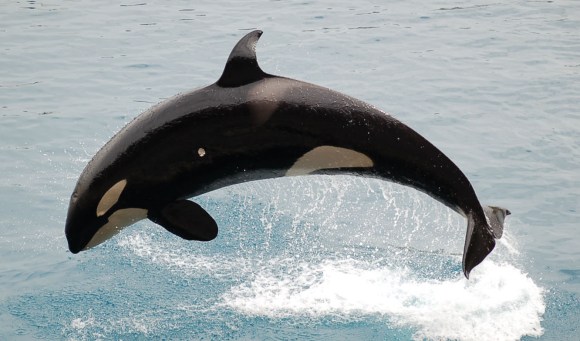
As we climb the pecking order, women evolve to live longer. Some even reach a phase of life way past the cessation of ovarian follicles, a period called menopause. Only in a few species do the females have the luxury of relieving themselves of childbirth and caring for the young towards the latter part of their lives. Formerly, it was thought that only humans go through menopause. Now, we know that besides humans, whales, orcas, and chimpanzees also spend a significant part of their lives in the postmenopausal period[2]. Thinking about it, if the main purpose of life is to pass on DNA and then move on, why do they stay so long without trying to improve or spread the gene pool? It seems like a waste of resources. If it were only for procreation, it would clash with the purpose of existence. They might have to compete for limited resources.
Behavioural scientists who have studied orcas and whales suggest that their pod structure is matrilineal[3]. The older members care for the ‘grandchildren’ to promote survival. Indirectly, they help ensure the continuation of the species. This is known as the ‘grandmother hypothesis’. Their presence leads to healthier and stronger calves for future generations. These older postmenopausal orcas possess a wealth of knowledge to guide the pod in making life-changing decisions such as where to hunt juicy salmon and where to relax in peace.
Elephants that live for a long time, up to around 80 years, can still reproduce quite late, even as late as a 65-year-old female. One may wonder whether inbreeding is a possibility since they live in communities. Fortunately, nature provides a solution for them. Bull elephants, after reaching adulthood, leave their community tribe — a practice called dispersal. They then join their bachelor friends and roam around sowing their seeds. Female elephants remain with their birth herd for their entire lives and do not go through menopause[4]. In the chimpanzee community, dispersal is carried out by the females. They leave their troop when their hormones surge to avoid inbreeding.
So, where does that leave us as humans? Are we evolutionarily programmed to spend a long time in the postmenopausal state? After all, our ancestors rarely reached menopause. Even as late as the 18th century, the life expectancy of a woman was between 35 to 40. Advances in medical care and safe childbirth have extended our lifespan beyond the expectations of our ancestors. It might be an evolutionary accident, but we have adapted to it. It also prevents intergenerational reproductive conflict, as we avoid competing with our daughters for limited resources and reproductive opportunities.[5]
If the continuity of a species is the primary goal of life, then postmenopausal women have fulfilled their mission early in life. Life in old age should be regarded as a bonus. Without a role in transmitting genetic material, they may indulge in pursuits that bring them happiness. They might be catching up on activities they could not pursue during the demanding years of motherhood. The vast wealth of life experiences and street-smart wisdom can be passed on to their children, if the young are willing to listen. They could also revisit their carefree teenage years, which were cut short by hormonal surges during youth and the burdens they carried.
Recently, it has been suggested that living in an extended family can help ease the burden of caring for children with neurodevelopmental conditions. While it does not prevent ADHD or autism, grandparents can be valuable for providing emotional support and practical assistance.[6] They can offer a listening ear to understand the child’s unique needs. Better outcomes have been observed when grandparents live with their grandchildren.[7]
On a philosophical and existential level, it is difficult to precisely define what life is all about. We can discuss endlessly, like a philosopher, until the cows come home and then go grazing again. From a biological perspective, there is no doubt that it is not merely about the propagation of chromosomes. There is also room for acquiring knowledge, disseminating it broadly, and offering a helping hand to make the world a better place.
An orcas: Sourced by Farouk Gulsara from Public Domain
Farouk Gulsara is a daytime healer and a writer by night. After developing his left side of his brain almost half his lifetime, this johnny-come-lately decided to stimulate the non-dominant part of his remaining half. An author of two non-fiction books, Inside the twisted mind of Rifle Range Boy and Real Lessons from Reel Life, he writes regularly in his blog, Rifle Range Boy.
PLEASE NOTE: ARTICLES CAN ONLY BE REPRODUCED IN OTHER SITES WITH DUE ACKNOWLEDGEMENT TO BORDERLESS JOURNAL
I learnt early that life is never fair. They say time and tide wait for no man, moving along their own trajectory.
I heard money solves all problems or at least eases the pain of tough times. There was a time I ventured into saving mode. I started my own piggy bank, dropping in a coin almost daily into a plastic-mould chick figurine. I patted myself on the back as the clink of coins became louder and louder. It was not much, but every jingle reminded me of the value of money and the comfort it would provide me one day. The trouble was that my sisters were equally pleased that my coffers were filling to the brim. They began needling out coin after coin to finance their addiction of buying little treats. I felt frustrated. I knew saving was hard, but I never expected reaching my goal to be so difficult. My sisters’ malfeasance came to light one day when I noticed that the piggy bank had been displaced away from its usual place, tucked behind my nice shirts. That was when I confronted my sisters.
In my eyes, I did nothing wrong. Instead of admonishing my sisters and compensating for my loss, Amma claimed it was my fault. She taught me the harsh truths of life. It was my responsibility to safeguard my property, not anyone else’s. After that realisation, I sought out other ways to save money.
Then, I had a new group of friends. I joined a competitive group of classmates who wanted to excel academically. I thought that would be easy. I devoted all my time to studying and paying attention in class. It seemed easy, but it was a different story when the examination results were released. It was the class jester, for whom everything was a joke, who came out on top. Another valuable lesson I learnt was not just to study hard, but to study smart.
As I grew older and the screaming radio became a constant background to my daily life, I realised that the world was not a peaceful place. On one hand, songs promised a tranquil world of apple trees and honeybees[1]; from the same country, they sent tanks and bombs to annihilate each other. It seemed that the Vietnam War would never end. Peace in the Middle East was merely a pipe dream.
Amidst all that, a hippie song emerged, envisioning a world without boundaries, an airspace free from control, and a peaceful existence [2]. It instilled a sense of hope that life might indeed have something to look forward to after all. The image of two figures dressed entirely in white playing a white grand piano remains permanently etched in my mind as the beacon of hope that one day everything will be all right. And life went on.
After many years of burning the midnight oil and reaping bitter seeds, its sweet fruit finally emerged. Yet, all my classmates who were partying and living life to the full had already gained a head start in their careers. They had ascended the ladders of their professions and were cruising around in flashy cars, while I was starting as an intern with little to show except a few letters behind my name. The competitive streak within me, however, reassured me that academic excellence is superior to the acquisition of wealth.
I continued my healing work, convincing myself that what I was doing would be returned in kind and that I would receive blessings of a different kind. As time passed, I realised that those were merely comforters to soothe a colicky baby. The old adage ‘health is wealth’ was a fallacy. In the real world, wealth buys health, just as one gets justice with all the money one can afford to pay for legal services. The youthful cry of ‘Can’t Buy Me Love’ [3] was another lie. Money buys everything, and it feels better to cry in a BMW than by the footpath of the street.
So, there I was, thinking that if I were to follow the ways prescribed by the elders, I would be all right. “Tell no lies.” They said. “Speak only the truth!” Then there were people who made lying— or they would call it ‘bending the truth’— the pillar of their profession. “Don’t be materialistic, look at humanity!” Tell that to the stockholders who do not take it kindly when the conglomerate shows high praises and blessings but announces no monetary returns in dividends. For one thing, even big countries help each other not for altruistic reasons but for geopolitical and economic interests. There is no such thing as a free lunch. Everything comes with its encumbrances.
I was advised not to fight back but to turn the other cheek. Yet, behind my back, the world has regarded me as a fall guy, and I was merely a useful idiot—someone they could blame for all their wrongdoings because I was naïve enough to admit my mistakes. Now my friends urge me to strike before the other party draws first blood and to never admit to any wrongdoings.
As human beings, we yearn for a world without conflict. We all desire peace of mind—a world where everyone follows a single prescribed path, where everything falls into place, a utopia in which one person sees another not by the colour of their skin or the tunic they wear, but by the strength of their character. Most prayers we offer to a higher being invariably end with ‘Peace on Earth’ or ‘Happiness for All’. Prayers like ‘Sarve Bhavantu Sukhinaha‘ [4] and ‘Om Shanti‘ [5] assume that everyone can have things their way at one given time, creating a win-win situation. Such a situation can only exist in our imagination. Regardless of what everyone else says, life is a zero-sum game. For someone to win, another must lose, somewhere, somehow. For the lion colony to be happy, a goat must be sacrificed. Contentment is achieved when we acknowledge our limitations and accept that sometimes things do not go in our favour. Outcomes may improve if we recognise that we can only do so much.
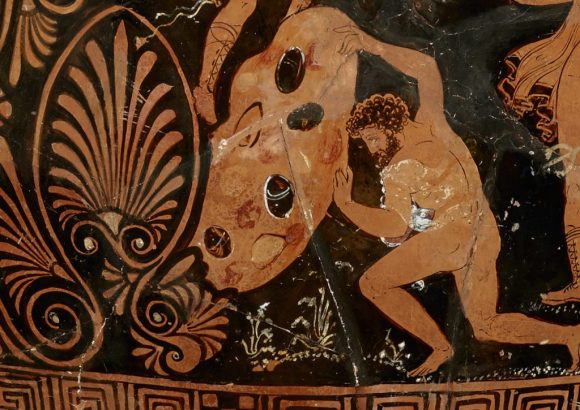
An Earth without conflict is a pipe dream. The natural course of events is entropy interspersed with instances of chaos and order. One can choose to adopt a nihilistic view of our existence and do nothing, or be like Sisyphus [6] — resigned to the fact that we are in a hopeless situation — but strive to find joy in setting small targets and achieving modest successes, filling our hearts with laughter and happiness during the lull before the storm, and endeavour to leave a better future for the next generation.
When everyone found it impossible to carry a big load, the human mind devised the wheel. When the greener pastures across the lake obsessively stirred the curious, it took one brave young man with the imagination to make a raft of fallen tree trunks. Hope springs eternal in the human breast[7]. The change we want the world to embody starts with the man in the mirror. Numerous social experiments have repeatedly shown that doing a kind gesture is contagious. One good turn deserves another. No good deed remains unreturned. We can try.
Sisyphus: From Public Domain
[1] A verse from The New Seekers’ “’I’d Like To Teach the World to Sing” became a jingle for Coca-Cola later.
[2] John Lennon’s most successful solo single, ‘Imagine’, envisions a world of peace without materialism, without borders separating nations, and without religion.
[3] The Beatles’ 1964 hit ‘Can’t Buy Me Love’ is a McCartney composition that naively preaches that true love cannot be bought. In the later stages of his life, McCartney discovered the hard way that divorce, without a pre-nuptial agreement for someone of his stature, could be financially draining. Money can’t buy love, but falling out of it can be costly.
[6] In Greek mythology, Sisyphus was a shrewd king. The gods condemned him to roll a boulder up a hill for eternity, only to see it roll down again after reaching the summit. Albert Camus, in his book ‘The Myth of Sisyphus,’ implies that Sisyphus was happy. He found performing and completing the act itself meaningful. He gave meaning to the meaningless.
[7] “Hope springs eternal in the human breast,” an excerpt from Alexander Pope’s poem “An Essay on Man.”
.
Farouk Gulsara is a daytime healer and a writer by night. After developing his left side of his brain almost half his lifetime, this johnny-come-lately decided to stimulate the non-dominant part of his remaining half. An author of two non-fiction books, Inside the twisted mind of Rifle Range Boy and Real Lessons from Reel Life, he writes regularly in his blog, Rifle Range Boy.
.
PLEASE NOTE: ARTICLES CAN ONLY BE REPRODUCED IN OTHER SITES WITH DUE ACKNOWLEDGEMENT TO BORDERLESS JOURNAL
Life evolves. The new replaces the old, and fresh ideas overshadow previous ones. What was once an avant-garde style one day may appear unattractive the next. We sometimes feel embarrassed by the clothes we wear and the trends we embrace decades after models showcased them on the catwalk.
Trends come and go constantly. Species become extinct at a background rate of one species per million each year. Human activities, such as habitat destruction and chemical pollution, have accelerated this decline by hundreds or thousands of times.
At times, cataclysmic accidents of Nature expedite this decline, such as meteoritic impacts and the extinction of the dinosaurs 65 million years ago. Neanderthals lost the survival game to Homo sapiens because they did not adapt to environmental demands, though not without infusing their DNA into the latter. Should we consider this an inevitable consequence of our existence, or should we strive to rectify it with our current level of scientific advancement?
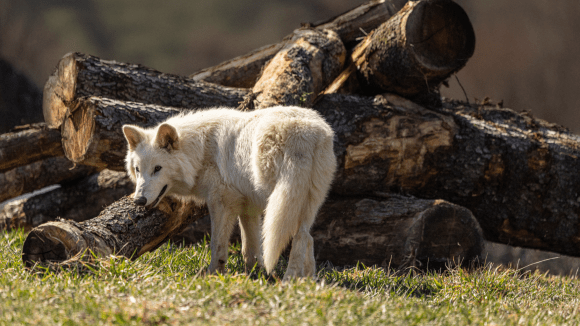
It was recently reported that a rare species of wolf, the dire wolf, last roamed the Earth 13,000 years ago. Three dire wolves have been recreated using CRISPR technology[1] and surrogacy, allowing them to roam the Earth once more. Part of their DNA was extracted from an ancient fossil and transplanted into an artificial grey wolf egg. The grey wolf differs genetically from the dire wolf and is related to the domesticated dog. Dire wolves were fierce apex predators that existed before humans, when the world was a much more hostile place.
The scientists who embarked on this experiment thought it was a necessary first step towards preventing further species extinction. Their next objectives include recreating the dodo bird, which humans hunted to extinction due to its ease of capture, and the Tasmanian tiger. Scientists are particularly fascinated by Tasmanian tigers because they belong to a rare group of marsupials mainly found in Australasia. Additionally, rats with woolly mammoth genes are also being developed in laboratories somewhere.
Are these all really necessary? On one hand, humans pose the greatest threat to all living beings. We not only kill each other but also other species to assert our dominance. Our mere existence on Earth leaves a significant carbon footprint, which could potentially destroy the planet before its expiration date. Logically, we are a greater threat to the species than Nature’s natural selection. We should not exist at all. We only expedite doomsday. Yet, we carry the notion that the burden of preserving the third rock from the Sun for eternity lies squarely upon our shoulders.
A real example of the danger of our manipulation of Nature’s order can be seen in our irritation with pathogenic insects. DDT[2] was introduced to control mosquitoes. We believed we were doing a great service by reducing arthropod-borne diseases, only to realise the crucial roles insects play in pollination and, by extension, our food chain. Rachel Carson’s [3]now-famous 1962 line, “the spring with no chirping birds”, serves as a grim reminder of Nature’s intricate web of interdependency and the detrimental effects of chemical pesticides. Every being has a specific role in the grand scheme of things.
Wolves regulate the overpopulation of large herbivores, such as elk and deer, which helps maintain plant health and diversity. Mosquitoes and many other insects may be pests, but they are also essential for plant pollination and are integral to the food chain that helps balance the ecosystem. Dodos and Tasmanian tigers may have had their significance at one time. Nature, the greater equaliser, must have its reasons for ending its existence. To act against Nature, to correct something we perceive as wrong, is foolhardy.
Hollywood offers a fictional reminder, as was seen in Jurassic Park, of what occurs when humanity meddles with Nature, regardless of how thoroughly we believe we have crossed the ‘t’s and dotted the ‘i’s. The seed of life possesses a mind of its own. Its innate drive to propagate may lead to the creation of dangerous hybrids, mutants, and chimaeras or even result in hermaphrodites within species to ensure continuity.
Even before the dire wolves’ secret whereabouts are made public, Elon Musk has already expressed his desire to have one as a pet. This shows that these freak products will just end up as rich men’s playthings. It is unlikely that this technology will significantly change the day-to-day life of the average person. The tech moguls may view these baby steps as precursors to transhumanism, a better version of humanity, where human capabilities are enhanced synthetically through technology, bypassing Nature’s selection.
Anyway, the last thing we want to see in our lifetimes is new breeds of vicious, ferocious dire wolves joining forces with woolly-toothed mice and bloodthirsty Tasmanian tigers in our streets, searching for us as food in a borderless world as far as these beasts can see.
From Public Domain
[1] CRISPR technology, or Clustered Regularly Interspaced Short Palindromic Repeats, is a gene-editing technique.
[2] Dichlorodiphenyltrichloroethane, is a synthetic chemical compound that was once widely used as an insecticide and a key component in malaria control efforts.
6. Transhumanism is a philosophical and scientific movement that advocates the use of current and emerging technologies, such as genetic engineering, cryonics, artificial intelligence (AI), and nanotechnology, to enhance human capabilities and improve the human condition.
.
Farouk Gulsara is a daytime healer and a writer by night. After developing his left side of his brain almost half his lifetime, this johnny-come-lately decided to stimulate the non-dominant part of his remaining half. An author of two non-fiction books, Inside the twisted mind of Rifle Range Boy and Real Lessons from Reel Life, he writes regularly in his blog, Rifle Range Boy.
.
PLEASE NOTE: ARTICLES CAN ONLY BE REPRODUCED IN OTHER SITES WITH DUE ACKNOWLEDGEMENT TO BORDERLESS JOURNAL
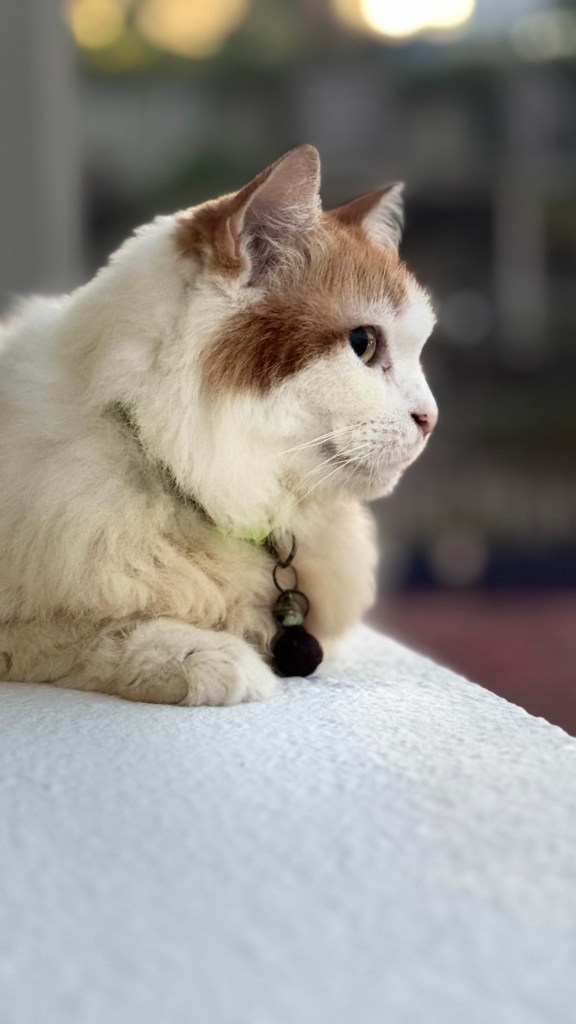
Just the other day, a visitor to my home made a remark. She observed that my cat, Felix, was staring into the horizon while sitting by the glass window. Felix seemed unfazed by the activities within the house, instead focusing his gaze on the neighbour’s gate. In front of the neighbour’s compound stood a few stray cats, returning his stare. It resembled a kind of staring competition.
The visitor remarked that Felix might be looking at all his stray friends on the other side of the fence, envying their lifestyles. They could roam freely whenever they wished, accompanied by their pack of friends. Wherever they rested their heads was their home. Moreover, they did not have to endure his fortnightly baths or grooming. Oh, how Felix loathed those cold showers and the bare feeling afterwards when there was not enough fur on his Persian body to lick, beautify, and flaunt. As for the food… throughout his life, the only sustenance he consumed was in pellet form. The occasional lizards and insects he hunted down with the remnants of what his dormant DNA offered were swiftly intercepted by his owners. This is why Felix the Cat was often seen engaged in forlorn glances, brooding over his seemingly helpless situation.
In response, I told the visitor that Felix’s feline friends on the other side of the fence would likely feel the same way. They would be gazing at him with eyes brimming with envy. If only they grasped a bit of philosophy, they would be yelling, “life is not fair!” Here sits Felix in the comfort of the house, in an aesthetically pleasing environment shielded from the harsh forces of weather and nature, with love overflowing all around, soothing tactile stimuli to caress and rub against him, protected from noxious ailments, and safeguarded against prancing predators and cruel individuals discontented with their presence or their annoying mating calls.
They would probably pray to swap places with a house cat in their next life. Felix, were he to believe in rebirth, would likely yearn to roam free without being tethered—symbolically, of course, as cats are not leashed, a privilege they possess over their fellow domesticated ‘friends’, the dogs!
That is life, is it not? No one is truly satisfied with their existence. Everyone believes the grass is greener on the other side of the fence. What they may fail to grasp is that it appears greener because the soil is fertilised with manure. One must endure the stench of excrement to appreciate the outcome. The poor man looks at his wealthy neighbour and assumes that once he secures that coveted high-paying job and some money, everything will be splendid. Meanwhile, the rich man gazes at the poor, reminiscing about his long-lost days of poverty when life was simple and sleep was undisturbed.
Poet Kannadasan[1], in one of his many wisdom-filled compositions, envisioned a situation: the snake, a natural prey of the eagle, residing upon Lord Shiva’s neck, haughtily sneering at Garuda[2] and inquiring if he was well. The snake, securely nestled in the protection of the Lord, knows that Garuda cannot harm him. Garuda responds that everyone would be just fine if they were in the place they are meant to be. Kannadasan then quotes the Tamil poet Avvaiyar[3],who asserted that the world respects you when you hold a prominent position. When you stumble, even your shadow will defy you. I believe the essence of the message is to accept and appreciate what one possesses in life. Unrealistic expectations lead only to disappointment, whilst acceptance fosters contentment.
.
[1] Kannadasan (1927-81), also known as Kaviarasu (King of Poets) is considered one of the greatest Tamil poets.
[2] A legendary divine eagle-like bird who is the mount of Vishnu.
[3] A Tamil woman poet (supposed to have lived in the first century BCE) from the Sangam period (300BCE – 300 CE).
Farouk Gulsara is a daytime healer and a writer by night. After developing his left side of his brain almost half his lifetime, this johnny-come-lately decided to stimulate the non-dominant part of his remaining half. An author of two non-fiction books, Inside the twisted mind of Rifle Range Boy and Real Lessons from Reel Life, he writes regularly in his blog, Rifle Range Boy.
.
PLEASE NOTE: ARTICLES CAN ONLY BE REPRODUCED IN OTHER SITES WITH DUE ACKNOWLEDGEMENT TO BORDERLESS JOURNAL
A lady who had spent over half her life serving at the temple passed away unexpectedly. She had remained unmarried, having lost her family quite early on. In search of solace, she dedicated all her spare time to various activities to ensure the temple ran smoothly. She ensured that even the most minor details were attended to.
One day, she passed away in her sleep. Nobody realised. The daily operations continued as usual. Nobody missed her. There wasn’t even a mention of her death in any of the temple communications. Only the local gossipy housewives had something to discuss during their daily tête-à-tête. They believed she was in a better place and held a higher status in the karmic cycle. But nobody knows…
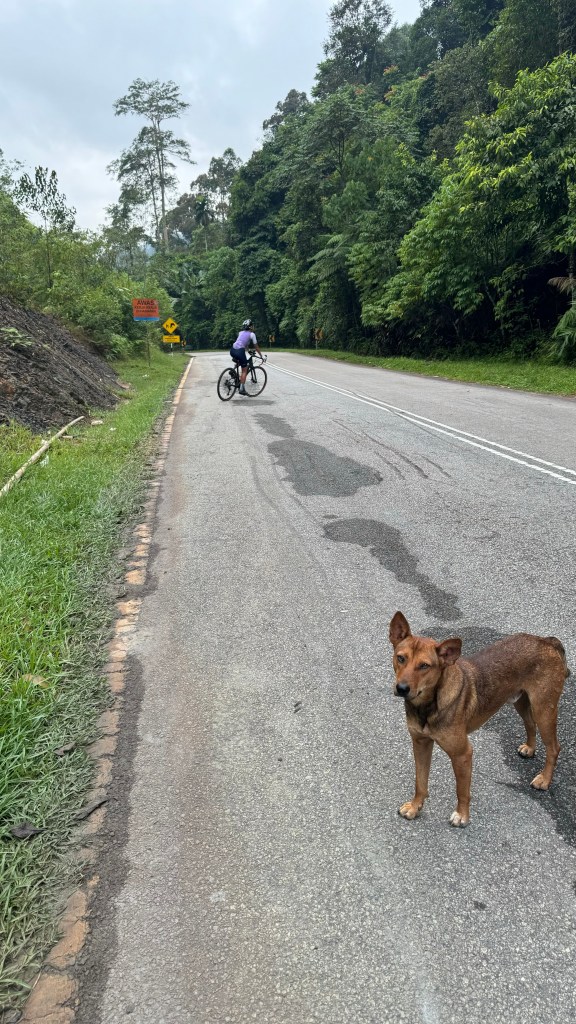
During one of my weekly cycling routines, I chanced upon a lady who had pulled over her SUV by the road. She gave a gentle honk. As if responding to some intergalactic mothership, I noticed a pack of stray dogs and a troop of wild monkeys hurrying towards the SUV. They gathered around the vehicle patiently as the lady began rummaging through the backseat and distributing food.
I believed this to be the finest form of non-verbal interspecies communication I have ever witnessed. The cynic within me proposed that her actions were not in the best interest of the natural order. Wild animals are meant to hunt for their daily sustenance. By feeding them, they become overweight and less agile, ultimately diminishing their mobility. What will occur when the gravy train halts? Will they resort to attacking passersby for free meals? Nobody knows…
Here I am, cycling and running, hoping it will help me live longer or make me less of a bother to those around me in my twilight years. On the other hand, could exposure to the elements and the dangers associated with the outdoors be the actual cause of my malady? Nobody knows…
The individuals gathered in Prayagraj, India, for the Kumbh Mela share a common belief. The alignment of the Sun, Moon, and Jupiter in a straight line is thought to hold cosmic significance. The Kumbh occurs every 12 years in four locations across India—Prayagraj, Nashik, Haridwar, and Ujjain. This year, in 2025, a rare celestial alignment that occurs once every 144 years[2], offers a unique spiritual renewal and liberation opportunity.
Can a lifetime of wrongdoing and accumulated karma debts be washed away in a single dip at Triveni Sangam[3]? Can one attain moksha so easily? Yet, nobody knows… none who have been there and returned to provide a field report.
The take-home message is that just because no reproducible and tangible proof can be provided does not mean it does not exist. To each their own. Rather than attempting to undermine their beliefs or corner them into adopting our views, we should simply leave them be. Let everyone believe they are making a difference in the world they inhabit during their lifetime.
Photo Courtesy: Farouk Gulsara
[1] Eleanor Rigby is a Beatles song from 1966 about a lonely woman who found solace in the church.
[3] The Triveni Sangam in Prayagraj (formerly known as Allahabad) is the confluence of three rivers: Ganga, Yamuna, and the displaced Saraswati.
Farouk Gulsara is a daytime healer and a writer by night. After developing his left side of his brain almost half his lifetime, this johnny-come-lately decided to stimulate the non-dominant part of his remaining half. An author of two non-fiction books, Inside the twisted mind of Rifle Range Boy and Real Lessons from Reel Life, he writes regularly in his blog, Rifle Range Boy.
.
PLEASE NOTE: ARTICLES CAN ONLY BE REPRODUCED IN OTHER SITES WITH DUE ACKNOWLEDGEMENT TO BORDERLESS JOURNAL
We were told to be ready for dinner by 6 p.m., so we had one and a half hours to kill before gathering at the lobby. My varsity mates and I, fourteen of us, on our regular bromance outing, had decided to embark on a six-day tour around Sri Lanka. Colombo was our last stop.
I told myself there was time for a shower. I thought I heard the yell of two men. They must be at the heights of merry-making, I reckoned. Nothing wrong. After all, many were holidaying in Colombo, like us, in what was hailed as paradise on Earth. Maybe they took the celebrations too far. It was then that the lights went off. Then I thought I heard a barrage of a loud bang. Did somebody drop something heavy? Then came the indistinctive smell of burning rubber.
Then it clicked. Everything fell into place. Damn. There must be a fire somewhere! I open my room door. I could see a hint of smoke whirling at the ceiling.
What happened to the fire alarm and emergency light or water sprinklers? This is not a rundown half-grade hotel. This is a reputable hotel with its rich Scottish tradition plastered all over its walls, tartans, Scots family insignia and all. Even though we think the British ruled India, the Scottish served in the East Indian Company in big numbers as well. They, too, joined the bandwagon to usurp wealth from unsuspecting natives through their mercantile activities.
As a matter of reflex, I got into the drill. The passive learning from watching all those disaster movies had to be put to good use. Like a child regurgitating what he learnt from rote learning, I fell in line.
“Relax, said the night man!” The first thing that came to mind was, “Don’t panic!” Earlier there had been a blackout. I was too relaxed to think of sitting through the outage and letting the electricians sort it out. That was the wrong move.
Learned experience from flight stewardesses was “in case of emergency, leave behind your belongings and head to the exit”. I realised that it may only work sometimes. Stuck in a third-world country, running around to the fancy of their bureaucracy is not my idea of a holiday. I stuffed my passport, wallet and mobile phone into my jeans and headed out of the room without my luggage. Again, another mistake, I thought.
I remember reading, “Do not use the elevator in case of emergency,” during those long hours spent waiting for lifts. Keeping that in mind, I headed to the stairs. Wow, so far, so good. I began wondering how everything was working like clockwork. Are people so desensitised after watching so many reels on YouTube that they just know what to do? The hotel staff must have been bombarded with so much footage of disasters elsewhere that they could perform the next course of action half asleep.
To be fair, the hotel staff were on their toes, guiding guests down to the exit with the light of their phones. Without their help, the stairs would have been pitch dark. Now, what happened to the emergency lights along the stairway?
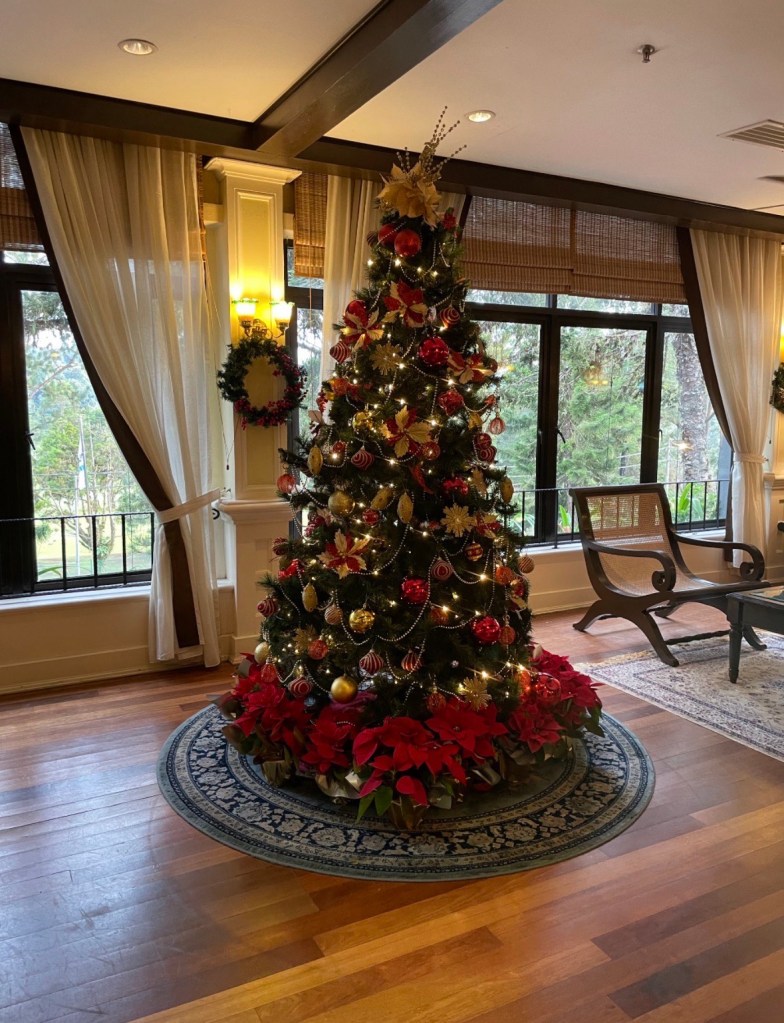
Going down was easy, but there was mayhem once I reached the ground floor. Visibility was almost zero, and the lobby was filled with thick smoke. For the first time, panic was palpable. People were coughing and shouting. My first instinct was to pull up my T-shirt to cover my mouth and crouch down as low as possible to minimise smoke inhalation. I switched my mobile phone light on to guide my way forward. My foot hit upon what was the Christmas tree. Huh! I remember observing a giant Christmas tree in the lobby very near the entrance while checking into the hotel. The only differences were it was then brightly lit and covered with fake snow. Now it is dull and grey. I knew the exit was nearby. I followed the steady traffic of the crowd herding out.
Still, the thick smoke was overwhelming, and the pungent smoke slowly irritated my throat. I continued the rest of the journey in anaerobic mode, trying not to inhale more smoke than I had already ingested. Luckily, the way out was short.
It was hard to stay relaxed when everybody else was not. Somehow, I made it out, patting myself for staying calm. What greeted me outside was a crowd surrounding the perimeter of the hotel, directing me to an area nearby. They were pointing up at the building that was supposed to be my two-night stay. There was thick smoke bellowing from its 7th floor.
News spreads like wildfire in this digital world. People were engrossed in getting the best angle for the personal shot with their devices. Soon, the footage would grace their social media and, perhaps, be potentially ‘viralled’. Photographers with zoom lenses were already there as if they had purposely ignited a fire to film it. Curious onlookers with work clothes were locked in their gaze, in awe, as if it were the second coming. I followed.
I could see one elderly gentleman out at the window. Yes, I had seen that man before when checking in. He was then struggling to move. He must have opened his window to let the smoke out of his room. But luck had different plans. The smoke had grown in intensity and was blowing directly at his window. Desperate, he climbed out of his window and wanted to jump out against the pleading and yells of onlookers, including me. Maybe it was the confusion of inhaling carbon monoxide; he must have thought the fast out of his misery was to jump down without a safety harness.
A modern fire engine moved in just then, much to everyone’s relief. In a jiffy, an aerial ladder was summoned to whisk the victim from the window. Applause ensued, and the victim was quickly stretchered to a nearby ambulance.
Firemen at work. Photo Courtesy: Farouk Gulsara
The bellowing smoke quickly settled down, and my friends and I sighed in relief. Though one of my friends went on a tirade of cough. Even before the start of the holiday, he had been recovering from a nasty dry cough. The smoke must have made it worse. The paramedics checked on him, too, and took him in for overnight observation.
The hotel was cordoned off with yellow tape and classified as a crime zone. The police had to investigate to rule out arson. Until then, our luggage was the property of the Sri Lankan Police Department, and no one could go in or out.
We were left out like refugees with only our pants and clothes on our backs.
“… but we have our luggage stuck upstairs. We need them!” we told the hotel staff.
As expected, the reply was, “Sorry, Sir. Nobody can enter the building. But don’t worry, Sir. We will take care of your things.”
We were later given rooms in a nearby hotel, which was better and newer than the drab one we had been given earlier.
We soon left to bury our sorrows in some Ceylonese comfort food: apom[1] and coconut milk-rich crab curry. We had enough action for the day.
In retrospect, leaving the luggage behind was a wise move. Chugging the bags along the dark stairs and smoke-filled foyer is quite daunting. Sleeping with the clothes on our backs without toiletries must have been a trade-off for smoke inhalation and hospital admissions.
Overnight, we had become stars of sorts. Everywhere we went, it became the ice breaker. We became the talk of the town as the ‘guys who cheated the hotel fire”. Of course, we did nothing like that. Still, it spiced up our holiday and gave us friends of more than forty years something to reminisce about in our twilight years.
We only had access to our bags the following morning, which also meant we could not personally enter the premises to collect our belongings. Only designated hotel staff could do that. The hotel was still a crime investigation zone, which must mean we were considered potential arsonists who could tamper with evidence. The police personnel were still busy taking samples and photographs of the crime scene.
Luckily, the fire was localised, and the firefighters did not need to hose the whole building down. Hence, our baggage was dry. My room was on the second floor, while my other friends were on different floors. The fire had been on the seventh. Even though most of our rooms were far from where the fire allegedly started, the retrieved luggage came with a grimy layer of soot, compliments of the furious, fiery invader. Even the garments and bags gave a whiff of smoke for days afterwards, even after sunning it in the open.
Imagine how it would have been if I had waited a little longer. What is damage to property when, above all, health and life matter most? Going back without the luggage is better than returning in a body bag.
.
[1] apom – soft, sweet and fluffy traditional pancake from Southern India and Sri Lanka.
Farouk Gulsara is a daytime healer and a writer by night. After developing his left side of his brain almost half his lifetime, this johnny-come-lately decided to stimulate the non-dominant part of his remaining half. An author of two non-fiction books, Inside the twisted mind of Rifle Range Boy and Real Lessons from Reel Life, he writes regularly in his blog, Rifle Range Boy.
.
PLEASE NOTE: ARTICLES CAN ONLY BE REPRODUCED IN OTHER SITES WITH DUE ACKNOWLEDGEMENT TO BORDERLESS JOURNAL
I reported to Kuala Pilah[1]District Hospital on 11th August 1989. Just having passed out from medical school a year earlier, followed by a year of housemanship training, I was rearing to go. Like Dr. David Livingstone, who explored the interior of Africa to treat the needy (and convert them), I thought I would change the world.
1989 Kuala Pilah District Hospital was a secondary 100-bedded hospital with a resident Obstetrician-Gynaecologist, a few medical officers and a functioning operating theatre. Many seriously ill patients who needed tertiary care were transferred to a general hospital about 40km away.
The hospital administrator was pleasantly surprised to meet me. He thought I would join the team when the rest of the doctors reported on the first of the month. Truth be told, I was down with a case of occupational hazard. I was down with chicken pox after delivering a mother with the disease. I had to extend my training ten days after exhausting my annual leave.
After the cursory formalities, I was given time off to help settle in. The hospital did not have any accommodation facilities for its staff. They only had a vacant but rundown wooden attap house just outside the hospital. It had all the basic amenities, electricity and water supply. I thought I would use it temporarily before getting better accommodation elsewhere. That is when I was introduced to CK. CK was to be my housemate.
CK was working as an anaesthetic medical officer in the hospital. He was a year senior to me in service and was training to be an anaesthetic specialist. He alternated with another medical officer trained in anaesthesia to do daily calls in the Kuala Pilah District Hospital.
CK walked in when I was talking to the hospital administrator, Dr Teng.
“Oh yes. This is Dr. CK. He can be your housemate,” Dr Teng said. He will move into a new place once he gets one.”
“I think I’ll stay with CK and probably share his new place,” I said, “…that is if he is okay with sharing.”
CK was a lovable chap with a smiling face and an approachable demeanour. Slightly chubby, he resembled a cuddly teddy bear. His affable charm put everyone at ease, which helped him in his career as an anaesthetist. I later found that, understandably, the one thing he loved in his life was his food. He would later jokingly say that his paunch was an asset for him in his job. It helped to stabilise patients’ heads when he was intubating them.
A tall Minangkabau roof. From Public Domain
Before the phrase ‘living out of a suitcase’ became vogue, I was already living that life. Uprooting from point A to point B meant shoving everything into a couple of suitcases into the car’s boot, and off I went. My needs were few.
My stay was at an old wooden house built with a tall Minangkabau-styled roof. At any time of the day, it was cool. A cool breeze constantly swept through the length of the house. The tall ceiling helped. Despite its location in the heart of Kuala Pilah town, it was eerily quiet. The only noise one hears is the squeaking of its wooden floor when someone walks. As mentioned, the home had modern electricity and water supplies. The quarters pleasantly surprised me with a newly installed telephone line.
It was a time before digital mobile devices came into existence. All we had were landlines and pagers. Telephones were essential to medical treatment as they remained the only way to track down doctors on the go, from ward to ward, in a compound with single-story buildings. It was comical to see musical chairs at play. Sometimes calling someone is like playing ‘Whac-a-Mole’. One calls Ward B only to be told the doctor has gone to Ward A, which has just been called. In emergencies, if a doctor could not be tracked down, a runner (literally the most agile of the staff) would run from point to point to hunt the doctor down. The public announcement system was available but would forever be under repair, and the person holding the key to the audio room would be AWOL[2].
As CK was the anaesthetic medical officer (MO) on call, attending cases that needed surgery, he did not need to sleep in the hospital. He could return to his quarters (the one I was to share) after midnight to retire for the night. He would typically hang around the hospital before leaving for his quarters when the coast was clear.
Now, CK was a heavy sleeper. Like Kumbhakarna[3], he was one of those who could sleep through a nuclear holocaust. The only thing that CK woke up to was a telephone ringing—the first ring at that! No, the bleep of the pager would not do.
Later that evening, after meeting around the new colleagues, CK and I walked to a nearby food court for dinner. The char koay teow[4] stall there later became our favourite hunting ground for dinner for the next year while we were there in Kuala Pilah.
Ah Chong, the char koay teow seller, who had known CK for his regular patronage, ran out. Ah Chong was born and bred in Kuala Pilah. He ran Kuala Pilah’s famous halal char koay teow stall and took a keen interest in every little gossip around town. A simple-looking man whose wardrobe probably had two types of garments — white pagoda tee-shirts and black knee-length trousers — must probably be one of the wealthiest men in Kuala Pilah.
“Hello, boss. What happened early this morning, ah? So much commotion, with lights, honking and ambulance sirens. What happened? A bus accident or something like that? I think the whole of Kuala Pilah got up!”
CK sheepishly told Ah Chong, “No, nothing. The hospital just wanted to contact me.” Ah Chong left to prepare our dish.
After Ah Chong left our table, CK started to chuckle.
“You know what he is talking about?” asked CK.
“No.” I shrugged.
“The day I arrived here, I knew I would be on-call. And I took the quarters to stay before getting a proper house. Teng, the administrator, told me to do calls on the third day I arrived.” CK started. “I told Teng he needed to install the telephone line at the quarters immediately as they may need to contact me after late.”
“Teng told me he will get it done next week. He said, “You know, these small towns, they do things slowly.”
“I told him I was doing calls and that I am a deep sleeper. The only thing that wakes me up is the sound of a phone ringing.”
“But he said he would get it done as soon as possible.”
“Yesterday, I was on call. I don’t know why; maybe it was because it was the start of the hungry ghost month or something, and the wards were eerily quiet. There were no cases after 4pm.”
“I was at the doctors’ lounges watching TV and dosed off. Can you imagine there were bed bugs on the settee cushion?”
“I started scratching and scratching like a monkey on heat. I left for the quarters, telling the Operation Theatre (OT) staff to contact me if needed.”
“I left close to midnight. As luck would have it, a mother came in just as I left, after being in labour at home since morning. Our friend, Morrison, thought she needed a Caesarian Section. They paged me. Twice. No reply. So, Wahab, the OT attendant, ran to the quarter.”
“Wahab came to the quarters’ gate. He was just too shy to come in. So, he started calling for me. I must have been in my deepest sleep state. I guess I was just too tired yesterday. Too tired, not doing any work.”
“After a few times, he started throwing pebbles at my window. No response. Then he ran back to the nurse to tell the situation. The OT nurse, now in desperate mode, called the ambulance driver. She thought the ambulance driver, being good at raising the alarm, could raise me from a dead sleep!”
“What?” I exclaimed. I had no clue in which direction this story was going.
“Now, the ambulance driver is a smart man. He knew it was 4 o’clock on a Tuesday morning. He can’t simply turn on the ambulance siren at full blast. People had to go to work the next morning. He had to answer if any of the townfolks were to complain.”
“He brought the ambulance near the quarters, parked it facing the main gate and turned on the high beam. No reply. Then he flickered it repeatedly. All were quiet in the rooms.”
“Then the genius thought, why not turn on the beacon? So, up came the stroboscopic red light twirling around town, waking everybody!”
“He was not prepared for what came next. Lights from nearby shophouses started flickering, too. Soon, he could see silhouettes of people drawing their curtains, trying to figure out the commotion. One by one, everyone was up!”
“Still, I was sleeping, it seemed. As a last measure, before calling the police, the driver started blaring the siren!”
“Luckily, I got up. As an instinct, I saw my pager and the numerous messages there.”
“I ran out like the Merry Melodies cartoon character. I got the shock of my life when I came out to the gate. Outside, to greet me were the uncles and aunties, with their sarongs[5]and nighties, all with blurry eyes trying to make sense of the pandemonium. I could see through the windows that the lights were on. People were craning their necks trying to see all the excitement — lights, ambulance lights, siren and crowd.”
“KP is a peaceful town. I think people never get more excitement in their lives. Ever.”
“Anyway, the surgery went fine and baby too.”
That was how our first day started. A few days after that episode, we moved to a single-storey house some 10 minutes from the hospital. Filled with quirky moments like that and many more, we got embroiled in our respective works. A year flew past by. CK went on to be a consultant anaesthetist a few years later. We have been in contact since.
One October morning, 2024, I heard CK was found slouched in the bathroom. He had an apparent coronary event. Nothing could arouse CK this time, not even the 1,000 elephants who allegedly walked over Kumbhakarna to wake him up.
.
[1] Kuala Pilah is the second in the State of Negeri Sembilan, Malaysia. It is 36 km from the state capital, Seremban, and 101 km from Kuala Lumpur.
[3] In Ramayana, Ravana’s (the king who abducted Sita) brother is Kumbhakarna. An intellectual and physically menacing prince was tricked into receiving the boon of sloth. He remained asleep for six months, just to get up, eat and sleep again. Legend has it that he could only be awakened by having 1,000 elephants walking over him.
[4] A popular stir-fried flat rice noodle dish of Southern Chinese origin
[5] A loose cloth wrapped around the lower body, worn by men and women of the Malay Archipelago.
Farouk Gulsara is a daytime healer and a writer by night. After developing his left side of his brain almost half his lifetime, this johnny-come-lately decided to stimulate the non-dominant part of his remaining half. An author of two non-fiction books, Inside the twisted mind of Rifle Range Boy and Real Lessons from Reel Life, he writes regularly in his blog, Rifle Range Boy.
.
PLEASE NOTE: ARTICLES CAN ONLY BE REPRODUCED IN OTHER SITES WITH DUE ACKNOWLEDGEMENT TO BORDERLESS JOURNAL
I decided to care for my ailing octogenarian mother, not because she willed me a great fortune or because I have a great liking to care for the sick. Neither do I want to gaslight her for all the not-so-nice things she said about me and my family in better health all through her healthy life.
I volunteered because, given the circumstances the rest of my siblings were in, I was in the best position to keep her. As the son and her firstborn, I had to also fulfil my filial duties. Maybe, I thought, that there is no such thing as a free lunch. Everything has a price. All that nocturnal supply of breast milk and immaculate care during the trying times of infancy and toddlerhood are not free. Maybe she drilled it subliminally into my young mind as she nursed me during those formative years.
Through her babbling and rumbling, I can see she is not happy where she is now. Her apoplexy-stricken grey cells cannot comprehend that her lifeless limbs cannot carry her atrophied body to care for herself. Yet, she wants to stay on her own. She wants to be the Queen of her little space and controller of her destiny. In her demented mind, she imagines herself as her usual 30-year-old buxomly go-getter who wants to pave a future for her three children.
She explicitly expresses her dissatisfaction to her caretaker (i.e. me) with cusses and hurtful words a mother would not utter to her offspring; however, she is not in control. She sees herself as the young lady she once was, with a one-track mind to succeed despite whatever curveballs life throws. She wants to walk back to her house, some 300km away, the home she and my father built so many years ago. She vehemently thinks she can.
She grew up never having anything called coming of age. She whizzed through her adolescence and early teenage years like it was a non-event. Robbed of a mother at 15 to breast cancer, she grew up fast to fit into her working boots. She had to fend for herself. Her widowed father did not want to be bogged down by his four teenage children running around clinging to his trousers, demanding this and that. After all, he was young and had a life to live. Even before the soil settled on his wife’s grave, her father was already busy wooing his new wife. This early loss and the subsequent responsibilities she had to shoulder shaped her into the person she is today.
Without a mother’s embrace to comfort and a shoulder to lay her uncertainties on, this teenage girl became an adult overnight. She looked at the world as an evil beast waiting to engulf her. Her view of the future was bleak; she wanted to be prepared for a rainy day, even for the monsoon season. This outlook apparently has stayed until now. She thought it worked for her then; why should it not work for her now.
I do not want this current image of my mother as the only memory of her for the rest of my life. I long for the nurturing mother of my toddler years, with her cooking and bedtime stories. I long for that comforting mother.
May this transition be smooth for both of us. May you forgive me for all the times, I get angry with you, and for all the times you make it challenging to care for yourself. I must tell myself that you have lost that one thing that makes a human a human—rational thinking and free will. Your actions do not reflect your inner soul. They are mere peripheral reflexes responding to defective neuronal connections. This role of a caregiver is not easy, and I acknowledge the difficulties it brings.
I forgive you for all the pain and hard times you gave me growing up. You did not believe in mollycoddling the children but chose to follow the example of a tiger mum. You did the best with your life experiences and what you learnt to be the best form of upbringing. Like you used to say, ‘Spare the rod and spoil the child’ in your own way, your version sounded brutal. Your version was that there was nothing like an excellent periodic whacking to get the kids’ chakras aligned appropriately.
Rather than forgiving you, a thank you is long overdue for a work well done. Or it is not for me to say but the downlines who would be at the receiving end of my existence.
Farouk Gulsara is a daytime healer and a writer by night. After developing his left side of his brain almost half his lifetime, this johnny-come-lately decided to stimulate the non-dominant part of his remaining half. An author of two non-fiction books, Inside the twisted mind of Rifle Range Boy and Real Lessons from Reel Life, he writes regularly in his blog Rifle Range Boy.
.
PLEASE NOTE: ARTICLES CAN ONLY BE REPRODUCED IN OTHER SITES WITH DUE ACKNOWLEDGEMENT TO BORDERLESS JOURNAL