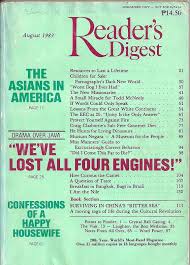
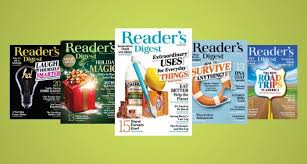
The last two years have been especially sad ones for printed books and magazines. Toward the end of 2023, the iconic magazine, National Geographic stopped selling its print issues. And in April 2024, Reader’s Digest stopped publishing. Many other print magazines have also downed their shutters though the online version continues.
I grew up with the Reader’s Digest. My father subscribed to the magazine and each month a copy wrapped in a brown envelope arrived at our door. The envelope partially covered the magazine inside, and you could see the top and bottom of the magazine. The size was small, and this made for easy handling. Reader’s Digest was a magazine you could read comfortably in bed. During the festival of Diwali, there was a special wrapping for the magazine. We had several magazines in our house when I was growing up. My mother used to read many magazines in Malayalam (our mother tongue).
Reader’s Digest provided shortened versions of stories and articles that had been published elsewhere. Their skill was in condensing the material while still retaining the interest. There was a rich collection of reading material. There were also advertisements for other books published by Reader’s Digest. Unfortunately, these were beyond our family budget. I wanted to purchase these when I grew up and became financially stronger. My neighbour who was a scientist had some of these books that I occasionally borrowed.
Another favourite of mine was the National Geographic. My father was a faculty member at a banker’s training college in Mumbai and their library subscribed to National Geographic. He often brought the magazine home. I was mesmerised by the articles and the photos in the magazine. The artistic quality of the photos was superb. The magazine had only three or four articles in an issue but addressed these at great depth. I travelled to faraway places, to the bottom of the ocean, to within the human body and to outer space with the magazine. Later, National Geographic started a television channel, and I would watch the documentaries in the nineties.
We also subscribed to the Illustrated Weekly of India. This was in a large format and again had very good photographs. I still remember the column by the journalist Khushwant Singh titled ‘With malice towards one and all’. I was also a fan of the comics section of the magazine. I had a huge collection of comics and my father purchased both Amar Chitra Katha and Indrajal Comics. Amar Chitra Katha introduced me to the rich history of India. Indrajal comics had superheroes like Phantom, Mandrake, and Flash Gordon. I used to eagerly await new issues. Most of my comics were lost when we shifted houses.
When the news magazine, India today, made an appearance, we subscribed to it and to Outlook and The week (Indian news magazines). During my school days in May, I used to eagerly await the new textbooks and notebooks for the next class following the results. I used to go with my mother to purchase these from a stationery store near the railway station. The smell of the new paper and the fresh ink was mesmerising. I loved to read some of the easier chapters in these books. Covering the notebooks with brown paper was another major activity. Our school year started with the rains in June.
My good friend, Sanjay Mhatre had a good library and loved to collect books. I loved to borrow from his vast collection. His collection on physics and cosmology were extensive. In those days, the erstwhile Soviet Union used to have cheap books of high quality for Indian readers. I remember the publishers Mir and Progress and I had several of their collections on science. The Soviet publishers used to hold exhibitions in our college. For twenty or thirty rupees, you could purchase high quality hard bound books. My introduction to quantum mechanics and to chemistry was through one such book.
At Thrissur in Kerala most of our medical textbooks were western and predominantly from the United Kingdom. There used to be an English Language Book Society (ELBS) that published cheaper versions of textbooks for developing countries. With our limited resources purchasing textbooks was a challenge. The two major textbooks published from the United States were those of Anatomy and Pathology. Those days we did not have online textbooks and online sources and were limited to the printed word.
I used to write for our medical college magazine and eagerly waited for the annual issue to be published. During my residency days at PGI, Chandigarh I was the literary secretary and was very involved in bringing out the annual magazine, The Resident. We also introduced a newsletter, ARDent Voice, with ARD standing for the Association of Resident Doctors.
At Pokhara, Nepal the college library had a good collection of general books and novels in addition to medical books. I used to read a lot of novels and the author, Frederick Forsyth was one of my favourites. His meticulous research blurred the lines between fact and fiction. Sidney Sheldon was another bestselling author. Novels enabled me to travel vicariously to different places and through varied situations.
Today reading has become less common among the younger generation. Reading strengthens creativity and the imagination as you must imagine in your mind’s eye the situation the author is creating. Is it not magical that the author can communicate with you, the reader through squiggles on a page across the boundaries of space and time?
I started writing during my MBBS days. I still remember the versification competition I took part in and won the first prize. I used to participate in different literary events at my college. In Nepal, I combined my triple loves of writing, photography and hiking with articles for the newly started newspaper, The Himalayan Times. I met my writing guru, Don through the magazine, ECS Nepal. Don was the editor of the magazine and a powerful writer with a deep knowledge of Nepal. I learned a lot from his comments and suggestions and the workshops he conducted. I also used to write a medical column for ECS Nepal. ECS Nepal was a beautifully produced magazine with great photographs. Unfortunately, it stopped publishing around the beginning of the pandemic.
Other travel and lifestyle magazines were also published from Nepal but could not sustain themselves. In the Caribbean Island of Aruba, I used to write off and on for a daily newspaper published in English. Again, the newspaper ceased publishing. During the last two decades several print magazines have ceased to exist. I feel it is a great loss.
I do not read much on paper these days. Most of my reading is done online on computers, laptops and tablets. I also have a Kindle reader. Kindle screen mimics the appearance of paper closely, but it is not the same as reading a printed page. You can no longer feel the smoothness of glazed paper, the smell of fresh ink and the vivid colours of photographs. With the closure of the print version of Reader’s Digest, an era in print publishing has ended. The demise was sadly expected. Without printed books, our (my) world may never be the same again!
.
Dr. P Ravi Shankar is a faculty member at the IMU Centre for Education (ICE), International Medical University, Kuala Lumpur, Malaysia. He enjoys traveling and is a creative writer and photographer.
.
PLEASE NOTE: ARTICLES CAN ONLY BE REPRODUCED IN OTHER SITES WITH DUE ACKNOWLEDGEMENT TO BORDERLESS JOURNAL
Does having a to-do list help or hinder your journey, whether it be exploring the world or having a sense of achievement in your life? Keith Lyons ponders on the pointlessness and purpose of such lists.
In an article I recently came across on how to live with no regrets, it started out with the words ‘Make a bucket list’.
I admit, I didn’t read further. I dislike the term ‘bucket list’. Whether it is a list of random destinations you want to visit before you die, or some vague wish list of goals and accomplishments, there is something fundamentally flawed about creating ‘The List’.
So what’s so bad about coming up with a list of goals and experiences you’d like to complete in your lifetime? I have several qualms about this approach to life.
Firstly, bucket lists imply that you have to be close to actually ‘kicking the bucket’ before you start working on that list. That means they can be put off until there is time. Wait til you’ve raised your family. Defer til you’ve retired from work. Pull out the list when your doctor gives you half a year to live.
The second issue I have about bucket lists is we never know when we are doing to die. The assumption of a bucket list is often that we will live well into old age. Perhaps even make it to 100. But as Allen Saunders pointed out in 1957 Reader’s Digest (and John Lennon later echoed), ‘Life is what happens while you’re busy making other plans’. The upshot is that by ‘kicking the can down the road’ , we end up putting off what we desire the most.
Thirdly, often the formation of these lists comes from fantasy, illusion and magical thinking. We add sights or experiences to the list not from our own innermost selves, but to conform to the aspirations, social norms, and dreams of others. We might hear about a friend’s amazing holiday experiences, be inspired by a travel documentary, or adopt someone’s wish list items, without having compelling reasons or an authentic ownership of the list.
I’ve seen how this plays out in my previous roles as a professional tour guide and travel writer. Some readers have admitted to me that after coming across an article I’ve written about a remote island eco-resort in the Andaman Sea or a Buddhist temple on the hill flanks of a bamboo forest where monks serve green tea to pilgrims that they’ve added the location to their bucket list. But given that we all experience places differently, how can they hope to replicate my (peak) experience? The other problem with having a bucket list is that it creates great expectations, and those perfect ideals might not match the harsh realities.
I believe we shouldn’t focus so much on external achievements and tick-box experiences because often the joy and satisfaction they possibly offer can sometimes be fleeting, ephemeral or non-existent. I’ll give you three examples from my own life of some bucket list goals and how their attainment wasn’t all it was made out to be. Maybe you have the same three on your list: running a marathon, seeing the Taj Mahal, and having a story published in a major newspaper.
Crossing the finish line after 42.195km is a wonderful feeling of completion and exhaustion, and while I still look back on that marathon and marvel at how I managed to sustain my effort over three plus hours, I gained greater satisfaction in training for the run on the coastal hills near my hometown. Perhaps it was the ‘runners high’ and the feelings of agency, freedom and bodily locomotion. I do know the day after the marathon I couldn’t walk up any stairs.
Not all bucket list endeavours are over-hyped. When I finally made it to Agra to witness for myself the immense white marble mausoleum of the Taj Mahal, I got the standard photo sitting on a bench in front of the reflected structure. But just as memorable were the hours I spent on-site before the tourist throngs packed the grounds, meditatively wandering and pausing to observe and appreciate the monument as the sun rose over the Yamuna River. For me, my time and experience there exceeded my expectations. But other visitors I met during my travels reported vastly different perceptions of the heritage ‘Wonder of the World’.
When I was studying post-graduate journalism at university, I had a bet with a colleague about paying our fees by selling articles to newspapers. The first story I had published took up the front page of the features section of the newspaper, and I got two copies of the newspaper to keep for posterity’s sake. So, imagine how I felt the next day seeing a discarded newspaper floating in the lake beside the university library. Working on bigger projects such as books can also be a roller coaster of emotions varying from elation and excitement to anxiety and relief. Still harbour the deep desire to turn your life story into a book? If so, what have you done lately to put your pen to paper?
As you can see from my examples — and from your lived experience — there is often a gap between how we reckon things will be and how they pan out in the end. There are also another couple of issues with having bucket lists. What we want and truly desire can change over time. What’s important in our 20s or what we are expected to do by our peers and communities can evolve over the decades. Swimming with dolphins might drop from the list if you learn about the treatment of marine mammals. Driving on Route 66 might not have that allure and mystique when you look at the practicalities. Crashing a stranger’s wedding to object to the coupling might have other consequences. As we mature, we might find that our achievement orientation and ambition for success wanes, and that being becomes more important than doing.
I suspect that many people who do have bucket lists don’t actually do many of the things they have declared will signal they have accomplished something in their lives. They might talk about the things they want to have and exotic places they wish to see, but it is easy to have those items on the list unfulfilled. Not today. Maybe later.
By the same token, there are many, many people who aspire to better themselves by getting their dream job, migrating to a faraway country, or winning the lottery who never succeed. Having a bucket list is a First World problem. Going through a divorce, developing an addiction, and clocking up debt might be other life experiences we didn’t think we’d signed up for.
The term bucket list comes from the Justin Zackham’s screenplay which was made into the 2007 film featuring Jack Nicholson and Morgan Freeman as two terminally ill guys making a list of things to do before they die. In another (better-known) movie, The Shawshank Redemption, Freeman as Red is told by Andy Dufresne (played by Tim Robbins) the sage advice ‘Get busy living or get busy dying’. Perhaps that is the answer to living in the now without regret, rather than having a list of unobtainable items. What’s the best motivation for you?
Palliative nurse Bronnie Ware compiled a list, but it wasn’t a bucket list. Instead, through her work with the ill and dying, she put together their top five regrets. Number one was ‘I wish I’d had the courage to live a life true to myself, not the life others expected of me’. The second was ‘I wish I hadn’t worked so hard’ — every male patient said this, missing their children’s youth and their partner’s companionship.
Third on the list was ‘I wish I’d had the courage to express my feelings’. Many people suppressed their feelings in order to keep peace with others. As a result, they settled for a mediocre existence and never become who they were truly capable of becoming. According to Ware, many developed illnesses relating to the bitterness and resentment they carried as a result.
Number four on the list of regrets was ‘I wish I’d stayed in touch with my friends’, while the fifth regret was ‘I wish I’d let myself be happier’. “Many did not realise until the end that happiness is a choice. Fear of change had them pretending to others and their selves, that they were content, when deep within, they longed to laugh properly and have silliness in their life again.”
How about you? Anything on this list that resonates with you? Carpe the hell out of this Diem (Don’t let life pass you by!)
.
Keith Lyons (keithlyons.net) is an award-winning writer and creative writing mentor originally from New Zealand who has spent a quarter of his existence living and working in Asia including southwest China, Myanmar and Bali. His Venn diagram of happiness features the aroma of freshly-roasted coffee, the negative ions of the natural world including moving water, and connecting with others in meaningful ways. A Contributing Editor on Borderless Journal’s Editorial Board, his work has appeared in Borderless since its early days, and his writing featured in the anthology Monalisa No Longer Smiles.
.
PLEASE NOTE: ARTICLES CAN ONLY BE REPRODUCED IN OTHER SITES WITH DUE ACKNOWLEDGEMENT TO BORDERLESS JOURNAL
Chapter 7: Better To Enclose A Cat Than to Scold It
Clothes shops kept irregular hours in Takayama. Three different days, at three different hours, we tried to visit a local vintage store, and each time we found it closed.
It was refreshing to see that a country that had appeared, at first, such a stickler for rules, actually had a whole community that seemed to do the opposite of what was expected.
‘It is ikigai,’ explained James, the bald Kiwi ALT whom we had called Jēmusu (the Japanese word for James) as a joke.
‘What is ikigai?’ I asked. ‘A fish?’
‘No,’ he said with a grin. ‘Ikigai means finding your purpose, your meaning in life, and combining it with your profession, your work. It is the balance of doing what you love while making a living and letting neither path control your life.’
I didn’t really understand ikigai until one spring day I actually found the vintage clothing shop open and went inside to explore as I’d longed to do for over a month. The owner, G-Kun, a snowboarder in his early thirties who wore his long black hair tied back in a ponytail, was busy checking orders on his computer.
Ryan was looking at skateboard tee shirts while I browsed some different-coloured beanies made from hemp that I loved and would probably never wear.
‘I’m so glad I finally got to come in,’ I said to G-Kun.
‘Why has your store been closed so often? Were you ill?’
‘Not at all,’ he replied with a friendly smile. ‘I have just been concentrating on something else.’
‘Like what?’
‘My music career.’
I stared at him.
‘I travelled in Europe some years back and became friendly with some European DJs,’ he continued. ‘I ended up co-producing some dance tracks with them.’
He had my rapt attention. To my very British mind, this was an entirely new concept. I had been told as a child to forget working with horses and get a job in a bank, because in England I was supposed to be a responsible adult with a steady good-paying job doing something I loathed rather than something I loved.
But in Takayama . . . Was what G-Kun telling me real? Could an avocation and a job actually be combined? And if they could, did I have my own ikigai, something that would bring deep satisfaction to my life?
Once I understood ikigai, I saw it all around me. In Takayama, many people had turned their passions into businesses from which they earned an actual living wage. Of course, that’s not to say all Japanese follow ikigai but it seemed widely practiced here. And then there was Keisuke, who worked in a brewery and wanted to start his own saké company someday.
Twenty-something Keisuke was not particularly well educated or rich, but he seemed more contented than anyone I’d met in a long time. In fact, he was so happy and so passionate about his job that I never saw him in anything other than his cream-coloured brewery overalls.
One night in Keisuke ’s apartment, he proudly poured me his employer’s clear rice wine into a tiny white and blue ceramic cup, beaming with something more than pride.
Ryan took the first sip and beamed back at him. ‘This is good stuff! You’ve got the saké magic, Keisuke-san. Like Harry Potter.’
‘So, so, so,’ Keisuke said and paused for a moment to think. ‘You know what, I am not Harry Potter. But I am . . . the Saké Potter.’
And from that day on, that’s exactly what we called him.
A few nights later, while out for dinner with some friends, we came across a stray cat that was to begin my search for ikigai.
‘Kawaisō, it’s such a shame,’ Sayuri said. ‘There’s so many noranekos [stray cats] in Takayama. It’s sad.’
I leaned down to pat the bedraggled kitten and he tapped me with his paw, as if begging for more. ‘Poor baby,’ I said. ‘He must hang around the restaurant in the hope of getting food scraps,’ I said.
‘The staff probably feed him,’ Ryan said as he joined us, the kitten instantly turning to him for attention.
‘What should I do?’ I asked.
‘Why do you have do anything?’ Mike said, joining us.
Takako, our friendly waitress was standing at the door and confirmed our suspicions about the kitten. ‘Hai.Nora-neko desu.’ (Yes. It is a stray.)
‘Come on, you can’t save them all,’ said Dominic as he marched off down the pavement.
Reluctantly, I followed him, along with the others. But, as we wandered tipsily back to our apartment, the kitten tried to follow us. He looked unwell. Snot was dribbling down his scrawny face. Everyone picked up their pace.
I forced myself not to turn around as we walked back home. If I had, I’d have scooped that kitten up and to hell with the consequences. Actually, that would have saved me time and trouble, because when we got back to the apartment, all I could think about was the abandoned kitten with the big affectionate personality struggling to survive outside all by himself.
Our friends stood in the kitchen noisily making plans about how to get to the next party, oblivious to the kitten’s plight. I was unable to even smile, let alone participate. ‘I’m sorry. I’m not going to make it to any more parties or bars tonight. I’ve got a headache, so I’m going to stay here,’ I said.
After the noisy crowd, including Ryan, had left, I tried going to bed, but I couldn’t sleep. I was unable to purge the image of the friendly little feline from my mind. Finally, fuelled by Chu-Hai and cheese sticks, I got dressed, crept outside, grabbed my bike, and cycled along the fluorescent-lit pathway armed with dry cat biscuits and a cat carrier.
Sure enough, with no other place to go, the kitten was still at Murasaki begging for food and attention. He didn’t struggle one bit as I lifted him into the cat carrier and set it in the front basket of my bicycle. Apparently, taking his chances with the kindly stranger and her weird contraption was better than spending another dangerous night on the street.
I knew that Ryan would not be impressed with my philanthropy, and less than thrilled about this new addition to our household, but I also knew that this little boy didn’t stand much chance of survival if we left him on the streets. I also felt I could relate to the kitten’s predicament of abandonment. After all, I’d faced similar emotions myself as a child. Displeased boyfriend versus dead kitten? It was no contest.
Still, when I carried the cat carrier into the apartment, the enormity of what I had done hit me. Just as a matter of practicality, we couldn’t take on another kitten. We already had three cats we would have to re-home before we returned to England in December. Plus, this little guy was clearly sick. His eyes looked rheumy and painful. His nose was dripping. He might infect Iko, Niko, and Gershwin. I’d have to keep them apart. Into the laundry room he went with food, water, a litter box, and bedding. Fortunately, he had no interest in hiding under the washing machine.
Ryan got back the next morning looking a bit worse for wear, possibly hungover, and definitely sleep-deprived. Perfect. This was the right time to tell him what I’d done, while he was in a weakened state.
‘Don’t get angry,’ I said. ‘But there’s someone you might want to meet in the laundry room.’
Ryan looked at me with bloodshot green eyes. ‘Oh no! You didn’t. Did you?’
‘I couldn’t leave him there. Anyway, you’ve been gone nearly all night,’ I said, trying to shift the focus onto his fictional misdeeds.
‘Have you introduced him to the other cats yet?’
‘No, I’m waiting until I’ve taken him to the vet.’
‘Good idea,’ Ryan said wearily. He gave me a kiss and crawled into bed, leaving me to keep the cats separate as best I could, which was difficult, because Gershwin was eager to meet our houseguest.
It was at this moment that I realised I had found the start of my own ikigai. I wanted to incorporate my love of animals into my life’s work, but in order to do that, in the future I would need to find a healthier way to do so. So, my other cats didn’t get hurt.
I went to the vets that morning, surprising Dr. Iguchi when a bedraggled tabby kitten strode confidently out of the carrier, rather than Gershwin. Surprise turned immediately to concern as the kitten sat on the exam table, smiled at both of us, then sneezed violently, sending lots of yellow discharge all over the vet’s pristine white smock.
The prognosis was not good. ‘He could have feline flu,’ Dr. Iguchi announced. ‘Very contagious. Very bad. It could be much worse. He might have FIV virus.’
My stomach clenched. The dreaded and deadly cat AIDS.
‘There is a vaccine for your other cats,’ he continued. ‘For now, you must quarantine this kitten until we get his test results back.’
‘I think Gershwin has had the vaccination already,’ I said hopefully, ‘but I’m not sure about Iko and Niko.’
‘So, so, so. Gershkun had the vaccinations before, not the sisters. But you must keep all the cats away from the kitten for now.’
There was no alternative. If I didn’t want a house full of sick cats, and I didn’t, this was the only way. I just had to pray that the others hadn’t already been infected. I told myself they were strong, genki [healthy] animals and I was blithely certain they could fight off any infection, not realising in my ignorance how contagious and potentially deadly feline flu really was.
I drove home and put the kitten back in the laundry room, praying that he didn’t have anything that could kill him, or the other cats.
It wasn’t long before Gershwin wanted to go in and carouse with the kitten. He knew something was wrong straight away. He was always good at reading situations. So, he sat by the door and started meowing to be let in. When I came to see what was bothering him, he stared at me with every ounce of his feline superiority and demanded to see his potential Best Friend Forever. He uttered a particularly piercing nyan [meow] in protest at my having exiled the kitten to the laundry room.
‘You mustn’t go near him for a while,’ I said.
Gershwin rubbed his soft furry body against my even furrier legs and looked me straight in the eyes as if to say ‘Think again.’
When I wouldn’t give in to his demands, he started playing angrily, jumping onto the bookshelf, hurling himself off the top, somersaulting in mid-air, and landing unceremoniously a few centimetres from my feet.
‘Right, that’s it,’ I said as I picked him up, carried him to the bedroom, and shut the door.
It was always the same with Gershwin. Despite being a Ninja Attack Kitten, he had a delicate soul. Whenever he was reprimanded, he would become so hurt by the scolding that he’d disappear for hours (and once, for days) at the shock of being chastised. Then, it could be days before he would actually forgive us. He could out-sit our most ardent lures to be returned to his good graces. If I tried to tempt him with his favourite treats, he would sniff them with disdain, turn his back, and walk off scornfully. I was always the first to give in and let him have his way.
This time, Gershwin didn’t know best. He was banned from the laundry room. Iko and Niko took one look at the closed laundry room door, sniffed the scent of an unfamiliar feline, and avoided that part of the apartment just as they tried to avoid Gershwin when he came over all Ninja Kitten.
That night, I lay awake in bed worrying about what the test results would be. What if, in bringing this stray kitten home, I had inadvertently infected the other cats with the FIV virus? I felt deeply guilty at potentially jeopardising their wellbeing, even their lives. In trying to do the right thing by the sick kitten, I may have done an incredibly wrong thing by Iko, Niko, and Gershwin. If anything happened to them, it would be entirely my fault.
For the next week, while we waited for the test results, the poor kitten, whom I named Takashi after a jovial Bagus bartender, suffered from inflamed and discharging eyes and a badly running nose. I had never seen a cat in this condition before. His tatty coat needed some love and his sore eyes needed constant care. The vet had told me to wash them twice daily with saltwater, which helped them tremendously. He had also given me a medicinal orange powder that I was supposed to mix into his food. Cats being cats, he could smell the concoction a mile off and he was having none of it. I ended up mixing the powder with butter and rubbing it around his face, so he was forced to lick it off.
I agonised all that week. Ryan was equally concerned for the poor little guy. ‘When are you going back to the vets?’ he asked me daily. ‘You’re sure the other cats won’t get it?’ I dared not answer.
Finally, the dreaded, long anticipated morning arrived. A week after I had confined Takashi to the laundry room, I plopped him back into a cat carrier and drove off to see the vet and get the test results.
By now, I had become a regular and familiar face at the animal hospital. I was the only pet-owning gaijin in the vicinity, as far as I was aware, which meant I was a bit of a novelty in the waiting room. People stared at me and some smiled, a few of the braver ones even made conversation, which helped distract me from the potentially dreadful news I might be getting today.
Finally, Takashi’s name was called and, cat carrier in hand, I was ushered into an exam room. I waited nervously as the vet found the kitten’s file.
‘No Katto Eizu,’ he said.
Oh, thank God. Takashi didn’t have the FIV virus!
Before I could celebrate, he continued. ‘But Takashi-kun is very sick,’ Dr. Iguchi said in a somber tone. ‘He has cat flu.’
The tone of his voice was my first clue that feline flu was a far more serious disease than I had believed.
‘Very contagious,’ he continued. ‘Other cats should be immunised against the virus immediately, and Takashi-kun should be isolated from them for another week, maybe more. Keep giving him the medicine and bathing his eyes.’
My enormous relief that Takashi didn’t have a death sentence, and my fears for Iko, Niko, and Gershwin, warred within me all the way home.
CJ Fentiman with her cat
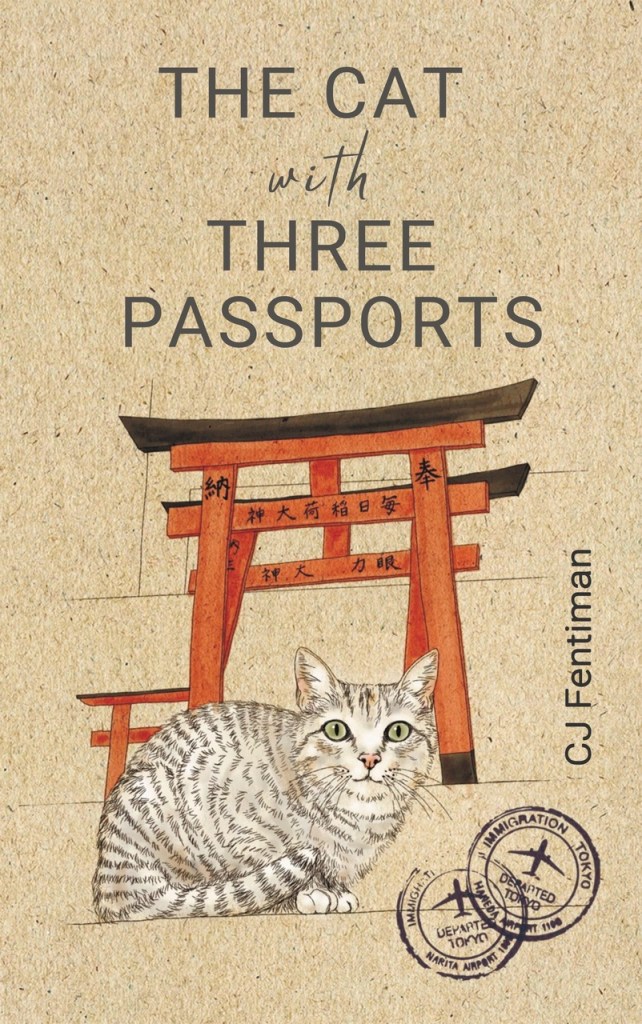
About the book: A girl struggling to fit in. A homeless kitten. An unexpected job offer in an unfamiliar country that changes everything. CJ had a long history of escaping places and people she wasn’t fond of. But for the sake of a silver tabby, she decided to stay in Japan for a while. This decision helped her open her heart and mind, revisit her way of thinking, and reconnect with her estranged family. Let this heartwarming memoir take you to the land of cats and cherry trees as you read about CJ’s adventures — from the craziness of Furukawa’s naked men festival, the experience of forest bathing and the significance of finding a life purpose or ikigai, to the temples of Takayama, and wonders of Cat Island — you’ll see what a homeless kitten found outside a temple in Japan taught her about an old culture and new beginnings.
About the author: CJ Fentiman is a British writer whose work has appeared in a wide range of the publications, from the Japan Times and Caravan World to Horses & People and Pets Bar. An expert on pet travel, she has featured in media in the UK and Australia including Readers Digest, SBS radio, Books on Asia, The Daily Telegraph, Herald Sun, the Courier Mail, and one of the biggest blog platforms on cats, Katzenworld. Her memoir, The Cat with Three Passports, received the award in animal narrative in the 2021 International Book Awards.




 Borderless