As I watched -- She wrapped the rainbow round her finger, and drifted away -- slowly, ever so slowly. Yet The Heavens saw nothing.
EVENING
The wind wanders, seeking the fragrance of your musk: My heart and a fading leaf are carried along.
SPRING
The poor larks that returned this year peck at the scent of your bosom, still drifting through the footprints along the path of yesteryear.
JUNGLE
Such terror stirs within, none dare to face themselves. The road runs deep with fear— no one walks it alone.
THE WAIT
Shall I open a window? Will you come—or the moon?
Munir Momin is a contemporary Balochi poet widely cherished for his sublime art of poetry. Meticulously crafted images, linguistic finesse and profound aesthetic sense have earned him a distinguished place in Balochi literature. His poetry speaks through images, more than words. Momin’s poetry flows far beyond the reach of any ideology or socio-political movement. Nevertheless, he is not ignorant of the stark realities of life. The immenseness of his imagination and his mastery over the language rescues his poetry from becoming the part of any mundane narrative. So far Munir has published seven collections of his poetry and an anthology of short stories. His poetry has been translated into Urdu, English and Persian. He also edits a literary journal called Gidár.
Fazal Baloch is a Balochi writer and translator. He has translated many Balochi poems and short stories into English. His translations have been featured in Pakistani Literature published by Pakistan Academy of Letters and in the form of books and anthologies.Fazal Baloch has the translation rights to Munir Momin’s works.
.
PLEASE NOTE: ARTICLES CAN ONLY BE REPRODUCED IN OTHER SITES WITH DUE ACKNOWLEDGEMENT TO BORDERLESS JOURNAL
Story by Sharaf Shad, translated from Balochi by Fazal Baloch
From Public Domain
One afternoon, I had just returned home from the hospital and was waiting for my wife to bring me lunch when I heard the sound of a motorbike stopping outside. Then echoed the sound of hurried footsteps on the porch, followed by someone asking my wife, “Is the doctor home?”
It was Ali’s voice. I recognised it instantly. A moment later, the door swung open, and Ali, short and heavyset, entered the room.
“Doctor, come with me, please. My wife isn’t feeling well; she needs to be examined.”
“I was just about to eat…”
“You can eat there,” he interrupted, grabbing my doctor’s bag and heading out to his motorbike. Since he was my friend, I didn’t argue and silently followed him.
On the way, Ali explained that his wife was in labour. As we arrived, I examined her and, after consulting with the midwife, gave her an injection. I waited in the guest room. A short while later, his wife gave birth. Just then, the door opened, and Ali came in, his face glowing with joy.
“Sir, I’ve been blessed with a son.”
“Congratulations!”
“Thank you.” His voice was sweet with happiness. I wrote a prescription for the patient and sent Ali to the medical store to get the medicines. He dropped me off at home afterward. As we arrived, Ali reached into his pocket, but I stopped his hand with a smile.
“No, doctor, that won’t do,” he insisted.
“Come on, let it go. Just take us on a picnic sometime,” I said.
“Don’t worry about picnics. You will have plenty of them,” Ali said with a laugh, heading out of the room, still beaming with joy.
*
A few years later, one night, Ali was in intense pain and I was woken up in the middle of the night. When I arrived, he was groaning in agony. His son stood by his bedside, looking at him with wide, worried eyes. I comforted him and treated Ali. After a while, he drifted off to sleep. As I stood to leave, Ali’s son asked me with curiosity:
“Doctor, will my father be okay?”
“Yes, don’t worry. He’ll be just fine,” I reassured him, gently patting his cheek before heading out.
The next day, Ali came to see me on his motorbike and paid my consultation fee. His son was with him. I took some of the money and slipped it into the boy’s pocket.
“Are you doing well?” I asked him.
He didn’t reply, but Ali spoke up. “After seeing you treat me last night, he says he wants to be a doctor when he grows up.”
I burst out laughing and looked at the boy, who blushed and hid behind his father. “May God fulfill all his wishes!”
“Ameen,” Ali said, and they both bid me farewell.
*
A few years later, Ali brought his son, Sabzal, to the hospital. The boy wasn’t feeling well; he had fever. Ali looked worried. After examining the boy and before writing down the medicines, I asked him:
“What grade are you in now?”
“Third,” he replied.
“If I write your name here, can you read it?”
“Yes!” he said proudly, puffing out his chest.
I wrote on the prescription: “Dr. Sabzal Baloch” and then added the list of medicines.
Happiness lit up both the father’s and son’s faces. They left, smiling.
One morning, as I was getting ready to head to the hospital, Ali arrived in a hurry.
“Doctor, please come quickly! My son is having trouble breathing.” When I got there, I gave him some medicines, but when his condition didn’t improve, I told Ali: “There aren’t the right facilities here. You need to take your son to the city hospital.”
Ali booked a vehicle and rushed his son to the city. A day or two later, the news came that Ali’s son had passed away in the hospital. Ali returned home empty-handed, and I was deeply saddened. The sudden death of young Sabzal cast a shadow of grief over our small hamlet for a few days. But eventually, the routines of daily life washed away that sorrow, and life moved on as usual.
One day, I saw Ali riding his motorbike somewhere. As soon as he saw me, he stopped. After greeting him, I pointed to an object wrapped in old newspapers resting in his lap.
“What’s this?”
“It’s a headstone, sir,” Ali replied. His once cheerful face turned somber. “It’s for Sabzal’s grave.”
With a sad expression, Ali began unwrapping the newspapers. He turned the headstone towards me, and I read:
Name: Dr. Sabzal Baloch
Age: 7 years and 6 months
I looked at Ali. Two silent teardrops rolled down his cheeks and rested on his face.
Sharaf Shad is simultaneously a short story writer, poet, translator, and critic. The richness of narrative is one of the defining features of his short stories. Death and identity crises are recurring themes in his works. A collection of his short stories, titled “Safara Dambortagen Rahan” (Journeying Down the Weary Roads), was published by the Institute of Balochistan, Gwadar, in 2020.
Fazal Baloch is a Balochi writer and translator. He has translated many Balochi poems and short stories into English. His translations have been featured in Pakistani Literature published by Pakistan Academy of Letters and in the form of books and anthologies.
PLEASE NOTE: ARTICLES CAN ONLY BE REPRODUCED IN OTHER SITES WITH DUE ACKNOWLEDGEMENT TO BORDERLESS JOURNAL
Anwar Sahib Khan (1944–2018) was a notable poet, drama artist and film actor. His poetry explores a wide range of themes, from love and romance to social and political issues. He published two anthologies, Chaotaar (A Riot of Colours) and Sareechk (The Scarecrow). The translated poem is taken from his second anthology, Sareechk.
Like a scarecrow,
I stand—
Rooted in fields of green,
Until time strips away
The truth of my being:
A breath of nothingness.

I am the emblem of eternal stillness,
My outside,
My inside —
Two different tales.

When the truth dawns,
The beasts — once fled
From the fear I’d fashioned —
Will return.
My walls will scatter
Like tufts of cotton
Cast to the wind.

Birds will nest in me,
Jubilant creatures will roam
Unafraid,
Dancing in my shadow.

And the tale of my stillness
Will drift through the air —
I’m a lifeless scarecrow standing here.
Fazal Baloch is a Balochi writer and translator. He has translated many Balochi poems and short stories into English. His translations have been featured in Pakistani Literature published by Pakistan Academy of Letters and in the form of books and anthologies.Fazal Baloch has the translation rights to Anwar Sahib Khan’s works.
.
PLEASE NOTE: ARTICLES CAN ONLY BE REPRODUCED IN OTHER SITES WITH DUE ACKNOWLEDGEMENT TO BORDERLESS JOURNAL
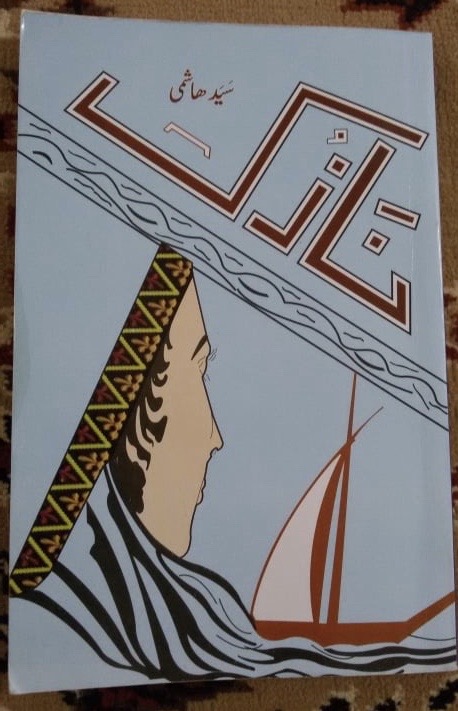
This is first chapter of the first Balochi novel that was published in 1976. It has been translated into Urdu and Persian. The narrative depicts everyday life and experiences of the people living around the coastal area of Makkuran especially Gwadar and its surroundings.
The cover of Nazuk. provided by Fazal Baloch.
For about a week, the weather had been pleasant, with a cool wind blowing across the sea—a true blessing for the fishermen. A calm sea meant loss for them, while a rough sea spelled devastation. Over the past few days, the fleet of fishing boats had been returning to the shore with plenty of catch.
The sun had completed three-quarters of its journey, racing through the sky like a messenger in haste in the final quarter. Its burning rays were yielding to the soothing coolness of the approaching evening. The long, serene shadows stretching behind the houses provided an ideal setting for a public gathering.
Away from the shore, an old voyager boat, anchored in the red sands, stood tall like a pyramid—a symbol of the unshakable bond between the boundless sea and its people. Who could say how many joyful and sad years the sea’s companions had spent navigating across its waters on that very boat? Though the sea often rocked their boat like a cradle, not once had these brave sons of the ocean furrowed their brows in fear or discontent.
The fleeting morning shadows soon vanished to the unknown but the evening shadows lingered longer, creeping towards the damp sands of the shore and eventually reaching the water, as if embodying the spirit of the giant old boat longing for the sea’s embrace to soothe its heart.
The shadow it cast offered an ideal venue for one of the biggest public gatherings in the evening. At times, it seemed as if people sitting on its plank were aboard the boat chatting to pass their time on a deep-sea trip. The cool breeze blew across reflected the pleasant weather at sea.
The wind had cooled the sands of the shore, making them so comfortable that those who lay on them forgot the comfort of even the most luxurious mattresses and cushions. Men, women, and children all came to enjoy themselves, especially today, which was more crowded than usual as it was Friday and no one had ventured into the sea for fishing the night before, giving the fishermen a day off.
For those who lived around the sea, there were only two vocations: fishing or navigating across the sea on a boat. And everyone acknowledged that sea navigation was one of the most cherished vocations in the world. Thanks to these navigations and explorations, humans had even set foot on the moon.
Navigation in the sea made fishermen exceptionally skilled and resourceful. They sailed from one country to another, learning about different lands and their people. Some sailors, despite being illiterate, exhibited such remarkable knowledge that even the learned were left in awe.
On the right, in front of a small roadside hotel, people sat on benches, sipping tea and chatting with each other. Some distance away, a group had gathered around a tall and smart man, listening intently to him. Let’s draw closer. Oh! He is Captain Naguman, moving his lips and hands alike. With his hands, he fidgets with a rope, perhaps knitting a net, while with his lips, he narrates the story of the First World War so enthusiastically as if he were a part of it himself. At that moment, someone called out from behind: “Captain! Hey Captain Naguman!”
Naguman turned around, shaking his head annoyingly, and said, “This jinxed fellow never lets me speak properly.”
“Captain! Hey Captain Naguman!”
The call came from inside the hotel’s kitchen, and from his voice, the Captain recognised him.
“Abdul is really a cursed man! Look how he disturbed the Captain in the middle of his speech,” someone said with rage.
“Exactly. He always jumps in during my speech,” Naguman turned somewhat dismayed.
“Hey Captain! Would you like tea? A cup of tea?” Abdul’s voice reached their ears again.
“If you’re going to give him a cup of tea, then bring it, you the cursed scoundrel,” someone whispered, and the Captain replied loudly, “Yes, bring it.”
Abdul immediately came and placed the cup before the Captain. He too sat down to listen. A few people from the audience cast side-glances at Abdul. The Captain smiled, sipped his tea, and resumed his speech, “Listen, you blind fishermen! Just in a single day, over a hundred planes swarmed in like locusts…”
A little farther away, a few women and children were sitting. Children were playing with the sands. The first woman was busy weaving a net, and the second one was keenly observing her. The third one was still pondering about what to do or say. The second woman said with great lament: “Mamma Papi didn’t help me weave a net. At least I could have moved my otherwise idle hands,” lamented the first woman.
“Move your hands or make some money?” replied the third woman, as if she had been waiting for the perfect moment to speak.
Papi raised her experienced eyes slightly, smiled gently, and stopped weaving the net and glanced around. When she was sure that nobody was looking at them, she retorted in a hushed tone, “The ‘Young Man’ wouldn’t let you bother yourself with work, dear Mahbalok!”
“Waiy waiy! Mamma Papi, don’t defame me,” Mahbalok said slowly, taken by surprise.
“Mamma Papi! Mamma Papi! Look there. He’s coming right here,” the third woman hastily whispered. No sooner had she uttered these words, Mahbalok became so edgy that she almost broke into a sprint.
But Mamma Papi let out a hearty laugh, then she threw the spool of thread and half-woven net on the ground. With both her hands, she held Mahbalok’s shoulders and said: “What happened to you, the cursed woman? Where are you going? Look, you’re even getting fooled by this little Hajok. I’ve had enough with you. You’re almost out of your mind,” exclaimed one of the women.
“Hajok! May the lord of the sea curse you! I’ve never seen such a jinxed woman in my entire life. Mamma Papi, by God, my heart almost sank,” Mahbok tried to maintain her unsteady breath.
“Waiy Mahbok! Hajok is your neighbor and best friend,” remarked Mamma Papi.
“By God, Mahbok, don’t tease me again. I wouldn’t like it,” Mahbok was yet to come to herself.
“It’s alright. Don’t open your basket-like mouth. Men are looking at us,” Papi warned them.
Rows of boats lined up along the arched shore, resembling horses ready for a race. It seemed as if riders had tightly held the reins and were waiting for the whistle to be blown. A few boys were playing tag behind those boats and yawls. On the left, some nets were placed on a plank.
“Come! They taste like halwa. Come! They’re fresh and hot,” Zalya shouted as if warning those who couldn’t get any that they’d only have to blame themselves. And it did the trick. In a moment, people swarmed around her cauldron. A while later, a young man and his friend called out to her:
“O, Mamma Zalya! Send us half a rupee worth of Mat, please.”
“Pindi, my son! I don’t have that much left. They’re barely worth twenty-five paisa.”
“It’s alright. Leave it.” Then he turned to his friend and said, “We’ll go to the bazaar and have tea with biscuits.”
Pindi and his friend Guli got up and made their way towards the bazaar. Two young men were playing Liddi. The game seemed to absorb to the duo as if it were the greatest challenge of their lives.
“Jalu! Jalu! Come on, boy. Pass this net to your uncle. Every day these blind fishermen return it damaged. They’ve spent their entire lives at sea, yet they can’t keep the net away from the rocks,” an old man, while weaving a net, turned to a boy sitting next to him.
“Jalu, my son! Go and get me your uncle Shahdost’s net.”
“Uncle, let me finish my peanuts first,” the boy replied indifferently.
“I’ll keep your peanuts. Get me the net first, then you can eat your peanuts.”
The boy slipped the peanuts into his pocket and scurried off. He returned almost panting and threw the net with a thud before his uncle.
He closely examined the net to determine the nature of the damage. Startled, he suddenly blurted out, “Such a new net! They have damaged it terribly,” he mumbled in anger. “They’re blind in both eyes. Neither do they know how to properly cast the net nor do they know how to untangle it.”
The sea was crowded. A few boys were playing tip-cat, and some other people were watching and enjoying the game. It’s played differently in different areas, but the version played in the coastal area is distinct. Some other boys were playing hopscotch. Two young boys were drawing sketches of fish, boats, and yawls in the sand with knife-like-sharp fish bones. A little farther away, a few young men were playing bazari. Two young men looked at them and tempted them, “You blind men! Is this the time to play this game? You’re flaunting your skills. We’ll challenge you to a match. Come tonight at the sands of Kala Teembok. We’ll show you how it’s played and won.”
A few girls were playing with beads, and some others were collecting salps[1]. It is believed that when you bury them in the ground, after seven days they will turn into beads provided no boy sees you burying them. On the seventh day, when they fail to unearth any beads, they wouldn’t turn dismayed. But at that moment, one of the girls would claim, “You know, Mami is a… he had been following us. He secretly watched us behind the wall. Thus, we couldn’t get beads.”
“Today I will complain to her mother,” the second girl replied.
“Anok! Anok! It’s better not to visit his mother.”
“Why, Jani?”
“Yesterday his father severely thrashed his mother… “
“Ah! But why?”
“You know Sayaki, the carpenter? She had visited his house.”
“May God keep us away from…”
Far in the distance, a woman called out, “Sharok! Come on, dear, look after the baby. I’ll be back from the bazaar just in a while.” Sharok, who was playing with beads, strode towards her mother. The youngest of them took all the beads from the girls, dismantled the holes, and chanted, “The game is over. Yes, it is all over.”
Two younger girls cried out, “Give us back our beads!” But by the time their sobbing subsided, she had already gone home. Determined, the two girls began digging through the holes again, hoping to find a bead hidden somewhere. However, there was nothing. Disappointed, they stood up and walked to the sea to wash their hands. Spotting other girls collecting salps nearby, they joined in, clinging to the hope that by the next Friday, the salps might somehow transform into beads.
The sun descended lower, casting the shore in hues of orange and gold. By sunset, the beach was nearly deserted, save for the men gathered around, engrossed in Naguman’s tale of the German War.
Sayad Zahoor Shah Hashumi (1926-78) is known as the pioneer of modern Balochi literature. He was simultaneously a poet, fiction writer, critic, linguist and a lexicographer par excellence. Though he left undeniable marks on various genres of Balochi literature, poetry remained his mainstay. With his enormous imagination and profound insight he laid the foundation of a new school of Balochi poetry especially Balochi ghazal which mainly emphasises on the purity of language and simplicity of poetic thoughts. This school of poetry subsequently attracted a wide range of poets to its fold. He also authored the first ever Balochi novel ‘Nazuk’ and compiled the first comprehensive Balochi-to-Balochi dictionary containing over twenty thousand words and hundreds of pictorial illustrations.
Fazal Baloch is a Balochi writer and translator. He has translated many Balochi poems and short stories into English. His translations have been featured in Pakistani Literature published by Pakistan Academy of Letters and in the form of books and anthologies. Baloch has the translation rights of this novel.
PLEASE NOTE: ARTICLES CAN ONLY BE REPRODUCED IN OTHER SITES WITH DUE ACKNOWLEDGEMENT TO BORDERLESS JOURNAL
A mythical Simurgh perched on the Tree of Life, to which it has special affinity. Belonging to Persian mythology, the Simurgh is said to have seen the world destroyed thrice. Photo from Public Domain.
Storytellers unfolded their tales,
Yet we paid them no heed.
Again, they unfurled their tales,
It didn’t bother us, indeed.

As tales unfolded, we drifted to sleep,
Fairies, demons, djins, and devils
Crept into their lore,
Yet we remained ignorant, as before.

When the Simurgh  swallowed the snake,
Nothing we did care.
When the princess fled with a shepherd,
Curiosity filled the air.
When the thieves broke in the warehouse,
Clamours spread far and near.

And when war arrived, knocking at our door,
We left for the mountains, grasping the swords.
At last, we knew: stories are not lies anymore.
Manzur Bismil is a prominent Balochi poet. He emerged on the literary scene in the early 1990s and soon rose to fame, creating a niche for himself in the pantheon of the Balochi poets. He is widely known for his neo-classic style, especially in his verses. So far he has published eight anthologies of his poetry. This poem is taken from the poet’s poetry collection Sahaar (The Fear) published by Demrawi Majlis Muscat in 2017.
Fazal Baloch is a Balochi writer and translator. He has translated many Balochi poems and short stories into English. His translations have been featured in Pakistani Literature published by Pakistan Academy of Letters and in the form of books and anthologies. Fazal Baloch has the translation rights of of this poem from the poet.
PLEASE NOTE: ARTICLES CAN ONLY BE REPRODUCED IN OTHER SITES WITH DUE ACKNOWLEDGEMENT TO BORDERLESS JOURNAL
Story by Sharaf Shad, translated from Balochi by Fazal Baloch
The moment he stepped into his home, he sensed that something was wrong. A strange desolation and silence crept down the walls and doors. His wife, upon seeing him, stood up. Her voice trembled overwhelmed with anxiety. She whispered: “The snow is melting.”
“What?” At the mention of snow, his eyes flared with alarm. He rushed to the room where the snow statue was kept. As usual, it stood there like an impregnable mountain. But now, a tiny teardrop was trickling down its right cheek. The line of the rolling tear seemed to slice the statue into two, like the slash of a sword. He knew that if the melting continued, the statue wouldn’t last much longer. The mere thought of this brought tears to his eyes.
A few years ago, the sea had gifted him that very statue. In those days, he used to visit the sea every evening. He adored the sea and its rising tides, drawn to the depths and the vastness that made him feel immortal. It was that very sense of immortality that pulled him to the shore night after night. Despite the violence of the waves rising and crashing, he continued captivated by them.
One day, as he was lost in watching the rise and fall of tides, he noticed the statue gleaming amidst the water, like a giant pearl. He picked it up, marveling at nature’s artistry. He wondered how such a beautiful statue could exist in the midst of such chaos. Then, a voice echoed from the tides, addressing him: “It’s a gift for you, from me. Every evening you came here and shared my grief. Take this statue home. It will bring you peace, health, and prosperity.”
The wind, tracing lines upon the surface of the ocean, was impressed by the sea’s generosity. It told him that, to help preserve the statue, it would maintain constant climate. When everything becomes kind to someone, time will surely follow suit. Thus, time assured him that it would never bring decay or harm to the statue.
He took the statue and placed it in the finest spot in his home. As the sea and the wind had promised, the statue became a symbol of prosperity and success. Under its shade, his life flourished. But that day, the snow had started to melt!
He knew that this was a sign that his life would soon be stormed with worries and torments. He quickly stepped out of the room. The wind was swirling dust in the courtyard. Like a man who finds comfort in a familiar face during a calamity, he tearfully told the wind that his snow statue was melting.
“Everything perishes in its due time,” the wind replied indifferently.
“But you promised to protect the statue and keep the climate unchanged.”
“I still stand by what I said. It is man who claims the climate is changing. Everything—the sky, the earth, the sea, the wind, the stars, and the moon—remains as it always has. It is only man who changes.”
“I don’t understand what you mean,” he blurted out in frustration. “Just tell me how to escape this curse!”
“Everyone must find their own way forward,” the wind replied.
“All roads seem closed to me,” he lamented.
“When all roads appear closed, that’s where a new one opens,” the wind whispered as it blew away, filling the lanes with dust.
To remind time of its promise, he turned to it for answers. The time listened patiently, as if it already knew the situation. After a brief silence, it gently spoke, “In this world, everything changes its shape sooner or later. Even things that seem unchanged eventually undergo some transformation. Your statue has fulfilled its purpose, and this is the law of nature. Everything new will turn old, and when it does, it changes. Your statue may have taken on a new form—one that may not be as appealing to you as it once was—but it will never truly decay.”
“My life now depends on this statue,” he said desperately. “By its virtue, my family has lived in prosperity. Since it arrived in our home, worries and sorrows of life have forgotten our door. Who knows what curse might fall upon us once it’s gone? Its new shape could bring harm and loss to me.”
“Who knows?” the time replied indifferently.
“If this statue continues to melt, my entire house will be ruined. That’s why I don’t want it to change its form.”
“It cannot be stopped from changing now,” the time said firmly.
Feeling disheartened by the time’s response, he wandered, lost in thought, searching for a way out of his dilemma. While he wandered absent mindedly, he felt a hand on his shoulder. Startled, he turned to find a tall man dressed in white, standing beside him.
“Hey man, I’ve seen you wandering these lanes for a while now. Is everything okay?”
Like a drowning man catching at a straw, he poured out the entire story. After listening, the tall man said, “You’ve pleaded with the wind and the time, and now you’ve told me, a mere wayfarer, your troubles. But you never approached the one who gifted you the snow statue.”
Startled by the realisation, he sprang to his feet, as if pulled up by ten men, and hurried away without thanking the tall man.
He rushed to the sea and bowed before it, pleading, “My snow statue is melting— please, do something to help me.”
“I cannot do anything,” the sea replied indifferently. “Your statue has run its course. Everything has its lifespan and eventually decays. It is an illness without a cure.”
“The fate of my house depends on this statue. There must be a way to escape this curse!” he cried, his voice filled with frustration and despair.
“The sea doesn’t find a way out for anyone,” the sea responded, its voice now filled with arrogance.
“Then no one should find a way for the sea either,” a voice echoed behind him. He turned and saw the same tall man standing there. The sea seemed embarrassed, lowering its head in shame. After a brief silence, its lips trembled as it muttered: “Go home. The blessing of snow will shower upon everything in your house.”
Overjoyed by these words, he grasped the tall man’s hand gratefully, thanking him. The fire that had been consuming his soul was suddenly soothed by the sea’s promise. He hurried home and rushed straight to the room where the statue stood. The teardrop that had once fallen from the statue had dried. Relieved, he smiled, content that the statue had been spared from decay.
Eager to share the joyful news, he went to find his wife and children. But as he stepped into each room, a strange, eerie air of grief and sorrow greeted him. Everything in his house had turned to snow—the windows, the doors, the curtains, and even his wife and children had transformed into frozen statues of snow. The sea’s words echoed hauntingly in his mind: “Go home. The blessing of snow will shower upon everything in your house.”
His heart shattered. Madness and despair took hold of him as he raced back to the sea. But when he arrived, his worst fears were realised. The sea was gone. In its place stretched a vast, dark desert.
He turned back and wandered through the streets, searching every lane and alley for the man in white. He needed to tell him how the sea had deceived and betrayed him. But after scouring every corner of the city, he found no trace of the man. Overcome with disappointment, he returned to the road leading to the sea, holding on to a faint hope that it might have returned.
When he arrived, there was no sea—only the endless desert stretched out in its place. His body, weak and exhausted, could go no further. He stood there, frozen, like a lifeless piece of wood.
He remained in that spot for years, unmoving. The changing seasons, the winds, and the harsh climates left their marks on him. Over time, his form withered into a blackened log, lying forgotten by the roadside. His body had turned dark — black as a stone, disconnected from the people, the sea, and the snow.
Sharaf Shad
Sharaf Shad is simultaneously a short story writer, poet, translator, and critic. The richness of narrative is one of the defining features of his short stories. Death and identity crises are recurring themes in his works. A collection of his short stories, titled “Safara Dambortagen Rahan” (Journeying Down the Weary Roads), was published by the Institute of Balochistan, Gwadar, in 2020. The story presented here is taken from that collection and is being published with the author’s permission.
Fazal Baloch is a Balochi writer and translator. He has translated many Balochi poems and short stories into English. His translations have been featured in Pakistani Literature published by Pakistan Academy of Letters and in the form of books and anthologies.
PLEASE NOTE: ARTICLES CAN ONLY BE REPRODUCED IN OTHER SITES WITH DUE ACKNOWLEDGEMENT TO BORDERLESS JOURNAL
The world has changed, so the people claim. Knowledge and wisdom have reached great heights. Yet my unyielding heart remains ever the same.
Dawns and dusks often ask of me, When will the sun glide upon the sea? When will, like the moon, the rainbow Cast upon the earth its colourful glow? When will stars adorn the earth's lap, Descending from heavenly height?
When will the wind chant like a cooing dove? When will elegies transform into songs of love? When will lizards and moths soar like birds? And mountains soften to cotton flakes?
Your smiles and giggles, unfurl in my songs, When will fire rise from beneath the water? Lightning leap from eyes, the scorching winds Blow across as gentle as gentle breeze? When will fig blooms scatter, a feast for all to see, When will Man regress from the heights of grace? When will he grasp his true essence? When will this world birth a new dawn's light?
When will life witness such glories? With fervent urge, I plead.
The world has changed, or so the people claim. Yet my unyielding heart remains ever the same. I ponder, will change ever find its way?
Mubarak Qazi(1955-2023), is one of the most prolific and popular of modern Balochi poets. He is credited with making poetry a vocation for the masses in a lucid vocabulary. In other words, Qazi is like the conscience of the people — one who addresses them in a language they can easily comprehend and decipher. Instead of maintaining a subtle or vague approach, he conveyed his sentiments in simple and unembellished language. He has published ten anthologies of poetry.
Fazal Baloch is a Balochi writer and translator. He has translated many Balochi poems and short stories into English. His translations have been featured in Pakistani Literature published by Pakistan Academy of Letters and in the form of books and anthologies.
.
PLEASE NOTE: ARTICLES CAN ONLY BE REPRODUCED IN OTHER SITES WITH DUE ACKNOWLEDGEMENT TO BORDERLESS JOURNAL
                   A POEM
     Like a mat, we laid out the night,
 And birds adorned the jungle around their feet,
     Heart —- an ocean, and within the ocean,
   Each tide wore shackles around their feet.


A POEM

Everyday,
Time slips through my hands,
Like millet grains.
Would that you were a bird,
You'd be my guest!

A SCENE

Crystalline shards
Of shattered smiles,
Once they pierce the eyes,
The world, like a teardrop,
Seeks an escape
Towards the lap.


A POEM

Just an evening,
From the seasons of your eyes,
Let my heart
Soar for a moment,
With the birds of silence.


STARS
If one night,
Suddenly,
Stars scatter across my eyes,
I’ll cast my eyes at your lap,
And spread the sky,
Upon the earth.


WAITING

With the same pace and rhythm,
They sail ahead --
Yet the moon reaches the shore,
Long before the boats.

MELODIES AT DAWN

“Is there someone, each night who comes,
Sprinkling on the city's somnolent birds,
The colourful melodies of her words?”

“What secrets do I hold? What sights I’ve seen?
In the ambiance, a beauty sifted through,
Casting a strange, enchanting sheen,
Painting hues on voices, wings and silence.”


WORLD

In a bottle,
Carved from your beauty
I’ve preserved for me
A lush green moment of spring --
A nest,
In the nest,
A sweet birdsong.
A window,
Every morning it opens
To a melodious overture of sea-waves
And a cold, bright moment of solitude --
Like a tear drop,
The size of a tiny pearl,
Sustaining you, me and my God.
Munir Momin is a contemporary Balochi poet widely cherished for his sublime art of poetry. Meticulously crafted images, linguistic finesse and profound aesthetic sense have earned him a distinguished place in Balochi literature. His poetry speaks through images, more than words. Momin’s poetry flows far beyond the reach of any ideology or socio-political movement. Nevertheless, he is not ignorant of the stark realities of life. The immenseness of his imagination and his mastery over the language rescues his poetry from becoming the part of any mundane narrative. So far Munir has published seven collections of his poetry and an anthology of short stories. His poetry has been translated into Urdu, English and Persian. He also edits a literary journal called Gidár.
Fazal Baloch is a Balochi writer and translator. He has translated many Balochi poems and short stories into English. His translations have been featured in Pakistani Literature published by Pakistan Academy of Letters and in the form of books and anthologies.
.
PLEASE NOTE: ARTICLES CAN ONLY BE REPRODUCED IN OTHER SITES WITH DUE ACKNOWLEDGEMENT TO BORDERLESS JOURNAL
The love story of Kiyya and Sadu is very famous among the Baloch. An anonymous poet has versified the whole story in the form of a romantic ballad in lucid yet captivating language, this story of Kiyya, a young man from western Balochistan, and Sadu, who hailed from Makkuran. When a devastating draught hit the region, Kiyya along with his herd migrated from his hometown and camped somewhere in coastal area of Balochistan. One day by the river, he ran into a fair maiden, Sadu. He was struck by her charm so much that he fell in love with her instantly. He approached Sadu’s father and asked for his daughter’s hand in marriage. Since Kiyya was the member of an illustrious tribe, Sadu’s father accepted his marriage proposal.
A few days later, Kiyya took leave from Sadu’s father asking him that he would come back just in a few days after making necessary preparation for the marriage. However, he did not return in the stipulated time. Time went by. Neither did Kiyya showed up nor did come any message from him. In the meantime, some other men approached Sadu’s father with the desire to tie the knot with Sadu. His father was caught in a dilemma. He had given his words to Kiyya who had almost forgotten his commitment. On the other hand, age was slowly creeping upon her daughter. While, Sadu was not in favour of tying the knot with another man. She wanted to wait for Kiyya. The following poem is the description of Sadu’s message to Kiyya through an emissary bird:
SADU SAYS TO THE BIRD --

O sweet singing lively bird!
Red-eyed and pretty-winged,

When you peck from harvested fields,
Bits of spring yields.
But tiny grains of wild shrubs
Wouldn’t ever feed ye.

Come, alight onto the threshold of my hut,
Away from rest of the flock --
I'll feed you with fragrant grains,
With cardamoms and cloves.

I’ll spread them on my scarf
And water I’ll give you in a silver cup.
In the shade of my sable hair
Perch on my shoulder and chirrup.

Nestle on my lap and sleep.
Whenever you want to leave,
Just coo and forewarn me.
With civet-musk I’ll gild your beak,
With rose-petals your wings,
I’ll dispatch the clouds of mist
To sail you over.

Come and be my messenger
From Belau*, all the way to Bahau*.
Of the lay of the land, I'll give you some clues.
On the land that's called Bahau,
A long river flows through.

Like Zamzam* its water sweet and scared,
Herds of camels and calves,
Roam and graze on the verdant meadows.

A dome-shaped tree stands in grace and awe,
Like a camel’s foot appears its leaves,
Like a scorpion’s sting its spikes,
And branches like a tiger’s paw.

Illustrious men have gathered by the royal court.
In a row, sit the matchless warriors;
In the next, the common folks;
The blue-blooded Kalmatis*, in the third row.

Amongst them, there’s a man
Dressed in exquisite robes.
Handsome of the most handsome fellows,
Indeed, Kiyya is distinct
In appearance and demeanour,
His waist curved by the quiver,
By the glistening shield his shoulder.

Alight on his turban, chirping
Ever so gently whisper in his ear,
The message of Sadu I do bear
Her message and good tidings.

Kiyya! O, you the unfaithful fellow
You promised to return in ten days,
But now it has already been
Six months and a whole year.
You vowed to return but did not.


The lambs kept for the wedding feast
Have now all grown old.
Worms have devoured the flour.
Birds have pecked away the henna.
Your bride has lost all her teeth.
The bridal incense has gathered dust.
Come if you must,
Or henceforth someone else will replace you.

If you’ve fallen in love with someone else,
May death consume her!
May a headache, a deadly cough
And a slow fever claim her mother!
May no harm befall you ever!
It’s a loss alone I’m to suffer!

*Bahau: A place in Western Balochistan.
*Belau: A place in Eastern Balochistan
*Zamazam: A well located in Mecca, Saudi Arabia.
*Kalmati: Name of a Baloch tribe.
{Note from the translator: There are more than one version of this ballad with substantial difference in the text. This is an assortment of different sources primarily from Meeras, (The Heritage) (4th edition) compiled by Faquir Shad, and published by Fazul Adabi Caravan, Mand in 2016}
Fazal Baloch is a Balochi writer and translator. He has translated many Balochi poems and short stories into English. His translations have been featured in Pakistani Literature published by Pakistan Academy of Letters and in the form of books and anthologies.
.
PLEASE NOTE: ARTICLES CAN ONLY BE REPRODUCED IN OTHER SITES WITH DUE ACKNOWLEDGEMENT TO BORDERLESS JOURNAL
WAKEFUL STAYS THE DOOR

Fear—a lustrous ring
gleams in a moment
and fades in the next.
The wind sweeps through
the streets and alleys.
When silence clings to one’s feet,
voices echo into existence.

After all, how long,
how long can dogs bark?
The moment, the heart regresses,
eyes make a retreat.
Just a while before they withdraw,
a shred of cloud appears beside the moon
and veils the ring.
Dreams hold the
whole world in a pledge.
Wakeful just stays the door.

Night waits for the moment
when the maidservant drifts to sleep.
From collar to sleeves
down to the edge of the lap,
whispers of her robe float in the wind.
But who would hear that?
Mountains fly like birds,
but who would see them?

Lamps go down into the graves of eyes
and whispers entwine around the hands.
Onlookers who bear witness cease to exist.
Without any aim or purpose,
Wage or greed,
Words or vow,
wakeful stays the door.
Munir Momin is a contemporary Balochi poet widely cherished for his sublime art of poetry. Meticulously crafted images, linguistic finesse and profound aesthetic sense have earned him a distinguished place in Balochi literature. His poetry speaks through images, more than words. Momin’s poetry flows far beyond the reach of any ideology or socio-political movement. Nevertheless, he is not ignorant of the stark realities of life. The immenseness of his imagination and his mastery over the language rescues his poetry from becoming the part of any mundane narrative. So far Munir has published seven collections of his poetry and an anthology of short stories. His poetry has been translated into Urdu, English and Persian. He also edits a literary journal called Gidár.
Fazal Baloch is a Balochi writer and translator. He has translated many Balochi poems and short stories into English. His translations have been featured in Pakistani Literature published by Pakistan Academy of Letters and in the form of books and anthologies.
.
PLEASE NOTE: ARTICLES CAN ONLY BE REPRODUCED IN OTHER SITES WITH DUE ACKNOWLEDGEMENT TO BORDERLESS JOURNAL





 Borderless