Categories
Poetry

Poetry by Tim Tomlinson

Tim Tomlinson
GOLDFINCH
That’s it.
– Chase Twichell


I’m upstate New York, something like
a hundred miles south

of Chase Twichell, a Zen poet
I greatly admire, and once actually met.

She hated me (some poets will,
other poets…?), but that doesn’t matter.

What does matter is, I think,
that goldfinch there—the first

I’ve ever seen—on the disc of a sunflower,
pecking away at the seeds,

cracking some, dropping others.

That’s the way it is with seeds.


AN ISLAND IN GREECE

Whatever had been there must have fallen
among the soft corals …
– Donna Masini


A former girlfriend posts a photo
of the view from her desk window
on an island in Greece—

all that blue …

You could imagine a hero falling
into all that blue.


TRUTH

A strange old man
Stops me,
Looking out of my deep mirror.
– Hitomaro (tr. Kenneth Rexroth)


how elevated
the Japanese masters
apprehending truth

in so few syllables
whereas I
fill paragraph after paragraph

page after page
with words and more words
and now and then

some punctuation


QUESTION

If you ask me
you’re asking the wrong guy.

But what?

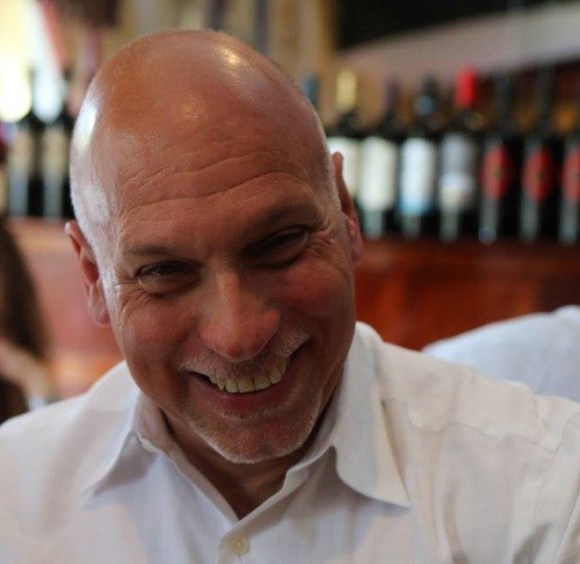
Tim Tomlinson is the author, most recently, of Listening to Fish: Meditations from the Wet World, a poetry-prose-photography hybrid collection concerning the perils facing the world’s coral reefs. He is the director of New York Writers Workshop, and he teaches in New York University’s Global Liberal Studies. 

.

PLEASE NOTE: ARTICLES CAN ONLY BE REPRODUCED IN OTHER SITES WITH DUE ACKNOWLEDGEMENT TO BORDERLESS JOURNAL. 

Click here to access the Borderless anthology, Monalisa No Longer Smiles

Click here to access Monalisa No Longer Smiles on Kindle Amazon International
Categories
Poetry

Three Poems by SR Inciardi

SENTIMENT

The ocean breeze swipes the water
page after page turned in waves of succession,

one after another sweeping the air and stirring it
in the sounds of coming and going.

The waves move as the wind dictates:
some taller, some more shallow, still others less certain.

These are the waves of times, when Fall just begins
and the air knows nothing of Summer—

in days blessed by what came but were cursed
when they left, with just the newest day now with me,

where only what left is what I wanted—
where only waves of its time came and are now over.

Water comes then recedes motion upon motion,
each one pulled from the edge of the sea,

each one returned to where it once came.
I do not see its subtle direction-change

except its withdrawal, except to see them
extracted in distant sentiments of their own.

Can it be that this is what was always meant to be,
and did I miss more than I could have remembered?

Did I not notice them when they were there one after another
in chances I hadn’t realised were given?

But now I see I was wrong: each day the shore
doesn’t forget each wave’s sentiment,

each wave holds its own where there is no end to them,
where I’m offered a memory wrapped by the pain

of their leaving, but stays bound to every one
where I hold on to the gift each one carried.

DESIGNS


so much of what consumes me
is mired in redundancy mental gymnastics
wound ‘round and ‘round like an old watch spring
and even when encased as permanent
and making promises of permanence revolve
with the earth in an air of inconsistency—
both tensioning and reverting

maybe sorrow was designed this way maybe
it was honed from some common metal
where fissures stayed hidden but are the cause
of its denigration over and over
daylight comes deepens then fades
mired in a cycle where change speaks only to change
‘round and ‘round in steps that hold its own brightness


A STEP AT A TIME

I can’t walk far
once sunlight begins leaving,
once the sweet music
of unnamed birds
begins to end, after rain
fell again in the morning
and clouds regrouped
in early evening, the day without
a before or after, only itself
with two hands
giving all I come to breathe—
the two of us here
in waning sunlight
remembering: another day
only mine to take,
only the day to give—
whether I cherished it
or had choices when it ended,
a day in the light
that remains
with an intensity of its own.

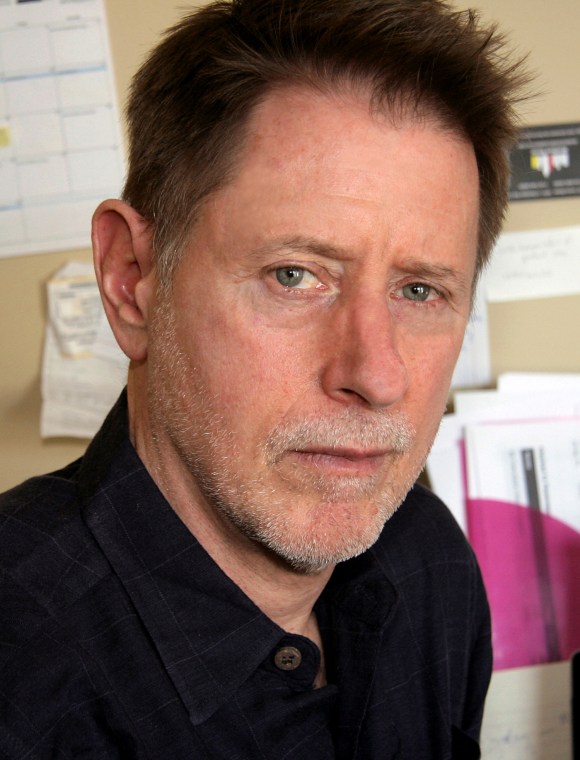
SR (Salvatore Richard) Inciardi was born in New York City and attended Brooklyn College and New York University. SR Inciardi’s poetry has appeared in the USA and in Europe in various online and print magazines including Green Ink Poetry, Harrow House Journal, Grey-Sparrow Journal, Borderless Journal, Written Tales, among others. He was a contributor to Green Ink Poetry for their publication on Kennings: Equinox Collections: Autumn released on Amazon in October, 2024.

.

PLEASE NOTE: ARTICLES CAN ONLY BE REPRODUCED IN OTHER SITES WITH DUE ACKNOWLEDGEMENT TO BORDERLESS JOURNAL

Click here to access the Borderless anthology, Monalisa No Longer Smiles

Click here to access Monalisa No Longer Smiles on Kindle Amazon International

Categories
Poetry

If Only… by SR Inciardi

IF ONLY 

It’s those words in the smaller pairings that offer
imagined depth but inexact dimension with eyes
that cannot see newness in weakened light absent colour
words that can be read from the ashes
of what never was in a time escaping
into the dimming sunset: if only I could see my choices
replayed if only I could hold them
when the air was younger when they floated
on a gentle breeze and were touched by an earlier sunlight
when I knew what it was to be in the moment
and I was captured by words still to come. If only
they were here if only
the words I heard then continued to speak now.

SR (Salvatore Richard) Inciardi was born in New York City and attended Brooklyn College and New York University. SR Inciardi’s poetry has appeared in the USA and in Europe in various online and print magazines including Green Ink Poetry, Harrow House Journal, Grey-Sparrow Journal, Borderless Journal, Written Tales, among others. He was a contributor to Green Ink Poetry for their publication on Kennings: Equinox Collections: Autumn released on Amazon in October, 2024.

.

PLEASE NOTE: ARTICLES CAN ONLY BE REPRODUCED IN OTHER SITES WITH DUE ACKNOWLEDGEMENT TO BORDERLESS JOURNAL

Click here to access the Borderless anthology, Monalisa No Longer Smiles

Click here to access Monalisa No Longer Smiles on Kindle Amazon International
Categories
Poetry

Night Falling by SR Inciardi

SR Inciardi
NIGHT FALLING 

Now the changes have stopped and what it’s come to
has settled in a curtain masking as it spreads
so what was at one time discernible is painted
in thicker darkness. At this point I see it will not reverse
another day weathered another string of moments
shaded by insistence—soundless sketches of how real objects
appear bloodless stripped of their depth blended
with their variances.

It’s not the daylight I miss but the touch
of what once stood before me the comfort seeing it
knowing it was there in the light now both unreachable.
It’s the darkness that seems to hold the more natural light
among the new air that’s turned cold shifting
between two selves: one that knows
what the daylight once gave and the other that knows
when the light returns each day will be different.

SR (Salvatore Richard) Inciardi was born in New York City and attended Brooklyn College and New York University. His poetry has appeared in USA and Europe in various online and print magazines including Green Ink Poetry, Harrow House Journal, Grey-Sparrow Journal, Written Tales,among others. He was a contributor to Green Ink Poetry’s Kennings: Equinox Collections: Autumn (2024, Amazon)

PLEASE NOTE: ARTICLES CAN ONLY BE REPRODUCED IN OTHER SITES WITH DUE ACKNOWLEDGEMENT TO BORDERLESS JOURNAL

Click here to access the Borderless anthology, Monalisa No Longer Smiles

Click here to access Monalisa No Longer Smiles on Kindle Amazon International
Categories
Review

The History Teacher of Lahore by Tahira Naqvi

Book Review by Somdatta Mandal

Title: The History Teacher of Lahore: A Novel

Author: Tahira Naqvi

Publisher: Speaking Tiger Books

Tahira Naqvi, the Pakistani American writer, has extensively translated the works of Saadat Hasan Manto, Khadija Mastur, Hajra Masroor, and the majority of works by Ismat Chughtai from Urdu into English. As a teacher/professor of Urdu language and literature at New York University, she has regaled us with several short stories that speak of cross-cultural encounters of immigrant Pakistanis in America, especially about how women experience acculturation in the New World. The History Teacher of Lahore is her first novel where she recollects the sights, sounds, and ambience of growing up in Lahore in intimate details. The setting of this novel is the nineteen eighties, which was particularly a time of unrest in Lahore. In this debut political novel, Naqvi eloquently portrays the struggle between a besieged democracy and the rise of Islamic fundamentalism on the one hand, and the thriving cultural traditions of Urdu poetry on the other.

The story begins with the young protagonist Arif Ali who moves from his hometown of Sialkot to Lahore with a dream of being a history teacher and a poet. A ‘tall, slight man in his late twenties,’ we find him relaxing on a bench in Jinnah Park — a place that has become haven for him to spend his time reading, far away from the ferocity of traffic and street crowds. In the days that followed, Arif realised that in the Government Model School for Boys where he taught, he was forced to teach the boys another kind of history for his sake as much as theirs. But that required deep thought, time, and enthusiasm. He befriended Salman Shah, another teacher in his school, and his rapport with him grew stronger by the day. But once again, Arif found the atmosphere in the school was becoming increasingly confining. He would often engage in animated chatter with the high school Islamiyat teacher Samiullah Sheikh, whom he found disagreeable. Not only dressed in Shariyah compliant clothes, but this man was also waiting for his opportunity to teach at a madrassah[1]. This was the period when bans were being imposed on popular music of the kind Nazia Hasan and her brother sang for the younger generation, and even though ‘Disco Deewane’ and ‘Dreamer Deewane’ were sung loud, fear had become an elixir for rebellion. Arif was forced to resign from the school and along with his friend Salman. he ultimately got another position as a history teacher in another private school, Lahore Grammar Institute, where there was more freedom to teach than in the earlier one. The free socializing among the sexes here was new and noteworthy for Arif.

As Arif’s impotent rage towards the increasing religious intolerance grew, he joined his friend’s uncle Kamal and his partner Nadira to secretly help them rescue underprivileged children in clandestine ways. In the meantime, his poetic creations found great impetus when he found a secret admirer in Roohi, Salman’s sister, and started sending her his poems regularly. Though they never met, Roohi would write letters to him every week, and gradually, the more letters Arif received from her, the more his feelings for her grew. The secrecy of their epistolary courtship continued for quite some time till things were disclosed and after a lot of twists and turns in the story, they were finally engaged to get married.

In the meantime, his friend Salman got engaged to a colleague Zehra Raza, and despite the Shia-Sunni clashes that prevailed in society all around, they were unaffected by such ideology. The three of them developed a close camaraderie among themselves, but soon after, the General’s death brought in a lot of political turmoil in the city. The mentality of the public also changed, people went en-masse to watch public flogging, and trouble loomed ahead when Sunni Shia, Ahmadi non-Ahmadi, Punjabi Urdu-speaking, Protestant-Catholic, divisions and sub-divisions, inter-faith, inter-class and inter-religion issues became more and more marked in all spheres of society. The warp and weft of faith produced such tangled intricacies as could only be imagined in nightmares.

As the nation was caught in the vortex of religious extremism, Arif’s position also underwent a great change in the school when he wanted to teach ‘true’ history to his students. He was caught in a dilemma when he found he was forced to teach false historical information in the doctored textbook that Aurangzeb with his hatred of other religions was adored whereas Akbar with more religious tolerance was totally sidelined. He tried to rectify the errors by providing supplementary notes to his students, but that landed him in more trouble. Apart from differences of opinion with the other teachers in school, Arif’s was gripped with a kind of fear and frustration when some unidentified goons threatened him to stay away from issues that did not concern him. Things got worse when a Christian student in his class was falsely accused of blasphemy and Arif decided to save him from being arrested. He embarked on a dangerous mission to resolve this Christian-Muslim conflict that landed him in the middle of sectarian clashes and without giving out all the details, one just mentions that the novel ends at a tragic moment.

In the acknowledgement section Naqvi states that she is grateful to her father for many things but especially for his Urdu poetry which she has used freely in translation. These poems, ghazals and nazms, help to explain the different moods of the protagonist and his mental situation very clearly. One interesting aspect of the novel is that each of the twenty-two chapters is prefaced by a small quote that in a way summarizes the mood and content of that chapter. Most of these quotes are from Jean-Paul Sartre, while others are from Spinoza, Ghalib, Shakespeare’s Sonnet 116, H.W. Longfellow, Jacques Derrida, Tertullian, Thomas Mann, and four entries particularly from The Lahore Observer dated 15 September 1990, December 1990, January 1997, and January 1998 respectively. These wide-ranging quotes not only increase the story-telling impact, but also endorse the erudition of the novelist herself.

To conclude we can say that Bapsi Sidhwa’s The Ice-Candy Man gave us the sights, sounds and details of Lahore during the Partition in 1947, and the same city becomes wonderfully alive again through the pen of another woman writer from Pakistan who had spent her growing years there, and who gives us details about it from the 1980’s onwards when  the political situation of the country was once again very murky. The novel wonderfully portrays the radical Islamisation of the country that included murder, mayhem, and public flogging and more that was visible in Lahore, as this process resulted in terrible uncertainty in the lives of the city’s residents from all walks of life. Strongly recommended for all readers, we eagerly wait for more novels by Tahira Naqvi in the future. The insider-outsider’s point of view offered by her is remarkable and this debut novel can be counted as a collector’s item.

[1] Muslim religious school

Somdatta Mandal, critic and translator, is a former Professor of English from Visva-Bharati University, Santiniketan, India.

.

PLEASE NOTE: ARTICLES CAN ONLY BE REPRODUCED IN OTHER SITES WITH DUE ACKNOWLEDGEMENT TO BORDERLESS JOURNAL

Click here to access the Borderless anthology, Monalisa No Longer Smiles

Click here to access Monalisa No Longer Smiles on Kindle Amazon International