Categories
Notes from Japan

Kyoto: Where the Cuckoo Calls

By Suzanne Kamata

                        even in Kyoto

I long for Kyoto—
cuckoo!
--Matsuo Basho (1644-94)*

My story begins at Kyoto Station, where I alight after a three-hour bus ride. I am on my way to meet my friend Yoko for dinner in the Kitayama area, and a drink at the Kyoto Hotel Roku. She and I once worked together at the same university in Naruto, but now she is an associate professor at a small women’s college in Kyoto. I head underground, through the Porta shopping center, and get on a subway bound for Kokusaikan. In spite of the crowds up above, the train allows for elbow room, and I easily find a seat. Most of the passengers are glued to their phones, some are masked. My eyes flit to an advertisement for a display of kimono. After several stops, I get off at Kitayama and find Yoko waiting at the wicket. We have a spaghetti dinner at a nearby restaurant, and then hail a taxi via Didi, Japan’s answer to Uber.

The taxi takes us through an upscale residential area featuring traditional homes. Yoko tells me that we are near Bukkyo University, originally an institution of research for monks, but now a university grounded in Pure Land Buddhism offering degrees in a variety of subjects including English, nursing, and social welfare. We are also not too far from my favorite temple, Kinkakuji. One of the first novels that I read upon arriving in Japan was Yukio Mishima’s The Temple of the Golden Pavilion, translated by Ivan Morris, about a deranged monk-in-training who set fire to the gilded temple and burned it down. Surprisingly, none of the visitors from abroad that I have taken to this temple had ever heard of this 1950 incident or the book.

The driver turns down a long driveway and drops us off at the hotel entrance. “Nice hotel!” he says.

I resist the urge to defend our extravagance, to say we are just here for a drink, and then the next day for lunch. I have been commissioned to write an article about the hotel, but I can’t afford to spend the night.

The Roku Kyoto, which opened in September of 2021 when Japan was off limits to foreign tourists, is one of eight of LXR luxury properties worldwide, and Hilton’s first in Kyoto. (Others include The Biltmore, Mayfair in the United Kingdom, and the Mango House in the Seychelles.) Along with a tranquil, storied setting (in the 16th century, it was a community for artists and artisans), the hotel offers bespoke experiences, such as a session of kintsugi with a local master of the craft, using cracked hotel pottery, and traditional papermaking using water from the Tenjin River, which runs through the hotel grounds. Guests can also opt for a New Year’s Eve package including a two-night stay, and a viewing of the sunrise over Mt. Fuji via private plane at a cost of \4,800,000. Nevertheless, the hotel strives to be a place where local residents can come for escape and enjoyment as well as high-flying tourists.

We are greeted warmly at the entrance and shown to the dimly lit bar. Walking along the basin at the center of the hotel complex, I take in the reflection of the full moon on the water. I feel like we should be writing haiku. The veranda would be the perfect setting for filming a period drama.

The day before, I had tried and failed to make a reservation, and assumed that the restaurant was fully booked. However, after verifying that we could drop in for a drink or a cup of coffee without notice, we decided to go ahead with our plans. As it turns out, we are the only ones in the bar at a little after eight.

A small lamp is placed on our table, and the bartender brings us a menu bound in leather. I had been planning on having the Hana-monogatari (flower story) cocktail made from seasonal herbs and flowers from the hotel garden, but the Pear Moscow Mule sounds irresistible. Yoko selects the Frozen Rum Chai, made with amazake (sweet sake). We also order a plate of chocolates.

Ambient music plays softly in the background as we catch up on gossip about former colleagues and update each other on current research projects. We speak softly in the hushed atmosphere which is broken only by the sound of a cocktail shaker behind the bar.

Our drinks arrive with paper straws. Mine has a slice of Asian pear hooked over the edge. The fruit changes by the season, I am told. I take a sip, taste a hint of lime with the kick of ginger: delicious.

“Mmmmm. This is so good,” Yoko says of her drink. We negotiate over the assorted chocolates, which are filled with raspberry and orange peels, among other things. Yoko lets me have the piece topped with gold.

Later, a couple more small groups enter the bar, but the area is spacious. Our privacy remains intact. We talk a bit more, finish our drinks, and agree about where to meet for lunch the next day.

Late the following morning, I take the same route from a bargain hotel near Kyoto Station, weaving between young women in yukata and a foreigner with brightly dyed, intricately braided hair, and get off at Kitayama. This time, as I emerge from underground, I take note of the electronic cuckoo sound chirping from a speaker, and I recall Basho’s famous poem about longing for Kyoto. Nearly 400 years after it was written, I imagine that the poem evokes the same emotion – a longing for the city in days of yore.

I have visited Kyoto many times since I first arrived in Japan. On the first, when I was just beginning to learn Japanese and still didn’t know quite what was going on, I spent the night at the residence where the previous Empress was trained in housekeeping, a rite of passage even for aristocratic girls. As I mentioned, I was partially motivated to come to Japan because of literature, namely the Heian court poetry that I learned about from a class in Asian history. I was enthralled with the idea of courtiers communicating via verse, and as a newly heartbroken nineteen-year-old, I identified with the intense longing in poems by Murasaki Shikibu and Ono no Komachi. Later, I read a novel set in Kyoto –Ransom, by Jay McInerney. What I remembered most about it was the funny Japlish phrases and scenes of karaoke, still a novelty in America in 1985. Flipping through it more recently, I came across this description of the Kamogawa (Duck River):

“From its source the river drained fields and paddies heavily fertilized with petrochemicals and manure. Closer in, the Kyoto silk dyers dumped their rinse tanks. The white herons that fished the shallows had purple plumage one day, green the next—weeks in advance of the women who brought the kimono silk in the shops downtown.”

Can this book really be what made me want to come to Japan? And yet, I also recall being attracted by the cuteness and kitsch, the Disney meets sci-fi vibe prevalent in Bubble Era Japan implied in, for example, Ridley Scott’s film Bladerunner. In any case, nostalgia sometimes leaves out the worst, and things seem to have changed for the better. As we cross the Kamogawa in another taxi, this time by daylight, I see no evidence of pollution.

“There are tons of ducks on the river,” Yoko says. “And ibises.”

“It’s famous.” I have come across many references to it in literature.

We arrive at the hotel a bit early for our noon lunch reservation, so we are shown to a large room with sofas and chairs, where we can drink tea or coffee while we wait. We choose to sit next to a window which looks out onto the basins. The blue sky, the changing leaves, and the still water create a calming tableau.

“I feel like my mind and brain are being purified,” Yoko says.

No other guests are around, and I wonder how many of the hotel’s 114 rooms are currently occupied. Perhaps everyone has already left the hotel for sightseeing.

A strip of moss runs parallel to the basin.

“It’s of better quality than the moss at Kokedera,” Yoko says, referring to another famous nearby temple renowned for its moss garden. “And you have to make a reservation a month in advance and pay \3,000 to visit!”

I write down her words, never having reflected upon the quality of moss before.

“You’d better write ‘as good as,’” she amends, suddenly aware of her sacrilege.

Finally, a gray-haired Japanese woman in a kimono emerges from the hotel and traverses the walkway between the two basins. A few minutes later, I see a Western woman with long brown hair pushing a baby in a stroller. And then a little later, a child wearing a fox mask, saunters across the walkway, slashing the air with a toy sword.

 “He must have gone to Fushimi Inari Shrine,” Yoko says, referring to the popular tourist attraction known for its Instagram-worthy red torii gates.

Moss. Photo Provided by Suzanne Kamata

Just before twelve, we make our way to the restaurant, where we are shown to a table. The Japanese host/sommelier, suggests that we both sit on the same side, facing the window which provides a view of the fall foliage. He brings us the menu, and wine list.

I have already decided that I am having the wagyu burger. A glass of robust red wine would probably suit it best, but I am intrigued by the locally produced orange wine, which I’m told is comparable to a rose. Yoko asks the sommelier a lot of questions. Her partner works in wine in California, so she has visited many vineyards.

“It’s nice to talk to someone who knows so much about wine,” he says.

One of our two code-switching servers, both, as it turns out, from Nepal, pours a swallow of the orange wine into a glass for Yoko. She tastes it, but decides upon the sparkling plum wine, and the lunch course.

My image of plum wine comes from the syrupy homemade stuff we’d once received from my husband’s relative. “For when you have a cold,” she’d said. But this wine is something else – fruity, but light, and effervescent. Yoko asks where she can buy a bottle of it.

The sommelier explains that the hotel’s wines come from the nearby Tamba Winery, which is open to the public for tastings in the fall. It’s a short drive from where we are now. Their wines sell out quickly just in Kyoto and are mainly used by restaurants.

Yoko’s first course is pesto-dipped scallops submerged in vichyssoise made with white beans. She invites me to taste it. I dip my spoon into the shallow bowl. The bright green of the basil is a surprising delight. There is a bit of a crunch.

“What is that crunchy thing?” I ask our server. “And what kind of flower is that?”

“Just a moment,” he says, and ducks away to find out.

The answer: croutons, and linaria.

I am almost regretting that I didn’t choose the lunch course as well, but then my burger arrives, along with a generous serving of fries, and I am glad that I skipped breakfast. I probably won’t need dinner, either.

I’d imagined that all wagyu was from Kobe, but the host tells us that it’s Kyoto beef.

Yoko’s second course is marinated salmon with spinach, potatoes, onion, and amaranth flowers. The server spoons duck sauce around it.

“Is there a lot of duck cuisine in Kyoto?” I ask Yoko, my mind going to the Kamogawa.

“Yes,” she says, “But I don’t think the ducks are from the river.”

Lastly, we have dessert—a fig cradled in a chocolate shell, topped with a dollop of cassis ice cream. The plate is painted with sauces. It is exquisite to both eyes and tongue.

Before leaving the property, we stroll around the grounds taking in the lawn where morning yoga and meditation are held, the orange tree and lavender beside the thermal pool (the peels of the former are used in footbaths at the spa), the exercise room redolent with cedar and cypress with a vista of Takagamine Mountain.

As we prepare to leave, Yoko suggests that next time, we treat ourselves to a hot stone massage in the spa, followed by afternoon tea on the veranda overlooking the stream. We can come in the winter, when there is snow frosting the mountain, for a different view. Yoko says that she might come by bicycle, and I vow to wear sneakers, so that I can walk from the station. Instead of longing for the past, we look to the future.

*This translation is from Kyoto: A Literary Guide (Camphor Press, 2020), translated, collated, and edited by John Dougill, Paul Carty, Joe Cronin, Itsuyo Higashinaka, Michael Lambe, and David McCullough.

Suzanne Kamata was born and raised in Grand Haven, Michigan. She now lives in Japan with her husband and two children. Her short stories, essays, articles and book reviews have appeared in over 100 publications. Her work has been nominated for the Pushcart Prize five times, and received a Special Mention in 2006. She is also a two-time winner of the All Nippon Airways/Wingspan Fiction Contest, winner of the Paris Book Festival, and winner of a SCBWI Magazine Merit Award.

PLEASE NOTE: ARTICLES CAN ONLY BE REPRODUCED IN OTHER SITES WITH DUE ACKNOWLEDGEMENT TO BORDERLESS JOURNAL

Click here to access the Borderless anthology, Monalisa No Longer Smiles

Click here to access Monalisa No Longer Smiles on Kindle Amazon International

Categories
Notes from Japan

How I Wound Up in Japan

By Suzanne Kamata

I had planned to go to Africa.

I suppose it is politically incorrect to say that I was somewhat under the influence of the movie, Out of Africa (1985), which featured European expatriates living the colonial life on a coffee plantation, or that my do-gooder impulse had been activated by other films such as Cry Freedom (1987) with Biko in it. I had decided that after I graduated from college, I would join the Peace Corps as a volunteer.

I had wanted to be a writer since I was a little girl growing up in Michigan. I have especially always wanted to write fiction. However, by the time I became a student of English literature in college, I realised that it would be difficult to make a living as a novelist. My plan upon graduation was to travel the world through teaching English as a foreign language. In this way, I would accumulate life experiences which would become fodder for my stories and novels.

Earlier, as a junior, I had spent a semester in Avignon, France, on foreign study, somewhat following in the footsteps of my older brother, who’d spent a year in Germany while we were in high school. I’d been inspired by his letters telling of his adventures abroad, sleeping on Spanish beaches, skiing down Austrian slopes. When he came back home, I saw how living abroad could transform a person. I wanted that for myself.

The interview for the Peace Corps was gruelling – a four-hour grilling, sometimes quite personal. They asked me if I had a boyfriend. I winced, because I had recently broken up with someone I thought I wanted to marry. “No,” I said. They told me that the most common reason for leaving a Peace Corps posting early was a boyfriend or girlfriend back home.

In the meantime, my brother, who’d majored in business, and who was concerned that I would be working for free, sent me a newspaper clipping about something called the JET Program, a fledging one-year scheme for “native speakers of English” to work as assistant language teachers in Japanese public schools. The position came with a salary that was decent at the time. I applied to that, too, as a back-up, in case the Peace Corps didn’t want me.

To be sure, I had an interest in Japan. At t the time, its economy was thriving and Japanese companies were buying up iconic American buildings. It seemed as if Japan was about to take over the world, and that it would behoove me to know something about the country. Also, I had taken a course in Asian history, and developed an interest in Heian Court poetry. I loved the idea of a country where people had communicated by passing poems to one another. And I was intrigued by the futuristic images depicted in the movie, Blade Runner (1982) the kitschy aspects rendered in Jay McInerney’s novel, Ransom (1985).

Anyway, I was accepted into the Peace Corps and told that I would be sent to Cameroon. After some consideration, I decided that I would go to Japan for one year, and then enter into a two-and-half stint in the Peace Corps. But then once I arrived in Japan, I found that I wanted to stay a little bit longer. Just one more year. There was still so much to learn, so much to explore. I hadn’t yet climbed Mt. Fuji! I hadn’t been to Okinawa! I renewed my contract. In my second year, I fell in love with a Japanese high school teacher. And, yes, dear reader, I married him. I stayed in Japan and started a family. I have never been to Africa.

As I write this, I have been living in Japan for well over half of my life. From time to time, I wonder how my life might have turned out differently if I had gone to Cameroon as originally planned. Would I be working for an NGO in Africa? Or what if I had gone back to the United States after one or two years? Would I be living somewhere in suburbia, working nine to five at a company?

However, I also often consider what Japan has given me. Living outside my country has opened my mind, and has given me countless opportunities, including fodder for the stories that I write. And thanks to my writing, I am now employed at a small university where we have many students from around the world. I continue to nourish my heart and mind by reading literature and watching films from and about other cultures.

I find that we are not so different after all.

.

Suzanne Kamata was born and raised in Grand Haven, Michigan. She now lives in Japan with her husband and two children. Her short stories, essays, articles and book reviews have appeared in over 100 publications. Her work has been nominated for the Pushcart Prize five times, and received a Special Mention in 2006. She is also a two-time winner of the All Nippon Airways/Wingspan Fiction Contest, winner of the Paris Book Festival, and winner of a SCBWI Magazine Merit Award.

PLEASE NOTE: ARTICLES CAN ONLY BE REPRODUCED IN OTHER SITES WITH DUE ACKNOWLEDGEMENT TO BORDERLESS JOURNAL

Click here to access the Borderless anthology, Monalisa No Longer Smiles

Click here to access Monalisa No Longer Smiles on Kindle Amazon International
Categories
War & Peace

“How Many Times Must the Cannonballs Fly…?”

Featuring poetry by Lesya Bakun, Rhys Hughes, Ron Pickett, Michael R Burch, Kirpal Singh, Suzanne Kamata, Mini Babu, Malachi Edwin Vethamani, Sybil Pretious and Mitali Chakravarty

These fragments I have shored against my ruins
…
Datta. Dayadhvam. Damyata.         
 Shantih shantih shantih

-- Wasteland (1922) by TS Eliot

These lines from a hundred year old poem by TS Eliot continue to cry out to be part of our civilisation’s ethos as do the lyrics of Bob Dylan’s pacifist song, ‘Blowin’ in the Wind‘ which wonders : “Yes, and how many times must the cannonballs fly/Before they’re forever banned?” The world continues to war destroying nature, lives and a common human’s need to exist in peace and go about his daily tasks, secure that the family will meet in their home for dinner and a good night’s rest. Cries of humanity in crisis from the battle grounds of Ukraine take precedence as Ukrainian Lesya Bakun writes about the plight of the people within the country stalked by violence and death.

REFUGEE IN MY OWN COUNTRY/ I AM UKRAINE
By Lesya Bakun (07.03.2022, Ukraine)


I am Kharkiv.
I am Volnovakha.
I am Kyiv.
I am the blocked Mariupol on the verge of humanitarian catastrophe.

I am the completely destroyed
City of Shchastia --
That is literally translated as "happiness" --
Where people have to sit in the bomb shelters,
Because nothing else is preserved.
The Russian troops are not letting them out.

I am Ukraine.
I am a fighter. 

I am a refugee
In my own country.

What's in the minds of Russians?

Nine years ago, I was in Strasbourg, France.
Seven years ago, I was in Dublin, Ireland.
Two years ago, I was in Istanbul, Turkey.

Today, I am 
In an internally displaced people’s centre --
In a city that I cannot even publicly disclose
For the security of too many families
Who are fleeing to remain safe.

"The Ukrainian IT company N has left the markets of Russia and Belarus forever".
We should have done it eight years ago.
We should have done it thirty-one years ago.

A lot of my friends are switching from Russian to Ukrainian.
We should have done that thirty-one years ago
So that no one comes to "protect us".

I am the gasoline 
that NATO sent us
Instead of closing the sky -- 
Apparently so that we can burn
The Budapest Memorandum

We have seen the real face of Russians
Again
They negotiated green corridors
And started shelling from the heavy weaponry.

Evacuation is cancelled.

"I wish you survival, 
Health
And the closed sky above you."

As the battle rages and razes, some react to what we have gleaned from media reports, some of which move hearts with stories of bravery and the spirit of the people battling the invaders who kill and destroy what they cannot possess… But can freedom of thought and resilience ever be destroyed?

THEY SHALL NOT PASS
By Rhys Hughes

They shall not pass
we cried as we held the pass
against the enemy.
And our sleepy student
days in sunlight
suddenly seemed long gone
and very far away
though it was only
a few weeks since war began.
Would such times
ever return? We had no idea.

Now the conflict is over
and the years pass
with increasing velocity
and right here
in the rebuilt city I am young
no longer. I am
the teacher: it is my turn.
And as I watch my students
dozing in sunlight
instead of revising for exams
an old refrain fills
my head: They shall not pass.

ADVANTAGE INTRUDER
By Ron Pickett

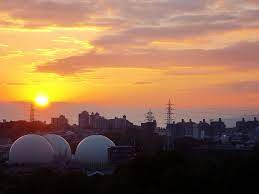
The sun edges over the cluttered horizon.
The cell towers, eucalyptus and large water tank are comforting.
The sun slowly fills the dark.
Life is safe and warm and good – for now.
The sun slides below the western horizon in Kyiv and darkness returns.
 
The dark brings its special unseen terrors.
The rumble and rattle of distant rockets and bombs.
The roar of jets and the throb of helicopters.
Flashes of light fill the night sky but there are no storms in the distance.
The earth trembles: the people quiver.
Daylight is ten long hours away, we who have been there remember, and shudder.
 
There are patches of dirty snow on the ground.
On trees and shrubs and the Peoples Friendship Arch.
And under the rubble of bombed buildings.
The snow is marked by the black stains of explosions and the red stains.
The snow will melt with the coming of spring, but the stains will remain.
The stains are physical and psychological and deep.
 
Dark is the province of the predator.
Dark is a comforting cover for the aggressor.
Dark is the source of fear and anguish for the weak.
This predator is man who can see in the dark.
To see at night is a huge advantage.
Advantage intruder.


FRAIL ENVELOPE OF FLESH
By Michael R Burch
 
for the mothers and children of Ukraine
 
Frail envelope of flesh,
lying cold on the surgeon’s table
with anguished eyes
like your mother’s eyes
and a heartbeat weak, unstable ...
 
Frail crucible of dust,
brief flower come to this—
your tiny hand
in your mother’s hand
for a last bewildered kiss ...
 
Brief mayfly of a child,
to live two artless years!
Now your mother’s lips
seal up your lips
from the Deluge of her tears ...
 

FOR A UKRANIAN CHILD WITH BUTTERFLIES
By Michael R Burch
 
Where does the butterfly go ...
when lightning rails ...
when thunder howls ...
when hailstones scream ...
when winter scowls ...
when nights compound dark frosts with snow ...
where does the butterfly go?
 
Where does the rose hide its bloom
when night descends oblique and chill,
beyond the capacity of moonlight to fill?
When the only relief’s a banked fire’s glow,
where does the butterfly go?
 
And where shall the spirit flee
when life is harsh, too harsh to face,
and hope is lost without a trace?
Oh, when the light of life runs low,
where does the butterfly go?


THE TIMES, THE MORALS
By Kirpal Singh
(After Ee Tiang Hong)

Testy times
Tempers flake, bruise
Blood swells veins
As memories burn.

Times were
When reason prevailed
And men talked --
Eyes glittering.

Now it’s tit for tat
No relenting
Frayed nerves
Know no restraint.

We pray n plead
For sanity’s return
As pall bearers 
Carry another dead.

When will all this horror, violence and sorrow end? Will there be peace anytime soon… many voices across the globe join in quest of harmony.

Mt Fuji: Photo Courtesy: Suzanne Kamata
A VIEW OF MT. FUJI (March 3, 2022)
By Suzanne Kamata

On the third day 
of the third month 
of the fourth year of 
Beautiful Harmony (Reiwa)
which followed the era of
Heiwa (Peaceful Harmony)
my husband, son, and I traveled to Gotemba.
We checked into our mostly vacant hotel
wandered the grounds amongst
oaks and bamboo and volcanic rocks
gazed upon the majestic mountain
symbol of Japan.
Mt. Fuji stood
calm and dormant and frilled by cloud
spotlit by late afternoon sun.

As we stared in wonder and awe
   BOOM!
an explosion resounded.
A black helicopter
like the ones over Kyiv
flew into view.
I recalled the military vehicles 
we’d passed on the highway
those young men driving to 
practice for self-defence.

When will there be peace in Ukraine?
When will there be peace in the world?

RUSSIA AND UKRAINE
By Mini Babu

After the war,
the repose of the dead,
settles over the nations.
The leaders will smile,
shake hands and
interchange the bodies
of the dead, maimed,
captives and,
each will dust
that which belongs to 
the other, wash 
their hands and 
walk away.

Children hold on
expecting their fathers,
unknowing that
fathers never come back
after war.

And I, the ordinary,
instruct my children
how historic these names
are for examination.
Putin and Zelensky.

PEACE TALKS IN THE FOREST
By Sybil Pretious

I breathe
I sit on the hard cushion of root, foundation of growth
Peace talks to me  in the forest
Leaning against the rough trunk  bark,  feeling of strength
Peace talks to me in the forest
Above the leaves, cover me with a protective shade
Peace talks to me in the forest
Flowers flutter giving a splash of colour
Peace talks to me in the forest
Seeds heralding new life hang, dispersed on the wind
Peace talks to me in the forest
And I wonder
Why do warring nations not meet in forests
For peace talks
 where peace talks.


PRICE OF PEACE
By Malachi Edwin Vethamani

(I)

Peace is
a gentle brook,
natural and real. 

Peace is 
not things to come,
not imagined. 

We arrive as beings of peace.
One with all around us,
same flesh, same blood. 

Then labels are thrust upon us.
baptised into communities,
branded as nations. 

Essentialist labels 
bind us and blind us. 
We shed our individual beings,
stitched into communities. 

If you are not with us
You are against us, they say. 
Taking a stand 
comes with a price. 

The price is often peace. 


(II)

This is yet another call to stop a war.
A new plea for peace.
A shout out for prayers. 

The callers change 
with each new 
war cry. 

This too will pass.
How much will remain?
How much decimated?

Then these cries will be repeated. 
What is lost?
Is anything ever gained?

We will smell 
the stink of death 
and see the rubble of destruction.  

All the display of human unkindness 
we inflict on our fellow beings.


(III)

What new enterprise,
what profiteering,
has brought on this new war?
Surely, no noble cause 
can condone this waste of lives.

Whose monuments will we pull down now?
What new statues will we raise for self-proclaimed heroes?

What of the spouses who lost their partners? 
What of the parents who lost their children?
Children and citizenry 
casualties all.
Crushed and broken.


WASTELAND REVISITED AFTER A CENTURY                             
By Mitali Chakravarty

The river flowed with debris, with bodies
of the dead. When the waters reddened
with corpses crossing borders on a train,
nightmares haunted myriads of lives.

The undead cried till infecting more, the
anger, the hatred spread. That was more than
seven decades ago. History repeats itself. 
Will it ever stop? This hatred? This war?

Does killing, destroying ever help? Does 
it dissolve the buried hate, the anger, the 
deaths? Swigging blood like vodka, the madmen 
brew war with oil, weapons, the threat of nukes 
to annihilate all lives — make barren the Earth. 

Cosmic clouds gather to thunder,
‘Da, datta, dayadham, damyata’ till peace 
comes with love songs that echo through the 
Universe. A Brahmic vision of kalpas like waves 
ebb and flow, calming the cries of tortured souls. 

Oh God! Help us learn Mercy. When will the 
white horse ride to our rescue? Or was that all 
a myth? Kalki? Does the white horse ride out of each 
soul to form a lightening that dispels mushroom clouds? 

Peace be unto you.
Om Shantih, Shantih, Shantih! 

PLEASE NOTE: ARTICLES CAN ONLY BE REPRODUCED IN OTHER SITES WITH DUE ACKNOWLEDGEMENT TO BORDERLESS JOURNAL