Categories
Interview

How ‘The Red Silk Dress’ Invites Reflection and Reinvention

Keith Lyons in conversation with Natalie Turner, author of The Red Silk Dress
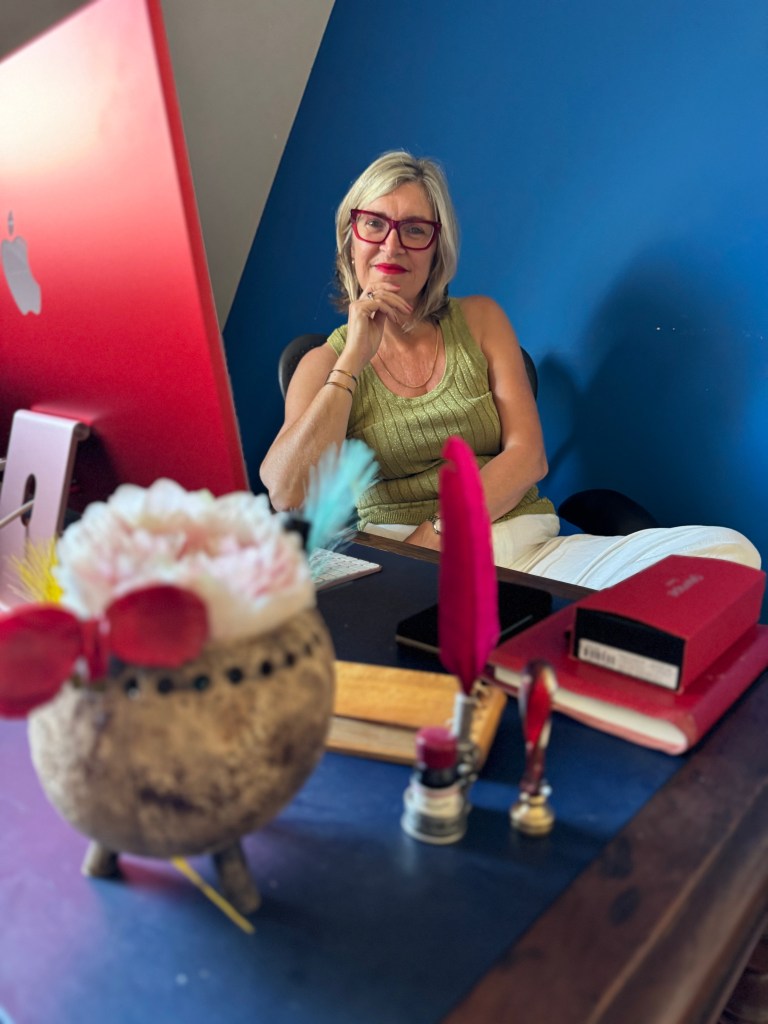
Tell us about your background and life. If you had to give a relatable elevator pitch to readers, what would you say?

I was born in 1968, a year of social upheaval, into a life shaped early by movement, belief, and questioning. My parents were Christian missionaries, so I grew up immersed in faith, travel, and a strong inner world. From a young age, I wanted to be a writer. I was also restless, resistant to fixed paths, and fiercely independent, which meant that desire took many shapes before it found its way home.

As a young adult, I travelled and worked across Asia and Latin America, experiences that expanded my worldview and quietly dismantled many of the belief systems I had inherited. I later studied politics, economics, and social psychology, worked in Parliament, and then moved into business and innovation, where I continue to help organisations navigate change. Writing stayed alive throughout, mostly through journals and ideas, even when it wasn’t centre stage.

The red thread running through my life has always been transformation. A willingness to question what no longer fits, and the courage to follow what is asking to emerge. Writing fiction felt like the most honest way to bring that thread home.

What first inspired The Red Silk Dress?

The inspiration came from living inside a world that looked complete from the outside but felt fractured beneath the surface. In Southeast Asia, I was surrounded by what’s often called the expat life, glamorous settings, elegant events, and success on display. Yet in quieter moments, especially in conversations with women, a very different story would surface.

Many were intelligent, capable, outwardly fulfilled, yet privately wrestling with a sense of loss. They had raised families and built impressive lives, yet somewhere along the way they felt they had misplaced themselves. The contrast between the polished exterior and the unspoken interior stayed with me.

At the same time, I recognised a parallel in myself. From the outside, my life also looked full and successful. Inside, I sensed something unfinished, something buried. The novel grew from that convergence. From the tension between what we show the world and what quietly asks for attention. Cambodia, and a writing retreat in Siem Reap, became the place where that question could no longer be ignored.

Why did you choose Claudette, a French woman living overseas, as the heart of this story?

I didn’t choose Claudette in a deliberate way. I wasn’t designing a character or thinking about nationality or backstory. She arrived. On the outskirts of Angkor Wat, during a writing retreat, surrounded by experienced writers and acutely aware of my own inexperience, this woman appeared fully formed in my imagination.

She was elegant and guarded, wearing a wide-brimmed white hat and dark glasses. She introduced herself as Claudette, from Paris, and asked me to write her story. When she removed her glasses, what struck me was the sadness in her eyes. That moment carried a quiet insistence. It wasn’t dramatic, but it was unmistakable.

I wrote the opening paragraph that day, and it remains the opening paragraph of the novel. Claudette wasn’t invented to make a point. She was the right vessel for the story that wanted to be told.

The novel explores longing, desire, and reinvention. What drew you to these themes?

Reinvention has always fascinated me because I’ve lived it. I’ve moved countries, changed careers, and rebuilt my life more than once. That capacity for agency, for choosing to become something new, has been a quiet through-line in my work and my thinking.

Longing and desire entered the novel more subtly. At the time, I was living in Penang, Malaysia, immersed in colour, texture, heat, and beauty. I began to experience desire not as something reckless or romanticised, but as a form of intelligence. A way back into memory, creativity, and the parts of us that go dormant when life becomes crowded with too much to do.

Longing, for me, is a signal. If we ignore it, we stay as we are. If we listen, it draws us inward, into an interior journey that can quietly change the course of our lives.

Is The Red Silk Dress a love story, or is it really about something deeper?

It’s about something deeper than a conventional love story. The love affair in The Red Silk Dress isn’t a romance in the usual sense, and it isn’t about escape or transgression for its own sake. It functions as a catalyst. Love, in Claudette’s case, is what wakes her up to herself.

What interested me was eros in its older meaning. A sensual awakening of the body and the senses, of attention and aliveness. A pause that draws us back into ourselves and allows us to inhabit moments more fully.

In that sense, eros doesn’t just awaken desire. It awakens attention. And sustained attention inevitably sharpens conscience. When we feel more alive, more present, more attuned, we become more aware of misalignment. Of what we are complicit in. Of what no longer feels bearable. That awareness naturally turns outward into questions of responsibility.

Places feel very alive in the book. Why were Cambodia, Malaysia, and Paris important settings?

The places are alive in the novel, as much a character as the people who inhabit it. Geography isn’t a backdrop for Claudette’s journey; it actively shapes it.

Cambodia is where the story begins because it is where her inner life is first disturbed and opened. I was deeply affected by Cambodia’s layers of history, from the ancient Angkor civilisation to the energy of contemporary artists, designers, and entrepreneurs rebuilding culture with pride and imagination. There is a sensuality and generosity in the country that opens Claudette.

Malaysia is her lived world. It is where I spent many years, moving between lush, gated communities, international enclaves, and the daily crossings into Singapore. That environment, with its contrasts between order and improvisation, privilege, and dislocation, shaped how Claudette learned to belong and not belong at the same time.

Paris represents origin and memory. It carries sensuality, identity, and an earlier version of herself. It is where Claudette must reckon with who she has been and who she is becoming, not nostalgically, but honestly.

And then there is Portugal, which sits quietly behind the book rather than inside the story. It is where the novel was edited, refined, and completed. After the intensity of Asia, it offered a different rhythm. More space. More listening. It was here that what had been awakened elsewhere could be integrated and shaped with patience.

For me, the locale is never decorative. Each country asks something different of Claudette. Cambodia opens her. Malaysia tests her sense of belonging. Paris calls her to reckon with her past.

What’s your connection with Malaysia, Cambodia, and Singapore, and what was your experience living and working there?

I moved to Singapore in 2010, initially for work. It was still a time when the traditional expat package existed, and the city was dazzling, ordered, and highly curated. I was fascinated by it, not because it was my life, but because of what it revealed about status, success, and performance.

We moved to Malaysia largely for practical reasons. In Johor Bahru, we became part of a more entrepreneurial, improvised community, shaped by people building lives across borders. I crossed into Singapore several times a week, so the contrast between those two societies became part of my daily rhythm.

Penang was where something settled. It was slower, textured, steeped in history. It was also where I returned fully to writing and committed to the novel. After years of living between worlds, Penang became the place where the book could finally be written.

You’ve lived and worked across many countries. How has that shaped the way you write about identity and belonging?

Living across countries has made identity feel less fixed and more relational. Belonging isn’t something you arrive at once and for all. It shifts depending on place, people, and season of life.

Being immersed in different cultures sharpened my sensitivity to belief systems, values, and the ways we construct meaning. Living now in Portugal has added another layer. After years of movement, it has offered a sense of feeling grounded without confinement. A rhythm where I can listen differently.

I now find myself writing more reflective cultural pieces that explore place, memory, and creativity. Belonging, I’ve learned, is not about fitting in neatly. It’s about learning how to be changed by place while remaining true to yourself.

You often write about moments when life quietly asks us to change. Where does that fascination come from?

From my own life. I’ve reinvented not just what I do, but how I think. What interests me most are the subtle moments when something no longer fits and begins to ask different questions.

Real change rarely arrives loudly. It comes as a discomfort, a quiet misalignment. Innovation, like personal change, requires the courage to step beyond conformity and tolerate uncertainty. I’ve always been drawn to that edge because it is where life becomes most alive.

Your professional work focuses on creativity and transformation. Did those ideas find their way into this story?

Yes, though not in a literal way. My work has always been about how change unfolds as lived experience. Claudette’s journey follows that inner arc. Awareness, awakening, investigation, and consequence.

Creativity also enters the novel through the senses. Fabric, silk, touch, style. I wanted creativity to live in the body, not just the mind. In that sense, the story becomes a meeting place between beauty and transformation.

Did writing The Red Silk Dress change how you see yourself or your work?

The act of writing, and the way the book moved me emotionally and sensorially, awakened a level of creative energy I hadn’t experienced before. When I finished the novel, I realised I had opened a door into a new phase of my life.

It also reoriented my work. I no longer separate creativity, leadership, and transformation into neat categories. They belong together. Writing the novel didn’t replace my previous work. It gave it a deeper centre.

In parallel, I continue my work with women in leadership, creating spaces where they can step back from performance and certainty and listen more deeply to themselves. In many ways, those spaces and the novel are in a subtle, mutually reinforcing conversation. Both are about reconnecting with agency, voice, and purpose, not as theory but as lived experience.

Who do you think this book is for?

It will likely resonate most strongly with women who are curious, reflective, and drawn to immersive stories. Readers who want to be transported into another world and enjoy discovering history, culture, and meaning through story.

That said, men have responded deeply too. Several have shared how meaningful it was to inhabit a woman’s inner world so intimately. While it is a woman’s journey, the relationships and portrayals of masculinity are layered and intentional.

At heart, it’s for readers standing at a threshold. Those who sense a quiet unease and are open to being moved by a story that stays with them.

If a reader recognises themselves in Claudette’s struggle, what would you want them to take from her story?

I would want them to pause first. To take a breath and turn inward. Claudette’s story isn’t a prescription or a manifesto. It’s an invitation to reflect.

If there is one thing I hope readers take from her journey, it’s the understanding that feeling trapped does not mean being powerless. Agency often begins quietly, with hope, courage, and a willingness to trust what is asking to emerge.

And that emergence isn’t just personal. It shapes how we show up in our families, our work, our communities. Change, in this story, is not about abandoning life, but about stepping back into it with greater responsibility for the world we are helping to shape.

What do you hope readers feel or reflect on after turning the final page?

Above all, I hope the book creates a pause. A moment of deeper listening. Not a rush to act or decide, but an invitation to sit with what is emerging.

What’s your advice to aspiring writers?

I think writing begins with attention. Being open to life, to what keeps circling at the edges of consciousness, to the story that wants to be told. Craft matters enormously, of course. Writing a novel asks for depth, endurance, and commitment well beyond beautiful prose. Technique only comes alive when it is in the service of something true, something rooted in vulnerability. Finding your story is about learning how to listen, and then having the courage and patience to give it form.

.

Keith Lyons (keithlyons.net) is an award-winning writer and creative writing mentor originally from New Zealand who has spent a quarter of his existence living and working in Asia including southwest China, Myanmar and Bali. His Venn diagram of happiness features the aroma of freshly-roasted coffee, the negative ions of the natural world including moving water, and connecting with others in meaningful ways. A Contributing Editor on Borderless journal’s Editorial Board, his work has appeared in Borderless since its early days, and his writing featured in the anthology Monalisa No Longer Smiles.

.

Click here to read an excerpt from the book.

PLEASE NOTE: ARTICLES CAN ONLY BE REPRODUCED IN OTHER SITES WITH DUE ACKNOWLEDGEMENT TO BORDERLESS JOURNAL. 

Click here to access the Borderless anthology, Monalisa No Longer Smiles

Click here to access Monalisa No Longer Smiles on Kindle Amazon International
Categories
Excerpt

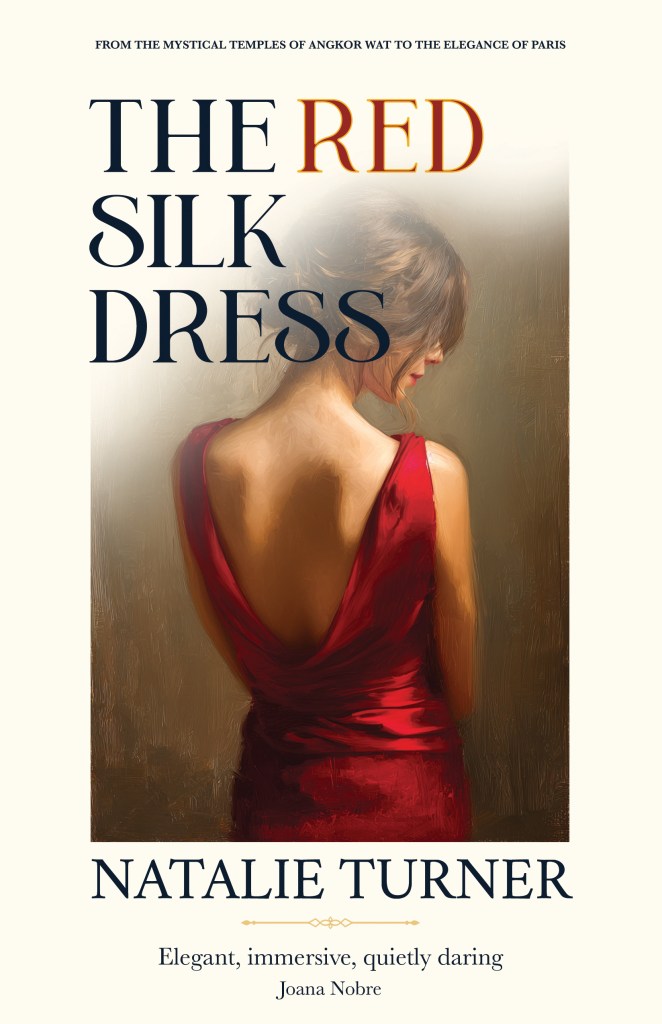
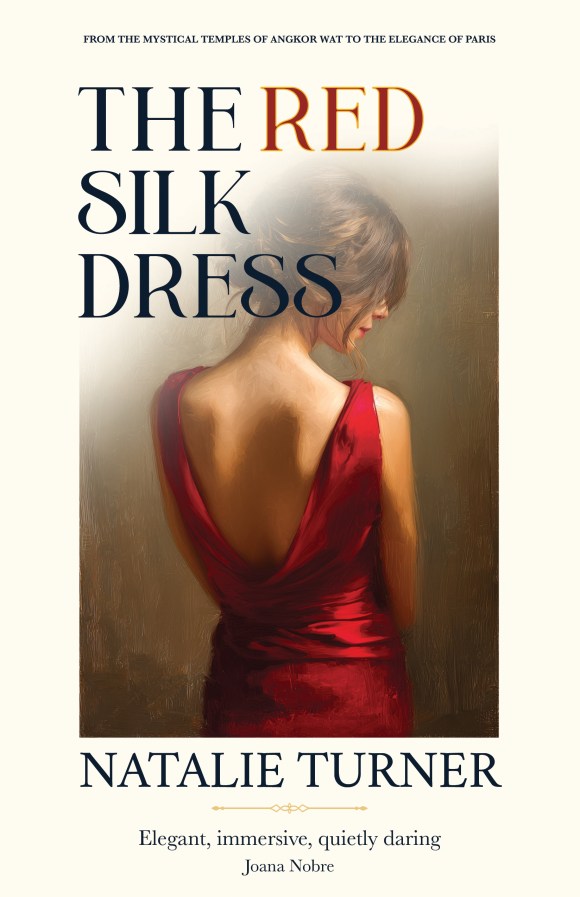
The Red Silk Dress

Title: The Red Silk Dress

Author: Natalie Turner

Publisher: Spines

The opening scene of The Red Silk Dress

Siem Reap, Cambodia—2015

Chapter One

She stepped out of the limousine. The brim of her white Panama hat brushed the car door, and dust from the spinning wheels of a departing silver Mercedes hung in the air like a shroud. She shot an irritated glance at the receding car. Why did everything have to feel so rushed? She exhaled slowly, a familiar weight pressing against her chest. She looked down at her Jimmy Choos, now dusted with sand—a small detail, yet enough to deepen her annoyance. Determined to regain a sense of control, she pulled a tissue from her bag and stooped to wipe them clean. Shielding her eyes with oversized black sunglasses, she lifted her gaze to the sun.

Surrounded by meticulously manicured gardens, the Grand Hotel d’Angkor, an elegant cream mansion with a red slate roof and white veranda, stood before her. Its old-world charm softened her irritation. Finally, a touch of class. Claudette hadn’t realised just how much she had missed it.

Beside the limousine stood Andrew, her husband, his tall frame casting a long shadow. Wiping sweat from his freckled forehead, the lines on his face betrayed stress and fatigue. She knew it was the toll of his work, and she couldn’t help but feel a pang of sadness.

“I’ll check in,” he said, frowning. Pulling a handful of US dollars from the pocket of his sun-bleached khaki shorts, Claudette watched as he paid the driver, a knot of emotion tightening in her chest. There had been a time when he was light-hearted—playful even—but those days were long gone. Now his frown served only as a reminder of how distant they had become. His efforts to avoid meaningful conversation only deepened her frustration, and their relationship rarely stretched beyond the children’s schedules and his business travel plans.

“Monique, Pierre, wait!” she called to their ten-year-old twins. Overcome with excitement, they ignored her and sprinted up the hotel steps. Waving to catch their attention, she dropped her mobile. “Mon Dieu. Can you tell the children to stop for a moment?” Andrew turned his back and waved dismissively. Why does the burden of responsibility always fall on me? It was a familiar pattern. She was tired of feeling unheard and unimportant. Picking up her phone, she tucked a strand of long dark hair behind her ear and lowered her hat to shield her face from the sun. Following the twins up the steps, she entered the hotel.

“Ma’am.” A butler bowed as he offered a cold-pressed towel. Grateful for his attentiveness, she thanked him and pressed it to her face. Its cardamom-infused aroma lingered on her lips, and her fingers tingled from its cool, damp texture. Wiping her hands, she smiled and placed the towel on a small bronze plate. Determined to shake off her discomfort, she followed him into the cool, air-conditioned lobby and stepped into the lounge. Notes of Duke Ellington’s ‘Sophisticated Lady’ drifted through the air, accompanying her inside. It was one of her favourite songs. A wave of nostalgia, stirred by Sarah Vaughan’s mellow voice, carried her back to her days as a fashion student in a Parisian jazz bar. How she missed those days—when everything felt simple, possibilities stretching ahead like an open road. Days before she met Andrew, when her dreams were bright and believable. For a moment, the memories wrapped around her like a warm embrace. For a moment, she forgot where she was. She wanted more than the façade of a glamorous life; she longed to feel alive again. She sat down on a muted gold velvet sofa, hoping this weekend she might rediscover the Claudette she once was.

ABOUT THE BOOK

From the mystical temples of Angkor Wat to the glittering expat communities of Malaysia and the elegance of Paris, the novel is a story of longing, courage and transformation. Claudette, a French expat trapped in a loveless marriage, is captivated by Som, a charismatic Cambodian whose passion for his homeland awakens desires she thought were lost. Torn between duty and an awakening that promises freedom, but at a cost, Claudette must choose or risk losing the life calling her name. An intimate journey through the beauty and ache of second chances, the risks we take for love, and the secrets we keep, even from ourselves. For everyone longing to reclaim identity, this story will linger long after the final page.

ABOUT THE AUTHOR

Natalie Turner is a British author based in Lisbon. Her debut novel, The Red Silk Dress, is an upmarket literary exploration of longing, courage, and awakening, set across Cambodia, Malaysia, and Paris. Alongside her fiction, she writes a reflective cultural column exploring creativity, imagination, and the human dimensions of change. She is also the author of the award-winning non-fiction book Yes, You Can Innovate. Drawing on years living across Southeast Asia and Europe, she writes about women at thresholds, the landscapes that shape us, and the quiet moments where life begins to change.

Click here to read the author interview

.

PLEASE NOTE: ARTICLES CAN ONLY BE REPRODUCED IN OTHER SITES WITH DUE ACKNOWLEDGEMENT TO BORDERLESS JOURNAL

Click here to access the Borderless anthology, Monalisa No Longer Smiles

Click here to access Monalisa No Longer Smiles on Kindle Amazon International
Categories
Poets, Poetry & Rhys Hughes

Pessoa and Cavafy: What’s in a Name?

Sometimes we know that something is untrue but we decide to believe it anyway. There may be several points in its favour, clues that seem to add up to a revelation. Then one shortcoming is noted and the speculation is ruined, revealed to be utterly implausible. Yet we keep hold of the notion because it remains aesthetically pleasing.

Such is the situation with my contention that the poet Pessoa (1888-1935) was the same man as the poet Cavafy (1863-1933) I discovered the work of both these special individuals in recent years. Pessoa I knew first, I have travelled to Lisbon often, I saw his statue sitting outside his favourite café, heard his praises sung by lovers of fine literature. Then I began reading him and I found a remarkable voice, a highly original talent.

Cavafy intruded later into my consciousness. His name was bandied about in Lawrence Durrell’s wonderful Alexandria Quartet (1957-1960) and I saw a copy of his collected poems in a very curious bookshop outside a peculiar village in a remote part of an obscure region of rural England. I felt a pull to that volume but I neglected to buy it on that occasion. Only when I saw a reprint of one of his poems called ‘The City’ standing alone did I realise that he had a supreme talent for pithiness.

And so I became a reader of these two luminaries, poets who excel in embossing their subliminally potent but often wistful visions onto modern reality. They are both among the best poets I have read. But I began to see an odd congruence between the pair. I started to link them together in my mind. There were so many points in their lives and working methods that seemed to correspond closely, too closely, that I finally wondered: Might they be the same man? Was this possible?

Yes, it is possible, even if not especially practical. There are cases in the history of literature that are no less extraordinary. Sometimes one man turns out to be several men. The author Luther Blissett is a case in point. He is an amalgam, or rather a conglomeration, of several individuals and as a result he barely exists in his own right. More frequently two or more men turn out to be one man. Kurban Said and Essad Bey are examples of this situation, for both are facets or sides or masks of one person, a true enigma by the name of Lev Nussimbaum (1905-1942).

Both types of deception are intended to create mystery and to baffle investigators, to allow those who indulge in the trickery to experience the displaced objectivity that comes with the transmigration of identity. On occasion identities multiply so prolifically that it is difficult to keep track of them all, and while we may wonder who exactly is who, the individual who is the original source of the identities acquires a status akin to that of the trunk of a venerable tree. The flowers and leaves on the branches are noted while the trunk is neglected or even forgotten about. This is clearly what some trees and some authors want.

Even a hasty examination of the respective lives of Fernando Pessoa and Constantine Cavafy will throw up some intriguing parallels and a few distorted symmetries. Pessoa was born in 1888 and died in 1935 at the age of 47, still a relatively young man. Cavafy was born in 1863 and died in 1933 at the age of 70. These dates show that they are absolutely not the same man. Pessoa lived in Lisbon, at the far western end of that longish body of water called the Mediterranean. Cavafy lived in Alexandria, at the far eastern end, and on the other shore.

So they lived far apart, almost as if they wished to throw people off the scent who might otherwise have remarked on the similarity of their appearance and eccentricities. If we draw a straight line between Lisbon and Alexandria and plot the halfway point, we end up in Tunisia. Were there any poets of great skill living in Tunisia at the time of Pessoa and Cavafy? There was Mahmoud Aslan, for one, and Aboul-Qacem Echebi, for another. What does this have to do with the subject in question? Not a great deal. But if a person had two identities and had to be in Lisbon at certain times and in Alexandria at others, then to base oneself right at the midway point of those two cities is wise.

This is idle conjecture and nonsense and yet Pessoa and Cavafy both lived and breathed in the medium of enigma. Neither man submitted work for publication, preferring to share it only with a few friends, or with the darkness inside a large wooden trunk. Pessoa wrote under many different names, which he liked to call his ‘heteronyms’. A school friend described him later as “pale and thin and imperfectly developed. He had a narrow chest and was inclined to stoop. He had a peculiar walk and some defect in his eyesight gave to his eyes a peculiar appearance, the lids seemed to drop over the eyes.” He studied diplomacy but was a poor student. Then a sizeable inheritance from his grandmother allowed him to set up his own publishing house, which he named ‘Ibis’.

The Egyptian bird chosen for this business venture is perhaps a clue that I have seized on too eagerly. Alexandria is in Egypt, of course, and Cavafy worked his entire life in an office, as Pessoa had expected to do. Both men travelled when young because of family commitments, Pessoa to Africa and Cavafy to England, but after their return they preferred to remain exactly where they were and never travel again. Pessoa lived in a series of cheap rented flats, Cavafy lived in one cheap rented flat, each man pretending to be unaware of the other, partly because it would have been very difficult for Pessoa to have access to Cavafy’s poems, and vice versa, but also in order to preserve the illusion they were different men? I am clutching at straws, I know, but straws can thatch roofs, and roofs are what best protect us from the elements.

Pessoa enjoyed setting puzzles for his readers and swathing himself in clouds of obscurity while hiding in the passages of a labyrinth. Cavafy on the other hand appears less mischievous on the surface but certainly was also interested in transformations of identity, in particular the way that an individual in the present can absorb some of the sentience, attitudes, even wisdom of those who are long dead. Both poets are considered loners and yet their work yearns for connection. Was isolation necessary in order to continue with the elaborate deception?

No, of course not, and yet I wish that was the answer. If Cavafy was really one of the heteronyms of Pessoa, I would regard the trick as surely the greatest ever played in the history of literature. But Pessoa died first. So might Pessoa have been a reverse-heteronym of the older but longer-lived man? We tend to believe that a subset must exist inside the set it belongs to. Perhaps Cavafy was a heteronym that was so realistic it came alive and hopped off the page into the world. He might have been a tulpa, one of those mythical entities brought into life by an act of sheer thought. A wish made true.

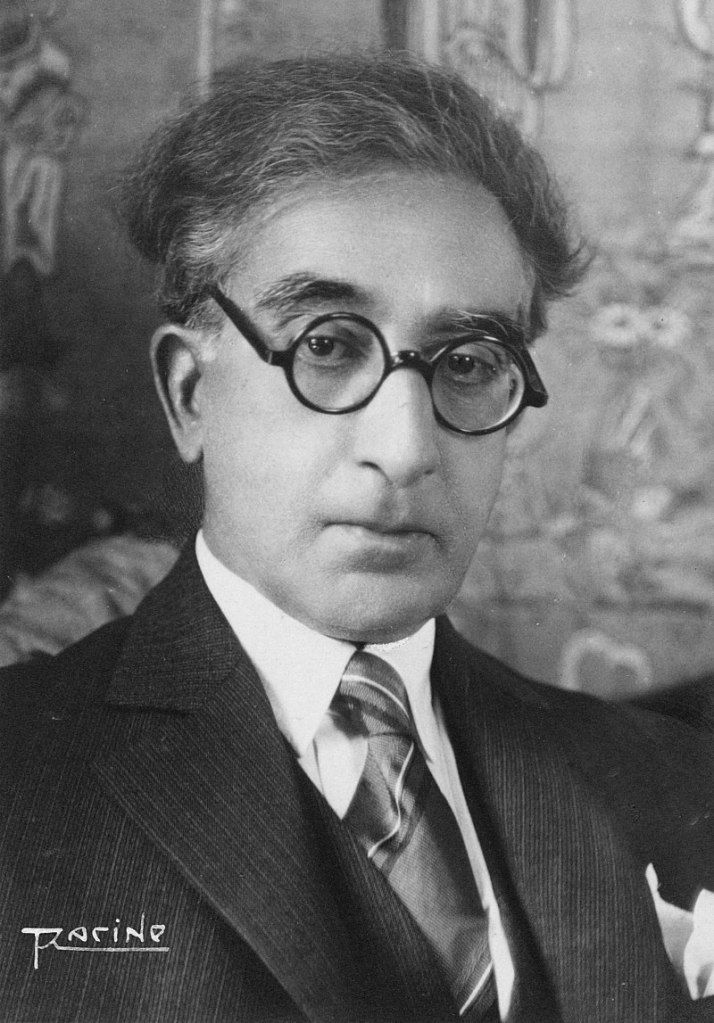
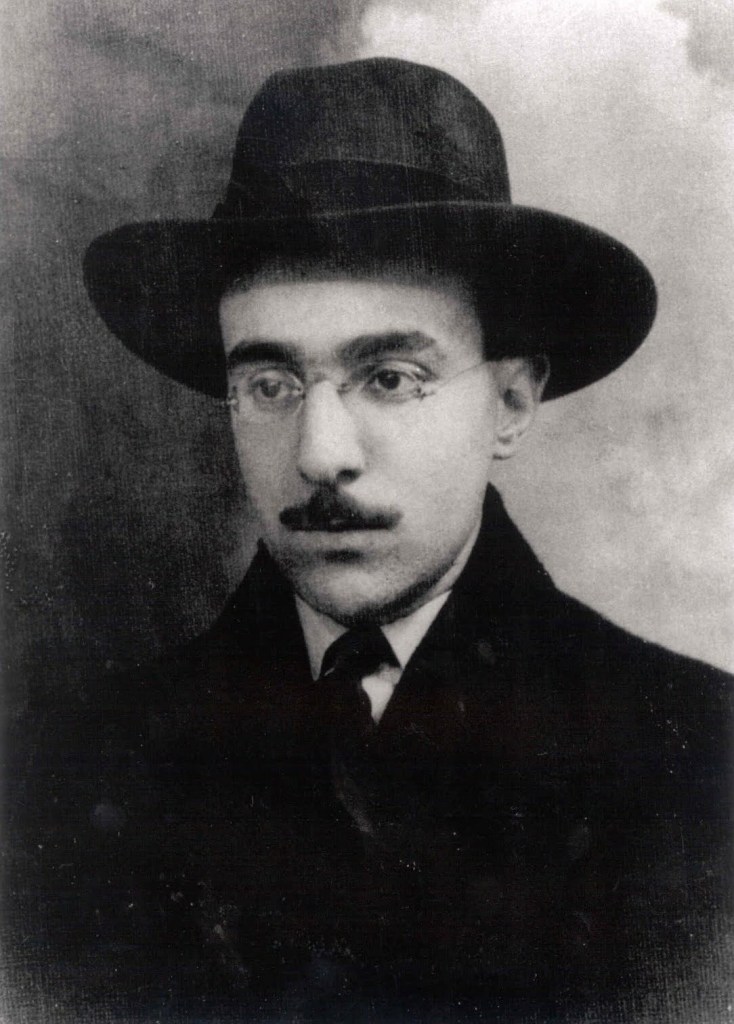
None of this speculation has any place in serious poetic studies, but I am not here to be serious, I am here to scratch an intellectual itch. Habits can be shared by men, talent too, but if we look closely at photographs of Pessoa and Cavafy we see the same elusive quality in their eyes, sadness and strength mixed together, interiority without inferiority, a deep ironic wisdom. They are figures who exist outside the time that frames them, a pair of warped mirror images, somewhat neglected during their lives but always with the promise of greater recognition later. And that recognition came in a surge and lifted up their reputations to such a high point that we now acknowledge them both as obvious geniuses and find it very difficult to believe they were ever unappreciated.

Pessoa employed at least seventy-two heteronyms, identities not only with individual names but distinct signatures, temperaments, biographies, ambitions and destinies. And if Cavafy was the secret seventy-third of the heteronyms? Is there any evidence for this wild proposition? Consider the Cavafy poem entitled ‘Nero’s Deadline’ and the essential function in the text of that same number, seventy-three.

Nero wasn’t worried at all when he heard
the utterance of the Delphic Oracle:
“Beware the age of seventy-three.”
Plenty of time to enjoy himself still.
He’s thirty. The deadline
the god has given him is quite enough
to cope with future dangers.

Now, a little tired, he’ll return to Rome—
but wonderfully tired from that journey
devoted entirely to pleasure:
theatres, garden-parties, stadiums…
evenings in the cities of Achaia…
and, above all, the sensual delight of naked bodies.

So much for Nero. And in Spain Galba
secretly musters and drills his army—
Galba, the old man in his seventy-third year.

Spain is not Portugal but it is an adjacent country. Cavafy was not an ancient Roman, but he was an adjacent sort of fellow, a modern Greek. It is very unlikely that he was a heteronym but would he have been willing to admit it if he was? None of Pessoa’s other heteronyms were especially keen to reveal themselves as fictional. Nero thought that the oracle was a reference to himself and his own age whereas in fact it alluded to the age of the man who soon succeeded him.

And why is seventy-three a magical number? It is a prime number and Pessoa died in the prime of his life. In binary it is written as 1001001, the neat symmetry of a line with one end in Lisbon, one in Alexandria and a middle in Tunisia. In octal it is written 111, three men or the same man in different positions? It is a star number, a centred figurate number that can form a regular hexagram, and both Pessoa and Cavafy were stars. It is an emirp number, meaning that written in reverse it is also a prime. It is used by radio operators as a substitute for “best regards” because when written in Morse Code it is also a palindrome and sounds the same forwards as it does backwards, another mirror image.

Shall I continue in this fashion? It is unnecessary.

I will finish by pointing out that 73 is the atomic number of tantalum and that both poets remain tantalising. At no point do I really believe that Pessoa and Cavafy were the same man.

Yet there is something satisfying about the idea.

.

Rhys Hughes has lived in many countries. He graduated as an engineer but currently works as a tutor of mathematics. Since his first book was published in 1995 he has had fifty other books published and his work has been translated into ten languages.

.

PLEASE NOTE: ARTICLES CAN ONLY BE REPRODUCED IN OTHER SITES WITH DUE ACKNOWLEDGEMENT TO BORDERLESS JOURNAL

Categories
Poets, Poetry & Rhys Hughes

Dinosaurs in France

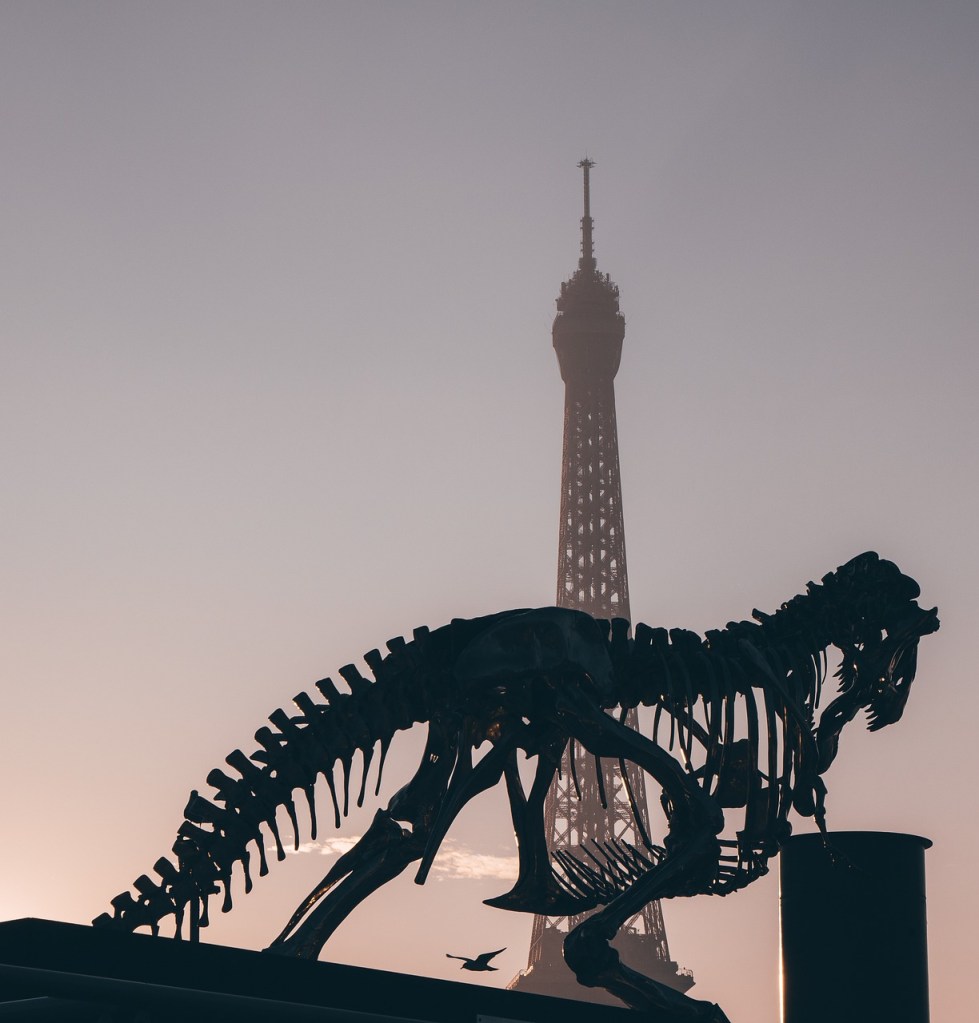
Eiffel Tower Paris. Courtesy: Creative Commons

I am still confused as to how many continents there are. Is Oceania the same as Australasia? Do North and South America count as two or just one? Is Antarctica a proper continent and not just a frozen phoney? What about the subcontinent of India? Does that count as half, quarter, or some other fraction? What continent does Greenland belong to? And the islands of the mid Atlantic, what about them?

When I was younger the issue was simpler. There were six continents, Africa, America, Asia, Australasia, Europe and Great Britain. There was absolutely no doubt that Britain was separate from Europe geographically and spiritually. In fact, the mainland of Europe was the continent and things that came from it were ‘continental’ and mostly malodorous, quilts and kisses on the hand being exceptions.

In Europe people did peculiar things; they spread chocolate on bread for breakfast and melted cheese in communal pots in the evenings. Or so it was said. Europe was a place of mystery, a patchwork of suspense, and crossing its multifarious internal borders wasn’t likely to be easy. If you had to travel there, a large vulcanite suitcase that could be plastered with triangular destination labels was the minimum requirement. Better not to go at all! The greasy food, cooked in nasty olive oil, was certain to upset your stomach. And there were yodellers.

My great childish dream back then was to build a raft and paddle it to France. There were enough fallen trees in the forest near my home to provide wood for the construction. France seemed an incredibly exotic destination and my enthusiasm was increased rather than diminished when I was told that dinosaurs existed there. They had become extinct everywhere else but still flourished in France. Thus, I couldn’t wait to drag my raft ashore and encounter my first stegosaurus. Other lies that adults told me about France included the assertion that the Eiffel Tower was something that horses jumped over in the Grand National. Having no idea what a ‘Grand National’ was I felt only a vague sense of awe. It was many years before I learned that it is a horse race famous for being dangerous to horses and for the ludicrous hats worn by upper class drunken women who watch it and chortle.

Adults in those days told outrageous untruths as a matter of course. It was an accepted part of life. I grew up in an environment where no one said anything sensible but instead would make the most absurd statements with a straight face. It was an uncle who claimed that France was jammed with dinosaurs. He also informed me that we were living in Australia, not Britain, but that everyone else would try to trick me into thinking it was Britain and that they were all in the joke together and I shouldn’t believe them. The truth of the matter, he added, was that Britain was a fiction, it didn’t exist, or it had sunk beneath the sea, it was a joke or a memory and nothing more. This was Australia and when he was my age, he had made a raft, from twigs, and sailed it around the world and started a successful property business with a gorilla in a jungle.

And he told me that he once pulled the plug out of the bath while he was still in it and got sucked down the hole and ended up at the bottom of the sea where he lived in a gigantic air bubble with a dolphin who taught him dolphin language and how to make crêpes. None of this was said in a joking manner but in a tone of utter seriousness. Everyone was like this. The postman once told me that he lived in a marshmallow house and was terrified of lightning strikes because the heat would alter the flavour of his roof and that people were taxed on the flavours of their roofs, so for him it was a major concern that his tiles weren’t toasted.

One of my favourite absurdities concerned the International Date Line. Because Australia was so many hours in the future, people who lived there (like ourselves) could phone relatives in Europe with the results of football matches, horse races and boxing competitions that hadn’t yet happened, enabling those relatives to make a big profit at the betting shop. These European relatives could then phone America to pass on the same information, enabling friends over there to also make money through betting. However, because of the Date Line it wasn’t possible for America to do any such favours for any countries west of them. In other words, America took but didn’t give, and as a consequence, was building up a large debt to the rest of the world.

One day all the other nations of the world, all those living in a future time relative to America, would form an alliance and invade America and loot all its treasures in retaliation. I am fairly sure it was one of my schoolteachers who told me all this. Even supposedly ‘responsible’ adults liked to be ridiculous in a blasé manner and play jokes on children. I remember one outing to a pond in a park as part of a nature class. We were required to sketch any animals that we might encounter, and, in my mind, I can still see the teacher crouching over a child’s sketch pad and pointing to a duck that was paddling slowly on the water.

“What it that, boy?”

“A duck, sir.”

“No, boy, it’s a fish.”

“But it has a beak and wings, sir!”

“Yes, but it has a tail too. Can’t you see the tail? Fish have tails, don’t they? That means it’s a fish. Draw it exactly as you see it and write the word ‘fish’ under the drawing and tomorrow I will hand your work to the headmaster so he can form a judgment of your educational progress and I am sure the result will interest him.”

That’s how life was in Britain when I was younger. Practical jokes and getting other people into trouble for the purposes of comedy was standard behaviour. If you didn’t tell amusing fabrications then you were regarded as rather odd, dubious even, a spoilsport and also, perhaps, a saboteur or foreigner. I would look at adults in the street and wonder if any of them were French and on familiar terms with dinosaurs.

Then everything changed and the countries and cultures of Europe became much more accessible. Going to Paris, Madrid or Lisbon for a weekend took no more effort than visiting Weymouth, Blackpool or Margate. In fact, it usually took less effort. I began to genuinely feel like a European citizen, something generally considered not feasible for a British fellow, but I am Welsh, not English, and the Welsh, who are the original Britons, are hardly British. To feel European required only my desire and acquiescence, and I had that desire and yes, I was willing to acquiesce. Feeling European wasn’t an option denied to me at that time and I never thought it would be, at least not until plate tectonics reformed the continents and Europe ceased to physically exist.

It sounds ludicrously obvious, but it still apparently needs to be said. Britain isn’t a continent by itself. That was just a childhood myth, similar to the story that if you swallow an apple pip a tree will grow inside you, and in fact I once deliberately swallowed many pips in order to have an orchard in my stomach and never grow hungry. I would only have to jump up and down at mealtimes for the fruit to fall from the branches. Because the fruit was already in my stomach, actually eating it would be unnecessary. It seemed such a wonderful solution that I couldn’t work out why everyone didn’t do it. I supposed that maybe adults didn’t really like convenience. But no, we can’t have trees growing inside us. And sadly, dolphins don’t know how to make crêpes.

Politely we call such things myths. They are deceits, of course. But the world seems to have gone back in time. Travelling abroad is truly difficult again, impossible in many instances. I spend my days bewailing the reversal. I have started wondering if my old plan of building a raft might be my best option of leaving these shores and visiting other lands. There might be dangerous dinosaurs off the coast of France, those long-necked plesiosaurs, but I will take a big detour around them. I will steer by the light of the stars and satisfy my hunger by eating the walls of my marshmallow cabin. Everything will work out fine.

Rhys Hughes has lived in many countries. He graduated as an engineer but currently works as a tutor of mathematics. Since his first book was published in 1995 he has had fifty other books published and his work has been translated into ten languages.

.

PLEASE NOTE: ARTICLES CAN ONLY BE REPRODUCED IN OTHER SITES WITH DUE ACKNOWLEDGEMENT TO BORDERLESS JOURNAL