Categories
Interview Review

A Backpacker’s Diary by Jessica Mudditt

A brief overview of Once Around the Sun : From Cambodia to Tibet (Hembury Books) by Jessica Mudditt and a conversation with the author
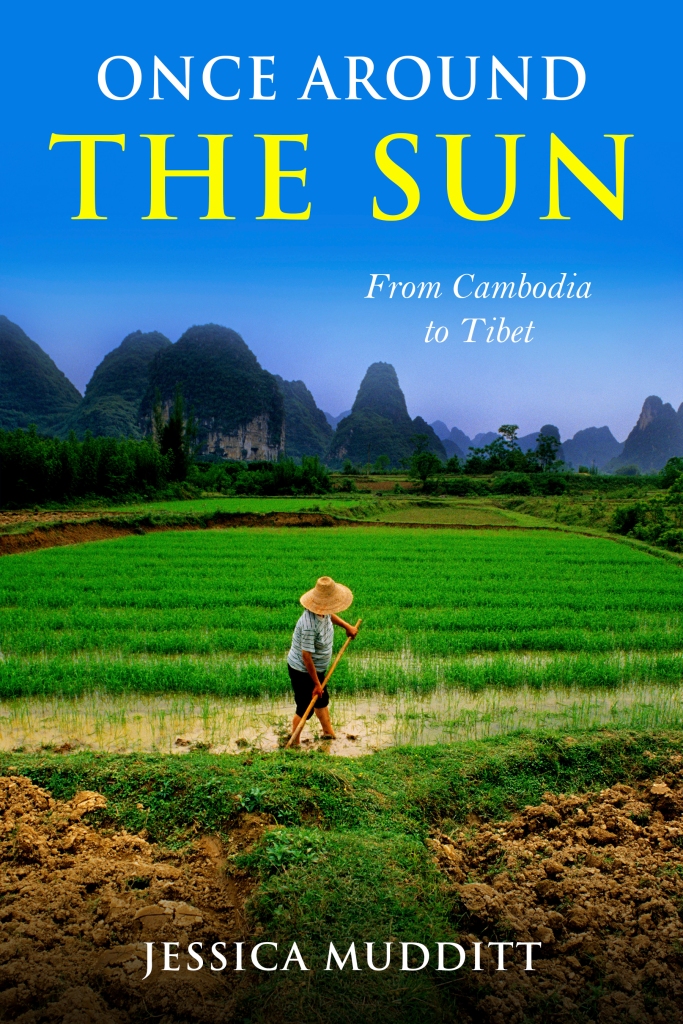
Jessica Mudditt’s Once Around the Sun: From Cambodia to Tibet is not just a backpacker’s diary but also her need to relate to humanity, to find friendships and even love, as she does with Kris, a photographer named after Krishna, the Hindu god, because his parents while visiting India fell in love with the divinity!

The Burmese translation of Our Home in Myanmar was published recently.

Hurtling through Cambodia, Vietnam, China, Tibet, young Mudditt concludes her narrative just at the brink of exploring Nepal, India and Pakistan in her next book… leaving the reader looking forward to her next adventure. For this memoir is an adventure that explores humanity at different levels. Before this, Mudditt had authored Our Home in Myanmar – Four years in Yangon, a narrative that led up to the Myanmar attack on Rohingyas and takeover by the military junta. Once Around the Sun: From Cambodia to Tibet is the first part of a prequel to her earlier book, Our Home in Myanmar, both published by her own publishing firm, Hembury Books.

What makes her narrative unique is her candid descriptions of life on a daily basis — that could include drunken revelry or bouts of diarrhoea — while weaving in bits of history and her very humane responses. Her trip to Angkor Wat yields observations which brings into perspective the disparities that exist in our world:

“I was gazing out at an empire that was once the most powerful and sophisticated in the world. In 1400, when London had a middling population of 50,000, the kingdom of Angkor had more than a million inhabitants and a territory that stretched from Vietnam to Brunei. It had flourished for six hundred years, from the ninth to the fifteenth centuries.

“But somehow Cambodia had become one of the world’s poorest countries, and surely the most traumatised too, following a recent war and genocide. I knew that when we came back down to the ground, there would be a collection of ragtag street kids and downtrodden beggars desperately hoping for our spare change. It was difficult to reconcile the grandeur of Cambodia’s past with its heart-breaking present in the twenty-first century. How did a country’s fortunes change so dramatically? Could the situation ever be turned around?”

How indeed?

Then, she writes of Vientaine in Vietnam:

“I was struck by the fact that sex work seemed to be the consequence for countless young women living in poverty. It made me angry, but mostly sad.”

In these countries broken into fragments by intrusions from superpowers in the last century, judged by the standards of the “developed countries” and declared “underdeveloped”, an iron rice bowl becomes more important to survive than adventure, discovering other parts of the world or backpacking to self-discovery. Travel really is the privilege of that part of the world which draws sustenance from those who cannot afford to travel.

Jessica showcases mindsets from that part of the Western world and from the mini-expat world in Hong Kong, which continue alienated from the local cultures that they profess to have set out to explore or help develop. One of the things that never ceases to surprise is that while the ‘developed’ continue to judge the ‘third world’, these countries destroyed by imposed boundaries, foreign values, continue to justify themselves to those who oppress them and also judge themselves by the standards of the oppressors.

Some of these ‘developing’ countries continue to pander to needs of tourism and tourists for the wealth they bring in, as Jessica shows in her narrative. She brings out the sharp differences between the locals from Asia and the budgeted backpackers, who look for cheap alternatives to experience more of the cultures they don’t understand by indulging in explorations that can involve intoxicants and sex, their confidence backed by the assurance that they can return to an abled world.

Backpackers from affluent countries always have their families to fall back on — opulent, abled and reliable. Mudditt with her candid narrative explores that aspect too as she talks of her mother’s response to her being sick and budgeting herself. Her mother urges her to cut short her trip. But she continues, despite the ‘adversities’, with an open mind. That she has a home where she can return if she is in any kind of trouble begs a question — what kind of ‘civilisation’ do we as humans have that she from an abled background has a safe retreat where there are those for whom the reality of their existence is pegged to what she is urged to leave behind for her own well-being? And why — as part of the same species — do we accept this divide that creates ravines and borders too deep to fathom?

Mudditt with her narrative does create a bridge between those who have plenty and those who still look for and need an iron rice bowl. She mingles with people from all walks and writes about her experiences. Hers is a narrative about all of us –- common humanity. Her style is free flowing and easy to read — quite journalistic for she spent ten years working as one in London, Bangladesh and Myanmar, before returning to her home in Australia in 2016. Her articles have been published by Forbes, BBC, GQ and Marie Claire, among others. This conversation takes us to the stories around and beyond her book.

What led you to embark on your backpacking adventure? Was it just wanderlust or were you running away from something?

It was primarily from wanderlust, but I also didn’t know what I was going to do with the rest of my life. After six years at university, I was still yet to have any particular calling. However, I was also glad I didn’t know. It meant that I was free to go and explore the world, because I wasn’t putting my career on hold. I had no career.

I also had a broken heart when I set off for Cambodia – but the trip was planned before that relationship had even begun. But again, part of me was glad that my boyfriend had called it quits, because my plan was to be away for a very long time (and it ended being a decade away).

What made you think of putting down your adventures in writing? As you say, this is a prequel to your first book.

It was the pandemic that made me realise that backpacking was really special. There was a period in 2020 when it looked like travel may never be so unrestricted again, so it motivated me to document my year of complete freedom. It was also before social media was even a thing. When I was lost, I was really lost, and I had to use my problem-solving skills.

Prior to the pandemic, I sort of thought that backpacking itself was too fun to write about. I hadn’t actually lived in any of the countries I visited – I was just passing through. But that is also a valid experience, and one that many people can fondly relate to. There were also some really confronting and difficult moments.

You have written of people you met. How have they responded to your candid portrayals? Or did you change their names and descriptions to convey the essence but kept your characters incognito?

While I was writing the book, I got back in touch with the people I travelled with – I can thank Facebook for still being in touch with most people mentioned. They helped me to remember past anecdotes and I got some of the back story of their own trips. I have only used first names to protect their privacy, although there are some photos in the book too. Thankfully the world is so big that the odds are small that anyone would recognise, say, an Irish guy from Adam in Vietnam in 2006! Clem from Shanghai has just sent me a photo of her with my book, and Romi from Vietnam actually came to my book launch, which was awesome.

What was your favourite episode in this book — as a backpacker and as a writer? Tell us about it.

I think it was crossing into China and meeting ‘the man.’ I felt so alive with every step I took into China after crossing over on foot from Vietnam. To be chaperoned in the way I was – without being able to communicate a single word – was unusual. His kindness left me speechless, so the anecdote has a nice story arc.

In your travels through China, you faced a language handicap and yet found people kind and helpful. Can you tell us a bit about it?

I foolishly underestimated the language barrier. It was profound. In Southeast Asia, there was always at least a sprinkling of English, and I sort of just assumed that I’d be fine. I entered China from Vietnam, so my first port of call was Nanning, where there is not even really an expat population. I couldn’t do the most basic things, from finding the toilet or an internet cafe or something to eat! I used sign language and memorised the Chinese character for ‘female’ to make sure I went into the right toilet! In a restaurant, I just pointed at whatever someone else was eating in the hope that they would bring me a bowl of whatever it was. There were times when I was seriously lost and lonely, but I ended up staying in China for two months and saw the comedic side. I was bumbling around like Mr Bean (who is hugely popular in China).

I met a lot of people who were really kind to me, and I was just so grateful to them. I didn’t have Wi-Fi on my phone back then, so getting lost in a massive city in China was a bit scary. I met a student called Mei-Xing who ‘adopted’ me for a few days in Guilin. We had a really nice time together and it was so great to hang out with a local.

What is/are the biggest takeaway/s you had from your backpacking in this part of the world? Tell us about it.

I think it’s something quite simple: the world can be a very beautiful place, and a very polluted place. Tourism can do a great deal of damage when there are too many people clambering over one area. There is also an incredible level of disparity in a material sense on our planet. Some humans are travelling into space on rockets. Others are pulling rickshaws, as though they are draught horses. It is profoundly inequitable.

Having travelled to large tracts of Asia, what would you think would be the biggest challenge to creating a more equitable world, a more accepting world? Do you think an exposure to culture and history could resolve some of the issues?

I think that democracy is key. It slows us down and forces us to act in the interest of the majority, not the top-level cronies. That is definitely also something I witnessed in Myanmar. When a few people hold all the power, the population is deprived of things that ought to be a human right.

I think that travel definitely alters your perspective and broadens your mind, and it is something I’d recommend to anyone. Realising that the way that things are done in your home country is not the only way of doing things is a valuable thing to learn.

Mostly, you met people off the street. In which country did you find the warmest reception? Why and how?

In Pakistan. The hospitality and friendliness was unparalleled. I think it was in part due to not having many tourists there. Nothing felt transactional. I met some fascinating people in Pakistan who would have a profound impact on my own life. I am still in touch with several people I met there.

At a point you wondered if the poverty you saw could be reversed back to affluence in the context of the Angkor kingdom. Do you have any suggestions on actually restoring the lost glory?

I believe that it is beginning to be restored. Pundits have called this the “Asian Century.” I am convinced that the United States and the UK are in decline, and this process will only speed up. India, to me, holds the most promise as the next superpower, because it is a democracy (albeit flawed – like all of them), English- speaking, enormous, beautiful, fascinating and its soft power is unmatched. China is facing headwinds. I blame that on making people sad by removing their agency.

How long were you backpacking in this part of the world? Was it longer than you had intended? What made you extend your stay and why?

My trip was exactly 365 days long. I planned it that way from the beginning. I wanted to travel for no less than a year (more than a year and I might stay feeling guilty for being so indulgent!). That is also why the book is called Once Around the Sun – my time backpacking was the equivalent of one rotation of the Earth. I set off on 1 June 2006 – the first day of winter in Australia – and I arrived on 1 June 2007 in London, on the first day of the British summer. I love the sunshine.

After having travelled around the large tracts of Asia and in more parts of the world, could you call the whole world your home or is it still Australia? Is your sense of wellbeing defined by political boundaries or by something else?

Home for me is Sydney. I absolutely love it. I get to feel as though I am still travelling, because my home city is Melbourne. I go down a new road every other day and I love that feeling. The harbour is beautiful, and the sun is shining most days. It’s very multicultural too.

My kids are three and five, so I haven’t travelled overseas for years. My plan is to travel with them as much as possible when they are a bit older. I hope they love it as much as me. I cannot wait to return to Asia one day. I am also desperate to visit New York City.

What are your future plans for both your books and your publishing venture?

The second part of Once Around the Sun will come out in 2025. It’s called Kathmandu to the Khyber Pass, and it covers the seven months I spent Nepal, India and Pakistan.

My goal is to complete my fourth memoir by 2027. It will be called My Home in Bangladesh (it will be the prequel to Our Home in Myanmar!).

My fifth book will be about how to write a book. I am a book coach and in a few years I will have identified the most common challenges people face when writing a book, and finding their voice.

In the next twelve months, there will be at least 12 books coming out with Hembury Books, which is my hybrid publishing company. I love being a book coach and publisher and I hope to help as many people as possible to become authors.

Please visit the website and set up a discovery call with me if you plan on writing a nonfiction book, or have gotten stuck midway: https://hemburybooks.com.au/.

(The online interview has been conducted through emails and the review written by Mitali Chakravarty.)

Click here to read an excerpt from Once Around the Sun

PLEASE NOTE: ARTICLES CAN ONLY BE REPRODUCED IN OTHER SITES WITH DUE ACKNOWLEDGEMENT TO BORDERLESS JOURNAL. 

Click here to access the Borderless anthology, Monalisa No Longer Smiles

Click here to access Monalisa No Longer Smiles on Kindle Amazon Internation
 

Categories
Independence Day Interview

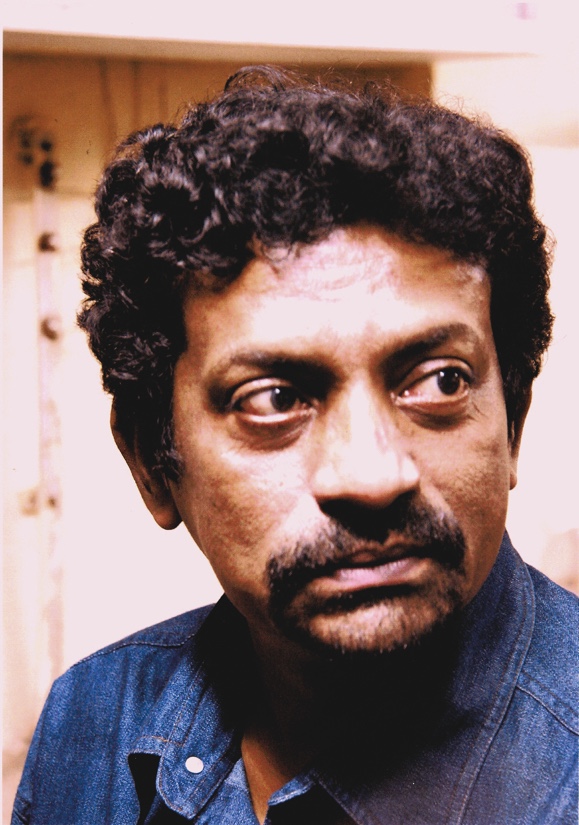
In Conversation with Goutam Ghose

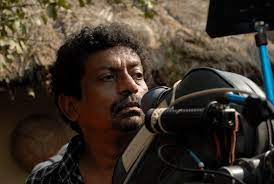
Goutam Ghose: Photo provided by Niyogy Books

Goutam Ghose is a well-known award-winning film director, scriptwriter and even actor. He has been the only Indian to have received the Vittorio Di Sica Award from Italy in 1997 and was awarded the Knighthood of the Star of the Italian Solidarity in July 2006. Ghose has won fifteen National Awards, besides Filmfare Awards and a number of international awards like Silver Balloon, Nantes Film Festival, UNESCO Award at Venice, Golden Semurg at Tashkent, Fipresci Award and Red Cross Award at Verna Film Festival.

But did you know he has also authored a number of books? Just as he bridges borders with his poetic films that touch the human heart with a range of emotions, he does the same with his books. He takes up burning issues with artistry, never inciting with rage or hatred but conveying by his skill with the camera and words. He has created a world without borders with his transcontinental outlook and approach.

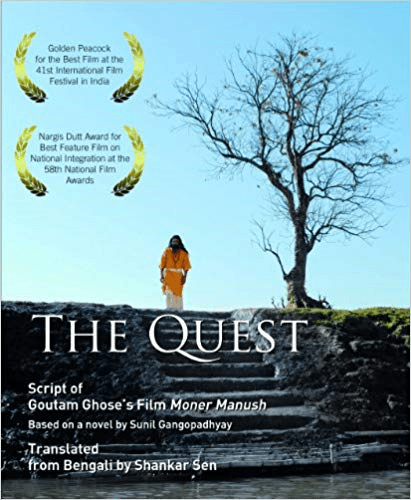
His reaction to the Ram Janmabhoomi riots was Moner Manush (2010), a film based on Lalon Fakir’s life, knitting together the best in Muslim and Hindu traditions instead of filming the clashes and the violence. Published in English as The Quest (2013), the book is a powerful dramatisation with pictures from the film. The book, like the film, is also an emotional lesson in humanism. Based on Sunil Gangopadhyay’s novel on Lalon Fakir’s life, the film is beautiful. But the book allowed me to mull over the words, which have been translated by Sankar Sen. It is a book that needs to be read when casteism and religious divides take precedence over humanitarian values. By bringing these songs into translation to readers unfamiliar with Bengali, both Ghose and Sen have opened a world of love and tolerance to new readers, who will hopefully find the time to mull over the wisdom of these songs.

‘What was your caste when you came here,
What caste did you take on arrival, dear,
What would be your caste when it’s time to go -- 
Ponder and tell me if you know.’

-- Translated by Sankar Sen, from The Quest

 His other book that traverses the silk route and journeys through China, Beyond the Himalayas (2019), transcends boundaries and fills the reader with a sense of exhilaration. It is based on his documentary of the same name. Both these recordings of their journey along the silk route are worth viewing and reading. They show humans are the same across all borders. The book, interspersed with lovely pictures of the landscape and mature writing pauses on history at the right junctures. The narration is poetic in both the book and the documentary.

Though Ghose claims that these texts and photographs capture memories of the film, both his books transported me to a different time and space. I saw the films after reading the books, but both were energising, emotionally charged and entertaining. The journey takes one through different parts of the world and gives a new perspective to a 4000-year-old route. Initiated and organised by Major Hari Singh Ahluwalia and Deng Xiaoping’s son, the travels in Beyond the Himalayas took me across borders to areas I have never visited and now, I hope to visit post pandemic. Both the book and the film acquainted me with cultures that excite. And The Quest reinforced the belief, through the depiction of Lalon’s life, that humanism exists despite the degradations of history. That riots can be calmed with the soothing notes of Lalon’s lyrics, rich in wisdom, would be a win for the human spirit.

Like all great artistes, Ghose speaks in beautiful poetic sentences about concepts that touch the human heart and imagination. In this exclusive, he speaks not just about his film-books, but about the real journey and issues he is facing through the pandemic, including the delay of his film with an Italian male lead and his new short film on the current times, Covid-worn and waiting…

You are a very well-known film director, cinematographer, and music director. You have directed award winning Bollywood and Tollywood movies. Normally books come before films but from two of these films, you have made books. Why did you go in for making books of the films?

I have loved books since my childhood. The shape and form of it, the touch and smell of a book fascinate me. They will never die even if we read on the screen rather than by turning pages of a physical object. A certain sense of the sacred has surrounded books from civilisations’ inception. In cinema, be it fiction or non-fiction, we write a script at the pre-production stage. A film-book is all about times gone by — a book of memories, of both cyclic and linear time. My producer from Bangladesh, Habibur Rehman Khan, had liked the idea of film books and had published three wonderful books on Padma Nodir Majhi (Boatman of the Padma River, filmed in 1993), Moner Manush (filmed in 2010 ) and Shankhachil (Unbound, filmed in 2016) in Bengali. Niyogi books of India has published a beautiful pictorial English version of Moner Manush as The Quest and also Beyond the Himalayas, my journey along the Silk Road. Another lovely film book is Pratikshan’s bilingual centenary tribute to Bismillah Khan (Bismillah in Banaras the film Goutam Ghosh made, 2017).

Is dubbing or subtitling the film not an easier option than doing a film-book?

Well, dubbing or subtitling is for watching a language film, but a film book is meant for reading. It becomes a part of your book collections. I have some wonderful film books published from Europe and United States.

Moner Manush is based on Lalon Fakir’s life and on the novel by Sunil Gangopadhyay. Why did you feel there was a need for a separate book after you made a very powerful film on it?

Lalon Fakir is an eternal savant. Scholars have been doing research on Lalon’s life and philosophy since long. It is heard that Lalon was an illiterate man. But going through the words of his songs and the implied significance, it seems as if he was an erudite scholar tutored in an age-old system of education.  His faith was not guided by any particular religion, rather it could be said to be comprised of the mysticism of Sufi and the love and forgiveness of Vaishnavism and the liberalism of the tantric sect of Buddhism. My film on Lalon fakir is research on this great man aswell. The Bengali film book contains important articles by scholars besides the script, reviews and memoirs.

Do you feel that the message of Moner Manush is relevant in a world beset by not just divides but even a pandemic? Is there something we can learn from the story?

Yes, of course the message of Moner Manush is even more relevant in today’s intolerant world, a world of greed and opportunism. The pandemic has victimised the togetherness of the human race but how can we survive without empathy? I don’t know how good the film is, but Moner Manush will serve as a gospel to those who revere humanity.

Lalon says as his own introduction “I am a human.” How important is that for humankind to see themselves as humans over titles of caste, profession, and economics?

The baul (minstrels in Bengal) community had renounced all recognised institutions of religion and revolted against long established rites, customs and faiths. Breaking down the barriers of the narrow confines of communal faith, they had found a large expanse under the sky which had served as a bountiful meeting place of many religions. Under that open sky, Lalon had found the truth in Humanism.

Lalon dreamt of a borderless world. Do you think adopting his outlook can change the outlook of nations which draw borders between the species? Do you think it is implementable at a personal, national or international level?

I think all mystics believe in borderless space of Earth where all centennial beings live in peace and harmony. But the wheel of time had moved in the direction of Divide and Rule. John Lennon’s Imagine has become the iconic song on the dream of a borderless world. It may have been a failed dream, but I confess it might have been one I shared growing up in India and will cherish till the last breath of my life. Let it be a dream and a wonderful utopia.

Beyond The Himalayas was first a documentary film. How long was it and when was it screened? How many episodes is the film?

Beyond the Himalayas was made as a documentary film during our expedition through the Silk Road in 1994. The final edited version is four-and-a-half hour long. It was shown in Discovery Channel in five parts in the late nineties. A shorter version was screened in BBC as well. The Indian national TV had screened a Hindi version of all five episodes.

The book seems to cover lesser than the documentary. Is that true or do the visuals/ music just seem to impact us more? Why did you leave out Pakistan?

Well watching the film with arresting visuals and absorbing the soundtracks of the trail is a linear viewing of our journey along the fabled Silk Road. It is very, very exciting indeed. But the film is also a journey back in time with many references and anecdotes from history. For instance, while showing the travel through the deadly Taklamakan desert, I referred to Sven Hedin’s(1865-1952) expedition of the region. I quote: ‘The first European to map this desolate region was the Swedish explorer, Sven Hedin. His first expedition in 1895 was very nearly his last.  The local guide supplied enough water for four days in the desert instead of ten requested. When the caravan lost its way, the guide was the first to die. The others became insane with thirst, drinking anything — even Sheep’s blood and camel’s urine. By the fifth day, the men, camels and other livestocks were all dead except for Sven Hedin and one other man. Hedin writes in Through Asia, “If I was doomed to die in the sand, I wanted to be properly attired. I wanted my burial clothes to be both white and clean.” But fate was on its side. Spying the dark green side of an oasis, he dragged himself to safety. “I stood on the brink of a pool with fresh cool water, beautiful water. I drank, drank, drank time after time. Every blood vessel and tissue of my body sucked up the life-giving liquid like a sponge.”’

Here the film-book helps the readers. One can refer back to the time past and time present more deeply to understand time as a metaphor of history.

How many days were you on the road? What was the experience like?

We were out for almost ten weeks covering a distance of 14,000 kms. The journey was fascinating for the entire team. There can be no journey more enchanting than the route we took. The collective trove of memories has made the Silk Road so memorable. We had to negotiate extreme weather conditions in Central Asia and Tibet. In a single day, we experienced two extremes. While negotiating the desert, temperatures rose to 48 degrees Celsius, and by nightfall when we pitched camp at Tianshan mountains, the temperature fell to 2 degrees. The situation is almost like the scenes of Satyajit Ray’s Goopy Gyne Bagha Byne — desert to snow in the blink of an eye.

Did you travel through the part of the route Marco Polo used? Did you find it much different from what you had imagined?

Well, the travels of Marco Polo described the wonders of the silk road, cities far greater than his own and a world more significant than anything imagined by the insular backward Europe of the thirteenth century. But he was a late traveller. The silk road was one of the greatest trade routes in history and men had already been travelling along for 4,000 years. Before sea routes were discovered in the fifteenth century, this trans-Asian highway was the sole link between the East and the West. It ran from Xian in China to all the way to the Mediterranean. There were many tributaries to the mighty river, not least of which were caravan routes across the Himalayan mountain range between India and Central Asia.  We could not follow the planned route through Pakistan and Afghanistan to Central Asia via Khyber Pass because of the civil war. The government of India did not want us to take such risks. All the members of the expedition, including the jeeps and equipment, were flown from Delhi to Uzbekistan on 18th May, 1994.

With the silk route being revived, do you think this film has significance?

Xuanzang took back over 600 Sanskrit text. Courtesy: Creative Commons

Yes, the film is still significant because it carries the memories of time. We were the first group of travellers after many, many years to cross three new republics after the collapse of Soviet Union and a vast territory of China. Now, the route is open to tourists, and I was told that many travel packages are available all along the mighty river and its tributaries. I would like to revisit the cauldron once again to understand how those multi-ethnic republics have survived the onslaught of modern times with its regional rivalries, new mafias, and consumerist pressures. I wish the new silk route trade brings peace and harmony in this intolerant world. Travellers today can choose from many trails as we did during our expedition. My favourite was Xuanzang’s (602-664 AD) trail. I quote from my book. “At 27, he set out his pilgrimage until he was 43. Unconvinced by the translations available in China, he sought the true teachings of Buddha in the holy lands of India. He walked alone into the great unknown, crossing the world’s greatest deserts and its highest mountain ranges. He faced death many times and his courage and equanimity impressed kings, bandits and barbarians alike. He lectured at monasteries and debated with learned monks and by the time he reached his destination, his reputation as a great sage had already preceded him. Xuan Zhang was not the only Chinese pilgrim to visit the homeland of Buddhism, but he was the most important. Like a death star that keeps releasing energy for thousands of years, he continues to be a valuable source of knowledge and inspiration.”

You are making a new film I believe rooted in the present pandemic. What is it about? Will you be making that too into a book?

My 2019 film Rahagir or Wayfarer, starring Adil Hussain, Tillotama Som, Neeraj Kabir, had travelled to many festivals and received awards and appreciations but unfortunately, we could not release it in public theatres due to the pandemic. Another multilingual film is also stuck for obvious reasons. I could finish the Italian shoot in January 2020, but the Indian shoot did not happen till date. It is so frustrating.

Meanwhile, I have finished a short film Memories of Time on pandemic days. It is about a happy, cultured couple living in the heart of Kolkata. Like everyone else, they are caught in the claustrophobia of the pandemic and the consequent lockdown. The film travels back and forth in time as they try to navigate through these hard times and search for fresh air and sanity. The film is an exploration of their fears, realisation and going back to nature. It’s from my own experience — how I have navigated 2020 and moving through the course of this pandemic. I think one can really publish a film-book because it has so many elements, the fear of people and the inhuman approach of the human race and then the migrant labours — their terrible conditions, the psychological problem of people confined inside their home and the most importantly, the problem of the children. They are confined as if in a prison. They can’t go to school. They can’t really meet their friends. I think this could be a very, very interesting material for a film-book.

Thank you for giving us your time.

Click here to read an excerpt and see photographs from his book Beyond the Himalayas.

Goutam Ghose: Courtesy: Creative Commons

(This is an online interview conducted by Mitali Chakravarty)

.

PLEASE NOTE: ARTICLES CAN ONLY BE REPRODUCED IN OTHER SITES WITH DUE ACKNOWLEDGEMENT TO BORDERLESS JOURNAL