TWO HUNDRED YEARS ago mountains were regarded as useless and terrible masses of inert matter where dragons had their lairs and the spirits of the damned lay in wait to claim the unwary. But as man emerged from the superstitions and materialisms of the Middle Ages he began to realise that mountains were beautiful and their summits worthy of attainment. The nineteenth century saw the conquest of the Alps. Unknown difficulties and dangers had to be faced by the pioneers of mountaineering. Disasters occurred, lives were lost, and mountaineering thrown into disrepute. The mountaineer was not dismayed. He knew that beauty was his for the seeking; he rejoiced in a newfound comradeship and in the acquirement and exercise of a new craft.
The great alpine summits fell one by one; traditions were established; a technique was evolved; a literature was born. The ripples of alpine mountaineering radiated outwards, bearing with them mountaineers to other ranges: the Caucasus, the Rockies, the Andes, the New Zealand Alps. On their highest peaks the skill acquired in the Alps was sufficient to ensure success. But there remained one great range that defied invasion of its strongholds – the Himalaya. There, the technique acquired in the Alps was not sufficient. Height alone was a physical deterrent, and coupled to height was steepness and danger. Expeditions had to be organised to reach even the foot of the great peaks; time and money had to be found. Yet, despite these disadvantages, Himalayan mountaineering and exploration progressed steadily. Pioneers such as the Schlagintweit Brothers, Sir Joseph Hooker, The Duke of the Abruzzi, Mr W.W. Graham, Lord Conway, Sir Francis Younghusband, Mr D.W. Freshfield, Doctor T.G. Longstaff, Doctor A.M. Kellas, General Bruce, Mr C.F. Meade, Doctor and Mrs Bullock Workman, Messrs. Rubenson and Monrad Aas, and many other pre-war pioneers opened up a region unsurpassed for its beauty and grandeur, and by their experiences pointed the way to the highest summits.
Many people refer to the Himalaya as though their limitations in scenery and climate were similar to those of the Alps. The tourist who gazes upon Kangchenjunga, 28,226 feet, from Darjeeling returns home saying that he has seen the Himalaya. So he has, but how much of two thousand miles of mountains stretching from the Pamirs to the borders of Indo-China, and beyond these limits, in terms of mountains? A lifetime might be spent wandering about the Himalaya, yet the knowledge acquired would embrace but an infinitesimal portion of that vast labyrinth of peaks, valleys and plateaux scrawled across the map of Asia.
In climate alone there is an extraordinary variety. From hot steamy tropical valleys, filled with luxuriant vegetation, it is but a few horizontal miles to zero temperatures and the highest snows in the world. Between these two extremes is an immense range of climate, the common despot of which is a fierce sun. Added to the complexities of climate due to height alone is the added complexity of seasonal weather fluctuations, due directly or indirectly to the influence of the monsoons and weather conditions emanating from the plateaux of Central Asia.
Racial characteristics are as diversified as the climate. From the people of Hunza and Chitral to the Sherpas and Bhotias of Northern Nepal, the almost extinct Lepchas of Sikkim and the wild races of Bhutan, the Himalaya can show many different types, for they form a natural frontier between India and Tibet, and a pudding-bowl wherein is stirred a mixture of Mongolian and Indian blood.
Politically, only a comparatively small portion of the Himalaya is accessible to the mountaineer and explorer. Democracy is unknown in Tibet and Nepal, and both these countries have closed their frontiers to Europeans and resolutely set themselves against infiltration of European thought and ideas. Some of the finest peaks of the Himalaya lie within the borders of Nepal, including the southern side of Everest, 29,140 feet, Dhaulagiri, 26,795 feet, Gosainthan (Shisha Pangma), 26,305 feet, and many other great peaks. In addition there are other districts where the mountaineer is not always welcomed, owing to political and other objections. The three most interesting districts accessible to mountaineers and explorers are the Karakorams, the Kumaun and Garhwal Himalaya and the Sikkim Himalaya, including the eastern side of Kangchenjunga, and it is in these three districts that the most notable mountaineering expeditions have been carried out, with the exception of Everest (now barred politically) and the northern side of Nanga Parba (forbidden territory to expeditions at present). Each of these districts is magnificent in its own way. In the Karakoram there is no glacier to rival in grandeur the Baltoro, and no peaks surpassing in ferocity the terrific ice- armoured spires dominated by K2 (Mount Godwin Austin), 28,187 feet. From the Kumaun Himalaya rises Nanda Devi, 25,645 feet; the highest peak entirely within the confines of the British Empire, a mountain so difficult to approach that no one has yet succeeded in treading the glaciers at the foot of it, whilst Kamet, 25,447 feet, dominates the ranges of Northern Garhwal. In Sikkim, Kangchenjunga boasts the most wonderful snow and ice scenery in the Himalaya, owing to its exposure to the moisture-laden airs of the monsoon. It has defeated three determined attempts to climb it, in 1929, 1930 and 1931 by mountaineers well versed in the technique of high-altitude mountaineering. The highest point reached was 26,000 feet, by the gallant Bavarian expedition in 1931 and that only after incredible difficulty.*
Geologically, the Himalaya are a young mountain range, due to an uplift of the ancient seabed covering Central Asia. This uplift took place so slowly that rivers such as the Indus and the Brahmaputra, which have their sources to the north of the Himalaya, have been able to carve their way through the range as it rose. This is the only explanation that can account for the deep valleys cutting through from Tibet to India.
.
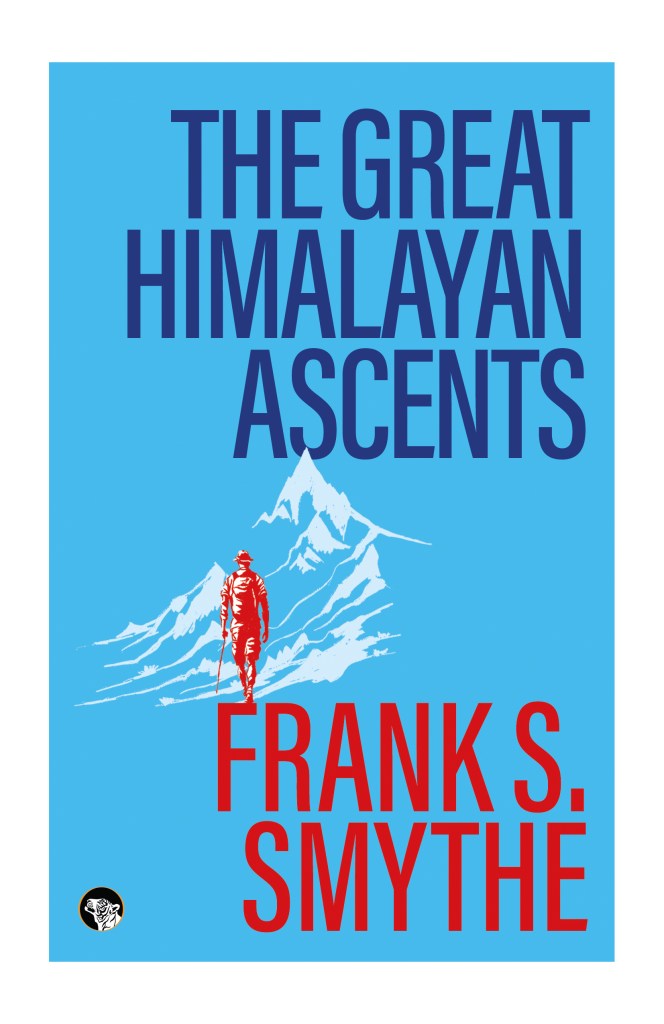
(Extracted from The Great Himalayan Ascents by Frank S. Smythe. Published by Speaking Tiger Books, 2025.)
About the Book
Frank S. Smythe (1900-1949) was one of the greatest mountaineers of the twentieth century, and a celebrated memoirist and adventure writer. This collection brings together three accounts of Smythe’s most thrilling ascents in the Himalayas—The Kangchenjunga Adventure, Kamet Conquered and Camp Six.
The Kangchenjunga Adventure narrates in detail the 1930 expedition to climb the third-highest mountain in the world: how Smythe, as part of an international team of mountaineers, attempts to reach the summit of Kangchenjunga, before a deadly avalanche—which kills one of the Sherpas— forces them to change course and scale the Jonsong Peak instead. In Kamet Conquered, Smythe makes a successful bid at ascending Mount Kamet in 1931, which was at that time still unscaled. On their way back, Smythe and his team chance upon the spectacular and colourful Bhyundar Valley, which they christen the ‘Valley of Flowers’, and which is now a National Park. Camp Six recounts a gripping adventure on the world’s highest mountain—the 1933 Everest Expedition, in which Smythe, climbing alone, ascends to a point higher than any human had reached before. Made without ropes or oxygen to support him, and in terrible snow conditions, the climb is regarded as one of the greatest endeavours in the history of mountaineering.
This majestic omnibus edition offers a fascinating window into early mountain climbing and Himalayan exploration. It is also a rare treat for every lover of fine, entertaining writing.
About the Author
Frank Sydney Smythe was a British mountaineer, botanist and adventurer. Smythe, who began his mountaineering career in the Alps, joined the international Kangchenjunga expedition of 1930 which ended in failure. In 1936, he led the expedition which successfully ascended Mount Kamet, then the highest peak ever to have been climbed. Subsequently, in the 1930s, Smythe was thrice part of teams which attempted to climb Mount Everest. An accomplished photographer and a prolific writer, Smythe wrote twenty-seven books in all, the best known among which are The Kangchenjunga Adventure, Kamet Conquered and Adventures of a Mountaineer. Smythe died in 1949.
.
PLEASE NOTE: ARTICLES CAN ONLY BE REPRODUCED IN OTHER SITES WITH DUE ACKNOWLEDGEMENT TO BORDERLESS JOURNAL
No one knew his name nor wished to know it. Only his face attracted those who came into contact with him. So it was said. A face whose huge, glowing eyes were turned both inwards and outwards, simultaneously. A face whose florid complexion, cheery and unfurrowed, bespoke a life of leisure, albeit not one of procrastination; a life of ease, but not sloth. In short, a life of early, unfought for independence.
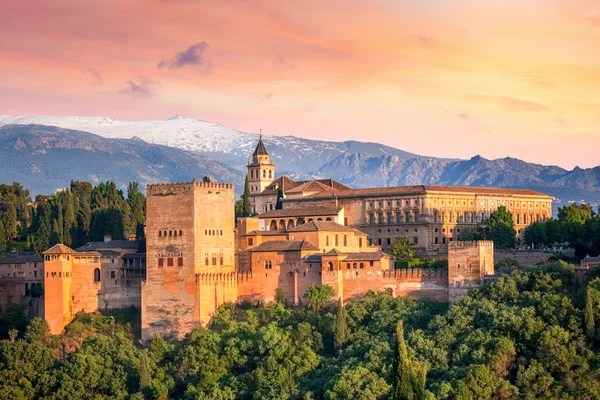
I met my nameless stranger one fine autumn day in the Andalucian town of Granada, Spain, where he had been residing for several months, visiting the Alhambra Palace every day during those months. We had met in a small, non-distinct eatery, and he was very willing to converse with anyone who had leisure to tete a tete. We fell into lively conversation. Taken aback by his daily visits to the remarkable Palace, I enquired why he spent so many hours there.
“The Palace was built as a sign of religious, political and cultural power,” he began, munching energetically on his paella of rabbit. “But since 1492, that sign has been condemned to utter uselessness, reduced to a mere tourist attraction, however noteworthy. It has become completely useless since its mediaeval abandonment because it’s been drained of its original value.” Here he paused, I imagine, for me to intercede. I didn’t …
“You see, this is what attracts me most to the Alhambra; its utter uselessness for our world today. I do not consider mass tourism as an instrument of usefulness.” I kept silent to goad him on, for the turn of conversation piqued my curiosity. “The Alhambra epitomises all that I have spent my own life experiencing, consciously: the pleasures of uselessness.”
“Is uselessness a pleasure?” I nettled with a sunny smile.
“That depends upon whom it has been bestowed, sir. That depends for whom it has benefitted. The circumstances of my life and will to understand and decipher them, have conspired to draw me now into and outside of myself. My own self has become as useless as the objects that I set my eyes on each and every day as I saunter through the streets, gardens or palaces of wherever I happen to be. I have realised that such an absorption into social uselessness, and thus distance from social use, has constituted my raison d’être. And there lies the pleasure: this mode of existence is a project of life; a pure project of pleasurable uselessness to society and to myself.” His face, alit with integrity, bent low to attack the chorizos cooked in white wine sauce.
“When did you begin experimenting your project?” I asked, sipping my sangria.
“I would formulate it differently: When did uselessness experiment me!” he mumbled, his mouth full of chorizo. “It all began in Africa some thirty or forty years back, during my youthful days wandering through the Sahara desert en route to Timbucktoo. The Blue Men of the Sahara appeared absolutely useless to anyone or anything that we Europeans would call useful.”
“Such as?”
“Well, a roof over one’s head, a shower every hour, a steady, well-paid job, a car and such things … what we Europeans would term as useful, conditioned to adhere to the philosophy of infinite progress; to infinite social and political usefulness. All the Blue Men seemed to require were a few hours of sleep, food, water and the desire to procreate. Needs that all mankind need so as to account for our very presence on Earth. I lived in the desert for over a year, and little by little discovered that this lifestyle suited a possibility of existence, a life not of a desert-nomad mind you, but one of a useless idler, which as time went by, proved possible, be it in the cities of Europe and Asia or in their countryside towns and villages.”
“As I understand it, social success has no meaning for you at all?”
“Not at all. Success only invites humiliation or cruel jealousy, and the pursuit of wealth is a path marked by ruthlessness. I earn my living simply to eat, to dress according to the climate, to have a roof over my head when needed.”
“But a roof over one’s head could be expensive…” I intervened.
“I spend most of my nights out under the stars when the weather is warm. With the coming of winter, I seek refuge in Catholic missions, poor men’s shelters or in the numerous Salvation Army shelters. Any asylum that will not turn me down. As far as any permanent residence, I have taken up lodgings in the homes of generous people for a meagre fee, or have laboured on farms for my food and bed. Do not confuse uselessness with doing nothing. I’m no couch potato; I have done many things, but they do not fit into our social machine of imposed well-being. My life may appear negative to those who hold me in contempt, but my usefulness is as useful to mankind as it is to myself. Don’t forget what one Belgium writer once wrote: ‘It is thanks to a certain number of men who seem useless that there will always be a certain number of useful men.’”
“Who wrote that?”
“I forgot. But what difference does it make?” He wiped his mouth delicately, smacking his lips. He proceeded: “I imagine you probably believe me to be a social parasite or a social zero as Balzac once wrote, useless even as a human being. But read Friedrich Nietzsche on this point,” and he quoted: “’Thevalue of a human being does not lie in his usefulnes; for it would continue to exist even if there were nobody to whom he could be useful.’”
“Quite an imposing thought,” I acknowledged, sitting back. “But you must admit that you have been useful to the kind people who hire you on or who lodge you, even for a small fee.”
He snorted: “Perhaps. But I cannot speak on their behalf, only mine.” I noted that he wiggled out of that one quite ingeniously. His face shone with a strange light. An aura of mystery gradually covered it like a gossamer veil. The light suddenly went out.
“I’m sure your effort to separate yourself from the social body must be a terrible struggle,” I pursued without irony. “I believe that to be estranged from the social body is commensurate with being estranged from one’s own self. Am I right in assuming this?”
“Perhaps, but not from the individuals of those societies. I am not a misantrope. This being said, solitude, fasts and meditation have prepared me for outer trials and tribulations, which I believe, without vanity, to have overcome.” He began picking his teeth with a very long fingernail.
“And God?” I rebounded, eyeing him steadily. His lips broke into an artful grin.
“He has been my only Friend since the beginning, sir. And why is that? Because we have been useless to each other since our initial communion.” He stood, evidently undesirous to develop this rather paradoxical statement. I let it drop …
We slipped outside and my nameless companion suggested that we have a quick jaunt through the ‘Arab Market’ in Zacaten. Indeed, the weather was warm, that Autumn weather which I have always found so stimulating in Granada; Granada, perched high in her mountainous refuge like an eagle in her lofty nest. My strolling companion strolled into my reverie.
“Look at the sky, a bluish turquoise which reminds me so much of the domes of the mosques in Bukhara, Uzbekistan. That turquoise which solicits silence and contemplation.”
“So you’ve visited Uzbekistan?”
“More than visited, my friend. I lived there for five years studying under the spiritual guidance of the Nakishbendi Brotherhood, a Sunna movement founded by the Shah Nakishbend, and which has survived the anti-religious crusade of the Soviet Union. With those kind and learned monks I learnt the virtues and powers of silence, contemplation, discipline, simplicity and periodical talks.”
“In what language did you speak to them?” I ventured, a bit intrigued by this singular experience.
“In Uzbek, of course!” he responded dryly. “I also learned to read Arabic.”
“But are silence and talks not contradictory?”
“Not at all, sir. Clusters of roses certainly grow silently, but good soil, air and pure water are needed for their basic growth. If accompanied by a soft, melodious voice, they grow better. Roses heed to that voice as silence heeds to constructive talks. It was during the alternating passages of silence and talks that our spiritual guides opened our eyes and senses to the uselessness of worldly matters, and since then, this uselessness has become my second nature, even my first! Mind you, this discovery has nothing to do either with self-love or atomistic individualism. As I said, I have relations with people, albeit brief; and although I keep aloof from community aggregation and national gatherings, I have never spend my life gloating in an ivory tower. No sir, I live for wanderlust not social or individual hubris! The lust for wandering … And when one wanders one cannot but converge with people, learn from them. This does not necessarily mean that I derive an extraordinary pleasure from communicating with them. To tell the truth, I prefer my own company, if I may say so …”
“But you surely feel a responsibility towards others?” I pursued, more and more fascinated by this nameless chap, who by now had led me into a marvellous little garden out of whose spouting fountain splashed tinkling sprays here and there.
“Responsibility?” he chortled, as we sat down enjoying the perfumed scents of honeysuckles and roses. “Responsibility is only towards oneself. My words or gestures will be felt by others. Would you harm or humiliate your fellow man? Uselessness does not mean selfishness or egoism. In fact, it disciplines you to an awareness of others, an awareness those who whole-heartedly believe in social relevance will never come to understand for they must belong to a community, club or ideology in order to give pride and reason to their usefulness. They discredit the experience of uselessness. Don’t get me wrong, I do not live in a fantasy world like those who tout infinite progress or community spirit. These are abstract schemas for me. My Way is to strive to overcome anger, hate and jealousy within my own sphere of existence. This entails peeling away the veils that dim the lucidity of reality; my reality of being useless to the devastating machine of the useful well-being of mankind.”
“I would then conclude that your manner of living may be called cynical or indifferent?”
He was mortified by my question. “Cynical? A cynic questions then condemns derisively the circumstances that emerge before him or her; I neither question nor condemn. I simply carry on from place to place, experimenting novel circumstances, accepting them as if they had always been mine. Indifference? Well, if you mean stepping back and out of the world’s commerce, and not to take either that commerce or oneself seriously, then I am indifferent. The crisis of many individuals today is that they take themselves much too seriously, much more seriously than the seriousness of their work or vocations. And when this self-seriousness is struck down or dethroned a dreadful sense of uselessness seizes them, causing depression, or worse, suicide. My uselessness to myself and to others is more serious than myself. I am in the world but not of it!”
As we sat in silence, I gradually felt myself transported to another dimension of time and space. Scenes of my own life flashed before my eyes, lively colourful scenes and gloomy ones. I could not resolve whether this nameless fellow fascinated or revolted me. My own life had been ensnared in a web of social irresponsibility and imposed representations. I had become one of the many cogs in the slow and steady vast social wheel that turns and churns, and I sensed that mine had become worn-out and useless. I had so yearned to be of some use to society … But now? Yes, now? How could I restore my previous enthusiasm that had long been abandoned? I had to admit, though, that this man’s experiments heightened my ardour to … to do what? Was he sent to me like some mentor? He suddenly stood and bid me a good day with a whimsical smile, as though he had been reading my thoughts.
Before leaving, however, he said: “Tomorrow I shall have a walk in the gardens of the Alhambra. Please join me, I’m sure we have much to discuss. Meanwhile, let silence be your companion until that walk.” And he disappeared into the milling crowd.
Waking early the next morning, I resolved to meet my new and somewhat eccentric companion at the beginning of the long avenue that leads to the Gate of Justice. An avenue lined with sentinels of cypress and other trees, within whose morning freshness ran a warren of narrow paths.
We met at precisely eight o’clock. With a sort of fraternal benevolence, he took my arm and we strolled upwards past the Gate of Justice, the pompous palace of King Carlos the Fifth, paid our tickets and entered the palace proper, almost religiously, under the storied vaulted corridors, by the pencilled ornaments and tiled walls of arabesque blue, over the smooth, shiny marbled floors.
“Have you read Washington Irving?” he asked in a quavering voice, as if not to disturb the mediaeval palace denizens.
“Yes, a marvellous story-teller and keen observer,” I replied softly.
“You know he led a life of ridiculous usefulness until sojourning within the walls of this soporific fairyland. Gradually Irving fell under the pleasant and industrious spell of uselessness.”
I stopped walking.
“How so? That’s contradictory!”
“Is it?” he beamed, smiling that wide, wicked, whimsical smile. “Yet so it was. He learnt through daily experience that this whole palace of enchantment lies under the layers of absolute uselessness. Layers and layers of poetry, conversation, lyrical jousts and insignificant gestures which disappeared as quickly as they were conceived. Nothing! Nothing remains of that imagined uselessness. And that is precisely why he wrote his Tales of the Alhambra[1] ; it was out of the need to express his useless life within these lyrical stones.”
My sauntering companion fell silent. Only our footfalls could be heard weaving in and out of the slender colonnades, intermingling with the chanting fountains. The blue ceramic shone on the walls like a mirror reflecting the azure …
“I see your point, I think. Before dusk, at times I watch the sun glide from East to West over the Palace walls, the dark greys slipping into ochre reds, soon to be daubed, as the sun sets, by the overglow tones of chestnut, roan and dun.”
“Yes!” he whispered excitedly. “That is perfect uselessness. It serves absolutely no purpose to anyone … even to yourself. For, unlike Irving, who snapped his experiment in uselessness, succumbing to the desire of writing it down for all and sundry to share, I presume that in your case you have no urgency to express any posthumous glory?”
I shook my head thoughtfully, then asked: “You don’t feel the desire to keep a diary?”
“Write? A diary? What for — to satisfy my blotted ego seeking a useful outlet? These are vain insinuations, my good friend. No, it is quite enough to feast my sovereign eyes, to feed my independent emotions on this marvellous honeycomb frostwork and these fine, mullioned windows[2]. These artifices are as useless as the ephemeral poetry and conversations that rang euphoniously within the hallowed halls and courts. And indeed, why should we, mere strangers to this mediaeval marvel, impose an artificial usefulness to it all? Why should we break into lyrical extravagances of the budding rose or the flight of the owl? Into flights of phantasy poeticising upon the Towers above us where verses of love spilled forth their honied fragrances into a void of mute forgetfulness? None of that for me, sir. Within these courts and gardens I have come to the inevitable conclusion that my Destiny lies in perfect uselessness; namely, in my refusal to reanimate the beauty or the ugliness that has crossed my path for the past fifty years in Asia, Europe, the Americas and Africa. I decline to spoil the uselessness of beauty and ugliness, to encumber my spirit and soul by searching for a ‘proper use’ for such human emotions and achievements.”
We had walked through the remarkable Court of Lions and were now entering the gardens of Lindaraxa, Sultan Boadil’s[3] wife. We sat down inhaling the gay scents of roses, oranges and lemons.
He sniffed the air, then murmured: ”A vague of indescribable awe was creeping over me,” here hepaused, lifting his eyes upwards: ”Everything began to be affected by the working of my mind, the whispers of the wind among the citron-trees beneath my window had something sinister…” My companion had chanted this broken sentence in a sort of drawn-out litany. “Yes, something sinister, indeed,” he ruminated to himself. “That point of inspiration led Irving from absolute uselessness to the search for putting uselessness to use. I enjoy reading Irving, but will never convert a ‘something sinister’ to a million-copy, world-wide read book.”
The sun rose higher and higher coating the pink tongues of dawn with a purplish blue. I turned to him: “Still, I cannot see how we as humans can escape from being useful Beings!” He looked at me, his facial features had suddenly hardened, or perhaps it was due to the effects of the shadows off the sun-lit fruit trees.
“Does my speaking to you now fulfil an emotional need? Was our conversation a psychological issue to such a profound hoarding of uselessness?” I asked.
He laughed so loud that a few puffy-eyed guards turned their heads in our direction. “Dear fellow, you have hardly understood our morning jaunt. We are simply idling our time away as uselessly as possible, as useless as a leaf dropping from that citron-tree, as a person who labours all his life to survive, a hermit in his remote cave, a desert-dweller, a traveller without name or record. How many of those intrepid souls took refuge in monasteries of the East and there left no trace of their earthly footfalls? They experienced true uselessness …”
“Even to God towards whom they must have addressed their prayers?” I enquired. He raised a quizzical eyebrow.
“That is neither for you nor me to answer, my friend.” He stood, shook my hand and left the gardens back through the Palace halls.
I felt a bit put out by his prompt and unexpected departure. It were as if he had abandoned me to unravel that last enigmatic thought of his. A silly feeling of course, but one that clung to me like the scents of the roses, oranges and lemons. My mind slowly became dull, my body numb. Had the nameless wanderer put me under a magical spell? The redolence and balminess of the gardens added to my discomfiture. At the same time, however, I understood that idleness is not a state or a condition which I could bear or champion as he does. I rose, heavily. Enough of this palatial beguiling and futile jaunting. That man, whoever he is, taught me a sound lesson: a person is born into our world to accomplish a particular use, one that is his or hers alone. There is no doubt in my mind about this.
I dragged myself from the gardens back to my hotel in the Old Market at Zacatin, an effort that enlisted all my emotional and physical strength.
I must confess that during the following days, in spite of my firm resolution towards usefulness, I idled my time away seeking out that nameless idler, tramping from street to street, garden to garden, restaurant to restaurant. Every morning I rose early and scoured the halls, courts and gardens of the Alhambra.
He had vanished into thin air, as the saying goes …
*
A few years later back in Amsterdam, my eye caught sight of a book entitled The Denizen of theUnderworld : The Art of Uselessness. I bought it out of some urgent curiosity that I could and still not explain rationally. The first sentences read : ”I am without shame, without guilt, without bad conscious. I truly prefer my cave swimming with mermaids, dwarves labouring at the furnaces, fairies hunting out medicinal plants. Here I breathe the air of pure uselessness, shielded against the charm and seduction of use.”
The author of the book had an odd name — Vigilius de Silentio — a name that might have fitted the face of my nameless companion whom I had met so many years ago in Granada. On second thoughts, though, that name could have fitted any face.
To tell the truth, the book bored me to death …
.
[1] Washington Irving, edition Edilux, Granada, Spain.
[2] A vertical element made of wood or stone that divides a window in two. It is applied in Islamic and Armenian architecture.
[3] The last Sultan of Muslim Spain, exiled to North Africa.
Paul Mirabile is a retired professor of philology now living in France. He has published mostly academic works centred on philology, history, pedagogy and religion. He has also published stories of his travels throughout Asia, where he spent thirty years.
.
PLEASE NOTE: ARTICLES CAN ONLY BE REPRODUCED IN OTHER SITES WITH DUE ACKNOWLEDGEMENT TO BORDERLESS JOURNAL
Sometimes all it takes is a short break to get away from the stresses of your life to realise you have been too busy to be truly living the life you really desire. Sometimes all you need are some near-life experiences to bring you back to Earth. Keith Lyons escapes city life to find his happy place.
It was almost midday when I finally started to relax and instinctively know that everything was going to be alright. But before then, things had been a little bit rushed. With just 15 minutes before the flight boarding call, the taxi was still spinning a few blocks away on the Uber app tracker. I counted down the minutes, worried not so much about the high fare but about missing the flight.
Still half asleep, I kept a lookout from my window seat at the snow on the ridges of the Alps, finding amid the peaks and valleys an emerald alpine lake, impossible to reach. Half-an-hour later after the plane touched down, I walked from the airport to the neighbourhood where I grew up, locating the supermarket, and assembling my late breakfast with provisions I’d bought for the journey: half a dozen multi-grain bread rolls, a bag of salad greens, and a small block of extra tasty mature cheese. Suitably fortified, I found camping gas sold in the hunting and fishing shop, though when I walked out of Gun City having purchased one canister, I got a nasty look from the mother with her young child, as if I had just bought a semi-automatic rifle to run riot in a primary school. Seeking the best cafe in town to enjoy a cup of coffee, I found it further along the street, a man in a wheelchair mobility scooter leaving with a broad grin as if he had been given a new lease on life a good enough sign for me. The owner gave me a friendly welcome and a cafe latte in a real cup. With blood sugar and caffeine levels now elevated, it was time to hit the road, to hitchhike to the trailhead, but some primitive drive kicked in when I went past the pizza parlour, so I gave in and commenced carbo-loading on a 12-inch pizza, justifying to myself that I’d be walking it off.
And I did walk. First, out of town to the crossroads where I only had to wait a few minutes until a science teacher on her way to pick up her children stopped. She told me about their financial struggles and how a generous government allowance kept their family afloat. She dropped me in the next town, and I ducked into the last supermarket just to cram one more packet of crackers into my day pack.
It was now early afternoon, and the logical part of my brain was asking why I hadn’t started on the hike, which would take four hours. The other part of my brain reassured me that it didn’t really matter what’s ahead, what was here and now was more important. There wasn’t a cloud in the sky, and the sun felt hot on my skin. I walked to the edge of town, but with not so much traffic I was tempted to have a handmade ice cream with local frozen berries. By the time I cleaned my sticky hands with sanitiser, I looked up to see another car had stopped for me. A man with no legs. I moved the wheels of his chair further over in the back seat; later I worried he might not be able to reach them when he arrived at his destination. I was almost at mine.
One final ride, with a former real estate agent who imparted some wisdom: Live your life to the full while you can, don’t wait till you are old, for then it might be too late, and health problems might blight your life.
Inside, I felt that I needed this. To be on the road. To be travelling again after Covid lockdowns and fears about venturing out. I needed this to look beyond my day job, my family concerns, and my dilemmas with what to do to secure a long-term future. It seems ages ago, but when I woke up in the morning, the first email I had seen through bleary eyes was a quote from George Addair: “Everything you’ve ever wanted is sitting on the other side of fear.”
I felt buoyed by the interactions, the sharing of truths, and the lifelong lessons. I almost wanted to continue this hitchhiking, this random experiment, at the mercy of the road and its drivers. But I had a reservation for a bunk bed in a park hut, and the holiday I’d planned at the start of the year was now taking shape.
The trail, the Abel Tasman National Park ‘Great Walk’ (in New Zealand’s South Island) was familiar enough that I felt like I was coming home. I recalled walking part of this track as a child and in recent years I’d hiked sections, including the first four hours. Despite its familiarity, I saw new things, noticed details, and lingered to take it all in. I was in no hurry. So much depended on your mood, your pace, and your company. I took detours down to sandy beaches. I got breathless climbing and climbing and climbing to viewpoints. I stopped to drink the water still cold in my bottle. I sat at strategically placed seats to marvel at the panorama of sea, sand, forest and the horizon. From dazzling sunlight, the route drops into the gloom of forest cover, where I could smell the earthy sweetness of honey-dew on the breeze. The landscape was scenic, but there was more it was doing for my soul. Moving through it was to be immersed in it, to be nourished by the sight, the colours of life, the contrasts, and the abundance of nature. In my head, my soundtrack had songs on repeat, repeat, repeat. Then it skipped to another, to repeat a few times. I needed to upgrade my internal Spotify. I noticed my breathing, and how it deepened. I still had some tension, but slowly it was seeping away, dissipating. Yes, I would like some more of this. Yes, please.
Every few minutes walkers heading out from day trips or longer multi-day hikes passed by, with ‘hellos’. The Europeans and North Americans invariably walked on the ‘wrong’ side of the trail. Some were seeking suitable places for Instagram pictures. Others clutched the cardboard containers that once held their packed lunch from the ferry operator, looking for a trash bin, despite the notices that everyone must take out whatever they bring in.
At the hut, most had larger packs than mine, apart from an American who seemed to be staying overnight without any food. We watched him sitting outside using the free wifi, as if he was Googling ‘nearest store’ or finding out if any delivery services worked there. They don’t. The wood fire was lit in the main dining area, and exhausted souls sat around eating camp food and sipping hot drinks. And laughing. It was only just 9.30pm but already half the 30 or so guests had retired to their bunk rooms. There was talk about the need to rise early to take advantage of the low tide crossing, saving an hour or so of extra slog.
I was woken by the rustling of plastic bags, the clomping of hiking boots on the deck outside, and the hiss of gas cookers preparing porridge and tea. I rolled over and tried to sleep, as I was still tired, a tiredness residual from late nights, long hours working, and the demands of modern life.
When I finally got out of my sleeping bag and squinted my eyes out at the day, the last of the overnighters were getting ready to leave. I found myself alone. And here I found it. Peace. Stillness. Calm. It is in that place. And it was inside me.
Framed by the gable roof of the dining hall, through the trees, it was misty across the sheltered bay. The water was still and flat, but I could hear the distant breaking on the shore like a lullaby. I slowly sipped a cup of Lady Grey tea to add clarity. I heard just the twitter of birdsong and saw two tiny birds flit here and there. From a treetop, came the chimes and whirls and clicks of a native bird. Light rain was soft on the tin roof. I was content just to sit and gaze out at the scene, reduced to flat grey tones. I was happy enough just to be breathing the air, which was moist and life-giving. My warm scarf wrapped around my neck gave the embodiment of love, while the woollen hat on my heat topped it off. I was complete.
I felt the need to move, but not to go out in the rain which was getting heavier. Instead, I remembered some Qi Gong exercises, my arms flailing out, torso twisting, rotating. I pulled up energy from the earth below. And with that movement, and in that space, there was nothing I wanted. Just being fully present was enough. It was all I could be at that moment.
And you. How about you? When will you stop over-thinking, obsessing, and worrying? Just breathe and believe that everything will work out.
Keith Lyons (keithlyons.net) is an award-winning writer, author and creative writing mentor, who gave up learning to play bagpipes in a Scottish pipe band to focus on after-dark tabs of dark chocolate, early morning slow-lane swimming, and the perfect cup of masala chai tea. Find him@KeithLyonsNZor blogging at Wandering in the World (http://wanderingintheworld.com).
PLEASE NOTE: ARTICLES CAN ONLY BE REPRODUCED IN OTHER SITES WITH DUE ACKNOWLEDGEMENT TO BORDERLESS JOURNAL

 Borderless