Categories
Essay

After the Pandemic

By Devraj Singh Kalsi

Our admiration, interest, and respect spikes for countries where the spread of Covid-19 is flattened or limited with early measures. As we track global statistics on a daily basis, any country with less than 1000 cases makes us react with Wow and How. As we scroll further down the list, those with 500 or less than 100 cases make us feel positive and we conclude: This is the place to live. These may or may not be counted as fantasy lands or ideal destinations in normal times, but when it comes to survival, we salute them for keeping citizens safe in these dark times.  

When I discussed this with some friends in an online chat, they are reluctant to bat for developed and advanced nations now. Countries more efficient in the management of crisis and saving human lives, countries more benevolent towards the poor, countries with more nature-friendly policies, countries where a citizen is considered much more than a statistic are weighed against the traditional heavyweights. When the pandemic subsides and people have lesser emotional stress, perhaps the same set of questions will have completely different answers. Or maybe, the magnitude of this crisis enables us to imagine grief more closely and we are compelled to revise our assessment of growth, development, and quality living. 

While the recovery phase will take its time, the nations least affected will have having a clear advantage over the severely affected ones. Whether they will be able to leverage on their strengths and give the world the option of a better life with limited but sufficient resources remains to be seen.   

Economists and artists will get busy mapping the COVID-19 impact on people once the pandemic is contained. GDP predictions, recession, relief packages and stimulus will form the key discussions. The wealthy of every nation will look for growing economies to park their funds and they will come together to create rich economies — lured by maximum plough back of profits. They will look for economies with double-digit annual growth or for high single-digit economies with enormous potential to double up in the short term itself.

Job losers and fresh job seekers will migrate in search of better and stable options anywhere in the world. The top ten nations for immigrants will be another interesting development. Many new countries will enter this list and many big names will be excluded from the list. Globalisation will become a word of caution for some nations while the rest of the world will begin to harness its potential.  

Tragedies inspire artists. The political class that creates global tragedies will be defeated by nature this time. Man-made tragedies kindle the angst in artists far more than the natural ones, even if the extent of damage remains the same or even greater. Being lovers of nature, the community of artists will not be ruthless towards the eco systems. They will blame mankind for being unkind, for the excesses against nature, and treat every natural disaster as the planet’s brave attempt to heal or reclaim what it lost. Artists will remind people and countries to be friendlier towards the Earth as will environmentalists, who have always emphasised harmonious co-existence with nature. This enthusiastic drive will continue with full force.

As soon as the element of greed raises its ugly head and the countries become competitive to provide a ‘better life’ or restore the ‘better’ life, the return towards normal will start. Although we live under greater threat, we have greater confidence that we will survive every kind of threat. The resumption of the predictable cycle will make us return to our lives of consumerism, to flaunt fancy gadgets or something precious to suggest our material abundance. The lessons from COVID-19 will be forgotten and buried.

Rich countries fear the death of their privileged status more than the death of thousands and millions of people. Those who survive will need to live in the same country with pride in its strengths. A country with the highest casualties will continue to say it is far below the expected numbers. If a million die, they will boast of saving many millions more. They will boost the morale of the nation with solidarity drives and keep them upbeat about a quick bounce back. It is a humongous task that brings a battery of opinion makers, public relation strategists and pliant media to play a constructive role in helping governments build – or rebuild – their image.

However, as critical assessment will have lesser tolerance, masses will expect their governments to do what is required. In such times, elected leaders will get the opportunity to showcase their potential. State leaders will grow in stature through their performance. National leaders will find suitable roles other than criticising the government. Social service measures to benefit the poor will help them connect better. Instead of lampooning the governments, people should be seen aligned with the government. These images will linger in the public mind for long. And a new class of leaders will emerge as viable alternatives –some reaching the helm through sacrifice, some reaching it through service.    

It will not matter whether democracies deliver the best care or totalitarian regimes perform better. Any kind of governance will find resonance if the citizens conclude their leaders prevented severe loss of human lives. At the end of the day, survival matters. The political class has understood it is not only important to do enough, but it is equally important to be seen you are doing enough. When one game seems lost, the other has to be won.

Global leaders are trying their best to tell their citizens they have a responsive and proactive government. When elected leaders get affected by the virus, they appear vulnerable as individuals. When they get cured faster, they prove their stronger ability to fight and survive. A subtle message that the nation is safe in their hands.


Devraj Singh Kalsi works as a senior copywriter in Kolkata. His short stories and essays have been published in Deccan Herald, Tehelka, Kitaab, Earthen Lamp Journal, Assam Tribune, and The Statesman. Pal Motors is first novel.  

Categories
Essay

Strangers in Our Midst

By Dustin Pickering

( dedicated to President Donald Trump)

In the uncertain and unsettling time of the COVID-19 crisis, we may be wise to consider our good fortune and family. We are fortunate, in fact, that our family bonds exist and we have loved ones at all. This testifies to God’s ever shining mercy. However, in the current crisis we should also consider those who are distant from us and less fortunate. A variety of faiths teach mercy to the needy.

The word family originally referred to domestic servants under one roof. It only emerged in its current meaning in the 1600’s. Strangely, the word familiar also has a unique history:

mid-14c., “intimate, very friendly, on a family footing,” from Old French famelier “related; friendly,” from Latin familiaris “domestic, private, belonging to a family, of a household;” also “familiar, intimate, friendly,” a dissimilation of *familialis, from familia (see family).

From late 14c. as “of or pertaining to one’s family.” Of things, “known from long association,” from late 15c. Meaning “ordinary, usual” is from 1590s.

The noun meaning “demon, evil spirit that answers one’s call” is from 1580s (familiar spirit is attested from 1560s); earlier as a noun it meant “a familiar friend” (late 14c.). The Latin plural, used as a noun, meant “the slaves,” also “a friend, intimate acquaintance, companion.”

— Online Etymology Dictionary

Family and familiar share a common background apparently. Suspected witches, burned in numerous witch trials, had their familiar spirits. Some speculate that the European psyche was traumatised by the Black Death that depopulated the land, and such widespread trauma led to the historic witch hunts. Fear has a way of unraveling the human psyche and creating an atmosphere of unrest. We are facing similar conditions now.

When our social ties loosen, we turn on one another. Strangers are seen in every human face. Yet what is a stranger? What makes a person a stranger? Are strangers only those who cross borders? Is it the distance separating him or her? Is it a transformation of self that makes another person strange?

Recent foreign policy blunders have shaken the world and created a refugee crisis that only time or God could sort through. From Arab Spring and Mubarak, to Assad and Syrian protests, horrific deaths and destabilizing events shook the Middle East as well as Europe. Refugees fled and were welcomed by Germany, Canada, and the United States, but to the dismay of much of those countries’ populace. Quite possibly, these events brought by the Obama administration are a cause for Brexit as well as tightened immigration policies. France, as recently as 2018, imposed tougher immigration policies and included assimilation and learning French in their priorities for accepted refugees.

The question of nationalism is a heated one. However, even the founder of The Huffington Post, Arianna Huffington, once opposed lax immigration policy though she is an immigrant herself. The debate concerning immigration policy revolves around culture, law, human trafficking, employment, and human rights. Why do nations safeguard  a certain identity for themselves? Why is “the Other” to be feared, misunderstood, deported?

Is there something integral to nation states that they desire to protect themselves from those outside them?

All across the world we are asked to practice “social distancing”, to quarantine ourselves to protect against the spread of COVID-19. To “flatten the curve”, experts say, we must work at home and venture out only for essential tasks, and then we must keep our distance from others. As can be expected, people are lonely and restless. The virus has generated conspiracy theories, shut down events and outdoor activities, and emptied stores of wares, especially toilet paper.

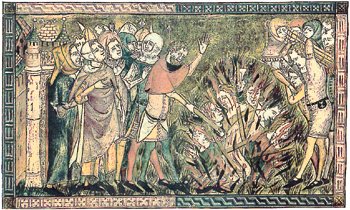
 According to Rene Girard, an anthropological philosopher, the plague was often blamed on those of the Jewish faith. Many Jews practiced medicine, and their ability to heal also made them suspect. They were believed to cause the illness they could treat. They were accused of poisoning community wells. It turns out the plague was actually carried by fleas on rats. Hysteria distorts our perceptions of one another. Where there is no perceived explanation, we invent one from our fears and suspicions.

Does a quality of strangeness arouse suspicion? If so, what defines the quality? Is strangeness something within us, not so much outside? When facing inner transformations, do our surroundings alienate us? In what sense are we even masters of our environment, so heated by political strife?

One thing is certain: President Trump told Mexican President Enrique Peña Nieto that his border wall was at the bottom of the priority list. However, couldn’t he tone down the divisive rhetoric? Or is this the way he befuddles a hostile press?    

American Historian Howard Zinn wrote, “Nations are not communities and never have been. The history of any country, presented as the history of a family, conceals the fierce conflicts of interest (sometimes exploding, often repressed) between conquerors and conquered, masters and slaves, capitalists and workers, dominators and dominated in race and sex. And in such a world of conflict, a world of victims and executioners, it is the job of thinking people, as Albert Camus suggested, not to be on the side of the executioners.”

 Recall the etymology of family and familiar. The strangeness of the Other is the strangeness of our haunted psyche. We project our fears and naked ambitions onto the Other, or the outsider, who we construe secretly to harbour those same things within. Does the Other become our double? Considering our eusocial nature, Othering may be the psychological stumbling block we put our heads on before the executioner arrives.

President Trump insisted on calling COVID-19 “the Chinese virus” during this crucial period of trade negotiations with the Chinese government. In his briefing, he informs the press and public that his negotiations are going well. In what sense is he, as President, Othering China? Do we Other him in our recoil against his rhetoric? Perhaps he is the doppelgänger of our country’s hideous history coming to bite us back. Perhaps he is the voice of the forgotten, as his adviser Stephen Miller told CNN.  In being the voice of the forgotten working class, has he saved the working class at all or only confused things more?

One thing is certain: we are strangers to ourselves if we cannot answer these questions.

Dustin Pickering is the founder of Transcendent Zero Press and editor-in-chief of Harbinger Asylum. He has authored several poetry collections, a short story collection, and a novella. He is a Pushcart nominee and was a finalist in Adelaide Literary Journal’s short story contest in 2018. He is a former contributor to Huffington Post. 

Disclaimer: The opinions expressed are solely that of the author and not of Borderless Journal.

Categories
Poetry

Living in the times of Lockdown

By Moinak Dutta

Living in The Times of Lockdown

Living in the times of Lockdown

Is curiously surreal,

For spaces we, the humans leave, are claimed by others,

Like pigeons come in flocks to dance on the chowrasta,

Where before lockdown, cars stood bumper to bumper,

Blaring horns, letting out sooty smoke;

A friend from Gurugram sent me a picture of serious traffic signal violation on a thoroughfare —

A grand peacock slowly, almost leisurely walking across the road, oblivious of the traffic lights turning green;

Dolphins, showed on TV, danced their ways near the Marine Drive at Mumbai,

They looked surprisingly happy —

No fishing boats to chase them;

The sky of my city never looked so clear and blue

Like it does now,

The trees looked greener too,

And the roads, so clutter free.

What Covid19 taught us

Covid 19 outbreak has brought into fore

How in the time of distress and panic

Religion  closes its doors; and even family members become distant;

How even the dead bodies are left behind;

How Fear controls every bit of us;

And how the old ways of enjoying life in rest and repose

Had been the most perfect ways to lead our lives;

And above all, how it is that home is all that matters at the end of the day.

Quarantined

This life is good.

You and I —

Looking at each other

And heaving a sigh.

Moiank Dutta is a teacher by profession and published fiction writer and poet with two literary & romance fictions to his credit. His third fiction is going to be published soon. Many of his poems and short stories have been published in dailies, magazines, journals, ezines.

Categories
Essay

Pandemic and Poetry: How Writers in Pakistan react to COVID-19

By Dr Aftab Husain

There is a proverb in Persian and Urdu that could be roughly translated thus — ‘A collective death has an air of festivity’. The great Urdu poet, Ghalib, however, would have not subscribed to this notion as was made evident from an episode in his personal life. Once afflicted by his financial and existential miseries, he had foretold his own death the following year. There broke out in the given year an epidemic that claimed many lives in the city, but luckily our poet survived. When asked later about his prognostication, Ghalib replied with a tinge of humour that his forecast had been accurate, but it would have degraded him to die a common death, therefore, he held himself back.

This could be seen as a hyper-individualistic thought process of a genius poet which was ultimately reflected in his poetry. But common human beings think differently. The line of wisdom that the proverb at the starting of this essay conveys does not in any way celebrate death, but our collective, gregarious nature. It is a strange fact of human existence that a catastrophe unites people more than a festivity.

World literature, as many of us know, is replete with the examples of writing inspired by or dealing with different catastrophes; draught, floods, different types of epidemic: plague, cholera, influenza etc. The Plague by Albert Camus (French), Love in the Time of Cholera by Gabriel García Márquez (Spanish) and Blindness by José Saramago (Portuguese) – incidentally all three written by Nobel laureates – immediately come to mind.  

Rabindranath Tagore’s long, descriptive poem: ‘Puratan Bhritya’ (Old servant) – ‘Keshta, old manservant of mine’, stemmed from smallpox.  In a few short stories by Premchand, the founding father of Urdu and Hindi fiction there appears pestilence – albeit as subtext. In ‘Idgah’ (mosque), the child protagonist lost his father to cholera. Similarly, in ‘Doodh Ka Daam’ (price of milk), one character dies of plague. Famous Urdu and English fiction writer Ahmad Ali who is known to the Urdu world as one of the contributors to Angaaree (The Burning Coals) an anthology of mainly short stories that had stirred the somewhat stagnant waters of the then Urdu literature, ventured into this area with his maiden novel in English. Ahmad Ali’s novel, Twilight in Delhi, offers a bleak and pathetic picture of the city in the wake of an epidemic. ‘How deadly this fever is. Everyone is dying of it. The hospitals are gay and bright. But sorry is men’s plight’.

Rebati, a well-known short story by Fakir Mohan Senapati, one of the pioneers of modern Odia literature depicts a village hit by a cholera epidemic. The list is endless, but so far Urdu literature is concerned, ‘Quarantine’, a poignant short story by Rajinder Singh Bedi presents a detailed and exclusive description of the life affected by plague and also of quarantine as the title of the story also indicates.

Human beings in the long span of their history have been going through many different epidemics, but the present one is unique in that it has not only affected different strata of society, it has also had a global outreach. With bated breath, we watch the movement of this pandemic that has paralysed social life. Nevertheless, health-care workers, scientists, politicians, policy makers, psychiatrists, media persons and many other groups are actively working to finding a solution to the problem or at least curb its growth.

People from art and literature too are responding to the disease in different ways. Pakistani writers, especially poets, have profusely responded to the situation.

One interesting fact that one notices is in the word ‘corona’, that is, we know, a noun but when spelt out in Urdu-Hindi it makes a full-fledged meaningful phrase: ‘Don’t do.’ Resultantly, one observes a lot of versifications exploiting this pun – albeit major and established poets have shunned this facile jugglery. Barring this word play, poets who have chosen to write in a lighter vein seemingly have set their comic spirit to work as a defence mechanism to make the grave situation a little less intimidating. For example, a poem entitled as ‘Thanks’ by a senior poet Tahir Sherazi argues that this compulsory restriction that confines us to our home places might provide us an opportunity to repair our broken relationships with our family members. The poems ends on a jubilant note on acquiring the newly-gained leisure in this way: ‘My wife will make a cup of tea for me and I will write poems on roses, lamps, on the earth and the heaven’. Well, the male poet is scheming of enjoying this free time at his will while his spouse will be doomed to carry on with her routine domestic chores. This aspect does make this otherwise light poem somewhat pathetic.

Poets with a religious sensibility see this development as sort divine wrath and put forward their sentiments either in direct prayers or by employing religious terminology. ‘A Dialogue with God in the Days of Epidemic’ by Najma Mansoor, and ‘In the Days of Epidemic’ by Safia Hayat, are both of this vein. But, in major and significant poets you find no direct recourse to divine powers or holy personages, but only a thin, veiled religious consciousness.

‘God Smiles in Their Eyes’, a poem by Ali Muhammad Farshi, a senior poet, pays tribute to the life-saving endeavours of a nurse who had wrenched back a bride from the clutches of death. Quite pertinently, the poet invokes figures of Mary and Christ, the messiah, and despite having no apparent reference to corona the poem provides a penetrating presentation of the present state of affairs. ‘God, Epidemic and Human Beings’ by Jameelur Rahman is also a poem sprinkled with religious diction, but its overall philosophical tone saves the poem from becoming mere-lamentation of a pious soul caught in an unbearable suffering.

However, Maqsood Wafa altogether rejects the role of religion in such a dreadful disease as he puts it in the closing lines of his poem, ‘The Captive Days’: “I will listen to the Prime Minister’s speech/And I won’t be able to make the people of this holy land understand/that when a virus attacks a human being/It doesn’t ask the name of his god”.  Almost similar is the tone in Saqib Nadeem’s poem: “We Don’t Accept (The Poem of A Petty Sentimentality)” where the poet lashes at the shallow and hypocritical religious community. “After every prayer we embrace and congratulate each other on being alive and we trade in kisses, (but) we don’t hear screams of virus in our kisses”.  

Then, there is a group that believes that one can with the power of love conquer this monster. ‘An Innocent Poem’ by Parveen Tahir speaks about the wishes of its female protagonist – a lover – who kisses her lover and dines with him in the naive expectation that the disease will at least spare those who are in love. Seemab Zafar’s ‘One Erects Love with the Bricks of Affliction’ does not offer such optimism but presents a desolate scenario – within and without. ‘On Death Bed’ by Fatima Mehru juxtaposes among the triad of love, disease and death. It is soulful poem that vacillates between life affirming spirit of love and that of despair.  Some poems in this category remind you Márquez’s Love in the Times of Cholera – at least title of the novel which is quite a popular book. Khumar Meerzada’s two short and impressive poems ‘Love in the Days of Epidemic’ and ‘Love and Epidemic’ show how love act in front of such a fatal malady.  Iftekhar Bukhari’s ‘We Descends from One Father’ does not lose touch to the ground reality, yet it rises up to the lofty human bonds. “We will not shake hands/This is time that we united our heart….Without urgent needs we will not leave our house/In order that roads, fields and gardens are again full of life…./If needed, we will go and die in a silent corner/So that the earth might echo with songs, even after our departure.” A powerful poem, indeed!   

Arshad Latif took a different, cynial and somewhat callous stance towards the given grave situation. “We couldn’t control our inhuman impulses/And our negative thoughts took us far away from the life itself…We, you and some others proved a total failure…./Embrace death willingly so that souls of us, yours and some others could bequeath peace”. (‘The World Wants A Cure’).

Whereas Salmat Sarwat’s ‘Quarantine No 1’ portrays the ennui spawned by an ever-spreading leisure and the resultant disinclination to write further, Gulnaz Kausar’s ‘Precaution’ is composed in the poet’s typically soft and feminine style. Her diction and her treatment leave, despite the morbid subject of the poem, a soothing effect on the reader. 

At least two other poems: ‘Quarantine’ by Irfan Sadiq and ‘Seventh Day in the Quarantine’ by Omer Aziz, take not only the term of quarantine in their titles, but they revolve around this trope.  Aziz, a doctor by profession, has quite effectively captured the physical affliction and mental agony of a patient put in quarantine.

Alongside such poems, there is a wide circulation of individual ghazal couplets: the two liners that quite succinctly sum up the general mood about the epidemic. Most of these small pieces, for their overflowing sentimentality or sheer propaganda do not have much appeal. Yet, a few of them not only hit the bull’s eye, but they do not veer away from the aesthetic requirement of a piece of literature.

Afsaos, Ye Wabaa Ke DinoN  Ki MohabbateN

Ik Doosre Se Haath Milaane Se Bhi Gaye

(Sajjad Baloch)

Alas, these love affairs in the days of epidemic!

Even shaking hands with each other is rendered hard

*

Har Taraf Aisii Khamoshii Hay Ki Sar Ghoomta Hay

Log Pahre MeN HaiN Aur GalioN Men Dar Ghoomta Hay

(Seemab Zafar)

A terrible hush rules all over and makes you feel giddy

Human being caught in the custody

While a certain fearfulness prowls in the streets

*

Ajeeb Dard Hay Jis Kii Dawaa Hay Tanhaaii

Baqaa e Shahr Hay Ab Shahr Ke Ujadne MeN

(Mahmood Shaam)

What a weird malady is it whose cure lies in solitude!

Now the survival of the city is in its depopulation.

Thus, we see that an overwhelming response to the pandemic came from our poets. As for prose, though in general there are a plethora of pieces written on the subject, that is,  journalistic writing, but quite rarely one comes across relevant fiction, fictional narrative or imaginative prose. Justifying this comparative absence fiction writer M Hameed Shahid says: “Poetry might be composed in reaction to a happening, for fiction that is not enough. Fiction needs something more to build up its aesthetics,” he adds. Well, our writers writing on the communal riots in the wake of the Partition of India in 1947 did produce literature in reaction to these events, though such literature was, to be sure, not created while the riots were still taking place.  M. Hameed Shahid is therefore in favour of waiting and seeing and letting his experience take a mature form, so he stayed away from offering something half-backed in fiction. Nevertheless, he has come forward with a non-fictional narrative: ‘Epidemic Days, Closed Door & Deserted Street’ – a sort of chronicle-narrative and despite its excessive self‐referentiality, the write up is interesting in the sense that it, at least, introduces us to the disquiet and anxieties of a writer finding himself in the midst of a prison-like claustrophobic confinement.  

Meanwhile, another fiction writer who has given a clarion call to his colleagues and urged them use their pens in dispelling the gloomy atmosphere created by the disease is Amjad Tuhfail. He was, however, snubbed by a senior short story writer declaring that any such move was to yield nothing but slogan-mongering that jump on the bandwagon could bring out only ‘faction’ and in no way any genuine fiction. A Lahore based short story writer, Tufail, did not take this warning seriously and immediately posted a three-page short story in a social-media outlet. Jabir Ali Syed had once called Shamsur Rahman Faruqi known as the  “the impetuous critic”. The gentleman story writer might be no match for Faruqi, but he shares, at least, this quality with his senior contemporary.

As a saving grace to this discouraging deficiency in prose, comes an English write-up, “Something’s not right with the world”, from Farah Zia. The small item that the writer prefers to call “a mood piece” appears like a free stroke by some accomplished painter: laconic, telling and powerful. “It is like waking up every day into a dream: in a place where life imitates fiction” thus begins the write up. Written with profound concern, yet at the same time, with a cold objectivity, it makes a serene and soulful reading. No wonder, the piece was quickly rendered into Urdu and published, but one wonders if such a deeply-felt prose could be translated without losing much of its essential charm and pathos.

Closing the deliberations one can say that each piece that is being written in the name of literature cannot be, quite naturally, up to the literary mark – let alone to be remembered by posterity. Most of these writings fall into the category of pièce d’occasion. But such pieces, occasioned by certain events sometimes transcend the given situation and live on, beyond the time of their creation. Some of the given stuff has remarkable literary value and therefore it might survive longer; the other ones might not be fortune enough, but the fact remains that they too bear a witness to a momentous phenomenon in human history and have transcribed these times on the climate of our minds.

Aftab Husain (Pakistan/Austria) is an eminent name in modern Ghazal poetry from South Asia. In addition to Urdu, he writes in English both poems and literary essays and translates from German to Urdu and vice versa. He earned his doctorate in comparative literature from Vienna University where he teaches South Asian Literature and Culture. He has four collections of poetry and three of books of translations – from German into Urdu – to his credit. He was a fellow of Heinrich-Böll-Haus, Germany as well as the ‘Writer of Exile’ of Vienna City. His poems have been translated into many languages. He is a member of the Austrian PEN and co-edits a bilingual magazine – Words & Worlds –  for migrant literature.

Categories
Essay

Countdown to Lockdown: Fear and Loathing in the Trolley Race at the End of the World

Keith Lyons from Christchurch discovers that the big world seems very small when it comes to stockpiling for the coronavirus.

If I had to choose a place to be to sit out the coronavirus pandemic sweeping over the globe, there are probably few places better than the South Island of New Zealand. A significant number of the world’s super-rich have invested in the Southern Hemisphere nation, some even buying residency through a controversial and secretive ‘Investor Plus’ scheme. Tech startup incubator for Reddit, Dropbox and Airbnb, Sam Altman, Pay Pal’s Peter Thiel, and the co-founder of LinkedIn Reid Hoffman are among those who have invested, buying secluded boltholes and luxury bunkers. One US company has constructed more than three dozen doomsday bunkers in New Zealand. Several of my friends have worked for ‘high net worth individuals’ as staff at remote lodges and on luxury super-yachts.

Kim Dotcom, of Megaupload, is among those who have decided to call New Zealand home. I call New Zealand home because I was born here. And now I’ve returned ‘home’ after more than a decade living in China and spending the last few years in South East Asia.

In February, this year, my route back from India via Myanmar took me through Phuket airport where a taxi driver had already been infected with the coronavirus. Transiting Kuala Lumpur’s KLIA2, after an overnight in Denpasar International Airport in Bali, I discovered no tests had been made to determine if anyone had the virus. Then a short stopover in Melbourne, Australia, where there seemed to be no additional measures to combat the spread of the corona virus. Even on arriving in my hometown Christchurch, there were no temperature checks or questioning to see if I had come from China, Italy or South Korea. In mid-February, the most stringent measures encountered were in Central Phuket Festival mall, where the handful of customers going from one half of the normally teeming mall to the other side were stopped for a temperature check.

If 9/11 meant greater security with screening for knives, box-cutters, and nail files, and having to take out water bottles, mobile phones and laptops, almost two decades on, we are now adding to the security screening with thermal cameras and the symbol of 2020: thermometer guns. After the masked official at the Phuket mall held his gun to my forehead, satisfied that I didn’t have a raised temperature indicating fever, he turned it around so I could see the digital reading: 36.8 C. Now, I am not expert on human health, so assumed it was not too hot and not too cold, as I couldn’t make out if the official was smiling or grimacing behind his mask. At least they aren’t taking the readings the old-fashioned way, rectally.

One of the things about the coronavirus is that is it invisible and faceless. Like an imaginary menace. Its presence is only made more tangible and real when we see on TV the patients in ICU units, doctors and nurses in masks and glove hurrying around with beeping ventilators and tubes, maps showing the spread of the new virus which threatens like a hurricane.

The other thing about the coronavirus is the speed at which it moves, spreads, and intensifies. When I travelled back from Asia to Australasia, coronavirus was primarily a Chinese problem, with some possible spread to Italy. But as February turned into March, it became more apparent that this Wuhan wet market virus was going global big time.

I guess we should have all been ready for something like this to happen. It was corona virus — COVID19 — there was bound to be a pandemic which would sweep the world, infecting millions and killing many. After all, such an event has been predicted by everyone from Nostradamus and Bill Gates to author Dean Koontz (see conspiracy theories) and The Simpsons. There are even some among us who believe one episode of The Simpsons foretold the self-isolation of Tom Hanks.

There are also those among us who having known something like this was going to happen have made preparations for their survival. This is now an ‘I told you so’ occasion for the smug ‘preppers’ who feel vindicated having lined their shelters with emergency rations, first aid kits and firearms, though this coronavirus thing is turning out to be mild compared to the much-anticipated zombie apocalypse scenario. Instead, it seems the ‘always carry’ list for those fighting the hidden enemy includes wet wipes, hand sanitiser, and N95 masks. The US company Preppi at one stage marketed a special US$10,000 prep bag which included gold bars for bartering.

My hometown, Christchurch, has experienced several traumatic events this last decade. A large earthquake in mid-2010 followed by a more devastating quake in early 2011 damaged nearly 100,000 buildings, half the city’s roads, and killed 185. A year ago, a white supremacist gunman shot dead 51 people at two city mosques. New Zealand is geologically young, and prone to natural disasters including earthquakes and volcanic eruptions, so most homes have emergency kits with food and water to last at least three days.

However, the prospect of an infectious pandemic with a lengthy lockdown period has taken most citizens by surprise. When on the second-to-last day of February news broke of the first case of coronavirus in New Zealand, brought by a resident returning from Iran, I was in my local supermarket a few hours after the announcement. There was no flour available, the shelves of the 1.5kg bags and 5kg bags were empty. It was not just the ordinary white flour, it was high-grade flour too, along with self-rising flour and wholemeal flour. On the next aisle of the Countdown supermarket, a Thai woman was posing for a photograph in front of shelves half empty of rice. I mentioned my observations later to friends and family, wondering if there was a shortage or some other reason.

A few days later there was news of a second case, this time arriving from Italy. But even though this virus had arrived on our shores, it seemed like its impact would be insignificant, as it was not spreading, and those returning to New Zealand had mild symptoms, not unlike a cold you pick up during a long haul flight. There were reports that some supermarkets have been swamped by customers buying toilet paper, hand sanitiser and tinned food.

Ten days later, the news was full of events happening far, far away in Italy, Iran and South Korea. The coronavirus had spread to more than 100 countries, and infected more than 100,000 — a few days earlier the World Health Organisation declared it an official pandemic. In New Zealand, the sixth case of the virus is confirmed. This did not deter my parents, who did their regular Saturday morning shopping at their usual supermarket. “Yes, it was quite busy, busier than normal,” my father noted.

During our Sunday dinner, I casually mentioned that maybe this was the last weekend that we would have the freedom to do things as normal, and perhaps from now on, it might be best if I went and did the shopping instead. My parents looked at me as if I have overstepped the line between parent and child. Over-reacting again, they are probably thinking.

An international cricket match between New Zealand and Australia was played in an empty stadium, and then the rest of the tour called off. Cancelled too was the memorial service for the mosque attacks. I visited the neighbours of my parents, bringing them a date and walnut cake I had especially made according to a detailed Iraqi recipe. My visit interrupted an interview with a documentary crew from BBC about their son Hussein who was shot dead trying to stop the gunman.

I felt like I am moving between worlds, from the warmth of the kitchen to the coldness of a massacre, and then outside, there was something sinister and foreboding which was looming bigger than kindness, bigger than tragedy, an acute existential crisis that was unknown in its quantity and impact.

In the following week, I set about sourcing various things from around town, and stocking up on supplies. I got some seeds to plant for autumn and winter harvest. I visited two Indian grocery shops to procure green cardamom seeds, almonds, ready-made chapatis, MTR ready-to-eat meals and dosa flour mix. I loaded the boot and back seat of my parent’s Toyota Ractis until its suspension springs almost snap from 450kg of wooden pellets for their fire. With my mother we did one big shop, making sure we got her favourite brands and the foods preferred by my father who is recuperating from an operation for bowel cancer.

During my daily shopping visits, I noticed that this wasn’t the normal shopping experience anymore. I did not witness any of the stockpiling in the early days of the crisis, though at a store I did overhear a staff member tell his colleague, “We need to bring out the remaining fruit stock we have out back, as it is all selling fast. I am not sure why.”

In early March, there was already a run on particular items, most noticeably and perhaps misguidedly, folks were stocking up on toilet paper. I am not sure the rationale behind this, somehow extrapolating that toilet paper might not be available in the future. It seems many people had the fear reaction triggered, and it was compounded by seeing supermarket shelves already half empty of toilet rolls. Toilet paper is non-perishable and will all eventually be used, so it is not an unnecessary purchase. It also is bulky and takes up space, so its absence in supermarket shelves signals to us ‘shortage’, while having it stocked up at home fulfils some primitive need to be prepared and ready, and also signals that we are smart shoppers, having ample supplies of large 16-roll 4-ply toilet paper, what a bargain and an easy way to relieve worries of not being prepared for the impending doom.

There is a meme doing the rounds with a kid asking his mother, “What is the corona virus?” with the parent replying, “Shut up and eat your dinner” with a picture of a bowl serving a roll of toilet paper. The panic buying of toilet paper was a reaction to the mixed messages about the possible severity of the coronavirus, something of an emotional pacifying purchase to gain control over our hygiene. In other countries where a bidet, bum gun or old-fashioned scoop and water pail is used, there must have been some eye-rolling when stories emerged of Westerners stockpiling toilet paper, price gouging and even scuffles in aisles to secure the rolls of toilet paper.

The government was quick to reinforce the message that was enough to go around, and that essentials would be available. That seemed like the sensible approach. And it was an appeal to people’s sense of community and togetherness in fighting the virus spread. But in times like these, a different mindset kicks in. One of my longtime friends showed me a photo of his partner in the supermarket. After finding the shelves stripped bare of toilet paper and hand sanitizer, they found a whole carton of sanitiser behind other items on another aisle, and much to the shame of my friend, his partner (from South America) loaded the carton into their shopping trolley, later posting on social media of her cache.

That shared image, along with the footage of empty shelves and shopping trolleys piled high with supplies reinforce the panic buying mentality across the world. In Hong Kong, thieves held up a supermarket to steal a delivery of toilet paper. In Australia, a newspaper printed eight extra pages for use as emergency toilet paper in case supplies run out. Now in many supermarkets, there is a limit of two items for these symbolic products along with other essentials, with security guards and supermarket staff patrolling aisles and scrutinising shopping carts.

I noticed during my pre-lockdown shopping excursions quite a range of responses by fellow shoppers. Many were doing big shops, marking off items on a checklist. Some were clearly in unfamiliar territory or were struggling to decipher the list given to them by their partners or friends. “Is tomato puree the same as tomato puree?” one man asked me rather than call his wife again to clarify the differences. In the aisles, it was interesting to observe the interactions of couples, with usually one being ultra-cautious and thorough, while the other (usually a male) being more carefree and unperturbed. “Shouldn’t we get one just in case?” I heard a woman still in her airline uniform ask her husband, who was displaying the typical New Zealand ‘no worries’ attitude. “No, she’ll be right. We can always get it later.”

As well as tension between shoppers, there was also a new dynamic I noticed. Individuals or families were largely in their own bubbles, increasingly aware of the need to stay clear of others who might be contagious. But shoppers were also aware of the goods others had purchased, peering into nearby trolleys, noting what products others were stocking up on, or what items they had secured the last of. On a few occasions, my eyes met others after a mutual trolley check out, and I made a mental note to get a particular item, or even scoffed at other’s purchases.

As well as the hoarding of toilet paper and hand sanitizer, it was the quick sell-out of perishable items which suggested widespread fear of missing out. Bread and milk were coveted items, along with eggs, meat and fresh vegetables.

However, it was the stockpiling of non-perishable items which contributed to the overloaded shopping carts and baskets, and perhaps revealed most about our globalised connected world. Despite the news being full of footage from northern Italy about the horrors of the virus, in New Zealand and Australia, and other countries, shoppers opted for Italian food. Pasta, pasta sauces, tinned tomatoes, risotto rice and olive oil quickly disappear from shelves. On one supermarket run, I found only a few packets of flat lasagna, just the wholemeal and wheat-free varieties, and the following day, nothing except a couple of damaged packets of cannelloni, the pasta meal that requires the most preparation.

But it was not just Italian food we sought for comfort in our emergency supplies and lockdown rations. While most of the fresh produce is still grown locally, increasingly more things are being imported from Asia, in particular China, along with Vietnam and Thailand. Even homegrown brands are sourced from overseas or made of ingredients from as far away as Chile, the USA, Ecuador or Spain. Closely reading the fine print on a bag of mashed potatoes reveals it was made in Belgium, the tuna was canned in Bangkok, while the frozen strawberries hail from Peru. In the dry noodle section, I have to choose between Mamee from Malaysia or Yum Yum out of Thailand. It is a small world after all.

As I shop locally but collect items from around the world, I wonder if it is being sensible or selfish. I wonder about those that can’t afford to stock up, who survive week to week.

As the coronavirus morphed from a foreign plague to a resident contagion, stores imposed limits on some items, increased cleaning and hygiene, and tried tactics to ease consumer’s concerns. My local Countdown placed a pallet of toilet paper just inside the entrance to signal that there was plenty of stock available. Health authorities reinforced the key message that soap and hot water for a 20-second hand wash was better than sanitizer. I started to get emails, some obvious ‘cut and paste’ jobs, from every business about how they were protecting their staff and customers.

Around this time, there was news of a case in Christchurch. The next day, the government announces it was closing its border, to all but citizens and permanent residents. On the following Saturday, 21st March, New Zealand Prime Minister Jacinda Ardern announced on a four-level alert system, raising it to Level 2, then a couple of days later raising it to Level 3 and outlining the move to its highest level 48 hours later. Businesses and schools have been closed, everyone had to stay at home, the only reason to venture outside was to shop at supermarkets for essentials, visit a pharmacy, or doctor. It was a lockdown, though people could go out to exercise as long as they did it in their neighbourhood and did not mix with others.

This pandemic quickly changed the boundaries and borders.

It spread. New hotspots light up the world map.

My own personal geography changed too. Other than my local supermarket, less than a 15 -minute-walk, I also factored into my shopping a fresh vegetable market nearby, and a branch store bakery offering bread, milk, savouries and sweets. I figured that this trio of shops within walking distance could be relied upon for my future shopping, along with the pharmacy.

When I first visited the bakery, it was business as usual, and I was rather surprised to see the staff not wearing any additional protective masks or gloves. Three days later, it was a completely different story. I had to wait outside to be called in. There was a station set up with hand sanitizer and blue gloves to be worn (optional) and customers were reminded to keep their distance from others. At the checkout, items had to be placed on the counter, and the customer was asked to step back behind a line so the clerk could price the purchases. The choreography meant the shop assistant would step back and the customer then approached the counter, to pay by card (no cash was accepted), pack their own bags, and then exit, allowing the next person in the queue to go through the routine. On returning home, I described the new shopping behaviour to my parents, who seemed amused at all the fuss. I was half expecting them to say it was all ‘health and safety gone mad’.

The next day I checked Facebook for the store hours and there was a notice that the outlet was now closed to the public. The greengrocer who had reduced hours to ensure more time for restocking also posted a similar notice, not being able to ensure a safe space, and also deemed by the government to be non-essential.

Yesterday I braved the cold winds and ventured out to Countdown (a New Zealand supermarket). Having to wait outside in a long queue, spaced 2m apart, operating on a one-out/one-in rule that meant when I finally got in and cleaned my basket handles, most aisles only had one or two shoppers nervously avoiding each other, and imploring with dagger eyes ‘keep your distance, buddy’. In the chilled food section, I had a moment when I thought I might sneeze, and I worried that if I did, security guards would bundle me up into a bag to be dispatched the hospital. On my list of items to buy was black pepper, but I skipped that, fearing that a whiff of pepper might induce a sneezing fit.

Back home, gloves discarded, hands washed, items sprayed, I pondered the craziness of it all as I savoured my cup of hot miso soup from Japan. All of my shopping could be in vain if I get the virus. One of the first symptoms noted by doctors in Europe is that those with the coronavirus lose their sense of smell and taste.

Keith Lyons (keithlyons.net) is an award-winning writer, author and creative writing mentor, with a background in psychology and social sciences. He has been published in newspapers, magazines, websites and journals around the world, and his work was nominated for the Pushcart prize. Keith was featured as one of the top 10 travel journalists in Roy Stevenson’s ‘Rock Star Travel Writers’ (2018). He has undertaken writer residencies in Antarctica and on an isolated Australian island, and in 2020 plans to finally work out how to add posts to his site Wandering in the World (http://wanderingintheworld.com).
Categories
Review

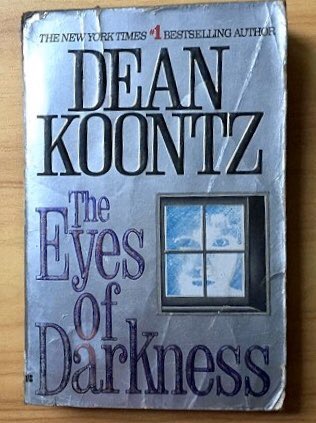
The Eyes of Darkness: Was it all predicted?

By Mitali Chakravarty

Title: The Eyes of Darkness

Author: Dean Koontz

Publisher: Pocket Books, USA, 1996

One of the passages from a thriller that has been  circulating the social media circles during COVID 19 is how the Wuhan virus was evolved in a lab in the United States with a  Chinese refugee’s help, one who had defected to US “carrying a diskette record of China’s most important and dangerous biological weapon in a decade.” The book, The Eyes of Darkness by Dean Koontz, is listed as a thriller, mystery, suspense and horror. It has been republished with a few changes in 1996, post-Glasnost and post-Tiananmen incident.

In the novel, the virus, called Wuhan 400, was said to have been developed in a lab in the outskirts of Wuhan. It “afflicted only human beings”. The fictitious virus had an incubation period of less than twenty-four hours. We are told, “It destroys part of the brain that controls the autonomic functions. The victim simply ceases to have a pulse, functioning organs, or any urge to breathe.” People died within a few hours of the infection.

The corona, luckily for mankind, does not affect the brain – only the lungs and most recover with mild flu-like symptoms and some have no symptoms at all.

The Wuhan 400 has been shown to be so infectious that one single panic-ridden, irresponsible, contaminated scientist infected a huge batch of boys and their teachers, who were on a trip that would teach the youngsters survival skills. Ironically, except for one child, the rest die. What gave the child the resilience to survive becomes the source of study for scientists in the middle of a deserted spot in Texas. The story revolves around how the child is rescued by his mother and her boyfriend who fly incognito all the way from Las Vegas to Reno and then into the wilds.

The book has a touch of the paranormal.  The author tells us in an ‘Afterword’: “The Eyes of Darkness was one of my early attempts to write cross- genre novel mixing action, suspense, romance, and a touch of the paranormal.” And the title is based on the paranormal activity. The paranormal activity is a little eerie and the descriptions are just frightening to the right degree.

The Eyes of Darkness had been revised in 1996 and republished. This is the version that is doing the rounds of the social media platforms. The earlier 1981 version was authored by Dan Koontz under the pen name of Leigh Nichols. In the 1981 version, the virus was called Gorki 400 virus and developed in Russia. This was before Mikhail Gorbachev used the terms perestroika(restructuring) and glasnost to indicate an openness in the Soviet Union which was its first step towards democratisation. Then in 1991, Boris Yeltsin moved towards a loose federation of Russian states. In 1989, the terrifying incident of Tiananmen Square killed thousands of innocent protestors.

In the 1996 edition, Dombey, a scientist in the facility which housed the research tell us , “The Russians… they’re now supposed to be our new friends, but they keep developing bacteriological weapons, new and more virulent strains of  viruses, because they are broke, and this is a lot cheaper than other weapons systems…” That the paranoid of weaponists and security experts obviously knows no bounds anywhere in the world is well borne out by the narrative. This has nothing of the conspiracy theories to wipe out the world. It is a thriller like a James Bond! It does not dwell on Machiavellian concepts quoted in Dan Brown’s thriller, Inferno:

“When every province of the world so teems with inhabitants that they can neither subsist where they are nor remove elsewhere, every region being equally crowded and over-peopled, and when human craft and wickedness have reached their highest pitch, it must needs come about that the world will purge herself in one or another of these three ways: floods, plague and famine”

Dan Brown has something similar in Inferno where the world is threatened by a conspiracy to decimate the population based on Machiavellian and Malthusian principles by a villain who is more colourful and dramatic than Koontz’s and weaves the story in the city of Florence.

The story of Inferno, located in Italy, is interesting and perhaps can be the subject of another review. I enjoy a Dan Brown thriller more because it is woven around history and philosophy.

The Eyes of Darkness is simpler lore — with shooting, bars, the glamorous world of casinos, racing from place to place, helicopter and fast car rides, homes getting blown up, strange paranormal activities that wreck a room and bomb blasts from which the protagonists escape. The villain is perhaps a little less colourful than Dan Brown’s or the Joker from Batman — but weird none the less. The plot is intriguing! Take a plunge and see — it is a good and easy read while you wait out the virulence of the real COVID 19! 

Mitali Chakravarty is a writer and the founding editor of borderlessjournal.com.

Categories
Musings

Notes from Myanmar: Humans versus Viruses

A reflection on Covid-19 virus outbreak by San Lin Tun

Deserted roads in Yangon

Birds are at ease, showing no worries, looking down at the helter-skelter of humans, struggling and striving to survive under this ruthless virus’ attack. Before that, birds caused flu and migratory birds could not be seen easily. That time, people hated birds; they stopped bird watching for the fear posed by the threat of bird flu. Birds migrated from one end of the world to another, crossing boundaries, as was their natural tendency. Now, the Covid-19 virus is traveling almost throughout the world.

We normally tend to look for experts to resolve emergencies or crisis. Why are the experts silent while human’s freedom has been attacked by the pandemic outbreak? Have humans transgressed the territories of the virus or their liberty? Or is it retaliation for human follies? People think that their lives are cosy and fine within the contexts of capitalism and democracy. They have, however, in their complacent existence, forgotten to think of emergencies like pandemics, the outbreak of anti-heroes and antithesis to blissful living.

Governments only set regulations to restrict human traffic and impose lockdowns on cities, poured funds to regain faltering economies after earlier crises. Now, people are at a loss and they do not know to whom they should turn to. They are realising they have to rely on themselves. They might wonder where their heroes are. They feel repentant for having done nothing, only things to destroy or to jeopardize world harmony, pouring budgets to manufacture hazardous equipment.

The outbreak of virus has restricted all-inclusive human activities, moving freely within the compass of the world and even posing a threat to human rights. We have been attacked by unknown and unseen enemies which are too small to see but powerful enough to cause a havoc in the whole human population. Scientists are now racing to search for the vaccines to combat its outbreak. What about other professions and creative industry? They should also join in fighting against this virus outbreak. Food, clothes and shelter are the three necessary things for humans daily needs. Maybe they can think of ways to provide these.

Professionals worldwide should form a think tank to come up with good and genuine ideas to combat this existing threat. There might be some ways to curb or contain the spread.

People-to-people contact carries virus which transmit person to person. In sci-fi movies or novels, we will find these alternatives and the creative minds will think up the following:

  1. Why not design virus repellent/protective outfits to wear when you go out?
  2. Why not create self- air purifying masks?
  3. Why not invent virus scanning goggles?
  4. Why not produce virus detecting devices?
  5. Why not manufacturing super-booster pills?
  6. Why not . . .?
  7. Why not . . .?
  8. . . .?

All these gadgets are only available in Sci-fi movies or fiction.  If we have those in real world, our lives would not have been disrupted to this level. All solutions tend to prevent virus containment in food, clothes and shelter. The blue planet belongs to the human race. Viruses have only one purpose that is to destroy. They cannot travel, only humans carry them.

Humans do not know the number of them. But they know they are lethal. So, people fear. Fear deters human intelligence to think or create properly, causing panic in people’s minds. Then, it will be hard to be in touch with witticisms under these trying circumstances where so many are petrified by the fear and horror of it.

They know that their liberty is disturbed, and they lose their freedom. Then, they are looking for the stable system to cope with their crises. They know that the only way to end this crisis is to get vaccines.

As for a miracle, men like to look for philosopher stones or magic wands to alter the circumstances and create a virus free world. You can say fantasies can ring a note of hope that will lighten anxious minds and bring a sense of cheer to the depressed. As we ponder realistically or miraculously, we will definitely find a solution to wage the counter-attack on viruses. And, the virus crisis will end.

San Lin Tun is a freelance writer of essays, poetry, short stories and novels from Myanmar and English. Sometimes, he draws cartoons for fun. His writings has appeared in Asia Literary Review, Kitaab, Mad in Asia Pacific, Mekong Review, NAW, PIX, Ponder Savant, South East of Now, Strukturriss and several others. He has authored ten books including ‘‘An English Writer’’. He lives in Yangon, Myanmar.

Disclaimer: The opinions expressed are solely that of the author and not of Borderless Journal.

Categories
Musings

Not our crowning glory

By Farouk Gulsara

Is it funny that every time Man thinks that he has it all figured out, Nature (or fate if you like to call it) just jolts him back to reality? Like Will E Coyote and his spanking new latest invention from ACME Corporation, it just falls flat and blows right on his face again and again, and Roadrunner always goes scot-free, scooting off yet again, screeching “beep..beeep!”

The latest viral scare of COVID-19 (Coronavirus Disease 2019) just opens up our vulnerability. All the so-called foolproof systems that we had installed are just scribblings on the sand – they cannot withstand the test of time. And they are so porous. We thought we had all the arsenal that could not only not annihilate our enemies but ourselves in the process too. All these are useless in combating our electron-microscopic size enemy. We are literally crippled by an unseen offending foe. All the King’s horses and the King’s men cannot put our peace of mind together at least for now. 

In the 1990s, our leaders were hellbent on embracing globalisation. They argued that we were heading to a borderless world where physical borders were an illusion. Commerce transcended boundaries, and we should welcome it with open arms. No one could live in isolation. Now, see what is happening. Countries are scurrying to close the borders as not only diseases spread like wildfire, refugees who bungled up their own nation are clawing through the immigration gates displaying their victim card. Many have opted for self-isolation to keep their people safe.

Over-dependence on particular countries for supplies and over-concentration of the supply chain from a specific region has not a smart move after all. It looks like when China sneezes, the whole world may get pneumonia.

The democratisation of flying made travelling no more an activity of the bourgeois. Now, everyone could fly. With it came secondary industries and opening of new regions and tourists attractions. Unfortunately, the concept of open skies also opened the Pandora box of international subversive activities and seamless flow of problems. At the time of writing the tagline of one of the most popular low-cost airlines have changed from ‘Everyone can Fly’ to ‘No one wants to Fly’ or ‘Nowhere to Fly’.

We thought the world wide web of interconnectivity was going to transform the world into a utopia of a knowledge-based society,  well-informed consumers and broad-thinking creative communities. How naive we were. What we have are fake news of questionable authenticity and a band of fist thumping keyboard warriors who type away their hate speeches under the cloak of anonymity without a thought of the effects of their actions. 

Generations before us grew up without any exchange of physical touch or public display of affection. In some societies, physical touch between unmarriageable kins was frowned upon. With open-mindedness, bodily contacts by handshakes, hugging and pecking became the norm. Come SARS, MERS-CoV and now COVID-19, and we are back to our traditional ways of salutations – bowing and placing of own palms together; fear of transmission of pathogens.

Just a thought…

The mighty Chinese armada used to travel to the four corners of the globe. They are said to have ‘discovered’ the Americas even before Columbus’ alternate route to India. But then everything stopped. The Ming Dynasty decided to opt for a closed-door policy of the world. Even the Japanese kingdoms underwent a similar transformation. Was the spread of disease the reason for this move?

(Nerd Alert: Corona is Latin for Crown. Corona also refers to the gaseous accumulation around the Sun (which looks like a crown enveloping the Sun), mainly around its equator. Did you know that there is a field of study dedicated to studying the Sun called Solar Science (Helioseismology)? The suffix ‘seismology’ is used here because Solar Scientists principally study it via the oscillations of sound waves (?Om –  etc.) that are continuously driven and damped by convection near the Sun’s surface. One of the puzzling thing about the Sun is that the Corona is hotter than the Sun surface by a factor of 150 to 400. The Corona can reach temperatures of 1 to 3 million Kelvin.)

Farouk Gulsara is a daytime healer and a writer by night. After developing his left side of his brain almost half his lifetime, this johnny-come-lately decides to stimulate his non-dominant part on his remaining half. An author of two non-fiction books, ‘Inside the twisted mind of Rifle Range Boy’ and ‘Real Lessons from Reel Life’, he writes regularly in his blog ‘Rifle Range Boy’.

Categories
Musings

A Planet of Missing Beauties – In Memoriam

By Tom Engelhardt

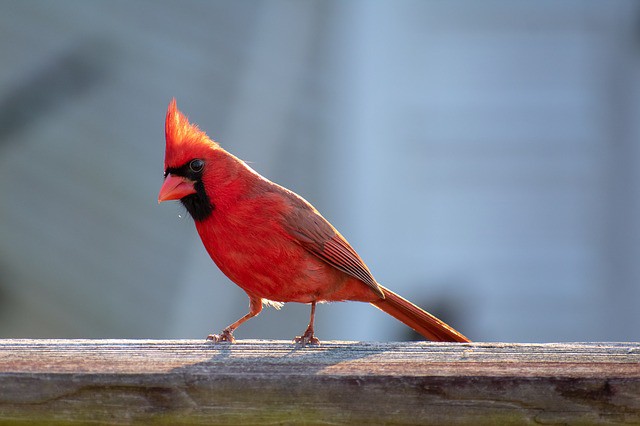
The other morning, walking at the edge of a local park, I caught sight of a beautiful red cardinal, the first bird I ever saw some 63 years ago.

Actually, to make that sentence accurate, I should probably have put either “first” or “ever saw” in quotation marks. After all, I was already 12 years old and, even as a city boy, I had seen plenty of birds. If nothing else, New York, where I grew up, is a city of pigeons (birds which, by the way, know nothing about “social distancing”).

Nonetheless, in a different sense, at age 12 I saw (was struck by, stunned by, awed by) that bright red bird. I was visiting a friend in Connecticut and, miraculously enough, though it was 1956, his parents had a bird identification book of some kind in their house. When I leafed through it, I came across the very bird I had seen, read about it, and on going home wrote a tiny essay about the experience for my sixth grade teacher, Mrs. Casey (one of those inspirational figures you never forget, just as I’ll never forget that bird). I still have what I wrote stuffed away amid ancient papers somewhere in the top of my bedroom closet.

Six decades later, in this grim coronavirus March of 2020, with my city essentially in lockdown and myself in something like self-isolation, I have to admit that I feel a little embarrassed writing about that bird. In fact, I feel as if I should apologize for doing so. After all, who can doubt that we’re now in a Covid-19 world from hell, in a country being run (into the ground) by the president from hell, on the planet that he and his cronies are remarkably intent on burning to hell.

It was no mistake, for instance, that, when Donald Trump finally turned his mind to the coming pandemic (rather than denying it) as the economy he had been bragging about for the previous three years began to crash, one of the first groups he genuinely worried about didn’t include you or me or even his base. It was America’s fossil-fuel industry. As global transportation ground down amid coronavirus panic and a wild oil price war between the Saudis and the Russians, those companies were being clobbered.  And so he quickly reached out to them with both empathy and money — promising to buy tons of extra crude oil for the nation’s strategic petroleum reserve (“We’re going to fill it right to the top”) — unavailable to so many other endangered Americans.  At that moment he made it perfectly clear that, in an unfolding crisis of the first order, all of us remain in a world run by arsonists led by the president of the United States.

So, a cardinal? Really? That’s what I want to focus on in a world which, as it grows hotter by the year, will only be ever more susceptible to pandemics, not to speak of staggering firesfloodingextreme storms, and god knows what else. Honestly, given a country of closed schools, self-isolating adults, and the sick and the dying, ona planet that seems to be cracking open, in a country which, until recently, couldn’t test as many people for Covid-19 in a couple of months as South Korea could in — yes, this is not a misprint — a day, where’s my sense of proportion?

A Secret Life

Still, if you can, bear with me for a moment, I think there’s a connection, even if anything but obvious, between our troubled world and that flaming bird I first saw so long ago. Let me start this way: believe it or not, birds were undoubtedly the greatest secret of my teenage years.

On spring weekends, my best friend and I would regularly head for Central Park, that magnificent patch of green at the center of Manhattan Island. That was the moment when the spectacular annual bird migration would be at its height and the park one of the few obvious places in a vast urban landscape for birds to alight. Sharing his uncle’s clunky old binoculars, my friend and I would wander alone there (having told no one, including our families, what we were doing).

We were on the lookout for exotic birds of every sort on their journeys north. Of course, for us then they were almost all exotic. There were brilliant scarlet tanagers with glossy black wings, chestnut-and-black orchard orioles (birds I wouldn’t see again for decades), as well as the more common, even more vivid Baltimore orioles.  And of course there were all the warblers, those tiny, flitting, singing creatures of just about every color and design: American redstarts, blackburnians, black-and-whites, black-throated blues, blue-wingeds, chestnut-sideds, common yellowthroats, magnolias, prairies, palms, yellows.

And here was the secret key to our secret pastime: the old birders. Mind you, when I say “old,” I mean perhaps my age now or even significantly younger. They would, for instance, be sitting on benches by Belvedere Castle overlooking Belvedere Lake (in reality, a pond), watching those very birds. They were remarkably patient, not to say amused (or perhaps amazed) by the two teenaged boys so eager to watch with them and learn from them. They were generous with their binoculars, quick to identify birds we otherwise would never have known or perhaps even noticed, and happy to offer lessons from their bird books (and their own years of experience).

And, for me at least, those birds were indeed a wonder. They were genuine beauties of this planet and in some odd way my friend and I grasped that deeply. In fact, ever since we’ve grown up — though this year may prove to be the self-isolating exception — we’ve always tried to meet again in that park as May began for one more look at, one more moment immersed in, the deep and moving winged beauty of this planet of ours.

Of course, in the 1950s, all of this was our deepest secret for the most obvious of reasons (at least then). If you were a boy and admitted that you actually wanted to look at birds — I’m not sure the phrase “bird watch” was even in use at the time — god knows what your peers would have said about you. They would — we had no doubt of this — have simply drummed us out of the corps of boys. (That any of them might then have had their own set of secret fascinations would never, of course, have crossed our minds.) All you have to do to conjure up the mood of that moment is to imagine our president back then and the kind of mockery to which he would certainly have subjected boys who looked at birds!

Now, so many decades later, in another America in which the coronavirus has already reached pandemic proportions (potentially threatening staggering losses, especially among old folks like me), in which the stock market is already tanking, in which a great recession-cum-depression could be on the horizon, and our future FDR — that is, the president who helped us out of the last Great Depression in the 1930s — could an over-the-hill 77-year-old former vice president, it seems odd indeed to write about beautiful birds from another earthly moment. But maybe that’s the point.

Fini?

Think about it this way: as last year ended, Science magazine reported that, in North America, there were three billion fewer birds than in 1970; in other words, almost one out of every three birds on this continent is now gone. As Carl Zimmer of the New York Times put it, “The skies are emptying out.” Among them, warblers have taken one of the heaviest hits — there are an estimated 617 million fewer of them — as well as birds more generally that migrate up the East Coast (and so have a shot at landing in Central Park). Many are the causes, including habitat loss, pesticides, and even feral cats, but climate change is undoubtedly a factor as well. The authors of the Audubon Society’s most recent national report, for instance, suggest that, “if Earth continues to warm according to current trends — rising 3 degrees Celsius (5.4 degrees Fahrenheit) by 2100 — more than two-thirds of North America’s bird species will be vulnerable to extinction due to range loss.”

Extinction. Take that word in. They’ll be gone. No more. Fini.

That, by the way, is a global, not just a North American, reality, and such apocalyptic possibilities are hardly restricted to birds. Insects, for instance, are experiencing their own Armageddon and while — monarch butterflies (down 90% in the U.S. in the last 20 years) aside — we humans don’t tend to think of them as beauties, they are, among other things, key pollinators and crucial to food chains everywhere.

Or think about it this way: on Monday, March 8th, in my hometown, New York City, it was 68 degrees and that was nothing. After all, on February 19th, in Central Park, the temperature had hit a record-breaking 78 degrees in the heart of winter, not just the highest for that day on record but for the month of February, historically speaking.  At the time, we were passing through a “winter” in which essentially no snow had fallen. And that should have surprised no one. After all, January had started the year with a bang globally as the hottest January on record, which again should have surprised no one, since the last five years have been the warmest ever recorded on this planet (ditto the last 10 years and 19 of the last 20 years). Oh, and 2020 already has a 50% chance of being the warmest year yet.

And by the way, soon after that 68-degree day, in our parks I began to notice the first crocuses and daffodils pushing through the soil and blooming. It was little short of remarkable and, in truth, would all have been beautiful, not to say glorious — the weather, the flowers, the sense of ease and comfort, the springiness of everything — if you didn’t know just what such “beauty” actually meant on a planet potentially heating to pandemic proportions.

How sad when even what’s still truly beautiful on this globe of ours increasingly tells a story that couldn’t be grimmer. So, think of this as my in-memoriam essay about the planet I thought I grew up on and the birds I thought I knew. Consider it a kind of epitaph-in-advance for a world that, if the rest of us can’t get ourselves together, if we can’t rid ourselves of arsonists like Donald Trump and his crew or those fossil-fueled CEOs that he loves so much, may all-too-soon seem unrecognizable.

In the meantime, consider me — semi-locked in my apartment — to be, in my own fashion, in mourning. Not for myself, mind you, though I’m almost 76 and my years on this planet are bound to be limited, but for those I’ll be leaving behind, my children and grandchildren in particular. This just wasn’t the world I ever wanted them to inherit.

In truth, in this coronaviral moment of ours, our world is being transformed before our eyes into one of missing beauties. Given my teenage years, I want to leave my grandchildren the pleasure of entering Central Park in some distant May, long after I’m gone, and still seeing the brilliant colors of a scarlet tanager. That’s my hope, despite everything.

Tom Engelhardt is a co-founder of the American Empire Project and the author of a history of the Cold War, The End of Victory Culture. He runs TomDispatch.com and is a fellow of the Type Media Center. His sixth and latest book is A Nation Unmade by War.

Follow TomDispatch on Twitter and join us on Facebook. Check out the newest Dispatch Books, John Feffer’s new dystopian novel (the second in the Splinterlands series) Frostlands, Beverly Gologorsky’s novel Every Body Has a Story, and Tom Engelhardt’s A Nation Unmade by War, as well as Alfred McCoy’s In the Shadows of the American Century: The Rise and Decline of U.S. Global Power and John Dower’s The Violent American Century: War and Terror Since World War II.

First Published in Countercurrents.org

Categories
Musings

The Dawning of a New Era

By Mitali Chakravarty

More than a century ago Tagore wrote a song:

Kothao amar hariye java nei mana, mone, mone

Translated it stands, I can get lost anywhere within the infinite of my mind (imagination).

Time has come that we put his suggestion to test.

Though we are all torn by the isolation that battling COVID-19 demands, we still have a huge thing which we did not in the past, a thing that helps us all connect — the internet. While the educated stay connected, using social media and email, there will be many under isolation who will not have the skill sets to reach out, either due to lack of internet or due to the inability to write. There are countries like Singapore, where this is not an issue — but there is still a large population out there who cannot connect, who will be told by their community leaders that they need to remain isolated. Will that be a possibility? What about the homeless? What about those who do not have a clean potable water supply? What happens to them?

One thing that the tiny virus, which we cannot see with our naked eyes, has taught us is that mankind in its suffering cannot be bordered by economic, religious, cultural or political boundaries. As we all stand, in isolation, willing or unwilling to take up cudgels against a virus that has forced us to disturb, break and destroy the tenor of our lives, perhaps the time has come to assess our blessings.

Today, the fact that you are reading this means you are connecting with the internet and can read. You are connecting with my ideas, with my thoughts. We belong to the privileged few who can soar with internet and our imaginations. We have a home and hearth. We are educated and have enough to eat. We can afford to be kind and merciful to others.

The factory smoke has largely got silenced — even if temporarily. That means the air is getting cleaner. I can see more birds fly in the sky, bluer skies and hear bird calls. Perhaps, the Earth will stretch out in languor and awake from COVID19, a healthier and greener planet.

As I see the visa exempt, borderless virus roam the world, I am reminded of  Sir Arthur Conan Doyle’s novel, The Poison Belt (1913), where the whole of mankind loses a day as our planet passes through Ether, and then wakes up as the Earth emerges out of the sleep inducing belt of the ‘poisonous’ gas. Will such a thing happen? Will we wake up and see the corona disappear one day?

Probably not, given that we have already diagnosed the virus. But, when you think of it, mankind has been through so many pandemics and has continued to thrive.

Perhaps, the tiny virus has taken on more than it can digest. Each time, mankind emerged a winner, they had a better life. After the Great Plague that wracked Europe from 1348-1350, came a jubilant Renaissance with Leonardo Da Vinci, Botticelli, Michelangelo, Christopher Columbus and Galileo Galilei celebrating the wealth of human development.

Then there was small pox, which was introduced among Native Indians and Mexicans in the fifteenth century by Conquistadors, and was completely eradicated after two centuries; cholera, which continues to assail some countries and many more such diseases. Mankind battled these and emerged victor into a better equipped world.  

This time, the pandemic is more widespread because we are living in a more connected planet. Is that such a bad thing? We do not really want to live like the hermaphrodite humans in Isaac Asimov’s Solaria, where mankind is served by robots alone on a solitary planet and they never meet other humans. But a temporary and intelligent isolation can teach the little virus that for all its virulence, it cannot destroy mankind. This is just a temporary measure, a temporary gesture to help mankind move into a better world. We will have to reorganise our way of life, our tenor of existence. Given the climate, economic and political issues our planet faces, this may not be such a bad thing!

After all, twentieth century guru, Yuval Noah Harari in his recent article in Financial Times, concludes: “Humanity needs to make a choice. Will we travel down the route of disunity, or will we adopt the path of global solidarity? If we choose disunity, this will not only prolong the crisis, but will probably result in even worse catastrophes in the future. If we choose global solidarity, it will be a victory not only against the coronavirus, but against all future epidemics and crises that might assail humankind in the 21st century.”

And I would like to agree with Harari as he says with conviction: “Yes, the storm will pass, humankind will survive, most of us will still be alive — but we will inhabit a different world.”

Let us look forward to the dawning of that new world.

Mitali Chakravarty is a writer and the founding editor of borderlessjournal.com.