Categories
Review

‘A Story of Moral Contradictions and Human Cost’

Book Review by Bhaskar Parichha
Title: India in the Second World War: An Emotional History

Author: Diya Gupta

Publisher: Rupa Publications

When we think of the Second World War, the images that most often come to mind are those of Europe’s ruin — the Blitz in London, the camps in Poland, the victory parades in Paris. India, though one of the largest contributors of men and material to the Allied cause, usually slips to the margins of that global story.

Diya Gupta’s India in the Second World War: An Emotional History sets out to correct that imbalance — and does so not by recounting battles or strategies, but by uncovering the feelings, memories, and private sufferings that shaped India’s wartime experience.

In this groundbreaking work, Gupta turns away from generals and governments to listen instead to soldiers, families, poets, and activists. Through letters, diaries, photographs, memoirs, and literary texts in both English and Bengali, she reconstructs the emotional life of a country caught in the contradictions of fighting for freedom while serving an empire. Her book is as much about the inner weather of a people at war as it is about history itself.

The story begins with the strange binary of India’s position in the 1940s. The British declared India a participant in the war without consulting its leaders. While nationalist politics in the country were reaching their boiling point, over two million Indian men were dispatched to fight on foreign fronts — from North Africa to Burma — under the Union Jack. They fought for a cause that was not their own, for a government that denied them liberty.

Gupta’s focus on emotion allows her to expose this moral paradox with nuance. The letters of sepoys from the Middle East reveal homesickness, confusion, and occasional pride; families back home are haunted by anxiety, caught between imperial propaganda and the whisper of rebellion. The result is a portrait of divided loyalties — of men and women who inhabited both the empire’s war and the nationalist struggle at once.

But it was the Bengal Famine of 1943 that made the war’s cost most brutally visible. Triggered by colonial economic mismanagement and wartime policies, it claimed nearly three million lives. Gupta’s chapter, ‘Every Day I Witness Nightmares’, captures this catastrophe through eyewitness accounts and literature that tried to make sense of it. Hunger, she suggests, became not only a physical condition but an emotional state — an emblem of the moral starvation of empire.

In poems and essays by writers such as Sukanta Bhattacharya and Mulk Raj Anand, the famine appears as a mirror held up to civilisation’s collapse. Tagore’s haunting late work, ‘Crisis in Civilisation’, forms a central thread in Gupta’s narrative — the poet’s disillusionment with humanity, his grief at the world’s descent into barbarism, and his call for renewal through compassion.

One of Gupta’s greatest achievements lies in her ability to braid together the intimate and the historical. The war years, she shows, were also years of reflection and redefinition. In the chapter named ‘The Thing That Was Lost’, she explores how the idea of “home” was transformed by displacement — whether through the departure of men to distant fronts or through the forced migrations caused by famine and air raids. Home, once a site of safety, became a space of longing and loss.

Another chapter, ‘Close to Me as My Very Own Brother”, turns the spotlight on male friendships in Indian war writing. Here, Gupta uncovers the tenderness that often underpinned comradeship — relationships that blurred the lines between duty and affection, and that offered emotional sustenance amid violence and uncertainty. In these pages, she challenges the stereotypes of stoic masculinity, showing that vulnerability and empathy were also part of the soldier’s story.

While the battlefield has long been the focus of war history, Gupta gives equal weight to those who remained behind. The women who waited, worked, and wrote — often in silence — emerge as witnesses in their own right.

Activists such as Tara Ali Baig, nurses and doctors on the Burma front, and countless unnamed mothers and wives populate the emotional landscape she paints. Through their letters and memoirs, we see how war invaded domestic spaces, transforming everyday life into a theatre of endurance.

Gupta writes of “anguished hearts” not as metaphor but as historical evidence. The fear of air raids, the sight of hungry children, the absence of loved ones — these, too, were the realities of India’s war. By restoring emotion to the historical record, she argues that feelings are not soft data but vital clues to understanding how societies survive crisis.

What makes the book so compelling is its insistence on looking at the global war from the Indian perspective. For Britain, the war was a fight for democracy and civilisation; for India, it was also a confrontation with the hypocrisy of those ideals. As Gupta notes, the same empire that called for liberty in Europe jailed Gandhi and suppressed the Quit India movement at home.

Seen from Calcutta rather than London, the war ceases to be a heroic narrative of Allied victory and becomes instead a story of moral contradictions and human cost. Gupta’s intervention is both historiographical and ethical: she reminds us that global history must include the emotions of those who bore its burdens without sharing in its glory.

A historian with literary sensibility, Gupta writes with precision, empathy, and grace. Her prose balances academic rigour with narrative warmth, allowing the reader to move effortlessly between archival fragments and the larger questions they evoke. Each chapter unfolds like a story, yet the cumulative effect is that of a symphony — voices rising and blending, carrying echoes of pain, pride, and endurance.

Gupta’s work has been widely celebrated for its originality and emotional depth. Shortlisted for the 2024 Gladstone Book Prize, it has drawn praise from scholars and critics alike for its fresh approach to war history. What distinguishes her study is not only its range of sources but its refusal to treat emotion as peripheral. For Gupta, feelings are the connective tissue of history — the invisible threads binding individuals to events, memory to nationhood.

The book is  more than the  war. It is about the human capacity to feel in times of fracture — to love, mourn, and imagine even amid devastation. It shows that the emotional life of a people can illuminate their political choices, their artistic expressions, and their vision of freedom.

By reassembling scattered memories and forgotten emotions, Diya Gupta offers a new way of reading both India and the world in the 1940s. Her India is not a passive colony swept along by imperial tides, but a living, feeling community navigating grief and hope in equal measure. The war, as she reminds us, did not just redraw maps; it reshaped minds and hearts.

In giving voice to those who seldom found one in history books — the sepoy writing from the desert, the poet confronting famine, the mother waiting for news — Gupta transforms statistics into stories, and stories into testimony. Her book stands as a reminder that history is not only written in treaties or timelines but in tears, silences, and the fragile language of feeling.

It ensures that those emotional histories, too long buried under the dust of archives, are heard again — quietly, insistently, and with the full weight of their truth.

.

Bhaskar Parichha is a journalist and author of Cyclones in Odisha: Landfall, Wreckage and ResilienceUnbiasedNo Strings Attached: Writings on Odisha and Biju Patnaik – A Political Biography. He lives in Bhubaneswar and writes bilingually. Besides writing for newspapers, he also reviews books on various media platforms.

PLEASE NOTE: ARTICLES CAN ONLY BE REPRODUCED IN OTHER SITES WITH DUE ACKNOWLEDGEMENT TO BORDERLESS JOURNAL

Click here to access the Borderless anthology, Monalisa No Longer Smiles

Click here to access Monalisa No Longer Smiles on Amazon International

Categories
Review

The Story of an Indigenous Medical System

Book Review with Bhaskar Parichha

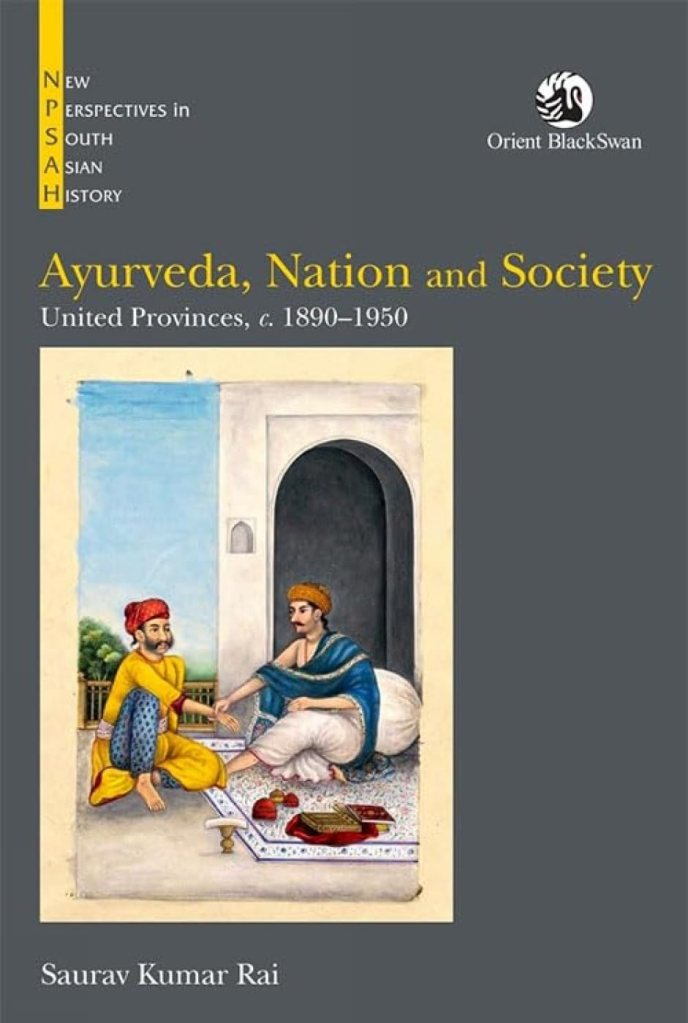
Title: Ayurveda, Nation and Society: United Provinces, c. 1890–1950

Author: Saurav Kumar Rai

Publisher: Orient Blackswan

The ayurvedic revivalist movement significantly influenced medical nationalism in the United Provinces[1] during the late 19th and early 20th centuries. This period saw a concerted effort to re-establish ayurveda as a legitimate and valuable medical system in the face of colonial dominance and the growing influence of Western medicine

 The revival of ayurveda was intertwined with the broader nationalist movement in India. Proponents of this school sought to assert an indigenous identity, positioning ayurveda as a symbol of cultural pride and resistance against colonial rule. This was particularly important as the demand for swaraj (self-rule) intensified, necessitating a projection of India as a modern and scientifically progressive nation.

The formation of groups like the All India Ayurvedic Congress in 1907 created an opportunity for the practitioners to come together, exchange insights, and push for the acknowledgment of their stream in the broader national conversation. These meetings encouraged dialogue on blending ayurvedic and wHindu

estern medical approaches, positioning the indigenous school as a legitimate alternative to the colonial healthcare systems.

In a way, the proliferation of ayurvedic literature in various languages during this period helped democratise access to its content. This literature aimed to transform ayurveda from a specialised knowledge system into a shared cultural heritage, reinforcing its relevance in contemporary society. The revivalist discourse often emphasised the scientific basis of ayurveda, thereby aligning it with modernity and progress.

Fascinatingly, the ayurvedic revivalists critiqued colonial medical practices, often blaming external factors, particularly the ‘Other’, for health crises affecting the Hindu population. This narrative not only served to unify the community around ayurveda but also reinforced a sense of collective identity against colonial narratives that marginalised indigenous practices.

Also, the movement led to the commercialisation of ayurvedic medicine, with an increase in its products and practitioners. This economic aspect played a crucial role in embedding ayurveda within the social fabric of the United Provinces, making it a part of everyday life and health practices

It is in this backdrop that this book holds significance.  Ayurveda, Nation and Society: United Provinces, c. 1890–195o by Saurav Kumar Rai explores the historical and socio-political dimensions of ayurveda during a transformative period in India.  It is part of the New Perspectives in South Asian History series by Orient Blackswan. Saurav Kumar Rai is Research Officer, at Gandhi Smriti and Darshan Samiti, New Delhi.

Says the blurb: “Ayurveda enjoys a growing global appeal, and is often touted as ‘true’ and ‘time-tested’ by contemporary political actors, governments, social groups, practitioners and NGOs in India. With ‘indigenous’ healing systems enjoying increasing state support today, an examination of the socio-political aspects of medicine, in particular Ayurveda, and its role in nation-building is critically important. Ayurveda, Nation and Society, the latest in Orient Blackswan’s ‘New Perspectives in South Asian History’ series, captures the late nineteenth and early twentieth century growth of ‘medical nationalism’ through the Ayurvedic revivalist movement in the United Provinces, and observes the ensuing change and continuity in the attitude towards ‘indigenous’ medicine in independent India.”

This study investigates the emergence of medical nationalism as reflected in the ayurvedic revivalist movement within the United Provinces, focusing on its role in the nation-building process. It offers a critique of the social dynamics of the era, drawing attention to the caste, communal, class, and gender biases that permeated ayurvedic discussions. The author contends that advocates of ayurveda played a significant role in the reconstruction of both tradition and society, frequently attributing health crises affecting the Hindu male demographic to external ‘Others.’

The book contextualises ayurveda as an indigenous medical system, delving into its complexities during the late 19th and early 20th centuries. It examines the involvement of the Indian National Congress in the ayurvedic movement, illustrating how political groups harnessed this school of medicine to foster national identity. The author further explores the influence of print media and organisational initiatives in shaping ayurvedic discourse and rallying societal support. Additionally, the commercialisation of ayurveda is analysed through its print and pharmaceutical markets, investigating the impact of economic factors on health practices. The narrative also encompasses the period surrounding India’s independence, evaluating the evolution of ayurvedic practices during this pivotal transition.

This book stands out as an important resource for those looking to deepen their knowledge of health and medicine during colonial India, attracting both scholars and general readers who are curious about the development of ayurveda and its relevance today.

[1] Present day Uttar Pradesh and Uttarakhand in India was called United Province during this period

Bhaskar Parichha is a journalist and author of UnbiasedNo Strings Attached: Writings on Odisha and Biju Patnaik – A Political Biography. He lives in Bhubaneswar and writes bilingually. Besides writing for newspapers, he also reviews books on various media platforms.

PLEASE NOTE: ARTICLES CAN ONLY BE REPRODUCED IN OTHER SITES WITH DUE ACKNOWLEDGEMENT TO BORDERLESS JOURNAL

Click here to access the Borderless anthology, Monalisa No Longer Smiles

Click here to access Monalisa No Longer Smiles on Amazon International
Categories
Review

Fixing a Fractured World

Book Review by Bhaskar Parichha

Title: Permacrisis: A Plan to Fix a Fractured World 

Authors: Gordon Brown, Mohamed El-Erian, Michael Spence, Reid Lidow 

Publisher: Simon & Schuster UK

A nation or region’s success depends on three things: growth, economic management, and governance. The three dimensions are interconnected and affect each other. Growing an economy is a fundamental part of economic development. Factors like productivity, technological innovation, and sector expansion are all part of it. Infrastructure, education, and research and development are key to sustainable growth. Strong growth can create jobs, raise incomes, and improve living standards.

Governments and institutions take policies and decisions to maintain the economy’s stability and effectiveness. Setting fiscal policies, regulating financial markets, and overseeing trade and investment are tasks involved. The goal of effective economic management is to promote stability, increase competitiveness, and grow the economy. For macroeconomic stability and progress, it takes inflation, budget deficits, and exchange rates into account.

Countries and regions are governed by rules and structures. It includes political institutions, legal systems, and decision-making processes. By promoting transparency, accountability, and participation, sound governance ensures power is exercised fairly and justly. Decisions are made keeping in view society’s most beneficial interests, and citizens’ rights are protected. Maintaining stability, attracting investment, and promoting economic development requires strong governance.

Growth, economic management, and governance reinforce each other. Sustainable economic growth requires effective economic management, ensuring resources are allocated efficiently and policies support it. Effective governance promotes stability and attracts foreign investment through efficient economic management. A well-functioning governance system ensures that economic growth benefits are distributed equitably. After the recent pandemic, economists are worried about a prolonged crisis. Could we be experiencing a permacrisis? It is likely that the current state of the world will lead to anxiety, and that is what this book tells us in splendid detail.

Permacrisis: A Plan to Fix a Fractured World by Gordon Brown, Reid Low, Mohamed A. El-Erian and Michael Spence looks at the economic downturn the world is struggling through right now.

After holding the office of Chancellor of the Exchequer for over a decade, Gordon Brown became Prime Minister. During the 2009 London G20 summit, he mobilised global leaders to walk the world back from the brink of a second Great Depression. He is currently serving as the UN Special Envoy for Global Education, spearheading efforts to ensure quality, inclusive education for all children. He is also a Global Health Finance Ambassador for the World Health Organization. Brown holds a PhD in history from Edinburgh University.

Mohamed A. El-Erian is President of Queens’ College Cambridge. As Chief Economic Advisor at Allianz, he formerly served as Co-Chief Investment Officer and Chief Executive of PIMCO. Besides columnising for Bloomberg Opinion, he’s also a Financial Times contributor. He is a Senior Global Fellow at the Lauder Institute and Rene M. Kern Practice Professor at Wharton School. Before joining Harvard Management Company, he was a managing director at Solomon Smith Barney/Citigroup. His books When Markets Collide and The Only Game in Town were New York Times bestsellers.


Michael Spence is Emeritus Professor of Management at Stanford University. He is a Senior Fellow at Stanford’s Hoover Institution, and a Council on Foreign Relations Distinguished Visiting Fellow. He is an adjunct professor at Bocconi University and an honorary fellow at Magdalen College. He authored The Future of Economic Growth in a Multispeed World. He was Dean of the Stanford Business School from 1990 to 1999, and Dean of the Harvard Faculty of Arts and Sciences from 1984 to 1990. His awards include the John Kenneth Galbraith Prize for teaching excellence and the John Bates Clark Medal. He won the Nobel Prize in Economic Sciences for his work in information economics in 2001.

Reid Lidow served as Los Angeles Mayor’s Executive Officer. Reid worked on Gordon Brown’s campaigns before. During his undergraduate studies at USC, Reid double majored in International Relations and Political Science. He received a Gates Cambridge Scholarship and an MPhil in Development Studies from Queens’ College, Cambridge. 

As some of the most highly respected and experienced thinkers of our time, these friends found that their pandemic zooms increasingly focused on a cascade of crises: sputtering growth, surging inflation, poor policy responses, an escalating climate emergency, increasing inequality, a rise in nationalism, and a decline in international cooperation. They shared their fears and frustrations with each other. The more they talked, the more they realised that, despite past mistakes that set the world on this bumpy path, there is a better path to a brighter future. Their varied perspectives contributed to their pursuit of a common goal: attainable solutions to the world’s fractures. Those thoughts are reflected in this book.

According to the authors, our current permacrisis is a result of broken approaches to growth, economic management, and governance. Even though these approaches are flawed, they can be repaired. A provocative, inspiring plan to change the world is the need of the hour. The book illustrates how we can prevent crises and improve the future for the benefit of the many and the few. According to the book, problems that remain unresolved for a prolonged period of time will only worsen; this is what happens in a permacrisis, which is why we must act quickly.

This instructive book provides a sensible plan of reform that can be used to create a world that is fairer and more equitable.

.

Bhaskar Parichha is a journalist and author of UnbiasedNo Strings Attached: Writings on Odisha and Biju Patnaik – A Political Biography. He lives in Bhubaneswar and writes bilingually. Besides writing for newspapers, he also reviews books on various media platforms.

.

PLEASE NOTE: ARTICLES CAN ONLY BE REPRODUCED IN OTHER SITES WITH DUE ACKNOWLEDGEMENT TO BORDERLESS JOURNAL

Click here to access the Borderless anthology, Monalisa No Longer Smiles

Click here to access Monalisa No Longer Smiles on Kindle Amazon International

Categories
Review

The Story of an Incredible ‘Lightman’

Book Review by Bhaskar Parichha

Title: The Wizard of Festival Lighting – The Incredible Story of Srid

Author: Samragngi Roy

Publisher: Speaking Tiger Books

There are two things that make this book interesting. Firstly, it is the story of a man who decorated lights during festivals and got worldwide fame for what he did. Secondly, the author of the biography is a young writer. The Wizard of Festival Lighting: The Incredible Story of Srid is written by the protagonist’s granddaughter, Samragngi Roy, who published her debut novel, a young adult fiction in 2017.

Nevertheless, what makes this book stand out most is its unconventional theme. History is presented innovatively in this 352-page book, and folklore is at the center. Just like Durga puja can’t be mentioned without Kolkata, Jagatdhatri puja can’t be mentioned without lighting. This isn’t just West Bengal’s festival history, but India’s. Here’s how one man conquered the world through his vision. Documents like this are historical.

The blurb reads: “Eleven year old Sridhar was fascinated by light. Growing up among a dozen siblings in a mud cottage in Chandannagar in West Bengal, he longed to create something beautiful. A school dropout who never studied beyond Class Eight, he taught himself about lights and electricity by doing odd jobs at an electrician’s shop—an act that earned him a severe beating from his father. In spite of his family’s opposition, he grew up to become a celebrated light artist and inventor, setting new standards for festival lighting and pioneering new techniques.”

Recalls Sridhar “In 1968, when I was hired by the Bidyalankar Puja Committee for the purpose of providing street lighting, I had volunteered to additionally decorate the banks of our old pond too for three primary reasons. Number one, I had grown up next to it. Number two, it had been the source of some of our most sumptuous meals in childhood. And number three, it had been the setting for several of my childish shenanigans.

“However, when the lights glowed around the pond after sundown, the space enclosed by the banks of the pond looked extremely empty. But of course, I couldn’t have done anything about it because the enclosed space contained nothing but neck-deep water. That’s when I first contemplated the possibility of making lights glow under water and laughed at myself for being so impractical.”

The narrative continues: “So, I closed my eyes, muttered a quick prayer and used my stick to smash a glowing lamp. Then I waited for the impact. There was none that I could feel. My muscles, which had been tense and stiff all along, slowly relaxed. Parashuram and I looked at each other, and my gentle nod was met with a happy little jig that he performed on the steps of the ghat, bursting with excitement. But then the idea stuck with me for a while and what had seemed impossible in the evening had started to seem like an idea worth giving a shot by the night. I wasn’t even sure if the idea was feasible since it was unprecedented.”

Sridhar Das’s work received great acclaim throughout the world. His work has been exhibited in the Festival of India in Russia, Ireland, Los Angeles and Malaysia. The cover of the book is based on his exhibit in the Thames Festival in London — his famous illuminated peacock boat in three dimensions.

As a result of his fame and commitment to work, Sridhar, along with those closest to him, suffered from a variety of issues. His wife had to combat illness and loneliness to care for the family, leaving her husband free to forge his own path. His daughter grew up with her famous father largely absent. The telling encapsulates the true story of his meteoric rise, as well as his family with an unflinching exploration of what his meteoric rise cost him. 

The story, poignantly related by his granddaughter, is both a subtle portrait of a complex individual and an affectionate tribute to a grandfather loved by his grandchildren. It takes readers back to vanished times, and introduces them to a man who pursued his dreams and created his own field through sheer determination. 

.

Bhaskar Parichha is a journalist and author of UnbiasedNo Strings Attached: Writings on Odisha and Biju Patnaik – A Political Biography. He lives in Bhubaneswar and writes bilingually. Besides writing for newspapers, he also reviews books on various media platforms.

.

PLEASE NOTE: ARTICLES CAN ONLY BE REPRODUCED IN OTHER SITES WITH DUE ACKNOWLEDGEMENT TO BORDERLESS JOURNAL

Click here to access the Borderless anthology, Monalisa No Longer Smiles

Click here to access Monalisa No Longer Smiles on Kindle Amazon International

Categories
Review

Resisting ‘Death from Overwork’

Book review by Bhaskar Parichha

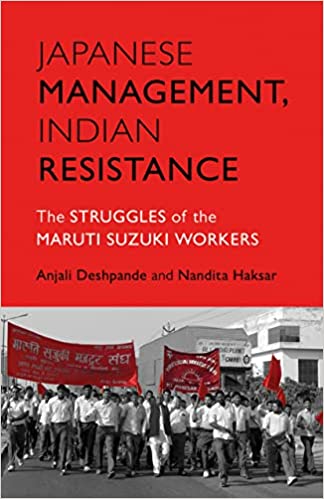
Title: Japanese Management, Indian Resistance: The Struggles of the Maruti Suzuki Workers 

 Author: Anjali Deshpande / Nandita Haksar

Publisher: Speaking Tiger Books

A fire broke out around 7 pm on 18 July 2012 at Maruti Suzuki India’s manufacturing plant in Manesar (Haryana). It claimed a manager’s life. The workers have been in the public eye since. Basically, worker-management tension snowballed into a major fracas that day — a fire broke out in the plant. The manager, Awanish Dev, was suffocated to death. Workers were held responsible.

Within days, over two thousand temporary workers and 546 permanent workers were dismissed by the company. Thirteen of them— including the entire workers’ union leadership-were later charged for murder, ending yet another independent body for collective bargaining.

Japanese Management, Indian Resistance: The Struggles of the Maruti Suzuki Workers by Anjali Deshpande and Nandita Haksar tells the story of the biggest car manufacturer in India through the voices of the workers, interviewed over three years. They give us an understanding that the Maruti Suzuki revolution wasn’t the unmitigated success it was touted to be when they tell us about their resistance to being turned into robots by uncompromising management. It becomes abundantly clear that the Maruti Suzuki revolution was not what was expected. It is a fascinating account of what happened behind the scenes, particularly what happened both in the beginning and during the ensuing years. A closer look at the facts would cast doubt on the anti-worker judgment. 

Anjali Deshpande is a journalist and activist. She has participated in many campaigns and movements including the women’s movement and the Bhopal gas tragedy survivors’ struggle for justice. She is also a novelist and writes in Hindi. Nandita Haksar is a human rights lawyer, teacher and campaigner. She represents contract workers and trade unions in the Supreme Court. She writes extensively and has published several books, including on the trade union movement in Kashmir and migrant workers from the Northeast. 

Says the blurb: “Unions are the last, and often only, line of defence workers have in modern industries, especially when the management isn’t averse to undermining their rights, dignity and health in pursuit of higher profits. This was true of Maruti Suzuki. Workers would get a seven-and-a-half-minute break from physically demanding work—precise to the hundredth of a second—to run to the toilet half a kilometre away and force a samosa and piping hot tea down their throats. But they were denied two minutes of silence in the memory of a deceased colleague’s mother.”

The sabotage of their unionising efforts, generally in collusion with the Haryana state government, came as no surprise to the workers. Yet they struggled through and managed to form successive representative bodies at both the Gurgaon plant, and the one set up in Manesar in 2007. But not only were they crushed, some were never officially registered. The often misrepresented events of July 2012 were far from an isolated incident. But few today, as then, are willing to see the matter from workers’ perspective. 

This book was the culmination of months of work by the authors, including locating and interviewing many workers and trade union leaders, including former life convicts out on parole. In the book, oral history narratives are interwoven with detailed analyses of legal processes as they are framed against the backdrop of widespread labour unrest, which makes for a book that has been meticulously researched. The context of a welfare state transforming into a corporate state, in which profits trump citizens’ rights, and Japanese-style management policies ruthlessly trample on workers’ rights, is clearly delineated, as is the sustained resistance of workers against this development. 

As the factory got privatised, while Suzuki made more profits, workers experienced a steady deterioration in their work conditions. The level of automation increased, the number of robots grew and so did the dehumanisation of working conditions. The Japanese have a word for a phenomenon that distinguishes modern Japanese work culture: `karoshi’, meaning `death from overwork’. This culture was imported onto Indian soil.

Several changes were instituted after Suzuki tightened its grip on the Indian production units. Among these were some pseudo-spiritual measures: vastu expert, Daivajna K S Somaiyaji, conducted rituals over two or three weeks to rid the Manesar plant of `negative energy’ which he said was due to its once being a burial ground, and because three temples were razed to set up the plant. Brahmakumaris also taught yoga and meditation to workers, specifically to keep their emotions in check!

It is a must-read book for anyone who is interested in organisational behaviour, labour relations, social work, industrial psychology, law, or political science. Aside from the clarity of the writing, the vivid descriptions bring alive the lives of the people who participated in one of the most widely known but least understood conflicts in management-worker relation.

Bhaskar Parichha is a journalist and author of UnbiasedNo Strings Attached: Writings on Odisha and Biju Patnaik – A Political Biography. He lives in Bhubaneswar and writes bilingually. Besides writing for newspapers, he also reviews books on various media platforms.

PLEASE NOTE: ARTICLES CAN ONLY BE REPRODUCED IN OTHER SITES WITH DUE ACKNOWLEDGEMENT TO BORDERLESS JOURNAL

Click here to access the Borderless anthology, Monalisa No Longer Smiles

Click here to access Monalisa No Longer Smiles on Kindle Amazon International

Categories
Review

A Thinker who Fought for an Inclusive India

Book Review by Bhaskar Parichha

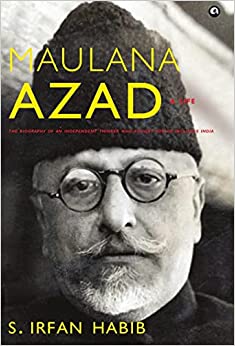
Title: Maulana Azad – A Life

Author: S.Irfan Habib

Publisher: Aleph Book Company

At a time when India is celebrating its 75th anniversary of independence, it is only fitting that Maulana Azad’s contributions to the country should be remembered. He was one of the most prominent Muslim leaders in India’s freedom movement, whose contribution to the establishment of the education foundation in India is recognised by observing his birthday across the country as “National Education Day”.

Azad became the youngest member of Congress to hold a presidential post. Using his position to work to re-unite the Swarajists and the Khilafat leaders under the common banner of the Congress. He opposed the Partition of India because he thought Muslims would be more powerful and dominant in a united India. After independence, he became the first Minister of Education in the Indian government. In 1992, he was posthumously awarded India’s highest civilian award, the Bharat Ratna.

Maulana Azad – A Life by S. Irfan Habib is “the biography of an independent thinker who fought for an inclusive India”. In this in-depth chronicle, historian Habib takes the reader through some of the most decisive moments in Azad’s life.

 A widely published historian of science and modern political history, Habib was the Maulana Azad Chair at the National University of Educational Planning and Administration, New Delhi. He has authored To Make the Deaf Hear: The Ideology and Programme of Bhagat Singh and His Comrades and is the editor of Indian Nationalism: The Essential Writings.

Says the blurb: “Born into an orthodox family of famed Islamic scholars, Azad was deeply influenced by the pan-Islamic philosophies of Sir Syed Ahmad Khan and Jamaluddin Afghani. Azad had no formal education, but he was an autodidact who taught himself about culture, philosophy, languages, and literature. As a teenager, he successfully published several magazines and newspapers and went on to publish the immensely popular Urdu weekly Al-Hilal through which he tried to persuade Indian Muslims to shake off the shackles of British rule. He became inspired by Gandhi’s non-violent civil disobedience movement and was extremely critical of the Muslim League’s communal politics.”

Azad’s unusual upbringing, his illustrious family, upheavals in the Islamic world, and the initial inklings of Azad’s freethinking outlook on life. ‘Maulana Azad and Critical Thinking in Islam’ examines the various schools of thought, ethical questions, and pan-Islamic debates that shaped Azad’s religious attitudes and his approach to the idea of nationalism. ‘Azad, Islam, and Nationalism’ looks at Azad’s political career and his unwavering belief in composite nationalism and staunch opposition to the Muslim League’s sectarian politics. ‘Ghubar-i-Khatir Beyond Faith and Politics’ lays bare Azad’s philosophical moorings and personal likes and dislikes through a collection of epistolary essays written during his imprisonment in the Ahmednagar Fort prison in the 1940s. And, finally, ‘Building a New India’ charts Azad’s efforts to strengthen the country’s weak education system through initiatives aimed at primary and adult education, his efforts towards the scientific and cultural advancement of the country, and his contribution to the arts and culture of a newly independent nation.”

As Habib writes, “justice is all the more relevant to education as a process of harmonious nurture. Indeed, social justice commands a pivotal place in Azad’s general perspective, which influenced his educational outlook quite profoundly. He was conscious of the fact that a class or caste-ridden education system needed to be replaced by a more inclusive and just educational order. In 1948, while addressing the educational conference, Azad again reiterated that education, at any rate, must be pushed forward as rapidly as possible. We must not, for a moment, forget that it is the birthright of every individual to receive at least the basic education, without which he cannot discharge his duties as a citizen.”

Writes Habib : “With a view to gearing education towards the cause of democracy, he, in his very first official statement, referred to Disraeli’s verdict: ‘A democracy has no future unless it educates its masters.’” In independent and democratic India, with universal franchise as the key principle, the voter was truly the master of democracy, and Azad wanted this voter to be educated and aware. He was conscious of the sad inheritance of colonial inequalities, where 85 per cent of the country’s population was illiterate on the eve of Independence. Several classes and caste discriminations were discussed for the first time, and it was necessary to eliminate them immediately.

Azad was convinced, according to the biography, that the state had to play a key role in combating such social afflictions and provide everyone with the means to “the acquisition of knowledge and self-betterment”; however, the most disconcerting factor was the lack of necessary funds to carry forward the state’s responsibilities. Azad conceded with a sense of guilt as minister of education that the central government had allotted only 1 per cent of the funds in the budget for education. He therefore urged the Constituent Assembly to raise expenditure to 10 per cent.

Maulana Azad pursued the issue with passion and was able to raise the allocation from Rs 20 million to around Rs 350 million during his tenure as minister of education. On September 30, 1953, Azad addressed the nation on All India Radio, reiterating that “every individual has a right to an education that will enable him to develop his faculties and live a full human life.”

In about three hundred pages of inexorable text, Habib reconstructs the life of the remarkable man while arguing that Azad is more relevant now than ever before. An essential read for understanding India’s pre-independence history and the significance of a dedicated life.   

Bhaskar Parichha is a journalist and author of UnbiasedNo Strings Attached: Writings on Odisha and Biju Patnaik – A Political Biography. He lives in Bhubaneswar and writes bilingually. Besides writing for newspapers, he also reviews books on various media platforms.

PLEASE NOTE: ARTICLES CAN ONLY BE REPRODUCED IN OTHER SITES WITH DUE ACKNOWLEDGEMENT TO BORDERLESS JOURNAL

Click here to access the Borderless anthology, Monalisa No Longer Smiles

Categories
Bhaskar's Corner

Politics & the Media

In recent years, the increasing influence of the media has changed the shape of politics all over the globe. Consequently it has raised provocative questions about journalism’s role in the political process. There are questions about the media’s effect on the political system and the subsystems — including the legislature, the executive and the lobbies.

Is media power in politics a myth or an exaggeration? Who influences whom? When does the media power peak and when does it touch the bottom — these and similar other questions, however, defy any clear-cut answer.

Research over the decades suggests that the media effect on politics cannot be answered in broad generalities. There are various types of effects, on different types of political dispositions, at various levels of political activity, under various conditions. Further, the mass media are highly diverse in content and include a very wide range of activities of which politics is only a miniscule part.

In politics, the mass media influences not only individual opinion but also the way politics is conducted. Today, if political roles are changing, so are the expectations of politicians. Changes take place even between the relationship of followers to leaders, and, perhaps, also some values of political life itself.

Walter Lippmann, a renowned American journalist and political analyst, once said that journalists point a flashlight rather than a mirror at the world. Accordingly, the audience does not receive a complete image of the political scene. Instead, it gets a highly selective series of glimpses. Reality is also tainted. It was his view that the media cannot possibly perform the functions of public enlightenment that democratic theory requires. He reasoned that the mass media cannot tell the truth objectively because the truth is subjective and entails more probing and explanation than the hectic pace of news production allows.

Images of reality the mass media portray differ from country to country. Judging by their respective media, audiences are apt to form quite varied images about events and their international ramifications. Different media produce different opinions when journalists disagree about which political actors and actions deserve the spotlight and which should be regarded positively, negatively or as neutral.

Influence also depends on the credibility of the media and on the esteem with which their audiences regard them. Usually, the media have negative ratings in European countries, but a positive score in the United States. Despite credibility problems, most audiences in Europe believe that the media have much less influence on the three branches of government, while Americans credit the media with a great deal of influence over governmental institutions.

 Alexander Solzhenitsyn, a Russian writer, remarked in 1947 while delivering a talk at Harvard University, that the press had become the most powerful force in Western countries. It had surpassed in power the executive, legislature and the judiciary.

Nearly everyone acknowledges that the media plays a powerful role in our public and private lives. Also, opinions about the media and estimates of their influence on society’s other institutions are important barometers of democracy’s functioning.

On the other hand, attitudes about the media have been highly critical. Critiques of the press have spanned a century and several continents. Balzac (1799-1850), the French novelist and dramatist, wrote in 1840 : “In France, the press is a fourth power of state; it attacks all, yet no one attacks it. It reprimands recklessly. It asserts domination over politicians and men of letters that is not reciprocated, claiming that its protagonists are sacred. They say and do horribly foolish things; that is their right! It is high time we took a look at these unknown, second-rate men who hold such importance in their time and who are the moving force behind a press with a production equal to that of books.”

A Louis Harris survey in 1987 revealed that as compared to America, Germany, Great Britain and Spain had little or no confidence in the media. The pluralities in these three countries said the media had too much power. This survey assessed the media’s influence on three central institutions of government-the legislature, the executive and the judiciary. Some respondents accused the media of undermining the separation of powers that is the foundation of democracy.

Whether the media actually impedes the operations of the other three organs of democracy is difficult to say, but as the Indian experience shows, the media has a more abiding influence on government and its institutions rather than the other way round.

The American humourist, Will Rogers, contended, “All I know is just what I read in the papers.” For many Indian politicians, there is a good bit of truth in this aphorism — what they learn about ongoing political events comes primarily from the news media. Therefore, the media as a supplier of information moulds public opinion and influences political decisions. If the media guides citizens’ attention to certain issues and influences their thinking process, the media also influences the choice of issues that will be matters of political concern and action. That is the reasoning behind the agenda-setting hypothesis of scholars like Maxwell E. McCombs and Donald L. Shaw.

Agenda-setting or the ability of the media to influence the course of events in the public mind has been part of the political culture of the United States of America for nearly a century. The assumption of media power has been asserted by political journalist and historian, Theodore White, during the presidential elections of 1972. According to him, the power of the press in America is primordial. It sets the agenda for public discussions; and this sweeping political power is unrestrained by any law. It determines what people will talk and think about — an authority that in other nations is reserved for tyrants, priests, parties and bureaucrats.

The idea of agenda-setting asserts that the priorities of the press become the priorities of the public. What the press emphasises is emphasised privately and publicly by the audiences, asserts White. The press largely structures voters’ perceptions of political reality. It can also influence which issues make up the agenda for any particular elections.

In 1952, the Republicans led by Dwight Eisenhower successfully exploited the three Ks — Korea, Corruption and Communism — in order to regain the White House after a hiatus of twenty years. The prominence of those three issues, cultivated by press reports extending over many months and accented by partisan campaign advertising, worked against the incumbent Democratic party.

There are numerous instances of how popular American presidents’ actions and statements reported in the media affected public opinion. These include President Nixon’s persistent opposition to speeding up troop withdrawals from Vietnam during 1969,1970 and 1971; Reagan’s 1981 argument of AWACS airplane sales to Saudi Arabia; Carter’s 1977-78 increased attention to Arab countries, his 1982 bellicose posturing towards the Soviet Union; Ford’s 1974-75 defence of military spending and Carter’s advocacy of cuts in domestic spending, et al.

In contrast, unpopular presidents had little success at opinion leadership. In several cases, unpopular presidents made serious efforts to advocate policies but failed to persuade the public.

In no area of public life have practicing politicians taken media effects more seriously than during elections. Political campaign organisers spend much time, effort and money to attract favourable media attention to candidates for major electoral offices. When their candidates lose, they frequently blame the tone of media coverage, or rather the lack of it.

There is an old saying that there are many slips  between the cup and the lip. It is one thing for politicians to create a particular image and another for that image to be conveyed to news people and, through them, to the voting public.

Systematically establishing the impact of election communication on the public’s opinions and behaviour is a real challenge. The nature of campaign coverage has also a profound impact on the way people vote. This is confirmed by how people tended to view the candidate — as the winner or the loser. As for the media ,that old line of legendary coach Vince Lombardi – “Winning Isn’t Everything, It’s The Only Thing” — is taken to heart and the public response usually follows suit.

Ever since the television age of politics was born in the 1952, American presidential stakes between Dwight Eisenhower and Adlai Stevenson, the ability to use the medium has been increasingly essential to electoral success. In 1960, John F Kennedy’s video persona in his televised debate with Richard Nixon proved his margin of victory.

Similarly, in 1976, Jimmy Carter co-opted television in the Democratic primaries to help him create a candidature  that was larger than life. Ronald Reagan throughout his presidency proved that the visual medium had become the political message. Reagan’s White House advisors understood early that in areas of government policy and global complexity the nature of the medium is tedium. And so, by controlling the pictures, they could control the pacing of the news shows.

The media effects politics in a variety of ways. They also affect public policies. By mobilizing hostile public or interest group opinions, the media may force a halt to political choices. But, as a general rule, journalists should disclaim any motivation to influence public policies through their news stories. Except for the editorial pages, their credo calls for objective, neutral reporting. Only investigative stories may be the major exceptions to this rule.

Contemporary political folklore pictures the media as adversaries of officialdom who alert the citizens to governmental misdeeds or failures. In reality, there are, or may occur, many situations when officials and journalists work together to bring about needed action.

The power of news people rests largely in their ability to select news for publication and feature it as they choose. Many people in and out of government try to influence these media choices. But in the ultimate analysis, it is the editor and news directors — the gatekeepers in news media- who, in an ideal situation, decide which item to clear  and which one  to reject.

(First Published in The Frontier Post)

.

Bhaskar Parichha is a journalist and author of No Strings Attached: Writings on Odisha and Biju Patnaik – A Political Biography. He lives in Bhubaneswar and writes bilingually. Besides writing for newspapers, he also reviews books on various media platforms.

.

PLEASE NOTE: ARTICLES CAN ONLY BE REPRODUCED IN OTHER SITES WITH DUE ACKNOWLEDGEMENT TO BORDERLESS JOURNAL