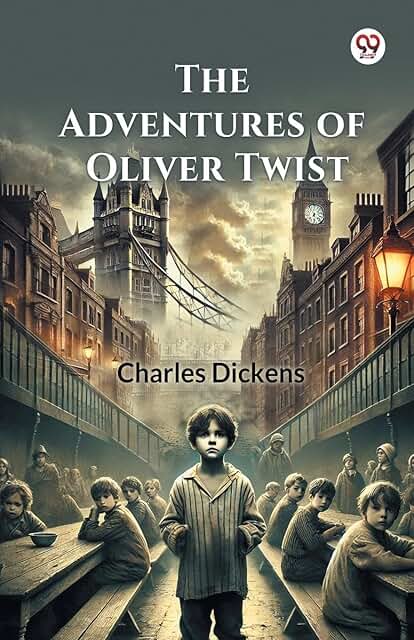
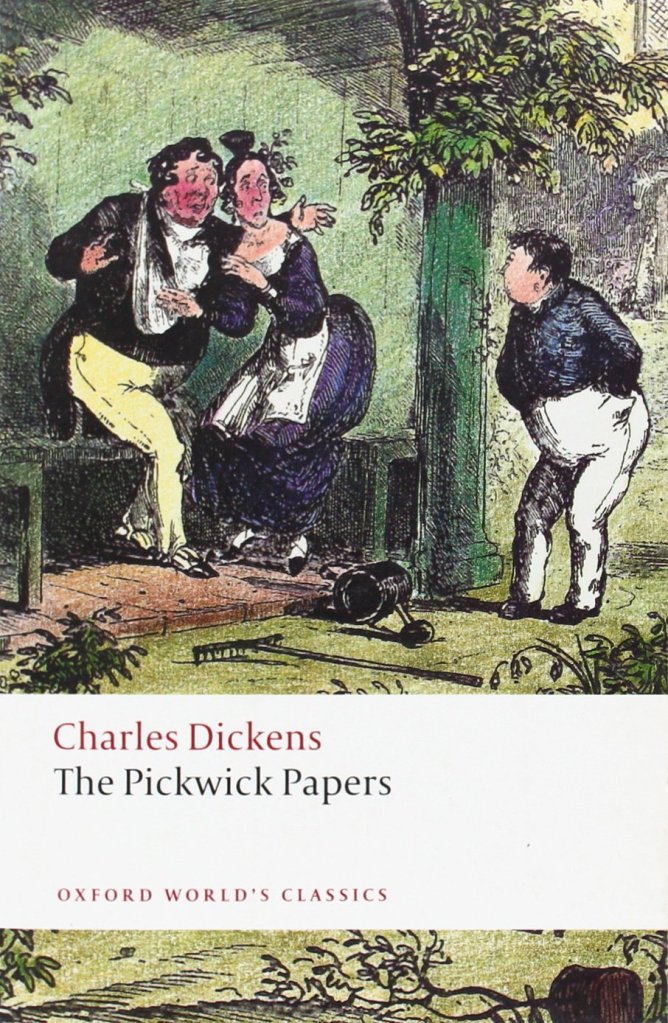
Charles Dickens was flying high by 1842. His books, Pickwick Papers and Oliver Twist, and periodicals were selling like hot cakes on both sides of the Atlantic. With so many fans over in America, he decided to pay them a visit. What he saw in the second-largest fan base upset him for two reasons. Firstly, there was the issue of royalty. Publishers in America were printing his work left, right and centre. He received none of the returns due to him. Secondly, he was upset with the level of racism and their cavalier attitude towards slavery, even amongst the northern states.
Dickens could not stomach the dehumanisation of the black Americans. The vocal and expressive writer, who drew his readers to his craft in the first place, wrote in one of his later articles about his trip to America. He did not twist his words when he wrote verbatim in his American travelogues of slaveowners’ advertisements about their runaway slaves. In one of these advertisements, it read, “Ran away, a negro woman and two children; a few days before she went off, I burnt her with a hot iron, on the left side of her face. I tried to make the letter M.”
A few years earlier, Britain had outlawed slavery, so the British felt a bit of moral superiority over the Americans.
The Americans did not take to this kindly. Dickens’ following few publications fared poorly.
Meanwhile, Britain was also changing.
It was industrialising as its Empire ventured far and wide to exotic lands. With that came the increasing gap between the poor and the rich. The poor remained short of money and short of education opportunities. With the development of science, religious belief took a back seat. Catholicism lost its favour. The Puritans were disillusioned with the material world.
The idea of Christmas and family togetherness was losing out. Work took up most of the time. There were no documented Christmas holidays. The ancient midwinter culture of Europeans had lost its lustre. Many of the Christmas iconographies were viewed as pagan in the UK and the US. The Puritans viewed life as hard, and having joy and fun was scorned. A small proportion of people still wanted to revive the spirit of Christmas.
Against this background, Dickens returned home. His following two books received a poor reception from readers. He resumed his social work, helping the marginalised. At that time, the prevailing view in the UK was that poverty was self-inflicted. The society felt that providing aid to the poor was counterproductive; it made them lazy. People deserved to go hungry for producing so many children, and the Malthusian theory that food demand would outstrip supply seemed to be coming true. The 1840s were known as the “hungry 40s.” Famine was looming.
Yet another layer of population, the reformists, took it upon themselves to help the downtrodden. Dickens was one of those souls. In Manchester, after giving an emotional lecture at a fundraiser to feed and educate poor children, he went for one of his famous long walks.
As he walked the streets, an idea struck him. He visualised a man who had lost all his compassion and had to be jolted back into a complete sense of his humanity. The story helped rebuild Christmas and the compassion that had been lost over the years. The rest, as they say, is history. A Christmas Carol reformed Victorian Britain.
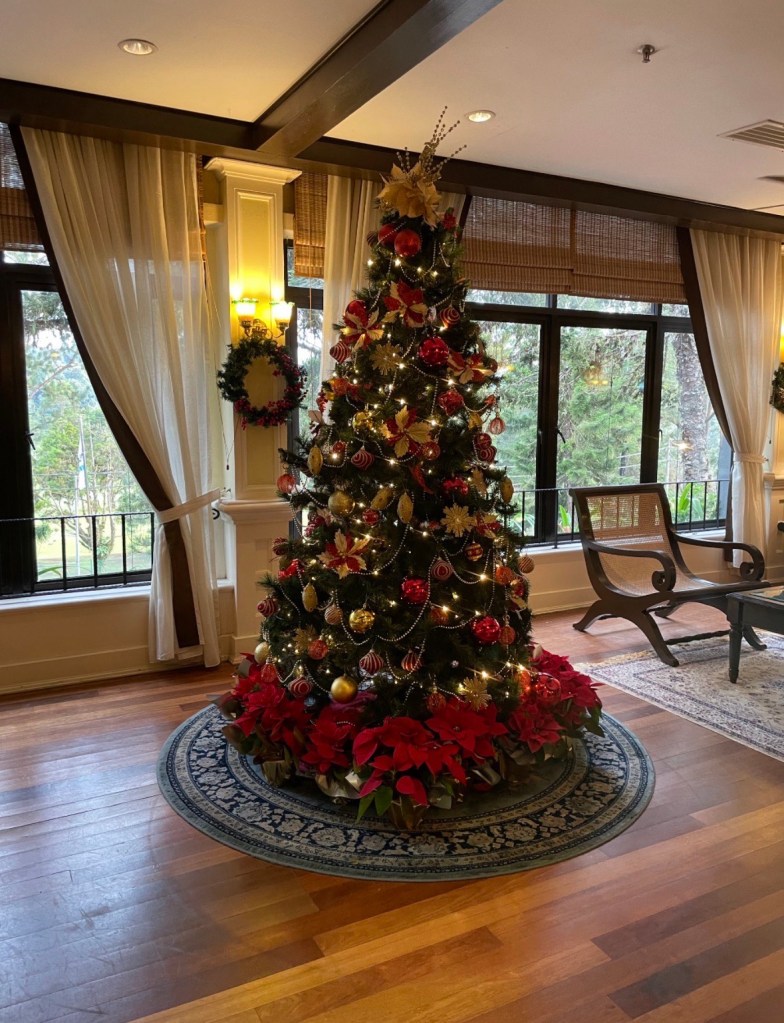
Photo provided by Farouk Gulsara
Reference:
From Journey Through Time: 59. A Christmas Carol: The Book That Brought Back Christmas (Ep 1), 25 Dec 2025. Podcast
Farouk Gulsara is a daytime healer and a writer by night. After developing his left side of his brain almost half his lifetime, this johnny-come-lately decided to stimulate the non-dominant part of his remaining half. An author of two non-fiction books, Inside the twisted mind of Rifle Range Boy and Real Lessons from Reel Life, he writes regularly in his blog, Rifle Range Boy.
PLEASE NOTE: ARTICLES CAN ONLY BE REPRODUCED IN OTHER SITES WITH DUE ACKNOWLEDGEMENT TO BORDERLESS JOURNAL
I have long been fascinated by the International Date Line, which I have never yet crossed but still intend to. I have unreasonable qualms that crossing it will change a person in some way, will project them into the past or future by a day and that some part of them will always remain displaced from the present. Even if they cross the line again in the opposite direction, they won’t entirely be back in alignment with themselves. It is difficult to explain without resorting to vague words such as ‘soul’ and the idea is without any basis in fact anyway. Yet it is a feeling that persists beyond logical thought.
I suppose that the origins of my excessive interest in the Date Line can be found in one of Jules Verne’s best novels, Around the World in Eighty Days, a book with one of the best twist endings ever devised. Phileas Fogg the explorer makes a bet that he can circumnavigate the Earth in only eighty days and thanks to an unfortunate set of circumstances he fails by one day. Or does he? He has crossed the Date Line from the east in order to enter the western hemisphere and thus has gone back in time one day. When he realises this fact, he uses the extra day to win the bet. Geometry saves him.
For a long time, I wondered why Verne wasn’t praised more highly for this brilliant plot device, but now I ask myself if it wasn’t a conceit he borrowed from Edgar Allan Poe, of whom he was a great admirer. Verne’s novel was first published in 1872 but thirty years earlier Poe’s short story ‘Three Sundays in a Week’ utilised the same ingenious idea for quite a different purpose. When the name of Poe is mentioned, we imagine tales of horror and bitter despair, morbid scenes, grotesque irony, but he also wrote strange comedies and ‘Three Sundays in a week’ is one of his lightest and happiest.
The narrator, Bobby, wishes to marry Kate, but her obstreperous father, Mr Rumgudgeon, is against the match while pretending to approve of it. He offers a generous dowry with his blessings but when Bobby asks that a date be fixed for the wedding, Mr Rumgudgeon replies that it will happen “when three Sundays come together in a week!”. This impossible condition is a cruelly humorous attempt to forestall the wedding. But Bobby is a clever young man. He knows a way in which the unfair condition can be met.
He arranges a dinner for himself, Kate and her father, and two guests, both of them sea captains who had lately returned from voyages around the world. The crucial point is that Captain Smitherton and Captain Pratt sailed in different directions while circumnavigating the globe. The dinner is held on a Sunday, but it is only Sunday for Bobby, Kate and Mr Rumgudgeon: for Captain Smitherton yesterday was Sunday and for Captain Pratt the next day would be Sunday. Thus, the impossible condition is met. It is a week with three Sundays in it and no further objection to the marriage can be made.
Poe was very clear in his mind about the technicalities of time difference in such voyages, as was Verne, but confusion about east/west crossings of the Line forms one of the recurrent absurdist jokes in W.E. Bowman’s The Cruise of the Talking Fish, in which the crew of a pioneering raft accidentally disrupt, at great cost, the launching of an experimental rocket from a remote Pacific island. This book was published in 1957 (one century after the midpoint date between Poe’s short story and Verne’s novel). It is a magnificent comedy that manages to make the reader doubt their own knowledge of how the Date Line works. And in truth the mechanics of the crossing still confuse me.
Yet another novel that utilises the Date Line and the oddities surrounding it is Umberto Eco’s The Island of the Day Before in which a becalmed sailor on a ship near an island that lies on the other side of the Line indulges in speculation as to the physical and metaphysical significance of our conventions of time. The island is unreachable but remains as an anchor that tethers his mind to the topic and he is unable to stop wondering (and extrapolating this wonder) until flights of fancy turn into mathematically-based obsessions. There is always the lurking suspicion that the Line is not just a human convention but something true that is now embedded in nature as a thriving paradox.
Deep down, I still believe that crossing the Line is an act of time travel, not only in terms of human timekeeping but also in relation to the natural world, so that a man who sails into tomorrow can find out the news of the day and learn such things from the newspapers or radio as to who has won a cricket match, then recross the Line in the opposite direction and lay bets on that team, raking in huge winnings. Or a man who has suffered an accident and is badly wounded can be carried back one day into the past, where he is well again and when the following day dawns, he can take evasive action.
I know that none of this is true, but I feel it is right nonetheless, and I have written my own stories in which the Date Line features, one of them being ‘The International Geophysical Ear’, which is about a gigantic ear positioned on the Line itself that can hear both backwards and forwards in time, and another being ‘The Chopsy Moggy’, concerning a talking cat who unfortunately turns up late for an inter-species conference that will determine the future of humanity. There are others and undoubtedly more will be written.
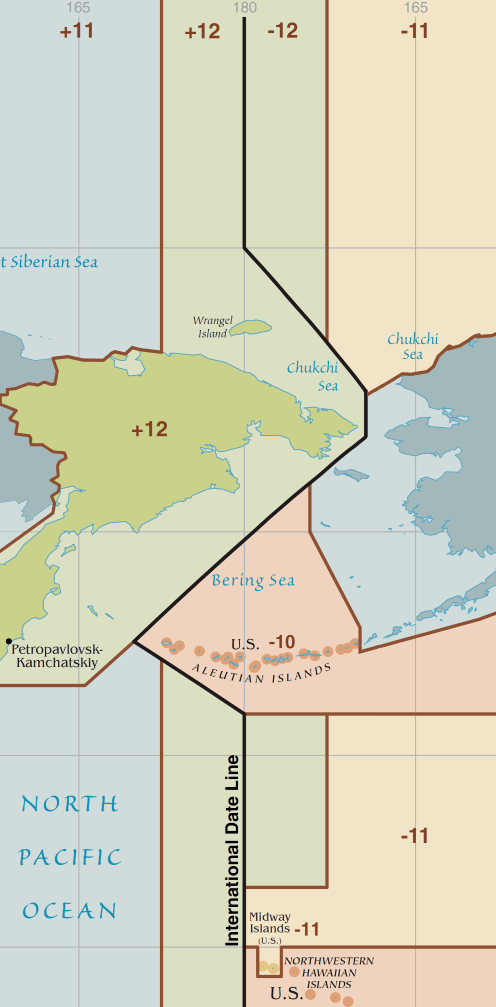
The Date Line has been host to rather strange happenings in reality as well as in fiction. On the map, it is no longer a straight line that follows the longitude of 180 degrees east and west. It veers abruptly to avoid landmasses, taking wide detours around islands. But once it deviated not one inch. It speared through the atolls and islands it encountered, dividing them in half, so that a person had the opportunity of standing with one leg in today and the other in yesterday or even tomorrow. Wrangel Island in the Arctic Ocean, the last dwelling place of woolly mammoths (still around when the pyramids were being constructed in Egypt), was one of these special places. Three Fijian islands too: Vanua Levu, Taveuni and Rambi, where unscrupulous plantation owners forced workers to cross the Line on Sundays to prevent them having a day off.
There is also the interesting fact that the equator crosses the Date Line and that a point therefore exists where it is summer and winter simultaneously while also being today and tomorrow (or yesterday). The SS Warrimoo was a ship that routinely travelled between Canada and Australia. On the last day of December 1899, the ship was very close to the point where the equator meets the Date Line and Captain Phillips realised that if he positioned the SS Warrimoo exactly on that point, something very curious could be achieved. He gave instructions for this to happen and on the stroke of midnight his vessel lay at 0 degrees latitude and 180 degrees longitude. Magical coordinates…
The forward part of the ship was now in the southern hemisphere and thus in summer while the rear remained in the northern hemisphere and in winter. Half of the SS Warrimoo was in the year 1899 (December) while the other half was now in the year 1900 (January). Captain Philipps was skipper of a vessel that was in two different days, two different months, two different seasons, two different hemispheres and two different centuries. Of course, the objection can be raised that December 30 is not the last day of a year. But the Captain waited until midnight before reaching the miracle point. December 31 did come but it flashed past in less than the blink of a mermaid’s eye. The ship leapfrogged an entire day, or at least the vast majority of it.
My hope is that there was a copy of Around the World in Eighty Days on board the ship when it made that spectacular crossing, or maybe a collection of the short stories of Poe. It is highly unlikely this was the case, of course. And I have just now had another thought. Suppose you are reading Verne’s novel on a ship that crosses the Line in an easterly direction. You have been reading it all day and have reached the last few chapters. Suddenly the ship crosses the Line and you are back in yesterday and find yourself only on the first page again. You might be frustrated not to know the ending to the book. Let me assist you. The hero and the heroine do get married.
Rhys Hughes has lived in many countries. He graduated as an engineer but currently works as a tutor of mathematics. Since his first book was published in 1995 he has had fifty other books published and his work has been translated into ten languages.
.
PLEASE NOTE: ARTICLES CAN ONLY BE REPRODUCED IN OTHER SITES WITH DUE ACKNOWLEDGEMENT TO BORDERLESS JOURNAL
Meredith Stephenswrites ofsailing to Tasmania when the pandemic had just started loosening its grip
Neither the wind speed nor direction were favourable as we tacked our way upwind. It was my turn to make the soup. I headed into the kitchen, grabbing rails and fixed furniture to steady myself. With each wave the boat lurched violently. I opened the fridge and a bottle of drink torpedoed across the galley. Then, on my hands and knees, I opened a bilge compartment trying to find the root vegetables. As I stood up, another wave surged and I nearly fell into the bilge. As I was trying to find cutlery I heard Luke’s voice offering to help me. I gladly accepted and found refuge after retreating to my bed. Luke’s steady sea legs meant the soup was ready in minutes.
We were sailing from Granite Island to Robe, in South Australia, on our way south-east to Tasmania. A four-hour journey by road would turn out to be thirty-six-hours by sea. Alex and Luke took three hour shifts at the helm overnight. The waves lurched beneath us. The sails were disobedient. Alex attached the tether to his belt and the rails, and headed out to the foredeck to fix it. Luke was at the helm and I held a rope at the rear deck. They shouted directions to me to pull and then release the rope. Alex fixed the sail as the boat accelerated.
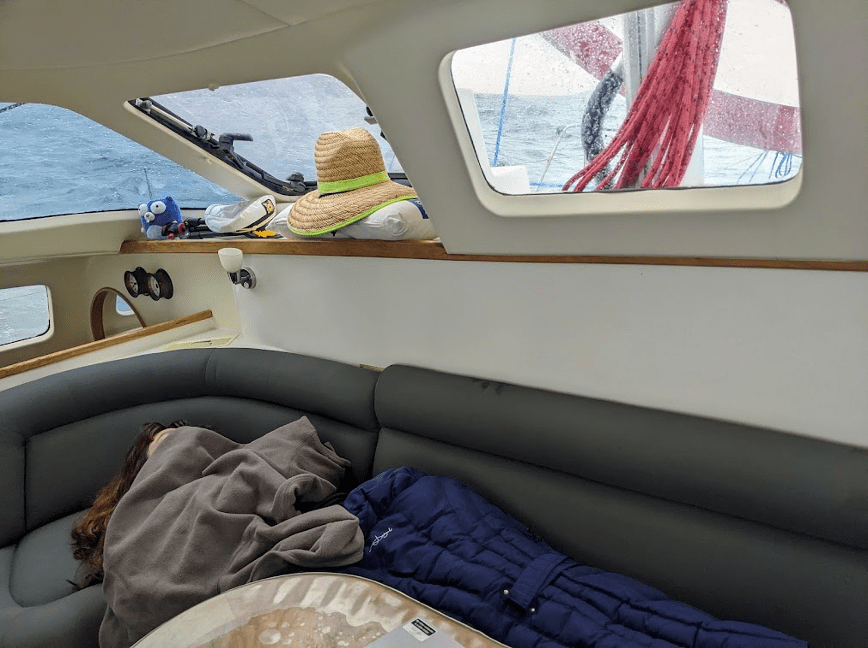
That night the bed in my cabin surged with every crashing wave. There was no relief in the morning when the harsh Australian sunshine pushed its way into the cabin and gave me a resounding migraine. Trying to find relief from the skylight above my bed I staggered up the stairs to the saloon, lay down on the sofa and hid from the sun under a hoodie and coat.
Alex entreated me to lift my gaze to the horizon and so I peeped out and reacquainted myself with the shoreline. My normally healthy appetite disappeared and I had an overwhelming desire to sleep. But Alex was an experienced sailor and never gave up on encouraging me, pushing me beyond what I imagined I could do. Rather than curling up into a ball and giving up, I heeded his encouragement, and my seasickness gradually dissipated. I was well enough by the evening to accompany Alex on the twelve am to three am shift, but noting my tired expression, Alex told me to take leave and go to bed at two thirty am. Luke took over the three to six am shift, and then Alex took over from six am. When I woke at eight the waters were calm. My seasickness had gone and my appetite returned. I enjoyed a hearty breakfast and we calmly motored on to Robe.
We had to sail continuously for two long days and nights on the voyage from Robe to King Island, Tasmania. Alex consulted the app Predict Wind for the weather forecast and assured me that there would be little wind. He, of course, was disappointed because he wanted to sail, but I was quite happy to motor on calm seas if it meant I could be spared from seasickness. He is a climate warrior and wanted to rely on natural sources of energy such as wind. I knew we shouldn’t use fossil fuels, but I decided to tease him, urging, ‘Let’s use diesel!’, knowing full well how it contradicted his principles. He put my needs first, foregoing his love of sailing to motor on calm waters instead.
I only knew about King Island because of its specialty cheese production, and looked forward to some cheese tastings. Alex asked me to do some research on King Island, and soon I learned that it had been the site of around 800 shipwrecks. This was not what I wanted to hear. I knew Bass Strait was notorious, but not that this single island in the strait had been the site of hundreds of shipwrecks. Nevertheless, Alex had equipped himself with state-of-the-art navigational equipment, and had the assistance of sailor Luke who had once sailed across the Atlantic, and he was unperturbed. I trusted Alex, and his confidence was contagious.
“It’s pretty shallow here,” I announced to Luke from the cockpit during my shift. “Only twenty-five metres.”
Luke and Alex guffawed. “That’s only because it’s too deep for the instruments to measure. It’s actually 1500 metres,” Alex explained.
I had a book ready to read for my three-hour shift but I left it unopened. I was enraptured by the milky and glassy surface and the ripples that glistened in the sun. I scanned the horizon for vessels, and tried to discover the ones that appeared in the monitor reported by Automatic Identification System (AIS). Unlike us, the other vessels on the monitor were container ships. Black birds perched on the surface of the water and took off as we approached.
“Where are the dolphins?” I quizzed Alex.
“It’s too deep for them here.”
We repeated the shifts. As Alex’s research had predicted the waters were calm. My seasickness had disappeared altogether.
Two days after leaving Robe, the township of Currie on King Island came into view. Anchoring took a while because of the many submerged rocks. Finally, Alex was satisfied with the anchorage, and we decided to hop into the dinghy and go ashore. First, we had to register online with the Tasmanian e-travel. I completed the documentation on my laptop and finally was required to receive a verification code by SMS on my phone. I kept requesting new codes but none came. It turned out that there was no reception on this remote island for my phone provider. I gave up.
The four of us lowered ourselves into the dinghy with our bags. Alex pulled the cord to start the outboard motor, and we weaved between the other berthed boats to the shore. A police vehicle was parked on the shore facing us. A barrel chested police officer in a fluorescent orange vest motioned where we should land. At the wharf he was accompanied by a biosecurity officer.
The police officer greeted us politely and asked whether we had the necessary paperwork for entry. Luke and Alex had theirs, but Verity and I did not. Despite numerous reminders from Alex I had procrastinated and now I was paying for it. We clambered out of the dinghy to the wharf, and the officers took down Verity’s and my details.
I had not been able to complete my application because my phone would not receive signals in this remote location. Alex tethered me to his phone, because his carrier had coverage. I fumbled around in the sunshine to download various apps to process my application. The phone screen was too small and the glare from the sunshine disturbed my vision even further. Even though I was traveling domestically, it was like trying to enter a foreign country without the right visa.
“I don’t want to hold you all up,” I said to the others. “Let me go back to the boat. I don’t care. I can read a book.”
Alex would have none of it. Then the biosecurity officer briefly disappeared, and reappeared with paper forms.
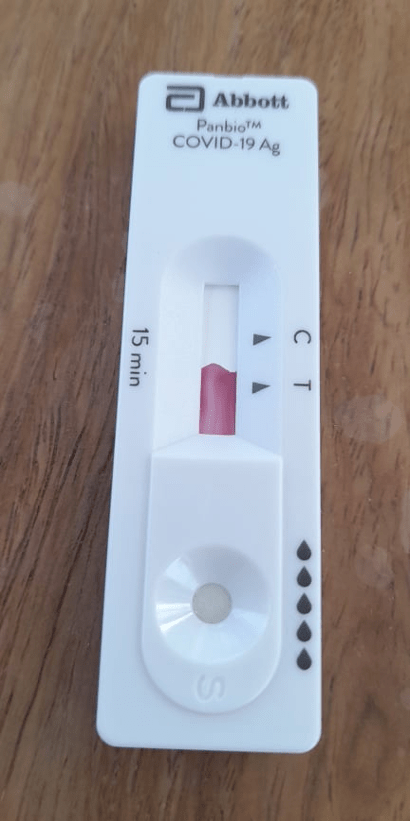
“You can fill these out instead,” he offered. “Then you will have to take Rapid Antigen Tests back in the boat and wait fifteen minutes for the result. If it is negative you are free to travel. I’m just going to make a detour to the airport to pick up the tests for you.”
The biosecurity officer made the eleven kilometre trip to the airport and back to retrieve the Rapid Antigen Tests. Meanwhile, Luke cleverly engaged the police officer in banter, trying to find out the best places for tourists to visit on the island.
“The races are on this afternoon,” he kindly informed us. “They are held four times a year over summer.”
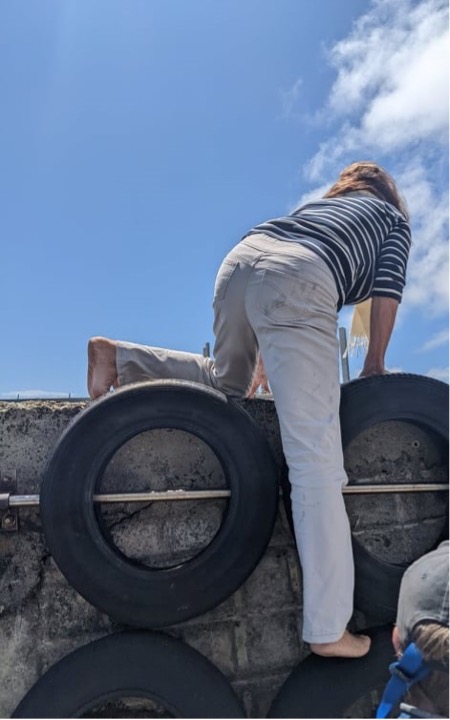
If it weren’t for the banter with the police officer we could never have learned this. We scrambled back into the dinghy with the Rapid Antigen Tests. Or to be more precise, the others scrambled into the dinghy. I lost my footing on the tires on the way down and collapsed in a heap into the dinghy. The mask had obscured my downward vision and I couldn’t see where I was placing my feet. I was rattled after having been greeted by a police officer and a biosecurity officer on the shore of the quiet fishing cove nestling alongside Currie. The others gasped as I fell and then fussed over me and I soon recovered. We sped back towards the boat.
“What else did the police officer tell you, Luke?” we probed, once in the dinghy.
“He said that the other day another vessel had come here from interstate. They too had had trouble getting internet access on this remote island and did not know that the entry requirements for Tasmania had changed while they were on board. They were so upset at being greeted on the shore by a police officer and a biosecurity officer that they started an altercation and had to be locked up.”
Hearing this I felt grateful that we had been treated with such civility. Again we clambered back on to the boat. Exhausted but relieved that we had been able to go on land in Tasmania, we decided to celebrate with Luke’s bottle of Chardonnay. Then, we proceeded with the tests.
As expected, we all tested negative and we took the dinghy ashore to explore Currie. We followed the police officer’s advice and walked through the town to the races. Alex and I were sitting in the stands, enjoying not only the horses but the spectacle of the local crowd in their finery. Alex abruptly looked up to the end of the aisle.
“Is that the police officer?” he asked me.
I studied him chatting to other racegoers in full regalia of his flack jacket, guns in his holster and fluorescent orange vest.
Alex turned to me and quipped, “Maybe that is why he seemed to be in a hurry to process our entry? He wanted to be at the races.
I had been struck by the story that Luke had heard from the police officer that the other interstate visitors had acted defensively when they heard about the new complicated entry requirements to Tasmania. Why had we been treated so differently? We were simply sent back to the boat and the officers had trusted us to act appropriately on the basis of the results of the COVID test. The officers seemed to be in a bit of a hurry to let us get on our way. Now we had an inkling why.
*All the photographs have been supplied by Meredith Stephens.
Meredith Stephens is an applied linguist from South Australia. Her work has appeared in Transnational Literature, The Muse, The Font – A Literary Journal for Language Teachers, The Journal of Literature in Language Teaching, The Writers’ and Readers’ Magazine, Reading in a Foreign Language, and in chapters in anthologies published by Demeter Press, Canada.
PLEASE NOTE: ARTICLES CAN ONLY BE REPRODUCED IN OTHER SITES WITH DUE ACKNOWLEDGEMENT TO BORDERLESS JOURNAL
We set sail south from Dublin town
with forty-five sailors and one clown.

But before we reached the wide Atlantic
the frantic antics of the clown dismayed us.

Should we therefore throw him overboard?
we asked ourselves in urgent conference.

It would give us a chance to proceed
in peace and harmony, free from jokes.

Ah, to continue our voyage without fuss!
That was the issue we yearned to discuss.

And eventually we came to an agreement
that dunking was no cure for torment.

And murder was too extreme a measure
to improve the leisure of our journey.

The clown was a man, his painted smile
could be easily smudged with a frown.

There was no need to send his soul down
to the circus hell where clown ghosts go.

No! Let us find some alternative method
to restrain the fool and hobble his tricks!

We therefore employed him as a topsail
whenever the breeze turned into a gale.

And as his Pierrot costume billowed out
he would wail and occasionally shout.

Especially if he spied a distant whale
in a white dinner jacket, obviously male.

But that didn’t happen on a daily basis
for most of the whales had female faces.

Anyway, I have gone off on a tangent,
the sound of hornpipes is quite plangent.

And they call me back to my nautical duty
which is to lace up all the crew’s booties.

Not much else happened for several days
until mountains loomed through the haze.

We had reached Sierra Leone on our own,
just forty-five sailors and a lofty buffoon.

What an excellent marker of our progress!
It cheered us up and reduced our stress.

There was room in the hold for tropic fruits
and so we went ashore for an afternoon.

We bought bananas, mangoes and guavas
without anyone causing a hell of a palaver.

And then we set sail again, or should I say
we set clown again, and went on our way.

Shortly we passed the island of São Tomé
engorged on fruit with rather sore tummies.

It was at this point that symmetry suffered
a relatively modest but disturbing calamity.

For we had reached a latitude
where the second line of any couplet has an unbalanced longitude.

But we soon passed to happier frothy waters
full of strong mermen and their daughters.

A little later it was with squids we played
and afterwards with octopuses we prayed.

We safely rounded the Cape of Good Hope
and raised and lowered the clown on a rope.

By now he was fully reconciled to his position
and in fact embraced the ideals of our mission.

And those ideals were to circumnavigate Earth
and at the same time, to increase our girth.

Thus we devoured the fruit stored below deck
until juice ran out of our noses, flipping heck!

In the Indian Ocean we played deck test cricket
using the first mate’s wooden legs for a wicket.

Because there wasn’t much else for us to do
apart from stirring big barrels of strong glue.

Why the captain needed adhesive, I can’t say
but sticky wickets were the order of the day.

And that’s why we continued to bowl and bat
using avocado pears for balls that went splat.

But take care, shipmates! That was my shout
when beneath our hull erupted a waterspout.

It was so powerful that it lifted us up high
and then we were sailing through the sky.

Clouds filled the shrouds with damp fleece
and gulls in flight honked at us like geese.

Our altitude increased and we were chilled
and soon I supposed we would all be killed.

But when the waterspout turned itself off
we didn’t drop back into a terminal trough.

No! The clown on a mast extended his arms
and span on his axis to save us from harm.

Like a helicopter he was, but not a good one,
and for him, it can’t have been too much fun.

Yet his rotary action was certainly well-meant
and provided enough lift for our safe descent.

We landed in waters on the far side of Borneo
but jumbled up was our carefully stored cargo.

The clown was quite dizzy, but what of that?
So are rooms in which you might swing a cat.

Or is it the cat that is giddy thereafter? I can
never remember the exact categorical order.

The fruit in the hold had transformed into juice
and some nails in the planks had worked loose.

But we were still seaworthy and shipshape
and would remain so while on the seascape.

So we sloshed along like a wooden breakfast
with the clown, our saviour, sick on the mast.

But he would recover, he needed no physician,
for dizziness is merely a temporary condition.

And now we concentrated instead on the terrific
news that already our vessel was in the Pacific.

Leagues and leagues of unislanded blue water, see!
But is ‘unislanded’ a word that if used, oughta be?

I don’t know about that, I’m not a lexicographer,
and in fact I’m not even a competent geographer.

No matter! Onwards! We are circling the globe
and it doesn’t matter how quickly we are going.

Slow or fast, start and stop, and if the mate bellows:
“Avast!” we all know such a pause will hardly last.

And now we are sailing steadily east with no fruit
to feast on, but plenty of juice to swim in, undilute.

Solid food is what we require, growled the captain!
Though there’s no cellophane for it to be wrapped in.

Thus we stopped off at an island just beyond Fiji
to buy some cream fudge from a Heebie-Jeebie.

In nautical lingo a Heebie-Jeebie is a shrewd adventurer
marooned long ago who now has a commercial venture.

The fudge was copious and also coconut-flavoured
and he gave us extra portions as some sort of favour.

I think it was because he was originally from Dublin
and we reminded him of the things he was missing.

But there was sadly no room on board to take him along
so we departed while singing him a fudge-mangled song.

“Don’t worry too much and don’t make too big a fuss,
keep making your fudge and all will be fine, trust us!”

The lyrics of that song were probably a cruel deception
but when he heard them he gave them a good reception.

Anyway! Enough of that. Without wishing to fudge
the issue, we have other things to trouble our minds.

I’m a little bit concerned about how the lines of each couplet
seem to be getting longer and longer as this poem progresses.

They are almost twice the length of the opening lines
which, if you remember, formed the following rhyme:

“We set sail south from Dublin town
with forty-five sailors and one clown.”

So let us endeavour to sail closer to a shorter length
for the sake of the reader’s mental and poetic health!

And now we are nearing stormy Cape Horn,
as good a place as any for mariners to mourn.

Tossed on the waves for two and a half days
we were lucky to emerge wholly unscathed.

Back into the Atlantic we plunged in alarm
while the clown vibrated from the yardarm.

But finally in calmer waters we settled down,
the odds reduced that any of us might drown.

As for myself, I looked forward to docking
yet again in the harbour of old Dublin town.

Weary of travel and the fathomless blue deep,
tired of this poem and exhausted with sleep.

Lacing booties to furious hornpipe melodies
no longer fills me with joy but only self-pity.

But only a score of leagues or so left to go
and with this wind there is no need to row.

The night was dark like a pint of stout beer
and then I knew that home really was near.

How glad was I to spy right in our midst
the Emerald Isle looming out of the mist!

Mission accomplished, let’s all dance a jig
and finally discard our stale seaweed wigs!


Explanatory Notes

Why take a clown aboard a ship?
Because we were so very bored.

Yes, whales may go to formal dinners.
If they don’t, they will be much thinner

Hornpipes are musical unicorns,
piercing ears like mythical thorns.

Cricket on deck is such an odd sport,
umpires snort when a ball is caught.

Waterspouts are fountains malign,
always of brine and never of wine.

The South Pacific is a very nice place
unless your booties need to be laced.

Cape Horn is loud and rather sharp,
the diametric opposite of Cape Harp.

Ireland, my Ireland, how I love thee!
Two shots of whisky please in my tea.
.
Rhys Hughes has lived in many countries. He graduated as an engineer but currently works as a tutor of mathematics. Since his first book was published in 1995 he has had fifty other books published and his work has been translated into ten languages.
.
PLEASE NOTE: ARTICLES CAN ONLY BE REPRODUCED IN OTHER SITES WITH DUE ACKNOWLEDGEMENT TO BORDERLESS JOURNAL



 Borderless