My name is Amina Salvador, 13 years old. I was born in the rural community of Santa Maria, Philippines. I want to share with you the events that prompted me to give testimony to the police. That day was the hardest day in my life. After it was done, two long months went by until my mother received the decision of the Prosecutor’s office, stating:
“A person here left unnamed raped me, while I was still a virgin. The charges against the perpetrator were two counts of rape of a minor by sexual assault and three counts of lascivious conduct.”
The course of my life changed abruptly when my mother Selina decided to leave for Dubai in search of work as a domestic worker. Before she left, she spoke to me with tears in her eyes, promising to give me a good future and proper home where I could have access to all the comforts of life, good internet access, and would be able to pursue my studies. She would also buy me new clothes and provide for adequate food so I would not starve.
My mother left me under the care of my father. He was 43 years old, a muscular and strong man. He worked as a painter for newly built church buildings. Initially, he started pampering me with fancy items, like trendy watches and expensive clothes. This might seem like he was an ideal father.
My mother is an attractive woman, rather plump, with a pleasant face. She had a difficult life. Her parents were poor and not able to give her an education. Now, she is 40 years old.
It was by accident that I found out that my mother ran away from my “father”, the man she had married. After daily beatings in the hands of her alcoholic and abusive husband, she had no choice than to go south where her parents lived.
With a small bag of clothes and photographs of the five young children she had left behind with her abusive husband, she returned to her hometown to start afresh. At the time when all this drama was unfolding, I was still not born.
I heard that I was conceived when my mother fell in love again with another man who promised her to love and protect her. I suppose that I came into life as the sweet fruit of that promise. It didn’t take long, however, for her to discover the true character of this man whom she saw as a savior from her former abusive husband. It turned out that her boyfriend was a womaniser and a very jealous person. He too was another wife-beater.
As a result, my mother ran away a second time, with a three-month-old baby growing inside her. Feeling she had nobody to turn to, she returned to the cruel husband she had left some months ago. In this way, my mother continued her old subservient life.
I was born in a dilapidated clinic in our town, and three months later I was baptized as Amina Salvador. I took my mother’s husband family name. Anselmo Salvador was the father I got to know while growing up, until my mother, black and blue from physical abuse and humiliation, fled once more. Sad to say she ran away once more to her previous lover boy, the jealous and cheater one. Are you confused by now?
I am too young to understand what was going on inside my mother’s head. All this time I just kept quiet and did not ask questions about adult matters. As a young girl, I just wanted to play with my friends, go to school, and be myself. I still considered myself a normal kid.
Dark clouds started to form a few days after my mother flew out to Dubai. As I told you before, my mother entrusted me to her live-in partner. As you remember, previously my mother had left her lover already pregnant with me. It turns out that Solomon, yes him, is my real father. That is what my mother thinks and I have no right to refute her own truth. I was only 7 years old when she and I took a long bus ride back to her old lover boy. She held my left hand tight when we reached Solomon’s house.
The fights between her and Anselmo, and her and Solomon left a lasting impression in my young mind, yet I could not understand the causes of all of this. I suppose I was just caught in the middle of some nasty adult fights, whether I liked it or not.
I remember exactly after I said goodbye to my mom at the airport, my papa started abusing me. I woke up once in the middle of the night feeling his hands sitting on me. I was crying almost every night. I didn’t tell anyone what was going on. I was too ashamed to talk to anyone. I felt dirty. I lost weight and became more reserved.
I tried to reach out to my mother, but my monster papa was controlling my cellphone and my Facebook account he had created himself. He interfered with the messages I tried to send out. I have no idea how on earth he did this.
My harrowing experience went on and on for several months until I finally got a chance to message my mother. I did not know what to say. I simply wrote, “Is it right for may papa to kiss me on my lips?”
Instinctively, my mother felt there was something completely wrong happening to me. She asked her sister, my aunt Lenny, to take me away from my papa’s house. Aunt Lenny took me to her house and stayed with me until my mother’s immediate return from Dubai.
I am in safe hands now, under the protection of my mom and aunty. My dad was arrested and is now in prison, currently applying for bail. Prior to his arrest, he posted sexually explicit materials about me and my mom on social media, exposing me and my mom to shame in front of our extended families and friends. He also tried to kidnap me at school before my mother could return from Dubai. He orchestrated a smear campaign against me to make me appear as a flirt and a lose girl. It was terrible.
I am relieved that he is in prison right now, although he is begging my mother to withdraw the charges against him in exchange for money, and all kinds of tricks to make us back down and settle out of court.
While I am happy to see the monster in prison, my mother has a different idea. She wants to protect me from the prying incursions of the court. She knows that my case may take a year or more to conclude. She keeps telling me that she just wants to me to move on with my life. She also plans to go back to Dubai to make some money so she can support me and the rest of my siblings from my other father. I tell her, “It’s up to you, mama.”
You see, I am traumatised like my mother, but I am trying to convince myself that what happened to me should not define who I am. I can’t be in a similar situation like my mother is. It is sad to say that while we are still busy with my legal case, she has met another man. At first, he appeared gentle and kind, but lately, I overheard him cursing my mother over money squabbles. So, what can I say. It’s her life.
I choose not to be broken by my story. I will fight the demons in my head. I know it won’t be easy. I will show my mother that there is another way to live, and it is to love myself.
.
Gigi Baldovino Gosnell has degrees in Psychology and Education. She lectures in Psychology, worked in various NGOs, and the public service in the fields of women empowerment, land reform, social development and local government.
.
PLEASE NOTE: ARTICLES CAN ONLY BE REPRODUCED IN OTHER SITES WITH DUE ACKNOWLEDGEMENT TO BORDERLESS JOURNAL
She restores textiles at the museum in Central Chennai. Her fingers work over ancient threads as if decoding messages from the dead. This is a job that requires patience, belief in the value of preservation and a certain kind of loneliness.
Every day she lets the early morning sunlight into her apartment, 308, which has walls the colour of abandoned hope.
Her grandmother named her Yazhini. “It originates from the name of a stringed instrument in Tamil,” she had explained to the young girl. A stringed instrument, a hollow vessel, designed to resonate with whatever touches it. To amplify what might otherwise go unheard. Yazhini has spent thirty-two years resisting resonance. She has built her life in measures: the precise fold of conservation tissue; the exact temperature of her morning filter coffee; the calculated distance she maintains from her neighbours and from herself.
She first noticed her shadow move on a Wednesday. It lingered on the wall after she had stepped away, like an afterthought or a question. Yazhini noticed and catalogued the anomaly in her mind under “phenomena: unexplained” and continued washing dishes.
But the shadows continue to persist in their small rebellions. They stretch toward one another when she isn’t looking directly at them. They pulse slightly, as if breathing. Waiting.
She watches her grandmother’s lacquered trunk, brought from their ancestral house after the funeral. For three years it has served as an oversized paperweight, holding down memories she has no interest in excavating. The trunk is red-black, the colour of dried blood, with brass fittings gone green at the edges. Sometimes, in the thin light between sleeping and waking, Yazhini imagines it breathes in time with the shadows.
On the night of the new moon, Yazhini returns home damp with rain. The power is out. She lights a candle, and in its uncertain illumination, the shadow cast by her hand seems to drift away from her fingertips.
Without thinking she reaches toward the disloyal shadow and brushes against it. Immediately it feels cool like silk underwater, substantial as regret. Her shadow peels away, a layer of herself she didn’t know could be removed.
She holds it cupped in her palms. It doesn’t weigh anything, but it carries something. Memory, perhaps.
The trunk seems the logical place for it. When she lifts the heavy lid, the interior smells of camphor, cloves, and memories. Her shadow slides from her hands to the bottom of the trunk, spreading and settling as if it has found its home.
This doesn’t frighten her. Instead, she feels the first vibration of a string, long silent inside her. An unheard note being played.
The trunk closes with a sound like satisfaction.
In the days that follow, Yazhini discovers what it is to be a collector of absences. Other shadows reach for her now. The barista’s shadow stretches across the counter, elongating itself unnaturally. The museum director’s shadow pools at her feet during budget meetings.
The shadows know. They have been waiting for someone hollow like her who’s sensitive enough to hold them.
She learns that permission matters. A shadow freely given slides easily into her hands, cool and weightless. A shadow taken leaves a residue like ash on her fingertips.
Mr. Renganathan from apartment 110, a man, eighty-seven years old, who feeds pigeons on the rooftop with the devotion of the religious, is the first to offer his shadow directly to Yazhini. “Take it,” he says, not looking at her but at the sky beyond the building’s edge. “It’s tired of following me.” His shadow has worn thin in places, gossamer with age, and the edges fraying like old silk. When it detaches from his feet, there is a sound like a sigh of relief.
That night, with Mr. Renganathan’s shadow nestled among the others in the trunk, Yazhini dreams of the flood. Not the sanitized version from newspaper archives, but the visceral experience of it: the roar of rising waters, the weight of sodden belongings hastily gathered, the sight of familiar streets transformed into rushing rivers. She wakes tasting salt, uncertain if the tears are hers or that of the memories’ from the shadow. The trunk is open a crack. A thin seam of darkness spills onto her bedroom floor.
Inside, the shadows are not still. They dance, or perhaps they struggle. Yazhini watches until dawn.
In the morning, she examines herself in the mirror. There is no visible difference. Her body casts a shadow. Weaker, perhaps, diluted like the tea she makes some evenings; steeped too briefly, but present nonetheless.
She has not become a vampire or a ghost, those staples of stories where the self is compromised. Yet something has changed. The stringed instrument of her name now plays notes she cannot control. She feels the absence of her original shadow like an amputee might sense a phantom limb, present in its nonexistence.
At the museum, she works on a fragment of brocade retrieved from a shipwreck. Three hundred years underwater, and still some threads hold their colour. Preservation is an act of defiance against time. Or perhaps an accommodation with it or a negotiation. As she works, she becomes aware of the shadows cast by ancient fabrics, the negative spaces between threads that have outlived their creators. These shadows too seem to recognize her. They lean toward her hands as she passes over them with her tools. She learns that history casts its own kind of shadow. She wonders what these textile shadows would feel like if she were to collect them. What medieval fingers might have left behind, what Renaissance whispers might still cling to the weave? She restrains herself. There are boundaries, even in the unprecedented.
That evening, she visits Mr. Renganathan on the rooftop. He sits with the pigeons arranged around him like attendants. His frail body is wrapped in a cardigan despite the Chennai heat. Without his shadow, he seems more substantial. Unburdened.
“You saw?” he asks, not specifying what. Yazhini nods.
“Madurai, 1993,” he continues. “When the floods came. I was 55 then, with my clockmaker’s shop well-established for over two decades. The waters rose so quickly.” His voice softens. “I carried my mother on my back through waist-deep water. My wife Lakshmi held our daughter’s hand, clutching our family documents in a waterproof pouch around her neck. We lost the shop, all my precision tools, everything we’d built. But we survived.” He tells her about rebuilding the clockmaker’s shop where he worked for the next fifteen years, the precision of gears and springs, the satisfaction of fixing what is broken; his wife Lakshmi, who died remembering the garden of her childhood home that she never saw again. As he speaks, Yazhini notices that a new shadow has begun to form beneath him, faint as a watermark. Shadows regenerate, apparently. The body forgives.
The shadows in her trunk multiply. Each night, they perform for her, or perhaps for themselves. Shadow theatre without the puppeteer. They blend and separate, forming patterns that remind her of the textiles she restores: mandalas, paisleys, intricate borders that tell stories in a language she almost understands. Sometimes she sees faces in the patterns, sometimes entire scenes: a child running through monsoon puddles; lovers meeting beneath a banyan tree; an old woman teaching a girl to play the Yazh, an instrument that resembles the harp. Their fingers move in unison across phantom strings. Yazhini begins to understand that she is not collecting shadows but stories, not capturing darkness but light impressed upon it. Memory, it turns out, has texture and weight, density and dimension. It can be archived like fabric, preserved against the ravages of forgetfulness.
As weeks pass, Yazhini decides to take only what is freely offered, and even then, she is selective. Some burdens are not hers to carry.
Mr. Renganathan’s health deteriorates. His visits to the rooftop become less frequent, then cease altogether. Yazhini visits him in apartment 110. His new shadow, still forming, has a different quality than the one she keeps. Cleaner somehow. Unburdened by memories, his body has learned to grow only what it can bear.
“I have a daughter,” he tells her on a Thursday morning when his breath catches between words.
“In Toronto. We haven’t spoken in eleven years.” He doesn’t explain why.
That evening, Yazhini brings a portion of his original shadow to him, the part that holds his daughter at age seven, spinning in a light blue dress. He cups it in papery hands, and for a moment his eyes focus on something beyond the walls of apartment 110.
She helps him record messages. Not the formal apologies of deathbed reconciliations, but everyday words: descriptions of pigeons on the rooftop, complaints about the building manager’s music, recipe of his wife’s biryani. The shadows know what needs to be said when words alone are insufficient.
One morning, “Twilight Towers” absorbs another absence, the way buildings do.
After the funeral, Yazhini finds Mudra, the daughter from Toronto, standing in the hallway outside apartment 110. She wears her grief awkwardly, like borrowed clothing.
“He left me a key,” she says, “and instructions to meet someone named Yazhini.” The resemblance to her father is not in her features but in the quality of her shadow, which stretches toward Yazhini of its own accord.
Back in apartment 308, the trunk waits. When Yazhini opens it, the shadows perform not their usual abstract patterns but a specific scene: a man teaching a little girl to repair a clock. Precise and tender movements. Mudra watches without speaking, her hand at her throat where a locket might hang if she were the type of woman who wore her memories visibly.
“What is this?” she finally asks.
“A type of conservation,” Yazhini answers.
That night, after Mudra returns to her hotel with a promise to visit again tomorrow, Yazhini sits with the open trunk. The shadows have settled into a new configuration. Among them, she notices something unexpected: a small patch of darkness the size of a thumbprint, containing no memory but rather the impression of potential. Not a shadow of what was, but of what might be. A beginning rather than an archive.
The seasons shift. Mudra extends her stay. She finds an apartment in Chennai city, ostensibly to settle her father’s affairs but really to settle something within herself. She visits Yazhini often. They drink coffee. They feed pigeons. Occasionally, they examine shadows together.
The trunk accommodates its growing collection, expanding inward in defiance of spatial logic. The shadows develop rhythms, preferences. Some cling to each other, forming composite memories that never existed but feel true nonetheless. Others maintain their integrity, reluctant to blend. All of them, Yazhini notices, seem to pulse in time with her heartbeat.
One morning Yazhini arrives at the museum to find her supervisor agitated. A rare textile has arrived. A fragment of silk believed to belong to an unnamed Tamil musician from the colonial era. “It needs your touch,” he says, which is as close to praise. The fabric, when Yazhini, unwraps it, carries a pattern she recognises instantly. It had the same configuration the shadows formed in her trunk the previous night.
She works with careful precision. As she does, she becomes aware of her own shadow on the workbench. She wonders how it has changed in these months of keeping others’ darkness. It carries subtle patterns now, impressions from all the shadows she’s collected. The outlines of her fingers contain multitudes: Mr. Renganathan’s clockmaker precision, the barista’s musical rhythm, the museum director’s careful assessment, and countless others.
In her apartment that evening, Yazhini sits before her grandmother’s trunk. “Is this what you meant me to find?” she asks the empty room. No answer comes, but she doesn’t expect one. The dead cast no shadows. They become them.
She opens the trunk and watches the shadows dance. In certain slants of light, she can see them extending beyond the trunk’s confines, threading invisibly throughout the building and beyond, connecting residents who may never speak to one another directly. Mr. Renganathan’s clockmaker hands. Mudra’s cautious smile. The barista’s fluid movements. The child who skips instead of walking.
Yazhini remembers her grandmother’s words about her name. That it meant not just any stringed instrument, but specifically one that requires both hands to play: one to create the note, one to shape it. One to preserve, one to transform. One to hold the past, one to invite the future.
She has become a keeper of shadows, yes, but more importantly, a keeper of the light that made them possible.
Hema R is a novelist, children’s author, and poet. Her short story is featured in Ruskin Bond’s “Writing for Love” anthology.
.
PLEASE NOTE: ARTICLES CAN ONLY BE REPRODUCED IN OTHER SITES WITH DUE ACKNOWLEDGEMENT TO BORDERLESS JOURNAL
The air at Patenga Sea Beach hung thick with salt and memory, a living weight that clung to Karim’s skin and settled in the grooves of his thoughts. He stood motionless, his feet half-buried in the damp embrace of sand, facing the heaving expanse of the Bay of Bengal. Each wave broke with a rhythm once known to him, a lullaby of youth and simplicity. Now, it rolled like an echo chamber of loss.
He didn’t just see the sea—he saw the absence it bore. Azimpur Union, a coastal village once nestled like a secret in the arms of Sandwip, no longer existed. The Meghna River had devoured it, inch by insatiable inch, until it was reduced to memory. His family, like countless others, had fled inland, displaced not by war or persecution but by the creeping violence of climate change. Halishahar became their reluctant refuge. Karim, now a climate scientist, carried the wound like a relic—not healed but honed.
Beside him, Anika traced idle circles in the sand with her bare toe, drawing galaxies destined to be washed away. Her short hair fluttered in the breeze, framing a face defined by quiet determination and dark, searching eyes. As a student of Environmental Sciences at the Asian University for Women, she viewed the beach not just as a source of beauty, but as a battleground.
“It’s getting worse, isn’t it?” she asked, not breaking her gaze from the horizon, where cargo ships floated like steel ghosts. Karim nodded. “It’s not just the sea creeping in. It’s the salt in our fields, the poison in our wells. My grandfather spoke of golden paddy fields in Azimpur. Now it’s all water. Still. Empty. Unforgiving.” A voice, crisp and clear, cut through the air. “That’s why your work matters, Bhaijaan[1].”
Hafsa had arrived, stepping into the wind like it obeyed her. Younger than Karim by a decade, she wore her uniform from Feni Girls Cadet College like a blade sheathed in pride. Her eyes, sharp and unwavering, carried a fire that scorched complacency.
“Understanding the science is our first defence,” she said. “You’re giving us a fighting chance.” Karim smiled—not the performative curve of lips, but the rare, involuntary kind that cracked through layers of grief. “That’s why I studied Oceanography. Not for grades. To learn the language of the sea. To understand the force that took everything from us.”
They drifted to the quieter banks of the Chittagong Boat Club, where boats bobbed like dreams tethered to fragile ropes. Here, the water lapped gently, less a threat, more a whisper.
“Sandwip’s shoreline is disappearing,” Karim said, leaning on the railing. “Sometimes by metres each month. It’s a perfect storm: rising seas, broken river systems, displaced sediments. The Bay of Bengal funnels it all into disaster. It’s not just nature. It’s a mirror of our neglect.” Anika picked up the thread like a weaver. “It’s a slow massacre. Salt invades the soil. Crops wither. Freshwater turns brackish. The mangroves—our final fortress—are dying. The Sundarbans are gasping.”
“And with them,” Hafsa added, “everything unravels. People flee inland. Cities like Halishahar swell and groan. Agriculture collapses. Food security frays. And without mangroves, every cyclone cuts deeper. Everything is connected.”
Karim nodded, the weight of data behind every word. “The models I build are no longer predictive. They’re prescriptive. They warn of what is already unravelling. Sea levels, salinity, erosion—they all spike. The IPCC[2] confirms it. But the tide doesn’t wait for consensus.”
At Foy’s Lake, serenity shimmered over the water like an illusion. But their thoughts grew darker.
“Bangladesh knows storms,” Anika said, her voice soft. “Bhola, 1970. Chittagong, 1991. Cyclones that rewrote our history in wind and water.”
“Those storms taught us resilience,” Karim said. “Shelters. Warnings. Community drills. However, the storms are now stronger. Hotter oceans feed them. And higher seas mean bigger surges—even from weaker storms.”
Hafsa’s voice quivered at the edges. “But how much more can we endure? Our grandparents rebuilt after every storm. But if this continues, is it resilience, or a kind of slow exile?” Anika nodded. “Traditional adaptation isn’t enough anymore. We need foresight. Long-term planning. Even planned migration. And that’s not just about moving people. It’s about moving lives, cultures, entire identities.”
They sat for a while, sharing silence, watching birds slice the air like omens. In that stillness, Anika said, “You know what hurts most? It’s not the loss of land. It’s the loss of certainty. The knowledge that what raised you, fed you, and shaped your memories is vanishing. And there’s no going back.”
Silence followed them to the War Cemetery, where white stones bore witness to another kind of war. One with bullets and borders. Karim saw it differently now: this, too, was a battlefield. But here, the enemy was time, water, and indifference. Later, among the blooms of DC Park and the Sitakunda Botanical Garden and Eco Park, their talk turned to life beneath the waves.
“Most people think of fish,” Karim said, gesturing to a flowering hibiscus. “But the ocean’s true wealth lies in biodiversity. Coral reefs, like those near St. Martin’s Island, are the lungs and nurseries of the sea.”
“And they’re dying,” Anika said. “Warming waters bleach them. Carbon dioxide makes the ocean acidic. Reefs dissolve before our eyes. It’s extinction, hidden by depth.”
Karim’s voice dropped like an anchor. “The blue economy—fishing, tourism, aquaculture—depends on healthy oceans. Without reefs, fish vanish. Livelihoods collapse. The sea becomes a graveyard.”
“So it’s not just conservation,” Hafsa said. “It’s survival. But how do we grow our economy without destroying what sustains it?” Karim didn’t hesitate. “Balance. Policy grounded in science. Marine protected areas. Sustainable fishing quotas. Eco-tourism. Stewardship over extraction.”
They spent hours walking through the botanical paths, discussing seagrass, kelp forests, and the future of ocean farming. Anika shared her dreams of working with community-led marine conservation, and Hafsa spoke of pushing climate policy debates in every youth parliament session she attended. High in the Chandranath Hill, where the wind carried the scent of leaves and legacy, their voices softened.
“There’s more to the sea than science,” Karim said, his voice almost reverent. “There’s a myth. Memory. Identity. That’s what the blue humanities teaches us. When Azimpur disappeared, it wasn’t just land. It was language. It was lullabies.” Anika blinked; her eyes were glassy. “I see it in displaced communities. They lose more than their homes. They lose stories. The names of trees, the tastes of festivals.” Hafsa, ever the compass, brought it home. “So blue humanities means recognising the ocean not just as a resource but as part of us. A mirror. What we take from it, we take from ourselves.” Karim looked at them and felt a surge rise in his chest, not of sorrow this time, but something like hope. “You’re right. This fight isn’t just scientific. Or economic. It’s human. And we can only win it together.”
As the sun dipped behind the Chandranath Hill, setting the sky ablaze in golds and blood-reds, they walked in a hush, not of despair, but of reverence. They were young, yes. But in their hearts, they carried the future—and it was heavy.
Then Anika asked, “What gives you hope?” Karim looked at her, then at Hafsa, and smiled. “You do. The fact that we’re talking like this. That we care. That we haven’t given up.” And Hafsa, eyes firm as stone, said, “We won’t. We’re the generation that listens to the tide before it screams.”
They turned from the sea, toward the uncertain shore of tomorrow. The water behind them was not done. But neither were they.
Sandwip beach. From Public Domain
[1] A respectful way of addressing a man, translates to brother
The city hummed in the distance, a restless body of lights and shadows. From the 10th-floor balcony of an aging apartment building, the sound of honking cars, barking dogs, and occasional train whistles formed a chaotic symphony. The night air was thick with the scent of rain-soaked pavement, diesel exhaust, and something else, something old, unspoken, waiting: like the breath of a forgotten tomb.
Flat 10-B faced east. At dawn, sunlight strained through grime-caked windows, pooling weakly on floors that hadn’t seen polish since Madhavi’s husband died. The walls, once eggshell white, had yellowed like ancient newspaper clippings. Cracks branched across the ceiling in fractal patterns, mapping silent histories of monsoons absorbed and endured.
Madhavi Bose had lived in this apartment for twenty-seven years. She had moved in as a young bride, her heart brimming with the quiet satisfaction of middle-class security. Her husband had been a government officer with a voice like a rusted hinge and hands that smelled always of mustard oil and ink. She’d learned to love him through ritual: starching his shirts, packing his tiffin, listening to his stories of petty office politics. Her world contracted to the geometry of his needs, his nap times, his preference for fish on Thursdays, his mother’s backhanded compliments about Madhavi’s rice.
And then, suddenly, he was gone. A heart attack at forty-five, slumped over a stack of tax files. No time for goodbyes, no time for regrets. Just the scent of his hair oil lingering on pillowcases, and the pension that arrived every month like a condolence card.
Left with a sixteen-year-old daughter and a life halved, Madhavi had done what was expected of her. She survived. She woke each morning, brewed tea for one, and scrubbed the balcony tiles until her knuckles bled. She learned to kill cockroaches without flinching. She stopped wearing sindoor.
And then there was Riya.
Riya, now twenty-four, had been a bright, sharp-eyed child, full of questions, full of hunger. At eight, she’d torn maps from schoolbooks to tape above her bed. Patagonia! Istanbul! Marrakech! Places whose names rolled like marbles in her mouth. At fourteen, she wrote stories about women who rode motorcycles through deserts. Too restless for a city like this, too impatient for a life like her mother’s. She devoured novels as if they were contraband, hiding Rushdie under her mattress, scribbling poems in the margins of math notebooks.
University had been a brief reprieve. For three years, she’d rented a hostel bunk near campus, subsisting on muri[1]and the euphoria of all-night literary debates. She fell in love twice, once with a Marxist poet who quoted Faiz, once with a biology student who sketched ferns in her notebooks. Both left for Delhi. Both promised to write. Neither did.
Her first job interview had been at a glossy magazine office where the editor yawned while she spoke. The second, at a publishing house, ended when they asked her to fetch chai for a visiting author. “You’ll start as an intern,” they’d said, though she’d graduated top of her class. Soon, she found herself in a cubicle the colour of wet cement, editing corporate brochures about cement. The future is built on solid foundations. Her colleagues wore polyester saris and discussed baby formulas. At lunch, she hid in stairwells, nibbling canteen samosas gone cold, scrolling through friends’ Instagrams: New York! Berlin! — until her eyes burned.
And so, she returned to Flat 10-B. To her mother. To a house where the only real conversations happened in the spaces between words.
The apartment’s rhythm was metronomic. Madhavi rose at 5:30 AM, the click of her alarm clock splitting the dark like a dry twig. She brewed Assam tea, the pot whistling two precise notes. The newspaper arrived with a thud; she read it front to back, circling typos in red pen. By 6:45, she descended the ten flights (the elevator had died with her husband), her cane tapping each step like a metronome. She walked exactly three laps around the park, nodding at the same widows on the same benches, their saris fading to identical shades of ash.
Riya woke at 8:00 AM to the smell of cumin seeds burning, Madhavi’s eternal attempt at breakfast. She dressed in the dark, avoiding mirrors. The corridor to the front door felt longer every day, lined with family photos fossilized in time: her parents’ wedding portrait, Madhavi’s smile stiff as starched cotton, Riya’s fifth birthday, half the cake uneaten, her father’s garlanded graduation photo gathering dust.
Evenings condensed into separate silences. Madhavi parked herself before the television, absorbing soap operas where women wept over stolen inheritances and switched-at-birth babies. The flickering blue light etched her face into something statue-like, immovable. Riya retreated to her room, headphones blaring punk rock, rereading The Bell Jar[2] for the twelfth time. She’d marked a passage years ago, I saw my life branching out before me like the green fig tree, but now the figs seemed rotted, the tree petrified.
Dinner was a sacrament of avoidance. “There’s dal in the fridge.” “Okay.” They passed each other like shadows, careful not to touch. Once, Madhavi’s fingers brushed Riya’s wrist while handing her a plate. Both recoiled as if scalded.
They never argued. Arguments required collision, and collision required caring enough to crash.
Then the sleepwalking began.
It was Riya who noticed it first. She woke one morning with grit beneath her nails, the taste of soil sharp on her tongue. Her legs ached as if she’d climbed mountains. On a hunch, she checked her shoes, the soles caked with mud.
The next night, she hung her mobile around her neck. The footage, grainy and green-tinged, showed her move out at 2:17 AM. Her movements fluid as that of a marionette. She glided past the cracked full-length mirror, her reflection blurred, as if out of focus, turned the doorknob with eerie precision. Moments later, Madhavi emerged from her room, eyes milky in the dark, nightgown billowing like a sail. Together, they drifted into the hallway, bare feet soundless on cracked tiles.
Riya didn’t speak of it. Words would make it real. Instead, she began stealing glances at her mother, really looking, for the first time in years. Madhavi’s hands fascinated her: long fingers calloused from scrubbing, nails pared to the quick, a silver band still indenting her ring finger. Once, she caught Madhavi humming a Rabindra Sangeet tune while chopping onions, her voice girlish, almost playful. The sound froze Riya mid-step. By the time she exhaled, the humming had stopped.
One rain-heavy evening, Madhavi broke the unspoken rules. “I wanted to be a teacher,” she said abruptly, ladling dal onto Riya’s plate.
Riya’s thumb hovered over her phone screen. “What?”
“At Bethune College, I’d been accepted. History. Your grandfather said educated wives were headaches. So.” She shrugged, a single lift of the shoulder that contained a lifetime of folded dreams. “Your father preferred my fish curry to my opinions anyway.”
The admission hung between them, delicate as a cobweb. Riya thought of her own application to Columbia’s MFA program, buried under a strata of rejection emails. She wanted to ask, Were you angry? Did you ever scream? Instead, she muttered, “The dal’s good.”
Madhavi stared at her, eyes glinting with something that could’ve been pity. Or recognition.
The sleepwalking intensified. Riya began waking in strange tableaus: perched on the fire escape, her toes curled over the edge; kneeling in the building’s puja[3] room, marigold petals stuck to her knees; once, standing in the parking lot, arms outstretched as if awaiting crucifixion. Her phone footage revealed nightly pilgrimages, down ten flights, through the lobby’s broken turnstile, into the skeletal garden behind the building. Always, Madhavi followed.
Then came the monsoon night.
Rain sheeted the balcony grilles, the wind howling through gaps in the window seals. Riya was sleepwalking, mud squelching between her toes, her nightdress plastered to her skin. She stood in the garden’s center, lightning fracturing the sky. To her left, Madhavi hovered, drenched and spectral, her gaze locked on Riya.
Sleepwalkers: From Public Domain
A current passed between them, not a spark, but a surge.
Madhavi spoke first, her voice unspooling like smoke. “At last. At last, my enemy.”
Riya’s jaw clenched. The words came out involuntarily. “Hateful woman. Selfish and old. You want my life to be your epilogue.”
“You devoured my youth.” Madhavi’s hands flexed. Her eyes had a glassy look, but they were inanimate. Still. “You, who blames me for her cage.”
“You never fought! You just… folded.”
“And you?” Madhavi’s laugh was a dry leaf crushed underfoot. “You run, but only in circles. You think I don’t see your applications? Your hidden bank account?”
Riya’s breath hitched. The garden seemed to pulse, neem leaves trembling, earth exhaling decades of buried words.
“I could’ve left,” Madhavi whispered. “After he died. Gone back to school. But you-”
“Don’t.”
“– you needed stability. Security.”
“I needed a mother, not a martyr!”
Lightning flashed. For an instant, Madhavi’s face was a mask of cracks. Then, a dog barked, the neighbor’s irritating new resident, and the spell snapped.
Madhavi blinked, rain dripping from her lashes. “Is that you, darling?”
Riya hugged herself, shivering. “Yes, Ma.”
And then, as if nothing had happened, they went back inside. They climbed the stairs in silence, leaving wet footprints that evaporated by dawn.
Spandan Upadhyay is a new writer whose work captures the vibrant nuances of everyday life. With a deep appreciation for the human experience, Spandan’s stories weave together subtle emotions and moments of introspection. Each of his stories invite readers into a world where ordinary occurrences reveal profound truths, leaving a lasting impact.
.
PLEASE NOTE: ARTICLES CAN ONLY BE REPRODUCED IN OTHER SITES WITH DUE ACKNOWLEDGEMENT TO BORDERLESS JOURNAL.
Nico hurried off the steamer at Burgaz Island, oblivious of the swarming passengers disembarking and embarking. How long had it been since he had stepped foot on the island of his grandfather’s birth: twelve … thirteen years ? He made a bee-line for the central plaza. There he still stood, Saït Faïk, ever so thoughtful, leaning against that eternal tree. Nico approached the Turkish poet –Grandpa would have been so delighted to be here with us again. I’m sure he would have asked you about the talking seaweed and weeping mussels, Nico mused.
Vasiliki had passed away six years ago, a natural death, probably in his sleep. The old fisherman had asked Nico to have him buried between his wife, Nefeli, and daughter, Myrto, which he dutifully accomplished. Since the adolescent was the sole inheritor, he sold his grandfather’s little house for a good price, which permitted him to live comfortably in Athens while completing his university studies. Indeed, because he was parentless, and because his grades in grammar school were excellent, Nico had qualified for a scholarship. The ambitious student, thus, enjoyed financial ease to continue studying several more years for his doctorate. He excelled in Greek language and literature, French and English philology, in European History. At nights he read and spoke Turkish with several Turkish friends, for the vision of returning to Burgaz stole upon him like those perfumed nights on Burgaz with his grandfather as they contemplated the star-studded sky. That seemed so long ago …
Once his doctoral thesis defended, Nico left Greece and set off for Burgaz, off on an adventure. Poetry had been a major part of his thesis, and he had written quite a few poems, contributing to the university Literary Club’s weekly journal. Some of his poems and short stories caught the eye of an editor in Athens who had them published in a widespread monthly magazine. Soon he was invited to poetry readings and story-telling jousts, and because of these eventful evenings his circle of readers widened like concentric ripples in a pool of water after a rock had been thrown in …
The young poet left Athens not knowing exactly what Destiny held for him … nor what drove him so powerfully to return to the island. Was it because of his love for his grandfather ? His fascination for Saït Faïk? Or both? Saïk’s provided him with inexhaustible inspiration. Perhaps, too, it was the mystery of Burgaz of which his grandfather had so oftentimes spoke. Yes. It might have been that.
The horse-drawn carriage pulled up in front of the long flight of stairs to Zorba’s ‘humble’ home. Nico paid and began to ascend the worn-out mossy steps. Nothing had changed as the fretted gable slowly loomed in front of him. The perfumed scent of azaleas, roses, honeysuckles and pomegranate stirred distant memories. He had written to Zorba about his project to spend some time on Burgaz, and the good merchant, although away for several months in the United States on business, insisted that the young poet stay as long as he wished in his ‘humble’ home. He would be greeted and well-fed by his trusty maid, Zelda.
On hearing carriage bells Zelda rushed out, waiting for the ascending Nico arms akimbo. He dropped his knapsack, shoulder-bag and hugged the good woman. Speaking Greek had been her wont when Nico accompanied his grandfather years ago, but now, since the young man had decided to sojourn in Burgaz, she spoke to him in Turkish. Zelda was pleasantly surprised to hear him reply quite readily in Turkish. In fact, Zelda would prove an excellent tutor for Nico. Her grammar was excellent and her accent easy to understand.
So, after a solid diner, exhausted after a long day of travelling, Nico once again trudged up the steps of the floating stairway, the tinkling sound of the fountain below tickling his ears, opened the door to the room he knew so well with its frescoed ceiling of Greek heroes and large bay window looking out upon the darkened forests and the Marmara Sea. He washed and before drifting off to sleep, read a few chapters from Homer’s Odeyssus, which he always carried with him when ‘on the road’, and several paragraphs from Saït Faïk’s Son Kuşlar (Last Birds), underlining the words he couldn’t understand.
Up early the next morning, Zelda had prepared a breakfast of black olives, goat’s cheese, hard-boiled eggs, bread, butter, rose jam and black tea. She had gone to the local market (it was Tuesday) and would not be back before eleven.
Dressed lightly — the weather was very warm, Nico sauntered down the same long and winding path through the wooded slope that led to the stony beach, hoping Abi Din Bey would still be serving grilled-cheese sandwiches, and spouting poetry for his customers. How the brisk island breeze of the sea swept away the cobs of lingering doubt in Nico’s mind as he descended — doubts that had tortured him because his grandfather would no longer be at his side, physically. Yet, when he stepped upon the beach these doubts evaporated. Vasiliki was there and would always be there. He spotted several fishing boats out at sea. Had Nico built a new boat with the help of his grandfather? Indeed he had. It was the biggest and most beautiful of all his boats! Much bigger than the Nefeli which was still in route towards China. But this wonderful boat would not be launched into the leaden seas: it lay housed in a small museum in Hydra where it can be admired by both the young and the old. In fact, Nico even won an award for that marvellous construction. He had named her Myrto in memory of his grandfather’s daughter. The tombstone engraver, on Nico’s behest, carved the silhouette of his boat on Vasiliki’s gravestone.
Abi Din Bey’s welcoming gate had been sealed! The homely front gardens lay desolate, the trees devoid of fruit, clusters of weed and couch grass grew wild. The poet’s house, albeit perfectly intact, exhaled an odour of negligence. Nico stared at this bleak scene, his heart growing heavy. It had never occurred to him that Abi Din Bey would not come rushing out to greet him. That this solitary man was mortal like all other human beings … like his grandfather. He felt like a child who believes his or her parents immortal out of love for them.
From behind a middle-aged man walked up to him: “Abi Din died about ten or eleven years ago,” he began in a soft voice in broken Turkish. “He has no inheritors, so his house stands derelict and abandoned.”
Nico, snapped out of his despondency, eyed the stranger with mixed emotions. “What of his poetry?”
“Abi Din’s life of a poet held absolutely no interest for most who prefer to live in a cloud of unknowing. Abi Din Bey wrote some excellent poems, but alas no one had ears to listen to them.”
“We listened to them,” remonstrated Nico, though rather lamely.
“I know you did, you and your grandfather, Vasiliki.”
Nico reeled back as if struck by a blow. “How do you know … Who are you?”
“Oh, who I am makes no difference to anyone. But if you insist. I am the pilgrim of the heart, I voyage throughout the world admiring its marvels, an idler preaching the blessings of uselessness. Abi Din was one of those marvels, one of those brilliantly elevated idlers.” With those words, the stranger turned to leave.
Nico caught him by an arm: “Sir, where is the old man who piled up stones on the beach ? I haven’t seen him.”
“Nor will you ever see him again. Gone too, and some say that he recited several passages from Saït Faïk’s Son Kuşlar on his dying breath. Have you read Saït Faïk?”
Overcome by all these converging threads of some hidden or latent fabric beyond his grasp or comprehension, Nico could only stutter: “Well … yes … in fact…”
The other interrupted: “Listen, if you want to pay respects towards Abi Din and Saït, you should buy his house. It’s not very expensive.”
“But you …” The unnamed pilgrim put up a hand.
“I have no possessions. That is my first life principle. I idle my way through countries, people and books like a phantom. You buy it, my friend. Buy it before either Time brings about its ruin or the Burgaz municipality its demolition. For now, there are no plans to do either. It’s a mystery why that quaint house has not caught the eye of some eager artist.” And he gave Nico a wink.
“Mystery?” A sudden bout of remorse paralysed Nico. Had his grandfather not spoken of a mystery on Burgaz?
“Yes, mystery! Isn’t that why you’ve returned?” With that last question left unanswered by a flummoxed Nico, the pilgrim strolled away along the beach, chanting some sea-faring tune.
When Nico came to his senses he literally jumped for joy. he would buy Abi Din’s house, settle on Burgaz and pursue his artistic life simply, wholeheartedly. He could become a resident of Turkey merely by depositing enough money in the Osmanlı Bankası[1]. The anonymous figure of the pilgrim had since vanished into a haze of blue. Nico ran up the winding path to Zorba’s home, where Zelda had been preparing lunch. Excitedly he explained his project. She thought it a smashing idea, and promised to help him with the paper work. They ate, had their coffee, and at two o’clock walked to the crossroads, hailed a carriage and rode to the Town Hall, a majestic, white-washed villa near the centre of town.
On the way, Nico asked Zelda whether or not she knew of a middle-aged man who walked about the island, idling his way here and there. Zelda giggled: “Oh yes, him. The Turks call him Mister başı boş[2]and the Greeks tempelis[3].”
“But he’s far from empty-headed,” remonstrated Nico.
“I’m sure he isn’t, that’s why I call him ‘aylak‘.”
“I don’t know the word.”
“Someone who idles about without any definite destination.” Nico nodded, puzzled none the less at these attributes of a person who seemed quite ‘full-headed’ to him …
The irksome formalities to purchase Abi Din’s house would fill a book. Suffice it to report that in two weeks the house belonged to Nico, once he had deposited enough money in the bank, and of course, bought the house in cash …
Although Nico now spent most of his time in his acquired house, he always ate lunch with Zelda at Zorba’s house, and sometimes dinner. It must be recorded here that Nico was better versed in writing stories than in culinary skills.
Every morning after breakfasting, Nico would roam the hilltops of Burgaz sauntering cheerfully along the dirt paths, jotting down in his little notebook details that caught his eye or thoughts that scudded across his mind. The island air intoxicated him as he conjured up characters and events for future stories or poems.
On Sundays, Nico would attend services at St John’s Greek cathedral, there mingling with the small community members who had taken a liking to this young man, calling him their ‘island writer’! He became a novelty for the islanders, who invited him dine or to read his creations. Meanwhile, several of Nico’s short stories and poems were being published in Athens by his editor and were read by the Greek community in Burgaz. Nico even attempted to write poems and stories in Turkish which Zelda not only corrected, but suggested a more fitting word or subtle syntax structure.
Once a month, Nico took the steamer to Heybeliada, or in Greek, Chalki[4], the third of the four Princess Islands where he was fortunate enough to consult the books at the library of the massive Greek Theological Centre, opened in 1844 for seminarists but closed by the Turkish authorities in 1971. Although prohibited, Nico’s reputation, which had spread to all the islands, allowed him to study at the library, the second largest religious library in the western world, several million tomes behind the Vatican’s. The young artist even managed to work two days a week there. How he managed that remains a mystery.
Once or twice a month, accompanied by Zelda, Nico would go to Büyükada (Big Island) called ‘Prinkipo’ in Greek because it is the largest island of the four, and stroll along a tarred road to contemplate the largest wooden building in Europe, a former Greek orphanage, built by the French in 1898. The Greeks bought it and children who had lost their parents were lodged here until its forced closing in 1964. This eerie-looking structure remained intact. Surrounded by high barb-wire fencing and guarded by savage dogs, no one could enter it. Every time Nico stood before this ominous edifice, he thought of his grandfather who had salvaged him from such a parentless fate. Perhaps, the children here were well taken care of…
One day as Nico sauntered along one of the myriad paths in the wooded hills of Burgaz he came face to face with the idling pilgrim. So delighted was Nico to meet this eccentric character that he began to pour out all the good news that had occurred to him since their last encounter many months ago. The other smiled kindly: “No need to repeat what many have already told me,” he stated indifferently. “Nothing on Burgaz goes unnoticed, especially novelties such as yourself. I wouldn’t want to puff up your pride, but some have considered you as a new Saït Faïk.”
Nico stared at the pilgrim disconcertedly. “I can assure you, my dear friend, that you have made quite a reputation for yourself on Burgaz. And who knows, you may be able to solve the mystery of which your grandfather so often spoke.” Baffled, Nico remained speechless. The other took his arm and they strolled together downwards into the sinking sun.
Nico could not contain his surprise: “How could you know about …”
“About Vasiliki’s mystery? Ah, that would entail hours of explanation, Nico. For now let us discuss your writings, for the intention behind those writings may have given you the key to unlock the mystery.”
The pilgrim paused sniffing the pine- and spruce-scented air. “You know, many writers have lost touch with reality, or have been completely overwhelmed by it. They seem incapable of telling a story, transmitting the joys and sorrows of their characters whose traits lie deep in their own hearts, imprisoned like birds in a cage, fluttering frantically, unable to express the Truth of what lies beneath the masks and costumes. Saït Faïk, Edgar Poe, Dino Buzzati[5], Guy de Maupassant[6], Somerset Maugham, Katherine Mansfield all drew their inspiration from fragments of a separate reality, the glints of a deflected flood of light, the shards of a broken vase to disclose the experiences of their characters, to bestow upon their readers the amalgamated emotions that flew freely from their hearts. Their stories and poems are not talk-of-the-day productions. They were derived from the unlocking of the cage, the flight outwards into the battlefield between joy and sorrow. You would think that their eyes were turned both inwards and outwards at the same time. There is something powerful, even sacred, if I may use that word, in their narrated experiences, which does not necessarily entail the use of I, nor does it insinuate a ‘message’ to be harnassed or brought into line by the opinionated or bigoted. The syntax rhythms and word combinations expose the élan or the coming and going between the inward and the outward regard … I discern in your regard that inward and outward alternating vision, the aura that enhaloes your stories and poems. But mind you, this is only an idler’s perception.”
“What do you mean by aura?” Nico, crimsoning under the weight of so many complex compliments, managed to ask, almost out of breath.
“The halo of tradition that all sincere writing bears,” came the succinct reply. “A poem or a short-story, as in your case, bears an aura familiar to the reader, yet whose tale and expression of this tale transports him or her to strange, unfamiliar places. This is especially noticeable in your Turkish writings, an uncanny concoction of familiarity and eeriness. Perhaps it’s due to Zelda’s mixed origins.”
Nico stopped in his tracks, a blank look on his face. “Yes, Zelda, who, when we cross paths, addresses me as the ‘aylak‘. Her father was a remarkable writer and professor of philosophy in Greece and in Turkey. She inherited much of his wisdom as well as her mother’s strong character.” Nico stood stunned by this revelation.
“Zelda is only …”
“Only what, my friend ? Zorba’s maid or servant ? Ah ! I see you haven’t delved deep enough into the hearts of those who are very close to you. I’ve noted, too, that you have never written one line or verse about your deceased grandfather.”
Nico, stung to the quick by the very truth of that remark, bowed his head. He felt a surging wave of shame, and on this billowing wave rode an undulating image of a squealing seal that he and his grandfather had admired on their fishing adventure — an image gradually over-shadowed by another, more fuzzy, the stiffening body of a seagull on a pebbly shore near the mouth of a cavern.
The mild voice of his companion brought back these troubling scenes: “When all is said and done you will surely open wider the cage and let fly the encaged birds towards brighter poetic heights. Heights that perhaps you have yet to imagine.” With those comforting but enigmatic words the pilgrim turned to leave. He halted and asked: “Tell me, have you been to Granada?”
“Granada, Spain? No I haven’t, why?”
“You look like someone I met there.” The idler disappeared downwards into the crimson glint of sunset.
Nico ran back to Zorba’s house, undecided whether to speak to Zelda about her family. He never dreamed of broaching the subject to her as she herself had never bought up.
When the young writer had lumbered up those mossy steps he found Zelda seated on an armchair in the corner of the dining room, a shadow of gloom etched on her face. Her eyes were red. Wordlessly, she handed him a letter. It was written in faulty Greek, addressed to Zelda from an associate of Zorba’s in New York. A moment later Nico looked at Zelda with deep compassion. Zorba had died of a heart attack. His body would be sent to Burgaz for burial, accompanied by several of his associates who intended to buy his house.
“What will happen to me?” were Zelda’s first strained words. “I refuse to live in the same house with strangers even if they are Zorba’s associates.”
“Have you any family, Zelda? Anywhere to go? Anyone to help you financially?” She nodded in the negative to all these questions.
Nico sat down beside her: “Listen Zelda, come live with me, it’s a bit cramped, but at least you will have a roof over your head, food on the table, and a good friend who will always be at your side.”
Zelda dried her eyes and stared at Nico in embarrassment.
“I’m old enough to be your mother,” she said faintly.
“Exactly!” responded Nico excitedly. “You shall be the mother I hardly ever knew, in the same way that the presence of Abi Din in his house has been the father I hardly ever knew. How my grandfather would rejoice at that family reunion, however surreal, if I may say so.” Zelda smiled.
And with that acquiescing smile the two orphaned destinies appeared to converge into one …
[1] The biggest bank of Turkey at the time of Nico’s arrival specializing in international transactions. (Ottoman Bank).
Paul Mirabile is a retired professor of philology now living in France. He has published mostly academic works centred on philology, history, pedagogy and religion. He has also published stories of his travels throughout Asia, where he spent thirty years.
.
PLEASE NOTE: ARTICLES CAN ONLY BE REPRODUCED IN OTHER SITES WITH DUE ACKNOWLEDGEMENT TO BORDERLESS JOURNAL
Story by Surya Dhananjay, translated from Telugu by Rahimanuddin Shaik
Surya Dhananjay
That night, in Tarnaka, Hyderabad city, all the apartments were silent as if lost in deep sleep. Sujatha’s flat was one among those. Her husband and children were sound asleep. Meanwhile, she, in the bedroom, faintly heard the phone ringing in the hall. Sujatha, a lecturer by profession, was awake, preparing for the next day’s class. A strange fear gripped her as the phone rang at that hour. As if someone was chasing her, she rushed to answer the phone. It was an unknown number. She thought of calling back but decided against it, thinking it was too late at night. The phone rang again. She immediately picked it up.
Who could it be? Why would they call at this hour of the night?
Various thoughts raced through her mind. Thinking she’d find out who it was if she called back, she redialled
“Hello,” she said, and that was it!
She could hear crying and shouting from the other end. Then the phone got disconnected again. Anxiously, she redialled, but the phone had been switched off. She checked Truecaller app[2] to see who it might be. ‘Not found’ was the result. Putting aside the book she was reading, she lay down. But she couldn’t sleep. Various thoughts haunted her. She didn’t know when she finally drifted off to sleep.
Morning dawned bright. Waking up, she fearfully picked up her phone. There were four or five messages.
She read: “Mastan anna2 is no more. He has left us.”
She felt like a thunderbolt had stricken her heart. Her eyes filled with tears. Wiping them away, she read the message again. The news slowly sank in – the news that the brother she had cherished since childhood, Mastan anna[3] who eagerly awaited for the rakhi[4] she tied every year, was gone. Tears flowed uncontrollably from her eyes. Her tear-filled eyes became slightly blurry. Through that blur, her childhood memories, mixed with tears, began to drip down drop by drop.
Sujatha was then studying in the sixth standard at Miryalaguda Girls’ High School. She came from Hemanayak tanda,[5] near the Sagar canal. Her mother, Dhwali Bai, and father Bhadru Naik were forward thinking people. Though they had only daughters, they educated them well instead of arranging child marriages for them like everybody else. Sujatha was the youngest. Theirs was a family living happily in the lap of nature, drawing their living from small-scale farming and raising cows.
Dhwali Bai occasionally went to the Miryalaguda market for groceries. On her way back, she would drop off the children’s clothes for stitching at tailor Mastan’s shop in the old bus stand area. Not just her, everyone from the tanda got their clothes stitched there for festivals and occasions. Mastan treated his customers well. He was thin in appearance and always wore clothes as white as jasmine flowers. He captivated everyone with his gentle speech. He had immense respect for Dhwali Bai and Bhadru Naik’s family. He called Dhwali Bai ‘Amma[6]’. Dhwali Bai always wished well for others. He was won over by her kindness. Dhwali Bai, who had no sons, saw a son in him. After some time, their bond grew, and Mastan became a member of the family.
Back then, there was only one bus service from Miryalaguda to Hemanayak tanda. It made only two trips a day – one in the morning and one in the evening. Sujatha, studying in Miryalaguda, would go home every Saturday evening by this bus. Her mother would wash all her school dresses white. She would oil her hair and braid it into two plaits. While making her hair, Dhwali Bai would advise Sujatha to be careful in the town.
“Because I didn’t study, I didn’t know the world. You, at least, study well and bring light to our tanda, Beti[7]. Even if Bhadru Naik has no sons, the daughters he has should study well and become role models for everyone,” Dhwali would say.
One day, Dhwali Bai, having come to drop Sujatha at the hostel, introduced Sujatha to Mastan.
“Look, Beta[8], this is your younger sister. You need to make a uniform for her. Otherwise, they won’t let her into school today. Also, whenever she comes to board the service bus, you must save a seat for her by placing a towel near the window. Tell that conductor to take the girl carefully and drop her off at the tanda gate. There aren’t good boys on the buses these days. Tell the driver to scare those boys a bit,” Dhwali instructed, as if instructing her own son.
Mastan smiled. “Alright, Yaadi[9], I’ll do as you say. I’ll look after Sujatha like my own sister. From the moment she gets off the bus all the way to her school, and after school, putting her on the bus to the tanda – it’s my responsibility,” he said, engaging them in conversation while quickly stitching a skirt and blouse for Sujatha.
“Here, sister, this dress is a gift from your brother,” he offered.
Sujatha shook her head as if declining the gift and looked at Dhwali Bai.
“Don’t take it for free, Amma. Instead, she can tie rakhi on me every year,” he said, placing the dress in her hand. From that day, their bond grew. Mastan looked after Sujatha like the apple of his eye. Their brother-sister relationship became known in the tanda as well. Every year, Mastan would go to the tanda, have Sujatha tie the rakhi, and receive Dhwali Bai’s blessings before returning. Mastan’s wife, Rajitha, was very happy that he treated Sujatha with such respect and love, even though she wasn’t his biological sister.
However, some people in the tanda didn’t like their bond. Naturally, the tanda dwellers lived happily like deer in the forest, away from the plains. Just as deer get agitated by the presence of a new creature, they hesitated when non-tribals mixed with them. They viewed Mastan’s visits to the tanda with suspicion. Kalya, Sakku, and Saida decided they must somehow stop Mastan from coming to the tanda. They didn’t dare discuss this with Bhadru Naik and Dhwali Bai. The tanda dwellers had immense respect for Bhadru. He treated everyone lovingly. Raising his daughters admirably, he stood as a role model. They didn’t dare oppose such a person. But they wanted to stop Mastan from coming to the tanda and were waiting for an opportunity.
Mastan, living amidst the car horns and crowds of Miryalaguda town, constantly stressed, dearly loved the tanda, its people, and its atmosphere. The peaceful tanda air, the innocent talk of the Lambadis, the mouth-watering jowar rotis and garlic chutney, the pleasing sight of green trees, cows, goats, and chickens in every house – Mastan liked all this very much. Moreover, like Bhadru Naik and Dhwali Bai, Mastan had an immense love for people and relationships. He helped those who came to his shop within his means and earned a good reputation around the old bus stand. If anyone came to the Mandal[10] Revenue Office with work, he would inquire about their problem, connect them with officers he knew, and provide appropriate help.
That day was 15th August[11], flag hoisting Day. Mastan went to the school looking for his sister. But Sujatha wasn’t there. As it was also Rakhi that day, Mastan learned from her friends that Sujatha had gone to the tanda the previous day to tie rakhis to her brothers there. Mastan set off for the tanda, cycling. Near the tanda, he saw some children and gave them chocolates. Sakku and Saida, who were coming that way, saw Mastan giving chocolates. They came up to him.
“Hey Mastan! What are you giving the kids? Are you giving them some enchanted marbles?!” they asked suspiciously.
“Ayyo, nothing like that, Bhiya[12]! These are just chocolates distributed at school, I brought them in my pocket. That’s what I’m giving,” Mastan replied and moved on.
Reaching Dhwali Bai’s house, Sujatha saw Mastan and shouted joyfully, “Yaadi, Mastan anna has come!”. Sujatha tied the rakhi on Mastan’s wrist and fed him sugar.
“Mastan anna, I tied the rakhi, what will you give me?” she asked.
“You’ll go to Hyderabad for higher studies, won’t you! If you get a job, you’ll stay there. Then, I myself will look after Yaadi and Bapu[13]. That is the gift I give you,” he said, smiling as he mounted his cycle.
Ten days later, suddenly, everyone in the tanda fell sick with fever. Some had diarrhoea and vomiting. Every house had patients. The tanda, which until then was like a marigold field full of bright flowers, now looked like a cotton field stripped of its flowers. Dark and unwell.
‘Some evil misfortune has befallen the village,’ people began to think.
“No, no, some ghost has possessed the tanda,” said one. “No, we didn’t celebrate the Seethlayadi festival grandly this time. That’s why the goddess is angry,” said another.
“Yes, the village deities of the tanda are angry. We must call the priest. We need to talk. Let’s all contribute a hundred rupees each and celebrate the festival well,” said the Tanda Naik[14].
“Oh Naik, these are not the real reasons why the people in the tanda suffer. That tailor shop Mastan is the cause of all this. He did this. They say he knows magic spells. Whatever he wishes, happens, they say. We found out in town,” Saida spoke passionately, his words sparking fear in the hearts of the tanda people.
“Hey, don’t talk nonsense, Saida! Mastan is not that kind of person,” Bhadru Naik thundered angrily.
Realising that his words would be wasted if he didn’t counter Bhadru, Saida looked at Sakku. “Hey Sakku! Didn’t Mastan give marbles to our tanda boys the other day…?”
“Oh… he did, Saida. I saw it too.”
“Ah! He put enchanted spell on those marbles.”
The people slowly nodded their heads, seeming to agree with Saida’s words. Meanwhile, someone from the crowd said, “In that case, we must catch that Mastan! We must make him confess what spell he used. If we just leave him, our tanda will be ruined. Only if we punish him severely will anyone else be afraid to even look towards our tanda,” they said.
“We will go and catch him,” said Kalya, Sakku, and Saida, setting off for Miryalaguda. Since everyone was united on this, Bhadru Naik and Dhwali couldn’t refuse.
The next day, Sakku, Saida, and Kalya met Mastan. “Our tanda dwellers have asked us to bring you. Come!” they said and took him away. Learning about the situation from school friends, Sujatha also left the hostel for the tanda. People gathered in front of the Tanda Naik’s house. Mastan was brought there. Sujatha reached the spot.
“Why have you brought me here?” Mastan asked the Tanda Naik.
“Everyone in our tanda has fallen ill with fever. We have never seen everyone get fevers like this at the same time. We are strong people. We can withstand any disease. But today, the entire tanda is troubled like this. They are saying you are the reason for all this. They say you gave some enchanted marbles to our boys. People apparently saw it. If that is true, tell us the counter-spell. Otherwise, the people are angry. They won’t leave you,” the Naik concluded, looking straight into Mastan’s eyes.
The accusation pierced Mastan’s heart like a crowbar.
“Spells?… I don’t know what those are. I only know how to love others. Please trust me,” he replied pitifully.
“Then what did you mix in those chocolates? What about them?” Kalya questioned.
“Those were distributed on the Independence Day at Sujatha’s school.”
“Then why did you bring them here? Aren’t there any little boys in Miryalaguda? Our boys look healthy and vibrant. That’s why you got jealous. You couldn’t bear it. Isn’t that it?!” they bombarded Mastan with question after question.
Kalya, Sakku, and Saida, who wanted to stop Mastan from coming to the tanda, saw this small opportunity as a great one and launched their attack. The people, suffering from fear and pain due to the fevers, couldn’t think rationally about right and wrong. They almost fell upon Mastan and beat him. Even though Bhadru, Dhwali, and Sujatha tried to stop them, no one listened. Swinging furiously, they attacked him.
“Don’t do this my fellow brothers, Mastan anna is not like that.”
“Hey Mastan, don’t ever look towards our tanda again! Go!” Before the Naik could finish his words, Sujatha interrupted, “Dada[15], is this your wisdom? Can’t your leadership distinguish between good and bad people?” she asked, her voice filled with anger and anguish.
“You don’t know about him, child,”
“I know everything, Dada! I am studying in the sixth standard. Science doesn’t accept spells and magic. Those are just our fears. Mastan anna is a good man. He considers not just me, but all the children of our tanda as his brothers and sisters. To stay in our tanda which suspected and insulted a good man like Mastan anna, I too feel humiliated, Dada!” she cried, taking Mastan away.
From then on, Mastan stopped coming to the tanda and Sujatha moved out of the tanda to study in less than a month. Eventually, she married and settled down in the capital town of Hyderabad. But she would come to Miryalaguda every year on Rakhi just to tie the rakhi on Mastan’s wrist. No matter how much anyone threatened, their brother-sister bond continued.
Hearing the news of Mastan’s death, Sujatha set off from Hyderabad to Miryalaguda with a grief-stricken heart. As she travelled in the car with her husband and children, childhood incidents flashed before her eyes.
“Though not of our caste, our religion, our tribe, the bond of humanity and the jewel of goodness united Mastan anna with our family. How good was Mastan anna! Though his shop was a small one, his heart was vast. Mastan anna always had the quality of helping others in his own way,” she thought to herself, looking out the car window. She realised they had reached the town. People were bustling in the shops along the roads. ‘What is it?’ she wondered, rolling down the car windows. People were enthusiastically buying rakhis. Whichever shop she looked at, only rakhis were visible.
Just then, Mastan’s small shop near the old bus stand came into her view. It was open. Seeing it, her heart grew heavy. Inside, she saw Mastan’s photo with a gentle smile and a serene face. Hundreds of rakhis surrounded the photo. The whole shop was filled with rakhis. Seeing this, crying she got out of the car and paid her respects. She was surprised and astonished looking at the farewell Mastan received.
The car reached Mastan’s house. There was no one outside the house. Only a few people were inside. Seeing Sujatha, Mastan’s wife, Rajitha, came out of the house crying and held her tightly. Rajitha’s told her that the cremation ceremony was over the night before. She said in a gloomy tone that only Mastan’s memories remained for them now. This left Sujatha stunned. She felt immense pain for not being able to have a final glimpse of Mastan.
Composing herself, Sujatha asked, “On the way, I saw many rakhis around Anna’s photo in that small shop. Who put them there?”
Then Rajitha replied, “The people of Hemanayak tanda tied them,” leaving Sujatha even more surprised.
“Our tanda people? Weren’t they angry with Anna, Vadina[16]?”
“That was once upon a time. The very people who misunderstood him under the pretext of spells came to admire him after knowing the truth. The occasion never arose to tell you this matter!”
“Really! How did they find out?” Sujatha asked eagerly.
“A month after they insulted him in front of the tanda Naik’s house, your brother went to the tanda on his cycle to plead with them and to tell them he knew nothing. On the way, beside the road, he apparently saw groups of crows and vultures gathered some distance away. Going closer, he saw that chicken shop owners from Miryalaguda town were dumping their waste there. Crows gathered around it, picking up the rotten stuff with their beaks, flying to the tanda’s water tank, sitting on it to eat, and dropping some of the pieces into the water tank. Those waters got contaminated, and cholera spread throughout the tanda.
She continued, “As soon as he understood the matter, he returned to Miryalaguda, complained to the Municipal Health Department, and got the waste removed. He got the tank cleaned. He got fines imposed on the chicken shop owners who dumped the waste there. He ensured no one came that way again.
“After some days, the diseases in the tanda subsided. The people learned the truth. Everyone came from the tanda and apologised and expressed their gratitude to your brother. They asked him to come to the tanda again. But your brother had too much self-respect. He said, ‘It’s enough that you know the truth, I won’t come again.’ The occasion never arose to tell you all this,” Rajitha said, handing Sujatha a packed cardboard box.
“Your brother asked me to give this to you,” Rajitha said. Sujatha opened it with great curiosity. Inside, he had carefully preserved all the rakhis she had tied on Mastan over the past twenty years. Seeing them, Sujatha cried profusely, realising Mastan’s noble personality, his heart as vast as the ocean, and his love for her as high as the Himalayas.
Along with the box, Rajitha gave Sujatha a packet that Mastan had also asked her to give. Inside was a green saree with a red border.
“Your brother himself spun the yarn and wove this saree. He worked hard for six months to weave it. Saying one shouldn’t remain indebted to a sister, and that he had never given you anything, he planned to call you for the Dasara festival this time and give you this saree,” Rajitha explained.
Mastan belonged to the Padmashali[17] community. In truth, Mastan had long forgotten how to spin yarn and weave sarees. But Sujatha was astonished that he had personally woven a saree for her.
“How much Mastan anna loved me! Truly, having such a brother is my fortune,” she offered a tribute from her heart. She felt very happy that the tanda people had understood Mastan’s goodness. Assuring Rajitha that she would take responsibility for educating Mastan’s two children and making them successful, Sujatha got into the car.
Now her heart felt elated. The anger she held towards her tanda for twenty years vanished. “My tanda dwellers are children of the forest. They are not aware of the outside world and its cunning ways. They all live together like one family. They don’t easily trust non-Lambadis or newcomers. That’s not just their characteristic. It’s also the law of the forest for their own protection. That’s why they insulted Mastan anna like that, that day. But if they love someone, they cherish them dearly. For them, everything is intense — love or anger. ” thinking thus, Sujatha reached Hyderabad with Mastan’s memories and a heavy heart.
.
Originally published in Telugu as Mastananna Dabba (tr. the box of Mastan brother) in Namaste Telangana, Sunday edition, on 8th March, 2020
Prof. Surya Dhananjay is an eminent Telugu scholar and folklorist from Osmania University. She champions tribal heritage and education with her writing. With an illustrious literary career spanning decades, Prof. Dhananjay has authored 28 books, including poetry, short stories, critical essays, historical studies, and compilations, alongside 80+ research papers. Her seminal work, Gor Banjara: An Enduring Tribe (co-authored with Dr. Dhananjay Naik), is a landmark exploration of Banjara (gipsy) heritage. Through her writings and advocacy, she has championed the preservation of cultural identities, leaving an indelible mark on Telugu literature and tribal studies.
Shaik Rahimanuddin has translated children’s literature on Storyweaver, Analpa and Prajasakti have published his children’s book translations.
.
PLEASE NOTE: ARTICLES CAN ONLY BE REPRODUCED IN OTHER SITES WITH DUE ACKNOWLEDGEMENT TO BORDERLESS JOURNAL
“This is Judge G.K.’s house”, the constable informed his senior officer as they were waiting for the front door of the apartment to open in response to their knock. He blew on his cupped fingers. “I have come here many times. They serve the best coffee. I hope they give us some now,” he continued, on meeting his colleague’s questioning look. “A strict but fair man. He retired a few years ago. He must be about seventy now.”
It wasn’t the Judge who opened the door and welcomed them in, but his diminutive wife. “I presume you have come to meet the Judge,” saying this, she ushered them cheerfully into a terrace. At the end of it was a hot house full of flowering plants and a giant of a man reclining in a chair, eyes shut enjoying the apricity of the winter sun. His eyes snapped open at their approach. Nothing old about those black eyes, thought the inspector. He and the constable sat down on the chairs indicated. It was humid inside the glass cabin, but pleasant after the outside chill.
“Namaste1, sir. We are here about a hit and run that happened last night”, began the inspector.
“You want my nephew then”, the Judge interrupted.
“Janu, call that Vinay”, said the Judge to his wife, who had entered bearing glasses of water on a tray.
Turning to the inspector, he said, “He’s my sister’s son. He’s staying with me till he finds a job.” The Judge shook his head sadly. “Lazy to the core. Stays in bed all day with his laptop and his phone. When he does step out, he’s gone all day and sometimes all night. Last night he came home late, I am sure. He has an Engineering degree. Hope he lands a job soon,”he continued.
The inspector set his glass down on the centre table. At that moment a young man came in. He was in flannel long pants and a Nirvana T-shirt. Short and slim, he looked almost like a schoolboy. He eyes were heavy with sleep and as he entered the room he was suppressing a yawn.
“These policemen are here to arrest you”, the Judge said, closing his eyes. The young man looked startled.
“Are you Vinay?” the inspector asked. The lad nodded.
“Sir, the reason we are here is this: Last night a car knocked down an old woman near the flyover at around midnight. The driver didn’t stop. You were nearby, and you took the victim to the hospital,” said the inspector.
“Yes, sir,” said Vinay.
“The victim…,” said the inspector.
The constable referring to a folder he held open in his hands, said, “Srimati Deepaben Goradia. Age 82.”
“Yes”, continued the inspector, “The victim regained consciousness this morning. She doesn’t recall much except being hit from behind and being in great pain, before she fainted.”
“Yes, sir”, said Vinay, “I saw a woman lying huddled in the middle of the road while I was returning home after watching a movie at Aurora theatre last night. At first, I thought it was a bundle fallen from a vehicle, a tempo or truck or something. It was really cold last night, and dark, I was hurrying home. Then when I went closer, I recognised Deepa ji.”
“How did you know it was her?” asked the constable.
“Well, I tutor her grandson who lives in the US. I teach him calculus. Online,” said Vinay, glancing at his aunt, who smiled at him encouragingly.
“Oh, I see,” said the inspector, glancing at the Judge, “You stay up late because of the time difference.”
“Yah,” said Vinay, giving in to his yawn.
“How did you trace Vinay?” asked the Judge’s wife, Janaki.
“I gave my name and address at the hospital front desk, mami2,” said the boy.
“Yes. And it’s a good thing you did. Mrs. Goradia’s family is very grateful to you. So is the police force. It was very kind of you to take care of her. In this weather and at her age, she would not have survived without your timely assistance. We need more people like you in this world. Most people would not have bothered to help,” said the inspector, standing up and shaking Vinay’s hand.
The constable handed a small plaque to the Inspector. “For your kindness and presence of mind, the Police Force would like to award you with this plaque. We have instituted this recently to thank and recognise the citizens who help others selflessly.” The Inspector stood up and gave the plaque to Vinay. The constable had the camera ready to click a commemorative pic. “We will upload this pic on our website with a message,” he informed them.
“Thank you, sir. I only did what any one else would have done,” said Vinay.
“I don’t think you need to worry about this young man, sir,” said the inspector turning to the judge. “We’ll take your leave now.”
Vinay accompanied the policemen to the door and let them out.
About to turn the key in the ignition, the inspector turned to his junior, and said, “Sometimes we are fair to others but judge our own family harshly.”
“No coffee,” said that stalwart, morosely.
Namaste is a respectful way of greeting in India. ↩︎
Ratnottama Sengupta introduces a prolific, popular and celebrated Bengali writer and an artist
Dhruba Esh; Courtesy: Kamrul Hasan Mithon
“Dhruba Esh, born 1967, is a full time cover designer – and a part time writer. He has authored stories for children and thrillers for grown-ups. A total of 40 books — or maybe more.”
This is from the cover flap of one of the artist’s published works. Cryptic? Yes. But it does not fail to convey the whimsy every Dhaka-based publisher and poet identifies with the name, Dhruba Esh. Read what Humayun Ahmed (1948-2012), a prolific author, dramatist and director of unforgettable films like Ghetuputra Kamola[1], saysabout the designer in Chaley Jaay Basanta Din[2]. “Must get hold of Dhruba Esh. For some unknown reason he’s been out of reach. Pasted on the front door of the flat he lives in is an A4 sized paper. It is adorned with the sketch of a crow in flight and is signed off with these words in Dhruba’s handwriting: ‘The Bird has Flown the Nest.’
“What I need to do is this: Throw away that A4 sheet and replace it with another, inscribed by these words: ‘Come back, Birdie!’
“Dhruba Esh might not know, but a bird that takes to its wings always returns to its nest. Only the caged bird has nowhere to fly off to. Its only reality is to stay put in one location…”
Why am I taking a serious note of what Humayun Ahmed wrote? Not only because Dhruba Esh has penned the biography, Tumi Achho Kemon, Humayun Ahmed? More so because this custodian of Bangladesh literary culture, who continues to be a top seller at Ekushe Book Fair[3], is one of the cornerstones of modern Bengali literature on either side of the barbed wires.
Dhruba Esh is himself a legend in the Bangla literary firmament, I learn from Kamrul Hasan Mithon, a photographer turned publisher cum writer has been instrumental in reconnecting me with my father, Nabendu Ghosh’s roots in Kalatiya, once a village in Dhaka district that is now a suburb of the capital city. Bhaiti, as I affectionately address him, has been writing a column, Dyasher Bari (Ancestral Home), in Robbar (Sunday) magazine published online from Kolkata. Featured in it are all the major names of Bengali art, literary and cinema world — from Suchitra Sen, Mrinal Sen, Paritosh Sen to Ganesh Haloi, Miss Shefali, Sabitri Chatterjee and not forgetting Baba.
“Dhruba Esh is just one of his kind. He does not have a wife, no mobile, nor a Facebook page. He does not even ride a bus or train. If a destination is too long to walk, he travels only by rickshaw. He is most indifferent to money matters. But he is most enthusiastic about painting and designing.
“Starting in 1989, when he was still a second year student at the Dhaka University, he has designed nearly 25,000 book covers. In addition he has designed music albums – and T’s too! Three years ago he was bestowed with the Bangla Academy Literary Award for his contribution to Children’s Literature – with titles such as Ayng Byang Chang[4] and AmiEkta Bhoot[5].”
I fell for ‘Amiyashankar…’ at the very first reading. How effortlessly the surreal narrative etches a contemporary reality obtaining in the land of my forefathers!
Amiyashankar Go Back Home
Story by Dhruba Esh, translated from Bengali by Ratnottama Sengupta
Subachani or Bar footed Geese flying over Himalayas: From Public Domain
“Amiyashankar Go Back Home!”
“That’s the title of the book?”
“Yes Sir.”
“Is there a poem by this name?”
“No Sir. There’s no mention of Amiyashankar in my poetry.”
“No mention at all? Oh!”
“Can I send you some of my poems?”
“You may send.”
“Can you do the cover within this month?”
“Not this month. You’ll get it on the 12th of the next month. Only sixteen days to go now.”
He started laughing.
He’s a small town poet. A young professor. I have been to the town where he teaches in a girls’ College. It’s like a watercolour painting. There’s a river to the north of the town. Blue mountains in the distance complete the view.
The geese of Subachani had flown over this town on their journey towards the Manasarovar to restore Ridoy to his human size. The poet was unaware of this. He has not read Buro Angla[6].
“What is the book about? Birds?”
“You can find the PDF on Google.”
“Thanks. I will read it.”
Two days later he called. “Reading BuroAngla has sparked some fireflies in my mind. I’d not read the book until now.”
He was given my number by Rasul Bhai, a poet and a cricketer from the same town. He just about looks after the family publishing business. A good person. Last year I had done the cover for his book of poems, Lake Mirror of the Full Moon.
The poet had emailed his poems. He had said he’d send some poems, instead he had sent the PDF of the complete book. On the basis of Divine Selection I read 13 poems. He cannot be faulted for not reading Buro Angla. This poet writes good poetry. In two days I readied the cover for his book.
*
“Is Amiyashankar a friend of yours?”
“No.”
“Why are you telling him to go back home?”
“Because he is Amiyashankar.”
“What?”
“His wife waits for him.”
“He has no one of his own but his wife?”
“He has kids. One son, one daughter.”
“What does he do?”
“He’s a teacher in a government primary school.”
I was startled. Subhankar, Tushar, Amiyashankar, me — we are childhood friends. Our Amiyashankar is a teacher in a government primary school. He has a son and a daughter. The poet who lives in another town has never been to our town. He is not likely to have set his eyes on or made an acquaintance of Amiyashankar. Or, is a person likely to know another person through social media?
“I am not on social media,” said the poet.
“Why?”
“I get disoriented. Confused.”
“Oh. Your Amiyashankar’s wife is named Mitra?”
“Mitra. Yes, I did not tell you, sorry. Amiyashankar’s son is called Arnab, his daughter is Paramita.”
“Why are you creating Amiyashankar?”
“I have no friend.”
Our Amiyashankar’s wedded wife is Mitra. His son is Anu, Miti his daughter.
I call him.
“Hey, what’s the proper name of Anu and Miti?”
“Here — Anu is Arnab…”
“And Miti is Paramita?”
“Yes. You know it already.”
Really tough to suffer this.
I mentioned the poet. Amiyashankar did not read or write poetry. He had never heard of the poet.
“A modern poet?” he was curious.
“A post-modern modern poet.”
“Now what is THAT? Good to eat or wear?”
“Eat. Wear.”
“Does it hide your shame?”
“It covers your shame.”
“Good if it hides all.”
“Yes. Right. Where are you now?”
“I’m here, at Moyna and Dulal’s stall, sipping tea.”
“Aren’t you cold? Go back home.”
Amiyashankar, go back home.
*
On the 12th I sent the EPS file of the cover to the poet.
“If you don’t like it you may discard it,” I messaged.
Reply: “Will you design another cover then?”
Reply: “No.”
Reply: “This will do. I like it. There’s no Amiyashankar but one can visualise him. Thanks. Do I pay you online through bKash?”
I sent my bKash number. He sent the money.
End of give-and-take.
*
I blocked the poet’s number. I deleted every bit of communication in the mail. We had an Amiyashankar in flesh and blood. The poet had concocted an identical Amiyashankar. That Amiyashankar did not live and breathe – how’s that? Such convolution and complication! I was fed up of continuously, endlessly, unendingly living in complexity.
Better to shut my eyes and think of uncomplicated glow worms in my mind.
.
[1] A 2012 film by Humayun Ahmed centring around the exploitation of ghetupatras – young boy performers, Komala being a ghetupatra.
[6] Book by Abanindranath Tagore (1871-1951, nephew of Rabindranath Tagore) published in 1953. Buro Angul is Thumb in Bengali. This is the humorous story about a mischievous boy, Ridoy, who was shrunk to the size of a thumb. He had to journey to the Mansarovar in Himalayas to regain his original size and meets various creatures, including the geese referred to here.
Dhruba Esh, born 1967, is a full time cover designer — and a part time writer. He has authored stories for children and thrillers for grown-ups. A total of 40 books — or maybe more. This story was first published in Bengali in a hardcopy journal called Easel.
Ratnottama Sengupta, formerly Arts Editor of The Times of India, teaches mass communication and film appreciation, curates film festivals and art exhibitions, and translates and writes books. She has been a member of CBFC, served on the National Film Awards jury and has herself won a National Award.
.
PLEASE NOTE: ARTICLES CAN ONLY BE REPRODUCED IN OTHER SITES WITH DUE ACKNOWLEDGEMENT TO BORDERLESS JOURNAL
(This is in loving memory of my friend, Ethan Henkholen Doungel and my cousin, Nungsibi Sangdonjam, both of whom lost their lives to this conflict.)
The mist in those Imphal mornings clung to the world like a mother’s embrace, pooling in the hollows where night lingered longest. I can still feel it swirling around our bare ankles — mine pale as rice flour, Lalen’s golden like sun-warmed honey — as we raced through the dewy grass toward the river. Our bags would tangle in our haste as we stumbled over roots still drunk with midnight’s shadows. The damp hemp of our bags smelt of earth and childhood.
We’d arrive breathless at the water’s edge just as the first monsoon drops began to fall. Lalen would throw his head back, his laughter skipping across the river’s skin like the kingfishers we loved to chase, his tongue catching raindrops with the solemn concentration of a temple priest receiving blessings. I’d giggle until my stomach ached, until the cold water found its way down my collar in tickling rivulets that made me shriek. I remember how it fell in fat, warm drops as Lalen and I raced through the fields, our school bags abandoned by the roadside. We would catch fireflies as they buzzed over us…. We were fifteen that May of 2023, old enough to understand the tensions simmering around us, young enough to believe it wouldn’t touch us.
Our families were woven together. Every Sunday, Lalen’s father would arrive at our household carrying jars of wild honey, his laughter booming through our courtyard. My mother would press a steaming cup of tea into his hands while scolding him for leaving mud tracks on her freshly swept floors. Both our dads would sit on the porch sharing a single bottle of Yu (wine), and hamei (rice cakes). Their voices blending as they argued about football and nothing at all.
“To start off another season,” Ipa[1]would say, his eyes crinkling at the corners as he was cheering on for Northeast United, in the new ISL season kicking off.
“To the fools who can’t hold their liquor,”Lalen’s father would counter, making them both laugh until their shoulders shook.
As I was lost in these thoughts… a voice from behind broke the silence!
“Heyy, wait!”Lalen’s voice floated through the downpour as he slipped in the mud. I turned just in the nick of time just to see him crash into me, sending us both tumbling into the flooded field. The water was warm as blood against our skin.
That was the same evening, our fathers sat on the porch watching the news reports with grim faces. Two communities — the Kukis and Meiteis began protesting against each other. The first roadblocks appearing along the highways. Still, back home our father’s still shared their usual bottle of rice wine, their friendship stubborn as ever.
“Things will calm down,” Ipa said, his voice steady.
“This is all politics,” Lalen’s father agreed.
They were wrong.
By June, the valley smelled of burning. No one knows who attacked whom first. Maybe it was the Kuki villages in the hills — we’d wake to columns of smoke staining the morning sky. Then the retaliatory attacks began in Meitei neighbourhoods. The day they burned our school, Lalen and I stood on the ridge watching the flames consume the building of our school.
This was also the night, when our fathers had perhaps argued for the first time. The voices were loud:
“They’re burning our churches!” Lalen’s father shouted, his usual warmth gone.
“And your people are attacking our temples!” Ipa countered.
“They killed my neighbour last night,”Lalen whispered. His hands were shaking. “Said he was storing weapons.”
“My cousin disappeared at the protest yesterday,” I admitted.
We didn’t say anything besides this. The space between us had become a minefield.
The next morning, Lalen wasn’t waiting by our gate. His bicycle sat unused in their yard, its tires going flat with each passing day. People say his family moved back to Churachandpur. I did not think much of it then, but yes, I did miss him a lot.
But none of that mattered when the monsters came on August 3rd. This date I will never ever forget the date — Ima’s[2] birthday. She’d just pulled her pineapple cake from the oven, the sweet coconut scent wrapping around us like one of her hugs. Then the air turned sharp with kerosene.
Through our kitchen window, shadows moved wrong. Not the dancing light of lamps, but torch flames licking at night. Men — no, not men, shapes with black masks where faces should be. Their boots kicked over Ima’s potted marigolds as they came.
“Run to the back!” Ipa shouted as bullets zoomed through the window and exploded.
I remember the exact shade of orange the flames consumed my mother’s best silk phanek[3]. The sound Ipa made when the bullet found him — not a scream, just a soft “oh” of surprise. I ran until my lungs burned, until the screams faded behind me, until I collapsed in a drainage ditch with the taste of mud and blood in my mouth.
The Assam Rifles Refugee Camp at Moirang was a nightmare of flapping plastic tarps and wailing children. At night, I’d lie awake listening to the old women whispering about which family had been wiped out that day. When the news came about Lalen’s village, I didn’t cry. They said the militants had locked the doors before setting the houses ablaze. They said you could hear the screams from three kilometers away.
I turned sixteen in a makeshift tent, eating stale rice with fingers that still smelled of smoke. I wondered where Lalen would be now…
The day I saw him again was April 2024. Nearly more than a year since we’d last spoken. I was digging through the ruins of the market, searching for anything salvageable, when I felt eyes on me.
He stood between two gutted shops, taller than I remembered, his features hardened by hunger from what I could tell. Then something caught my eyes, and I could not believe it. The Kuki national army (KNA) armband on his sleeve was frayed at the edges. KNA is a prescribed terrorist outfit by the Government of India, and I never expected my best friend to wear their uniform… He is around the same age as me… The rifle in his hands looked too heavy, yet he carried it like an extension of himself.
“Wait … you…?” He called out and took my name. However, this time, my name sounded foreign in his mouth now, stripped of all the friendly warmth.
The jar of turmeric in my hands slipped, shattering at our feet. The yellow powder bloomed between us like a poisonous flower. “You’re alive.”
His knuckles whitened on the rifle. “No thanks to your people.”
The air smelled of rotting fruit and something worse beneath. A body, probably. There were always bodies now.
“They weren’t my people,” I whispered. “The men who killed my parents — your people killed my family. You are wearing the uniform of the people who killed Ipa and Ima…” I flinched as I could not express myself.
“Does it matter? What about what you all have done” His voice cracked. “Your cousin was in the mob that burned my sister alive. I saw his face.”
The words punched through me. I hadn’t known.
The rifle trembled as he raised it. I saw the exact moment his finger found the trigger — the way his breath hitched, the way his eyes flickered to the scar on my left wrist from when we’d both fallen out of the mango tree.
“I should,” he whispered. “For sis… For my parents.”
I didn’t close my eyes. “Then do it.” After all, what’s the point of living, when I do not have my family or even now my friend with me?
The seconds stretched. A drop of sweat traced the new scar along his temple. The rifle had slipped from his now trembling fingers like that of a dying man’s last breath hitting the dirt. The metallic clang as it fell, echoed through the ruined marketplace and the rubble of what was left, bouncing off bullet-riddled walls in a way that made my stomach twist.
His hand moved toward his pocket and my body had already reacted before my mind could catch up — a full-body flinch that sent pain shooting through my half-healed ribs. Every instinct screamed that he was reaching for another weapon, that this was some cruel trick. After everything we’d seen, after all the betrayals, how could I believe otherwise? But what he pulled out wasn’t a weapon.
A scrap of blue cloth, frayed at the edges. The Kangla emblem I’d clumsily stitched back in third grade — the symbol of kangleipak[4] — still visible beneath the stains of gunpowder and blood.
My breath caught. That stupid handkerchief. The one I’d given him when he scraped his knee falling off his bicycle. The one he’d pretended to lose when the boys teased him for keeping a girl’s gift.
“Don’t…” My voice cracked. “After everything… why would you still have this?”
His fingers trembled around the fabric. When he spoke, his words were barely audible over the distant gunfire.
“Because it was the last thing that ever smelled like home… And most importantly it reminded me of you…”
Then his other hand moved- too fast, too practiced-and suddenly I was staring down the barrel of his pistol. The standard-issue 9mm that people say were smuggled from Myanmar. The same weapon that had executed twelve Meitei civilians just last month.
I didn’t scream. The girl who would have screamed died the night I watched my parents being killed helplessly.
The shot never came.
Instead, the pistol’s muzzle tilted-just slightly-toward his own temple. His eyes locked onto mine one final time, and in them I saw the boy who used to share his tiffin with me under the Bonsum tree.
The explosion of gunpowder was deafening.
The shot echoed through the ruined market as Lalen collapsed. I caught him without thinking, his blood immediately warm against my chest. His lips moved against my ear, forming words lost to the ringing in my ears.
When the light left his eyes, I realised I was rocking him like a child. The handkerchief lay between us, with crimson everywhere.
The fireflies had never returned to Imphal valley after that. The monsoons still come, but the rain tastes different now — metallic, like blood. Some nights I swear I can hear our fathers laughing on some distant porch, their voices carried by a wind that no longer blows here.
What does it take to make a child point a gun to his best friend's head?
What does it take for neighbours to douse each other in gasoline?
What does it take for a land to forget how to love its own?
Most importantly, where is my country? Did everyone forget Manipur existed?

This is Manipur.
This is what happens when hate wins.
These are the children we sacrificed.
Till then its silence, just pure silence.
Bonsum tree, the state tree of Manipur. From Public Domain.
This is a work of fiction, but the horrors it describes are all too real. The violence in Manipur has torn apart communities that once lived as neighbours, friends, and family. What was unthinkable years ago has become commonplace- children recruited into militancy, villages burned to the ground, and lifelong bonds shattered within just months.
I did not write this story to take sides or point fingers at who is to blame. War has no heroes- only victims. The Kuki and Meitei people have both suffered unimaginable loss. Friends have become enemies, and children have been robbed of their futures. I wrote this therefore, not to sensationalise, but to mourn. Most importantly I hope that this would force us to confront what happens when hatred is allowed to fester. To remember that behind every headline from Manipur, there are real people-mothers, fathers, children-whose lives have been destroyed.
Leishilembi Terem is a student from Manipur with a quiet love for growing things– whether nurturing plants in her garden or stories in her notebook. When she isn’t studying plant biology or digging her hands into soil, she writes about the world she sees: the fragile beauty of her homeland, Kangleipak, the political storms that shake it, and the ordinary people caught between.
.
PLEASE NOTE: ARTICLES CAN ONLY BE REPRODUCED IN OTHER SITES WITH DUE ACKNOWLEDGEMENT TO BORDERLESS JOURNAL.
I was sure I had kept a ten rupee coin ready. But, when he came around a second time, I was still fumbling. I looked up at him, embarrassed, shame-faced, and quickened my search. My hand travelled the same paths within my handbag that it had toured a few seconds ago, again encountering nothing.
He had no reaction. He had been at this job far too long. Seen far too many people. Heard far too many excuses. Listened impatiently to far too many stories. He looked away and moved on. Destiny would bring him back though. He would persevere until my journey ended. Then I would be erased from his mind and some other deviant passenger without exact change, with a bagful of tales, would take my place.
I gave up and pulled out a hundred rupee note. Something you should never wave at a city bus conductor. I was doing the unthinkable. I had no choice. My ten rupee coin had vanished within the folds of my bag, liberating itself from its inevitable fate. With one hand grabbing the railing for dear life as the bus dashed across the city, this was the best I could do. If one could pause life long enough, one would admire the lesson in philosophy thus presented before oneself. But one was busy going rather red before the conductor’s stern gaze.
No change, I muttered, my words and eyes dripping with apology.
He could shout. He could yell. He could ask me to leave the bus. No, he couldn’t, but he certainly could make us believe he had enough power in the world to extinguish our lives with one flick of his hand. No wonder small children aspired to be bus conductors.
He decided against violence and sighed deeply. The burden of the entire human race rested on his shoulders that morning.
Out of nowhere, a hand appeared between the conductor and me, with a sparkling, crisp ten rupee note crackling between the fingers. My eyes fell on it and on the hand holding it, and traced it back to the man who owned both.
For one long instant, all eyes of the people on the bus – except the driver, luckily – were on the man with the receding hairline and he began to look a tad uncomfortable at the attention.
It’s okay, he said, seeing me hesitate. It’s okay.
Now all pairs of eyes transferred themselves to me because it was my turn. He was offering to pay my ticket, to save me from the hundred rupee note embarrassment and possible eviction from the bus.
The conductor, still expressionless, leaning against a seat, immune to the insane race of the bus, waited for my response. To take the money or not to take it? He didn’t have all the time in the world. He had tickets to dispense and other things to do, I’m sure.
You can pay me back later, said the ten-rupee-note-man. Or not, he added hastily.
So I nodded, unsure of the etiquette and expectations in such a situation. I wasn’t taught how to behave when a stranger on a random bus showed generosity or kindness. Should I accept it? Should I be offended? Should I presume that he had ulterior motives? Should I refuse and go back to unearth my delinquent ten rupee coin? Or stubbornly insist that the conductor give me exact balance for my hundred?
The conductor sighed again. I was wasting his time more than the ten rupees demanded.
Everyone, and the bus itself, seemed to be holding their breath. I had to satisfy them all.
I took the ten rupee note, and handed it to the conductor whose patience was fast wearing thin, fairly certain that whatever I chose at this moment, I was going to regret later.
The situation defused, and everyone exhaled and went back to their own businesses of staring out the window, as the vehicle shot across the city.
I turned to my saviour and said, I’ll buy you tea.
He had an easy smile, one that makes you want to see it again. Oh, that won’t be necessary. But if you insist…
My eyes did insist, I suppose.
People seated next to this developing scene of action were listening without appearing to, some clearly appearing to, and hopping to conclusions on where this could lead.
I’ll get my change for hundred too, I explained, showing the note. This was mostly for the benefit of the listeners.
Of course, he said.
We now had a solid reason to have tea together.
So we got down at the stop where the ten rupees had led, and found a tea shop nearby. He was easy to talk to, easy to confide in, easy to befriend. He did not bore me to death with his stories, like most men did. He knew when he lost me, when to stop and when to pay attention.
One week later, we had dinner together. The strangeness had passed and we were comfortable as though we had been married for years.
And then it happened, on the third date… When he lost himself and I was abandoned, the gaps began to reappear, and the cracks which were merely glossed over, never fixed, broke open.
Just as it was when we had been married.
Another failed experiment. Come, let’s be strangers again…
If you change nothing, nothing would change.
.
Jeena R. Papaadi is an author of fiction and poetry. Her articles and stories have appeared in several publications including The Hindu Open page, Kitaab, European Association of Palliative Care, Aksharasthree, etc.
.
PLEASE NOTE: ARTICLES CAN ONLY BE REPRODUCED IN OTHER SITES WITH DUE ACKNOWLEDGEMENT TO BORDERLESS JOURNAL



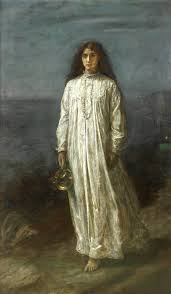
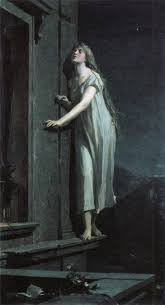
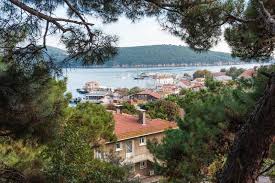
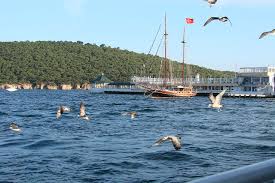

 Borderless