One day Ridima’s husband came home with an injured boy with a bandage on his head. There was a small room just before the main entrance of their house, it was mainly used as a guest room, the boy was laid down there by the people who carried him to the second floor. A scream came out of Ridima’s mouth; her mother-in-law pulled her aside and hushed her and told her to be quiet. She stood at a corner of the family space and watched.
The boy looked very frail, he was around eighteen or nineteen years old. She recognised him now. He was an orphan, who was given shelter by Ridima’s father-in-law. He worked in the shop and had become like their family member. The shops were in a building in Old Dhaka, that housed hundreds of small concerns, the interior was designed in such a way that it had a scaffold with white sheets on it and the stacks of material were arranged on the shelves above the scaffold. Everyone took their shoes off while getting inside. The customers sat on small stools that were arranged all around the scaffold.
The boy stayed in the shop while his food was sent from home in a tiffin carrier. It was a family-owned shop selling materials for clothes. That day one of their regular customers came and took one hundred pieces of material for shirts on credit. He promised he would pay the money as soon as he could. When Ridima’s husband went into the shop and saw that a whole stack of material was gone, he felt very happy. He pulled the cash drawer open. He couldn’t see any money there. He asked the salesman about the cloths. As the boy narrated the incident he lost his temper and he took the jock from his car which was parked nearby and hit the boy with it, at the back of his head.
The boy fell unconscious and bled profusely. The boy could have died. Sensing the danger, her husband quickly called the compounder from across the street to get him bandaged. People from all around the shops rushed and advised that the boy should be taken to hospital. Pretending that it was a mere accident Ridima’s husband asked some other boys to carry him to the car. The compounder also recommended that the boy should be taken to the hospital immediately. However, Ridima’s husband took him home knowing that there could be a police case if were taken to the hospital. A doctor was called home to treat the boy. When the doctor saw the boy’s condition, he refused to treat him saying that he had be taken to the hospital. Ridima’s husband first threatened him verbally. When that didn’t work, he went inside and got his licensed pistol and asked him to treat the boy. The doctor got scared and wrote down a list of things that he needed and waited patiently till the things were brought. Another boy was given the money and sent to the nearby dispensary. The doctor gave twenty-one stitches and heavy doses of medicines. He told them to keep the room clean and he told them he needed to change the bandage and do the dressing every day and perhaps, then, the boy would recover, even though his cut was deep.
Immediately Ridima’s mother-in-law sat down on her prayer mat with her long prayer beads. It stayed coiled on her prayer bed at one corner of the long rectangular room. A prayer mat was always spread on the prayer bed. There were about ten thousand beads on the string, she would have to finish it for about twelve and half times in order to do a Khatme Yunus; La illaha illa anta subhanaka inni kuntu minas Zalimeen, which meant, “There is none worthy of worship besides you, glorified are you, surely I am from among the wrongdoers.” It was a one-line prayer which had to be recited one lac and twenty-five thousand times in order to get results. It is said that one of Islam’s earliest prophets was devoured by a whale, he was inside the body of the whale for two and a half days and he recited this prayer and finally the whale gave out everything in form of vomit and Prophet Yunus was saved. Since then, it was called “Dua e Yunus” and Muslims all over the world used this prayer when faced with a big crisis.
Since the doctor was paid a huge sum of money and requested by the family to keep it a secret, he came back every day for a week and treated the boy. Ridima was very scared the first few nights. She feared the boy might die, as he had high fever and was delirious most of the night. He slept and they locked the door with a padlock. They opened the door only to give him food, clean the room and when the boy needed to use the toilet. He had to be helped to go to the toilet. Ridima’s mother-in-law asked her to make chicken soup for him every day, he was given soft rice with fish curry, the types known to produce blood in the body.
After a month, the boy could walk properly but Rimida wasn’t sure if his head injury had fully healed. She tried talking to her husband about it, he said, “You keep quiet! Do not try to act smart and meddle into affairs you know nothing about!”
Ridima’s heart shrank. Her eyes welled with water, and she tried to keep herself from weeping.
A few later, the boy said he was going to take a stroll downstairs. Ridima was doing some household chores, the boy nodded at her and walked out.
After Magrib Azan, her mother-in-law declared the boy was missing. Everyone asked Ridima if she was the one who let him go outside. She denied the fact in trepidation though her mother-in-law would not buy it. When her husband came home, her mother-in-law tried to tell him that it was Ridima’s fault that the boy escaped.
Her husband was taking his socks off and said, “Let him go! He was cured and cannot file any case anymore! Good riddance!”
.
Jackie Kabir is a writer from Bangladesh. Her collection of short stories Silent Noise was published in 2016. The titular story is being taught in BA English course in colleges under Manomanium Sundaram University, Tirunelveli. Tamil Nadu.
.
PLEASE NOTE: ARTICLES CAN ONLY BE REPRODUCED IN OTHER SITES WITH DUE ACKNOWLEDGEMENT TO BORDERLESS JOURNAL
Like most people, I had always been fascinated by the ‘Celebrated Wisdom of the East’. Especially exotic was the ‘Ultra Mysterious Wisdom of Tibet’. So, when a university acquaintance in British Columbia mentioned that, through a personal connection, he could set up a meeting in Kathmandu with one of the most storied of all the lamas, Baba Rinpoche, I rose to the challenge.
As was his wont, in the springtime, Baba Rinpoche would be walking across the Himalayas, from Tibet to Nepal. I, being of a less transcendental bent, would be flying into Darjeeling, then taking a helicopter, Riddington’s Ride, into Kathmandu.
We connected for lunch at the Lama’s Lair, a miniature version of the Potala Palace in Lhasa, sat near the fire, and dined on vindaloo curry over basmati rice, with green tea. Baba Rinpoche is about five foot eight, lean, with a shaved head, and was wearing Ugg boots (“One must keep up with the times”), and a thick maroon robe. He moved with ineffable grace, spoke with excellent diction, seemed to have a permanent facial expression of subtle joy, and altogether radiated the cheerful serenity of perfect self-control. I was struck by the ultimate logic of his communication, then recalled that he had been a philosophy student at a highly regarded English university prior to the unfortunate incursion from Beijing, when he returned home to provide his people moral support.
When we met, he pressed his hands together, bowed, and said, “May peace be with you”. I asked him if that were a standard Buddhist greeting, and he said, “No, but, although I am a good man, I am my own man!” Pious, but a perky personality turned out to be part of his charm.
BR: Now, I understand you would like to investigate the obscure and storied “Wisdom of the East”. From that, I assume, you will essay to deduce lessons for good living in the West. I am not certain I am a repository for any knowledge you do not already possess. Nonetheless, I will be happy to respond to your questions with . . . something.
However, as I am a Tibetan monk, you must be prepared that some of my answers will in fact be . . . nothing. Silence.
Validating, I suppose, your initial premise of impenetrable Oriental mystery! But this is our Way. Take it or leave it!
Now, what may I tell you?
I: I really only have one question.
BR: And what is that?
I: Buddhists world-wide revere life itself. And that includes all the animals. But most
people feel that the only animals that really count are us. How do you explain your reverence for all life?
BR: Scaling.
I: Scaling?
BR: “Let us go then, you and I”, to quote Eliot, that American, who became a Brit, and then became a citizen of the world, a refugee of the wasteland, a wanderer in the rose garden of the mind. Where was I? Oh, yes. “Let us go then, you and I”, onto the plains of the Oriental intellect. Then let us go and make our visit to the room where the women come and go, speaking of the mystical Dao. Let us be prophets in our own land.
I: I think I already may have had too much green tea.
BR: Not possible. Now, one of the reasons Eastern thought seems obscure, not to say irrational, to Westerners is that Western thought is narrow, focused, and concrete, whereas eastern thought is broad. holistic, and abstract. Western thought was born on the Island of Samos, a small place, with many rocks. Eastern thought was born on the Gobi Desert, a large place, with much open sky. That scaling of geography emerges, like Houdini from an iron box, in the scaling of thought.
I: I am completely lost! And here I expected to go to all this trouble and at last nail down Eastern thought. But it’s already completely out of reach!
BR: Not to fret. You see, that is the first thing I told you—be at peace! Does a lotus flower worry if the Royal Orient Train will be on schedule? Does a perfect piece of jade brood as to whether anyone influential is admiring it?
We all have our place, and that place is here. We all have our time, and that time is now. We all have our person, and that person is us. Our most precious possession is our minds, and our minds are always present. Thus, we are secure. So, be of good cheer!
Logic is hard to master, yet terribly basic. But the logic of scaling is not so complicated. You’ll get it.
I: I’m going to have to take your word for it!
BR: You see. We’re already making progress! Consider Genghis Khan.
I: I’m lost again.
BR: Though no one in the West wants to admit it, Genghis Khan conquered the world. Nobody beat the terrible khan.
Think about this. One yurt, perfectly arranged, with military precision. One cavalryman, a masterful rider. Dead shot with bow and arrow. Comfortable in all kinds of weather. Tough as a piece of iron. Dedicated to the leader, and instantly responsive to commands.
Multiply that by two hundred thousand. Now you have a crack force that can level cities from the Yellow Sea to the Danube River.
That’s scaling.
I: I think I have had too much, or not enough, vindaloo curry. Maybe I should have had a hot dog.
BR: Enlightenment ever calls for patience.
Now, consider this. The Great Wisdom, which created the World, wants to create Life. The skies are in place. The mountains are in place. The seas are in place. But it would be nice to have some company. But, to build Life, a design is needed.
I: A blueprint?
BR: Even so.
Of what will Life be comprised? That is, what is the list of Qualities that go into what we think of as Life?
I: And that is?
BR: Perception that sketches out the nature of reality: wet and dry, hard and soft, sweet and bitter. Interpretation of perceptions: opportunity or threat, safety or danger. Identification and classification of pieces of reality: self or other, friend or foe, refuge or exposed field. Causal relations: this does this, and that does that. Social relations: this is my group, and we cooperate; that is their group, and we compete. Planning: I will go here and do this to get that, and to avoid the other thing. Emotions: I got what I wanted, so I feel good; I got injured, so I feel bad.
I: Wow. That’s a lot!
BR: Not so much, really. What in logic we call necessary and sufficient. A minimum set of Qualities necessary and sufficient to comprise what we think of as Life. Some life ranks higher on the complexity scale, naturally, and some life ranks lower on the complexity scale.
I: Ah, I think I may be getting this! Life is essentially the same, up and down the scale of complexity. The lowest level is essentially the same as the highest level.
BR: Even so.
I: The dolphins are a lot like us, the whales and the orangutangs, the parrots and the jaguars, the bears and the beavers. It’s the same basic system up and down! The scale doesn’t change the system. Is that right?
BR: Precisely, exactly so.
I: And that’s why Buddhists all over the world revere life itself, because it’s all essentially the same. “They” are all “Us”. “We” are all “Them”. Is that it?
BR: Spot on!
I: You know, I think I might have a little more vindaloo curry and green tea.
As we stood outside the restaurant, Baba Rinpoche hitched his small blue canvas backpack onto his shoulders and looked south into the sapphire mountain sky at a distant, huge, drifting, snowy cloud, as if trying to decide whether it was going to be friendly or unfriendly. “I am going to visit the Bodhi Tree, where Buddha found Enlightenment. I haven’t been there in years”. He mentioned that as casually as if he had said, “I’m going down to the market to pick up some tea”.
“But it’s hundreds of miles to that place,” I protested. “And you haven’t any money.”
He gave me one of those little serene smiles of his, and that placid look gazing a thousand years into the future, and said, “The world will provide”. And off he strode, zigzagging through afternoon traffic with the grace and ease of an Olympic skater.
And he was right. I paid for our lunch.
Guru Rinpoche (Tibetan “Precious teacher”) lived in the 8th-9th century. He was the founder of the Nyingmapa school of Buddhism in Tibet. Courtesy: Creative Commons
Steve Davidson is a psychologist from California, the author of the clinical textbook “An Introduction to Human Operations Psychotherapy”.
.
PLEASE NOTE: ARTICLES CAN ONLY BE REPRODUCED IN OTHER SITES WITH DUE ACKNOWLEDGEMENT TO BORDERLESS JOURNAL
The call for fajr from the local mosque
Pierces the stillness of early morning,
The sruthi box in the puja room stirs awake.
It is dawn in Calicut. The house is quiet, except for the muffled sound of water from the washroom, where my aunt does her ablutions before prayer. She shuffles her way into the puja room and hurriedly shuts the door, careful not to let even a slice of light escape the room and disturb the rest of us. For the next hour, she will be in deep meditation.
Across my bed, I see Amaama. Wisps of white hair framing her toothless mouth, she seems peaceful. Sleep didn’t come to me easy the previous night. A long journey back home and the sudden shock of seeing my grandma succumb to inevitable illness, leaving both her mind and body fragile, have rattled me. I watch her, drifting away in the land of nod.
As the sun peeks out reluctantly from the rain clouds, she wakes up. She looks at me, a question mark on her face. “Do you remember me, Amaama?” I ask. She nods, but when I ask her to tell me my name, she mumbles. I realise that I have become unrecognisable to her. Even after watching her struggle with her memory for the past two years, this upsets me.
My aunt makes idlies for breakfast. I offer to feed Amaama idlies and sugar. It is the food of infants, but it seems like she is a helpless child all over again. After an hour, she quips in a plaintive tone, “I haven’t eaten anything.” We make her a cup of Horlicks and she smacks her lips appreciatively while sipping on the sweetness of the malt.
I spend the day sitting near her bed, reading, in an effort to forget the maze of memories that cloud my mind. I also feel vaguely guilty, though I can’t really tell why. Should I have called her more often when I was away? Should I have been more affectionate to her when she could remember? Could I have been a better grandchild? The regrets pile on, one after the other, and then I understand that the root cause of my guilt is the startling realisation that I never got to know Amaama as a person. All my life, she has been Amaama. What was she like as a child? What was she like as a young woman? What made her happy? Did she have any regrets? I will be in Calicut for the next two weeks and I determine to make use of that time to understand more. I speak to my aunts, pore through old photographs, try talking to Amaama herself.
*
A little girl in pigtails and pinafore
Finds the greatest joy
In knitting needles and yarn.
My grandmother, Saraswathi Menon, was born in 1932. Her ancestral house is in a village called Kalapatti, in the district of Palakkad, in the foothills of the Western Ghats of southern India. Sarasu, as she is known to her family, was the fifth of seven children. Her father was an inspector in the public works department of the Indian Railways. The family moved between Tuticorin and Sucheendram, two towns on the tip of the Bay of Bengal, and Sarasu grew up in relative affluence. The first brush with hardship must have come at the age of eight, when she lost her mother, who at that time was hardly thirty-three.
Sarasu’s paternal aunt helped raise her, and she moved back to her hometown in Kerala with her younger siblings. As a teenager, she developed a lifelong interest in embroidery and knitting, spending all her time with her knitting needles and balls of yarn. She did not pursue studies after her high school matriculation exams; she did not pass the English examination and did not want to place a burden on the family’s dwindling finances by making another effort.
A memory of Amaama urging me to study flashes across my mind. At that point, she had self-deprecatingly joked that she had no buddhi and that’s why she didn’t study further. I think back and often marvel at how Amaama still aced the many challenges that life presented her, despite this lack of formal higher education. To think of the person she could have become with the right opportunities…
Barely out of her teens, Sarasu returned to Tamil Nadu, as a newly married bride. This time, she found herself in Trichy. I look at Amaama sitting in her bed, propped up by pillows, listening to a version of the Ramayana rendered by Kavalam Sreekumar. I try to jog her memory, and surprisingly, she offers a story of her Trichy days. Her eyes well up as she mentions hopping onto rickety buses that took her to the Rockfort temple and the Sriranganathan temple on an island in river Cauvery. She smiles as she remembers an old lady who taught her how to make murukku and other delectable goodies that she treated her daughters to after a long day at school. She remembers getting married to my Thatha, and accompanying him to the various towns that his job as a sales engineer demanded.
I try to ask more questions, but Sarasu’s spark has disappeared now, and Amaama cannot remember anything else. She can remember events that occurred more than thirty years ago, but she cannot remember what she ate this morning — how treacherous is this mind!
As Kavalam Sreekumar sings in the background, my aunt quietly tells me of Sarasu’s first born child — it was not my aunt, as I had always thought. Sarasu’s first born was a boy; they named him Ravi but they lost him to smallpox at the age of two. This news startles me again — how had Amaama coped with the loss of her only son all those years ago? He would have been the brother my mother never had. How little do we really know of those close to us!
Life blessed Amaama and Thatha with four other children, all of them girls. My aunt talks about the ridicule and pity heaped on her parents, Amaama in particular – “Four girls! No sons! How will you raise four girls?” They raised them with love, making numerous sacrifices, instilling in them courage, confidence, compassion, and a sense of fierce dignity, a determinedness to be independent. It is a testament to Amaama’s sacrifices that all her daughters, and by extension, us — my cousins and I — have reached so far.
*
Coffee stains on the table
A jumbled-up algebra problem
Anger turns into a ghost of regret.
The day has come to an end. I have learnt new things about Amaama’s life, and I can now see a glimpse of Sarasu, behind the shadow of Amaama. My mother lights the lamp and takes it to the entrance of the house, chanting “Deepam, Deepam!” It is auspicious to keep a lit lamp at the door front at twilight. The air is alive with the buzz of mosquitoes. Amaama is awake. I venture to sing an old bhajan which she used to love. She smiles, she seems to recognise the song, but she still cannot recognise me. Memories spring up from the cobwebs of my mind.
It is supposed to be a holiday for Amaama. Two months in Dubai with her youngest daughter, my mother. I am in grade 10, at the peak of schoolgirl rebellion. A few weeks before the all-important board examinations begin, we have study leave. With my parents away at work, I find myself alone with Amaama.
One morning, I am working on algebra, timing myself to see how quickly I could finish a sum. I hear a cup of coffee being knocked over in the kitchen, but I pretend not to hear. Amaama calls out for me, but I ignore her. When she calls me a third time, I can no longer ignore her, so I stomp into the kitchen, sulking. Not saying a word, I mop up the coffee stains, and slam the microwave to warm another cup of coffee from the flask.
Amaama has not spoken a word about my unreasonable behaviour. I know I have reacted badly, behaving like a spoilt child, but a false sense of pride keeps me from apologising. I hand her a second cup of coffee and try to study for the rest of the day. It is a completely useless day; my anger has now turned to regret and guilt.
When my parents return from work, I observe Amaama speak with them. Will she snitch on me, complain about the brat they raised? She remains quiet, does not say a word about me; instead, she asks them about their day and tells them about gifts she wants to take back from Dubai. I feel uncomfortable. I would have felt better if she had reprimanded me instead.
That night, I toss and turn in bed. Amaama and I share a room, and I hear her sob quietly into her pillow. Guilt engulfs me. I reach out to hug her and I begin to cry too. Amaama turns over and asks what is upsetting me. Exams, I mumble, not wanting to apologise. She hugs me tight and says “What is there to worry? You’re such a midukki kutty. God is always with you!” I sob into the softness of her sari and she says, “I was wondering why my midukki kutty doesn’t like me anymore!” I reply in my garbled Malayalam that I would always love her, but I still did not apologise.
Forgiveness has always been Amaama’s best friend.
*
Barefoot pilgrims walk to Pandharpur
Saffron flags fluttering in the wind
“Vitthal! Vitthal!” The palkhi bearers chant.
It is pilgrimage season in Maharashtra. Visiting my aunts in Mumbai after ages, we arrange for a trip to Shirdi. A road trip will take us at least six hours. Amaama cannot sit in a car for that long. We decide that the Shirdi trip can wait, but Amaama insists that we do not cancel on account of her. “I’ll stay alone. Will keep myself busy with TV and my books. And anyway, Padma will come for a few hours in the afternoon, so I won’t be lonely”, she says. I wonder what sort of conversation our Marathi speaking helper will have with Amaama whose vocabulary in Hindi (leave alone Marathi) does not extend beyond Kaise Ho! I tell my parents and aunts to go ahead, and I offer to stay with Amaama. “Nothing doing, you have to go see the Baba at Shirdi!” Amaama insists. I slowly understand where my mother gets her stubbornness from.
We set out at dawn the next day and reach Shirdi a little ahead of noon. We spend the next few hours in the temple town, offering our prayers, and soaking in the meditative stillness of the masjid where Baba lived — it is a salve to a weary heart. Before dusk sets, we leave Shirdi. We whizz past fields of sugarcane and cotton, growing in abundance, on the rich black soil of these lands, stopping for a quick cup of tea at Igatpuri. There is a thick shroud of mist, and my mind keeps wandering back to Amaama. What could she be doing, all alone in that flat?
We reach home an hour before midnight. The Matunga neighbourhood is quiet. Amaama is in her chair by the puja room, reading Narayaneeyam. “Did you get scared, Amaama?”, I ask. She shrugs away the question and asks me back, “What is there to get scared of when I have God by my side?” Faith has always been Amaama’s best friend.
*
The Nilambur river quietly chugs along
Through hills and fields and forests
And merges into nothingness at Beypore.
It has now been three years since Amaama finally succumbed. Watching her struggle through ill health, losing control of her mind and memory, has been an excruciating journey for all of us. Ironically, death seemed to free her, release her from the terrible pain she endured for a few years. When I miss her a little too much, I turn to my phone which had faithfully captured a Boomerang video of her making a dosa when she was in better health. It reminds me of better days in the past when she would make bite sized unniappams, as dainty as the dimples on a toddler’s fist. Sometimes the grief of losing her is too much to bear. I think of a story I read as a child — something about a magic pot which kept cooking porridge for a hungry family. The family gobbled up the porridge, but the pot simply would not stop. It kept cooking porridge, till the porridge overflowed and flooded the entire city! Sometimes, my grief is like that. But then, I look at the photo of Amaama by my bookshelf. A sparkle in her eyes, and a half smile on her lips, she looks the picture of equanimity.
Many dawns have now passed by in that house in Calicut. Sometimes, during the monsoon season, I gaze at the grove of coconut trees outside. The wind rustles the coconut palms and the foliage sways, like dervishes drunk on divine nectar. Sometimes, a bubble of calm quietens an intense battle in my head. Sometimes, instead of holding onto an angry thought, I just let go, like the Nilambur river. In those times, I feel as if Amaama is watching me, from somewhere, where she is reunited with her beloved Krishna, where she can forever listen to the lilting melody from his flute, where she can watch him play by the Yamuna river. In those times, I feel as if her prayers and love have formed a protective shield, an invisible amulet protecting me from all perils. Love has always been Amaama’s best friend.
Glossary
Fajr – The first of five Islamic prayers, also known as the dawn prayer
Sruthi box – An instrument used in Indian classical singing to help tune the voice
Puja room – A shrine room for worship, religious rituals, prayers, and meditation in a Hindu household
Amaama – Malayalam word for grandmother
Idlies – Steamed rice dumplings, traditionally eaten as a breakfast dish in south India
Buddhi – Malayalam word for intelligence
Murukku – Savoury crunchy snack made from rice flour and lentils
Thatha – Tamil word for grandfather
Deeepam, deepam – The word “deepam” means lamp in Malayalam. In Kerala, at dusk, women carry lit lamps to the entrance of the house, chanting “deepam, deepam” in order to invite light and auspiciousness into their homes.
Midukki kutty – Malayalam term for smart girl
Vitthal – Form of the Hindu god Vishnu or Krishna, as he is known in the state of Maharashtra
Palkhi – Marathi word for palanquin. In this context, the verse refers to a yearly pilgrimage where devotees carry the sandals or padukas of the saint Dnyaneshwar from his shrine at Aalandi to the famous Vitthal temple at Pandharpur. The barefoot pilgrims carry the padukas in a wooden palkhi and the journey takes around 21 days by foot.
Shirdi – A town in Maharashtra, which is the home of Shirdi Sai Baba, a revered fakir or saint
Kaise ho! – Hindi phrase for “How are you?”
Narayaneeyam – An epic poem, comprising of 1,035 verses, narrating the life of Lord Krishna. The poem was composed in the 16th century by Melpathur Narayana Bhattathiri, a renowned Sanskrit poet hailing from Kerala.
Unniappam – Sweet dumplings made with rice, banana, jaggery and coconut
Krishna SruthiSrivalsan is a chartered accountant by profession and is passionate about books, writing, travel, and celebrating diversities, not in any particular order. She firmly believes that human beings should not strive to “fit in” when they are designed to “stand out”. She reads on a variety of subjects and genres and hopes to publish a novel someday.
.
PLEASE NOTE: ARTICLES CAN ONLY BE REPRODUCED IN OTHER SITES WITH DUE ACKNOWLEDGEMENT TO BORDERLESS JOURNAL
Tashi was padding barefoot with his goat. The sparkling light of the progenitor of life shone on his bald skull. His maroon kasaya robe seemed like the perfect camouflage for him amidst the flaming red grove of Royal Poinciana. He observed a bumble-bee perched on a tricoloured — white, purple and yellow– flower of a wild pansy, lapping its sweet nectar, while being as clueless as the bacteria (the sole life form that inhabited the Earth for the first two billion years) that spawned the tree of life. Rapt in the splendour of that spectacle, Tashi lost control of his grip; his brown threngwa (rosary) comprising one hundred and eight beads slipped from his fingers and plopped down in a muddy puddle. His goat also yanked its leash free from his grasp.
The goat scurried off to a tree that had low hanging boughs full of green chewy leaves. Tashi lay on his back, his head reclining on his arms, in the shade of a tree whose leaves were dappled sunlight — a gas burner facilitating cooking, photo-synthetically speaking – while the goat kept pouncing at its green food. As he lay abstractedly, a rueful yearning for his homeland Tibet arrested his mind.
Tashi used to be yet another shepherd boy with a small herd of Changthangi (Pashmina) goats residing in a village of Tibet, when he came to know about His Holiness Dalai Lama leading the cause of Tibetan people in India. His parents would talk about His Holiness in whispers, wary of the Chinese officials and spies. Tashi had made up his mind to flee. But his ailing grandmother was too attached to him.
‘Chetu, I love you more than my life,’ his grandmother would say.
So, it was only after his grandmother had passed away that he fled to Lhasa. He joined the caravan of the refugees who were going to India via Nepal. A hundred people including children were led by two guides to Nepal from Lhasa on foot. They walked at night and hid behind the rock-mountains during the day. It was chilly; all they had was a gray sky overhead and the snow-capped mountains around. The harsh wind would bite them without mercy. One night was so chilly that Tashi thought he would die!
Nevertheless, they would doze off during respite-breaks at night, due to exhaustion. The travellers would lie alone shivering at times, whereas snuggle up to each other to share body heat at other times. The travellers would sometimes quarrel over petty issues with one another, like who would occupy the best spot to rest first. The guides would desperately try to mediate. After about one month of endless walking, the caravan reached the Tibetan Reception Centre in Nepal, from where it was led to Dharamshala, India after the grant of the necessary clearance.
Shortly, Tashi’s eyelids got top heavy and dropped shut like, the magnetic door of a refrigerator. He saw a majestic, semi-arid expanse with steep-sided mountain ranges and two-horned, densely furred Tibetan yaks. A bright yet balmy white light dazzled his eyes. He shrouded his eyes partly with the back of his right hand, and began to peep through the gap between his fingers, looking for the source of the light. He raised his foot to walk towards the light, but as he raised his foot, he felt something tugging at it: a sleek, jet black snake had coiled itself around his leg, like a metallic foot cuff. While he grappled to free his leg, he saw his grandmother’s face – a childlike smile on a sallow face. He yanked his leg free. Soon, everything went black.
When the darkness dissipated, Tashi saw himself sailing in the air, stiff as a log. When he edged closer, he saw a pocket-clock dangling around his neck with its hands moving anticlockwise. With a jolt, his stiff self started up like a car engine, and was soon trundling in reverse gear. As this mid-air journey proceeded, his body began transforming itself into an antelope, then a golden retriever, then a Banyan tree, then a fern and in the end, he became as minuscule as an atom. He ground to a halt. He looked around; it was an eerie landscape, rather a moonscape, with whitish-grey pumice plains and dark greyish-black basalt rocks. There was no sign of life yet. Far ahead, he saw a towering volcano, throwing up sizzling lava and darkening the sky above it, too ready to cool its lava down into crystals by dropping the slimy mass into the lake below formed from a melted glacier.
A rumbling thunder roused Tashi from his marvelled slumber. Tashi scrambled to his feet, got hold of his goat’s leash and ambled backed to the monastery. Tashi was seventy now, and would die soon, he thought, without even setting a foot again on the land of his forefathers. And why, only because some of us cannot fathom the truth of our existence: that the long, long voyage that all our genes travelled to reach where we are today was, a joint enterprise and not a separate one. Then again, he knew that a monk was supposed to be devoid of all desires; so he immediately wiped off the wistful moist from his eyes.
At the monastery, Tashi tethered the goat to a bamboo pole and held the teats of the goat between his thumb and forefinger and massaged the udders downwards. He squirted the milk out into a steel bucket and took a gulp. The energy from the sun – the source of all life — that had flowed to the tree, then, in turn, to the goat had reached the man like a message, the message of interdependence and compassion. He sat bolt upright in dhyana, closed his eyes and accepted all the things that were beyond his control. He breathed in, breathed out, breathed in, and then never breathed out again.
Parnil Yodha is a law graduate and aspiring writer and poet based in New Delhi (India). Her works have been published in literary magazines like Indian periodical and Indus Women Writing.
.
PLEASE NOTE: ARTICLES CAN ONLY BE REPRODUCED IN OTHER SITES WITH DUE ACKNOWLEDGEMENT TO BORDERLESS JOURNAL
You once thought naively, oh no, not naively, but foolishly that the hardest thing to do was to sever the ties. To uproot. You did not know the true meaning of uproot back then. Or what it meant to sever the ties. You only wanted to leave your home. Your town. Your mother. Or maybe, you were just being a teenager with an insatiable thirst for freedom.
*
The mornings were the worst, gray and interminable, and you fought a lot with your mother. And at nights, you stayed awake. You imagined yourself as a princess, trapped in a palace waiting for a prince or maybe a demon to release you. You pretended to be a solitary prisoner some days, whose date of execution had been announced, but all she cared for was looking out of her cell window at a clear blue sky where a lone bird flied up, up, above until it turned into a dot.
*
You thought you didn’t belong in that small town with half-finished buildings and mud houses that had faded and where people, too, had faded, and looked more like the forgotten characters of a history book. You wanted to run away from that godforsaken place. You knew there was a world out there, bright and shining, living and breathing, bursting with cafes and restaurants, salons and boutiques and with freedom sprinkled in the air.
*
And then, one day you did walk out of your home and stepped into the new world. This new world—how much did you know about it? Was it a kind place? Sane and sympathetic? Or was it more crowded and chaotic than your old hometown? Could you read it the way you read the palms of your town? Did you know the name of the streets or the people of this city, the colour of its sky, the trees, the birds, the lyrics, the signs and the symbols?
No. You knew nothing.
You thought that you’d learn to navigate the roads, the twisting alleys and gullies, the hundreds of shops and days and nights. You thought you would slowly and gradually adopt to the new life of this new world. But it would take time, perhaps months and years. And in all those months and years, you’d peek into your old world sometimes just to see how things were! But you would not gaze at it for long, or you might miss it. Because you could never sever the ties forever. Forever is such a tricky adverb, an unsure word. But you did not know it back then.
You thought once you entered the city, you would forget all about your past life, the white walls of your house, your mother’s sewing machine, the poems, the songs and the rainy nights. You thought it was fine to lose some memories, a few books of classics and the old school diaries. You wanted to build new memories, new friends.
You worked two jobs, one full time, one part-time. You cut your hair, painted your toenails, ate yogurts, made ginger tea and sang new songs. You thought you were content, and no memories of the past would ever come muttering after you in a soft November night when you were cooped up in your room, alone. You thought you would never wake up in the middle of the night to the pitter patter rain pouring outside and your heart would not ache for the starry night sky you used to watch, lying next to your grandmother on her cot in the open courtyard of your home.
But you were wrong.
*
You were wrong to presume that you could erase the past. That you would never feel the urge to go back to your town. And you realised it when your little brother, a grown up now, showed up at your door one rainy morning. You never thought one single knock would usher so many memories of yesteryears; and made you ache for the home you left years ago.
*
When you decided to go back to your old town, you remembered how you’d once thought naively, oh not naively, but foolishly that the hardest thing to do was to cut the ties. When it was tying the cords that seemed to be much harder, a colossal task. Was it even possible to go back? You felt the pain that Odysseus must have felt. The quandary the great hero was in! You grasped why he though spent a lifetime at war, but found the biggest struggle was finding his way back home?
*
You were the new Odysseus, puzzled, lost. What if the house, where the bougainvillea bloomed on the roof in white, pink and yellow all the year round and a cat often came to sit, wagging its tail, in the wide courtyard failed to recognise you? What if your family had already filled the vacuum? They would be no longer willing to open an old wound.
You boarded the bus, packed with people and your fears and a throbbing heart on a sunny morning in late June. And when the bus dropped you onto a dusty road of your old town in the afternoon, you were surprised to find yourself surrounded by a sea of green. The leaves of the trees on both sides of the road rustled and murmured, and the scent of some wildflowers wafted in the air and you wondered: Do you walk ahead? Or wait for a return bus? Go back to the city?
The dust beneath your feet twirled and swirled, and you bit your nails and looked at the sky, filled with clouds and your doubts. You stepped off the main road and walked down to a muddy field, flanked by bamboo and coconut trees. You suddenly remembered there was a short-cut path snaking through the bamboo groves and coconut trees. And you realised that you found your freedom, you needed to find your home now.
.
Marzia Rahman is a Bangladeshi writer. Her writings have appeared in several print and online journals. She is currently working on a novella. She is also a painter.
.
PLEASE NOTE: ARTICLES CAN ONLY BE REPRODUCED IN OTHER SITES WITH DUE ACKNOWLEDGEMENT TO BORDERLESS JOURNAL
The man on the radio said that the war was over. He said that we won. He said it with such elation it seemed we had won the World Cup in a game of cricket. Young boys and men on the bus rejoiced much the same way.
It never made much sense to me, claiming to win a war one never fought, or a game one never played; rejoicing over the win as though it was born out of one’s own blood and sweat. I certainly did not rejoice. I did not fight the war; I ran from it. Well, as far as the government was concerned, I did not desert the army. They would not hunt me down and drag me to court. But I did run, and I knew it; soon, everyone would.
I walked through the paddy fields and past the ponds blanketed in water hyacinths. The driver boy of a cycle van had offered me a ride home. I refused; not because he was a familiar face, but because I decided that I did not deserve it. I was a quitter. Quitters do not deserve free rides. Although at the time I scored the voluntary retirement citing domestic and personal reasons, during the hiatus between the attack and the war, I did not think that I was a quitter. I knew that it was only a matter of time before the war broke out, but I was confident and I had my priorities set. In all my years in the field, I successfully anticipated enemy movements, but I failed to anticipate the guilt and the regret that would engulf me after the initial euphoric relief would wear off.
My wife opened the door. I could tell by the look on her face that she was not expecting me. The war was over, but I could not have been home so soon. She was confused, but she was happy. My little one had made her way into the seventh grade, and my parents were frailer than I had last seen them. I looked at their smiling faces and realized that the guilt and the regret were merely a late reaction to my friend. I was right where I wanted to be — home.
“You’ll regret this,” my friend had said.
But I did not argue because he was not there, riding shotgun in the patrol jeep when the vehicle sped into the boulder on the side of the road; he was not there when I discovered the blood and brains of the driver spattered across my uniform; and he certainly was not there when I realized that the driver was not supposed to die that afternoon. We had to change our vehicle at the last minute. Our right-hand drive jeep had malfunctioned as soon as we left the base; so, we returned and switched it for a left-hand drive one, something the shooter had no notion of. As I washed my uniform at the base that evening, I longed to hold my daughter in my arms, embrace my wife, and see my parents. I knew that the attack would trigger the war, and I knew that I had to run before it started.
It has been months since I came home. My wife rarely looks me in the eye anymore. She hides away from the neighbours and keeps to herself within the four walls of the house. I can understand why. And I should feel the guilt and the regret I had started to feel when I was walking through the paddy fields, but I do not; not since I attended the funeral of my friend who had warned me that I would regret my choice; not since I saw his inconsolable widow and his helpless little girl pretending to look brave. I did not join the army to become a forgettable martyr; I joined because I needed a job; because I needed to feed my old parents; because I needed to impress the family of the girl I loved and wished to marry. I am not a hero; I am just a man, a coward with priorities. And my wife will simply have to make peace with that.
Tejaswinee Roychowdhury is a lawyer with an LL.M. in Business Law, who finds catharsis through the written word. Her words have appeared in the Kitaab magazine among others.
.
PLEASE NOTE: ARTICLES CAN ONLY BE REPRODUCED IN OTHER SITES WITH DUE ACKNOWLEDGEMENT TO BORDERLESS JOURNAL
She moved softly towards the edge of the balcony and stood there for a moment looking at the well-kept garden below. She could see an old man sitting on a bench, leaning heavily on one armrest, and she smiled in aesthetic pleasure at the picturesque contrast his grey shirt and trousers made with the dark brown wood on which he was seated and the sea of bright green grass that surrounded him. A row of colourful parakeets dotted the back of the garden seat and its other armrest in an uncannily equidistant arrangement, thereby completing the scenic view.
Although the old man was facing away from her, she was struck by his drooping shoulders and the overall impression he gave, of flagging hope. What ailed him?
Was he a convalescing patient, or an anxious relative? Was it a sick spouse he was waiting on, or an injured grandchild?With a pang, she thought: Is it a birth that awaits him, or…?
So many questions!
She sighed, a little disappointed that she would not be here when the answers came, in their own sweet time.
Something large and white swooped down just then, and she saw that it was a cockatoo, eagerly pecking at something in the as-yet dewy lawn, and as she watched, she saw two more alight nearby. She vaguely remembered reading something mystical about these birds but could not recall exactly.
Some distance away, a rather ugly turkey waddled onto the scene, and she could not stop herself from thinking that it somehow spoilt the pretty picture-postcard effect. She smiled then, a little guiltily. Who was she to judge?
Someone had left a wheelchair out here, which was rather strange, given that they always seemed short of wheelchairs when you asked for one. Although she no longer needed it, she felt an urge to go over and seat herself in the rather abandoned-looking contraption. That was when she realised that there was something wrong with one of its wheels. No wonder it was not in use right now!
But it was still most disorganised of housekeeping to have left it out on the balcony, she thought as she settled herself in it, anyway.
It was so calm and peaceful out here in the early morning and she was glad of the solitude. Before long, there would be bedlam in the ward, but for now, she was on her own.
So quiet, so strange. Nothing had prepared her for this – it was really, so very peaceful.
And yet, why did she have this unfulfilled feeling, this one unchecked item in her bucket list?
Could it be that she had wanted it too much? Perhaps, she had wished too hard.
What was it they said – Let it go, then it will come to you? Perhaps she had never really let go…
She sighed again. Nothing to complain about, after all. A good husband, although he had died many years back, may he rest in peace. Good sons, who were taking turns looking after her. Why, even now, one of them was sleeping soundly back in the room, exhausted no doubt, by the several night-time interruptions that he uncomplainingly stayed awake to attend.
Her eldest. Her heart went out to him. She wished she could tell him that she had not meant to be a bother, that she had not wanted to trouble any of them. But they had never really been good at expressing feelings to each other.
Well, things would be all right. Eventually.
She was aware of the stranger’s arrival on the balcony even before she saw him. She let him stand there for a moment and get his bearings before she turned to acknowledge his presence with a smile. He smiled back.
It felt as if it was the most natural thing in the world.
He leaned over the railings to look down into the garden and she too turned to look again at the bench below. The old man was now rising from his seat, using the armrest to propel himself into a standing position while resting his weight on a stick. She noticed that his walking aid had a clawed foot with four prongs. It was strange that she could count them from this distance, but she supposed it was one of the perks of her situation.
On the man’s stirring from his hitherto statue-like posture, the parakeets on the bench took flight and rose into the air as one, like a multicoloured festoon on an invisible string. How pretty!
Her companion on the balcony had turned around now and with his back against the railings, was looking at her. She gazed back at him serenely and they smiled at each other once more. It seemed that no words were needed.
But it would still be nice to talk.
Almost as if he read her thoughts, he said, “It’s so peaceful, isn’t it?”
She nodded, raising her eyebrows in agreement.
“What a contrast…!” he continued, gesturing with a circular motion of his hand towards the inside of the building and indicating a lower floor. “I mean, down there…”
She understood.
“Heart attack?” she queried gently.
It might have seemed a terribly rude question to anyone listening, especially since they were her very first words to a total stranger – her sons would certainly be horrified if they knew – but she was over eighty and old age brought with it certain privileges that the young could never understand.
He did not seem to mind, anyway, as she had known he would not. He raised his fist in a thumbs-up gesture and smiled at her again. Such a sweet smile he had, too.
“And you?” he asked.
“Well, just old age – all sorts of little complications… That is how it starts, you know.”
He looked doubtfully at her. “You don’t look that old to me – I mean, really – I’m not just flattering you…”
It was interesting that he could blush, even now.
She laughed. “I’m eighty,” she said and at his look of surprise, went on with a smile, “I believe you – that you are not flattering me – people always said I was very well-preserved…!”
He snorted. “What an expression! Sounds as though they’re referring to a bottle of pickles!”
She laughed again and looked at him with interest. “You can’t be above sixty-five yourself…”
He cast a sidelong glance at her, looking both pleased and self-conscious as he replied, “I’m seventy-two.”
They smiled again. It was such a comfortable feeling, this camaraderie with a perfect stranger. And yet, it did not feel like he was a stranger at all.
“What kept you?” she asked. Another strange question it would seem, to any eavesdropper, but to him it made perfect sense.
“The doctor would not let me go,” he said. “A very conscientious young chap… It was awful to see the look on his face – I felt I had let him down…”
She nodded. It was ironic that one tended to feel sorry for the people who left, when it was those left behind who needed sympathy. Her thoughts went to her sons, and then she wondered about her companion.
“Who do you have here with you?” she asked, a little curiously.
He coughed in embarrassment. “Nobody, really. A neighbour brought me here, and I guess my friends will be in sooner or later…”
“I’m sorry.” She really was. She thought again of her two lovely sons and was grateful.
She looked away through the railings and was once more impressed by the scene before her: It was as if someone had daubed bright streaks of paint onto a green canvas – a few large and white, and several smaller ones of varied hues – only, none of those spots of colour were still; some of them took wing even as she watched.
She was aware all the while that he was glancing at her on and off, so she was not surprised when he asked again, “And you?”
There was the faintest trace of anxiety in his voice, and she thought she caught a flash of jealousy in his dark eyes before he looked quickly away.
“My elder son is here with me now. He’s the more responsible one though he hates to show his affection openly…” She smiled with a mixture of fondness and regret as she thought of their most recent disagreement. She had not wanted to be hospitalised, but then she became so sick that she no longer had any say in the matter.
Looking back now — all those arguments seemed such a waste of time. And life. Or perhaps both were the same.
She looked up to see him listening intently and went on, “The younger one is more talkative and has been keeping me amused during the day – he should be here too, shortly…”
She waited a moment to hear the unspoken question she knew he was bursting to ask, but he was silent. Taking pity on him, she decided to answer it for him, “My husband is no more. He died many years ago.”
“Oh – I am sorry…” he said in genuine contrition.
She spread her hands philosophically. “It is okay, it was a long while ago. And I suppose we were just two good people blundering along together…”
He looked sharply at her then and she went on, “Somehow, we didn’t really connect – otherwise, he would be with me now, don’t you think?”
He looked down at his feet, his hands on the railing behind him. “My wife and I divorced a good many years back…” He coughed again. “I never really wanted to try again after that.”
She nodded. “You were waiting, but nothing ever happened.”
He glanced up at her in surprise. “You understand?”
She smiled, then. “I waited all my life.”
Perhaps it was something in her voice, or maybe it was the way she tilted her head when she looked at him. Nevertheless, that was when the shock of realisation hit him. He kept staring at her speechlessly until she asked gently, “What kept you?”
This time her meaning was different, yet he understood her perfectly. He came forward eagerly then, and reaching down, took her hands in his.
“I don’t know, I’m not sure… Was it Fate?!”
Their eyes met fully for the first time. Such dark eyes, a lifetime of longing. And his smile – the sweetest thing she had ever seen.
Behind them, the ward was coming to life. She thought she could discern sounds of panic, some sort of a flurry.
“Shall we?” he asked, still holding her hands. She rose from the wheelchair, but then could not resist turning to look towards the rooms.
“Don’t,” he said, gently. “If you do, he will feel your pain and be haunted by it for the rest of his life.”
“How do you…?” she began, but he answered in anticipation, “My mother. I felt it for years afterwards…”
She wavered in indecision, saying wistfully, “If only they could know how peaceful it is, it would not hurt them so much…”
He nodded then, but said again, firmly, “He will be all right – they both will. You’ll see.”
Just a while back, she had been amused by his boyish jealousy. And now, he seemed so much wiser than she. Perhaps, age and time and space meant nothing hereafter?
A large white bird flew up and landed expertly on the balcony railing. As it gazed boldly at them, she suddenly remembered what she had read and felt a strange compulsion to reach out and touch it.
“Don’t! You could lose a finger…!” he cried out, and then they both laughed at the absurdity of it.
She reached out, and the cockatoo – that symbol of light, and change, and of the end of the tunnel – fluttered up and seemed to rest lightly for a moment on her outstretched arm. Then it took off, and as they watched, it flew upwards towards the trees and out of their sight.
“Shall we?” he asked again, and this time, she was sure. They smiled at each other, the sweetest smiles, and it was the most natural thing in the universe.
.
Revathi Ganeshsundaram finds the written word therapeutic and loves reading and writing fiction, sometimes dabbling in poetry. Her work has been published in Borderless Journal, Kitaab, Literary Yard, and Readomania
.
PLEASE NOTE: ARTICLES CAN ONLY BE REPRODUCED IN OTHER SITES WITH DUE ACKNOWLEDGEMENT TO BORDERLESS JOURNAL
A parable by Louis Couperus (1863-1923), translated from Dutch by Chaitali Sengupta
Statue of Louis Couperus
Museum in The Hague
Portrait of Louis Couperus
Louis Couperus is one of the foremost figures in Dutch literature. Courtesy: Creative Commons
The forest was somber, and the air dark; it was a long night without the solace of the stars, it seemed to sink into infinity, sink deep into all that was mortal in this world. It was at a time like this when the young boy woke.
He was a boy of some years, and he did not remember anymore, whether he was lost or abandoned in that forest, because he had slept for such a stretching length of time. Shuddering, his eyes large and full of fear, he looked around himself. But the way forward was lost behind him.
“Where am I,” the little boy thought, in that soul-shattering darkness. “And who am I and where am I to go…”
A vague remembrance stole upon him, a memory of shimmering light and warmth. Like a weeping, wafting out of the warm sun palace. But more than the weeping, he remembered nothing much. Now, fully awake, he became aware of being alone, abandoned, lost in a forest of horror.
The very thought made the little boy cry out in childish despair. The fear of beasts and that of robbers assailed him. Then, he saw a silvery twilight moving across towards him, in silence. Was it the wild man, he wondered? In his deep consciousness, the thought rose death-like. His little heart throbbed wildly in his throat and his small eyes bulged out in terror.
Soon, he realized the beaming twilight, that glided on his way, was not the wild man; it was a white woman.
The little boy, in the twinkling of an eye, thought he recognized her: a woman, very white, the kind of white woman he liked. With mingled fear and expectation, the little boy ran up to her.
“White lady!” he begged, folding his hands in a gesture of prayer that perhaps he had been taught in the sun palace, many, many years ago.
Tall and slender, the white woman’s veils were the whitest white, flashing against the gloomy, dark depths of the forest. She bent over the child, and her gaze caught him through her veils; her white hands were briefly extended, as if she wanted to see better; better, with her deep dark eyes, as deep as the black, shadowy forest.
“White lady!”, the child pleaded again.
“Who are you, my child?” asked the white woman. Her voice sounded primeval, thick and dark. “And where have you come from and where are you going?”
The small boy began to cry again; the woman’s voice frightened him, and he did not know who he was, where he had come from, or even where he was going…
“Come with me then”, said the white woman gravely, and she stretched out her hand to him. The little boy held out his hand to her too, and went beside her, with weeping eyes.
“Don’t cry anymore,” said the white lady. “Hold my hand safely, let me lead you: do not be afraid. In this forest, there are no beasts or robbers.”
The child felt a gentle trust wash over him, especially now that the cold hands of the white lady were warmed by his own small, warm one, but he still stumbled very often, and his short legs grew tired soon.
“Then, let me carry you, my dear.” Saying so, she lifted the child to her breast and held him very lightly between her white veils: her footfalls were light, floating, like unheard-of steps. In her arms, the child fell asleep and dreamed of the sunshine and white women, and also of white children. She walked on.
When he awoke, the child smiled and peered into the dark depths of her eyes.
“You are a good white lady, aren’t you?” asked the child, as confidence sparkled in him. He wrapped his little arms around her neck.
“Yes,” said the white woman. “I am a good white lady, my child.”
“Are you not tired of carrying me, good white lady?”
“No, my child, I am not tired. I never rest, I always go.”
“Always?”
“Always.”
“Through the whole forest?”
“Through the whole forest. See, the morning breaks magnificently, through the branches, and the way ahead seems clearly visible.”
“Now I can walk again, white lady.”
The white lady put him down, carefully on his feet, and wrapped herself closer in her veils. The child walked on beside her, happy now that all the mystery of the night had been resolved in the smile of the morning.
“Oh!” cried the child; “See what a beautiful flower that is!”
“And there, what a beautiful butterfly!”
“Oh!” said the child joyfully. “I would like to have them, the butterfly and the flower.”
“I shall give you the butterfly and the flower,” said the white lady; “but then, you must also give me something in return.”
“And what can I give you, white lady?”
“In lieu of the butterfly and the flower, my child, you must give me this morning hour.”
“Oh, beautiful is the flower, and beautiful is the butterfly: oh, white lady, I gladly give you this morning hour, in return!”
The white lady smiled. With a mysterious, dark look she looked at the child.
Then she caught the butterfly in her veil and bent over the precipice to pluck the blue flower. She offered both to the child, who rejoiced with happiness.
“O white lady, O white lady,” the happy child spoke out in joy. “How happy I am with my flower and my butterfly!”
But in his joy, the boy squeezed the butterfly to death and the flower withered in his little hand. “Oh, but how soon, O white lady, is my flower wilted and my butterfly died!”
“But dear child, butterflies do not live long, especially not in the hands of children, and flowers wither even faster. But if you give me this new day of spring, I will bring up thousands of butterflies and thousands of flowers, by magic, all along your path today.”
“A thousand of butterflies and flowers! Oh, white lady, for so many flowers and butterflies, I will gladly give you my day in spring.”
Now the glowing sun had completely burst forth, and the forest no longer wore a black garment; it sparkled with golden-green spring. And along the shining road, the child walked in springtime, and picked the blooming flowers and caught the colorful butterflies, for they bloomed and fluttered all along the road.
But by evening, the flowers had wilted, and all the butterflies were dead.
“Still, it was a lovely spring day,” said the cheerful child, now with sleepy eyes. Exhausted, he wrapped his arms around the white lady and slept on her heart, between her ephemeral white veils.
Night fell, the white lady walked on, and in the depths of her shadowy eyes, a peal of wistful laughter broke quietly. “But that glorious spring day is now mine!” murmured she, in a nameless, deep, dark voice.
The white lady took the little boy to the city, among other people and children. The child grew up there. He became big and strong among those he assumed were his parents, his brothers, and sisters, relatives, and friends.
Many seasons later, the white lady appeared to him again. The white lady of his yesteryears, the one whom he had forgotten completely. Now, her deep dark eyes frightened him, even though he was now a young man of eighteen.
“My son,” the white lady called him. “I have not forgotten you.”
“I was ungrateful, white lady,” confessed the young man. “You saved me, a lost and forsaken child, from the gloomy forest of night And, you gave me butterflies and flowers.”
“Yes, thousands of butterflies… in exchange for one spring day!”
“Yes… thousands… for one day in spring. You brought me to the city, and I found my parents.”
“And they fed you and cared for you until you became a man, my son, a young man of eighteen. But don’t you remember, the promise? What returns would you give me now?”
“Oh, yes, white lady, I remember very well. A spring day in exchange for the butterflies and flowers. I also remember the eighteen spring seasons of my life, which you demanded to bring me into the city where I could be with my parents, and they would raise me with my brothers and sisters, and with my relatives and friends.”
“If you still remember that promise, my son, the white lady is now content… And she’s happy. In exchange of just eighteen, withering spring seasons, you have received youth and a youthful time of pure happiness.”
“But now, white lady, my happiness is over, and I am bitter with grief,” cried the young man. “For I love a girl as beautiful and as soulful as no other girl in the world, and I should like to call her my wife. But alas! She does not love me. I have but little possessions and one among them is my anguish, that I cry out on my violin.”
“My son, you know how much I love you. If you can give me, no more than twenty blooming summers of your life, I will gladly give you happiness, a consort, and money. Twenty blooming summers, in exchange for the bride, and the gold that will make you great among men. Do not lament in music anymore; music must fill the void and is more transient and rarer than what I’ve asked of you…. Your spring days and summer months…”
“But music has comforted me, white lady.”
“Yes, live happily then, my son,” said she. “Be happy with what I give you, with your bride and the money…”
“Oh, white lady, oh white lady, for so much I’d willingly give all my blooming summers to you!”
The white lady looked with deep dark eyes at the young man, and she did not come back in years.
The young man married the lady of his dreams, the one whom he desired much, and as the years slowly turned, he attained prestige, wealth and power, until the war erupted. Then, the country was in turmoil, and the smoke of crumbling, burning cities darkened the sky and the horizon.
The white woman appeared to her foster son for the third time. She looked terrible to him. Her face was lean and sunken, her arms bony and her outstretched hand, threatening.
“O white lady, O white lady,” exclaimed the man, full of passion. Worries had already wrinkled his face; pride was scorching his soul. “Years ago, you offered me happiness in exchange for twenty summers of my life. But I never found happiness… Like the flower and the butterfly, my love died and wilted, and my wealth never brought any joy. Now I only wish to be very powerful, for if I attain supremacy, that must surely bring happiness. I wish for a crown that would sit on my temple.”
“Foster son,” said the white lady, “my dear child, I never forgot you: if you will give me in exchange for the crown of this land, fifty purple autumn seasons of your life, I will cause a happy outcome in the war; it would make you the king of this land.”
The ambitious man hastily accepted the exchange, and a terrible battle raged for seven days. The battlefields were strewn with corpses: death seemed to reign supreme. The foster son of the white lady took a sword in his hand, fought fiercely in the front lines, and a mysterious power seemed to protect him and make him invincible in the heat of the war. He, at the head of the troops of the country, gained the victory, and they pressed the crown on his head.
He grew old under the weight of that crown, until war raged again, and rebellion broke out. Deserted by all his people, he fled the land half-naked, feeling miserable. He reached the same gloomy forest, collapsed there, where he had been once found as an abandoned boy by the white lady.
Old and dejected, he lay down in the twilight of the sinking evening, when she appeared before him, looking like a terror: gray hair fanned out around her face, which grinned like a skull; and now, she had hollow eyes.
“O white lady, O white lady,” cried the unhappy king. “You thought to gift happiness to me with this crown. You turned the war in my favor, in exchange for fifty purple autumn seasons of my life. But this crown has only brought me trouble, nothing else. I’ve never known happiness, except perhaps for that very first day of spring, when you conjured up butterflies and flowers for me! And yet I considered you to be my life! Why have you been so cruel? O white woman, O white lady! Now that I lie here, feeling miserable, abandoned, I beg of you. You who are so powerful, please bring a glimpse of happiness and life, to my poor suffering subjects, to my children… in whichever form it may be, flower, butterfly, bride, gold, or crown…”
“O my son, O my son!” raved the white lady. “You’ve always been ungrateful. You’ve cared neither for the flower, nor for the butterfly, nor bride or wealth, not even for the crown. But if you give me this last icy winter hour, well then, I’ll grant your children and your subjects life, and a glimpse of happiness.”
Helping him stand up, she led him on. Sobbing now, he entrusted his last winter hour to her. And she led him to a monument, whose bronze door she opened out for him.
“Get in there,” she said threateningly now. “So that I may receive everything: all the days of spring, summer and autumn, and also the last hour of winter: all that you have promised me, in exchange for my countless favors.”
The old king stumbled and staggered.
“But… but… this is a tomb!” he said, looking at the monument.
“This is a king’s tomb,” she corrected him. “Tomorrow your praise singers, O son, will engrave upon it, the words of glory, glorifying you for eternity. Get in there now, so that I may receive what you owe me.”
And she held open the bronze doors for him.
“Were you not my life then?” asked the King, on the threshold of the sepulcher. “Oh, tell me… Aren’t you, my life?
“No,” said the white lady gloomily. “I was never your life. I am not Life. I am Death.”
And she pointed him to go inside.
He obeyed; slowly, she turned the bronze door, which creaked in heavy hinges.
“And my life?” asked the old king in a begging voice, anxious, as he peered through the still open crack of the slowly closing tomb door.
The white lady said more softly, “You’ll get your life, but only when you have paid me your debt of the days and the seasons…
Then she closed the door, for thousands of years.
Louis Couperus (1863-1923) is one of the foremost figures in Dutch literature. His oeuvre contains a wide variety of genres, including lyrics, poetry, short stories, fairy tales and historical novels. Over Lichtende Drempels (About luminous thresholds) is a collection of four fairy tales and an accompanying story by Couperus. Published in November 1902 by LJ Peat, in Amsterdam, “Of Days and Seasons” (Van dagen en seizoenen) is a parable from this collection.
Chaitali Sengupta is a writer, translator, a language teacher, and a volunteer journalist from the Netherlands. Her first prose-poem collection Cross-stitched Words was published in February, 2021. Her published works also include two translations “Quiet whispers of our heart” and “A thousand words of heart”.
.
PLEASE NOTE: ARTICLES CAN ONLY BE REPRODUCED IN OTHER SITES WITH DUE ACKNOWLEDGEMENT TO BORDERLESS JOURNAL
When J.T. Morgan stood on the deck surrounding the circular turret room on top of the Jekyll club hotel to smoke a cigar as the sun rose, he didn’t notice the shrimp boat passing through the East River into Jekyll Sound before it worked the Atlantic coastline, and he didn’t see young Elliot Gould leaving the family cottage to pick Cherokee roses for his grandmother. What Morgan did see in his mind’s eye over and over was his daughter Julia on the ground below, blood flowing from her mouth onto the grass and her white summer dress stained.
Whether she jumped because of her father’s refusal to allow her to marry Elliot or whether she slipped on the iron railing was never known, but for Morgan and other parents they’d known who lost a child, it’s a blow like none other, and after construction of his own cottage was completed, he never stayed in the turret again. He’d told his wife Ann he awoke from a dream where he’d seen Julia looking down, tracing the shell wallpaper in the turret with her pointer finger, circling the turret, and disappearing through the door. Then, he’d seen her circling the Jekyll Club grounds and then out toward the dirt road that circled the island, repetitive circular movements like the design of a conch shell and the universe.
Morgan’s overwhelming pain led him to befriend the teen Elliot and even offer him a position in the banking industry, even though he knew the senior Gould wanted him to stick with the railroad industry. Morgan knew that industry would fade over time, that the Wrights were onto something with their attempted flights, and Morgan had opted to invest in technology rather than the railroad. Elliot politely declined but invited Morgan to accompany him on an island hunting trip the next morning where they’d check Elliot’s racoon traps near Driftwood Beach.
As they stepped around the palmetto and sago palms and fanned the Spanish moss draping oaks from their faces, Elliot spotted his trap highlighted by the morning light. “Look,” he whispered to Morgan. “I’ve got one.”
“Excellent, chap.”
“Stay back. I don’t want to ruin his pelt with a shot.”
Elliot crept forward, took the butt of his rifle and raised it high, and swiftly brought it down onto the head, killing the racoon instantly, but when he propped the butt of the gun on his boot to pull the dead racoon from the trap, the gun discharged right into his abdomen, and the young Elliot simply said, “Oh, no.”
Morgan left the gun and racoon and scooped Elliot and moved through the island brush as quickly as he could. He scraped his face, he sweated profusely, and his heart pounded and throbbed in his throat. He reached the Gould cottage and repeatedly kicked the door with his boot.
“Dear God,” Mrs. Gould shrieked from behind her servant when he opened the door. She called to her other servant, “Help me.” They placed young Elliot on the daybed in the drawing room, tried to stop the gushing blood, and tried to get a call out on the new phone line, but it didn’t work as well as it had when Bell had made the first transatlantic call from Jekyll. They sent for the mainland doctor. The servant stood by the grandfather clock’s pendulum in the foyer, ready to stop it the moment Elliot passed, but Elliot’s youth and stamina won. Morgan told the servant, “Get away from that clock. He’s not going anywhere.”
“At least he’s still with us,” he whispered to himself on the way back to tell his wife about the events. Ann stood on the balcony of the turret wringing her hands after one of the Jekyll Club’s employees shared there had been a hunting accident. She couldn’t lose him, too, but she had no need for fear. She was reassured when Morgan was back, and they later heard the doctor had removed the bullet, sewed Elliot’s wound, and gave him medicine to help heal. That night, Morgan dreamed of Julia circling the turret, the club grounds, and the island until she circled up into the night sky toward a distant star.
Niles Reddick is the author of a novel, two collections, and a novella. His work has been featured in nineteen anthologies, across twenty-one countries, and in over four hundred publications including The Saturday Evening Post, PIF, BlazeVox, New Reader Magazine, Citron Review, and The Boston Literary Magazine. Website: http://nilesreddick.com/
.
PLEASE NOTE: ARTICLES CAN ONLY BE REPRODUCED IN OTHER SITES WITH DUE ACKNOWLEDGEMENT TO BORDERLESS JOURNAL
The bubbly lyrics of Bobby McFerrin’s song ‘Don’t worry be happy’ filled the room. Andi was awakened from his slumber and slowly opened his eyes. He glanced at the clock by the bedside. Five a.m. Still dark outside. He had a virtual clinical exam later that morning. Early to bed and early to rise in the good old armed forces tradition was always mentioned by his mentor. Though with the heavy course workload and multiple assignments on most days he did not hit the bed before 11 pm.
His artificial intelligence (AI) mentor carefully monitored his academic progress. He was a straight A student and had done very well through the duration of the course, which was partially done. He was doing an accelerated curriculum and was expected to graduate in about two years. After his morning ablutions, his home robot came with a steaming hot cup of coffee. Dark and strong just the way he liked it. The robot checked his physical parameters. There were several sensors implanted in his body monitoring in real-time his physical parameters. Everything seemed normal and there was no cause for alarm.
He was one of the twenty students who had joined the undergraduate medical program at the Armed Forces medical school a year ago. He was inducted at the rank of Captain. Now the army and other organisations did not require many doctors. AI systems did most of the work of diagnosing and treating patients. AI was ubiquitous and omnipresent. Systems drove trucks, public transportation, private transportation, flew planes, did all menial jobs, carried out all secretarial and clerical jobs and took care of and educated human children. He had a special interest in human history and recalled the history lessons he had taken at school. During the mid-twenty-first century AI began to dominate life and most humans had slowly but steadily lost their jobs. Some were able to retrain and readapt and started helping in building and educating AI systems. The wars and the heating of the planet had reduced the liveable land. Human population steadily decreased for the first time in several centuries.
Frequent pandemics had become a regular part of life. Or rather was it the same pandemic which never really went away? A certain degree of control and protection was afforded by vaccines, but the virus had become endemic. Humans were resilient and had adapted to the new normal. New strains were isolated regularly, and these required a new set of vaccines to be developed and another round of vaccination. Luckily vaccines were edible these days and incorporated in tasty fruits like bananas.
Maya was his classmate. A perky and slender dark-haired girl, she never failed to cheer him up. He would be meeting her in about an hour. He read through his notes and prepared for the day ahead. He had a special interest in cyborgs and in enhancement of human function. Medicine had developed so much since the Middle Ages. He would be having a class on the ethics of incorporating AI systems in medicine in the morning by Prof Kim. He enjoyed Prof Kim’s sessions. All sessions these days were virtual except the ones on clinical skills. Most patients interacted with their doctors virtually. The sensors implanted on each human meant changes could be identified early and diseases addressed at the incipient stage. He and his fellow students and the teacher interacted virtually using a mix of extended reality and holographic images. The world had shifted online.
The world was a huge web. The internet of things. Devices and persons communicated constantly. Life was good, was it not? Why did he get the creepy feeling that he was being monitored all the time? Was he ever really alone? His father had made a fortune building sea walls and protecting coastal cities from the rising seas. The sea level had risen by over two feet and sea walls were a necessity. The Dutch were the masters and had made a huge fortune keeping the world from drowning. Human germ cell DNA editing was routine — both to eliminate deadly genetic diseases and to enhance human capabilities.
Nearly everyone had some sort of enhancements done to their body to improve their hearing, vision, physical endurance, and immunity among other things. Surviving in the hostile world without an enhanced immune system was impossible. Occasionally he got together physically with his batchmates in the informal learning spaces the college provided. They were an even split. Ten humans with enhancements and ten living AI machines. Life had taken on a whole new meaning with the advent of machine life.
Machine life had several advantages. They were stronger, had almost superhuman powers and were immune to the viruses and other microbes in the air. Occasionally some parts needed to be replaced or some enhancements carried out. They did not need to sleep, and neither were they ever bored and unfocused. In medicine the machines had anthropomorphic features. They looked like humans and from their external appearance only it had become difficult to know if someone was a machine or a human.
Humankind was pursuing immortality. Most lived nearly three hundred years. Rich individuals could download their memories into AI systems and become immortal. The memories could be slowly downloaded at intervals into a developing human and a person could live life both in the virtual and the real worlds. Dr Cerson was a famous surgeon of the twentieth century, and his memories were being slowly downloaded into Captain Andi. Cerson’s ‘soul’ had passed through several human bodies during the ensuing centuries learning and adapting to the brave new world in the process. Surgery today was fully robotic and used an army of micro and nano-bots to carry out the procedure precisely and with nearly no tissue damage.
Maya was a humanoid — machine life. He recalled the day she had told him about herself in the college cafeteria. She knew he was developing tender feelings for her. Machines were built to detect and respond to human emotions. Human-machine intimate relationships were not expressly forbidden but neither were they encouraged by the government. There were a host of problems though the machines were built to be empathetic and kind to humans. The machines did not require sleep, no babies resulted from the relationship and one of the partners was immortal. He had given a lot of thought to these issues but eventually decided to go ahead with his relationship with Maya. He would be moving into her house in a week so that they could sync forces and optimise performance. He started humming the opening lyrics of the classic love song sung by George Benson ‘Nothing’s gonna change my love for you’ as he got dressed for his trip to the college cafeteria and coffee with Maya.
.
Dr. P Ravi Shankar is a faculty member at the IMU Centre for Education (ICE), International Medical University, Kuala Lumpur, Malaysia. He enjoys traveling and is a creative writer and photographer.
.
PLEASE NOTE: ARTICLES CAN ONLY BE REPRODUCED IN OTHER SITES WITH DUE ACKNOWLEDGEMENT TO BORDERLESS JOURNAL


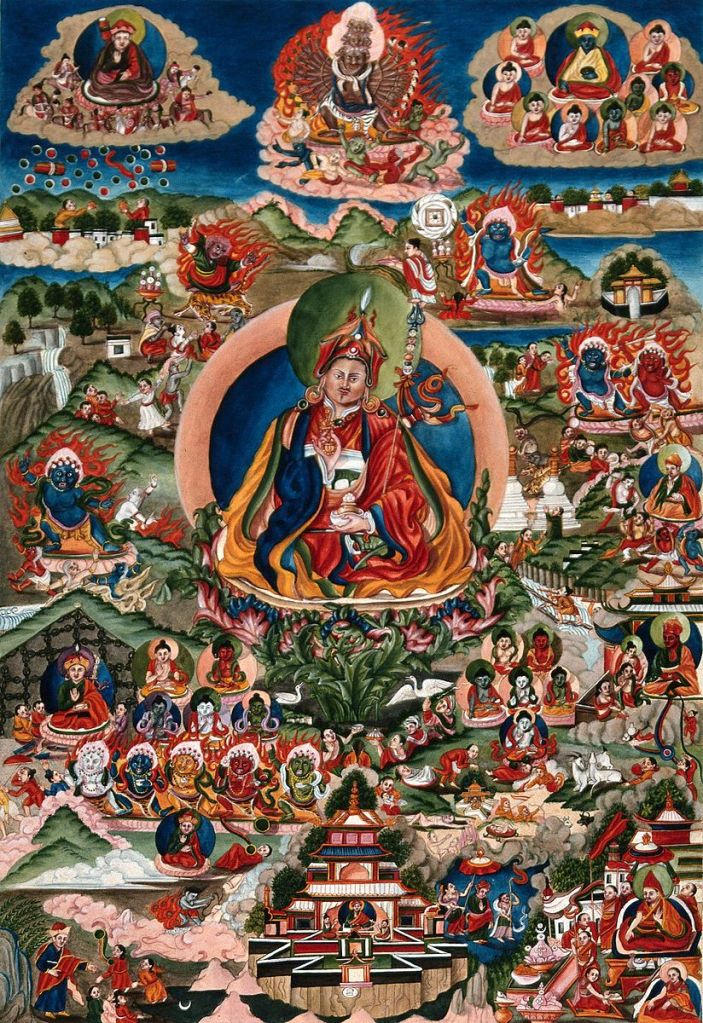











 Borderless