Mike Smith’s nostalgia about artist Pat Cooke (1935-2000)
When I became a dealer in second-hand books in the mid nineteen eighties, I was briefly a member of the prestigious PBFA, which stands for the Provincial Booksellers Fairs Association, and not, as others have suggested for the alternative (which begins with Pretentious). That led to me standing a bookfair at Knutsford in Cheshire.
Into that fair one morning strolled Brian and Pat Cooke. They were interested in the Crimean War, and luckily, I had a few uncommon titles on that subject. I was a new boy on the block, but they were regular visitors to the fair. They made me welcome. They were, in fact, the sort of people who, even within a few minutes of first meeting, enrich your life. Brian was already working on what would be the first major study of the light railway built to supply the British Army outside Sebastopol during that war, which he went on to publish in two editions, the second benefitting from information flushed out by the first. You can still find copies of The Grand Crimean Central Railway online today.
The couple had joiede vivre that was infectious and heady. The world sprang into colour and movement and light when they were about, and especially Pat. But then, Pat was an artist.
The meeting led to a relationship that like many in the second-hand book trade was as much about friendship as it was about commerce. We sent Pat our regular catalogues, and she put in orders. It was always Pat that wrote, and the orders were neatly scribed in sharp black ink on small cards. They were illustrated with cartoons and sketches, with messages of goodwill to us and our daughter, often with the mention of a gift for the latter: ‘£5 to spend enclosed’.
The Cooke’s moved in elevated circles, compared to us! We were invited to a party at Tatton Hall. Bring some books to sell, I was told. It was a great party! And we sold more books, by value, in an hour than we would normally sell in a month. The toffs and celebs were at them before I could even unpack the boxes, like Whitby seagulls on a chip packet.
Mr Lowry, as I’m sure you know, was that painter of ‘matchstick men’ that status quo sang about in the nineteen sixties. He painted much more. I can remember walking into a room at the Abbot Hall Art Gallery in Kendal and being overwhelmed by one of his seascapes – the first I had ever seen. Massive and deceptively simple, the horizon line at my eye level it was as if I had been cast into that empty ocean. I didn’t even know it was a Lowry until I read the little card beside it, and when I did know it changed my whole perception of the man. I have a postcard of the painting and years later it still overwhelms and threatens me with extinction.
His friend from 1948 when she was 13 until Lowry’s death, Pat published in 1998 a small paperback of a mere 63 pages in which she recalled that friendship. The book is packed with photographs of Lowry, here and there, with Pat and her husband. It’s packed too with reminiscences of what they said and did together. Interesting by any measure, what strikes me, having recently watched the biopic, Mrs Lowry and Son, is the upbeat picture she paints of that often gloomily depicted artist.
L. S. Lowry(1887-1976) memorial, Greater Manchester. Courtesy: Creative Commons
Sketching or just looking, their jaunts together in the English countryside or at the coast, seem to have ended as often as not with a search for afternoon tea, or as Lowry is quoted: ‘poached eggs on toast, warm scones with strawberry jam… perhaps some sponge cake or brandy snaps…’
My favourite quote is one that could be applied equally to writers, I think, and it is Lowry’s advice to Pat, and other artists: ‘Find out what subjects you like to draw and paint, keep a limited palette, don’t be influenced to change your natural style and then work very hard for at least fifty years.’
The first third of the book gives us the history of Pat herself, and though Lowry is the more famous, I find this a bonus rather than a flaw. We might think she was lucky to have known him, but having met Pat and Brian, I know that he was lucky too.
I searched for the little book online while writing this. It comes up in large numbers, but all of them ‘sold’ or ‘out of stock’. We took a handful, which we passed on over the years to people we thought might like them. We kept the one with the note tucked in, ordering from our October ‘98 catalogue,the one mentioning that fiver. ‘Cheers from the zoo X X’, it’s signed. And on the front endpaper of the book itself, ‘To Freya and her team…Good luck and God bless always…Pat Cooke’.
I think I was blessed already.
Photo Courtesy: Mike Smith
.
Mike Smith lives on the edge of England where he writes occasional plays, poetry, and essays, usually on the short story form in which he writes as Brindley Hallam Dennis. His writing has been published and performed. He blogs at www.Bhdandme.wordpress.com
.
PLEASE NOTE: ARTICLES CAN ONLY BE REPRODUCED IN OTHER SITES WITH DUE ACKNOWLEDGEMENT TO BORDERLESS JOURNAL
Ratnottama Sengupta translates from Bengali the excerpts recorded by Sandhya Sinha (1928-2016), who witnessed an uprising in the wake of the Quit India Movement, part of India’s struggle against colonial rule
Bankipore Maidan, now renamed Gandhi Maidan
Sandhya Sinha
Patna Secretariat
The photographs have been provided by Ratnottama Sengupta
The golden anniversary of the Quit India Movement of 1942 had occasioned another wave of animation. There was an urge to do something spectacular. Newspapers vied with one another to write about it. Leaders exercised their jaws over speeches to ‘inspire’ the masses, eighty percent of whom had not witnessed the sacrifice and unity of the people then and could not feel the passion.
The significance of August 9th 1942, lies in the spontaneous outburst of fury and wrath in the minds of every indignant citizen. It was a peerless uprising that spread like forest fire, engulfing cities and towns, hamlets and provinces, suburbs and mohallas, causing a crack in the very foundation of the British Raj. To control the unarmed citizens the colonial rulers had unleashed armed soldiers in large numbers. Viceroy Linlithgow even issued orders to fire from the air!
There’s a big difference between those days and now. The patriotic values that suffused even the poorest of the poor in the land under foreign rule have not been passed on to independent India. People then equipped themselves physically and emotionally, to rid the land of imperialism. Those mortals had the dedication, will power and courage to sacrifice their lives at the altar of motherland. From a tender age the parents and schools inculcated in them a sense of belonging to the country. And they had inviolable faith in their leaders.
Five decades have lapsed but I can vividly recall the dance of destruction in Patna of August 9 and 11, 1942. I must have been fourteen then, a student of class IX in the Government Girls High School Bankipur. We stayed in No 8 Mangles Road, an endearing spacious government bungalow to the left of the Secretariat. Outside it, a well-pitched road and across it was the vast quadrangle of the Secretariat. The thoroughfare was lined on both sides with rows of banyan and mango, jackfruit and jamun trees. Morning, evening, companies of parrots would flock in.
To the right was Hardinge Road, again with rows of government bungalows with expansive premises. From the intersection of Hardinge and Mangles Road, a smooth road ran up right through the iron gates of the Secretariat. The ambience was stately, solemn, as favoured by the British administration. On August 11, this very road witnessed the daring adventure of unarmed multitudes, awash with the life blood of eighteen young men.
There was no television then, there was only the radio. But there was a wide gulf between what was broadcast and what actually transpired. The pride and hope of every Bengali, Subhash Chandra Bose, had hoodwinked the British government and escaped the country. He was determined in his resolve to overthrow the imperialists with the help of the Japanese. Occasionally we – all of us in the family of gazetted officer Phanindra Nath Mitra – would gather behind closed doors and listen with bated breath to Aami Subhash Bolchhi (I am Subhash speaking), his nightly broadcast from Berlin on Free India Radio which Bose had set up in 1941 with German funds. I was anguished and deeply hurt by the thought that the INA chief’s dream could have come true if all our political elders had joined forces with him.
Sir Stafford Cripps of the Left-wing Labour party (traditionally sympathetic to Indian self-rule), a member of the coalition War Cabinet under Churchill, had come to negotiate an agreement with the nationalist Congress leaders. His Mission was to secure full Indian support for the British efforts in World War II – in exchange of a promise of elections and self-government as a Dominion once the war was over. The mission was unacceptable to both, the Indian leaders and Churchill. No midway was found, the mission failed and on August 9 the country resounded with the war cry of ‘Angrez Bharat Chhodo! British Quit India!’
Gandhiji gave out the historical call of ‘Quit India’ but the responsibility for the success of the movement rested on every single Indian who now vowed, “Karenge ya Marenge! We shall do or die!” The leaders were well aware that the desperate call would lead to incarceration, but the oath armed every Indian with the resolve to carry on the andolan (revolution) if push came to shove. The fear was not unfounded: overnight all the Congress leaders were stuffed into far flung prison cells. This simply set fire to a pile of gunpowder.
On August 9, as usual I took bus no 14 but on the way to school, I noticed people agitatedly assembling in groups or heading for some place with the tri-colour in their hands. The famous Golghar was opposite our school and the Patna Maidan was close by. People were breaking into brief runs to reach the Maidan. There were countless heads right outside the school. With great difficulty the buses manoeuvred their way into the school compound and the enormous iron gates were locked.
Principal Charushila Rosa and a few other teachers stood at the door. The minute we got off the bus they directed us to go to the prayer shed at the back of the school. On the other hand, the seniors, standing with flags on the first-floor veranda, asked everyone to join them. Taradi – Tarkeshwari Sinha, who was elected to the first Lok Sabha at the young age of 26 — normally donned khaddar. That day she was attired in a red border white Khadi sari. Her eyes red and swollen from shedding tears, she was pleading with everyone, “Come on dear, Do or die! We shall force them to quit!”
All of Golghar resounded with the cry of ‘Vande Mataram! Hail Motherland!’ The senior girls echoed the slogan from the first-floor veranda. The minute that reached my ears, a strange motivation drove out every shred of fright or inhibition. We ignored Mrs Rosa and stomped up the stairs. The senior expostulated, “By arresting our leaders the British government has betrayed us. We must avenge this. We do not want the Englishmen to rule over us. Today none of us will attend classes. In the Prayer Hall we shall raise the slogan of Vande Mataram andwe will hoist our tricolor on the flag pole. We must all remain united.”
When the bell sounded, we stood on the first floor upholding the flag, sending out the message that we too were protestors. When the second bell rang, we joined the prayer line where, at the end of every row, one senior girl stood with a rolled flag in her hand. Taradi was a hostel inmate — wonder how they got hold of so many flags! Mrs Rosa, a strict disciplinarian with a temper, looked at us disparagingly, the other teachers also watched anxiously. Moments later, Taradi’s voice rang out, “Angrez Bharat Chhodo! British Quit India! Vande Mataram! We bow to thee, Motherland!”
In a blink the chorus of Vande Mataram filled the air. Mrs Rosa turned red as we walked out in front of her eyes and assembled in the front yard, all the while bellowing ‘Vande Marataram!’ I can’t put into words the emotion that coursed through my being.
Watching our unsuccessful attempt to hoist the tri-colour on the flag post some men tried to jump over the school’s boundary wall. That triggered a bout of screaming and scampering. All of a sudden, the iron gates were opened for armed policemen who mercilessly started thrashing the young men, now flung to the ground. Four trucks of armed police had entered the school compound. Word went out that they were there to arrest some of us led by Taradi. But the teachers demanded police protection to drop us home instead.
So far, we could hear distant noise beyond the compound walls. Now that was pierced by the painful outcry of wounded men. Curious to know what was going on, we rushed back to the first-floor veranda. The sight that met our eyes froze the blood in our veins. White-skinned British mounted policemen! They were wildly thrashing the ocean of human heads, lashing them right and left with iron-laced whips as they strode from one end of the road to the other. The blood-covered men were crashing to the ground, then scrambling back to their feet with raised fist and screaming in choked voices, ‘Vande Mataram! Quit India!’ Later we learnt that this incident at Bankipur Girls School was the first ever charge by the mounted police.
Never before had we witnessed such barbarity. For the first time I also witnessed how the love of motherland makes even unarmed populace lose every fear, even for their lives. We – even Taradi — started howling out of frustration, helplessness, shame, dejection. In that state we were put on the bus. Our teachers explained to us that in view of the circumstances, and in deference to what our parents would be going through, we ought to return home.
The bus moved at snail’s pace, side stepping legions of injured men. Bankipur Maidan was a sea of human heads. Where did so many turn up from? They were not attired for such an ‘outing’ but there was no trace of fear on their visage. At the risk of facing the worst kind of atrocity, thousands of unarmed people were striding forth, towards the Secretariat. We crossed another intersection and witnessed the same sight: clusters of people racing with our bus towards Mangles Road. Repeatedly they were hitting on the glass windows to stop the bus. We panicked when we saw that the Gurkha Regiment of Mounted Police was also galloping towards the city. Until this day we had seen the British only on duty at the Government House: this was the first time they were trotting through Patna’s arteries.
After dropping off Kanak at the Power House, the bus moved slower than an ant but managed to drop Rekha Di and me outside our houses. Our petrified parents were waiting on the verandas for their daughters to come home. Gazetted officers were home for lunch had not returned to their office desk! Father directed us to stay indoors without opening any door or window. But if the men trooped into our compound, we were not to stop them — they might want a drink of water to quench their thirst! And if Ganga Da – Baba’s Hindi speaking adopted son — came home from his hostel, he should stay back: the unrest would surely mount in the school-college areas.
Our pet dog was chained up in the veranda behind the house. The curb on his normal movement was least acceptable to Jack: he let the world know that through ceaseless baying that drove us out of our minds. Next morning his howls rose in pitch as the stream of voices kept rising around the Secretariat. My brothers Nilu, Dilu and I took turns at comforting him. He lapped up all the water in his bowl but since he was not free of his chain, he barked his head off.
There was no news of Ganga Da these three days. We had heard that hordes of people from neighboring regions were streaming into the city. That day, August 11, the air was thick with foreboding. The entire area was packed with people and police. All of a sudden, Jack stopped barking. Through the slatted window I saw him desperately chasing a horse – the whiplashes could not deter him. Impulsively, without a word to anyone at home, I ran out to bring him back and found myself in the thick of the unrest. Near the Secretariat the goras were attacking the protestors with unspeakable aggression. Here and there a horse would neigh loudly and rear on its hind legs — perhaps they were not trained to trample upon live humans! The groans and moans of anguished souls made me tremble. I also saw a few crazed men incredibly holding on to the cracking whips splitting the air with resounding shup-shup!
I managed to grab Jack outside No 5 Mangles Road. Someone had grasped me and pulled me back into the safety of the gap between the trunks of two massive banyans. Holding Jack in a tight embrace I was shivering away. I was stunned to see trepidation in the eyes of the men around me as, hand in hand, an inviolable mass of humans approached the Secretariat, holding aloft the tricolor, ‘Vande Mataram!’ on their lips, head held high.
Their determination showed in their raised fists as the White policemen continually rained their batons to halt them. The Police Commissioner, microphone in hand, commanded, “Stop or you will be shot! Rukk jao, simply halt! Ekdam rukk jao, stop at once!” In response, the human wall came closer. Apparently, Ganga Da was present among them, in the second row, although I did not see him. Again, the snarl: “Rukk jao, halt!!”
Suddenly I saw Durga Prasanna, the 12-year-old motherless son of my private tutor, darting in that direction, ignoring alike the crowds and the mounted police. He simply had to see for himself why all these people had gathered. So, in a jiffy, he climbed up to the topmost branch of the tree closest to the Maidan and perched himself with his feet dangling on either side. Shortly his fear-driven father arrived in search of his only child. He had no time to don his fatua shirt, or tie his dhoti properly, it was scraping the ground.
The human wall was relentlessly tiding ahead. I had no inkling that, at that very moment, seven Gurkhas were waiting in front of the Secretariat with rifles ready to shower bullets. The ageing master must have fathomed the seriousness of the situation. So, the minute he spotted Durga Prasanna atop the tree, he tried to scramble up its trunk.
Again, the microphone roared, “This is the last warning to stop!!” It prompted the human wall to take another step forward. “Fire!” the order flew out, so did the bullets. Eleven young men in the first row kissed the ground – they had been shot in the lower half of their body. Those behind them lunged forward to pick up the injured comrades and ran, crazed, confused, in no particular direction. The rest of the assembled crowds surged ahead.
The second order to ‘Fire!’ triggered simultaneous action on the treetop. To escape his father’s thrashing Durga jumped off his perch. But he did not live to rejoice: a bullet pierced his ribcage and blood gushed out in repeated spurts as the pre-teen body hit the ground. And not just one Durga Prasanna, so many vivacious young lives fell to the bullets. “Durga-a! Durga re!!” – the heart-rending wail was all the old master could let out before losing consciousness. The poor Brahmin’s foolish son had become an unintended martyr.
Had I not witnessed all this with my own eyes, I would never have believed that death can be so instantaneous, and remorseless. Like me, thousand others also did not believe that people on the payroll of the British could fire on their own unarmed countrymen. Two rounds were fired before the fact registered on the dumbfounded lot, driving them crazy. Picking up those groaning in pain, blood flowing like fountain, they carried them to the safety of the bungalows. To provide first aid the grown-ups brought out water, cotton wool, tincture of iodine and rags to bandage the wounds and save lives. Some were tenderly resting the injured in their laps, to infuse warmth in them even as they themselves were bathed in warm blood. All those who had taken the bullets on their chest were students from colleges in and around Patna. So much killing! Such bloodshed! It threw to the winds the last shred of restrain: the frantic crowd went berserk and started hitting the policemen wildly. Again, the rifles roared out in a third round of firing.
With unblinking eyes, I was watching the horrifying turn of events. I was transfixed: the suddenness of the appalling developments had stupefied me. Overcome with fear and fatigue, I stood like a statue on the rocky roots of the banyan. Before my eyes some men were carrying two injured youths with blood spurting out, towards 5 Mangles Road. A streak of red outlined their course on the muddy path. The youths were gasping. I too felt stifled and fell to the ground between the two banyans. In the midst of the mayhem, all around these people were looking for doctors to attend to the dying.
The Gurkhas and the Mounted Police, perhaps daunted by the agitated numbers now blinded with rage, went and stood inside the Secretariat compound. Carloads of local Indian policemen were taking into custody anybody they could lay their hands on. Somewhere a clock hammered three gongs: I realised it was 3 pm and I ought to get back home. I heard people say, “It would serve no purpose to be stuffed into jails, let us get away, run!” They ran helter-skelter cutting through the bungalow courtyards, jumping over the fences. Across the railway line, R-Block Water Tower was chockablock with people. They did not leave their bleeding companions, they carried them even as they fled.
A couple of jeeps with the sirens blazing gave them a chase. Countless shoes, chappals, gamchhas, torn cloth, spectacles, Gandhi topis and caking blood lay on the vast Maidan and Mangles Road to recount the story of debacle.
I have no idea how I reached home – probably the fleeing masses had carried me along. On seeing Maa’s ashen face, I believe I had merely uttered, “Maa, blood!” and then fainted.
That fateful night of August 11 had come to an end but the sacrifice of so many lives desirous of freedom had gone in vain. Fired by hope, we had all started dreaming of living in a golden India free of the yoke of colonialism but only for a brief period. Under the commendable leadership of certain parties a Free Government had temporarily come into force in parts of Bihar, Bengal, UP, Orissa, and Maharashtra. Patna itself had no rule of British law for four-five days. Rebel leader Jaiprakash Narayan had fled to Nepal border and led a guerrilla war from there.
The Quit India Movement of 1942 is the blood splattered tale of outrageous courage of India’s populace, not the ballad of the triumph of a single party. Prior to this, our history had not witnessed such an all-consuming uprising across India’s length and breadth. This was the first instance of a unique wave of emotion overnight seizing the country from one end to the other. In whom does the real power of the land rest? In 1942 people rose above caste and creed and became a force to reckon with. The imperialists realised that Indians can no longer be dominated on the pretext of a World War. Unfortunately, the gains were frittered away. Within months the movement was squashed.
Over the passing decades this date – August 9 – drags me back to the scene of crime. If only all the people and every political party in India had joined hands! Then, in all probability, the history of India would have read different.
The Kranti Memorial Sculpture near the old Secretariat in Patna. The photograph has been provided by Ratnottama Sengupta
Sandhya Sinha (1928-2016)resumed studies 17 years after marriage, completed her Masters in English, embarked on a teaching career and retired as a senior English teacher from a women’s college.Many of her articles were published in the magazine of the Bangiya Sahitya Samaj in Lucknow, of which Sucheta Kripalani was a founder member. At the age of 75, she embarked on a career of authorship, having successfully played the roles of a mother, a social worker, mentor, community leader and spiritual aspirant.
Ratnottama Sengupta, formerly Arts Editor of The Times of India, teaches mass communication and film appreciation, curates film festivals and art exhibitions, and translates and write books. She has been a member of CBFC, served on the National Film Awards jury and has herself won a National Award. Ratnottama Sengupta has the permission of the family to translate and publish this piece.
PLEASE NOTE: ARTICLES CAN ONLY BE REPRODUCED IN OTHER SITES WITH DUE ACKNOWLEDGEMENT TO BORDERLESS JOURNAL
Kroger opened at 7:00 a.m., and normally if I got there when they opened, I got the fresher produce, baked goods, and meats. Of course, I had to walk carefully through the parking lot to avoid slipping on the snow and ice. I had to put my mask on and remember to put my reading glasses on when I was checking the expiration date on the packages before the readers fogged. I learned the trick about checking the packages in the back or on the bottom as their expiration dates tended to be a few days into the future.
I gathered up the spinach, carrots, avocados, apples, and blueberries and headed to the meat area. The area looked dark, there was nothing in the glass case, and nothing I wanted in the display case. They had plenty of pork, but I tried to avoid that because of gout. I did see one of the butchers and asked him if he had any ground sirloin.
“Truck hasn’t come in yet.”
“You have any in the back?”
“No. We don’t open until 10:00 a.m.”
“10:00 a.m.? Why aren’t you open if the store opens at 7:00 a.m.?”
“I don’t know.”
“Why wouldn’t the truck deliver before the store opens?”
“I guess because of the snow.”
I laughed a little because I made it in the snow and didn’t even have a truck. I pushed my cart on to the dairy aisle, where I picked up the butter, cheese, and milk for our teenager. When I got to the bakery and deli, I found some blueberry muffins that were on the bottom that had a whole week before they expired unlike the one on top which expired the next day, so I got the fresher pack and pushed my cart to the deli counter. A lady was putting out fried chicken, and it smelled good, but it was too early for fried chicken, and I was interested in thinly sliced turkey for sandwiches. When she finally saw me, she said, “Hon, we don’t open until 9:00 a.m.”
“Why? The store’s open.”
She shrugged her shoulders. I thought about how I’d broken up with Wal-Mart the month before because when COVID struck, they changed their hours to 7:00 a.m. Before that, they’d been open twenty-four hours, seven days a week. I hadn’t paid much attention to the time, walked inside, got a cart, wiped it down with their alcohol wipes, and headed toward the cosmetics/ drugs/ personal hygiene section when an employee blocked my cart. “We ain’t open yet,” she snapped.
I didn’t correct her grammar. She was way bigger than me and I didn’t feel like she’d understand the lesson. “The door was open, the sign said the store was open twenty-four hours, and I walked past at least five employees who didn’t say a word.”
“Well, the store ain’t open yet. They never changed the sign.”
“What time is it?”
“Five ‘til seven.”
“So, would you like for me to walk across the store, go back outside for five minutes?”
“Well, you can stay, but you can’t check out until after 7:00 a.m.”
“I won’t,” I said. I stayed and shopped, but I decided that it wasn’t worth what little I saved to go there, and when I finished checking out, I told the lady at the door that I was breaking up with Wal-Mart.
“Okay,” she had said. I don’t even know if she heard me, was listening, or cared.
When I went to check out, there were no cashiers. There was one older man at the self-checkouts.
“I have too much to go through self-check,” I said. “Where is a cashier?”
“They don’t get here until 8:00 a.m.,” he said. “You’ll have to use one of these.”
First, I needed my glasses to read the screen, so I pulled the mask down below the bridge of my nose, so they didn’t fog, and prayed COVID was elsewhere. Then, I scanned the items and bagged them, but when I turned the bag holder to get to the next set of bags, the machine scolded me: “Make sure to scan your items and place them in the bag.”
When all four bags were full, I cleared space in the cart and put those bags in the cart, his tired eyes checking every move I made as if I were a common thief. The automated voice from the machine repeated: “Make sure to place the items in the bag. Make sure to place the items in the bag. Make sure to place the items in the bag. Press if you need assistance.”
“Can you please turn this annoying machine off before I knock the hell out of it?”
“I’m sorry. The manager has to do that and she’s on a smoke break.”
I’d seen this “manager” before. It gave new meaning to the expression “Good help is hard to find.”
I tried to block out the voice, found what looked like a cut in one of the Gala apples and handed it to him and said, “I don’t want that one. Someone’s cut it. Might be poisoned.” He set it aside, and I knew once I was out the door, he’d put it back in the bin and someone would purchase it, or he might add it to the ones they have prebagged so customers can’t check them.
I paid with my debit card, pushed the cart out the door, and realised I would need to go slow on the snow and ice, but I had no idea how difficult it was to push a cart through ice and snow. Plus, I had to walk past the empty handicapped spaces and the new and empty pick-up spaces before I got to my car halfway across the parking lot. I had noticed some of the other stores, banks, and even restaurants had cleared parking lots with snow plow equipment, but Kroger hadn’t. It bothered me they didn’t care much for the safety of their customers to do more. I wondered if anyone else noticed.
Later that afternoon after my nap, I wrote an email to their customer service and got an automated response. The next week, I got a form letter with a $25.00 discount coupon off my next week’s shopping if I spent over $200. We’d never spent over $200, and I’ll bet they knew that, too. If they keep raising prices to pad corporate salaries and taking advantage of the little people, even collecting donations for charities from customers and getting a tax a break for those donations, I’m going to have to break up with them, too. I’ll jump on the bandwagon, “go local”, and plant a garden, just like my grandparents did before capitalism spread like a cancer and made everyone dependent. In the meantime, I plotted how I might use the $25.00 discount and keep my tab less than a dollar over two hundred. I also figured I could tell my neighborhood association, my Sunday School class, and everyone at work how they could get a $25.00 discount, too.
.
Niles Reddick is the author of a novel, two collections, and a novella. His work has been featured in nineteen anthologies, across twenty-one countries, and in over four hundred publications including The Saturday Evening Post, PIF, BlazeVox, New Reader Magazine, Citron Review, and The Boston Literary Magazine. Website: http://nilesreddick.com/
.
PLEASE NOTE: ARTICLES CAN ONLY BE REPRODUCED IN OTHER SITES WITH DUE ACKNOWLEDGEMENT TO BORDERLESS JOURNAL
Marjuque-ul-Haqueexplores a Mughal fort left unfinished in Dhaka, a fort where armies were said to disappear during the Sepoy mutiny of 1857
Lalbagh Fort, Photo Courtesy: Marjuque-ul-Haque
We decided suddenly to visit the Lalbagh fort. Normally, I would never have considered going there, except the night before we had been discussing with our cousin how nice it would have been if our whole extended family could go on a trip together somewhere. So, the next day the three of us — my brother, my cousin and I — decided on a day long visit to the famous Lalbagh fort.
The fort was an architectural complex from the Mughal era in the late 17th century. The three main structures of the fort included the tomb of Pari Bibi, the diwan-i-Aam (the hall of audience) and a mosque. The story of the fort’s creation begins with Muhammad Azam Shah, the son of the emperor Aurangzeb who was then the subahdar (governor of a subah or province) of Bengal. He was recalled and he left the construction to Shaista Khan, the later subahdar of Bengal. Khan also discontinued work on the fort after the death of his daughter Pari Bibi, who lies buried there. The bereaved father halted construction, believing the fort was cursed. It remains abandoned and unoccupied to this date.
The walk leading to the fort’s compound is lined with gardens in neat rows and patterns on both sides. Parallel to it runs a long strip of pool. The entrance is several feet long and domed at the top. The walls are grooved with rectangular recessions for decoration. The tomb, being a few hundred years old, seemed pinkish and off colour. However, the mausoleum with its high red dome was the most impressive of the three monuments. It housed the grave of Pari Bibi.
The Grave of Pari Bibi. Photo Courtesy: Marjuque-ul-Haque
We next went to the diwani-i-aam. The interior is far more impressive than the exterior. Inside are exhibited various Mughal weapons of war and everyday artifacts from the same period lined the walls of the museum. Swords, shields, spears, hand cannons, chain maces, clubs and other interesting things are part of the exhibits.
The last of the three monuments we visited was the mosque. This proved to be a disappointment, owing to the fact that the interior was not open to visitors as indicated by a placard. From the entrance, we peeped and saw clotheslines with garments drying on them and men in tupi (cap) and jubbah (a gown worn by Muslim men). Apparently, it seemed that they had a madarsah (Muslim school) and the students and staff resided inside. As we were but outsiders, we could not enter. However, we were able to climb atop a roof (or was it a verandah) to get a view from above. Up on that ledge, the breeze was light and frequent. We took a few pictures and spent some time before heading down.
Sauntering away from the mosque, we noticed a woman, a foreigner, a European tourist no doubt, dressed in pinkish white, quite absorbed in photographing of one of the buildings. Unfortunately, three eve teasers started making remarks in English near her. In the sunlight, she had shades on as she ceremoniously took pictures pointedly ignoring the three miscreants as they occasionally walked around her. The three of us felt embarrassed and discussed how this experience would impact the way she would describe Bangladeshi people to her friends and family. We were dismayed by their bad behaviour.
We had completed two circuits of the compound. It was five in the evening and the microphones blared an announcement that the place would close in forty minutes and that the visitors needed to leave the precincts.
The evening sky that swathed the nearest monument in a bluish glow was different from the one I had seen in the light of the afternoon. I recalled a few instances when buildings evoked a distinct aura. In fact, the buildings had been in a state of flux at all times but I had only been present to observe it at certain moments. The protagonist of the translation of Yukio Mishima’s The Temple of the Golden Pavilion had been shown as obsessed with the building’s beauty, reflecting in the same manner as me. In seeking respite from his imperfections, the protagonist of the novel had endowed the ancient temple with unattainable beauty. Unfortunately, his obsession with its appeal led him to set fire to the monument with himself inside; thus hoping to prove the mutability of the Golden Pavilion’s beauty. The Lalbagh Fort has endured a long stretch time and no doubt grown in beauty like the temple, but hopefully its beauty will only serve to inspire.
The Lalbagh Fort. Photo Courtesy: Marjuque-ul-Haque
Marjuque-ul-Haque is an MA student Department of English at the University of Liberal Arts Bangladesh.
.
PLEASE NOTE: ARTICLES CAN ONLY BE REPRODUCED IN OTHER SITES WITH DUE ACKNOWLEDGEMENT TO BORDERLESS JOURNAL
He begins speaking the moment he enters the room. “I had to crawl under the bed and call 911 when my daddy was hitting my mommy,” Jeremy announces. Skin as brown as California hills in summer, a quick bright smile despite what he has just announced.
He examines us. “I’ve been waiting for a mommy and a daddy for a long time,” he confides. “I told my social worker I wanted parents who would love me, I wanted to be read to at night and I wanted a teddy bear and the nightlight.” Jeremy lays out a row of miniature toy cups. “Would you like a cup of coffee?” he asks. We nod and he pretends to pour coffee.
We walked out of that office that first day unable to talk, arrowheads of love sent straight into our hearts.
Adopting a child from social services is a debilitating process. Months and months of looking at pictures of children in a small office. At first I yearned for each and every face, but by page fifty or so, sitting in that stifling room, I became hard. I was a consumer of the very worst kind, a consumer of kids.
Then one day we turned the page and there he was. “That’s the one!” my husband and I said almost at the same time.
This was our second marriage. Mike had three kids and I had one. Our children were grown and we had room in our lives and hearts to raise one more.
In the weeks to come, waiting for him to move in, I showed Jeremy’s picture—big smile, wearing a little dinosaur T-shirt—to everyone I met until the paper became crumpled and creased at the edges. I practiced saying the word “son” over and over again; the word filled my mouth with sweet music. As though absorbing his story would make him more mine, I read the reports from social services over and over again. Addiction, domestic abuse, now seven years old, he had lived in six different homes in the past ten years. The trio of his brother and sister and him twice given back from permanent homes until a bold judge decided to separate the kids and place them in individual homes for adoption.
I made a room for him with a brave cowboy motif. A lampshade with bucking broncos, a rodeo quilt, a clothes hanger that said the word cowboy and yes, a nightlight.
He called me mommy immediately. At first it was so easy, my days filled with joy, the love I felt bright, uncomplicated and complete. We watched insects crawl across grass blades, played in the pool, walked the dogs, told stories to each other about the shapes of clouds, moments so perfect I did not want to be doing anything else. His face bloomed a full bouquet of smiles. I told long romantic tales that softened up the edges of his story. “Look at your feet,” I told him. “Maybe they came from your grandfather, a farmer walking through hot brown soil.”
Our bodies opened towards each other. He came easily into my lap. We did three-people hugs. “It’s dark in here,” he would say in a muffled voice and we laughed happily, knowing what he was really saying was that it was safe in our arms. Every day he unfurled a little bit more.
“I am your son from another mommy,” he said to me one day, and I found myself blinking back tears. He reached for my hand with that easy and nonchalant assumption of safety and protection every child should have. “You chose the right guy.”
One afternoon Mike and I had gone for a walk on the short walk with the dogs when far off in the distance we heard him calling. “Mommy, mommy,” a lost boy sound on the wind. As fast as I could I ran back to him, wrapped my arms around him. “I’ll never leave you,” I whispered. “I am your forever mommy.”
But it wasn’t always easy. When you adopt a child you do not have the long ropes of familiarity to climb back into time, to comfort and explain. You will not recognize the face of your husband in an expression that crosses your child’s face, will not see your grandfather in his hands. And if that child has been hurt, you don’t start at zero, you often start at minus one, undoing rather than doing. It is the elemental clay of human nature – sometimes what you find will frighten you, sometimes it will inspire.
We learned quickly that trouble wrestled deep in the biological bedrock of this little boy’s soul. There was a black hole at the center of him and every morning we woke to the very real assignment of trying to fill that hole.
He had fits and we never knew when one would detonate. We could hear his thoughts through his physicality, would know just by the sound of his steps on the stairs or the lilt of his voice whether it was going to be a good or bad day. He would kick the walls, sometimes tear at his skin with his fingers. When we went hiking he would suddenly stop on the trail in front of me and when I would bump into him he would fall apart. He had arrived finally to his forever home and yet he tried to break it.
We hung tough, however, and I was happy. It was like creating a sculpture from raw elements, polishing up the good in this little boy, hoping that a heart fully loaded could reach back and heal his previous wounds.
It was at the end of middle school that Jeremy began to complain more, blame more, see the dark side of everything. The only brown boy in the all-white classroom, he had never done well socially. No one came to play in the swimming pool, a few listless birthdays now and then but no best friend.
I tried to dismiss it. Who could blame him? How could I presume to know what it was like to walk down the street as a Latino male? All around him were smug youngsters plumped with entitlement, multiple gadgets in their bedrooms, soccer camps, private tutors, $40 haircuts. No one had lived his life so delineated into a sharp before and after, no one had lived those years of fierce wanting, dragged his particular bag of sorrow behind them.
But as the months went by, Jeremy began to close himself off from us. Loneliness laminated his surfaces, made him unreachable. Though we tried hard to excavate his sorrow and talk it through, he refused. A corrosive teasing entered our dynamic, a hard taunting jeer in his voice that held pieces of flint, igniting sparks of incendiary opinions and behaviors calculated to alarm.
He was one of the best things that had ever come into my life, and yet I was losing him.
The one constant in all these years was Jeremy’s affinity for religion. Though different from my beliefs—more connected to the large madrone tree near our house then to any kind of building—I’ve always encouraged his love of God: I thought it gave him another kind of home, a spiritual breathe he could lean against and calm his anger. My husband, an emigrant from Ireland, had returned to the Catholic church after many years away, attending a small agrarian church with a maverick priest where he was allowed to ask questions.
We found a small high school that was a bit religious, but with a sweet culture where spiritual safety mattered more than the colour of one’s skin. It seemed perfect. We did due diligence, everyone said it was a good school and apolitical.
From the very first week Jeremy loved it. Its tidiness seemed to comfort him, some origin of biological sin to be monitored with the rules and severity of Christian cause-and-effect thinking. And at first we didn’t mind too much. If we could get him through these difficult teenage years, the rest of the sloppy, restless world would wait for him. He was nicer around the house. We began to have mighty conversations about existence and religion, and at first the conversations were fair and thoughtful.
It was slight at first, a few comments he repeated from school, a teacher who publicly supported Trump in the classroom. When I called the school to complain about the spillage of politics mixed with religion, they were noncommittal.
Slowly but purposefully, the school turned our son against us.
Feeding his need for identity, Jeremy began to wear a huge cross around his neck. He filled notebooks with drawings of Jesus hanging from the cross dripping blood. He branded himself with a huge tattoo drawn in felt pen down one arm, enormous box letters that proclaimed John 41.
I did not expect a son with a Burning Man sense of anarchy, but I certainly did not expect this angry soldier of Christ. For the first time he belonged more to his religion than to us. When he told us we would burn in hell because we had not accepted Jesus as the son of God, I called the school. Does it have to be so grim, I asked? Imagine a boy who had waited seven years for a forever family, only to be told that he would be alone again in eternity.
I became known as a parent they needed to pray for.
Jeremy became increasingly provocative. He used current events to define himself. Maybe Trump was right and we should build that wall. Though his father had come from Nicaragua, though he had been rescued by a safety net of social-service programs, Jeremy thought we should cut money for children.
He supported a new president who lived out his own oppositional temper tantrums in soundbites…I was grieving the fate of our country, now in the hands of those whose views on just about everything went directly against mine. And now they had my son.
The war on our house escalated. We started to talk about getting him out of that school, but he refused and we thought we might do more damage by ripping him away from the one place where he was happy. We took him to a family therapist but he refused to go back. Though I knew intellectually he was hurting others because he was so hurt himself I did not discipline myself.
As the months went by, the sweet boy I had known hardened in a furnace of rage. No more three-people hugs; he retreated to a room I was too disheartened to ask him to clean, a midden of old food and dirty clothes emanating the odor of despair.
My friends tried to normalize what we were experiencing. “It’s just teenage rebellion,” they said. “Let the world teach him. It’s not personal.” But I sensed somehow it was deeper than this.
Though I knew it wasn’t good parenting I retreated, protecting myself from attacks. I closed off my face, smiled a little less often, learned to weaponize my silence. Grieving the little boy who was no longer, frightened of the man he was becoming, I fell into loss and fear. Trump’s America had entered our home, a sinister cynicism, a license to attack, even to hate. I felt selfish, severe, angry, small, berated myself for being so out-of-control, for not having the courage to change our dynamic.
What was wrong with me? Why couldn’t I learn to love this man he was becoming? Was I only looking for the me inside of him, towards the places where we were the same?
My husband, recognizing that I was disintegrating, and worried as well about the effect the many battles were having on Jeremy, stepped in and became the primary contact. I tried to follow Mike’s lead. I learned how to duck and weave, not take everything on, develop a small chorus of noncommittal listening grunts. But as we drifted into our separate silences, terrible awkward dinners where no one spoke, the not-so-neutral accord and careful politeness began to seem as cruel as the raging world war used to be.
*
It is now a year later. We decided to pull Jeremy out of the school and enrolled him in a place of wide green lawns, an organic garden, a social-justice teacher who encourages discord, and a mission statement of diversity. In solidarity with other high schools, students walked out to protest guns. A transgender student was elected homecoming queen.
It is been a difficult transition for Jeremy, jarring, but he is doing well. A’s and B’s. He has made friends, signed up for model UN. He has returned to sketching, and his intricate details of hands no longer hold crosses. He still goes to church every Sunday but is more generous around other people’s beliefs. He even allowed me to hug him in Macy’s when I took him shopping.
Can we pass Jeremy into the years beyond us intact, healthy, maybe even happy? Will he live in the bright light of possibility and hope or will he sculpt his life from wounds, define himself from loss. College, marriage, jobs, his own children…maybe the last few years of war were just a brief furrow in the arc of his life, all those years of challenging just his way of testing us, another form of stopping in the middle of the trail so that I would bump into him and he can fall apart.
Last night, after dinner, I went out on our deck, watched the mountains grow soft with twilight. Our dog padded out with a clatter of nails. Frogs began to croak, the leaves in the old madrone rattled, stars appear in the night sky. A light comes on in Jeremy’s bedroom. He has a math test tomorrow and he is studying.
“Mommy, mommy,” I still hear on the wind.
I take a deep breath. “He’ll be all right,” I think to myself for the first time in years.
.
Jeanie Kortum is an author, journalist, and humanitarian. She has written two novels Ghost Vision which is based on her experience in Greenland and Stones which is about Female Genital Mutilation.
.
PLEASE NOTE: ARTICLES CAN ONLY BE REPRODUCED IN OTHER SITES WITH DUE ACKNOWLEDGEMENT TO BORDERLESS JOURNAL
It was a white wooden building two stories tall — two long, high-ceilinged rooms, one on each floor, topped by a flat tarpaper roof that sloped toward the back of the property.
Where I grew up, such structures were called “storefront buildings.” Surrounded by elms and maples, it stood a block west of the courthouse, on the northwest corner, facing east. Originally it had been a lodge hall. During the Depression years, the members of the lodge had gradually died off, and the building stood empty until one of my relatives, an uncle who was an artist, acquired it, a few years before the war, and had it fixed up as a studio.
My parents drove us down to this place to visit the artist’s widow in the late 1940s. The town and the building were always the same. There were no sidewalks. My father parked at the edge of the lot. Out front, rising from its square of stone, was the cast-iron pump with the curved handle. Here we would drink cold water from our cupped hands, and refresh ourselves, each time we came to visit.
If the light slanting beneath the canopy of trees seems clear and steady now, it is not simply because I look back on that vanished building through a scrim of fifty years, so that all the wrinkles and irregularities have been smoothed out. We forget not only what certain trees mean to a landscape, to the profile they give to a town; we forget even the quality of light filtering down through their leaves and branches.
One kind of illumination reaches down when you are a small child playing beneath the limbs of a catalpa tree; another kind settles over you at the base of a willow, or a shagbark hickory. Later, it is almost as though hidden voices had been speaking to you, pointing out certain shadows and profiles — the outlines of small, undiscovered things, the shapes of beetles and lost marbles and blades of grass.
I say this because I know there were elms reaching over the summer studio, and I know they are gone now, all of them. But their handling of the light remains unchanged.
If you asked me to describe that light, I would say that it was notched, pieced together like the irregular swatches and squares of silk and satin and calico that interlock to form the pattern of an old quilt. The stitching along the edges of each of those pieces, even the smallest, would be minute and exact.
There was the light, and the stillness, and the simplicity. Inside, the rooms of the old building were always cool, even on the warmest days. Looking back, I sometimes think of it as an enormous block of ice cut from some snow-covered lake and mysteriously preserved until summer was at its height — a day in late July, with cicadas shimmering in the trees.
But it had been left in that grassy place, as though overlooked or forgotten, and it melted at a glacial rate. Ultimately it was doomed to disappear, but it was still so vast and impermeable that it would take years, or even decades, sitting there among the lilacs and the forsythia, to shrink away.
Most of that great sun-dappled cube of a building has dwindled and grown dim now, even in my memory, but here and there I can still see a milky patch, a section of white clapboard gleaming with opalescent light.
Or I will find myself peering into one of the windows, a square grown blank with sunlight, and gradually it will change, as though a cloud were passing over the sun, or as though tree limbs overhead had begun to stir in a cool wind, rearranging the shadows and reflections below.
At such moments each pane of the window turns clear, and I can see inside, and remember.
(First published in The Aurora Review)
Jared Carter is an American poet with seven books of poetry. He is the recipient of numerous awards, which include the Walt Whitman Award, the Poets’ Prize, a Guggenheim fellowship, and two fellowships from the National Endowment for the Arts.
.
PLEASE NOTE: ARTICLES CAN ONLY BE REPRODUCED IN OTHER SITES WITH DUE ACKNOWLEDGEMENT TO BORDERLESS JOURNAL
My father-in-law’s passing, when I was pregnant with his grandson, served as a sort of personal consecration. The Japanese family entrusted me with tasks and responsibilities from the moment of his death to the moment, three days later, when we picked his bones out of the ashes. All differences of nationality and religion flew out of the window.
Being married to the third son of a Japanese family, you could say I’m very low on the totem pole. When my mother-in-law married the eldest son of this clan in 1947, she had prestige but she lived to serve. She gained some measure of glory by giving birth to all those boys in the tatami room, but she was still the last one to use the bath water after her parents-in-law, her husband and her three young sons had soaked in it. She laughs about it now but when I asked her about Great-Grandma’s antique hand-painted silk kimonos, she said she made a big bonfire in the garden after her death and burned them all.
We got the call in the middle of the night. Otoosan had passed. As soon as my mother-in-law stepped into her husband’s room at the Veterans Hospital, or Veteru as it is called in Japan, she put everybody to work. His body had to be washed and his face shaved. My husband took me to the other side of the curtain and offered a chair. “You don’t have to do this”, he said. I could hear my mother-in-law instructing her sons. They worked in silence. I sat in the dark.
Otoosan, an architect, a father of three sons and a former soldier and prisoner of war, lived the final years of his long life in the Veteran Hospital. I had only met him once before in his home where he was spending the day as an outpatient. This man, whose powerful physique held memories of a four dan black belt judoka, was strapped in a chair, being fed by his wife. My husband said in a loud voice: “Otoosan, this is my wife. She’s Canadian”. He looked up, showed no reaction on seeing my Caucasian face and the family giggled: all in a day’s work. His son, a three dan black belt himself like a chip off the old block, took over feeding his Otoosan spoonfuls of lukewarm miso soup, their knees touching, their eyes meeting.
First Task
For my first task, after the family finished taking care of Otoosan, I was asked to sit at his bedside and wait with him while the family filled out paperwork in the office. Before leaving, my mother-in-law turned to me and said gently, “He should not be alone, you understand”. They left in the wake of two black clad white-gloved funeral employees who had appeared on cue from the shadows. There we were together, and it seemed like a moment to reacquaint myself with Otoosan, now wrapped in a pristine white sheet, only his tranquil face showing. I stared at him for a long time and finally whispered domo. It can mean hello or thank you or a mix of both. I read once that this greeting was used during the Edo Period to express a feeling of confusion or unsureness about the person one was addressing.
Second Task
For my second task, to my great surprise, my mother-in-law asked me to accompany Otoosan in the van transporting him to the family home while the others went to the funeral support company. Why me, the foreign wife married to the third son? But everybody had a part to play in this family event and at that moment, the responsibility fell to me. I climbed into the white van to do my job.
My father-in-law and I could never have imagined making this trip together. Not in our wildest dreams. Not only were we practically strangers to each other, but we came from vastly different worlds, him an elderly Japanese man and me, a thirty-something pregnant French-Canadian. Together we crisscrossed the empty streets in the cold white van, side-by-side, his body wrapped in a shroud on a futon near me. In winter, three am is a dark and deep hour but I was told Otoosan was still here among us, in the realm between two worlds. He had just begun his last pilgrimage. Knowing this, I somewhat felt less forlorn traveling through the winter night, so far away from my country and my own cultural bearings. But that’s beside the point. I had a responsibility to fulfill.
Third Task
The porch light was on, the house already wrapped in black and white stripped cloth swaying in the dark as Otoosan was carried inside his home through the front door. He was laid to rest on a futon in the tatami room, two decorative lanterns like fancy bookends framing his bed. A black-and-white photo of Otoosan looking strong and serious sat in the middle of an altar among candles, chrysanthemums and fruit. In the pale yellow light of the lanterns, we dressed him in his white pilgrim garb for his 49-day journey to the Pure Land, following a hierarchical order. His wife put a white cap on his head and rice in the small pouch hanging from his neck, his sons smoothed out the white coat folded in reverse, and I slid, as best as I could while kneeling on the tatami, white cloth slippers over his feet. This was my third and last task of the night. The wake would start tomorrow. My husband, looking sad and exhausted, said, “We will sleep here next to him. Go home to get some rest.”
Fourth Task
The next day I stepped over the rows of slippers now crowding the spotless entrance step of the family home like a military parade. My mother-in-law, in her formal black silk kimono stamped with the family crest on the back collar, glided between the tatami room and the adjoining kitchen on her blinding white tabi socks. A diminutive powerhouse, married to an eldest son. I looked down at my rather homely nondescript black maternity dress.
For my fourth task, she directed me to take down from the cupboards the fancy sets of dessert dishes and tea cups, wash them thoroughly, dry them rigorously and set them out on the table. “Don’t break anything!” she chided with a smile in her eyes. I also had to wipe clean the large decades-old bone china serving platters and stack them with oranges, the locally-grown fruit. I took a certain pleasure in displaying them in a Jackson Pollock style. One way or the other, I knew they would be rearranged.
Early evening, relatives and acquaintances arrived in black suits and dresses to whisper condolences to my mother-in-law who bowed deeply to each guest. The mourners filled the tatami room, all sitting seiza before Otoosan. Leaning in, they greeted each other quietly.
Suddenly there was a commotion. The priest strode in like the phantom of the opera, his magnificent black kimono robes and glitteringvestment swooshing around him. We snapped to attention, backs straight, holding our Buddhist rosaries between clasped hands. He greeted us, kneeled in front of Otoosan and started chanting in a loud sonorous voice. I was sitting on a stool in the back. I could never sit seiza and being pregnant did not help my cause.
It seemed like the chanting lasted forever. Just as I started dozing off in the stuffy incense-filled tatami room, my husband began to heave. I realized with horror that he was trying to suppress what looked like a maniacal laugh. Eyes staring ahead, his mouth half-closed, he repeated several times in a strained voice, “Snoopy, look, Snoopy!”. From the ceiling lamp a small plastic Snoopy wearing a red fireman hat was dangling from a string just above the bald head of an old uncle. My husband left the room to bawl in the bathroom. I sat on my stool thinking about the Japanese character in the movie Snow Falling on Cedars, how his stereotyped stoic face had changed his fate.
Fifth Task
After the service I strolled into the kitchen to get a drink. There stood one of the elder female relatives, erect in her black kimono. She had now officially taken over duties while my mother-in-law was busy chatting with the guests. I had met her only once and this time she looked at me with what seemed like shiny panther eyes, ready to pounce. In a flash I was thrown into the deepest end of the hierarchical senior-junior relationship: Cinderella, the wife of the youngest son. Serve more tea! Boil more water! Offer sweets! Wash these dirty cups! I was learning humility on the spot, my only stunned response being a weak Hai! I began shuffling around in my black stockings, looking busy and alarmed, set on doing my duty. A Mao slogan popped into my head: Serve the People, for I was living a cultural revolution of my own. I just could not imagine this scenario happening in my country.
The wake lasted two more days. People came and went, and we ate our meals together just two meters away from Otoosan. We re-arranged flowers, sat near him and chatted. He was never alone. Some family members talked to him. On the morning of the fourth day, the family lined up from the house to the hearse. Otoosan exited his home feet last to the mournful sound of the car horn. No birds, no wind.
For the ceremony at the large funeral hall, the priest recited the sutras in front of Otoosan’s photo and a magnificent flower display. So many mourners, in slippers, paid their respect with incense and prayers at Otoosan’s casket. Each person brought incense grains three times to their forehead before finally depositing them in the incense burner. After the eldest son gave the customary speech, we lined up in order of importance to receive condolences. I was last of course but wholeheartedly included. “You must be Yoshiro’s wife,” some of Otoosan’s elderly friends exclaimed, naturally mistaking me for the second son’s spouse, the one working abroad.
We followed the hearse to the crematorium and, huddled together in front of Otoosan, we said goodbye to his earthly envelope before he was sent off for cremation. In the meantime, we all gratefully sat down to a feast of large bento lunchboxes filled with rice balls, potato salad, fried chicken and pickles. Relatives from far and near sat close to my mother-in-law, some lay back on the tatami, some loosened their ties and belts and others had loud conversations over the long low tables. I sat on a stool devouring my food. Pregnancy made me hungry.
Sixth Task
Finally, we were called in to pick Otoosan’s bones from the ashes and transfer them to an urn. As he handed me a pair of large chopsticks, my husband said, “You don’t have to do this”. But I wanted to do it. By that time, I had had four days to acquaint myself with Otoosan and with death while going about my tasks in the living family home. The family put Otoosan’s bones in his urn in a matter-of-fact way. Ashes to ashes, dust to dust.
On the 7th day of his passing, a sunny winter day, we stood in front of the imposing family grave while the eldest son placed Otoosan’s urn alongside those of his forefathers, under the heavy slab of rock at the foot of the stone monument. Only first sons and their wives are included. It looks like my husband and I will have to find our own resting place in Japan.
I think my mother-in-law worries that her eldest son’s eldest son will not be able to carry on the tradition of caring for the family grave. He doesn’t have a son to continue the lineage, only daughters. But then again, my mother-in-law stoically goes with the flow of life and change. I was part of this flow. Twenty-three years after Otoosan passed on, she apologised for imposing on me the task of riding with him from the hospital to the family home. On the contrary, it was an honour.
I fulfilled my role as the third son’s wife the best I could to assist the Japanese family mourn Otoosan. On my next trip to the home country, it wouldn’t kill me to brush leaves or snow off the headstones of my loved ones, bring flowers or have a look at their urns through the glass. I might linger and tell them about me, my son, the Japanese family. I also need to discuss my resting place among them. Who knows, maybe my husband and my son will come from Japan to help me.
Glossary
Sieza – formal Japanese sitting posture (on your knees)
Hai—Yes in Japanese.
.
Danielle Legault Kurihara, a Quebecker, lives in Japan. She writes about her expat life and her bicultural son. She writes for him.
.
PLEASE NOTE: ARTICLES CAN ONLY BE REPRODUCED IN OTHER SITES WITH DUE ACKNOWLEDGEMENT TO BORDERLESS JOURNAL.
Sohana Manzoor shares the Bengali New Year celebrations in Bangladesh on April 14th, pausing on the commonality and differences with Poila Baisakh, the Indian version of Pohela Boishakh celebrated in the Eastern part of India
Happy & Prosperous New Year or ‘Shubho Nabobarsho’ in Bengali script
“Shubho Nabobarsho” (happy and prosperous new year) is the traditional greeting for the Bengali new year. The upcoming April 14 will herald the beginning of the Bengali year 1428 in Bangladesh, but in the Indian states of West Bengal, Tripura, Odisha and parts of Assam it will be the 15th of April. In Bangladesh, Pohela Boishakh is one of the biggest occasions of celebration, next to perhaps the two Eids.
Whereas the celebrations of Pohela Boishakh is now a regular thing, its history is somewhat unclear. According to most historians, the Bengali year or Bangabdawas introduced by the Mughal Emperor Akbar. In those days, agricultural taxes were collected according to the HijriCalendar. But then the Hijri calendar is a lunar calendar and naturally, it did not coincide with the agricultural year. The tax collecting time was not a time when the peasants and farmers could pay the taxes. It only added to the confusion of the people who tilled the land in various capacities. To streamline the tax collection, Akbar ordered a reformation of the calendar. As a result, in 1584 Bangabda was born. But the year started from 963, the Hijri year it was modeled on. According to some historians, however, it was adopted by another Muslim ruler called Hussain Shah of Bengal. There is yet another group that alludes to Shashanka, a seventh-century King of Bengal, for inventing Bangabda. It is quite possible that it existed before Akbar’s time and the Mughal Emperor reinvented it with the help of his royal astronomer and other pundits of his court.
An interesting aspect of Bangabda is that the names of the months were different in those times. The story of how the months of Farwardin, Urdibahish and Khordad became Baishakh, Jyoshthyha and Ashar is lost to us. But we do know that just as he had helped in modernizing the Bengali language, Dr. Muhammad Shahidullah helped in modernizing the Bengali year. Partially accepting his reformative suggestions, the Bangla Academy saw that the first six months had thirty-one days each and the last six, thirty. Hence there is no further confusion about which day of the Gregorian calendar Pohela Boishakh coincides with. In Bangladesh, it is always 14 April. But in West Bengal and other parts of India, it can be either 14 or 15 of April.
When the Bengali new year was first introduced, the most important activities on the first day of the year involved halkhata, opening of a new book for zamindars who would treat their tenants with sweets. On the last day of the old year, there would be Chaitra Sankranti, a day celebrating the end of the year. Actually, in rural areas, this day was more colourful than Pohela Baishakh. Charak Puja, a Hindu festival honouring the god Shiva is central to this celebration. The actual puja used to take place on the midnight of Chaitra Sankranti, and it was a very special kind of ritual and not too many people even know about it anymore. The preparation would start a month ahead of the actual puja and a total of twelve devotees would take part in it. There would be different kinds of festivities through the day, and snacks like puffed rice, ground gram called chhatu, dry sugary sweets like khoi, murki, batasha, kodma, and many varieties of leafy vegetables would be available. In today’s Bangladeshi scenario, Chaitra Sankranti has almost disappeared except in some distant villages. Only lately, some initiatives are being taken in Dhaka to reintroduce the fair, even though it looks like any other fair and very different from the original Chaitra Sankranti.
With urbanization, the more secular Pohela Boishakh became popular. However, some elements from Chaitra Sankranti have been integrated in Baishakhi celebration. For example, there are fairs that still showcase puffed rice, khoi, murki, batasha and kodma. There are products made by rural artisans. Performances on musical instruments like ektara, dotara and dhol by rural artists are show cased. Riding the nagardola (a mini and wooden version of the Ferris wheel, reminiscence of the charak) is a central attraction of the fair.
Nagardola on Pohela Boisakh
Special dishes for the New Year
It is impossible to conceive of any Bengali festival without food. The first food item that comes to mind regarding Pohela Baishakh, is hilsa fish. Different preparations of mouth-watering taste are prepared with hilsa. Then there are panta bhat (fermented rice) with green chili, all kinds of bhartas (mashes) starting with potatoes to tomatoes, sweet pumpkins, lentils, beans, shrimps and different types of fish, chutneys, shutki (bitters), authentic Bengali sweets, savoury snacks like fuchka, chotpoti and even traditional ice-creams, kulfi. Bigger cities find fairs and programmes in almost every locality.
Chhayanaut, an institution devoted to the propagation of Bengali culture, started celebrating the Bengali Nababarsha under the Ramna Botomul (a historic banyan tree) in 1967. Since the Liberation War of 1971, Pohela Boishakh has grown into a national festival for all Bangladeshis irrespective of religions. In Dhaka, the Pohela Boishakh procession begins from the Faculty of Fine Arts, University of Dhaka. The students start taking preparation for the procession from days ahead. They make masks and banners and wear elaborate costumes. This is known as the festive Mangal Shobhajatra, translated procession showcasing good fortune. In 2016, this festivity organized by the Faculty of Fine Arts was listed as UNESCO cultural heritage. Specific roads around Dhaka city are decorated with white and red alpanas, elaborate designs made with rice flour mixed with water.
Alpanas
Mangal Shobhajatra
Morning Programme by Chhayanaut
At the break of dawn on Pohela Boishakh, people gather at the Ramna batamul festival ground. The day starts with singing the famous Tagore song, “Esho he Boishakh*” along with many others. The whole day is spent in celebration. Radios and TV channels air special programs on the day too. People dressed in white and red and other colourful attire flock around the city. It is also observed as a national holiday and a fun-day for everybody.
Sohana Manzoor is an Associate Professor of English at ULAB. She is also the Literary Editor of The Daily Star.
.
PLEASE NOTE: ARTICLES CAN ONLY BE REPRODUCED IN OTHER SITES WITH DUE ACKNOWLEDGEMENT TO BORDERLESS JOURNAL
For many years my preferred pastimes had been reading, writing, drinking coffee and avoiding exercise. Admittedly, I did cycle to and from work and between my office and classrooms and I had a weight routine that consisted of carrying books up and down stairs. I was proud of having built my exercise routine into my daily movements rather than having to go out of my way to get fit.
It was February and the Japanese winter was dragging on. My office faced north, and it was already dark even though it was early evening. I had a sudden desire to return to Australia earlier than planned to catch the end of the summer and be reunited with my adult children, Emilia and Annika. I made a quick call to the office to let them know of my plans, and then logged on to the airlines and brought my flight forward a week. Little did I know I would continue in Australia not only that summer but also the following summer.
I found myself arriving in Adelaide shortly before the outbreak of a global pandemic and the closing of international borders. I landed bedraggled after my eighteen-hour journey. I descended the escalators to the carousel and waited for my baggage. A short wiry man was staring at me from the other side of the carousel. I averted my gaze, but he walked towards me and stood squarely in front of me. I met his eyes and stared at him for thirty seconds. Gradually, I saw the face of the teenager he once was.
“Are you Alec?” I probed.
I hadn’t seen Alec for twenty years or so since my undergraduate days. His piercing pale blue eyes were unchanged, but his mop of shoulder-length dark curly hair had turned grey and was now neatly trimmed.
“Yes, Meredith,” he acknowledged.
He told me that he had just returned from the UK where he worked as a merchant banker, and that he escaped the northern winter each year to the sail in the Australian summer. We exchanged news about our life events over the past twenty years. I looked up and noticed the other passengers had vanished, and there were only two suitcases moving around on the carousel.
“Let’s catch up again while you are here. Can I have your number?” Alec asked.
I gave him my number and exited the terminal. The sunlight was blinding, and I pushed my suitcases to the kerb and waited until my daughter Emilia drove past to pick me up.
A few days later, Alec sent me an email inviting me to a cafe in Norwood. He picked me up in his dark green Nissan Pathfinder and drove us there.
“I used to have a crush on you at university,” he confided as we exited the car and walked towards the cafe. I was taken aback. Alec had always been so focused on his studies and I could not imagine that he would ever have been interested in anything other than academic topics. I continued feeling stunned by this admission and looked away. I had always admired his quick questioning mind, not to mention his dark curly hair and pale blue eyes, but I said nothing.
Since leaving university Alec had taken up sailing, and he even preferred the sea to the land. He invited me, Emilia, and Annika to sail with him and his sister Verity to Kangaroo Island, south of Adelaide. We eagerly accepted, and soon we found ourselves on his boat heading to the island. Emilia and Annika position themselves at the front of the boat.
Alec liked to keep his use of diesel on the boat to a minimum. Once out at sea, he set the sails and turned off the engine. I was not sure how to help him with the sails, but I did my best to loosen the rope in the winch as he called out instructions to me above the sound of the wind.
Alec had carefully planned the menus for the trip. Because of the panic-buying of milk in the supermarket, there was no cow milk left and he had bought goat milk. He made an espresso coffee for me. I had never had coffee with goat milk before but it was tasty.
Emilia and Annika remained at the front of the boat, and soon Alec summoned his voice to penetrate through the wind to pronounce ‘Dolphins!’ Soon the girls spotted a school of dolphins accompanying us at the front of the boat.
As we sailed along the north coast of Kangaroo Island we passed Smith Bay. Alec informed me that there was a plan to develop a port there. He mentioned that pine forests had been established twenty years ago even though there was no way of getting the wood off the island. The proposed port would provide a means of exporting wood chips. Alec was opposed to this plan because of the threat to the local marine ecosystem, not to mention the dolphins.
We continued west to Dashwood Bay where we anchored for the night. I slumbered peacefully in my cabin as it gently rocked from side to side. Alec had promised to take Emilia and Annika to snorkel with dolphins in the bay. In the morning I was woken by the light penetrating through the cabin window. Alec ushered Verity, Emilia, and Annika on to the dinghy, and took them to the shore.
I remained on board, content to enjoy snorkeling vicariously. I did not miss out, because as I sat at the stern the surface of the water was broken by splashes when dolphins passed by. Finally, the party returned and Alec set sail for the mainland. We farewelled a landscape devoid of human activity apart from a single homestead and a single car parked on the beach.
Alec and I shared the helm for a while but he was feeling tired from the morning snorkeling so I took over. I didn’t expect it would be so cold in the middle of summer, and my left hand slowly became numb. I scanned the horizon for small fishing boats which may not have satellite systems to notify them of our presence. I imagined being distracted for a moment and colliding with one of them. Alec noticed how tense I was and relieved me of my duty. I returned to my cabin and enjoyed the bouncing motion as we crossed the waves of Investigator Strait at a ninety-degree angle on our beam.
It took a pandemic to force me away from my lifestyle of cycling to work and ascending and descending stairs many times a day carrying books. Border closures led to a sequence of events in which I found myself sailing for the first time in my life. I caught the look of wonder in Annika’s eyes and thought we might be dreaming. I closed my eyes and imagined myself once again working in Japan. However, when I opened my eyes we were still on the boat. The pandemic had brought about a revolution in my lifestyle, but one of the few continuities was that my pastimes continued to be reading, writing, and drinking coffee. Even if it was with goat milk.
Meredith Stephens is an applied linguist in Japan. Her work has appeared in Transnational Literature, The Blue Nib, The Font – A Literary Journal for Language Teachers, The Journal of Literature in Language Teaching, The Writers’ and Readers’ Magazine, Reading in a Foreign Language, and in chapters in anthologies published by Demeter Press, Canada.
.
PLEASE NOTE: ARTICLES CAN ONLY BE REPRODUCED IN OTHER SITES WITH DUE ACKNOWLEDGEMENT TO BORDERLESS JOURNAL
“That within you that draws breath is where the music is.” Elena Gillespie
One thing I had not counted on when I signed up to coach new fathers were the numerous and seemingly constant hoops one has to jump through to have a job, even a part-time one, in healthcare. This week’s Cavalcade of Whimsy was my assigned and nearly overdue Advanced Life Support recertification training. You know — what they used to call CPR (cardiopulmonary resuscitation).
I mean, come on, besides watching two children, running a small business and writing a novel, what else did I have going on?
With some difficulty (ever tried passing a timed multiple-choice test whilst keeping a four-year-old from dumping water over the head of his two-year-old brother?), I managed to complete the online portion of the training, so it was just the on-site, iPod led, mannikin thumping portion awaiting me.
Lucky for me — I hoped — the on-site, iPod led, mannikin thumping training room would be available for the said thumping twenty-four/seven/fifty-two.
(Huh? Twenty-four hours a day, seven days a week, fifty-two weeks a year. I know that’s not the common way to say it, but my way involves a cleaner progression; hours/days/weeks rather than hours/days/days. Plus, the other way leaves out every-four-years February 29th completely. It’s time we changed that.)
When I woke up at 2:33 this morning and gave up trying to get back to sleep at 3:33 a.m., since everybody else was zonked out, there was nothing keeping me from slipping out of the house and driving in the freezing cold to the hospital and finding the Official Thumping Room.
Come with me on the magical mannikin journey, won’t you?
Around 4:10 A.M. I woke up the iPod at the First Mannikin Station; I watched the instructional video. I started the timed session and began compressing a plastic dummy. Took me a couple of tries to figure out the iPod screen was showing me where my compressions were going wrong, but I was a smart if exhausted cookie and I got it sorted. I need an 84 to pass the test, and I keep getting 74s and 78s and 80s.
Until my last attempt at that particular station, which I did not even bother to finish, as something had gone wrong. The 3×3 square readout that told me if I was too shallow or too deep on the up-down part and too slow or too fast on the left-right part was pegged up at the top; no matter how hard or deeply I shoved my hands into that plastic chest, it said my compression technique was off-the-charts shallow.
That’s fine. It was only 4:23 A.M. in the morning; nobody else was using the room. I would just disconnect from the station I was using and move over to the another.
Unfortunately, the adult dummy at the other station could not be connected to the iPod’s Bluetooth no matter what I tried.
That was fine. It was only 4:27 A.M. in the morning; nobody else was using the room. I would just change the station again.
And lo, dear readers, did the humble Daddy Boot Camp coach and father of three finally manage to complete the first of six certification techniques at the third station after only twenty minutes of thumping effort? Justifiably proud of myself, I started the second module, with the bag and the air into the plastic dummy’s mouth.
Except that the bag-breathing readout did not seem to be functioning. Could have been an user error; eight hours’ sleep in two days did not speak well for me — but no matter what I did, no bag breathing showed up on the readout.
That’s fine. It was only 4:35 A.M. in the morning; nobody else was using the room. I would just move over to the final station, possibly said a couple of bad things under my breath.
God be praised — this mannikin had a working respiratory system. And once I figured out all the instructions and offered the life-saving breath every 5-6 seconds instead of pumping the poor guy like I was trying to inflate a bicycle tyre, I passed the second of six modules after only thirty minutes of overall effort. Basic understanding of statistical analysis told me I would be done in another ninety minutes or so.
The third adult module put the first two together in an unholy concoction; thirty compressions that needed to go in that little green square indicating they’re not too fast, slow, hard or soft and then three breaths from the bag.
The bag, the same one from the previous successful test, mind you, from which I would sometimes get a ‘nothing happened’ reading and sometimes get a ‘you just blew this guy’s lungs apart’ reading despite applying, I swear to you, exactly the same amount of pressure every single time.
I needed an 84 to pass. I had been in this room for what felt like hours. I got a 78. I adjusted my technique and tried again. 74. I watch the instructional video again. I didn’t even finish the next attempt after two ‘lung bursting’ mistakes. I took a couple of deep breaths and tried again. 80. I stepped away from the station, did a couple of laps around the tiny room, and tried again.
And…I…lost it. I cursed that lifeless ALS Certification dummy, I cursed the factory that made him and for good measure I cursed the Red Cross founder, Clara Barton.
After I got it all out of my system, I did arguably the only smart thing I could claim in the past couple of hours; I abandoned that particular module and turned over to the infant tests. Passed the compression test on Junior in my second try; had similar ‘not enough’ vs ‘kid’s head just exploded’ bag squeezing problems but managed to overcome them, and the little baby dummy lived to see another plastic day.
It was after 5 A.M. in the morning. Just that one test remained. I don’t mind saying I prayed for grace and (the appropriate amount of) strength. I only sort-of mind admitting that I actually asked the plastic ALS Certification dummy out-loud to be nice to me; promising that if he would just give me a break on this once, I would go away and leave him in peace.
And I started the blessed Compression/Ventilation Certification test once more time.
First person to tell me that B stands for ‘Barely Passing’ will get a free sample of my recertified Chest Compression skills.
I turned off the equipment and grabbed my jacket. It was only as I was leaving the Mannikin Thumping room that I realised.
The room is located in the Birthing Recovery wing with beds sporting recently delivered mothers and fathers and newborns on either side.
It wouldn’t have kept me from my angry fit, knowing that — I would’ve tried to lower the volume.
Nobody banged on the wall or called the nurses’ station at least.
Meanwhile, it was 6:38 A.M.; I would really try and get some sleep.
.
Will Nuessle is a primary caregiver (two male homo-sapiens), a small business owner, and novelist who claims he can recite the alphabet backwards in less than ten second. He blogs at thestorysofar650777992.wordpress.com or search Will Nuessle on Amazon.com; print, digital and read-by-the-author audiobooks available in a variety of flavors)
.
PLEASE NOTE: ARTICLES CAN ONLY BE REPRODUCED IN OTHER SITES WITH DUE ACKNOWLEDGEMENT TO BORDERLESS JOURNAL



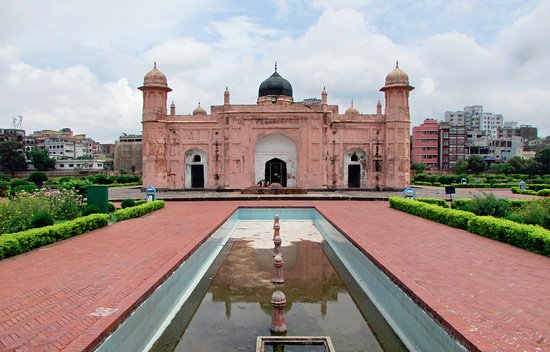
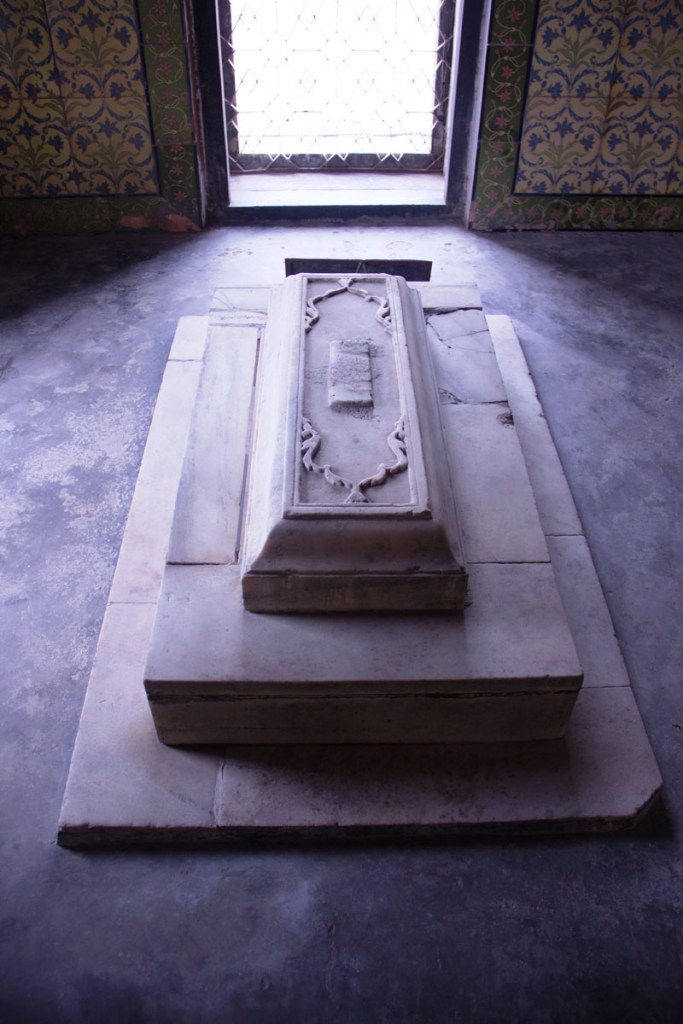
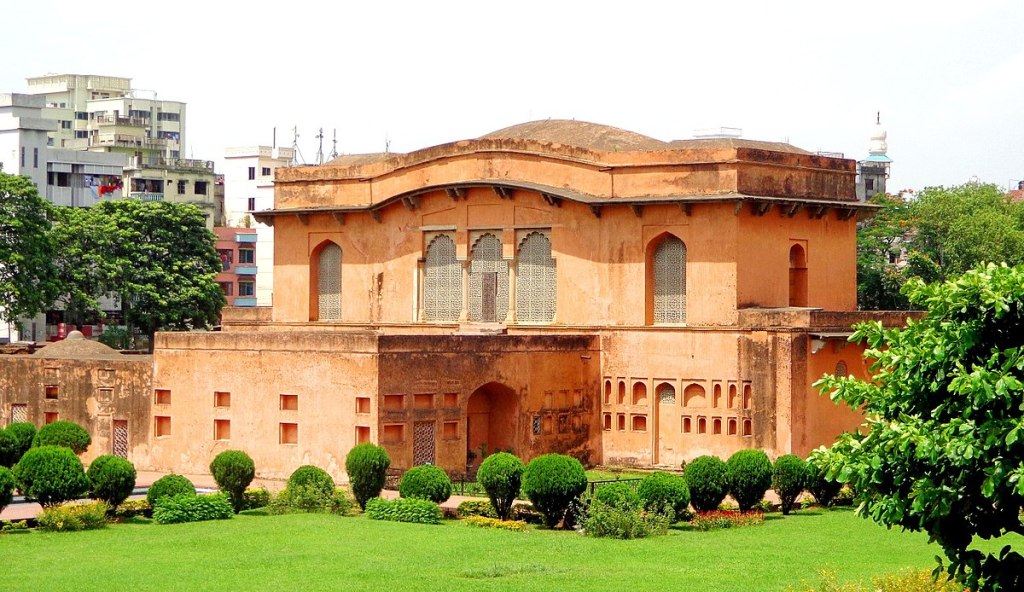




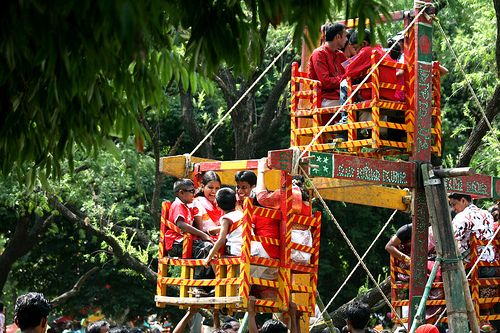

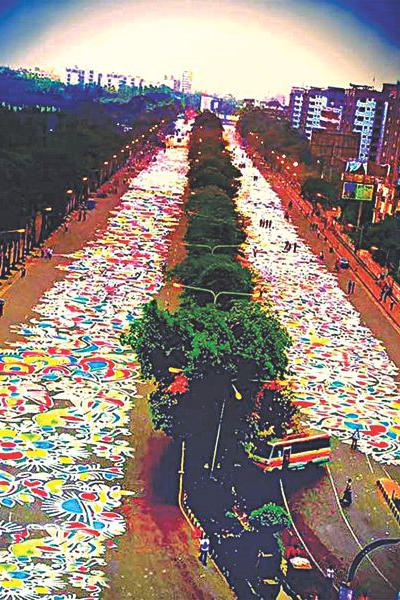

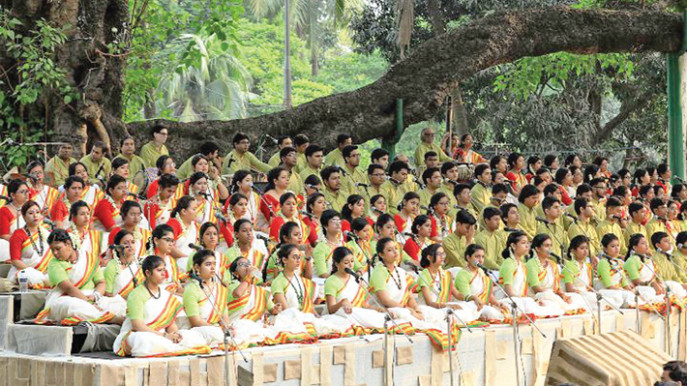





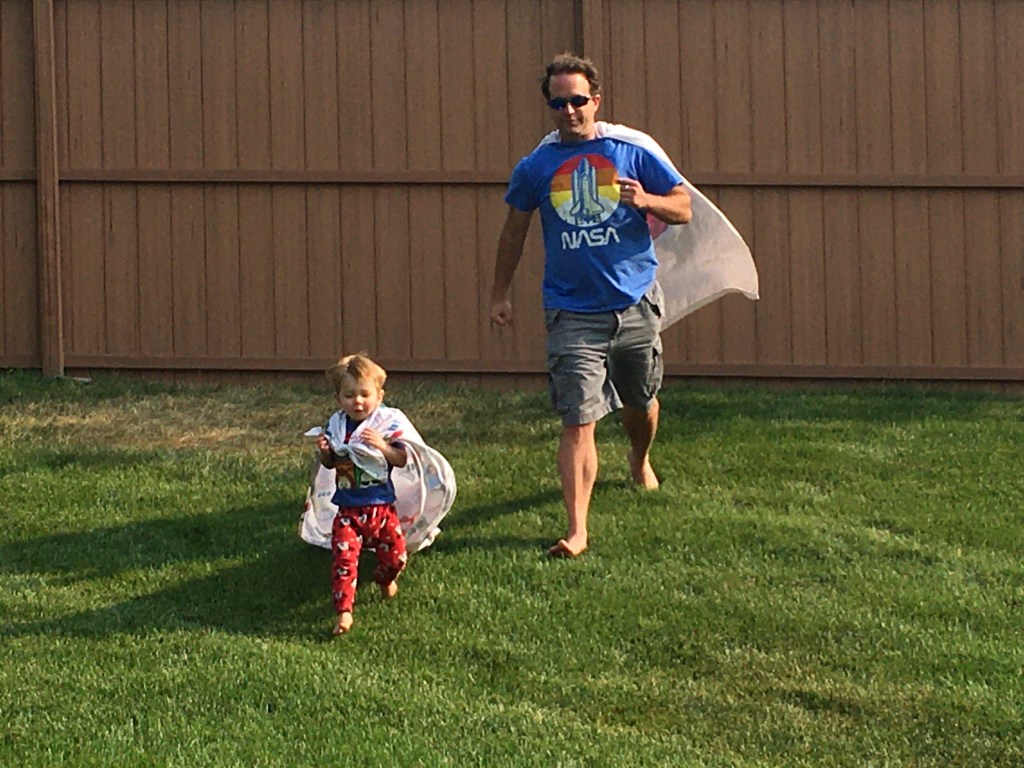

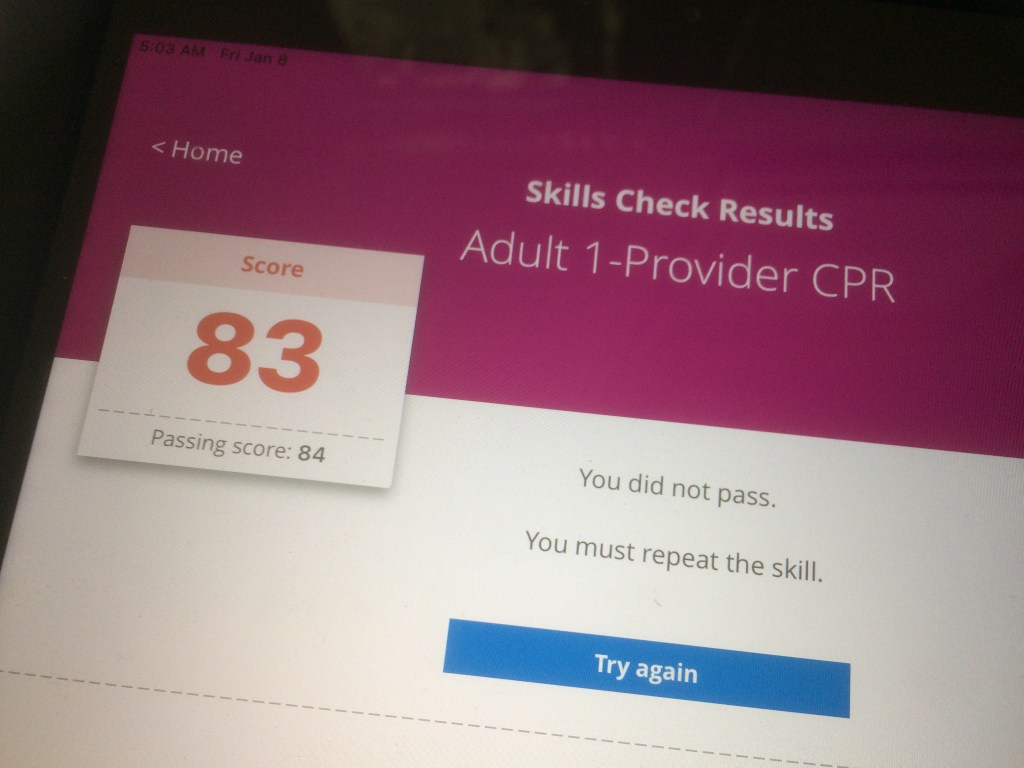

 Borderless