There’s a black phoebe on the feeder this morning, She’s chasing other birds away. Black top knot and glossy black bib, Small, territorial, aggressive. And we saw a pelican on the split rail fence
Doves in the dust, a dry bath for feathers and insects Cooing sounds echo around the neighbourhood. They whistle-fly a few wing beats, Then they duck under the shrubs. They will be back this evening The big owl has been silent lately, He will return soon. We saw an old pelican on a fence rail.
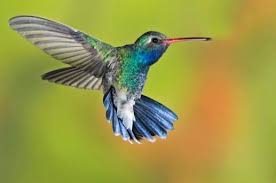
Humming birds hover and dart, Sampling the nectar, pollen on its beak. The old pelican is too far from the coast. There’s a seagull on the streetlamp, Looking for the beach And five wild turkeys scatter as we pass. Hawks pose on the treetops, surveying their domain Crows and sparrows are everywhere The old pelican rests before flying west, home.
THE BLUE AGAVE
They have been there. The Blue Agaves: lush and strong with long hard thorns. Today I noticed them, for the first time. The way they reproduce. Like a hen with chicks, The baby Agaves are surrounding their mother plant. Their pointed thorns are ominous, protective. How can a plant act like a bird? How can a bird act like a plant? Like chicks with a hen; Like an Agave with spikes. The shelter works. We’ll use it twice.
Blue Agave. From Public domain
Ron Pickett is a retired naval aviator. His 90-plus articles have appeared in various publications. He has published five books: Perfect Crimes – I Got Away With It, Discovering Roots, Getting Published, 60 Odd Short Stories, and Empaths. Ron has had his poems published in Scarlet Leaf, Borderless Journal, and other periodicals.
PLEASE NOTE: ARTICLES CAN ONLY BE REPRODUCED IN OTHER SITES WITH DUE ACKNOWLEDGEMENT TO BORDERLESS JOURNAL
There’s a slowness to packing boxes when there’s nowhere to take them. It’s the deliberation that surrounds every item of clothing as it’s neatly folded, placed gently with the others.
With the child, there’s an even greater sluggishness when it comes to the dolls and stuffed animals, an unwillingness even for fear that there won’t be enough room to fit them all.
For haste in that apartment house, you’d need to look to the landlord’s first floor apartment, the tapping of his fingers on the kitchen table, like tiny impatient jackhammers.
For mother and child, the sidewalk awaits. It’s both leisurely and brisk… and indifferent, which is not a speed at all.
KISS AND MAKE UP, THE LATEST ITERATION
Your words slap my face around. Now you have me where you want me – an effigy of everything you hate.
My response is a prison-riot of old angers.
Pain doesn’t travel well so hurting others is our go-to.
We learned it from our parents. We were taught it in school.
To be cruel is a mega-aspirin, a vein-load of morphine.
But we love each other. Our harshness knows this. Our rages are intrinsically aware.
So our voices soften. Red cheeks whiten. Flaming eyes are doused by tears.
Then it’s kiss and makeup time. Our mouths are like tunnels in a mountainside. Tongues collide but there’s little collateral damage.
.
John Grey is an Australian poet, US resident, recently published in Shift, River And South and Flights. His latest books Bittersweet, Subject Matters and Between Two Fires are available through Amazon. He has upcoming work in Rush, Spotlong Review and Trampoline.
PLEASE NOTE: ARTICLES CAN ONLY BE REPRODUCED IN OTHER SITES WITH DUE ACKNOWLEDGEMENT TO BORDERLESS JOURNAL
I don’t belong here, you tell me. I don’t belong here where the monsoons drain the sky of all water? This darkness is not cloud covering the sky in layers of collyrium dust. This darkness is the darkness of your heart staining the air. Can you wipe clean the slate of memory, my smile etched on fond photographs, the family fables, the tangle of feuds and the look in your eyes, when I, your unwanted daughter, walk in demanding my dues? I may not belong here anymore, but I demand the song of every cuckoo that sang on the thatch, the footprints of every squirrel that scuttled across the courtyard, and the cries of every dark goddess you deified in false myths.
Usha Kishore
Usha Kishore is an Indian-born British poet, editor and translator. The author of three collections of poetry, her work has been widely published. www.ushakishore.co.uk
.
PLEASE NOTE: ARTICLES CAN ONLY BE REPRODUCED IN OTHER SITES WITH DUE ACKNOWLEDGEMENT TO BORDERLESS JOURNAL
The sky is dressed in the metaphors of dark.
Two orbs of mine have seen a lark sleeping with its young, beneath the moonlight's spark.

There's a man who tiptoes from the day's rush, unlocking the gate, keys jingle in the stillness.
With a fixed gaze, he fears the sound will awaken his beloved and their children.

A grandma sews by the window, threads glinting beneath the lamplight,
Weaving old summers into the hush of the night,
Fingers still tremble where small hands once lay,
Stitching the ache that won't fade away.

On roads, finally quiet after day's business,
A drunk man argues softly with none in particular,
Words slurring into the dust, unheard and familiar.
Street dogs curl under a bench, their ribs show faintly.

A mason pauses, smoke curling from his weary lips,
Sits at the edge of a half-constructed skeleton of a building.
The moonlight seeps through hollow beams,
Sketching his struggle upon the concrete bones of the city.

Beneath the murky sky, there also lies a mother, with her little son,
Ragged, curled up with no blanket, warming up instead with dust.

The smuggler waits where no one will see.
Money trades hands, but freedom flees.

Somewhere far away, I hear the hiss of streetlamps flicker,
Refusing to die, softly illuminating lonely streets where lost footsteps lie.
In one of the dwellings, I see a loud TV with no one watching.
Loneliness grapples man.

I see an old woman caressing old photos in the album, kept beneath the bed's gloom.
Pages of laughter, now agony and yearning, shatters the room.

At the dusty city walls, by the lane, a young alluring woman
Drunk with the wine of youth, has her saree tied loosely.
She waits for the night’s business, selling her sorrow, wrapped in skin.
Eyes once dreaming of soft daylight,
Now learn to fade behind the night.

Yet somewhere a window still glows in the gloom,
A hint of tomorrow lies buried in the city's tomb.
These streets hold onto the stories no daylight recalls.
Whispers of lives resonate in the dark, silence fading into the walls.
I keep their secrets, their grief, their light.
I am the witness as they call me Night.
Debadrita Paul is an upcoming voice in poetry.
.
PLEASE NOTE: ARTICLES CAN ONLY BE REPRODUCED IN OTHER SITES WITH DUE ACKNOWLEDGEMENT TO BORDERLESS JOURNAL
Our daily prismatic view sorts the world into clashing colours— silver ripples, mustard leaves, grey painted board and batten,
lichen-spangle boulders, crisp imported fabrics that flatter those who don’t need flattering. We must unfold the spectrum.
The glass surface of our minds smooths out the natural light and normalises arrogant hues that frighten children and dogs.
In our youth we startled at the faintest hint of artifice. Now the unmoored hues comfort rather than confront us. The river
coughs up neutral tones to ease the gnashing of construction sites. We still hate to see the planet exposed to its raw geology
but we’ve hefted the deadweight of being human so long we know how ugly we look on the inside where molts of creation continue.
William Doreski lives in Peterborough, New Hampshire. He has taught at several colleges and universities. His most recent book of poetry is Cloud Mountain (2024). He has published three critical studies, including Robert Lowell’s Shifting Colors. His essays, poetry, fiction, and reviews have appeared in various journals.
.
PLEASE NOTE: ARTICLES CAN ONLY BE REPRODUCED IN OTHER SITES WITH DUE ACKNOWLEDGEMENT TO BORDERLESS JOURNAL
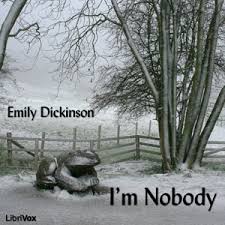
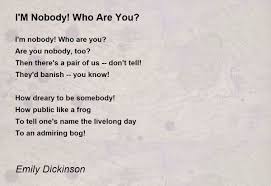
"I'm nobody! Who are you?
Are you a nobody, too?"
(Emily Dickinson)

NOBODY

It is not easy to tell the tale of nobody.
A nobody's tale is without a
beginning or an end,
Like jumbled up letters on a mussy page,
Obscure sketches from a hand untrained.

A nobody's anonymous world
Battered by the day, and
Bruised by the night,
Spins and shatters in a gyrating vortex
Of liquid darkness and light.

A nobody lives and dies and again lives
And breathes a dream in between,
Desperate to see just one come true, and
For a glimpse of green in a bald ruin.

The crimson dawn in a nobody's sky
Burns hopes to ash.
A moon flings shards of silver
At nobody’s world, aiming a cruel slash.

The fog settles forever thick and grey
Outside a nobody's  window.
In a nobody's land, seasons don't change.
There settles permanent a season of snow.

Songs painted black by storm clouds
Croak beyond a nobody's door.
The wind mourns in the hollow orchards
Roses bleed on a cracked floor;

It is hard to tell a nobody's tale
That has neither a beginning, nor an end.
It's the story of a doomed  soul,
That neither has a foe, nor a friend!!
From Public Domain
Snehaprava Das is an academic, translator and writer. She has multiple translations, three collections of stories and five anthologies of poetry to her credit. She has been published in Indian Literature, Oxford University Press, Speaking Tiger, Penguin and Black Eagle Books.
.
PLEASE NOTE: ARTICLES CAN ONLY BE REPRODUCED IN OTHER SITES WITH DUE ACKNOWLEDGEMENT TO BORDERLESS JOURNAL.
A boy is born to modest means, where dreams are weighed in gold not for him, but for the house, where bills pile, stories untold. His father sweats in sunlit streets, a wallet thin as thread, each rupee split for bread and books, while dreams hang by a thread. The boy, he learns to bite his tongue, to bury wants too deep "Can we afford this course?" he thinks, while others soar, he creeps.
II. LESSONS
No talk of stocks, no wealth, no bonds, just whispers 'cross the wall, "Auntie bought a fridge today!" "How? Who will pay it all?" They teach him to gossip, not grow, to judge, but not invest. He masters how to count flaws, but not to pursue his own interests. The classroom hums with bright futures, while he just counts the cost. His grades dip low, his focus strays a lifetime’s chance is lost.
III. ADULTHOOD
Then comes the wife, then comes the war, the mother’s tear-stained cheek. He stands there, torn and hollow-eyed, too weak to speak or seek. "Choose her or me!" the women scream, his heart a fractured bone. He pleads for peace but feeds the fight, and weeps—yet stands alone. Promotions pass, his peers ascend, while he’s knee-deep in strife. No raise, no risk, no rebel leap— just middle-class for life.
IV. CYCLIC ECHOES
The cycle spins, his son now stares at fees he can’t afford. The boy, like him, will shrink his dreams to fit the family’s hoard. Oh, middle-class! Your chains are soft no tyrant’s whip, no decree, just love that clips the wings you yearn, and calls it "family".
Mohit Saini is a poet, writer, and researcher, working as an Assistant Professor at Compucom Institute of Technology & Management, Jaipur. He currently serves as an editor in the Journal of Advances in English, Telugu and Indian Languages (AQIE Publication) and for the International Journal of Language, Linguistics, Literature and Culture.
.
PLEASE NOTE: ARTICLES CAN ONLY BE REPRODUCED IN OTHER SITES WITH DUE ACKNOWLEDGEMENT TO BORDERLESS JOURNAL
At the fourth level, there is an alcove hidden from other human beings.
(I didn’t know fourth level existed.)
From here a slope moving down in the form of roof,
Looks over another slope, again a roof.
If I can’t see the people, neither can they me!
The pane at this level has a small crack
To allow the air I require to breeze in. Thank you, Lord.
The space in the alcove allows me to stretch,
Allows me the freedom to assume a foetal posture.
The alcove keeps me cold, keeps me warm.
It gives the creepy feeling I might fall off or roll down.
It gives the assurance I am safe.
Here shadows spill light, nights shine darkness.
The whole thing is about the mind.
There is always the whistle, the thoughts about sex,
When it’s not about the sex, it’s about Gods,
About men travelling in trains, men running for cover to hide nakedness.
I am always missing my trains, waiting to find the station’s rest rooms,
Waiting in front of restrooms for the restrooms to be free.
Here people don’t acknowledge truth, the media doesn’t.
The Caxton phenomenon* is dead, all channels whore.
And then there is the sky, the big clear sky like a slice of cake.
The big sky out there where the birds fly, birds make the clouds wait for another day.
How little I feel, how little.
I speak to the feathers to share the alcove.
I speak to feathers because, reasons can’t speak to anyone else in this high alter of solitude.
I impress upon them to share the alcove
Because times are not shareable.

*Caxton phenomenon refers to the impact William Caxton had on English literature and language when he introduced the printing press to England in 1476
From Public Domain
Saranyan BV is poet and short-story writer, now based out of Bangalore. He came into the realm of literature by mistake, but he loves being there. His works have been published in many Indian and Asian journals. He loves the works of Raymond Carver.
.
PLEASE NOTE: ARTICLES CAN ONLY BE REPRODUCED IN OTHER SITES WITH DUE ACKNOWLEDGEMENT TO BORDERLESS JOURNAL.
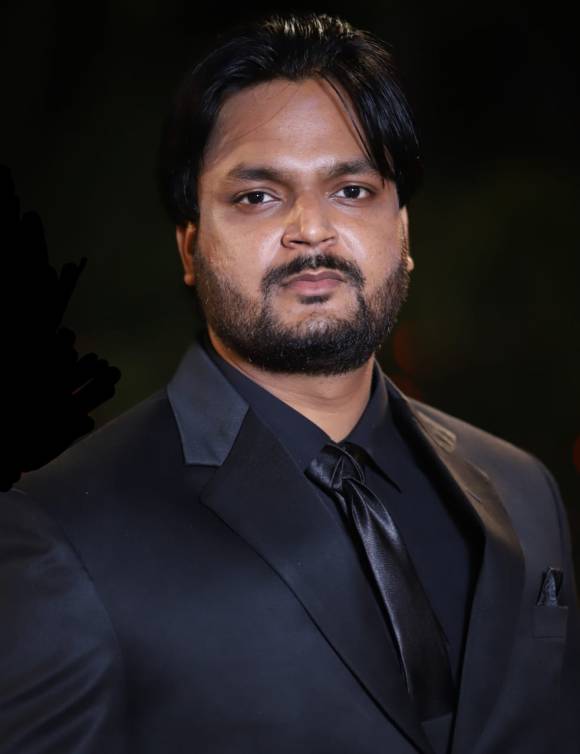
Five poems by Rohini K.Mukherjeehave been translated from Odia by Snehaprava Das
Rohini K.Mukherjee
AT THE MYSTICAL SANCHI

An unknown voice beckons
At the early hours of the morning.
Moved by a new surprise
Buddha relapses into meditation.
A crystal dawn, cold as marble,
Is traced
On his hands and feet
And his eyes and forehead.
Some instant, invisible signal prompts him
To turn on his side and sleep.

After Buddha’s Nirvana,
Calm settles in the valley, slowly.
Thousands of
Branches and branchlets
Radiate blissful divine light.
The trees too, in a lavish growth,
Spread out everywhere --
From the earth below to the sky above --
And meditate!


THE EXECUTIONER

No one could predict
The next scene.
But in the one enacted now
The executioner has
A prominent presence.

The executioner stalks the moon,
 His face hidden in the veil of clouds,
Knife in hand, a gleam of smile
On a phony face,
A sharp, keen gaze under the glasses,
Exuding the smell of
An expensive perfume.

The indistinct footfalls may
Prompt one to flick a look back
 But there would be no one behind
Only clouds clad in midnight blue
Sailing in the sky.
From somewhere far floats in the music
Of a mountain stream.
 Slowly, sorrow dissipates and a
 Path opens up for the spring,
 A wonderland of fairies.
In his unguarded moments,
The knife in the executioner’s grip
Glitters in the furtive moonlight.
Any moment that poison-coated knife
Could find the moon’s throat,
The moon knows that well.
But it forgives,
Because it also knows well
That the executioner cannot
Hide for long
And will be trapped in
The moonlit garden of tangled clouds.


THE DEATH OF A HAPPY MAN

One day, the eyes lost sleep
And all the locusts flew away,

Not one spectator had guessed
That one day
The man will sprawl out on
On the sea beach sands
Washed away by the waves
From distant lands.

The eyes lost sleep one day.
The flock of locusts flew away.

But no one could guess
The pains, the sobs
That seared that forlorn soul.

Petals drifted in piles
To make him a delicate shroud.
The smell of sandalwood came wafting
In the sea-breeze from the north.
Seagulls flocked around the body,
Unintimidated by the crowd in the beach,
Drowning the voice of
The living men there
With their loud squawks of dissent.
Ooh! What a long wished-for
Happy death
On a cool and blissful sea beach!

After the flock of locusts flew away
Carrying all the dreams back
On their wicked wings,
The eyes lost sleep!


ANKLETS OF THE NIGHT

There is still time for the nightfall.
But the air tinkles with the sound of
The anklets of the night
 As if someone is retreating from
An ineffectual, moon-washed garden,
 As if someone from the grave
Watching the landscape,
Or someone standing at the riverside
Hums the tune of a departed season,
Or someone hurrying aimlessly away
To escape the approaching dawn.

It is not yet night,
But the night’s anklets ring.
You are probably returning
To your shelter of old times
In search of a new hope.
Just take a look behind to see
The painting of a conflicting wind
Fluttering across the courtyard.

It is not yet night
But its anklets begin to jingle in the air.

How cool you appear in your
Evening chanting of the mantras!
 How calm and steady you are
In the pure fragrance of the descending steps
As you set out on the journey
Holding your heart on your palm
Like a burning clay-lamp.
May be when you arrive there
The dawn around you would be sonorous
With the notations of Raga Bhairavi.

There is still time for the nightfall
But the night’s anklets tinkle in the air!


THEY DID NOT COME

I waited for them, but
They did not come,
I waited all this time in vain, and
Knowingly, let myself fall a victim
To the first rays of the sun.
The sun’s whiplash spurred me on
To the jungle.
It forced me to cut wood
And tie them in bundles.
The hunger of the sunset hour
Prodded me back to where
I had started.
The smell of soaked rice, and the aroma of
Onions and oil
 Drifted thick in the air of my house.

The sun came in, an intruder,
Sat by me and watched.
Then it devoured all the food,
Leaving nothing,
Not even a single dried-up onion-peel.

Because they did not come,
For me the morning was
Meaningless in its futility.
I knew I was never one
In the list of their ultimate interests
When their tenure of life here ended.

The footfall of the light
Trod easy on my skin.
Days rolled on this way
In sun and light.
The sun was everywhere, all the time.
Whenever the door opened,
The sun stood there.
When the meteor came shooting down,
When words rode over
the waves of sleep to float in the air,
The treacherous sun always appeared.

And for me, there was
No hope of their coming back.

But, one day as I leapt up in a hurry
At the Sun’s summon,
I discovered the Sahara Desert
That I believed had
Remained hidden in my
School Geography book,
Lying face down all these days
Under my own hooves!
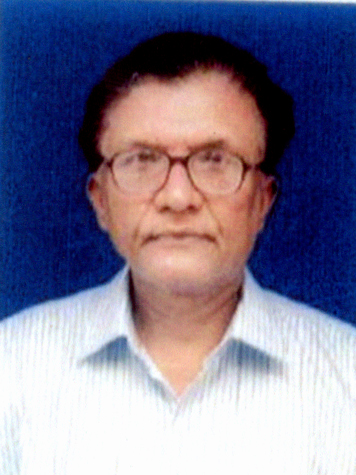
Rohini Kanta Mukherjee has authored, edited and co-edited several volumes of poetry and short stories in Odia and English. Many of his poems have been translated and published in various Indian languages , broadcast over several stations of All India Radio and Doordarshan . Some of his poems and translations have appeared in Wasafiri, Indian Literature, The Little Magazine , Purvagraha, Samasa among others. He retired as Associate Professor of English, from B.J.B Autonomous College, Bhubaneswar, Odisha.
Dr.Snehaprava Das, is a noted writer and a translator from Bhubaneswar, Odisha. She has five books of poems, three of stories and thirteen collections of translated texts (from Odia to English), to her credit.
PLEASE NOTE: ARTICLES CAN ONLY BE REPRODUCED IN OTHER SITES WITH DUE ACKNOWLEDGEMENT TO BORDERLESS JOURNAL





 Borderless