Some mornings, the air feels rehearsed. The sun rises on cue. Even my breath sounds like someone else’s prayer.
I want something less tidy — a god with a scar, a truth with bad grammar.
What is this ache that won’t name itself? It hums under the skin, a small rebellion against stillness.
I’ve tried silence. It behaves well until it starts to echo. I’ve tried love. It arrives barefoot, then asks for shoes.
Still, something in me keeps choosing the risk of aliveness — the heartbreak, the astonishment, the tremor in the voice that says nothing, but means everything.
Maybe that’s enough — this pulse that refuses to explain why it’s still pulsing.
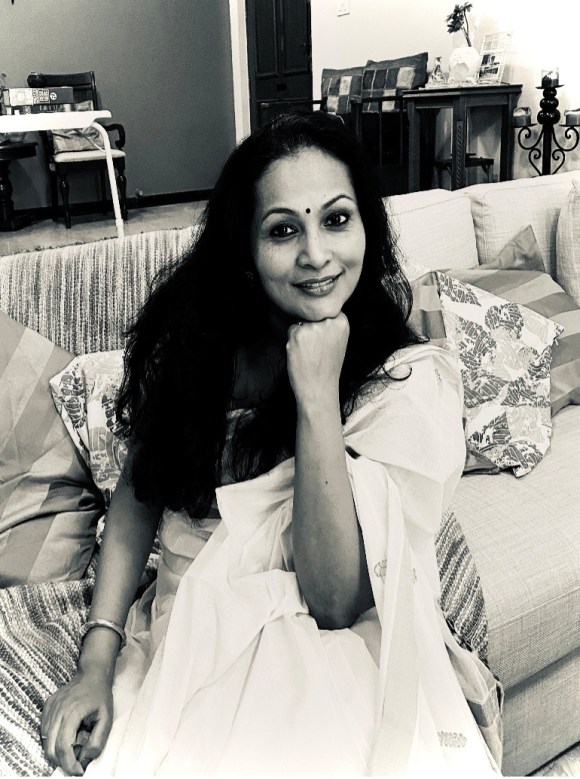
Annwesa Abhipsa Pani is a poet, a Senior Manager in Organisation and People development and a student of English Literature based in Pune. Her work explores silence, belonging, and the delicate negotiations between inner and outer worlds. Her poems often linger at the intersections of tenderness and restraint, drawing from everyday moments to uncover quiet revelations.
.
PLEASE NOTE: ARTICLES CAN ONLY BE REPRODUCED IN OTHER SITES WITH DUE ACKNOWLEDGEMENT TO BORDERLESS JOURNAL
“I don’t know,” his mother says, fiddling with the radio.
Outside the window, a cemetery rolls by.
ii
“What happens when you die?” the boy asks.
“The worms eat you,” his mother says.
His father joins in, singing: “The worms crawl in, the worms crawl out…”
Inside the boy’s chest blooms a fear that wasn’t there before.
DOWNTOWN, FUNERAL HOME, 6PM
There’s a wake tonight. About now the few mourners will be dusting off the black dresses and navy suits they save for these occasions, wondering how quickly they’ll be able to leave without being rude. Meanwhile, I’m digging through a shoe box looking for a photo to prop on the easel by the coffin.
Nothing jumps out.
He had no Golden 50th, no Viking Cruise, no banquet with veal parm and chardonnay. So I’ll stand around with my hands in my pockets and watch the headlights of the passing cars pierce the lace curtains, unsure whether to smile or look sad while the guests mingle in drab clusters trying not to glance toward the front of the room as they edge their way to the door and out into the night where they’ll sigh with relief, order pizzas, and drive home to binge Netflix.
CAVERNOUS GLOOM
water echoes— quiet corridors of cavernous gloom
EARLY BIRD
I used to stay up late looking for grit, for neon, for blood until you brought me to the hour when the water is at its bluest, taught me the difference between the flicker and the woodpecker, showed me how the leaves are greenest on a cloudy day, and now I look for the light as it leaches into a lifeless sky, taking your hand and welcoming the lessons of the day.
AFTER THE PARTY
For me, the real party starts after everyone has gone, after we’ve washed down the pizza and sheet cake with cheap decaf and hauled out the black bag of paper plates, hats, and napkins into the February night and finally settled in the quiet dark of your room to listen to Johnny Cash and admire the blinking lights of Boston in the distance and promise each other to visit a lighthouse once the spring sun melts the icy crust of Maine, a promise that keeps me warm as you charge into your third year with blind joy and wisdom far greater than mine.
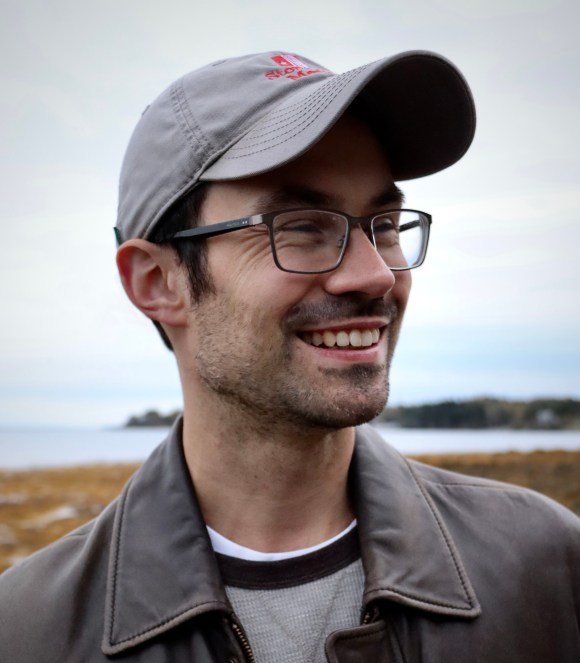
Daniel Gene Barlekamp writes poetry, fiction, and audio drama for adults and young readers. He lives with his wife and son in Massachusetts, where he practices immigration law. Website: https://dgbarlekamp.com/.
.
PLEASE NOTE: ARTICLES CAN ONLY BE REPRODUCED IN OTHER SITES WITH DUE ACKNOWLEDGEMENT TO BORDERLESS JOURNAL
Five poems by Satrughna Pandab have been translated to English from Odia by Snehaprava Das
Satrughna Pandab
SUMMER JOURNEY

Does this journey begin in summer?
After the mango buds go dry
And the koel’s voice trails away…
When simuli, palash and krishna chuda
Blaze in red?
Does it begin when the blood
After reveling in the festivities of flesh
Crosses over the bone-fencing
And gets cold,
When the burning soul yearns for
The fragrant and cool sandalwood paste?

And the soothing monsoon showers?
 Where lies the destination --
At what border, which estuary,
Which desolate island of wordlessness?
The journey perhaps itself decides
The appropriate hour.
 You embark upon this journey alone --
Without friends, without kins,
Without allies without adversaries.

You yourself are the mendicant here.
You are the violin, you too are the ektara.
You are the alms too.
And what are the alms after all?
At that ultimate point,
When the end would wear the
Garb of blue ascetism,
The scorch of summer
Turns to
Sandalwood paste,
 Besmears the breath that
Leaves you overwhelmed
With its exotic fragrance.

A SKETCH OF FAMINE

The white wrap of the clouds
 Is ripped into shreds.
The pieces are blown away in the wind.

The sky spreads out like
A grey cremation ground,
Where the sun, like some kapalika
Performs a tantric ritual
A sacrificial act,
And slits the throat of a virgin cloud --
Moon:  The skull of a man just died,
Constellations: A crowd of beggars,
 Night:                        A Ghost Land
 Fissured farmlands: Human skeletons.

Flames leap.
Green vegetations char.
The blue of the sky turns ashy.
The tender earth
Lamenting its bruised honour
Sprawls in a pathetic, arid sprawl.

WAR (I)
 (FROM KURUKSHETRA TO KUWAIT)

All the Dhritarasthras
Between Kurukshetra and Kuwait
Are blinded kings,
Pride boiling in their blood,

Not a single weapon misses the target
Each Ajatasatru fights another
Ceaselessly,
Neither of them returns from the battlefield,

The weapons have no ears for
 The mantra of love
Or of brotherhood,
Nor does the blood recognise its kinsmen.
The battlefield does not care to know
Which warrior belongs to which camp.

Not a soul could be seen on the bank of
The bottomless river of blood
That flows across the battlefield
Desolate and forlorn.

And there is always an Aswatthama,
Ready with his Naracha, the iron arrow,
Awaiting the Parikshitas yet to be born.


AUTUMN

Is this river your body
Flowing, calm and pristine,
A translucent green?
Are the dazzling streamers of sunlight
Hanging from the sky of
Your glowing skin?
Are the rows of paddy fields
Stretching to the horizon,
Your sari?
Do you smell like the paddy buds?
Do the delicate murmur of the river waves
Or the cheery chirpings of the birds
Carry your voice?
The glimmering stars of the night --
Are they your ear-studs?
Do your eyes sparkle
Like those of some goddess?
Do you ever cry?
Really?
Are the dew drops clustering
On the grass your tears, then?

And the pool of blood under your
Lotus-like feet --
Whose blood is that?
Ripping apart the night
Coloured like the buffalo’s skin,
Your lotus-face gleams like stars,
My breath smells of the lotus, too.


A FAMILY MAN’S DAILY ROUTINE

The man stands
His back turned to the sun,
Or is it the wind?

A bare back, always
Rough hair, dry, windblown,
May be there is a hunch on his back,
Or, is it a load of some kind?
Heavy and sagging,
His toils do not show on his face.

He stands like a scarecrow,
Waving aimless, hollow hands
Warding off the emptiness
Around him, or the void within?

His face does not show it,
Or he does not have a face at all?
Just a headless body
Moves about here and there,
 Brushing the dust off,
Mopping the sweat beads away.
The cracks on his palms and his heels
 Could be seen, indistinct though.
There are, however, times, when
A face fixes itself to the headless torso,
When he comes to know
About the pregnancy of his unwed daughter,
Or, when he has to carry his dead son
Over his shagging shoulders,
The pair of eyes in that face look like marbles
 Deadpan, stiff and blank.

How does a family man take it
When the harvest succumbs
To the tyranny of flood and famine,
When a dividing wall is raised
 In the house or in the fields,
Does it matter to the family man?
May be,
A dagger rips his heart apart,
The pain does not show on the face.

Sometimes one can see something like
A basket on his back --
Who does the family man carry in that?
 His blind parents? His kids?
Perhaps his name is Shravan Kumar
And he is on a pilgrimage,
Perhaps not!

He buries his already sinking feet
Some more under earth,
Beads of sweat shine like pearls on him.
His beards hang off his face,
Like the aerial roots of a Banyan tree,
Does he move on carrying
A dead sun on his back?
His face reveals not much.

Who does the man stand
Showing his bare back to?
To the sun or to the wind?
Who knows?
Nothing shows clear on the family man’s face.
Satrughna Pandab is a conspicuous voice in contemporary Odia poetry. A poet working with an aim to define the existential issues man is confronted with in all ages, he adopts a style that embodies traditionalism and modernity in a proportionate measure. Highly emotive and poignant, his poetry that reveals a fine synthesis of the experiences both individual and universal, are testimonies of a rare poetic skill and craftmanship. A recipient of the Odisha Sahitya Akademi Award, the Sarala Award, and several such accolades the poet has nine anthologies of poems and several critical and nonfictional writing to his credit.
Dr.Snehaprava Das, is a noted writer and a translator from Bhubaneswar, Odisha. She has five books of poems, three of stories and thirteen collections of translated texts (from Odia to English), to her credit.
PLEASE NOTE: ARTICLES CAN ONLY BE REPRODUCED IN OTHER SITES WITH DUE ACKNOWLEDGEMENT TO BORDERLESS JOURNAL
Solitude, a warm fuzzy baby blanket gifted to me at birth, that I never outgrew, but forgot about during the noisy years of childhood, adolescence and youth; it gathered dust, faded like a distant memory, waited patiently for me to reclaim it as my own.
An inheritance from my father, it came to me on his passing -- a source of comfort, a companion that had helped him when my mother left. At forty-five, I drag it along with me like a child, on my walks in the park. Together, we watch the wagtails in the mornings
dipping their heads in the green grass searching for food, the yellow-throated warblers flitting from branch to branch surveying the world, the wild geese that fly home when the sun bids farewell, and the gardeners busy at work, trimming hedges. We breathe in the fragrance of honeysuckles and admire the hardiness of geraniums.
It sticks to me like skin, protecting me from the glare of a crowd; together, we listen, laugh, make conversation, and when alone, string it all into poetry; so much like dad, I think. Only his were stories of monkeys and foxes, chickens and bees, flies travelling to Sicily, Azerbaijan and Lyon,
carrying a wealth of information on their gossamer wings. The sparkle in his eyes when he shared the world with us and how it glazed when in a crowd -- I had blamed it as a quirk, felt sorry for him, not quite understanding that he wasn’t lonely or anti-social, but enjoyed the company of Solitude.
I understand now when on my own I sit, and it rests its head on my lap, I run my fingers through it, its familiar touch making me feel closer to dad and grateful that I inherited its quiet contentment from him.
Smitha Vishwanath is a writer based in Kenya. An ex-banker, she enjoys painting, writing poetry, reading, sharing book reviews, nature and travelling. Smitha has co-authored a poetry book, Roads- A Journey with Verses and a novel, Coming Home.
.
PLEASE NOTE: ARTICLES CAN ONLY BE REPRODUCED IN OTHER SITES WITH DUE ACKNOWLEDGEMENT TO BORDERLESS JOURNAL
where i belong the world is vast, relentless, ever turning but in your presence, time slows and i am no longer lost
i kneel before you, not in surrender but in the quiet knowing that i have arrived that after every long day, every restless night i will always find my way back to you
you are the hush of the evening the warmth of a light left on for me the gentle breath of a place that feels like forever
my hands are tired, my heart is heavy but in your touch, i am weightless here. against you, 1 lay down my worries and in your arms, i find home
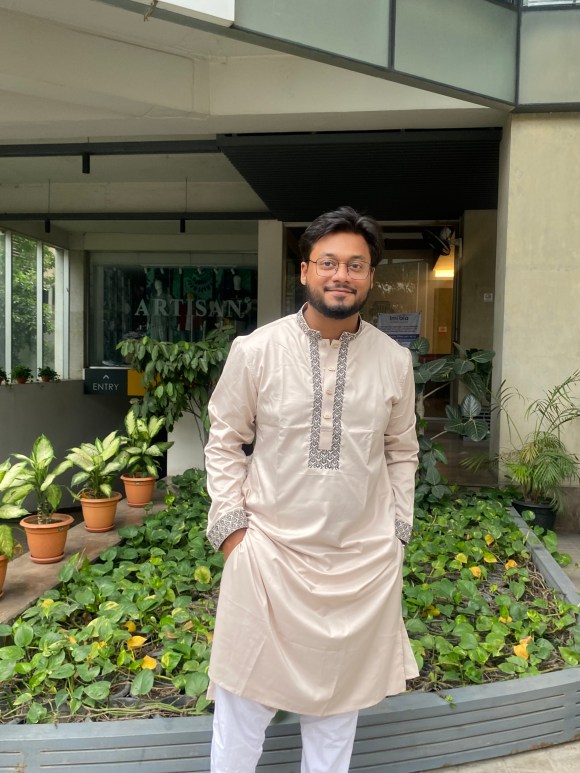
Raiyan Rashky is a master’s student in English Literature at ULAB. He writes from the heart, inspired foremost by love.
.
PLEASE NOTE: ARTICLES CAN ONLY BE REPRODUCED IN OTHER SITES WITH DUE ACKNOWLEDGEMENT TO BORDERLESS JOURNAL
It’s torrential and it moves in sweeping proportions.
Proportions that clear everything in sight that
Characterizes the landscape of my own world.
It first took an insidious dimension with your
Disapproving body language, before it deluged
My entire being with your lack of consent to
My persistent advances and pleas for access
To the Mecca of your halcyon heart.
From Public Domain
Joseph C. Ogbonna is a widely published poet from Nigeria. Some of his works are published in magazines, journals, anthologies and in online blogs. He lives in Enugu, Nigeria.
PLEASE NOTE: ARTICLES CAN ONLY BE REPRODUCED IN OTHER SITES WITH DUE ACKNOWLEDGEMENT TO BORDERLESS JOURNAL
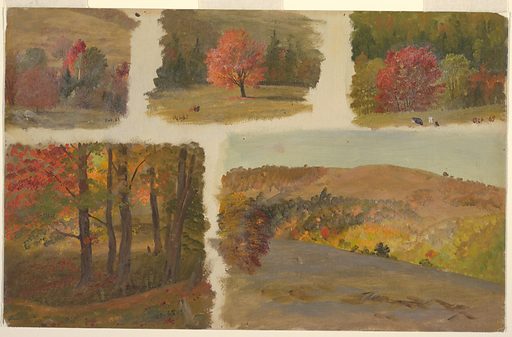
Art by Frederic Edwin Church(1826–1900). From Public Domian
I WANT SPRING

As autumn begins
I want spring.
I don’t want winter.
I don’t want summer.
I want spring.

I am straying from
the current
season. I want to
go away to spring.

Carry me off through
all the bers, September,
October, November,
and December.

Take me away from
the rys, January and
February. I do not
need to make any
resolutions on the
year’s first day. I do not
need Valentine’s Day.

I want spring.
I want spring
all in bloom.


WHEN AUTUMN COMES

My hands are full
living in solitude.
I love a little less
when I feel destroyed.

I feel anti-social
when autumn comes.
This is just a phase
I have stretched out.

I inaugurated sadness.
I curse the owl
that predicts my fate.
It does not like me.

I will love again.
I feel it in my skin.
I know it sounds absurd.
But I will love again.


IN THE SHADOW OF NIGHT

Stumbling in the shadow of night
where the scarcity of light bleeds
over what could not be seen. It
could be a monster or fiend or friend.

It is easy for me to pretend what
is not there. I don’t really know if
anyone is asking. What if it was me
who is slower than most? I am not

some great thief who comes out
at night. I am not brave enough to
fight the monster or the fiend. I
could face my friend with a smile.
Luis Cuauhtémoc Berriozábal was born in Mexico, lives in California, and works in Los Angeles.He has been published in Blue Collar Review, Borderless Journal, Chiron Review, Kendra SteinerEditions, Mad Swirl, and Unlikely Stories. His most recent poems have appeared in Four FeathersPress.
.
PLEASE NOTE: ARTICLES CAN ONLY BE REPRODUCED IN OTHER SITES WITH DUE ACKNOWLEDGEMENT TO BORDERLESS JOURNAL
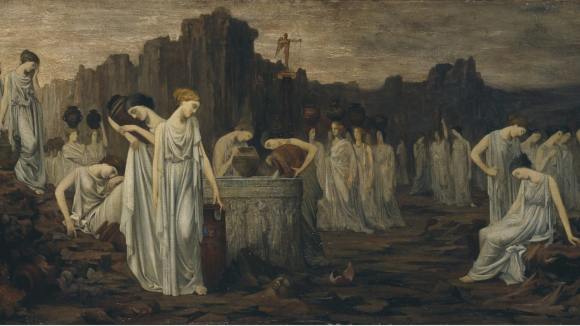
The Daughters of Danaus by Fernand Sabatté (1874-1940). From Public Domain
SIEVE

(The Danaids were the fifty daughters of King Danaus who murdered their husbands, the fifty sons of his brother Aegyptus, on their wedding night. Only Hypermnestra spared her husband whom she loved. As punishment for their crime, the other Danaids were condemned to an eternal torment in the Underworld: endlessly carrying water in a leaking vessel.)


These things you call experiences, are they separate
leaves who do not know

their neighbors in bloom and bare? Or rather notes
in grand symphonies,

seasons in the House of Being? They rise and ring.
And you, water carrier, you who

press them in the book of memory, hoping to
hold them forever, page by page,

why is your pail so hard? Through wind and rain
and gossamer glide, do you know

the mind of emptiness? The more you try to catch
the world the more

you fail. Buddha is the sieve you seek. Flowing
and flowing, everything

fills you, again and again. You have nothing to lose
but yourself.
John Valentine is a retired teacher living in Savannah, GA.
.
PLEASE NOTE: ARTICLES CAN ONLY BE REPRODUCED IN OTHER SITES WITH DUE ACKNOWLEDGEMENT TO BORDERLESS JOURNAL
As I watched -- She wrapped the rainbow round her finger, and drifted away -- slowly, ever so slowly. Yet The Heavens saw nothing.
EVENING
The wind wanders, seeking the fragrance of your musk: My heart and a fading leaf are carried along.
SPRING
The poor larks that returned this year peck at the scent of your bosom, still drifting through the footprints along the path of yesteryear.
JUNGLE
Such terror stirs within, none dare to face themselves. The road runs deep with fear— no one walks it alone.
THE WAIT
Shall I open a window? Will you come—or the moon?
Munir Momin is a contemporary Balochi poet widely cherished for his sublime art of poetry. Meticulously crafted images, linguistic finesse and profound aesthetic sense have earned him a distinguished place in Balochi literature. His poetry speaks through images, more than words. Momin’s poetry flows far beyond the reach of any ideology or socio-political movement. Nevertheless, he is not ignorant of the stark realities of life. The immenseness of his imagination and his mastery over the language rescues his poetry from becoming the part of any mundane narrative. So far Munir has published seven collections of his poetry and an anthology of short stories. His poetry has been translated into Urdu, English and Persian. He also edits a literary journal called Gidár.
Fazal Baloch is a Balochi writer and translator. He has translated many Balochi poems and short stories into English. His translations have been featured in Pakistani Literature published by Pakistan Academy of Letters and in the form of books and anthologies.Fazal Baloch has the translation rights to Munir Momin’s works.
.
PLEASE NOTE: ARTICLES CAN ONLY BE REPRODUCED IN OTHER SITES WITH DUE ACKNOWLEDGEMENT TO BORDERLESS JOURNAL
The sun is an orange, fallen from an invisible tree, as an avalanche of leaves also falls to the earth. I hope when it comes, Death will come so easily. Leaves feel no pain, but do they sigh when they die, gazing at the ground, which will be their final home. No one grieves, and time means nothing to leaves, or to the sun or the stars, but it means a lot to me. A sudden wind blows clouds toward the moon, as distant as our dreams are from June, and where is September? It was swept aside, even as I was writing this poem, so I missed it, but it departed far too soon.
AT WEST LAKE CEMETERY
The sky observes the graves on this lonely hillside, without concern, as if they were metaphors in an obscure poem. The bodies buried there are now harmless. Were they always that, and how much did they suffer, before they arrived here? Death reduces our lives to insignificance, just as our emotions, have no effect on what will be, and if I offered a prayer for these dead souls it would only mean something to me.
SPRING SONATA FOR THE DEAD
Flowers rise from the earth, and buds appear on boughs. Cicadas can be heard, though where they’re at, no one ever seems to know. Along the riverbank, the ice has broken, and the sun is shining, in honor of this new season. Squirrels frolic in the grass happy to be alive. When I place fresh flowers, on your grave, I know the world will survive and life will still thrive, but I feel no joy. You are no longer alive. And the stars are blind, when they look down, as another dark night arrives.
George Freek’s poetry has recently appeared in The Ottawa Arts Review, Acumen, The Lake, The Whimsical Poet, Triggerfish and Torrid Literature.
PLEASE NOTE: ARTICLES CAN ONLY BE REPRODUCED IN OTHER SITES WITH DUE ACKNOWLEDGEMENT TO BORDERLESS JOURNAL




 Borderless