Categories
Poetry

Poetry in Translation

Aditya Shankar translates Sandhya NP‘s poetry from Malyalam to English

Sandhya NP


 Photograph
  
 This photograph
 Like the solitary bogie 
 That was arrested to a halt
 Even as the rest of the train 
 Sped past.
  
 (Photo, translated from Malayalam by Aditya Shankar)
  
 Solitary
  
 Would the yolk of the egg 
 Be wondering
 If it is alone in this world?
  
 Even if it assumes so,
 Would it consider 
 Posing that query to anyone?
  
 Once the egg hatches,
 It would know by default—
 Even the 'I' 
 Is absent in this world.
  
 (Otta, translated from Malayalam by Aditya Shankar)
  
 Light at the Bottom of the Pond
  
 The sun gleams on me
 just as it does 
 At the bottom of the pond.
  
 I will wipe it off with a cloth
 And go to bed.
  
 (Kulathinadiyile Velicham, translated from Malayalam by Aditya Shankar)

Sandhya N.P (b.1981) completed her education in Brennen College, Thalassery. Her poetry collection Svasikkunna Shabdam Mathram was published by Current Books, Thrissur.

.

Aditya Shankar is an Indian poet, flash fiction author, and translator. His work has appeared in international journals and anthologies of repute and translated into Malayalam and Arabic. Books: After Seeing (2006), Party Poopers (2014), and XXL (Dhauli Books, 2018). He lives in Bangalore, India.

.

PLEASE NOTE: ARTICLES CAN ONLY BE REPRODUCED IN OTHER SITES WITH DUE ACKNOWLEDGEMENT TO BORDERLESS JOURNAL

Categories
Poetry

Stories Left Unspoken: Auschwitz & Partition Survivors

By Cinna, the poet

Courtesy: Wiki


 Danka’s Poem
  
 It was at the Gates of Auschwitz. 
 Or was it Auschwitz? I’m not sure. 
 I said I was nine years old.
 My brother said I was ten.
  
 When I went to have my number erased
 The doctor got angry: You should be proud of it. 
 I don’t remember my number now.
 John once wrote it down somewhere.
  
 A man in Holland discovered some papers. 
 I was the first out of Belsen-Bergen. 
 That’s how I came to know my age.
 I was in Auschwitz only three days.
  
  
 Włodka’s War
  
 She was in the Warsaw Ghetto 
    and someone got her out 
       over the wall.
   But she lost her shoes.
  
 They led her to a Polish village 
    where a Catholic family 
       took her in.
   But she had no shoes.
  
 Russian soldiers liberated the village, 
    sang and danced and 
       asked for food. 
   But she had no shoes.
  
 Someone came, took her 
    to a room in town.
 But she couldn’t go out 
    for she had no shoes.
  
 And there her father found her.
  
  
 The Partition of India
  
 The neighbours were good to our family, 
 Grandpa tells me, 
 though of course we had to leave the house 
 and everything that was in it.
  
 There wasn’t any trouble along the way 
 that Grandpa can remember,
 though a lot of people were travelling 
 and in a hurry.
  
 Of all the terrible things that happened 
 at that time
 nobody says anything,
 they do not talk about it at all.
  
 What Grandpa does remember is 
 wherever they went
 people came out in the streets 
 and gave them ludoos*.
 He never ate so many in his life.
  
  
 A child’s vision? Songs of Innocence? Bland optimism?  

*ludoos — Indian sweets

Cinna, the poet or John Drew has been a university teacher on both sides of the Himalaya and of the Atlantic.

First published in Points of Departure (CPW Eds, 2017)

.

PLEASE NOTE: ARTICLES CAN ONLY BE REPRODUCED IN OTHER SITES WITH DUE ACKNOWLEDGEMENT TO BORDERLESS JOURNAL. 

Categories
Poetry

World Class City

By Achingliu Kamei


 ‘World Class’ City
  
 The city that never sleeps
 Partying till dawn 
 Drinks poured down bottomless pits
 You can hear the city all night
 Siren of the ambulances
 Cry of the infant on the pavement
 The city’s primal heart 
 Can take it
 This ‘World class’ city
 Muffled sounds of begging
 Hungry, cold, and shivering
 The sound of speeding BMWs
 Drowning out conscience
 Orange and saffron shadowing 
 The marks of a ‘home’ on
 Dusty pavements 
 Deep veins of pain
 Run through the streets
 This ‘world class’ city
 Built on the backs of millions
 The trees, the bees, 
 Remember all the broken dreams. 


Achingliu Kamei is a short story writer, poet, and an ultra-runner. Her work has appeared in international journals and anthologies. She is currently residing in Delhi, India, with her husband, two daughters, and Haru, the cat.

.

PLEASE NOTE: ARTICLES CAN ONLY BE REPRODUCED IN OTHER SITES WITH DUE ACKNOWLEDGEMENT TO BORDERLESS JOURNAL. 

Categories
Poetry

Dischords and Chords

By John Grey


 Big Kid
  
 Kids play street hockey.
 Orange pucks clack 
 from stick to stick.
  
 Matt has at least a head
 on all the others.
 And he’s wider
 than any two of them.
  
 “Shoot it Matt!” 
  screams a teammate.
 “Thump him Matt!”
 yells a voice from the sideline.
  
 But Matt doesn’t shoot.
 Nor does he thump anyone.
  
 He fears what his powerful shot
 would do to the face 
 of that trembling knee-trembling goalie.  
 He worries that a body slam
 could be some poor opponent’s death-knell.
  
 His body’s the biggest, 
 the strongest, there is.
 But he only occupies a part of it.


 The Eel
 
 The eel is long,
 slithery,
 snake-like,
 a bottom-dweller,
 round in front,
 flattened behind,
 its tiny-scaled skin
 coated in slimy mucous.
 
 
 The creature is silvery-brown above,
 paler below.
 Its fins are low
 
 its dorsal continuous with tail.
 But its mouth is large,  
 
 with pectinate teeth,
 and the lower jaw protrudes slightly.
 
 
 One or more of them
 are somewhere down below
 these brackish waters.
 Their bite is harmless to humans  
 
 but their ugliness is not. 


 Spring Morning as played on a Flute
  
 I hear what I hear,
 not a single reed.
 That’s about it.
 A sigh for the unspoken.
  
 Today is one 
 for the heart to memorize,
 a lovely day
 to tweak the fingerholes.
  
 The forsythia is game,
 blown through a woodwind,
 with fluted bright yellow,
 a perfect chord.
  
 It lines the busy street,
 so perfect, so perfect,
 and stretches as far
 as the one note off key. 

John Grey is an Australian poet, US resident, recently published in Orbis, Dalhousie Review and Connecticut River Review. Latest book, “Leaves On Pages” is available through Amazon.

.

PLEASE NOTE: ARTICLES CAN ONLY BE REPRODUCED IN OTHER SITES WITH DUE ACKNOWLEDGEMENT TO BORDERLESS JOURNAL. 

Categories
Poetry

A Casteist Poem

By Sutputra Radheye

If my face brings hatred

to your heart

and your eyes behave

with intolerance

that I am in the same hostel

as you have been allotted,

I shall hang myself

to the ceiling fan.

But before that

I must

write on the wall:

if my caste is filthy

yours ain’t clean either.

(A poem written as a protest against the discriminatory caste system.)

Sutputra Radheye is a young poet from India. He has published two poetry collections as of now- Worshipping Bodies (Notion Press) and Inqalaab on the Walls (Delhi Poetry Slam). His works are reflective of the society he lives in and tries to capture the marginalized side of the story.

.

PLEASE NOTE: ARTICLES CAN ONLY BE REPRODUCED IN OTHER SITES WITH DUE ACKNOWLEDGEMENT TO BORDERLESS JOURNAL. 

Categories
Poetry

Three Poems

By Matthew Friday

 
 A White Feather
  
  
 A white feather fell slowly
                            down,
 as light as a tear.
 It brushed up against the window
 and for a second was held there
 by an invisible thermal, a tiny
 hand that rocked it back and forth,
  
 speaking of miracles:
 invisible air resisting,
 the illusion of gravity that shocks
 every child, then questions 
 about the bird it fell from, 
 carbon atoms boiled up and spewed 
 out in an ancient supernova
 long before there were birds
 or human observers, the trick
 of flight we have all envied,
 asking what happens 
 to all the feathers in the world?
  
 Then it continued to fall
                          down
 softly, so very softly,
 like we all fall - at different rates
 but we all fall.


 I Feel, Jazz
  
  
 Second lockdown looming.
  
 A cocktail of anxiety and wine
 swirling in my soul. No one knows.
 The future is just scat.
  
 I turn to jazz again. 
                     Miles,
 you’re there for me
 mimicking the universe
 with the chaos that can
 coalesce into occasional
 meaning and melody
        Then leap 
        apart again.
  
 When I listen to you,
 I am altered, reassured, at peace.
  
 I dance around the empty apartment,
 spilling myself in arms and heart,
 accepting what chaos creates.
   
  
 The Candle
 
 
 Start with the flame,
 that beautiful spark
 of entropy proving itself,
 compounds combusting,
 changing solid wax to molten
 rivers that mourn, cool and harden, 
 heaping new 
            forms on old, 
 re-creating but 
 reducing,
  
 all the while less and less,
 structured energy to heat loss.
  
 As your candle burns up, 
 taking years, if you are lucky
 enough to deny the 2nd Law, 
 the lengthening yellow hand waves shadows
 on a white wall, while shadows that grow confident
 as the night darkens, softly dim.
  
 All that fading, dissembling
 can be cheated 
 a while, 
 the brief
 breathe 
 of 
 a 
 poem. 

Matthew James Friday has had poems published in numerous international magazines and journals, including, recently: All the Sins (UK), The Blue Nib (Ireland), Acta Victoriana (Canada), and Into the Void (Canada). The mini-chapbooks All the Ways to Love, Waters of Oregon and The Words Unsaid were published by the Origami Poems Project (USA).

.

PLEASE NOTE: ARTICLES CAN ONLY BE REPRODUCED IN OTHER SITES WITH DUE ACKNOWLEDGEMENT TO BORDERLESS JOURNAL. 

Categories
Poetry

An Anguished Father

By Ashok Suri

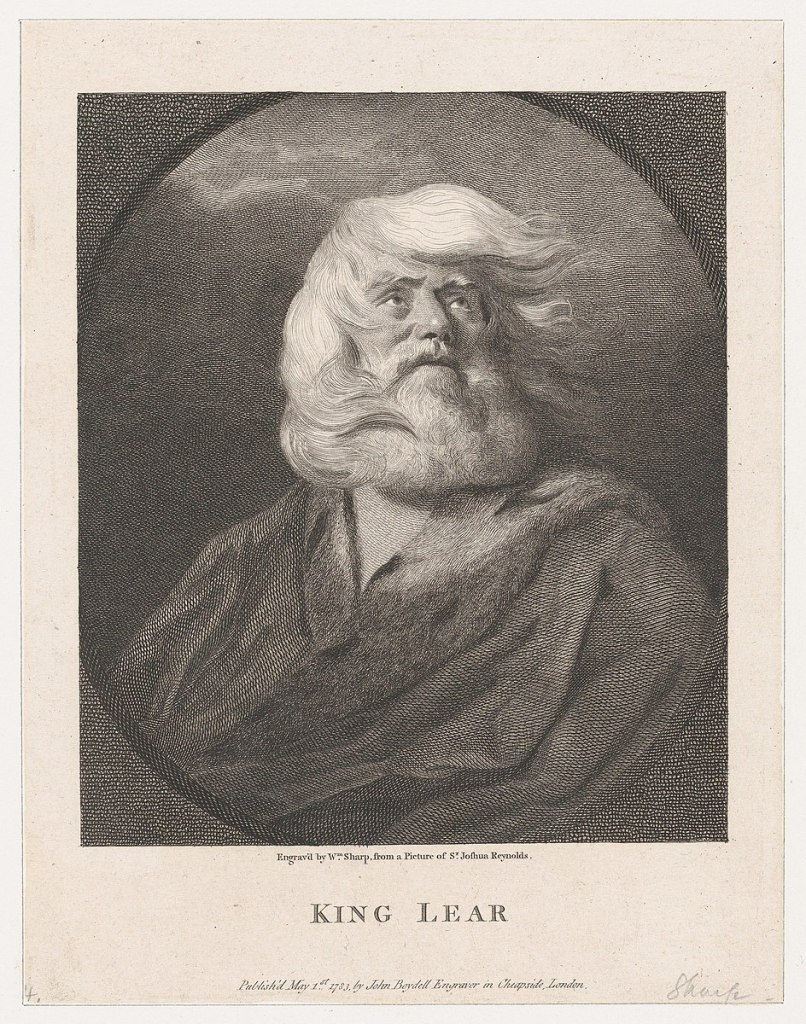
King Lear by Joshua Reynolds: Wiki


 An Anguished Father
  
  
 Happy he was 
 To be the rock,
 Out of which flowed  
 Streams of their delight.
  
 Now that age is no more on his side,
 At home, he is lavishly criticized.
 His jokes are no longer funny, 
 His talks are considered silly and despised.
  
 Slowly, he returns home,
 With his head bent down
 Pondering his own plight --
  
 No wonder,
 With thankless kids around,
 He feels eternally exiled.
  
 Perhaps what The Bard* said was right:
 “How sharper than a serpent’s tooth it is
 To have a thankless child!” 

*The Bard: William Shakespeare. The quoted lines are from King Lear

Mr. Ashok Suri retired from Revenue Service, and is settled with his family in Mumbai. He loves to read and sometimes write. He tries to convey in simple words what he wants to say.

Categories
Poetry

Companions

By Tom Merrill

Companions
 
Composing the flock I thought I heard
     When wonder drew me out the door,
A solitary mockingbird,
     Busily being more,
 
Absorbed in his little crowd of sounds,
     A parody of me,
Was gathering in his singleness
     Some songs for company.

First published in The HyperTexts

Poems by Tom Merrill have recently appeared in two novels as epigraphs. He is Poet in Residuum at The HyperTexts and Advisory Editor at Better Than Starbucks.

.

PLEASE NOTE: ARTICLES CAN ONLY BE REPRODUCED IN OTHER SITES WITH DUE ACKNOWLEDGEMENT TO BORDERLESS JOURNAL

Categories
Poetry

Poetry that Makes You Smile

By Rhys Hughes


 The Pedlar on the Roof
  
  
 On the roof
 across the way
 a man is perched
 like a hawk
 hawking his wares
 without any care
 for his safety.
 Where does he think
 his customers
 will come from?
  
 He is selling bicycles
 high up there
 and daring those
 below to try them out
 with a shout
 that is like the squeal
 of rusty brakes.
 “These bikes are real,
 not fakes!”
  
 He has won me over
 with his words
 and over I cross
 from my roof to his
 on the tightrope
 of the washing line.
  
 The loss of
 coins jangling
 in my pocket
 and notes folded
 in my wallet
 is no big deal
 when in exchange
 I receive
 a sturdy frame
 on two wheels
 that I can ride.
  
 The transaction is made
 and back along
 the perilous line
 I now promenade
 with the bicycle
 on my shoulder.
 If I was bolder I might
 trundle across
 like a circus acrobat
 but the risk is too great.
  
 Back on my roof
 I mount the saddle
 and set off on a journey
 entirely in tight
 circles: how divine!
 I ring my bell
 to express my delight
 to the man
 who sells these things.
  
 He is a pedlar on his roof.
 I am a pedaller on mine.
  
  
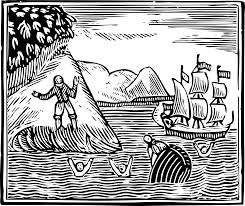
 Robotson Crusoe
  
 There was a robot named Crusoe
 who belonged to the crew of a cruise ship.
 He scrubbed down the decks
 and cleaned all the cabins
 until he was unfortunately shipwrecked.
 A dreadful storm bashed a hole
 in the hull and into the sea he was hurled
 but because he mostly had air
 in his head he floated quite well for several
 days until he washed up on an island.
 A totally deserted island.
  
 Robotson Crusoe was lonely and sad
 but decided to do the best that he could
 like a dutiful mechanical lad.
 He made some trousers and also a shirt
 from the biggest leaves on the trees
 and though for his dinner
 he usually ate bolts (rusty bolts)
 he made do with nuts (coconuts)
 and grew somewhat thinner,
 and though he liked hotels he lived in a hut.
 He was onto a winner but…
  
 One morning he found a footprint
 in the sand that belonged not to himself.
 Had someone else been stranded?
 He searched the island and found an android
 who called himself Diode Defoe.
 The stranger explained, “I fell from a plane
 while I was cleaning the wings.
 I fumbled and tumbled and plunged through
 the clouds and after landing I shouted
 aloud but no one came to my aid
 but I feel fine because I’m very well made.”
  
 Robotson Crusoe bade him welcome
 and they soon became best friends,
 two cybernetic maroons mentally
 in tune, for there was plenty of room
 on the island, that totally and utterly
 and not very subtly remote and pristine
 island. And boom! the waves crashed
 down on the beach and they surfed
 the breakers though it might seem rash
 for metal beings to sport in the brine,
 and in the evenings they drank coconut
 oil, which to robots is just like wine.
  
 The things they did were jolly good fun,
 they slid down the dunes and basked
 in the sun and played bongo drums on
 driftwood logs and blew mellow tunes
 on seashell flutes. How cute they looked
 in banana leaf suits but the point is moot.
 They went to the cinema arm in arm
 to watch the manatees play in the sea
 and that was their Saturday matinee.
 Beach cricket too and oh! what a view
 was had when they climbed the trees.
  
 “Let’s build a canoe,” suggested Crusoe
 on a day when the sea was all smooth,
 “and paddle away and pray that we may
 arrive on an inhabited shore.” But Diode
 Defoe shook his head and roared, “No!
 I beg you, dear Robo, to forget that idea.
 I love it here and wish to remain. Don’t
 you feel the same? I hope you will agree
 to stay. Finally free and very happy, our
 troubles all in the past, never again will
 we slave on behalf of human depravity.”
  
 Oh, his words rang true and old Crusoe
 thought so too, after a little pondering.
 “Then all our wandering is at an end
 and this is our home,” he said at last.
 They embraced, danced and pranced,
 as you might do too (if they were you)
 and to celebrate the momentous decision
 they thought it better to take a siesta.
 Robotson Crusoe and Diode Defoe are
 dozing now, swinging not fast but slow
 on a hammock with nowhere to go… 


Rhys Hughes has lived in many countries. He graduated as an engineer but currently works as a tutor of mathematics. Since his first book was published in 1995 he has had fifty other books published and his work has been translated into ten languages.

.

PLEASE NOTE: ARTICLES CAN ONLY BE REPRODUCED IN OTHER SITES WITH DUE ACKNOWLEDGEMENT TO BORDERLESS JOURNAL. 

Categories
Poetry

The Rain-meditation


By Sunil Sharma

 The clouds grey and pregnant
 With condensed water,
 Bend down and
 Kiss the parched earth,
 In a gossamer embrace:
 And,
 At the same time,
 Sweep past,
 Caressing your oval face
 With their light fluffy cotton hands,
 Leaving your beautiful face wet
 with the spray of the passing shower
 Thrilled to the core 
 Of your sacred being,
 Your long eyes closed, 
 Thin curved lips, pouting a bit, 
 Revealing a white set of gleaming teeth,
 like the swaying silver birches,
  
 Singing a melody not heard so far
 By any mortal on this earth.
  
 The distended large clouds
 Are
 Now --
 Spread out like an unfurled black giant umbrella,
 Dripping water divine,
 On the people huddled in leaky corners
 on this Mumbai street,
 And, other creatures of God,
  
 Reviving the inner child
 who loved the racing monsoons, 
 From his tiny barred windows of a
 Deserted, dim, shabby home
 Of a tenant farmer,
 In a green rich meadow
 Of a now- forgotten ancestral land
 Left behind;
 Shrinking -- receding fast--
 Like the old river weighed down,
 Breathless, under the debris
 Of a city, of late,
 Indifferent to a dying river God.


.

Sunil Sharma is the editor of SETU. He is a senior academic, critic, literary editor and author with 21 published books, seven collections of poetry, three of short fiction, one novel, a critical study of the novel, and, eight joint anthologies on prose, poetry and criticism, and, one joint poetry collection. 

.

PLEASE NOTE: ARTICLES CAN ONLY BE REPRODUCED IN OTHER SITES WITH DUE ACKNOWLEDGEMENT TO BORDERLESS JOURNAL