Mike Smith reflects on a short fiction by Russia’s first Nobel Laureate, Ivan Bunin. Could it be a precursor to flash fiction?
Portrait of Ivan Bunin by Leonard Turzhansky, 1905. Courtesy: Wiki
‘Un Petit Accident‘ (A small Accident) is one of those tales which will need more words to discuss than will be found in it.
First published in the late 1940s as part of a trio of short pieces this little tale might be seen as a forerunner of our present-day flash fictions and micro fiction. Yet it is in a tradition that stretches back through the prose poem or Illumination to the anecdotes and exemplars of much earlier times. Only recently cast into English, this translation is attributed to Maria Bloshteyn and dated 2017.
Ivan Bunin (1870-1953) fled to France in 1920 in the aftermath of the Russian Revolution but unlike many émigrés he was already an established writer and his work is not solely related to the experience of exile.
‘Un Petit Accident’ in my paperback copy of Russian Émigré Stories from Bunin to Yanovsky (ed. Bryan Karetnyk, Penguin Classics), runs to a mere 29 lines, yet it packs a punch you might think would need a much wordier arm behind it. For me it’s both a master work and a master class in the short story, illustrating perfectly Hemingway’s ‘iceberg’, and his advice to ‘take everything out that isn’t the story’.
Like a slow camera pan, it traverses the cityscape of Paris. It takes in the sunset, the Palais Bourbon, the Seine, the Place de la Concorde and the Eiffel Tower, before zooming in, near The Madelaine, on the rushing, choking traffic of a Parisian evening. The final shot, in what, to twist the metaphor slightly, might be thought of as a slideshow rather than a moving picture, focuses on a single detail, the significance of which we are left to consider.
There are no named characters, seemingly no protagonist and antagonist, no obvious cycles of increasing jeopardy. The ‘Inciting Incident’, if it is not that sunset, might be in our imaginations and for later. Or perhaps the ‘Obligatory Scene’, if it is that final image, must serve the function of both. It seems that everything that happens in this story has already happened by the time we see it. Yet there is no sequence of actions as such, only the sequence of images that we might mistake for mere setting.
As with much longer short stories, there is the vestige of that common structural oddity of placing the most striking event or revelation slightly ahead of the actual ending, making it part of the preparation and contextualisation of the true ending. And following that shock there is a little addition which poses the question, raises the issue, on which I believe the author wishes us to ponder; the view to which he has brought us.
The collection is furnished with a section of notes about both the writers and individual stories. What they say about this story reveals a lesson in the form. Bunin is quoted; “ ...even with the greatest writers, there are only isolated good passages, and between them – water…”
Karetnyk’s notes go on to say: “these miniatures are an attempt to distil prose into its purest form.” Presumably, that is by getting rid of all that water.
Earlier in the piece he has described Bunin’s tales as ‘terse’, but in this case I did not find it so. Rather the opposite. I’d want to use the word lush. That opening sunset, painted in a three and half line, verbless sentence – which a professor of English in the nineteen seventies categorized because of that lack as being a ‘label’ rather than a ‘message’– is rich with colour: “…the enormous panel of sky covered in strokes of murky colours,mellow and many hued…” The city too is awash with description: ‘Slim spikes of greenish gas flames are strewn throughout thepistachio haze of the city,’
It’s one of the most description packed little tales I’ve read. It brought to mind the startling contrast with an earlier and longer tale by Mary Mann, in which a bare half dozen words sprinkled throughout describe the rural Norfolk in which her story is set. It is sometimes averred that description kills story, disrupts the narrative, brings action to a halt, but here Bunin’s tale is almost all description, a colourful, noisy kaleidoscope of sights and sounds. “Now darkness falls, and the candelabra of the Place de la Concordecast their reflective silvery glow, while up in the black summits the lugubriously flowing lights of the Eiffel Tower flicker like lightning.”
The sequence is constructed of easily imaginable images, and when we have reached the ending and come to re-read the piece, we might pay more attention to the ambience of those sounds and sights. They are what make the context for our arrival at the final image. They are what prejudice our frame of mind for understanding and speculating about the deeper meaning of what we are being brought to encounter. The purpose of the story, and you might argue, the storyness of it, is in our reaction to what we ‘see’. Conrad is quoted as saying he wanted to “make us see” in his writing and Bunin here does just that. But it is up to us alone to grapple with the significance of what we have been told.
On closer inspection we might see that Bunin has given us more than just intense colour, form, and movement. That it is a single paragraph story is notable. In a story of thirty lines there is room for a handful of paragraphs, but the fact that Bunin uses one alone need be no ‘petitaccident‘. It gives the story a structural unity, such as you might expect to find in a painting or photograph.
The painting has it for me, with those ‘murky’ and ‘many-hued’ colours, but a painting of what? Despite the lack of protagonist or antagonist, at first glance, there is the anonymous man on whom our gaze comes to rest at what might be called the ‘crisis’ of the action, and there is one other ‘character’, referred to rather than present, and whose ‘unseen hand is smoothly conducting’. At this change point in the story, as the traffic locks and our focus is narrowed down onto and into a single vehicle, it ‘seems as if the hand has flinched’.
‘Seems’ is one of those words that, in a short story especially, should set our radars tingling, because it usually denotes, or at least raises the possibility, that what seems is not what is. And whose hand might that be which might be doing something other than flinching? It certainly isn’t a human hand. Is it a hand that has acted decisively? And the ‘fiery Babylon’ that Bunin describes with its ‘spikes of greenish gas’, its ‘darkness’ blazing, might seem more Hellish than Heavenly. I was reminded of apocalyptic visions in John Martin’s paintings.
My last paragraph contains a ‘spoiler’, and those who read to find out what happens next might prefer to stop here!
When we reach the story’s end, we are told of a “fast little auto, vividly yet softly lit inside” where a man in evening dress is “slumped over his steering wheel“. The narrative thread is almost imperceptible. The movement, lights and sounds, have seemed random rather than directional. Bunin’s tale has been told in the present tense, yet here, at the sticking point of the end, we are seeing events not so much unfold as having already unfolded. The focus neatly closes in, with mention of ‘matte top hat’, then closer still: “His eyes are closed…” The final words pull back a little, as we have recoiled from what we have recognised: “his young, tritely classical face is already looking like a mask.”
It is a mask, we understand, from behind which the spirit of life has already withdrawn.
Russian commemorative coin issued on Bunin’s 125th birth anniversary. Courtesy: Wiki
Mike Smith lives on the edge of England where he writes occasional plays, poetry, and essays, usually on the short story form in which he writes as Brindley Hallam Dennis. His writing has been published and performed. He blogs at www.Bhdandme.wordpress.com
.
PLEASE NOTE: ARTICLES CAN ONLY BE REPRODUCED IN OTHER SITES WITH DUE ACKNOWLEDGEMENT TO BORDERLESS JOURNAL
Translated to English from Bijan Najdi’s essay in Persian by Davood Jalili
Bijan Najdi is often identified with the collection of short stories, Cheetahs who ran with me. But he was a poet at heart. His melodic prose and his powerful stories have the traces of poetry between words. The flow of poetry in his stories evolved into a very exquisite flow of thoughts and perceptions. Najdi wrote an article entitled ‘The Third Perception of Man’ in which he considers poetry to be the outflow of the most intense emotions.
Man’s first perception of fire must have been to touch and burn himself, that is, to feel the burning with direct contact. The next step was to understand the fire to learn from his earlier experience. That is, we see the fire, and without touching it, we know that it burns. This third stage is understanding the fire of “poetry”. That is, if you can, without the fire in your presence, think of it, feel the burning in your fingertips that you have to put your hands under the tap, you have achieved a poetic moment in your life, without the help of words.
Now you can transpose this third stage from fire to the suffering of others, to the history of your land, to the massacre in Palestine, to freedom, to the mass burials in Herzegovina. Poetry does not need “words” in such circumstances. It is the highest form of expression of the most intense suffering of humankind.
The study of the traces of life and the survey of dreams, the nightmares of cavemen and the psychoanalysis of designs and shapes carved in stone prove that even before the advent of calligraphy and language, man had experienced all three stages of perception. The drawings on the stone that depict a human with bird wings on the back and legs of a deer and a human profile are an object of the same third sense.
Is suffering and love born of lines and words the only foundation for poetry? Does our understanding of God depend on our learning to write the word “God”?
However, it was but natural that after the evolution of language and the emergence of calligraphy, man tried to write that “third comprehension”. Henceforth, poetry was no longer seemingly independent of time. Poetry proved its objectivity with the help of the “word”.
In simpler language, basically, any kind of understanding does not necessarily need words, but with words, understanding can be built.
Form and content are a philosophical and academic discussion. They have nothing to do with poetry or at least they have nothing to do with the moments of composing poetry.
There are two types of thinking. Both can, perhaps, influence poets as well.
Some people look at their surroundings with inductive reasoning and want to get a whole by identifying and analysing the details. On the other hand, some people deduce by accepting and prove from a general rule. They would accept the thought for the presence of each component.
Both methods have scientific values. Poetry as the “third perception” is born of intense feelings that frees the poet from both when writing poetry: form and content.
There are poets who believe that form is the manifestation of poetry. In my opinion, this kind of formalism is just a way of thought; that they want by looking at an apple, to get an idea of its taste and smell, with the help of the word, and they want to reach “sense and understanding”. There is nothing wrong with that, but I think it conflicts with the “essence of knowledge.”
However, no one can stop this group from trying.
Volume has dimensions in its geometric definition, so it has an inside and an outside. However, the enclosed space is not the object of discussion. Every point of space is either in or out. That is, each point of it can be both inside and outside at a time. Volume poetry[1], according to Royaee[2], one of the most famous poets of this school, is the transcendence over length, width and height to float in the contraction and the expansion of the soul of the universe, which the poet enters with the “help of words”.
Volume poetry is a look at nature, objects and words that create a sense of yearning by discovering the form and inherent talent of the word to explain the inside and the out to escape from volume.
The spatial poetry of Royaee steps out of the volume enclosed in the words, to get help from the hidden spaces between words, oblivious to the consciousness of being a man. But in such poetry, you can neither sense the history nor the historical identity of the poet.
Nevertheless, poetry of Royaee is full of eagerness to know. But because he is not able to convey his eagerness in his manifesto of volume poetry, his adherents and he have diametrically opposing outputs. I think this is a kind of crisis in poetry, but we should not be afraid of it.
A real crisis arises in poetry when people’s eyes, ears, and minds become accustomed to only one type of poetry.
The crisis was the same as we had in the years before the revolution, when some people did not consider Sepehri[3] a poet because of his Marxist views.
The crisis was that under the pretext of modernism, poetry based on belief and mysticism could be rejected in a society. The culture of any society is the result of social behaviors. If these behaviors are restricted in a certain way, a crisis does arise.
The basic bedrock of any art is freedom, and no one should and can ignore the value of lyricists or post-revolutionary idealist poetry because of their interest in white poetry[4].
However, I do not know what poetry is and what good poetry is.
I have no reason to like a good poem as I feel a burning sensation in my fingertips without touching the fire. Believe me, I am neither a poet nor a novelist, I just love the literature of my country very much.
.
(Published with permission from Bijan Najdi’s wife and family)
Bijan Najdi (Persian: بیژن نجدی, pronounced [biːʒæn nædʒdiː]; (15 November 1941 in Khash, Iran – 25 August 1997 in Lahijan, Iran) was an Iranian writer and poet. Najdi is most famous for his 1994 short story collection TheCheetahs who ran with me (Persian: یوزپلنگانی که با من دویدهاند)).
Davood Jalili (1956, Iran) is an Iranian writer, translator and poet. He has published many articles on Iranian websites and magazines and has three published books.
[1]– Volume Poetry is a type of poetry written evolved around 1967. In 1969, Royaee and several poets published the essence of the volume poetry. Volumeism, mental movement, volumetric vision, mental distances, three-dimensional attitude, are other names that have been applied to this type of poetry
[2] – Royaee is an Iranian poet (1932) who now lives in Paris. He wrote a Manifesto of volume poetry
[3] –Sohrab Sepehri (born October 6, 1928 in Kashan – died May 1, 1980 in Tehran) was an Iranian poet, writer and painter. He is one of the most important contemporary poets of Iran and his poems have been translated into many languages including English, French, Spanish and Italian.
[4]White Or Sepid poetry or Shamloui poetry is a type of modern Persian poetry that appeared in the 1930s with a collection called Fresh Air by Ahmad Shamlou and may be compared to free poetry (in French : vers libre ) in Western literature. The main difference between these works and previous examples of new poetry was in the form of poetry. In this style, the rhyme of prosody is generally not observed, but the song and music are reflected. In the classification of modern Persian poetry, sometimes any poem that does not fit in the form of Nimai poetry (Nima Youshij the innovative of New Poetry) is called white poetry.
.
PLEASE NOTE: ARTICLES CAN ONLY BE REPRODUCED IN OTHER SITES WITH DUE ACKNOWLEDGEMENT TO BORDERLESS JOURNAL
An exhaustive account of the inception and the fruition of the Kali Project by Co-Editor Candice Louisa Daquin
At the beginning of 2020 …
I had a conversation with Indian surrealist poet Devika Mathur about an anthology of Indian women poets. I had just edited Devika’s first poetry collection, Crimson Skins (Indie Blu(e) Publishing), and been reintroduced into the world’s love affair with Indian poets. Devika being so young and gifted, inspired me, along with Aakriti Kuntal, another trail-blazing Indian poet whom I have worked with many times, to approach successful Indian/American editor/poet/blogger Megha Sood about co-editing an anthology.
The purity of my appreciation for Indian poets writing in the English language, and their astounding ability to do this better than most native speakers, had struck deeply and fortunately. Megha Sood was as passionately interested in putting together a representative collection. We both agreed, given the current news reports of girls still being raped and molested in India, this would be our starting point and this gradually evolved into a fully-fledged project, with a book at its center. As soon as we put a call out, we were literally flooded with interest, and this is still the case. Not a day goes by when I do not get someone asking if they can write for The Kali Project, though the submission deadline closed in October 2020. That’s a fierce testament to the level of interest and need.
When my colleagues at Indie Blu(e) Publishing agreed to publish us, Megha came up with the unforgettable and utterly perfect name The Kali Project, and Kali was reborn! I felt confident, working alongside someone of Megha’s caliber, we couldn’t fail, but it was nonetheless a daunting task for myself, a French/Egyptian immigrant to America, I needed to further educate myself on Kali and what the women of India experienced. I was very lucky to find and befriend a huge group of Indian women poets and artists who through their generosity and knowledge, more than filled my head with relevant information and ideas. They are literally a whirlwind, a force to be reckoned with, and it only left me aware of how hard Indian women work.
We wanted to ensure we had a true mix of talent. It is never sufficient to invite only famous, or notable poets, but to consider all; all kinds of voices, all levels. The Kali Project has authors and artists as young as nine and well into their eighth decade. Those just starting out, those who have been doing this a long time. Kali is not exclusive to women. It is imperative men access The Kali Project and the reception we have received from our male readers thus far, has also been very positive. What good would it ever do to alienate the entire male gender, just to get across the point, gender inequality has to end?
Inception: Indie Blu(e) Publishing gets involved
Christine Ray and Kindra Austin, the women who created Indie Blu(e) Publishing, have actively sought to publish marginalised and oppressed voices from the very inception of their company, and it has remained their primary focus. Combining incredible authors with edgy, raw writing is the core of their mission as publishers. When they saw some of their Indian sisters speaking out about another atrocity of rape and murder of a young woman in India, there was no question they had to be involved.
As Christine Ray, Editor-In-Chief of Indie Blu(e) said: “The Kali Project is another example of setting alight the inequality of women in India by sharing their talented voices with an English-speaking audience. We wanted to introduce to our Western readers, those talents within India who speak with the same fierce voice and share the same goal of equality and an end to oppression. Indian writing has gravitas and brutal honesty that has existed for millennia, influencing poets from around the world.”
Poetry lovers may be familiar with how gifted Indian writers are, but an entire collection of women writers from India, sharing their experiences is a powerful cohesion of all aspects of oppression and defiance. From the very young to experienced, renowned writers, The Kali Project brings together the voices of Indian women speaking their truths. Be it infanticide, family violence, the emerging LGBTQ community in India, or the marital inequity Indian women face, these struggles are penned in exquisite poetry to enlighten and further awareness.
The Kali Project was born from a deep appreciation for Indian authors who write so beautifully in English despite it often being their second or third language. The craft and ability of these incredible writers is furthered by their passionate, vocal understanding of caste systems, familial inequality, subjugation, sexual assault, and ultimately, survival. It is important to note, those women at the extreme end of marginalization are harder to locate for an anthology edited and published in the West in English and we wish we had been able to access their voices because they remain, the most subjugated and continue to not have enough direct attention.
India is set to become the largest populated subcontinent in the world and already influences the West enormously with their art and eloquence of feeling and expression. Western readers can now appreciate an entire anthology devoted to Indian female poets, and their voices rising as one, for equality and respect. The Kali Project is an umbrella for all woman in India who have needed the strength of ‘Maa Kali’ during their life and speaks to every woman worldwide, who can tap into the fierce energies of The Kali and what she represents.
Indie Blu(e) Publishing continually offers the urgent subjects that matter most but are often overlooked by the mainstream. It has long been their mission to be that voice for indie authors and beyond, and they are delighted to offer The Kali Project a safe space to flourish. Having received over 1500 submissions, The Kali Project speaks to Indian women’s growing influence and power in the world, they are truly a force to be reckoned with, and Indie Blu(e) is extremely honoured to publish this collection. www.indieblu.net
Project Outcome
As The Kali Project is the most ambitious project Indie Blu(e) Publishing has published, in terms of size, we also had to address the elephant in the room; Is it appropriate for a Western press to publish Indian authors? Some had thought it wasn’t and didn’t submit for this reason, as is their right. This is how we saw it: Movements succeed when all groups of people support them. The original movements in the sixties here in America would not have succeeded as much, had people of all walks of life not joined them. Therefore, there is no exclusivity to the support of a movement. Where one has to be careful is in the handling of subjects beyond one’s experience. Hence why, even with the best intentions in the world, you would not publish a book about Black Lives Matter solely by Anglo authors, it just wouldn’t be representative or speak directly.
It felt publishing and editing a book of this magnitude required cultural knowledge and sensitivity, and we were lucky enough to have Megha Sood on board for The Kali Project. Born in India and of Indian heritage, Megha could speak directly to the experience of women in India. She also is a highly accomplished editor and writer in her own right. Additionally, we tried to be as receptive and responsive to concerns raised along the way. Of course, with any large project, it is impossible to please everyone and there were those who walked away from the project because Indie Blu(e) Publishing is an equal rights publisher, promoting feminism and LGBTQ themes.
The project was very positively received and the support and enthusiasm from the community we became a part of, has been a life-altering experience for us all. One must be particularly aware when working with a culture different from your own, but with the right team, and listening to the community, this can be achieved. The important thing is to put the people first and let their truths be heard. No wrong can come from that.
Another consideration was the graphic nature of some of the poetry received. Indie Blu(e) has not shied away from publishing graphic works. Be it in response to the #MeToo movement (We Will Not Be Silenced), the LGBTQ community (Smitten, This Is What Love Looks Like), or the recent #BLM, #Trump, #Covid-19 year of hell (As The World Burns). As a small press, we feel our social conscience is our touchstone.
Women of India have boldly addressed subjects of; rape, sexual inequality, racism, casteism, and femicide and despite some daunting obstacles, not least the threat of violence and retribution, Indian women’s courage has lent their voices an unparalleled power. The Kali Project identifies, acknowledges and emboldens that change, and aspires to act as a vehicle of social change. The graphic nature of say, a rape scene might be blatant, but it was decided that, as with most art and expression, this shouldn’t be dissuaded.
The balance of classical poetry, alongside more modern themed works, and art, lends the project a fluidity and relevance that fits the inauguration of the first female American Vice President, Kamala Devi Harris, of Indian and African heritage. We are experiencing a cultural and gender shift in how women and different races are perceived and what they are able to do in society. The poets and artists of The Kali Project are an expression of this galvanization toward complete expression and freedom of thought.
With a President in power for four years, who many women felt, didn’t speak for them, and many immigrants felt, didn’t support them, we now see the potential for change that could begin to open more ways to utilize art and language for social progress. As much as social media is invaluable, the true grit remains on the streets, with the people. Print books have gained a massive resurgence. Paper is still powerful. Maybe coming off 2020 the hardest year in a while, we’re primed for social action like never before.
All along our intention was to utilize The Kali Project as a tool for change, not simply a book. It was always our intention to effect change through increasing awareness in the West, as we had with, We Will Not Be Silenced, which was Indie Blu(e)’s inaugural publication. We were founded on the principle of equality and enlightenment. What we have personally learned from this experience has been momentous and the outcome of the project has only just begun. By opening up taboo subjects, we enable marginalised and frustrated voices to speak about continuing inequality. Indian women have done so much already but it cannot hurt to continue to highlight this in any way we’re able.
We wanted to contribute to a bigger picture. Start conversations. Shift thinking. We regret not being able to reach those most affected in India and were aware how difficult it would be to reach the most rural and poorest Indian women who do not have access to computers, who do not speak English, who cannot be easily reached on social media. As much as possible, we solicited contributions from women of diverse ages, gender identities, sexual identities, social class, oft-published writers as well as writers and artists who had never been published before. Is Kali completely representative of ALL Indian women? It cannot be. Can any anthology be completely representative? It’s a challenge. We do our best, despite knowing we omit some of those who still desperately need to be heard. It doesn’t negate the value of the project, but it’s a regret.
It should be mentioned, The Kali Project doesn’t resonate as ‘negative’ and ‘bad news’ at all. Of course, there is the reality, and the reality can be very painful. It can also be joyful. This must not be forgotten. The love, enriching strength, and joy of Indian women is also borne out in The Kali Project. We were particularly moved by N. Meera Raghavendra Rao’s poem ‘My Mother-In-Law Surprises Me’, an account of the author as a young bride, and her positive experience “When two women understand each other / And feel at home with one another.”
It is just as important to show all sides of being an Indian woman, for every atrocity, there is hope, and strength, and this is why Kali was the perfect Goddess to represent the project, she is multi-faceted and both nurturing and powerful. “Kali / embodies the / boundless freedom / epitome of Shakti / of strength and power / standing unbound from all / restrictions.” Mehak Varun, ‘The Kali in Me’.
Balance is everything. For every negative, there is a positive and we tried to reflect that balance throughout the collection, with hopeful poems, even on difficult subjects: “Do not call me Lakhi meye (good girl) / And tell me I’m an angel / When you only try to teach me wrongly that love lies camouflaged / within your dominant behavior” …“Stop saying I am not enough, not worthy, not great / Because I know I have conquered mountains and moons, flown / across the skies, over the waves / I have danced and taught and painted and calculated and done / everything you told me I could not.” Mandrita Bose, ‘Do not call me Durga’.
Other Influences
Just the other day I watched Rama Rau’s fascinating documentary, The Daughter Tree (2019), and was struck again, as I have been throughout time, to the necessity of speaking up for women. In the region of Punjab, 1000 boys are born for every 750 girls. The documentary is about a midwife in Punjab state challenging the tradition of aborting girl babies. There are other causes to care about, as a person of Sephardi Jewish descent, and LGBTQ I know this acutely. But we gravitate toward those who capture our hearts. In my case, equality.
I hear many times that equality for women is ‘complete’ and there is no need for feminism anymore. That simply isn’t true. There are countless examples of inequality persisting and those who say feminism is dead or should be dead, you wonder what the real motivation is behind that desire to shut it down? How can equality exist with statistics and realities saying otherwise?Take The Great Indian Kitchen, anIndian Malayalam–language film written and directed by Jeo Baby (2021). The experience of many Indian women and other women worldwide, is that of submissive, chained-to-the-kitchen wife, who is ‘unclean’ when she menstruates. With realities like this, women’s move for true equality cannot be diminished or ignored.
I’ve always wondered, if someone wants to shut feminism down so badly, what do they get out of that? Where is the benefit? And what is the harm in being a feminist, which only means, believing women and men can and should be equal. This is a lengthy subject, but I speak for many women in saying, as long as a woman is paid less than a man for doing the same job, as long as a woman’s reproductive rights are controlled by a system and not by herself, as long as she is told whom she can love and whom she cannot, as long as she is derided for her age, appearance, sexuality and gender, then feminism is relevant. And feminists are not man-haters. They are equality makers.
The Daughter Tree provoked a consideration I have had ever since we first talked about creating The Kali Project, which is; How do we speak directly to those most affected, and are their voices heard? I would have to say, no, the most affected voices were not heard either by The Kali Project or anything else, and that is the real problem. When you have mass poverty, illiteracy, control of female populations, then how can you speak directly to the women?
The poetry and art in The Kali Project is in part, an indirect observation of, rather than a direct experience of, for some of the authors. That’s because in India, those who are bilingual, with regular access to a computer and have the time to write, are invariably a higher income than those most affected. It is not to discount the suffering of all walks of life, but we did regret not having some way to engage with those whom we couldn’t even contact, because we are English speakers in a foreign country. Yes, that is a regret. But what do you do? Do nothing because you cannot do it completely? Or hope that by starting a dialogue you are making inroads? I would say the latter.
That said, it is our wish always to be inclusive, to show all sides of something, to give everyone a chance to speak. It was a frustration watching The Daughter Tree, not to have been able to reach those women and girls who cannot write, nor speak in a foreign language, nor have access to a computer. I would dearly have liked to have their stories and shared their views. Because until we do, we risk having a very selective approach to a multi-facetted, complicated subject. As The Daughter Tree points out, there are reasons for some of the traditions enduring, there are factors of consideration and outcomes borne from no better option, and until we address all of those, maybe nothing will really change.
But with awareness, comes progress, and whilst many girls are still sold into marriage or married very young and denied choices and education, the shift comes in all directions and we hope The Kali Project will contribute to this shift. As women, we all know there is work to be done in every country, India is not alone, and that was the point, to ensure Indian women knew, their sisters in other countries were watching, they heard them, they stood with them. Just as when Black Lives Matter movements occurred in the USA, they were taken up by people in all countries. It is that universalism bequeathed us by technology, we can harness and run with.
Finally, the financial considerations related to The Kali Project were long discussed. It has never been our goal to indiscriminately profit from authors, as anyone who works in publishing can attest, this is a lofty goal at the best of times. Indie Blu(e) has actively sought to promote affordable, worldwide publications that can be purchased by everyone, hence why we publish in Kindle and print. The Kali Project’s contributors are primarily based in India, as such we harnessed Pothi, who are based in India, to be another more affordable option for purchasing. In addition, we are set to produce a hardback version of the book for collectors.
For some, a poem’s title alone will stand as testimony: “Disrupting boundaries / Challenging the forecasts / Mocking at man-made wonders.” (Kaikasi V. S., ‘Why are Cyclones Named After Women?’) Others are simply universal in their gendered strength: “I have all the light I need; you’re here, stuck with me.” (Himangi Nair, ‘light & dark’). Some poems just resonate with rebellion and honed fortitude: “No one looked into our eyes with love. / If they had, they’d have heard our souls talk. / Instead, all they said was / She’s hysterical. Women are like that, / especially when they menstruate, / especially when they stop menstruating, / especially as they approach death.” (Anna Sujatha Mathai, ‘Hysteria’). It is truly rare to find a book at 600 pages where you keep going from one incredible read to another.
Kali as received by others
Of all the anthologies I have worked on, I have never seen such an enthusiastic outpouring and this included the terrific reviews we received. I share but a fraction with you:
“Featuring poets from India and the diaspora, creating the bond of shared experiences across continents The Kali Project draws in the voices of women as women, and women as professionals – teachers, mental health workers, writers, doctors, lawyers, bankers, social workers – adding newer dimensions and a sharper understanding of the inner realities that are sought to be silenced by the patriarchal structures which society, religion, community, and class sanction and sanctify.”
— Charanjeet Kaur, Former Chief Editor and Features Editor of Muse India, and currently the Contributory Editor for Indian writing in English of MI. Consultant Editor of the SPARROW (Sound & Picture Archives for Research On Women)
“From my love of history, I was acquainted with the basics of the Hindu faith and one of their goddesses, Kali/Devi. It was immediately apparent, reading The Kali Project, why Kali had been chosen to represent this poetry anthology. To many in India, irrespective of faith, the depiction of Kali is a sign of a woman’s strength. Whilst Kali is both death and goddess, she has a strong nurturing/mother-figure side with the possibility of compassion. In this, we can contrast her with the Christian Virgin Mary. Kali exceeds the potential power of any idol, because she has an active persona, her ‘shakti’ (feminine energy) is a reality and she has several expressive incantations that give her a wide range within the Hindu faith. Thus, it is no wonder Kail became the natural spearhead of The Kali Project.”
— Dr. Belinda Román, Economist/Researcher/Historian
“Fierce feminine energy of Kali is rising today so that we can save ourselves from total annihilation. This volume is a sublime expression of that emergence.”
— Dr. Neela Bhattacharya Saxena, Professor of English and Women’s Studies at Nassau Community College, USA. An academic expert on Kali, Dr. Saxena wrote our detailed foreword and continually supported this project of women speaking their truth.
Disclaimer: The opinions expressed are solely that of the writer.
.
Candice Louisa Daquin is a Sephardi immigrant from France who lives in the American Southwest. Formerly in publishing, Daquin is now a Psychotherapist and Editor, having worked in Europe, Canada and the USA. Daquins own work is also published widely, she has written five books of poetry, the last published by Finishing Line Press called Pinch the Lock. Her website is www thefeatheredsleep.com
PLEASE NOTE: ARTICLES CAN ONLY BE REPRODUCED IN OTHER SITES WITH DUE ACKNOWLEDGEMENT TO BORDERLESS JOURNAL
Ratnottama Sengupta, eminent journalist and daughter of Bengali writer Nabendu Ghosh, has been a force behind translating Bengali literature and bringing it to the doorstep of those who do not know the language. In this exclusive, she discusses how translations impact the world of literature.
I have often been asked, “Nabendu Ghosh was a literary figure and a screenwriter. How much importance did he place on translation?” Truthfully, because he was a literary person, my father placed a lot of importance on translations which, as he once pointed out, has given us access to almost all the first books in a bevy of Indian languages.
Let me elaborate. Adi Kavi Valmiki, the harbinger poet in Sanskrit literature, composed the original – ‘mool’ – Ramayan long before the first century BC. But Krittibas Ojha’s 15th century rendition in Bengali ‘Panchali’ style is not merely a rewording of the original epic, it gives a description of Bengal’s society and culture in the Middle Ages. It also explores the concept of Bhakti which later contributed to the emergence of Vaishnavism in the Gangetic belt.
This is said to have had a profound impact on the literature of the surrounding region. In Bihar of 16th century Goswami Tulsidas heightened the Bhakti quotient as he retold Ramayan in Hindi, as Ramcharit Manas. The same happened in Orissa. Earlier it had been adapted, with plot twists and thematic adaptations, in the 12th century Tamil Ramavataram; 14th century Telugu Sri Ranganatha Ramayanam; several Kannada versions, starting in 12th century; Ramacharitam in Malayalam; into Marathi also around this time.
My father had inculcated in us this love for multiple languages when I was about ten. As we all sat around after dinner, he would read from these texts – Valmiki’s Ramayan, Tulsi’s Ramcharit Manas, The Old Testament from the Bible, Buddhist Jataka Tales, and Sri Sri Ramakrishna Kathamrita wherein Mahendra Nath Gupta recounts, word for Bengali word, the conversations and activities of the 19th century Indian mystic. Published in five volumes between 1902 and 1910, this work summing up the life philosophy of Ramkrishna Paramahans through simple anecdotes and parables, has been translated into English and Hindi.
Before that, at the young age of nine, I was also initiated into the crème de la crème of world literature – Tolstoy, Gorky, Mark Twain, and Shakespeare too – through translations into Bengali. Abridged versions of Crime and Punishment, Mother, Adventures of Tom Sawyer, Blue Bird, and Hamlet, Lear, Othello, Romeo and Juliet were published by Deb Sahitya Kutir — among other Bengali publishers — for young readers. Later in life, as a student of English Literature, I realized that our understanding of the ways and woes of our world would be so much poorer if Iliad and Odyssey had remained confined to Greek readers; if Henrik Ibsen’s A Doll’s House had not crossed the frontiers of Norway; if Don Quixote were to be read only in the Spanish that Miguel Cervantes wrote in; if The Hunchback of Notre Dame was meant only for those raised in French, or if Faust were to be played only to German viewers.
And, talking of viewers: how would the world have known about the Russian Sergei Eisenstein, the Japanese Akira Kurosawa, the Greek Theo Angelopoulos, the Italian Michelangelo Antonioni and Federico Fellini, the French Jean Luc Godard and Francois Truffaut, the Swedish Ingmar Bergman, the Polish Andrzej Wajda, the Czech Jiri Menzel, the Argentinian Fernando Solanas, the Turkish Yilmaz Guney, the Chinese Zhang Yimou, the Iranian Abbas Kiarostami, or our very own Satyajit Ray? Unthinkable, the world of cinema without subtitles in this day and age when Hollywood films come with subtitles in not just English and Hindi – the two official languages of India – but also in its umpteen regional languages to reach viewers in pockets that speak only Tamil, Telugu, Malayalam, Marathi, Bengali…
The importance of translation is best exemplified by the Song Offerings. If Rabindranath Tagore had not translated the poems of Gitanjali, Asia would have had to wait longer for its first Nobel Prize. Incidentally the central theme of this work too is devotion – and it is part of UNESCO’s collection of Representative Works. And it is my belief that no other Nobel for literature has come to India because we have not come up with any worthy translation – say, of Bibhuti Bhushan Bandopadhyay? At least, not until recent years, nor in a big way.
Also, it is my own experience that only after Me and I — translated from the Bengali original, Aami O Aami by Devottam Sengupta — was published by Hachette India that a major international publishing house got interested in translating Nabendu Ghosh into French.
*
That brings me to the frequently asked question: “Why are you translating Nabendu Ghosh rather than publishing his Bengali originals?” The answer takes me back to 1940s when Baba’s Phears Lane was translated into Urdu and published in Lahore. Clearly Nabendu Ghosh was a ‘star’ in Bengali literature then. Allow me to quote Soumitra Chatterjee, the thespian who we lost so recently and was a Master in Bengali: “I had known about Nabendu Ghosh even before I took to studying Bengali literature, since Daak Diye Jaai (The Clarion Call) was a sensation even when I was in school. His writing was not confined to urban setting and city life. He went to the villages and wrote about the man of the soil too. His characters were always flesh and blood humans.”
But the Partition of India had halved the market for books and films in Bengali, dimming the prospects of even established directors and writers who sought a new opening on the shores of the Arabian Sea. Thus, when Bimal Roy – a celluloid star after his meteoric debut with Udayer Pathey ( In the Path of Sunrise, 1943) — left for Bombay in 1950 to make a film for Bombay talkies, Nabendu Ghosh joined his unit. However, in Bombay he found that his kind of writing did not have as much of a prospect in films which were made primarily for the entertainment of an amorphous mass. So, he decided to write scripts based on other people’s stories, and his own thought-provoking stories — which he described as ‘fingers pointing at what ails society’ — he continued to write as pure literature, in Bengali, and send to publishers in Kolkata.
This oeuvre bears the distinct stamp of his outlook towards life, society, or state. As a critic wrote, “There is deep empathy for human emotions, layers of meaning that add to the depth of the spoken words, subtle symbolism, description of unbearable life paired with flight in the open sky of imagination.” But this aspect of the writer got buried under the glamour of screen writing, and even in Bengal people thought of him only as the screen writer of successful films. Small wonder, since he wrote more than eighty scripts, for directors like Bimal Roy, Guru Dutt, Hrishikesh Mukherjee, Basu Bhattacharya, Vijay Bhatt, Sultan Ahmed, Dulal Guha, Lekh Tandon, Phani Majumdar, Satyen Bose, Shakti Samanta, Sushil Mazumdar, among others. Most of them are considered classics of the Indian screen: Sujata, Bandini, Devdas, Parineeta, Aar Paar, Majhli Didi, Teesri Kasam, Chaitanya Mahaprabhu, Ganga Ki Saugandh, Khan Dost, Baadbaan, Insaan Jaag Utha, Lal Patthar …
But Baba was saddened that even his colleagues in the filmdom did not know his literary pouring as only a handful were translated into Hindi and none into English. This is what I have tried to rectify through Chuninda Kahaniyaan (2009), Me and I (2017), and That Bird Called Happiness (2017). Mistress of Melodies (2020) you could say is a part of a continuum that started with River of Flesh (2016) and comes after That Bird Called Happiness. Nabendu Ghosh would read up volumes — books, news items, dictionaries and encyclopedia — when he fleshed out his characters. Perhaps that is why they play out their lives before you, like moving images. It was no different when he was writing Song of a Sarangi/ Ekti Sarengir Sur, included in Chaand Dekhechhilo that won him the Bankim Puraskar.
But above all, the reason for putting my energy in this art is to take a part of my heritage to the world. Because, as the celebrated Bengali writer Shirshendu Mukherjee said about Nabendu Ghosh, he is a writer who deserves to be read. Allow me to finish with a quote from him as he talked about his senior’s continuing relevance, to readers of Bengali literature and outside.
“Nabendu Da’s use of language was remarkable. He starts one of his stories with the word ‘Bhabchhi / (I’m) Thinking.’ It is a single word, that is also a complete sentence, and it has been used as a para in itself. One of his stories, Khumuchis, explores the secret language used by pickpockets. Bichitra Ek Prem Gatha (A Wondrous Love) – published to mark 2550th year of the Buddha — uses a vocabulary that is devoid of any word that would not have existed before the advent of Islam.
“He had an amazing sense of the optimum in this matter — he never overdid it. Not many writers of his time were into such experiments. Nabendu Ghosh did. He stood apart from his contemporaries in this respect. A part of his mind always ticked away, thinking of how his characters would speak. This added to the readability of his novels and stories. It quickened the pace of unfolding the narrative. They were all so racy! So fast paced, so real, so full of conflict and its resolution… Exceptional is the only word to describe it.
“And this was because of his language/ vocabulary. He was always pushing the boundaries of the language. His ‘throw’ was such that it turns into an eternal emotion which continues to cast its spell.
The same focused development of a plot shorn of every trivial and expendable branch, razor sharp emotions, whirlwind passion — I feel writing itself was a passion for him. He did not write with his head alone, his heart bled for the human condition.
“And this is why he never dated. His writing is the stuff that makes a story universal, eternal. For today’s readers he is a lesson in how to write — they can master how to write a narrative that flows like a boat down a rapid stream. In terms of language, structure, characters and situation, he is a writer who would be relevant to the young readers of not only Bengal but worldwide.”
Translations of Nabendu Ghosh novels initiated by Ratnottama Sengupta in recent years
Ratnottama Sengupta, formerly Arts Editor of The Times of India, teaches mass communication and film appreciation, curates film festivals and art exhibitions, and translates and write books. She has been a member of CBFC, served on the National Film Awards jury and has herself won a National Award.
.
PLEASE NOTE: ARTICLES CAN ONLY BE REPRODUCED IN OTHER SITES WITH DUE ACKNOWLEDGEMENT TO BORDERLESS JOURNAL
Devraj Singh Kalsi gives a unique perspective on the Farmer’s Protestin India
Farmers’ protest in India, December 2020. Photo courtesy: Wiki
The nation knows them as truck-drivers, transporters, dhaba-owners (eatery-owners), soldiers, and farmers who made the nation green with revolution (and envy) half a century ago. They perform these jobs so well that nobody in India wants them to do anything else. It would be a waste of time and resources if they show interest in other pursuits. Alerts and friendly suggestions include forget creative gigs and focus on down-to-earth digs. Get back to the fields and grow some figs instead of falling in love with trance – to transplant figments of imagination. Talk about reap, forget repeal. Focus on harvest, forget unrest. Don’t care two hoots? Return to the roots.
If you know a Sardarji in the bulb with malice towards one and all, consider it an exception instead of the changing trend in their professional choices. The Sardarji in the bulb failed to inspire and light up the brains of his community that is perfectly okay with intellectual poverty so long as material prosperity comes their way. Sardar (Sikh) and Kirdaar (character) make an uncharacteristic pair. Pen in his grip looks weak while the sword is mightier even today.
Crack silly, vulgar Sardar jokes and stereotype them the way you like, but the fact remains that Bhangra, banter and bass show their swag. You enjoy full freedom of expression to hurt the sentiments of the Sikh community and get away with it. With a big heart they always love to give and forgive. Even if you find no art in their dance form, you raise the legs to lift the spirits and feel energised.
Instead of banking on education to seek greener pastures abroad, they are ready to grab the steering wheel, to steer their future in the direction of prosperity. If diligence is the seed of success, they are ready to toil in the farms as sons of the soil under extreme weather conditions – whether it is about growing sarson (mustard) here or strawberries there. The enthusiasm to feed humanity takes them to the fields, to grow food for all, or set up eateries along the highways to serve truckers and travellers with good food.
The farm protests, spearheaded by the Sikhs, made the entire nation suspect whether they have the brains to understand the farm laws or the misled battalion simply marched ahead with tractors and trolleys under the influence of opposition leaders and alcohol. This narrative was fairly convincing on TV screens as Sikhs have yet to showcase their logical quotient. With no Nobel Laureate to amplify their pedigree, pegging the idea of a Sardarji winning it for science, economics, literature or peace turns out to be a hilarious joke.
From fibre to fibre optics, they have made significant contribution but the world looks reluctant to recognise their talent in diverse fields. These warriors who break barriers are the carriers of chutzpah and they deliver the impossible. While the national average income struggles to reach a decent level, they have taken agriculture to a new level. So much so that they earn enough to buy jeans on account of hard work in their genes.
Starving farmers wearing torn clothes and banging empty utensils is the stereotyped image of protesters in India. This is perhaps the first time that the entire nation witnessed stereos playing full blast at the protest site, with a feast of delicacies served to all, with book launches and motivational songs to keep the spirits high. From pizza to pinni (sweet), from badam (almond) sherbet to gajar ka halwa (carrot halwa), from foot massagers to geysers, the visuals emerging from Delhi borders have awakened the collective imagination and consciousness of the people in their heated drawing rooms. The hordes of protesters including elderly citizens, women, and children looking cool, calm and resilient even in biting cold conditions reminds people of Chhardi Di Kala – the expression to convey their buoyant attitude and will power.
When farmers look healthy and well-fed, they weaken their bargaining position as the authorities tend to think they are already prosperous and the new farm laws are sure to double their income. No sympathy or empathy comes their way. Seek repealing of laws and they keep appealing to soften the stand. The deaths and suicides of fellow farmers in this chilling cold do not generate the fear of death. Call it determination, tenacity, or moronic display of obdurate behaviour, they stand united to treat with love and care but never ready to retreat.
Farmers eating stuffed parathas, paneer (cottage cheese), kheer (sweetened and thickened milk), fruits, dry fruits, and jalebis(sweet) make prime time news. The image of struggling, bare-bodied farmers ploughing the fields, surviving on porridge, mashed potato, and boiled rice disappears from the screens. With simmering anger inside and langar (community kitchen) outside, they sit and wage a crowded struggle for their rights, sleeping under tractors and trolleys, waiting for the withdrawal of draconian and now drag-on-ian farm laws.
A diet meal plan sanctioned for healthy living is likely to win more sympathy from the masses and the authorities. Do not jeopardize the mission to bring the farmers of the nation at par with the Punjabi brethren. This scheme is for them, to double their income, to reduce income equality between marginal farmers and march-in-al farmers first. Do not behave like a big brother and a bigger fool. Your doubling of income has to wait till the farmers of India achieve your level first. In the meanwhile, continue serving mankind and feel a surge of collective pride, serve the poor and those in distress, reduce the level of stress, go back, and buy new dress for the next music video. The festivals are all lined up, get ready for Baisakhi (Punjabi new year) and balle-balle, and say cheers to the good life.
.
Devraj Singh Kalsiworks as a senior copywriter in Kolkata. His short stories and essays have been published in Deccan Herald, Tehelka, Kitaab, Earthen Lamp Journal, Assam Tribune, and The Statesman. Pal Motors is his first novel.
.
PLEASE NOTE: ARTICLES CAN ONLY BE REPRODUCED IN OTHER SITES WITH DUE ACKNOWLEDGEMENT TO BORDERLESS JOURNAL.
While the impasse over the McMahon Line continues and the outgoing POTUS rages over not only the election results but also the Yellow Peril, John Drew gives us an interesting perspective on the perception of both these giants, US & China.
Credits: Collage by Sohana Manzoor
Many centuries ago, Chinese pilgrims came up the Bay of Bengal on their way to Buddhist sites in the Subcontinent. We have no record of their conversations with the people of Bengal but it was the accurate accounts of early Chinese travellers that enabled archaeologists in the 19th century to rediscover the lost Buddhist sites like that inside a hill at Paharpur (Bangladesh).
A more modern Chinese settlement in Bengal that has left us the word chini for sugar was largely curtailed sixty years ago by the dispute over the Himalayan border, the McMahon Line above Bengal, a remnant of aggressive British imperialism earlier in the 20th century.
Today, Bangladesh, like other sub-continental countries, has its Chinese neighbours within the gates, driving the building of the prodigious rail bridge across the Padma, developing a port hub at Chattogram and proposing a rail link across Myanmar. The Celestial Empire is once again a superpower but this time expanding as never before to the Indian, and perhaps every other, ocean.
The people of the Bengal delta have suffered greatly from empires, whether Persian, Portuguese, British or Pakistani: empires are not a win-win situation and never will be. But while it is as well to be wary of empire-building, also important is to be wary of the stereotypes that invariably accompany it.
When the Japanese were at the gates of Imphal in 1944, they presented themselves as liberators, a clever, ingenious people who were successfully freeing Asia from European rule. The British rulers of India pictured them as cunning and cruel. Both images were stereotypes that served the purposes of those producing the propaganda for or against.
What images does Bangladesh have of the Chinese? No doubt, given the colonial legacy, some of these have, willy-nilly, been bequeathed to us by the West. It is instructive to see how the stereotypes change with the times.
Mandarins
For Europe unlike India, China remained off the map until the 13th century when Marco Polo, among others, made his epic journey to Cathay and reported on a China full of marvels. This report chimed nicely with a superstitious, religious European culture already given to believing in the miraculous and fantastic.
The European Enlightenment in the 18th century ridiculed this farrago, offering a very different view. Leibniz, Voltaire and Quesnay, most notably, canvassed the idea of China as an ideal Confucian state where civil harmony and stability prevailed. Ironically relying on the researches of their opponents, the Jesuit missionaries, rationalist European thinkers used this image to show that a society did not need any religious sanction to be ethical.
Oliver Goldsmith wrote his Letters of a Citizen of the World (1760-1) in the guise of a Chinese visitor, satirizing Europeans for preferring to acquire Chinese frippery rather than to try and understand China. He mocked the way that even the uses of fashionable trinkets, including the pots for infusing a popular new herb, tea, were generally misunderstood.
The idealised view of Chinese civilisation was never uncontested. Moreover, the older images often resurfaced. Coleridge, famously, in his poem “Kubla Khan” returned to the medieval travellers’ image of China as a marvellous place: “It was a miracle of rare device/ A sunny pleasure dome with caves of ice”.
Likewise in the 20th century, Lowes Dickinson, following Goldsmith’s epistolary method with his Letters of John Chinaman (1901) adopted the 18th century Enlightenment outlook on China. So did Vikram Seth in his mannered sonnet sequence, The Humble Administrator’s Garden (1985).
Peasants
Less happily, in the 19th century as European capitalism and imperialism destroyed the old feudal order at home, feudal China was increasingly dismissed as decadent and backward, its largely symbolic fleet destroyed by the British. Bangladeshis need no reminding of the wretched history of the cross-border trade in tea and opium.
Thereafter the dominant image of China that emerged was of the cunning peasant, especially following the “Boxer” uprising against the foreign imperialists and missionaries. Chinese labourers came to be used as cheap labour across the world, building the American railroads, for instance, and, after being conveyed secretly in sealed trains across Canada, providing labour battalions for the Allies in World War I.
Masters have a way of blaming slaves for their own condition and so was born the ugly racial concept of the Chinese as a Yellow Peril, perhaps a subconscious fear that the roles of masters and slaves might one day be reversed. In one frequently reproduced lithograph, even the meditating Buddha was enrolled as the Peril’s presiding genius!
The peasant figure that displaced the mandarin still belonged to the same feudal order. Ah Sin, a comic stereotype created on page (1870) and stage (1877) by America’s most celebrated writers, Bret Harte and Mark Twain, was shown as debased and thievish. Whatever the intention of the writers, the effect, at a time of anti-Chinese rioting on the West Coast, was pernicious.
Jack London’s portrait of the peasant Ah Cho in The Chinago (1909) was something of an exception to the general run. The French colonial authorities in Tahiti are exposed for the racism that hangs a man even when they find he is the wrong one, so cheap is the life of a Chinese coolie.
That the image of a sly Chinese peasant is not necessarily untrue can be determined from the way it was also used by Lu Xun, China’s foremost short story writer in the 20th century. Ah Q (1921) tells the story of a bully and coward who prevaricates in the face of, among other things, revolutionary change. For Lu Xun, a peasant uprising in China would not be successful until the peasantry was properly educated and genuinely spirited.
Fu Manchu
In the 20th century, while China underwent almost permanent revolution in an attempt to free itself from feudalism and foreign domination, the single most influential and lasting image Western culture threw up in response was that of Dr Fu Manchu who, with the manners of a mandarin and the craftiness of a peasant, was a perfect fusion of the two previous stock figures.
For almost the entire century Dr Fu Manchu filled the minds of first book and comic-reading and then film-going and television-watching public. Urbane and fiendish, he was involved in gambling and drugs as part of a plan to bring Europe and America under Chinese control. Historically, of course, the opposite had been true.
As Sax Rohmer admitted, he made his name as the creator of Fu Manchu because he “knew nothing about the Chinese” (depicted in his books as “the most mysterious and most cunning people in the world”). He got no closer to China than the East End of London but his fevered imagination has proved as contagious as any virus.
It is indicative, and also ironical given the British treatment of China in the Opium Wars, that such virulent dreams of a racist, imperialist China seem to have originated in the drug-fuelled nightmares of Thomas De Quincey, the English Opium-Eater.
Pretty Much Alike
When the incumbent President of the USA describes the racially-indiscriminate Covid-19 as the Chinese virus he is evidently trading on the 19th century image of the Yellow Peril, updated as that became in the 20th century to the Red Peril. It is an old trick to deflect attention from your own shortcomings by blaming somebody else.
The images of China they elaborate tell us as much about Western culture as about China. As we saw with the stock image of the peasant, the image is not necessarily untrue: it is that it is inadequate, incomplete. The real problem is that a stereotype essentializes a vast and various place. People and places are diverse.
Timothy Mo, in his novel Sour Sweet (1982), parodies the silly prejudice that “all Chinese look alike” by having his Chinese protagonist Lily complain that all the “bland, roseate occidental faces” look the same to her compared with “the infinite variety of interesting Cantonese physiognomies: rascally, venerable, pretty, raffish, bumpkin, scholarly.”
In the 21st century we could do worse than let an 18th century English mandarin have the last word. Lord Macartney, Britain’s first Envoy to China (1793-4), wrote: “The Chinese, it is true, are a singular people, but they are men formed of the same material and governed by the same passions as ourselves.”
Goldsmith, in the introduction to his Letters, had written: “The truth is, the Chinese and we are pretty much alike. Different degrees of refinement, and not of distance, mark the distinctions among mankind.”
But Macartney went further. He suggested that before we looked at others we had better take a good look at ourselves. If the English found the Chinese proud of themselves and contemptuous of others, it was because these were the characteristics the English themselves displayed when travelling the globe.
The world we see mirrors us. The first place to look for the Yellow Peril – and the Red and the Black – is in Whitehall and in the White House.
John Drew has been a university teacher on both sides of the Himalaya and of the Atlantic.
First published in the literary page of Daily Star, Bangladesh.
.
PLEASE NOTE: ARTICLES CAN ONLY BE REPRODUCED IN OTHER SITES WITH DUE ACKNOWLEDGEMENT TO BORDERLESS JOURNAL.
While skirmishes continue to line the borders of India, Sameer Arshad Khatlani, author of The Other Side of the Divide, explores the deeply embedded syncretic elements in the heritage left behind by the founder of Sikhism. Part of his legacy still lives on in Pakistan.
‘Beating of Retreat’ Ceremony at International Border at Wagha. Photo Courtesy: Wiki
Poet-philosopher Muhammad Iqbal’s ‘tremendous work’, wrote German writer Hermann Hesse (1877–1962), belonged to the world of Islam apart from two other domains of the worlds of India, and of Western thought. In his book Incarnations, academic Sunil Khilnani echoes Hesse and notes that Iqbal (1877-1938) was “deeply engaged with the histories, themes, and conflicts embedded in Islamic thought and in literary traditions that fired his imagination.”
Islam was certainly an important theme of Iqbal’s poetry. But he also wrote about important figures of other religions glowingly in the spirit of his famous couplet: “Mazhab nahin sikhata aapas mei bair rakhna, Hindi hai ham vatan hai Hindustan hamara (religion does not teach us animosity, we are Indians and India is our country).” “Hai Ram ke vajud pe Hindustan ko naaz, ahl-e-nazar samajhte hain is ko imam-e-hind (while India is proud of Ram, priests also teach us about Allah),’’ wrote Iqbal, highlighting the reverence that a vast majority of Indians felt for Lord Ram.
Of all the non-Islamic religious icons, Iqbal perhaps wrote most admiringly about Sikhism founder Guru Nanak, whom he hailed as “mard-e kaamil (perfect man)”. His poem titled Nanak starts with a lament that “our people paid no heed to the message of Gautam [Buddha]”; did not recognise the worth of that “jewel of supreme wisdom”. It then refers to Nanak and says the perfect man “awakened India from a deep slumber”. In another poem, Iqbal pairs Nanak with Muslim saint Moinuddin Chishti, who was a direct descendant of the Prophet Muhammad. “The land (India) in which Chishti delivered the message of truth; the garden in which Nanak sang the song of oneness that homeland is mine, that homeland is mine.”
Iqbal was born, raised, and died in pre-partition Punjab, the land of Nanak, which was divided between India and Pakistan in 1947. The division triggered violence, left tens of thousands of dead, and led to a virtual exchange of populations between the two parts of Punjab. It tore apart the region’s centuries-old milieu of co-existence imbibed in Nanak’s philosophy.
Nanak remains a unifier even as the vivisection continues to take a heavy toll on the subcontinent. India and Pakistan have fought three wars over Jammu and Kashmir (J&K), where conflict remains a legacy of the Partition. The two countries were on the verge of another war in February 2019 when India carried out a retaliatory airstrike in Pakistan following a car bomb attack in J&K.
Relations between India-Pakistan worsened in August 2019 following the stripping of J&K’s special status that prompted Islamabad to take steps like the downgrading of diplomatic ties. The upheavals had no impact on the Kartarpur Corridor that provides visa-free access for Indian pilgrims to Gurdwara Darbar Sahib built at Nanak’s last resting place in Pakistan. The corridor was completed and opened within a year on November 9, 2019, three days before Nanak’s 550th birth anniversary.
Gurdwara Darbar Sahib remains an enduring symbol of Nanak’s legacy, which is more relevant today when divisive political leaders rule the roost and all pillars of democracy appear to be succumbing to majoritarianism. It is built at a place where a group of Hindus and Muslims are believed to have found flowers underneath a white sheet when they performed Nanak’s last rites. The two sides agreed to divide the sheet and flowers among themselves. Muslims buried their share and built a mazaar or mausoleum in Nanak’s memory. The Hindus put their piece of the sheet and flowers in an urn and buried it.
Nanak and Sikhism’s association with Muslims has been far deeper than what is generally known. His Muslim teacher was the first to point out how blessed Nanak was as a child. He called Nanak gifted and understood before anyone else could that the Guru’s vastly superior intelligence was because of the blessing. Rai Bular, a Muslim landlord, prevailed on Nanak’s father, Mehta Kalu, to be patient with his son’s otherworldly pursuits. Kalu was worried as Nanak wandered with holy men. Kalu wanted Nanak to study. Bular convinced Kalu to let Nanak be and reported miracles associated with the Guru which convinced him of Nanak’s holiness.
Bular is known as Nanak’s first devotee outside his family. Janam-sakhis, or Nanak’s life stories, and the Sikh scripture Guru Granth Sahib have several references to Bular. Bular is believed to have reported a hooded cobra shielding the Guru from the sun when he lay asleep under the open sky as another sign of Nanak’s spiritualism. Bular is also the one who is said to have noticed that a tree’s shade remained on a sleeping Nanak even as the sun’s position changed. He is reported to have rushed to tell Kalu that his son was an exalted being upon observing this. Bular convinced Kalu that Nanak was ‘a gem, a man of God‘ and dedicated large tracts of land to the Guru. Much of the modern-day Nankana Sahib, including Gurdwara Janam Asthan, built at the place of Nanak’s birth, is located on the land Bular bequeathed to the Guru.
Bular’s descendants lead annual processions to celebrate Nanak’s birthday in Nankana Sahib. Rai Hadayat, Bular’s 17th generation descendant, had the honour of leading Nanak’s 500th birth celebration. Bular’s descendants have been the custodians of Nanak’s estate. Rai Mohammad Saleem Akram, Bular’s descendant, now manages the estate. The revenue generated from the estate is spent on the welfare of the local Sikh community and the upkeep of gurdwaras in Nankana Sahib.
Maharaja Ranjit Singh, the Sikh Empire founder who came from the same Bhatti Rajput heritage as Bular, recognised his contribution to Sikhism. He bestowed the title of Rai Bhadur on his descendant, Rai Issa Khan, and made him a revenue collector. More recently, the Shiromani Gurdwara Parbandhak (management) Committee (SGPC) acknowledged Bular’s “immense contribution” to Sikh history in May 2018 by putting up his portrait at Amritsar’s Central Sikh Museum.
Another Muslim, Nawab Rai Kahla, made it to the Sikh hall of fame in July 2017. The SGPC unveiled his portrait at the museum in recognition of the courage he showed in sheltering Guru Gobind Singh, one of Nanak’s nine spiritual successors, in 1705. Kahla, a vassal of Aurangzeb who ruled a small principality in present-day Indian Punjab, offered Guru Gobind refuge in defiance of a Mughal decree to hunt down the 10th Sikh master, who was at war with the Mughal Emperor.
Kahla’s descendants are the custodians of Guru Gobind’s holy pitcher called ganga sagar which he was given as a token of gratitude along with a sword for sheltering the guru. Ganga sagar is believed to hold water despite its asymmetrical holes. Former Pakistani lawmaker Rai Azizullah Khan is the relic’s current custodian. He inherited it in 1975 from his family, which managed to carry the prized relic with them when they fled to Pakistan at the time of the Partition.
In 1705, the goodwill generated by the Malerkotla ruler, Nawab Sher Mohammad Khan, for speaking up against the execution of Guru Gobind’s sons, Zorawar and Fateh, has held his successors and principality in good stead since. The small kingdom in India was an island of calm; a Muslim sanctuary in East Punjab when the neighbouring areas were emptied of Muslims in 1947. Malerkotla continues to be East Punjab’s only Muslim pocket.
Folk history attributes Guru Gobind’s blessings to Malerkotla’s unique history. He is said to have blessed the nawab when he learnt about his letter to Aurangzeb protesting the un-Islamic execution of Zorawar and Fateh. By the time the nawab stirred the Mughal consciousness over the injustice, it was too late. But his gesture was not lost on Guru Gobind. He is said to have declared “his roots shall forever remain green”.
The rubabi tradition of performing devotional songs, kirtans, at gurdwaras is associated with the descendants of Nanak’s Muslim companion, Bhai Mardana. Guru Nanak sang his poetry to the tunes of a lute-like musical instrument, rubab, that Mardana played. Mardana’s descendants came to be known as therubabis. The rubabis had performed kirtans at the Golden Temple for seven generations since Guru Tegh Bahadur, the ninth Sikh Guru, roped in Mardana’s descendants, Bhai Sadha and Madha, for the job until the Partition ended the tradition. Only baptized Sikhs can now perform kirtans.
The Partition weakened the syncretic links, but the ties are inseverable. They are enshrined in Sikhism. Guru Granth Sahib is the anthology of sacred writing of Sikh gurus and saints, including Muslims such as Baba Farid. It is revered as a collection of revealed words—Gurbani (literally from the Guru’s mouth). Guru Arjan compiled the first edition of the scripture then known as Adi Granth. He had it installed in 1604 at the Golden Temple, which he declared Ath Sath Tirath (shrine of sixty-eight pilgrimages). Guru Arjan is widely believed to have invited a Muslim saint from Lahore, Mian Mir, to lay the foundation of the most exalted Sikh shrine. Muslim saints such as Mian Mir and Farid are highly revered figures in Sikhism. Farid’s picture at the entrance of Gurdwara Janamasthan underlines his importance in Sikhism.
Muslim saints like Baba Bulleh Shah and Waris Shah also contributed to unifying literature that bound people together. Waris Shah gave full shape to Heer-Ranjha, which remains popular on both sides. He followed in the tradition of Baba Farid, the pioneer of Punjabi literature. The syncretic message cut across the religious divide and bound Punjabis together.
Things began to change in the 19th century when, according to writer Ian Talbot, revivalists began to peddle “the myth of a golden age when their faith was pristine and unsullied by syncretic traditions”. The myth weakened the shared cultural values of the rural population and replaced blurry community identities and replaced them with defined boundaries. Even Punjabi became a language of contention. The Muslim and Hindu revivalists increasingly began identifying Urdu and Hindi as their mother tongues. The Sikh-Mughal conflict was used to exacerbate religious fault lines. Emperor Aurangzeb’s high-handedness in dealing with the Sikhs was highlighted. The spiritual Muslim leader Bulleh Shah’s (1680) moral stand was conveniently forgotten. Shah, a Syed and the Prophet Muhammad’s direct descendant, hailed his friend, the ninth Sikh Guru Tegh Bahadur, as a ‘holy warrior’ when he was put to death. He earlier dissuaded the guru from seeking revenge on Muslims “for the cruelty that the emperor Aurangzeb had inflicted upon his (Sikh) people”.
.
Sameer Arshad Khatlani has been a Senior Assistant Editor with Hindustan Times, India’s second-biggest English newspaper with a circulation of 10 million daily, since July 2018. He has worked in a similar capacity with both The Indian Express and the Times of India. Khatlani has reported from Iraq and Pakistan and covered elections and national disasters. He has a book, with Penguin, On the other Side of the Divide, published in February 2020. Read one of the reviews here.
Ratnottama Sengupta journeys to show how past and present are interlinked in artand pays tribute to a polyglot
I must have been six or seven years old then. I had already developed the habit of looking attentively at visual images even before I could discern the letters of the alphabet. For, even as a child I would leaf through Baba’s* books that were everywhere in our house — in the bookshelves, on the table, on the beds and even under the beds. So, when I loitered out of our home into those of our neighbours, I was drawn by the ‘Merry Christmas’ cards overflowing the mantel shelves of some and the ‘Diwali Greetings’ lining the walls of others. Later I started collecting them, and some years down, when my elder brother went off to medical school, I inherited his stamp collection. In all of these, I would involuntarily seek out Indian scenes: women plaiting hair, farmer ploughing his field, Koli* fisherfolks with their nets, boatman in the river, cow and calf, lady lighting a diya*, an itinerant sadhu, a Baul* singer…
Why was I drawn to these ‘Indian’ stories? I was, after all, growing up in Bombay of 1960s, where the citizens were commuting by train to eke out a livelihood in the mills and factories, in the corporate offices and film studios churning out tinsel dreams. I never posed these questions then but almost six decades later I have the answer:
In the rapidly industrialising country, people coming out of a glorious past were forging a new identity for another tomorrow. But even an India of new dreams could not be divorced from the lived reality of the forefathers, right?
This realisation came to me after I visited Santiniketan, had the good fortune to interact with pathbreaking artists like Sankho Chaudhuri, K Subramanian, Ramananda Bandopadhyay, Debabrata Mukherjee — and when I penned Krishna’s Cosmos on the art and life of pioneer printmaker Krishna Reddy. Through them all, I understood that the need for a self-perception of a ‘Bengal’ identity — both biographical and cultural — was very much alive post Partition.
Although Krishna Reddy had a divergent journey in Art, Maniklal Chatterjee, was also moulded in the same crucible as the printmaker, under the watchful eyes of the iconic Nandalal Bose. And, in a certain way, Maniklal carried on the famed Master Moshai’s* Haripura Congress tradition of capturing the everyday life of farmers and labourers, artisans and housewives. It came out of his innate love for nature and the pastoral world in the lap of mother earth. In other words, it was rooted in Life as it was lived in erstwhile East Bengal, that end of the land which was lopped off by the Radcliffe Line, forcing Maniklal to seek a new roof to shelter his homestead — and a new haven through lines and tints.
Krishna Reddy, moving in 1950 to post World War II London and Paris, realised that while Europe was seeking as escape from the horrifying memory of the holocaust, by negating human figures and going into Abstract art, Cubism, Op art and Pop art, India was looking back to its pre-colonial heritage in art: the Mughal miniatures, the folk traditions of Bengal, the bazaar art of Kalighat, the Patachitra of Puri and the homely Madhubani. It was this fount of inspiration that Maniklal Chatterjee appears to have made his own. He did not use his inborn skill to counter the influence of Academic training, nor was he being Progressive by adapting Modernism. Born of a different history and rooted in a different culture, he compulsively looked back to the home he had left behind in Barishal and drew upon the wash technique, the tempera and water colour of Santiniketan that has welded diverse art inheritances in its quest for an Oriental universality.
Paintings by Maniklal Chatterjee
In short, it was this artist’s way of retaining an identity that was as much him as his Bangal accent and his commitment to Communism. Yes, he committed his grasp over the formal and technical basics of the Santiniketan/ Bengal School of painting to talk about Everyman. His imprint of life of his suffering countrymen bore the aesthetic sophistication of the hallowed School but was charged by the love for an idyllic India. A withering workman’s India. An unspoilt India now relegated to memories.
But though he dipped his brush in the colour of nostalgia, Maniklal’s art was imbued with serenity and joy. The women and men, the kids and calf pulsated with lived energy. The ‘sarbohara‘ who has lost his all — the uprooted refugee as much as the man who has nothing to lose but his chain, these were the heroes for Maniklal Chatterjee.
Those were the glorious days of IPTA (Indian People’s Theatre Association). Remember the film, Do Bigha Zamin (Two Acres of Land)? The rickshawala on foot racing with his cart against a horse drawn carriage, not just to reach his human brethren to his destination but also to earn two square meals and — more urgently — to save his two acre land, back in the country’s hinterland, came to signify the rapidly industrialising India of 1950s. It was this set of lives that Maniklal Chatterjee chose to iconise. His art sang of those deprived, but not downtrodden. Not for nothing were these celebrated as ‘Postcards from Bengal’. The poet within the artist wrote, “Tomar kaachhe aajanma wrini aami — tumi je basundhara (I am beholden to you Mother – you are the Earth).”Age cannot wither nor time stale this luminous face of Mother India — be it for Maniklal Chatterjee or for you and me. Because art for him is the expression of a deeply rooted emotion. It is as personal a portrait of his life and times as the photograph of my parents taken in a studio after their marriage: It is a time wrap, but one we will always be grateful for.
*Baba: Father. Her father was the late Nabendu Ghosh, an eminent writer in Bengali and a personality in film scripting and directing.
*Koli: Fisherfolk in Mumbai.
*diyas: oil lamp
*Baul: mystic minstrels or bards in Bengal
*Master Moshai: Teacher or Maestro in Bengali
Ratnottama Sengupta, formerly Arts Editor of The Times of India, teaches mass communication and film appreciation, curates film festivals and art exhibitions, and write books. Daughter of Nabendu Ghosh, she has authored Krishna’s Cosmos, a biography of the pioneering printmaker Krishna Reddy, among many other books She has been a member of CBFC, served on the National Film Awards jury and has herself won a National Award.
.
PLEASE NOTE: ARTICLES CAN ONLY BE REPRODUCED IN OTHER SITES WITH DUE ACKNOWLEDGEMENT TO BORDERLESS JOURNAL
In this tribute, Azfar Hussaintakes us on a journey into the world of Madam Rokeya who wrote more than a century ago in English, Urdu and Bengali. Her books talked of women, climate and issues related to patriarchy.
I repeat the same truth, and, if required, I will repeat it a hundred times.
— Rokeya Sakhawat Hossain*
What’s the worst that could happen to me if I tell this truth?
—Audre Lorde
December 9 marks both the birth and death anniversaries of Rokeya Sakhawat Hossain (1880-1932). The Rokeya Day in Bangladesh also falls on December 9. Indeed, Rokeya has by now been institutionalised, iconised, and, for that matter, even reified. This means a certain misappropriation and depoliticisation of her work as well. But there are now several biographies of Rokeya and scores of books and articles on her. Although I do not intend to recount Rokeya’s biographical details here, I should stress the point right at the outset: Rokeya’s life as a Muslim woman — lived courageously and even dangerously — illustrates nothing short of sustained struggles against religious bigotry, lack of education, shifting vectors and valences of colonialism, patriarchy affecting the practice of everyday life, and other forms and forces of oppression in colonial Bengal in the late nineteenth and early twentieth centuries.
Theorist-activist, essayist, fiction-writer, poet, translator, journalist, educationist, organizer — and an organic intellectual in her own right — Rokeya produced a remarkable corpus of written works, making distinctive contributions to Bangla literature while articulating with full force the cause of women with a particular, if not exclusive, focus on their education and emancipation. Roushan Jahan already characterized Rokeya as “the perceptive feminist foremother,” given the ways in which she anticipates a constellation of feminist questions and concerns broached later, although Rokeya and what a whole host of third-world feminists have called “Western, white feminism” do not go hand in hand.
Rokeya’s important works include Motichur, vol. 1 (1904); Motichur, vol.2 (1921); her only novel Padmaraag (1924); and Aborodhbashini (date uncertain), among numerous others. Rokeya knew five languages — Bengali, English, Urdu, Arabic, and Persian — while she directly wrote in three of them — Bengali, Urdu, and English. Her work Sultana’s Dream — a novella first written in English and later translated into Bengali by the author herself — is usually described as “a feminist utopia” that, as Roushan Jahan rightly points out, “antedates by a decade the much better-known feminist utopian novel Herland by [the American novelist and poet] Charlotte Perkins Gilman” (1860-1935).
Yet another work in English by Rokeya is instructively titled “God Gives, Man Robs” (1927). It’s a powerful essay that carries her famous words: “There is a saying, ‘Man proposes, God disposes,’ but my bitter experience shows that God gives, Man Robs. That is, Allah has made no distinction in the general life of male and female — both are equally bound to seek food, drink, sleep, etc., necessary for animal life. Islam also teaches that male and female are equally bound to say their daily prayers five times, and so on.” Some contend that this work advances Rokeya’s nuanced version of what is called “Islamic feminism” at a conjuncture that witnesses androcentric and colonialist abuses of religion itself. Rokeya of course already puts it clearly and simply: “Men dominate women in the name of religion”*.
Although it is impossible for me to characterise or summarise the entire range of Rokeya’s written works, I can readily call attention to one particularly predominant concern that prompts, energises, and constitutes the very production of her words and her world: the woman question relating to the question of the total emancipation of humanity — of both women and men. And the woman question itself is constitutively and irreducibly a revolutionary question insofar as in the final instance, it prompts us to interrogate, combat, challenge, and even destroy the historically produced system of male domination called patriarchy on the one hand, and, on the other, those systems of domination and exploitation that variously support and even enhance patriarchy itself. And Rokeya’s specifically revolutionary stance decisively resides not only in raising the woman question but also in making that question integral and inevitable to the entire horizon of her work — literary, pedagogical, organisational, social, familial.
****
Let me return to Sultana’s Dream (1905), because a number of its aspects still continue to remain ignored, although these days this work often gets discussed by those who claim to do postcolonial studies. I think this work is more than just a subversive and satirical intervention in the genre of what might be called “political dream-fiction” or “political science fiction.” And I read it as a work offering—through a radical reversal of the patriarchal or male-dominated order of things—a social imaginary that looks forward to, or even creates in imagination, a space and a place in which not only patriarchy spells out its own death but in which also science, political economy, ecology, and the forces of nature and the forms of justice remain adequately responsive to one another in the best interest of not only all humans but also all living beings themselves. And, thus, this work remains opposed to the destructive and oppressive logic of colonialism, militarism, and masculinism—and even anthropocentrism—profoundly interconnected as they are. In Sultana’s Dream, Rokeya also brilliantly anticipates a version of feminist science, offering a critique of colonialism’s relationship with science as a power/knowledge network. Indeed, “Sultana’s Dream” is, thematically and stylistically, the first work of its kind in the entire history of literary productions in Bengal.
Rokeya is also an early but powerful theorist of women’s liberation, a tireless organiser, an exemplary pedagogist of hope, and even a revolutionary in her own right. And her revolutionary moves reside in ways in which she gave voice, at the beginning of the twentieth century, to an entire generation of women struggling in confinement, or struggling against the purdah system itself, against the abuse of religion, against the shackles of not just double but multiple colonisations of women by patriarchy and colonialism and ‘feudalism,’ for instance.
Rokeya’s work Aborodhbashini is often reckoned the locus classicus of the discourse surrounding the purdah system, but does Rokeya combat the system of women’s seclusion and segregation à la Western feminists? No. For Rokeya, purdah is not just a floating signifier but heavily meaning-loaded, conjunctural, contextual; it’s more than an external veil covering a face or any part of the body, but it refers to an entire system of both mental and physical imprisonment to which the questions of colonial patriarchy and patriarchal colonialism remain relevant. Rokeya says: “The Parsi women have gotten rid of the veil but have they got rid of their mental slavery* [manosik dasattya]?”. It’s here where Rokeya not only anticipates Kazi Nazrul’s own formulation of “mental slavery” (moner golami) — but she also accentuates — way before Frantz Fanon, Paulo Freire and Ngugi wa Thiong’o — the need for anti-colonial, emancipatory education for both women and men.
Last, Rokeya is also a politically engaged satirical poet whose apparently playful wit and sarcasm could be devastatingly subversive at times. Some of her famous poems include ‘Banshiful’, ‘Nalini o Kumud’, ‘Saugat’, ‘Appeal’, ‘Nirupam Bir’, and ‘Chand’. And her poetic but satirical interventions at various levels keep making the basic point about praxis itself: your silence is not going to protect you. Notice, then, a stanza in a poem she wrote as a response to those sell-outs, those middle-class bhadralok collaborators of the Raj who not only resorted to silence, but who were also nervous about losing their “honorific title”s, in the face of the Indian nationalist movement gathering momentum in 1922:
The dumb and silent have no foes
That’s how the saying goes
All of us with titled tails
Keep so quiet telling no tales
Then comes a bolt from the blue
Passes belief, but it’s true
All of you who did not speak
Will lose your tails fast and quick
Come my friends and declare now
In loud and loyal vow
Listen, ye world, we are not
God’s truth, a seditious lot
(quoted in Bharati Ray’s Early Feminists of Colonial India)
I’ve so far quickly contoured only a few areas of Rokeya’s interventions but honouring the legacy of her work calls for rereading, remobilising, and even reinventing Rokeya in the interest of our struggles for destroying patriarchy and all systems of oppression.
* These phrases have been translated by the writer, Azfar Hussain.
Azfar Hussainteaches in the Integrative, Religious, and Intercultural Studies Department within the Brooks College of Interdisciplinary Studies, Grand ValleyState University in Michigan, and is Vice-President of the Global Center for Advanced Studies, New York, USA.
Celebrating the festive season off-season with Keith Lyons from New Zealand, where summer solstice and Christmas fall around the same time
Santa Claus Parade Dunedin, New Zealand: Photo courtesy; Wiki
There is something quite surreal that happens across the Southern Hemisphere in the last week of December. It seems to be a mismatch between festivities and seasons. Temporarily, around Christmas, the world ‘down under’ somehow pretends it is winter, not summer. The European and North American cultural traditions associated with the birth of Jesus Christ, believed by Christians to be the Son of God, get mixed up when the seasons are reversed. Within the same week as the summer solstice, the longest day of the year, many throughout the South still celebrate the observance with images of snow, tinsel, evergreen conifers, mistletoe, reindeer, sleighs, and of course, jovial Santa. So, during the hottest months, when Christmas carols can be heard in petrol station forecourts and in the ‘music on hold’ when waiting for customer support, there is an artificial feel to the merry Christmas and tidings of great joy.
As the child of immigrants to New Zealand, I guess Christmas time must have been both comforting and disconcerting for my Scottish and English parents, who had been used to chilly temperatures, the prospect of real snow, and the need to have hearty traditional British Christmas foods including roasted turkey, ham on the bone, puddings infused with brandy and hot drinks. For some reason, we always had the out-of-season Brussel sprouts on the table for the main Christmas day meal.
For most of my childhood, we stuck to the typical Christmas foods, always eating too much of the plum pudding made with treacle and the beef fat suet after a huge meal prepared by my mother slaving away in the kitchen with the oven set at 180C on a 30C day. It was only in the 1980s that our family, like many other New Zealanders, gradually moved towards cold meats, seafood and salads. Eventually, the Christmas plum pudding was replaced by the pavlova, the meringue-base topped with whipped cream and fresh strawberries. More families gather together at the beach at Christmas time, listening not to sleigh bells but the sizzle from the BBQ.
In recent decades, some New Zealanders have got seasonal-correct, by having a mid-winter Christmas complete with roast meat, potatoes, sweet potato, and pumpkin, at a time of year when such warming food is best appreciated.
The first Christmas in New Zealand happened many centuries after the arrival of the first settlers, the Maori. In 1642 Dutch explorer Abel Tasman celebrated with fresh pork and extra rations of wine, while English navigator James Cook, who landed more than 250 years ago, feasted on pies made with seabirds on Christmas day in 1769.
Pohutukawa blooms
Over time, Christmas has become localised to its climate and geographic location. In New Zealand, there is a native tree, the Pohutukawa, which blooms vibrantly red during what is still known as the ‘silly season’, and this has been dubbed the Kiwi Christmas tree. Some Santas in shopping malls wear red shorts, and local businesses, community groups and churches make decorative floats for the annual Santa parade which always includes fire trucks reminding participants of the impending forest fire danger.
Pohutukawa tree
With the warm temperatures and long days, the holiday time is more about a lazy game of cricket on the back lawn or getting sunburnt at the beach than excessive feasting and drinking, awkward gift-giving, and church attendance. One modern development in my hometown is that one neighbourhood has taken on the North American tradition of decorating houses with festive lights and kitschy displays. However, as it doesn’t get dark till after 9.30pm in December, parents must allow their children to stay up later to visit the suburb when the lights are on and glowing.
I’m fascinated how cultural events (and religious festivals) have been exported and imported around the world. In New Zealand, where Indians make up 4% of the total population due mainly to recent arrivals for study and work, the Hindu festival of Diwali is celebrated in most of the main centres, with calls for it to be declared a public holiday from 2022. Sikhism is the fastest-growing religion in the country according to the latest census, and my hometown of Christchurch now has more than 10,000 Sikhs (more than 2.5% of the population), meaning that there’s a good chance that someone from Chandigarh, Amritsar, or Ludhiana lives in your street.
When I’ve lived in other parts of the world, I’ve noticed how festivals, some with nature-based or pagan origins, may at first seem out of kilter with the seasons or time of year. Among the Yi, Bai and Naxi of southwest China’s Yunnan, a torch festival is held around the summer solstice to symbolise warding off locusts and ghosts. One legend about its origin tells the tale of a spirit being sent to torch the Earth and its evil residents, but when he fell in love, he convinced the inhabitants to light fires for a few days to make it seem that he’d accomplished his task. It’s an almost identical tale on the west coast of Ireland where an ancient midsummer festival to protect the crops is said to have its genesis in the desire of an angel for harm not to come to the Irish people.
This year 2020, which for pretty much every one of the Earth’s 7,800 million human inhabitants has been interesting, to say the least, closes with some unusual phenomena, including the ‘Christmas star’ created by the conjunction of Jupiter and Saturn on the solstice, and perhaps a collective sigh of relief when midnight rolls over on the 31st of December.
From afar it must have looked as if the world was both on fire and burned down, as wildfires have raged across Australia, the Amazon, Siberia and California, and whole populations have ‘sheltered in place’, deserting once crowded streets and landmarks, reducing pollution and carbon emissions.
As we reflect on the year, perhaps we could learn from the words of prize-winning novelist and poet Robert Penn Warren: “History cannot give us a program for the future, but it can give us a fuller understanding of ourselves, and of our common humanity, so that we can better face the future.”
.
Keith Lyons (keithlyons.net) is an award-winning writer, author and creative writing mentor, with a background in psychology and social sciences. He has been published in newspapers, magazines, websites and journals around the world, and his work was nominated for the Pushcart prize. Keith was featured as one of the top 10 travel journalists in Roy Stevenson’s ‘Rock Star Travel Writers’ (2018). He has undertaken writer residencies in Antarctica and on an isolated Australian island, and in 2020 plans to finally work out how to add posts to his site Wandering in the World (http://wanderingintheworld.com).
.
PLEASE NOTE: ARTICLES CAN ONLY BE REPRODUCED IN OTHER SITES WITH DUE ACKNOWLEDGEMENT TO BORDERLESS JOURNAL.
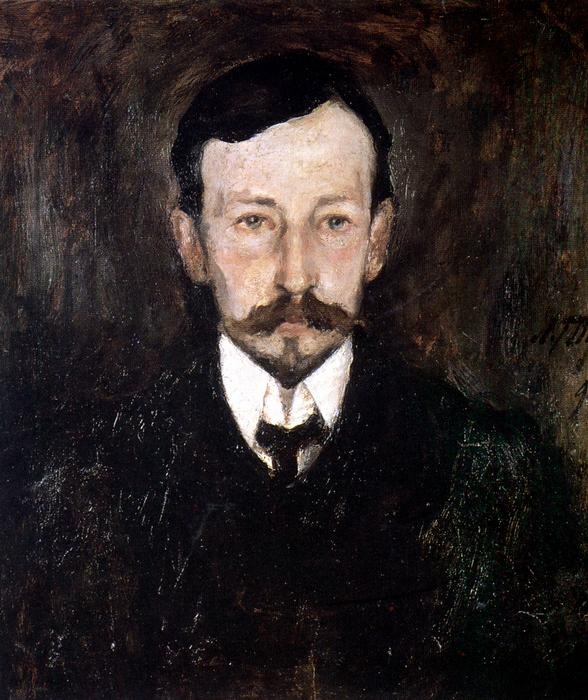
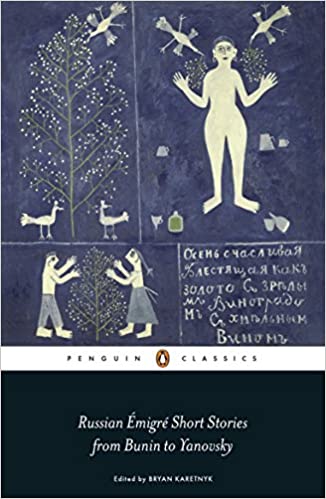


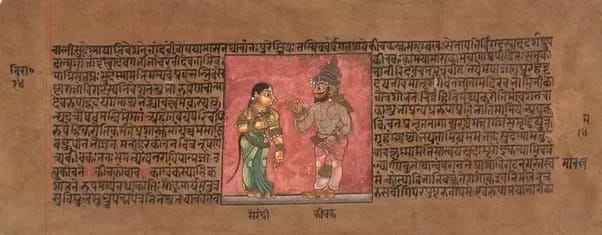
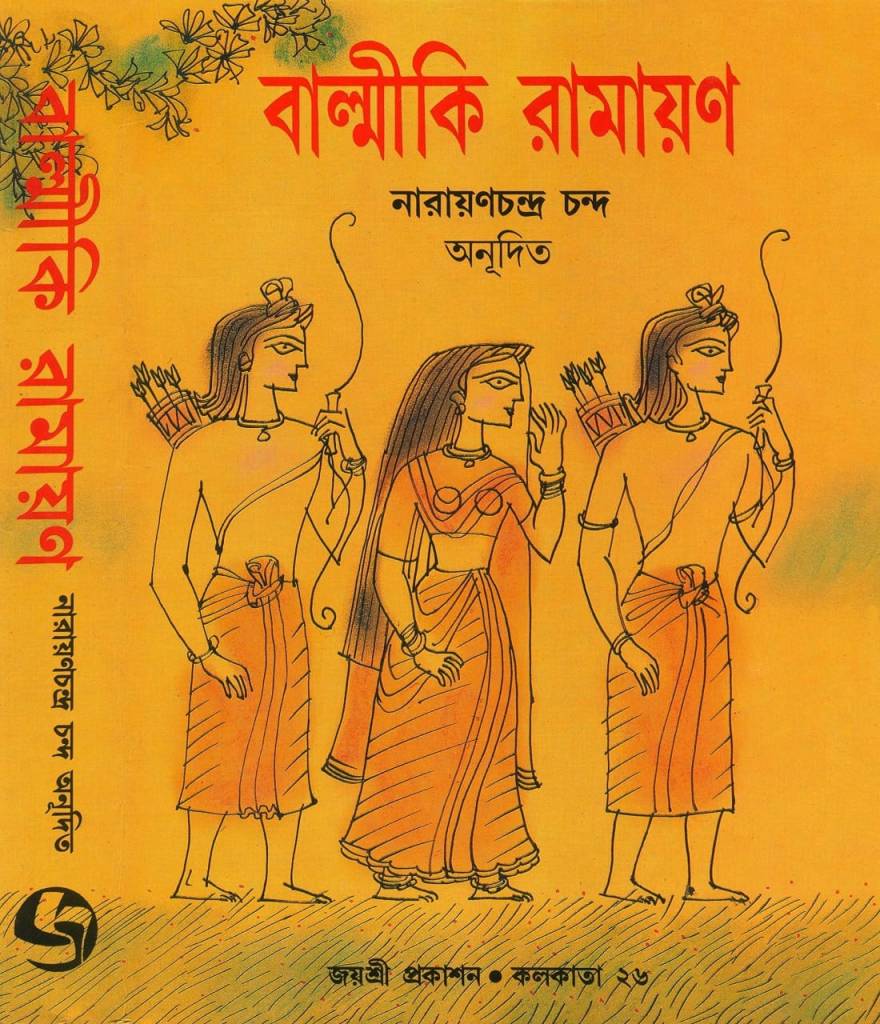
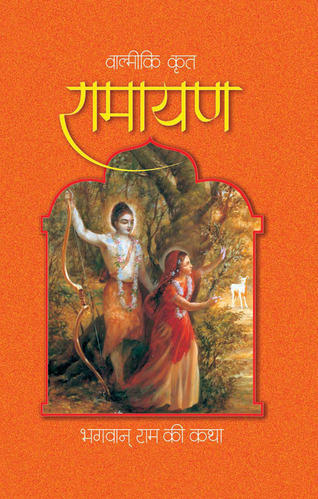
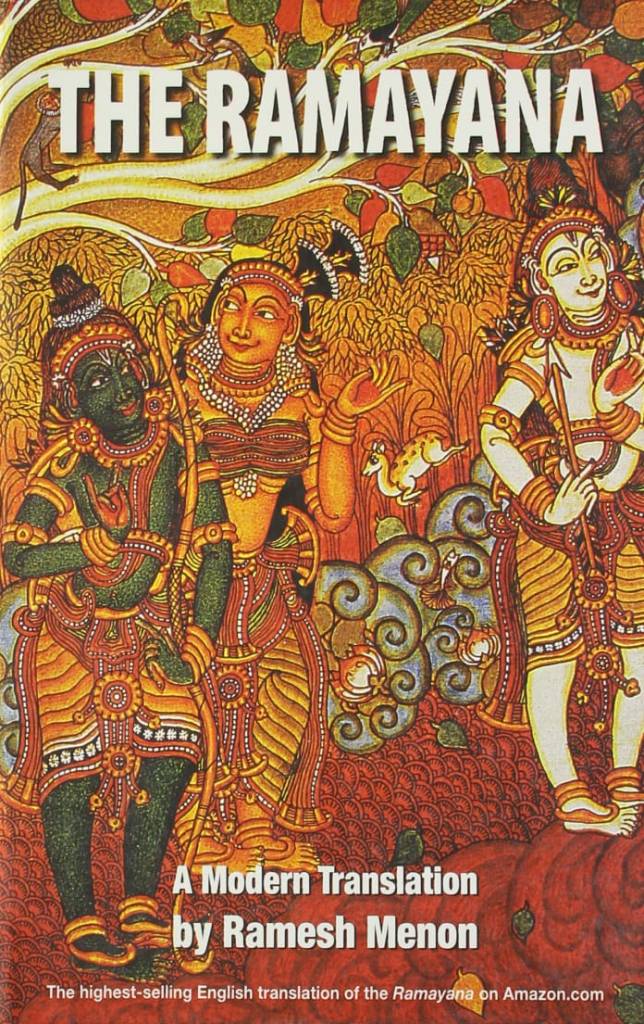
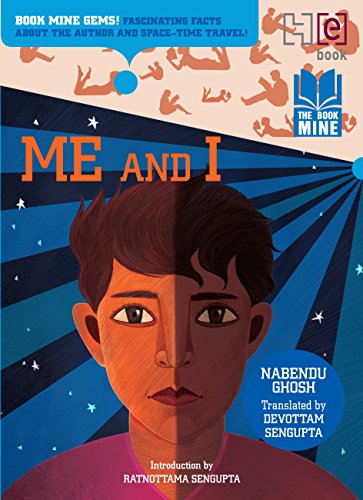
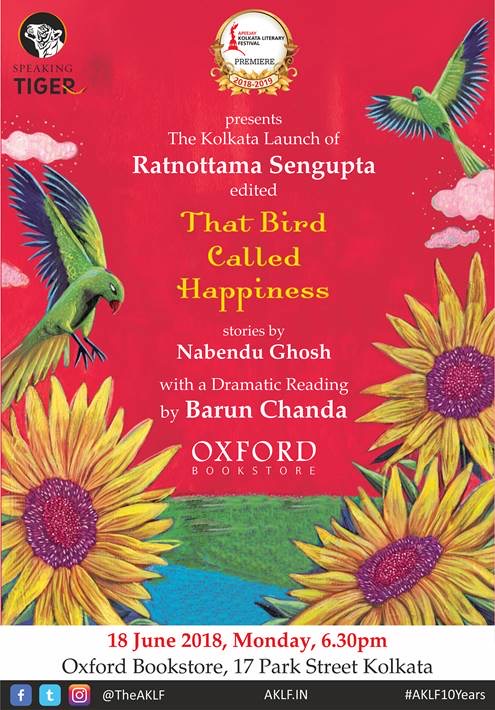
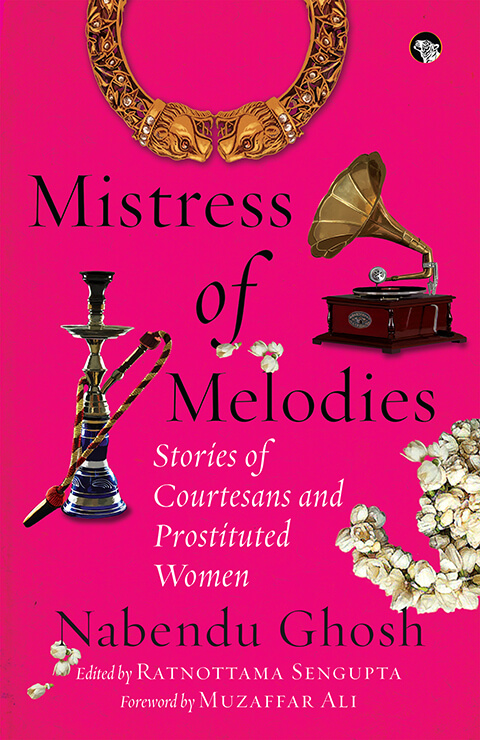


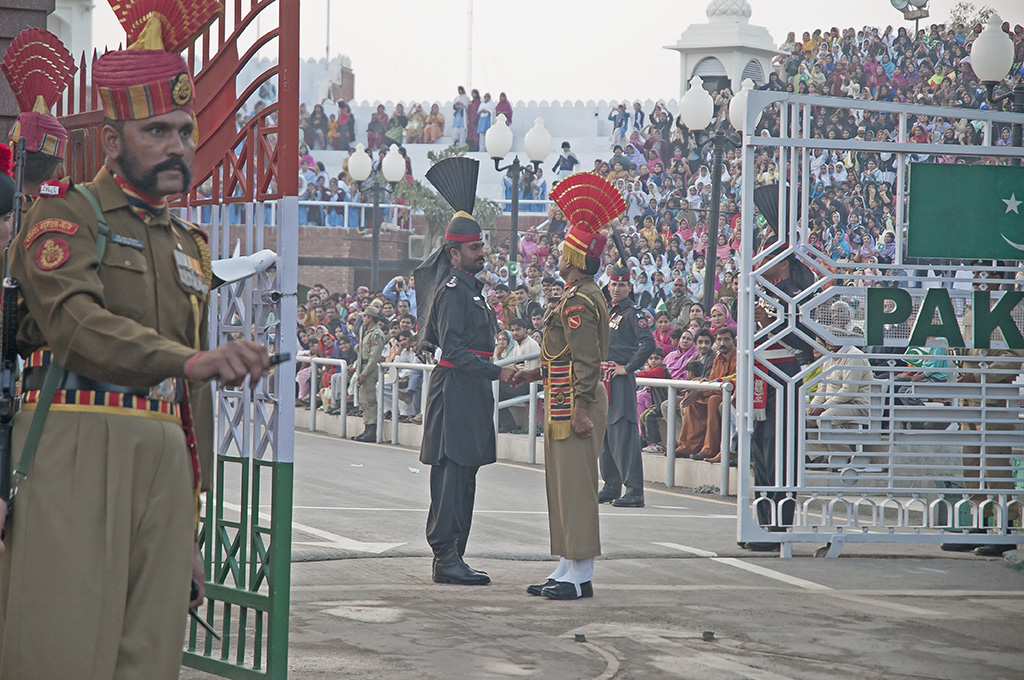
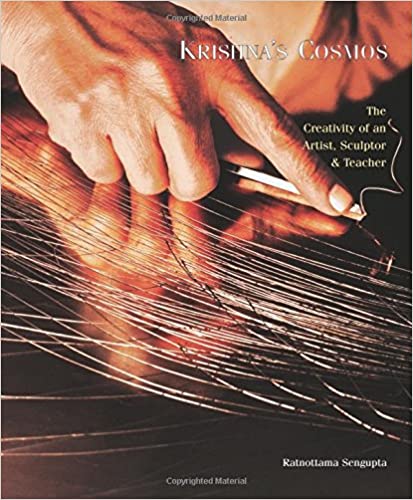
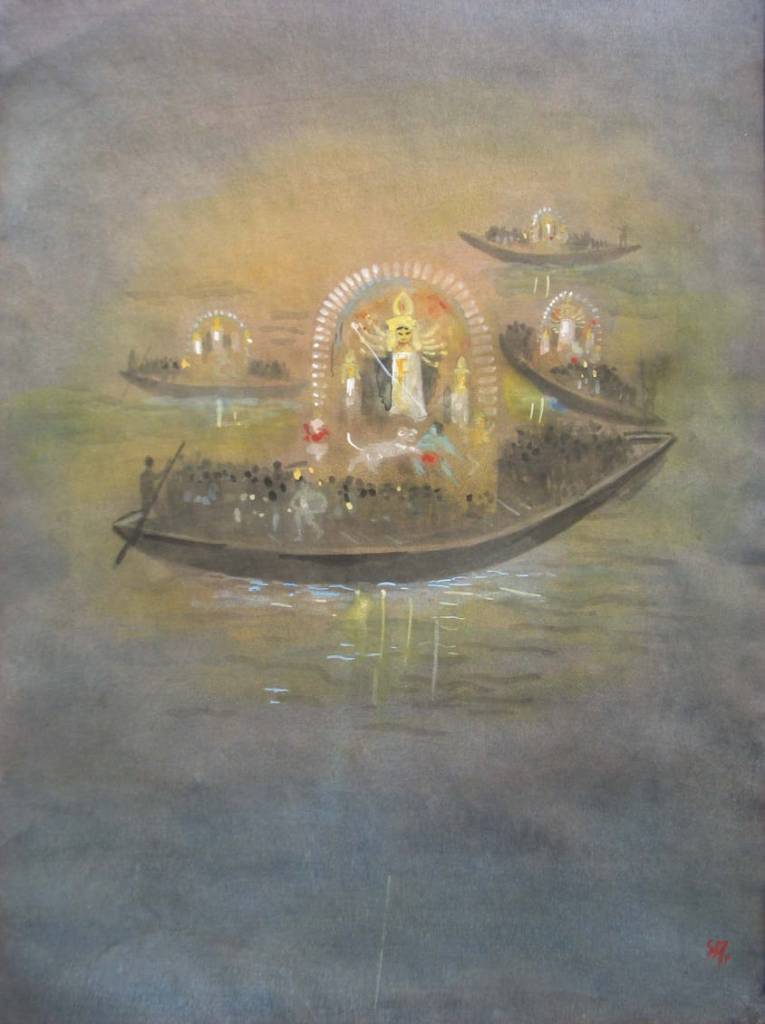
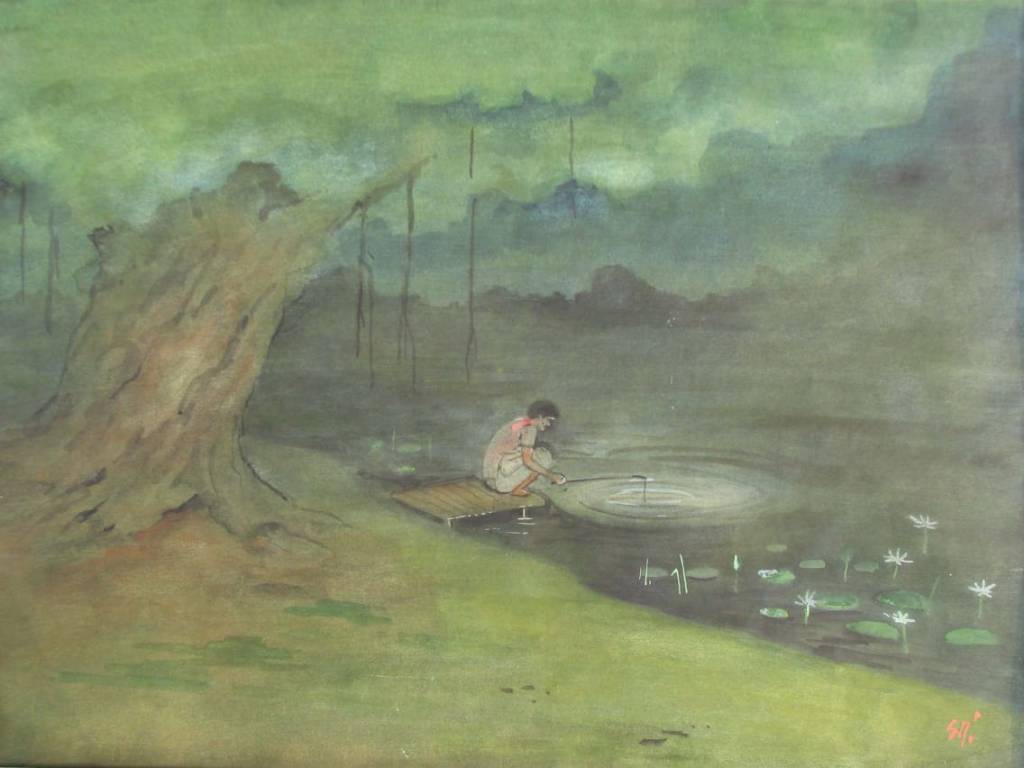
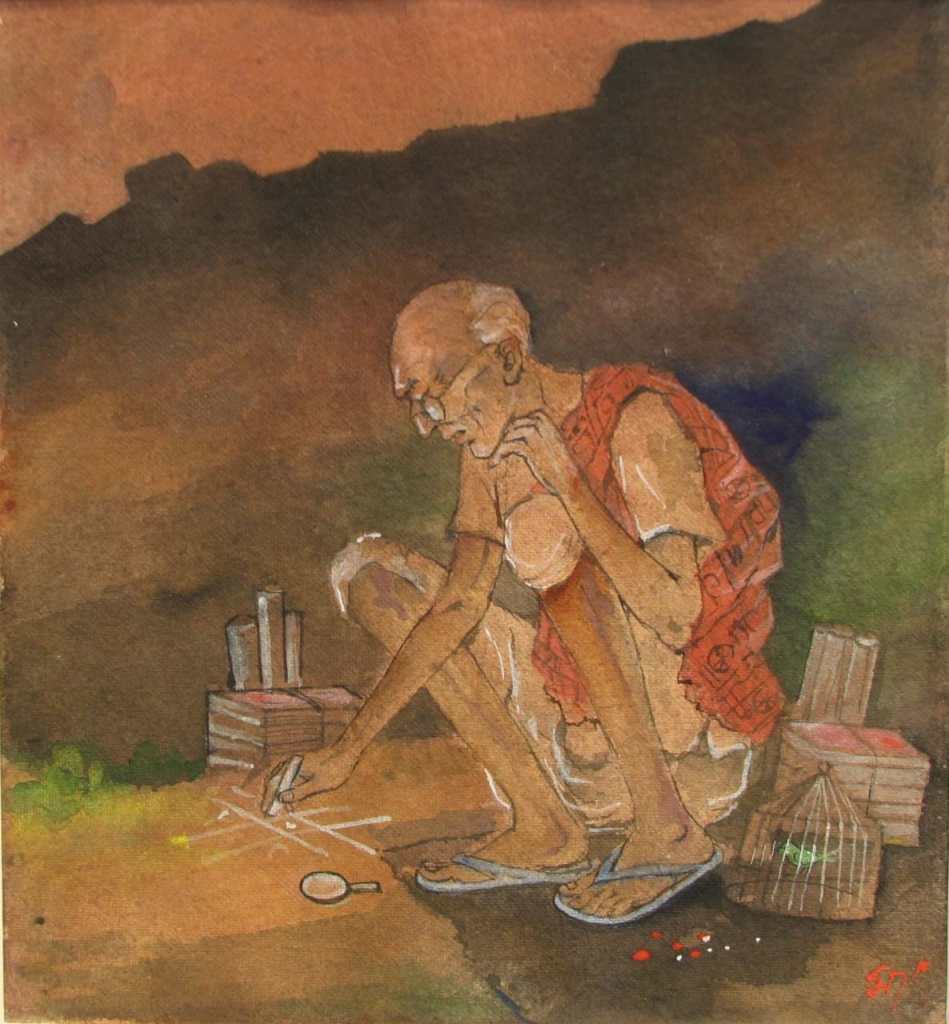
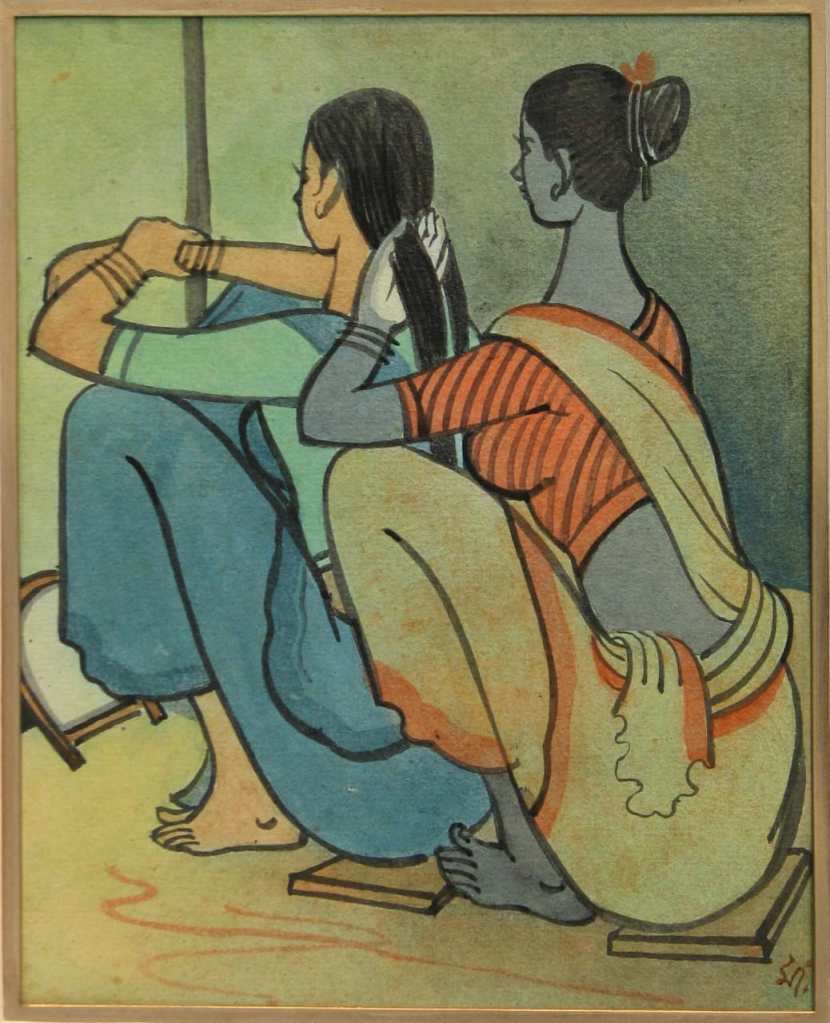
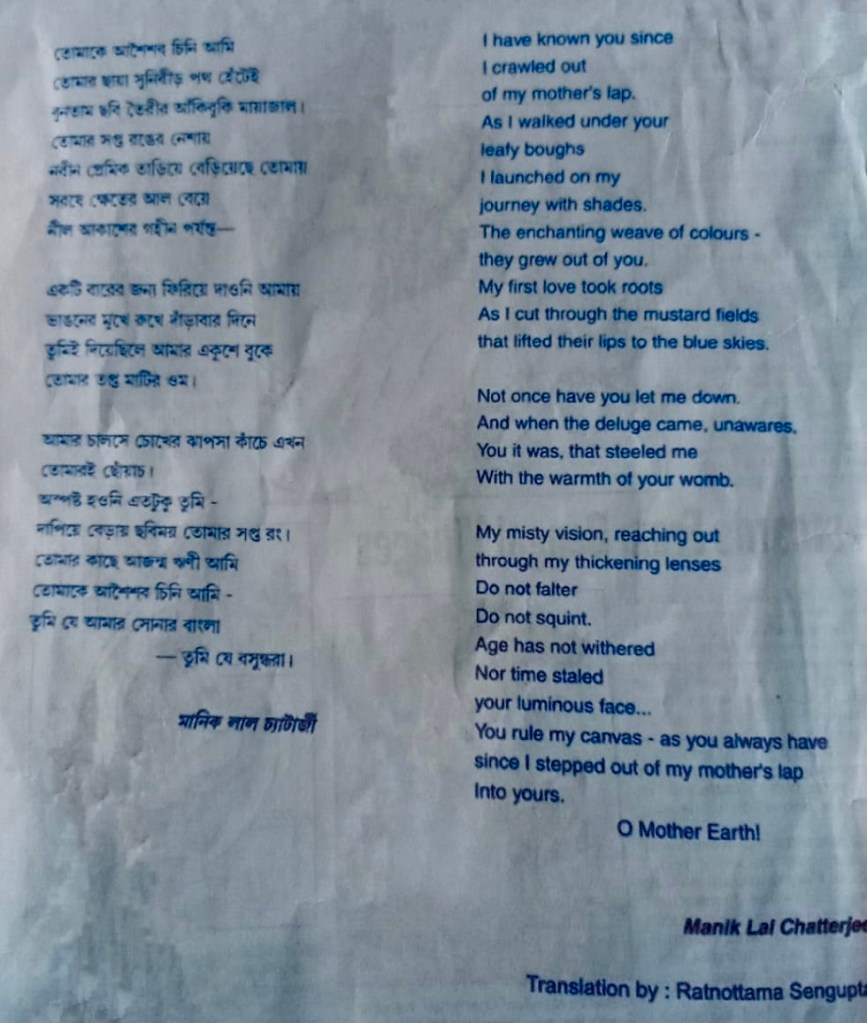



 Borderless


.jpg)
