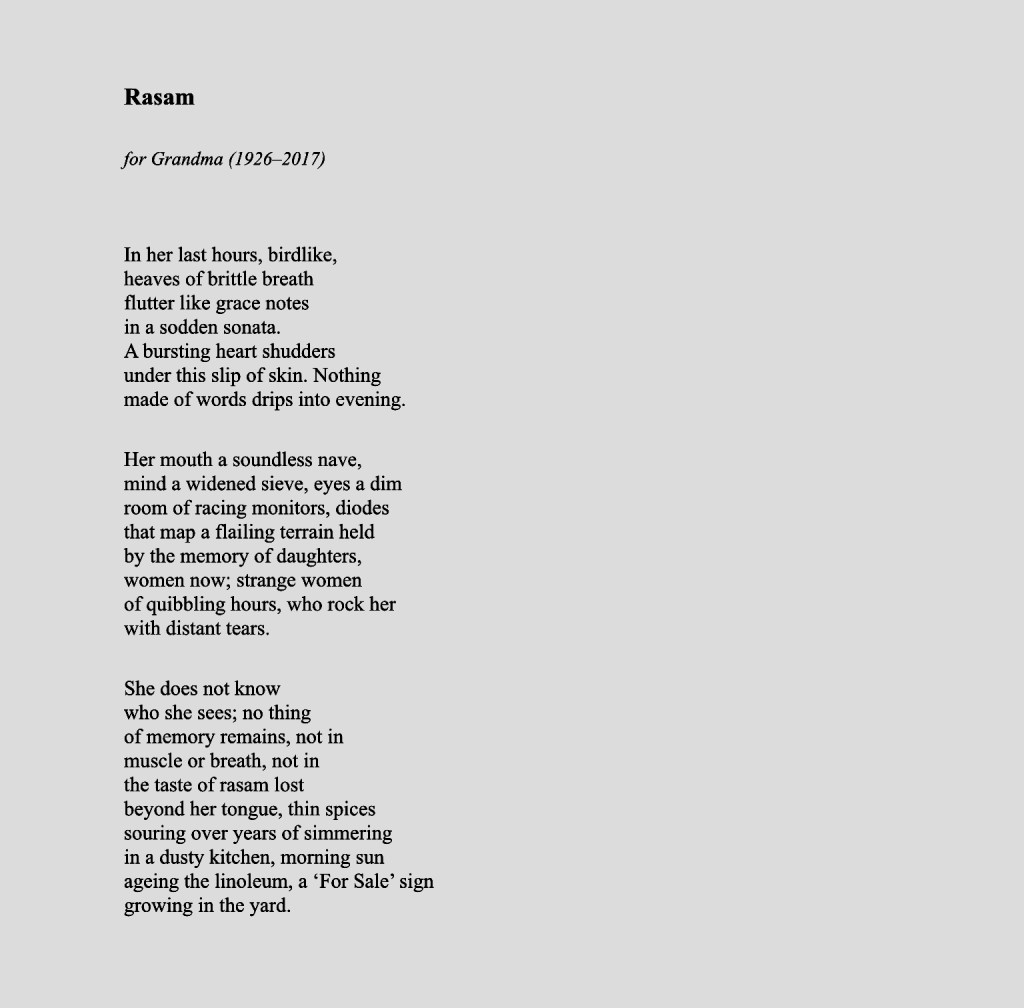
( First published in Vital Possessions, Ethos Books, 2018)
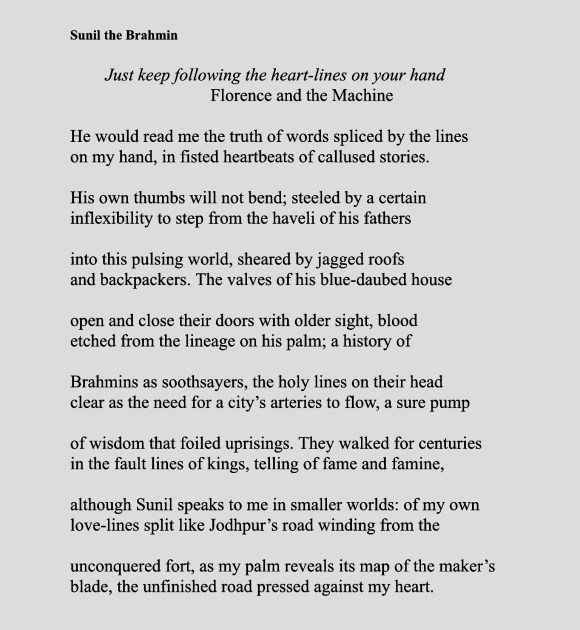
( First published in Postal Code, Red Wheelbarrow Books, 2013)
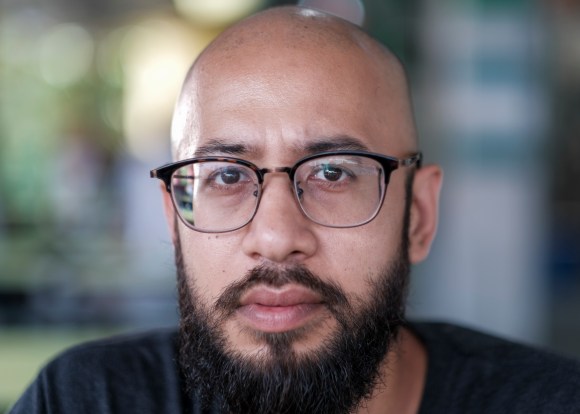
Marc Nair is a poet who works at the intersection of various art forms. He is currently pursuing projects that involve photography, movement and creative non-fiction. His work revolves around the ironies and idiosyncrasies of everyday life. He has published ten collections of poetry.
Camus, as a writer, receives mixed response from the readers. It is understandable when some readers avoid reading him, because he seems a difficult writer whose works are taken to be disturbing. Some readers appreciate his writings though they do not agree with him. While for some, Camus’ ideas are irrelevant when compared with those proposed by existential philosophers. Although Camus is often categorised as an existential philosopher but he himself never approved of that. In one of his interviews he said:
“No, I am not an existentialist. Sartre and I are always surprised to see our names linked. We have even thought of publishing a short statement in which the undersigned declare that they have nothing in common with each other and refuse to be held responsible for the debts they might respectively incur. It’s a joke actually. Sartre and I published our books without exception before we had ever met. When we did get to know each other, it was to realise how much we differed. Sartre is an existentialist, and the only book of ideas that I have published, The Myth of Sisyphus, was directed against the so-called existentialist philosophers.”*
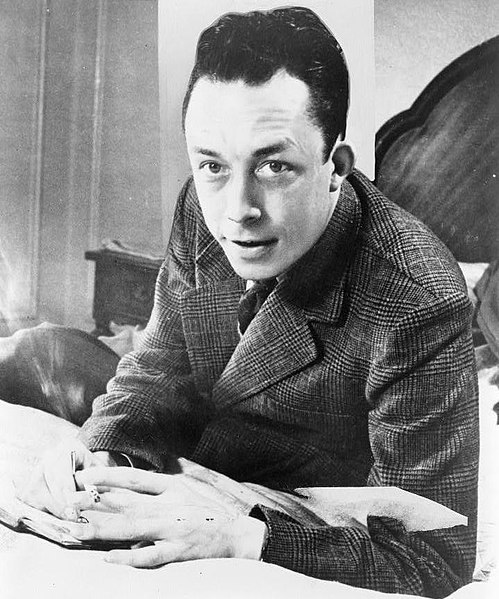
Albert Camus
When compared with different periods of his life, his writings offer an insight into the state of mind Camus was often fraught with. The penning of The Stranger and The Myth of Sisyphus, which he did almost simultaneously, came at a point when he himself faced despair about the kind of life he was living, which included his anxiety about his future as a writer and finding his place in the World. At this time he was in Algiers, his native land, far from the hubbub of Paris. His more mature works , like The Rebel and The Plague, came later on where Rebel dealt with the problem of “murder” as against the problem of “suicide” which he dealt in ‘The Myth of Sisyphus’. We can notice the change in the focus of the writer, which turned from inner to outer, from individual to social as he moved from one work to the other. As he matured as a writer, Camus himself felt annoyed at his proposed idea of absurd. He said:
“This word “Absurd” has had an unhappy history and I confess that now it rather annoys me. When I analyzed the feeling of the Absurd in The Myth of Sisyphus, I was looking for a method and not a doctrine. I was practicing methodical doubt. I was trying to make a “tabula rasa,” on the basis of which it would then be possible to construct something. If we assume that nothing has any meaning, then we must conclude that the world is absurd. But does nothing have any meaning? I have never believed we could remain at this point.”**
Now this is what keeps me in awe of the writer. He is one writer, who has never been afraid of opening his heart, his thoughts, anything which plagues his mind, before his readers, before this world. In that sense, he may be termed as a radical and approached with scepticism, but it cannot be ignored that the ideas he proposed came to influence the generation of writers engaged in the works of absurd, for example, Samuel Beckett who contributed significantly to the Theatre of Absurd.
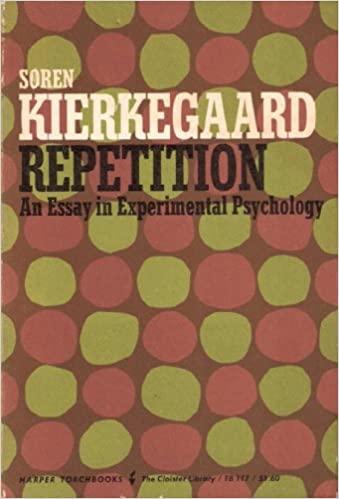
The idea of repetition which he proposed with Sisyphus, which in turn was inspired by Danish philosopher Soren Kierkegaard’s Repetition, is witnessed significantly in the works of Beckett too. What is more, his ideas also, even now influence the readers like me in whose face the “why” of existence suddenly strikes one fine day. It wouldn’t be an overstatement or some form of fervent adherence to the writer if I admit that he inspired the mind to seek more and not be satisfied till the response unites the thought and the experience.
He is not an easy writer to read, agreed, but his writings are not disturbing, specially if one gets to understand that his writing, whether The Stranger or ‘The Myth of Sisyphus’, is a declaration of writer’s notion that the life must be lived fully in awareness of the absurdity of this world.
In the ‘Myth of Sisyphus’, he terms the world as absurd because it doesn’t offer any answer to the question of existence, it being a silent spectator to the suffering of whole humanity. In a universe, divested of meaning or illusions, a man feels a stranger. Hisexile is without remedy since he is deprived of the memory of a lost home or the hope of a promised land. But does this situation dictate death? Camus ponders upon the problem of suicide and contemplates then whether suicide is the only answer to this absurd world which doesn’t answer anything. He opines:
In the face of such contradictions and obscurities must we conclude that there is no relationship between the opinion one has about life and the act one commits to leave it. Let us not exaggerate in this direction. In a man’s attachment to life there is something stronger than all the ills in the world. The body’s judgement is as good as the mind’s and the body shrinks from annihilation. We get into the habit of living before acquiring the habit of thinking. In that race which daily hastens us towards death, the body maintains its irreparable lead.
And to kill one self means to allow both life and death to have dominion over one. Hence, the absurd doesn’t dictate death but calls for the awareness and rejection of death. It calls for living it with consciousness —- with revolt, freedom and passion.
Neither religion, nor science for that matter, provides answer to a questioning mind satisfactorily. While the former tends to imbue it with an idea of eternity; an extension of life in heaven, the latter merely tries to explain it by hypothesis. But Camus cannot believe either of them.
Then turning to existential philosophers, he says that they “without exception suggest escape”.
“Through an odd reasoning, starting out from the absurd over the ruins of reason, in a closed universe limited to the human, they deify what crushes them and find reason to hope in what impoverishes them. That forced hope is religious in all of them.”
To further explain this, he presents to us the ideas proposed by different philosophers. For example he says:
Of Jasper:
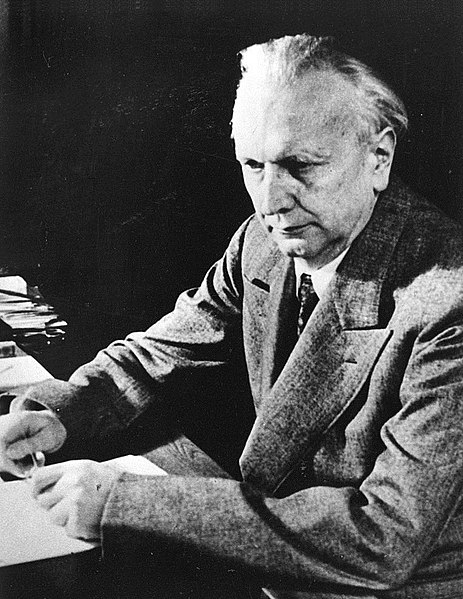
Karl Jasper
Karl Jasper, psychiatrist and philosopher, writes: “Doesnot the failure reveal, beyond any possible explanation and interpretation, not the absence but the existence of transcendence?”
So that Jasper proposes the existence which cannot be defined as “unthinkable unity of the general” and the “inability to understand” as the existence which illuminates everything.
Of Shestov:
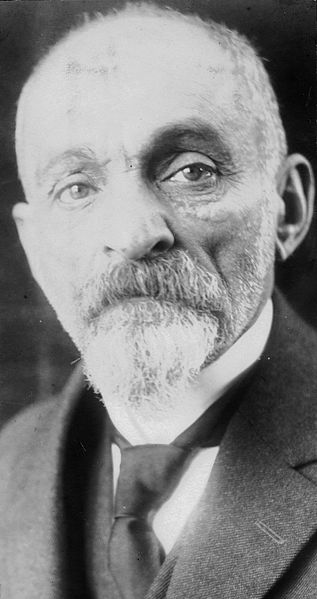
Lev Shestov
Lev Shestov, the Russian existentialist philosopher, names the fundamental absurdity by saying: “This is God: we must rely on him even if he does not correspond to any of our rational categories.”
For Shestov, reason is useless but there is something beyond reason, even if that something is indifferent to us.
Of Kierkegaard:
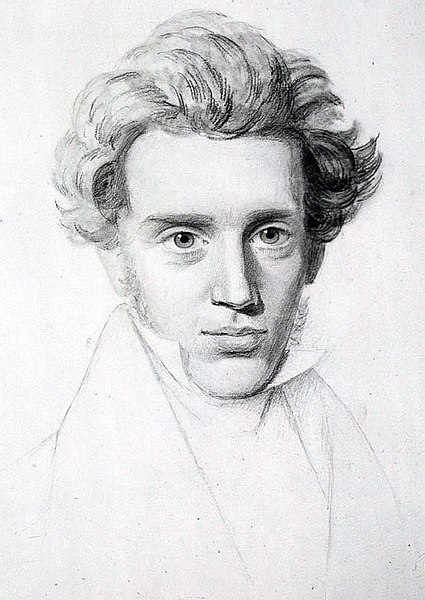
Soren Kierkegaard
Kierkegaard calls for the third sacrifice required by Ignatius Loyola, the one in which God most rejoices: The sacrifice of the intellect. He says, ‘In his failure, the believer finds his triumph.’
Kierkegaard substitutes his cry of revolt for frantic adherence.
Camus doesn’t agree with these philosophers, who did, all of them, tried to understand the absurd but finally gave into that which they found impossible to define. He calls their giving up as philosophical suicide. He cannot believe in Jasper’s idea of Transcendence. In response to Shestov, he says “To an absurd mind reason is useless and there is nothing beyond reason.” He chooses ‘despair’ instead of Kierkegaard’s frantic adherence. He says “Iwant everything to be explained to me or nothing.”
So now when faced with absurd and being in consciousness, how best to live the life? Camus advocates the life of a seducer (Don Juanism) actor, conqueror or creator following the three consequences of absurd i.e. revolt, passion and freedom.
By revolt, Camus means to keep the absurd alive by challenging the world anew every second.
By freedom, he means losing oneself in that bottomless certainty, feeling henceforth sufficiently removed from one’s own life to increase it and take a broad view of it.
By passion, he means being aware of one’s life, one’s revolt, one’s freedom, and to the maximum.
Though he praises the absurd man in a seducer, actor or conqueror, it was his stance on creator which I drew me towards his ideas. He says:
“Creating is living doubly. The groping, anxious quest of a Proust, his meticulous collecting of flowers, of wallpapers, and of anxieties, signifies nothing else.”
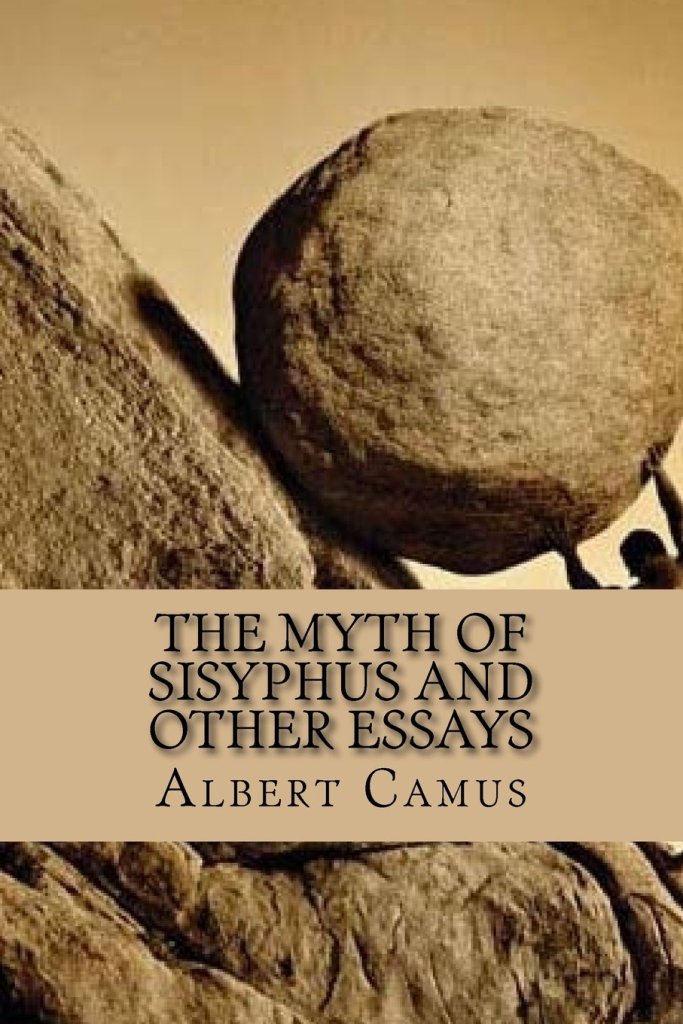
Sisyphus
Towards the end of this essay, he compares absurd with Sisyphus, who, according to the myth, was condemned to rolling a rock to the top of a mountain, only to see it rolling down back every time he reached the top. He says that though Sisyphus is well aware of his fate, of the continuous struggle he has to engage in, but he is still passionate about his life and doesn’t give up. It is during his descent, that Sisyphus’ silent joy is contained.
Likewise, the absurd man, when he contemplates his torment, silences all the idols. In the universe suddenly restored to its silence, the myriad wondering little voices of the earth rise up. Unconscious, secret calls, invitations from all the faces, they are the necessary reverse and price of victory. There is no sun without shadow, and it is essential to know the night. The absurd man says yes and his effort will henceforth be unceasing. If there is a personal fate, there is no higher destiny, or at least there is but one which he concludes is inevitable and despicable. For the rest, he knows himself to be the master of his days. At that subtle moment when man glances backward over his life, Sisyphus returning toward his rock, in that slight pivoting he contemplates that series of unrelated actions which becomes his fate, created by him, combined under his memory’s eye and soon sealed by his death. Thus, convinced of the wholly human origin of all that is human, a blind man eager to see who knows that the night has no end, he is still on the go. The rock is still rolling.
I leave Sisyphus at the foot of the mountain! One always finds one’s burden again. But Sisyphus teaches the higher fidelity that negates the gods and raises rocks. He too concludes that all is well. This universe henceforth without a master seems to him neither sterile nor futile. Each atom of that stone, each mineral flake of that night-filled mountain, in itself forms a world. Thestruggle itself toward the heights is enough to fill a man’s heart. One must imagine Sisyphus happy.
The other essays in the collection, ‘Summer in Algiers’, ‘The stop in Oran’, ‘Helen’s Exile’ and ‘Return to Tipasa’ are worth reading too. In ‘Return to Tipasa’, we observe Camus prevailed over by nostalgia for home, for his land. It is here that he says:
In the direction of the ruins, as far as the eye could see, there was nothing but pock-marked stones and wormwood, trees and perfect columns in the transparence of the crystalline air. It seemed as if the morning were stabilized, the sun stopped for an incalculable moment. In this light and this silence, years of wrath and night melted slowly away. I listened to an almost forgotten sound within myself as if my heart, long stopped, were calmly beginning to beat again. And awake now, I recognized one by one the imperceptible sounds of which the silence was made up: the figured bass of the birds, the sea’s faint, brief sighs at the foot of the rocks, the vibration of the trees, the blind singing of the columns, the rustling of the wormwood plants, the furtive lizards. I heard that; I also listened to the happy torrents rising within me. It seemed to me that I had at last come to harbor, for a moment at least, and that henceforth that moment would be endless.
What I realized reading these essays over again was that despite of being labelled as the proponent of absurd, it is actually living that he so fervently speaks about; Not just living but living passionately and fully. Living in awareness and questioning. Though he seems to be recommending a negative faith (as James Wood says in introduction) against the religious or existentialist ideologies, he nevertheless demonstrates a distinctive way to the seekers to come to terms with the existence; the way to be chosen henceforth, of course, depending upon the individual, starting every day with an ever new light.
“In the middle of winter, I at last discovered that there was in me an invincible summer.”
*From an interview with Jeanine Delpech, in Les Nouvelles Littéraires, (1945). Cited in Albert Camus: Lyrical and Critical Essays, Vintage (1970)
** From an interview with Gabriel d’Aubarède, in Les Nouvelles Littéraires, (1951). Cited in Albert Camus: Lyrical and Critical Essays, Vintage (1970)
Rakhi Dalal is an educator by profession. When not working, she can usually be found reading books or writing about reading them. She writes at https://rakhidalal.blogspot.com/ . She lives with her husband and a teenage son, who being sports lovers themselves are yet, after all these years, left surprised each time a book finds its way to their home.
A line of rocks marks a ridge overgrown with heather which leads down to a sandy bay at the headland. On an elevation, behind a patch of marram grass, a dilapidated cottage.
The walls are made from natural stone, the roof shingles are covered with moss, the frames of the small windows are jammed and swollen having been exposed over years to moisture and rain. In the nearby water bobs an open boat with fishing lines and nets.
Close to the house stands a rusty fish trap and a few lobster pots.
There are remnants of red paint on the door. Next to it leans another door, freshly painted in blue.
The shed is open and shows shelves, barrels, carpenter equipment and fishing tackle.
Across the forecourt, covered by weeds, lies a broken mast and next to it an anchor.
The fishermen have moved away from this area, left with memories of the rattling and ringing of the rigging, the whispering wind and the lashing, roaring surf, the rubbing of the oars against the rowlocks.
The sight of the lonely, ugly and abandoned neighbouring house fills him with melancholy. The absence of sounds of other people does not bother him.
There is only the clinking of the aeolian harp hanging from a sycamore tree.
He steps outside the door and smokes his pipe. A tame magpie hops beside him. She has only one wing. He found her and took her in. He is her protector.
She jumps around and uses her remaining wing as a crutch. She hopes that he will unfasten his boat and row out on the water, because this would mean fish for her meal.
But on this day, he does not row out. A storm is forecast.
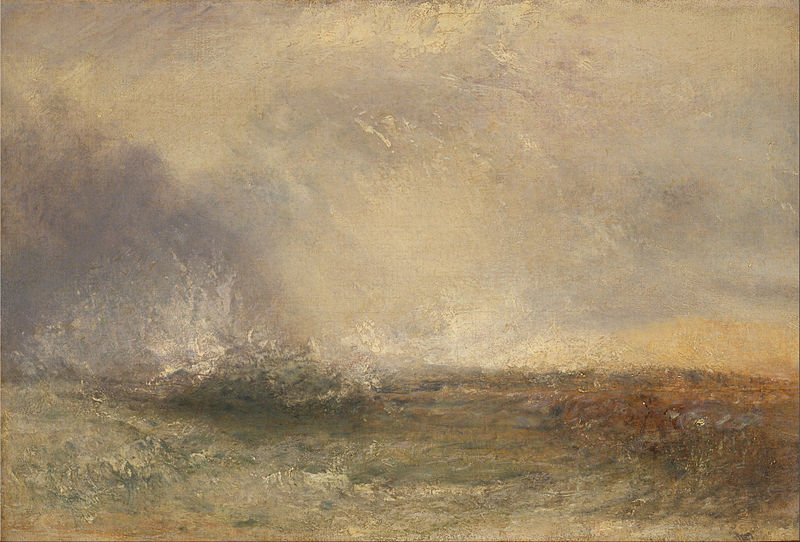
The sky shows a display of all shades of grey, from light grey, through dark grey to deepest dark grey.
Gusts blow sand and loose grass over the shore stones.
He pushes the door further open. It jams, the house has settled. He had smoothened the blue-painted door and made it fit to be installed when the paint has dried.
Inside a table, two chairs, a cupboard, an unmade bed, logs stacked up next to a round iron stove. On a side table an old-fashioned radio running on batteries, no television, in the corner a heap of books.
The old radio is only there to hear the news and weather forecast. He is not interested in talk and sermons.
In the country which he had left behind, he had hated television. He hated all those newsreaders, all those and other types of “teachers” with their eyebrows and forefingers raised, who all rebuke those who think differently, giving marks or awarding points.
The exclusion of TV was part of his fight against the system.
It becomes stormier.
A new fight is waiting for him.
He hastens to pull in the boat and turns it over so that the storm cannot catch and lift it. He carries the blue door into the house. He is particularly worried about the shed gate. It is exposed to wind and weather. A hinge is broken.
Inside the shed he pushes a heavy chopping block against one wing of the gate.
Outside the storm blows up its cheeks. A gust runs against the shed. Light falls into the shed for a moment because the gate gives way. He braces himself against it.
The magpie, he brought to safety, jumps excitedly back and forth on a shelf. In the lower shelf she has a wooden box in which she sleeps and rests.
The storm begins, it roars and rages.
He battles against the wind force, holds the gate with one hand and fetches a lumber to prop it up. He nails a batten right across the two wings to the frame on both sides thus strengthening the gate.
It works, the gate is not moving an inch.
The fight against the element, this old battle of mankind against wind and severe weather conditions is won, for the moment.
The house gives shelter, the storm’s voice is less audible. He lights the stove to make hot water for a tea, which he will thin down with some whiskey, and to boil a few mussels.
The magpie follows him into the house. He caresses her plumage. Poor little bird, he says.
He lights a candle in a lantern. The cottage is not connected to the mains, that means no bills and no visits by the meter reader, who would disturb his seclusion.
Making frugality the purpose of life.
For re-collection. Re-flection. To spell nature, to give nature its meaning back.
Eduard Schmidt-Zorner is a translator and writer of poetry, haibun, haiku and short stories.He writes in four languages: English, French, Spanish and German and holds workshops on Japanese and Chinese style poetry and prose.
Member of four writer groups in Ireland and lives in County Kerry, Ireland, for more than 25 years and is a proud Irish citizen, born in Germany.
Published in 76 anthologies, literary journals and broadsheets in USA, UK, Ireland, Japan, Sweden, Italy, Bangladesh, India, France, Mauritius and Canada.
inch by inch recovering the expanse of unexpressed
so that intimacy could be tilled into rows and rows
of languid kisses strewn with endless possibilities
perhaps then, someday we will
live our way into the passion we always sought
Bristle Stories
They arrive uninvited
like guests during summer siesta
and find strength in numbers
Stubborn as teens in combat boots
looking for trouble at street corner
my chin hair refuse to die
or remain dormant
They recoil every time I wax
Let me celebrate victory after a laser
Disappear for maybe a couple days,
but always return snapping gum vivaciously
to sun themselves unabashed
bold and burping on a cloudless terrace
On weekdays, they foil with vengeance
my all attempts at prettiness
refuse to apologise
throw tantrums, stomp and yell
spitting at the feet of men smiling at me
Feeling right at home, my bristles stretch themselves
claiming more space with each day
play cards, exchange stories and smoke cigarettes
Greedy
unapologetic
bordering on contemptuous
they reassure the woman in me
that they are paragons of
proud and vicious feminism
The woman inside me wonders
if greying calls for a truce
to make peace with my rebellious mongrels
Nalini Priyadarshni is a feminist poet, writer, translator, and educationist though not necessarily in that order who has authored Doppelganger in My House and co-authored Lines Across Oceans with late D. Russel Micnhimer. Her poetry, prose and photographs have appeared in numerous literary journals, podcasts and international anthologies including The Lie of the Land published by Sahitya Akademi, New Delhi. A nominee for the Best of The Net 2017 she lives in Punjab, India and moonlights as a linguistic consultant.
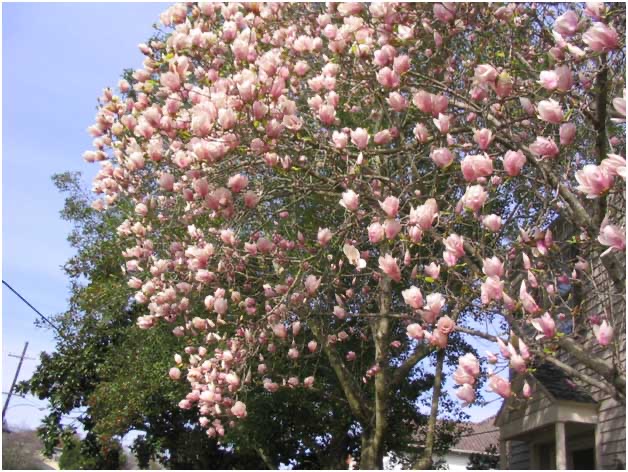
On Sunday morning, I hardly noticed that the Japanese Magnolia outside my study room window is in full bloom as it is mid-March. Every year, in late winter, some of the area trees do flower before leaves start to come. That is the first sign to remind us that spring is upon us. There is an undeniably joyous feeling to it and most of us get busy in planning flurries of activities after a long winter. But on Friday afternoon, at 3 PM President Trump declaring National Emergency had everyone put in a panic mode. He had to do it because of the growing spread of the corona virus across states as it is affecting 49 states now. After that, there was no time to enjoy or contemplate about the advancing season.In time of crisis it is hard to put feelings into words. The anxiety that is gripping the world is very challenging. To say people are feeling “scared” is an understatement to describe the kind of fear the people around the world seem to be feeling. The signs are everywhere you go in big and small way, it is written on the faces of people.
Instead of going to the nursery to choose spring flowering plants, people were frantically going to supermarkets to load up on supplies this weekend. The erratic fear is that the supply chain will be seriously disrupted in case of a serious pandemic. There will be no one to drive the interstate supply trucks if thousands of people fall sick to the virus. This year that feeling of urgency to make a to-do list has been seriously diminished by the corona virus epidemic. Now the priority for most people is to plan for the very uncertain next few months. The virus is acting as a metaphor the populist leaders such as Trump fear and detest about the outside world. It is clear that the world leaders are not working together in an effective and coordinated way to contain the spread of the virus and that is really scary. During the day, there are so many new updates on the virus and its spread that it is hard to keep track. Within 24 hours things can take a dramatic turn, as a lot can happen in that time. Trump so far has pledged 50 billion to fight this.
No matter what you do or how many precautions you take, the virus news is on your mind constantly. For the last few days, I have been feeling slightly depressed seeing many conflicting news and what it means globally as we are one big society. Last night, just before going to bed, it was disheartening to read in al.monitor.com that the spread of corona virus in Iran has shown no sign of slowing down. Iran’s foreign minister Mohammad Javad Zarif has made a public plea for sanctions to be eased and medical supplies. He also wrote a letter to the UN Secretary General sating US sanctions “obstacles to the sale of medicine, medical supplies and humanitarian goods.”
It really hit hard that from March 13; Broadways theaters in New York City have gone dark and will remain so for a month at least. Broadway is the symbol of resilience and life in New York. Last time it had closed for 48 hours after 9/11. The premise that the show must go on has been defeated as it is no match against the threat of COVID-19. When I was emailing my daughter Friday evening,I called the virus an “invisible enemy” as that is what came to mind spontaneously. I keep on sending her news updates knowing full well that she is on top of things. The mother in me feels protective of her even though she is a grown up and has been a faculty member in one of the prestigious colleges in New England for the last 2 years. In response, she sends me the forward of the email from the college President that went to all the faculty members saying when the last in person class is going to be. He reassures that his institution is still safe from the virus as no one was tested for the virus. So he presumes everyone is safe and to wait another week and be done with the classes before spring break. After that the remainder of the semester will be online. She informed me that it’s a lot of pressure there to convert everything to online learning as the graduate classes she teaches are not meant to be online. But most of the faculty members feel the college should have closed the in person classes and should have done what other institutions in that state and all the adjoining states did. They all cancelled classes and sent everyone home after one student tested positive in another college very close by. As I was writing this piece I got information from my daughter where she said, “Yes, everything has closed as of last night.”
There are so many expert opinions that people are not sure which way to go as they themselves are not sure. Some argue that society cannot be shut down completely. But that is exactly what is happening. Italy is under total lock down. Spain is following Italy in terms of isolating towns and cities to reduce the spread of the virus. Each government is doing what they see is the right thing to do to save a large numbers of people escape this dreadful virus. Last night I heard on the radio that France is closing all restaurants among other things to limit the spread of the virus.
As I am editing this article on a Sunday afternoon, I can see the park across from my dining room window. Usually, on a warm day like today, the park is filled with children playing. There has been total silence there this weekend. Only I see a person walking around the park to get his daily exercise. According to WHO reports children are not at great risk for corona virus. But the parents are not taking any chances. The stillness in the neighbourhood is very eerie. Sometimes in late summer, it feels similar, as most families are on vacation before school starts in late August. This is an extraordinary time that calls for drastic measures to be taken. All Maryland schools shut down a week ago to avoid person to person contact. Many working parents were forced to find childcare for them. All the schools had sent letters home to parents asking the students not to return to school after spring break. Meanwhile, massive cleaning operations are underway in all the schools and colleges. Maryland’s corona virus cases continue to rise and as of this writing governor Larry Hogan’s office has confirmed 31 cases including five new cases overnight. He has declared state of emergency two weeks ago to get federal aid package that will facilitate to treat the disease faster.
The biggest dilemma for most families is how much food to store anticipating the worst. There are a couple of You Tubers that I follow from time to time. One of them is a lady in London. Yesterday, she posted a video as to how she is preparing for the coming weeks and months. For a family of five, among dry and frozen foods,she had dragged a sixty-pound Basmati rice bag to her third floor flat when the elevator was not working. The dry food items consisted of every kind of lentils and other nonperishable canned food that will last for months. Another vlogger had shown her followers how she is disinfecting her apartment with homemade solutions in Toronto. She was not that lucky to load up on supplies as the supermarket shelves are getting empty very fast and the lines are very long. And yes, the toilet paper panic is going in full force there as well like in Australia and America. The internet is floating with corny Toilet Paper jokes.
In my local supermarket, the cleaning and paper towel isles were totally empty when we went last Thursday night. The store was super crowded and many families came with children. Each member grabbed a shopping cart and was piling up every imaginable kind of food as if they will be facing a famine. We might, but we just don’t know. One couple was arguing over which super-size peanut butter to get. I looked at my cart with a week’s worth of supplies failing to make a decision as to how much food can I load for two people expecting the nastiest pandemic. Later on,I get a text from my daughter urging me not to go the supermarket and instead to have it delivered. I told her I don’t know while bagging my order if anyone will sneeze on my food and whether I will accept the bags thinking it is all safe. In time of crisis we can all descend into full scale paranoia. However,I console myself that perhaps in worst case scenario, the National Guard will feed people in the community if we all run out on supplies. But nonetheless, most of Saturday we were busy buying weeks’ worth of supplies from three different stores like others.
In the midst of all the uncertainties, people are naturally panicking and acting like we are facing a war, in this instance with the ‘invisible virus.’ The news media is relentless in politicizing every issue particularly emphasizing the good prime minister of Canada vs bad president of US as the punchline after Justin’s wife Sophie Trudeau tested positive for the corona virus. Justin Trudeau is self-isolating him and working from home. Donald Trump was in close contact with some of the Brazilian delegates and one of them has confirmed that he has become infected with corona virus. Trump was standing right next to that person in his Florida Golf Club estate and there are pictures to prove it. Yet the White House at first denied the president having any contact with that person. Later Trump downplayed it saying that he is “not concerned.” No one can make sense of why he would say something like this after emphasizing the importance of social isolation and self-quarantine. Why Trump shouldn’t be concerned nor get tested boggled everyone’s mind. In this instance Trudeau looks to be the sensible person and as usual Trump is ignorant and obstinate. Later, on Friday he said would “likely” receive a coronavirus test “fairly soon” even as he minimized the prospects of having contracted the virus from a Brazilian press aide. The early reports were wrong and the Brazilian leader later announced he tested negative. But the episode “underscored the tenuous position Trump now finds himself: exposed to at least one person who has tested positive, in regular contact with others who have self-quarantined and under pressure to test himself.” After that he said on Friday afternoon that “most likely” he will get tested. Then he went ahead and had him tested on Friday night awaiting results.
It is unfathomable how Trump threw a lavish party with foreign dignitaries in these uncertain times by exposing himself to people who were later tested positive for the virus. Many of his family members were also at the party dancing away.
Amid darkness there is still hope and we need to take one day at a time and brace ourselves for a positive outcome. Until then, there is no choice but to follow the guidelines and try our best to keep us healthy. Amid the corona virus updates there are still other news stories that give me hope. Three Turkish men were sentenced last week to 125 years in prison for their part in Aylan Kurdi, 2-year-old Syrian boy’s drowning. We will never forget Aylan face down on a Turkish beach in 2015. Aylan died with his 5-year-old brother and their mother, only the father survived.When you read about the fate of Aryan’s killers, you think there is still justice in the world.
Humor is something that also keeps us from over worrying and going over the edge. Pete Buttigieg served an example as to how to keep humour alive when he was filling in for Jimmy Kimmel on Thursday night’s talk show on ABC. He was trying to make television audiences laugh who only consisted of the producers and crew members sitting at six feet apart. There are no live audiences now. As Pete finds himself unemployed after he dropped out of the presidential race, and no longer the mayor of South Bend, he went looking for a supposed job (any job) in Los Angeles. This was a prop for the show as it is often done as a segment. With his Harvard and Oxford degrees, Pete Buttigieg lands a job giving out free samples of pretzels to passersby. Wearing an apron with the store logo he stands in front of the store holding a tray. When he gave one person a second helping, the burly African American woman manager fires him on his first day. Moments like this makes you laugh really hard and for a few minutes and you forget how the nation is gripped in erratic fear.
Also, as you read the comic strip prepared by DrRavindra Khaiwal&Dr Suman Mor published in the Counter Currents, you learn how Superhero Vaayu comes to the rescue to explain to the kids in simple terms what corona virus is as they are in panic. Vaayu at the end asks the children to “follow the simple steps and break the chain of infection.” You as well think that we will beat this provided we follow all the basic hygiene and guidelines to contain the virus. Such expressions in a comic strip certainly gives you hope and you believe it with an almost childlike innocence.
I am an optimist by nature – there are solutions to each problem, even the deadly corona virus. As we go through these tough times, thinking of spring, a new start, can be immensely helpful. We cannot give into fear, doom and gloom, and we need to keep our spirits up. I hope, spring will symbolise new life and we will be absorbed in nature’s essence. In about a month, hopefully, I will be looking at the happy bluebird in my backyard, the robins and sparrows hopping and jumping in the new grass, and hear the sound of children playing outside. I believe we can defeat the “invisible enemy” and one day COVID-19 will just be a distant memory. May the force be with us.
That yellow bird with a black band around its neck
Perched itself each year
December/January
Its winter haunt, I guess
It sits for a while perched on the branch
And flies off
To land on another branch
The little leaves barely a camouflage
Solitary on its perch
Chirping for a while
To soar away
It is back soon
Almost each morning
The pleasant winter sun seems to be just right for it
It feels nice
It makes me feel nice
The colour, the motion
The flight.
That happy yellow bird
With the black band around its neck.
Dr. Nishi Pulugurtha is Associate Professor in the department of English, Brahmananda Keshab Chandra College and has taught postgraduate courses at West Bengal State University, Rabindra Bharati University and the University of Calcutta. She is the Secretary of the Intercultural Poetry and Performance Library, Kolkata (IPPL). Her research areas are British Romantic literature, Postcolonial literature, Indian writing in English, literature of the diaspora, film and Shakespeare adaptation in film and has presented papers at national and international conferences in India and abroad and published in refereed international and national journals. She writes on travel, film, short stories, poetry and on Alzheimer’s Disease. Her work has been published in The Statesman, Kolkata, in Prosopisia, in the anthology Tranquil Muse and online – Kitaab, Café Dissensus, Coldnoon, Queen Mob’s Tea House, The World Literature Blog and Setu. She guest edited the June 2018 Issue of Café Dissensus on Travel. She has a monograph on Derozio (2010) and a collection of essays on travel, Out in the Open (2019). She is now working on her first volume of poems and is editing a collection of essays on travel.
Voice darkens and submerges in the sorcery of silence
Snow trickles into the stillness
Exile
All through life
an unending journey
accompanies you
And in the absence of
a destination
much of what’s inside gets lost
And the warp and weft of being
keeps on breaking
Beyond
Stillness spreads its wings
like the desert
beneath a dawning sky
The paraplegic pyramids glitter
in a mixture of azure and gold
There is still a lot to say
beyond civilization
Viennese Coffee-houses
No sooner does dusk fall
than the city’s cafés come to life
with the tinkling clang of indifference
Gradually the crowd of solitude gathers
around the tables
Sankt Marx Friedhof*
Silence is magnificent
particularly when it connects
the monumental music of lives
that sleep peacefully
with the absolute space
Flowers and graves shoot up
rupturing earth’s breast
They exist side by side in stillness
I wonder what they think
of volatile souls that travel to the sky
with the chanting
of mysterious mantras
or of those who wait
for an undefined time to resurrect
Beyond cemetery’s wall
a swarm of sound passes through
slicing the essence of existence
in our trivial time
*Mozart was buried in St. Marx Communal Cemetery, Vienna.
(These poems are excerpted from her latest collection, Till the Next Wave Comes)
Sarita Jenamani is a poet of Indian origin based in Austria, a literary translator, anthologist, and editor of a bilingual magazine for migrant literature – Words & Worlds – a human rights activist, a feminist and general secretary of PEN International’s Austrian chapter. She has three collections of poetry. She writes in English, Odia and translates to and from German. Sarita translated Rose Ausländer, a leading Austrian poet, and an anthology of contemporary Austrian Poetry from German into Hindi and Odia. She has received many literary fellowships in Germany and in Austria including those of the prestigious organizations of ‘Heinrich Böll Foundation’ and ‘Künstlerdorf Schöppingen’. She studied Economics and Management Studies in India and Austria where she works as a marketing manager.
W. H. Auden’s poem “In Memory of W. B. Yeats” is often quoted to dismiss the importance of poetry as a form of social justice. The current fashion among poets is that poetry can revolutionize social inequalities, make positive changes, build empathy for marginalized groups, and convey information about causes important to the poet. For example, Robert Huddleston writes in Boston Review, “In its day, W. H. Auden’s claim that ‘poetry makes nothing happen’ was a necessary reproof to an ideologically mandated culture of protest that had a chokehold on the literary left in the 1930s, an example it remains important to consider today. Clashes over the political rights and wrongs of poetry, then as now, are often disguised contests over cultural and academic turf, ideological purity, and even the relative priority of criticism versus artistic practice.” He is correct concerning the cultural war that cloaks literary discussion. Literary figures and public intellectuals are often chided for their implicit biases. However, I conceive of the poem as saying something drastically different; I do not see it as being a political rebuttal at all, but rather serving as one within a larger context.
Auden’s poem contains these lines:
…For poetry makes nothing happen: it survives
In the valley of its making where executives
Would never want to tamper, flows on south
From ranches of isolation and the busy griefs,
Raw towns that we believe and die in; it survives,
A way of happening, a mouth.
The poem carefully navigates the terrain of the unchangeable dimensions of political life. However, it clears a safe space for the poem as a thing of its own. Poetry does not instigate events; rather, it is an event itself. The day remains cold for Yeats’s death, and his poetry lives beyond him through the many misinterpretations it will face. “In Memory of W. B. Yeats” defies the culture war to uphold the dignity of the human spirit to which poetry testifies. Auden once defended Pound from censorship by his publisher. He said anti-fascism will become the new fascism. The publisher relented and granted Pound a space in the anthology. In this course, Auden defends the integrity of the poet as a person whose work dignifies the ideal humanity. In this respect he clears a space for poetic license because a poet must spend their life empting themselves.
No, poetry makes nothing happen. It is an event itself. It is the fire of intellect applied to the cold apathy and spiritual destitution we suffer. As protest against the human condition, it becomes universal in its design.
Hence poetry is spiritual warfare. The poet is a paradigm for virtue. The contemporary world now challenges the absolute freedom of the visionary. It is historically stated that the visionary should be exempt from moral considerations. Recent shifts in consciousness concerning this attitude are becoming mainstream. The UK Telegraph reports, “Janet Marstine, Honorary (Retired) Associate Professor, School of Museum Studies, University of Leicester, added: ‘The National Gallery has taken an important step in acknowledging that it is no longer ethically tenable to interpret in an aesthetic vacuum. An artist’s position in the Western canon does not make them immune from accountability.’” The visionary in question at the National Gallery is Paul Gauguin. He is under question for exploiting the myth of the noble savage for his sexual and financial gain. The moral dilemma posed by such considerations does not discount the artistry or accomplishments of individual artists. Its intent is to hold artists accountable for immoral behaviour. The hope in the #metoo era is these considerations will keep living artists accountable rather than giving them license to act uninhibited, and influence the broader society.
Vincent van Gogh, a friend of Gauguin who he accused of insanity, wrote, “The way to know life is to love many things.” Van Gogh is historically considered a misunderstood visionary who underwent severe lifetime disappoint and failure. His legacy is a myth of its own. He was expelled from his church where he was minister. His father thought of him as a lunatic with stupid ideas. However, he is also considered a beautiful person who showed the world a light it misses in so much conflict. Don McClean wrote of van Gogh, “The world was never meant for one as beautiful as you.”
These two towering figures in art leave us with widely divergent displays of personal conduct. Van Gogh’s misconduct is chalked up to a serious mental health issue, but Gauguin is a sexual deviant who exploited the European assumption of the noble savage. What can be learned from these patterns? Emerging views of artists’ conduct have more at stake than aesthetic considerations. They are the battleground of the purpose of ideas. Gauguin’s art and moral conduct are under question not because his art is unpleasing, but because ideas hold power: we must take into account how ideas can effect culture and the treatment of others. Misconceptions of indigenous people have serious repercussions historically. Our worldview must consider that others are right to their cultural experience without infringement. This is where the culture war stems.
If we conceive a race as inferior, does our conduct toward them change? Gauguin is not being questioned as much as an entire colonialist legacy and how it shapes the behaviour within the culture that adopts it. Human dignity is universal; a person should never be treated as inferior. Perhaps we are right to question history so vapidly, and demand the culture at large change. The most important thing may be a humanist conception of world culture. Those who deny it are perhaps harming not only others, but also degrading themselves.
The culture war is the domain of values and whose values develop dignity in the human heart. Art is one of the most developed and poignant tools to communicate values. The Marshall Plan advanced capitalism throughout Europe using art to influence people. Culture is what stands as testimony to prevalent attitudes, reactions to those attitudes, and the historical presence of a people. We are right to subject it to deeper inquiry.
In fact, I would consider a moral duty to question historical circumstance through art. Duty is defined in the Bhagavad Gita, “It is better to do one’s own duty, however defective it may be, than to follow the duty of another, however well one may perform it. He who does his duty as his own nature reveals it, never sins.” This offers a subtext for individuality. Art is the historical realm of the individual—they who create art are the most developed in ideas. One’s heart will reveal one’s purpose. St. Paul writes in Romans 12:2 (KJV), “And be not conformed to this world: but be ye transformed by the renewing of your mind, that ye may prove what is that good, and acceptable, and perfect, will of God.” The world’s major faiths are abundant in praises of nonconformity. As St. Paul carefully describes, interpreting the will of God is a struggle. One must resist pressures external to oneself. Sometimes one must question oneself deeply to find the moral current within. Jihad, or “struggle”, is spiritual warfare in three senses: against one’s own temptations, against one’s peers, and in defense of one’s territory. Aristotle wrote, “Wicked men obey from fear; good men, from love.” The perennial wisdom seems to be of the consensus that morality is deeply personal, and one’s character is deeply revelatory. Art is where the person speaks honestly with high eloquence. Art itself is action. How much of artistic achievement depends on cultural consensus? Is art rather a defiance of consensus, bearing more of the soul of the artist than their times? A moral purpose should derive from the inner life, and counter the wheel of consensus in bare revolt. John Milton writes in Paradise Lost:
“A mind not to be changed by place or time. The mind is its own place, and in itself Can make a heav’n of hell, a hell of heav’n.”
Vatsala Radhakeesoon, contemporary poet of Mauritius, grants insight into the nature of freedom, character, and morality of being in her poem “Unconditional Thread”:
Born from the Divine’s golden thread Molded with perfection, purity and grace I’m the invisible heart – the unconditional thread ruling the universe
I’m soft I’m generous I’m not from the Mundane the materialistic world the uncanny competitive rules
I’m omnipresent but recognized, seen only by the unadulterated
I, Unconditional Thread survive in immortal realms and go on whispering in every ear “ Love, love and love discarding mental blocks and embracing spontaneity.”
A poet warrior embraces compassion, action, duty, and dream. Henry Miller writes, “All growth is a leap in the dark, a spontaneous unpremeditated act without benefit of experience.” One’s leap becomes one’s light. The darkness illumined is one’s spiritual landmark. To seek beyond one’s perilous comfort is an act of defiance in a world where complacency is sanctified. The artist’s presence stirs the world from sleep if they are securing their foundations. Ultimately, we are clueless about life: where it takes us, what it means, how we cope with it. We engage in symbolic acts of protest and incite civil discussion on important issues. Papers are published on every subject; scholars shake their fists at apathy and ignorance. Theories emerge from data and trends. Life’s most recent turn provides us with newfound perspectives. Once the trend is fulfilled, new storms rage on the horizon. Science is continuously revising and incorporating new facts and figures. There is nothing steady in the order we endure; in fact, to call it order defies its purpose.
In such a world of flux, kindness is even spirited defiance. In “Kindness”, Naomi Shihab Nye carefully constructs the meaning of kindness in counterintuitive language:
Before you know what kindness really is
you must lose things, feel the future dissolve in a moment
like salt weakened in a broth.
What you held in your hand,
What you counted and carefully saved,
all this must go so you know
how desolate the landscape can be
between the regions of kindness.
How you ride and ride
thinking the bus will never stop,
the passengers eating maize and chicken
will stare out the window forever.
Walter Pater writes in The Conclusion to The Renaissance: Studies in Art and Ideas, “Great passions may give us this quickened sense of life, ecstasy and sorrow of love, the various forms of enthusiastic activity, disinterested or otherwise, which comes naturally to many of us. Only be sure it is passion—that it does yield you this fruit of a quickened, multiplied consciousness.” Kindness is passion. Etymologically speaking, “passion” reflects suffering, endurance, and loss. Compassion means to “suffer with”; hence, Nye’s poetic rendering of kindness defines it as passion.
St. Francis of Assisi writes in “Praises of the Christian Virtues” of the three virtues of Wisdom, Poverty, and Charity that “Whoever possesses one virtue without offending the others, possesses them all.” Guatama Buddha is recorded as saying something profoundly similar, “We will develop and cultivate the liberation of mind by loving kindness, make it our vehicle, make it our basis, stabilize it, exercise ourselves in it, and fully perfect it.” In the doctrines of Buddhism, the problem of suffering is rooted in attachment. Attachment pertains to physical things, mental habits, and stubborn attitudes. When one is attached, the object of attachment invokes fear of its loss, and can trap the mind in unhealthy suffering. In Sanskrit, the word samsara translates “it flows together.” In Hinduism and Buddhism, the concept signifies worldliness, attachment, and the cycle of rebirth and suffering. To be released from this cycle one must be released of oneself and desire. This state of enlightenment is called Nirvana.
Octavio Paz, poet and ambassador of Mexico to India, writes in “Perpetua Incarnada”:
Hour by hour I saw him slide
wide and happy like a river
shadow and light linked its shores
and a yellow swirl
single monotonous intensity
the sun set in its center
Then he writes:
I ask for strength I ask for detachment
open the eyes
unharmed evidence
between the clarities that are canceled
Not the abolition of images
the incarnation of pronouns
the world that we all invented
sign town
and in its center
Solitary
Perpetual incarnate
one half woman
peña manantial the other
Word of all with whom we speak alone
I ask that you always accompany me
man reason
This poem reflects an existential loneliness but it extends into territories much broader. He asks prayerfully that the world be returned to the state of the ‘Word’ from its embodiment of images. Once again, we return to Pater in his essay on Leonardo da Vinci. “We recognise one of those symbolical inventions in which the ostensible subject is used, not as a matter for definite pictorial realisation, but as the starting point of a train of sentiment, subtle and vague as a piece of music.”
In “Flux and Movement in Walter Pater’s Leonardo Essay” critic Lene Østermark-Johansen writes, “The body which twists around its own spine creates the illusion of moving from one extreme to another thus resulting in a kind of harmony of opposites, a concordia discours.” This statement not only describes drawings and sculpture, but applies to rhetoric also. The concept of Self is illusion because all things contain their opposites. One cannot step in the same river twice. We are the river, and our Self is a form within the flux of promissory existence. We are granted time within this cycle of birth, death, and rebirth. As the Cross represents redemption, one reaches Nirvana by letting go. Christ is reborn to demonstrate he can conquer the forces of death.
Chögyam Trungpa Rinpoche writes, “The Shambhala teachings are founded on the premise that there is basic human wisdom that can help solve the world’s problems… Shambhala vision teaches that, in the face of the world’s problems, we can be heroic and kind at the same time.” A warrior poet sets the world aright through their heroism, but what does setting the world aright mean exactly? According to Shambhala: the sacred path of the warrior, the world must restore its focus to human dignity.
Mirabai writes:
O friend, I sit alone while the world sleeps. In the palace that held love’s pleasure the abandoned one sits. She who once threaded a necklace of pearls is now stringing tears. He has left me. The night passes while I count stars. When will the Hour arrive? This sorrow must end. Mira says: Lifter of Mountains, return.
– “The Necklace”
We cannot restore dignity alone. Existential dread implies that as individuals we are alone to choose and must live with that responsibility. In her abandonment, Mirabai still affirms her dignity as God’s beloved. She calls to God to return. This reflects the cycle of birth, death, and rebirth as eternal flux which harmonises with our physical existence. God is with us. Christ is ever present in our domain of suffering.
It is no coincidence that Paz concludes his poem with the words “I ask to be obedient to this day and tonight.”
U.S. Poet Laureate Joy Harjo writes in “The Myth of Blackbirds”:
“Justice is a story by heart in the beloved country where imagination weeps. The sacred mountains only appear to be asleep…We cannot be separated in the loop of mystery between blackbirds and the memory of blackbirds.”
Myth is a cultural awakening. Being “alone to choose” does not defer human dignity or one’s relationship to the divine because we are creatures of memory. As Plato reflected, learning is remembering what one already knows. Such a cycle is not promising. It is eternal.
We are ripe with questioning historical errors in this period of history. “The emergence of pessimistic philosophies is by no means a sign of some great and terrible distress; rather, these question marks regarding the worth of life arise when the human condition has been so improved and ameliorated that the mosquito bites of the body and soul are found too altogether gruesome and gory, and in their poverty of experience of actual pain, people will even take being troubled by ideas to be suffering of the highest order,” writes Nietzsche in The Joyous Science. Is our ability and right to assess history as such a privilege offered by our affluence and security? It was the intellectual who once hid in ivory towers. Now, do we all live in ivory towers with epigenetic fears and concerns?
Such a question does not demean our relative poverty, private traumas, failures and shortcomings, or deprivation. What it suggests is we have plateaued to become so complacent and unconcerned that it requires serious tragic thinking to stir our imaginations. We may long for suffering; yes, we may hunger for the cross. As they say, comedy is born of tragedy. Is the opposite also true?
Wendy Chen-Tanner describes Kai Coggin’s collection Wingspan in the following words: “Wingspan is a book about becoming, transforming, and unfurling into the fullness of selfhood in all its disparate parts.” The human soul fluxes and fades with the human condition. Being is Becoming. This discovery of the fullness of being is impressively expressed in “Everything Silver/Artemis and Her Lover.” Students of Greek myth know the story of Actaeon and his tutelage under Chiron. When he witnesses Artemis bathing, she turns him from hunter to the hunted. Coggin’s poem is deeply personal. She observes the two as lovers experiencing oneness together. She writes:
“I will watch them,
the hunter and the hunted,
these lovers mounted in the stars,
I will watch them,
and wish for an arrow to fall from the sky into my open heart.”
Aside from the sheer beauty of these lines, the poet transforms herself into hunted for the sake of the poem. Perhaps it is self-voyeurism—the poem is solitary in tone. Gazing into the attic of her heart, Coggin sees the night sky and the eternal myth of huntress and hunted. The ebb and flow of life enchants the poet deeply and she wishes to be one with it. The opening phrase “attic of my heart” parallels the night sky and symbolically suggests yearning for oneness. Chen-Tanner’s description is impressively accurate. Jeremy Taylor writes in Psychology Today, “The universally experienced world of dreams and dreaming has always been a deep mystery, ever since the first confusing hints of self-awareness arose in our instinctively nervous, curious mammalian ancestors. Awakening and remembering that we were dreaming just a moment ago always suggests that we live in two successively alternating worlds – one of made of dreams, and the other composed of our waking experiences.” The article (“The Expanse of Our Unconscious is as Immense as the Night Sky”) combines psychology with evolutionary principles to explain the interconnectedness of the dream and waking worlds. Poetically rendered, Taylor incidentally offers insight into the importance of myth. Our minds are myth-makers in their own right. The bridge between self-awareness and yearning, our ancestral past and myth, is accentuated in the story of Actaeon and Artemis. Coggin immortalises them in the starry fixtures of night. The hunter and hunted are not only archetypes, but also offer a dialectical conversation with oneself. Akin to Hegel’s master and servant dialectic, the need for truth anticipates struggle and dissipation.
Coggin’s poems are rich in spiritedness, thoughtfulness, and hope. Hope strives for unity of self, toward knowledge of one’s desires, and deeper into the wilderness of dream. The dialectic flips on itself as the wise hunter becomes the hunted—his desires are too stubborn to resist, and he is transfixed by the translucent beauty of the immortal. He ascends into fatherhood by transfiguration into his master’s image. The transfiguration is an exact mirror-image of his role as hunter. This reversal is symbolically important because it reflects a registry of Becoming. Revolutionary ideas shrivel into double standards, mimicry of their exactness, and memory. Hope is a struggle against the unfathomable and inevitable decline of meaning. It is assertive. Like energy within neurological structures, it dissipates and connects. The mind is forever incorporating the ancient and traumatic into meaning.
Andrea Gibson writes of Coggin’s Periscope Heart, “Kai Coggin’s Periscope Heart is beauty mapping the dark, a canyon of becoming and letting go.”
I want to learn you like a language,
speak you on my tongue until I am
no longer foreign to your body…
Periscope Heart feels more personal. In “Language”, loving is compared to constructing a language. In a real sense, myth-making is language. Language is universal mapping, constructing roads through the caverns of being, and developing a common language. Powerful insight serves as the poet’s resolution.
Dorothy Day writes, “To offer the suffering of celibacy, temporary or permanent, to the Lord is to make use, in the best possible way, of man’s greatest joy.” Such is the world we live in, Day writes, that “The lack of tenderness in people’s relations with each other, tenderness expressed by warmth of voice and speech, handclasp and embrace–in other words, the warmth of friendship–lack of these things too means a concentration on sex, and the physical aspects, the animal aspects of sex.” Poet and reviewer Jagari Mukhergee writes in “Metapoem”:
“My poems are vinyl dolls that I make for you sketching in eyes and nose and lips with watercolor ink. My poems are glass lanterns — every time one is lit on nights when the soul has no electricity from within… My poems are a dusty tempest seething. Each a life.”
The warrior poet brings light to the world. Her tenderness is chastity and her self-love is universal nature. Her tears water the foundations of our aching existence. Our longings are satisfied in her dissolutions and dreams. The warrior poet is the self within each person.
Dustin Pickering is the founder of Transcendent Zero Press and editor-in-chief of Harbinger Asylum. He has authored several poetry collections, a short story collection, and a novella. He is a Pushcart nominee and was a finalist in Adelaide Literary Journal’s short story contest in 2018. He is a former contributor to Huffington Post.
Disclaimer: The opinions expressed are solely that of the author.
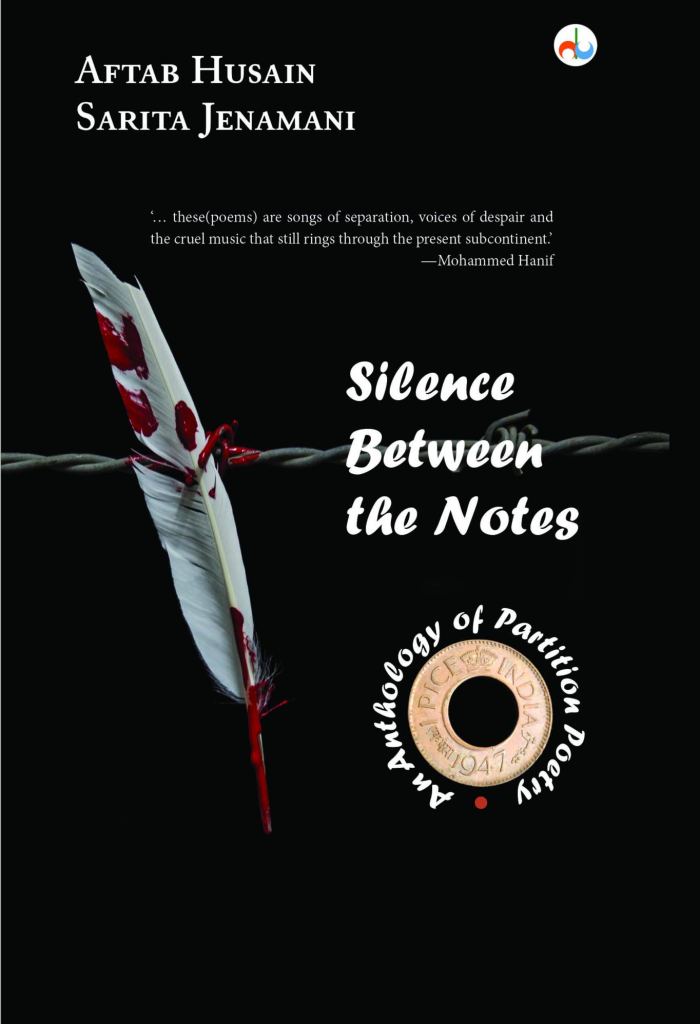
Title: Silence between the Notes – Anthology of Partition Poetry
Selected, edited and introduced by Aftab Husain and Sarita Jenamani
BookReview by Namrata
Despite being more than seven decades old, Partition continues to be raw and unflinching. Endless books and movies have tried to capture its pain and enigma and yet there seems to be so much more that needs to be told about that one incident that changed so many lives, forever.
Silence between the Notes is an anthology of Partition poetry which includes contributions from Urdu, Punjabi, Sindhi, English, Hindi, Bengali and Kashmiri languages. It is a unique collection as this is the first book which is extensive, representative and inclusive of it all. Selected, edited and introduced by Aftab Husain and Sarita Jenamani, this anthology promises to bring forward the voices which had perhaps got lost somewhere in all the noise that followed Partition.
Sarita Jenamani is a poet based in Vienna who writes in English, Hindi and Odia, her mother tongue. A general secretary of the Austrian chapter of PEN international, she is also the co-editor and publisher of the bilingual literary magazine Words and Worlds.
An eminent name on modern Ghazal poetry from South Asia, Aftab Husain writes in Urdu, English and German. His poems have been translated into many languages. Apart from being a member of the Austrian chapter of PEN international, he is also the co-editor of the bilingual literary magazine, Words and Worlds.
When India was declared independent, the joyous news was also followed by the sad news of Partition of India into two countries, India and Pakistan. What followed was mass migration of lakhs of people as Muslims in India migrated to Pakistan while Hindus and Sikhs in Pakistan migrated to India, all in a hope for better tomorrow. Nobody knew how this supposed call for betterment led to so much blood shed on both the sides that till date, the cries and blood stains can be heard and seen. Was it religion or was it politics, no one can say! All one can say is that the wound is too deep for even time to heal it.
‘My soul quivered at the sight of human blood, spilled here and there
Like beasts, men madly roamed at city’s every thoroughfare.’
(‘The Partition’, Maikash Ambalvi)
Picking up gems from different languages ranging from Urdu and Kashmiri to Bengali and Sindhi, this collection of ninety-one poems is a heart-wrenching read. One cannot read this collection without feeling that pinch in their heart and sensing a lump in their throat on this poignant portrayal of the incidents that happened before, on and after Partition. The beauty, irrespective of the language they were written in and despite being translated, leaves one unnerved.
With works of stalwarts like Sahir Ludhianvi, Faiz Ahmed Faiz, Amrita Pritam, Agha Shahid Ali, Taslima Nasreen, Keki Daruwalla and many others featured therein, these poems are strung together with the thread of hope binding them. Taking us through the conflict they witnessed, heard or experienced, the poems in this collection make you witness the trauma inflicted upon through Partition. One can almost hear the sobs and feel that fear undergone through these pages.
Even in some of the darkest stanzas it is difficult to miss the tiny glimmer of hope in the hearts of the poets. Like that ladies who tied pillows on their waists and stomachs to protect themselves, or the one where they talk about how trains arrived at stations but the names of the places had been changed, leaving them unidentifiable. These poems talk endlessly about kind neighbours who took them in and protected them or that random stranger who had offered them food. There might be pain in their words and through ink, they might be giving form to their blood and tears shed at that time. However, their voices are trying hard to hold onto hope. As Sarita Jenamani’s poem, ’70 years later’ begins,
‘August is the cruelest month
It drags us
To a butchery
Plastered with mirrors-
Mirrors of the ancestral rage’
And ends with,
‘August in a month of monsoon
And monsoon brings
A maze of hope’
If someone were to ask, whom did the Partition benefit, there would be pin-drop silence in response. This is the same eerie silence that reflects out in the title of the book ‘Silence between the notes’. Each poem, each stanza, every word is followed by a pause which is reverberating with questions but sadly, has no answers. This silence is also reminiscent within the moments when the reader pauses reading the book briefly after finishing one poem, just to regain composure and start reading it again.
Today, almost seventy years later, we are still at a point where the harsh memories of this incident have chained us and sadly, there are times, when we see the signs of it reoccurring around us clearly pushing us further down the abyss. The only thing that helps us stay afloat is that we have hope, for a better tomorrow, for a kinder world and for humanity to prevail above it all.
Namrata is a lost wanderer who loves travelling the length and breadth of the world. She lives amidst sepia toned walls, fuchsia curtains, fairy lights and shelves full of books. When not buried between the pages of a book, she loves blowing soap bubbles. A published author she enjoys capturing the magic of life in her words and is always in pursuit of a new country and a new story. She can be reached at privytrifles@gmail.com.
Disclaimer: The opinions expressed are solely that of the author.








 Borderless