Categories
Stories

Kumar Bhimsingha

Kumar Bhimsingha by Swarnakumari Devi, the sister of Rabindranath Tagore, was published in Bharati & Balok, a magazine run by the Tagore family, in Boisakh 1293 of the Bengali calendar, April 1887 according to the Gregorian one. It has been translated by Chaitali Sengupta.
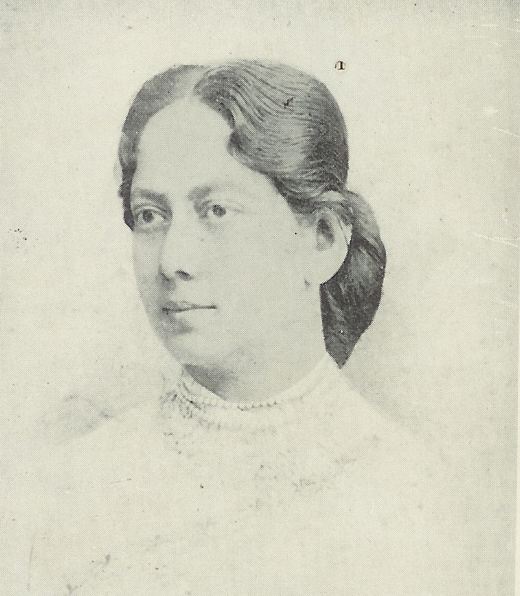
Swarnakumari Devi. Courtesy: Wiki

The king of Mewar, Rana Raj Singha, was resting alone in his sleeping chamber. Dusk had set in. As per the orders of the king, the servants had kept only one fire-lit lamp. The rest had all been extinguished. The soft light had created an ambience that gave a pleasant hue to the king’s thoughts. The day of the coronation was almost upon them, the day when prince Jayasingha would be anointed his heir, the next king of Mewar.

Rana Raj Singha’s mind was full only with the thoughts of how elated his royal queen would be on that special day and the happiness of the crown prince. He was not bothered about his subjects’ reactions at all. The gates of his royal chamber opened slowly, and his second queen Kamal Kumari entered inside. Startled, the king sat up on his bed, surprised to find her there. He indicated she sit on a seat near him. Once she was seated, the king asked, “You, at this late hour?”

The queen replied, “There’s no option left for me. You never show up, when I ask for you.”

A bit embarrassed, the king remembered that throughout the day, a couple of messages did come from the queen, requesting him to visit her in the inner chambers of the palace. Slowly, he said, “My dear queen, I forgot.”

Her mind hissed, yes indeed, such is my fate, that you’ve regularly forgotten me, there’s nothing new in it. Keeping her face expressionless, she only asked, “I just came to confirm; are the rumours that are brewing true, my King?”

Something forced the king not to come out with a direct reply. He simply asked, “Which rumours do you mean?”

The Queen responded: “Rumours, that says that your throne is going to be taken over by Jayasingha, during your kingship. Looks like our land is following the Muslim rulers in this regard.”

This sneering remark, aimed at Jayasingha was not lost upon the king. He said, “Rumours are gossip. Not the truth. My throne is not being usurped by Jayasingha; on the contrary, I’m bestowing it upon him.”

The queen laughed harshly. “Ah, so you’re passing the throne to him. Why such a haste to abdicate and retire, may I ask?”

Holding his surging anger in check, the king replied, “My dear queen, there’s no reason to laugh like that. A king must think a hundred times and act with deep consideration. Just think, the well-being and suffering of his subjects are so much dependent on his decisions. If I, the reigning monarch, do not take a decision now, then there is a chance is that in my absence, the question of succession would lead to a fight among the brothers, and ruin the kingdom.”

The Queen said: “But my observation is, that in trying to find a solution, you’re in fact, instigating one brother to fight the other. In the name of protecting your kingdom, you’re leading it towards destruction. If you wish to decide on your successor, in your presence, then, pray, why do you not declare your eldest son as the next king? Why are you usurping his rightful eligibility to the throne unlawfully and relinquishing it to the younger one?”

The words rang true, but they did not please the king. Sometimes, it was difficult to bear the truth. With supreme irritation, the king said, “Bhimsingha and Jayasingha were both born almost at the same time. The difference is their time of birth is so minute, that on the basis of that, Bhimsingha cannot claim to be the successor to the throne, just by virtue of being elder by a few seconds. They’re born on the same day, at the same time. Under the circumstance, the one who is more capable has a right to inherit the throne. I believe Jayasingha to be more capable of the two.”

Laughing, the queen said, “It seems like you want to turn the wheel of time; or, else, why would you accept the younger one, to be equal to the eldest one? I’m happy that just your mere words did not change the dictates of time. Even if a person is marginally older by birth, he deserves to be considered as the eldest. Lav and Kush were twins; but then why, did Lav succeed his father to the throne? Besides, let me ask you, on what grounds do you think Jayasingha is more deserving than Bhimsingha? Is Bhimsingha any less than Jayasingha in terms of bravery, honesty, intelligence, prowess? Who is admired by the army? Whose honesty enchants the nobles in your court? Whom do the subjects want as their future king? You’ll get your answer, if only you ask others. However, if you believe Jayasingha to be more deserving since he’s born of your favourite consort, and is, hence, your dear prince, of course, that is a different story.”

Her words, like sharp quills, invaded his heart. Angered, he said, “So be it.”

The queen, too, could hardly restrain her anger. “Then say that clearly. Why be pretentious and hide behind false words? Being a king, are you afraid to voice the truth?”

The king answered, “Nobody ever wanted to know the truth from me. None can claim that I’ve been untruthful.”

The queen replied, “Do you remember the day they’re born?”

She paused, her words were caught in the web of time, as she travelled back almost twenty years, remembering that day. The difference between the simple, trusting, young bride of yesteryears and today’s middle-aged woman, neglected, exploited, devoid of husband’s attention, was too great. The young Kamal Kumari of those days, who after giving birth to her first born, had waited with love and patience, for her husband to come, and to take her son in his arms, exulting in happiness. In the expectancy of his arrival, she completely forgot the pains of childbirth and in her heart, there flowed a stream of bliss. But when the moments changed to minutes, and then to hours, and still the King did not come, she felt neglected and hurt. Dejected and sad, she heard one of the maidservants saying, “Queen Chanchal Kumari, too, has given birth to a prince around the same time. The king is with her and he has tied the amulet of immortality, on the feet of the newborn. Later, he will come here.”

It had been a tradition of the Royal house of Mewar that at the birth of the firstborn, the king tied the amulet of immortality on the tiny feet. It was a symbol, whereby the king declared his firstborn, to be his successor. On hearing, that the king had unfairly put the precious amulet on the feet of his younger prince, instead of his elder one, a raging fire swelled fiercely in her heart. The tears from a mother’s eyes anointed the newborn on that day.

The queen clearly understood that her husband didn’t love her anymore. In the past too, such thoughts had assailed her, like frail doubts, but they never lasted long. She had reprimanded herself for doubting her husband. But, that day, the doubts that had only temporarily intruded, took root as the truth in her mind. Shell-shocked, the queen felt like dying.

When her husband came finally, to visit the newborn, she did not utter a word. Within a few days, she heard rumours within the palace walls, that claimed that because of the mistake on the part of the servants, who miscalculated the time of birth of Chanchal Kumari’s firstborn, the king had tied the amulet on her boy, thinking him to be the eldest.

Kamal Kumari did not have the heart to judge the veracity of this rumour. She had no trust on the king’s love for her, and his proximity only became another cause of pain and agony for her. How on earth would one engage in such talks with him? Many a times, she’d attempted to broach this subject, to question him, and each time, her misery had been so immense, that she came back before she could get her answers.

But after so many years, when she had almost no reason to disbelieve his very reason for tying the amulet on Jayasingha’s feet, she stomped with wifely hurt. She only remembered that she was Bhimsingha’s mother. She felt that it was only because he was born of her ill-fated womb, his luck forsook him, meting out grievous injustice by depriving him of his natural right. Deadly anger replaced the feeling of hurt then, and she stood against the king, to fight for justice, to fight for her son’s rights.

When the incidents around his birth flashed before her eyes, once again, it made her weaker; the fire of anger that lighted her eyes, at once turned tearfully misty, with the remembered hurt. But, not for long. Soon enough, the queen spoke angry words: “If you aren’t afraid to speak the truth, then why could you not come up with the real reason for tying the amulet on the feet of your younger son, when all the while, it was your eldest son, who deserved it?”

Angered, the king replied, “It’s not my duty to explain my decisions or the reasons behind them to the subjects. And if people misinterpret my actions, I can hardly be blamed. Right? If I’d hidden the truth on that day, fearing the public backlash, then I’d have hesitated to give him the throne, even today. If people had any wrong assumptions, let it be dismissed by this action of mine. This is my kingdom, and I reserve the right of bestowing it to whomsoever I please. I’m neither afraid of the public and nor should they have any right to comment on this.”

Unable to tolerate further, the queen stood up from her seat, and in an agitated voice, said, “No, don’t you dare think like that, O King. It might be your kingdom, but you’ve no right to bestow it upon anyone you deem fit. You may be the judge, but that doesn’t give you the right to be unjust. Your kingship doesn’t give you the right to break laws. And if a king does that, then he’s not a king – he is a despot, an unrighteous ruler. Such a king’s bounty will surely not be accepted by my son. The day he claims this kingdom as his rightful domain, it’ll be his. Even if you wish to bestow the kingdom upon him now, he will not accept it from you. Remember when your unfair decision results in bloodshed. It will take the lives of millions of innocent people, bringing huge destruction to this land. When bloodshed between brothers will bring the legacy of Mewar to ignominy, don’t blame them or others. Do remember then, O king, that this is the consequence of your sin. You’re a descendant of the famous Raghu clan, whose patriarch King Dashrath didn’t hesitate to banish his favorite son Rama to forest just to uphold justice. Despite being born into such an illustrious family, today, you defamed your family name. But, as long as this world exists, and the planets revolve, you will not be able to suppress justice with injustice. Truth shall triumph, O king, you would not be able to stop its march.”

Her words were clearly laced with deep hatred. Having spoken them out, the proud woman went out of the king’s bedchamber, in slow, graceful steps. She didn’t meet Bhimsingha that night and decided to have a talk with him the next morning.

2.

The queen departed. She left behind a cacophony of censure and her words continued reverberating in the Rana’s head, pounding like thunderbolts. His mind echoed back the words of his queen: “You are the descendant of the famous Raghu clan, whose patriarch King Dashrath didn’t hesitate to banish his favorite son Rama to forest…”  He felt dizzy. His majesty, the great Rana Raj Singha became as restless as a small child. “Oh, what have I done? I’ve compromised truth at the feet of fraternal love, despite being born in a family that upheld truth at all costs. Oh God, was this the purpose of my unlucky birth, only to tarnish the unsullied name of my family?”

It was, as if his closed eyes, were suddenly opened. Never before, had he thought about the matter in this manner. In his mind, since Bhimsingha and Jayasingha, both were born on the same day, neither of them had precedence on the throne. It was his kingdom, and he thought to bestow it upon whom he deemed fit. Blinded by one-sided love, he had, so far, failed to ponder upon the other aspect of the issue. But, today, he was cured off such an illusion, such an oversight, in a harsh way.

The night passed sleeplessly in a restless state. At the crack of dawn, he asked the guard, “Ask Prince Bhimsingha to come here at once.”

“Prince Bhimsingha?” The guard expressed surprise, for they all knew Jayasingha to be the crown prince. Checking his surprise, he went out to inform Bhimsingha.

The fact that he has been called to meet his father surprised Bhimsingha no less. It was a novel occasion, for he could hardly remember ever to be called by the king, his father. He thought, “Is this some new trick? Is he calling me to attend upon Jayasingha, to be his servant? But does he not understand that, as long as Bhimsingha has faith in his own prowess and bravery, the throne can never belong to Jayasingha.”

Remembering his father’s partiality angered him afresh. He was in a dilemma. He pondered on how he could turn down the invitation to meet him. However, he decided not to disobey the royal command. “On the other hand, today, in his presence, I’m going to speak out my heart,” he thought.

His heart seething with anger, Bhimsingha went to his father. But his anger melted as he glanced at the king looking for an escape route. Depression was written large on the king’s face and his eyes, although troubled, were deep with love as he looked at Bhimsingha. Anger and revengeful feelings vanished in a moment. In its place, there was a strange emotion of unexpressed pain.

The king, too, was surprised to see Bhimsingha’s calm, forbearing, respectful demeanor, just the very opposite of the image he’d conceived in his mind, in which Bhimsingha seethed with deep seated anger, frowning to demand fairness from him. Bhimsingha behaved like a loving son. Seeing his son’s respectful demeanour towards his father, embarrassed the king. His son’s respect, forbearance and calmness filled the king’s heart with deep contrition, a feeling which no amount of anger on Bhimsingha’s part would have aroused in the Rana’s troubled heart. In deep shame and repentance, the king could hardly glance at him.

Slowly, he said, “Son Bhimsingha!”

His affectionate tone surprised Bhimsingha. Never before, had the king expressed such tenderness towards him. Slight and neglect had been his lot from his father. The memory of a day when both the brothers were playing in the garden invaded his consciousness. The Rana had caressed Jayasingha fondly, but for him he had not spared a word of endearment. Hurt with his behavior, the boy had left the place, found his mother’s lap to shed his tears, without telling her the reason of his sorrow. Growing up, at every step, he’d observed the unfairness of his father. And by bestowing his throne to Jayasingha, he’d, finally, shown the height of unfairness. It had led him to believe that the king did not love him.

And so, after long years, when the king called him with such tenderness in his voice, it roused strong emotions in his heart, overwhelming him. In a trembling voice, he replied, “Father.”

All these years, Bhimsingha had addressed him as Maharaja, the king. Looking at him, the king confessed, “Son, I’ve wronged you grossly, please forgive me.”

Tears coursed down Bhimsingha’s eyes, tears of hurt and pride. The fact, that his father realised and acknowledged his unfair behaviour towards him, washed away his hurt. In his heart, he said, “I’ve lost your affection, for I stayed away, aloof from you, doubting your affection for me. For this reason, I seek your forgiveness, forgive me, father.”

He stood speechless in front of the king; the Rana, observing his silence, continued, “I know it is difficult for you to forgive me, but I’ll atone for the crime I committed, and thereby ask forgiveness from my conscience, from my God. You’re my firstborn; to you, shall I bestow my throne, on your head, the crown shall glitter. But even if I do so, Jayasingha would always stand as a barrier on your path, an impediment. It is because of my fault that he’s dreaming of possessing that which is not his. The greed of the kingdom would turn him to cause anarchy in the land. And there is, but only one solution to this problem.”

Saying so, he unsheathed the sword that glittered brightly against the rays of the sun. Holding it in front of Bhimsingha, he said, “Take this, and pierce this sword through his heart. Let one death ward-off thousands of deaths, let justice prevail at the downfall of injustice. Don’t panic, on the face of cold responsibility. No relationship is important enough.” His voice shook, as he uttered the words, realising their onus, in essence, within his heart.

Like a statue, carved in stone, Bhimsingha stood. In a flash, he understood what the king was going through. To uphold his duty, he was sacrificing his most valuable, loved treasure. Bhimsingha witnessed the intense loftiness of his father’s ideals. His greatness impressed his to the core. His love for his father increased a thousand-fold. Bhimsingha clearly understood, that in piercing the heart of his brother, he would in fact, be stabbing his father. He could hardly say anything. His mind only whispered, “You’re a god, a divine being.”

Watching him standing quietly, the king again reiterated, “Son, don’t shiver at this thought. You’d be committing this act to uphold justice, for the well-being of the land, there’s no sin in this act of yours. And even if you commit a sin, it would be not yours, it would be mine. Follow my command and fulfil it.”

Bhimsingha took the sword from his hand and kept it at the king’s feet. He said, “Father, take back your sword. I’ve no need for it. You’d indeed wronged me, but you’ve repented profusely for it. You’ve fulfilled your duty to the letter. Now let me fulfil mine. I’ll make sure, that there will not be a drop of bloodshed because of me; that Jayasingha would not commit anything untoward because of me. The right that you’ve bestowed upon me today, I grant that right to Jayasingha. From today onward, this kingdom shall rightfully be his. I’ll leave Mewar, to prevent myself from getting tempted, in future, by the greed of attaining the throne. Carrying the affection and the lofty ideals that you imparted to me today in my heart, I’ll leave my motherland Mewar tonight. If I fail to do this, let me not be known as your son.”

Not giving him a moment to respond or desist, Bhimsingha touched his father’s feet and was gone. Astounded, the king stood there.

That very day, Bhimsingha himself crowned Jayasingha. Then, along with his loved soldiers and nobles, he left Mewar. He never came back.  Many years later, when his companions returned to Mewar, they carried with them, the news of his death.

Swarnakumari Devi (1855-1932) was five years older to her sibling, Rabindranath Tagore. She was one of the first women writers of Bengal. She was also a social activist who fought for women’s liberation. Among Bengali women writers, she was one of the first to gain prominence. She helped orphans and widows. She opened an organisation to help women and opposed the evil of sati. In the 5 July 1932 issue of the Bengali newspaper, Amrita Bazar Patrika, just days after her death, she is  remembered as “one of the most outstanding Bengali women of the age” who “did her best for the amelioration of the condition of the womanhood of Bengal.”

Chaitali Sengupta is a writer, translator and journalist from the Netherlands. Her published works include two translations “Quiet whispers of our heart” and “A thousands words of  heart”. Recently her first prose poem collection Cross- Stitched words was published. Her poems have also been anthologized in many international collections and she writes for many print and online journals. 

.

PLEASE NOTE: ARTICLES CAN ONLY BE REPRODUCED IN OTHER SITES WITH DUE ACKNOWLEDGEMENT TO BORDERLESS JOURNAL

Categories
Poetry

Across Time

Transcreations by Ratnottama Sengupta

Nabendu Ghosh, the author for who the elegy was written, and his daughter, Ratnottama Sengupta, who has transcribed these poems.
 Nabendu Ghosh : Elegy

 In the wee hours of the morning
 Nabendu Ghosh knocked on my door.
 His dishevelled appearance
 Reminds me of the Famine
 His Clarion Call* evokes--
 An awning sky,
 A busy suburb,
 A shaded glen…
 Fact is, even after Death,
 Some people knock on the door.
 Some people live on beyond life…
  
 *The Clarion Call (Daak Diye Jaai), the autobiography of Nabendu Ghosh.

(Original in Bengali By Bimal Deb)
  
 Journey...
  
 Long days have passed
 Since the path of two friends
 Branched.
 In the crowd of unknown faces
 Two eyes seek him,
 So does his heart.
 At times,
 It knocks on the door
 Of Memory.
 Time spent in togetherness
 Signals delight.
 The miles between them
 Weighs down the mind,
 The hidden flow of Time
 Ever present, never seen,
 Will it once more enjoin
 Two parted hands?
  
 (Original in Bengali: Kaushik Ghosh)
  
 Vasundhara*
  
 I have known you
 Since I crawled out
 Of my mother's lap.
 As I walked 
 Under your leafy boughs
 I launched on
 My journey with shades.
 The enchanting weave of colours -
 They grew out of you.
 My first love took roots
 As I cut through the mustard fields
 That lifted their lips
 To the blue skies.
                Not once have you let me down.
 And when the deluge came
 You it was that steeled me
 With the warmth of your womb.
                My misty vision, reaching out
 Through my thickening lenses
 Do not falter
 Do not squint.
 Age has not withered
 Nor has Time staled
 Your luminous face.
 You rule my canvas 
 As you always have
 Since I stepped out
 Of my mother's lap
 Into yours
 O Mother Earth...
  
 *Vasundhara – Earth in Bengali 
  
 (Original in Bengali by Maniklal Chatterjee) 

Ratnottama Senguptaformerly Arts Editor of The Times of India, teaches mass communication and film appreciation, curates film festivals and art exhibitions, translates and write books. She has been a member of CBFC, served on the National Film Awards jury and has herself won a National Award. 

.

PLEASE NOTE: ARTICLES CAN ONLY BE REPRODUCED IN OTHER SITES WITH DUE ACKNOWLEDGEMENT TO BORDERLESS JOURNAL

Categories
Interview

In Conversation with Anuradha Kumar

She has a strange mix of oeuvres. She flits between young and adult readers — writes for all ages across borders, across continents and across oceans, in newspaper, journals and in books. She has written thirty-one books in all (a number of them with Hachette India), has won the Commonwealth awards for short stories a couple of times, written under the pseudonym of Aditi Kay, worked in the Economic and Political Weekly for almost 9 years and now lives in USA weaving stories of people around her and the worlds she inhabits. Meet Anuradha Kumar, who has already released two books in 2021. One is called The Hottest Summer in Years and the other that held me mesmerised has been published with Weavers Press San Francisco and is called A Sense of Time and Other Stories.

The unique thing about A Sense of Time is that it stretches through different time zones, the past, the present and the future. It has stories that linger and leave an aftertaste of nostalgia and the past or encapsulate you in the future in a world where living and working in outer space is as much a reality as is the recurrence of pandemics. It carries you into a dimension that Kumar builds with words, a unique space where her perceptions evoke a sense of the unusual, the sensual and the real. A strange story about a bus journey of an American in India which uncovers the commonality of experiences of women across continents, of a man who trains to be Gandhi, of Indians in America, of a strange case in court, of friendship between a child and a wanted man, a murder in the train which travels in a strange way through time — the titular story — and many more.

What makes these stories riveting is they make you feel like you have tasted the manna from the land of  Lotus Eaters and for some time, you forget your own reality and live with the characters. They stay in your head even after you finish the stories. Reading her stories was a pleasurable experience and finishing all of them created a longing to read a few more from Kumar’s pen. Without more ado, let us plunge into a discussion on Anuradha Kumar’s wonderland.

Tell us Anuradha, what spurred the writer in you? When did you start writing and why?

It was quite an accident. I did write when asked for the school magazine, but the more serious kind of writing, like now, came later. I remember being very bored during my time in the corporate world and writing down something. And I found that quite a panacea for boredom. And soon, writing became more than just a panacea, and more than just a response to things other than boredom.

But your ‘why’ holds so much more, and I feel quite pompous answering that. But the more one writes, and reads, there are just more questions. So, while earlier writing meant getting things like character, plot and narrative arc in place—things a good writing programme can teach you—now it’s a bit more about the answers you are seeking to various things, and writing is one way toward that.

How many countries have you lived in and how has this impacted your writing? How long have you been away from India?

For a bit more than a decade. And we have lived in Singapore, and in the US, first in Maryland and now in New Jersey. I guess I must be bothered by questions of identity, and belonging, but also about how the self changes in response to alienation and isolation and movement. Changes that can at times not be visible and emerge years later or in entirely different circumstances.


At a point, you wrote as Aditi Kay. Were these all children’s books with Hachette India? Why did you take a pseudonym and what made you drop it? 

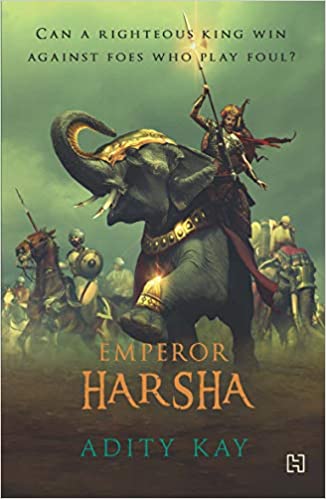
Adity Kay is how I write historical fiction; for older readers especially the three books on ancient India’s three ‘big kings’ (Chandragupta Maurya, Vikramaditya and Harshavardhana). These have been published by Hachette india and the last of the three came out only last year.
When I began writing these in 2012, I was already writing more children’s fiction as Anu Kumar. My editor advised that a different name would help in not bringing up any ‘association’ with the other name, and the series could be presented as something unique by a new writer. 

Recently, you have brought out an unusual collection of short stories, A Sense of Time. What spurred you to write such diverse stories — each one could be seen as a stand-alone that leaves a lingering after taste in one’s being?

These were written over the last decade. The oldest was, I think, the first one, ‘The Entomologist at the Trial’—I realised I was wackier then—and the most recent ones are the Pandemic love story, and ‘Comfort Food’ — both these set in worlds different from the ones I had known even a decade ago. I just had them and kept returning to these stories, revising them occasionally, and then early last year, Moazzam, my publisher, suggested I send him some stories, so I revised them again. And this book happened, all thanks to him.

You have a unique story set one hundred years from now. What spurred you to try a sci- fi in the middle of stories rooted in our times or the recent past. Did you research to write the sci-fi or is it fully from your imagination?

It partly rests on a historical coincidence. The influenza epidemic was just a century ago, and I read somewhere that pandemics similar to ours will never really go away. Neither will love, nor will our attempts to find it regardless of the differences that exist between us.  

What kind of research goes into writing all these stories?

I hope to learn from what other writers do. But it’s always a learning process. Every writing is a way to learning how to write for the first time. I (try and) read a lot of the writers I admire Alice Munro, William Trevor, Yiyun Li, Michael Ondaatje, Yoko Ogawa, and others, and reading must go simultaneous with the writing that one attempts. Looking back, as I gathered up and revised, and at times rewrote all these stories, what I found interesting was trying to remember where I was, what I was reading, when I wrote the initial version. For years and months later, how I looked at this story was different, and I wanted to now rewrite and revise it a different way.

Few of your stories leave the conclusion undefined and the reader wondering about how the aftermath links to the narrative. It is a distinctive style and unique. But what made you do it and why?

The conventional, old-fashioned story had a beginning, middle and end. I still hope that for my reader/s, my stories will linger in some way. That they will remain with the character, the story, for a while, maybe a long while. It’s much like what happens in real life. People we encounter, some of them linger on in our memories for various reasons. I’d like my stories to be that way too.

Most of your stories are outside a world caught in the pandemic, how do you see life beyond this virus? Do you think the future will be like the past?

I wish I had a ready answer to that.

I think this long isolation has made us reconsider and rethink various things, especially how we relate to one another. Questions about who and what really matter have always been important, and maybe this time has made us think on these things that much more.

Your stories are rooted in different issues that affect man. Do you see a commonality in the thread that runs through the stories, like you did in Coming Back to the City: Mumbai stories?

I can’t say quite so easily. I am curious about how people see the world, in everyone’s unique perspective, and also in trying to see the person under the skin. In fact, this latter thing, about trying to get under a person’s skin sometimes stopped me from writing a story, because I sort of got knotted up in all  the complexities within us, and sometimes not being judgemental isn’t a good thing when writing a short story, so I had to work  that out too. Am still working this out.

You don multiple hats in writing — switching between young adult and adult fiction and beautiful essays on history in online forums. How do you juggle your time to do all of it?

I just write, I don’t know anything else. And the good thing is, if you shut the world out, all the craving for attention, and just focus on what really matters, one does get better at it – at writing.

You moved your publisher from India to US with this book. Is there a reason for it?

I’ve lived in the US for around 9 years now. And I still am published in India. Am truly a borderless writer, Mitali!

So, your writing spans continents and the Pacific. Isn’t that wonderful! Your stories are based mainly in India. And yet you have been away for many years. How does that add up?

I think I answered this above. It’s that these stories were written over a decade. And I guess one can never really leave one’s country of origin. The more borders one crosses, memories of homes left behind seep in, and these change in texture over time. I found this while reliving my stories. I am still finding this out.

What are your future plans?

To be a better writer, a better person. Oh, and a better cook!

Thank you Anuradha for sharing your fabulous journey with us.

This has been an online interview conducted by Mitali Chakravarty.

Click here to read an excerpt from The Sense of Time and Other Stories.

PLEASE NOTE: ARTICLES CAN ONLY BE REPRODUCED IN OTHER SITES WITH DUE ACKNOWLEDGEMENT TO BORDERLESS JOURNAL
Categories
Excerpt

A Sense of Time

Title: A Sense of Time and Other Stories

Author: Anuradha Kumar

Publisher: Weavers Press, San Francisco, 2021

.

Dorothy Cries in the Bus

She spoke for too long on her cell phone. That was the first thing Malati noticed about the foreign lady seated in front of her in the bus. She had brown hair fading at the corners and she spoke English. She sounded American to her ears. All this Malati noticed in degrees, having been too hassled to really look when she’d boarded the bus. There were last minute instructions she had to message her husband, even if she was leaving him and never coming back. Having sent off her last message, she sat disoriented for a while. Her eyes strayed ever so often to the glass fronted dial of her cell phone hoping it would light up. But of course, it didn’t. He really didn’t care. Even now, when he should rightfully have been worried about her, whether she’d boarded the bus all right, what with the heavy rains all along the Konkan till Goa, he was with that harlot. Malati felt certain that they were at the temple in Mahalaxmi, necking on the steps, offering prayers, all in the vain hope that the gods would not consider them shameless. The hair on Malati’s arms stood up in anger and indignation. 

   Images rushed through her mind, a savage anger that made her long to jump off the bus, hail a rickshaw and rush straight home. But she wouldn’t do that, not yet. Let Ashok miss her. He would know how difficult it was to run things in the house without her. Soon he’d be calling her up, begging her to return. Malati smiled at the thought, the anger disappearing into the sunny silver of her changing thoughts. How many days should she stay away, she wondered. Should she wait for him to fetch her?  

   She sat up straight, adjusting her sari around herself. It was then she gave herself time to take in her surroundings. Was everything as it should be? Perhaps the air conditioner was on too high. When the conductor came around, she would ask for it to be lowered. She paid 500 rupees extra for an air-conditioned seat and she was determined to get her money’s worth. She looked around at her neighbors. Some students on her left and an old lady on her right, who was perhaps being shunted off to yet another set of relatives. Would that be her fate too? Malati wondered. And just in front, though she could not see her face yet, was that American. Everyone who moved down the aisle, to their seats behind, bottles of mineral water, groundnut or chikki packets, even bananas, in hand, turned to look at her. It made Malati curious too. But she didn’t want to crane her neck or peer over her seat because that might feed the other woman’s vanity, make her think she was special. Women were the same everywhere that way, even Malati knew that. In any case from the back of her head visible over the seat Malati could tell she dyed her hair. A golden brown shade that was, as she’d already seen with some gladness, already fading. 

   She would wait for her to get up. Passengers usually did that, most of them in the minutes just before the bus started. It was an inevitable and uniform act, that after sitting for so long patiently, in the silence that prevailed after the driver had slammed the door to his cabin shut, before the conductor began his sedate traipse down the aisle, to click away at the tickets extended to him, people always remembered some last chore. Minutes before departure, the stench emanating from the public toilets rose unbearably high forcing people to send prayers of relief up to the heavens once they heard the engine revving up. The woman in front though didn’t get up and in the silence broken only by the steadily advancing click of the conductor’s stapler, Malati heard her voice too. It had to be American, she was sure now. The accent Malati could easily place thanks to the serials she watched. 

   But then the woman sounded distressed as well. She was on her phone again. Malati tried her best to follow the conversation, but it was short, and she could only make out the bye-bye at the end. Malati did not miss the last sob in her voice. Languages could be diverse, but nothing could hide expression. The American was crying to this person on the other end. Possibly her husband. These Americans were free in their feelings that way. The serials showed them kissing and hugging each other, openly, and always for too long. It really embarrassed Malati, even when she was by herself.  

   From the gap between the two chairs, she saw the woman move her hands over her face. She wiped her tears away. Poor thing, Malati thought. Such a long way from home, she was. Malati wondered whether she should ask to exchange seats with the woman who sat next to the American woman. But next to her sat someone who looked to be one of those students from the engineering college. They always traveled in groups over the weekend and did not deign to speak to anyone. Just because they were more educated, so fluent in English and rich. Malati sniffed. 

About the book: 
The stories in A Sense of Time and Other Stories offer a range of themes and emotions. They speak of the challenges of being human, the unpredictability of the mundane, the strange attractiveness of the unfamiliar, and the constant quest to make connections and find love, even with an alien from another world. In ‘An Entomologist at the Trial,’ a small town lawyer’s ambition turns on his attempt to resolve a thorny case that falls amusingly flat. ‘Pandemic 2121: A Love Story’ and ‘Missing’ are stories, varied in theme, that yet speak of the loneliness of keeping love. How does one save a love when everything is conspiring against it, these stories ask. ‘All The Way to the Twelfth Floor,’ ‘The Bus and the Minister,’ ‘Big Fish, and the title story, ‘A Sense of Time,’ speak of the alienation and helplessness of the common person when confronted with a faceless, stony-eyed system. A world with rules set in time, where conventions matter more, leaves little room for those at the very bottom who have little choice but to wait endlessly for succour. ‘Rekha Crosses the Line’ on the other hand, is a more subversive account of a woman who gives in to her desire for some fleeting moments, only to wonder if it was really worth it. ‘Alterations’ casts a satirical eye on a wannabe scientist’s experiments as he craves world recognition. And finally, ‘Comfort Food’ and ‘The Man Who Played Gandhi’ speak of our quest to make sense of those long gone, those whom we have lost. Written in the span of a decade and more, these stories will hopefully stay on, linger in the mind, long after being read. These stories might make you see yourself and even others in a different way. It takes only a little empathy to allow the hidden to surface.       

About the Author:  
Anuradha Kumar is a prolific and established writer. A Sense of Time and Other Stories is collection of short stories after The Girl Who Ran Away in a Washing Machine and Other Stories (Kitaab 2016). She has written several novels, including three works of historical fiction as Adity Kay. Anu also writes pieces on history for Scroll.in. Her stories have received awards from the Commonwealth Foundation, and The Little Magazine India. She was born in Odisha, lived in various parts of India, Singapore, before moving to the US more than a decade ago. She now lives in New Jersey with her husband and daughter. 

Read here interview by clicking here

Categories
Musings of a Copywriter

Creativity and Madness

By Devraj Singh Kalsi

So many times this question has been lobbed at me: Have you gone mad? I have not been able to confidently say — yes. I have not been able to vehemently deny it either. But I have taken serious note of it, asking myself this question again and again. At times I feel I do have it in me and sometimes I feel I am exaggerating my qualities to put myself in the league of big achievers who had a streak of madness igniting their flashes of brilliance. I express gratitude to the people who doubt my sanity. They are truly visionaries and genuine well-wishers, who managed to spot my innate potential before anybody else in the family did.

When a middle-aged man falls in love with a girl half his age, he has to answer the same question: Have you gone mad? When an old fogey leaves everything behind and packs his travel bags to go on a road trip, he is labelled mad. When a rich man relinquishes all his wealth, he is dubbed mad. When a professional quits a cushy job to pursue his passion, he is written off as a nutty nerd. Similarly, when an urbanite decides to relocate to a village and lead a farmer’s life, he is categorised mad.  

Attempt anything unusual or unconventional and you stand accused of being mad. A person with the potential to shock the world is said to be in dire need of shock treatment. Thankfully, there are hundreds of people who cross the borders of sanity every day to come home saner. The act of flirting with madness is a rewarding experience to feel sane within – even if the world refuses to acknowledge the benefits of this exercise. 

Higher than any recognition in the world is the honour of being called mad if you are engaged in the business of creativity. It is a source of ultimate bliss to be bestowed with this prestigious title. There are many creative people who have won covetous prizes and metal pieces but the world does not call them mad. Madness remains a streak of genius that remains elusive to most. It is like having all the riches of the world and still remaining unhappy. It is painful and melancholic for a creative soul who fails to get recognised and remembered as mad. There is no lobby, no committee to understand madness and celebrate its diversity and goodness. There is no national or global award or citation that recognises or honours the scale and magnitude of madness.

You must be really mad to spend seven years of life locked in a room, busy writing a big, fat novel and doing nothing else. You are chasing something when you do not have any estimate of success in it. Madness fuels the passion to keep going and without madness there cannot be anything magical. Not just once, you spend an entire lifetime doing crazy stuff without any assurance of success in the venture. With nothing going in your favour, with nothing glorifying your mission, you are on your own journey despite all hardships. Madness alone makes it possible to undergo the impossible. The act of creating involves madness at various levels – in choice, in pursuit, in suffering, in determination, in persistence, in creation.

There are phenomenal people in every field who are never content with the shower of praises simply because they do not have the crown of madness to wear. The search for the mad title remains an unfulfilled dream. We are not advanced enough to think of eccentricity as an achievement worth celebrating in life. Whenever this question about being mad has been hurled at me, I have felt happy from within. I have wondered how close I am to winning this label in my lifetime. Sometimes I feel, it is within reach and sometimes it seems beyond reach during the entire lifetime. Before a pervasive sense of dissatisfaction creeps in to create a void, I urge you to seek the company of friends and colleagues who, when persuaded, will flatter and provide temporary relief by calling you mad. Absorb the repetition to get a high.  

Zero in on the glory of madness as it reveals a clear focus on the work and the possessed state that makes you refine the craft. It is not easy to say to what extent you are driven by the mad urge but the richness of the work shows you are deeply under its influence. Sometimes one piece of work brings you credit and sometimes the whole body of work makes people consider you raving mad. Keep the target high and celebrate your creative madness as a source of elixir that keeps you alive and fully charged to produce more specimens that demonstrate to a higher degree your long walk into the dark recesses of the mind, to make it suffer over a period of time and produce something timeless and unique.

You find creative people in the film or literary world who have not paid attention to anything apart from their work. They have not won any awards, big or small, not even made it to any shortlist, but their works live forever in the heart. Their readiness to immerse their lives in the work is a key indicator of creative madness. When lives do not matter, when commercial gains do not matter, when nothing else matters except the work and that is what their wide world is limited to. A plunge into such depths of madness is what makes them scale the heights of creative success.  

Devraj Singh Kalsi works as a senior copywriter in Kolkata. His short stories and essays have been published in Deccan Herald, Tehelka, Kitaab, Earthen Lamp Journal, Assam Tribune, and The Statesman. Pal Motors is his first novel.  


PLEASE NOTE: ARTICLES CAN ONLY BE REPRODUCED IN OTHER SITES WITH DUE ACKNOWLEDGEMENT TO BORDERLESS JOURNAL. 

Categories
Poetry

A Fearful Mind

By Shraddha Arora


 A fearful mind
  
 I often ask myself - "Why do I fear?"
 Is it the fear to fall or is it the fear of not rising after the fall?
 It is difficult to say what I fear more, but I fear both. 
 And in this fear, 
 I am in a status quo; keeping my head low. 
 The question is how far can I go if I keep it all below?
  
 My mind battles every day. 
 Worries what people will say.
 But should I even care?
 When I know they will say it anyway? 
  
  
 It’s a phase and it shall pass.
 But if I let my fears surpass,
 I will be lost in what I am
 And may not become what I Can.

Shraddha Arora is an unpublished poet/writer. By putting words on paper, she clarifies her purpose and explores her passion.

.

PLEASE NOTE: ARTICLES CAN ONLY BE REPRODUCED IN OTHER SITES WITH DUE ACKNOWLEDGEMENT TO BORDERLESS JOURNAL. 

Categories
Musings

Harvest your Patches

By Aditi Jain

Gradual is the foundation of a bountiful harvest.

Pandemic? Lockdown? 2020… so immured? Must have run to New Year 2021 jubilation with a hope of cudgel of change? Sorry, not even a change, a ‘transformation’ !

A pandemic is not merely a biomedical phenomenon, but a social and cultural phenomenon as well. And healing from pandemic takes place gradually. It’s not the first time in history, that there has been an outbreak of pandemic, though agreed it has deeply ravaged the humanity and society. Black Death ( 1346-1353) and Spanish Flu (1918-1920) are some of the gruesome reminders when history had been attacked by pandemics. The end of 2020 saw goodbye notes with loathsome memes and cold messages that expected COVID 19 to disappear at the start of the New Year. Wearing the shroud of negativity and animosity, such an outlook impeded our spiritual development and realisation that nature has spirit!

Do you think if we can ‘patch’  the immured 2020 with warmness? Possibly yes. Since the vocation last year and even till date ( though it’s your exalted 2021), is mostly carried as WFH (Work from home), let’s configure the patches. 

An online meet opens in a gallery view where you are welcomed by the host with a coy or may be a wry smile. That gallery view reminds me of ‘patches’ …beautiful patches of a quilt; where each speaker/participant/patch presents his/her views or shares a story. 

In a journey of a beautifully crafted patchwork quilt, the nuance of stories and emotions communicated by each patch can be felt. Each patch communicates and adds to the composition, which can be a trope for ‘ topic of discussion ‘ of an online meet. 

Each patch of a quilt is sewn with a thread, whereas each speaker/patch of an online meet is sewn with internet connectivity. A patch loosely stitched in a quilt would blemish the entire composition. A technical glitch in connectivity also would blemish that online meet. 

Not all patches of the quilt are embellished. So are we shrewd enough to cater to our favourite ones and pin them up to adorn the whole quilt? Imagine, the various quilting patterns resonating with the conversation patterns of the online meet. Candid conversations in plain and corny mood, resonating with straight line quilting. While framed narratives with lots of “so yaa” resonating with log cabin or concentric patterns of quilting. At times, a particular patch is quilted heavily to accentuate the look, but often creates a ‘yuck’ factor in that design. This reminds me of a speaker/patch, who has the audacity to blabber ceaselessly, being a stimulus for a bored yawn. 

Quilting bee, a social event for learning new skills and techniques, were popularly known as ‘work parties’. But deep down, we may admit.. our ‘zoom bee’, ‘Teams bee’  or ‘ Meet bee’, have left us like zombies attending an online meet. 

A quilt stitched part by part, with isolated yet beautiful patches is a treasure to hold. It gives profuse warmth and love in our life. Since they are  sourced from different places, each patch or fragment carries a story of the place it belongs to. 

So why not cherish 2020 as a quilt, rather than discarding it as a rag. 2020 had been an opportunity for self-reflection,  self-acceptance , our communion with nature and the experience has played a critical role in nurturing our faculties. 

The notion of transformation from the pandemic to the post-pandemic realm with merely the onset of 2021 was a fallacy, but we preferred to believe in illusions beautifully crafted by designer media. Antithesis of illusion, ‘reality’ says, healing from pandemic and recovery from this digression will happen gradually. Growth and recovery are always gradual and should be made with more informed and prudent choices. 

So, let’s harvest our quilt!

The surface of the quilt is almost ready. Patches have been joined, each patch reminiscent of a new and different experience. Since every patch is reminiscent of a new and different experience, I sincerely hope and yearn, that the patches are not only cut in ‘squares’. Not only ‘squares’, as it might make your quilt a cold memory, or cast a sharp glare at you. I hope there will be ‘circles’ and ‘triangles’ too to inculcate warmness, flexibility, positivity and a path to subjective choices and emotions. Perhaps, you could be that ‘circle’ or ‘triangle’ in someone else’s quilt. 

Quilting patterns have been explored intensively (you may choose candid talks, framed narratives or introspection). This time, I wouldn’t hope but surely suggest, to select ‘introspection’ for the above. An introspective quilting pattern would contain a series of intertwined quilting lines, gleaming with the rays of optimism and self-reflection. In those intertwined quilted lines, some would be prominently embroidered with thick threads; as some reflections and thoughts are too deep to be mulled over and to be taken into consideration. The negative thoughts would be slightly visible, since some would be nuanced threads. In spite of being negative, it would be part of your intertwined quilting, because the quilting pattern needs to be balanced, so your thoughts and actions as well; which would otherwise be impetuous, if not pondered critically. 

Quilt batting would be consolidated layers of hopes, wishes and prayers. Backing could be our faith, our faith in gradual yet impactful recovery. 

Bind the quilt with optimism, a binding which is not solipsistic. A border which resonates with holistic sustainability and growth, seeking inspiration from our indigenous wisdom.

It is heartening that the vaccine drive is kicking off at a steady rate, hopefully the drive will be a success and gradually we will be emancipated from the realm of the pandemic. But that emancipation will be gradual, not each of us would be vaccinated at the initial stages. The drive would be delineated in gradual steps.

The vaccination plan released, has certain limitations, which would take time for complete acceptance and achievement of the target. No doubt, vaccination apps would be launched soon, but to augment them to their best potential and efficiency would be a gradual process. 

Assuming that you are that ‘lucky bee’ of our quilting bee, to be vaccinated, since you belong to those categories that will be catered at the initial stages; you would still have to take all the precautionary measures, till you get the second shot. Even after getting the second shot, you would be expected to adhere to social distancing  and masks would still be your mandatory accessory.

Let’s fast-forward a little. Let’s assume the vaccination plan succeeds and it is available ‘easily’ to the masses and we have renounced the reign of the pandemic. So now what’s the need to harvest the quilt? 

A quilt is used seasonally, so will be your ‘ ‘harvested quilt’, which would be stored in bed trunks and would be pulled out to protect from harsh chilly frosts. The ‘harvested quilt’ doesn’t resonate only to the pandemic, it’s a quilt of endurance , memories, experiences and an inspiring lesson for the future, if any such pandemic occurs again.

Basking in the sun, gather the quilt and snuggle in its warmness with faith and endurance. Store it in your trunks or bed storage with real happiness, real realisation, real endurance; you would be ‘real’ to yourself, if the ‘growth’ that has taken place in you is real. 

You may end up with an imperceptible nod as epiphany will sound only when the quilt is finally harvested! 

Aditi Jain is a Gurugram-based Textile designer and researcher, graduated from NIFT. She envisions textiles as media of expressions. The ‘expressions’ – that convey ideas and beliefs, imbibed in Indian cultural roots, with a contemporary blend to express them with a fresh and modern outlook. Currently, she is working on a research project on responsive fashion and sensory design.

.

PLEASE NOTE: ARTICLES CAN ONLY BE REPRODUCED IN OTHER SITES WITH DUE ACKNOWLEDGEMENT TO BORDERLESS JOURNAL
Categories
Ghumi Stories

The Threat Note

Nabanita Sengupta finds criminals lurking in the darkness of Ghumi woods

The note was placed on the boundary wall. Mr Roy’s eyes fell upon the unevenly torn piece of paper while he was leisurely slurping his customary morning tea. Even without looking at it closely, he knew what it was — a reminder of their previous demand. They wanted him to give them that preposterous sum of Rs 50 lakhs*! The note also carried a threat of dire consequences if the demand was not met within a stipulated time. The threat was reiterated by various blank calls and anonymous threats over the telephone. The second such note meant he could not ignore it for much longer. It would soon require some action on his part. 

Ghumi was not always like this. In fact, it had been a sleepy township bound by  rivulets and  hills on both sides. Routine life that revolved around a single factory ensured a monotonous existence, safe and secure, though a tad boring. Mr. Roy was happy with the sedentary life he led. It was not excitement that he sought at this stage of life, but a bit of comfort. The discipline of a fixed routine offered that comfort. Yet when this sudden and undesirable matter presented itself, Mr. Roy knew he had the capability to deal with it. 

Now that he thought, there had been signs. There always are. Nothing happens out of the blue. There is always a gestation period before the hatching. A more vigilant eye can discern the growing embryo of trouble. He too had felt the change; he could sniff it in the air but could not exactly pin it. Perhaps he could have done it once. Once when his senses were more alert and his body was more toned. That was the time when his reflexes were quicker than lightning. Agility had been his second nature. But that was almost a decade ago.

Ten years of civilian life had given him an increased girth and reduced agility, though that did not mean that he had lost all his capabilities. He still loved solving difficult sudoku puzzles and juggling his brain with tricky problems to retain his alacrity. He still exercised for at least about an hour, sweating himself out in a Spartan space in his backyard that doubled up as his gym as well as their occasional party room. He had to maintain certain basics, given the nature of his job.

During parties that he and his wife organised frequently, the room went through a complete transformation reflecting the theme of the gathering. At other times, pieces of furniture, crockeries, and many other items lay heaped in one part of their unused car shed. An  old vespa scooter occupied the other part. That scooter was Roy’s favourite, his only mode of commuting within the township. In fact it had become his signature look — pleated trousers, formal shirt, blue helmet and the navy blue Vespa.

Incidentally, it was during one of his dinner gatherings that Mr. Roy had first sensed the storm brewing. He did not ignore it, but did not even attach too much importance to it at that time. 

That was a party that he had thrown for the factory bosses. He and his wife often  threw dinner parties. But they never mixed ranks of the invitees. They understood the way social classes operated in that world. Factory and its adjacent office ranks decided the social standings in the world of Ghumi. The Roys did not overstep that. Their dinner parties therefore always included a set of people with homogeneous social standings. That way hospitality became easier and the guests also felt more comfortable. Conversations could flow in a more uninhibited manner, that allowed him to pick up titbits that might be useful later. His military years had well taught him the meaning and importance of ranks, the fragile vanities associated with it. 

That particular day, he was drawn by the unusually preoccupied demeanour of Mr. Iyer, the chief of the mechanical department of the factory. As he stood alone, lost in himself, in one of the quieter corners of the room, Roy casually moved towards him and struck a conversation. 

“Hello Mr. Iyer! I am happy that you could manage to come.”

“Hello Roy! Yes, somehow.”

Iyer was again lost in his thoughts.

Roy prodded a bit more

“All is well I suppose? You don’t seem to be yourself today.”

“Ah! Yes, all seems okay, I don’t know, am not sure. Certain things are bothering me though I can’t exactly figure out why.”

“Your long association with this factory must have made you intuitive. It is better not to overlook your intuitions.”

Roy was not exactly sure why he said these, but somehow they seemed to be the right words to say. He did believe a lot in intuitions and his own intuitions had often served him well. But this was not something he publicly acknowledged. He preferred to maintain his public image as an extremely pragmatic individual, though actually he was an avid reader of signs. The signs always warned him if there was anything afoot. 

After spending some more time with Mr Iyer, he moved towards other guests. But Iyer had given him food for thought. He now knew that those people had made inroads here too. This factory, which was the mainstay of a large thriving community was about to be caught in the throes of something far bigger and sinister. But that was a passing thought that had come to his mind then. 

The threat note probably meant that those people were involved. But how could that be? He knew that one of their modes of operation was to demand ransoms and attempt blackmail. Yet, he found it a bit odd. Those people usually did not pick on small businessmen. The reason Roy had set up his own enterprise here on a very modest scale swas to avoid drawing attention and being the target. He wanted to wait and watch, unobserved. His becoming the target therefore could also mean his exposure. It was time for a bit of snooping around.

Prabhu, the labour union leader, knew how to read signs too. He too had felt the changes, silently but surreptitiously creeping along the factory walls. This factory was his closest kin. He had grown up with it, around it. So he could understand it much better. When the unknown faces started making regular appearances, he could sniff the perturbation in the air. It was like the fly ash, directly choking the air pipe and blocking the fresh air. Prabhu knew that the factory was doomed if something quick was not done. 

Prabhu had observed Roy for the past twenty years. He had worked as his eyes and ears but somehow never stopped watching him. He knew about the threatening notes too and had instinctively felt it was the time to act. 

The jungle had started thinning rapidly. The General Manager was losing sleep over it. There were timber thieves surely, but how could no one catch them! This factory, which surrounded a large part of the Hazaribagh range, had always nurtured the forest and its belongings — the rich flora and fauna. After taking over the reins of this establishment, Mr. Iyer had personally taken care of the natural bounty of this place. It was a case of love at first sight for him. The dense and vibrant green that housed so many creatures like hedgehogs, peacocks, boars, and various kinds of fowls and birds had appealed to the environmentalist in Iyer. Also, he knew that the only way to keep the community safe from the poisonous gas erupting from this factory was to cocoon them in thick foliage. But suddenly now, towards the end of his career, things were changing — changing probably for the worse.

He suddenly remembered Roy’s words, “better not to overlook your intuitions”. Was he right? Iyer had always seen this man a bit differently from the rest. He had always felt that Roy was not what he seemed to be. Yet, in spite of his doubts, or perhaps because of them, he felt more drawn towards that man. He promised to himself to cultivate a closer association with him. 

But Mr. Iyer was not at all prepared when Roy burst into his office on a particularly frosty morning, dressed in nothing more than a light woollen sweater. Mr. Iyer had just entered his office clad in a heavy suede jacket and a monkey cap.  His feet were covered in a pair of woollen socks inside the fire safety shoes that all employees of the factory had to wear, irrespective of their rank. Shoes in that sense was actually a great leveller in the  otherwise layered society of Ghumi. 

Soon after receiving the second note, Roy had reinstated his old network of informants. They were all his old associates, who could seem dormant or engaged in some mundane activities but were on alert, waiting for a signal. After their last mission, they knew that there would be a strike back or a resurfacing of the timber thieves  somewhere, the only question was when.

All those who were bordering retirement from active combat, scattered themselves across the small but significant towns and townships of Jharkhand and took up their residence as entrepreneurial civilians of moderate calibre. Roy had not only  settled in Ghumi, but had also fallen in love with the place. There was something charmingly timeless about that small township, a presence untouched by the disturbances or degradation of the outside world. Over the years he had developed a protective instinct about the place, a desire to retain its innocence. And, so now when he confronted or rather,  sensed the enemy, he felt oddly responsible towards this home of his midlife. 

He had found his life here. Ladli,  the orphan girl he had found abandoned in the nearby forest had become the mainstay of their childless conjugality. He had  later learnt that abandoning newborns and orphans in the nearby forest was one of the frequent happenings around that place. Poverty, dowry, lack of employment and awareness — all the usual evils that elbowed each other for a space in that area just beyond the factory estate, had nipped many innocent lives.

The estate with settlers from various parts of the country, all bound together by a single employer, the factory, was an insulated, isolated ivory tower, untouched by the real tide of lives just beyond it. Roy, as much as he loved that community, was also in quest of something more, something beyond his immediate mission. Ladli had stirred something within him, a softer aspect of his existence that he had forgotten all about. A fond childhood memory came back to him — his mother keeping aside a portion of fish everyday for the sweeper’s wife who was advised some protein in her diet but was too poor to afford it. His mother would also set aside some fruits for their maid everyday each time she was pregnant. That watchful caring attitude had percolated down to him, making him more sensitive towards the people around him. 

When he dashed into Mr. Iyer’s office that morning, he was more than pleased with himself. After the inputs from his network of informants, Roy knew that almost a quarter of the forest reserve had already been devoured by the insatiable greed of these timber thieves. But since these were in the extreme interior of the forest, none came to know about the loss. Roy was also informed of the date of their next illegal foray into the jungle. Wanting to catch the smugglers red-handed, he quickly accumulated a small but very capable band of people with Prabhu’s help. Roy was cheered by the eager efficacy of Prabhu’s support, born from a commitment that only a deep love for one’s hometown could command. And he intuitively knew that his effort would not fail. So many locals had lost their livelihood to these organised thieves; who knows, perhaps Ladli’s parents too were a victim of that. He did not want any more Ladlis. 

As his small band of men crept slowly into the forest, they could hear a rhythmic thud, one that could only be made by an axe’s crashing down upon a tree trunk. Within moments Roy’s men organised themselves into a circle and in no time those men were overpowered.

The entire episode was hushed by the management to maintain peace among people yet somehow small slices of information sneaked out. People of Ghumi started treating Roy as a hero. But most importantly, a rigorous interrogation revealed the resurgent timber thieves’ head was Guddu, Roy and his cronies’ old rival. Their last operation had been partly successful as they managed to dent the network but could not behead it. The serpent had needed years to rear its head. The decade long wait had paid Roy and company handsomely. Guddu was caught at last. Stripped of his maze like network, he was a part of this group of timber thieves, though being involved in direct action had not been his style of operation. However, a truncated gang of dedicated followers and increased risk of operation had forced him to join his recent forays hands on. 

With Guddu’s sentence, Roy heaved a relief. He could now retire from the forces to be the entrepreneur he had posed to be all this while.


* 1 Lakh – 1,00,000

.

Nabanita Sengupta is an Assistant Professor of English by profession and creative writer by passion. Translation remains one of her chief areas of work and interest. Her works can be read in various journals, anthologies and e-zines.

.

PLEASE NOTE: ARTICLES CAN ONLY BE REPRODUCED IN OTHER SITES WITH DUE ACKNOWLEDGEMENT TO BORDERLESS JOURNAL
Categories
Poetry

One Star

By Ihlwha Choi

One Star

After losing his way
He is wandering in the strange street

I have not found the way
Which leads to him

Like his way
Like my way
Like the way we both can't find


One familiar star
Shining brightly afar in the night sky 

.

Ihlwha Choi is a South Korean poet. He has published multiple poetry collections, such as Until the Time When Our Love will Flourish, The Color of Time, His Song and The Last Rehearsal. 

.

PLEASE NOTE: ARTICLES CAN ONLY BE REPRODUCED IN OTHER SITES WITH DUE ACKNOWLEDGEMENT TO BORDERLESS JOURNAL. 

Categories
Review

“Talkin’ About A Revolution”

Book review by Rakhi Dalal

Title: Inqallab on the Walls

Author: Sutputra Radheye

Publisher: Delhi Poetry Slam, 2020

Sutputra Radheye is an Indian poet. His works have been published in several national and international magazines and journals. This book was published by Delhi Poetry Slam in the year 2020.

Inqallab* on the Walls is a collection of 50 poems. As is reflected by the title, these poems are poems of resistance. In choosing to name it thus the poet, in times disrupted by oppressive forces, seems to be making an attempt to claim a space for his resistance. Walls are spaces which have always become a site of defiance, of resistance of common man against injustices of State in a society. The poet appears to write with the intention of registering his resistance, and the voices of those oppressed, loudly for everyone to notice. 

In his essay, “Resistance and Poetry”, K. Satchidanandan writes:

Resistance in art has a complex relationship with this resistance by the people. It tries to discover parallel aesthetic and emotional structures and create new languages adequate to express the new energy. In one sense art is essentially oppositional as it works against hegemonic ideologies and status-quo structures and ever strives to “make it new”.

The poems in this collection, echoing the voice of common people, reflect an artist’s opposition to the oppressive structures, like state, capitalist system, caste and patriarchy. In the first poem, “Singing like a Crow”, his defiance in the face of accepted structure of poetry comes forth quite forcefully.

You.
Yes you.
I am talking to you.
Look at me.
I too am a poet.
Listen to me.
Though, my feather is burnt
in the fire of corrupt sun,
I carry a bleeding pen.
Ugly, and dangerous,
I fly like the dragonfly.
Cage me. Please try.
My wings won't screech
                            like the tyres 

The poet’s pen is ugly and dangerous because it is bleeding. And though his feather is burnt he knows he can soar like a dragonfly and wouldn’t falter. This poem starts with a promise as the poet appears to challenge the privileged world of Indian English poetry which follows certain aesthetic principles and has long been the domain of a small elite group reading poetry in comfortable spaces. And just as the reader becomes engrossed in the voice, a little sloppiness jerks the attention. Why compare wings with tyres? One wonders if a better simile could perhaps be used, the impact would have been more pronounced.

This is a stanza from next poem “The Dictator”:

There is a hummingbird in my throat, dictator,
Singing the songs of free beckon.
There is a hummingbird in my throat, dictator,
Afraid, who is not, of your weapon.

As much as a reader may wish to admire the intent of poet in giving a voice to resistance, the experience is marred by the evident laxity in choosing words for the sake of rhythm. This happens with many poems in the collection. The choice of similes and metaphors do not add to make the poems impactful which may have been the poet’s aim.

In some poems the poet uses Biblical imagery. For example in following stanzas from two different poems:

When I die-
I shall go to the hell
And meet comrade, Lucifer
To listen to the anecdotes
Of the first rebellion
Of oppressed on oppressors. (When I Die)


I shall light up the torch extracting fire from the sun
To burn the forbidden, puritan trees for freedom
Living hidden from the barbed gates in a corner
Waiting for the comrades with kerosene to reach. (Walk Alone!)

In “When I Die”, Lucifer is referred to as a comrade whom the poet wishes to meet in the hell after death. He doesn’t wish to go to heaven, which might be the place that home his oppressors, but rather to hell so that he may listen to the stories of first ever rebellion. In “Walk Alone”, the poet speaks about burning the ‘Forbidden tree’ for freedom, the reference is to the rigid societal systems which oppresses certain classes of people. However, by making use of such imagery, the poet seems to be drifting away from his notion of reclaiming space in the otherwise established conventions of the art form.

As one moves along in the collection, reading one poem after another, the poems which should speak to you because they seem to be coming right from the heart, the poems seething with anger against oppressors of all kinds, the poems seemingly calling the readers, the fellow people to stand up and take control, somehow fall short on the intended impact because of slack, and sometimes very casual word selection.

.

*Inqallab — Revolution

Rakhi Dalal is an educator by profession. When not working, she can usually be found reading books or writing about reading them. She writes at https://rakhidalal.blogspot.com/ .

.

PLEASE NOTE: ARTICLES CAN ONLY BE REPRODUCED IN OTHER SITES WITH DUE ACKNOWLEDGEMENT TO BORDERLESS JOURNAL.