Categories
Adventures of a Backpacking Granny

Where it All Began

Sybil Pretious recounts her first adventure, an ascent on Mt Kilimanjaro

“The birds have vanished into the sky        
And now the last cloud drains away.
We sit together, the mountain and me,
Until only the mountain remains.”
Li Po

My backpacking adventures started late in life though I have always loved camping and the outdoors – a legacy from my parents. My passage to starting these adventures reminds   me that when an opportunity presents itself, take it. It might be right, it might be wrong. All paths can be changed, and nothing is set in stone. But if you don’t follow an opportunity you will never know and you will never grow.

My light bulb moment happened. In 2003, looking through the ‘Situations Vacant’ column in a local newspaper while living in Durban, South Africa. My eye rested on an advertisement for a post at an International School in Maputo, Mozambique. Without a second thought I applied immediately. I didn’t tell my husband (who turned out to be against the move until the salary was revealed), until I was interviewed by the head of the school and offered the post.

My time in Mozambique demonstrated the answer to something I had doubted for a very long time (35yrs to be exact). I discovered that I was able to function perfectly well on my own –manage my finances and my daily life in a foreign country where I did not speak the language. I had long been considering divorce but could never quite plucked up the courage to ask my husband. I know, it sounds ridiculous and pathetic, but I am sure there are some who will resonate with this.

2005 was a watershed year for me. I climbed both a personal and physical mountain and my life changed unrecognisably. My divorce went through in July of that year as my husband realised my need to be on my own. We had been married 38 years.

 In August, I prepared to climb Kilimanjaro.

This was my first real backpacking adventure. I was 63 and I had three beautiful daughters and three grandchildren. They were the bonus of my long marriage. 
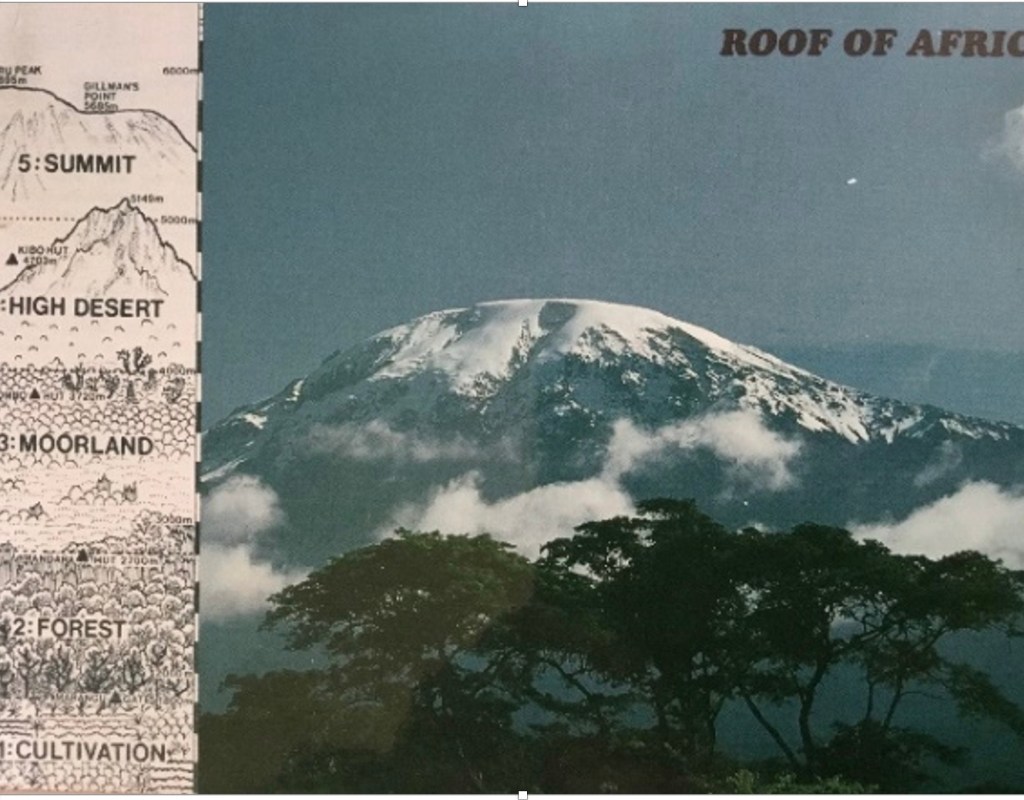
   Mt Kilimanjaro –  Five Vegetation areas

Mt Kilimanjaro is in Tanzania. It is a dormant volcano and is the highest free-standing mountain in the world at 5,895 metres and covers five distinct vegetation areas – the base in villages and agriculture; rain forest; moorland; Alpine desert and the frozen summit. Not many people believed the reports of the missionary, Johannes Rebmann, in 1848 of a snow-capped mountain so close to the equator.  Sadly, the ice cap is rapidly diminishing as climate changes.

I was to climb with a party of five covering a wide age range. A friend, Bruce, who wanted to celebrate his 60th birthday climbing the mountain and a family of three from Tasmania — Tim, Wilma and their 10-year-old daughter Anneke.

We chose to go the ‘Coca Cola’ route because being rank amateurs, it was the easiest but not that easy as we soon discovered. Our plans included not only our magical journey to climb Kilimanjaro but also to take a safari to Serengeti and the Ngorongoro Crater. This writing however covers only the Kilimanjaro experience.

In preparation I walked every morning as normal, took up tai chi and in the last couple of months joined a gym to strengthen the right muscles. I think the tai chi was the best preparation both physically and mentally.

The advertising blurb about Kilimanjaro said that you need be only moderately fit, but I think it takes more than moderate fitness to be conquer a mountain peak. Fitness plus strength of mind and spirit are factors while summiting. Even then you might be foiled by altitude sickness.

We prepared mentally by visualizing ourselves triumphant on the top and we had screen savers created by Bruce showing the mountain and us superimposed at the top. I asked the students in my grade 1 class to draw pictures. One showed Bruce at the top and me below with my hand out saying, “Help me!”

 “We’ll see…,” I thought.

And made a mental note that I should take no notice of what others thought of my capabilities. Motivation should be internal.

I purchased clothes, and equipment we needed to take. The boots were the most important item. They had to be half a size bigger than your normal size so that on the descent, laced really tight, your toes would not be bruised knocking against the inside end of the boot. I was intrigued with the special underwear and tops which would apparently ‘wick-a-way’ all the sweat and smells of a heavy day of trekking and also keep the skin dry. Even the trousers were of a material that was light and quick drying.

 We were expressly told not to take cotton clothing and denims both of which retain moisture and you don’t want to be wearing cold wet clothing in the freezing weather higher up in the mountain.  The really heavy gear for the final ascent we could hire at the Springfield Hotel in Moshe.

I was the first to arrive at the Springfield Hotel, the launch point for all climbers. The next morning, I walked into Moshe along a dusty road. I didn’t take note of how I got there and after an interesting morning I started to make my way back. I was lost and turned down a street only to end up in a village. A pleasant young man said he would call the Headman who spoke very good English. I tried to appear confident and told him where I was going.

“Ah, I will send my son to show you a short cut.”

I couldn’t believe what I said next,

 “No, he will hit me over the head and steal my clothes.”

The wise Headman just laughed.

“You will be alright.”

Feeling embarrassed at my outburst I then enjoyed a pathway far more interesting than the road I would have taken. It was a lesson in trust that took me on wonderful journeys with local people in many countries. We passed through villages, huts, women washing and singing, men carving and talking, children waving and shouting, “Jumbo” and “Ha-llo” to show they had learnt one English word.

On reaching a place where he could direct me to the hotel, I said a big thank you and gave him some dollars which delighted him. Once again, I was treated to the goodness of human kindness and realised that I needed to trust.

The remainder of our party arrived the next day.

Having acquired our outer coats with fur lining, pants and two sticks we were ready. Bruce and I were called Mama and Papa throughout our climb!  I was shocked to find that the local people at the hotel worked 10 days in a row with one day off in between and their hours seemed to be from morning to night.

On the 16th  of August, we arrived at the Marangu Gate to register and meet our two guides, Raymond and Kilian,  fit young Tanzanian men who did the climb regularly to fund their children’s education. They could only do this for a few years as the toll on the body is punishing.

We set off on a wet drizzly day in our smart boots, wick-a-way underwear, warm jackets, slacks and raincoats through the steep, slippery, misty rain forest.

 Everyone who climbs Kilimanjaro is encouraged to heed the words, “Poley, Poley” meaning “Slowly, Slowly” and we did because that was all we could manage. The beauty of the forest passed in a fuzzy, drizzly gently blurred outline of moss, trees, creepers and drops of rain, unappreciated as it should have been in normal times. I found myself helping Bruce when he slipped and fell. It was an instant reaction to help. He was annoyed. Finally, we arrived at Mandara Hut, where we stayed in A-frame huts.

 My appetite surprised me. I devoured a gigantic amount of hot stew, vegetables, rice and mealie meal (cooked ground maize) plus pudding, obviously needing to replace the energy expended during the six-hour hike. And slept soundly.

Next day after an enormous breakfast including my favourite mealie meal porridge with butter and honey, another six-hour climb to Horombo Hut at 3720m.

The six hours seemed never-ending, the height increasing as we walked up,  down and up again, over rocky terrain, loose rubble,  smooth terrain; every muscle crying out but I discovered that I could prime my mind to assist my body.

The flora changed into heath and moorland and we sited the strange-looking giant Lobelia and Groundsel trees and surprisingly, Protea. Then on the penultimate day,  the Alpine desert — bleak, white dust, draining.

We saw people collapsed with altitude sickness being carried on stretchers down the mountain and passed various groups and exchanged greetings — a Japanese group and a Diabetic group. Their camera man interviewed us because of the diversity in our ages asking how we would feel after the climb. I waffled on but Bruce put it succinctly,

“Tired!” he said.

Throughout the climb if I felt my energy lagging, I would match my breathing to my footsteps, muttering rhythmically,

“One-step-closer, one-step-closer.” That was my mantra, concentrating my mind in meditation. It helped, as did Tim forging ahead and holding out jelly-babies as incentive. Anneke skipped and sang the first couple of days, but this changed as the air got thinner.

The third day, we climbed up to Zebra rocks and back down again as an acclimatization exercise. I had taken Diamox for altitude sickness and I was fortunate not to suffer. On our last day Anneke developed a headache and vomiting which was a sign of the sickness. The only cure was to go down to lower heights.

At Kibo Hut, at the base of the final ascent, Bruce had decided to go no further, Anneke was not well enough, and Wilma stayed with her. Only Tim and I would attempt this.

I gave myself Reiki that night to calm me and aid my sleep. We would be leaving at midnight.

I woke up to Bruce saying,

“You don’t have to go, you know.”

I was so irritated and angry. I was prepared. I was keyed up and ready. I shouted at him,

“Why are you doing this?” And ran out into the night in my night wear.

The freezing night was black pitch, the full moon a silent shimmer and stars mind-silencing bright. I stilled my turbulent thoughts, gazed at this heavenly sight and closed my eyes, sensed the calm and breathed the re-vitalising air.

I realised then that there will always be people who try to dissuade you about a path you wish to take but you will know in your heart what you need to do.

Calmed, I returned and dressed for this final push. We did not need our lamps in the brightness of the moon.

The way up was steep, convoluted with grey loose scree underfoot. It was difficult. So often I wanted to give up. I hardly talked. Tim and Kilian went ahead. Raymond stayed with me. Six hours later I sat at Hans Meyer Cave, ate some biscuits and watched the sun rise over Mt Meru. I needed its energy.

“The mountains are calling. I must go.” John Muir.

The next hour was a blur. Tim had already summited and was on the way down. He waved as he passed us, and Kilian stayed with Raymond to go up with me. It was a great effort to draw air into my lungs and my mantra got slower and slower to match my steps. But the mountains of my mind and spirit kept me going.

I remember asking if there was a mug of hot chocolate for me when I reached Gillman’s Peak (which used to be the summit until it was usurped by Uhuru Peak). Raymond laughed as I clambered wearily over the last enormous rock to reach 5681 metres.

It had taken me longer than normal to reach that point and I had a decision to make. I could have been selfish and continued to Uhuru Peak, but I knew if I did that it would take too long. Our party would have to stay another night at Kibo Hut, and this was not in our plans.

Wearily I told Raymond that we needed to descend.

This was the scariest part, as to save time we descended in a straight line down, Raymond and Kilian on either side of me.

I collapsed onto a bunk and tried to sleep for three hours.

Feeling hardly resuscitated I joined the others for the descent which would take two days as opposed to the four days taken to climb up Kilimanjaro. I needed to rest quite often but didn’t want to hold the others up. It was a case of pushing myself to the limits.
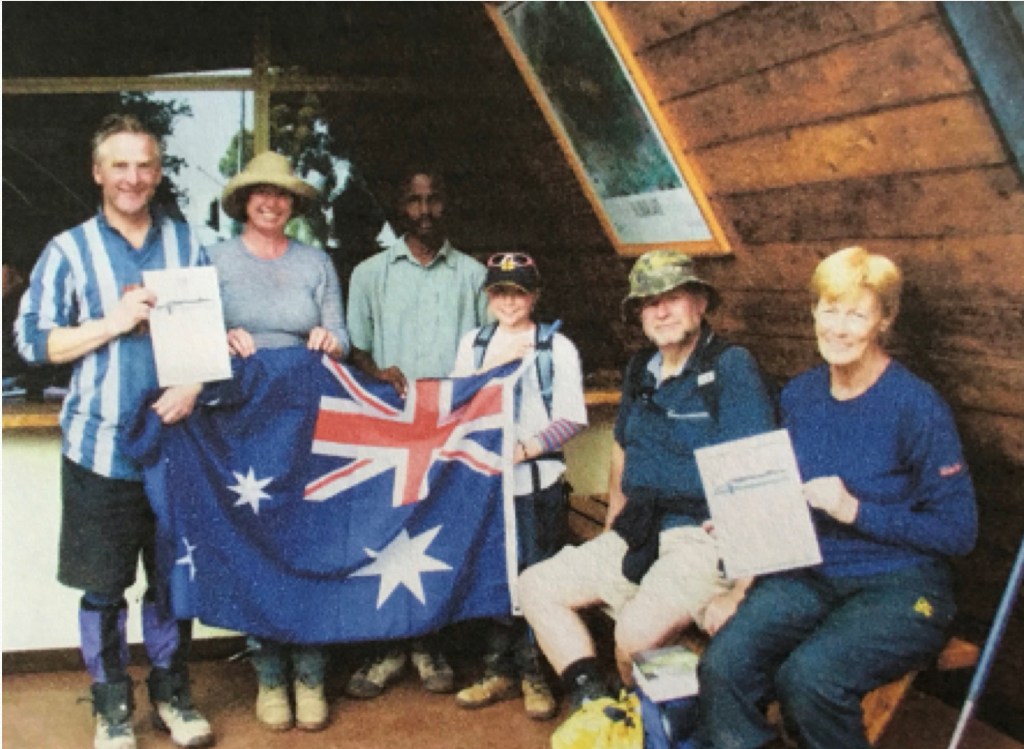
Tim, Wilma, Raymond — our guide, Anneke, Bruce and me. Tim and I proudly with our certificates. I had not brought my South African flag

From that moment on I was hooked on both backpacking and mountain climbing.

This climb had taught me that I had reserves of determination and strength that I had doubted before. It also taught me that selfish ambitions sometimes have to be relinquished for the good of the group. And that there are wonderfully helpful people wherever you go.

Many physical feats and forward movements in life are possible when influenced by the mountains of the mind and spirit.

.

Sybil Pretious writes mainly memoir pieces reflecting her varied life in many countries. Lessons in life are woven into her writing encouraging risk-taking and an appreciation of different cultures.

.

PLEASE NOTE: ARTICLES CAN ONLY BE REPRODUCED IN OTHER SITES WITH DUE ACKNOWLEDGEMENT TO BORDERLESS JOURNAL

Categories
Stories

Flash Fiction: Fat!

By Supriya Rakesh

So, it is my college re-union this evening. I don’t even want to go, I really don’t!

But then I think, what the hell, it’s been ten years! Will be nice to meet all the girls… may be even some of the boys.  They will all have turned into paunchy dads. Most of them, may be not all of them. The girls are of course skinny and what not. I know; because they’re all over my Instagram. With their GM diets, avocado smoothies, and egg whites. Their svelte sculpted bodies in their hot Yoga pants.

I approached the venue all, all cautious, like a crab calculating its distance and plotting its moves. I know I have done okay in life. Decent job, check. Boyfriend and marriage, check. Travelled around the world, yes even to Czech. Published my short stories, check and mate!

Still, I first stand in a corner and watch from a distance. They all look so smug in their designer outfits — eating, sipping, laughing, catching up.

“Oh! Is this food vegan?”

“I don’t eat gluten any more…”

“Can I have some low-cal champagne?”

I observe them like a birdwatcher studying a rare species. Pretty much how I got through four years of college. I stand my ground, waiting for my friend, Sally. I need a buffer, I really do.

Until one of them spots me.

“Oh my God, Mandy…,” she coos in her high-pitched voice. “There you are! Come on over.” The bait is ready. I approach unsteadily, just as the group gets ready to devour me.

“Oh wow, you have put on! Looking just a bit fat!” A unanimous guzzle.

Fat! From that moment on, things start to blur. Is it the fresh trauma or memory of older ones? Perhaps, it is low blood sugar. I did skip my post-lunch tea and muffin in anticipation of the food here.

I strain to take in all the jibes and counter-jibes. Only the most important information is digested. Yes, there is clear consensus. I have packed in some kilos, 5 to 10 is the guesstimate. I neither confirm nor deny anything.

Then, a platter of suggestions. My responses rise up like reflux but never escape my lips.

“Completely cut out carbs.” I veto the keto!

“Just eat every two hours!” Ummm, why not more often?

Then well-meaning Veena and sharp-tongued Shapira close in on me.

“Hey girl, loving your curves.”

“Yea! Love-handles mean more action!”

Being touched inappropriately under my shirt snaps me out of my reverie. I excuse myself, saying I need to look for Sally.

It’s been ten minutes and Sally is no-where to be seen.

I have gulped down two glasses of strawberry sangria and have no choice but to head for the buffet. I definitely do not want to return to the herd. To have more pity or information stuffed down my throat. A rumbling stomach confirms my decision.

I pick up the plate and stand in the line. I manage a polite smile at a few faces I remember vaguely. But inside, I am fuming.

What the hell do these women think? That I am clueless of my own weight? I haven’t looked in a mirror since what? 2008? Even the clothes I had to throw out gave me no clue! They are doing me a favour, by their astute observations and wise revelations?

Grinding my teeth, I load up my plate… comfort food is what I need right now. I skip the weirdly brown lentil soup (how can I eat it standing) and approach the hearty tomato spaghetti with parmesan cheese.

Or should I go for the veggie brown rice pilaf? The ‘healthier’ choice?

Ugghh, it’s all their fault! Causing such gut-wrenching dilemma in my otherwise sorted brain. My grad school, published author brain. Again, did they expect me to look exactly the same ten years later? All the things I’ve done, achieved, mean nothing against my slightly bulging waistline?

I find myself a table in the corner, and tear into my spaghetti.

Yes of course I’ve gained weight, but only a slight bit– couple of dress sizes at most. I’m not technically fat. Just full-bodied. A real woman. Living in a normal, healthy way. No fad diets or surgeries. Why do we swallow up these beauty standards dished out by fashion, media, society? I slurp my arguments down with my vanilla-bean smoothie.

My plate is almost empty now. I do feel a little better.

Yup, cold dairy as always soothes my nerves. Complex carbs give me perspective. A happy buzz in my head from the strawberry sangria. It’s just one evening, after all! Plus, Sally will be here soon. She’ll get me. Sally’s beyond everything. She’ll have some sage advice for me, some philosophy or the other about self-acceptance.

My phone pings as I head towards the dessert counter. Thank god she’s almost here! It’s a tough choice, but I pick up a bowl of fresh caramel custard (gooey brownies are for little children) and walk towards the door.

She wants me to wait outside so we can meet first, then walk in together. Looks like she needs a buffer too. I’m so excited, I haven’t met Sally in the longest time!

There’s a slight drizzle outside but I’m distracted by the zesty orange drizzle in my bowl. As I dive in to soak a last sumptuous bite, there is a slight tap on the shoulder. I turn to greet her with a full-mouthed grin… My jaws drop, as does the spoon in my hand.  

“Wow, Sally” I gobble unwittingly. “You are looking so fat!”

.

Supriya Rakesh is a researcher, educator, author with a PhD from IIM, Bangalore. Her fiction explores gender and relationships in contemporary India, with recent publications in Kitaab, Muse and Setu Bilingual. Further details at www.supriyarakesh.com.  

.

PLEASE NOTE: ARTICLES CAN ONLY BE REPRODUCED IN OTHER SITES WITH DUE ACKNOWLEDGEMENT TO BORDERLESS JOURNAL
Categories
Slices from Life

Moving from the Podium to the Helm

By Meredith Stephens

For many years my preferred pastimes had been reading, writing, drinking coffee and avoiding exercise. Admittedly, I did cycle to and from work and between my office and classrooms and I had a weight routine that consisted of carrying books up and down stairs. I was proud of having built my exercise routine into my daily movements rather than having to go out of my way to get fit.

It was February and the Japanese winter was dragging on. My office faced north, and it was already dark even though it was early evening. I had a sudden desire to return to Australia earlier than planned to catch the end of the summer and be reunited with my adult children, Emilia and Annika. I made a quick call to the office to let them know of my plans, and then logged on to the airlines and brought my flight forward a week. Little did I know I would continue in Australia not only that summer but also the following summer.

I found myself arriving in Adelaide shortly before the outbreak of a global pandemic and the closing of international borders. I landed bedraggled after my eighteen-hour journey. I descended the escalators to the carousel and waited for my baggage. A short wiry man was staring at me from the other side of the carousel. I averted my gaze, but he walked towards me and stood squarely in front of me. I met his eyes and stared at him for thirty seconds. Gradually, I saw the face of the teenager he once was.

“Are you Alec?” I probed.

I hadn’t seen Alec for twenty years or so since my undergraduate days. His piercing pale blue eyes were unchanged, but his mop of shoulder-length dark curly hair had turned grey and was now neatly trimmed.

“Yes, Meredith,” he acknowledged.

He told me that he had just returned from the UK where he worked as a merchant banker, and that he escaped the northern winter each year to the sail in the Australian summer. We exchanged news about our life events over the past twenty years. I looked up and noticed the other passengers had vanished, and there were only two suitcases moving around on the carousel.

“Let’s catch up again while you are here. Can I have your number?” Alec asked.

I gave him my number and exited the terminal. The sunlight was blinding, and I pushed my suitcases to the kerb and waited until my daughter Emilia drove past to pick me up.

A few days later, Alec sent me an email inviting me to a cafe in Norwood. He picked me up in his dark green Nissan Pathfinder and drove us there.

“I used to have a crush on you at university,” he confided as we exited the car and walked towards the cafe. I was taken aback. Alec had always been so focused on his studies and I could not imagine that he would ever have been interested in anything other than academic topics. I continued feeling stunned by this admission and looked away. I had always admired his quick questioning mind, not to mention his dark curly hair and pale blue eyes, but I said nothing.

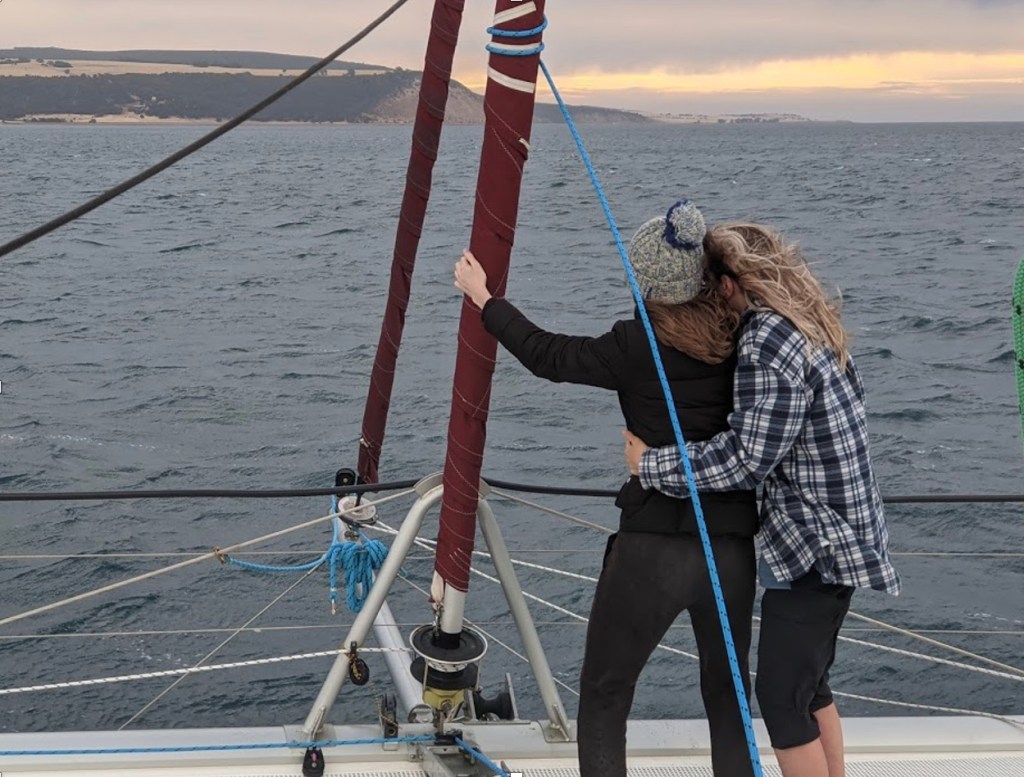
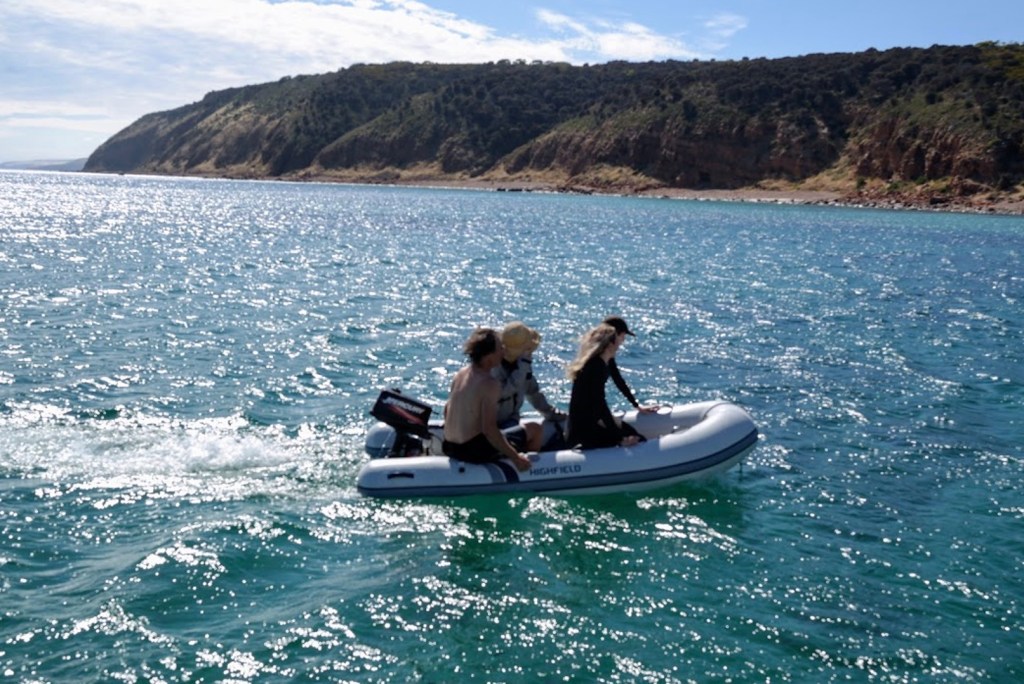
Since leaving university Alec had taken up sailing, and he even preferred the sea to the land. He invited me, Emilia, and Annika to sail with him and his sister Verity to Kangaroo Island, south of Adelaide. We eagerly accepted, and soon we found ourselves on his boat heading to the island. Emilia and Annika position themselves at the front of the boat.

Alec liked to keep his use of diesel on the boat to a minimum. Once out at sea, he set the sails and turned off the engine. I was not sure how to help him with the sails, but I did my best to loosen the rope in the winch as he called out instructions to me above the sound of the wind.

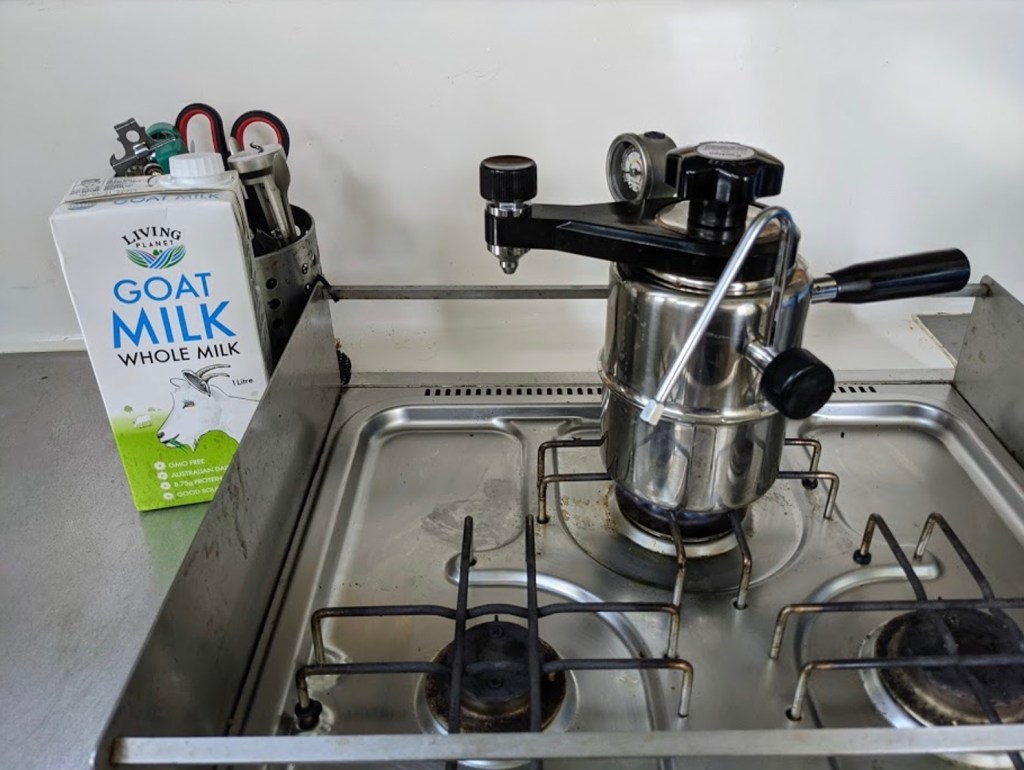
Alec had carefully planned the menus for the trip. Because of the panic-buying of milk in the supermarket, there was no cow milk left and he had bought goat milk. He made an espresso coffee for me. I had never had coffee with goat milk before but it was tasty.

Emilia and Annika remained at the front of the boat, and soon Alec summoned his voice to penetrate through the wind to pronounce ‘Dolphins!’ Soon the girls spotted a school of dolphins accompanying us at the front of the boat.

As we sailed along the north coast of Kangaroo Island we passed Smith Bay. Alec informed me that there was a plan to develop a port there. He mentioned that pine forests had been established twenty years ago even though there was no way of getting the wood off the island. The proposed port would provide a means of exporting wood chips. Alec was opposed to this plan because of the threat to the local marine ecosystem, not to mention the dolphins.

We continued west to Dashwood Bay where we anchored for the night. I slumbered peacefully in my cabin as it gently rocked from side to side. Alec had promised to take Emilia and Annika to snorkel with dolphins in the bay. In the morning I was woken by the light penetrating through the cabin window. Alec ushered Verity, Emilia, and Annika on to the dinghy, and took them to the shore.

I remained on board, content to enjoy snorkeling vicariously. I did not miss out, because as I sat at the stern the surface of the water was broken by splashes when dolphins passed by. Finally, the party returned and Alec set sail for the mainland. We farewelled a landscape devoid of human activity apart from a single homestead and a single car parked on the beach.

Alec and I shared the helm for a while but he was feeling tired from the morning snorkeling so I took over. I didn’t expect it would be so cold in the middle of summer, and my left hand slowly became numb. I scanned the horizon for small fishing boats which may not have satellite systems to notify them of our presence. I imagined being distracted for a moment and colliding with one of them. Alec noticed how tense I was and relieved me of my duty. I returned to my cabin and enjoyed the bouncing motion as we crossed the waves of Investigator Strait at a ninety-degree angle on our beam.

It took a pandemic to force me away from my lifestyle of cycling to work and ascending and descending stairs many times a day carrying books. Border closures led to a sequence of events in which I found myself sailing for the first time in my life. I caught the look of wonder in Annika’s eyes and thought we might be dreaming. I closed my eyes and imagined myself once again working in Japan. However, when I opened my eyes we were still on the boat. The pandemic had brought about a revolution in my lifestyle, but one of the few continuities was that my pastimes continued to be reading, writing, and drinking coffee. Even if it was with goat milk.

Meredith Stephens is an applied linguist in Japan. Her work has appeared in Transnational Literature, The Blue Nib, The Font – A Literary Journal for Language Teachers, The Journal of Literature in Language Teaching, The Writers’ and Readers’ MagazineReading in a Foreign Languageand in chapters in anthologies published by Demeter Press, Canada.

.

PLEASE NOTE: ARTICLES CAN ONLY BE REPRODUCED IN OTHER SITES WITH DUE ACKNOWLEDGEMENT TO BORDERLESS JOURNAL

Categories
Poetry

I Do Not See

By Tom Merrill

          I Do Not See
 

 I do not see the stars tonight
     Nor wonder if they shine,
 For many years have passed since I
     Wished any beauty mine.
 

 I do not seek the flowered wood's
      Unworldly hush and stir,
 Nor are there cherished haunts of mind
      As long ago there were.
 

 I find no sail to lull me now
      Away to courts of dream,
 And upward from the sod I push
      Blue skies fade out unseen. 

First Published in The Hypertexts

Poems by Tom Merrill have recently appeared in two novels as epigraphs. He is Poet in Residuum at The HyperTexts and Advisory Editor at Better Than Starbucks.

.

PLEASE NOTE: ARTICLES CAN ONLY BE REPRODUCED IN OTHER SITES WITH DUE ACKNOWLEDGEMENT TO BORDERLESS JOURNAL. 

Categories
Stories

Shoes in the Forbidden Attic

By Vidula Sonagra 

Unlike kids her age, Kaju was never very excited about summer vacations. For her it meant no school, no math class, no meeting Rani and Pooja, no playing hopscotch. Several of her aunts and cousin aunts from across Madhya Pradesh and few from Maharashtra spend the entire summer vacation with their children. It meant more work for her mother and kakis*. Which in turn meant more household chores would be assigned to Meena didi*, Heeru didi and herself. Nonetheless she looked forward to meeting her cousins — Tina, Babli, Ankita, Neelu, Pintu, Rahul, especially Nikita and Avni.  Nikita and Avni were daughters of Chand bua, who was her father’s first cousin.

 Chand bua always received a grand welcome by her brothers, cousins, and sisters-in-law. She lived in Bambai (Mumbai) where Nikita and Avni went to English medium Convent school. They wore readymade clothes and always wore colourful socks with their shoes. Kaju was a year younger to Nikita and a year older to Avni. They had difficulty in adjusting with the toilet system, yet they seldom complained about it. They were a bit snobbish, but they were often bullied. Sometimes Kaju protected them and sometimes she participated in bullying them.  Kaju wished, she was just like them, some days she wished she could punch them in their face. 

 When they arrived, both wore lemon yellow dresses with black hair-bands and shoes with matching socks and mushroom haircuts. Kaju was thrilled to see them. But also, a tiny bit envious of them, especially of the shoes Nikita wore. Nikita wore the shoes all the time. The label on it said, ‘Made in USA’. To Kaju’s annoyance, Nikita without fail mentioned it to everyone. She bragged how her father got those for her when he went abroad. Truth be told, her father never travelled out of the country. Her mother had bought them from the flea market outside Ghatkopar station. After patiently exploring and skillful haggling, Chand bua had a knack of finding and buying classy clothes. 

  Kaju and her cousins spent the summer like most other summers. Playing, fighting, pulling each other’s hair, stealing dried berries and imli*, forming and reforming teams, plotting against each other, learning to fly kites, playing challas* and simply making memories that would someday be cherished by them or haunt them.  When no one was looking, Kaju wore the ‘Made in USA’ shoes. They fitted her so well.  She walked across the room like she was a movie star. She dreamt of wearing them to school and flaunting them to Rani and Pooja. She wanted them so much so that she hatched a plan to steal them and hide them till her school reopened.

 A day before Nikita and Avni’s departure Kaju took the blue shoes which she had thought of during the summer. She meticulously planned when she would steal them and also where she would hide them. The attic would be the best place to hide her steal. Except Seema kaki, Hiroo didi and Meena didi, Kaju had not seen anyone access it. She had seen them going to the attic only a few times in the wee hours. When she asked Hiroo didi and Meena didi to take her to the attic, both forbade her to go to the attic and spoke. They had only gone there to feed the monster who came in their dreams when he was hungry. They warned her against going to the attic as the monster was not fond of children. Kaju knew they were fooling her. But didn’t have the heart to go to the attic till that day. She had heard somewhere; monsters are only wake up in the night. If she went in the daytime, she could still hide it. 

 Just after lunch, Chand bua was busy packing for her return. Nikita and Avni were fast asleep as they were tired from meeting relatives all morning to bid adieu and have sumptuous meals and sweets prepared especially for them.  Kaju slowly entered the room where dadu* and Viju kaka* were napping. She picked up the shoes and went to the middle room hiding it under the frills of her layered frock. It was one of the darkest rooms with one clerestory window borrowing light from the kitchen. It had the door to the attic. Boo was lying on the bed. Kaju thought, Boo too was napping. But to her terror she was wide awake. Staring. Staring into nothingness. Boo has been that way since Magan dada* — her stepson died last winter. They were just eight years apart. She had taken care of him like a kid brother since he was two years old. She never doubted that she would be the first one to go. She wasn’t prepared to live in a world without him.  Kaju soon realised, even if Boo was staring, she wasn’t seeing anything.  

 Kaju slowly climbed the table that had the tailoring machine and unlatched the door from the top. She climbed the steps like a cat. The attic was stuffy and dusty with pigeon feathers all around. Proximity to the iron roof made the dung floor even hotter.  Window at the end of the attic was on source natural light. Kaju, three feet two inches, could barely stand straight in the middle of the attic that had slanting roofs.

On the one side there were two large, rusted trunks, with several bundles of cloth. On the other side there were heaps of stove woods, few chipped pots, a large rat cage, a string on which several stained cloth pieces were hung. It was nothing like she had imagined it to be. In her mind the attic was a room with a large bed for the monster, cupboard, table, TV, and a large pot of drinking water. Kaju was terrified with the setting and aura of the attic. Before she could find a clean and convenient spot for her shoes, Kaju heard some rattling from the opposite end of the attic, she hurriedly left her shoes at the window, and quickly climbed down the stairs. When she entered the room, Boo was still staring, Staring into nothingness. Kaju with a racing heart got on the tailoring machine table. Carefully latched the chain at the top. Dusted off her layered, frilled frock. Still a bit shaky, Kaju tried her best to pretend everything was normal.

 Next morning, when Chand bua with all her bags packed was ready to leave for the station with Nikita and Avni, Nikita frantically started searching for her shoes. While Laxmi dadi* and Chand bua were still crying, everyone else started to look for the shoes. About fifteen minutes later, Chand bua firmly suggested Nikita wear spare shoes, or else they will be late for their train. Upon hearing this Nikita threw a fit and started crying. But Chand bua was in no mood to waste time mollycoddling her. She slapped her instead and asked her to wear the spare shoes. Nikita tried hard to stop crying, but tears continued to roll down her cheeks.  She quietly wore the spare shoes and got into the tonga.  

 Kaju felt guilty. Not only did she steal Nikita’s shoes, but Nikita was also slapped by her mother in front of everyone. Though she couldn’t forget the crying face of Nikita for many days, she brought herself to confess the fact that she not only stole the shoes but had hidden them in the attic. She was terrified that her mother would thrash her for stealing. Stealing something from Chand bua’s daughter. Kaju was so petrified and ashamed of her act that she could never muster up the courage to take another trip to the attic. Not until the incident had faded in her memory.

Glossary

Kaki – Father’s younger brother’s wife

Didi – Elder sister

Bua – Father’s sister

Imli — Tamarind

Challas – Ludo, a board game

Dadu — Grandfather

Kaka – Father’s younger brother

Dada – Elder brother

Dadi – Grandmother

Vidula Sonagra is an independent researcher, writer and translator who is interested in society, literature and music and loves reading fiction and petting street dogs and cats. 

.

PLEASE NOTE: ARTICLES CAN ONLY BE REPRODUCED IN OTHER SITES WITH DUE ACKNOWLEDGEMENT TO BORDERLESS JOURNAL
Categories
Essay

Beyond Ideological Borders

By Anu Karippal

I was doing an interview with a retired college professor and Bharatanatyam dancer a few weeks ago for Humans of Kerala Instagram page. The interviewee, a teacher by the name of Gayathri, learnt to dance as a child, is a single mother and teacher, and when she was about to retire, resumed dancing and has performed widely in the last four years. Her voice was filled with the affection of a teacher and humility for her achievements. Something distinct in the interview was that, she was not a product of any -isms and ideologies that define our generation today — feminism, liberalism, environmentalism, activism, atheism etc. Gayathri was different. She belonged to another era when there were no burdens of ideologies for a layperson to attain something or establish an identity. She became a professor and a dancer and accomplished everything unbound by any ideological objective. She was only bound by her passion. Doing something or defining ourselves within an ideological framework was not popular back then as it is today.

This is not to discount the values such ideologies have enriched our lives with. Feminism empowered women and men. Liberalism opened up the rights discourse. Environmentalism educated us to own up to our responsibility towards nature of which we are a part. Activism taught us that we need to be a collective and make a little noise to stir meaningful and useful changes. I, as a girl, was sent to school just like my brother without a second thought because of the years of the struggle by the women who fought for it in the past.  Labour unions can challenge the exploitative and environmentally destructive changes because ideologies provided us with the sense of awareness of the power dynamics. To forget this is to undervalue the achievements of such struggles that have now given us a comfortable life. While it empowered us and made us better people in many ways, they also came with their limitations.

One must be aware of all of the above ideologies and question power in our daily life, what if in the attempt, our life becomes ideology-centric? When an environmentalist sees everything solely as an environmental issue or an activist sees everything solely as an issue or propaganda by state or corporate, one loses out on the other perspectives of seeing life and makes life a war to be fought. An old saying is worth remembering here, “If you look with yellow eye, everything will look yellow”. This can turn dangerous. Probably, this is something that the dance teacher, Gayathri, could have taught our generation — that we can do good, accomplish our passion without being ideologically assertive and let our life speak as our identity/ideology.

Perhaps, the rising interest to define our lives within dictates of any ideology has intensified with the intrusion of social media into every aspect of our lives, acquainting us with several ideas. I can vouch for it because I have done it too, and continue to do this over and over again. The way ideological battles are fought out in politics and public domain shows how listening to an opinion that is not in agreement with our ideological orientation is becoming an impossibility.

While opinions regarding public matters were left to a few earlier, it is in the hands of anyone with a phone and internet now. This has promoted inclusion of opinions, but it has also led to polarisation of identities and ideologies. Internet was supposed to uphold the spirit of democracy, but it has actually made people intolerable towards each other. There is a continuing loss of intimacy among people in the name of ideologies, easy judgement of people and the constant use of “unfollow” button that we easily press when somebody does not agree with our ideological thoughts on social media. We forget that we cannot press a “delete” button in the real world and that the world is always made of different people with different perspectives.

It took me three year-outside-academia life to begin to understand that life and its ways cannot be contained in any ideology. During my three-year stint at ATREE (Ashoka Trust for Research in Ecology and the Environment, Bangalore, India), my dear friend Kumar taught me several things on our post-lunch walks. Once our topic was feminism, its possible misinterpretations among men and women and how it might be taking the wrong track. I was immediately angry and asked him why.

He said, “These days sometimes women want to do something because men are doing it. The fact that you want to do something should drive your goals and not the question whether or not men are doing it.” He added, “Do you want to dance, sing, jump, swim, be a CEO, pilot, doctor, anything? Go do it. But do it because you want to and not because men are doing it.” It took me months to understand the gravity of what he was saying. This is not to imply that we shouldn’t ask questions regarding why men and women do different things or why we are different. Our question should be a quest to understand than to react. And our goals should emerge from our passion.

As I was sharing these thoughts with a friend, she told me that doing something for the sake of any ideology gives a “restricted contentment”. When you do something because you like it, it is a fulfilment, a larger contentment of inner peace and elation that cannot be fit into any ideology. If you don’t want to buy a pink doll because pink has largely been associated with feminine, that is a vain battle to fight. If you like a pink doll, buy it. If you want to reduce plastic use because capitalism has been environmentally drastic and overpowering, then it might not give you enough contentment. Reduce plastic use because you care immensely about nature and you want to do your part. If you decide to grow long hair because men have primarily been associated with short hair and wants to break the stereotype, that is a limiting happiness. Grow long hair if you like long hair. If a husband and wife begin to look at everything in life through rights and equality, then marital life might create tensions and frictions. One who mocks arranged marriages as traditional and one who mocks love marriage as modern both know that despite the nature of acquaintance before marriage, married life anywhere is filled with adjustments and compassion. Life is always beyond ideologies.

Once, as the man I first fell in love with and I were walking back after our class. I was walking on the pavement to his right, touching the road. He held my hand and moved me to his left side, away from the road. He wanted me to be safe and if anything happened, that I would be spared. We were just friends at that time, so I smiled inside, enjoyed how my heart had felt a free fall and walked with him. If I were to call this as an instance of benevolent patriarchy and tell him I can take care of myself, I would be being so unfair to that act of love and destroy my happiness and his.

Even if it were a power relation, can it be scraped off with a reactionary attitude like a stain on the plate? Probably we are then replacing one form of power with a politically correct, elegant looking form of power. How ironic! And this is one of limitation of any ideology. If we begin to look at every little thing through liberalism, feminism and rights discourse, then all we might see is inequality, power and our life can get burdening. If we look at it through love, respect and kindness, life can be easier to live.

How easier said than done, right! I try to let go of my personal ideological thoughts, but it is one of the most difficult things for me to do. In the few retrospective moments of thinking and writing, it is easy to appreciate that one must go beyond the ideologies to understand life. Difficult as it may be, we must still try to not let ideologies influence all our actions. Life can best be viewed in simple terms. At the end of the day, environmentalism, feminism, activism and liberalism can turn as restricting as capitalism and fascism if we don’t treat them carefully. Even the idea of freedom can be limiting and can bind us. Ideologies are as transient as anything else in this world. Yuval Noah Harari shows how the world has gone through different historical epochs such as imperialism, communism and now liberalism in 21 lessons for the 21st century.

Let’s ask questions to understand and not to react. If we approach anything with a predisposed reactionary attitude, we will merely spread our opinion on the matter before understanding it. If we do something in the name of an ideology despite wanting something else, our life wouldn’t be as fulfilling. This self-fulfilment is not be misunderstood as selfishness, but as the open-mindedness to see life beyond ideologies and live a fulfilling life.

An ideology can get twisted and turned and corrupted in no time. But staying true to your passion and dedicating your time and effort,  will give a certain contentment that is unparalleled. In one of his lectures, the Indian mystic, Sadhguru, despite his biases, refers to the thought that our minds are becoming a market place, where we weigh everything. The thought struck me. If we give something and expect the exact quantity in return in friendships and romance, we might end up being disappointed and angry at everything. Moving beyond ideologies; feminist, liberal, capitalist, activist, right-wing, left-wing etc. can probably lead us to a satisfied life. 

Social media is all intrusive. While it brings lost friends and families together and keeps the world functioning even as the pandemic struck, it also catalyses polarising identities and proliferation of ideologies. While we imagined our house or immediate locality to be the world before, now we imagine our self-curated social media to be the world. We follow and unfollow people to create a desirable world of similar ideologies that we can easily agree with and offer a collective critique of ideologies we disagree with. And we become intolerable of the vast differences of opinion in the real world. Paying attention to passion is probably more important and fulfilling than assembling a life out of ideology, only to be discounted by another ideology of sound arguments. Writer Howard Rheingold wrote: “Attention is a limited resource, so pay attention to where you pay attention”.

Anu Karippal is a student of Anthropology and Sociology at Graduate Institute, Geneva. She is from Kerala and she writes personal essays, movie reviews, short stories and poetry occasionally. 

.

PLEASE NOTE: ARTICLES CAN ONLY BE REPRODUCED IN OTHER SITES WITH DUE ACKNOWLEDGEMENT TO BORDERLESS JOURNAL

Categories
Poetry

Nature Poems

By Sangeeta Sharma

 The flying clouds
 A cloud like a roaming idler
 Dawdling reaches the highest peak 
 Envelops the mountain 
 In its folds
 Caresses and kisses causing shivers 
 In its bosom
 And lightning, thunder and showers 
 Leap over each other like wildfire
 Floats away and evaporates
 As quickly as it had formed
 Impregnating every small and large
 Womb of the earth
 With puddles of water and 
 A citric, tangy scent
 That clings to 
 The swooning wistful lasses.
  
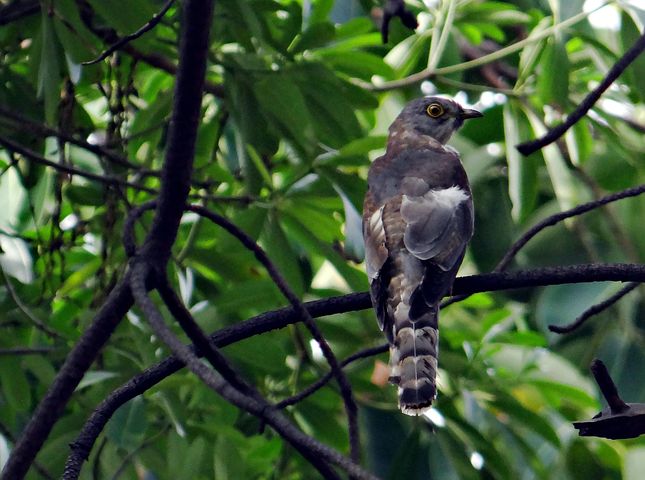
 Hawk Cuckoo (Papeeha)
 The cuckoo’s mellifluous song
 Excites the maiden
 Who drops the work in hand
 Sprints into the open
 With a joyous heart 
 Looks up towards the cloudy sky
 As expectantly 
 As the cuckoo who sits with its beak ajar
 At the topmost bough of the mango tree
 Half-concealed, longing for the first drop of rain.
 Like a clarion call -- the refrain
 Ignites the pining heart
 Of the lass 
 For her sweetheart
 Who has been away so long
 And has promised to return 
 With the first shower of the monsoon!

Dr. Sangeeta Sharma, a senior academic, is a widely-published critic, poet and writer. She has authored a book on Arthur Miller (2012) and an anthology of 76 poems (2017). She has jointly edited five anthologies on poetry, fiction and criticism and two workbooks on Communication. A free-lance journalist, she is also a Ph.D guide appointed by the University of Mumbai. One of her books is listed as a reference in the department of English, Clayton State University, USA.

.

PLEASE NOTE: ARTICLES CAN ONLY BE REPRODUCED IN OTHER SITES WITH DUE ACKNOWLEDGEMENT TO BORDERLESS JOURNAL. 

Categories
The Literary Fictionist

Love Beyond Words

By Sunil Sharma

It is raining!

 Such afternoons become depressing. It is a time when bare daylight is sliding into darkness of early night.

You are trapped in a grey zone.

 Winter rain triggers sadness…especially December rains when clouds, cold and gloom create overwhelming melancholy.

Rains add to misery. You cannot step out. Cooped, looking helplessly at the falling rain on empty roads…and the puddles.

It is the same depressing afternoon, my dear!

Can you hear it? Can you feel it? The pattering rain?

The icy drops. I can sense them on my skin. Big diamonds from the sky, grandma would say.

Grandma had this habit of muttering!

Creepy!

Short, frail, half-blind, she would talk in the deserted last room. In the darkness, snow-haired granny looked like a ghost!

Being young is always scary in a house of working parents.

“Why do you talk to yourself?” I had asked.

She smiled. “I have friends you cannot see.”

“Friends?”

“Yes.”

“Where?”

“In the room.”

“Why do I not see them?”

“Only I see them. Nobody else cannot. They follow everywhere,” said grandma quietly.

I got the creeps; her eyes wore the glazed look.

I slept in the corner room; her muted screams and mutterings would wake me up, frightening me.

She and her friends! Strange!

Now I understand better.

We are becoming the frail grandma. When I am alone, even I have started talking to myself . When I hear steps, I grow silent and pretend to read the newspaper. Or do something else.

The rains bring back childhood. No other Indian season has got such power of recall and magic. I see my grandma standing there in the lonely corridor and gesturing and talking excitedly, after a gap of almost sixty-five years.

Diamonds! How they sparkle in the courtyard!

The rain drops.

Hear them, my dearest! Feel the wind in your hair, coming in from the open window.

The wind caresses your sunken cheeks. They tingle…like my fingers on your bare back.

You always loved the outdoors. The wind in your hair. Rain on the bare skin. Catching the diamonds from the sky in the outstretched hands, water drifting from fingers of the cupped hands, your oval face blissful, eyes half-closed, chin raised, water coursing down your body…like a stream flowing in the soggy brown fields.

Are you listening dear?

You would run in the open ground, chasing the rain…a child…with the same delight and spontaneity.

“Come on!” You would say during our occasional tryst with Indian monsoon in the outskirts of Goa. I would smile, photographing you and the retreating rain over the undulating plain…a wet slim figure in white, your favourite colour, against a bleak quivering green backcloth.

 The Goan churches fascinated you. You would stop and insist on being shot against the imposing facade of the Church of St Francis of Assisi, reverential eyes soaking in the material and spiritual grandeur on display.

We would drift in and out of Goa or coastal Kerala.

Rains. Backwaters. Kerala looked magical during monsoons. I have five albums of you against the sun-washed horizons in various poses, with dimples and shy smiles.

We were so happy!

But that was more than four decades ago…a rare period of pure happiness that came from intimacy and togetherness.

Later those grew into mere memories.

“You have changed!” you would say.

“Even you have changed!” I would retort.

We would bicker and fight and sleep in different rooms.

Even if we slept in the same room and the same bed, distances would intrude.

You had exclaimed after a fierce fight over a trifle. I had shouted at you. You had pursed lips, puckered up brows and gone on to watch TV– calm and remote.

I could feel your increasing frigidity towards me. I thought I did not matter anymore.

We were turning into close strangers, from lovers into mere actors.

Our earlier romance looked a caricature, a ghost.

My increasing paunch and odour was a constant turn-off.

I could not help that.

Now, at this moment, all this looks so trifling, irrelevant, when you are slowly drifting into another land of forgetfulness.

I miss you. Our bickering, patched up silences.

Now you are beyond all this!

Are you listening dear?

What a life!

Never thought you would lie strapped, a prostrate figure on the cold metal of a hospital bed in a South Delhi private hospital, surviving on drips and tubes; eyes dilated, fluttering — when a visiting family-member calls out your name softly. Otherwise, you seem to be in total amnesia.

So near, yet so remote!

 Here comes the lightening. That always scared you. It is ominous. Thunder echoes. Darkness heightens. The darkness in the afternoon amplifies your helpless despondency.

I do not like sunless days. Now, with you strapped down, with the monitor on, breathing hard, I am drowned in loneliness.

Alone on this teeming, violent, mad planet!

My God! What would I do?

We were companions for more than five decades and fought and made up like other couples.

I never thought we would also age and reach expiry dates.

Human vanity!

Death and sickness were for the others. We were immortals. What a vain and false assumption!

Now, you and I, in this semi-private room. I am holding your hand in mine…as we did, when we visited the Vasai Fort, near Mumbai.

You always loved ruins. Particularly, the monumental ruins. Ruins of forts cast a spell on you: the citadels, ramparts, bridges, minarets, barracks.

“I can hear history.”You said that visiting the Red Fort in Delhi. “The Mughals, the British, the Indians. I can hear the cannon balls booming, the massacres, the war cries, the blood-bath.”

“Crazy!” I thought. “How one can hear the dead!”

I was wrong!

The dead never leave us. They hover over us.

One can never bury their dead permanently.

I can see the dead. At my age, the past suddenly becomes real. Like a hazy afternoon, it links a dying day with an upcoming night…a threshold to connect the present to past.

Ruins, decay, and a few lessons in life.

Nothing remains as it is. Things change. Empires decline…and new ones rise on those ruins.

Ruins!

We would see the young couples escaping the oppressive city in the ruins of Purana Quila in New Delhi on winter afternoons. Couples, linked, sitting under shades or lawns. The library of the Emperor Humayun, the staircase leading down from it, from where he tumbled and died after three days of the fall, looks desolate on windy afternoons. Structures survive as symbols of lost cultures.

“We are left with ruins!” You had commented, sketching the library, from the lawn.

“What?” I asked.

“The debris of relations only,” you had said and smiled mysteriously.

Again, I had lost you and your enigmatic personality.

Was it about me?

Now, holding your soft hand in mine, I understand.

We are left with the debris of our relationship only. Nothing is left except the departing shadows, fleeting outlines.

See, it is raining heavily.  Gloom has gathered and intensified. A rough wind escapes inside, ruffling your hair again.

What! I see my grandmother and mother clearly before my startled eyes, two figures tentative, quivering shadows.

Believe me. Each morphing into the other and then into you….

Even Maa had stopped talking to us before she died. She would also talk to herself in her dying days, few days of great agony and pain. She talked to her Maa and granny. At that point, I thought the disease could infect you too. But, it did not. In fact, busy as we were, we hardly talked. After a point, elderly Indian couples perhaps do not talk much, withdrawing into shells.

Work separated us.

You toiled in your office, commuting long, working late.

I did, in my office. We sacrificed for the family.

Some of the family does not understand us now. What an irony!

The kids are happy with their families.

We are alone; two of us, despite their living close in proximity. They hardly call us or come to meet us.

And now you are in coma!

Can you hear me darling!

I feel terribly lonely!

Who will care for me after you are gone?

Your absence, though painful, reminds me of your sweet presence!

In fact, I have begun noticing you in last few days only. Days when you were wheeled into the ICU, then moved to general ward and then back to a semi-private room. I began feeling your phantom presence hovering over me, your silent love, your sacrifices that remained unseen.

The way you cooked, washed, shopped, cleaned and cared for all of us.

I could never gift the advertised diamond necklaces or silver rings because we both were poor middle-class Indians working as slaves for surviving in hell! No respite. No money to spare. You dressed modestly. I did humbly. We walked, skipped Dutch parties, in order to meet educational expenses of a growing family.

When the maids would not turn up, you toiled on holidays and Sundays. In the last decade, we avoided long-distance trips and cinemas to save money in a country where all food items cost more than even gold!

We had evolved into mere automatons!

To-day, holding your hand, I reminisce and understand the value of love and togetherness.

Now, it is too late.

You are beyond all this humbug.

The doctors say you will not live long.

You are in coma. On life support.

How fragile is life!

It mocks our ambitions, unbridled desires.

How vulnerable!

Medicines can delay but not prevent decay and death.

After you move out of this bond, I will remain stuck, alone.

Your memories might help.

Now I realize your value. You were created as a superwoman to satisfy our selfish needs. We defied you and used you as a woman, my dear.

I wish I had talked to you more, walked into moonlit courtyards with arms linked. I could have laughed with you more and more…run with you on the open grounds in Goa or admired the heritage sites or listened to your songs…things that made us both human and artists.

Let me tell you, my dearest wife, you mean so much to me. Now, with you sinking rapidly into the oblivion, I realize this bitter fact.

Debris. I wander in the ruins.

And once we had almost split up!

Remember that?

I had seen this message on your cell-phone in the late night — woken by the beep in the dead of night, while you slept like a log. A short message of remembrance at 12.30 am. The next day, I secretly followed you to the bus-stop and saw this tall well-sculpted younger man talking to you. Both of you boarded the same chartered bus to NOIDA and in the evening, I saw both of you alight from the same bus. I watched, for more than seven days. Your smile was divine, your gait light and eyes beaming.

When later on, on Saturday night, I confronted you, you denied everything. When I persisted, you said cruelly, “Cannot a woman whose husband is not working for the last three months, talk to a friend working in another office?”

I was stunned! How you had changed!

“Leave the job,” I had thundered.

“Who will look after the bills?” You were cool, distant, triumphant.

“Who is he?”

“A fine man…kind. Nice. A friend.  Things forgotten by you.”

I was devastated by these icy remarks.

Oh! I could barely manage, a pain bursting inside and sundering my heart.

“He is so fine!” I had remarked viciously, a loser.

“He is a polite guy, a co-traveller. That is all.” You had concluded firmly and moved to your side of the bed.

I had continued to toss. A down-sized man, unwanted by the system. You had become more brazen and often praised him in order to insult my joblessness and enforced stay at home.

Home!

It had become a battleground!

From lovers to enemies.

You had begun to move away…in subtle ways, ignoring me. I was left with no option but to put up with the situation. Once I fell down on the wet floor of the house and you did not react beyond mere lip-sympathy. I saw a mocking smile on your face.

At that moment of coldness, I knew I had lost you forever as my beloved. Only, a spouse remained. Enacting fixed roles for the family and to reinforce our middle-class respectability and image.

We had evolved into perfect strangers. Whenever I raised the topic, you would say I was paranoid, a suspicious man. A cruel man.

Look after the bills and I am happy to look after the family. These two roles and your slurs, suspicions…they were too much for me to handle

You would taunt me. We stopped talking.

I did not have any evidence of adultery. Only my suspicions.

“Your insecurities!” You would laugh and say, “He is my good friend, not lover. Cannot a working woman have a good male friend? He is married…happily…with two kids.”

I had no answers. Perhaps, you were right. I was reading too much into a normal situation. A working woman. A courteous co-traveller. A common chartered bus going to the same locality. A simple fun-loving decent man! A good singer also. You loved singing. I never sang. You loved outdoors. I hated it. You loved travelling. I avoided travel. You loved reading and history. I was a Chemistry student.

Our worlds, exclusive, were held together by an arranged marriage. Subsequently, by the children only…like rest of the middle-class Indians. Two perfect strangers brought together by common practices, who had discovered each other in initial years of marriage. Then, pressurised by work and anti-romance conditions of our living in an Indian metro, we drew apart.…like others of our ilk.

Once you stormed out, remained away; then the children united us again. Then the hasty departure of the other man in our marriage — with a promotion — to Bangalore, cooled the anger and we somehow reconciled.

You became quiet and lost. Hardly sang or read for months. I checked your cell-phone and expectedly found no messages from your decent kind friend, the co-traveller.

I knew you were feeling used again. People had seen you dining and coming out of malls but you denied and threatened to quit always and my long unemployed status increased my humiliating dependency on you. Occasionally, I tried to sing a song and applied a talc powder but both acts of gallantry repelled you further.

I could not live up to the romantic image promoted by Bollywood. I was a Chemist working in a factory located some sixty kilometers away from home and I had no training or patience with sustained courtship.

How can a battered man be a perpetual romantic hero in life?

For me, life was never a constant candle-lit dinner party. It was a constant battle to survive in hell!

My idea of romance was — and is — holding hands and speaking silently.

Love is an emotion transmitted non-verbally.

Love is beyond words. A telepathic experience.

Hope, dear, you understand my love now, as I hold your hand and cry silently for having missed out so much in life simply because I could never afford those expensive signs of media-promoted notion of love and romance.

I loved you from the bottom of my heart. I still do. I could never tell you in these terms — not everybody is a born poet!

I might have mistreated you or neglected you as the long commutes drained me completely but my heart always with you.

Are you listening my love?

Listening to my heart?

Lo, here comes the thunder. And the darkness is increasing…

Sunil Sharma is the editor of SETU. He is a senior academic, critic, literary editor and author with 21 published books, seven collections of poetry, three of short fiction, one novel, a critical study of the novel, and, eight joint anthologies on prose, poetry and criticism, and, one joint poetry collection. 

.

PLEASE NOTE: ARTICLES CAN ONLY BE REPRODUCED IN OTHER SITES WITH DUE ACKNOWLEDGEMENT TO BORDERLESS JOURNAL
Categories
Poetry

Book Writing Contest

By Vatsala Radhakeesoon


 Book Writing Contest
 
 During the time when the dinosaurs roamed freely,
 Smiling Sun had a sunflower mic (microphone).
 On one tropical summer morning, 
 it announced a book writing contest
 open to all visitors and residents
 of Above-Ground.
 
 Flying Dragon sent his Book of Fierce Fire,
 Red Birds submitted their Anthology of Wavering Winds,
 Water Bearer (Aquarius) flew his Book of Lofty Lyrics
 attached to an airy string;
 However, when Sky submitted his book, 
 it slipped like sand amidst Sun’s fingers.
 
 Smiling Sun requested Sky to re-submit his work,
 Days went by but nothing was heard from him.
 
 As a matter of principle, where Fairness ruled
 each participant received an award
 and when Sun glanced at Sky and frowned,
 above the clouds, shone Sky’s Book of Ha-Ha – 
 a humorous musical book that sang,
 “Catch the blue, catch the blue.
 Sun, I wrap you within me.
 Here’s a golden flower for you.
 Please wear it as a ring,
 It will strengthen your grin.”
 
 Smiling Sun beamed and hugged Sky,
 It promised him never to doubt his deeds,
 And together for eternity they would live. 

Vatsala Radhakeesoon is an author/poet and artist from Mauritius. She has had numerous poetry books published and she is currently working on her flash fiction/short stories book. She considers poetry as her first love and visual art as a healer in all circumstances. Vatsala Radhakeesoon currently lives at Rose-Hill, Mauritius and is a freelance literary translator and an interview editor of Asian Signature journal.

.

PLEASE NOTE: ARTICLES CAN ONLY BE REPRODUCED IN OTHER SITES WITH DUE ACKNOWLEDGEMENT TO BORDERLESS JOURNAL. 

Categories
Stories

The Beggar

By Shouvik Banerjee

Madhu and the children had been insisting on a family outing for a long time. So last week, we finally decided to watch a movie at New Empire. We would later shop at New Market and then gorge on spicy street food from the nearby food stalls. The children also insisted on visiting the museum. They had always wanted to see the ‘mummy’. This time I complied.

When we reached, a thick crowd of curious souls greeted us. They huddled around the 4,000-year-old dead body and inspected it from every angle. Madhu and the kids joined them while I stayed by the swinging door and watched.

As I scanned the room, my eyes rested on the guard standing in a corner. He was wearing his emerald uniform and his right thumb dangled from his belt. Under the cap, his face was clean-shaven, and his eyes moved quickly around the room. He was invisible except for the way his wrists flicked. It looked familiar.

For a moment I paused and denied the thought. It could not be. But I had to know. I edged along the wall until I was standing beside him. I inched closer and tried to meet his eye. My suspicion and the thought I had been denying were now a fact. He pretended not to have noticed me and continued to avoid my gaze. Finally, I said, “Excuse me, I have seen you somewhere?”

This time, he looked at me. The expression of mild surprise on his face hinted neither at shock nor bewilderment. Instead, he went into a denial mode, “I’m sorry but I don’t know you.”

What a rascal!

“Remember you were in Dalhousie, near the chowmein seller, you wanted to eat some chowmein? Remember?”

“Dalhousie? Chowmein? I’m sorry sir but I do not understand.”

He slithered through the thick crowd and disappeared.

Of course, he understood!

The week before, I was sitting at one of the innumerable fast-food stalls spread around Dalhousie when he had approached me with a yellowish toothy grin.  Except then, he was a beggar and not a security guard.  He was bare-chested and held up a corner of the torn khaki trousers with a dirty hand. It dangled from his slim waist, threatening to fall any second. In his other hand, he held a small bowl which jingled with a flick of his wrist.

The shopkeeper rebuffed and shooed him away.

It was hard to recognize him in the museum since the beggar’s face was a mess of dark repulsive hair. But I knew it was him. There was a spark in his eyes which was hard to ignore. It was not the eyes of someone who should be begging. That was what intrigued me about him.

The next day when he arrived, I bought a plate of chowmein to appease both parties. He sat down against the wall and devoured the food from an old newspaper.

“Do you live nearby?” I asked.

The beggar shook his head. “I don’t live anywhere.”

“So, you never had a home?”

“I had one, a long time back. My brother used to beat us – my mother and me. My father had already died. Then one day, he came home drunk and pushed us out of the small house. My mother died in a ditch and I kept wondering. You know, I have a BA and was part of a theatre group. But no one cares about degrees or talent. All they care about is money. Money, money, money…”

Under the mess of dirty hair, he did have a young face and was perhaps in his mid-thirties.

After that brief encounter, I had not seen him for many days. But I, too, was partly responsible for the disunion. Madhu was packing lunch as retaliation against my growing blood pressure and waistline. I was now spending my afternoons with colleagues. I listened to their gossip, and occasionally took sides in office politics. My workload had also increased. So, I found less reason to visit my beloved food stall.

The other day, Mahesh, the office peon, had piled a stack of files on my desk. “Dutta da wants this by tomorrow,” he had announced fastidiously before scrambling off. After working for six years, I had acquired one vital piece of knowledge about my boss – Raghubir Dutta. When he said next week, he meant this week; If he said tomorrow, he meant today.

Sometimes, when files were not coveting for my attention, I wondered why I slogged so much for so little. Other times, I romanticised the impossible idea of finding a better paying job. But almost immediately I dismissed such thoughts, remembering well that my father never had the luxury to send me to a business school.

I needed money to make money.

*

The next day, I took an early leave during lunch. I cited an important meeting with a customer as an excuse. Thankfully, Dutta was too preoccupied to have noticed the lie. I went over to the same stall and hid behind a bunch of bodies. His appearance, though, made me doubtful after my confrontation.

I was right. After waiting for half an hour, I went to lookfor him. I scanned the countless stalls, shops, and the streets packed with people.

It was a futile search. But just as I was about to board a bus, my eyes fell on a sugarcane juice seller at the far end of the street. And there he was, hunched on the ground, relishing the sweet juice and ecstatically smacking his lips!

I waited. He got up and dumped the plastic vessel in the dustbin. Then, he briskly walked till the end of the road and turned a corner. I followed. The beggar entered a small public urinal that was surprisingly clean. A few minutes later, the museum guard emerged in his crisp green uniform and cap, looking sharp and, I suspected, perfumed as well.

I ran and caught him by the shoulder as he waited for his bus. He turned around with a flabbergasted look.

“I know about your dual life,” I said, agitated and angry that he still feigned surprise. “The police might find it interesting. Why are you acting and fooling people?”

The guard gave me a wide smile and politely replied, “Aren’t we all?”

The bus arrived. He got up and I watched as the vehicle roared away leaving a cloud of black smoke in my face.

.

Shouvik Banerjee is the author of Seven Sundays (Hay House, 2019) and has been published in literary magazines and journals like The Bombay Review and The Universe Journal.

.

PLEASE NOTE: ARTICLES CAN ONLY BE REPRODUCED IN OTHER SITES WITH DUE ACKNOWLEDGEMENT TO BORDERLESS JOURNAL