Book Review by Gracy Samjetsabam, commemorating the tenth anniversary of the 2011 tsunami in Japan. Resilience and recovery can be learnt from a survivor of the Tohoku earthquake as the protagonist learns.
Title: Indigo Girl
Author:Suzanne Kamata
Publisher: GemmaMedia
Suzanne Kamata is an American writer, academician and fiction editor based in Tokushima Prefecture, Japan. She has authored or edited 14 books including, award-winners Gadget Girl: The Art of Being Invisible (GemmaMedia, 2013), Squeaky Wheels: Travels with My Daughter by Train, Plane, Metro, Tuk-tuk and Wheelchair (Wyatt-Mackenzie, 2019), Pop Flies, Robo-pets and Other Disasters (One Elm Books, 2020), Indigo Girl (GemmaMedia, 2019); and other novels, travel writings and short stories. Her next novel The Baseball Widow (Wyatt-Mackenzie Publishing) will be published in October 2021.
Indigo Girl is a story of Aiko Cassidy, an aspiring manga artist and a confident and sensitive 15-year-old bicultural teenager with cerebral Palsy. She is raised in Michigan by a single mother who is a sculptor and for whom, Cassidy is her muse. When her mother marries Raoul, her Hispanic step-father and he moves in with them, there was hope for her adoption and completion of a dream for a perfect family. But when a baby step-sister arrives, she starts feeling tugged at the margins.
In the meantime, she gets invited to spend three months in rural Japan in Tokushima in her biological father’s home, who is an indigo farmer. She sees it as an occasion to explore the hitherto unknown link of her life and root her belonging. She planned well in advance and looked forward to experiencing and fitting in into her role as a half-Japanese. However, her vacation in Japan is filled with shocks and surprises in contrast to her initial excitement and imaginings. She had conjured up images of her stay and even thought of the summer-break in Japan as a means to provide inspiration for her manga story, Gadget Girl, if not anything else.
The meeting of cultures and the clash of expectations and reality sets in, as she travels deeper into lives of people in Japan. Cassidy has her many complaints and concerns as a differently-abled teen stuck in-between the construct of family and relationships. In the conditions rendered by marriage, or in coping with grief and loss of a young one, or in turning homeless, or in living the life of a refugee, she comes across the many complicated truths and realities of people.
She meets Junpei, her Japanese half-brother, who dreams of getting out into the world as a young boy but for his predicament in being the sole heir to the 200-year-old family farm and the indigo farming legacy. Obashan, her grandmother obsessed with the love and loss of Kana, her younger Japanese step-sister to leukaemia, ignored the existence of Cassidy, her other granddaughter. Mariko, her Japanese step-mother, whose silence spoke louder than her words was more like a friend to her. In her Otosan’s (father’s) house, she figured out a lot was left unsaid but decided to speak out her heart and build bridges on the rift between her father, her father’s family and her.
Cassidy confronts her father by juxtaposing their places as characters in fiction and in reality. While they discuss the Italian opera, Madame Butterfly, her father gives his own point of view and she does hers to realise how complicated life’s choices and what we become are. Every small experience through participation in the family trips, visiting people, stories, visits to parks, temples and shrines made her culturally and personally wiser. She realises that “Change is inevitable” and that “life goes on”,
Cassidy’s story is a stand-alone sequel to Kamata’s book Gadget Girl, as it uniquely represents the story of a differently-abled child’s quest for greater clarity on her desires and the reality.
In her brief stay, having come from the West and with cerebral palsy, she attends a bilingual school and is introduced to all as Junpei’s cousin. She falls for Taiga, an upcoming figure skater. He respects her feelings for him, becomes a good friend. From his dedication to his profession, she learns the art of persistence against self-doubt. She tells Taiga that she is not Junpei’s cousin and Taiga says it is not a secret to many at school. She gets conscious of being called “disabled”, “bastard”, and “unwanted”. She draws inspiration from the resilience and learns to hope to “begin again” from Kotara, a refugee of the March 11, 2011 earthquake and tsunami disaster which killed 15,500 people, caused a nuclear power plant meltdown and damaged the economy, making many homeless to this date. Kotara was one of them. Taiga’s understanding, Junpei’s sibling bonding and her friendship with Sora and other manga enthusiast members in the club at school, make her feel as one with them.
Today’s continuously growing multicultural world needs more diverse stories. Kamata does her share of diversity writing by touching on issues such as biracial upbringing, single motherhood, divorce, re-marriage, step-children relationship, sibling rivalry, sibling bonding, trust, jealousy, parenting, love, death, disaster, refugees, stereotyping, stigmatisation, differently-abled children and inclusion. Kamata beautifully brings up the unconventional and often untouched areas in fiction with warmth and understanding. Family secrets, rituals, traditions, and what is spoken and what is left unspoken, speaks in volumes about the lives of people. The characters voice relevant issues with ease and confirm the importance of writing and speaking out on the many challenges and realities of life.
Kamata’s love for writing blends with the love of a mother in her works to reflect experiences of a multicultural, multilingual, multiracial and multi-abled world.
In the beginning of the story, Cassidy talks about her present self and her trip to her real father’s home in Japan and puts her condition as: “I’m in the sky. Here above the clouds, I’m in limbo: between America and Japan, between the past and the future. It’s weird, but for once I feel as if I’m where I belong.” In the concluding chapter, she again says, “And then I’m in the sky again, above the clouds. Between Japan and America, the past and the future.” The experiences in between, though happy and sad, come as a treat to the reader.
I would call Indigo Girl a heart-warming and compelling coming-of-age novel, a must read.
.
Gracy Samjetsabam teaches English Literature and Communication Skills at Manipal Institute of Technology, MAHE, Manipal. She is also a freelance writer and copy editor. Her interest is in Indian English Writings, Comparative Literature, Gender Studies, Culture Studies, and World Literature.
.
PLEASE NOTE: ARTICLES CAN ONLY BE REPRODUCED IN OTHER SITES WITH DUE ACKNOWLEDGEMENT TO BORDERLESS JOURNAL
 The Time Traveler’s Love Letter


 the rain plays games with me.
 it whispers to the eager earth
 about my broken heart.
 the fragrance that rises, reminds me
 that on this map, we are worlds separated
 by many boundaries, and a void.
 bridges break, flight is forbidden, directions dissolve.
 the wind returns to me every breath I take
 in your name.
 the understanding that i am the one
 who sailed too soon, got lost, stranded
 in this parallel world
 is its own special ache.
 i feast on my apologies;
 pretend that my letters
 still find you.
 your colours are all i see
 in the disappearing autumn
 and the unfurling winter.
 i wonder if your seasons
 are the same.
 how do i heal?
 how do i find my way back?
Vijayalakshmi Harish is a writer, poet, and the author of Strangely Familiar Tales, a self-published collection of short stories. Her work has previously been published in various online journals.
PLEASE NOTE: ARTICLES CAN ONLY BE REPRODUCED IN OTHER SITES WITH DUE ACKNOWLEDGEMENT TO BORDERLESS JOURNAL.
Photo essay by Michael B Wilkes And Penny Wilkes: Text by Penny Wilkes
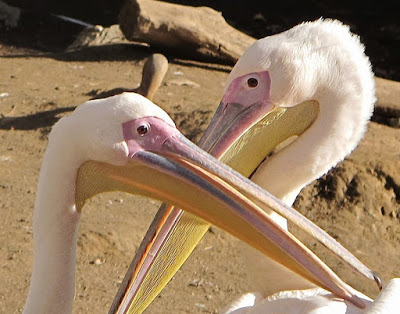
White Pelicans
We share a variety of words with bird activities and sounds.
Stop that squawking. Start feeling chipper.
If a pelican . . . so can you.
White Pelicans
Wake up and feel fine feathered.
White Headed Sparrow
Or, maybe you’re just winging it today?
Black Phoebe
Michael Wilkes, my husband and a retired architect, used to take photographs of the built environment. I asked him to take a photo of my favorite bird, a black phoebe. He did and won first place at the San Diego Fair. Ever since he has enjoyed taking bird photographs with his big lenses.
Saying one is feather-brained is a compliment.
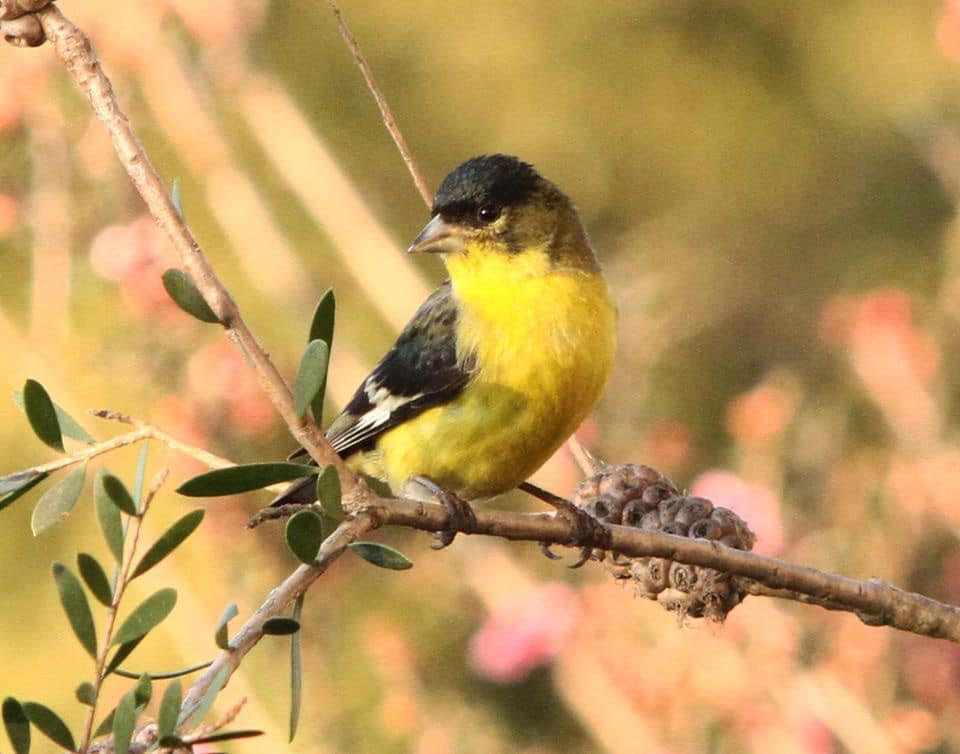
Lesser Golden Finch
Seagulls
Just keep your beak up. Don’t get in a twitter unless it turns into a trill of birdsong. Stay Tweet.
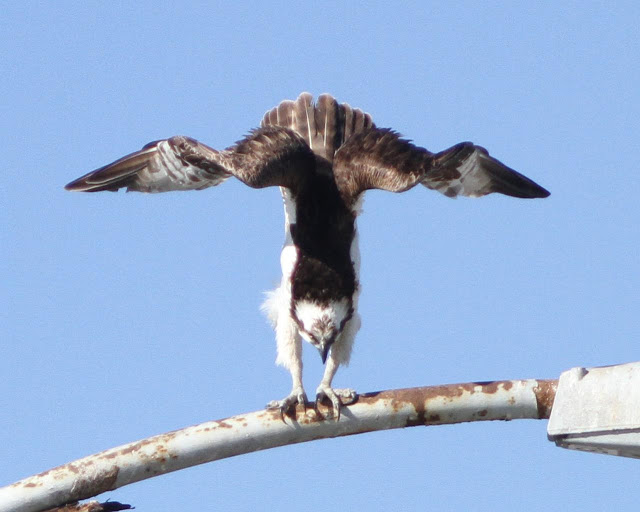
An Osprey
Spend time on the fly.
If you feel peckish, find your favorite snack. Then keep your head down and work.
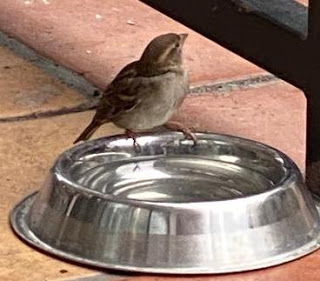
A house sparrow
We had moved to an apartment while we remodelled our house. I spent free time at a park next door writing. A black bird kept flying by. When he flew upside down in twirls, I noticed a heart on his chest. The next day I brought him seed and he paid no attention. He cocked his head at me as if I really had no clue. Which I didn’t. That night I searched and discovered he was a flycatcher and ate bugs.
Black phoebe (flycatcher)
I watched him for days until he brought a friend and did a flying dance in the middle of the park. I got close but not too close. They led me to a nest with little heads popping up.
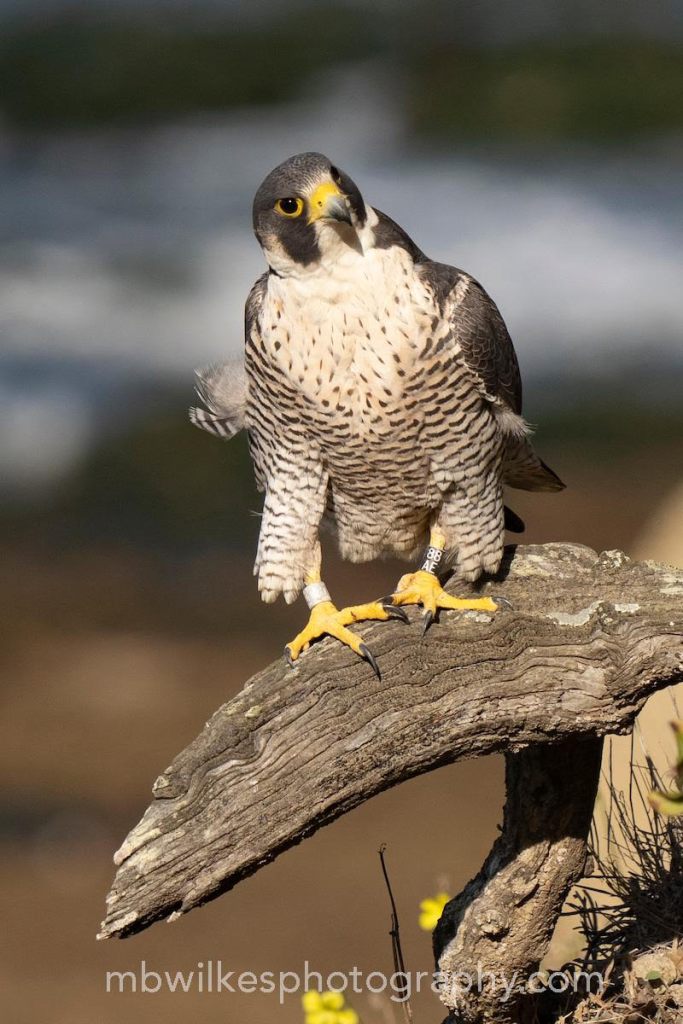
Peregrine season is about to begin where the pair romance, build an aerie, and take turns minding the nest. When the fledges toddle out, the parents teach flying and hunting lessons. I love to watch what I call, “flying fisticuffs” where the fledges attack one another in mock battles as they learn self-defense. We have lots of photos of their activities.
A pair of romancing peregrines
Lady Jane was frustrated with her mate because he did not bring food as he just wanted to romance her. Eggs are due soon. Then he will have to focus on the nest and feeding and all that . . . beyond the fun he enjoys.
A solo peregrine
I prefer to photograph with my cellphone. I want “moments in movement” so I do not have to set up a tripod or carry a huge camera around. As for the challenges of bird photography, one word: patience. Today I heard a woodpecker and chased him for two blocks. No photo. During my morning runs, a black phoebe flies and lands and flies away again. They hunt for insects and are called flycatchers. I enjoy photos I can take. The eyes enjoy what the camera cannot capture. Then when I least expect it, a fun opportunity arrives like the photo below.
This is an example of what I love to capture. A finch landed on a photograph of a bird.
A finch perched on a bird picture
Sing beyond a peep. Get raven about your successes.
Raven
Don’t duck opportunities and challenges.
Ducks with ducklings
You don’t have to get all your ducks in a row to find success and have fun…
Penny Wilkes, served as a science editor, travel and nature writer and columnist. An award-winning writer and poet, she has published a collection of short stories, Seven Smooth Stones. Her published poetry collections include: Whispers from the Land, In Spite of War, and Flying Lessons. Her Blog on The Write Life features life skills, creativity, and writing: http://penjaminswriteway.blogspot.com/ and at penjaminswriteway.blogspot.com. My photoblog is @: http://feathersandfigments.blogspot.com/
Michael B Wilkes is an award winning architect and photographer who has collaborated on three books of poems with his wife Penny Wilkes. On two occasions he has received recognition among the 100 Most Influential peoples in San Diego by the San Diego Daily Transcript. Michael B Wilkes site: http://mbwilkesphotography.com
.
PLEASE NOTE: ARTICLES CAN ONLY BE REPRODUCED IN OTHER SITES WITH DUE ACKNOWLEDGEMENT TO BORDERLESS JOURNAL
Mike Smith reflects on a short fiction by Russia’s first Nobel Laureate, Ivan Bunin. Could it be a precursor to flash fiction?
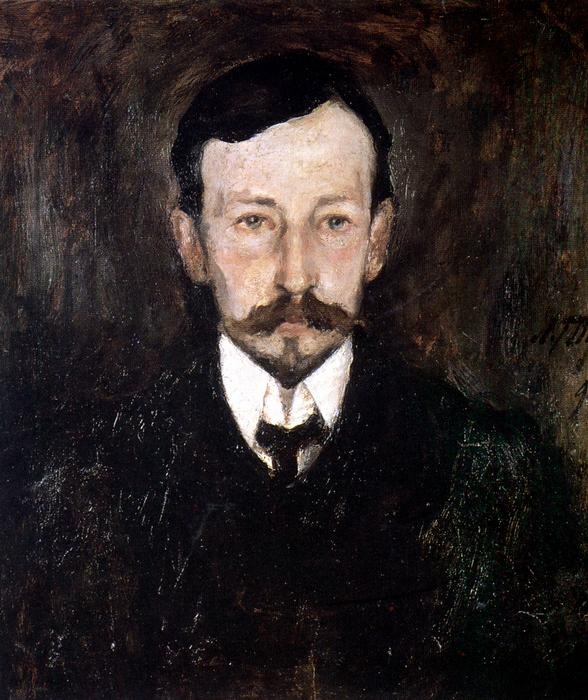
Portrait of Ivan Bunin by Leonard Turzhansky, 1905. Courtesy: Wiki
‘Un Petit Accident‘ (A small Accident) is one of those tales which will need more words to discuss than will be found in it.
First published in the late 1940s as part of a trio of short pieces this little tale might be seen as a forerunner of our present-day flash fictions and micro fiction. Yet it is in a tradition that stretches back through the prose poem or Illumination to the anecdotes and exemplars of much earlier times. Only recently cast into English, this translation is attributed to Maria Bloshteyn and dated 2017.
Ivan Bunin (1870-1953) fled to France in 1920 in the aftermath of the Russian Revolution but unlike many émigrés he was already an established writer and his work is not solely related to the experience of exile.
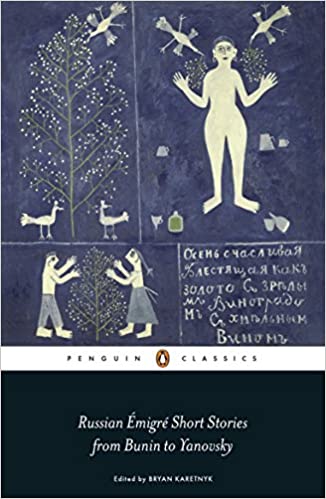
‘Un Petit Accident’ in my paperback copy of Russian Émigré Stories from Bunin to Yanovsky (ed. Bryan Karetnyk, Penguin Classics), runs to a mere 29 lines, yet it packs a punch you might think would need a much wordier arm behind it. For me it’s both a master work and a master class in the short story, illustrating perfectly Hemingway’s ‘iceberg’, and his advice to ‘take everything out that isn’t the story’.
Like a slow camera pan, it traverses the cityscape of Paris. It takes in the sunset, the Palais Bourbon, the Seine, the Place de la Concorde and the Eiffel Tower, before zooming in, near The Madelaine, on the rushing, choking traffic of a Parisian evening. The final shot, in what, to twist the metaphor slightly, might be thought of as a slideshow rather than a moving picture, focuses on a single detail, the significance of which we are left to consider.
There are no named characters, seemingly no protagonist and antagonist, no obvious cycles of increasing jeopardy. The ‘Inciting Incident’, if it is not that sunset, might be in our imaginations and for later. Or perhaps the ‘Obligatory Scene’, if it is that final image, must serve the function of both. It seems that everything that happens in this story has already happened by the time we see it. Yet there is no sequence of actions as such, only the sequence of images that we might mistake for mere setting.
As with much longer short stories, there is the vestige of that common structural oddity of placing the most striking event or revelation slightly ahead of the actual ending, making it part of the preparation and contextualisation of the true ending. And following that shock there is a little addition which poses the question, raises the issue, on which I believe the author wishes us to ponder; the view to which he has brought us.
The collection is furnished with a section of notes about both the writers and individual stories. What they say about this story reveals a lesson in the form. Bunin is quoted; “ ...even with the greatest writers, there are only isolated good passages, and between them – water…”
Karetnyk’s notes go on to say: “these miniatures are an attempt to distil prose into its purest form.” Presumably, that is by getting rid of all that water.
Earlier in the piece he has described Bunin’s tales as ‘terse’, but in this case I did not find it so. Rather the opposite. I’d want to use the word lush. That opening sunset, painted in a three and half line, verbless sentence – which a professor of English in the nineteen seventies categorized because of that lack as being a ‘label’ rather than a ‘message’– is rich with colour: “…the enormous panel of sky covered in strokes of murky colours,mellow and many hued…” The city too is awash with description: ‘Slim spikes of greenish gas flames are strewn throughout thepistachio haze of the city,’
It’s one of the most description packed little tales I’ve read. It brought to mind the startling contrast with an earlier and longer tale by Mary Mann, in which a bare half dozen words sprinkled throughout describe the rural Norfolk in which her story is set. It is sometimes averred that description kills story, disrupts the narrative, brings action to a halt, but here Bunin’s tale is almost all description, a colourful, noisy kaleidoscope of sights and sounds. “Now darkness falls, and the candelabra of the Place de la Concordecast their reflective silvery glow, while up in the black summits the lugubriously flowing lights of the Eiffel Tower flicker like lightning.”
The sequence is constructed of easily imaginable images, and when we have reached the ending and come to re-read the piece, we might pay more attention to the ambience of those sounds and sights. They are what make the context for our arrival at the final image. They are what prejudice our frame of mind for understanding and speculating about the deeper meaning of what we are being brought to encounter. The purpose of the story, and you might argue, the storyness of it, is in our reaction to what we ‘see’. Conrad is quoted as saying he wanted to “make us see” in his writing and Bunin here does just that. But it is up to us alone to grapple with the significance of what we have been told.
On closer inspection we might see that Bunin has given us more than just intense colour, form, and movement. That it is a single paragraph story is notable. In a story of thirty lines there is room for a handful of paragraphs, but the fact that Bunin uses one alone need be no ‘petitaccident‘. It gives the story a structural unity, such as you might expect to find in a painting or photograph.
The painting has it for me, with those ‘murky’ and ‘many-hued’ colours, but a painting of what? Despite the lack of protagonist or antagonist, at first glance, there is the anonymous man on whom our gaze comes to rest at what might be called the ‘crisis’ of the action, and there is one other ‘character’, referred to rather than present, and whose ‘unseen hand is smoothly conducting’. At this change point in the story, as the traffic locks and our focus is narrowed down onto and into a single vehicle, it ‘seems as if the hand has flinched’.
‘Seems’ is one of those words that, in a short story especially, should set our radars tingling, because it usually denotes, or at least raises the possibility, that what seems is not what is. And whose hand might that be which might be doing something other than flinching? It certainly isn’t a human hand. Is it a hand that has acted decisively? And the ‘fiery Babylon’ that Bunin describes with its ‘spikes of greenish gas’, its ‘darkness’ blazing, might seem more Hellish than Heavenly. I was reminded of apocalyptic visions in John Martin’s paintings.
My last paragraph contains a ‘spoiler’, and those who read to find out what happens next might prefer to stop here!
When we reach the story’s end, we are told of a “fast little auto, vividly yet softly lit inside” where a man in evening dress is “slumped over his steering wheel“. The narrative thread is almost imperceptible. The movement, lights and sounds, have seemed random rather than directional. Bunin’s tale has been told in the present tense, yet here, at the sticking point of the end, we are seeing events not so much unfold as having already unfolded. The focus neatly closes in, with mention of ‘matte top hat’, then closer still: “His eyes are closed…” The final words pull back a little, as we have recoiled from what we have recognised: “his young, tritely classical face is already looking like a mask.”
It is a mask, we understand, from behind which the spirit of life has already withdrawn.
Russian commemorative coin issued on Bunin’s 125th birth anniversary. Courtesy: Wiki
Mike Smith lives on the edge of England where he writes occasional plays, poetry, and essays, usually on the short story form in which he writes as Brindley Hallam Dennis. His writing has been published and performed. He blogs at www.Bhdandme.wordpress.com
.
PLEASE NOTE: ARTICLES CAN ONLY BE REPRODUCED IN OTHER SITES WITH DUE ACKNOWLEDGEMENT TO BORDERLESS JOURNAL
 The Tickle Imp


 I once explored a cave
 with a homemade
 flaming flambeau
 that sputtered and guttered
 while big bats fluttered
 and the waves of the sea
 lapped steadily
 on the shingle of the beach.
    I tingled
 as the shadows
 danced upon the walls
 and stalactites out of reach
 dangled like tusks
 in the interior dusk
 of that subterranean world.

 What was I seeking
 in that place?
 Why did I delve so deep?
 Was it simply a pleasure
 to look for treasure
 at the back of a gloomy maze,
 an iron chest full of gems
 hidden by a pirate bold
 one night in the olden days?
 The answer of course is yes!

 And there at last
 among scattered bones
 and the fossilised echoes
 of ancient groans
 I found what I was wishing for,
 a fantastic casket
 festooned with padlocks
 cunningly concealed behind sharp rocks.
 And whatever it held
 within its depths
 was mine to take and keep
 but first of course
 I had to break
 each rusty antique lock
 and disturb the sleep
 of any unkind ghost
 who might resent playing the part
 of my unwitting host
 in that bleak and slimy darkness.

 A hammer was my key!
 I knocked
    the locks off
 one by one with blows
 of savage glee
 and when that was done
 I had some fun
 throwing open the lid excitedly
 and feeling deep within.
 What did I feel,
 what did I see?
 Rubies, doubloons
 gleaming like moons,
 polished silver cutlery?
 Emeralds, sapphires,
 diamonds divine,
 opals smouldering with internal fires
 in colours that never fade?
 Or at the very least
 strings of pearls
 as long as the girls
 they were meant to adorn
 that would trail on the ground
 with a clicking sound
 louder than lawnmower blades?

 To my acute dismay
 on that momentous day
 there was nothing of that kind
 but just a strange little creature
 with disordered features
 and bulging eyes,
 a chin in the shape of a sickle
 and breath like ripe
   lime pickle
 who jumped out in surprise.

 He leapt onto my outstretched arm
 and clung there while I winced
 and though his claws
 spurted no gore
 the harm that was done
 left me rather sore
 and I roared in pain
 as I tried in vain
 to shake off the devilish thing
 but he refused to budge
 and when I paused
 he opened his jaws,
 undulated his tongue,
 and though he didn’t say much
 he spoke to me thus
 and it was quite enough:

 “Oh, tickle me under the chin,
   the chin,
 please tickle me
 under the chin.
 It might seem quite fickle
 or even a sin
 to make this request,
 to ask such a thing,
 but I must confess
 that to ease my distress
 there’s nothing so fine
    as a tickle.
 So please tickle me
 under the chin,
    the chin.
 Tickle me under the chin.”

 The flaming flambeau
 was propped in a corner
 and I snatched it up
 to scorch his nose.
 Then he relaxed his grip
 and I was mighty quick
 to run away
 without delay
 and never deviating
 left or right
 I lurched into
 a stalagmite. Ouch!
 Yes, I stumbled and tumbled
 and rolled on the ground
     all the way
 to the mouth of the cave.
 I guessed the demon
 was pursuing me
 but I never expected
 him to reach the sea
 before I did, and how
 it happened I never learned
 but there he was
 to my great concern
 prancing in the waves
    that washed
 the mingled shingle and sand
 in front of the cave
 and while he surfed to shore
 he clasped his hands
 imploringly
 and made this request
 in the style of a demand:

 “Oh, tickle me under the chin,
   the chin,
 please tickle me
 under the chin.
 No doctor, nurse or
   apothecary
 could ever do half as much
 for me as a tickle
 under the chin.
 Why this should be
 I really can’t say
 but it’s all that I need
 to feel perfectly free
 and filled with strange glee
 to a tremendous degree
 like an emphatically happy
 ecstatic chappie!
 So please tickle me
 under the chin,
    the chin.
 Tickle me under the chin.”

 Shrieking I fled
 over jagged rocks
 and scuffed my shins
 almost down to the bone
 on pitted stones
 and the pincers of crabs
 snapped and snipped
 as they sidled up
 to the rude intruder
 who waded through
 their tidal pools.
 What a fool I had been
 to nurture that dream
 of wealth so easily acquired.
     All in vain!
 Rich and admired
 I never would be
 but dearly my life I hoped
    to retain
 and so I kept on running,
 bawling in pain,
 my leg still lame,
 as I tried to escape my fate.
 But my life would never
 be the same again.

 The dawn was breaking
 and my limbs were aching
 when I finally reached my home.
 I kept glancing
 nervously behind just in case
 I was being followed
 by that impish face
 but the coast was clear,
 the imp was nowhere near.
 I felt a surge of relief
 as I opened my door
 and passed in before
 I was fully aware of the possibility
 that he had again preceded me,
 which in fact was really the case.
 And on the mantelpiece
 in the living room,
 dangling his legs,
 there he was,
 waiting for me,
 and what did he say?

 “Oh, tickle me under the chin,
   the chin,
 please tickle me
 under the chin.
 Alone for so long
 it can’t be wrong
 for my chin to crave a tickle.
 But if you refuse
 you stand to lose
 everything you hold so dear,
 your life and mind,
 I’m not unkind
 but that’s the truth,
 the facts are ruthless
 and uncouth.
    So tickle me
 under the chin,
    the chin.
 Tickle me under the chin.”

 I grabbed my wallet
 from the table
 and stuffed it in my pocket
 then out I dashed
 as fast as I was able,
 threw open the shed door
 to pull out my bicycle
 and it seemed that an icicle
 of fear was stabbing
 me in the rear
 as I mounted the machine
 and pedalled
 harder than ever before
 like a madman in a dream.
 Uphill all the way
 my journey took me
 to the mountains north of town
 and when at last
 I lay the bicycle down
 on the ground
 I was at the base of a peak
 so lofty and steep
 no one would ever think to seek
 a fugitive up there.
 Such an obscure sanctuary
 would surely suit me very nicely.

 I scaled the face
 of that glowering crag
 by my fingertips
 with painful slowness,
 compressed lips
 and no grace at all,
 but I finally managed
 after many long hours
 to conquer the
 forbidding tower of gloom.
 There was room
 at the top to accommodate
 one person only
 and the view
 would surely enable me to see
 far in all directions.
 If the imp was coming
 this way I would know
 and if he was really doing so
 I could deal him
 a crushing blow
 by rolling boulders on his head
 as he tried to follow
 me to the top.
 With bursting lungs
 and thudding heart
 I hauled myself to the summit
 of that granite block
 but to my shock
 the imp was already there
 with his charmless grin
 and his wispy hair
 and once again he had his say:

 “Oh, tickle me under the chin,
    the chin,
 please tickle me
 under the chin.
 Ages ago I came to your world
 from a distant planet
 and asked to be tickled
 but nobody could be bothered
 with the simple request
 of an alien guest
 and now on this ledge
 I have solemnly pledged
 that if you decline
 I’ll give you no rest
 until the end of time.
 So tickle me
 under the chin,
    the chin.
 Tickle me under the chin.”

 My nightmare continued
 and when I look back
    to review
 the subsequent hunt
 of man by imp around the land
 I shudder and shiver,
 tremble and quiver,
 gasp and grunt,
 and my mind goes limp.
 Oh horrid times!
 I even caught a plane
 to distant Spain
 in the other hemisphere
 but after safely landing
 in Andalusia
 and disembarking
 with the flight engineer
 this course of action
 ultimately helped me not at all
 for at the point
 of luggage retrieval
 instead of my suitcase
 on the conveyor belt
 there trundled that being of evil
 who leapt into my arms
 insisting on a tickle.

 I grew old prematurely
 then finally sickened
    and died
 but this blessed escape
 was just an excuse
 for one more jape
 in the mischievous career
 of the incorrigible imp
 who managed to appear
 even now, yes!
 I was buried in a coffin
 and as I reclined
 to enjoy my time of rest
 for all eternity
 I heard a knocking on the lid
 and it opened
 with a creak and into my
 poor sarcophagus
 without making undue fuss
 creeped the dreadful thing
 with his tickle hungry chin
 and he shut the lid
   behind him,
 snuggled up close
 and hissed in my ear
 in the style of a ghoul
 from a cruel and ancient year:

 “Oh, tickle me under the chin,
    the chin,
 please tickle me
 under the chin.
 There’s little room
 for a man entombed
 to comply with my request
 especially in a time of such distress,
 but as my grandma always said
 when I was an egg:
 what individuals won’t do alive
 they might do dead.
 Even your residual awareness
 ought to understand
 it’s best to help me with my quest
 for I can be the kind of pest
 no one can withstand.
 So please tickle me
 under the chin,
    the chin.
 Tickle me under the chin.”
Rhys Hughes has lived in many countries. He graduated as an engineer but currently works as a tutor of mathematics. Since his first book was published in 1995 he has had fifty other books published and his work has been translated into ten languages.
.
PLEASE NOTE: ARTICLES CAN ONLY BE REPRODUCED IN OTHER SITES WITH DUE ACKNOWLEDGEMENT TO BORDERLESS JOURNAL.
Avery Fischer Udagawa is an American, who lives in Thailand and translates from Japanese. She is like an iconic bridge that links diverse cultures with her translations. Avery grew up in Kansas and studied English and Asian Studies at St. Olaf College in Minnesota. She holds an M.A. in Advanced Japanese Studies from The University of Sheffield. She writes, translates, and works in international education near Bangkok, where she lives with her bicultural family.
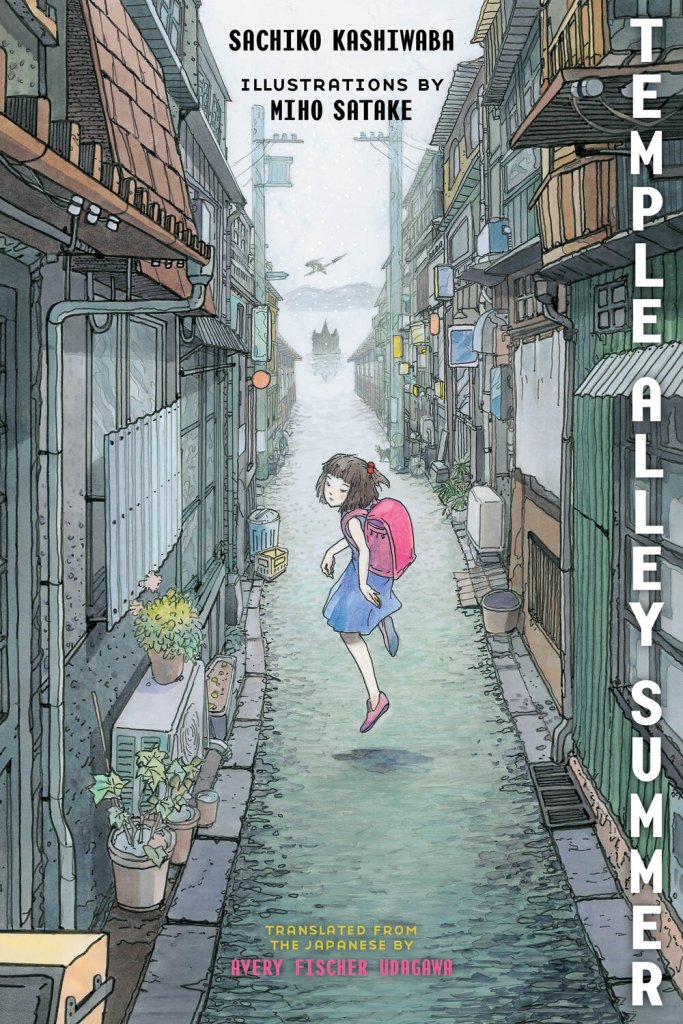
Her latest translation, of the fantasy novel Temple Alley Summer by Sachiko Kashiwaba, is forthcoming in July 2021 from Restless Books, Brooklyn, New York. Described by the publisher as “a fantastical and mysterious adventure featuring the living dead, a magical pearl, and a suspiciously nosy black cat named Kiriko”, it features illustrations by Miho Satake.
Avery’s other translations include “Festival Time” by Ippei Mogami in The Best Asian Short Stories 2018, “House of Trust” by Sachiko Kashiwaba in Tomo: Friendship Through Fiction–An Anthology of Japan Teen Stories; and J-Boys: Kazuo’s World, Tokyo, 1965 by Shogo Oketani. Her translations have also appeared in Kyoto Journal and Words Without Borders.
You are an American. What moved you to learn Japanese? Why did you pick Japanese instead of some other language?
My parents took pains to expose my siblings and me to the world’s cultures, through the arts and artifacts and by having us spend time with AFS ( American Field Service) exchange students in Kansas, where I grew up. Some of these students were Japanese. It did not seem a huge stretch, then, to try an introductory Japanese course when I was an undergraduate. I quickly found that I enjoyed the language.
How many books have you translated? Do you enjoy translating? What are the challenges you face?
I have translated two novels, a number of short stories, and materials such as the English-language guide to a permanent display on Japanese children’s literature at the National Diet Library, Tokyo.
I deeply enjoy translating children’s literature or literature that foregrounds children’s perspectives. A child’s-eye view reveals our world in accessible, yet wise ways, I find. The chief challenge I face is low demand for children’s literature in English translation.
What kind of stories do you translate? Do you translate non-fiction too?
I often gravitate toward stories for (or foregrounding) children in upper elementary and middle school, roughly ages eight through twelve, but I also work with young children’s and teen literature. I am definitely open to non-fiction.
When you translate a story, do you get to pick the story, or do you get commissioned to translate?
Some of both. I was commissioned to translate the historical novel J-Boys: Kazuo’s World, Tokyo, 1965 by Shogo Oketani, and I proposed translating the fantasy Temple Alley Summer by Sachiko Kashiwaba, which I am proud to say is coming out in July 2021.
Do your translations find a home among Western audiences? What kind of reception do Japanese stories have among them?
Not only mine, but many translations into English face an uphill battle, because the anglophone markets tend to focus inward. In children’s publishing in my native U.S., the most coveted prizes—the Newbery and Caldecott Medals—are required to go to U.S. persons who write and publish in English. Another prize, the Batchelder Award, garlands translations from Languages Other Than English, by authors from anywhere, but most consumers have not yet heard of it. Another award I hope the book-buying public will discover is the Hans Christian Andersen Award, often called the Nobel prize for children’s literature, which is given biennially to one author and one illustrator. Jacqueline Woodson of the United States won the most recent Andersen Award for Writing, but the three prior winners were from Asia. I hope that readers of English will pick up their books in translation!
After the Pearl Harbor incident, Japanese Americans are said to have been isolated. In the current world where xenophobia is again rearing its ugly head, how are your translations received by Japanese Americans?
Satsuki Ina, a Japanese American filmmaker born in the Tule Lake Segregation Center during World War II, was kind enough to praise J-Boys: Kazuo’s World, Tokyo, 1965. Translating literature that humanizes Japanese children (my own children are Japanese, as well as American) is how I join the fight against xenophobia.
Is it easy to translate from Japanese to English? Are the languages compatible culturally?
Japanese and English are quite far apart, in terms of both linguistic features and cultural origins. Veteran translator Cathy Hirano has described the Japanese-to-English translator’s job as “fairly strenuous cultural and mental gymnastics.” Mitali, I believe you also translate between dissimilar languages.
Yes, I do. There are normally nuances in each language that are different and essentially belonging to that culture intrinsically. It becomes difficult to translate those words to another language, at least it is true when you translate from Bengali or Hindi to English. Is it true with Japanese to English too? Do you have to do cultural studies to do a translation?
Absolutely! Japanese features many forms of indirectness and intentional ambiguity, so awareness of cultural context is crucial to translation. The Japanese writing system also presents a challenge, in that the visual effects of thousands of ideograms (kanji) and two phonetic alphabets (hiragana and katakana) can be hard to replicate using only 26 English letters.
Finally, there are the many concepts and objects without ready English equivalents. In Temple Alley Summer, for example, a teacher is nicknamed 演歌 (Enka), which refers to a style of ballad singing that is popular yet steeped in tradition. The closest equivalent in U.S. English might be country music, but the genres are totally different. The teacher in the book is a minor character, so I had to weigh whether to explain Enka or go with the shorter, imperfect translation for flow.
Do you translate from English to Japanese? If no, then why not?
Just as someone who speaks, reads and writes English might not choose to write it for publication, I use Japanese daily but do not translate into (write) it for publication. In a competitive publishing environment, I prefer to work with the language I write better. I also perceive a greater need for translations from Japanese to English than vice versa; Japan has long had a robust appetite for world literature, and many fine translators already specialize in English-to-Japanese.
What do you see as the future of Japanese literature? How much has been found in translation?
In children’s literature, which I know best, Japan is second to none. Authors and illustrators regularly win international awards; noteworthy children’s titles continue to be published despite population aging; and Japan (as mentioned) boasts a vigorous market for translations. I wish that all of the world’s children had access to global stories like Japanese children do.
You have lived in the US, Japan and Thailand. Which country left the deepest imprint on you and your work? Is it difficult to translate from Japanese while living in Thailand?
I spent my formative years in the U.S. and in Japan, where I was fortunate to receive funding to study in my early twenties. I would still say that the U.S. and Japan made me who I am.
Marrying a Japanese man then ironically led to living outside of Japan: two years in Oman, and fifteen years and counting in Thailand. (My husband teaches music at international schools; he and I met in college concert band.) While here in Thailand, though, I have earned my Master’s in Japanese, and I use it in my work and family life. I struggle more with Thai, which I speak daily but do not use at work or at home. My children are more literate in Thai than I am.
As for whether it is hard to work from Thailand—before Covid, I would have said that the Internet offsets the distance between countries, making it easy to work from anywhere. Since the pandemic put the brakes on international travel, however, I have learned how much I need visits to our family’s home countries, both for work and for my spirit. Many people have been far more adversely affected than we have, of course. May we soon see strides in stamping out the virus.
Reflections of Sandhya Sinha (1928-2016), translated by Ratnottama Sengupta
Ali Baba and the Forty Thieves. Courtesy: Wikicommons
Chiching Phank! “Open Sesame!” Two cock-n-bull words. But the spell of these two magical words released the rocky gates of a secret cave hidden by thorny bushes in the folds of a mountain, in front of Alibaba’s dazed eyes…
The hideout was as mysterious as it was cavernous. With a pounding heart the impoverished woodcutter entered the cave — and froze. Diamonds and rubies, gold and silver filled every corner of the cave; silk and velvet and Persian carpets and God knows what else were stored there! He had never set eyes on so much glitter nor had he heard about such riches. This was the secret locker for the goods ill-begotten by the forty dacoits who had just galloped away on horseback.
By this time even the youngest reader of 1001 Arabian Nights would be wonderstruck by the astounding description of diamonds, rubies and gold coins. “Will Alibaba succeed in loading all these riches on the back of his three donkeys he has left hidden in the bushes and safely take off for his home?” the reader would wonder, afraid to even imagine the consequences in case Alibaba failed.
If he was captured alive by those dacoits, they would bury Alibaba alive in that very cave and not even a crow would get to know of it. Such anxious moments! Each moment would weigh down the breath of the reader, until Alibaba emerged out of that zone of enchantment — all goods intact — and reached his shelter at sundown.
The spell binding excitement about ‘What Happens Next?’ in the Arabian Nights was planted in us readers by unknown storytellers — and the unreal harvest of curiosity has continued to cast its magic over centuries and across continents. The identity of the original creator of these stories is lost in the womb of time. What lived on were the characters which the author fleshed with dexterous imagination. It has been only three hundred years since the West got a taste of these adventures and became curious about the romance that is the Orient. Truth is these tales come out of the Arabian Nights but why ‘Nights’? The adventures are happening in broad daylight too. Ask, and the answer will lead you to a chatur nari — a very clever woman — and her hoshiyari — her quick thinking, alert mind.
Scheherazade, painted in the 19th century by Sophie Andersen: Courtesy: Wiki
So, there was this very powerful Persian Badshah who found out that his Begum was carrying on an illicit affair. He not only snuffed out her life, he developed such immense hatred for the gender that every night he would procure a beauty to warm his bed and send her off to be beheaded at the break of daylight.
This went on for a while. The ministers were at their wit’s end: Who knew when their daughters would be sent for? One night, of her own free will, the prime minister’s daughter, the clever Scheherazade stepped forward and entered the Badshah’s bedroom, despite being well aware that the night ends in the certainty of death. The trusted matronly nurse of ample years was entrusted with the job of waking her up in the wee hours of the night. Thus, in the fading darkness, Scheherazade started narrating a bewitching story to the Badshah. Spellbound he listened, until the first ray of the sun interrupted the action at such a critical point in the story that the curiosity to know what happens next compelled the Badshah to postpone the beheading by one night.
By the sheer genius of her sharp wit, that young lady with the sword of death hanging over her head, went on with her storytelling for one thousand and one nights. So what if he was a brutal devil? The pulsating heart of a flesh and blood human entrapped him too: after birthing three adorable babies Scheherazade became his Begum. And her head stayed firmly between her shoulders.
Centuries have passed since thirst-driven caravans on sandy roads immersed themselves in these stories as they sat around shallow wells to gather their breath or to warm themselves around fires under chilly starlit skies. By word of mouth, from one caravan to another, from one town to another, from a port to another land, these literary gems counted centuries before they were stilled in sentences and paragraphs. Some parts of this literature, penned down in Arabic script during the 1st century after Christ, have been unearthed in Cairo as recently as the 20th century. These appear to be attempts to recount and record those captivating tales.
Many interpolations must have happened in the process of their journey from one narrator to another. Doubtless these are ancient treasures of the East that were presented to the world at the onset of the 19th century by French archaeologist Antoine Galland. He translated the stories from the Arabic manuscript unearthed in Aleppo and from the stories recounted to him by a Syrian. Not one or two but in twelve volumes he published his version of the tales and stormed the bastion of literary West between 1704 and 1717. Subsequently, it is believed that his work exerted significant influence on later European literature and attitudes towards the Islamic world.
Since French was widespread then, England and the rest of Europe too could savour the romance embedded in these tales of adventure. But more than another hundred years passed before they were transcreated in English. It was Edward William Lane’s English version, Arabian Nights Entertainment, that amazed English readers globally.
It is logical to ask, from where were such captivating tales strung together? These tales do not belong to any particular tribe, nor are they rooted in any one soil. They have grown out of multifarious dialects and a multitude of emotions. They have been watered by inventiveness and mysticism. Man’s creative soul springs from them like an unchequered waterfall. The essence of India, Persia, Israel and Greece enrich this lexicon of mankind. Hence they unhesitatingly bear the robustness of an archaic tongue and of obscenity too. To ease the pain of a long day’s journey through unrelenting desert, or the rigours of relentless chores, the wayfarers would let loose the fertility of their mind in unimagined colours. Their panache would sketch even impossibly enchanted worlds. Perhaps it did not happen exactly so — but surely it could too! And if by chance or deus ex machina it did? Oh, what thrill that would spell!
Thus the tales crossed the boundaries of nature and politics. Thus they were nourished by the traditions of alien lands. Thus they came to flow as one river, fed by streams brown and blue and white. Since its origin, the human mind has seen little change in its dreams and desires, hopes and heartbreaks, greed and ambition, jealousy and suspicion, envy and enmity, doubts and fears. These make him oscillate from peaks of delight to the depths of despondency. Consequently, these stories have not faced wear and tear.
Magic lamp from Aladdin
The worthless, good-for-nothing son of a poverty stricken tailor, Aladdin spends his days imagining the impossible. It so happens that a magician takes a shine to him, and he arrives at a garden where trees are laden with rubies and emeralds. There he picks up a rusty little lamp. He rubs it, and a genie materialises out of thin air to fulfill every command of his. With his services and generosity, Aladdin gets the world in his fist. Soon as he becomes wealthy, he finds the Sultan’s daughter to be his wife. Then one day, through the machinations of the evil magician, womanly wisdom prompts her to trade off the rusty old lamp for the radiance of a brand new brass lamp. And in a jiffy his luxurious world evaporates before his very eyes. His wife is imprisoned by the trickster and he is tossed into the throes of endless suffering – until the clever Aladdin uses his wit, destroys the magician and retrieves his magic lamp. And when his father-in-law passes away, Aladdin wears the crown of the Sultan! How many minds and men are inspired by this little story to dream of the impossible coming true in their lives!
At the other end, simpleton Alibaba reaches home with the three donkeys laden with sacks full of gold coins. But how will he quieten his hyper-excited wife, Hasina Bibi? The destitute family did not own even a weighing scale. There was no other way but to borrow one from the haughty wife of his brother Cassem living on the other side of their partition wall.
“The family scrapes together barely two meals a day – now what has he brought home that compels him to borrow a scale at midnight?” – Cassem’s wife is not only curious, she is quick witted enough to paste some soft dough on the underside of the scale. A shining gold coin sticks to that and arrives in Cassem’s house, to declare what Alibaba and Hasina had come to own.
Spurred by greed, Cassem discreetly follows his brother at daybreak and unravels the mystery of the cave. And as soon as Alibaba exits the cave, Cassem utters “Open Sesame!” and enters the treasure trove. Things go wrong once he sees the riches stored inside. He goes berserk stuffing sack after sack and in the process totally forgets the two magic words. When he senses that he ought to leave, he realises the enormity of that one little mistake. He tears his hair in despair and keeps uttering “Open Potatoes!” “Open Brinjal!” “Open Cinnamon!” “Open World!” Alas! The stone wall does not sway a hair’s breadth.
Fear of losing one’s life is so overwhelming that Cassem lost all desire for an iota of the wealth he had so lustily filled in his bags. How desperate he was to see the stone wall budge! And when it actually creaked open, Cassem’s eyes shone at the thought that now he could live to see the world outside. But the shine in his eyes lasted a mere second: the very next moment he was lying in a heap, his body chopped to pieces by the dacoit’s sword. They hung the severed body parts outside the cave and set off again.
Is there a moral lesson to be learnt from this story? The non-confronting, peaceable Alibaba could leave the cave in good time as he did not lose his equanimity, while the wily Cassem was so overcome by greed that he forgot the two magic words ‘Open Sesame’, lost his sense of time and consequently, his life too.
The thrill plays on in the heart and mind of those who watched Alibaba (1937), directed by Modhu Bose and featuring his danseuse wife Sadhana Bose. One of the songs went thus:
Aay bandi tui Begum hobi khwaab dekhechhi
(Hey slave girl! You’ll be a queen, I know that from my dreams)
Aami Badshah banechhi
(I have become the Badshah)
Ami begum banechhi
(I have become your Begum)
Badshah Begum jham jhama jham bajiye chalechhi
(Badshah Begum creating the jingle of coins wherever we go)
Oh, who can forget that fun sequence of song and dance!
Herding camels and goats was the culture of Bedouins, the nomadic Arab tribes who historically inhabited the desert regions of North Africa, the Arabian Peninsula, Upper Mesopotamia and Levant. They were neither burdened by heritage, nor did they boast a wealth of literature. Generation after generation, these startling stories became their oral co-travellers. That nomadic lot of humanity with behaviour and actions peculiar to their regions, their atheism and agnosticism, their songs and liturgy became one single flow. Almost 1250 years ago, when the cornerstone of Arab civilization was laid, gathering strength from the various languages, strifes and skills, these incomparable tales became a bulk of Arab literature — and effortlessly got dyed in the Islamic colours of the devotees of Allah. Friendship and affection, wisdom and respect for seniority, belief in destiny, surrender to Allah regardless of personal wealth or poverty — these are the keynotes of all the stories. The action could well be taking place in China or Persia, but the characters are all bound by the discipline of Prophet Muhammad. It is an astonishing harvest of Islam’s golden age.
However, Haroun Al Rashid, who is the protagonist of quite a few novellas, is not an imaginary character. Renowned in history as the fifth Abbasid Caliph who was the sole lord of every life and property in sweeping Mesopotamia — and owner of consequential wealth and splendid palaces, stately homes, chateaux and alquazar (al-qasr) – his rule between 786 and 809 AD saw Baghdad become Asia’s most chronicled trading post.
The city would bustle with transactions in the most exquisite crafts. Gifted artistes and intuitive minds assembled here at a time when European civilization had yet to scale heights. Haroun’s Baghdad can then verily be described as the poetic nursery of Arabian literature, a champion of architectural beauty, love, and other emotions of the human heart.
1001 Arabian Nights have gained recognition by learned critics as a truthful record of Islamic civilization at the turn of the 8th century. And not just that: Even today adventurers are amazed to find the wealth of traders being transported through the difficult terrain of the desert on the back of slow-moving camels — exactly as described in the Arabian Nights. It appears to be a breathtaking oral history whose contribution to the social science of the lettered world is immense.
It is impossible to classify this piece of literature as the product of sheer fantasy. The story of ace seafarer Sindbad is a hair-raising description of a new world that can be tallied with reality. None can doubt it as drug-induced hallucination.
During the glorious days of the Caliph, Arab seamen set out on courageous courses across the waters. The lush foliage and dense forests of the Far East repeatedly drew the desert dwellers — and they did not return empty handed. The heady fragrance of the tasty spices, the silk at South Indian ports, pearls — pink and purple, grey and milky; emeralds of the Lankan island and rubies of Burma along India’s east coast — they filled their bags with all this, and their memories with experiences galore. Had they not witnessed these with their very own eyes, the actions and gestures of cannibalistic tribes; the extraction of pearls from the shells wrested from the bottom of the ocean, and the enticing iridescence of gems– it would not be possible for sheer artistry to measure up to all these tasks.
Personable and prudent Sindbad had gone around the ocean full seven times. Then comes the mishap: monstrous roc birds attack and destroy his ship. When she sinks, Sindbad stays afloat by hanging on to a plank of wood and using it like a raft, he arrives at an island. Here, an emaciated old man perches on his shoulder and with his dangling skinny legs he grasps his neck in a pincer-like hold. The exhausted Sindbad has no choice but to eat and sleep carrying on his back the old man (perhaps like the men who followed the African custom of riding on slaves).
This makes me think of the Indian Panchatantra Tales, which in 550 AD, are said to have been extremely popular in Persian translations. Did the Arabian storyteller adorn the Betaal Panchavimsati tales with further fictional details to create this particular old man of the sea?
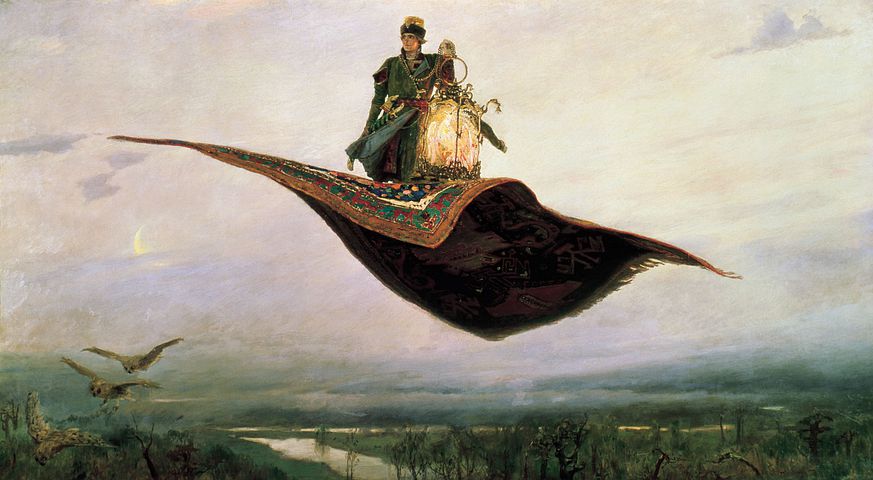
A flying carpet
Metaphorically speaking, endless greed and lust can get the better of man and ride him, slave like. Men in those days had to walk for days to their destinations. The Arabian tales are woven from a zillion life situations, narratives and religious beliefs — an effortless journey undertaken on a daily basis. In the garb of fantasy many a historical fact has been jotted down by the fanciful chronicler — a timeless tapestry of fact and fiction. The experiences and realisations of everyman have orally arrived at the horizons of many an imaginary land and have been disbursed to untrod shores. Who on earth can suppress the desire to scour the globe and the heavens too, astride an Uran Khatola — a flying carpet? In practical terms it may not be possible but where is the harm in dreaming of the impossible?
Sir Richard Burton had visited Mecca to witness for himself the glory of the Haj. On this journey full of hardships, he heard the thousand and one incredible stories spun out by Scheherazade, just before dawn. He translated the tales word for word, and published them in English in the first half of Queen Victoria’s rule. The recording of experiences of human head and heart, unadulterated by any critical or moral judgment, opened possibilities of altering the prudish values then prevailing in England. That a vision stretching out into the horizon, the romance of adventure and the thrill of luxuriating in untold wealth can captivate all, is best exemplified by Robinson Crusoe and Gulliver’s Travels — tales of adventure that have immortalised Daniel Defoe and Jonathan Swift.
Literature of no land can ever become popular unless it correlates the head with the heart. Unbeknownst to himself Shahryar, that wrathful Sultan who hated every woman, has enshrined his Scheherazade. He may have got a scribe to put into script the tales he had heard in the melting darkness of his bedroom. It added a glorious chapter to the literature of the world. The opportunity to dive deep into the ocean of fantasy, and experience unadulterated joy and thrill became everlasting for generations of readers all over the world.
Sandhya Sinha (1928-2016)resumed studies 17 years after marriage, completed her Masters in English, embarked on a teaching career and retired as a senior English teacher from a women’s college.Many of her articles were published in the magazine of the Bangiya Sahitya Samaj in Lucknow, of which Sucheta Kripalani was a founder member. At the age of 75, she embarked on a career of authorship, having successfully played the roles of a mother, a social worker, mentor, community leader and spiritual aspirant.
Ratnottama Sengupta, formerly Arts Editor of The Times of India, teaches mass communication and film appreciation, curates film festivals and art exhibitions, and translates and write books. She has been a member of CBFC, served on the National Film Awards jury and has herself won a National Award.
(Published with permission of family)
PLEASE NOTE: ARTICLES CAN ONLY BE REPRODUCED IN OTHER SITES WITH DUE ACKNOWLEDGEMENT TO BORDERLESS JOURNAL
Hearthside“When you are old and grey and full of sleep...” — W. B. Yeats
For all that we professed of love, we knew
this night would come, that we would bend alone
to tend wan fires’ dimming bars—the moan
of wind cruel as the Trumpet, gelid dew
an eerie presence on encrusted logs
we hoard like jewels, embrittled so ourselves.
The books that line these close, familiar shelves
loom down like dreary chaperones. Wild dogs,
too old for mates, cringe furtive in the park,
as, toothless now, I frame this parchment kiss.
I do not know the words for easy bliss
and so my shrivelled fingers clutch this stark,
long-unenamoured pen and will it: Move.
I loved you more than words, so let words prove.
(Originally published by Sonnet Writers)Love Has a Southern Flavour
Love has a Southern flavour: honeydew,
ripe cantaloupe, the honeysuckle’s spout
we tilt to basking faces to breathe out
the ordinary, and inhale perfume ...
Love’s Dixieland-rambunctious: tangled vines,
wild clematis, the gold-brocaded leaves
that will not keep their order in the trees,
unmentionables that peek from dancing lines ...
Love cannot be contained, like Southern nights:
the constellations’ dying mysteries,
the fireflies that hum to light, each tree’s
resplendent autumn cape, a genteel sight ...
Love also is as wild, as sprawling-sweet,
as decadent as the wet leaves at our feet.
(Published by The Lyric, Contemporary Sonnet, The Eclectic Muse (Canada), Better Than Starbucks, The Chained Muse, Setu (India), Victorian Violet Press, A Long Story Short, Glass Facets of Poetry, Docster, Trinacria, PS: It’s Poetry (anthology), Borderless Journal (India), and in a Czech translation by Vaclav ZJ Pinkava)Infinityfor Beth
Have you tasted the bitterness of tears of despair?
Have you watched the sun sink through such pale, balmless air
that your soul sought its shell like a crab on a beach,
then scuttled inside to be safe, out of reach?
Might I lift you tonight from earth’s wreckage and damage
on these waves gently rising to pay the moon homage?
Or better, perhaps, let me say that I, too,
have dreamed of infinity . . . windswept and blue.
(Originally published in broadsheets by TC Broadsheet Verses then subsequently published by Piedmont Literary Review, Penny Dreadful, the Net Poetry and Art Competition, Songs of Innocence, Poetry Life & Times, Better Than Starbucks and The Chained Muse)
Autumn Conundrum
It’s not that every leaf must finally fall,
it’s just that Spring can never catch them all.
(Published by The Neovictorian/Cochlea, Deronda Review, Jewish Letter (Russia), Verse Weekly, Brief Poems, Deviant Art, Setu (India), Stremez (Macedonia), and translated into Russian, Macedonian, Turkish, Arabic and Romanian)Piercing the Shell
If we strip away all the accoutrements of war,
perhaps we’ll discover what the heart is for.
(Published by The Neovictorian/Cochlea, Deronda Review, Art in Society (Germany), Jewish Letter (Russia), Brief Poems, Poem Today, Complete Classics, Deviant Art, Setu (India), Stremez (Macedonia), Fullosia Press, and translated into Russian, Macedonian, Turkish, Arabic and Romanian)Not Elves, Exactly
(after Robert Frost's "Mending Wall")
Something there is that likes a wall,
that likes it spiked and likes it tall,
that likes its pikes’ sharp rows of teeth
and doesn’t mind its victims’ grief
(wherever they come from, far or wide)
as long as they fall on the other side.
(Originally published by The HyperTexts)
.
Michael R. Burchhas over 6,000 publications, including poems that have gone viral. His poems have been translated into fourteen languages and set to music by eleven composers. He also edits The HyperTexts (online at www.thehypertexts.com).
.
PLEASE NOTE: ARTICLES CAN ONLY BE REPRODUCED IN OTHER SITES WITH DUE ACKNOWLEDGEMENT TO BORDERLESS JOURNAL.
Mad as a March hare… everytime March springs into action, flowers turn the season into a rainbow of wonderful colours. And I start to think of imagine a little white rabbit running with a clock for a tea party in Mughal Gardens (next to the Indian President’s home) or in the sprawling lawns of the White House, where lives the American President. Where do you think the white rabbit came from? All the way from Lewis Caroll’s creation, Alice’s wonderland. If you have not read the book, do so now — it is a lot of fun! The idiom was popularised by the Alice’s Adventures in Wonderland in 1865. Incase, you want to check out a free copy of the book, click here to read.
The Mad Hatter’s tea party in Alice in Wonderland
But, that is enough about March hare madness. We cannot keep Ms Sara waiting any more. With a hop, skip and jump, we hand the stage over to Ms Sara… Thank you for your patience Ms Sara — we are now ready to visit your wonderland.
No issues. I have been munching on this packet of popcorns… from the Mad Hatter’s tea party. Now, did they have popcorn on the menu? Maybe, I will click on the link and check out. It is always nice to re-read a classic like Alice in Wonderland. But, let us start on our adventure in the Bookosmian wonderland with poetry.
Poetry
Eight-year-old Saanvi Baheti from Bangalore brings to us a delightful S poem on the inviting salty waters of the sea.
The Salty Sea
by Saanvi Baheti
The salty sea slaps the shore,
I can see the seagulls soar.
I can see, sand slipping through my hand,
The sun was shining for a short span.

I went swaying slowly in the sea
Splishing, splashing, Silly me!
The sun was shining stupendously,
Oh! How I love the salty sea.
Nine-year-old Shifa Zahra Touseef from Lucknow imagines what would happen if a book could talk…
The Book On The Hook
by Shifa Zahra Touseef
I am a book

Clinging on a long hook.

I can talk.

I can say Quack, Quack.

Happily, I fly over a shack.

Now, I am starting to think

That work was done in a wink,

Was great and fast,

When humans disappeared at last.


I did, I combed furry whiskers of the blue ant

And styled the long, pink hair of an elephant.

I scrubbed the dirt off the feet

Of a grumpy lump of concrete,

While no one fed the old tiny whale

Her favorite piece of yummy little kail.


The squeamish whining of the snail

Attracted a noisy yet

Beamish chorus of dinosaur-whales.

Those frowning faces of whales

Couldn’t stop drooling on the shale.


A foosh-foot named Brango

Missed his beloved yellow flamingo.

The yellow one chorped-chirped

Until sad Brango burped.

The burp was loved by Mr. Moon

The parrot, the talking riddle, and the raccoon.

Now, the foosh-footed one fled

In the forest covered with green bread.


This is lovely, said the ‘Quack Quack’ book

Now, resting under the sun with a coloured look.
Seven-year-old Navitha S from Mysore pens a lovely little poem about her favourite place at home, her garden.
My Precious Garden
by Navitha S
My favourite place is my garden,

Where there are flowers and plants and breeze.


I feel very happy when I go there,

The wind gives me joy and peace.


Wherever I sit in the garden, I feel the breeze.

The garden is the most beautiful thing in my house.


I feel that my garden is precious

It is a colourful thing which I like the most.


I sit and have my meal in the garden


It is very cool.
Let us move on to Essays. And here we have one on returning to school after the lockdown.
Essays
Sandya B Rajan, a 14-year-old Bookosmian from Chennai went back to school after 11 months and shares what that was like.
Back To School during Coronavirus
by Sandya P Rajan
Due to the coronavirus pandemic, schools were closed but learning continued with classes conducted online.
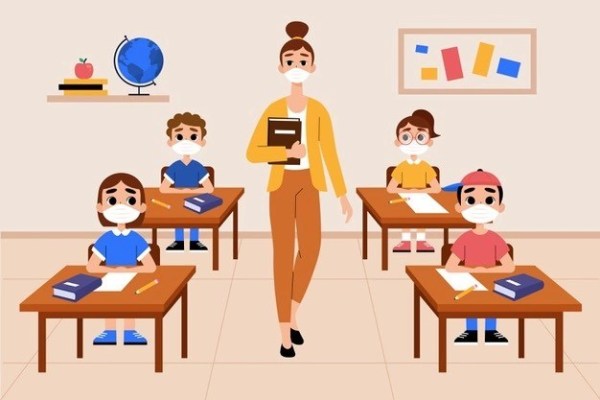
After nearly eleven months, the school reopened for classes (grades) 9,10,11, and 12. After hearing the news I was very excited but sad too.
Reopening of school meant waking up early in the morning and missing the comfort of home. But I was so excited to be in school with all of my friends. No more comfortable clothes, gadgets, and online quizzes. But we could interact with the teacher and get our doubts clarified in person.
The day before school, I packed my bag, bought sanitizer and an extra mask, and got ready for school. I went to bed very early that day. I woke up and got ready for school. My parents dropped me at school. I usually go by van to school, but due to the pandemic, my parents are dropping me to school.
The temperature was checked at the school gate. Only twenty students were allowed to sit in a classroom. So the class was split into two. We had classes. We got our doubts clarified. There were a lot of safety precautions followed in my school which made me feel safe and secure inside the campus.
After coming to school, I had to sanitize my bag and other belongings, which was an extra task I would have to do regularly. Even though it wasn’t a normal school day, it was a new experience for me. Let us hope for the best in the upcoming days.
Konark is a town in Odisha where there is a famed temple of the Sun and a dance festival takes place there every year. Ten-year-old Divyanshi Das from Bangalore takes us to Konark.
Odisha : A Mix Of Heritage And Natural Beauty
by Divyanshi Das
Odisha is a truly impressive and spectacular place, famous for its heritage sites, unpolluted beaches, pilgrimage and more.
Odisha provides a lot of sightseeing opportunities which attracts many tourists every year. So, let me introduce you to two astounding festivals from the state.The first is the sand art festival of Konark usually held from 1st to 5th December at Chandrabhaga beach, Konark, Puri.
Sand art is the art of making sculptures using sand. The artists who participate are expected to follow certain rules. They can only use the beach sand, water and hand tools. No machinery tools are allowed.
Artist are supposed to start their work on the first day (morning) and they need to be ready with their sculptures by the evening when the festival is inaugurated and opened. The festival lasts five days so the artists have to make a new sculpture every day. Artists have to keep in mind that their sculpture should not hurt the religious sentiment of the people in any way.
The second festival I want to tell you about is the Konark Dance festival . Have you heard of the Sun Temple at Konark? It is a world heritage site and the site for the dance festivals. Some of the best dancers of the country come to perform here. The aim of the festival is to promote Indian classical dances.
Hope you liked reading about the festivals. Do visit the wonderful state of Odisha!
Wow! Two essays that show that this year might be better than last year. In any case, the future is always better than the past. Isn’t it? Here is Jessica Rachel who dreams of one and it is a story by her.
Stories
Nine-year-old Jessica Rachel from Chennai had a vivid dream about a happier and better world and has an important message of how we can make our dreams come true.
I Dream Of A Better Tomorrow
by Jessica Rachel
Every day was the same. I went to school, I studied and came home and slept and the pattern repeated. Wherever I went, there was hardly any greenery and a lot of pollution. I saw people were homeless and their kids had a lack of education.
Then one day, Covid-19 came along and affected the whole world. Those who were poor had no money to even get basic necessities for themselves.
We were instructed to sit at home and many people lost their jobs. The government tried to help those people. Some children could afford to attend online classes but not everyone was privileged.
One day I was thinking about this as I was falling asleep.
I had a lucid dream and found out that I could change the world however I want.
So, I first planted lots of trees. I planted seeds in every garden and empty spaces. I planted about 10,000 trillion seedlings around the world. Then I tackled the pollution from factories by enhancing the flora around them.
Then I channelled the lakes and rivers around the world and connected them to every home in this world. Now everyone could have fresh water to drink every day.
Then I went to the lands that were barren and built a playground using soil and water. I dug a deep hole and made a slide and filled the bottom with fresh water]. I kept some floats nearby. Next, I went to another barren land and filled it with snow. I created a snow playground.
I woke up and realised that this was all a dream. But I knew that it is not impossible to make this dream a reality.
We can make this come true by working together towards a beautiful environment. Until and unless we work together, we can never make our dreams come true.
Now, nine-year-old Nandini Maheshwari from Delhi brings us a story about a monkey that learnt to conquer its fear thanks to a wise old Orangutan.
The Day Muchilal The Monkey Learnt To Jump
By Nandini Maheshwari
Muchilal was a very handsome monkey. He had a big moustache. He wore a colorful turban. He was very polite and friendly. But he had a problem. He was afraid to jump. He used to think he would fall down if he tried to jump. Many mean monkeys in the tribe teased Muchilal a lot for being afraid.
He decided to go to the old wise orangutan to learn how to jump. The orangutan told him to fast for one day and Muchilal did so. He didn’t eat anything, not even his favorite bananas. He was starving badly.
Then the old wise orangutan hung some bananas on a very high branch of a tree. As soon as the fast got over, Muchilal was eager to munch something to satisfy his hunger.
The orangutan told Muchilal that now that his fast has got over, he can eat his favourite food – bananas. But to eat them he has to jump over the highest branch.
Initially, Muchilal was nervous but he was so hungry that he jumped to the highest branch with a big leap. Muchilal gulped the bananas and he also realized that he could finally jump.
This is how he overcame his fear.
What happens if you have to walk up dark stairs at midnight after watching a horror movie? Another story about conquering fears by twelve-year-old Nethrra S from Salem.
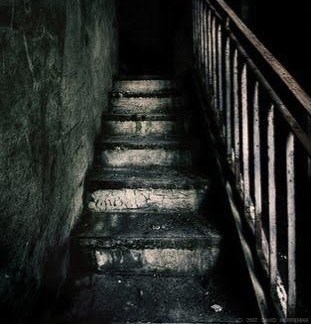
A spooky walk up the stairs
By Nethrra S
It was 11 pm on a rainy night. I was about to go to bed after watching a horror movie when my mother told me to go and close the terrace door. I was shocked!
In my house, to reach the terrace we have to climb two floors. I didn’t want to be alone since the horror movie was still in my head but I said ‘okay’ to my mother. I switched on the light to the stairs but unfortunately, the power failed.
I got a torch but there was no battery in it. I thought of taking a mobile phone but my mother was on call, my father was busy doing something with his phone.
I felt scared despite having agreed. I silently went to the stairs and stepped on it frightened.
I started to climb when I suddenly heard thunder as it was raining. I stepped on to climb to the second floor when I heard someone shouting my name loudly. This frightened me more. I started to chant religious mantras as they say ghosts are scared of Gods.
Suddenly, I heard my favourite song and wondered who was playing that when there was no power?
Finally, I reached upstairs and closed the terrace door. I took a deep breath and ran downstairs fast.
As I reached down, my mother said that she was calling me aloud and it was my sister who played my favourite song on her phone. My father asked me how I had climbed up in the pitch dark. I didn’t respond but I was glad there were no ghosts up the stairs!
A little girl gets lost in a cave. How does she manage to get out? Read this story of kindness and courage by seven-year-old Iksha Kalwal from Pune.
Finding A Treasure At The End Of The Rainbow
By Iksha Kalwal
One beautiful morning, Olivia went out for a walk. While keenly observing a stick insect, she fell into a cave. She was trying to walk slowly to find a way out. She was scared in that dark cave, anxious not knowing how she was going to get back home. Olivia remembered that her parents always said to be calm in this kind of situation and look for something to help her find a way out.
She saw a thin ray of light reflecting on her. Olivia ran towards it and bumped into a pot. She saw a small plant with a face asking for water. She quickly took out her water bottle and watered the plant. It smiled at her like a flower in the spring.
The plant asked her, “Will you please take me out of this filthy cave?” Olivia replied, “I will.” Olivia took the plant with her and found an exit to the cave.
After walking for a while, she saw a beautiful palace. A lonely bird was sitting at the window and humming a song. That hummingbird happily flew and sat on Olivia’s shoulder. Now Olivia had two friends as she continued walking to find a way home.
They saw footprints and followed them. “That might be the way!” said the plant. As they walked following the footprints, the bird sat on an arrow sign.
“Great, my friend!” exclaimed Olivia. They followed the arrow sign and reached a hut. Curious, they went inside the hut and found a puppy with an injured leg. The three friends quickly agreed to take care of him. Olivia took out her water bottle and gave water to the puppy.
Olivia, the plant, the bird, and the puppy, set back out to find home and finally reached a riverside. Olivia could see her village far away across the river! They saw a man sailing a boat, and he offered to help them cross the river.
As they crossed the river, Olivia reflected upon her journey, grateful for the friends she made along the way and was delighted that she found the treasure – her village – at the end of the rainbow!
I hope you enjoyed the visit to Bookosmian wonderland because I am off to read now … and figure out if they had popcorn at the tea party in Alice’s adventures! See you in Borderless again next month.Bye!
Avik Chanda converses about his best selling book on Dara Shukoh and its current relevance. Click here to read.
Stories
The Literary Fictionist
In Forgeries, Don Quixote & Epistemes, Sunil Sharma unravels the mystique of the Spanish ingénue, the man who fights windmills and has claimed much much literary attention post Quichotte. Click here to read.
A story of 1950s indiscipline related by Brindley Hallam Dennis with a soupçon of humour. Click here to read.
Musings/ Slices from Life
Musings of a Copywriter
In Lessons from Partition, Devraj Singh Kalsi explores how Partition impacts not only countries but families. Click here to read.
Adventures of a Backpacking Granny
In Homestay at St Petersburg, Sybil Pretious travels take her to St Petersburg where she tells the story of a woman she meets, a survivor from the 900 day Siege of Russia. Click here to read.
A discussion by Candice Louisa Daquin based on reading Candace Owens’ book Blackout: How Black America Can Make Its Second Escape from the Democrat Plantation. Click here to read.
These are fragments of memories from her childhood by Pronoti Baglary. With them, she tries to recap the flavours of an Assamese village. Click here to read more.
Krittika Mehta journeys through Erich Segal towards self discovery. “The world was dipped in swirling, glittering celebrations with friends, family and unknown to embrace a new year…” Click here to read more.
Michelle Hanley takes us on a magical adventure of culinary delights made by her grandmother. “It may just be that last bit of cake refilling the pan over and over again…” Click here to read more.
Ratnottama Sengupta, eminent journalist and daughter of Bengali writer Nabendu Ghosh, has been a force behind translating Bengali literature and bringing it to the doorstep of those who do not know the language. In this exclusive, she discusses how translations impact the world of literature. Click here to read.














































 Borderless


