Unusual times warrant unusual responsibility. And, when the responsibility is manifest in parenting, it becomes even more important. Raising a Humanist: Conscious Parenting in an Increasingly Fragmented World by Manisha Pathak-Shelat and Kiran Vinod Bhatia is, as the title suggests, meant for the troubled times in which we live.
On the face, this book is not a typical work on parenting, rather it goes far beyond the remit. Written by two media professionals, it is a sort of prescription for modern day parents.
Says the blurb: “The world is immensely divided and broken. We have lost the art of having conversations with those who are different from us. While we cannot change the world, we can take small remedial steps starting with our homes and communities.”
Manisha Pathak-Shelat is a Professor at Centre for Development Management and Communication, MICA (Mudra Institute of Communications, Ahmedabad, Gujarat, India) and Kiran Vinod Bhatia is a doctoral candidate in the School of Journalism at the University of Wisconsin-Madison. Coming as it is from two media professionals, the book results from their engagement with parents, teachers and the youth. Being communication scholars, the authors mull over their work, contributing meaningfully and substantially towards a better world. And, they have succeeded in this effort to a large extent.
Using critical questions, rational tips and exciting anecdotes, they touch upon the abysmal number of discordant issues of our society and provide fascinating ways to use art, technology and media. The idea is to provide the progenies with a nurturing community. The conversation is appealing and enriching because the writers have a vast experience in the area.
With a Foreword by Lina Ashar, Educationist and Entrepreneur, the book has in all nine chapters and the approach of the subject is avant-garde. It provides a much-needed investigation of how adults can guide children to become kind, liberal and critically thoughtful humans in an ever-changing technological world.
The authors write in the preface: “Critical thinking, empathy and the readiness to engage with different viewpoints have to be a gradual and lifelong process — beginning with ourselves, including our children and extending it to our larger social circles.”
That the authors have taken up a subject as vast as ‘parenting’ is itself challenging. How to raise a child in this polarized and conflicted world is every conscious parent’s concern and the book offers the solution with insight and wisdom. It is multidisciplinary in its sweep and yet not wandering off from the root issue. The mainstay of the book is its account of everyday experiences.
Raising a Humanist results from over three years and interactions with more than 120 parents. It aims to help parents deflate stereotypes, prejudices, mental conditioning about gender, caste, religion and class.
That politically complex and technologically upsetting times warrant responsible parenthood needs no reiteration. If children from a young age are conditioned into stereotypical and biased ways of thinking, parents are largely to blame. The book not only raises the right questions but also offers solutions by providing a deeper understanding of popular culture and the role of the media in gender, religious, caste and class portrayals. This scholarly book tells us how to unlearn and re-learn as parents.
Raising children in a scrappy world who can walk through life with self-confidence and empathy is challenging. This book solves that challenge. ‘Raising a Humanist’ mainstreams the power of initiating hard conversations and discussions, guided by a strong yet sensitive rationale at its core. The lucid case studies and the real-life examples are educational and motivating. The book not only sketches the social divide but also remediates it by addressing its concerns. The book talks of the nuances of religion and prejudice in the most succinct manner.
It is a must-read, especially for parents, educators and concerned citizens who are ambitious for a radical vision of the world that will leave our children free from anxiety and misgiving. This book is a refreshing departure from the tiresome ‘how to’ books imposed on caregivers, as you see guilt and fear taking a rightful back seat to more nuanced, critical and creative conversations that generate excitement for how we would like to see the world turn for the better.
For delving deep into some of the most challenging questions of our times in a rigorously and thoughtfully way, it is an essential reading for anyone interested in parenting. Bold and provocative, this influential book is a decent companion in raising a humanist in the child.
.
Bhaskar Parichha is a journalist and author of No Strings Attached: Writings on Odisha and Biju Patnaik – A Political Biography. He lives in Bhubaneswar and writes bilingually. Besides writing for newspapers, he also reviews books on various media platforms.
Mr Dutta’s dream of travelling around the world died with him. He was seventy-seven; an old lonely soul, who until the very end, never gave up his desire to see the world.
Like any other day, that morning too, Mr Dutta sat on the balcony with a cup of steaming tea placed within his reach as he witnessed the sky turn bronze. His fading eyes stared fixed at an apartment building across the street. He wasn’t looking at anything in particular; his mind was already engaged.
The images swam in his head.
The Egyptian Pyramids—the mighty structures that housed the tombs of the great Pharaohs stood amidst an undulated sea of golden sand under a clear blue sky. A caravan moved leisurely with the wind breathing against them, bringing with it their presence; the faint tinkle of camel bells in an infinite ocean of silence. Mr Dutta closed his eyes. He inhaled the parched air and smiled.
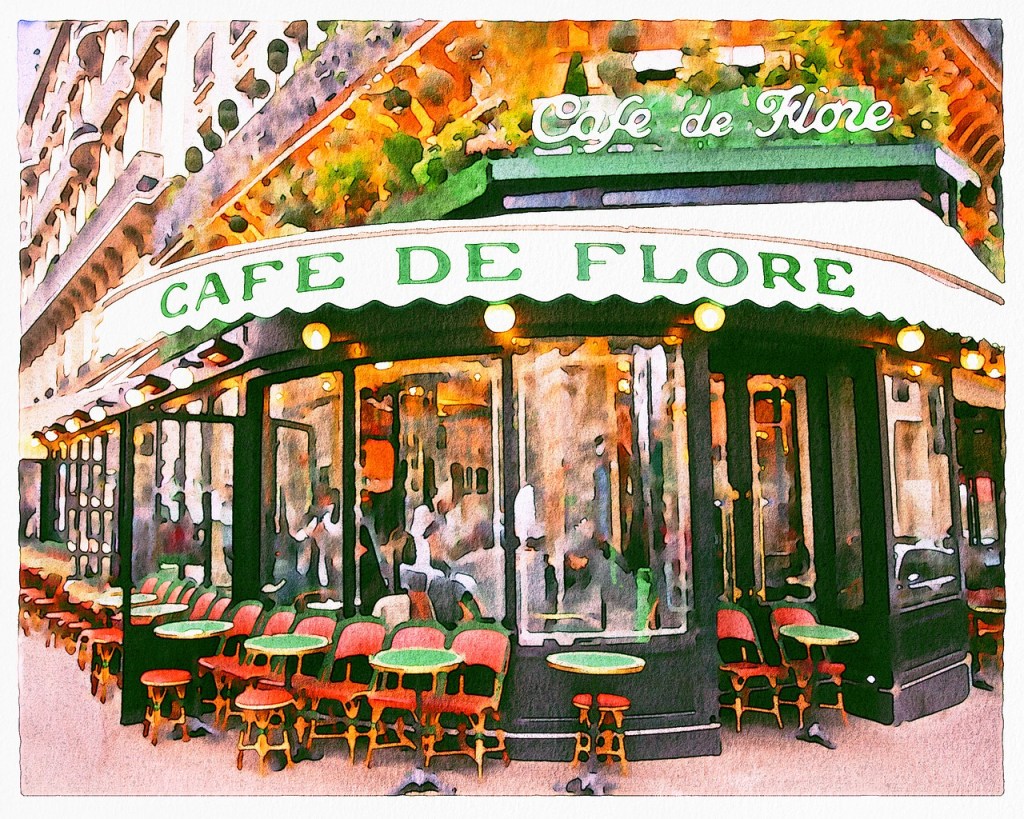
His mind stretched next to a summer evening in Paris, the sun dipping, the sky turning scarlet-blue. He was in a café at the edge of a narrow cobblestoned lane, where a young couple stood kissing, a musician played the accordion, a group of girls giggled past, and a man walked his dog.
“Bonjour, Monsieur, Merci, Au revoir,” Mr Dutta said aloud, taking his time, articulating each syllable in the best manner he could. This was all the French he knew.
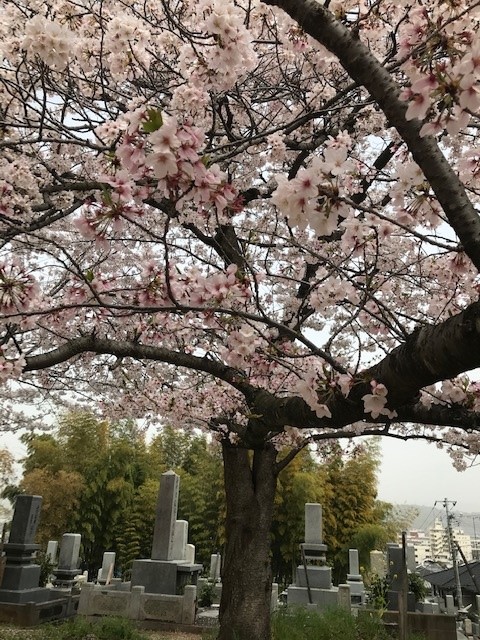
A silly chuckle left his mouth, and he reached forward. His hands trembled as he held the teacup. He sipped the milky-brown liquid with a long slurp and closed his eyes once again. He was now in the land of the rising sun, walking barefoot along a trail flanked by delicate pink cherry blossom trees.
Mr Dutta’s dream was born on a mushy summer evening sixty-seven years ago. He was at his friend’s place, hunched over a photo-album, looking agog at the photographs from across the globe. Every single picture captured his imagination, and in his mind, he began replacing his friend’s father—a stout, balding man having a pencil moustache with a tall, handsome young man, which he had no doubt he would grow to be.
His friend’s father, Uncle Jodu was in the merchant navy. Listening to him speak about his journeys, and watching him bounce about the room like a clockwork toy fetching little souvenirs; a key chain from London, a bottle of Vodka from Russia, a purple hand-fan from Japan, set Mr Dutta’s heart pounding furiously. He felt a flutter in his guts and knew in that precise moment that he had no other option than to join the merchant navy and sail as far as the seas stretched.
Since that evening, all Mr Dutta could do was daydream. He couldn’t sleep, couldn’t eat, couldn’t study or even speak. He was lost in a world of his own; travelling places, tasting exotic dishes, speaking new languages, making friends… Every day, he sat by his window, reading travelogues and maps, scribbling itineraries in a little red notebook, which, when he slept, found its place tucked safely under his pillow.
After finishing school, Mr Dutta went to college, still with his little red notebook in his pocket, and with the photos of that photo-album riveted into his memory. But he hadn’t planned against the misfortunes of life. His father’s business, which was small but sturdy until then, plummeted, and in the process, his father’s health faded too. With his father’s death, after a year of doctors and medicines, Mr Dutta had no other option but to drop out of college.
For months, he wandered through the city with letters of recommendation and found a position in a bank as a clerk. Years tumbled by, and one afternoon, while he sat at his desk chewing the excess of his fingernails, he remembered the little red notebook that had been gathering dust in his drawer all these years. The photographs flashed in front of his eyes like the spring sun, and he jumped from his seat, took out his little red notebook, and went to the branch manager’s cabin, to quit. The branch manager blinked at him curiously. Mr Dutta took a deep breath, and the moment he was about to utter the words, the phone rang. It was for him.
His mother was taken ill, and she had expressed her desire to see her son for the last time. Mr Dutta hurried to attend to his ailing mother, unaware of the consequences. The old lady, breathing heavy, took hold of his hand and whispered into his ear her death-wish. In a week, Mr Dutta was married—with his mother totally recovered, alive, with a mischievous grin.
.
Mr Dutta had known his wife since their childhood. Their families were close, and as a kid, Mr Dutta had always heard them reiterate how perfect they were for each other. So married life didn’t offer many surprises, apart from the fact that his responsibilities mounted and that he could barely save any money or time for his unfulfilled dream.
A year later, his wife gave birth to a son, and Mr Dutta holding that tiny creature in his arms felt immense joy. But deep within, he was confounded by fear. He struggled from that moment on, juggling his role as a father and simultaneously maintaining his identity as a wanderer. It was exasperating to be rooted and possess a soul that wanted to expand limitlessly. He woke up often in the middle of the night, weeping; thinking of abandoning everything and running away. But something held him back.
As Mr Dutta’s son showed promise academically, he wanted his son to go abroad for higher studies. He revisited his dreams once again and expressed a desire to accompany his son. But the expenses were too high; he had already taken a loan to support his son’s expenditures, besides he couldn’t dream of going without his beloved wife. The day his son left for the USA, Mr Dutta pressed his forehead against the glass window at the airport watching the flight take-off; consoling himself that at least a part of him was off to see the world.
The year Mr Dutta retired, his son completed his education, returned to Calcutta, found a suitable girl, married, and announced his decision to settle in the USA. Mr Dutta had been awaiting the news secretly and knew it was only a matter of time before his son would ask them to join him.
He waited.
Each evening, as the old couple sat on the balcony expecting their son’s telephone call, Mr Dutta would fetch his little red notebook. He would announce his plans of travelling across the Americas—from Alaska to Argentina—with a must-do list:
Watch the sunset at The Grand Canyon
Gamble in a Las Vegas Casino
Take a boat ride along the Amazon (catch a glimpse of an anaconda)
Walk barefoot over the salt flats of Salar de Uyuni.
Experience the lost world of the Incas
Visit the Galápagos Islands…
His wife would listen, smile assuredly, but make no comments.
One evening, as Mr Dutta extended his plans further south to Antarctica, his wife suffered a stroke. She died a few days later.
At her cremation, his son hugged him and said that it would take another year before he could come and stay with them. He appointed an attendant for the old man and left. Days turned into months, and months turned into years. Mr Dutta’s vision was fading now, and in his knees, gout had set in.
The telephone rang as Mr Dutta finished his evening tea and an extensive tour of the central African rainforest. The attendant received the call and handed it over. Tears trickled down as he listened to his son. He couldn’t speak; so unbound was his joy. Finally, he was going across the Atlantic.
The sun had now set, and Mr Dutta sat still.
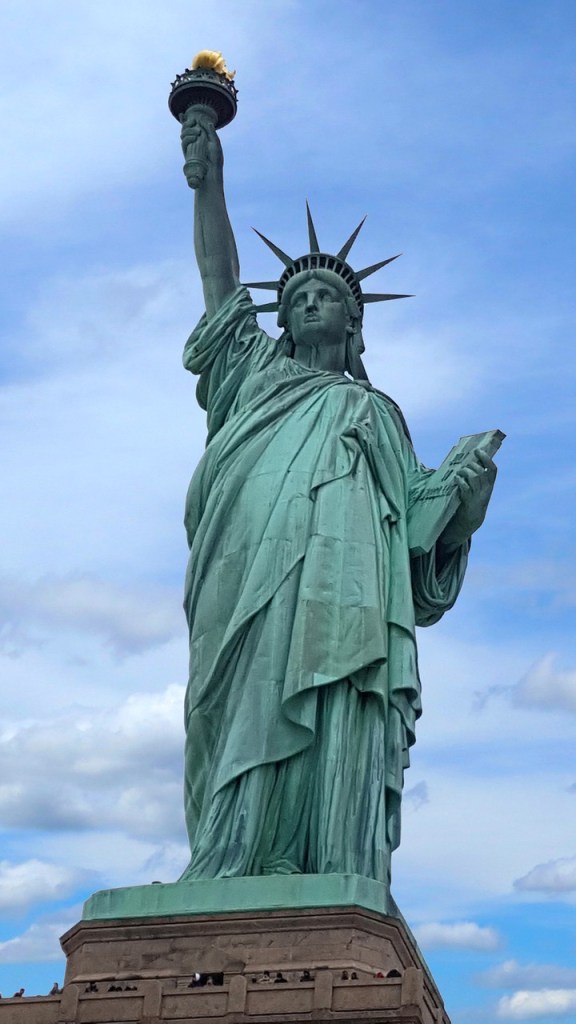
In the distance, a figure was appearing out of the mist. Mr Dutta strained his eyes to discern the outlines of it—the Statue of Liberty. He grinned. A flock of seagulls circled overhead, and the waves crashed against the ferry. A crimson sun was dawning against a greyish-orange sky…
Atreyo Chowdhury was trained to be a mechanical engineer and has a postgraduate degree from IIT Guwahati. Besides writing, he shares an equal passion for music and travelling. He can be found at https://atreyochowdhury.wordpress.com/
.
PLEASE NOTE: ARTICLES CAN ONLY BE REPRODUCED IN OTHER SITES WITH DUE ACKNOWLEDGEMENT TO BORDERLESS JOURNAL.
Summer peaked early

Beginning of April, it had sprung,

Too warm for comfort or sweat.


The flower arrangements came

And after sometime, overflowed,

The priest spoke about the celebration of life.


No cry, no sobs, no one wept,

They waited for a call from the undertaker,

The pit takes long in the seething heat, he’d said.


The choir boys look out of windows.

Mourners chide ceiling fans for being slow,

Bouquets would take a while before dropping dead.


Everyone imagined with shudder,

The day they would lie, with poignance

Hands crossed in front.


Out of the icebox, laid in bed of flowers

Mom saw all this, no longer cool, her soul

Impatient -- is it done? The resting place.
Saranyan BV is poet and short-story writer, now based out of Bangalore. He came into the realm of literature by mistake, but he loves being there. His works have been published in many Indian and Asian journals. He loves the works of Raymond Carver.
.
PLEASE NOTE: ARTICLES CAN ONLY BE REPRODUCED IN OTHER SITES WITH DUE ACKNOWLEDGEMENT TO BORDERLESS JOURNAL.
My father-in-law’s passing, when I was pregnant with his grandson, served as a sort of personal consecration. The Japanese family entrusted me with tasks and responsibilities from the moment of his death to the moment, three days later, when we picked his bones out of the ashes. All differences of nationality and religion flew out of the window.
Being married to the third son of a Japanese family, you could say I’m very low on the totem pole. When my mother-in-law married the eldest son of this clan in 1947, she had prestige but she lived to serve. She gained some measure of glory by giving birth to all those boys in the tatami room, but she was still the last one to use the bath water after her parents-in-law, her husband and her three young sons had soaked in it. She laughs about it now but when I asked her about Great-Grandma’s antique hand-painted silk kimonos, she said she made a big bonfire in the garden after her death and burned them all.
We got the call in the middle of the night. Otoosan had passed. As soon as my mother-in-law stepped into her husband’s room at the Veterans Hospital, or Veteru as it is called in Japan, she put everybody to work. His body had to be washed and his face shaved. My husband took me to the other side of the curtain and offered a chair. “You don’t have to do this”, he said. I could hear my mother-in-law instructing her sons. They worked in silence. I sat in the dark.
Otoosan, an architect, a father of three sons and a former soldier and prisoner of war, lived the final years of his long life in the Veteran Hospital. I had only met him once before in his home where he was spending the day as an outpatient. This man, whose powerful physique held memories of a four dan black belt judoka, was strapped in a chair, being fed by his wife. My husband said in a loud voice: “Otoosan, this is my wife. She’s Canadian”. He looked up, showed no reaction on seeing my Caucasian face and the family giggled: all in a day’s work. His son, a three dan black belt himself like a chip off the old block, took over feeding his Otoosan spoonfuls of lukewarm miso soup, their knees touching, their eyes meeting.
First Task
For my first task, after the family finished taking care of Otoosan, I was asked to sit at his bedside and wait with him while the family filled out paperwork in the office. Before leaving, my mother-in-law turned to me and said gently, “He should not be alone, you understand”. They left in the wake of two black clad white-gloved funeral employees who had appeared on cue from the shadows. There we were together, and it seemed like a moment to reacquaint myself with Otoosan, now wrapped in a pristine white sheet, only his tranquil face showing. I stared at him for a long time and finally whispered domo. It can mean hello or thank you or a mix of both. I read once that this greeting was used during the Edo Period to express a feeling of confusion or unsureness about the person one was addressing.
Second Task
For my second task, to my great surprise, my mother-in-law asked me to accompany Otoosan in the van transporting him to the family home while the others went to the funeral support company. Why me, the foreign wife married to the third son? But everybody had a part to play in this family event and at that moment, the responsibility fell to me. I climbed into the white van to do my job.
My father-in-law and I could never have imagined making this trip together. Not in our wildest dreams. Not only were we practically strangers to each other, but we came from vastly different worlds, him an elderly Japanese man and me, a thirty-something pregnant French-Canadian. Together we crisscrossed the empty streets in the cold white van, side-by-side, his body wrapped in a shroud on a futon near me. In winter, three am is a dark and deep hour but I was told Otoosan was still here among us, in the realm between two worlds. He had just begun his last pilgrimage. Knowing this, I somewhat felt less forlorn traveling through the winter night, so far away from my country and my own cultural bearings. But that’s beside the point. I had a responsibility to fulfill.
Third Task
The porch light was on, the house already wrapped in black and white stripped cloth swaying in the dark as Otoosan was carried inside his home through the front door. He was laid to rest on a futon in the tatami room, two decorative lanterns like fancy bookends framing his bed. A black-and-white photo of Otoosan looking strong and serious sat in the middle of an altar among candles, chrysanthemums and fruit. In the pale yellow light of the lanterns, we dressed him in his white pilgrim garb for his 49-day journey to the Pure Land, following a hierarchical order. His wife put a white cap on his head and rice in the small pouch hanging from his neck, his sons smoothed out the white coat folded in reverse, and I slid, as best as I could while kneeling on the tatami, white cloth slippers over his feet. This was my third and last task of the night. The wake would start tomorrow. My husband, looking sad and exhausted, said, “We will sleep here next to him. Go home to get some rest.”
Fourth Task
The next day I stepped over the rows of slippers now crowding the spotless entrance step of the family home like a military parade. My mother-in-law, in her formal black silk kimono stamped with the family crest on the back collar, glided between the tatami room and the adjoining kitchen on her blinding white tabi socks. A diminutive powerhouse, married to an eldest son. I looked down at my rather homely nondescript black maternity dress.
For my fourth task, she directed me to take down from the cupboards the fancy sets of dessert dishes and tea cups, wash them thoroughly, dry them rigorously and set them out on the table. “Don’t break anything!” she chided with a smile in her eyes. I also had to wipe clean the large decades-old bone china serving platters and stack them with oranges, the locally-grown fruit. I took a certain pleasure in displaying them in a Jackson Pollock style. One way or the other, I knew they would be rearranged.
Early evening, relatives and acquaintances arrived in black suits and dresses to whisper condolences to my mother-in-law who bowed deeply to each guest. The mourners filled the tatami room, all sitting seiza before Otoosan. Leaning in, they greeted each other quietly.
Suddenly there was a commotion. The priest strode in like the phantom of the opera, his magnificent black kimono robes and glitteringvestment swooshing around him. We snapped to attention, backs straight, holding our Buddhist rosaries between clasped hands. He greeted us, kneeled in front of Otoosan and started chanting in a loud sonorous voice. I was sitting on a stool in the back. I could never sit seiza and being pregnant did not help my cause.
It seemed like the chanting lasted forever. Just as I started dozing off in the stuffy incense-filled tatami room, my husband began to heave. I realized with horror that he was trying to suppress what looked like a maniacal laugh. Eyes staring ahead, his mouth half-closed, he repeated several times in a strained voice, “Snoopy, look, Snoopy!”. From the ceiling lamp a small plastic Snoopy wearing a red fireman hat was dangling from a string just above the bald head of an old uncle. My husband left the room to bawl in the bathroom. I sat on my stool thinking about the Japanese character in the movie Snow Falling on Cedars, how his stereotyped stoic face had changed his fate.
Fifth Task
After the service I strolled into the kitchen to get a drink. There stood one of the elder female relatives, erect in her black kimono. She had now officially taken over duties while my mother-in-law was busy chatting with the guests. I had met her only once and this time she looked at me with what seemed like shiny panther eyes, ready to pounce. In a flash I was thrown into the deepest end of the hierarchical senior-junior relationship: Cinderella, the wife of the youngest son. Serve more tea! Boil more water! Offer sweets! Wash these dirty cups! I was learning humility on the spot, my only stunned response being a weak Hai! I began shuffling around in my black stockings, looking busy and alarmed, set on doing my duty. A Mao slogan popped into my head: Serve the People, for I was living a cultural revolution of my own. I just could not imagine this scenario happening in my country.
The wake lasted two more days. People came and went, and we ate our meals together just two meters away from Otoosan. We re-arranged flowers, sat near him and chatted. He was never alone. Some family members talked to him. On the morning of the fourth day, the family lined up from the house to the hearse. Otoosan exited his home feet last to the mournful sound of the car horn. No birds, no wind.
For the ceremony at the large funeral hall, the priest recited the sutras in front of Otoosan’s photo and a magnificent flower display. So many mourners, in slippers, paid their respect with incense and prayers at Otoosan’s casket. Each person brought incense grains three times to their forehead before finally depositing them in the incense burner. After the eldest son gave the customary speech, we lined up in order of importance to receive condolences. I was last of course but wholeheartedly included. “You must be Yoshiro’s wife,” some of Otoosan’s elderly friends exclaimed, naturally mistaking me for the second son’s spouse, the one working abroad.
We followed the hearse to the crematorium and, huddled together in front of Otoosan, we said goodbye to his earthly envelope before he was sent off for cremation. In the meantime, we all gratefully sat down to a feast of large bento lunchboxes filled with rice balls, potato salad, fried chicken and pickles. Relatives from far and near sat close to my mother-in-law, some lay back on the tatami, some loosened their ties and belts and others had loud conversations over the long low tables. I sat on a stool devouring my food. Pregnancy made me hungry.
Sixth Task
Finally, we were called in to pick Otoosan’s bones from the ashes and transfer them to an urn. As he handed me a pair of large chopsticks, my husband said, “You don’t have to do this”. But I wanted to do it. By that time, I had had four days to acquaint myself with Otoosan and with death while going about my tasks in the living family home. The family put Otoosan’s bones in his urn in a matter-of-fact way. Ashes to ashes, dust to dust.
On the 7th day of his passing, a sunny winter day, we stood in front of the imposing family grave while the eldest son placed Otoosan’s urn alongside those of his forefathers, under the heavy slab of rock at the foot of the stone monument. Only first sons and their wives are included. It looks like my husband and I will have to find our own resting place in Japan.
I think my mother-in-law worries that her eldest son’s eldest son will not be able to carry on the tradition of caring for the family grave. He doesn’t have a son to continue the lineage, only daughters. But then again, my mother-in-law stoically goes with the flow of life and change. I was part of this flow. Twenty-three years after Otoosan passed on, she apologised for imposing on me the task of riding with him from the hospital to the family home. On the contrary, it was an honour.
I fulfilled my role as the third son’s wife the best I could to assist the Japanese family mourn Otoosan. On my next trip to the home country, it wouldn’t kill me to brush leaves or snow off the headstones of my loved ones, bring flowers or have a look at their urns through the glass. I might linger and tell them about me, my son, the Japanese family. I also need to discuss my resting place among them. Who knows, maybe my husband and my son will come from Japan to help me.
Glossary
Sieza – formal Japanese sitting posture (on your knees)
Hai—Yes in Japanese.
.
Danielle Legault Kurihara, a Quebecker, lives in Japan. She writes about her expat life and her bicultural son. She writes for him.
.
PLEASE NOTE: ARTICLES CAN ONLY BE REPRODUCED IN OTHER SITES WITH DUE ACKNOWLEDGEMENT TO BORDERLESS JOURNAL.
Before my Curtain is Drawn


Do not shed tears when I am gone.
Give me a moment now, before my curtain is drawn.
Stay with me for a while,
Sit silently by my side.
Take my hands in your hands,
Let me rest on your shoulder.
Talk to me with your sweetest words.
Smile at me with your eyes, twinkling stars.
Let me listen to your whispering heart,
Engraved will remain these moments.

If you cry, when I am gone with
My life’s curtain already drawn,
What meaning would it hold for me?
How will I know that you cared for me?
How will I tell you what you meant to me?
Let these moments of love be an eternity.

Come sit beside me and love me now.
If you love me, then make me this vow:
You won’t cry when I am gone,
For you will never be alone.
I will be with you -- very near,
Wiping away all your tears.

Do not shed tears when I am gone.
Give me a moment now, before my curtain is drawn.
Tasneem Hossain is a multilingual poet, columnist, op-edcolumnist and training consultant. She is the Director of Continuing Education Centre, Bangladesh.
.
PLEASE NOTE: ARTICLES CAN ONLY BE REPRODUCED IN OTHER SITES WITH DUE ACKNOWLEDGEMENT TO BORDERLESS JOURNAL.
In 2007, Sybil Pretious travelled to spend a night with a local family in rural China and lived in a ‘hundred-year-old home’. She writes of her experiences with photographs and aplomb.
“Respect is a two-way street. If you want to get it, you have to give it.”
— R G Risch
Sometimes I wonder why people travel. I especially wonder when someone travelling in a foreign land asks me the way to the nearest MacDonalds. Of course, that can be seen as being judgemental, but I don’t think of myself as over critical, because I travel to experience different cultures as they are and not as I am. When anyone asks me, which is the best country in the world my reply is simple,
“The best country in the world is wherever I am.”
Travelling alone means that I have to communicate with people. And in general, responses are kind, positive and helpful. This is just one experience I have had while living six years in China but there are many more and equally as interesting.
As I travelled home to Suzhou from Shanghai on the train, a young Chinese lady sitting next to me was laden with packages. I smiled and asked her what she had bought. She smiled and proceeded to hold up many items for my inspection telling me the miniscule prices she had paid for them and where she had bought them and then offering to take me there. The two-hour train trip passed very pleasantly.
Back in my apartment I had a phone call from Jessica, my friend from the train asking if there was anything she could do for me. As I had been unable to get plain yoghurt, I asked her if she knew where I could get some. Next morning, on my doorstep were six small yoghurts.
I found throughout my six years in China that I had nothing but kindness and people going out of their way to help, either with an explanation or an address written in Chinese to show to the taxi driver or an offer to accompany me and be my interpreter.
The friendship with Jessica progressed. She introduced me to her fiancé, Jack. Their families were good friends and the marriage seemed almost expected. Jessica was not keen but was fulfilling her family’s wishes.
After many outings with the two of them, Jessica asked me if I would like to accompany her and Jack on a weekend trip to visit her parents and grandfather in Baoying.
Before giving my answer, I enquired of the Chinese teachers at school where Baoying was and what I should expect. Baoying is a county under the administration of Yangzhou, within Jiangsu Province about 170 miles north of Suzhou where I lived. They painted a very rural picture, and I was intrigued. When would a foreigner like me ever get this chance to experience China with a family in their rural home setting? I accepted.
Jessica’s family
Grandfather
Me, her dad and Jessica
We travelled on a very overcrowded bus from Suzhou, me squashed in and clutching the presents I had bought for the family, mainly luxury food and special tea, on my lap, together with my backpack. It was not a comfortable position for a four-hour journey.
The bus stopped twice for toilet breaks. The toilets were the usual Asian ones, where my poor knees suffered as I bent them delicately while desperately looking round for something to hold onto so that I didn’t collapse into the deposits beneath. This is when I wish I was a man. Jessica stood guard outside to make sure I came out unharmed.
The roads, all beautifully tarred and lined with lovely trees were not what I had expected out in the country. When we finally arrived at the bus station in Yangzhou, we were met by Jessica’s father who had borrowed the second uncle’s car. Her second uncle owned a construction firm and he appeared to have Government contracts for the construction of offices — hence the smart car. Jessica’s father was slim, with startlingly fine features and a ‘naughty boy’ look about him. Her mother was more solidly built with a kindly, patient demeanour and slightly protruding front teeth.
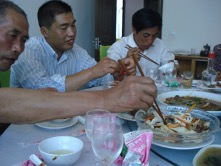
I was thoroughly welcomed by the two of them with the double hand clasp. We proceeded to an unpretentious restaurant, up the stairs and into a room where a round table with the usual round swivel in the centre, was set. I was welcomed into the seat of honour. That means you get to sit in the chair that directly faces the door – possibly to detect if unwanted guests might enter. And of course, I was introduced to the one rule of dining that embarrassed me – I, as the honoured guest, had to take the first taste of special dishes before anyone else.
As is usual with Chinese meals, dishes were brought out in endless succession – vegetables, salads and meat. Chicken soup in an enormous pot had every part of the chicken in it, including heads and feet. I tasted everything and really enjoyed it all, especially some of the fish dishes. I was complimented on my adeptness with chopsticks and was happy to use my fingers as well. Lots of lovely slurping sounds signalled appreciation of the meal. Bones, skins and other inedible bits were just put in a pile on the table next to you, to be cleared away later.
There was one whole fish, and I was told the eyes were the best part and naturally as the honoured guest I got to eat them. I tried to look delighted. I ate them when they were offered – well I think I swallowed them whole and tried not to think of what I was consuming! I said they were very tasty, and they might well have been.
Second and third uncles and aunts were there to greet me. Grandfather was there as well. He was a very distinguished looking old man who reminded me of Paul Newman, one of my favourite actors, though I never thought that Paul looked Asian.
Throughout the meal everyone toasted everyone else with much back slapping and laughter, shouting, “Ganbei”, especially every time grandfather drank or smoked.
As a mark of respect, you had to imitate what grandfather did. The men drank wine and beer while the women only drank orange squash. I got to drink a small glass of beer. It pays to be the honoured guest.
Jessica was really mad with Jack who seemed to be involved in more toasts than anyone else. She said he was saying all the wrong things.
Everyone smoked endlessly but I tried not to cover my face. Smoking in China was very popular at that time and was only banned in stages. In 2009, it was announced that there would be no smoking in all health care facilities by 2011. At that time, there were 350 million smokers in China.
Throughout the time since we had left Suzhou, I had not seen another European, nor had I heard any English apart from what was spoken to me by Jessica and Jack. Many people stared and of course the kids were really curious about me, hiding behind their mothers and peeping out. I just made funny faces and hid my face behind my hand which made them laugh. My Chinese friends could not understand how I got around China without speaking Mandarin! My communication, however, is not always with words. The body and especially the hands perform wonders of enlightenment in many different languages.
Time to get into the car again — four of us squashed in the back to go to view the new Government buildings built by uncle’s construction firm — very big, modern and impressive they were too.
I noticed that the family had been chatting and gesturing animatedly amongst themselves and looking at me whilst doing so. Eventually, Jessica asked me if I would like to stay in a hotel or stay in their home. No contest. I asked to stay with them. I was here for new experiences.
At last, we were on the road where the countryside borders on the Grand Canal.
The Grand Canal from the road
This canal runs from Beijing to Hangzhou, a distance of 1776km and the oldest part of it was started in fifth century BC. It has twenty-four locks and sixty bridges.
“Don’t these people build anything small?” I wondered to myself.
On the canal, great barges plied back and forth carrying sand, pebbles and rocks used in construction. Beside the canal were great heaps of rock and stone.
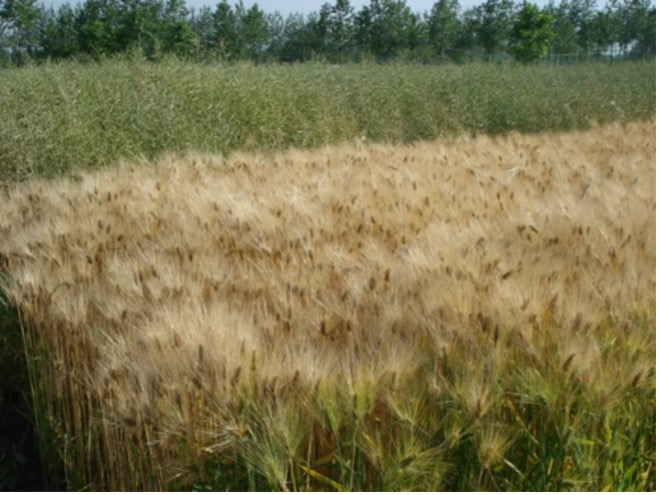
Then came the best part of the adventure, the China that my family had thought I had come to. We turned onto a narrow concrete road (one car width and not another car in sight) with narrow water filled furrows alongside and fields of ripened wheat yellow waving beyond them.
Wheat Fields
A grandmother placing fishing nets
This was the season of wheat. After it is harvested, they would plant rice which would be reaped in October — fertile land indeed. Jack informed me that the Government instructed the farmers what they should plant each season.
We turned down an even narrower road made of red bricks and later just sand. Melons growing in greenhouses covered in plastic on one side and further along the road a put-putting pump engine, which was moving water from one canal to another, blocked our way. Jessica’s father eventually called the owner and together they moved it and we squeezed past, a hair’s breadth from falling into the furrow below.
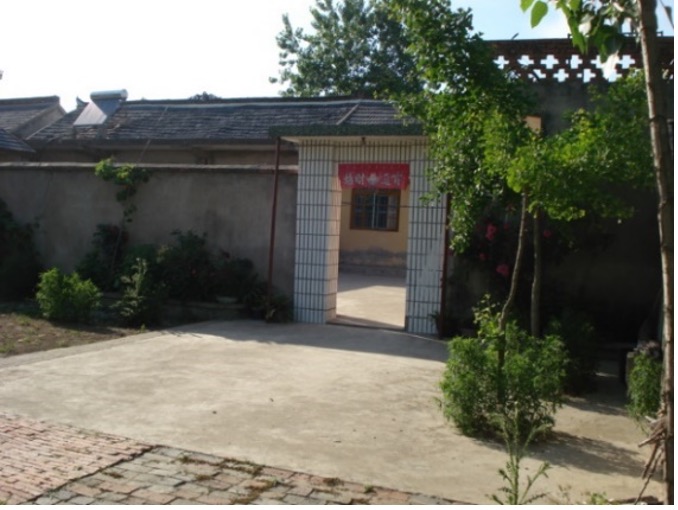
Finally, we arrived at Jessica’s parent’s house in the country.
Entrance to Jessica’s parents house
The bedroom
I was told it was over 100 years old. It was quite basic, with rough pealing, painted walls and an entrance arch with old roses on either side. This led into an open courtyard with a clean concrete floor. Up some steps and inside were three identical rooms connected by a passageway in the front. Plain concrete floors and odd furniture as well as suitcases and cases of drinks and duvets all piled on the sides against the walls. Jessica said that her parents did not often use the house. They usually stayed with grandfather and his new wife just down the road.
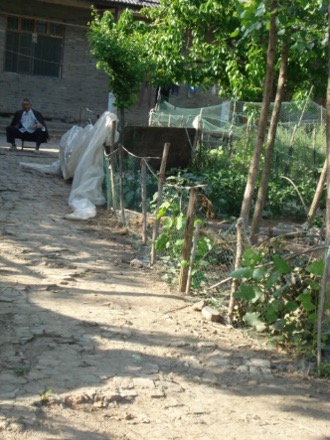
I really needed to stretch my legs while Jack and Jessica had a sleep. They were both very tired as they worked long hours. I was happy to go alone and set forth with a fresh breeze brushing my cheeks and unpolluted air drawn into my lungs. The narrow walkways, with ducks and geese paddling furiously in shallow furrows were a lovely respite from the tarred roads and manicured gardens of Suzhou. This all took me way back to early childhood memories of farms in Rhodesia.
I soon had that feeling of being followed, and realised Jack was wearily walking some way behind me. I felt guilty, having deprived him of his sleep but I appreciated his caring. So often I had occasion to feel this towards my Chinese friends. I apologized and walked back with him.
There was no bathroom in the house and in the evening, I was taken next door to another aunt whose home had a shower.
Hmmmm, yes, a shower? It was like an attic room on the ground floor with a really low ceiling and a bath/shower that I couldn’t possibly get into without bumping my head! So I just used the loose shower head to vaguely water myself, bending double to soap and wash the nether parts. I then dried with a tiny towel I had remembered to bring with me. Finally I tried getting into my pyjamas which was even worse as I couldn’t stand up. In the middle of it all, with the bottom half of my pyjamas round my ankles, Jessica popped her head in to see how was doing – me in the dripping half nude and trying to point my foot in the right direction to get it into the leg part.
“Um, okay,” I mumbled, trying to place the small towel strategically over the parts that hadn’t got into the pyjamas yet.
Finally, I stepped out and feeling somewhat strange I put a jacket over the pyjamas as I still had to walk out into the road to get back to the house! The fact that, in China, many people walk round in their pyjamas even in Shanghai streets escaped me at that moment. One of the aunts walking with us stroked my tanned, freckled arm and asked Jessica what was wrong with my skin.
In the evening, we sat in one of the rooms which doubles as a bedroom/lounge watching TV all in Chinese and everyone chatting in Chinese. It was interesting to observe the interactions.
A light supper of rice porridge and beans was served which was very pleasant. Jessica asked me if I minded sharing a double bed with her. No problem. Before bed I had to go to the toilet. She apologized and brought out a cute china potty with a lid. I did my bit in that and she carted it away for me – shades of my early childhood in Rhodesia (Zimbabwe) again! The bed was a typical hard Chinese one with one thick quilt each. I snuggled in and I was surprised at how well I slept – not even the slightest backache.
However, before we nodded off, I became Jessica’s confidante as she told me of her love problems and asked my advice. I was mostly at a loss to advise her as I was not really well versed in Chinese customs, but she seemed happy to listen to what I had to say. Maybe my voice was consoling, and she didn’t really have anyone else to tell. I was woken at 5am, not to the song of birds or a cock’s crow but to a loud caterwauling which apparently signalled all the workers to begin their day!
Later I rose and went to wash my teeth in the kitchen sink and then off to the toilet. Oh dear! Outside in the courtyard an opening into a room with no door and a rectangular sloping away pit of which the bottom slush was visible. I got in and out of there really quickly.
Breakfast was simple and included fascinating rice wrapped in cane leaves to look like an ice cream – delicious.
Lunch is always the main meal and that morning Jessica’s mother had got up at five to go to the market to purchase a duck, fresh fish, prawns and vegetables. There were strange looking creatures that looked like great big cockroaches. They were alive and kicking. The fish were swimming around in a bowl. All the vegetables – eggplant, Chinese cabbage, other greens and beans were being meticulously prepared on the pristine concrete floor of the courtyard. Five relatives/friends had come to help. One lady was cutting off the legs of the still kicking ‘cockroaches, a goose was also being prepared – I didn’t view the slaughter or de-feathering of that. The ingredients for the meal were definitely as fresh as you could get.
During the morning I was taken to pick my own watermelons, round and green striped, but when broken open were yellow, not pink. Sweet and juicy, six of them were boxed on the spot for me to take home as a present.
During lunch time I was surrounded by ten men (Jessica’s father had invited all his work mates) and Jessica sat beside me. Her mother and the other ladies, who had toiled all morning, did not take part in eating the meal. We drank and ate and went through numerous toasts. I was allowed some rice wine, and everyone wanted to toast me with, “Ganbei” and bottoms up! It seems that I was accepted as ‘one of the boys’ for the moment.
Jessica’s mother setting the table at which she would not eat
A wonderful celebratory meal
Finally after relaxing, we were driven in yet another car belonging to Jessica’s uncle and we made our way back to catch the bus and to take the four hour return journey to Suzhou.
My chance to repay Jessica’s kindness came a couple of weeks later. I was going to be away for a weekend, and she asked me if it would be possible for a couple of her relatives to stay in my apartment for that weekend. She had many visitors arriving to plan her wedding and not enough accommodation. Of course, I was delighted to oblige. Some of my colleagues were sceptical about the idea. I ignored them.
I felt blessed to be accepted as part of the family and I knew that being on my own was a distinct advantage. If I had been on that train initially with many friends, I would not have started the conversation with Jessica or uniquely experienced rural Baoying.
.
Sybil Pretious writes mainly memoir pieces reflecting her varied life in many countries. Lessons in life are woven into her writing encouraging risk-taking and an appreciation of different cultures.
.
PLEASE NOTE: ARTICLES CAN ONLY BE REPRODUCED IN OTHER SITES WITH DUE ACKNOWLEDGEMENT TO BORDERLESS JOURNAL
The Cherry Tree

We pick cherries from a tree in Unterback*.
A silent local watches us, arms on hips,
but there’s no fence, just wild grass.

We pluck the cherries in bloody handfuls,
warning each other about staining juice,
giddy with the Biblical bounty. So many

clusters of fruit when you look up at the sky,
red-shifting to purple stars. We only take
a tiny portion of what the tree tempts.

The rest if left to hang too high, rot,
or be gathered by the lucky locals,
if they can take their hands off their hips.

*Unterback is in Switzerland


The Cuckoo Stopped Singing

Early July and I am stunned
by the emptiness of the air.

I suddenly miss his bell ringing,
reminder that nature persists

despite our best efforts. He started
in early May, that unmistakable

nursery rhyme song postering
in the tree-dressed stage of our

Montagnola apartment block.
He sang me back to boyhood,

to Epsom Common woods,
where cuckoos were a distant

promise of fleeting residency,
the temporary in the seasons,

calling a partner in crime to lay
an egg patterned with our nature,

displacing the righteous, leaving
open mouths, always hungry.

Rightly secretive these tricksters,
afraid to be uncloaked, the confidence

scam revealed.  I caught a glimpse
in late May as he bolted past, fleeing

to other haunts where I hear him:
the High Alps, the lips of Italian lakes,

the confusions of teenage heat.
He seems loudest in lazy mid-

summer evenings of exposed moons,
nostalgic pangs even before leaving.

Later in summer, I am saddened by
the need to wait until another April.


Dreams of Lake Como

I dream of your ripples on the lakeshore,
ripples of golden waves over golden rocks.
Like an Arthurian knight, I am drawn
to your waters and hear the Lady chanting
in Italian, grail promises of healing, cleansing
siren drawing me into your turquoise depths.
Fish flit at your hem, some big and unhurried.

In some dreams the lake hazes with mist.
Your mountains become rumours, your far
shore a blur and your ballad takes me back
to childhood: playing in moorland rivers
and coastal rock pools. Time is upturned
in your glacial heart. The waves giggle over
rocks and sadness in the polished stones.

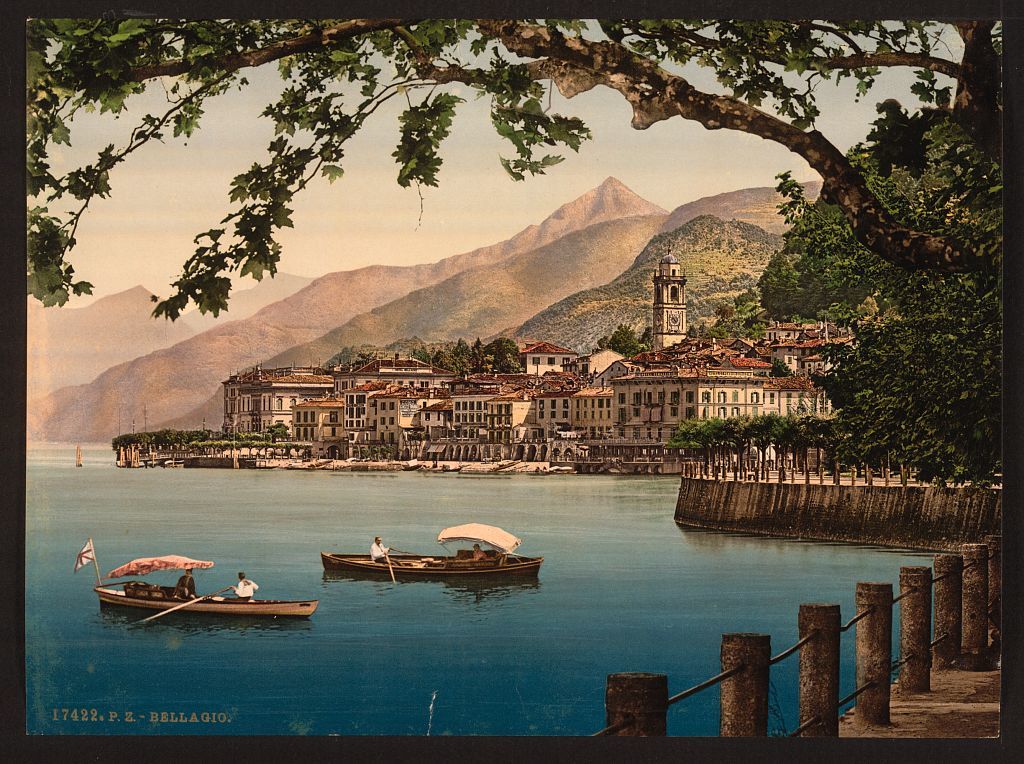
In other dreams you dress in your jewels:
orange and cream roofed villages piercing
tiny ears of land, the isthmus hand of Bellagio
dressed in lace strips, steep pearl-topped
mountain crows. This is something beyond art,
rounder than tabled intentions, deeper
than stone worship. What do you think of me?

Lucky atoms as near to nothing as can be,
an organic moment of punctuation in time’s
long sentences. Your eroded indifference is all
the more beautiful. My prayers are answered
in reflection. Long after I am gone, you will still
be Lake Como, but for these dreamy moments,
we drink wine from the same earthen Grail
Matthew James Friday has had poems published in numerous international magazines and journals, including, recently: All the Sins (UK), The Blue Nib (Ireland), Acta Victoriana (Canada), and Into the Void (Canada). The mini-chapbooks All the Ways to Love, Waters of Oregon and The Words Unsaid were published by the Origami Poems Project (USA).
.
PLEASE NOTE: ARTICLES CAN ONLY BE REPRODUCED IN OTHER SITES WITH DUE ACKNOWLEDGEMENT TO BORDERLESS JOURNAL.
Akbar Barakzai was born in Shikarpur, Sindh in 1939. He is ranked amongst the proponents of modern Balochi literature. His poetry reflects the objective realities of life. Love for motherland, peace and prosperity and dignity of a man are the recurrent themes of his poetry. His love for human dignity transcends all geographical and cultural frontiers. Barakzai is not a prolific poet. In a literary career which spans over half a century, Barakzai has managed to bring out just two anthologies of his poems, but his poetry has depth and reaches out to human hearts with its profundity. Last year, Barakzai rejected the Pakistan Academy of Letters (PAL) award, quoting the oppressive policies meted out to his region by the government as the reason.
Waiting for Godot

Arise! O friends from this deep slumber
Godot will not, will never show up

Godot is the  prophet of slumberous wakefulness
He's a messenger with a black scripture to misguide
the ignorant, halfwits and simpletons

O friends and pals! In your hearts and mind
and in every bone and vein of your body
The poison of slumberous wakefulness
Sprouted into toxic mushrooms
Pray tell me why do you want to waste yourselves
Why  do you want to rob your mind of wisdom and reason

O friends! Much desired is the dark tunnel of death
Than the curse of slumberous consciousness
Either sleep eternally like a rock
Or like the sea stay awake for evermore
Either imbibe the poisonous chalice of death
Or reap the treasured harvest of life

The poison of slumberous wakefulness is evermore feared
Than the murderer's deadly sword
The murderer's sword puts an instant end to life
Liberates one from all worries and woes
The curse of slumberous wakefulness
Neither lets you die in peace
Nor breathe in life's gentle breeze


Dear friends and comrades rest assured
Godot will not, will never show up
Setting our eyes on Godot's trail
We shall surely lose our vision
And the wealth of wisdom
We shall squander away forever

Arise my pals and companions
Pray cast off the snare of death
Liberate yourselves
From this slumberous consciousness
Set your brilliant minds free
From the fetters of indolence
For the hope of a mirthful spring
Together with your mates
Gulp down the potent liquor of death

O friends and comrades!
Betray not yourselves any more
Godot will not, will never show up
Fazal Baloch is a Balochi writer and translator. He has translated many Balochi poems and short stories into English. His translations have been featured in Pakistani Literature published by Pakistan Academy of Letters and in the form of books and anthologies. Fazal Baloch has the translation rights to Barakzai’s works and is in the process of bringing them out as a book.
.
PLEASE NOTE: ARTICLES CAN ONLY BE REPRODUCED IN OTHER SITES WITH DUE ACKNOWLEDGEMENT TO BORDERLESS JOURNAL
The purple Jacaranda flower perched on his snout did not arouse the familiar playful instinct. A friendly woof from his Doberman buddy was greeted with little cheer. It was straight third day Mani was looking for his lost master in vain at the open-air crematorium.
Abhay, a blue-eyed college going lad was my parent. He was living with his mother in an upscale Sadashivanagar apartment in Bangalore. Two years ago, he adopted me, a sprightly, cute, brown little Mani, as they called me. His mother a lady of few words, in her fifties was a good – natured home maker. Amma was fearful of dogs though. After much cajoling, Abhay was permitted to bring me home. I was allotted a separate room, and was allowed only into Abhay’s room. Amma remained aloof and was not happy about the non-vegetarian dog feeds brought for me, as she was a vegan.
My ears could hear Abhay’s KTM bike from quite a distance when he returned home from college. I would hide behind the door and pounce on Abhay and lick him, unable to control my excitement, at his arrival. I liked his soft hand caressing my forehead. I would close my eyes and daydream on his lap.
Fast forward one year, Abhay landed a plum job, was seeing his highschool sweetheart Anju. Amma liked Anju as she was a fine blend of the traditional and modern. Anju looked adorable to my doggy eyes too. The moment she entered the house, it was as if a thousand diyas (lamps) were lit. The house became a home filled with much joy and warmth. She would ask for me if I was not around. The invite was enough for me to catapult into her arms and cuddle up to the exotic fragrance of Miss Dior.
I always looked forward to Sundays when Abhay and Anju took me out for long walks. The Naagasampige flower was Anju’s favourite. Abhay would pluck and tuck it into her long hair. It was very enticing for me to prance around Anju and prey on the undulating, heavily scented Naagasampige in her hair. But I remembered Abhay admonishing me in the past, when I tried to hang on to Anju’s long plait which tantalizingly oscillated like a pendulum while she walked.
The stroll under the canopy of pink Tabebuia and the scarlet Gulmohar looked surreal and culminated in a stop at the Baskin Robbins for ice creams. I was fed with ‘strawberry jelly paradise’ by my pet parents against a backdrop of Alan Walker’s ‘End of time’ number. Time stands still….
And then there was Vishu, the new year. They were in two minds about celebrating Vishu. The Covid forecast for the upcoming months for Bangalore was grim. Nonetheless they decided to go ahead with the celebrations as a small family affair. Four of Abhay’s friends, Anju and an aunt with family were invited for the calebrations.
Although they lived in Bangalore for long and even spoke the local language Kannada, the culture and traditions of Kerala, their ancestral state were followed. Their home was a melting pot, the true spirit of contemporary India. Vishu was the time when the sun enterd the tropic of cancer. Mythology tells us the festival commemorates the day when Krishna killed Narakasura, the demon. The ‘Vishu Kani’ , an auspicious bowl which has to be the object that needs to be seen first on waking up to herald a good year, was placed by Amma the night before, after all the guests and Abhay went to bed. A shallow bell metal vessel was filled with rice, fruits. The photo of Krishna was adorned with flowers. The arrangement was replete with auspicious articles like mirrors, combs, gold coins, new dresses, betel leaves.
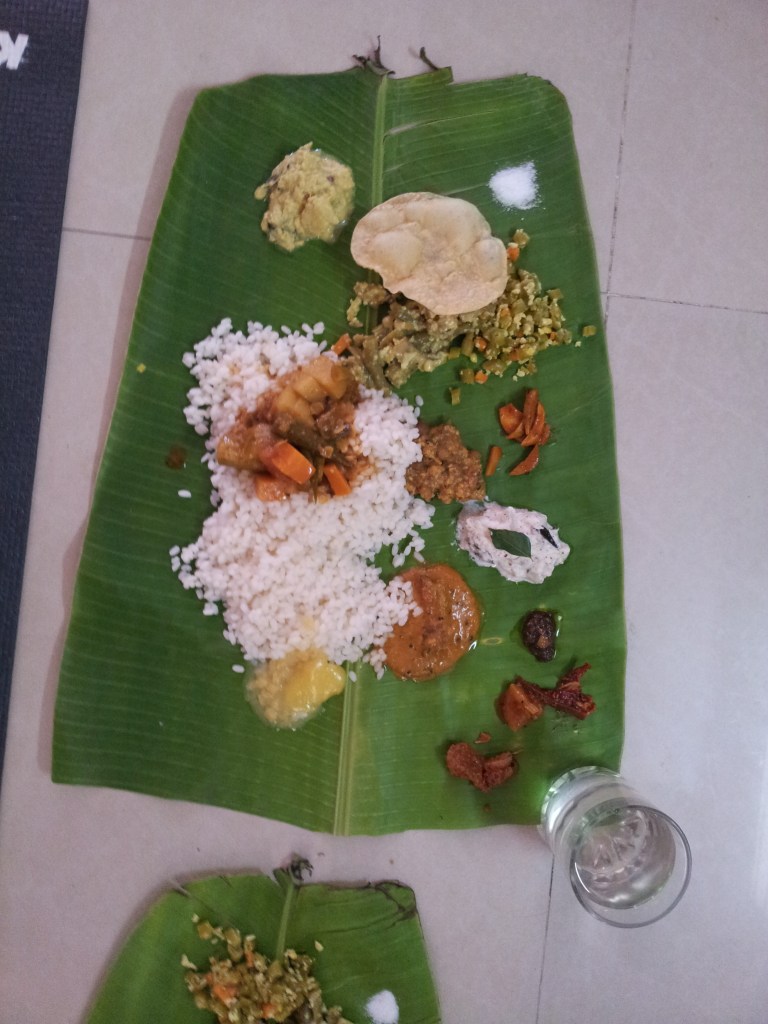
Waking up at 3 AM, they walked blindfolded to the prayer room and saw the kani first for a propitious new year. All of them received kaineettam, the first gift of the year given to the children. Nilavilakku, the bronze oil lamp dispelled the darkness and gave a golden yellow tinge to the ambience and everything around took on a divine hue. A couple of devotional songs by Anju added to the ethereal quotient of the unearthly hour. The day unfurled with pooja and was followed by the sumptuous Vishu Sadhya for lunch. Suddenly I could smell millions of particles twirling around and they were precariously moving around in the hall and entangling all the guests, while they were busy with the various board games. None of them were masked; all caution had been abandoned. I tried to warn them by bawling in a different manner to catch their attention. Alas, they mistook it for hunger and started feeding me! I could sense something amiss, but the group unmindful of this, happily had more fun and frolic and rounded off the day with masala tea and pakodas or fried fritters.
Three days later, Amma developed fever and cough. Abhay attributed it to the evening showers. Nevertheless I could sense imminent danger. I had never entered Amma’s room before. Today I felt a strong urge to get into her room and inform her of the dark shadow looming large and I howled. A petrified Amma shooed me away and tried to thrash me for misbehaving. I was duty-bound to inform them that I could smell something ominous, the same smell which emanated from a neighbour who was ushered into an ambulance and never made it!
Early next morning Amma fell unconscious in the washroom. Abhay panicked, picked her up, carried her in his arms like a baby and rushed to the hospital in his car. The telephone rang unabatedly, if at all I could pick up the receiver and reciprocate! Hours dragged on and I trudged across the empty house. It was dusk; I was hungry and decided to feed on the milk packet left at the door by the milkman.
I was never left alone this long ever since my arrival into this house as a pup. I meandered into the grilled balcony. The neon street lights shone bright on the deserted road below. Overnight the garden city had been transformed into a graveyard. Ambulance sirens ruled the roost. Roads wore a solemn look.
My heart skipped a beat, when I saw Abhay’s black Scorpio in the driveway. He dashed in and left the main door ajar and slumped into the sofa sobbing. He was oblivious of my presence or whimpers. He made hasty calls to Anju, his voice quivering. I could not make head or tail of things. I stood at the doorway awaiting Amma.
I could smell the same, strange, noxious smell, time and again, the COVID smell in human parlance. It was unmistakable. Abhay soon slipped into a deep slumber. I had to alert my hero. I paced up and down the room, I licked his childlike face and tried to open his eyes, but of no avail. Abhay was getting breathless, flinging his limbs violently; he was making a desperate attempt to breathe. The Covid stink was getting stronger and more and more dangerous. My pet parent became livid and limp. I wailed, yowled and yelped. My leader was sinking and something sinister was on cards.
A vigilant good Samaritan walked in and took charge of the situation. An ambulance was summoned. Anju hastily arrived, her heart pounding. The medical crew examined Abhay and declared him dead! It was a bolt from the blue. The life saving ambulance sped away to make way for the hearse..
Anju was shocked beyond words. She swooned. She woke up and walked around as if in a trance. She looked aghast, lost and turned into a stone. Tears flowed incessantly.
I was not allowed into the hearse. I ran after it until my legs gave way, possibly a kilometre or so.
If at all, I could speak…
If at all, my master had heeded my advice….
If at all, humans had acknowledged my olfactory prowess, which was easily fifty times theirs..
Here I lie down on the green grass, which smells sweet no more.
The moonlit night without Abhay and Anju in tow, has lost meaning. I fall asleep, subdued, to the distant lullaby of “Diamond Heart” by Alan Walker….
Shobha Nandavar is a Neurologist and Stroke Physician based in Bangalore. She writes during her leisure hours. She has about 40 publications in medical journals. She has contributed articles to Deccan Herald, Live Wire and Indus Women Writing.
.
PLEASE NOTE: ARTICLES CAN ONLY BE REPRODUCED IN OTHER SITES WITH DUE ACKNOWLEDGEMENT TO BORDERLESS JOURNAL.
Solus

Is being in solus
Spotting the droplet
That doesn’t flow over?

While forlorn,
He is not seen.

While forlorn,
It seems
He is another.
A multitude.
In absentia.

At times,
The tiny chirping bird
That sheds music
Seems to be
Singing his heart.

He turns out to be
So unlike him,
So full of him.

He turns out to
Be exactly that.

Is being in solus
Spotting the droplet
That doesn’t flow over?
Sujith Kumar is a poet and editor. He has served as the executive editor of Omega: Indian Journal of Science and Religion and also as the sub-editor of the magazines, Madhyamam and Ezhuthu.
Aditya Shankar is an Indian poet, flash fiction author, and translator. His work has appeared in international journals and anthologies of repute and translated into Malayalam and Arabic. Books: After Seeing (2006), Party Poopers (2014), and XXL (Dhauli Books, 2018). He lives in Bangalore, India.
.
PLEASE NOTE: ARTICLES CAN ONLY BE REPRODUCED IN OTHER SITES WITH DUE ACKNOWLEDGEMENT TO BORDERLESS JOURNAL
























 Borderless