Categories
Poetry

Entwined Places

By S Srinivasan

Artwork by Gita Viswanath
ENTWINED PLACES

Standing on the Juhu beach,
I heard, more than a decade ago, 
The winds from the Marina, 
In a smattering of Marathi and Tamil,
Accompanying birdsongs.

Blame that on a bout of homesickness
But what about last year, when

The Sealdah station, its turf
Pounded by the waves of human feet,
Seemed to me to reverberate 
With the weighty steps of the rush hour, 
Also felt in Mylapore and Nariman Point?

Perhaps, the crowds stirred me then
But that cannot be all, for

Often on cool Hyderabadi afternoons,
I have worn, in silence, the unease
Of Bangalore's woolen evenings;
And sensed in Delhi's nippy nights
The cold grip of other Indian winters...

Extremes sometimes addle the brain
And lull the heart, but…

Even when I take a leisurely stroll
On a summer dusk, around the lake
That girdles my neck of the woods,
I am greeted by the lush sights, of
The long winding ways yonder...

To Darjeeling and Kodaikkanal,
To Yercaud and Dehradun,
To Kashmir and Kanyakumari,
And to all that lies beyond.      

Srinivas S teaches English at the Rishi Valley School, India. He spends his free time taking long walks, watching cricket and writing poetry in short-form (mostly haiku).

.

PLEASE NOTE: ARTICLES CAN ONLY BE REPRODUCED IN OTHER SITES WITH DUE ACKNOWLEDGEMENT TO BORDERLESS JOURNAL

Categories
Stories

Ants

By Paul Mirabile

My flat is very small and unhealthy: a roach-infested kitchen and bath, a stuffy dining room and bedroom. And I must admit that I made no particular effort to remedy this unhealthiness. Because there is no heating system, in the winters I board up the tiny windows that are found above my bedroom and those in the dining room. This may appear primitive, but I do live on the fifth floor where cold winds blast frosty air through flimsy boards. It goes without saying that I freeze during the winter. With the arrival of spring, though, I remove the boards and replace them with wax curtains so as to keep the insects out. They build their nests on top of the roof. In the kitchen there is a skylight, square and tiny, the brittle glass of which I had the misfortune of breaking some time ago. I haven’t either the skill or the pecuniary means to repair it. This broken skylight had been constantly on my mind because of those huge nests atop the roof. I indeed could have mustered up the money, but … you know how people get when their existence is reduced to tiny cubicles and thoughts ?

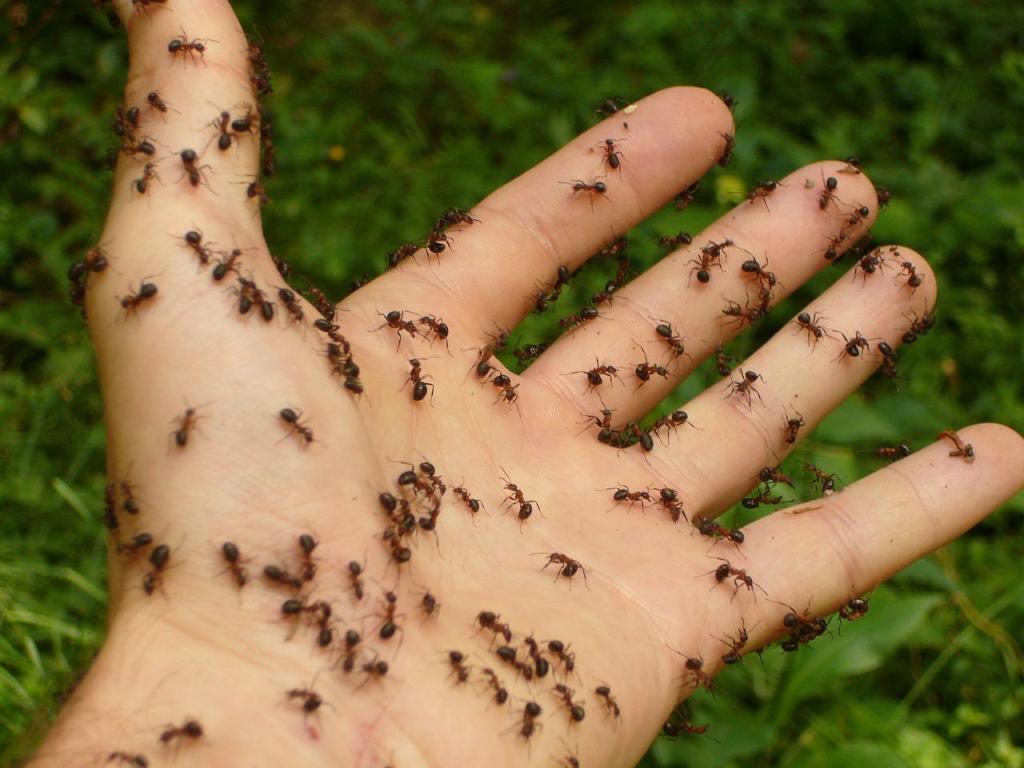
Not long ago I left town for a short stay near the sea. The weather had been exceedingly hot, and my flat was like an oven. The square below was filled with sultry, polluted air, with noisy gypsies hawking and haggling. My pleasant little holiday terminated horribly as soon as I stepped into my flat : the kitchen, stifling, was crawling thick with black ants ! I was beside myself. There were streams of them forming enormous black, billowing pools on the unclean white-tiled walls. I puked on them for I have detested these ever since I had buried live ants as a child, relishing the sensation of their tomb in the midst of hard-packed humus, suffused with dampness and pervaded by silence. I often wondered whether this sentiment was mine or theirs ?

The mere sight, now, of one or two made me break into a cold sweat; and here, before me scampered millions, fat and juicy. I ran to the bath grabbing a mop and bucket. Pouring alcohol into the soapy water, I set to work crushing them on the white-tiled floor, knocking them off the white-tiled walls and ceiling. The toil seemed endless, yet, as time went by, the mass slaughter gave me a sort of perverted delight ; an abnormal sensation of power, divine and unholy at the same time. Toppling the darting beasts from the walls, I sent them hurtling to a watery death. The strong smelling alcohol caused them to shrivel up into tiny black balls. I finished off many by simply crushing them between my fingers or under my bloody heels. Two hours later there were none left on the wall to tell their disheartening tale …

Exhausted, I owed their hideous trespassing to the broken skylight, and vowed to replace it in the morning. And still I hadn’t unpacked … That would be left for the morning ; for now, I needed a good, sound sleep. Yet the heat that evening was unbearable. I threw myself onto the bed, trying to forget the images and those disgusting ants. No use, I couldn’t drive them out of my strung-up mind. The sheets were soaked in perspiration. I tossed them off, wiping the sweat from my face and arms with them. The bedroom stank of sweat so I got up and staggered into the kitchen to splash some water on my body. When I switched on the light a terrible sight made me fall back into the kitchen table : the walls heaved and throbbed with myriads of black and red ants which were making their way through the skylight. Many of them were huge. They swarmed round my feet, naked and exposed to their scrabbling, biting and scratching. Involuntarily I let out a scream and ran back to fetch my trusty mop. I would have to begin the whole gory operation again …

Returning to the amok beasts, I took up the mop, smashing the filthy creatures against the walls and floor, picking them out of the fissures and cracks, wrenching them out of corner and nook. It seemed as if I were fighting for my life ! Alas the battling brutes out-numbered me ; little by little my strength wanned as the colonies gained the cracks throughout the kitchen walls, filling them until the plaster broke and crumbled down. They dived into my hair, swiftly seeking the orbits of my eyes. Falling to my knees … I awoke …

It had been an evil nightmare ! Were the black beasts coming back to torment me after so many years of burials and extermination ? The wall-clock chimed three ; My mind raced and body ached. And the darkness of my chamber offered no consolation, nor the oppressiveness of the heat. I dared not walk into the kitchen although my throat, parched and swollen, yearned for a glass of cool water. The nightmare had turned the beads of sweat into icy droplets : would this bed-chamber be my tomb ? And yet … yet, the temptation gnawed at me. Yes, enter the kitchen, see whether it had all been a nasty nightmare, or reality, or something in between. Yes, my little coffin in which I had passed much of my existence. I laughed aloud, then louder. Speedy thoughts formed icicles in and round my soul. For I did believe in the soul : wasn’t that the very reason I had buried those ants alive ? 

However, the clammy heat kept me riveted to the bed. Laying back, I suddenly detected slight noises coming from the door which led into the narrow, yellowed peeling wall-papered hallway. I listened … and listened with greater intensity, steadily growing conscious that something was alive in the room. Frozen to the bed, I listened even more attentively, carefully, so as not to disturb this pulsating thing.

Finally, plucking up courage, I flung myself out of bed and darted to the door. I noted a foul smell reeking from the hallway ; the scent of the dead ? Flicking on the light a jolt threw me back in horror : millions … no billions of ants were smothering two half-dead mice, dragging the screeching rodents across the threshold of my room. And there inside it, I had nothing to kill them with ! The screeching of the half-gnawed mice drove me mad ; strange, too, were the indescribable crunching sounds that elicited from the open-mouthed rodents. I soon realised that this was no nightmare. However, I couldn’t be sure whether the mice were dead or still fighting off the floods of ants with the last flickers of their unfortunate lives.

I grabbed a chair and squashed them at my feet, attempting to clear a path to the kitchen. The mop was my only salvation, since that of the mice could no longer be redeemed. But what would the kitchen look like ? I was trapped. Nonetheless, I put on my shoes that were still stained with the blood of the black beasts, and made a bee-line towards the sacred door. Those ant nests must have been immense ; the walls, floor and ceiling had been blackened by them, caked, dense and throbbing …

The door loomed in sight, albeit it swelled in a tidal wave movement of heaving, pulsating ants : clinging, swirling, skirling, raging … They fell upon me like wrathful wasps whose nests had been discovered and disrupted.

They fell upon me I say, hordes of them racing up my naked legs. Yet, I couldn’t budge; I tried to inch forward but my feet wouldn’t move. They were attacking my face and hair now as I crawled closer and closer to the oscillating door. I started to scream for help; yet, who would have come to my succour ? Thoughts of the half-eaten mice suddenly flooded my mind ; they were probably dead by now, buried beneath a layer of ants, like the ants I had buried, beneath layers of dun soil ! I imagined an ant-hill at a time when pirates would bury their sad prisoners up to their necks in them, waiting until the disturbed red killers chewed through the eyes of their screaming interlopers. I reached for the door-knob ; something held me back, an evil, insalubrious odour that stealthily began to suffocate me. My breath became shorter and shorter, and when I managed to gasp for breath a billow of soft, mushy, black flooded into my open mouth … I sat up screaming in bed …

Like a lunatic I paced back and forth in that death chamber. All I asked for was to sleep. But the ants … I placed my ear to the moist floor boards … there was no sound. Cautiously I moved through the narrow hallway, my fingers touching ever so tenaciously the viscous, soiled paper, probing each and every crevice and crack. I couldn’t, however, bring myself to switch on the light, thus there I remained in the dark, a man afraid to exit from his own shelter. Would they bury me alive in this earthy niche ? Into the kitchen I ventured still in absolute darkness. I stooped down to touch the floor : nothing, absolutely nothing. I laughed a rather hysterical laugh. The floor was somewhat wet from my mopping. I did indeed mop then ! I slipped and slid about, so happy about this nothing … this absolutely nothing. So thrilled about this … that …

Suddenly the phone rang. At this hour of the night ? I sat up listening … listening … it suddenly stopped, as abruptly as that ! Then there was a knock at the door … I sat up listening … listening … It too stopped, as abruptly as that ! As I lay back, the flat echoed with various breathing sounds : they would come and go, like the ringing and the knocking. The phone rang … no one. A knock drilled … no one. Gradually an inky blackness crept over my still, stiffened body until the rim of a faint light allowed me to peer into the hallway where billions of soldier ants were busy bearing the burden of their dead …

Paul Mirabile is a retired professor of philology now living in France. He has published mostly academic works centred on philology, history, pedagogy and religion. He has also published stories of his travels throughout Asia, where he spent thirty years.

.

PLEASE NOTE: ARTICLES CAN ONLY BE REPRODUCED IN OTHER SITES WITH DUE ACKNOWLEDGEMENT TO BORDERLESS JOURNAL
Categories
Poetry

Poetry by Tohm Bakelas

Courtesy: Creative Commons
untitled poem

under a blanket of wet leaves
i set fire to the night. crickets are
silent as the highway sings
sad songs. sleep offers no relief.
the night burns into morning. clouds
upon clouds upon clouds upon
clouds block out the sun, a white sky
with no breakthrough. i watch you
step out of your car like i do every day.
today is different, yet somehow the
same, like a weird déjà vu, but your
hair is shorter, when it was longer.

Tohm Bakelas is a social worker in a psychiatric hospital. He was born in New Jersey, resides there, and will die there. His poems have appeared in numerous journals, zines, and online publications. He has published 15 chapbooks and 2 collections. He runs Between Shadows Press.  

.

PLEASE NOTE: ARTICLES CAN ONLY BE REPRODUCED IN OTHER SITES WITH DUE ACKNOWLEDGEMENT TO BORDERLESS JOURNAL

Categories
Essay

Himalayan Stories: Evenings with Nuru at Pheriche

By P Ravi Shankar

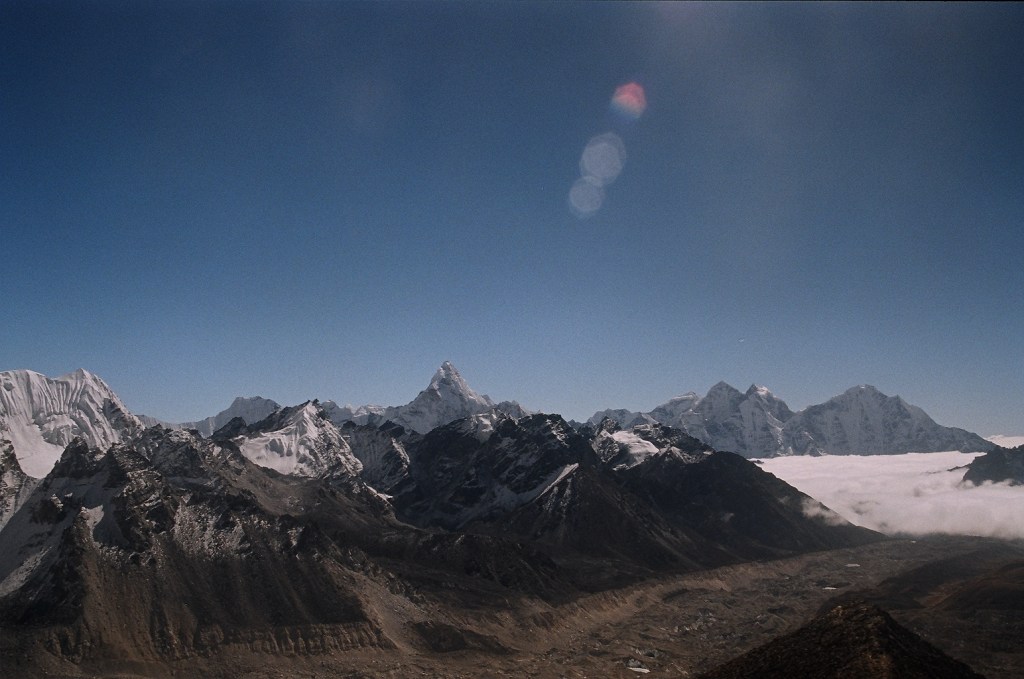
The Magnificent Himals… Photo courtesy: Ravi Shankar

The windows were getting misty. Outside it was freezing cold and rainy. However, the cast iron heater kept the dining room hot and toasty. We were enrolling trekkers/hikers for a study on high altitude. The Himalayan Rescue Association (an organisation catering to the health needs of trekkers, mountaineers, and the local population) conducts various studies in high altitude locations in Nepal. These studies are usually conducted during the peak trekking and mountaineering seasons in spring and autumn. The participants (trekkers) were enrolled either at Pheriche or at Dingboche, in the Everest region of Nepal. We had just finished dinner and were discussing the how the studies were going. We were happy. The room was warm, our stomachs full and the company interesting. The owner of the lodge, Nuru Sherpa often joined us. Other trekkers were seated at neighbouring tables and could join in. The atmosphere was relaxed and friendly. Our study leader had brought dried apple cider sachets from California, that could be reconstituted with warm water. The apple cider was delicious.  

Pheriche had been originally a yak pasture situated at a height of 4300 m in the Everest/Khumbu region of Nepal. There are several place names ending with ‘boche’ in this region. ‘Boche’ means a flat land seen from a hilltop. In this mountainous region a plateau like area is a rarity. As tourism developed in the Khumbu, several lodges were constructed. Pheriche however, is mostly overcast and windy.  Most trekkers prefer to stay in Dingboche, 150 m higher on the other side of the hill. The place is higher but gets more sunshine and is warmer.

The research team had split with two of our colleagues staying at Lobuche uphill at 4900 m. We had flown to the Tenzing-Hillary airport at Lukla and then hiked uphill acclimatizing along the way. There is a 700 m ascent between Pheriche/Dingboche and Lobuche and different studies have been done on this stretch of the trail. The Himalayan Rescue Association runs an aid post at Pheriche to provide medical treatment to trekkers, guides, porters, and locals. The post was established in 1973 and has seen extensive upgrades. It has been equipped with oxygen concentrators and has the ability to manage most cases of altitude sickness. The doctors volunteering at the clinic have been giving talks on staying healthy at high altitude every afternoon. We attended these talks, which even helped to recruit trekkers for our study. Later, we would hike uphill to Dingboche and visit the trekkers staying at different lodges. Even in 2007, Dingboche had more than twenty-five lodges spread out along the trail.

We were staying at the Himalayan Hotel in Pheriche. The hotel was run by Nuru Sherpa from Kunde who had studied interior design in Karnataka, India. The rooms were cozy but cold. In the tea houses (lodges), only the dining room is heated during the evening and sometimes during the morning hours. The lodge had squat toilets and Nuru used to mix some kerosene in the toilet water to prevent it from freezing. I saw a recent photo and the lodge has been expanded and now has private rooms with attached western-style toilets. There has been a lot written about toilets at trekking lodges. Some are luxurious, western-style flush toilets while others are just a hole in the ground. Most do not have a sewage system and the environmental consequences may be high. Lobuche had a terrible reputation for its toilets and was widely known as the armpit of Nepal. Things have improved significantly since then.

Most lodges have a greenhouse where you could sit, and lounge comfortably protected from the wind during the day. We used to take full advantage of the greenhouse. As the temperature inside was significantly higher, we could sit in our T-shirts. This was a great luxury in this cold and windy locale. Pheriche is often used as an acclimatisation stop by trekkers before heading higher. The hotel had a good collection of books and we used to spend hours in the greenhouse reading and chatting. People came and went but we stayed on. Staying put in a place in constant flux was a strange experience. Days coalesced into weeks and weeks into a month.

Pheriche had suffered damage during the earthquake of 2015 and rebuilding was mostly by local efforts. Today there are internet and phone services and websites allowing you to book lodges in advance. In the 2000s, you had to book the rooms physically. The lodge owners sometimes used satellite phones to access the internet, but it was expensive. During the peak trekking season in the fall, the lodges could get incredibly crowded. The global pandemic has negatively impacted tourism, and the economic consequences have been bad. Lodge owners often take loans at high-interest rates to renovate and expand their facilities and if the number of tourists drop, they can easily go into debt.  

The landscape was barren with a few shrubs struggling to grow in the high altitudes. There are spectacular mountain views from around Pheriche. These are among the tallest mountains in the world at over 7000 m. Pheriche and Dingboche are over 4000 m. The village of Pheriche is on the banks of the Tsola river. The wind roars across the valley and clouds, rain and snow follow. Tibetan Buddhism is dominant and mani walls inscribed with Lamaist prayers and cairns of towers of rocks are scattered all around. Prayer flags send the Buddhist law riding on the wind. On a sunny and warm day, the land is at peace and a hike through this landscape is enchanting. However, at these altitudes, the weather can change rapidly. As you climb towards Dughla and Lobuche, there are spectacular mountain views. There is a memorial to those who have died on Everest as you climb out of Dughla. There are a variety of memorials to climbers in this region. There is one on the grounds of the Pheriche hospital/aid post.   

Memorials to climbers… Photo Courtesy Ravi Shankar

Sherpas are the inhabitants of the Khumbu and have earned an enviable reputation as mountain guides. Sherpas originally migrated to Nepal from Tibet several centuries ago. Namche Bazar is the unofficial capital of Sherpa country. Potatoes play an important role in Sherpa cuisine. The introduction of the potato from the South American Andes made settled life possible in many mountain regions globally. Potatoes are used in several ways. Rikikur (potato pancake) is a breakfast staple. There is a small restaurant by a waterfall serving potato pancakes called rikikur on the hike to Namche Bazar. You wait and enjoy the scenery as your pancake is freshly prepared. A spicy chili sauce is a usual accompaniment. There is a type of red round chili grown in the Himalayas called dalle khursani or jyanmaara (life-taker) khursani. The chili is extremely spicy and can literally take your life away, hence the name.      

The Khumbu region at an average height of over 3500 m is one of the most spectacular on the planet. Getting there may not be easy, and you need to plan your journey properly. Acclimatization is important. Compared to other treks in Nepal this is more expensive and has a risk of altitude sickness. However, the spectacular views of the highest mountains on earth cannot be matched elsewhere. Things have certainly changed with the advent of cell phones and the internet. Roads have also made steady inroads in the surrounding regions. In the good old days, there were no roads in Nepal outside the Kathmandu valley and the early Everest expeditions used to start their walk from the outskirts of the valley. It used to take well over a month to reach the Khumbu region.

Hopefully, the pandemic will stay controlled. This will allow us to hike this autumn in the Khumbu region and enjoy Sherpa culture, religion, fresh air, cold winds, and the spectacular mountains!   


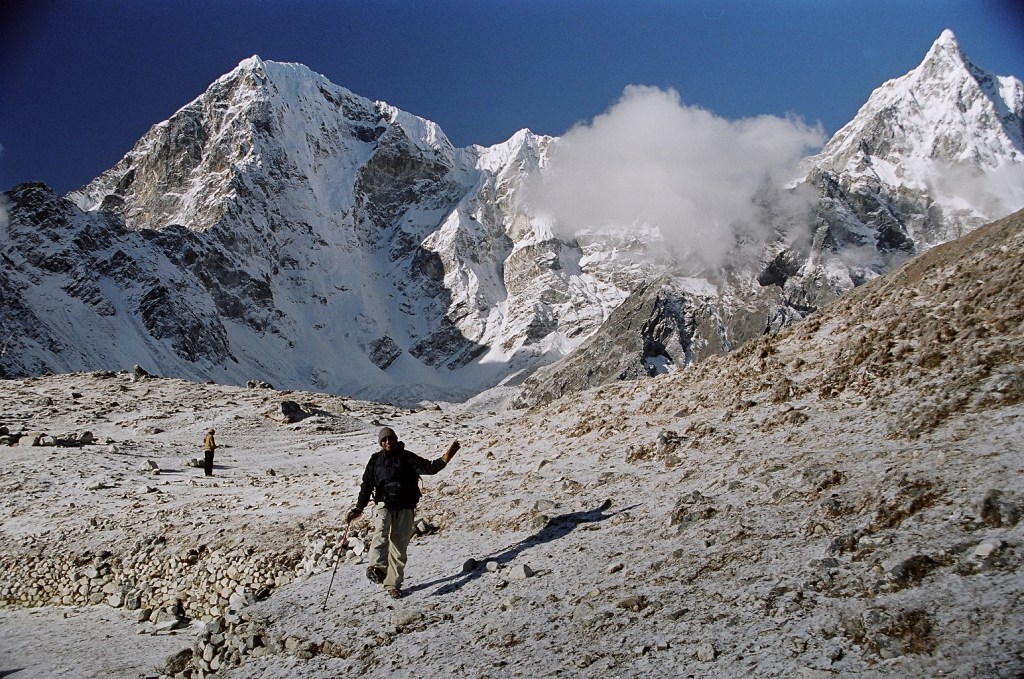
Fun in the snow… Photo courtesy: Ravi Shankar

N.B: We miss our friend Dr Ashutosh Bodhe who accompanied us on several treks. He passed away in 2021. His raw energy and passion for life will be missed!

Dr. P Ravi Shankar is a faculty member at the IMU Centre for Education (ICE), International Medical University, Kuala Lumpur, Malaysia. He enjoys traveling and is a creative writer and photographer.

.

PLEASE NOTE: ARTICLES CAN ONLY BE REPRODUCED IN OTHER SITES WITH DUE ACKNOWLEDGEMENT TO BORDERLESS JOURNAL
Categories
Poetry

Masquerade

By Sudakshina Kashyap

MASQUERADE

My body is an unmapped ocean
and I'm drowning,
constantly sinking
in the band-aids of fluidity.
You see, 
depression vivisects
every stanza of the anatomy of poetry, turning me into a lullaby
whose verses are unable
to find the chords of my breaths;
for I am blackout poetry, 
a tragedy 
masquerading as an art. 

Sudakshina Kashyap identifies herself as someone messy, who often had pixie cuts as a child to annoy her neighbourhood aunties, and now she gets lost even on straight roads— but being messy is only poetic. Her works have appeared on a number of literary journals, media houses, print and e-magazines. She’s an International Youth Delegate from India and a Co-Author of two poetry anthologies.

.

PLEASE NOTE: ARTICLES CAN ONLY BE REPRODUCED IN OTHER SITES WITH DUE ACKNOWLEDGEMENT TO BORDERLESS JOURNAL

Categories
Musings

 ‘You don’t have to understand life. You just have to live it’

By Shubha Apte

Life is never a straight line, and it isn’t all rainbows and unicorns. It always has ups and downs. By experience, we learn to navigate all the potholes and make the journey of life victorious. During this journey, we fall at times. But we pick ourselves up and continue to move forward. Confucius has said, “that our greatest glory is not in never falling, but in rising every time, we fall.”

 Looking through the rear-view mirror, we sometimes think of our choices and regret our decisions. But time does not standstill. It does not allow us to go back in time and change our decision. This is when the “what if” feeling grips us. We regret what we did, leading to a feeling of sadness.

As humans, we face millions of choices every day. Some of these choices can be good for us, but others can be damaging and significantly impact our lives.

When we make a wrong choice, we experience an overwhelming feeling of regret and know we cannot alter anything. We wish we could have done it differently. It can leave us stuck, always looking backwards and unable to move forward in our lives.

Trapped in this cycle of regret, we can become rigid, constantly blaming ourselves. But avoiding doing anything for fear of regretting it later is also not good as it tends to disengage us from relationships, opportunities and progress gets stalled. We cannot make all the correct decisions to make life perfect. A perfect life is more of an illusion. Accept that life is not perfect and start living.

“It is easy to mourn the lives we aren’t living. Easy to wish we’d developed other talents, said yes to different offers. Easy to wish we’d worked harder, loved better, handled our finances more astutely, been more popular, stayed in the band, gone to Australia, said yes to the coffee or done more bloody yoga.

 “It takes no effort to miss the friends we didn’t make and the work we didn’t do, the people we didn’t do and the people we didn’t marry, and the children we didn’t have. It is not difficult to see yourself through the lens of other people and to wish you were all the different kaleidoscopic versions of you they wanted you to be. It is easy to regret, and keep regretting, ad infinitum, until our time runs out.

 “But it is not lives we regret not living that are the real problem. It is the regret itself. It’s the regret that makes us shrivel and wither and feel like our own and other people’s worst enemy.

 We can’t tell if any of those other versions would of been better or worse. Those lives are happening, it is true, but you are happening as well, and that is the happening we have to focus on.”

 ― Matt Haig, The Midnight Library

This quote about regrets made me start thinking about my own journey and the regrets holding me back. Some of the professional choices did not work out the way I had imagined. I decided to join a company based on its brand value but later realised that my personal core values conflicted with the values of the people that I was working with. When frustration set in, I decided to quit the job at the peak of my career. Looking back, I realised I had better choices and opportunities, and I had boarded the wrong bus. The disappointment I experienced from this haunted me for days. With a lot of determination, I did come out of this phase. I did not allow pain and despair to drag me into depression. It required me to look at life with a totally different lens and not allow the past to discolour my present.

I read the New York Times bestseller “The Midnight Library” by Matt Haig around the same time when I was deeply entrenched in regrets, and the book resonated with me. This fictional story would resonate with anyone who has faced disappointment and regrets and wants to improve their life. The book is a gentle reminder to live life and find joy in the present moment. It is an affirmation of life’s many possibilities. We keep thinking of the days gone by and the opportunities that we may have missed, and in the process, ignoring the glories of the present.

Matt Haig is an English novelist and author. Through Nora Seed, the fictional character’s narrative, Haig encourages readers to let go of their past and make the most of their present. The central character, Nora Seed, has lost her job, her best friend, her brother and her cat, her relationships are a mess, and she decides to end her life. She ends it with an overdose of antidepressants, but she finds herself in the midnight library between life and death. Every book in the library offers her a chance to enter a life where she made a different decision and has regrets. By experiencing alternate versions of her own life, she realises there is nothing called a perfect life and prefers to live in her current state.

I loved the author’s idea of envisioning an infinite library between life and death.

The book compelled me to look at life from a totally different perspective. In life, you need to be strong from within, face the consequences of your choice and not get caught in the trap of regrets. We don’t need to understand life; we need to live it, and like Matt Haig said, “You don’t have to understand life. You just have to live.”

In the last few years, I have made many changes in my life. I have decided to use my potential to the best of my abilities and learn from my mistakes and the wrong choices that I had made and not to get caught up in regrets.

The past does not lead to happiness. The future is beyond our control, but it is the present that we are in complete control.

“It’s not the lives we regret not living that are the real problem. It is the regret itself. It’s the regret that makes us shrivel and wither and feel like our own and other people’s worst enemy”- Matt Haig.

Shubha Apte is an engineer, business leader, certified executive coach, speaker, trainer and a freelance writer based in Bangalore with focus on diversity initiatives and women leadership. Her articles have been published in online publications for LeadChangeGroup, Pratilipi, IndusWomenWriting, Unscreen.org, LinkedIn. She blogs at  https://www.shubhaapte.com/

.

PLEASE NOTE: ARTICLES CAN ONLY BE REPRODUCED IN OTHER SITES WITH DUE ACKNOWLEDGEMENT TO BORDERLESS JOURNAL
Categories
Excerpt

Villainy by Upamanyu Chatterjee

Title: Villainy

Author: Upamanyu Chatterjee

Publisher: Speaking Tiger Books

Death of late having been much on her mind, it did not seem surprising to Dr Mujumdar that she should, at seven-forty of a December morning, during her constitutional in the neighbourhood park, be the first to come upon the corpse or rather, to recognise it to be a dead body. Of course, they were all concentrating on striding along on the jogging track – rolling their hips, pausing discreetly on occasion, only for a micro-second, to break wind – and all moving clockwise as per the rules set down and put up by the Residents’ Welfare Association on the signboard at the entrance, and if they had eyes for anything, it was for the odd, protruding pebble in their paths and every now and then, a Johnny-come-lately in his new car outside the gates, prowling in search of a parking slot. But beneath the hibiscus bushes just before the Children’s Corner, they so stared her in the face, leapt out at her to shout out their presence that she marvelled that no one else appeared to have noticed them – a pair of off-white Bata tennis sneakers, stark against the dark, damp loam, blue socks in a heap at the ankles, khaki trousers that had ridden up to reveal scrawny calves, with the rest of the travesty mercifully hidden by the foliage and a mound of compost awaiting distribution. For travesty she knew it would be and she did not want to see it; for since when has death not been a travesty of all that holds meaning?

       ‘Something tells me that that is not a drunk Colony guard or municipal gardener sleeping it off,’ said she, aloud, to herself, glanced at her watch even though she knew what time it was, and continued silently, But could I still do my half-a-dozen rounds as though nothing has happened, or at least as many as I can before someone else notices something amiss? Or would that be callous and unfeeling of me? She lengthened her stride and began doggedly to pump her elbows in an effort to get away quickly. Her heart though was really not in it that morning. ‘It does seem shameful for someone who’s almost a medical doctor,’ she carried on her conversation with herself, ‘to run away from a corpse. Waddle away, more accurately. But people must never know. And all this – ’ She looked up and about her for a moment, blinked ‘ – is going to have to stop pretty soon, isn’t it?’ She exchanged a ‘Morning’ for a ‘Hello, dear’ as she overtook portly Mrs Gulati. ‘I mean, no one can possibly jog or skip rope or stretch or do his yoga and breathe through his anus or laugh his therapeutic Santa Claus belly laugh in the presence of a dead body, can he?’ And then, aloud, ‘Morning, Sanjeev-ji. You are early today?!’

      Dr Mujumdar took more than her usual eleven minutes to cross the Children’s Corner, pass the Water-Harvesting Area and loop around the Nano Golf Course. By the time she turned into the straight stretch along the C-Block side of the park, a knot of the regulars, forced to abandon their burpees and their Hanuman pushups, had formed around the hibiscus bushes. Automatically, Dr Mujumdar slowed down, even wondered for a second whether she could about-turn and, disobeying the commandment of the RWA, clump away anti-clockwise.

       ‘Don’t touch anything! Just call the police.’

      ‘Could it be someone we know? Even a member of the Health Club?’

      ‘Doesn’t look as though his membership did him any good. Somebody had better telephone the police, I say.’

      ‘I can’t. My phone needs to be charged.’

      ‘I can’t either, unfortunately. I always leave my phone behind at home when I step out for my exercise.’

      ‘Why don’t you call them? They will respond immediately to your commanding personality.’

      ‘It is the RWA that should phone the police. After all, the dead body has been found in a public place. Just call Tutreja at the Association.’

      ‘I can’t, I just told you. My phone needs to be charged.’

      ‘Why are you carrying around a phone that doesn’t work?’

      ‘To time my rounds, if you must know. The clock works. And how damn nosey you are, if I might add.’

      ‘Is something the matter? I’m a doctor. A pharmacist, more accurately. Perhaps I might be of help.’

      The knot of exercisers, three-deep by then, stirred and parted like porridge to make way for Dr Mujumdar and then congealed around her even before she could look down once more upon the Bata shoes and the scrawny calves, the khaki trousers. The press of bodies made concentration all the more difficult.

      ‘We’ll have to pull him out and turn him over. Any volunteers?’ The doctor looked about her at the knot, watched it stir and thin. ‘Backache,’ murmured a man with a white moustache, his hand ready to clutch his hip.

      With a grunt of annoyance, portly Mrs Gulati planted herself in the hibiscus bed, pushed aside the vegetation and bent to grab an ankle. The shadow of a momentary queasiness crossed her features at the touch of that cold, alien flesh. She was suddenly surrounded by several fellow-residents whom she had abashed. Freely directing and admonishing one another, they lifted the body up and sideways and laid it down, face up, on the jogging track. The group emitted a sort of collective moan, part sigh, part gasp, on first seeing the face. With difficulty, Dr Mujumdar got down on her knees beside the body. The onlookers, four deep now, gathered about them as though caught in an eddy.

      He was dead, there was no doubt about that. The dead do not look like the living. She felt for his pulse. The wrist was cold and stiff. She extracted a large handkerchief from the pocket of her tracksuit and gently dusted the loam and grit off the face. A murmur, a commentary on the vanity of all that is not death, rustled through the group like the hint of a breeze.

Excerpted from Villainy by Upamanyu Chatterjee. Published by Speaking Tiger Books, 2022.

ABOUT THE BOOK

 Walkers in a Delhi neighbourhood park come upon a body on a mid-winter morning—an unidentified body, unremarkable but for an extraordinary scar right between the eyes.

A delinquent teenager—who prefers, to the rest of living, an Ecstasy pill with a beer, and the interior of an expensive car with a gun in his pocket—leaves home one evening for a joyride in his father’s Mercedes.

In the nineteen years separating these episodes, five killings take place—and one near-fatal battery—none of which would have happened if a school bus hadn’t been in the wrong lane. Deals are struck between masters and servants, money changes hands, assurances are given and broken. The wheels of justice turn, forward, backwards and sideways, pause and turn again. Old alliances are tested and new ones are formed in prison cells, mortuaries and court rooms. And every life is a gamble, for no one is entirely innocent.

A meticulously crafted literary thriller, Upamanyu Chatterjee’s seventh novel is a riveting story of crime and retribution, and a meditation on the randomness of evil, death and redemption. It will keep you spellbound till the end.

ABOUT THE AUTHOR

 Upamanyu Chatterjee is the celebrated author of English, August: An Indian Story (1988), The Last Burden (1993), The Mammaries of the Welfare State (2000), Weight Loss (2006), Way to Go (2011), and Fairy Tales at Fifty (2014)—all novels; The Revenge of the Non-vegetarian (2018), a novella; and The Assassination of Indira Gandhi (2019), a collection of long stories. He won the Sahitya Akademi Award in 2000, and in 2008, he was awarded the Order of Officier des Arts et des Lettres by the French Government for his contribution to literature.

Click here to read the review

PLEASE NOTE: ARTICLES CAN ONLY BE REPRODUCED IN OTHER SITES WITH DUE ACKNOWLEDGEMENT TO BORDERLESS JOURNAL

Categories
Review

  Is Villainy by Upamanyu Chatterjee a ‘Commercial Thriller’?

Book review by Indrasish Banerjee

Title: Villainy

Author: Upamanyu Chatterjee

Publisher: Speaking Tiger Books


Delhi has many sides to it. It’s the city of Islamic dynasties, transformative history, cultural finesse, power politics. However, some of the celebrated books in last the decade or so on Delhi — The White Tiger (Arvind Agida), The Capital (Rana Dasgupta) — have mostly highlighted its cynical side: the shallowness of its rich, the constant oppression of the poor, the misuse of wealth and power, the ubiquity of corruption, moral decadence and a casual acceptance of everything wrong. I spent a few formative years in Delhi in the 80s. Even back then the common view about Delhi was it wasn’t a place for the straightforward.  But people also felt the city had some redeeming qualities.

In last two and half decades or so, the Manu Sharma case(1999) where the murderer shot a bartender for refusing to serve him; the sordid  tandoor murder (1995) where a suspicious husband killed his wife and several other outrageous occurrences which wreaked havoc in the city exposing its underbelly  and shaped its reputation as a place where nothing is right. This is the timeframe of Upamanyu Chatterjee’s latest book Villainy.

Upamanyu Chatterjee shot to fame with English August in 1988. The Last Burden (1993), Mammaries of the Welfare State (2000) and many more critically acclaimed novels followed. He also wrote a novella, The Revenge of Non-vegetarians (2018) and a collection of long stories, and The Assassination of Indira Gandhi (2019). He won the Sahitya Academy Award for the Mammaries of the Welfare State in 2000 and, in 2008, was awarded the Order of Officer des Arts et des Letters by the French Government for his contribution to literature.

Villainy is structural delight. It starts in 2016 and then takes the reader to the late 90s, into a completely different narrative setting without any obvious linkage to the former strand. In 2016 a dead body of an anonymous person is discovered in a park one early morning when the residents of the area are starting their day. It remains anonymous even after the police leaves no stone unturned for establishing its identity. The other strain is set in 1997, a boy, a spoilt brat, high on Ecstasy pill, out with his father’s Mercedes Benz, murdered two people and a dog.

Loosely based on the high profile Manu Sharma murder case where a rich man’s son killed a woman and justice was meted out only seven years later, the novel would have been every bit a commercial thriller but for the literary style of Upamanyu Chatterjee. If you subtract the style, however, Villainy reads like a novel waiting to be adopted for a pacy web series. The narrative is speedy; the chapters are long, without becoming tiresome, and episodic; the scenes have a visual quality, and they transition swiftly.

There is another thing that reminds you that Villainy is a work of a literary writer: ideological hangover. When a literary writer writes a thriller, characters’ actions mostly conform to their ideological stereotypes. Nemichand, a rich jeweller, is (or has to be) an amoral man. His attitude towards social or economic inferiors is always driven by a bristling class consciousness. He is boorish and uses expletives whenever aroused but when his benefactors do the same, he feels they are acting above station. Atmaram, Nemichand’s driver, on the other hand, is no paragon of virtues – he has accepted money to have his son, Parmatma, falsely admit to committing the murders – but Atmaram is largely a victim of circumstances, which, being the making of the rich, morally exempt the poor man.

But whatever may be its biases, Villainy works at different levels. As a thriller it doesn’t give you too many boring moments. As a literary fiction it gives some moments to reflect on – you should read Chatterjee’s take on villainy in general. Chatterjee has been able to create a sense of time for both the periods (2016 and the late 90s) the plot operates in. His efforts are sometimes cliched like invoking the most talked about events of those times but sometimes they are subtler and less obvious giving you a feeling of reliving those days.

With declining sales of literary fiction and burgeoning popularity of web series, former literary fiction writers are taking to thrillers discarding their subtler muses. Villainy is quite a journey from English August.  But that the likes of Chatterjee are taking to popular genres is actually good news.  Villainy projects a picture of a society with all its flaws and failings — responsibly and deftly.

Click here to read an excerpt

Indrasish Banerjee has been writing and publishing his works for quite some time. He has published in Indian dailies like Hindustan Times and Pioneer, and Café Dissensus, a literary magazine. Indrasish is also a book reviewer with Readsy Discovery. Indrasish stays and works in Bangalore, India. 

.

PLEASE NOTE: ARTICLES CAN ONLY BE REPRODUCED IN OTHER SITES WITH DUE ACKNOWLEDGEMENT TO BORDERLESS JOURNAL

Categories
Poetry

The Village Remembers Devotion

By Amritendu Ghosal

           THE VILLAGE REMEMBERS DEVOTION

             An unhooked summer evening
    A few shops bob atop the bubbles of drowsiness
               The lanes are dim
         The seventy-year-old grocery man
           Opens a steel can of ghee
      For his friend --The cream is good
               Homemade-- he says.

       His friend in grey trousers and a white shirt
               Buys two cigarettes,
                a box of matches
        and a five-rupee pack of butter biscuits.

        My heart pings to the sky and pongs back
      Who would suspect that the world was on fire?
        The stars while away a few more minutes
            Smoking in the back alley
      Before broadcasting intergalactic lessons
           On space, time and proportion.

                Night descends
         The cows are back in the shed
    I hear, floating in with the western breeze
  Kirtan songs from the temple at the top of the hill
      Where they say Vishnu had set his foot
   So long ago nobody could tell exactly how long.
  The sweet cymbals mingle with the resonant dhol
         The eternal rhythm keeps playing
      The children fall asleep in the village.

Amritendu Ghosal works as an Assistant Professor in Department of English at Anugrah Memorial College, Gaya. He has completed his doctoral research from Banaras Hindu University, Varanasi and has worked as a Fulbright Foreign Language Teaching Assistant at Brown University, Rhode Island, USA. His poems have appeared in Ucity Review, Mad Swirl, Visions, Shot Glass Journal, The Tipton Poetry Review, The Sunflower Collective etc.

.

PLEASE NOTE: ARTICLES CAN ONLY BE REPRODUCED IN OTHER SITES WITH DUE ACKNOWLEDGEMENT TO BORDERLESS JOURNAL

Categories
Review

Limitless

Book review by Bhaskar Parichha

Title: Limitless: The Power of Unlocking Your True Potential

Author: Radhika Gupta

Publisher: Hachette India

What do you do when you are rejected for your dream job and can’t handle one more person telling you to be strong? What stops you from asking for that big role at work when you know you have a shot at getting it? For many, the real world of work isn’t cool to navigate and life’s challenges hardly ever have simple answers.

 Limitless: The Power of Unlocking Your True Potential by Radhika Gupta has answers to these vexing questions. The three essential batons in this book are: one, the world is full of possibilities; two, each of us has infinite potential to fly; and three, the book tells how to climb up the ladder.

MD and  CEO of  Edelweiss Mutual Funds, Radhika Gupta  is one of the youngest CEOs in corporate India and the only female head of a major asset management company. A graduate of the Wharton School at the University of Pennsylvania, a hedge fund manager and an entrepreneur, she has been listed by several media outlets among top powerful men  and young business leaders. Her audiovisual ‘The Girl with a Broken Neck’ has inspired lakhs of viewers. 

What Radhika does in this book is this: she offers straight-talking advice on how one can multiply one’s chances at attaining success. It begins, she says, by investing in the most valuable asset one possess: one’s own self. 

Drawing on personal experiences of overcoming adversity and attaining success, Radhika’s intensely stirring stories and sharp, practical counsel provides all the motivation one need to discover self-confidence and live one’s best life. The account is her own and those of other achievers she has met. 

Case one: “Vinita is a student at an engineering college in Pune. In her family, she is not only the first girl to have left her home city to study outside, but is also the first prospective engineer. Every girl, she says, should make ‘use of every opportunity she has and every resource she is provided’. Vinita is driven, ambitious, and clearly wants to be someone. And yet she feels more than a little low. This is the last week of her final year at engineering college, and, she has been rejected by five companies during the campus placement process.”

Case two: “Prateek is 32 years old. He graduated from business school nine years ago and works for a well-known multi-national company in Mumbai. His work hours are comfortable and he has been with the company for five years. He is paid well enough and has received two, promotions since he joined. He wants to try something different–joining in a higher position in a smaller company, starting his own business, just anything that is different, really. He wants to take a risk. But he just can’t seem to make that jump.”

Through several such real-life instances, Radhika’s advice is: “Own your ambition. Embrace your uniqueness. Recognize the role your critics will play in your achievements. Build adaptability. Allow rejection to redirect you to your desired destination. Cultivate resilience.” Cherished tips indeed.

Cut to her own story. In the concluding chapter, she has some animated questions like what are the challenges of being a young woman in the male-dominated world of finance. She tells how she is asked a version of this question nearly every day on panels, in interviews and on social media. She states, characteristically, as if this question has to be asked and she has to respond.

Luckily, for Radhika, her gender hasn’t posed challenges. But she acknowledges that Sexism- both conscious and unconscious still exists, despite the progress we have made. Even if there is no outright bias, there are subtle reminders that make you feel dissimilar.

Divided into seven chapters and with a little over 270 pages, this handy self-help book makes for indispensable reading–particularly for youngsters who have to swim through the banalities of the corporate world.

Her inspirational wisdom in the book is so uplifting!

.

Bhaskar Parichha is a journalist and author of UnbiasedNo Strings Attached: Writings on Odisha and Biju Patnaik – A Political Biography. He lives in Bhubaneswar and writes bilingually. Besides writing for newspapers, he also reviews books on various media platforms.

.

PLEASE NOTE: ARTICLES CAN ONLY BE REPRODUCED IN OTHER SITES WITH DUE ACKNOWLEDGEMENT TO BORDERLESS JOURNAL