Categories
Poetry

Poetry By Sutputra Radheye

Painting by Vincent Van Gogh(!853-1890). Courtesy: Creative Commons
(1)

the stargazing
the dinner dates
and the sleepovers can wait
it’s time to sleep
on the streets 
eating with your comrades
and resisting the bills


(2)

the blank wall
convinces me of my failure
to draw a graffiti
that will show solidarity
with the ants
trying to climb the wall
and the palaces of the rich
to dismantle their wealth


(3)

If you are searching for Rashid

Stop looking


Rashid is dead
Killed by a mob
His house 
           Bulldozed

Assam
UP
Delhi
Kashmir
He ran from every place

His name was his crime
And that’s what has been said

So, if you are searching for Rashid
Stop looking


(4)

cacophonies of the cradled heart
scared of silence, scared of sound
in a liminal space, i somehow exist
where fire threatens to catch me
from both the sides

I run. I run. I run. To the farthest
in the land I can see and yet the fire
somehow runs way faster than me.
“coward” they all call me
only I know to be me how brave one
needs to be

the wars on my body have deserted
the skin of any beauty that spring
brought upon me and the noise
of those jets flying like birds
have deafened the eardrums
of any music it held 

I seek no home, just a place
to rest in peace while I breathe

Sutputra Radheye is a young poet from India. He has published two poetry collections — Worshipping Bodies (Notion Press) and Inqalaab on the Walls (Delhi Poetry Slam)His works are reflective of the society he lives in and tries to capture the marginalised side of the story.

.

PLEASE NOTE: ARTICLES CAN ONLY BE REPRODUCED IN OTHER SITES WITH DUE ACKNOWLEDGEMENT TO BORDERLESS JOURNAL. 

Categories
Mission Earth

Tuning in to Nature

By Kenny Peavy

With the exodus of throngs of kids running wildly in fields, climbing trees in the forests and roaming freely through neighbourhoods to the air conditioned, sterile comfort of malls and safe spaces free from the necessary challenges, risky play and scraped knees that used to define growing up has come another hurdle and barrier to the free range childhood of the days of yore.

That hurdle is an addictive and damaging wolf standing in plain sight. Disguised in the sheep’s clothing of endless fun, free games and the promised land of more social connection that ever we welcome the predator of our free time into our homes with swiping thumbs and addicted stares. The wolf is the ever pervasive hand phone and the deceptively innocuous sheep it is clothed in is endless connectivity to mindless entertainment and social media.

In many parts of the world children now spend a few minutes a day, measured in single digits, playing outside, while they spend upwards of 8, 10 and even 12 hours a day glued to their screens. Not only is this having numerous impacts on their physical health it also disconnects them from the natural world they would otherwise be exploring and discovering on a daily basis.

How do we leap over this hurdle and send the wolf back to its den?

How do we allow kids to reconnect with a wild childhood playing, discovering and learning outside?

As is with most things, the answer is deceptively simple yet seemingly difficult to do.

A few suggestions may help:

Take your kids for a Nature walk with no purpose, no objective, no particular aim. Just ramble around and see what you can see. Practice active observation and engage the sense. Ten minutes a day will suffice. More if you can! You’ll be amazed at the benefits to mind, body and spirit!

Find a stump, a shade tree, a stream bank or park bench. Write non-sensical lyrics, explore rhymes and rhythms you hear in the fields, sketch the nearest flower, capture the image of an intriguing insect. Take time to notice the small things. Do it often enough and you’ll start to notice things you never saw or heard before!

Make a list of things you might see in your local ecosystem. Go for a walk and check off how many you see in an afternoon. Even in the most seemingly barren neighbourhoods you’ll be amazed at what you find if you look close enough!

Climb a tree and just sit there for a while looking and listening. Feel the wind. Look at the world from a different perspective. What do you notice?

Flip over a log discover the microcosm of the soil ecosystem. Observe the ants, termites, spiders, worms and other organisms living on the decomposing tree fiber and imagine how they are all working in symphonic symbiosis to covert that log into soil that will sustain yet another generation of trees. And so the cycle goes on and on ad infinitum!

Plant a fruit tree or flower in your yard or in your home. Check it daily. Watch it grow. Record the lifecycle. Measure its growth. See how connected you feel to a plant you have helped bring to life!

And most importantly unplug, tune in, get out!

Unplug from your devices. Turn off your phone and leave it at home

Tune in to Nature. Engage the senses. Take notice of the small things. Smell the earthy soil, feel the cold water of muddy puddles, get caught in aesthetic arrest by a deep azure sky and it’s wispy cumulus companions lofty and floating around the heavens. Get carried away and intoxicated by Nature!

Get outside and play!

Play with no particular schedule, no purpose and welcome boredom to teach you for a while.

You’ll remember how you used to play unfettered, unrestricted and carefree and why that’s how it is supposed to be.

For more ideas on how to connect with Nature join us at https://web.facebook.com/groups/boxpeopleunboxed/.

.

Kenny Peavy is an environmentalist who has a memoir called Young Homeless Professional. He has co-authored a pioneering environmental education handbook, As if the Earth Matters, and recently, an illustrated book, The Box People , was re-released digitally to enable children, young people and their parents and educators anywhere in the world to use the book. He also created Waffle House Prophets: Poems Inspired by Sacred People and Places

PLEASE NOTE: ARTICLES CAN ONLY BE REPRODUCED IN OTHER SITES WITH DUE ACKNOWLEDGEMENT TO BORDERLESS JOURNAL

Categories
Review

Going by Keki N Daruwalla

Book Review by Indrashish Banerjee

Title: Going: Stories of Kinship

Author: Keki N Daruwalla

Publisher: Speaking Tiger

There are short stories where the ending is a collective culmination of all their subplots and themes, somewhat like a novel, but if you have read Somerset Mugham, you know what I mean. And there are stories which couldn’t care less. They move from one event to another, one subplot to another, make abstract observations and then suddenly come to an end. Maybe because every story must come to an end, but it’s the journey you must enjoy; it’s the journey that’s of greater importance. There are readers who like the former style – they appreciate its logical pattern of one thing leading to another. And there are readers who like the journey and believe disorderliness is a better reflection of life’s idiosyncrasies – and reflect on the sudden ending to connect it with what happened earlier.  It is a delight to discover a writer. I knew Keki N. Daruwalla’s works – For Pepper and Christ – but had never read him. And now that I have read Going: Stories of Kinship, I will move back and try out his other works.

Among Keki N. Daruwalla’s acclaimed short story collections are Sword and Abyss (1979), The Minister for Permanent Unrest and Other Stories (1996) and Love Across the Salt Desert (2011). His first novel, For Pepper and Christ, was shortlisted for the Commonwealth Fiction Prize in 2010. He was awarded the Padma Shri in 2014. But Keki N. Daruwalla is better known for his poetry. His poetry volumes include Under Orion, The Keeper of the Dead (winner of the Sahitya Academy Award, 1984), Landscapes (winner of Commonwealth Poetry Award, 1987) and the Map Maker. Most recently he was honoured with the Poet Laureate award at the Tata Literature Live, Mumbai Litfest, 2017.

Thematically connected short stories are in fashion. But it’s difficult to identify any common thread running across the stories in Going. Each one is different.

Sometimes that sudden or understated ending can be a reference to a subplot within the story. Lionidas Campbell, in ‘The Bhahmaputra Triology’, many years after making love to an Indian woman discovers that he had sired a son from the relationship – and the story ends there. It can sometimes be reflective of the larger message the story wants to convey.  After Ardeshir’s daughter, Arnavaz, elopes with a Muslim boy against her father’s wishes refusing to be dissuaded by her father’s attempt to invoke the history of persecution of Parsees by Muslims, Ardeshir is a heartbroken man.  At the end, while wallowing in grief, sitting on armchair, Ardeshir suddenly feels the “frail silhouette of Arnavaz adrift on his memories” – and a yearning for his daughter grips him. The climax makes two messages very clear. The helplessness of a man seeing personal concerns of his daughter triumphing over a need for historical justice; filial love prevailing over community loyalty and concerns about history.

As much as all the stories, to an extent, explore the inner lives of characters, Bikshu is more so. The entire story is about Bikshu’s inner journey, its conflicts, evolution, emotional layers with occasional detours to Bikshu’s past, his family and mother. At the end of the book, I discovered the commonality.  When you have read the stories and reflect on them as a collective, you feel they are about human relationships and how they evolve over time.

Indrasish Banerjee has been writing and publishing his works for quite some time. He has published in Indian dailies like Hindustan Times and Pioneer, and Café Dissensus, a literary magazine. Indrasish is also a book reviewer with Readsy Discovery. Indrasish stays and works in Bangalore, India. 

.

PLEASE NOTE: ARTICLES CAN ONLY BE REPRODUCED IN OTHER SITES WITH DUE ACKNOWLEDGEMENT TO BORDERLESS JOURNAL
Categories
Poetry

The Three Misses

By Rhys Hughes

Courtesy: Creative Commons
MISFORTUNE

She was poor and had a hard life
and everything that could
go wrong went wrong, as if Fate
was determined to make her wait
an inordinately long time
for any joy or satisfaction. A toy
of cruel chance,
even when she learned to dance
she remained alone,
nobody’s partner, nobody’s wife
and as a distraction
from her woes she took to driving
traction engines,
the most powerful kind
permitted by law,
one hundred horsepower or more.
One morning in a fog she crashed
into the limousine
of a very wealthy touring man, who
on an ocean cruise
during a storm
had already seen her face
in a dream. He fell in love instantly
despite his bruises.
A misfortune it had been
but her name
soon became Mrs Fortune.

 
MISADVENTURE

She crashed her biplane
in the depths
of the jungle. Her navigator
had bungled badly
and was beyond help now
but she survived
and began the long trek
home. Through
mountain passes on foot,
across lakes
on improvised rafts,
always alone,
over rotting rope bridges,
braving leopards
and snakes, the censure
of sentient apes,
until she found the lost city
and met the king.
So handsome!
A misadventure it had been
but her name
soon became Mrs Adventure.

 
MISALIGNED

Her mind never ran
in parallel with other brains,
her thoughts remained
unique. She would seek
answers to questions
that no one ever asked.
Her daily task was to doubt
ordinary phenomena
and drown out assumptions
with the music of wonder.
She was like Andromeda
but chained to the Strange
instead of a Cliff. A whiff
of magic could be detected
whenever she elected
to reveal her true self. But
then one day she met
an elf: old and wise, he was.
She was right for him,
she fitted in precisely
to his psyche, and his to hers.
Misaligned she had been
for years but her name
soon became Mrs Aligned.

Rhys Hughes has lived in many countries. He graduated as an engineer but currently works as a tutor of mathematics. Since his first book was published in 1995 he has had fifty other books published and his work has been translated into ten languages.

PLEASE NOTE: ARTICLES CAN ONLY BE REPRODUCED IN OTHER SITES WITH DUE ACKNOWLEDGEMENT TO BORDERLESS JOURNAL

Categories
Stories

The Wallet

By Atreyo Chowdhury

Courtesy: Creative Commons

It was a Sunday. Sudha woke up later than usual. She glanced at the wall clock and hid under her blanket again. She stayed there, motionless, a drag of weariness over her. The doorbell rang, and she sat up.

Champa arrived every morning to sweep and mop the apartment, wash the utensils, and help Sudha make breakfast. There was no need to prepare lunch on the weekdays as Sudha left for work, but on a Sunday, Champa had to spend an extra hour making preparations for lunch.

As Sudha chopped onions on the kitchen counter, Champa spoke: “My mother-in-law watches me like a hawk. It’s as if I’m a devil who’d possess her son and manipulate him to my wishes. She thinks I’m scheming to throw her out of the house. Once she takes the cot, she keeps her ears cocked as I make my bed on the floor. There’s nothing but a curtain that divides the room in half, and she’s wary of me drawing the curtains close, always making excuses. Arré, then why did she wed her son to me? She could have kept him to herself… Didi, you tell me, am I being too demanding?”

The doorbell rang. “Uff, who is it now?” Champa dropped her broom and rushed.

Sudha could overhear their conversation.

“I hope you aren’t selling anything,” Champa said. “Didi will be furious if it’s a salesman so early in the morning that too on a Sunday.”

“Can I speak to… um, Arun Banerjee’s wife?”

“Why? Tell me what you want. Didi is busy.”

“Who is it, Champa?” Sudha craned her neck from the kitchen and intervened.

“He isn’t saying….”

Sudha placed the knife on the chopping board and proceeded to the drawing-room. “Let me speak to him. You go and dice a couple of potatoes.”

The man at the door had a lean physique with an elongated face, a sharp nose and dull eyes. He glanced at Sudha, and then his head wilted like a flower, his chin almost touching his chest.

“Yes, can I help you?”

The man stayed as he was, frozen, staring at his feet.

Sudha frowned. She was about to say something when the man reached for his pocket and took out a wallet. He didn’t have to utter a word since Sudha had recognised it.

“Where did you…?”

The man didn’t answer.

Sudha stood with the wallet in her hand. The weight of memory descended upon her, and her knees trembled.

The police had not found Arun’s wallet on him. Before their arrival, a crowd had hailed a cab to send him to a hospital. The traffic volunteer, who had accompanied him, had found his phone, but not his wallet. Later, the police tracked Sudha to inform her of his death.

Presently, Sudha stood staring at the wallet, tracing her fingers around its edges. She wished to open it but thought it might seem rude. The man was still there, gazing at his feet. He didn’t appear to be well-off. He was wearing a pair of rubber slippers, light grey trousers and a chequered half-sleeve shirt. His clothes were faded due to overuse, and his skin was dark, almost burnt. It looked as if he spent a lot of time in the sun.

“Please, come in,” Sudha said.

The man looked up now. There were dark circles around his eyes, and he had a week-old stubble. His hair was short and generously oiled. “No, thank you,” he said. “I should get going.”

“Please. I would like to know more.”

“More?”

Sudha nodded. “Please.”

The man entered the apartment and looked around. Sudha asked him to take a seat, and he settled on the edge of the sofa uncomfortably.

“Would you like some tea?”

“What? No… it’s alright.”

“A glass of water, perhaps? It’s hot today.”

The man nodded, and Sudha went to the kitchen and asked Champa to fetch a couple of shondésh[1] from the refrigerator. She returned to sit across him, placing the glass of water and the plate of shondésh on the centre table. The man downed the water in a go.

“Where did you find the wallet?”

The man hesitated. “Um, at Gariahat Crossing… I was returning from work… and, and it was lying on the pavement.”

“When was it?” Sudha asked, now opening the wallet to take a look. There were a few currency notes, and the wallet felt heavy because of the coins it had in its pocket. The credit and debit cards were there, as were the receipts and tickets. She closed it and placed it on her lap.

The man was looking at his toes, which curled-uncurled. Sudha repeated herself, and he gulped and trembled and rose to leap at her feet. “I’m sorry,” he said, weeping. “I didn’t steal anything. It’s all there. I didn’t touch a thing….”

Sudha was taken aback; she didn’t know how to react. Champa stood by the kitchen door, bewildered. Sudha placed a hand on the man’s shoulder. “It’s alright… I’m not accusing you. Please, calm down… I just wanted to thank you, nothing more, nothing less….”

The man looked up, still crying. He was on his knees now, hands folded, begging for forgiveness. “I was there when the car hit your husband. I rushed to the spot like others. As they carried him to the cab, I was there to help. Then his wallet fell out of his pocket, and I stole it. I don’t know why. Trust me, I’m no thief. I work for a reputed insurance company. I have committed a grave sin. Please, forgive me….”    

Sudha didn’t know when tears had welled up in her eyes. They were now flowing freely down her cheeks. She composed herself. “I understand. You don’t need to explain. We all make mistakes, but you dared to make it right. I forgive you.”

After the man had gone, Sudha remained on the couch. Champa left too. She asked if there was anything she could do and even offered to return and cook lunch. However, Sudha told her not to trouble herself. “I will manage,” she said.

Presently she opened the wallet and laid its contents on the centre table. Cash—a couple of five-hundred-rupee notes, three hundred-rupee notes, and some loose change—a total of one thousand three hundred and eighty-six rupees. There were four cards; a credit, two debit, and the fourth was a rewards card of an apparel chain.

Sudha recalled the last time they had gone shopping. It was a month before his death. She had noticed that he was barely present, always looking at his phone, replying to messages, smiling to himself. She had caught him in glances browsing through the dresses. He lifted his head only when she asked for his opinion. “It’s good,” he replied, without even a look. They went to the food court at the mall afterwards, but he hardly paid any attention to the food either as he was busy scrolling through his phone.

Sudha sighed; she placed the card down and looked at his driver’s license. On the fateful day, their car was at the service station. Perhaps, if it was there, he would have lived, she ruminated.

In the wallet, she found an envelope, folded to fit. Inside it was a gold charm bracelet with a pearl and a few hearts hanging off the chain. She recollected the last time he had bought her a gift. He had presented her with a wristwatch on her birthday last February. Her eyes brimmed up, and she buried her face in her hands.  

She had no idea what he was doing at Gariahat. Initially, she thought that he was meeting a client. But then his colleague mentioned that Arun had taken the afternoon off — left the office early. Perhaps, he was visiting a friend or a relative. Sudha tried to make sense, understanding very well that no one she knew lived in that neighbourhood.

Presently, she scrambled through the receipts in his wallet. He had the habit of keeping them, no matter how irrelevant they were. An ATM withdrawal slip… A receipt for petrol… for lunch at a restaurant in Park Street… Ice-cream, the same afternoon, at an ice-cream parlour nearby… a couple of parking tickets… and, there it was…the receipt for the bracelet. She glanced at the address of the jewellery store. It was on the same street he was hit by the car.

According to the receipt, he had collected the bracelet three days before his accident and had paid the due amount by his debit card. It also mentioned that he had made an advance payment a week prior.

If he had the bracelet three days before his accident, why didn’t he give it to me? Sudha asked herself. Was he waiting for an appropriate moment? My birthday was, and is, months away. Our anniversary was near, but still weeks away… They did gift each other on these occasions, but it was merely a ritual. Did they feel the same tug of emotions each time they were close? When was the last time they held hands? Sudha couldn’t remember. When was the last time they kissed? Sudha sighed.

She didn’t want to think anymore. She didn’t want to think any less of him. She wished to remember him for the moments they had cherished together, not for the moments they had faltered.

She looked out of the window. The sky was clear without a trace of any clouds. She got up and kept the wallet in her wardrobe amongst the other things that reminded her of him. She changed into something appropriate, brushed her hair, and headed out. She wandered for a while and then hopped onto a bus heading towards Gariahat.

Upon reaching there, she located the jewellery store with ease. It was on the main street, past the Gariahat Market. The person at the shop looked at the receipt and the bracelet. It was a piece of jewellery they had custom-made, and a woman had come with Arun to order it. Arun had paid the due and collected it a week later. Did they have an address? No. But the woman had provided a second phone number, and someone recalled that Arun had referred to the woman as Naina.

Standing on the busy pavement, Sudha hesitated. She then took out her phone and dialled the number. The phone rang for a while, and just when she thought of disconnecting the line, a woman answered. “Hello?”

“Is this Naina?”

“Yes, who is it?”


[1] Bengali sweet made out of cottage cheese

Atreyo Chowdhury was trained to be a mechanical engineer and has a postgraduate degree from IIT Guwahati. Besides writing, he shares an equal passion for music and travelling. He can be found at https://atreyochowdhury.wordpress.com/

.

PLEASE NOTE: ARTICLES CAN ONLY BE REPRODUCED IN OTHER SITES WITH DUE ACKNOWLEDGEMENT TO BORDERLESS JOURNAL

Categories
Poetry

Pie in the Sky

Written in Korean & translated by Ihlwha Choi

Starry Night by Vincent Van Gogh(1853-1890) Courtesy: Creative Commons
PIE IN THE SKY

As I get older, pies in the sky increase.
Now there are so many pies in the sky.

When I was young, I hoped to be a seaman,
but now my dream has become a pie in the sky.

Once, Pestalozzi, Dalgas, Schweitzer were my heroes,
but they all have become pies in the sky.

The friends from my boyhood,
the lassie to whom I wrote love letters,
all of them have become pies in the sky.

Boys, be cautious.
The dream -- like a brilliant rainbow --
will become a pie in the sky with the flow of time.

Ihlwha Choi is a South Korean poet. He has published multiple poetry collections, such as Until the Time, When Our Love will Flourish, The Colour of Time, His Song and The Last Rehearsal.

.

PLEASE NOTE: ARTICLES CAN ONLY BE REPRODUCED IN OTHER SITES WITH DUE ACKNOWLEDGEMENT TO BORDERLESS JOURNAL

Categories
Essay

Kabir & His Impact on Tagore

By Mozid Mahmud

Kabir. Courtesy: Creative Commons

Kabir’s life still holds importance in a society in pursuit of the one true Lord, steeped in religiosity and caste. He was born at a time when the Hindu-Muslim strife was raging across the subcontinent. Divided into various sects, Hindu society was already engaged in conflict and the arrival of the Muslims and the expansion of Islam intensified the conflict of the time. The two camps – followers of foreign and indigenous religions – could not find a way to come together. Arbitrary rituals and sacrifices were damaging their dignity and short-selling God’s glory. In such a time, Kabir was the most significant of intellectual sages who bridged gaps through his clarity of thought, unwavering devotion to the Lord, and humanist reading of all belief systems. In simple, clear and logical language he pointed out the irrationalities of men, without outright attacking any faith. His teachings were not only effective to his devotees but were helpful to adherents of other doctrines as well. One did not have to be part of his sect to receive his teachings and capture the meaning behind his words. Anyone free from the shackles of self-interest were able to accept it.

Though there is little to deny in Kabir’s words, there is much debate among the experts regarding the period of his birth and death. The historical facts contain many contradictory components as well. Evidently, one sees that there are two versions of Kabir’s life visible. One has been constructed through analysing historical data, the other through beliefs and commentary provided over the ages by his followers and devotees, though all such projection by his disciples cannot be understood in the same light. Yet it should be noted that the accuracies regarding some of Kabir’s facts of his life do not pose any doubt to his teachings and appreciation for beauty. Still, in light of the contemporary commentary, a brief biography of the poet is outlined here.

According to Kshitimohan Sen (1880-1960), a scholar and acting chancellor of Visva-Bharati, Kabir was born on 1398 in Varanasi and died on 1518 in Maghar village. While specifics are understandably hard to gather, most experts agree that he was of the time when Sikander Lodi (1458-1517) ruled over Delhi’s throne. Kabir had met the man, too. Lodi had arrived at Varanasi in 1498. Rabindranath had talked of this in his translation of Kabir’s One Hundred Poems, which was published from Macmillan. There, it is said he was born in 1440. Though Kabir’s Hindu devotees liken him as a devotee of the Vaishnava poet-saint Ramananda, it is still a matter of debate, for Ramananda was born in 1298 and most texts that refer to their connection can only be traced a hundred years after Kabir.  

In his writings, mentions of the poets Jayadeva (1170-1245) and Namdev (1270-1350) are found. Though one was active in the 12th century and the other in the 14th. Moreover, one can find references to Kabir in the works of Raydas, Garib Das, Dharma Das, Pipa and Tukaram. Some of Kabir’s verses can be found in the Sikh religious text Guru Granth Sahib too.

There is much debate over his parentage and religion too.  However, it is taken as fact today that he was born in a Muslim family or was raised in one. It is hypothesised that he had come from a family of Muslim weavers, who had a trade in cloth. Another legend had him as the virgin son of a Brahmin woman, born through seedless conception and then he was abandoned and found floating in a basket. The fact that he was born in a Muslim family is mostly evidenced by the fact that he had an Arabic name, which meant “Great”. There is further doubt on his race and caste. According to Hazari Prasad Dwivedi, Kabir belonged to a Yogi community, for he would refer to his father as Gosai, meaning Guru. They were principally disciples of Nath-Panthis – worshippers of Shiva. While they had accepted Islam as their religion, they continued in their old ways as of yore. But Kabir did not proclaim himself as either a Hindu or a Muslim. As a result, many surmised that he probably wanted to be known as someone from the lower caste, who remained out of these two binaries.

The issue of caste might have irked him as well. It might have had no importance to him. This reticence had led to most communities intending to co-opt him for them, constructing all sorts of imaginary relationships. A Muslim guru of the time, Sheikh Taqi, had complained to Lodi that Kabir saw himself as a deity. His low-born caste led him to a path of constant discrimination. There are accounts of this discrimination in texts. He had been humiliated for proposing the idea of a formless God. Many a time he had been tied behind his back and beaten up. Let me account some of the accounts of his torture here.

The Emperor of Delhi, Sikander Lodi, had demanded Kabir be arrested and brought to his court. When he was somehow brought over, he stood there in silence.[i] The Emperor grew angry and asked, “Why don’t your curse at the Emperor, Kaffir?”
Kabir answered, “Those who understand the other’s torment are called Pir, and those who don’t are termed Kaffirs.

When the Emperor asked him why it took him so long to get to his court, he replied that he had seen such a scene on the way that he could not but be late. A line of camels was entering a gully as narrow as a needle’s eye. The Emperor thought he was being ridiculed and grew angrier. But Kabir said, “Oh Emperor! Can you feel the distance between the heavens and the Earth? The distance between the Sun and the Moon can be filled with innumerable elephants and camels, yet we can see these stars through a drop in our eyes.” The Emperor was so moved by the statement that he let him go.[ii]

Once, after a few Brahmin priests had complained, the Emperor ordered his death by tying him to a stone and throwing him off a boat. But while the boat itself drowned, Kabir was said to have been found unharmed and floating. When they tried to burn him, the fire wouldn’t take to his skin. They even accused him of being a witch and tried getting a mad elephant to stamp on him. But the animal got scared seeing Kabir and ran away – there are numerous myths of these nature surrounding Kabir.

Kabir did not receive a formal education. He did not know how to read and write. There is no evidence of him attending a school to learn of language and philosophy. Moreover, he had barely any experience with his weaving. Many are of the opinion that the “guru” he talks about in his texts refer to God or the Creator and that he did not have any mentors. However, researchers at times hold the opinion that he was a devotee of the Sufi mystic Sheikh Taqi. It is evident he was influenced by Sufism.  He had similarities with the Persian poets Attar, Hafez, Khayyam and Rumi. Besides, he was considered a key disciple of the Hindu monotheist mystic Ramananda. Kabir hadn’t mentioned anyone directly in his texts. But through his songs, various interpretations are made by the public. Kabir’s best teacher seems to have been just life. The hypocrisy, short-sightedness, superiority regarding one’s beliefs and inconsistencies of men and society around him angered him, it made him anxious. This torment had put him to the path of sage hood. Kabir characteristically expressed his perceptions through simple and irrefutable arguments devoid of any personal animosity toward anyone.

Kabir was not an ascetic who abandoned his family to attain higher forms of consciousness. He lived with his wife and son and daughter. In his writings, he showed contempt against the sages who left their families. His wife was called Loi and his son and daughter were Kamal and Kamali. His second wife was Ramjania. According to Dr Ramkumar Verma, the second wife was possibly a prostitute. However, Kabir was not quite happy in his marriages. His devotion to his poetry and philosophy made him less attentive to the task of earning a livelihood through weaving.  Some days, his family found themselves short of food after feeding his visiting devotees. He was thin, meditative and enthusiastic, and hated to beg for alms to survive.

We know from his works that he visited many places. It is believed he had gone on pilgrimage to Mecca. But it isn’t clear if he really physically visited the place or had a transcendental experience. Similarly, there isn’t any evidence of his visiting Baghdad, Bukhara and Samarkand. But it has been proved that he had visited many of the local pilgrimage sites around him.

Like his birth, the date of his death is cloaked in controversy. Some say he lived till the age of eighty. Others maintain that he was alive when he was 120. There’re broadly four dates that could refer to his passing. 1447, 1511, 1517, and 1518 AD.[iii] There is doubt, too, about his resting place. Some say he died in Ayodhya, some claim in Puri. The latter place is mentioned in the Mughal Emperor Akbar’s book Ain-i-Akbari.

Kabir’s literature and philosophy

The divisions and discriminations of religion had a profound effect on him. The communal conflict and the blatant ownership of God deeply tormented Kabir. He realised that God did not exist for any particular religion or people. He wasn’t a single entity either, but omnipresent. His realisations were a result of the overarching philosophical conflicts of his time. The clash and assimilation of various cultures into the Indian way of living had given way to myriads of philosophies and religions in the region. Among them, the radical ones, which professed to one sect’s superiority over the other were beginning to widen separatism in society. The first of these great conflicts were between the Aryans and Non-Aryans. It took many years for the two to assimilate.

Kabir and Rabindranath

Rabindranath had a prominent role in spreading Kabir’s words in Bengal. About a hundred years ago in 1910, he had written a preface to a book of translations of Kabir’s poetry. Kabir was among the few poets whose works were preserved at Santiniketan. Kshitimohan Sen had grown up in Varanasi, among the saints there, nursing a love for Kabir from a young age. A few months before his translations had come out from Santinektan’s press, Rabindranath had published Gitanjali. It was not possible to avoid drawing comparisons, with some claiming Rabindranath was inspired by the sage’s poetry. In Prasanta Kumar Pal’s biography of Tagore, the matter is discussed at length. He had written that in the original manuscript of Gitanjali, there were poems of various poets of such ages written over. Dr. Rameshor Mishra thought they were written by Rabindranath, but Pal could not agree with him. He had maintained that Kabir had been well-known as a poet over the years. Even before Kshitimohan’s translation, it would not have been unlikely for the young poet to have been aware of Kabir. Kshitimohan himself had dwelled on the matter saying that he had introduced Kabir’s poetry to Rabindranath after reading Gitanjali and finding the similarities in the balance of tone.

Whatever the case was, the fact that Rabindranath and Kabir wrote in a similar spirit cannot be denied. Rabindranath was heavily influenced by the Persian Sufis. One could clearly see the presence of both Sufism and Vaishnavism in Gitanjali. Rabindranath’s father was a devotee of the Persian poet Hafez. Hafez impacted Rabindranath as well. He had talked about this when visiting Iran at the end of his life. “My father was an admirer of Hafez,” he had said, “I have listened to his recitations and translations many a time. It is that beauty of Iran that has entered my heart during my travels here.”[iv] Around this time, he was studying Sufi theory as well. Therefore, one cannot claim it was solely Kabir who had an influence on Tagore’s Gitanjali. But Kabir did have an effect on Rabindranath, if for a little while.

Rabindranath began to work on Gitanjali in the early 1900s. He had written to Kshitimohan around then, saying, “I have been expecting Kabir. Do not delay.” The next year he wrote back to say, “Give my respects to him.”[v] From these letters we can see that Rabindranath had a good deal of interest in reviving Kabir. In one of those letters, he had maintained, “I have told you. One should not deviate from the principle aspect. If there is ambiguity regarding the literalness, then be it. Some of it is needed, or else the poetry loses some of its meaning.

“It is better to use the next most literal word when there is no direct translation possible. Kabir uses ‘word’ to express his songs and it seems that particular word does not work in all instances. There is a historicity to ‘word’ – one thinks of a child’s first cry, the first chants of creation. It is quite simpler and more complex than a song.”

Published as part of Santiniketan’s book series, Kshitimohan wrote in the preface of his translation that without the encouragement and help of Rabindranath he would not have been able to publish a work like this, that he was quite grateful to him. Rabindranath had a hands-on approach to Kabir’s translated poetry. That this happened around the time the poet was working on Gitanjali was a thing of co-incidence. Kshitimohan himself had talked of how he had brought Kabir to the poet’s attention after hearing about Gitanjali.

However, the matter has refused to die down. In books on Kabir, there have often been calls for Rabindranath to recognise the debt of Kabir in his texts, that Tagore’s mysticism had arrived solely from Kabir, which was merely given an occidental polish to accommodate the Poet’s international audience and that Rabindranath’s fame came from a decoration of mysticism for the pleasure of Europeans. Even as one notices the ludicrousness of such claims, it is understandable that much of Rabindranath’s spiritualism is a product of Sufi mysticism. Moreover, there was always a strain of India’s old traditions that included Kalidasa and the worship of beauty. He had discovered the bauls (minstrels) when looking for folk literature in his youth. He was fascinated with Lalon. However, Kshitimohan Sen had claimed that Rabindranath was not one to be heavily influences by these mystics. “The era of Gitanjali came head-to-head with the revival of these mystics. No one is indebted to anyone here.”

But how much of Kabir was on Rabindranath’s mind? Many would go ahead and say a great deal. That he had devoted to Kabir more so than Gitanjali in this period. Perhaps the indulgence toward both texts was a united effort in the pursuit of true worship. Two events around this time are noteworthy. One is Ajit Kumar Chakravarty’s translation of Kabir under Rabindranath’s guidance and the other is his own translations of Kabir. This was when Ezra Pound, too, was interested in Kabir’s poetry. There is no doubt that it was Tagore who had got Pound into it during their discussions on mysticism. Helped by his encouragement, Pound, who had little knowledge of Hindi or Kabir, made ten translations of Kabir’s poetry with the help of Kalimohan Ghosh. They were published in the 1913 January issue of Modern Review under the title, “Certain Poems of Kabir/ Translated by Kali Mohan Ghosh and Ezra Pound/ From the edition of Mr. Kshitimohan Sen.”

Rabindranath could have had the biggest scandal in his life regarding Kabir due to Ajit Kumar’s English translation. Ajit Kumar had decided to translate about 114 poems from the 4-volume work of Kshitimohan Sen while enjoying his summer vacation in Orissa. He was helped by Pearson. Rabindranath had to face quite a lot of criticism after winning the Nobel, both at home and abroad.

In his travels to America and Britain, he had to explain the mysticism apparent in Gitanjali. Moreover, when the text was published there, many Christian preachers had taken to saying that Christ had said it way before already. That Rabindranath had written these inspired by Christ’s sayings. This was a reason why Rabindranath felt it was important for the West to be acquainted with medieval poets and mystics such as Kabir, so that the long Indian tradition of spiritualism wasn’t co-opted by the West as one of their own. He even wanted to take Kshitimohan there and get to translating some of this poetry himself. He wished to show that the sages in India were preaching these truths long before the Europeans had arrived in their shores. If there is a sliver of debt that Rabindranath should recognise it is in this context. Gitanjali is not a deviation from Indian poetry; rather it is part of the land’s grand tradition. However, Rabindranath’s own translations did not seem to have gone far enough. He relied on Ajit Kumar’s.

Before leaving for America, Rabindranath was introduced to Evelyn Underhill, a Catholic writer and pacifist. She was a great admirer of both Jesus and Indian mysticism, authoring a book on the subject in 1911 called Mysticism. Rabindranath had referred to her as quite highly educated and influential in his letters. Tagore had even told Kshitimohan that with her help it would be possible to publish Kabir’s biography and poetry from Harvard University, urging him to take all necessary equipment with him. He had told Ajit Kumar that with the help of Ms. Underhill they would polish their translations and make it worth publishing. A review of the correspondence is enough to see that this translation project would come out under Ajit Kumar’s name. But that did not happen in the end. It came out as One Hundred Poems of Kabir, as translated by Rabindranath Tagore with a preface by Underhill.

Both Ajit Kumar and Kshitimohan were upset with this. How this had happened no one could know clearly. Whether it was Underhill’s doing or of Rabindranath himself, one could not know. From reading Rabindranath’s letters, it was quite evident that he had also thought the manuscript would come out under Ajit Kumar’s name. He had assured him as such in more than one letters. That Underhill might cut him out bothered Ajit and Rabindranath had written to him saying, “You have misunderstood. Evelyn does not wish to take your name off the Kabir Manuscript. Secondly, it is not my wish to leave you and Kshitimohan out financially.” In another letter he had said, “I don’t know how your book would do financially. Of course, there won’t be any lack of trying, but it is better to not hope much. Be content with what they give you.” [vi]

All we have in this case are conjecture. No concrete facts. Underhill in her preface had merely thanked Ajit and Kshitimohan and nothing more.

This had sparked a bit of controversy then and Rabindranath was accused of depriving Ajit Kumar of his credit. Rabindranath’s explanations regarding this matter was that it wasn’t intentional. That he did not even know this had happened until it was too late. It was Macmillan house that did this to bring more sales to the book. Rabindranath claimed to have sent in Ajit’s name under the title, but the publishers had disregarded it. It was the West’s commercialism at play, he said.

“Getting into the literary scene here is quite difficult. One is hard-pressed to enter if they don’t possess any reputation beforehand,” he said. But whatever Tagore’s excuse was, many did not see it sympathetically. Referring to his letters to Ajit, many pointed out his growing fascination with the manuscript. In one of the letters Rabindranath had said, “I finished the Kabir book after all this while. It seems that if I had done these translations it would’ve taken me far less an effort to read them through. I’ve had to write many poems but yours does make one clap.”[vii] There is no doubt that Rabindranath got most of the credit for the Kabir book that Macmillan had published. But many found the omission of Ajit had left a bad taste. Many felt his name should have at least been part of the conversation.

Bibliography

  1. Rabindra Kokkhopothe Khitimohan Sen By Pranati Mukhopadhyay
  2. Gurudeb O Shantiniketon  By Syed Mujtaba Ali
  3. RabiJiboni By Prasanta Kumar Paul
  4. 100 poems of Kabir By Rabindranath Tagore

[i] Who Invented Hinduism: Essays on Religion in History. David N. Lorenzen

[ii] The Bijak of Kabir. Kabir. Oxford University Press.

[iii] Bharatiya Madhyauge Sadhanar Dhara. Kshitimohon Sen. Pg.61

[iv] “Rabindranath Tagore’s Syncretistic Philosophy and the Persian Sufi Tradition”. Lewisohn, L

[v] Rabijibani Vol. VI, Prasanta Kumar Paul, Ananda Publishers, Kolkata. Pg.414

[vi] Rabijibani Vol. VI, Prasanta Kumar Paul, Ananda Publishers, Kolkata. Pg. 416

[vii] Rabijibani Vol. VI, Prasanta Kumar Paul, Ananda Publishers, Kolkata. Pg. 370-371

Mozid Mahmud is a poet, novelist, and essayist based in Bangladesh. Some of his notable works include In Praise of Mahfuza (1989), Nazrul – Spokesman of the Third World (1996), and Rabindranath’s Travelogues (2010). He has been awarded the Rabindra-Nazrul Literary Prize and the country’s National Press Club Award, among others.

.

PLEASE NOTE: ARTICLES CAN ONLY BE REPRODUCED IN OTHER SITES WITH DUE ACKNOWLEDGEMENT TO BORDERLESS JOURNAL

Categories
Poetry

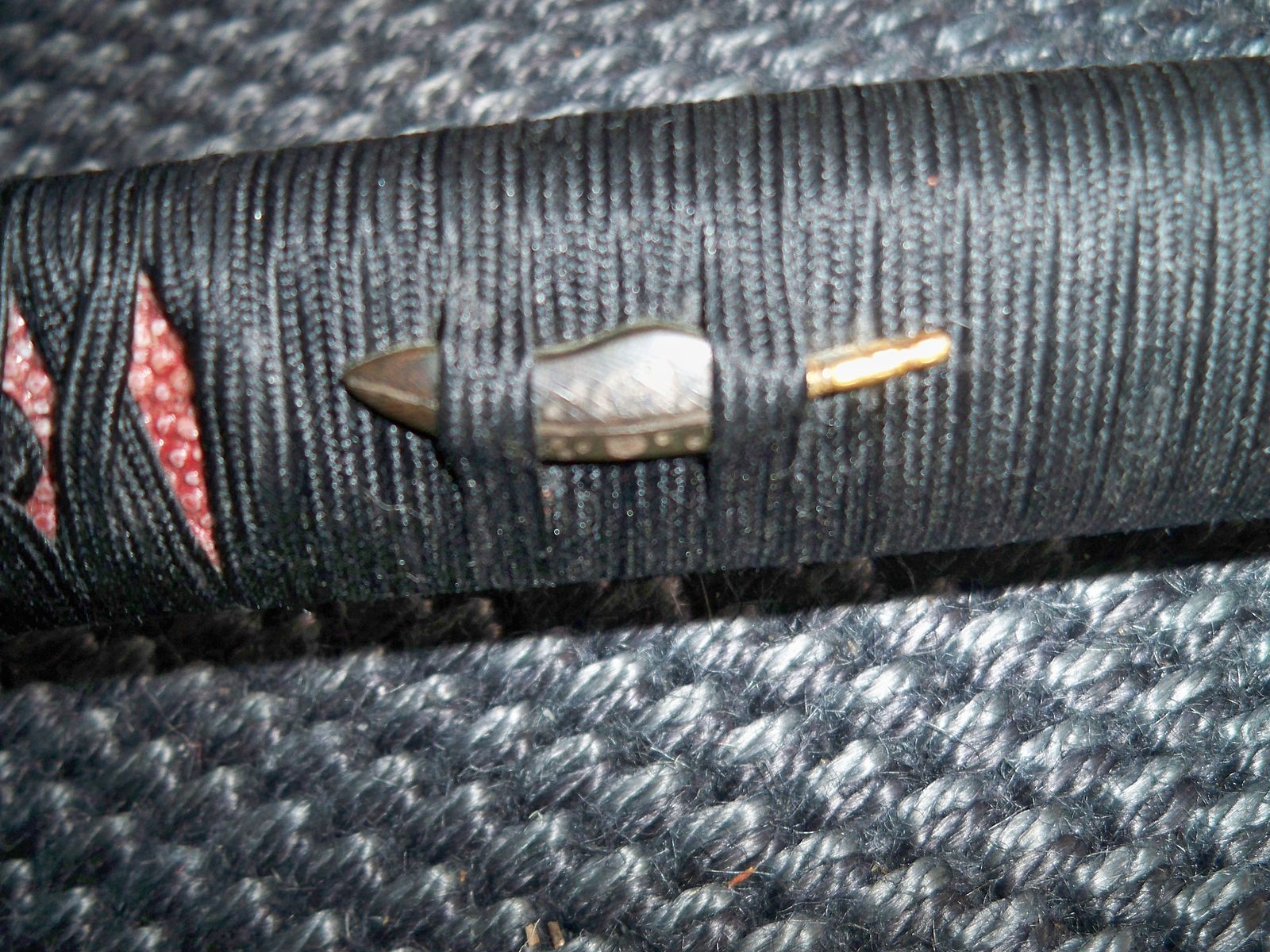
Menuki by Jared Carter

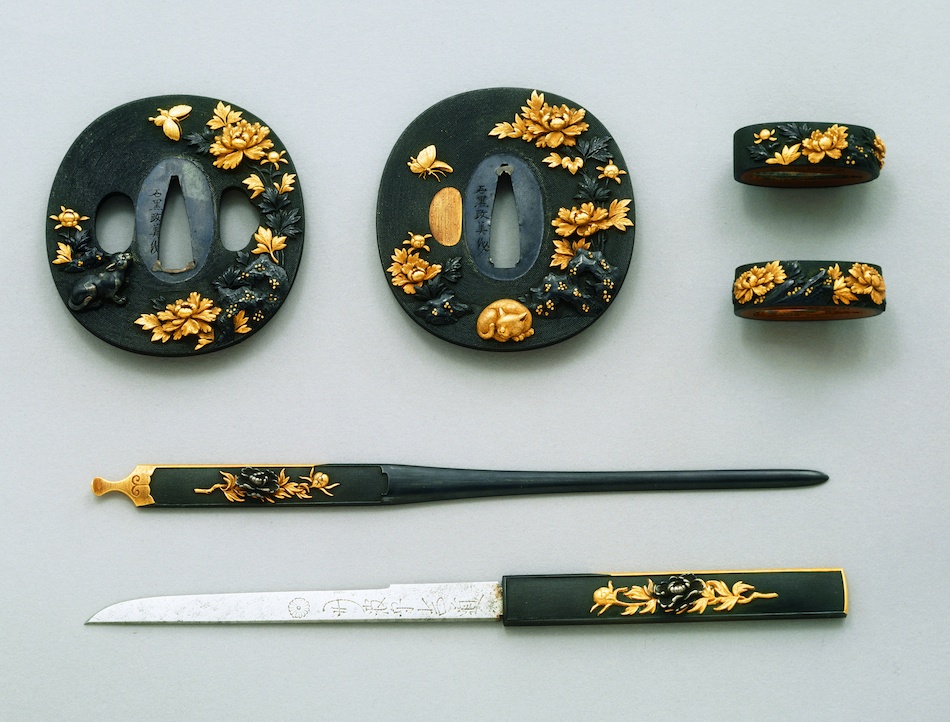
A found poem, consisting of various captions copied verbatim from descriptions of small figurines displayed in the Asian Wing of the Dayton Art Institute, in the state of Ohio, in the United States.

Menuki, sometimes called sword fittings, are matching or complementary pairs of tiny metal sculptures, traditionally secured to the hilt of a samurai sword and thought to improve the grip.

They were hammered from sheets of copper or alloys of silver and gold and were held in position on either side of a sword’s hilt by braids of silk.

— Jared Carter

MENUKI

Each in the form of a cluster of branches and a flowering plum
Each in the form of celestial dragons
Each in the form of a cluster of flowers wrapped around a rolled mat
Each in the form of a crane with spread wings
            nestled amidst the upper branches
                        of an ornamental spreading pine

One in the form of a prancing stag
            the other in the form of a stag nuzzling a recumbent doe
One in the form of a cluster of grasses with a crescent moon
            the other of grasses with the new moon
Each in the form of Mount Fuji

One in the form of a court noble in military dress
           the other in the form of a sage holding a book
Each in the form of a woven basket filled with sprays of flowers
Each in the form of a cluster of eggplants
One in the form of a crane taking flight
           the other in the form of a heron

Each in the form of a cluster of peacocks
Each in the form of a crawfish and waterweeds
Each in the form of crickets and wildflowers
Each in the form of two galloping horses
One in the form of a nightingale in flight
           the other in the form of the moon
Each in the form of a horse cleaning itself
           beside a shallow stream

One in the form of a stalking tiger
           the other in the form of a seated tiger
Each in the form of a fisherman walking
           with a large wicker basket

Each in the form of a samurai astride a galloping horse
Each in the form of three Chinese sages playing go
Each in the form of a gold pheasant
            backed by a cluster of kiku, millet,
                        wildflowers, and grasses

Each in the form of a fisherman poling a boat

First published in Nexus.

Jared Carter’s most recent collection, The Land Itself, is from Monongahela Books in West Virginia. His Darkened Rooms of Summer: New and Selected Poems, with an introduction by Ted Kooser, was published by the University of Nebraska Press in 2014. A recipient of several literary awards and fellowships, Carter is from the state of Indiana in the U.S.

.

PLEASE NOTE: ARTICLES CAN ONLY BE REPRODUCED IN OTHER SITES WITH DUE ACKNOWLEDGEMENT TO BORDERLESS JOURNAL

Categories
Poetry

Scents of the City

By Prashanti Chunduri

THIS CITY
 
I know of a tiny city by the sea
whose tread is a little slower than Father Time's.
Its womb is the one I grew up in
and it's old-school heart beats
in tandem with mine.
 
In this city, we write letters by hand
and read the words out loud, 
rounded by the warmth of our tongues.
We let our nibs explode ink onto the paper 
and with it, our love, our laughter, our tears.
 
I don't know how it works in the cities 
which have left us behind, but here, 
we hold hands when we fight. We let our 
rage sink into our skin, in real-time,
so that when it scabs over, it does so with grace.
 
We paint portraits that preserve the caress of paint
instead of selfies that evaporate by the minute.
We develop photographs in the dark room and 
slip them into albums, labelled and dated,
but most, we carefully preserve them behind our eyelids.
 
We eat with our fingers in this city of mine,
let the juices drip down our wrists, nary a care about etiquette.
The moans and groans of pleasure that accompany 
chilli powder and turmeric stained-fingers
are worth more than Michelin stars, says mother.
 
Sometimes, we forget our GPS at home,
and let our senses guide us, as in the days of old.
We pick up less-than-perfect bouquets of wildflowers,
a little brown at the edges but signed carefully with love,
so that no fancy florist knows to set up shop here.
 
I hear you worry about my untrimmed edges,
a little wilder -- but a lot less weary --
than the world as it flashes by.
But worry not, I am more than fine,
with this old-school heart of mine.
 
  
ODE TO MY NOSE
 
I come across a strange meaning
to words I thought I knew
because when I ask my brain about 
life, she leads me 
by the nose.
 
I
The first scent that drapes itself
over me as I toddle around on wobbly feet
is the yellow scent of summer mangoes 
caressed by the burning fingers of Indian summers
and here, I find the fragrance of my conscience.
 
II
The black miasma of new asphalt
as my city grows taller than me.
My nose is forced to cradle cement dust
but I long for the pollen, allergies and all.
 
III
But thankfully, home is smaller than my city,
infact, it is the five-by-five of my mother's kitchen,
for it houses the aromas of roasted chillies and garlic,
caramelised onions and curry leaves in hot oil.
 
IV
But once again, I renew my definition of home
as the twin caves of my sign board lead me to another.
I lose myself in the musty aisles of libraries, the minty walls of bookstores,
the scent of paper and ink -- a forever home I can carry with me.
 
V
I find home easily enough now
in the cherry blossoms that still fight to rise above the asphalt.
My leaking pens sing me lullabies on paper,
the old family recipe book that is more whiff than words.
 
VI
And I trust that I will never lose 
my way back to my homes,
for they gift my nose a piece of themselves 
so that I can always Hansel and Gretel it back

Prashanti Chunduri is a self-proclaimed aesthete and armchair globetrotter. Her poetry, prose and micro-fiction have been published in Terribly Tiny Tales, Poems India, Mad Swirl Poetry Forum, Women’s Web and Verse of Silence.

PLEASE NOTE: ARTICLES CAN ONLY BE REPRODUCED IN OTHER SITES WITH DUE ACKNOWLEDGEMENT TO BORDERLESS JOURNAL
Categories
Stories

Flowers on the Doorstep

By Shivani Shrivastav

It was the third time in as many days that she found a small bunch of flowers on her door sill. They were wildflowers — small and pretty. Suhani had no idea who left them there daily. That day as she picked up the bunch, she decided that she would get up early the next day to see who was left the flowers there, that too, so early in the day.

Coming back inside, she placed the flowers into an empty vase. Suhani tightened her shawl around her shoulders. Life had made her unused to such additional niceties. After moving to the mountains, she distanced herself from things associated with her past – flowers, music, reading her favourite poetry and painting. Her past, where she and Sahil had been professors together at the Delhi University. Gradually, as they realised they had feelings for each other, they started living together. They had spent five years with each other in the apartment they shared. It was a beautiful period in her life. It was as if life itself had taken on colours that had been hidden to her till then.  They would cook together, watch Iranian films, read and discuss books by Krishnamurti, Gurdjieff, listen to instrumental and world music, go out for long walks and spend hours just enjoying each other’s company.

Back then, she had believed that the most important event of her life had already occurred at thirty-two years of age — her meeting with Sahil. Little did she know that life had a few surprises for her yet…

When his parents came to know about their live-in relationship, they were shocked and angry. After many shouted calls and two fiery visits, they forced him to move back home. A few weeks later, she got the news from the professors’ grapevine that he was getting married to someone whom his parents had chosen, from their caste and their social background. It was as if someone had punched her with all their power — she felt numb all over. She couldn’t take her classes after she had heard the news in the professors’ room. Not a few sly glances directed her way told her that people were aware of their relationship.

Feeling suffocated, and as if a million glances were piercing her heart, she took leave and came home. After staying in a limbo for three days, during which she had received a number of calls from the college, she finally tendered her resignation, handed back the keys to the rented flat, and taking only what she could carry with her, she came to Almora.

Left behind were the precious paintings she and Sahil had started collecting together, their vinyl collection and her lovely rugs and throws, some bought, some crocheted by her in those beautiful winter evenings when they would sit together with a glass of wine each, listening to some beautiful rendition or the other from their record collection. Also left behind were some dreams that had been born within the four walls of their shared existence, and which had died an abrupt death on Sahil’s departure. What she could not leave behind were the million memories she lived through each day.

She was moving like a robot through her hall when a piercing birdcall brought her to the present. She set an alarm for the next day before she forgot. Then she got busy making her simple breakfast and preparing for college. She had been very lucky to find a job at the university at Almora, that too at such a short notice.

Why she had chosen Almora she couldn’t really explain, just that she felt a kinship with the place, having read all of Shivani Ji’s novels. Also, her Nani had belonged to Almora. Although her ancestral house had long since been sold, but still she remembered a carefree childhood spent here every summer. Her childhood memories were full of green hills, kafal[1] and tasty pahadi[2] foods and long walks with Nanaji[3] over the hills. She somehow felt at home here, especially since her parents were no longer living, and she was an only child, like her mother before her. Adrift in the wide world, this familiar city had seemed like a haven, even though she had spent all her school, college and then later, working life, in Delhi. But in the moments when her world had been rocked to the core, Delhi had seemed so cold, like a familiar stranger who you met every day but could not share your joys or sorrows with. Also, she had so many shared memories there with Sahil, the plays they had gone to, the numerous music concerts and recitals, outings to Tibet House, the walks at Qutub and so on. The endless memories chased her wherever she went in Delhi; she felt choked by them. To escape from them, she chose a place that held only happy memories for her – where she had been safe and peaceful, with her entire family around her. But today, she was all alone.

Even being in the midst of the nature she loved so much did not take away her loneliness. The cottage was on top of the hill, looking down on all sides upon tall pine trees, where the chatter of monkeys and bird calls surrounded her day and night. The cottage boasted of a beautiful garden, but she felt that she was not contributing anything to its beauty.

She talked to her colleagues, to some neighbours lower down the hill, but mostly kept to herself. She didn’t feel like a whole person yet, for it still felt that her heart had been ripped away, leaving behind a gaping hole. How then could she interact normally with others, others who had loved ones, who had lives that were filled with family, relatives, love, social events and so much? She, who had nothing to share with anyone. And so, she kept inside her shell — teaching, coming home, cooking, sleeping and then the same routine the next day and the day after. Only when she was teaching did she feel totally in the present, for those few precious moments. The rest of the day was besieged by memories.

Choosing a pale lilac saree, she dressed up quickly, tying up her hair without looking into the mirror. Finishing up by wrapping a dark purple yak wool shawl around her shoulders, she took her books and bag. Locking the door, she quickly descended the slope and went up the road to the university. She wanted this day over quickly, so she could get to tomorrow. After a long time, she had something to look forward to.

She taught all her classes, spoke a little to her colleagues and came back in the afternoon. Changing her clothes, she made herself some tea and went to sit out on the porch, where she had kept a rocking chair that came with the house. From there, she had a view down the hill. She thought,“This is where I could sit tomorrow. But no, whoever it is, might not come if I am visible. I’ll keep a lookout from the kitchen window.” She prepared an early dinner. Another hour and a half was taken up preparing for next days’ lectures. then she eats and sleeps. She decided to get up early the next day with the help of the alarm clock.

As soon as the alarm started ringing the next day, she was up in anticipation. Quickly putting her feet into her warm slippers and wrapping her shawl over her sweater, she went into the kitchen.  Setting tea on the boil, she eagerly looked out of the window, the curtain of which was slightly open. In a short while, she saw a little girl with curly hair come up with a small bunch of white flowers. Placing them near the door, she was about to turn and go back when Suhani opened the door and asked her, “Stop! What’s your name?”

Courtesy: Creative Commons

The little girl, who at first appeared scared, gained confidence on seeing her and said with a smile, “Sona”. “Why do you bring flowers every day, Sona? That too, all by yourself, so early in the morning?”

“I live just down the hill,” she indicated towards an orphanage that was a little below Suhani’s house, “and I have asked the nuns if I can come here. The nuns take a morning walk and I come part of the way with them.”

Feeling sad on hearing that the pretty little girl lived in an orphanage, she asked, “And why do you bring me flowers?”

“I see you going and coming every day. I like you. I don’t know why I feel like giving you the flowers, I just do,” Sona replied with a beautiful, dimpled smile.

“Would you like to come in for milk and cookies?”

“No”, she said, “Sister Patience would be waiting for me. I need to go!”  

“Okay, at least take some cookies!” saying this Suhani rushed in to find a box of chocolate cookies that she had randomly bought, perhaps for this little girl. Grabbing the small box delightedly, she came out, but there was no one outside. “How could she have disappeared so quickly?” thought Suhani, taken aback, but there truly was no one there. Not around the house and not even down the path.

 However, gradually this became a morning ritual. Everyday Suhani somehow woke up right before Sona came with her flowers. Sona liked to sit in a particular part of the porch and every day she sat in the same place. She sat there looking out at the flowers that were around the cottage. She answered all the questions Suhani put to her but still seemed to be keeping something back. Usually, she appeared full of cheerful and chattered. Suhani felt some of the ice around her heart melt. The presence of this small being so full of love and sunshine brought her immense peace and comfort. Why, she could not say.

One day she was free a little before time from the college as it was15th August, the Independence Day of the country. After a morning programme, flag hoisting and distribution of sweets, everyone was free to go. Suhani thought of visiting the orphanage. She saw it on her way back home and decided to finally find out more about Sona and went in.

As she approached the office room, she saw a nun sitting inside. She looked in and asked for Sister Patience. “I am she. Please come and have a seat,” she said with a smile. Suhani is anxious about Sona. She asked, “I want to ask about Sona and her parents, if you could tell me please.”

Sister Patience seems a bit taken aback. “How do you know about her?”

Suhani is surprised. “She comes to give me flowers at my house every day. She likes to sit out on the porch looking at the flowers that are all around the cottage. We talk quite a lot.”

Sister Patience takes a deep breath, looks at Suhani and says, “Did you notice anything special about the little girl?” Finding the question strange Suhani says, “Only that she never eats or drinks anything if I offer it. A child of that age is usually quite taken with chocolates, biscuits and sweets.”

Sister Patience seems sad. She takes a deep breath and says, “Sona and her parents were in an accident. It is their house that you have rented. They were in an accident and…”

“And…?”Suhani asks impatiently.

“And everyone died. Sona was very attached to the only home she had known. Maybe she feels safe there. We see her playing in the playground, in the park sometimes. She’s harmless. May God give peace to her soul.”

Suhani did not realise when she had come out of the building and was on the way back. She felt as if her insides are frozen. After that day, she never met Sona again, however early she got up. The flowers are still on her doorstep every day though, without fail.

One thought stayed with her as a result of this experience – that a person can hold onto a person, a place or even things, even when they are no longer there. This just ties us to the past. We could enjoy our memories, even love them, but that doesn’t mean that we keep carrying the weight of the memories that do not allow us to move forward. And life is all about movement.

Suhani held onto the life that was in her memories; Sona was held behind by her attachment to her house. The most poignant thought was – Sona had been a child, but she was a grown up. Sahil had moved on long back, the moment he left her, it was only she that still held on to her memories, living a ghost of a life.

For many days, she thought about this. She came to the conclusion that now she would delve within, and not look outside for peace, love and solace. With this thought, after many days, she finally fell into a deep sleep towards dawn. When she got up the next day, she felt refreshed and relaxed. She could not recall when she had felt this much at ease. Tightening her shawl around her shoulders, she went straight outside to look for the flowers. For the first time in so many days, there were no flowers. And after that, she never did find any flowers on her doorstep.


[1] Fruit https://en.wikipedia.org/wiki/Myrica_esculenta

[2] Belonging to the hills

[3] Maternal grandfather

 Shivani Shrivastav is a a UK CGI Chartered Secretary and a Governance Professional/CS. She loves meditation, photography, writing, French and creating.

PLEASE NOTE: ARTICLES CAN ONLY BE REPRODUCED IN OTHER SITES WITH DUE ACKNOWLEDGEMENT TO BORDERLESS JOURNAL