Categories
Musings

Hobnobbing with Literature

By Ketaki Dutta

A fresh morning with a generous sun awaited me on the balcony outside. It was flooded with birdsongs — the caws of the crows, the chirps of the sparrows and the continual trills of a magpie. As my south-facing balcony door opened on a pond and a meadow that stretched up to the street lining it, leaving at least 90 feet to 100 feet in between, I had no dearth of morning breeze or late afternoon gusts of wind in summer. The time of this corona-scare was quiet and soundless. All these birdsongs, whoosh of a car-engine on the road 70-100 feet off my balcony were soothing to my ears.

As I stay alone, there is no one to talk to me. Sometimes, just to feel companionable, I talk to my nephew, imagining his presence beside me, mostly the ‘little nephew’ who was my constant company almost 10 years ago, when he was just 4-5 years-old, a wisp of a boy. You may regard this as a sign of being an inmate in bedlam, but this conversation refreshes me, keeps me healthy and going. This does not however mean that I crave company. On the contrary, when after my usual hours in the college, I come back to my apartment, I love to enjoy my own company, clicking away on my laptop — a story, a poem, a personal piece or just scholarly writing.

I do not even have the need to call anyone up and while away my private hours by talking my heart out. That I hardly do. I sit with a mug of coffee by my writing desk, a wheeled one, which I love to drag to the balcony, especially on peaceful Sundays. It overlooks the greenery of the open space, facing it and whiffs in the pleasant presence of the feathered beings with whom I have already struck friendship since the last four years. In fact, I chose to buy this home, only because of this south-facing balcony and this open space. A few of my friends objected to my buying this flat, as I would be staying alone and this serenity, they felt, could compromise my security[!] and again, this tranquility would give a fillip to my solitariness. I could not make them understand that I am a private person and I love to commune with the calm nature outside my balcony. My solitariness is not ‘so-called loneliness’ but my aloneness, which I love madly and would never compromise with anything, however precious that may be.

  I am just trying to say that this imposed isolation, during lockdown, is something I love. I feel cocooned in the warmth of my home. In the afternoon, I gave in to an occasional siesta. In the evening, I get up fresh, have a cup of tea and go into meditation for some few minutes.

The glow of the evening outside is really alluring, and hence, I to stand in the balcony for some time. One day as I returned to my bedroom, adjacent to the balcony, I found a gecko-like lizard, hanging from the wooden beam on the balcony door. I was so terrified to see its enormous size that I rushed into my bathroom and came armored with my mosquito-repellent spray. I sprayed it and to my utter surprise, found the creature giving in to its poison. In an hour, it writhed on the floor and breathed its last. I felt so guilty! However, I had a skimpy supper and went to my desk to read a few pages from Literary Occasions by V.S. Naipaul.

   Lockdown is really a blessing in disguise to me! I am getting to read so many books, which I kept aside for reading but could not read as my regular schedule on a work day with all the commuting left me fatigued. I was really disturbed to find Naipaul’s take on R.K. Narayan, one of my favourite authors. I love his narration, his way of describing things, his making inroads into the hearts of his characters. I love him blindly. In my class too, I praise Narayan to the skies. Even some years ago, I taught The English Teacher by him! But times have changed, old three-year-graduation structure has been replaced by semester system. And, UGC (University Grants Commission) is keeping an eye on the ‘quantity’ rather than quality of teaching. Everything said and done, I cannot downplay ‘quality’ of my teaching. Hence, be it Narayan or Lewis Carroll, I try to put forward my best. Anyway, let me stop the digression and give you Naipaul’s observation on Narayan is something I will share with you.

To Naipaul, he (R.K. Narayan) ‘appeared to be writing from within his culture…He truly possessed his world. It was complete and always there, waiting for him.’ But that world proved on closer examination to be static. Narayan’s characters seemed to Naipaul ‘oddly insulated from history’– a history of defeat and subjection that was so oppressively present in India that Narayan’s fictional world could only reveal itself as ‘not, after all, as rooted and complete as it appears.’ As Naipaul saw it, the novel in India, and specifically Narayan, could ‘deal well with the external of things’ but often ‘miss their terrible essence’.

What do you think?

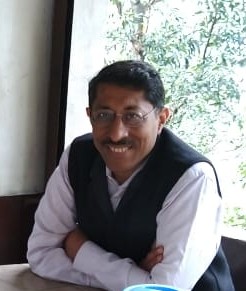
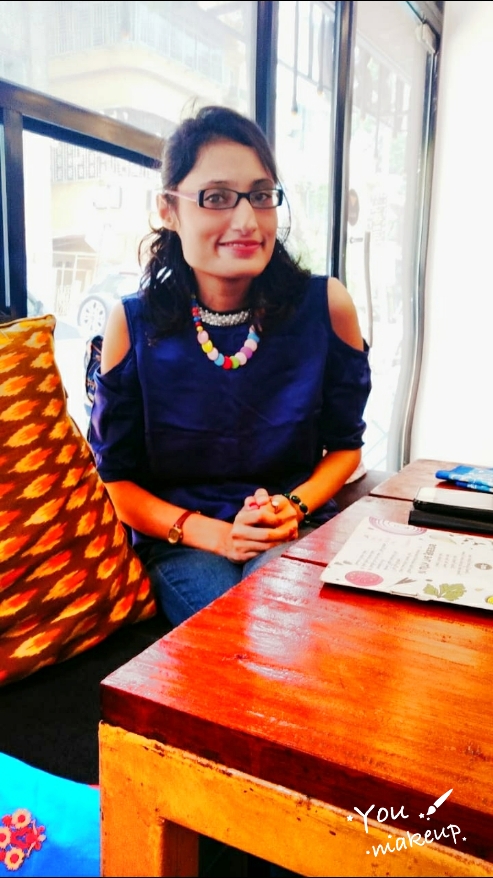
Ketaki Datta is an Associate Professor of English at Bidhannagar Government College, Kolkata, India. She did her Ph.D. on Tennessee Williams’s late plays and later it was published, titled, “ Black and Non-Black Shades of Tennessee Williams”. She has quite a few academic publications along with two novels, two books of poems and quite a few translations. She had been interviewed by Prof. Elisabetta Marino, University of Rome, archived by Flinders University, Australia. She won grants for working at American Studies Research Centre[1993,1995], Hyderabad, India. She presented academic papers at IFTR Conference[Lisbon], University of Oxford and University of California, Santa Barbara. Her debut collection of poems, Across the Blue Horizon, had been published from U.K. with the aid of Arts Council, England. Her latest poetry-book, Urban Reflections: A Dialogue Between Photography and Poetry has been published by KIPU, University of Bielefeld, Germany, with Professor/Photographer Wilfried Raussert [photographs of Street Art of Americas]. She has interviewed American novelist, Prof. Sybil Baker, recently for Compulsive Reader. She is a regular reviewer of poetry volumes with Compulsive Reader, USA. She interviewed poet Lucha Corpi of San Francisco, in 2018. She is the Regional Editor, India, of thetheatertimes.com, headed by Prof. Magda Romanska, Emerson College, Boston, U.S.A.

Categories
Editorial

As Time Flies…

Hello World!

And what a lovely and magical life it is despite the COVID 19 — which I am sure we will battle, even if the path seems long. Meanwhile, we remain connected in this virtual world of friendship, harmony and giving!

We completed another month! And what a month it has been — the two greatest bards celebrated their birthdays — Shakespeare and Tagore. We carried an essay on one and a discussion between two greats of modern Indian literature on the other! Other than that, more essays, stories, musings, translations and poetry took our readers globe-trotting. We are doing our best to seamlessly create a world of ideas in which we can drift effortlessly and find a whole new world where we can all meet to have exchanges beyond borders drawn by the exigencies of history, politics, economics, greed and more.

Writers are doing such a wonderful job of connecting us with similar concerns worldwide. Our experiences with COVID 19 and quarantine actually unite us in a large way as humans. One of our story writers has plucked the heart strings of readers across oceans on distant lands and received many encomiums for it. We all seem to be getting more linked by the pandemic caused by the corona virus, giving all of us time to pause and reflect on the commonality of human sufferings, as shown by the narratives from different parts of the world in the journal.

We continue to be fortunate to find many of our pieces a second home in Countercurrents.org. I am also happy to announce we have been listed again as one of the top places for submissions in an Indian site this time.

We have more happening here with all the action from our dynamic editorial board. Dustin Pickering, the editor-in-chief of Harbinger Asylum, on our editorial board, has suggested a promotion for us in his quarterly this July. So, some of our authors will be republished in hard copy from USA in the summer edition of Harbinger Asylum.

We are also starting a young persons’ section from the end of this month. This will be organised by Bookosmia, a children’s publisher. The founder of this popular children’s publishing concern, Nidhi Mishra, also on our editorial board, will be giving us the best from her blog for youngsters and we will exhibit it in our new section called Sara’s Selection.

We want this to be a family friendly journal and to nurture young talents along with established writers. You can check our submissions if you want to publish in the young person’s section, which will cater to aspiring writers under eighteen. We have an email — sara@bookosmia.com – which will take you straight to Bookosmia and the submission of the under-eighteen’s section of both BookOsmia and ours. We will be publishing only a few selected pieces from their blog and others could just be featured in Bookosmia, the blog run by the publisher.

We welcome children from all over the world to write in to Sara. The tie has been announced by Bookosmia in The Hindu, a well-known and established newspaper in India. I am attaching a link to the news below*.

We are overwhelmed with support from all of you and are looking into the periodicity of the Borderless Journal and will be announcing more changes next month on June 14th.

As we move forward in the spirit of Ubuntu or “oneness to humanity”, towards a world filled with love and kindness, where vibrancy and positivity can wash away darkness and hatred, where the freedom of speech does not descend to narrow abuse and anger, marginalisation and boundaries, I welcome you all to write in to me if you feel we need to expand our horizons further.

As I bid you adieu for another month, I hope you will keep reading our journal and writing for us.

Best wishes,

Happiness and Peace,

Mitali Chakravarty, Founding Editor, Borderless Journal.

*Click here to read about Bookosmia and our plans in this report in The Hindu.

Categories
Review

The Circle of life: The Silence of Motherhood

A review of the movie Hazaar Chaurasi ki Ma (Mother of 1084), based on a book by Mahashweta Devi by Prithvijeet Sinha

Bengal, long considered to be the literary, artistic and social fuel for India’s colonial and post- colonial demeanours, has particularly fascinated cinema’s conscious annals. Satyajit Ray, Aparna Sen, Ritwik Ghatak, Mrinal Sen, Gautam Ghose, Tapan Sinha and their likes all found a level playing field here to sound timely sirens and orchestrate photoplays celebrating its collective regional character, with finesse of the highest caliber.

Mainstream Hindi cinema, too, has often turned to Bengali talents like Hrishikesh Mukherjee, Bimal Roy and Shakti Samanta apart from several stellar musicians, to find beacons of time-tested reverberations in its hundred year sojourn and counting, with the flint of creative risk taking crossing thresholds of language and alighting corners of the mind deep in slumber.

Mahasweta Devi’s Hajaar Chourashir Ma in Bengali (1974)

Hazaar Chaurasi ki Ma (Mother of 1084, released in Hindi in 1998) based on iconic Bengali writer Mahashweta Devi’s eponymous novel, is another betokened facilitator of Bengal’s political and social gravity, veering towards its not so distant Naxalite past and post-communist undertow. Director Govind Nihalani’s power-packed screenplay is a further rejoinder to the porcelain vapidity of educated middle classes and is a heartfelt diagnosis of personal loss and extermination of identity, finding its bruised heart in actress Jaya Bachchan’s tacitly mounted well of emotional ebbs and lows.

***

Structurally, Hazaar Chaurasi ki Ma uniquely evinces the ‘coming of age’ trope for Sujata Chatterjee (Jaya Bachchan) in a manner few works are meant to do. She is a solitary wanderer trudging along life’s thorny paths, right from the initial shot of her younger self walking in to the maternity centre in time for her delivery for her youngest child, all alone. Within the seemingly genteel but cloistered, moth-balled utopia of the bhadralok, the quintessential Bengali gentleman, she has been assigned her status, in observing the holy rite of passage necessary for survival: to observe the vow of silence, almost akin to a ritual.

Owing to this, she has spent years building walls of inconspicuous silence around her, hidden behind iron curtains of her household’s clashing beliefs and veneer of respectability. Bachchan’s essentially benign yet melancholic look sheds light on her feeble social standing that has been overruled by materialism and of course patriarchy. We have all been in the throes of this reality and so we recognise it on the part of our mothers.

A corollary to this is the gender specific clutches of egoist hubris which hold sway over her husband Dibyanath (Anupam Kher), a man ruling his family with an iron fist. On one end of the spectrum, Sujata is financially independent in terms of her designation of a working woman (she is shown to work in a bank) but it’s a consolatory one and deeply ironic to her general station in life. On the other end, her life-force rests in the lively spirit and unimpeachable trust she shares with her youngest son Brati (Joy Sengupta), a bond oblivious to the Chatterjee’s stiff posturing and restricted worldviews.

He is like a ray of sunshine falling over a wilting flower, giving Sujata the opportunity to fully breathe rather than gasp for her moment of reckoning. So, it’s natural that Brati is looked down upon as a black sheep by his father and siblings. His opinions and unorthodox bent of thought question the rest of the family’s air of ‘liberal conservatism’ in which their worldly desires cloud their larger humanity. This relationship is, hence, one where both mother and son plot a diurnal escape from their bleak personal realities, present in the conversations they have and look of mutual fondness being showered on each other.

Brati is more so at a crossroads in his young graduate years where all that he can dream of is to change the world and bridge social gaps. It’s this ideology which ends up becoming his mortal enemy and bites him in the face, in a culture where regimentation abet conformity while iconoclasm of any kind is brandished as another substitute for a death sentence. A breach in the bond between Brati and Sujata ensues as a result of his secretive identity and the appendage of the Naxalite movement’s heyday spreads like a wildfire in the Chatterjee household.

Set as it is in the timeline of the seventies, Sujata’s world comes crashing down when she is helplessly made to receive the painful title of Hazaar Chaurasi ki Ma, a mark of Brati’s dead body, his last remnant. In view of this realization, Sujata traces the grey alley of moral complexities where she has to negotiate the blanks left as open wounds by her beloved son, now a disgraced individual and rebel trampled upon by society functioning on selfish resignation. She questions her silent, muffled existence, the Naxalite cause as a transmogrifier of an intensely clustered class hegemony and the mindsets prepared on a whetstone of rage and dissatisfaction.

As she negotiates these agendas peculiar to her predicament now, she attempts to find her true calling as a woman of reserved strength, with an unfaithful husband and a thankless coterie to boast. Nandini (Nandita Das), Brati’s sweetheart and fellow revolutionary and Seema Biswas, as his slain friend Somu’s mother, authenticate the undulating, challenging terrain of personal awakening for Sujata as mother, guardian of her son’s lost dignity and posthumous legacy. In the process, the sequencing vocalises the resurgent and still fledgling voice of reason, especially one accorded by females.

***

The colour red; red of the Communism epoch of Bengal, red of the young fervour of Naxals, red of a hapless woman’s external shringaar (make-up) and the circle of life symbolized by the bindi on her forehead, then becomes a visual signifier of great agency.

There are a volley of questions the movie bounces off its omnibus and in the mesh of political churning, there is a grave personal tragedy simmering inside Sujata’s crestfallen demeanour. She is a woman of the world, beaten down by words and decrees of society and yet traverses the unfamiliar land of discovery in her middle age to make a breakthrough. This cinematic adaptation thus is genuinely propulsive though a bit long-drawn and in its performances, mines gold out of its socio-political concerns.

However, above all, it is the actress Jaya Bachchan, whose silences speak the language of passive melancholy. I reiterate that its a reality we recognise as we see in all our mothers.

Prithvijeet Sinha is a writer who belongs to the multicultural, literary hub of Lucknow, an artistic haven since centuries. A student of literature having completed his M. Phil two years back, he has been writing and publishing his poetic works and essays on the worldwide community Wattpad since 2015 and since June 2018 has been contributing his articles on various facets of cinema and culture on his WordPress blog An Awadh Boy’s Panorama. His works of various hues including poetry, film and book reviews, travel pieces, letter to the editor and opinion pieces have appeared in journals and magazines like Reader’s Digest, Gnosis Journal, Cafe Dissensus Magazine, Cafe Dissensus Everyday Blog, Confluence Magazine, Thumbprint Magazine, The Medley, Wilda Morris’ Poetry Blog. He has been published on Cafe Dissensus Everyday, The Medley, Screen Queens and Confluence in 2020 so far. Poetry is his first love and judicious defence against mediocrity while cinema and music are bulwarks to guard his conscience.

Categories
Poetry

Three Dimensions

By Kashiana Singh

Three dimensions, home and more?

~1~
~2~
~3~
At Sea
Sailboats at sea
Neglected rains
Dehydrate my bones
Outlandish refrains
Inertia that hurts
Clouded windowpanes
In Air
Impatient hands drift
Whispering membranes
Incantation of spirits
Evil estranged
Feathers summit eagles
Wisdom ingrained
On Ground
Infusions of agony
Brisk champagne
Remembrance in gestures
Doctor proclaims
Healing the toxins
Demons remain
~4~
At Home
Bring me home
Bristling age
My dimming lights
Gaze reclaims
The kettle sings
Tea stains
~5~
In Between
Is it a curse?
To be trapped 
Weather vortex
Perennially curled up
In unconfirmed dimensions*


*Klein theory says that the fourth dimension likely exists, but unlike longitude, latitude and altitude which are extended dimensions, the fourth is a curled dimension – it stays retracted


We live in intermissions

Large pickles in Costco brine
Turning stale on refrigerator
Shelves, its aseptic corners

No one dead – just less alive
Conglomerating in obedience
Into astonished beginnings, like

Cul de sac’s that never end
Keep turning, porches that
Open into eager doorknobs

Being continuously wiped, of
Contagion memories
Every—
Body an altar prepared feverishly

Homeopathy

Consumed differently, in small doses
Retained into crucial pellets for predispositions 
Reacts tenderly over time, with logarithmic osmosis
Extracting with potentization, poisoning gently with hypnosis
Poetry works me similarly, crumbling into me drops of a slow kiss


Maps Circa 2020

City
Bare bones
A walking cemetery

River
Floating oars
Inflections stay afloat

Mountain
Suspended moon
Longing for festivals

Village
Haunted temples
Echo vanished voices

*Klein theory says that the fourth dimension likely exists, but unlike longitude, latitude and altitude which are extended dimensions, the fourth is a curled dimension – it stays retracted

Kashiana Singh is a management professional by job classification and a work practitioner by personal preference. Kashiana’s TEDx talk was dedicated to Work as Worship. Her poetry collection, Shelling Peanuts and Stringing Words presents her voice as a participant and an observer. Her poems have been published on various platforms including Poets Reading the News, Visual Verse, Oddball Magazine, Café Dissensus, TurnPike Magazine, Dissident Voice, Feminine Collective, Spillwords, Poetry Super Highway. You can listen to her reciting her work on Rattle Open Mic sessions, Songs of Selah podcast and Poetry Super Highway episodes. Kashiana lives in Chicago and carries her various geographical homes within her poetry.

Categories
Essay

A Fresh Perspective: The Bull that Thought

By Mike Smith

I have an instinctive abhorrence for blood-sports. I can remember when many years ago Woman’s Hour on BBC’s Radio 4 misjudged its audience and promoted a female bullfighter in a spirit of misguided equality and was roundly condemned.

So, you might find it surprising that one of my favourite Kipling stories is about a bull-fight. ‘The Bull That Thought’, from the 1926 collection, Debits and Credits – home of several favourites, including the clever ‘The Eye of Allah’, and the poignant ‘The Gardener’ — is one of those Kipling stories that stands out, not merely from his own work but from just about anything else one might have read.

A framed story, like many Kipling stories, it is one of those told to its first person narrator, in this case in the presence of the reader, by one of those “men on steamers and trains” who Kipling reminds us in that much earlier tale Preface, which seems both tale and preface, is where stories come from The tale is told over a magnum (or probably larger) of fine old champagne, “between fawn and topaz, neither too sweet nor too dry”, by a Monsieur Voiron.

The eponymous bull is called Apis, and in Voiron’s youth was itself a calf. Voiron has been brought up on a cattle farm among herdsmen, and bulls, in The Crau and the Camargue regions of France. Retired after a life in the Colonial Service, and returned to his family farm, Voiron recounts the tale of Apis, who far from being a mindless beast has brought intelligence to the games of bull-fighting that were played in the yards and fields of his homeland.

In fact, Apis has shown himself to be an exceptional tactician, and a “natural murderer”  “almost indecent but infallibly significant”. The ownership of the bull passes into the hands of Christophe, a peasant herdsman on the estate, and he sells the bull to Spaniards, who fight their bulls, not with padded horns, but to death of either bull or matador. Voiron tells how he and Christophe travel across the border to see what must be Apis’ first and final fight.

Slightly more than half of this fourteen-page story is devoted to the description of that fight. All the tricks and turns that the bull has learned in his youth – leading to the death of horses and other bulls – is put to the test as Apis faces Villamarti, a local matador out to show his prowess. The bull destroys the forces sent against him, tricking them into errors, killing both horses and men, yet managing too, to convince the crowd, at least to begin with, that he is making merely clumsy mistakes, rather than clever ambushes. Finally, having destroyed Villamarti’s reputation, he is left in a bullring which, traditionally he cannot be allowed to leave alive. Already the Guardia Civile are handling their carbines.

Salvation comes in the shape of Christo, who like Christophe is a peasant herdsman at heart. He is also the oldest, wisest, and dullest of the matadors against whom the bulls have been pitted. He alone recognises the cleverness, and value of Apis, and the bull recognises him too. The two of them put on a marvellous display, edging nearer to the gate from which no bull has exited the arena under its own steam. Finally, Christo’s cloak thrown over the bull’s back, the old matador demands the gate be opened for him and his friend. Amazingly it is. The bull has spared him, and he has saved it. Both know the game they have played and won.

Finishing his tale, Voiron confesses that he and Christophe did not see the next bull – “an unthinking black Andalusian” — killed, for they were weeping like children. He ends the story by proposing a toast ‘to her’, and Kipling phrases it with just a hint of ambiguity as to just who that ‘her’ might be.

It’s not simply the story of the underdog winning that I like. Apis is hardly the underdog, even when outnumbered in the bullring! It’s what the story reminds me of about Kipling. Because of his enthusiasm for Empire, and the association of that Empire, despite its Britishness, with England, we can be fooled into thinking of Kipling as an English writer. But in reality, he was much broader than that.

His British soldiers, of the ‘Soldiers Three’ stories, are stereotypes of working-class voices from several regions of Britain, but none of them have Kipling’s voice. They seem as foreign to him as the Muslim and Hindu ayahs, servants and soldiers of his India, perhaps even more so.  And in the story ‘An Habitation Enforced’, it’s tempting to see the American and his wife who become nouveau Lords of the Manor in the English village to which they have moved as proxies for Kipling and his Sussex house, Batemans. In ‘The Village That Voted The Earth Was Flat’, and They, Kipling’s narrators slip easily into the identity of the British Establishment, but the English are always seen from the outside by this writer.

The writer, any writer, is likely to be to some extent an outsider, an observer, even when his or her readers perceive them to be insiders, and Kipling seems to be at a similar distance, or proximity to most of his characters, even those whom he calls “mine own people”.

In The Bull That Thought, Kipling’s narrator is a car-owning, continental travelling ‘Englishman’, which puts him in a very tiny minority of the British population. But the story allows us to see another aspect of Kipling’s identity, for he was a lover of France, and can present his French raconteur with absolute credibility, perhaps even authenticity.

The tale within a tale is a common technique and was used by many storytellers. Coppard used it, and he is about as far as you can get from Kipling where English identities are concerned, and so did and so do many others. Sometimes, the primary narrator simply introduces the tale and lets the secondary narrator carry on. Sometimes the frame is completed with the outer narrator appearing at the end to tie things up. Here, Kipling keeps a conversation between the two going, his primary narrator intervening to remind us who is talking to whom, and that both of them are setting into that enormous champagne bottle! “Monsieur Voiron replenished our glasses…”

Occasionally, as if to drive the narrative on, he asks questions: “Why did you want to send him to Arles?”And once he even has to bring Voiron back to the subject in hand as the old man veers off onto another train of thought:

‘…Now, as compared with our recent war, Soult’s campaign and retreat across the Bidassoa–’

“‘But did you allow Christophe just to annex the bull?’ I demanded”

            The opening frame takes up more than a page of the story, as the narrator recalls his trip to “westward from a town by the Mouth of the Rhone’”and his plan to road test the speed of his motor car on “thirty kilometres as near as might be” of a road “mathematically straight”. Voiron, a guest at the same Hotel takes an interest, and after the event suggests the celebratory meal during which he will tell his story. Though we get a fairly full account of Voiron’s history, we also get a subtle nudge about the narrator’s, for he has with him a Mr Leggat “who had slipped out to make sure” and “reported that the road surface was unblemished”. Leggat is our traveller’s chauffeur/mechanic. The purpose of such a frame is to let us know what sort of person we are listening to, and by extension, how to judge those to whom he is talking, and who he will suffer to talk to us.   

And at the end, it is Voiron to whom he gives the closing words. That leaves us with Kipling’s narrator when the telling ends. There is no comment either from Kipling’s narrator or himself. We make of it what we make of it, and it’s more, I think, that what we might expect our narrator, or his storyteller, or the author himself to believe about the practice of bullfighting.

The nature of the fight that Apis wages against his tormentors, both as a young calf and as a full grown bull, and Voiron’s attitude to it, and to him, and to the outcome of that final battle, can be seen as an examination of attitudes to war and violent conflict in the wider sense. Voiron has “supervised Chinese woodcutters who, with axe and dynamite, deforested the centre of France for trench-props”, and he drifts into talking about Soult’s Napoleonic War campaign in Spain. In short stories, and especially in ones by masters of the genre as Kipling was, there are no drifts into irrelevancy, only the illusion of them. Voiron draws a specific parallel just after he has described Apis as a “natural murderer”: “One knows the type among beasts as well as among men.”

 The date of publication, of 1926, falls well within the deep and long shadow thrown by the first ‘Great’ war of the twentieth century, and Kipling knew well the cost of it. In the stories ‘Mary Postgate’ and ‘The Gardener’ which bracket, by publication this one, he confronts directly both the private and the public grief, but here, might there be an oblique critique as well?  Yet not of the cleverness of the tactics as shown by Apis, so much as the attitude of those who live to tell the tale and of the outcome they long for. That “type among beasts” and men, Voiron asserts, “possesses a curious truculent mirth”.

Does the calculated brutality of the bull, and its sense of honour and of humour echo qualities that Kipling observed in those who fought in the trenches for which Voiron’s Chinese workers “deforested France”?      

Mike Smith lives on the edge of England where he writes occasional plays, poetry, and essays, usually on the short story form in which he writes as Brindley Hallam Dennis. His writing has been published and performed. He blogs at www.Bhdandme.wordpress.com 

Categories
Stories

Line of Control

By Paresh Tiwari

Snow. All around us. A thick blanket of barren white broken by faces of rocks that dare to peek out. In this snow cold grows fangs and fingers and a snaking tongue. The tongue slips under the collar of your parka, the fingers slide down inside your shoes, freezing, and the fangs rip through your wretched bones.

The land is so barren and the passes so high that only the best of friends and the fiercest of enemies ever come by. The latter is what we are. On the opposite side of the barbed wires. The hundred twenty metres of frozen land between us is riddled with mines. Barring the days of blizzards, we are able to see each other. It’s what keeps the status quo possible. Today, I see the bearded one clearly, steady as a rock behind the butt of his machine-gun, a standard issue Rheinmetall MG3. There are four other soldiers in his bunker, three more than the usual manning.

The change raises my hackles. I watch on as one of the new soldiers slides a grenade from his belt, pulls out the pin. I can hear the slink of metal scraping against smooth metal. Or can I? Do I imagine sounds in this isolation? I watch his hand move in a semi-circle. It’s like watching a slow-motion video. His fingers open a moment before the palm crosses his right ear. The grenade soars and lands into the no man’s land. 

The blast sends shards of ice flying.

As a child, father taught me how to measure the distance of a storm. “Count your breaths between the lightning and the roar.” I count four breaths before firing into the thin mountain air, making sure to angle the barrel towards the wounded red of the sun. The bullets mark a faint parabolic trajectory against the sky. That’s how we say hello — a friendly exchange — or as friendly as we can hope to get in the circumstances.

If they had meant us harm, they would have fired right at our bunker. 

Unfazed, my partner, Chand Singh, is cutting open a tin of stewed apple. It will take over an hour on the flame to thaw. And even then, it will be the most miserable apple we have ever tasted. The dog is snoozing at my feet, snoring gently. His shaggy body under the spare parka heaves every now and then. There are flecks of snow on his muzzle, and when I wipe them away, he shifts slightly, nuzzling into my palm. I don’t think he likes stewed apple any more than I do. But he would make do. We always do. 

It’s been thirteen days since our company climbed the Himalayas to this outpost. We were a hundred and twenty soldiers and fourteen mules. Two soldiers to every bunker along the Line of Control. The mules are essential in this part of nowhere. They haul rations, ammunition, and provisions from the base station to the outposts. Often, they need to carry dead soldiers back. It’s a seven-day trek if the weather remains kind. On the fourth day of the trek, a dog slunk out from under a ravine and joined the group. He wasn’t a wild one by the looks of it even if there was no collar around his neck. 

“He’s a Bhutia,” Chand Singh told me, “quite common in the lower regions, unheard of at this altitude. He must have belonged to a Sherpa.” 

I wonder what happened to his master. When we stopped next, I emptied my tiffin in front of him. He finished every last morsel. 

Early on the seventh day Chand Singh and I relieved the two men who just wanted to get back to the base station. To a hot bath and a warm meal.

“And a warm pussy,” Havildar Thakur had said shouldering his backpack, “don’t you forget that.”

It’s surprising how basic ones needs really are. And how clear ones priorities get after a month or so here. There are small bunkers like ours dotting the line of control — one of the most volatile borders in the world — each manned by two soldiers for six weeks at a stretch.

***

I wake up in the middle of the night. Chand Singh is whistling. A curious tiny sound escapes his puckered lips and hovers around before deflating into meek silence. I look at my watch, the numbers take a moment to come in focus. It’s twenty-five minutes past twelve.

“Oh, you are up,” he says, relief flooding his voice. “The dumb dog has decided to take a walk.”

I prop myself up on my elbows. Still groggy.

“Shit,” is all I can say. It’s all that makes sense.

“I tried to stop him. He wouldn’t listen.”

The dog is roughly at the mid-point between our bunker and theirs. A black wraith moving deeper into the darkness, he stops for a moment to sniff something, then takes a few more tentative steps. It’s a miracle that he hasn’t stepped on a mine yet. A floodlight comes on from the other side. It hovers over the night for a few moments, unsure, unsettled. And then bathes the dog in white. 

“Come back, idiot,” I holler standing up, “here boy, come back Bhairav.” I scarcely believe that the name I gave him a few days ago would make him turn around. But I try.

Rat-a-tat-tat. 

The bullets cut open the darkness along its seam. Liquid gold pumped into the night. These are warning shots, meant to scare the animal. They haven’t decided to take out the dog, which is a surprise, given that he is trying to cross over. 

People have been killed for a lot less. 

“Just a dog,” I shout and wave, hoping that my voice will carry over. Praying that it does. For all they know, the dog could have a bomb strapped to his chest. Fear is a powerful motivator. Distrust, even more so. In this valley, across this border, both fear and distrust are in abundance.

***

It’s late in the afternoon; more than sixteen hours since I woke up. I haven’t slept a wink since. Add another six hours of the watch before that. With the oxygen levels at this altitude, it’s like going without sleep for six days in a row. Fatigue settles over my muscles like snowflakes, each bone a different crystal of sleep deprivation. 

Bhairav crossed over to the other side at a little past one last night. Somehow, he knew the path to take, weaving through the barren snow-laden land, as if he could smell the mines, stopping for minutes on end before moving ahead stoically. He looked back a couple of times, but never once turned around. When he reached the other bunker, the bearded man came out and sat on his knees by his side. He ran his hands all over the dog’s body — to check for hidden bombs or wires, I presume — and then took him inside. 

Would they split him open to send a message? His warm blood soaking into the snow in front of our eyes, a slowly expanding patch of red turning black. I have heard that it’s the metallic stench of death that gets you. Like a disease. I cock my gun, the trusty MAG 58.

“You are not doing that,” my partner says without looking at me. “Do you realise how quickly it will escalate to war?” 

***

As the sun begins to dip behind the mountain face, I see the dog’s heavy shape reappear at the mouth of their bunker. I close my eyes in relief. 

And then he begins his walk back, slow and deliberate, just like the night before. My partner puts a kettle on. He needs his evening tea.

Subedar Chand Singh, was my gunnery instructor at the Academy. He is a simple man. A good man. He has taught me everything I know about war. How to kill and to be killed. Or at least what those are supposed to be like. He has been through three postings in the valley, seen death in the eye. War is a lot of different things different people. For him it is purpose. I, on the other hand, have been commissioned as an officer six months ago. I am yet to fire on a man and watch his legs collapse under him.

When Bhairav reaches back, I bury my face into his fur. I don’t want Chand Singh to know about the tears welling up in my eyes. Bhairav gives my face a long, languorous lick. 

There’s a small packet tied to his neck. Four Gold Leaf cigarettes tied up in a biscuit wrapper. The bearded one is standing outside his bunker, waiting, I believe to see what I think of this little gift. I put one of the cigarettes to my lip and strike a match. I have never smoked a Gold Leaf. I take a long drag, feeling the taste of unfamiliar tobacco in my throat. The cigarette burns up with a soft crinkle, licking up the dry paper.

The bearded one turns around and goes back inside his bunker.

Chand Singh comes over with a mug of hot tea and I offer him a Gold Leaf. “Who would have thought the dog would come back alive?” he wonders looking at the bunker across.

“I would have pumped them full of brass.”

“I don’t like this cigarette,” he says, crushing the half-smoked Gold Leaf under his heel. “It tastes like death.” 

***

A day later, I wrap some almonds and walnuts in a strip of flannel and tie them around Bhairav’s neck. He is eager to set out on his little adventure again. 

On his way back the next afternoon, he comes bearing dried dates.

“Could this really be the answer, Chand Saheb?” I can barely keep the tinge of hope from my voice.

“What this is, is gone to the dogs, Lieutenant Saab,” he uses my rank, and I know he is upset. This fragile warmth goes against his very nature. I do not hold it against him. How can I? His misgiving is but a lasting legacy of how our country was ripped apart more than seven decades ago. We have forgotten the colour and taste of peace. I don’t think anyone even wants it anymore. And when it trickles down like a rill, we recoil and revolt, lest a river, is born.

“Those enemy are treacherous,” his eyes are laced with red. “You haven’t seen what I have. Come to think of it, how many years have you even lived, sir?” He spits out the honorific, making it sound weak and spineless.

“It’s above you and me, Chand Saheb.”

“It hasn’t even been two years since they chopped the heads of our brave brothers.”

“And we gunned their men down.”

“Those bastards started it,” he says, standing up. He is an impressively built man. One that I wouldn’t want to cross paths with in a battle. And he fears little in life. “You are a disgrace, sending gifts to our enemies. How can you betray your motherland? I am reporting this to the base unit.”

“You will do no such thing,” I try to keep my voice level.

“Try and stop me.” His eyes flash in defiance, hand hovering over the radio set. But I also see his body contort with the struggle of going against an implicit order. The years of training locked head to head against a lifetime of conditioning.

“Chand Saheb,” I push further, “If it ever comes to it I will not hesitate to take them out. I promise you that.”

“If you do. If you hesitate for one moment, I will slit your throat before I kill those bastards.”

***

It’s been thirty-six days out here at the Line of Control. Winter has eased up a bit, the days are longer and brighter.  Bhairav has been to the other side eleven times. Each time he brings back a small gift. He seems happier after the visits. Sometimes at night, he barks at the moon and the valley answers back. 

On the ninth trip, Chand Singh insisted that we send them a tin of stewed apple. “Why should only we suffer this shit?” he had said shrugging his shoulders.

 ***

The base station has confirmed that our replacements have begun their trek. They will take seven days to reach us. Both Chand Singh and I are looking forward to the first hot meal in what feels like forever. We are waiting for Bhairav to return again, hot mugs of sweet milk tea in our hands, cigarettes dangling from our lips. I have gotten used to the Gold Leaf from the other side. It’s pretty much all I smoke these days.

Bhairav returns with a packet, as usual. It’s wrapped tightly in a brown paper — a perfect small rectangle. There’s a slab of chocolate and a slim book of poetry within. Neither I, nor Chand Singh know how to read Urdu, but I do know that it is read from the last page to the first, from the right margin to the left. And that’s how I trace the alphabet, running my gloved fingers over the words that snake over the page.

The last page of the book has a small note written in a blue pencil.

“By the grace of Allah, I have been blessed with a daughter. The mother and the child are well. I leave for my village tomorrow. I wish I had a picture to share with you. Will keep you in my thoughts. Khuda Hafiz.”

– Rub Nawaz

I pass the book to Chand Singh and step out of the bunker. I am sure that Rub Nawaz is packed and ready to leave. It will be a long impatient way back for him to the base and then to his little village, wherever it is.

How long should a father have to wait to hold his new-born child?

I raise my hand up in the air, and he mirrors me. I hope he will tell tales of the dog and the friendly soldier on the other side of the line of control to his daughter. And she in turn will recite it to her friends, who will then tell the tale to their friends. I hope the story will go bigger with each telling, that eyes will go wide in surprise when the villages, the towns and the country hears it.

***

The sun has been getting pleasantly warm. Chand Singh and I are having our afternoon tea out in the open. It’s been three days since Rub Nawaz left for his village. Three days since Bhairav visited the other side. He is getting restless. 

I wrap a pack of Four Square cigarettes. I believe it would be a perfect first gift. Whoever thought a dog would be the most welcome emissary of peace between the two nations?

He sets off at his gentle pace. The valley is changing face every day now. The snow has begun to thaw and dead trees have started to reappear like skeletons long-buried, their twisted arms raised in supplication.

Rat-a-tat-tat.

The bullets are fired without any warning. It happens in the blink of an eye. One moment, Bhairav is peeing on a rotting log. The next, he crumples over it. As if a rug has been suddenly and unexpectedly pulled from under his feet. His blood soaks into the melting snow — a slowly expanding patch of red turning black. But it’s the metallic stench of death that gets me. It’s like a disease. 

Count your breaths between the lightning and the roar.

I don’t. I can’t even breathe. I cock my MAG 58 and aim it at their bunker.

.

.

 Paresh Tiwari is a poet, artist and editor. He has been widely published, especially in the sub-genre of Japanese poetry. A Pushcart Prize nominee, his work has appeared in several publications, including the anthology by Sahitya Akademi, ‘Modern English Poetry by Younger Indians’ released to celebrate 200 years of Indian English Poetry. ‘Raindrops chasing Raindrops’, his second haibun collection was awarded the Touchstone Distinguished Books Award in the year 2017. Paresh has co-edited the landmark International Haibun Anthology, Red River Book of Haibun, Vol 1 which was published by Red River Publications in 2019. He is also the serving haibun editor of the online literary magazine Narrow Road.

Categories
Poetry

Soul of A Single Mother

By Sushant Kumar BK

You know? I was a single mother,

Hear my story of pain.

.

I struggled to raise my children,

Putting my own hunger in shade,

I always managed for them a full loaf of bread.

.

Every moment I worked like a machine,

With no sense of time,

No morning, no evening!

.

A voyage,

From village to city, as I changed my location,

To offer my children quality education.

But my hard works, my skills,

Earned nothing in the city.

With no choice, with no pursuit,

No option was left to me —

Except to capitalize my body.

.

One day,

I sold my body to buy life for children,

And auctioned my pride

To bargain books for their study.

.

Another day,

I vended myself in the market

In exchange for their school fees.

.

    But as my children grew older,

They began to question my choices,

The same dedication with which I bought for them,

Selling my own morality.

They insulted me and my being,

They treated me like worthless thing.

Pinched me with words,

Hurt me with behavior.

.

When life was more unfair to me,

I moved to old age home to let myself free.

.

.

Sushant Kumar B.K.  from Gulariya,Bardiya, Nepal. He has M.A in English Literature and Political Science from Tribhuvan University, Kathmandu,Nepal. He is a freelance writer for The Himalayan Times, national English daily of Nepal. His latest work, a poetry, Insane lover can be read in The The Republica. He has attended a workshop jointly organized by Fulbright Nepal and Dignity Initiatives. He has participated in Translation Workshop provided by Society of Translators Nepal where he learned translating from Nepali to English and vice-versa.

Categories
Essay

COVID-19 and The New York Times as an Ideological Gatekeeper

By Gary Olson

“Accumulate, accumulate! That is Moses and the prophets.”

— Karl Marx

I’ve been negligent in failing to acknowledge my gratitude to op-ed writers at the New York Times for their frequent doses of insidious misinformation which demand disassembling and refutation. They didn’t disappoint on May 5, 2020. In the lead op-ed, “Will We Get Used to the Dying?”, Editor-at-Large Charlie Warzal expresses his gut-wrenching feeling that Americans are already beginning to adapt to Covid-19’s deadly consequences. After informing readers that the Federal government has ordered an extra 100,000 body bags and that a reliable computer model projects 3,000 deaths per day in early June, Warzal suggests that most Americans are likely to “simply carry on with their lives” and finds parallels with the indifference now shown toward mass shootings across the country.

Warzal goes on to offer a detailed and accurate laundry list of Trump’s sins of commission and omission on Covid-19. He blames American citizens for their childlike notions of personal freedom “where any suggestion of collective duty and responsibility for others becomes the chains of tyranny…where the idea of freedom is also an excuse to serve one’s self before others and as a shield to hide from responsibilities.” He concludes — rightly I think — that “this kind of freedom has a price that will be calculated and then set by a select few. The rest of us merely pay it.” Setting aside the fact that Mr. Warzal opines from his laptop in Missoula, Montana and in all likelihood will not be one of those “paying the ultimate price”, what else can we learn from this article?

What we see here is an honest explication of horrific symptoms but a troubling, almost “blame the victim” explanation in lieu of addressing the actual cause of the problem. First, the narrow notions of “freedom” that Warzal skewers didn’t arise out of thin air but have been carefully cultivated. This rapacious system logic overtook the nation in the post-Reconstruction era of the Gilded Age and has remarinated the world of business and finance since the time of Thatcher and Reagan. Today the muting of empathic impulses is almost complete as the “common interest” is subjugated to the cultural construction of selves based entirely on market values. Even morals have been deregulated.

The “freedom” Warzal cites but fails to connect to the larger system is only the freedom to pursue economic self-interest as a hyper-competitive, perpetual consumer. As Noam Chomsky has asserted, “[T]he very idea that we’re in it together, that we care about one each other, that we have a responsibility to one another, that’s sort of frightening to those people who want a society which is dominated by power, authority, wealth, in which people are passive and obedient.” Or, as the famed primate scientist Frans de Waal succinctly puts it, “You need to indoctrinate empathy out of people to arrive at extreme capitalist positions.” The United States is not unique in this regard but the extreme difference in degree almost makes it a difference in kind.

Second, what we see in Warzal’s piece is the ideological demarcation line which can never be crossed by journalists who aspire to reaching the profession’s elite echelons. In this case, he leaves the impression that Trump and a “select few” others made the decisions about opening up the country but in fact it’s an entire class of people. who, paradoxically, also don’t have a choice of sending a certain percentage of workers to needless death. Wall Street and the politicians who serve it are compelled to take this action under the ineluctable logic of ceaseless capitalist growth and profit-making — or watch their system totally collapse. This is the dirty truth that can never rise to the level conscious thought much less ever be uttered.

Third, in perusing the online Comments section (1,085 and now closed) we find an entirely predictable response that’s confined to debating gun control and trashing Trump. The latter attribute our problems to Trump’s ego and personal ambition. A tiny fraction condemns Americans for the selfishness but if there’s a single comment that raised any deeper questions, I missed it.

Now, lest I be misunderstood, I’m not suggesting the Times’ editorial board gathers around a virtual table like a coven of diabolical conspirators and conjures up creative narratives to deceive the paper’s readers. Quite the contrary is the case. They are enablers for a class of individuals who behave according to system which has an inherent dynamic: expand or perish. As such, these cultural coordinators for the powerful, take on beliefs that are deeply entrenched and congruent with their perception of journalistic integrity and the responsibilities accompanying it.

Advancing views of elite interests is a prerequisite to attaining and retaining these positions. And there’s an enormously satisfying symmetry between their beliefs and their self interest. Their role of frontline, ideological gate keepers affords them substantial economic rewards, privileged lifestyles and immense status among their peers. And just to be clear, these folks are sharing their genuine convictions. Psychologists tell us that people experience cognitive dissonance from lying repeatedly so they come to believe what they’re writing and saying. They don’t lose sleep over it and it’s safe to describe their behavior as psychopathic.

Gary Olson is Professor Emeritus of Political Science at Moravian College in Bethlehem, PA. His most recent book is EMPATHY IMPERILED: Capitalism, Culture and the Brain (New York: Springer Publishing, 2012). Contact: olsong@moravian.edu.

First published in Countercurrents.org

Disclaimer: The opinions expressed are solely that of the author.

Categories
Poetry

Corona nights, This Spring & Quarantines

By Sarita Jenamani

Corona Nights

When our nocturnal solitude

makes us mourn the moment given

we should think of the images

of those handwritten notes,

family heirlooms

and poems sent in the hope

they would get buried

alongside those who die

in hospitals alone

.

We should not forget

contours of those who could not caress

cheeks of their dear departed

one last time holding their hands

and seeing them dying gracefully

.

We should be alive

to what happens

before the breadth diffuses

in the shadow of night

and the dream dissolves

.

We should be aware

a little harbour lies in the sand

of our grief-stricken survival

that builds a boat

out of this temporal wrack

enabling us sail

towards a new dawn

.

This Spring

This spring

a dark sign looms

in the far-east horizon

Silk route brings us

neither softness of silk

nor aphrodisia of spices

myriad of dawns

the vermilion silhouette of night

rises to mark the mirror of death.

.

This spring

denies dignity

to the dead

turn prayers into torture

as the honeycomb of memory

stacks the images of dead ones

This spring

When I write I write

only silence and solitude

by a flickering of hope

while attempting to overcome the dark

.

Quarantines

In isolation

you understand

how isolated you are

from yourself

.

Walking through the eerily quiet streets

of your inner ruins

you discover

a virus-plagued world whispers

that you have forgotten

you exist

in relation to others

.

Sarita Jenamani is a poet of Indian origin based in Austria, a literary translator, anthologist, and editor of a bilingual magazine for migrant literature – Words & Worlds – a human rights activist, a feminist and general secretary of PEN International’s Austrian chapter. She has three collections of poetry. She writes in English, Odia and translates to and from German. Sarita translated Rose Ausländer, a leading Austrian poet, and an anthology of contemporary Austrian Poetry from German into Hindi and Odia. She has received many literary fellowships in Germany and in Austria including those of the prestigious organizations of ‘Heinrich Böll Foundation’ and ‘Künstlerdorf Schöppingen’.  She studied Economics and Management Studies in India and Austria where she works as a marketing manager.

Categories
Musings

Notes from Singapore: Ordinary inspirations

By Ranjani Rao

“Walking is a pastime rather than an avocation.” Rebecca Solnit

In the weeks since social distancing measures were imposed and circuit breaker measures implemented in Singapore, despite having more time on my hands, my writing output has decreased. Have I been afflicted by the dreaded writer’s block?

By working from home, I save almost two hours of commute time every day. Instead of writing more, I find myself in a slump. Is my well of inspiration drying up?

Topics to write (mostly Covid-19 related) still buzz around in my head but I am surprised to discover just how much I depended on the world outside my home to stimulate not just my senses, but also to rouse my muse.

Unexpected encounters on the train, surprising conversations with colleagues at work, casual lunches with friends, all served as triggers for ideas, inspirations, and epiphanies. Without these avenues to spur creativity, I fret about wasting these precious extra hours that have landed into my packed schedule like a much-needed gift.

All that is left of my pre-pandemic life is the ability to step out of my home for a walk, as long as I wear a mask, walk alone, and avoid crowding. Not a bad idea, since walking is my favorite ‘sport’.

Walking has been my savior for as long as I can remember. Walking has rescued me, given me a respite from life, and a reason to continue with it. It has served as an exercise to maintain physical health, a mindful pause to collect myself emotionally, and as a conduit to receive guidance in turbulent times.

The wonder years

As lanky teenage girls, my friend and I walked hand in hand, two pairs of braids swinging around our shoulders, wearing similar if not identical clothes through busy Bombay streets. Some evenings we walked to the temple, on others we did some errands, or stopped for spicy street food when we had money.

Traffic fumes engulfed us as we navigated streets crowded with vendors pushing cartloads of bananas, people queuing up at bus stops, and beggars lining the pavements. We talked as we walked, trying to make sense of growing up, and understand the world of adults while we contemplated our future. We didn’t know then that she would get married young but remain childless, a lingering regret that she is yet to come to terms with. Neither could we have predicted the marital troubles that would plague me for several years before I took action.

Working mother

As a young working woman, I resumed walking in California during my lunch hour. Stuck in a laboratory all day, mothering a baby in the evenings, and catching up on housework on weekends left few options for exercise. I strolled around the one-mile periphery of the triangular campus in the mild sunshine. A gentle breeze blew around my face as I walked in my comfy Easy Spirit pumps, taking in the pleasant greenery of the beautiful site. Walking helped my body lose some of the pregnancy weight and enabled me to make peace with my decision to be a working mother without letting debilitating mommy guilt weigh me down.

It was an era before cell phones became appendages. Getting away from your desk meant truly stepping away from co-workers, computers, and chores. I made a new friend one afternoon, a young woman who had arrived from China. She seemed excited but bewildered by the world around her. Her lack of fluency in English was no barrier to our connection. We spoke about important things, matters that were hard to articulate to others but easier to say aloud to a relative stranger albeit one you met regularly.

An unexpected life trajectory

The terrace of the duplex house in Hyderabad that I moved into when my child was eight served as my walking track for several years. The large L-shaped structure overlooked a frangipani tree in the front yard. Although too big for just the two of us, the spacious house with a private gate shielded me from inquisitive neighbors and well-intentioned strangers curious about my life.

The moon would hang low on some nights, yellow and heavy with promises of better days. On dark moonless nights that reflected my somber mood, I wondered about the string of circumstances that had now made me a single parent. Managing a full-time job and holding complete responsibility for a growing child were clearly not compatible. Nightly walks along the edges of the small terrace gave me clarity and confidence that I could leave my job and still maintain financial independence. It would mean reconfiguring the career path I had planned, but in the long run, it would enable me to create a more balanced work life.

Lockdown blues

These days, instead of a nightly walk after dinner, I sometimes take another one after lunch, especially if the sky is overcast, or if it has just rained. The gently sloping street is lined with condos, many among them bearing some variation of the word ‘hill’ in its name. Not surprising, since I have a clear view of Bukit Timah Nature Reserve from my balcony. 

Each condo has a personality that is not as evident at night. Used to the seasonal lights that adorn the entryways, each condo trying to outdo the other for every major festival, I now observe subtle differences that I had not previously noticed.

One has an impressive two-level waterfall at the entrance that pours into a pool where koi fish and small turtles swim. A newly-constructed condo has terraced spaces in its outer walls where flowering plants bloom. From the opposite side of the road, they look like tulips, reminding me of a missed opportunity for a trip to Keukenhof, Netherlands for the spring tulip season.

The cemented court, a short distance from the community center that served as a gathering point for the gardening club as well as the tai chi class, is taped off. A lone collared kingfisher sits atop a light pole. Mynas chirp loudly and assemble on a small flowering tree and gobble all the seeds that are yet to flower before rushing off to their next halt.

Joys of walking

As we navigate these unprecedented days of the pandemic, I am grateful that I have the freedom to walk. Much more than mere exercise, walking is my moving meditation. Now walking is my catalyst for creativity. 

Through walking, I have once again learnt to zoom in on the things closest to me, the ones with the most significance. I am hyper-aware that time, like breath, simply slips away if we don’t give it our attention.

Even though the days seem interminable, sooner or later, life will return to normal. Before that happens, I want to make sure I observe and imprint the beauty of these ordinary days, and savor the pleasure found in simple activities like walking,

In the words of John Burroughs –

“I still find each day too short for all the thoughts I want to think, all the walks I want to take, all the books I want to read, and all the friends I want to see.”

.

.

Ranjani Rao, a scientist by training, writer by avocation, originally from Mumbai, and former resident of USA, now lives in Singapore with her family. She is co-founder of Story Artisan Press and her books are available on Amazon. She is presently working on a memoir.  Check out her writing at her website www.ranjanirao.com and receive a free ebook. Connect with her at Medium | Twitter | Facebook | Blog