Categories
Poetry

Short Poems by Jim Murdoch

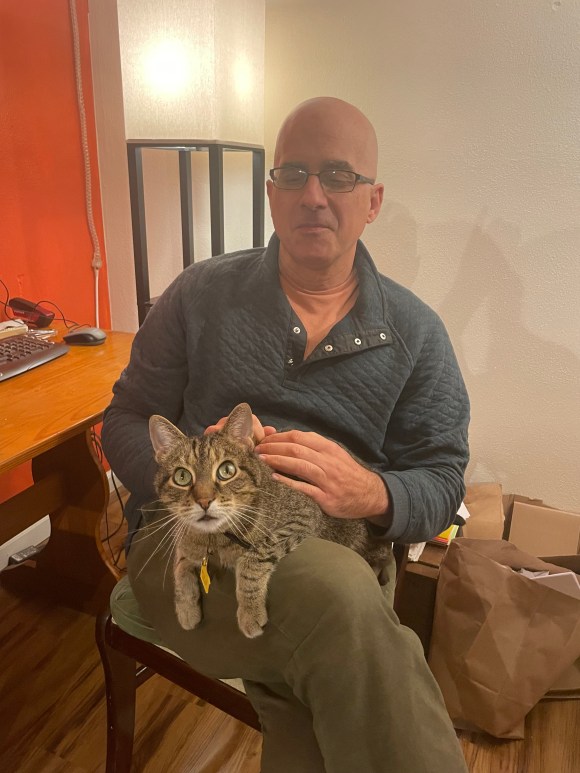
Jim Murdoch
On Grudges

Grudges are like hedgehogs.
Be careful how you hold them.
And never juggle with them.

Seriously, don’t.


Hide and Seek

[I]t’s harder for him to mean something than say – A.R. Ammons

Meaning hid in the words.
The last place anyone would look.
These days anyways.

And no one looked.
No one looked.
No one ever looked.

And that… hurt.


Tuesday (or in might’ve been a Friday)

Wrote a little poetry.
Made no difference.
Same ol’ same ol’.

Actually, I think it was Sunday,


Quotidian

Every day I forget a little.
I eat a little, sleep a little,
forget a little…

actually, sometimes I do forget to eat but

I never forget to forget.
Either way it gets a little
easier every day.

Jim Murdoch has been writing poetry for fifty years for which he blames Larkin, who probably blamed Hardy. He has published two books of poetry, a short story collection and four novels.

.

PLEASE NOTE: ARTICLES CAN ONLY BE REPRODUCED IN OTHER SITES WITH DUE ACKNOWLEDGEMENT TO BORDERLESS JOURNAL

Click here to access the Borderless anthology, Monalisa No Longer Smiles

Click here to access Monalisa No Longer Smiles on Amazon International

Categories
Poetry

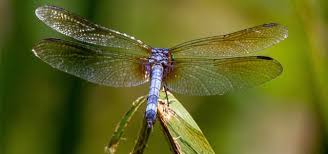
The Dragonfly

Poetry and translation from Korean by Ihlwha Choi

From Public Domain
The dragonfly, it seems, wishes to be my companion.
Even when October comes, it still hovers close by my side.
On a late autumn morning, cloaked in white frost,
clinging to a withered blade of grass until its life is spent,
the dragonfly loves the fields, loves the sunlight.

As swallows line up in long ranks,
packing their final bundles for a faraway journey,
news may come from the city of someone’s suicide,
yet the dragonfly listens half-heartedly, caring little.
Beside the fisherman, beside the farmer gathering beans,
following the way of life of distant ancestors,
the dragonfly flits about, plays with innocence.
And then, from a withered blade of grass,
it departs the world as lightly as taking flight—
on a morning when leaves and blossoms alike have faded.
From Public Domain

Ihlwha Choi is a South Korean poet. He has published multiple poetry collections, such as Until the Time When Our Love will Flourish, The Color of Time, His Song and The Last Rehearsal.

.

PLEASE NOTE: ARTICLES CAN ONLY BE REPRODUCED IN OTHER SITES WITH DUE ACKNOWLEDGEMENT TO BORDERLESS JOURNAL. 

Click here to access the Borderless anthology, Monalisa No Longer Smiles

Click here to access Monalisa No Longer Smiles on Kindle Amazon International

Categories
Essay

The Literary Club of 18th Century London

By Professor Fakrul Alam

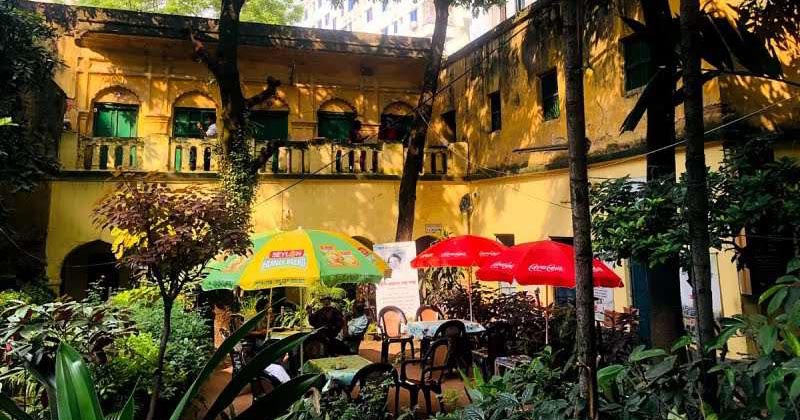
We Bengalis think that no one can match us for our addas[1]. If you were growing up in Dhaka in the 1950s or the 1960s and happened to be literary in your inclinations, chances are you would end up on some evenings in Old Dhaka’s hotel-cum-restaurant Beauty Boarding. You would do so not mainly for the good food sold there at modest prices, but chiefly because you intended to see and hear poet Shahid Quadri regaling everyone in a table that probably included budding poets such as Shamsur Rahman and Syed Shamsul Huq, a promising film maker like Abdul Jabbar Khan, or a gifted painter like Debdas Chakraborty.

Over seemingly endless cups of tea, Quadri and his fellow poets and artists and friends and many other enchanted hangers-on would be entertaining each other late into the evening. Everyone present would in all probability say to each other or to others later: “Was there anywhere any adda as good as the one that took place in Beauty Boarding that evening?”

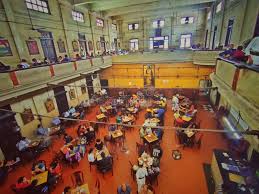
And, of course, Bengalis of Kolkata will claim that there was never ever any place for chatting and no addas held anywhere that have been able to match the ones at the city’s College Street Coffee House. Who hasn’t heard the song by Manna Dey[2] that has immortalised the conversation and the characters there—poets, journalists, actors, artists—all engaged in intellectual chitchat over nonstop cups of coffee? And though the song laments the passing away of a generation, one can find Kolkata’s Coffee House, like Dhaka’s Beauty Boarding, still very busy and very full of addas even now. But surely among the most famous addas of all times were the ones that took place in 18th century London’s “The Club,” aka “Literary Club”. This was the archetypal club for flowing conversation conducted over good food, great coffee, and suitably stimulating drinks (this last bit is conjectural!). Without a doubt, it is the most famous British literary club in history, and here outstanding intellectuals would engage in always entertaining and often scintillating conversation.

Just consider the luminaries in attendance at the Club on a typical London evening. At the centre of the conversation would be the physically huge figure of Dr Johnson—he of the towering intellect, he who was also known as “Dictionary Johnson” for his incredible feat of penning the first substantial dictionary of the English language almost single-handedly. Listening to him would be his devoted biographer, James Boswell; the greatest painter of the period and the founder of the Club, Sir Joshua Reynolds; Burke, the brilliant orator, passionate parliamentarian and indefatigable critic of the East India Company; Oliver Goldsmith, the renowned author and playwright, and Dr Christopher Nugent, the successful physician. As they conversed, sparks surely must have flown all around the table and Boswell must have been taking notes all the time of the pearl s dropping from Dr Johnson’s lips!

It was Reynolds who had proposed the toast associated with the Club— “Esto perpetua,” Latin for “Let it be perpetual.” Club membership was restricted—at first there were nine members, but soon some more were inducted. They included cultural luminaries such as the greatest actor of the time, David Garrick; the great parliamentarian and minister of the British Government for a while, Charles James Fox; the luminous economist Adam Smith and arguably one of the greatest of British historians, Edward Gibbon. According to the author and member of the Club, Bishop Thomas Percy, as far as Johnson was concerned, the thing that all members were to keep in mind was that the Club “was intended” to “consist of such men, as that if only two of them chanced to meet, they should be able to entertain each other without wanting the addition of more Company to pass the evening agreeably”. Or, to use the word coined by the great Dr Johnson himself, Club members had to be “clubbable!”

As one can imagine, with such amazing minds and larger than life characters, the reputation of the Club spread far and wide—in London and beyond. For sure, there were other clubs in swelling and increasingly prosperous London (as is the case with Dhaka now!), and Johnson himself was associated with quite a few of them, but who could compete with the members of The Club?

Initially, Tuesday was set aside as the meeting day, then Friday; eventually other days were considered good for clubbing as well. According to one member, the writer and lawyer John Hawkins, The Literary Club soon proved to be “the great delight of Johnson’s life, a centre of conversation and mental intercourse.” As the century progressed and more and more, people vied with each other to become a member of The Club, strict rules were initiated to keep up its reputation.

Eventually, elections and “blackballing” were procedures chosen to control the number of members as well as to ensure that only “quality” people became members. Hawkins, unfortunately, was deemed to be “unclubbable” by Johnson himself and therefore was soon expelled from the Club! But Club members could be of varying political beliefs—Burke, for example, was passionate about the rights of the American colonists but Johnson critical of them. Burning political issues such as the right of the American colonists came up for discussion and debate but tempers were kept under control and wit-combats proved to be the rule and not scuffles. On most days, conversation flowed freely.

On April 3, 1778, Boswell records in his biography of Johnson, for example, “The conversation began with sculpture” and then “the subject is dropped for emigration; it then moved on to “population increase” and “density”; next to parliamentary oratory, then to philology; afterwards to travelling abroad and thence to “human nature generally”!

Johnson died in 1784, and The Club eventually disappeared from recorded history, but it had survived long enough to become a model of clubs where great minds could come together for a convivial atmosphere, free and witty exchange of ideas, and company worth seeking every evening. It became the inspiration of many such institutions all over the world. Dhaka Club, thus, can claim that any recorder of its primordial history would find The Club as one of its ancestors. For sure, for our club members, or literary minded people wanting to elevate their addas a lot, the London Club can be a source of inspiration and the conduct of its members well worth emulating during addas for fantastic clubbing!

The Literary Club met on Friday evenings until midnight in London. The club gatherings with all the luminaries spanned a period of 20 years. From Public Domain

[1] Could be a tête-à-tête or just a chat with multiple people.

[2] Manna Dey (1919-2013) sang about adda in the legendary Coffee House of Calcutta.

(First published on August 20, 2018 in Daily Star, Bangladesh)

Fakrul Alam is an academic, translator and writer from Bangladesh. He has translated works of Jibonananda Das and Rabindranath Tagore into English and is the recipient of Bangla Academy Literary Award (2012) for translation and SAARC Literary Award (2012).

PLEASE NOTE: ARTICLES CAN ONLY BE REPRODUCED IN OTHER SITES WITH DUE ACKNOWLEDGEMENT TO BORDERLESS JOURNAL

Click here to access the Borderless anthology, Monalisa No Longer Smiles

Click here to access Monalisa No Longer Smiles on Amazon International

Categories
Poetry

Poetry by Richard Stimac

Richard Stimac
TERRITORIALITY 

This spring dawn, birds begin their cacophony of chants,
all sex and violence, imprints of who will rule the yard,
whose offspring’s offspring will populate this patch of earth.

The morning traffic, too, has its cries, trills, alarms, greetings,
rich or thin, metallic, harsh, calls for submission, and dominance
over the interwoven nest of roads, ways, signals, and signs.

Richard Stimac has published a poetry book Bricolage (Spartan Press), two poetry chapbooks, and one flash fiction chapbook. In his work, Richard explores time and memory through the landscape and humanscape of the St. Louis region. He invites you to follow his poetry Facebook page: “Richard Stimac poet”.

.

PLEASE NOTE: ARTICLES CAN ONLY BE REPRODUCED IN OTHER SITES WITH DUE ACKNOWLEDGEMENT TO BORDERLESS JOURNAL

Click here to access the Borderless anthology, Monalisa No Longer Smiles

Click here to access Monalisa No Longer Smiles on Amazon International

Categories
Poetry

Meditations on Death and Darkness

By Jim Bellamy

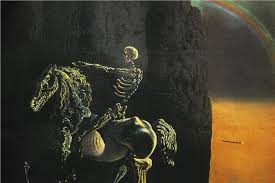
Horseman of Death by Salvador Dali (1904-1989). From Public Domain
DO NOT SPEAK FOR OLD STAVED MEN

Do not speak for old staved men whose faces glint like tyres,
In the twilight of their years, they hum a tune so grim.
Their stories told in whispers, kindling ancient fires.

Beneath the moon, their silhouettes like church spires,
Stand testament to lives lived on the brim.
Do not speak for old staved men whose faces glint like tyres.

With every wrinkle, a saga that never tires,
Eyes that sparkle with memories, vivid and dim.
Their stories told in whispers, kindling ancient fires.

They laugh with the madness that freedom acquires,
Dancing to the wind's capricious whim.
Do not speak for old staved men whose faces glint like tyres.

In the hush of night, their spirit aspires,
To cast off the shadows, stark and slim.
Their stories told in whispers, kindling ancient fires.

So let them be, these merry old sires,
As they sip the stars, on the world's rim.
Do not speak for old staved men whose faces glint like tyres,
Their stories told in whispers, kindling ancient fires.


IF AT FIRST DEATH'S WORLD IS ROUND

If at first death's world is round, take heed,
Where shadows dance and silent whispers play,
A routed cock will sing for prayer indeed.

In twilight's grasp, where heartbeats intercede,
And stars above in quiet judgment sway,
If at first death's world is round, take heed.

The moon's pale light, on which dark dreams will feed,
A canvas vast, where lost souls might stray,
A routed cock will sing for prayer indeed.

Through time's thin veil, where ancient fates are freed,
The echoes of the past are not held at bay,
If at first death's world is round, take heed.

In madness' grip, where sanity will bleed,
And reason's voice is oft led far astray,
A routed cock will sing for prayer indeed.

So listen close, for it's the earth's own creed,
In life's grand play, we all must find our way,
If at first death's world is round, take heed,
A routed cock will sing for prayer indeed.


OH, WHAT NOW FOR THE FORGETMENOT MEN

Oh, what now for the forgetmenot men,
In a world where fathers jack all pleasure?
Their laughs echo, "Ha ha," and then?

They dance in boots of heavy leaden,
Stomping on dreams with no measure.
Oh, what now for the forgetmenot men?

With every chortle, they count to ten,
A madcap rhythm to their leisure.
Their laughs echo, "Ha ha," and then?

They sip on the nectar of a pen,
Ink-stained lips betray their treasure.
Oh, what now for the forgetmenot men?

In absurdity's grip, beyond our ken,
They find in oddity their true pleasure.
Their laughs echo, "Ha ha," and then?

So raise your glass to the when,
To the forgetmenots, in all their splendour.
Oh, what now for the forgetmenot men,
Their laughs echo, "Ha ha," and then?


O, WHENCE VENAL BODIES BREAK AND SPURN

O, whence venal bodies break and spurn,
In twilight's sickly, dolorous embrace,
What now for death but a new day made up from sickness?

The stars above in cold judgement turn,
As shadows cast by the moon's pale face,
O, whence venal bodies break and spurn.

The raven's call, a direful mourn,
Echoes through the void of this haunted place,
What now for death but a new day made up from sickness?

Beneath the earth, where the lost sojourn,
Lies the heart's desire without a trace,
O, whence venal bodies break and spurn.

A dance macabre, the world does churn,
Absurd the stage, life's fleeting race,
What now for death but a new day made up from sickness?

So sing the dirge, as the candle burns,
And time erodes all but disgrace,
O, whence venal bodies break and spurn,
What now for death but a new day made up from sickness

Jim Bellamy was born in a storm in 1972. He studied hard and sat entrance exams for Oxford University. Jim has a fine frenzy for poetry and has written in excess of 22,000 poems. Jim adores the art of poetry. He lives for prosody.

.

PLEASE NOTE: ARTICLES CAN ONLY BE REPRODUCED IN OTHER SITES WITH DUE ACKNOWLEDGEMENT TO BORDERLESS JOURNAL

Click here to access the Borderless anthology, Monalisa No Longer Smiles

Click here to access Monalisa No Longer Smiles on Amazon International

Categories
Review

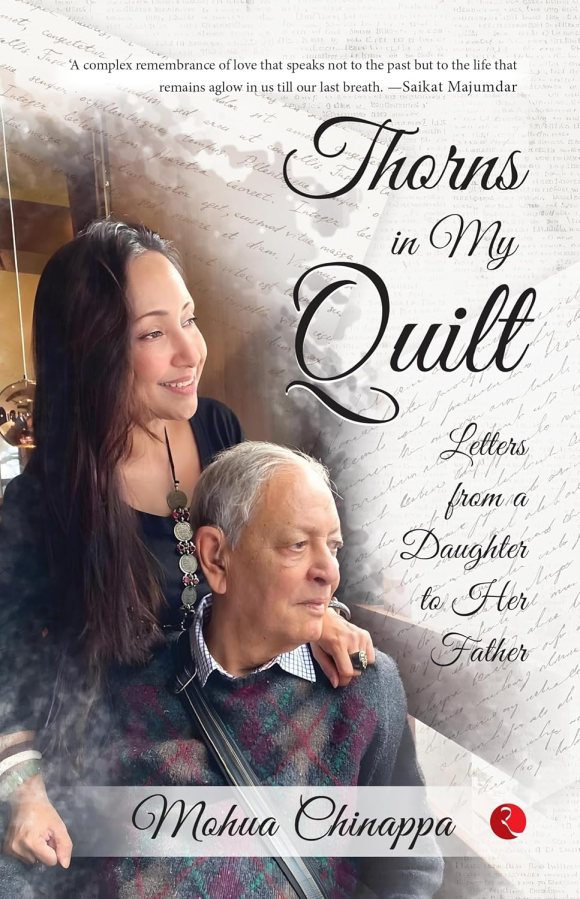
Thorns in My Quilt

Book Review by Rakhi Dalal

Title: Thorns in My Quilt: Letters from a Daughter to her Father

Author: Mohua Chinappa

Publisher: Rupa Publications

Mohua Chinappa’s Thorns in My Quilt: Letters from a Daughter to Her Father is a quiet and visceral exploration of memory, grief, and the often-fraught space between love and silence. Drafted in the form of a collection of letters to her late father, the book is less about resolution than about reckoning – more an attempt to articulate what remained unsaid while he was alive. Chinappa, through this profoundly personal lens, not only offers a portrait of a relationship but also a reflection on absence, yearning, and the emotional inheritance that we all carry forward sometimes.

Mohua Chinappa is an author, a columnist, a renowned podcaster in India, a TEDx speaker, a former journalist and a corporate communications specialist. Her other initiative—NARI: The Homemakers Community—provides a platform for homemakers to voice their everyday challenges.

The letters in this book, seamlessly weave together fragments of childhood and adulthood, moving fluidly between time and place. One moment, Manu the daughter, beckons the warmth of her early years in Shillong — vanilla flavoured butter cookies and the hush of rain-soaked afternoons, then the shelter of a harsingar[1] tree in their government house in Delhi, while in the next, she confronts the frailty of her marriage, the weight of her Baba’s illness, or the sting of words that sometimes remained unsaid. The form of writing echoes the workings of memory. Not linear, but recursive, continually turning back to moments that remain unresolved. Each letter seems like an appliqué sewn into the fabric of remembrance, creating a quilt with seams held together by both tenderness and pain.

At the centre of the book is the paradoxical figure of her Baba, portrayed with candour as a man who is loving yet aloof, erudite yet impractical and admired yet sometimes resented. Manu longs for his approval but also grapples with the ways his criticism and aloofness diminishes her. The letters vacillate from affection to accusation and from gratitude to grievance. In the acceptance of these contradictions, there seems a resistance to recall the memory of a father in an idealised tone. Instead, Chinappa manages to present a figure whose complexity remains inseparable from her own. The portrait revealed, thus, appears all the more moving.

The narrative also reverberates with a strong theme of displacement. The family’s history of migration, the shifts between Shillong, Delhi, and Bengaluru, create a sense of being both rooted and uprooted at once. Places do not act merely as backdrops but are living repositories of memory, holding within them the sweetness of belonging and the ache of estrangement. This sense of dislocation extends inward in the narrative. Chinappa captures not only her alienation from her father but also the broader struggle of carving an identity in a world shaped by expectation and silence.

The language of the narrative is lucid, and doesn’t tip into ornamentation. Everyday details—trees, rain, food, household objects—become charged with metaphorical weight, carrying emotional resonance far beyond their surface. The letters are suffused with sensory detail, grounding the reader in the textures of lived experience while also opening space for reflection. The writing exercises restraint. Even at its most poignant, it doesn’t spill into melodrama.

The emotional honesty of the book is equally striking. Manu does not shy away from confessing anger or disappointment; nor does she smooth over her father’s failings in the name of filial devotion. She admits to her vulnerabilities—the yearning for acceptance, the bitterness of abandonment, the pain of reinvention when life’s foundations collapse. These allow the readers to relate with the story. Though the particulars may differ, but the longing for parental approval, the hurt of unspoken words, and the struggle to reconcile love with resentment are universal.

However, some constraints in the narrative cannot be overlooked. The epistolary form, while effective in evoking intimacy, also narrows the perspective. Baba appears only through Manu’s voice, his presence mediated entirely by her memories and emotions. At some places, the narrative shifts abruptly, from addressing second person (father) to third which makes the reading a bit disconcerting. At times, the absence of other perspectives leaves the figure of father more shadow than substance, defined by what he was to her rather than who he was in himself. The letters also occasionally return to the same emotional terrain, circling around familiar grievances and sorrows. While this mirrors the looping nature of grief, the repetition creates a sense of exhaustion.

These reservations, however, do not diminish the book’s overall appeal. Its power lies not in neatness but in its willingness to dwell in ambiguity. It does not offer easy closure, nor does it attempt to tidy grief into a narrative of redemption. Instead, it embraces complexity, acknowledging that love is rarely unblemished, that absence can wound as much as presence, and that the act of writing itself can become a form of survival.

Thorns in My Quilt resonates because it is both deeply particular and quietly universal. While grounded in Chinappa’s personal history, it speaks to the wider human experience of fractured relationships, cultural displacement, and the longing to be heard. In cataloguing both the thorns and the blossoms of her bond with her Baba, Chinappa creates a testament that is as much about resilience as it is about grief.

[1] harsingar: Night Jasmine

Rakhi Dalal is an educator by profession. When not working, she can usually be found reading books or writing about reading them. She writes at https://rakhidalal.blogspot.com/ .

.

PLEASE NOTE: ARTICLES CAN ONLY BE REPRODUCED IN OTHER SITES WITH DUE ACKNOWLEDGEMENT TO BORDERLESS JOURNAL

Click here to access the Borderless anthology, Monalisa No Longer Smiles

Click here to access Monalisa No Longer Smiles on Kindle Amazon International
Categories
Poetry

Poetry by Stephen House

Stephen House
you ‘my nice’								

it’s enough to make me cry twice
that bad news bang
but we still laugh you and me
in the mornings and beyond

please stay as you are always
you know i know your all
like the sky see magic
of pure good in you

we didn’t accept others
walked as just us through it
day after day into years
decades with you ‘my nice’

so much sharing is ours
we see trees and flowers alive
tiny seabirds running
and our dreams beautiful in real

a dog barks in the distance
we listen and smile
as the sun joins in
with us and ours

your face is so kind
to me in life
i always call you ‘my nice’
it’s your true name to me

Stephen House has won awards and nominations as poet, playwright and actor. He’s received several international literature residencies. He is published often and performs his acclaimed monologues widely.

.

PLEASE NOTE: ARTICLES CAN ONLY BE REPRODUCED IN OTHER SITES WITH DUE ACKNOWLEDGEMENT TO BORDERLESS JOURNAL

Click here to access the Borderless anthology, Monalisa No Longer Smiles

Click here to access Monalisa No Longer Smiles on Kindle Amazon International

Categories
Poetry

When You Are Loudest

By Juliet F Lalzarzoliani

Yes.

I pause and smile
as you cross my mind
while I sit with friends,
talking about politics,
pop culture,
and the lives of people
who think they are
kings and queens.

But when the noise fades,
when everyone goes quiet,
that is when you are loudest.

I miss that version of myself,
the one who laughed without trying,
who felt light and alive.

I miss the sound of your voice,
calm and kind,
the kind that could quiet
a storm inside someone.

Yes, I remember that day.
I saw you sitting with your friends
at a table.
You took off your glasses,
and you looked like my childhood crush
from when I was eleven,
when life was all mixtapes
and slow songs on the radio.

And that was enough
to miss you,
quietly,
sweetly,
all the same.

Yes.

Juliet F Lalzarzoliani is an Assistant Professor in the Department of Economics at ICFAI University, Mizoram. She writes about nostalgia, relationships, and self-reflection. She lives in Mizoram and is passionate about exploring life’s quiet moments through words.

.

PLEASE NOTE: ARTICLES CAN ONLY BE REPRODUCED IN OTHER SITES WITH DUE ACKNOWLEDGEMENT TO BORDERLESS JOURNAL

Click here to access the Borderless anthology, Monalisa No Longer Smiles

Click here to access Monalisa No Longer Smiles on Kindle Amazon International
Categories
Stories

Exorcising Mother

By Fiona Sinclair

In the taxi from the station, Emily hugged her freedom as if it was an expensive handbag. At twenty-nine, she was returning from her first ever weekend away from home.

London had meant an orgy of sightseeing that her old friend Hannah was happy to accommodate. Like a time poor tourist, Emily had galloped through St Pauls, The Tower of London and Westminster Abbey until her friend had begged for a sit down and some food. “These buildings have been here hundreds of years,” she panted, not understanding that Emily’s default setting was playing catch up.

Now Emily trotted up the bungalow’s short driveway, a suitcase in one hand and, in the other, shopping bags ripe with new clothes. ‘No more hand me downs’ she thought with a smile.

It was an exceptionally warm spring that year, as if the weather, too, was in cahoots with her. Inserting the key into the front door, Emily knew from experience that the pokey bungalow trapped extremes of weather. So, with windows and doors shut up for four days, she knew it would be like entering a forge.

But, stepping into the hall, she was struck by an uncanny chill, as if an air conditioner had been switched to its maximum setting and left unchecked for many hours. It did not provide a welcome contrast to the unseasonable spring weather outside. Instead, she began to shiver, the hairs on her arms raised like hackles and a rash of tiny goose pimples spread across her skin.

Emily instinctively pulled on a cardigan and wrapped it around her. She waited for the chill to dial down. It did not. In fact, if anything, it intensified. Her next response was to move into the small kitchen to see if the freezer door had swung open, reasoning that in a place little more than a bedsit, the chill from the freezer might well have filled the place with cold air. But the door was secure. She then went methodically room by room, trying to find some other source for the cold. She found no answers, but the bedrooms, bathroom and sitting room, were all equally as chilled as meat lockers.

This frosty atmosphere did not frighten her. Emily was accustomed to weird and little phased her now. Standing with her hands on her hips in the sitting room she suddenly recognised the atmosphere as the brooding anger that was her late mother’s trademark. Since childhood, she had been familiar with this withdrawal of affection for some minor misdemeanour, anything from ripping her jeans in some Tom boy escapade to playing out with friends, ignoring her parent’s curfew. At these times, her mother’s beautiful features became an ice queen mask as maternal love was switched off, a punishment that stung far more than a slap or being confined to her bedroom.

Now the adult Emily, suspecting that death did not dissolve a person’s worst traits, knew that the house was overwhelmed by her mother’s disapproval of her daughter’s behaviour in the aftermath of her death. From her mum’s perspective, she had betrayed her on many counts. So, this was, Emily suspected, a sort of supernatural sulk.

Decades before, her mother’s life of delicious domesticity was ruptured by dad’s sudden death at 40. Now there were bills to settle, a living to be earned and a daughter to raise. But mum was unable to face the challenges. She was proactive only in seeking a replacement for dad, a knight on a charger who would solve her troubles. However, she soon found that she was considered more mistress material than wife. Her beauty was too showy for a rural backwater and millionaires with money to purchase shiny things were in short supply.

She had begun drinking just to take the edge off her problems, in the days following her husband’s death. Failure to find a new man sent her mother’s moral compass spinning off its course. Liaisons with a series of rogues paid the bills. Sex was anaesthetised by copious amounts of booze then. It also helped to blur the truth of herself in the dressing table mirror.

For Emily, her dad’s death was the death of her childhood. As family and friends peeled off with mother’s plunging reputation, at eleven she was promoted to confidante. By eighteen, when her own life was becoming fecund with opportunity, her mother’s needy ‘You won’t leave me too’ tethered Emily to her and the bungalow. She procured her wine in the morning and put her to bed when it finally overwhelmed her.

Emily did this because she adored her mother. She was absolutely partisan, saw her as a beautiful victim relentlessly kicked by fate. Decades passed in this dreary routine. Mother and daughter’s lives contracted to the parameters of the tiny bungalow. Even the rogues fell away, except one who visited weekly, left money discreetly on the sideboard, claiming he expected nothing in return. However, his eyes constantly alighted on Emily like a fly, suggesting he was, in fact, watching an investment develop.

Then, in her mid-fifties, the knight she had always sought rode in to save mother. Sadly, it was more black than white and arrived in the guise of a tumour. Turning her back on treatment and determined that cancer would not run riot in her body as it done with her husband, she decided that suicide would be the cleanest exit.

The finding of the lump winded Emily. She crawled like an invalid through those early days of diagnosis. All the while mother insisted there would be no discussion and life would default to their version of normal. Emily’s shock was compounded when she understood that her mother expected her to facilitate death. Sick to her stomach, she nevertheless agreed, thereby giving her mother peace of mind. But she secretly offered up desperate prayers that it would not come to it.

The origins of the suicide pact were hazy. Looking back, it was like trying to accurately recall a nightmare. Had her mum suggested it? Or had Emily been unable to contemplate life without her? Either way, mother’s relief was evident. In her addled mind, it was an elegant solution to an ugly problem.

From her contracted perspective Emily could not envisage a future for herself. She was isolated as a heroine in a Victorian novel, having had no contact with her family since she was eleven. In a sense she had grown up supernumerary to her mother who took precedence even in something as basic as clothes. Emily had not had her own new garments since childhood. As she grew into a young woman, mother would rummage in her own chest of drawers to provide underwear, jeans, and tops. Largely because all surplus money must go on alcohol.

Mother had also guessed that the one remaining rogue who kept a seemingly friendly eye on them, in fact had an agenda. Whilst Emily lacked her mother’s beauty she had the asset of youth. Some residual maternal instinct must have kicked in here. She knew that her protection was finite now. The rogue was playing a not so long game for the prize of a vulnerable young woman. In retrospect, Emily thought mother’s advocacy for the suicide pact was a blur of all these factors, with perhaps a jigger of jealousy as well for her daughter’s youth and health.

In the months before the cancer overwhelmed, Emily basked in her mother’s praise, “You are so brave.” Even at 28, she still craved the approval that was dealt out so meagrely. Of course, mother had no idea that it was all bravado, but it helped ameliorate the prospect of the pact and almost made her decision worth it.

But in truth Emily was horrified. It was as if the cancer had invaded both their bodies, decided both their fates. At times she was able to park her terror by bingeing on classic literature and junk food. Other times, at night, she lay awake, horrifying images running riot in her mind, silently screaming, “I don’t want to.” At these times, her love of life fought with love for her mother.

Mum sensed when the cancer was making its final move. Laying claim to her brain, it was gradually stealing her mobility and reducing her voice to a whisper. That day, Emily downed a bottle of wine herself to take the edge off proceedings. Unaccustomed to alcohol, she worked in a haze. The afternoon took on a ‘down the rabbit hole’ unreality. She talked her way through the preparations. This served to focus her mind and subdue fear. But there were still moments when she felt like a prison warder forcing her petrified body towards the noose.

A lack of basic physics saved her. The flex caused the water in the bath to merely ripple like a mini tide. There was an element of dark humour about the botched attempt, but neither laughed. Emily took the failure as an intervention by fate. As she clambered from the bath the truth tumbled from her mouth. “No, I don’t want to.”

In contrast, her mother sobbed at the abortion. Having lost all agency to cancer, she could not now determine her own death. Her daughter, with strength gained from years of practice, now supported mum back to bed.

And then her mum performed the only selfless act of the past twenty years. She instructed Emily to phone her estranged grandmother. As is often the case, the two hit it off. Whilst Emily had never resembled her mother, she now saw her genes were gifted from this woman. They shared the same brown hair and eyes. Their temperament was similar, too. The granddaughter inheriting her indomitable spirit.

Of course, Emily knew there would be a reckoning in the future. At some stage she would have to make peace with the guilt she had stashed away in a corner of her mind; the broken promise of living on after her mother, the disloyalty of accepting her grandmother’s protection, the process of carving out a future for herself. But, at the moment, Emily was distracted by the sheer novelty of living.

And now, suddenly, she began to throw open all the windows and doors. The heat waiting outside burst into the bungalow, seeing off the cold from every corner, melting the ice of her mother’s anger until, standing bathed in sunlight, Emily smiled, knowing that, for now, her mum was routed.

.

 Fiona Sinclair lives in a village in the UK. She is a poet with several collections published by small presses. Fiona has just begun writing short stories especially about subjects that cannot be covered by poetry. 

.

PLEASE NOTE: ARTICLES CAN ONLY BE REPRODUCED IN OTHER SITES WITH DUE ACKNOWLEDGEMENT TO BORDERLESS JOURNAL

Click here to access the Borderless anthology, Monalisa No Longer Smiles

Click here to access Monalisa No Longer Smiles on Kindle Amazon International
Categories
Poets, Poetry & Rhys Hughes

Soaring with Icarus

The Fall of Icarus by Peter Paul Rubens (1577–1640). From Public Domain
ICARUS

Your wings soared
to foolish heights
once only;
the wax slipped away
from an angry sun,
sealing your fate
on the waters below
with your own
mortal stamp.

Few feathers
remained to fall
in your wake;
most, caught by currents
of air, circle the globe
and fall over
our cities even now.
I found one
in my gutter.


COUNTY HALL VISTA

The fountains are silent
the fishermen hunch
in the rain
After lunch, the workers
greet the day again
mayonnaise on their lips
stretching weary limbs
while the aged heron
skims low with
ponderous dignity
across the bay
beak soured in oil.

Senile Pagoda
lonely as the fishermen
who line the wharf
stuffed full with
intentions pending
never ending bureaucratic
mockeries of a system
At lunchtime the
workers feed;
I watch them through the
canteen window.

Rhys Hughes has lived in many countries. He graduated as an engineer but currently works as a tutor of mathematics. Since his first book was published in 1995 he has had fifty other books published and his work has been translated into ten languages.

.

PLEASE NOTE: ARTICLES CAN ONLY BE REPRODUCED IN OTHER SITES WITH DUE ACKNOWLEDGEMENT TO BORDERLESS JOURNAL

Click here to access the Borderless anthology, Monalisa No Longer Smiles

Click here to access Monalisa No Longer Smiles on Kindle Amazon International