Categories
Interview

How the young and Ms Sara battled COVID

A brief journey into the world of founder Nidhi Mishra and co-founder, Archana Mohan.

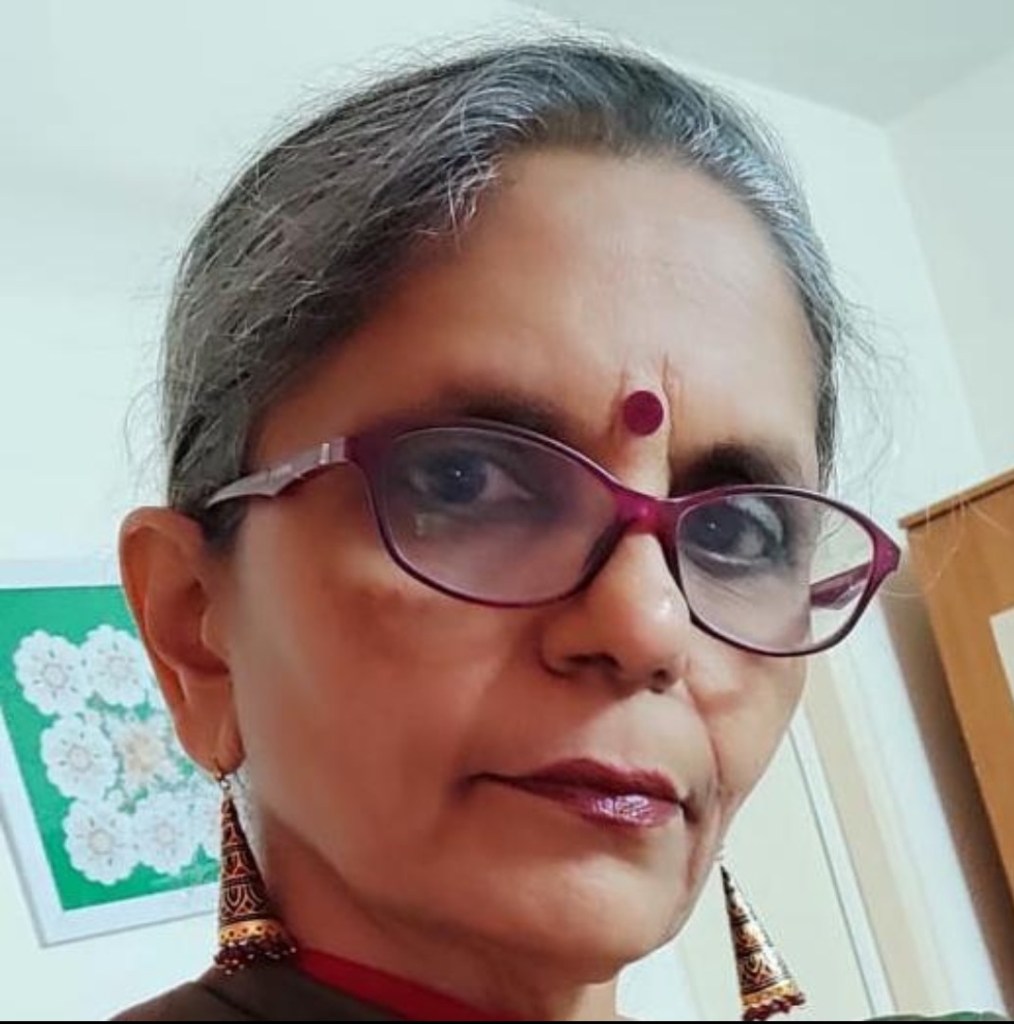
Nidhi Mishra(Left)&Archana Mohan(right)

What is the smell of a book? Bookosmia. 

Bookosmia is also a publishing house that aims to promote reading among children, curates writing from youngsters and brings out books for youngsters in both hard and soft copy as well as audio books in varied languages. It was conceived by Nidhi Mishra who pivoted to children’s publishing from a 10-year banking career, post IIM, in 2017. After a fast paced career, she quit as Vice-President of HSBC (Hong Kong & Shanghai Banking Corporation) to create something from scratch in a space she was passionate about, making better use of her time and skills. Nidhi teamed up with Archana Mohan two years ago.  Mohan had worked as  a  journalist, corporate blogger and editor working with names like Business Standard, Woman’s Era, Deccan Herald, Chicken Soup for the Soul and Luxury Escapes Magazine.  She won the Commonwealth Short Story contest’s ‘Highly Commended Story’ award in 2009. 

In this exclusive, Mishra, founder and CEO of Bookosmia, and  Mohan, co-founder and head of content, tell us about their journey. 

When and how did Bookosmia come about? 

NM*: Bookosmia was launched in 2017 as a disruptive children’s content company, hoping to make kids fall in love with reading, writing and everything else around stories. While an already cluttered space in India, children’s  content was either always educative, western or inappropriate. No one wanted kids to just enjoy a good story without necessarily helping them in academics or teaching moral values. We wanted to change that. 

But what kind of stories do kids really like? What better way than to ask them directly. Hence our key premise that kids are perfectly capable and deserving, of telling their own stories, is the biggest differentiator in the market. 

What does Bookosmia do?

NM: Bookosmia is India’s premier writing platform for kids, publishing over 100 original digital stories a month with young writers from lesser known Indian districts like Kiccha, to the bustling metros, from Munich to New Jersey. Bookosmia recently launched its brand persona— a 10 year- old athlete Sara, fondly hailed as “our new best friend” by The Hindu recently. Sara has India’s premier and largest repository of stories for kids, by kids. Additionally she brings a whole host of fun and age appropriate content to kids through digital stories, video stories, audio stories and lots of fun activities for kids for perfect engagement for kids. That is what we offer from a product perspective.

However, we are onto a larger mission– to create a new ‘category’ of kids content, which strongly hinges on a “stories for kids, by kids” philosophy. Children lead their lives with a constant inflow of inputs. Parents, schools, teachers rarely pause to ask them for their original output. How are they feeling?

At Bookosmia, we are different from other content companies and publishers because we have a two-way conversation with our audience. Yes, we have digital  and video stories to engage children meaningfully. But we also have the intent to ask them and publish how they are feeling in the lockdown, during a world cup final, after listening to our science stories. We feel making young kids feel valued and heard will help in the following ways:1) They will be able to process their emotions and launch their imagination better, instead of hopping from one activity to another. For example, we love the stories 6-year-olds write to us where animals feel lonely, are behaving badly only because they are looking for a best friend. 2) It will help them boost their self-confidence. A child who feels empowered today will grow up to be a more engaged citizen tomorrow. For example, we have older kids writing to us on issues of racism, taboo around periods, refugee situations and more.  3) It will help children feel more positive, hopeful and raise awareness by evaluating what they can be grateful for. For example, our “Gratitude during Covid” series was a perfect example where even little kids sent us entries recognizing there is a lot to be thankful for, even in these difficult times.

How did you conceive Sarachats?

AM*: At Bookosmia, we take our ‘by kids, for kids’ mantra a little too seriously! This is a company where children call the shots. Our young friends decide the topics they will write on for the month, activities and new features to be added. So, the obvious thought was why not have a young character representing us in all our interactions as a brand? That was when Sara was born.  

Ms Sara

Sara isn’t a genius, nor does she possess magical powers. She is a curious and happy go lucky kid and every child will identify a bit of themselves in her. With her young friends from across the globe, Sara reads stories by kids, she listens to story tellers, she tells stories to little ones, she does fun activities and she even chats to cool older people to know more about their lives.

To us, Sara is a heart child. She has not one but many mothers! She was designed by the brilliant Parvati Pillai, ex design head of Chumbak. Our chief visual designer Aayushi Yadav has adapted the design fabulously and brought in her trademark humour, enriching Sara’s personality. As for how Sara talks, behaves and the capers she gets into, blame that all on the rest of us! 

In a very short span of time, Sara has made quite an impression on our young followers. Everyday, Sara’s inbox is flooded with messages by her friends across the world who love to share their thoughts and wait to hear back from her. For them and for us, Sara has become an inseparable part of our lives. 

How many children have responded to Sara chats? 

AM: We publish over 100 young writers a month, so the answer is, quite a few! But it’s not just about publishing. Some of our young writers are from lesser privileged backgrounds, so the whole concept of expressing themselves in a medium like the short story, is an alien experience to them. But guess who instantly connects with them and draws them out of their shell– their friend Sara.  

Similarly, some of our young writers have great ideas but lack proficiency in English and it is Sara who writes to them regularly encouraging them to put their thoughts into words without being boggled by vocabulary. We believe that every child has a story to tell and our global platform through a much-loved ambassador like Sara gives children an opportunity to express themselves and feel heard in a safe and non-judgemental space. From writing about their dreams, their family to topics like periods, disability, grief to bullying, our young writers are unafraid to write about subjects that move them. To say their refreshing optimism and understanding of the world stuns us, would be an understatement. 

What made you think of the icon of Sara? 

AM: Our girl Sara, is a stereotype buster. She is the answer to generalisations like “all girls like pink” and “sport is for boys”. Sure, she is notorious for breaking a windowpane or two with her football, but she is no different from any other girl in the world.  She represents every child who gets picked on for ‘being different’, for daring to think out of the box and for questioning norms that don’t make sense to them. Does loving sport instead of playing house make her any lesser of a girl? Absolutely not. And that’s the message Sara brings to every child of the world. You are you. Don’t feel pressurised to change just because you don’t fit into someone else’s mould. 

Is this a voluntary organization? 

NM: No, Bookosmia is a for profit private limited company.

Tell us how Ms Sara serviced children across borders through the trying times of COVID.

AM : Like we always say, it is the kids who drive this company and so it should come as no surprise that our much lauded ‘Gratitude During Covid’ series was conceived out of children’s conversations with Sara where they spoke about how their lives had changed post Covid. While most adults chose to binge watch during the lockdown, children from far flung corners of the country and even abroad, took up on our call to write essays, poems and short stories about ‘gratitude’, exhibiting an incredible amount of maturity in handling an unprecedented situation. 

And what delightful takes they had! While the younger ones were thankful for the cleaner air, food on the table and more time with their families, the teenagers wrote about how they had become conscious of their privilege, developed empathy for their domestic help and learnt to go ‘within’. 

As a company, we felt validated. Clearly, by engaging with them meaningfully, we had been able to make children feel valued. 

Are you still into bringing out books online? Or has it suffered from the pandemic too? Has the pandemic affected Bookosmia?

NM: Yes, the pandemic has affected Bookosmia, but only for the better. We have doubled our audience every month and it only speaks of the strong need that exists for safe, meaningful yet fun screen time for kids .We like to think of ourselves as the intersection of a parent’s need ( to keep their child meaningfully engaged) and a child’s want (to find relatable content).

We publish 4 free digital stories, written by kids, on our website everyday. Yes, we are releasing fewer online paid ebooks but that is mainly because our focus right now, through these tough times, is to make our free content available to as many kids as possible and build a community.

What are your future plans for both Bookosmia and Ms Sara? 

NM: In question two, I touched upon our intent to create a new “category” of kids content. A few years back I used to be very judgemental of the new generation of teens. Always on social media, gunning for more likes and comments, with dwindling attention spans and enormous need for approval. Over the years, I have realized the problem was not in that generation but in the world we have created for them. Yes, they are active on Facebook and Instagram and snapchat, but which other platforms value them. We have to give these young minds a platform where they feel safe speaking up, sharing their views and stories, not afraid of being dismissed with a ‘too young’ tag. 

Yes we have some excellent writers who share their stories with us. And it can be expected that children can create content(stories/ essays/ poems) that other kids will like more. Purely because it is first hand and organic. But we are not looking to churn out great authors, we are looking to make young voices feel valued.

Sara has found great relatability with children. She looks, talks and thinks like them. They have a lot less inhibition in writing to her than they would to a publishing house. We want Sara to take these stories from kids, far and wide across the globe and not be tied down to a particular country. Like any other kid, Sara is also upto a lot of things. Good at some, like sports and curious about others like Science, Art or Nature. So you will see Sara introducing kids to a whole range of topics and not limit herself to reading and writing. Also conscious that there is nothing more joyful than holding your beloved characters in your hand, Sara may soon be seen in a physical format.

*NM : Nidhi Mishra, Founder and CEO of Bookosmia. 

*AM : Archana Mohan, Co-Founder and Head of Content, Bookosmia. 

.

PLEASE NOTE: ARTICLES CAN ONLY BE REPRODUCED IN OTHER SITES WITH DUE ACKNOWLEDGEMENT TO BORDERLESS JOURNAL.

Categories
Young Persons' Section

Sara’s Selections, July 2020

Thank you Ms Sara and Book Osmia for this lovely selection. We love having the sporty Ms Sara on our pages with her lovely collection of stories, poems and essays. We handover the stage to Ms Sara as she starts on her introductions.

Tuhina Nambiar

Hey there, everyone’s best friend, Ms Sara is here! Here is a cute little poem by 6  year old Tuhina Nambiar from Mumbai sends in a message to the parrots, her new friends since the lockdown.

Poetry

Cute Parrots

By Tuhina Nambiar

We are all at home now.

Roads are clear.

There is no pollution.

The sky is clear.

The cloud looks like cotton.

Parrots are free to fly.

Everyday they sing me a lullaby.

They chat in my balcony.

Looking at them, I feel I am talking to my friends.

Sara now welcomes a colourful story from the youngest poet — 5 year old Amaya from Kolkata. Rainbows are great but when the storm is coming, you have got to head home.

Poem- Magical Rainbow

By Amaya Rupramka

Sara reads rainbow colouring kolkata young author stories for kids Bookosmia

One day a wizard gave me a pair of wings

And I started flying

Then, I went to the clouds

And I was thinking it’s some milk

Then I saw lot of colors

Then surprisingly it was surprise for me, it was a RAINBOW

Do you want to learn what were the colors?

Violet

Indigo

Blue and

Green

Yellow

Orange 

Red

Then I met Eagles, Sparrows, Pigeons & Parrots

And we flew together…

Then a storm came, a thunder storm 

And the birds were very scared

And that’s when I flew back home.

Amaya Rupramka
Abhipsa Mohanty

 A simple handshake, a roaring stadium, a breath of fresh air — all seems like a dream now, beautifully captured by 15 year old Abhipsa from Bhubhaneshwar.

May We Never Take For granted

By Abhipsa

Life seemed to be peaceful

Alas! Corona you made it dreadful.

There was no time to sit and stare

But you made it all fair.

.

All of us always thought–

Life is a quick succession of busy nothings

But you changed our perception regarding everything.

.

The earth whispered but we didn’t hear,

The earth spoke but we didn’t listen,

The earth screamed we didn’t pay heed.

.

That was why Corona was born

To awaken us,

To enlighten us.

.

Many great heroes, yet names unknown

Many sacrifices and pain undergone

Many new heroes have been born.

.

“Please don’t decorate me in garland,

Please don’t give me applause,

I just want to return home safe,

Even if all my remains are bones,

I must bring myself back home to my family,” they said. 

.

We call this all a heartbreak 

But ask nature

It is alive like never before

Blue skies, sparkling water, 

Animals with happy feet .

.

When this is over may we never take for granted

A handshake with a stranger

A stadium roaring

Fresh air to breathe. 

.

To learn

We must respect

Nature and our fellow beings

All of us are apart,

But we stand together

And together we shall,

Overcome. 

Stories

Ms Sara shares this extremely creative story by a little author, 7 year old Naisha from Little Readers Nook Gurgaon. 

Suzy and the Grey Kite

By Naisha Bothra,7, Gurgaon

Sara's Activities Tangram STEM for kids

Once upon a time there lived a girl called Suzy. She was going to the Kite  festival riding on her beautiful unicorn. As they reached the kite festival, Suzy saw a gloomy grey kite sitting alone.

Nobody took him .Everybody only bought colourful kites. The grey kite was  locked in a glass and it was sobbing. Suzy felt sad for the grey kite and quickly  took the kite from the shopkeeper.

The kite was relieved to come out of the glass and thanked the girl for taking him. Suzy sat on the unicorn and they went on top of the green mountain to fly the grey kite high up in the blue sky. The grey kite felt awkward in the sky  among all the bright ones. He thought, “If I fall all the other kites will laugh at  me.”

But Suzy and the kite did not give up. Soon he began to enjoy the fresh air and began to rise high, high, so high. He started loving it. Seeing him dance so high all the other colored kites learnt a lesson that they should not have made fun of him. They realized that dark or colorful doesn’t matter. It is important to be confident and happy with ourselves.

Now the grey kite lives happily ever after in his new home…

Miraya Bisaria

Ms Sara wonders — are animals capable of kindness? Read this story by 7 year old Miraya from Gurgaon to find out.

The Lost Blackberries

By Miraya

Once there lived a dark eyed seven-year-old girl named Tara. She had pink cheeks and a sharp nose. She lived in a cozy cottage in a village.

One day she really felt like having her favourite fruit, blackberries.

GULP! GULP! GULP! Tara imagined herself having those yummy blackberries. So, she requested her mother to bring some delicious blackberries.

Her skinny and hardworking mother at once agreed. There was a huge black berry bush behind their cottage. So, they went to pluck some juicy black berries. After reaching home, Tara kept the basket of the black berries in the backyard.

As soon as Tara turned to pick a plate, WHOOSH! The black berries were gone!!

After a moment Tara saw a little monkey sitting on the fencing of their  backyard. She could see the monkey holding the basket of the blackberries.  Tara started screaming and howling.

Her mother rushed outside and noticed the notorious monkey. Tara’s mother tried her best to console her. To Tara’s surprise, that kind monkey dropped the basket without even tasting any black berry. From that day onwards, Tara and that monkey became best friends.

They also shared their blackberries every day.

Now, are you now ready for some spookiness? 9 year old Koushiki from Kolkata has got it all in place for us. Read her story —

 Koushiki Nag

The Train to Milan

By Koushiki

Once, I had got a job offer in Milan. As I had to earn a living, I left for Milan the very next day. I didn’t live in Italy and so before going to Milan I had to first reach Italy. I had arrived in Italy and on the same day I was going to Milan.

Unfortunately, the train was supposed to come at 12:00 p.m. but it didn’t  because of a train accident. At 5:30 p.m, I came to know that the train could not arrive that day and so the train would come the very next day. It was a very  lonely station and I was the only person there.

I was very tense as I had to  spend the night there. After all I didn’t know the place at all. I had arrived that  day only. How would I know anything about it!

Suddenly I saw two children coming towards me. They started talking to me and asked me my story. I had no other option and so I told  the whole story to them. They asked me to follow them. There was not much else to do, so I followed them.

They took me through a dark and deep tunnel. To my surprise, when the tunnel ended I saw a train waiting there. So strange! There was no other station there as far as I had read and the clock says it was 1:00 O’clock in the night now. One of the children said this was the train to  Milan. They said goodbye to me as I entered the train. I got a good seat beside  an old woman. In my cabin, there were only a few people.

There was a very  cold breeze blowing. Suddenly the old woman said her name is Amelia and  asked my name and also something about myself. I told her my name and that I loved adventures. Amelia was a very friendly woman and seeing her kind nature, I told her my  story and then said I was focusing on my goal to get a good job but I was very  nervous and tense. She said she traveled everyday from her workplace here to her home in Milan. She asked if I would mind her asking something. I told her I wouldn’t.

Amelia said, “At the beginning you told me you were an adventurous person but you can’t face life itself. Life is the biggest adventure, it has so many challenges which brings happiness as well as sadness, isn’t it? And then you said you were focusing on your goal but you are too nervous. How can you focus on your goal if you are focusing so much on your nervousness? And  why are you so nervous? You don’t know what life has in store for you just as you did not know you will get a train, when you had no chance of it. Then why be  nervous?”

Just as I heard her say life is an adventure and you have to face it, my eyes  opened and suddenly I found myself in Milan and I could not see the train  anywhere. Strangely, it was still 5:30 p.m in the clock just as I had seen earlier when I was sitting in the station. I thought maybe I was wrong.

I went to the  hotel where I was going to stay and on the very next day I went for the interview. It turned out very well and I got the job. After a few months I got a holiday and so, I wanted to go home.When I was leaving for home, I thought I should  thank the old woman who had  helped me. So I went to the stationmaster and asked if she was travelling today. He asked for her name. I told him about Amelia,  that she was a very old lady and traveled everyday from this station.

The stationmaster was frightened and showing me a photo of Amelia, asked  if she is the person I was talking about. I replied happily that this was indeed her.“Ma’am she died on 13th January at 2.30p.m. in a train accident, while she was traveling. It was the same day I met her and maybe the same accident for  which the train had not arrived that day. I went out of the stationmaster’s  office and remembered the conversation between me and her.” Suddenly, I felt  the same cold breeze I felt that day.

Aditya Dasgupta

One spooky story is never enough! Here is another one from 12 year old Aditya from Delhi. Do tell Ms Sara when you have it all figured out. Read on !

The Bicycle Adventure

By Aditya

The night was pitch dark and the atmosphere was rather gloomy. I have  absolutely no idea why I thought this was the perfect night to spend some time alone. 

Reflecting upon my life, thinking about how in childhood I used to promise myself that I am going to be a billionaire but here I am, at a dhaba (roadside restaurant) in the outskirts of my city travelling on my bike. Just don’t interpret something wrong from the above sentence, actually to be precise, it’s a bicycle. 

It was around 11:50 pm, so I started an hour’s journey back to my house thinking if I had a car, how much faster it would have been. The way back home, all that I was thinking about was me as a failure but then suddenly I got a rather eerie vibe. I just thought that it was normal as I was the only person at midnight going through the woods besides a river… until it wasn’t. After some time, out of nowhere a boy appeared in front of me. I stopped my bike beside him and went towards him. 

Normally under these circumstances, any boy would have been scared, but this particular boy had something special about him. He stood all alone in the dark at a corner without even hesitating about his surroundings. I asked him what he was doing here. To my surprise what the boy said was a bit hard to digest. He told me that his parents were traveling across the forest with him and they told him the story of a fresh lake full of blue water. He had been so excited to reach there that he had wandered away from his parents.

I nodded but found that hard to believe. A blue river, here? In the middle of the desert? Surely, the parents were just making up a story to keep the little one entertained. Or maybe the boy was bluffing, but then I thought that what would a 6 year old child, who is blinded in one eye, earn by lying? 

There were many questions in my mind at that moment, but then I neglected all the thoughts that occurred to me and told myself that right now my first priority was to take this child back to his parents and ensure his safety. I immediately felt that this was the reason why I happened to chose this particular night for self-reflection and self-pity. 

I knew that God had directed me to this unfortunate event in the child’s life and my job was to take this innocent child back to protection. I offered him a seat on my bicycle and told him not to worry as I will be taking him back to his parents. I turned around and asked him about his home address. He gave me a confused look from which I understood that he did not know the address of his house. At that moment I thought that we were in a fix, but then the idea of taking him to a police station struck my mind. 

I told the child not to worry and to hold me tightly on the bicycle so that he doesn’t fall. I gave him the good news that soon he would be with his family but shockingly even after hearing this news, there was not a glimpse of happiness on his face; it was as if he had not even heard what I said. I heard him mutter something about ‘blue river’. Ignoring this reaction of his, I moved on but then came the terrifying part of the journey. 

Slowly and steadily the bike started getting heavier and I started losing my balance. It was not long before I fell down. I quickly turned back to see if the kid was safe but to my surprise, he wasn’t there. It was as if he had disappeared into thin air. I looked all around, I even searched the woods to some extent but he just vanished. I got worried. This boy wasn’t communicative plus he had only one eye. I wondered how could he just disappear in front of my eyes, but then something else happened. 

I spotted something gleaming like water. It was a river! Sparkling blue, just like the boy had told me. I crossed this road everyday and I had never seen that before. 

I went closer and found a small elephant near the bank of the river splashing water happily on itself. It looked at me in the moonlight and gave a big smile. It had only one eye. 

Essays

Read this simple essay by 7 year old Sarthak from Gurgaon, very nicely summing up how are parents are there for us, every day and in every way.

Sarthak

Parents

By Sarthak

My parents are my best friends. I feel happy because my parents help me in  everything I do and they are very polite with me. I get sad when my mamma gets upset with me. But later I realize that my parents always say and things for my good. Then I forget everything and I hug them.

Whenever I have any problem, my parents always cheer me up and help me solve it.

During lockdown, me and my elder sister help my mom in dusting and doing laundry. My mother makes delicious food for me.  Sometimes I demand for french fries, white pasta or jelly and she cooks them  all for me.

Even though she is busy with her online work , still she reads books to me and plays with me. Normally, my father goes to office but during the lockdown he  is also at home. He does his office work and also helps mother in the house  hold work. He just bought a blue office chair and I also enjoy swirling on that  chair. My papa plays board games, indoor cricket and outdoor games with me during normal days. I enjoy doing meal time talks with my parents.

Yesterday my father told me about football World Cup and sometimes we play ‘I see’ guessing games. My parents tell me their childhood stories. I enjoy  listening and laughing at the funny stories. My parents also take care of their parents because they are old. I thank god every day for blessing with such a  wonderful family.

Rehan Sheikh

And here is a very thoughtful essay by 12 year old Rehan from Kolkata written on the occasion of World Refugee Day. At the end of the day, we all just want to be home, right? But unfortunately, that is not an option for some. Lets understand and honour their courage.

Quest for home away from home

By Rehan

International Refugee Day is observed by UNESCO to honour the courage, strength, bravery and determination of people who are forced to flee their homeland under the threats of conflicts and violence. Many of us probably do not know that Delhi is home to several refugees and asylum seekers – mostly Somalis, Syrians, Afghans, Burmese et al who are registered with UNHCR in India. Here is the story of one such refugee, Samin.

Samin seems inconsolable when asked about his family. A refugee from Syria, he lives alone in Delhi. While talking about his past the profound pain was  apparent on his face. Still he is willing to talk about his past.

“I am Samin from Syria. When I was just 21, my parents died one after another  within a span of six months, leaving me practically lost and heartbroken. There was no one except me to look after my sister, so I took a job in a nearby  restaurant. Things started off well but soon took a turn for the worse. The  country descended into civil war as rebel brigades were formed to battle  government forces for control of cities, towns and the countryside. Several people started fleeing the civil war between President Bashar Al-Assad’s government and the rebels, as well as extremist groups.

“One morning, I along with with my sister went to the nearby market.  Suddenly a roar shook the entire market place. It was an intense bomb blast which hit  the entire market and its nearby places.

“While remaining down on the ground, I lifted my head up and looked around to find everything completely changed. Almost all the shops had been mangled  and tossed around. I suddenly realised my sister was not there beside me. I  searched for her here and there among all the dead and injured. I found her, yes. But amongst the debris. I lost my only sister. The bomb had destroyed all the adjacent buildings, one of which was my house.

“All my neighbours decided to flee the brutal conflict in Syria and the  repressive government and decided to start the perilous journey across the  Mediterranean into Europe. It was then my old friend Emnauel suggested that  it would be better to move to India as India has been a host to a small group of refugees who sought to avoid the crowded countries that share the borders with Syria or the perilous sea journey to Europe.  India is one of very few countries where we still have a Syrian embassy.

“So Emnauel and I took visa and came here,” Samin shared his dreadful past. Initially, Samin and Emnauel had to struggle here as they used to face discrimination.

Even after facing several hurdles, refugees live with the dream of  going back to their own country. 

We all must remember that a refugee is someone who is forced to leave their country and we must also realize that no one in the world would willingly leave his home and homeland unless he is forced to do so.

.

PLEASE NOTE: ARTICLES CAN ONLY BE REPRODUCED IN OTHER SITES WITH DUE ACKNOWLEDGEMENT TO BORDERLESS JOURNAL.

Categories
Editorial

A Paean for Equity

Hello World!

Borderless Journal is back with its first monthly edition. It has more than fifty posts for you to enjoy from all over the world and a children’s section selected by Ms Sara’s creators. Filled with poetry, stories, musings, interviews, reviews and essays, it has something for everyone to savour.

We have to thank Dustin Pickering on our editorial board for giving contributors space in his esteemed hard copy quarterly, Harbinger Asylum. And Nidhi Mishra and Archana Mohan of Bookosmia for giving us lovely reads from Ms Sara’s friends in our young people’s selections. We have an interview with them on our pages to explain what their company, Bookosmia, is all about. Another interview that will be of interest to all of you is with Binu Mathews of Countercurrents.org, an online presence which garners one million views a month! His publication explores all new perspectives and hosts Borderless Journal’s articles every now and then. Countercurrents.org voices protests for a more equitable, more humanitarian world like we do at Borderless Journal.

In quest of a better world, Aysha Baqir, a novelist and activist, brings out the plight of a young girl in her letter to Zohra, an eight-year-old domestic worker who was beaten to death in Pakistan on May 31st, 2020. There has been no concerted movement to resolve the plight of child labour the way there has been of the expanding movement to end differences in skin colour which are just like the colours in nature. An inability to comprehend that, never ceases to amaze me. Ratnottama Sengupta, an eminent senior journalist, has highlighted through her essay, ‘Wisdom of the Wild’, that animals care for their youngsters, even if the fledglings belong to a different species. But looking at Zohra’s case study, one wonders if humans are doing the same?

Echoing the plight of children in a world ravaged with distorted values based on ‘gentility’ and wealth and giving it historicity is an essay by academic Sohana Manzoor, on children in Emily Bronte’s Wuthering Heights. Reading the two pieces one after another, one is left wondering how much we have reformed the social ills that existed in the Victorian era. In Borderless, we look at trends in human development. Have we really gone up the ladder of change towards a better world which will be seamless and borderless in its intent, where being majority or minority does not lead to violence, ostracisation and victimisation?

It is also Emily Bronte’s birth anniversary on July 31st. We like to commemorate great authors and major events on our pages. Another major event we covered is the American Independence Day celebration on July 4th, 2020. A powerful essay by Dustin Pickering that talks of the American dream as opposed to the American reality today. One can glimpse more of the issues faced by the human race in an interesting story by Sunil Sharma named after a great in literature, Baudelaire. We have a lively rounding up of the corona situation in Nishi Pulugurtha’s roundup which gives us an unusual glimpse of the value given to divine intervention in the backwaters of Bengal with the evolution of a Corona puja.

An academic and gender studies researcher, Meenakshi Malhotra, has looked into why we have a nomenclature that draws up a border around writings by women. We have reviews by Bhaskar Parichcha, Gopal Lahiri, Rakhi Dalal and Debraj Mukherjee on recently released books. Devraj Singh Kalsi continues with his distinctive narratives on authors who feel unknown. Poetry with both major names and newcomers, musings, essays, stories liven the pages of this journal that unites with its ideas and ideals across all borders.

I could go on describing each individual piece for the joy it has been in reading and posting them for all of our wonderful readers. Though we have many more stories, translations, essays and poems from more than a dozen countries and covering diverse issues, I will leave you to enjoy our fare rather than describe each piece individually. Thank you all for giving me the time to sort and organise our fare. Wish you a wonderful read till next month, when I hope we can continue to celebrate our hope for a better world with laughter and sunshine.

Best wishes,

Mitali Chakravarty

Founding Editor, Borderless Journal

Categories
Editorial

In Search of Human Excellence

Good morning world! 

Borderless Journal today completes three full months of its virtual existence and will take a plunge towards a refreshed image. We hope to be a monthly from now on to serve you better, to do more justice to our submissions which continue to be overwhelming in numbers.

Meanwhile, in our pages, we have tried to connect mankind with ideas and thoughts that move away from borders drawn to divide humans — we want a world that transcends race, colour, creed or nationality. The only thing we look for is connectivity and coherence. We want to see the best in humans, what makes us strong and what carries us forward into a world that is not fragmented by fears, anger, hatred and marginalised thoughts.

Marginalisation also creates borders because there are humans within the border who for some reason are seen as different from humans without the border. I am not thinking of equality but of equity, where we can all feel we have been treated with justice. 

These few months we had writing not just on COVID 19, lockdowns, quarantines and opening of lockdowns, but also stories of major natural calamities like the Amphan, race riots like that of Floyd’s and more. Perhaps, the latest riots in America, will make us all realise that in every country, every culture, we have our own Floyds. And to acknowledge that we are of the same flesh and blood as the marginalised or underprivileged masses is a mammoth task for all mankind. We need to rise above things that divide and fill the world with love, kindness and tolerance.

Mark Twain in A Connecticut Yankee in King Arthur’s Court (1889) has the protagonist who travels back in time to Camelot observe prisoners from the underprivileged masses waiting to be sentenced and he thinks:” …they are white Indians.” Indians, meaning the Red Indians who had their housing and way of life shrunk into reserves in the same year in Minnesota the book was published — 1889. In 1887, their land had been taken away by the Dawes Act signed by the US President Cleveland. Was it just — taking away the land in which they had lived for centuries? Was it just to hate someone for having a different culture or a different way of life anywhere in the world at any point in history? Was it just to have slaves? Was it just to kill Floyd? Was it just to kill in the name of creed, or on the basis of what people eat? Was it just to give people no work, no food and no transport and have them walk till they dropped dead?

To me, all these are Floyds of the modern-day world, people killed in mob violence or for following different food habits, lifestyles, cultures or beliefs. History speaks only the truth. It is heartless and as Churchill said, “History is written by the victors.” And the victors to perpetrate their hegemony, create margins for those they dominate — the ruled become the marginalised and non-marginalised as that makes it easy for power brokers to fan differences to maintain their own strength. In the colonial period, they called it divide and rule.

Toni Morrison, another lady with a great deal of wisdom, said in an interview, “Race is a construct, a social construct.” History, Yuval Noah Harari, and more have shown this assertion by Morrison to be a fact. All of these are man-made constructs. 

I have a very basic question: if we can accept the different colours in nature, why can we not find it in our hearts to accept differences not only of skin colour but of beliefs, of creeds and of food habits?  These are questions that Borderless seeks to explore, to find the weaves that connect mankind to help move towards a richer tapestry of humanity. This is just the start of the journey and we can all make it together.

Sara’s Selections in the loving nurture of Bookosmia hopes to integrate these larger values into the younger generation. 

Let us all lead by example with exemplary writing, with exemplary choice of subjects and with exemplary writing skills. We are open to comments and feedback by readers who are as necessary to the existence of writers and journals as air to breathe and live.

Welcome to an exploration of a world beyond borders! 

Mitali Chakravarty

Founding Editor,

Borderless Journal

Categories
Poetry

COVID & more…

By Umesh Bajagain

COVID

The virus came

with a blow

smacked me in the face

blew me out slow

for sometime

and left.

But the world

blew out loud

with a thud

and remained.

Die In, Die Out

.

The streets are empty

from the virus

and the souls are home

.

I sit by a window

below a thatched top

and see the storm

.

I tune in the radio

tells me to rest inside

away from the doom.

I tune in the TV

tells me to run outside

away from home.

I’m the Parrot and We’re the Parrots

.

I saw the weed and the paddy.

.
They stacked their feet and toes

hand in hand in their home-land
inundated in water.

.

It’s August and they’re happy—

they shared their share they suck from soil,
peace in harmony but aggravated by agony.
.

Are these both daughters of nature?
.

I asked in muse because it’s October.

October—when anthropomorphic humans rise

from the bed of utilitarianism.  

.

Saw them break the neck of the weed

and water the paddy.

Weed is no need and paddy is daddy,

they said.
.

“From their roots or they will be back,”

said the man,

uprooted the weeds,

and expected the grains to grow.

.

I’m the parrot and the nightingales are singing

“the blissful assonance of humans and demons”

.

Then I saw a philosopher

ankle-deep amongst the sisters

philosophizing friend-foe dichotomy.
.

Followed him the earth doctor;

 “Weed’s no need and grains our friends,”

who said so.

.

Who would know things deep

in the anguish of orphan sisters?

But then there are humans,

more prominent.

They part them,

break the bones of the bond

and make them irrelevant.

.

I’m the parrot and the nightingales are singing
“the blissful assonance of humans and demons.”

.

What destiny keeps them there?

A one meant to last a flash?

Day selects weed homeless

and night strips the grains

Twice they raised them together

only to part them later?

.

I’m the parrot and the nightingales are singing
“the blissful assonance of humans and demons.”

.

White, green, and brown balls,

they’re fed profuse.

Are they this frail

to nourish them to nausea?

Like a slaughtering animal

nursed to its brim,

they slaughter the weed young

partly by poison,

and parting them in season.

.

I’m a parrot and the nightingales are singing
“the blissful assonance of humans and demons”

.

Where do these weeds come from

where they plant only the grains?

Were they there all along

waiting for their sister to show up?

And how all along is all along?

.

It’s but humans

who treasure precedence and succession,

value estrangement,

who mend the rules of nature.

.

I’m a lone dead parrot.

We are lone dead parrots.

And the nightingales are gone.

.

Umesh Bajagain has been a Science and English Educator for twelve years. Also an editor by profession, he likes to call himself a short story writer by-choice and poet by-chance. Humour, Satire and Dark are his areas of interest. He is also a budding translator and a ghost author for various publications. His works have been published in local English dailies and had been waiting for the Big Pharma of literature. Right now, he’s working on a number of short stories and poems for an anthology.

.

PLEASE NOTE: ARTICLES CAN ONLY BE REPRODUCED IN OTHER SITES WITH DUE ACKNOWLEDGEMENT TO BORDERLESS JOURNAL.

Categories
Poetry

Cornflower Caresses

 By Srividya Sivakumar

Cornfower Caresses

In Coonoor, childhood tumbles

down a hill to find its way home. 

The cobra lily has made a comeback.

The gardens are bursting with crowds and

the commotion hurts delicate

camellia ears.

The varki is especially good

with a tumbler of cardamom tea.

The churches see more charlatans

than the courthouse.

The temples clamour for

your sleep on a cold morning.

The cold is

a man with a mind of his own.

A ghost

lives in the castle behind your house.

These hills call out to you.

And the kurunji is a perfect

lover.

It appears so rarely, almost reluctantly,

in a burst of Crayola blue.

You are a pigment of my imagination

Dearest Ma,
My earliest memories of you are loud music and your dancing and singing.

I love loud music, can sing, and try to dance.

I’m often asked what my family values are and I say — a sense of humour in adversity.

Where do you think I learnt that from, ma?
The afternoon when I was born was a cold one. The military hospital had a handsome gynaecologist and you told me that

it helped you a lot. 

From cooking experiments-cabbage transformed into rasmalai-– to mad fashion sense–including bright orange sleeveless t shirts to greet stiff-upper-lip nephews–I’ve learnt that laughter is therapy.

I laughed when a day before emergency surgery, you asked: are you sure?

I love all your deliberate malapropisms.

Your,’ present continues tense,’ and ‘juvenile delicacy.’
How draining for you is a combination of drizzling and raining. 
And how you say ‘loitering and poetering.
.

Ah ma, but I know.
I know you wonder sometimes why I am the way I am.

.

When you struggled to drape a sari on me, I cried at the hideousness that looked back at me.         

Did you wonder ma, how could someone you created be so unkind?

When I told you about what I had done, you looked at me, askance.                                        How could the child created by many degrees be this stupid?

When you learnt of my illness, you cried because you thought it was in my genes.

Some of what I write and say worries you.
I know, ma.

But haven’t you taught me that choices are mine to make?

People say I look like dad.
Maybe true, but I hope that I am less him, more you. 

.

Dr. Srividya Sivakumar, a poet, columnist and speaker, has been a teacher-trainer for twenty-one years, and has two collections of verse- The Heart is an Attic and The Blue Note. Her work appears in various journals and anthologies, including the Red River Book of Haibun VOL 1, Quesadilla and Other Adventures: Food Poems, and the Best Indian Poetry 2018. Her poem, Bamboo, was nominated for the Best of the Net Anthology in 2018. Srividya wrote a weekly column, Running on Poetry, for The Hindu’s Metroplus, for eighteen months. Her column currently appears in the journal, Narrow Road.

.

PLEASE NOTE: ARTICLES CAN ONLY BE REPRODUCED IN OTHER SITES WITH DUE ACKNOWLEDGEMENT TO BORDERLESS JOURNAL.

Categories
Musings

What Can Authors Do?

By Devraj Singh Kalsi

Over years of reading, some authors are likely to emerge as your favourites for various reasons and occupy the venerated position forever. When an author enters your list of favourites, you tend to grow intolerant of criticism of his work or personal life, even on valid grounds. All the foibles are tossed aside as natural or unavoidable. There is no chance of losing respect once an author achieves that glorified status in the eyes of a reader.  

Authors of classics are favourites when you are growing-up. They are the first ones to grab your imagination – much before contemporary authors mesmerise you with their narratives and styles. Since they are no longer around, they are admired for leaving behind a wealth of creative assets.

Reading one book makes you eager to read more from the same author and you end up reading everything the author wrote during his lifetime. This fondness makes you curious to read books by the author and books on the author. You dig up the archives, read what his contemporaries wrote about him, what his lovers and friends disclosed about him. The process of unearthing the mysteries throws up shocking disclosures.

One day you discover writings from established names that project him as a brothel-visitor, sadist, voyeur, or sexual pervert. As these graphic details emerge from multiple reliable sources, you are left to wonder why such great, exalted writers had such a dark, kinky side.

Your adoration suffers a jolt as you fail to deify him further. Even though the creative side keeps you inspired to become a good writer, the shady personal life scares you like hell. You begin to wonder whether writing actually involves dilution of character. Is it going to make the lovely people in your life suffer at your hands?  

Favourite authors are often reread. They hold a special place in your heart and your bookshelf. If you are proud of displaying your acquisitions, books by your favourite authors will be displayed in front. In case you are secretive, you prefer to conceal your favourites – hide them in the back of the bookshelf to escape getting noticed by others. Many people would like to borrow such titles and you are not ready to lend it to any person – not even to your best friend.

You always prefer to buy books by your favourite authors in hardbound cover – the paperback edition is not meant for you. Your favourite authors are part of your treasured collection that you wish to leave behind for future generations.

Your favourite authors share an intimate relationship with you. You take them to your bed and bedside. You go to sleep reading their writing and wake up fresh. Their magical words would have a soothing effect on your senses.

Sometimes you think these authors should not be read casually. So, you prefer to sit straight in your study and relish the prose with all seriousness. This is also a shade of respect you accord to your favourites. You never dog-ear the pages of your favourite tomes and prefer to place roses, feathers, or bookmarks inside. The sepia pages smell fragrant even after years and you inhale the evergreen freshness and revive the pleasurable experience of reading the long cherished book.

You tell the world who your favourite authors are and the reasons why they hold this exalted status with the fond hope that the other people will agree instantly. You want all your acquaintances to know you have found your favourites and the names should make them feel proud of you.

When you want more people to read your favourite author, you behave like an influencer and hope to multiply the flock of admirers. Adulation expressed with logic or emotion – or with a mix of both – tends to surprise your family and friends who never thought it was easy to select favourites from the vast world of writing and it required some kind of scholarship to be able to do so.

As a reader, if you have simply enjoyed the prose without trying to understand what great literary insight they offered, you are likely to find your favourite authors with ease. The readability factor coupled with reader engagement. A stage when you simply restrict yourself to one concrete line of confirmed admiration: I just love his words. This closes further debate and discussion. No power on earth can stop you from loving their books.   

If any of your favourite authors happens to be a living one, anywhere in the world, you consider yourself fortunate to be living in the era of such great writers. You feel a strong urge to connect with them, wish them on their birthday, buy their signed, autographed copies and flaunt the edition.

You take printouts of their photographs and put them up on the bedroom wall just as teenagers treat their rock stars. You pick up the favourite quotes from their books and frame those in your study to inspire and motivate you to greater heights – to credit the source of enrichment of your understanding of the complex world. On many occasions you feel the urge to quote their lines and express your fondness.

Such adulation rarely turns critical because you have grown up loving literature through their works. Their esteemed position remains unchallenged even if the erudite critics have contrary views to offer. After several years if you do not manage to write brilliantly, you remain in awe of their magical powers of expression. 

Sometimes, you pick up a few favourites but they are not quite the famous kind. They have not written much but their output appeals to you. The inhibition to mention their names remains within you but your clandestine admiration also stays alive.

Having a favourite author who is not famous is not an aberration. After all, it is an intimate relationship between the author and the reader. In case your list of favourite authors comprises some lesser known types, you sometimes feel the strong urge to pronounce their name and make the world know these writers deserved to be on the top list but they could not make the cut.

Your repeated thrust on those names does not change public perception but if your voice counts, you can surely evoke interest in some people who visit their works to find merit in your observations. As a sincere reader, you have the freedom to get them back in the reckoning – even if the outcome fails to meet your expectations. Your homage and tributes certainly go a long way in reviving the long-forgotten authors who slipped into obscurity.  

Favourite writers from your familiar world – the world you live in – and from distant lands leave you with a similar set of experiences. Space and time cease to matter and the reading experience alone decides the worth. When you have favourites from both the worlds, it shows you have no borders in the land of imagination and you respond with emotional force depending on the power of the prose.

Advice doled out by your favourite authors is revered and followed if you harbour literary ambition. You know these literary heavyweights share pearls of wisdom and hope the worth of their words gets recognised by people across boundaries and generations. Some people tend to keep one favourite, some have many favourites and some keep adding to their favourite list from different genres and countries. Whatever be the basis of cherry-picking the favourites, the installation is supposed to remain rooted in the fertile soil of your creative mind.  

Sometimes you notice a trend to honour great literary names by picking on famous names and quoting them in your work. Sometimes you begin to like real people with same names as those given to characters of your favourite writer, and sometimes you rename them with those dear names. When a character becomes famous like the author, there is definitely more life in the creation.  

Talking about my choices and the kind of relationship I share with my favourites, I must clarify that the choice was made on the basis of reading comfort alone. I had no idea about how great writers are judged and the parameters to define them. It was purely on the basis of pleasure of reading. Pleasure sounds a petty, sinful word for enlightened minds – a basic urge not worth writing about. As I derived pleasure from reading certain authors, I began to read more of them and that is how the relationship grew over the years.

Apart from the pleasure of reading a good story told in a lively manner, in refreshing prose, no other factor made me return to any author. Indulgent writing to show off literary flair put me off. Simple writing appealed a lot. Some living authors entered my system for these qualities. I do not say these alone should be the reasons to select your favourites, but in my case these became the glue factor. When I read A Suitable Boy (less than half), I realised simple writing is not easy. When I read A Fine Balance (just half), I realised simple writing is not easy. When I read The Guide (more than half), I realised simple writing is not easy.

Being a writer you aspire to become someone’s favourite one day and you keep working in that direction. You want a reader to confess your book transformed his life or made him look at writing in a fresh way. The list of favourites will continue to occupy the same slot in my mind. Even if respect does not come out in glowing terms, I feel inspired to write a book with such amazing simplicity some day. More than the name of the author, the name of the book leaves a lasting impact.  

I do not foresee the expansion of the list of favourites any further even if there is genuine merit in doing so. Right from early years of my growth as a reader, they have fired my imagination. So I prefer to be guided by the benchmark already set high. Being far, far away from that, despite years of reading and writing, generates a sense of remorse within. The intent is not to surpass these great works but to produce something that celebrates the inclusion of the strengths these works carried. There is no sense of competition of any kind – just the desire to give a new life to the qualities these works were raised with.

.

Devraj Singh Kalsi works as a senior copywriter in Kolkata. His short stories and essays have been published in Deccan Herald, Tehelka, Kitaab, Earthen Lamp Journal, Assam Tribune, and The Statesman. Pal Motors is his first novel.  

.

PLEASE NOTE: ARTICLES CAN ONLY BE REPRODUCED IN OTHER SITES WITH DUE ACKNOWLEDGEMENT TO BORDERLESS JOURNAL.

Categories
Poetry

Omid

by Smitha Vishwanath

Seven years she’d waited for him

She’d prayed five times each day

At fajr, zuhr, asr, maghrib and isha

On the nineteenth day of Ramadan

twelve thousand seven hundred and seventy five prayers

Had been answered

She thought, as his tiny fingers wrapped

Around hers,  his eyes still closed

‘Ya Allah!’ she thanked God

for Omid

‘Omid’ – it means hope

His body still warm

From being nursed

At her breast

Now he lay still

His pure, fresh blood splattered on the white floor

I want to understand why Omid died

Was it her punishment?

For giving birth to hope –

an unforgivable mistake in the eyes of non-believers.

 .

I thought like them that thrust the bullet

Into his tender chest. It shattered his ribs

and punctured his heart. 

I cannot understand

I think, maybe, because I am not as bad.

I thought like the merciful God who gave him life

Seventeen seconds of motherhood He had granted

In exchange for her every prayer

I cannot understand

I think, maybe, because I am not as good

 .

For God is always good

and merciful

my mother says

I cannot understand

So, I pray –

For Omid and

 his mother

And others like Omid-

crushed

before they knew what, it means ‘to be alive.’

 .

Smitha Vishwanath is a banker turned writer. A management professional, she embarked on the writing journey in 2016, with her blog, https://lifeateacher.wordpress.com, while still heading the regional Cards Operations of a bank. After having worked for almost two decades in senior roles in the banking industry, in the Middle East, she quit and returned to India in July 2018 when her husband was transferred on an assignment. Her poems and articles have been published in various anthologies. In July 2018, she co-authored a book of poetry: Roads – A Journey with Verses. Other than writing, she enjoys reading, travelling, and painting.

.

PLEASE NOTE: ARTICLES CAN ONLY BE REPRODUCED IN OTHER SITES WITH DUE ACKNOWLEDGEMENT TO BORDERLESS JOURNAL.

Categories
Musings

Kenopsia & Me

By Sangeetha Amarnath Kamath

KENOPSIA

(.n) a place which has a bustling atmosphere otherwise, has become deserted, abandoned and eerily quiet suddenly.

It’s a new-fangled word which I chanced upon quite recently, all thanks to the pursuits propounded during downtime and this inescapable lockdown. I took upon one of them to building my vocabulary. Though this word was a novel one, the sentiment associated with it was not alien to me. I just didn’t have a name for it back then.

Looking back, in my school days, I had always dilly-dallied on the last day before it closed down for the academic year. While everybody just couldn’t wait to rush home or to hang out with their friends, the arcane sentimental in me would always wait it out until a major part of the crowd had dwindled. I would get captivated and drawn to the emptiness and vacuum of the classroom, which at one point of time would have been bustling with my frolicsome friends and classmates, my schoolmates and their full of beans laughter and cheerful screams all year round.

The hardest challenge to overcome emotionally was when I had to pass out of primary school and no longer had any reason to enter the place the coming year.

This obscurity overwhelmed me so much that I took a walk up and down the old wooden staircase to the floors above where I had first started my primary school journey and relived each classroom and the people I had come to know there and grow fond of.

 Oh, talk about mush! The memories—The Good, The Bad and The Mischievous and also that I would never meet my teachers in the same way again swamped me.

That made me wake up and smell the coffee. This was just one phase and more were likely to come…and go.

And it did, three years later when I passed out of High School. A similar vagueness, but I had already familiarised and braced myself for it. Nonetheless, a strange sadness overran me. Standing there and gazing; pondering about how a place of an exuberance of a magnitude this large could possibly transform itself into one of an icy hush in a matter of minutes.

 KENOPSIA it was! I was not an oddity. My emotion did have a name.

Today, history repeats itself, though I’m not a school-girl anymore. A short walk after lunch took me providentially to the space where I used to have one of my cardio Zumba classes before it got suspended by the awful coronavirus scare, and now it has been cordoned off… like a crime scene! The upbeat music, the catchy tunes, the energetic dancing group, our bouncing steps, our lively chatter during break, the boundless enthusiasm… our happy place had been rejigged into a dead zone?!

 It looked like a surreal ghost town!

Adding to the effect were dried fallen leaves, windswept grounds and unkempt grass around the area. It was KENOPSIA all over again.

Old habits die hard, but after three decades, technology had made it possible for me to articulate and immortalize this.

.

Sangeetha Amarnath Kamath did her schooling from St.Agnes Primary and High School, Mangalore, India. She is a B.Com graduate form St.Agnes College, Mangalore. She is an aspiring self-taught creative writer.

.

PLEASE NOTE: ARTICLES CAN ONLY BE REPRODUCED IN OTHER SITES WITH DUE ACKNOWLEDGEMENT TO BORDERLESS JOURNAL.

Categories
Review

Bridging Continents through Poetry

Book review by Madhu Sriwastav

Title: Bridging Continents: An Anthology of Indo-American Poets

Edited by Sharmila Ray and Gopal Lahiri.

Bengali Translation Tanmoy Chakraborty.

Published by: Zahir Publication.

Bridging Continents: An Anthology of Indo-American Poets, edited by Sharmila Ray and Gopal Lahiri, veteran poets and critics with numerous anthologies to their credit is not a run off the mill anthology. It’s a carefully crafted volume comprising thirteen well-known Indian English Poets along with eleven renowned contemporary American Poets. That’s not all, it comes with a translation of these poems at the end of the book, on the reverse, in Bengali by noted poet Tanmoy Chakraborty.

The compilation of living poets is to make the reader dwell on the present, be in the moment across continents, poetically. Contrary to tradition this book doesn’t have a foreword. It begins with  ‘Let’s Talk’, a dialogue between the editors Sharmila Ray and Gopal Lahiri, putting forward the poetic intention of the book through a light conversation to give readers a free hand without the direction imposed by a formal foreword: “whatever meaning they come up with will be theirs entirely,” says Sharmila Ray. Gopal Lahiri adds, “I want our readers to be more of a free spirit and enjoy reading with an open mind”.

The editors seem excited in offering something unique. Poets featured in the anthology have been chosen by the editors. Browsing through the book, reading snippets of poetry geographically apart yet united by the richness of texture, one notices certain common grounds which unite mankind across the globe by the similarities in afflictions but their responses vary depending on their diverse cultural lores. The anthology posits both the uniformity and the uniqueness in human conditions across the globe from India to America and the poetic responses of contemporary poets towards common issues but coloured with their individual experiences.

With environmental crises affecting people worldwide, Indian and American poets alike poetize on it. Andrea Witzke Slot expresses her deep empathy with nature with a tone of foreboding in ‘The Time-Being of Oak’.

Hear the branches reverberate. See the mud soften like grief beneath our feet, where ropes of roots, push onward, ripping through steel pipes, cracking foundations, tearing up roads and pavements and fields sown with aversion and hate.

Kashmiri Poet Ayaz Rasool Nazki in ‘Morning at A Dying Lake’paints a pristine image of a mountain lake, shrinking and its flora and fauna gasping for life:

In the mountain sockets

Still laced with

A blemish of deodar trees

Sunil Sharma in ‘Water Dear’ uses very urban images to startle and shock the reader out of apathy:

The rationing is on, in tony neighbourhoods. One day, for one-hour only.

The fat women hoard it like gold

Terrorism is another common enemy tearing lives apart. ‘Bombs’ by Rainer Schulte versifies devastation:

 Bombs

turn dreams

 into unending screams

Its echoes are heard in ‘Time of Death’ by Rasool who aptly depicts desolation in a terror-struck zone:

Moth had written an epitaph

On the petals

On the marble panel

No one came to read it ever

No one came to light a candle

There was no mourning in death

In a world rife with disunity and discord, sensibilities of the poet cry to reach out, hold hands, cross bridges. Heath Brougher’s free verse ‘Invitation’ makes an urgent call:

I say the time

Is nigh to cast off these antiquated shackles

And free ourselves by taking a step forward.

I say we must cross the boundaries

Jaydeep Sarangi’s ‘True Indian’is a rhetoric on a quintessential secular Indian highly significant in the troubled times:

I see a rose

I gather lotus

I visit churches

The Indo-American poets do write about love, the most primordial emotion or the lack of it though their perspectives differ. In Gjeke Marinaj’s ‘Twenty-Four Hours of Love’ personal emotions beautifully coalesce with nature:

Twilight had sensed our need to seek out a hiding-place somewhere

It melted everything down to the color of chocolate,  which ends with a chic modern image:

“New evening and undid the top buttons of her black shirt;

And for us she hung on her neck the moon washed in gold”.

Parneet Jaggi’s ‘Love Transforms’ dwells on the feeling of love and its deep inner nuances:

“Eyes shut themselves to open to subtler visions

Ears turn inward to a wordless world,

Mind waits not for the lover to appear and make love”.

Whereas Sharmila Ray writes about her inability to write on love in a devastated and disillusioned world –‘I’ve forgotten how to write a love poem’.

For those of us fed on English poets Sanjukta Dasgupta’s ‘If Winter Comes…’ stands out as a marker of an Indian winter to be cherished as opposed to its western avatar:

“Winter is our season of feasts and fairs

 “We do not long for spring in winter”

“Of kash flowers in autumn

Till winter makes the jaggery drip”

There are poems by Dah Helmer weaving fairy tale characters in its tapestry to tell tales as well as poems that braid Indian and Western mythical characters by, Sunil Sharma and Sharmila Ray. Horrors of history are revisited in Gopal Lahiri’s ‘Jallianwallah Bagh Muse’ making it a living presence:

In the evening memorial lights are falling on the wounds 

Empty gaze of water is still misty, still hazy

Mandira Ghosh’s poem blasts into the sun’s periphery, deconstructs human body into atoms yet sees a solar eclipse and prays to the sun:

“Oh Sun! Purify us

Pardon our sins”

Vinita Agarwal’s ‘She wolf’remindsone of Blake’s ‘Tyger’, a pithy image shouting out the state of Indian woman:

 She has scented the wolf in her

uprooted the fake pews of pious womanhood…a fight for dignity

a sheet of self-esteem, an iron caress

 ‘Credit Cards’ by Rainer Schulte warns of the dangers of digitization balancing on the verge of spirituality. Pradip Biswal’s ‘Nero isn’t dead’ echoes the feelings of every man across the globe subject to governmental apathy. Time and space restrict the unravelling of the myriad hues in this collection which entice exploration.

Tanmoy Chakraborty has translated all the poets to introduce them to the Bengali reader as a teaser. However, his translations engage the critic into the processes of translating, word for word or transcreation and more so because arguments are rife about the translatability of poetry. “Poetry is what gets lost in translation,” claims Robert Frost whereas Voltaire says “It is impossible to translate poetry. Can you translate music?”

In a translation of Between my country and the others, as ministry’, he translates ‘forget -me-not blues’ as ‘oporajita’ a blue Indian flower, this can be seen as an attempt to adapt the culture into the target language.  However, ‘Twenty-four hours of love’, does lose out on the sophistication in the image of night unbuttoning her shirt to hang ‘a moon washed in gold‘. But these could be seen as lost in translation — in transposing in words from a culture unfamiliar with the gestures of another culture. Bengali readers though can get an idea of the range of contemporary poetry being written in English across the globe.

The Anthology invites a detailed reading and exploration. It deserves a place in any poetry lovers’ bookshelf, for bringing in so many poets from across the world with diverse cultures in one place and offering the reader an eclectic and arresting read.

.

Madhu Sriwastav is an Assistant Professor and Head of the Department of English at Bamanpukur Humayun Kabir Mahavidyalaya. She is based in Kolkata. She is an academician, poet, translator, critic, reviewer and short story writer. Her articles have been published in National and International journals. She is a performing poet and has performed on various National and International platforms such as Guntur Poetry Festival, ISISAR Poetry Festival, Apeejay Kalam Literary Festival etc. She has published her poems in various prestigious National and International journals and anthologies such as The Vase, Setu, Glomag, OPA, Amravati Prism, Culture and Diversity etc.

.

PLEASE NOTE: ARTICLES CAN ONLY BE REPRODUCED IN OTHER SITES WITH DUE ACKNOWLEDGEMENT TO BORDERLESS JOURNAL.