ABalochi story by Munir Ahmed Badini translated by Fazal Baloch
Munir Ahmed Badani
A fortnight after my elder brother’s death, heavy rain deluged our town. For two consecutive days, violent winds blew across the town and the sky remained engulfed in dark clouds. It was so dark that days appeared like nights. Clouds hung so low that it appeared rain would burst forth at any minute. But it did not for two days.
Our house was in mourning. During the day my mother along with the womenfolk of the neighborhood, wailed and mourned the death of her beloved son, and at night she offered prayer for his departed soul. When we went to bed, she would stay for a while at our beds and intonate some sacred lines and blow her breath one by one upon us. Before retiring to her bed, she would walk over to have an eye on the Holy Quran again. But she could not get to sleep out of grief and constantly recalled her son who at a young age had fallen seriously ill and eventually would breath his last while in pain. I noticed that during his illness my mother showed a great amount of courage but as soon as he breathed his last, she almost collapsed. She wept incessantly.
I was quite young then, and often stayed awake late at night. I couldn’t fathom my mother’s grief which I wished to share. I hoped his memory would stay forever with us. At the same time, I solaced myself that one day life would return to its normal rhythm and happiness would make it back to our house. It seemed a far cry though.
I was quite hopeful that the heavy rain would wash off our grief and sorrows. My father too was shaken by the grief but unlike my mother, he held back his tears. Indeed, the death of my brother hit our house like an earthquake and rendered everything meaningless for us.
At night, towns-elders came to see my father. They chattered and puffed at the hookah*. I noticed my father’s absentmindedness. I knew he was shaken by the grief. I heard anguished groans coming from his room in the late hours of the night. I couldn’t sleep properly. I desperately wished for something miraculous to turn our sorrows into happiness.
At times some unusual events dragged us back to life again. For example, at times our goatherd failed to return late in the evening. We anxiously waited for him to show up. And then my mother would dispatch our servant to trace him outside. My father himself went out to enquire of neighbors as well. Seeing him taking an interest in something after my brother’s death made me very happy. I assumed that he was finally managing to get over the grief of having lost a son.
Thus, after the heavy rain, I was hopeful that this torrent would wash off everything even our grief and sorrows.
Initially the clouds remained suspended in the sky for two days. First it drizzled lightly but soon the rain gained momentum and relentlessly poured down for seven days and nights at a stretch. Water flooded the land.
My father along with other farmers went to the fields to protect the crops and yield from the flood while my mother held the Holy Quran in her hands and sought God’s mercy. I was happy to see that she too had finally succeeded to get over the shock. I thought life was finally back to its routine. At the same time, I feared that this heavy rain would lead to unimaginable losses. But, as of then, I was not able to forget my brother. Despite this heavy rain and flood, his memory continued to haunt me.
Last time when it rained, he was with us, reduced to a skeleton though. Yet we hoped that he would recuperate sooner or later. We never thought he would leave us forever.
But nobody can avert life’s course. The worst had happened. My brother was dead. Now all I wanted to see was for life to return to its routine path. I pinned all hope on the rain and it partially helped us to divert our attention. His memory was making lesser inroads to our minds.
It was night and my father had not returned from the fields. My mother asked the helper to go after him. Carrying a lamp in hand, he went towards the fields. I sneaked out stealthily and followed him. I remember the sky was covered with dark clouds and it was still raining intermittently. We had left our homes behind and were on the way to our fields. By the graveyard, I noticed the servant stopped and talked to someone. It was my father. I heard his words clearly:
“No matter if the flood sweeps away my fields and crops, but all I want is to save the graveyard from the flood”.
I was shocked.
From that day I was convinced that there was nothing that could wipe my brother’s grief off our hearts.
*Hookah — an oriental pipe that passes the smoke through an attached container of water before it is inhaled.
.
Munir Ahmed Badini is known as the most prolific fiction writer ever appeared on the horizon of Balochi literature. So far he has authored over a hundred Balochi novels and three anthologies of short stories. Recently he was awarded the Kamal-e-Fun Award by the Pakistan Academy of Letters. It is the highest award for the recognition of lifetime achievements in the field of literature.
Fazal Baloch is a Balochi writer and translator. He has translated several Balochi poems and short stories into English. His translations have been featured in Pakistani Literature published by Pakistan Academy of Letters in 2017 and Silence Between the Notes — the first ever anthology of Partition Poetry published by Dhauli Books India in 2018. His upcoming works of translation include Why Does the Moon Look So Beautiful? (Selected Balochi Short Stories by Naguman) and God and the Blind Man (Selected Balochi Short Stories by Minir Ahmed Badini).
.
PLEASE NOTE: ARTICLES CAN ONLY BE REPRODUCED IN OTHER SITES WITH DUE ACKNOWLEDGEMENT TO BORDERLESS JOURNAL.
Sujata Sen lived alone in an apartment with only books to keep her company. She was a senior government official in her late fifties and was due to retire in a few years time. A frail woman with a disability, she walked with the help of crutches. As a child, she had contracted polio which left her with feeble legs. She was mild-mannered and genial, always eager to help others and well liked by her neighbours.
Up until she was almost fifty years old, Sujata Sen lived in her ancestral home with an extended family comprising of two brothers, their wives and children. Her father died when she was young and her mother soon after. Being the eldest, she had to take care of her brothers who were minors when they were thus orphaned. She was academically inclined and after university, she had secured a well-paid government job. Her brothers however were lazy and apathetic and never got too far in the pursuit of academics. Even at the stage when they were married and had children of their own, they did not seek out regular employment or have substantial incomes.
Sujata never married and ungrudgingly shouldered the burden of running the family for many years. She paid for the education of her brothers’ children and took care of other expenses. As the saying goes, fruits don’t fall far from the tree, Sujata’s nephews and nieces turned out indolent and ill-mannered brats who demonstrated a total lack of respect towards her. Life with her extended family was proving to be stressful and demeaning. With advancing age, she found herself unable to cope with the situation. She decided to move out and live by herself. That was when she purchased a small apartment in a quiet neighbourhood and moved there with all her belongings which comprised of a small amount of furniture and many books.
The apartment where Sujata lived was an hour’s drive from her office. Her disability made it difficult for her to avail of public transport such as buses or subway trains. She never owned a car and never learnt to drive. She had an arrangement with a taxi driver who lived in the vicinity. He picked her up from home every morning and dropped her at her office. He would also pick her up from her office and drop her home every evening. In exchange, he charged a little extra over the regular fare but she did not mind. The arrangement worked well for both of them.
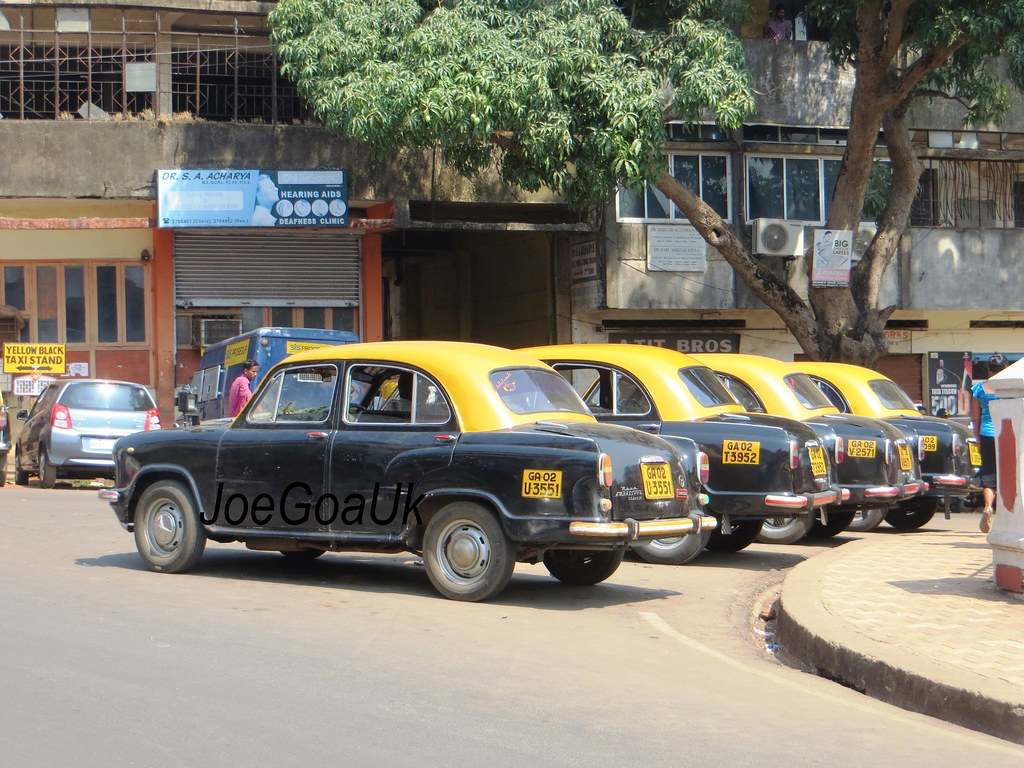
The taxi driver was called Satish Prasad and he drove a yellow Ambassador cab, a make ubiquitous to the streets of Kolkata. He was from a neighbouring state and had come to the city at an early age as a migrant worker and never left. A lanky fellow with sunken eyes, a life of struggle was etched on his face as prominently as the ravines of the Chambal valley. He was in his mid-forties and had little education. He chewed gutka* all day and murmured under his breath while driving his car. He lived in a decrepit one-room house with his widowed mother, wife and three children.
The neighbourhood where he lived was a sketchy one but the rent was low and that was all he could afford. He didn’t make enough money from his taxi to live a comfortable life, just enough to put food on the table. A large part of his earnings went to the bank every month as repayment towards the loan he had taken to purchase his taxi. To make matters worse, a new phenomenon had taken over the city, app-based taxi services. One could book a cab from an app on their smart phones. A few clicks and a taxi would be waiting at the doorstep. Convenient! The rise in popularity of such cabs increased competition for conventional yellow taxis and his income dwindled further. Satish had only hatred for app-based cabs and often felt the urge of crashing into one with his old Ambassador in a fit of rage.
Misfortune often strikes when one’s already deep in the gutter and misfortune struck Satish like a bolt of lightning, sudden and fierce. His eldest child, a ten-year-old boy, had been diagnosed with a tumour and surgical intervention was an immediate necessity to save his life but that was not all, the cost of the procedure was far beyond anything he could afford. He had no one to borrow the money from or no other means to acquire it. All he could do was spend sleepless nights, tossing around on the bed like a ship at sea in stormy weather.
Sujata was perceptive and noticed something amiss with Satish during her regular morning ride to the office. He seemed distracted and his murmuring under his breath had intensified. On hearing of the situation with the child, she was concerned and offered to loan him the amount. Satish was thankful to hear that and felt a momentary sense of relief but the respite was short-lived and by evening, his worries were back to haunt him. A loan is a loan, something he would have to repay. He was hardly able to keep up with the monthly instalments on his car loan. The prospect of sinking deeper into debt made him cold.
Desperation soon turned to darkness and he started having twisted thoughts. Diabolical schemes inundated his mind. The focus of his thoughts now turned to Sujata Sen and her offer of the loan. If she was so concerned, the lady could have just given him the money and not a loan, after all, she was senior government official with a fat salary and no one to care for in the whole world. Why was life so unjust — people who need it have little money, and people who don’t, have more than they require.
Sinister thoughts kept circling in his mind like vultures in the sky over a dying animal. What if he took the money and didnot pay it back? She lived all alone. He could sneak into her apartment at night with ease. He could pick the lock on the entry door. She knew about his difficulties and would be suspicious of him if he stole the money so he would take care of her too. He could do that; she was a frail woman, a cripple. He could strangle her, suffocate her… at this point he did not want to think this through any further, he would do what needed to be done to save his child.
It was the night of the new moon and people at a nearby temple could be heard worshipping the goddess Kali. Satish picked the lock and crept into Sujata Sen’s apartment as he had planned. She wasn’t home, possibly at some neighbour’s place. He hid in a corner and lay in wait. She arrived soon after, had dinner and went to bed with a book and fell asleep in some time. The reading lights were still on.
Satish approached her bed with caution and stood there, her face visible in the reading light. His form like an ominous shadow gazed down at her. His heart pounded louder than the drums they were playing at the Kali temple. His grip was strong from years of clutching the steering wheel of his car and his palms were coarse as sandpaper. He had to place his hands on her slender neck, clench his teeth and squeeze. It would be over in a minute. His mind was in frenzy and his body…strangely unresponsive! His hands felt heavy as rocks and would not be lifted. He froze! He muttered a curse; he could not do it, he could not kill. He fell on his knees and sat beside the bed. He buried his face in his coarse palms as tears rolled down his face and time stood still for him. After a while, the feeling of being weighed down was gone and he could move again. He left the room, as softly as a feather drifting to the ground.
Sujata Sen was ready for office the next morning but Satish was nowhere to be found. She tried to call him on his cell phone but the calls went unanswered. She had never been late for office and today wasn’t going to be an exception. For the first time in her life, she booked an app-based cab. It was easy, just a few clicks. The cab arrived on time, the ride was comfortable, the car was of a new make, the engine barely audible and she did not mind the fare which was slightly higher than the usual rate. Satish did not arrive the next day either or any other day since and his cell phone was always unreachable. Sujata thought about it for a few days but life moves on and app cabs served her purpose well. Just a few clicks, truly convenient! More than a year had gone by and it was now a familiar routine for her.
It had been a long day at the office and Sujata Sen was ready to leave for home. As usual, she had booked a cab using her cell phone and was on the sidewalk waiting for the cab to arrive. It was a white sedan, a new model and the car was in excellent condition. As she was about to open the door and get into the car, the driver disembarked and came up to assist her, perhaps due to the fact that she had crutches.
To her great surprise, it was Satish, he was driving an app cab now. Once inside, Sen could not contain her curiosity, “Satish, where have you been, I tried to call you so many times? I even asked around! How’s your son?”
“He underwent the surgery. He is better now Madam,” replied Satish.
“I am truly relieved to hear that. I pray that he may have a long and healthy life.”
“With your blessings Madam…”
“And your yellow Ambassador cab, where’s that? You always hated app cabs and now you’re driving a new model yourself,” asked Sujata.
“Madam, it is fate, destiny! In my desperation, I took a loan from some bad people, loan sharks, at a high rate of interest, for my child’s treatment and had to pay them back all the money I borrowed and the interest or else they would harm me and my family. I had no money left to pay the bank. The recovery agents from the bank arrived one morning and hauled my taxi away. Since then, I drive this app cab. It belongs to a businessman who owns a fleet of cars. I get a fixed salary every month and a bonus once a year. I have no loans to repay. It is much better this way Madam, I sleep better at night, I am happy!” replied Satish.
Sujata was surprised at the turn of events and asked, “I did tell you that you could borrow the money from me! You would not have to pay an interest and you could repay the money at your convenience, I would never chase you for repayments. Why didn’t you come to me?”
Satish nodded his head knowingly and smiled, “I was foolish Madam and life had a lesson in store for me!”
As the taxi pushed forward along congested roads, Sujata noticed that Satish was not as absent minded as before and no longer murmured under his breath while driving. His life seemed to have taken a turn for the better.
Avijit Roy is a software developer by profession and runs a software firm but apart from what he does for a living, he is a passionate storyteller. The forms of expression he prefers for telling a story are film making, photography, music and writing although he has only recently started making attempts at getting his work published. He has participated and won a few accolades at photography contests and written, directed and shot a short film which played at several festivals. In the past, he was part of a jazz fusion band where he played the guitar. He is also a loving husband and a caring father to a daughter.
.
PLEASE NOTE: ARTICLES CAN ONLY BE REPRODUCED IN OTHER SITES WITH DUE ACKNOWLEDGEMENT TO BORDERLESS JOURNAL.
Thirty years ago, she boiled an egg in it for her husband who died a week later. There is no link between his untimely demise and the egg boiler, but it was special because the last egg her husband ate was boiled in that egg-boiler. It was respected as an important kitchen appliance and showcased in the cabinet like a trophy. Every year it was taken out for a customary wash, but no egg was boiled in it. She wiped it clean with a soft cloth and plugged it in just once to check whether it blinked red or not. She was happy that the egg boiler was still alive and blinking.
I was not fond of having boiled eggs, so I never used it. But sometimes I wonder how she would have reacted in case I had tried to boil an egg in it. Maybe, get hysterical and call it sacrilegious. Maybe, dub it inauspicious to use anything belonging to the deceased. This seemed unlikely because I have defied many superstitious practices and still managed to escape her outburst. Isn’t there hypocrisy in the fact that the possessions of the deceased are classified as valuables and disposables? Ever seen a gold ring belonging to the deceased getting dumped in a trashcan by the roadside or tossed into the bowl of a beggar on the streets? Mighty inheritors of family wealth relinquishing their right to inheritance.
Several items belonging to my late father have fascinated me for various reasons. I have used them with the proud feeling of inheritance, without traces of guilt. I did not fear his ghost would stake an ownership claim or force me to surrender those items – as brigands do at gunpoint. Monkeying around wearing his monkey cap during winter for the past twenty years has been a regular indulgence. I have walked down desolate streets in the dark without feeling the spooky chills. Encountered stray dogs and feline creatures but they did not lose composure in front of my covered face. My jovial spirits did not let them sense any paranormal activity around me.
The camera was one of his prized possessions that conveyed his immortal passion for images, so I did not let it go. More than a tribute to the artist, the camera helped me learn the ropes of photography. On a bright sunny day, I took it out from the snug corner of his almirah where it was kept wrapped in a bath towel with naphthalene balls for company. A historic day that marked my tryst with photography. I did not find any attention-seeking ghost in the viewfinder when I focused on beautiful women walking down the street. No phantom chiding me for ogling at them with my father’s camera. Deep within, I felt my father would be blessing me with flashes of creativity to click models of international repute someday.
There were many neckties in my father’s wardrobe. I kept the silk ones with me and gave the rest to the gardener who found an easy way to become a Sahib in his locality. I wanted to wear a necktie during job interviews, hoping to derive confidence from his symbolic presence, to help me sail through smoothly. When I got rejected in interviews despite wearing my father’s necktie, I realised his necktie was not a source of blessings anymore. Perhaps I should attend wild parties wearing his necktie and seek the attention of lissome beauties instead. The casually dressed guys were devilishly cooler to flirt with while those in formals were looked at with cold prejudice – as salesmen selling water-purifiers and chimneys.
Another irresistible item belonging to my father was the fancy denim jacket he was gifted by his sister from Canada. Since it was in mint condition, I kept it aside while my mother donated all his clothes to the elderly guard with six grown-up sons. When it was discovered in my almirah, she did not recognise it or maybe she pretended not to recognise it. Her strategy to overlook where she did not wish to interfere explained her response.
She had lost the ground to criticise me for being attached to my father’s worldly possessions. She used his leather suitcase for long-distance travel even after his death. She could claim it was hers because it was also used when both of them travelled together. Probably the shared memories related to the suitcase made her feel safe during long journeys – as both of them carried their clothes in that suitcase. When she opened it for packing her items, I saw her using half the space while the other half was left vacant. She was still following the rule of giving equal space to her partner even though he was not around.
Dumped in her dark, unlit storeroom was an aluminum trunk full of letters and sepia photographs of the dead. I had seen many of them during my childhood days and had faint memories. She kept those photographs and letters away from my reach. She followed a balanced classification of good and painful memories. Many times, I wanted to see the stuff, but she refused to grant me access. She kept it locked as if the simple act of privacy would keep the past locked as well.
She believed the son follows the father and so she kept his beer mugs and wine glasses in the cabinet. She was surprised when I turned out to be the first teetotaller in the family. After I confirmed I was not going to try it ever in my life even if I was spurned in matters of love, she was relieved and merrily gifted the entire set to the cook.
Twenty years of attachment is quite a long period and I can say it is largely over for me. During a recent clean-up drive, I tried discarding the egg-boiler but was strongly opposed by her. I told her I do not eat boiled eggs so there was no point in retaining the egg boiler as a relic from the past. She tried to make me understand by emphasizing that I have to buy a new one in case I changed my mind later. This was certainly an example that established her attachment was still far from over.
.
Devraj Singh Kalsiworks as a senior copywriter in Kolkata. His short stories and essays have been published in Deccan Herald, Tehelka, Kitaab, Earthen Lamp Journal, Assam Tribune, and The Statesman. Pal Motors is his first novel.
.
PLEASE NOTE: ARTICLES CAN ONLY BE REPRODUCED IN OTHER SITES WITH DUE ACKNOWLEDGEMENT TO BORDERLESS JOURNAL.
Rinku is travelling in a train for the first time. The commotion outside doesn’t seem to bother her. Her Appa* has managed to make her stand beside the window inside the small room. There is something written on the door, but she cannot read and doesn’t sweat the details anyway. She has never been to a school. Her Appa says she is too precious to go to one. And the way her neighbour Partik shrieks in the morning, she is certain that school is not a good place.
Oblivious of the fact that there are no seats inside, at least not the ones you get in an actual compartment, she stands there holding the iron bars with seven fingers. No, five fingers and two thumbs. The remaining three fingers wrapped around her tikat*. Appa says it’s not the train, but the tikat that will take them to the place they were going. The tation* is a delight to watch. It’s like thousand spaces merged into one, each different from the other yet blending somehow. That so many people chose to wear red that day, she grunts in disapproval. She never liked red.
Not that she always hated red. It was her favourite colour last year for full three months. But then, things can’t stay the same, can they? It is even more difficult with colours. Her red ball had stopped being fascinating and Partik had got a yellow car. Yellow paved way to green only a month later when he wouldn’t let her touch the car.
Now she has decided that she will never ask Appa for a car. He was right. This train is so much bigger than the cars that ply on the road. No wonder Appa hated driving the car for Saheb*. But being the nice man that he is, he still did. Maybe the Saheb didn’t know how to drive. She also finds it strange that Saheb’s wife cannot cook. Partik’s mother has to go to their place for cooking lest they starve — poor family!
Ever since he came home yesterday, Appa had started packing frantically. His face was swollen. Just like Rinku’s when she is sulking. Appa’s hand was bleeding too. Another reason not to like red. She didn’t mind leaving the place. It was not their home, Appa had told her. She doesn’t remember what her home looked like. There might have been a television. Maybe not. She was sure there were trees. She would miss playing with Partik though.
The train has started racing between the tracks. A sense of exhilaration has engulfed Rinku. She wished Partik could see her inside the train and she could see the look on his face. Everything is perfect. Well, near perfect. Only if the train was not red.
.
*Appa — Father
*Tikat — Ticket
*Tation– Station
*Saheb — Boss
Mehak Nain is a government servant. An avid reader herself, she loves to read books with her six-year -old. The views expressed above are personal.
.
PLEASE NOTE: ARTICLES CAN ONLY BE REPRODUCED IN OTHER SITES WITH DUE ACKNOWLEDGEMENT TO BORDERLESS JOURNAL.
People pour a bundle of money into drugstores or clinics
As they don’t lose the fat on their belly;
Is it Okay to do so
Among parents, brothers and sisters with one blood?
It is said that last summer,
Even houses to lay their body down became like the sea water
Owing to the indiscriminate bombing of the sky;
Where do they sleep
And can they eat even any porridge?
.
Cry, the fat Southern land.
Cry on your knees
Not making any excuses.
Don’t you hear the groan
Of your starved parents, brothers and sisters?
Cry for South Korea
North Korean land,
Those whom you trampled with military boots
Shedding cannonballs
With your blood of hatred
More than sixty years ago:
Who were they to you?
.
Those living in the South
Whom you want to burn
Through the fire sea
As your blood of anger hasn’t cooled
Although they send rice to you:
Who are they to you?
.
The bitter enemies
Whom you want to kill
With missiles and nuclear bombs
Gnashing your teeth:
What kind of mistake did they make?
.
Until when will your great leader be bragging
A strong and prosperous country,
And the Earthly paradise,
While the people are bawling out
Due to their starvation
As days go by?
.
Cry, the northern land.
Cry beating your heart,
Not making any excuses.
Be young children
And cry your eyes out
Looking at the blue sky.
.
Wansoo Kim has a Ph. D. in English Literature from the graduate school of Hanguk University of Foreign Studies. He was a lecturer at Hanguk University of Foreign Studies and an adjunct professor at Incheon Junior College for about 20 years. He has published 5 poetry books, one novel, and one book of essays. One poetry book, “Duel among a middle-aged fox, a wild dog and a deer” was a bestseller in 2012, one page from the book of Letters for Teenagers was put in textbooks of middle school (2011) and high school (2014) in South Korea, and four books (Easy-to-read English Bible stories, Old Testament(2017), New Testament(2018) and Teenagers, I Support your Dream”) were bestsellers. He was granted a Rookie award for poetry at the magazine of Monthly Literature Space in South Korea, and the World Peace Literature Prize for Poetry Research and Recitation, presented in New York City at the 5th World Congress of Poets(2004). He published poetry books, “Prescription of Civilization” and “Flowers of Thankfulness“ in America.(2019), received Geum-Chan Hwang Poetry Literature Prize in Korea(2019) and International Indian Award(literature) from WEWU(World English Writer’s Union)(2019).
.
PLEASE NOTE: ARTICLES CAN ONLY BE REPRODUCED IN OTHER SITES WITH DUE ACKNOWLEDGEMENT TO BORDERLESS JOURNAL.
The stillness of night spelled doom for the Bellamy family as the light of their home flickered only to be extinguished tragically someday. The neighbourhood echoed with a cacophony of strange moaning sounds each night. Everyone had ostracized them ever since their only child was declared a witch or to put it more plainly, ‘demon possessed’. Neurologists failed to find a remedy and so they termed it as a form of epilepsy. Neighbours vouched seeing her walk barefoot along isolated lanes, communing with spirits while some saw her in the small of night eating bugs and lashing herself with a serpent. They attributed these strange occurrences to paranormal visitations or an entity that had taken possession of her body. A ghastly expression now painted the contours of her cheeks that bore perpetual scratch marks on them.
I had been practicing exorcism for a year, without any professional training. When these occurrences crawled into my ears, I became insanely curious to meet this girl. A shop vendor who was pulling down his shutters to the setting sun, guided me to their home. I had carted all the paraphernalia I required to vanquish these diabolic spirits, hoping they wouldn’t be needed. But there she was in a catatonic state looking at me from the corner of her eyes, manacled to her bed. I was horrified to see her tied up with a thick rope so I requested her parents to release her. They quipped, “It is a regular ritual now. We have to strap her up or Satan will take her away.”
Not convinced by their logic, I asked my man Friday, to light candles so we could create a sombre atmosphere. Aromatic incense sticks were burnt that swallowed up the nauseating stench emanating from the dark room. The girl gnashed her teeth and laughed mockingly on observing the crucifix in my hand. Her hair hung loose like the wild untethered fury of the Niagara below her shoulders while her head spun like a ferris-wheel. Her body shook convulsively as I began to chant the beads of the rosary. She tattooed her hands with feline claws, digging deep into her skin until streaks of blood dripped from both arms. The two white balls of eyes upturned, without visible corneas. She held her neck, trying to release herself from being strangulated by an invisible force, all the while hissing with guttural sounds. She grabbed her thighs, pounded her chest and contorted her restless body while her throat swelled up like a balloon. I began to work her up into a state of hysteria by clicking my fingers and summoning the demonic spirits to leave her body. I murmured a few verses from the scriptures while invoking them,
“Be quiet, I rebuke you in the name of the Almighty. Leave her alone, I command you.”
Within seconds, the tongues slithered out speaking strange languages, hissing and cussing. All I could understand was, “I am Lucifer,” “I am Aamon,” “I am Agares,” “and I am Belzebub.” “We have taken possession of what is our inheritance and we are not leaving.” They spoke in multiple tongues all at the same time. It was for the most part gibberish to me.
But I continued to mutter words from the holy book and within seconds, the girl’s movements became more chaotic. Her cheeks turned ashen, face contorted, with eyes charcoal black and teeth laced with blood and traces of chewed up skin almost like a revenant. Demons hurled her up and down in the volcano of her head. Twin black pellets rolled in their sockets while her hands were splaying frantically in revulsion. Soon, a violent seizure gripped her when I began uttering my rosary prayers. I sprinkled holy water on her forehead to expel the spirits but they wailed inside, persisting to be left alone. Her body broke into a feverish sweat as rivulets of blood splattered out from her raw wounds. I bound the spirits with a final prayer of deliverance, ordering the powers and principalities resident within her to loosen their control immediately. After six grueling hours, I heard the wind howl, rustling the four shrieking demons into the blanket of night. An owl perched upon a tree screeched, to chorus their departure as it glared at the sky.
The cavernous gloom melted away suddenly as the first kiss of sun streamed through the dewy-lipped morning to dispel all the forebodings of the night. Vanessa’s catatonia had withdrawn. She collapsed, almost in a comatose. On waking, her eyes wore innocence once more. The ethereal calmness of her smile returned, injecting hope into the cold dark walls of a home that shut its doors to sinister visitations forever. The night buried its evil in graves of rotten leaves only to be resurrected again in another resident of the neighbourhood.
.
Vandita Dharni is an acclaimed poet, scholar and a gold medalist from the University of Allahabad. Thereafter, she got a Ph.D. degree in American Literature from the same University. Her articles, poems and stories have been published in journals like Criterion, Ruminations, GNOSIS, HellBound Publishing House and International magazines like Immagine and Poessia, Synchronised Chaos, Sipay, Fasihi and Guido Gozzano. She has published three anthologies.
.
PLEASE NOTE: ARTICLES CAN ONLY BE REPRODUCED IN OTHER SITES WITH DUE ACKNOWLEDGEMENT TO BORDERLESS JOURNAL.
Nabanita Senguptagives us a glimpse of life in a sleepy little town, long before social-distancing set in
Those were the days of large-hearted people, living in homes with large windows and even larger balconies and sleeping in large beds. Life was different, quite unlike the matchbox sized measured lifestyle of modern society. Raya, growing up in those times, was used to that free flowing largeness of existence, not necessarily reflected always in their material possessions. Their house, as she always remembered it later, had huge windows in each of the two rooms, that were themselves not too big. A large part of both the rooms was taken up by a bed each, larger than what you find in the furnished apartments of today. Sitting far from Ghumi now, Raya often wonders at the disproportionate decor of their homes in those days.
Raya’s father was particularly large hearted when it came to hospitality. Raya doesn’t remember a single month when they did not have relatives visiting them. It was something they looked forward too as well. Though it meant cramped living spaces and queuing up for the solitary toilet, the fun compensated for all the inconveniences. And since her mom was an excellent cook, guests also meant lip smacking delicacies. If it were not the relatives visiting from other cities, there were local friends gathering for an evening adda*.
Luchi
Since both her parents loved large gatherings, most of the weekends saw their friends and families coming over for evening tea. And those teas were almost as elaborate as dinners. Occasions were numerous too – a visit from someone’s kin, end of children’s examinations, someone’s return from a travel or simply because they felt like meeting up. Raya loved to see the women, her mother’s friends huddling in the kitchen, rolling out luchi* or spreading dosa* batter, laying out plates and also serving the juiciest pieces of gossip with equal élan. Or at times, they would be just pouring out their woes in the warmth of a bonhomie and empathy of like-minded friends.
Dosa
Occasionally, men too helped out with food but mostly, kitchen was a space that these women kept for themselves. And children let go their boisterous spirits and ran around the house, laughing at the silliest of pretexts. At the end of such gatherings, Raya found her parents dead tired yet thoroughly contented with the day.
But there was a small glitch that at times interrupted the pleasant flow of these gatherings. And like every small issue that festers into something foul if left untreated, this onetoo took an unpleasant turn. Raya’s mother refused to entertain any guest till they had a new dining table, large enough to accommodate at least eight people. The one that they had now was a table for four, ancient and somehow supporting itself on wobbly legs. It posed a threat to the food that was heaped on it during such gatherings. Raya’s parents, especially her mother, were one of those kind spirits of the yester world who believed in smothering their guests with delicacies. And all painstakingly cooked by her! Her culinary skill was much appreciated. But the process of sitting around the table to eat had to be executed with utmost care, taking into consideration its rundown condition.
Those were the days before the instant gratification provided by plastic money and a ready credit offered by banks. Each purchase required careful planning because anything bought was considered to be an investment for a lifetime. The quality of the product was the most important criteria because durability was a must. Disposability had not yet become the norm. So, after almost a month of deliberations and discussions, Raya’s father went to the carpenter to place his order. Unlike big cities, small town Ghumi did not have any readymade furniture stores. In a place with a three thousand odd population, it would not have been commercially viable.
Raya knew that placing the order for the table would mean a visit from Mr. Sankar of Universal Furnishings to take the required measurements over umpteen cups of tea and discussions ranging from the cold war to children’s education. Just one-eighth of the entire conversation time would be dedicated to the discussion about the furniture to be made, its design and details. Raya enjoyed these conversations which seemed to move along serpentine tracks, changing courses or moving in circles, but always animated.The precocious mind of the little girl remoulded the adult discussions that she heard with utmost focusto give them a place in her own world of fantasies. So Shanker uncle’s visit was always one that Raya looked forward to.
And this had always been the ritual with every piece of furniture they procured. This table was not going to be an exception either. After the ritual of ‘ordering’ the table came the proverbial waiting period. Everyone in Ghumi knew what this wait meant. Normal deadlines never worked for Mr. Shanker and there was no account of the time that he would take to finish a product. If it was not a labour crisis, it would be some illness at home or some major existential crisis that would always upset the so-called deadlines of Mr. Shanker.No queries, no amount of harsh words or coaxing could affect the middle-aged proprietor of Universal Furnishing;he bore them all with equal fortitude and a smiling demeanour. But his products were of an excellent quality and that was what had helped him survive in his trade. The Ghumians had long resigned themselves to the fate of waiting.
Anyway, once the order was given and the advance paid, the gloomy cloud slowly faded away from Raya’s home and once again her mother agreed to have their regular guests for weekend evenings. As she served them food on the rickety table, she maintained her calm in the hope of a new one in the near future. The guests too continued with their cautious handling of both the food and the table.
After a long wait, that day also arrived when the ‘table’ entered Raya’s life. Five employees of Mr. Sankar came with a huge cardboard wrapping and four table legs tied together. They worked for almost an hour to fit the ‘table’ and once done, Raya and her parents were left speechless! A six feet by five feet dining table was not what one got to see every day and that too in an apartment measuring only 800 square feet. The ‘table’ took up almost whole of the room leaving little space for anything else.The ratio of the room size to that of the ‘table’ accentuated the latter’s hugeness. Raya cast a furtive glance at her mother and could immediately detect a sign that spelt danger. She just waited for the catastrophe to happen. But Shankar was perhaps a magician, to her complete disbelief, no tsunami shook their house that day! To her mother’s complete disbelief and boiling anger, Mr. Sankar had just one thing to say – “Bhabhi*, I thought you wanted it large! It is large enough to accommodate a dozen diners comfortably and more so if need be. You can also put it to other kind of uses.” The last sentence left her completely flabbergasted and was one of the rarest occasions where Raya saw her mother totally tongue tied. The ‘table’ came to stay though they did not even know what Mr. Sankar had meant by ‘other uses’.
But they did not have to wait long for the answer. Later that week when six of Raya’s cousins from Kolkata sprang a surprise visit on them, the ‘table’ happily got converted into a makeshift bed too. Since there were only two beds in the house, one for themselves and another for guests, one of her cousins, in awe of that huge ‘table’, suggested that two of them could sleep on it. Raya’s mother who had already given up any rational expectation from this giant of a wooden construct did not even bother to argue. And the ‘table’ happily went on to serve its ‘other’ purposes.
*Adda: An informal conversation
*Luchi: Deep-fried bread of fine flour popular in Bengal
*Dosa: Pancake originally from Southern states of India, made of ground rice and pulses
*Bhabhi: sister-in-law, a common form of addressing a woman acquaintance in Hindi speaking areas.
Dr. Nabanita Sengupta is an Assistant Professor in English at Sarsuna College Kolkata. She is a creative writer, a research scholar and a translator. Her areas of interest are Translation Studies, Women Studies, Nineteenth century Women’s writings, etc. She has been involved with translation projects of Sahitya Akademi and Viswa Bharati. Her creative writings, reviews and features have been variously published art Prachya Review, SETU, Muse India, Coldnoon, Café Dissensus, NewsMinute.in, News18.com and Different Truths. She has presented many research papers in India and abroad.
.
PLEASE NOTE: ARTICLES CAN ONLY BE REPRODUCED IN OTHER SITES WITH DUE ACKNOWLEDGEMENT TO BORDERLESS JOURNAL.
And the hapless ‘you’ dies a thousand living deaths!
.
Shyamolima Saikia is an Assistant Professor in the Dept. Of English, Gargaon College, Sibsagar, Assam. Prior to this, she was serving as a lecturer in the Centre for Juridical Studies, Dibrugarh University, Assam. She has also worked as an Academic Counsellor in the Directorate of Distance Education, Dibrugarh University. She has presented papers in various National Seminars and International Seminars. Besides editing a number of books, she has also published a book of poems titled Palimpsest. Moreover, she has also contributed several poems and few short stories in several regional dailies, magazines and e journals.
.
PLEASE NOTE: ARTICLES CAN ONLY BE REPRODUCED IN OTHER SITES WITH DUE ACKNOWLEDGEMENT TO BORDERLESS JOURNAL.
From the conflict ridden state of Kashmir, RayeesAhmed writes of hope and restoration of peace. He translates his own poem, Ab tak Toofan, from Urdu to English.
Neither this torrential rain has the will to stop
Nor the monsoon sky has the will to light up this darkness!
.
God only knows what happened to the skies,
That breaks and explodes on us!
Maybe the sky is bleeding and wailing in agony,
As the Earth is clutched by the claws of oppression
.
Is this the end?
Perhaps there may be another tempest broiling.
Yes, I could see this droplet of rain encapsulating the Psalms of freedom
Neither does this rain want to stop.
Nor the sky light up to burn this darkness.
.
This will not stop!
How on Earth will this mayhem stop?
When innocents were killed and buried under mountains,
And the grass blanketed the pain and cries choked inside the soil
The Earth was bloodied with murder and arson!
From that wetness of blood bloom new voices.
Voices of wisdom and humanity will resonate freedom,
new slogans of humanness will echo through the mountains.
.
Yes the mother Earth nurtures us with her milky dews,
The trees wait to witness the secret moves
Of a whirlwind that brawls faraway!
The time will stop when doomsday arrives,
Yes I know this rain will bring back a Hurricane…
.
The thunderous clouds looming over with war-cry!
Yes this thwarting rain is bringing back the storm
And will wash away the pain and bloodshed,
uncover, and unveiling the nameless tombs and free the souls.
.
Yes, these Dark clouds will clear up for a new Dawn
Yes, this New sky of Freedom will prevail Peace
the new sky will bring warmth of Hope and Life.
.
Rayees Ahmad is a budding writer and poet from Kashmir. He has bachelor’s in mass communication and masters in Peace and Conflict Studies. He hopes to add a new colour to Kashmir and the conflict it faces through his poetry. He has written many poems and articles on the Kashmiri diaspora.
.
PLEASE NOTE: ARTICLES CAN ONLY BE REPRODUCED IN OTHER SITES WITH DUE ACKNOWLEDGEMENT TO BORDERLESS JOURNAL.
Everyone knew the apocalypse was coming someday. After all, the Christ told us the endtimes were due and he left a few signs for us to look for. Some thinkers speculated that the endtimes already happened during the times of Paul the Apostle. Jewish scholars often tempered their arguments against the divinity of Jesus with rhetoric concerning Paul’s eschatology.
In the year 2025, it was announced that the final days were upon us. Television anchors and newscasters were in doubt — how could it be? The Holy Scriptures were right? The secular world was aghast in outrage. God could not come to our planet. He was made of fairy dust and he corrupted our world with his dogma. Freedom was a joke under his thumb. The concept of the endtimes had declined in popularity and people developed their own religions and thoughts around new concepts. St. Paul’s eschatology indicated that the end already happened when Jesus was buried and resurrected. No one, I mean no one, trusted the announcement of the endtimes.
It came over a large speaker.
“Attention! Attention all civilians! Civilisation has reached maximum corruption. We are the most decadent race in existence. Humanity must be redeemed, and the world forgotten. There is something new ahead of us. The end is near! The end is near! Beware of falsehoods and faithlessness. We are in the final stages of civilised decay. Continue on your path. Do not renounce your dreams. Salvation is at hand. Beware! The future of humankind is above us.”
After the dozens of wars recently fought, the birth of neo-colonial far right identitarian policy imposed from above, the races were in riot against one another. There were continuous earthquakes and floods all over the world, increase in diseases and famines, poverty at a height not seen in hundreds of years, and cruelty among the masses at its worst ever, hopelessness flooded humanity in a way never seen before. Even the Scripture was tossed into the fire. People doubted their own faith and deities and stopped trusting one another. The apocalypse would emerge soon.
The spontaneous emergence of fear and desolation accompanied by hope and revelation: the apocalypse. How can these two streams of being flood the universal human soul at once? They had for thousands of years. The Lord picked up these trippy vibes in the air—the twelve currents of IsReal, mistranslated into twelve tribes, were actually states and phenomenon, not political entities. However, the future of human awakening bled into the text of Scripture and the word “tribes” became the source material for Zionism. The shifting realities within the human soul, dubbed “IsReal”, became manifest in the country of Israel in 1948. The United Nations reluctantly acknowledged the country as its kibbutz were struggling to fight off Arab warriors. When the British visited the small villages to assess the situation, they were chased off by Jewish farmers who believed strongly in Israel. For years, they had toasted to “Next year, in Israel.” Now the Zionism they dreamed, that beautiful mountain of the soul, became a political reality and utopian visions melded with truth in splendour.
To his chagrin, Michael Drezier lost his doubt. A stern atheist for most of his life, he decided to visit Israel to see this new political reality. If it was everything said of it, he would turn over his agnosticism for good. He would convert to the ways of Christ. God was already at work on his destiny. His head was blessed with golden fire.
Michael spent six weeks in the country of Israel in the year 1952. This was prior to the Six Day’s War. Hostilities were not at their peak. Yet Michael talked with the Prime Minister.
“We all believe this is God’s land and we are God’s people. It is our holy mission, we tell others, to bring God into the world,” PM Ariel Bleikowitz told Michael. “The Jewish people are survivors. In your country, a survivor becomes a whiner. We always had hope that God’s justice would come to fruition through us.”
Michael asked, “What if you are destroyed? Do you have enemies? Why the violence?”
“We must protect what we have. God ordained our mission. He gave us this land. We are bringing the next state of being into the world as we did when we wrote Scripture.”
“But Scripture, as you call it, is human. A human hand held an instrument and composed it. It was edited, translated, and anthologised by humans. How am I supposed to believe it is truly God who speaks from it?”
“Much of what the Scriptures told was meant for us, strictly. Books were removed that did not contain the universal message of salvation.” PM Bleikowitz blinked sullenly. She didn’t really have the answers.
“But why do you not believe in Jesus Christ? Most of the Western world believes in his divinity. Even the Arab people believe in him as a prophetic voice. However, you deny him as Savior.” Michael paused. “If he isn’t the Savior of humanity, all of Scripture is based on pretense as I have often argued.”
“Michael, I consider the Gospel to be a kind of midrash.” She paused and scratched the sweat from her brow. “I cannot explain this. It is a mystery. The truth is Jesus was one of us—a Jew. We are tired of being slaughtered and mocked. He is the very face of us. Was he real? As real as Israel. I cannot confirm any more than that.”
The sun shone into Michael’s eyes and he grew tired and impatient. As an atheist, he was often rebuked concerning his views on Biblical texts and it annoyed him. He couldn’t buy that God descended and expected his worship, him, a small man in a lousy world.
“You know, we are a tiny fraction of this entire being in life. We are small creatures cast by God into a large universe. We aren’t alone, though, I know it.” The Prime Minister smiled, deep sorrow in her eyes. “The pogroms were bad enough. I had some grandparents who were tortured during them, their houses burned to the ground. A certain mystic in Russia advocated Jewish extermination. That book—Protocols of the Elders of Zion? He wrote it. To dismiss our mission. The world hates us. Why, Michael? We are people trying to live. We want the best for everyone.”
Michael had tears in his eyes. In his heart, he felt for this person. She continued to talk to him, his ears open.
“After Hitler, what was next? Our people have grieved the loss of God’s land since before the Christian era. God promised return. We have returned.” Prime Minister Bleikowitz sighed. “I can’t discuss this anymore. Enjoy your visit.” She closed the curtains to block the light and heat from outside. She then looked Michael in the eyes directly, calmly. “Michael, it is the end. Don’t doubt this. This is my faith.” Something in her words struck Michael deeply. When he left her presence, he was not the same.
Late night, at his hotel Michael smoked a cigar. When it reached its final ash, he stuffed it into the ground and went to his room. When he got to his bed, he pulled a notebook from the drawer. He picked up the pen on the dresser and began to write. What he wrote is considered the last of the Solemn Prophecies.
War after war challenged the legitimacy of the State of Israel whose flag stood tall in spite of the death toll. As humanity rolled into the next millennium like a limousine into an impoverished neighborhood, fear escalated, and people lost their minds in the millions. Energies were at their height when finally, something happened that relaxed things. Hope sprang eternal.
Michael died and left the paper he wrote with his family. He requested it be opened on April 1, 2065 by the eldest of the sons. When the son opened it, he passed out on the floor. It echoed what had taken place for the previous 100 years and noted what would take place in the coming months. The text follows.
“Sons and daughters of humanity: a moment has struck me anew. The State of Israel will face war after war and will struggle relentlessly on Yom Kipper. The Suez Canal will be the end of the British Empire as we know it. After the wars, America will become the world power. After the year 2000, American power will begin its decline while the dollar remains steady. An unpopular president will be elected who will move the American embassy to Jerusalem, signifying an attitude that will dominate until the end of the world. Israel’s struggle to exist will end as the Son of Man returns.
In the year 2065, a plan will be unveiled yet to be disclosed. This plan will finalise the existence of humanity within the ideality of its preconceived intention, before darkness sets over its eyes. You will find this prophecy buried under the Hill of the Skull where Jesus Christ was crucified. It is there the contest of the endtimes will take place and determine the fate of the world.”
In November 2016, President Trump came into power. His hair slightly messy and numbers short at his inauguration, he still appeared suave and strong. He would be the one to begin the end.
II
President Trump had been locked in a cryogenic mold for the previous four decades. His mind, it turned out, was so brilliant that science needed to study it. His ability to negotiate revealed itself in his second term.
In November 2020, after the SCOTUS (Supreme Court of the United States) struck down multiple laws concerning reproduction that were abysmally stupid, President Trump was elected to a second term. The blue cities turned red with rage and began destroying everything. Riots went on for 30 days and 30 nights. Finally, the President issued a proclamation.
CNN reported in full. “My fellow Americans! Please do be bold and stop this despicable behavior. I do not plan to take your rights, your dreams. You may continue your lives with the rule of law sacrosanct. My first term was dirty with the Mueller report, the investigations following, the violence in Russia that annexed Ukraine, the entire world set ablaze after climate change was revealed to be a hoax. I promise you peace, so please have a seat. Come to the White House, pay me a visit. Send your emissaries. Let’s discuss. I have knowledge as revealed in the President’s book only I have access to. It is time to reveal the 12 secrets only I know, only other presidents know.”
This shook the country. Rioting stopped.
ANTIFA (Anti-fascist political movement) negotiated carefully with its allies to determine who would visit the White House on their behalf. Comrade G. Stern Woody was finally appointed. The leaders of the alt-right finally admitted they were a satirical art movement designed to infuriate the left, but even they appointed their own ambassadors to hear the 12 secrets. AFL-CIO (American Federation of Labor and Congress of Industrial Organizations) appointed Don Drummand to visit. Each organisation voted for their own emissaries to the White House.
President Trump cooked hamburgers himself. He said his wife made a “mean salad” for everyone. Everyone nodded delightfully as they stuffed their faces.
The President pulled the curtains and smirked. “Folks, you are here for a reason. Many wondered why I moved the Embassy, why I had Schiff assassinated, why I did all the things I did. Yes, I even dismantled the Federal Reserve. But I am not the one in control.”
“Mr. President, who is?” said Mr. Drummand. “If not the leader of the once free world, who?”
“I don’t know,” the President responded, “but I can say I know things. We are here to hear what I can reveal.”
Everyone nodded as they stuffed their faces.
“Most of the 12 secrets are irrelevant.” He pulled a piece of paper from his pocket. It was soft and wrinkled. He unfolded it carefully. “Sorry, it’s been washed a few times.”
The President spoke carefully and concertedly to the crowd of emissaries.
“The 12 secrets. I am going to give you the gist of the plot. Lyndon Johnson killed Kennedy. This signaled the end of the American Dream. Johnson was a Soviet spy all along. Nixon, the one I modeled my presidency after, turned out to be perfectly innocent. The entire thing was a setup. The powers created the illusion necessary to get him out of office before he saved the world. Nixon had a lot of connections. Reagan didn’t exist. He was a talking head on Animal Planet they just pasted a mask on. He didn’t even know the Star-Spangled Banner. Finally, the end is near.”
“Mr. President, what end?”
“The end of our world as we know. You know, the REM song.”
Within hours, the rioting stopped, the economy drastically improved, wars ceased completely, and everyone was happy until 2065 when the Solemn Prophecy was read. All faces turned sad.
Scientists revived President Trump so he could dig up the final prophecy.
“I’ve been asleep for decades! Call this beauty sleep,” he joked. They flew him to Israel. They had already dug under the Hill of the Skull and found a plastic box which was possibly 3000 years old, and it was sealed with dry bloodied fingerprints.
“The blood of Pilate.” The President wiped his teeth as he adjusted them. “Yes, that was one of the 12 secrets.” He paused for a moment. “Let’s sing the Star-Spangled Banner.” The world sang.
The President solemnly opened the box. The lid was tight. Finally, his frail hands lifted it as it broke from the box itself. He wiped the dirt off. He pulled a scroll from the center of the box. “The Seventh Scroll.”
Former President Trump read the writing.
“The contestants for God of the Year are Loki, Hammarabi, Venom, Jesus Christ, and Marcel Duchamp. How do you vote?”
The world voted for Jesus Christ.
“Jesus Christ, you are the winner. Please come forward for your trophy and give us a speech.”
Jesus appeared at the top of Mount Golgotha. He held the trophy in his hands. He lifted it. It was a golden hammer on marble stone. In the stone was carved “God of the Year 2056”.
Jesus smiled. “Thank you all for this award.” The world cheered. “I would like to thank the committee that sponsored this! Thank you, former President Donald Trump. Now, this contest promised to be the final one. I tell you, there’s one thing the world forgot years ago.” Everyone was silent. “I can’t tell you enough how unfair the world has been to you all. I know this, I suffered with you. I carried my cross and you have as well. Be a good sport! I have to tell you, though, you have everything wrong.”
There was silence as the world waited for Jesus to tell them why they were wrong.
“You can’t vote for God. This contest is a fraud.”
There was universal outrage.
“I have always been your god. You can’t vote for me or vote me out. Godhood is not a democracy. You can’t vote for the outcome.”
Jesus’s ratings fell significantly, constantly, for the remainder of the existence, yet he steadily remained God and did not give a damn.
.
Dustin Pickering is the founder of Transcendent Zero Press and editor-in-chief of Harbinger Asylum. He has authored several poetry collections, a short story collection, and a novella. He is a Pushcart nominee and was a finalist in Adelaide Literary Journal’s short story contest in 2018. He is a former contributor to Huffington Post.
.
PLEASE NOTE: ARTICLES CAN ONLY BE REPRODUCED IN OTHER SITES WITH DUE ACKNOWLEDGEMENT TO BORDERLESS JOURNAL.
.
Disclaimer: The opinions expressed are solely that of the author.






 Borderless