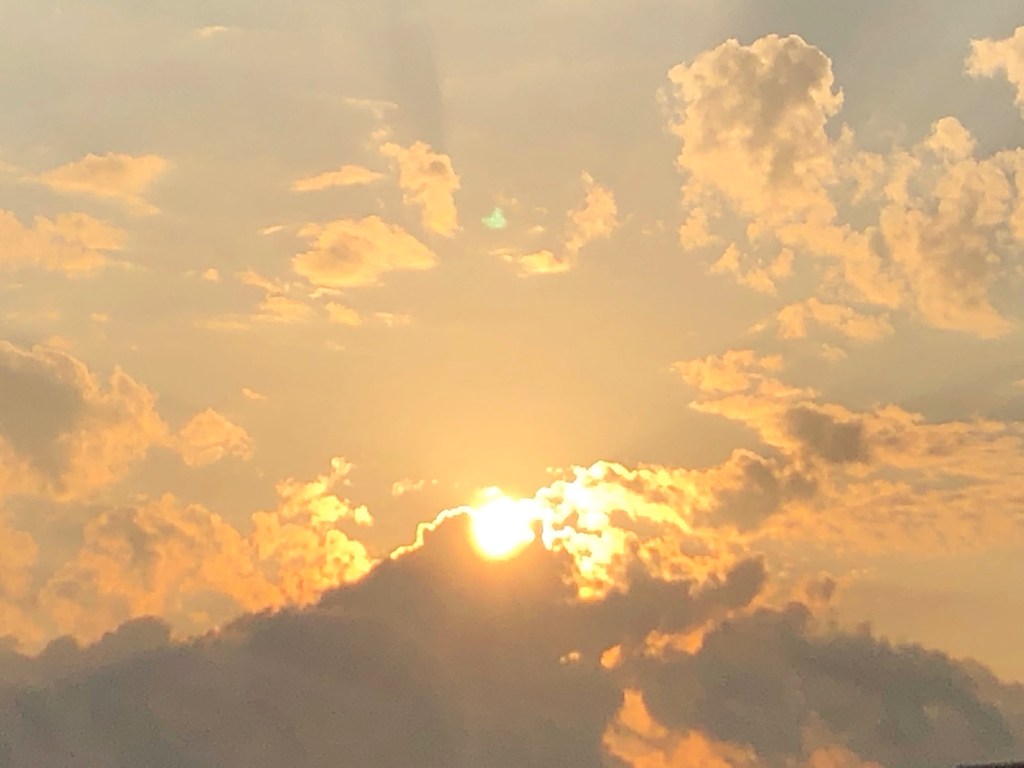
The sun moves through the sky as if it were pulling a plough, turning up clouds like dust. In the moonlight the river shines like a silver chain, with no relation to reality. The sudden cry of a dove might mean a plea for love, or a sound of grief. Truth is deceiving, if you don’t know what it means. A crow circles the sky. His harsh screams mock me. There’s more to life, he says to me, than what you choose to see.
George Freek’s poetry has recently appeared in The Ottawa Arts Review, Acumen, The Lake, The Whimsical Poet, Triggerfish and Torrid Literature.
PLEASE NOTE: ARTICLES CAN ONLY BE REPRODUCED IN OTHER SITES WITH DUE ACKNOWLEDGEMENT TO BORDERLESS JOURNAL
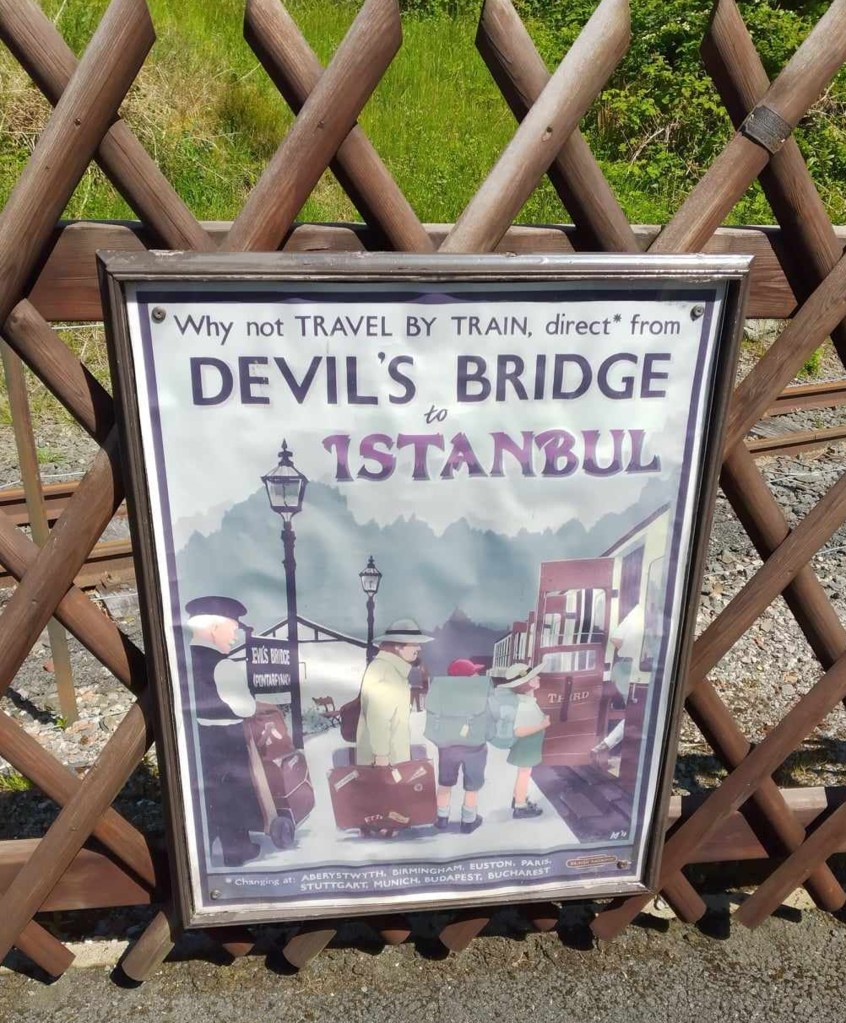
Why not travel by train direct
from Devil’s Bridge
to Istanbul? What makes you
so reluctant?

Is it because the journey along
the infernal ridge
strikes you as a little too risky?

And maybe the frisky insects,
the midges and mites
that bite the passengers during
the night, the driver too,
dissuade you from the exploit?

What if they bite his nose,
and he sneezes and loses control
and the train is wrecked
and spills its coals,
setting the world on fire?

Better to make the voyage
curled up tight
on a flying carpet,
fast asleep over the deeps
of the ocean,
the gentle rocking motion
more soothing
than a locomotive’s lurch.

On your magical perch
you will be safer
than a wafer in an ice cream.
I know this for certain
because I did my research,
making the trip
using the train at first,
and then in reverse
on a levitating curtain
which is almost
the same as a mystic rug.

Chug, chug, went the train,
flap, flap, went the drapes.
The latter was occasionally
harassed by seagulls,
the former attacked by apes.

But I know which I prefer:
the creatures
that have no fur.
If I really must be assailed
by beasts on the route
from Devil’s Bridge
to Istanbul, I’m not a fool.
Gulls can be placated
with bread, but apes prefer
to bite your head.

In fact my head still hurts.
But I guess it could
have been much worse:
we passed a cyclops
on the way. He was eating
a vehicle from a dish
on a tray, cursing
while slurping, and I saw
it was a hearse,
full of moaning bones
and telephones.

How horrible!
But we left him behind
soon enough
and apart from harpies,
ghosts, ghouls,
flying demon fish,
and one gigantic snake,
the rest of the
voyage was nightmarish
hardly at all.

I quaked just once
or twice or thrice
from that moment on.
I shut my eyes
for the sake of my sanity,
not out of vanity,
although my lids
have been called attractive
(and so have my toes)
by the denizens
of active volcanoes.

Yes, I can’t honestly
recommend travelling
by train direct
from Devil’s Bridge
to Istanbul.
It’s unlikely you will
survive the ordeal
without your mind
unravelling.

It’s spooky, perilous
and unwise,
the ticket inspectors
are strident
with mesmeric eyes.
The luggage racks
are never free
of spare forked tails
and tridents.

So I say:
find another way.
Please yourself
but for the sake
of your health
find another way!
Rhys Hughes has lived in many countries. He graduated as an engineer but currently works as a tutor of mathematics. Since his first book was published in 1995 he has had fifty other books published and his work has been translated into ten languages.
.
PLEASE NOTE: ARTICLES CAN ONLY BE REPRODUCED IN OTHER SITES WITH DUE ACKNOWLEDGEMENT TO BORDERLESS JOURNAL
hot dry summers are the norm for Australians whether they understand climatology or not – hot dry summers are for beach going swimming partying skylarking drinking – families friends holidays Christmas and New Year – festive meals of prawns and beer champagne and pavlova
hot dry summers now with more frequent extreme heat for longer periods extended harsher droughts empty dams and creeks and rivers – thirsty starving stock with bony carcasses and fish floating dead from lack of oxygen in muddy river pools
in hotter drier summers vegetation is easily burnt trees explode into infernos – burning embers fly far on fire-generated winds – extreme heat rising creates fire tornados pyro cumulus clouds generate dry lightning and more fire
in this dry year their habitats in flames about eight thousand koalas died – the population decimated no-one will ever know how many they move too slowly to escape the greedy flames – a billion mammals birds and reptiles perished – trees shrubs plants and grasses – ash – Gondwana rainforest reserves surviving since the dinosaurs half now burned
this hot dry year fires started different ways mainly dry lightning strikes – once a tree falling on power lines not so much arsonists or discarded cigarettes sparks from farm equipment or bored teens wasting their lives endangering others though all above were lit
this hot dry summer three firefighters already dead others burnt so bad they lie in city hospitals’ intensive care – first responders struggle with PTSD – unknown numbers of homeowners injured burnt bereft defending homes and livelihoods – those in evacuation centres who lost everything bar clothes they wore that morning struggle to imagine their next steps
this hot dry year survivors recount the unholy roar the palpable fear the wall of flame – spot fires embers ash – exigent heat burning exposed skin – smoke searing breath – the horror of dark red sky – the gates of hell opened wide so they say that even atheists prayed to save the souls of the dead
Lizzie Packer is an experienced freelance writer, and an emerging poet. At Adelaide College of Arts, Lizzie established the online creative writing program and led it for over a decade.
.
PLEASE NOTE: ARTICLES CAN ONLY BE REPRODUCED IN OTHER SITES WITH DUE ACKNOWLEDGEMENT TO BORDERLESS JOURNAL
As the newspaper forecasts rain,
and a dozen weather applications
predict a shower,
I cancel my plan to visit an expensive
cafe and reminisce about the June
rains from two decades ago
The afternoon gets a dusky look,
Swallows the sun and belches out clouds,
Transforms the hot loo into a cool breeze
I find myself waiting expectantly for
The rain that will hopefully wash away
the burdens brought by an early summer,
A summer that stole a blissful winter,
From children who wouldn’t know much
about leather jackets and warm gloves
The wilted flowers look like they would
never bloom again with vibrant hues
The tenderness of rain passes by swiftly
with soft pressed feet, and I don’t even
notice it amidst the tangles of a busy day
Unforgiving glare of the sun cuts through
the curtains, and I realise that this month
too, the paper boats of hope may not sail
Mitra Samal is a writer and IT Consultant with a passion for both Technology and Literature. She mostly writes poems and short stories. Her works have been published in Poetry Society (India), Muse India, Borderless Journal, Madras Courier, The Chakkar, and Kitaab among others. She is also an avid reader and a Toastmaster who loves to speak her heart out. She can be found as @am_mitrasamal on Instagram.
PLEASE NOTE: ARTICLES CAN ONLY BE REPRODUCED IN OTHER SITES WITH DUE ACKNOWLEDGEMENT TO BORDERLESS JOURNAL
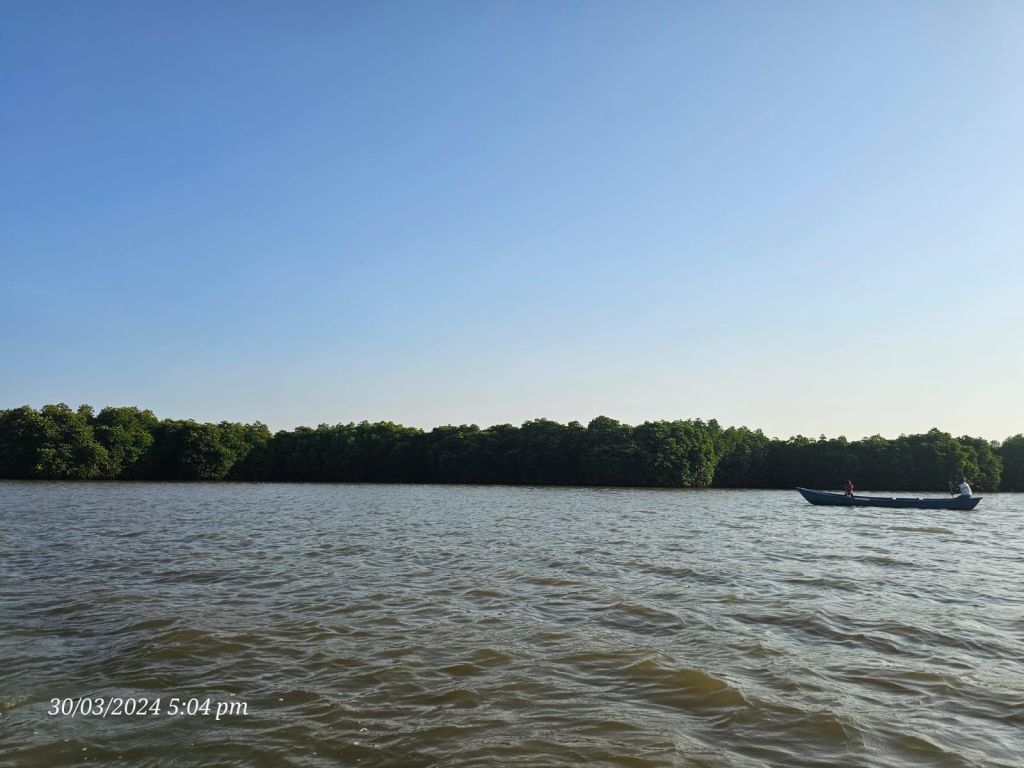
The air hummed with an enchanting melody, and the sun tipped below, casting long shadows that danced like playful spirits along the path. I boarded a small wooden boat, it’s hull adorned with intricate carvings that seemed to tell ancient tales of the forest that glides across the still waters.
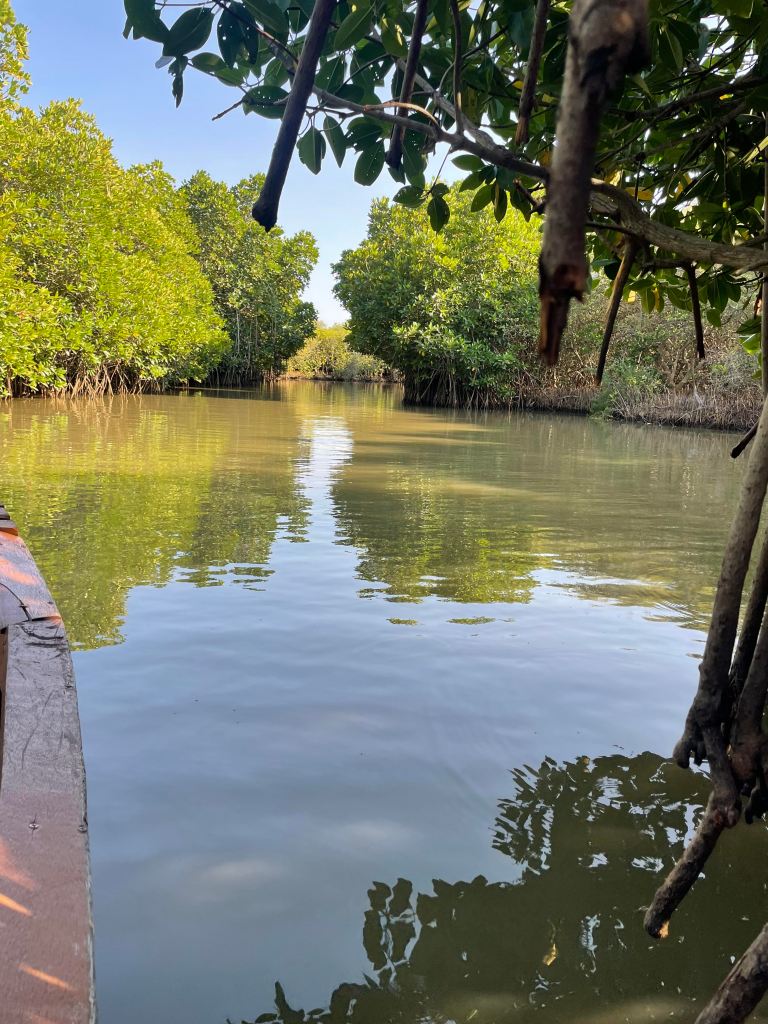
The mangroves that appeared tiny from afar now rose like towering sentinels, their twisted roots reaching down into the depths. Under the canopy rising up like a vast green cathedral, the sunlight dappled into a mosaic of varied hues. The boatman, a weathered old soul with eyes that gleamed with ancient wisdom, guided us through the labyrinthine channels with a steady hand. He spoke in a hushed tone, weaving tales of forgotten gods and spirits that dwelled within the heart of the forest,
Suddenly, the boatman pointed ahead to the other side, his voice barely more than a whisper through the mist. I saw it as a portal hidden among the tangled roots of an ancient tree. As they drew closer, the earth drummed with power, and I felt a sense of wonder wash over me.
With a gentle nudge from the boatman, we passed through the portal and into another realm entirely. The world around us shifted swirling colours, blending and merging into more hues. It seems strange but wonderful, the way nature’s law seemed to bend and twist, defying all logic and reason.
The trees danced with joy, their branches swinging in time to an unseen melody, while the leaves of the green mangrove stretched out in every line, shining in the sun as they unfurled like delicate works of art.
As we ventured deeper into the heart of the mystical realm, I could almost envision Lord Shiva himself taking on the form of Nataraja, the cosmic dancer. In the shifting shadows and shimmering light, I could see the divine figure gracefully moving amidst the swaying trees and swirling mist. His celestial dance seemed to echo through the very fabric of the universe, a mesmerizing display of cosmic energy and divine grace. With each step, he breathed life into the world around him, weaving together the threads of creation and destruction in a harmonious symphony of movement. It was as though the entire forest had become his sacred stage and I, a humble witness to the timeless dance of the cosmos.
All too soon, the journey came to an end. The boatman guided us back through the portal, and we emerged into the familiar world of the mangroves. I felt a pang of sorrow tug at my heart. I longed to stay in that magical realm forever, to lose myself in its wondrous embrace.
As we made our way back to the shore, the world around me seemed somehow different. The trees whispered secrets as we passed, their voices soft and melodic. The journey into the heart of the Pichavaram Forest[1] had changed me permanently, and I could feel the hum of unseen forces in the air.
And though I may never fully understand the mysteries that dwell within its depths, I will always carry with me the memory of this magical journey.
The journey made me conscious of the endless beauty the earth has to offer and revealed to me that real magic is found in the unending beauty of nature, not in spells and incantations.
I knew this woman, a girl really.
Kept painting her apartment different colours.

Her unhappiness with herself externalized
and splashed over all those walls.

A new colour every other week.

As though a change of colour would change
her circumstances, her life.

But nothing ever changed except the paint.
Barely a chance to dry, before she was at it again.

Maybe all that painting kept her busy.
So she wouldn’t have to sit in silence.
With the terrible truth of herself.
Ryan Quinn Flanagan is a Canadian-born author residing in Elliot Lake, Ontario, Canada with his wife and many bears that rifle through his garbage. His work can be found both in print and online in such places as: Evergreen Review, The New York Quarterly, Borderless Journal, GloMag, Red Fez, and Lothlorien Poetry Journal.
PLEASE NOTE: ARTICLES CAN ONLY BE REPRODUCED IN OTHER SITES WITH DUE ACKNOWLEDGEMENT TO BORDERLESS JOURNAL
The ring on the fourth finger
Is supposed to tug at your heart strings.
Initially, it served its purpose well.
The day it slid into my life,
The diamond dazzled in ecstasy,
The metal danced in circles
With every milestone we touched.

Over years, with dishwash and promises
Running down the drain,
The lack-lustre lonely thing,
Trembling with the responsibility
Of its most precious jewel,
Disfigured the very throne it sat on.
Growing stiff and refusing to budge.
It dug into my soul for the flesh around it
Began to swell and
I writhed to fit my ring.

As I walk the shoreline now,
My fingers thin and bare,
The ring sitting uneasily
In its box,
Elliptically sulks at me.
Not only has its noose tapered
My ring-lady at the base,
The flat oval of my stubby finger
Has, for ever,
Altered its rounded face.
Averi Saha is an academic, critic and translator. She teaches in a college in West Bengal and works on folk literature. She has published academic papers, translations and original poems.
.
PLEASE NOTE: ARTICLES CAN ONLY BE REPRODUCED IN OTHER SITES WITH DUE ACKNOWLEDGEMENT TO BORDERLESS JOURNAL
Title: The Pundits: British Exploration of Tibet and Central Asia
Author: Derek Waller
Publisher: Speaking TigerBooks
The British exploration of Tibet and Central Asia began in the 19th century as part of the Great Game, a geopolitical rivalry between the British Empire and the Russian Empire. These British explorers, known as “pundits“, were tasked with gathering intelligence on the region’s geography, culture, and politics to inform British strategic interests in the area. The pundits traveled undercover, disguised as locals, and used their linguistic and navigational skills to map out uncharted territories and report back to British authorities. Their expeditions were instrumental in shaping British policy towards Tibet and Central Asia, and their findings laid the groundwork for future British involvement in the region.
The Pundits: British Exploration of Tibet and Central Asia by Derek Waller is a fascinating book for its rich details and shedding light on the frontier policies of the British Empire. Derek J. Waller served as professor emeritus of political science at Vanderbilt University, where he taught from 1969 until his passing in 2009. He was instrumental in establishing the examination system for the Chinese government at Vanderbilt and played a key role in founding the university’s International Studies Programme in London. Additionally, he held the position of director of Vanderbilt-in-England. Waller is best known for his publication, The Government and Politics of the People’s Republic of China, which was released in 1981.
Says the blurb: “On a September day in 1863, Abdul Hamid entered the Central Asian city of Yarkand. Disguised as a merchant, Hamid was in fact an employee of the Survey of India, carrying concealed instruments to enable him to map the geography of the area. Hamid did not live to provide a first-hand account of his travels. But he was the advance guard of an elite group of Indian trans-Himalayan explorers—recruited, trained, and directed by the officers of the Great Trigonometrical Survey of India—who were to traverse much of Tibet and Central Asia during the next thirty years.”
Waller presents the history of these intrepid explorers—Nain, Mani, Kalian and Kishen Singh, Mirza Shuja, Hyder Shah, Ata Mahomed, Abdul Subhan, Mukhtar Shah, Hari Ram, Rinzing Namgyal, Ugyen Gyatso, Nem Singh, Lala and Kintup—who came to be called ‘native explorers’ or ‘pundits’ in the public documents of the Survey of India. In the closed files of the government of British India, however, they were given their true designation as spies. As they moved northward within the Indian subcontinent, the British demanded precise frontiers and sought orderly political and economic relationships with their neighbours. They were also becoming increasingly aware of and concerned with their ignorance of the geographical, political, and military complexion of the territories beyond the mountain frontiers of the Indian empire. This was particularly true of Tibet.
Despite the fact that the use of pundits was discontinued in the 1890s in favour of exclusively British expeditions, they amassed a vast amount of information on the topography of the region, the customs of its inhabitants, and the nature of its government and military resources. They were able to journey to places where hardly any European could go and did so under conditions of extreme deprivation and great danger. They are credited with documenting an area of over one million square miles, most of which was completely unknown territory to the West.
The Pundits, one of the earliest books to be written about them, is an exceptional piece of scholarly work.
.
Bhaskar Parichha is a journalist and author of Unbiased, No Strings Attached: Writings on Odisha and Biju Patnaik – A Political Biography. He lives in Bhubaneswar and writes bilingually. Besides writing for newspapers, he also reviews books on various media platforms.
.
PLEASE NOTE: ARTICLES CAN ONLY BE REPRODUCED IN OTHER SITES WITH DUE ACKNOWLEDGEMENT TO BORDERLESS JOURNAL
Our friendship overcomes the distance between the balconies.

At first the extent seems long, gaping like the head of a ship-mast sailing beyond the horizon.

We could connect only with our eyes. We do not have access to each other.

Otherwise, she is companionable, very bubbly. She is petite,

I guess she feels lost being alone. She demands I remain in the balcony all the time.

And I would, a book of poems on my lap.

My neighbours often leave her alone,

go roaming, to play or to munch popcorns in movie malls,

She would express her stress by barking through the morning,

or whining the rest of the day. I learn not to be troubled by her tantrums.

She would jump with joy upon seeing me, let me know how happy she felt using the tail.

I never reason any other purpose for that appendage.

It makes me feel inadequate, the absence of it.

In that period of love we forge  our clandestine  kinship by panting like mountaineers doing high altitude trek.

I learn to return her love.

I would lean over the balustrade and pretend to hug.

She taught my eyes to ooze oxytocin, which she channels into her wide-eyed ardour.

And then her folks move away to another apartment, taking her along.

She is not aware of the plan to move, she has not been told, she goes without saying goodbye.

I still have the book on my lap, the book of poems, open and face down.

The silence is not adequate to replace the ligature of our bond

or to teach me how to bear her absence with quietude.
Saranyan BV is poet and short-story writer, now based out of Bangalore. He came into the realm of literature by mistake, but he loves being there. His works have been published in many Indian and Asian journals. He loves the works of Raymond Carver.
.
PLEASE NOTE: ARTICLES CAN ONLY BE REPRODUCED IN OTHER SITES WITH DUE ACKNOWLEDGEMENT TO BORDERLESS JOURNAL
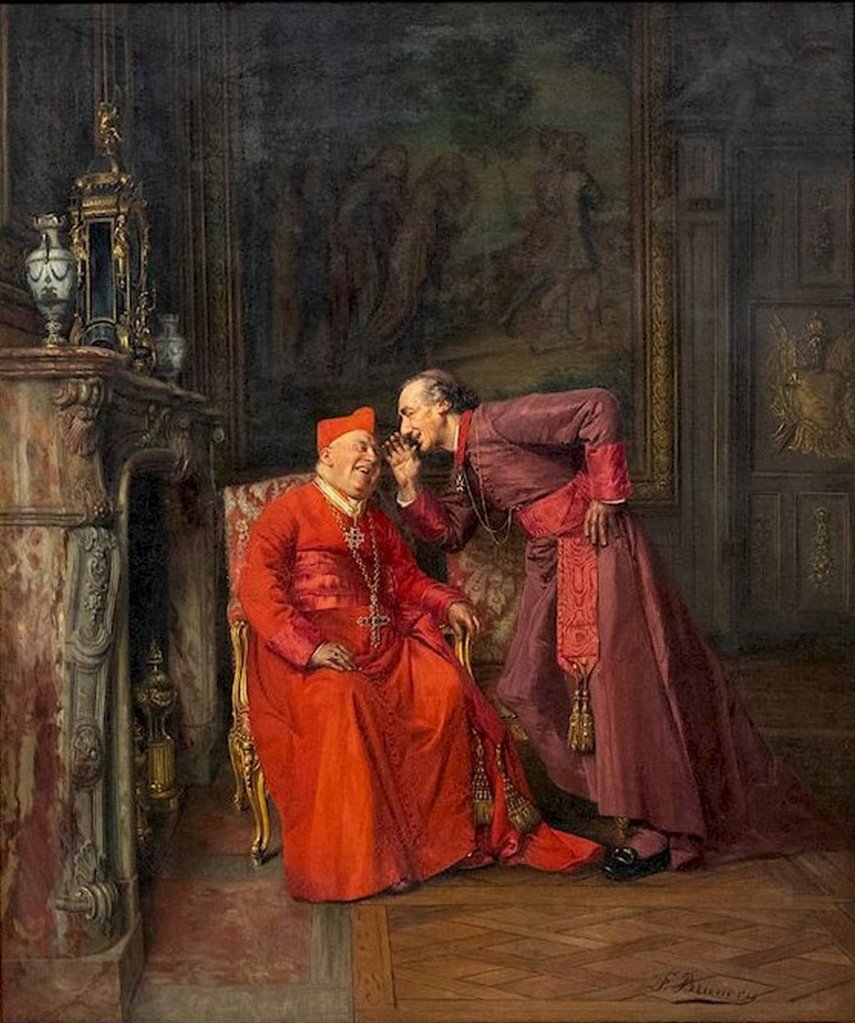
The Latest Gossip by Francois Brunery (1849-1926)Gossip by Charles Haigh Wood (1856-1927)
SATURDAY

Saturday, Saturday, Saturday, what
do you think about Saturday? It’s flat.

The grey sky reminds us of traveling
and in the wind the birds are eddying.

Dissatisfied, if you were somewhere else—
Utopia—you would be hearing bells;

you would feel mellow in the fruitful sun,
fulfilled, in the prime of life, having fun.

Such weather only comes to remind us
through memories that it’s all behind us.

Should we take a newspaper to breakfast
or will the headlines make us feel feckless

with their inane arbitrary redundance,
offering war and scandal in abundance?

So lazy that pleasures are overkill,
yet we can’t sleep all day, there’s time to fill,

and too many naps seems enervating
as an option to the girl you’re dating.

Tennis is out, and games are not your thing;
conversation doesn’t feel promising.

Exposed to Saturday’s mood of malaise,
exhausted by the accumulated weekdays,

this hurry to be in Sunday’s milling crowds
which move like corpses under viscous shrouds:

a great dull procession from Buenos Aires
up to Texas and over to Paris

and back under the patio roof that is leaking,
like a voyeur behind a Chinese screen peeking

at no one, like a bright flag that is furled,
our banner of freedom: this Saturday world!


GOSSIPS

Just because I’m a coward
doesn’t mean the gossips are right
with their concrete notions
but watch them build the trivial
with such care,
making complicated fine points
woven into, of all things,
knots,
you guessed it, to secure.
Bluntness is the only
way to say
to them they are inferior
and that you
are not a statistic.
Yes, I am also thinking:
why am I here?
To be cold goes nowhere
and so you are involved
in the humid entanglement.
The most horrible truth
is when they are right
and you are vulnerable that night,
all because you have forgotten your comb.


THE SMILING MAN


The smiling man
who straightened up
when he noticed
I saw him smiling.

“Well, I’m sorry
I put that
dour expression
there on your face
that’s so beguiling!”

And he said
in a whisper
so I couldn’t hear
as he walked on
down the mall:

“You didn’t put
that dour expression
there—
don’t worry—
it’s been there
since I was small.”

When he told
me that,
I felt better
and I sat
thinking where I’d
like to go.
I thought for
a moment I
might follow him,
an interesting man
to know.

But I knew
that he’d be
out of sight
by now

and I didn’t
want to see
him straightened up right,
anyhow.
David Francis has produced six music albums, one of poetry, Always/Far: a chapbook of lyrics and drawings (Oilcan Press), Poems from Argentina (Kelsay Books), and New York Revery (Cyberwit.net). He has written and directed the films, Village Folksinger (2013) and Memory Journey (2018). He lives in New York.
.
PLEASE NOTE: ARTICLES CAN ONLY BE REPRODUCED IN OTHER SITES WITH DUE ACKNOWLEDGEMENT TO BORDERLESS JOURNAL






 Borderless